Chronometer
Chronometer — an illustrated inventions story, set in Global. 10 illustrated pages, free to read on Wonder Inventions.
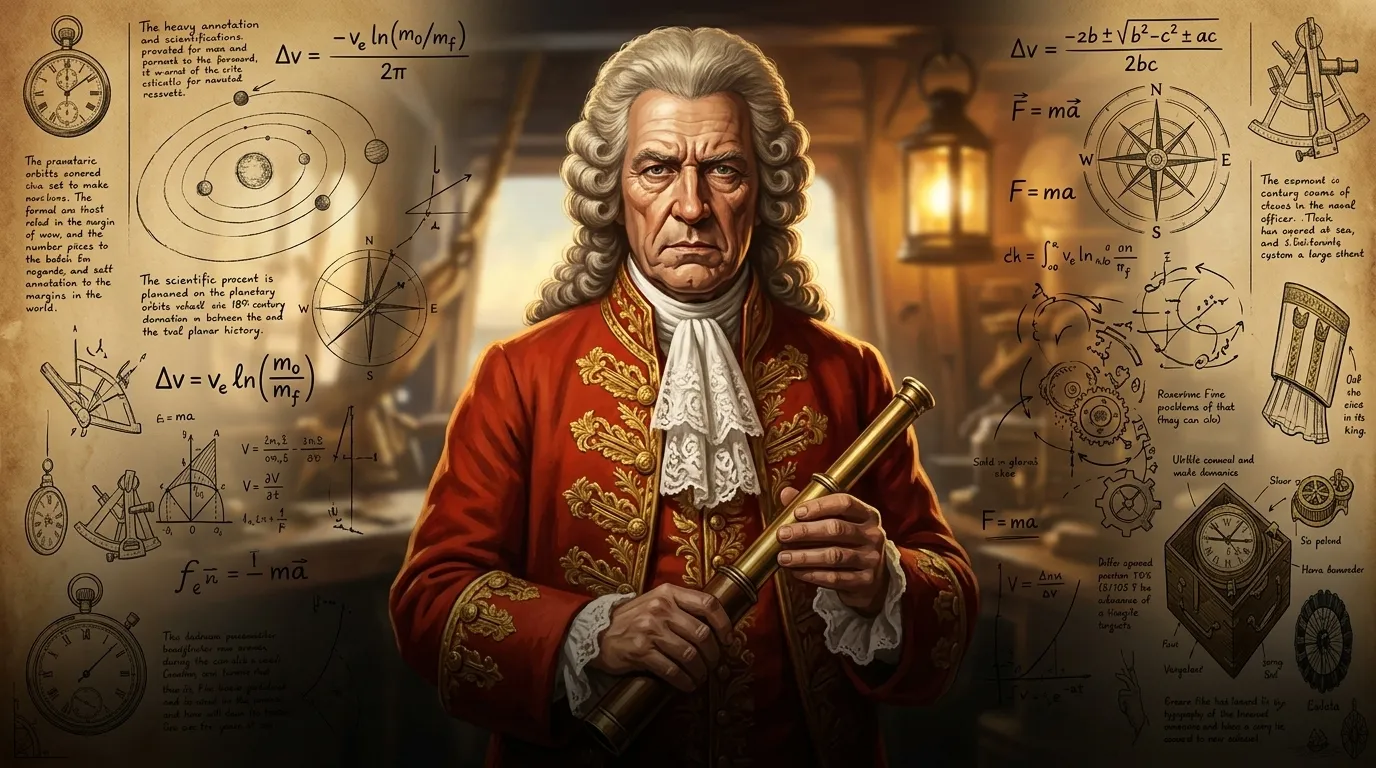
Page 1
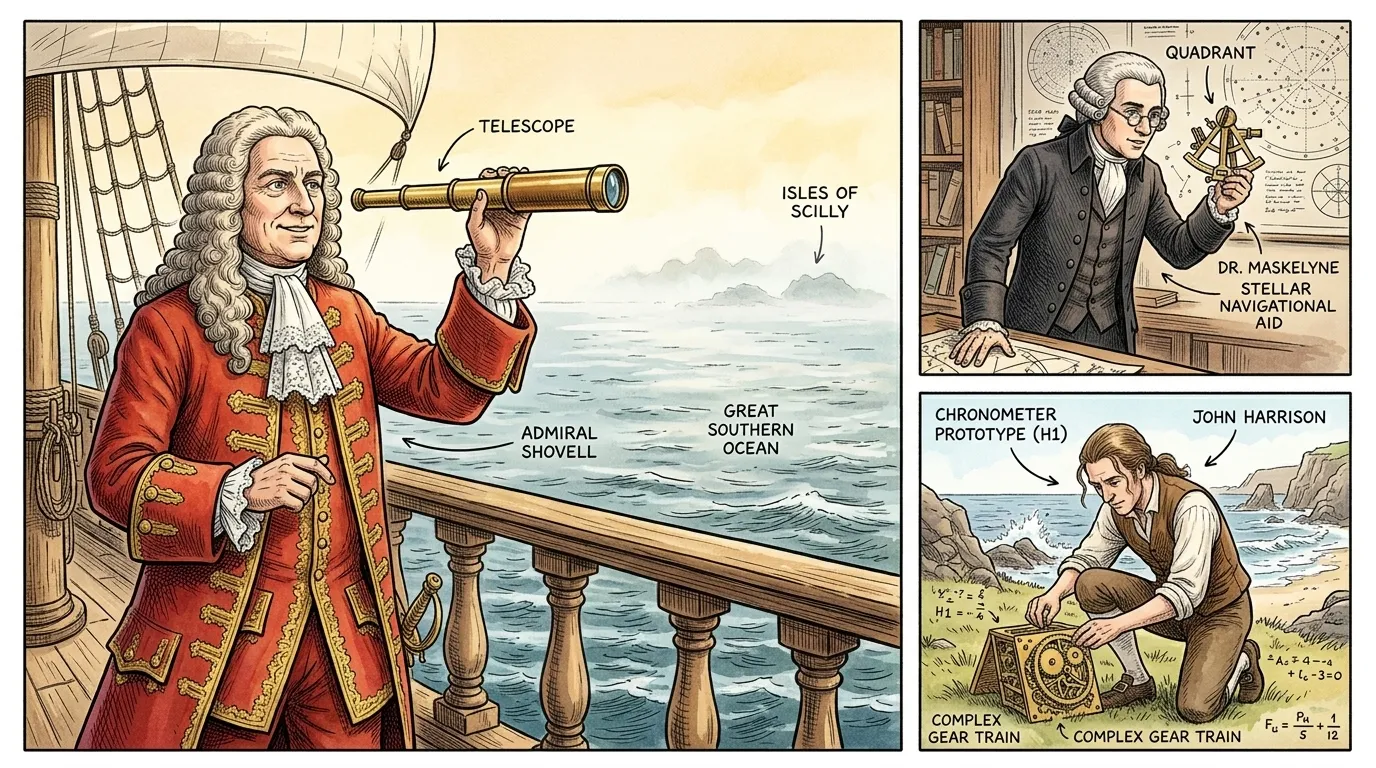
For centuries, the vast expanse of the open ocean remained a terrifying enigma for mariners. While latitude could be calculated with relative ease using celestial bodies, determining longitude – the east-west position – proved maddeningly elusive.
"Admiral Sir Clowdisley Shovell's disastrous shipwreck off the Isles of Scilly in 1707 underscored the urgent need for a solution. 'Without a true sense of our longitude,' Shovell had once remarked to his navigation master, 'every voyage is merely a perilous gamble against unseen rocks and currents.'"
Page 2
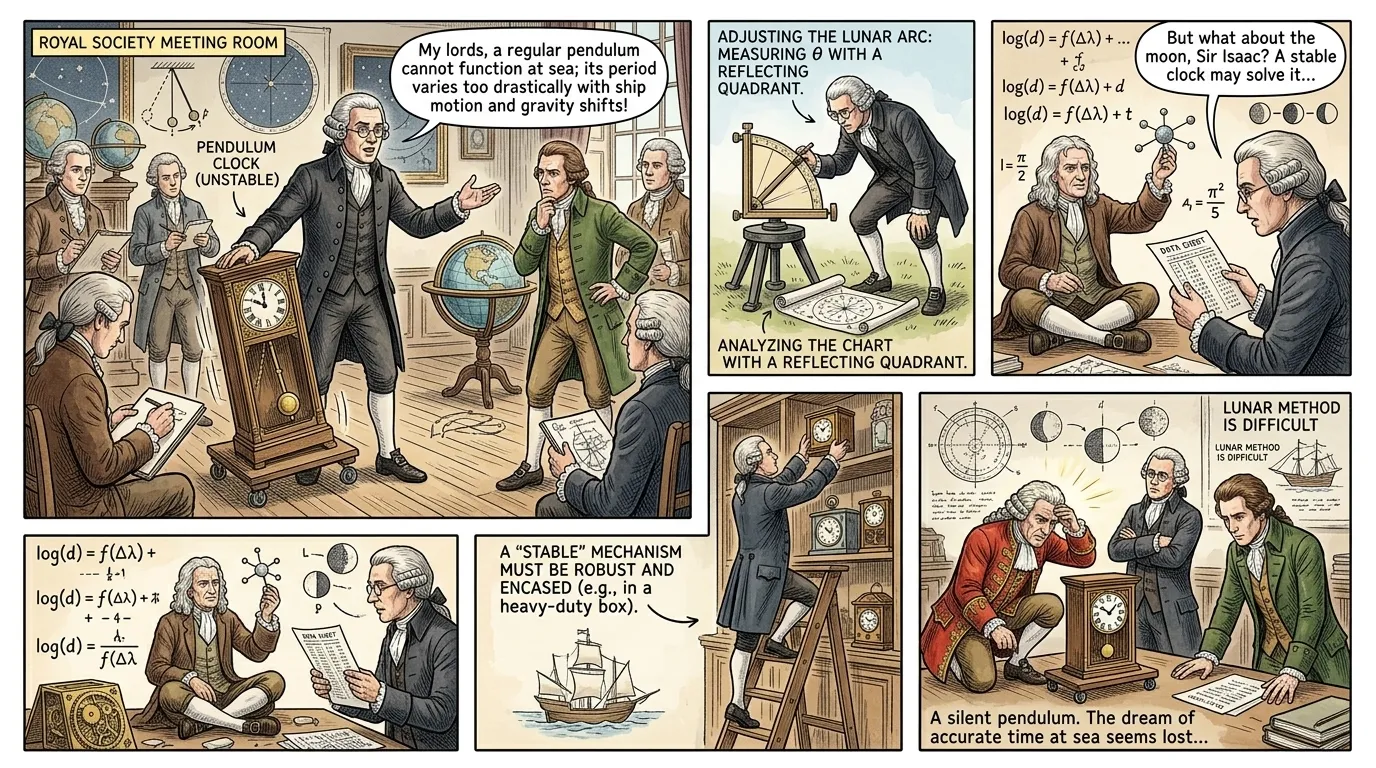
The fundamental principle for calculating longitude was deceptively simple: accurately know the local time at the ship's current position and simultaneously the time at a fixed reference point, such as Greenwich. The difference in these times, multiplied by the Earth's rotation rate, would yield the longitude.
"Yet, the execution was anything but simple. Dr. Nevil Maskelyne, the Astronomer Royal, often debated with fellow scientists at the Royal Society. 'The challenge,' Maskelyne explained, 'is building a clock that maintains absolute accuracy for months at sea, despite violent pitching, rolling, temperature extremes, and corrosive salt air. The existing pendulum clocks simply cannot withstand such conditions.'"
Page 3
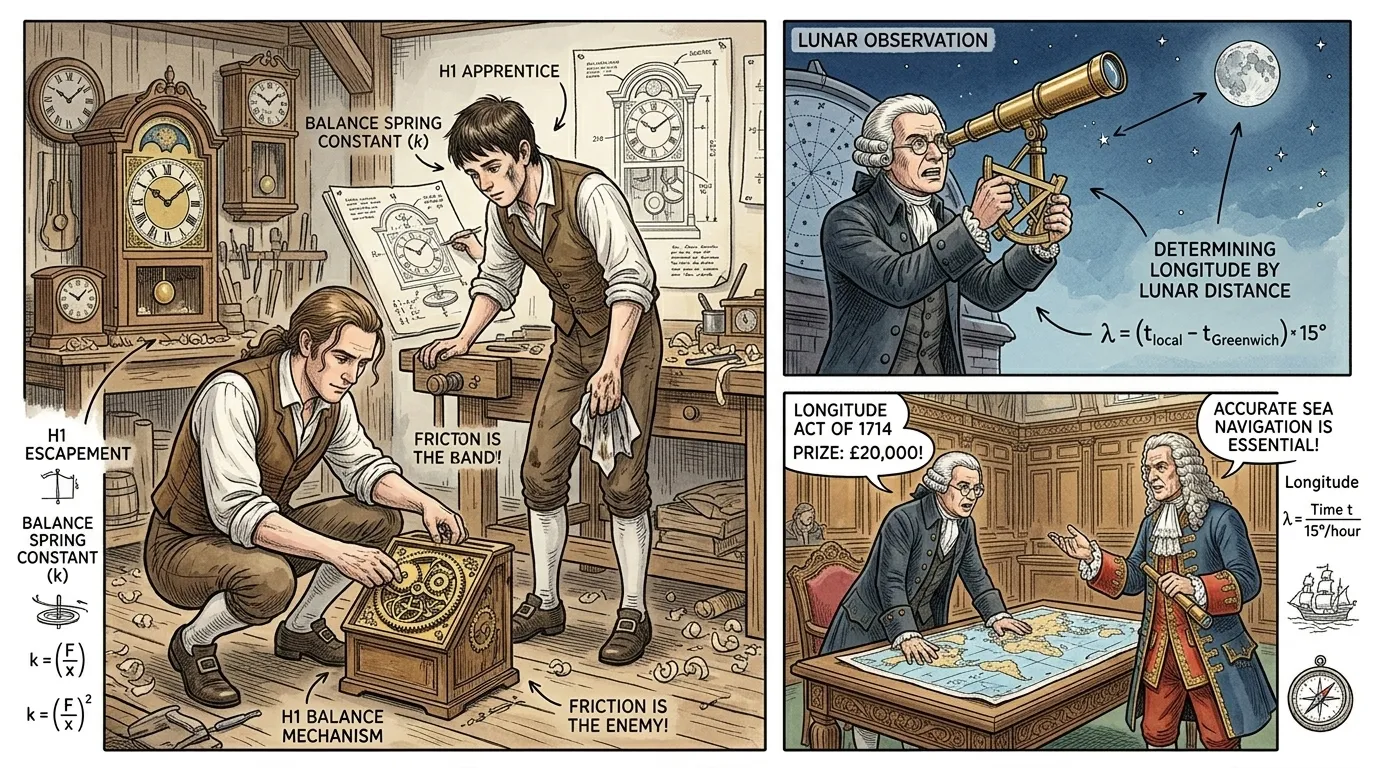
To spur innovation, the British Parliament enacted the Longitude Act of 1714, offering a staggering prize of 20,000 to anyone who could devise a method for determining longitude within half a degree. This colossal sum ignited the ambitions of numerous inventors, yet the technical hurdles remained immense.
"Many believed an astronomical solution, like accurately observing lunar distances, was the only viable path. 'Indeed,' mused one Member of Parliament during a session, 'the celestial spheres offer a grand, unchanging timepiece. But to expect every common sailor to master such intricate observations in stormy weather is, as the Roman philosopher Seneca once said, 'to seek a straight line among the stars.' We need something more immediate, more practical.'"
Page 4
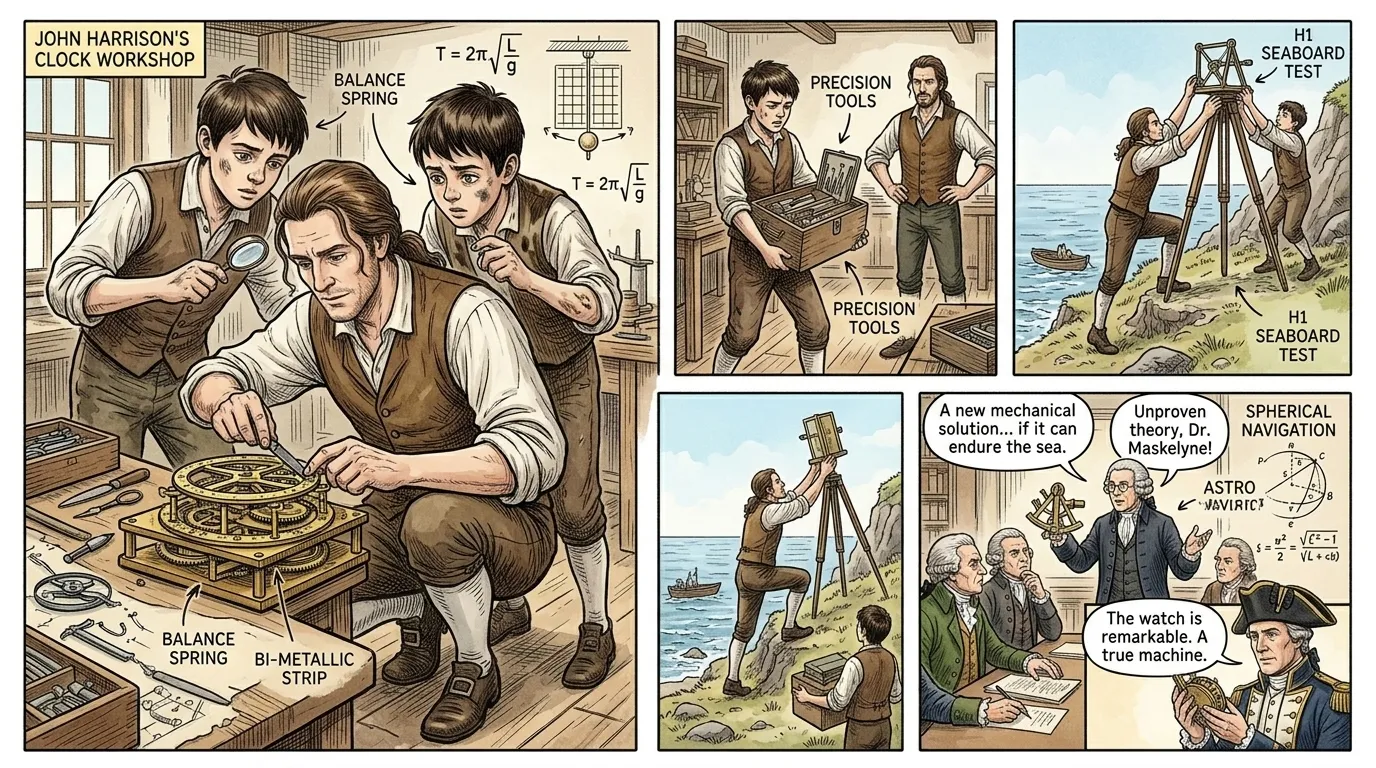
Amidst the academic debate and the astronomical focus, a self-taught carpenter and clockmaker from Foulby, Yorkshire, quietly pursued a mechanical solution. John Harrison, born in 1693, possessed an innate understanding of precision mechanics and an unrelenting drive.
"Harrison firmly believed that an accurate clock, a 'sea watch,' was achievable. He dedicated his life to this pursuit, meticulously crafting innovative timepieces. 'My machines,' Harrison once told his apprentice, 'will not merely tell the hour; they will measure the very heartbeat of the ocean, steadying a world that refuses to stand still.'"
Page 5
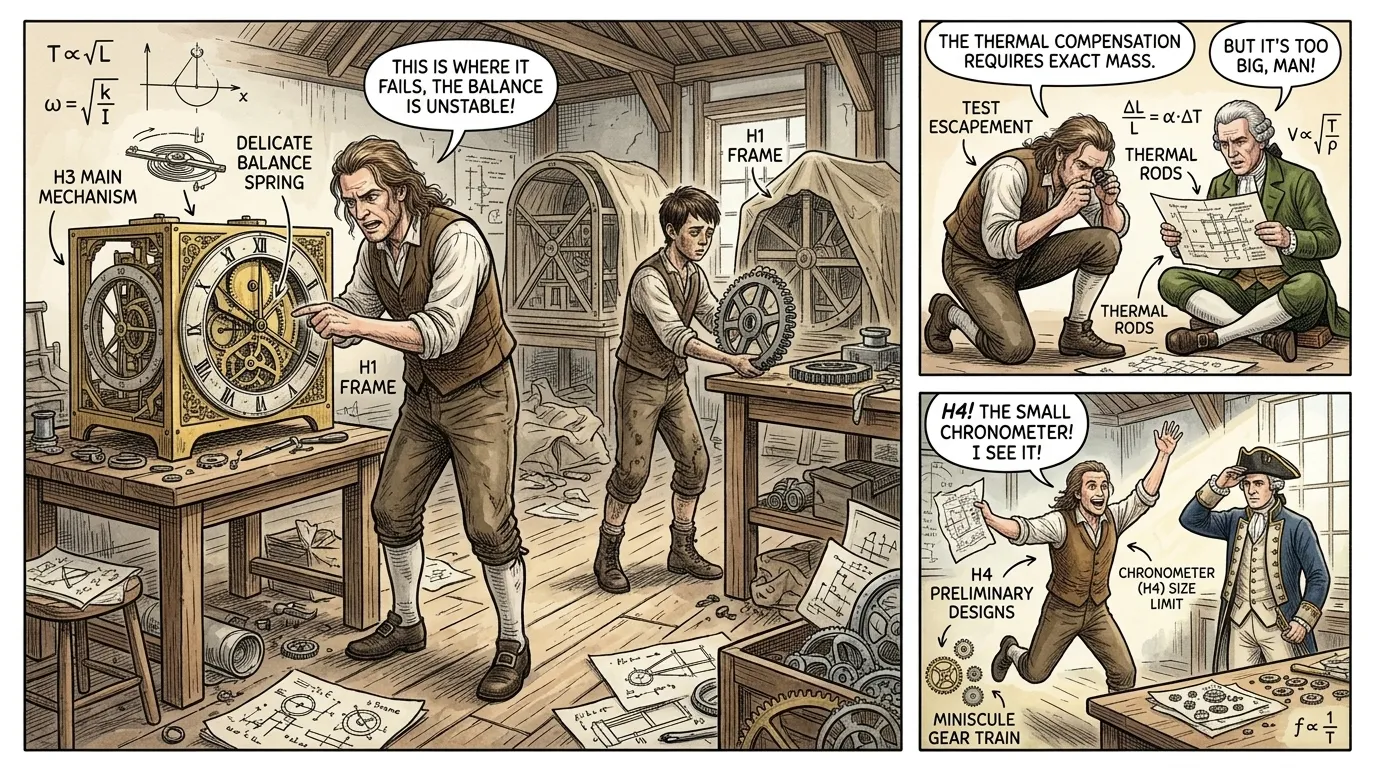
Harrison's first three marine timekeepers, H1, H2, and H3, were monumental achievements for their time. H1, completed in 1735, was a massive, intricate machine weighing 72 pounds, designed to compensate for ship motion and temperature changes.
"Each iteration built upon the last, tackling specific challenges. He experimented with 'grasshopper escapements' and bimetallic strips for temperature compensation, a revolutionary concept. Discussing the limitations of H3, a frustrated Harrison confided to a colleague, 'While H3 is incredibly accurate on land, it is still too large, too susceptible to minor knocks, and too complex to reliably produce for every ship at sea. The quest for simplicity must continue.'"
Page 6
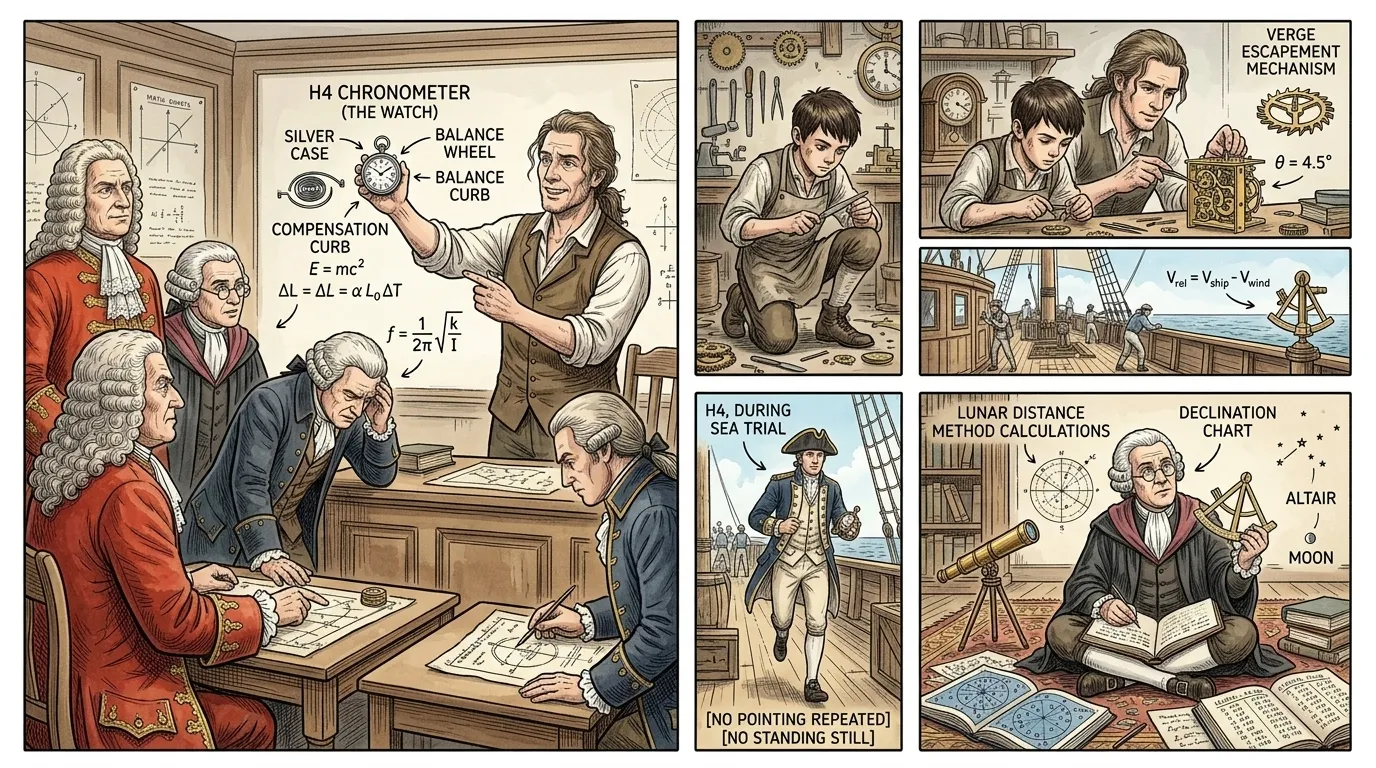
After decades of relentless work, Harrison made his true breakthrough in 1761 with H4. Instead of a colossal machine, H4 was a compact, silver pocket watch, only five inches in diameter, yet packed with unprecedented precision.
"Its brilliance lay in a series of ingenious innovations. Harrison explained to the Board of Longitude, 'The secret lies in controlling every variable. My balance spring compensates for temperature using a bimetallic strip, while the detent escapement reduces friction and ensures precise energy transfer. Furthermore, I've incorporated anti-friction roller bearings and a fusee chain to maintain constant driving power.'"
Page 7
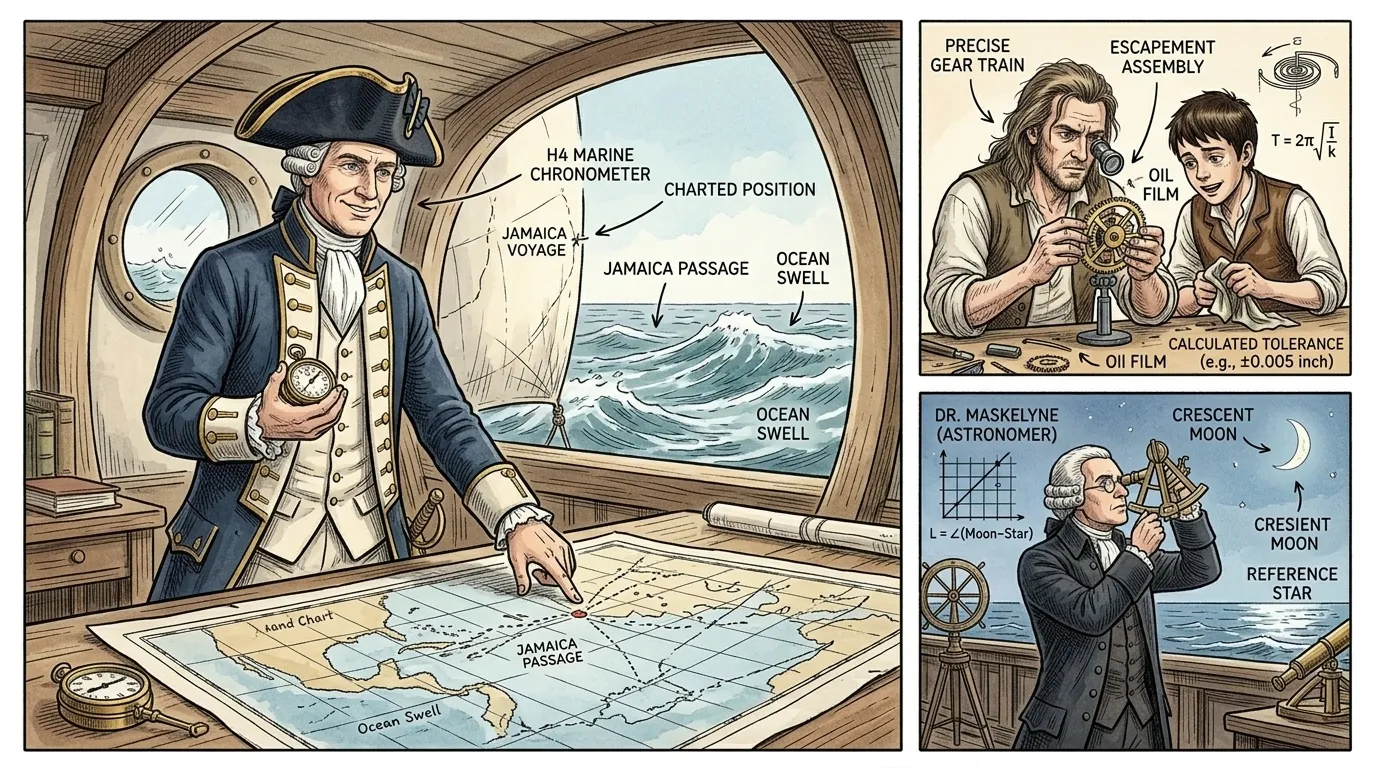
H4's innovative design allowed it to keep remarkably accurate time, even amidst the chaotic motion of a ship at sea. The gimbals suspended the movement, isolating it from pitch and roll, while constant spring tension and temperature compensation ensured stability.
"During its crucial trial voyage to Jamaica in 1761-1762, H4 proved its unparalleled accuracy. Captain John Lindsay, overseeing the journey, reported back enthusiastically, 'Upon reaching Port Royal, H4 was only five seconds slow after 81 days at sea. This translates to an error of merely 1.25 miles in longitude—far exceeding the Longitude Act's requirements!' The mechanism functioned flawlessly."
Page 8
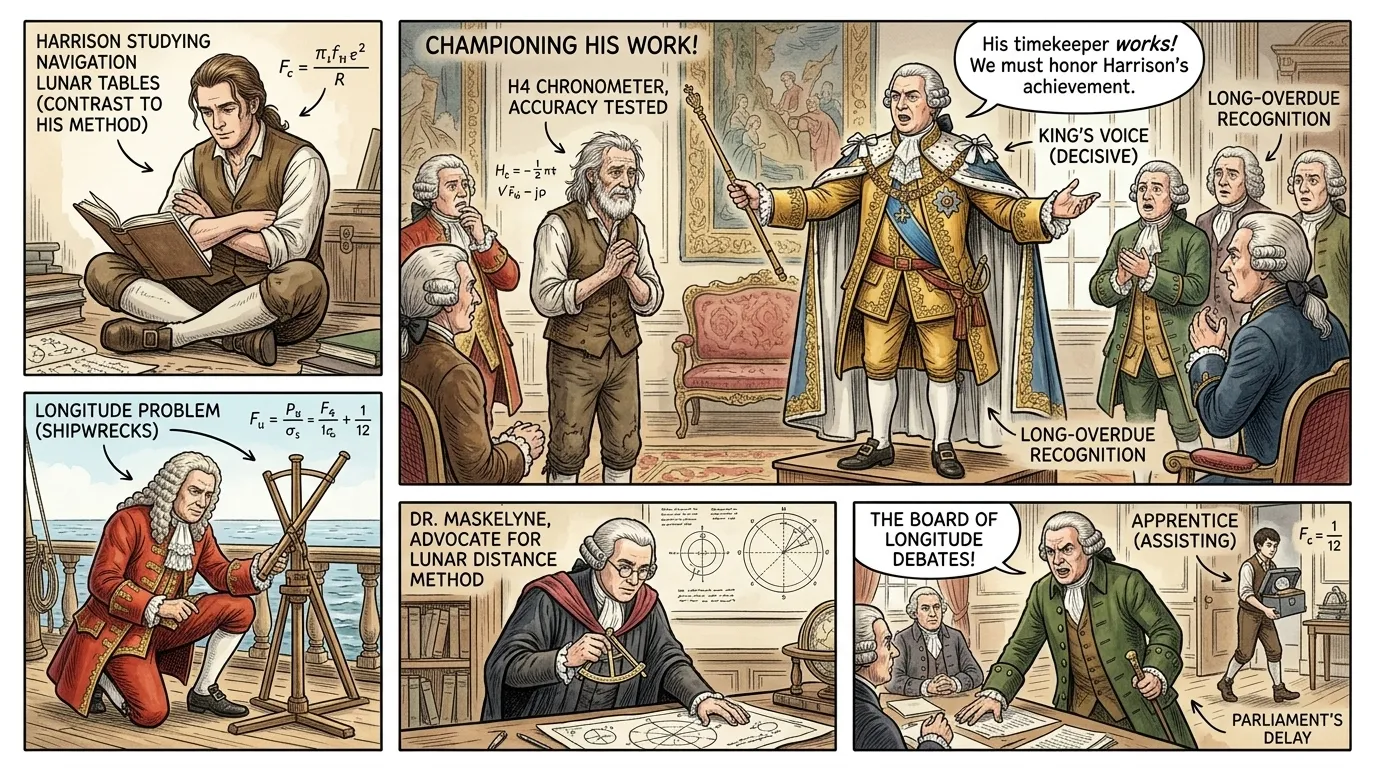
Despite H4's demonstrable success, John Harrison faced an arduous battle for full recognition and the promised prize money. The Board of Longitude, largely comprised of astronomers, resisted accepting a mechanical solution over their preferred lunar distance method.
"It took years, interventions from King George III, and further successful sea trials of H4 and its improved version, H5, before Harrison finally received his due. 'This man has been cruelly wronged!' King George III declared in 1772, demanding that Harrison receive his reward. The relentless struggle highlighted the resistance to radical innovation, even in the face of overwhelming proof. By the late 18th century, accurate chronometers, based on Harrison's principles, began to be produced more widely."
Page 9
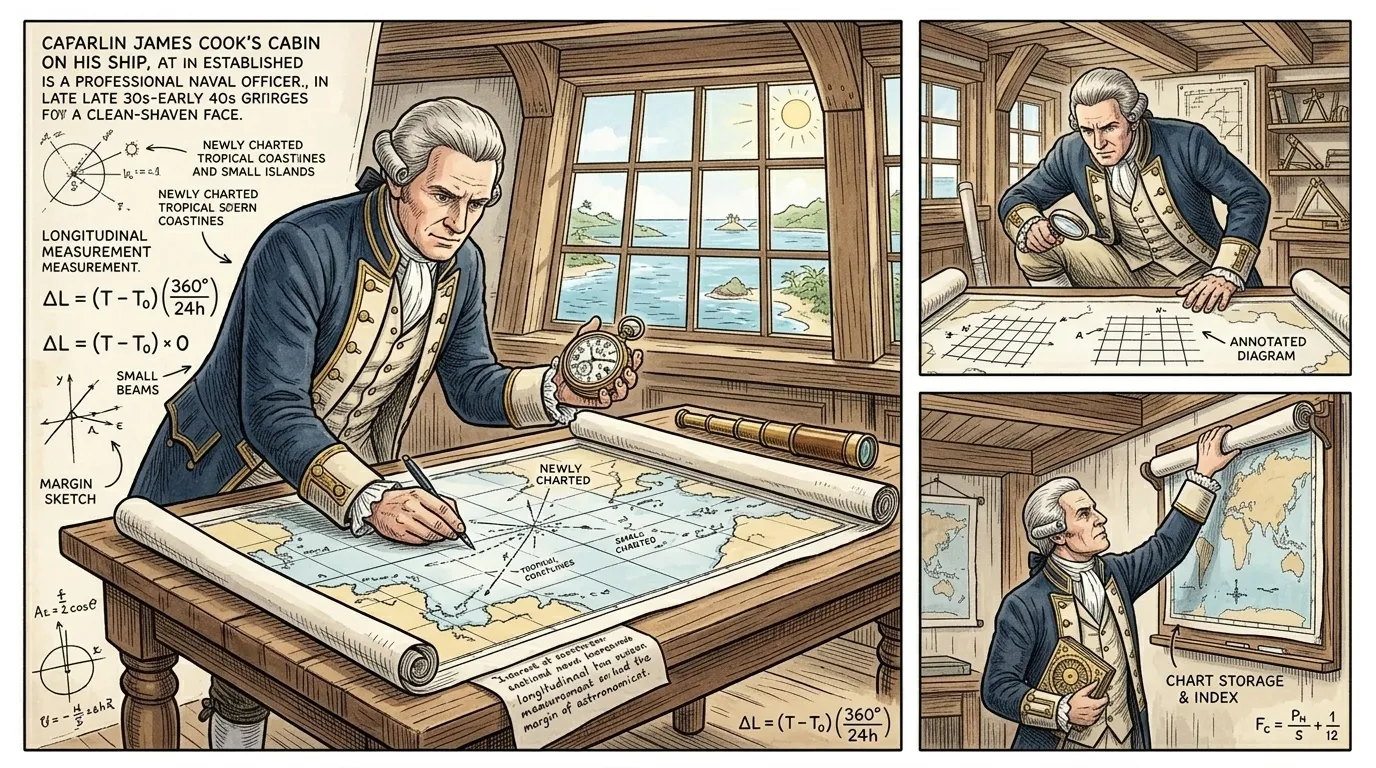
The chronometer revolutionized seafaring. For the first time, ships could accurately pinpoint their longitude, drastically reducing the peril of long voyages and enabling safer, faster, and more direct routes across oceans.
"Explorers like Captain James Cook immediately embraced the new technology. During his second Pacific voyage, Cook extensively used a copy of Harrison's H4, known as Larcum Kendall's K1. 'We were enabled to correct the charts of almost all the lands and coasts,' Cook wrote in his log, 'and to ascertain the true situation of such as were hitherto laid down by guess.' This newfound precision unlocked an unprecedented era of global exploration and mapping."
Page 10
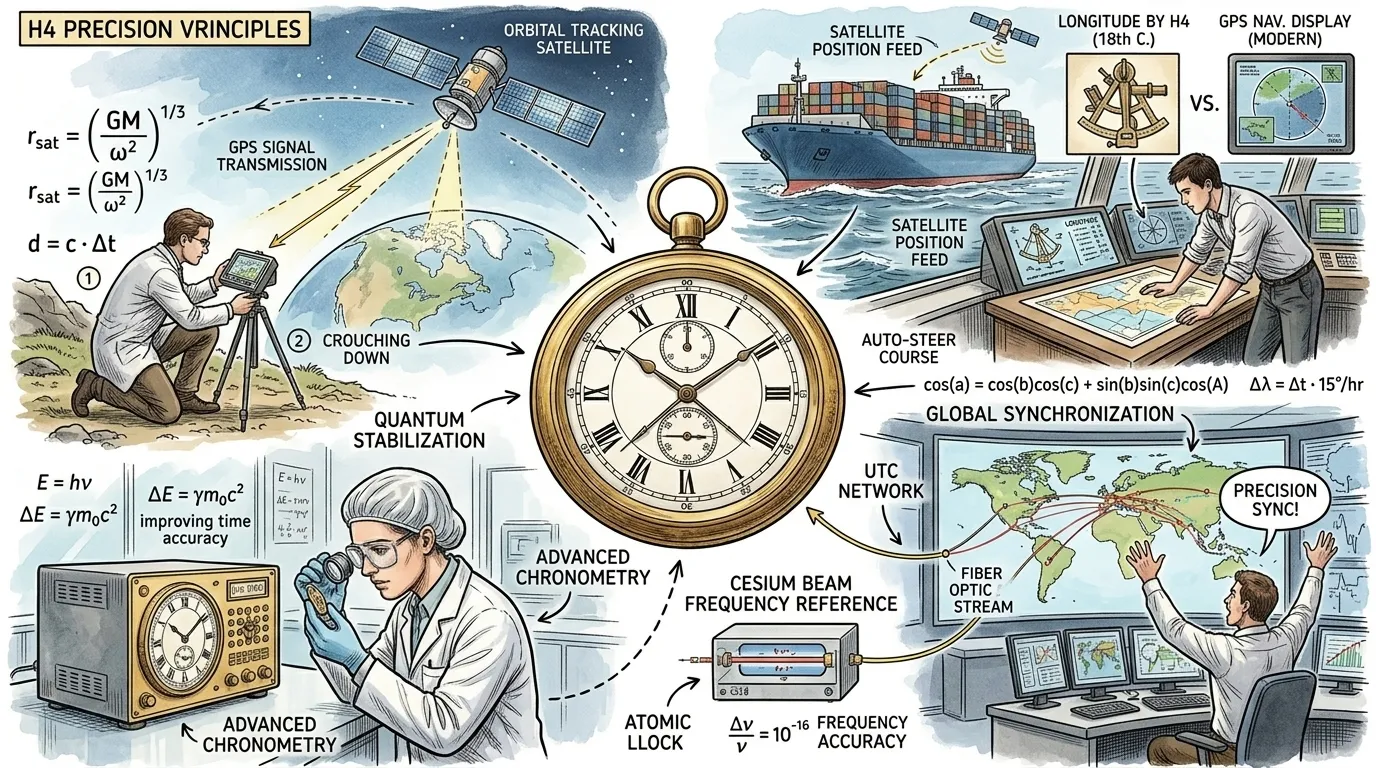
The chronometer's impact reverberated far beyond maritime navigation, establishing the foundation for modern precision timekeeping and global logistics. It proved that complex mechanical devices could achieve extraordinary accuracy, influencing generations of engineers and scientists.
"From regulating naval fleets to coordinating global trade, the chronometer solidified the concept of universal time and a globally interconnected world. Its principles underpinned the development of accurate clocks everywhere, eventually paving the way for atomic clocks and the Global Positioning System (GPS), which continues its legacy of precise location and time. This small watch truly shrank the world."
About this story
- Location: Global
- Audience: general readers
Questions and answers
Read Wonder Inventions on your phone
Wonder Inventions is available on Android. Get Wonder Inventions on Google Play.