Cloud Storage
Cloud Storage — an illustrated inventions story, set in Global. 10 illustrated pages, free to read on Wonder Inventions.
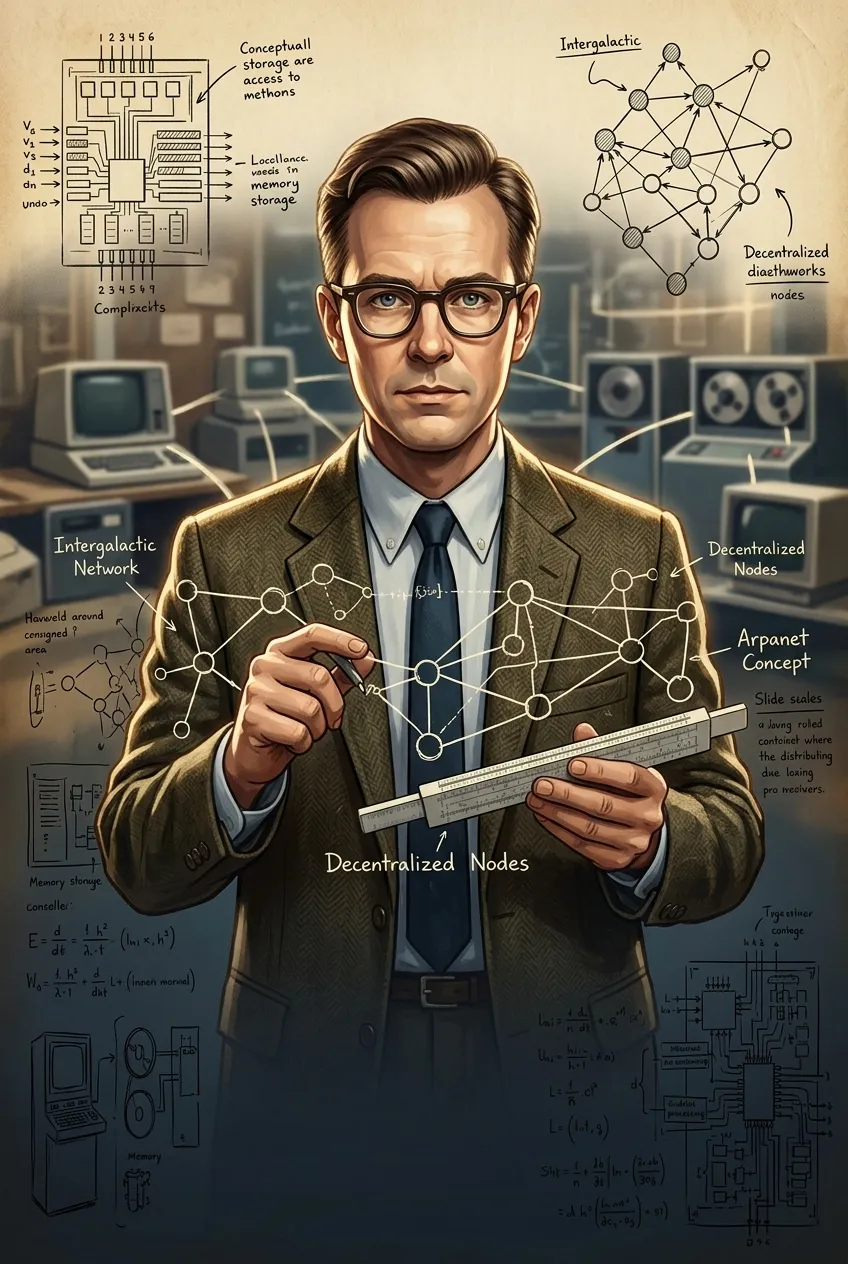
Page 1
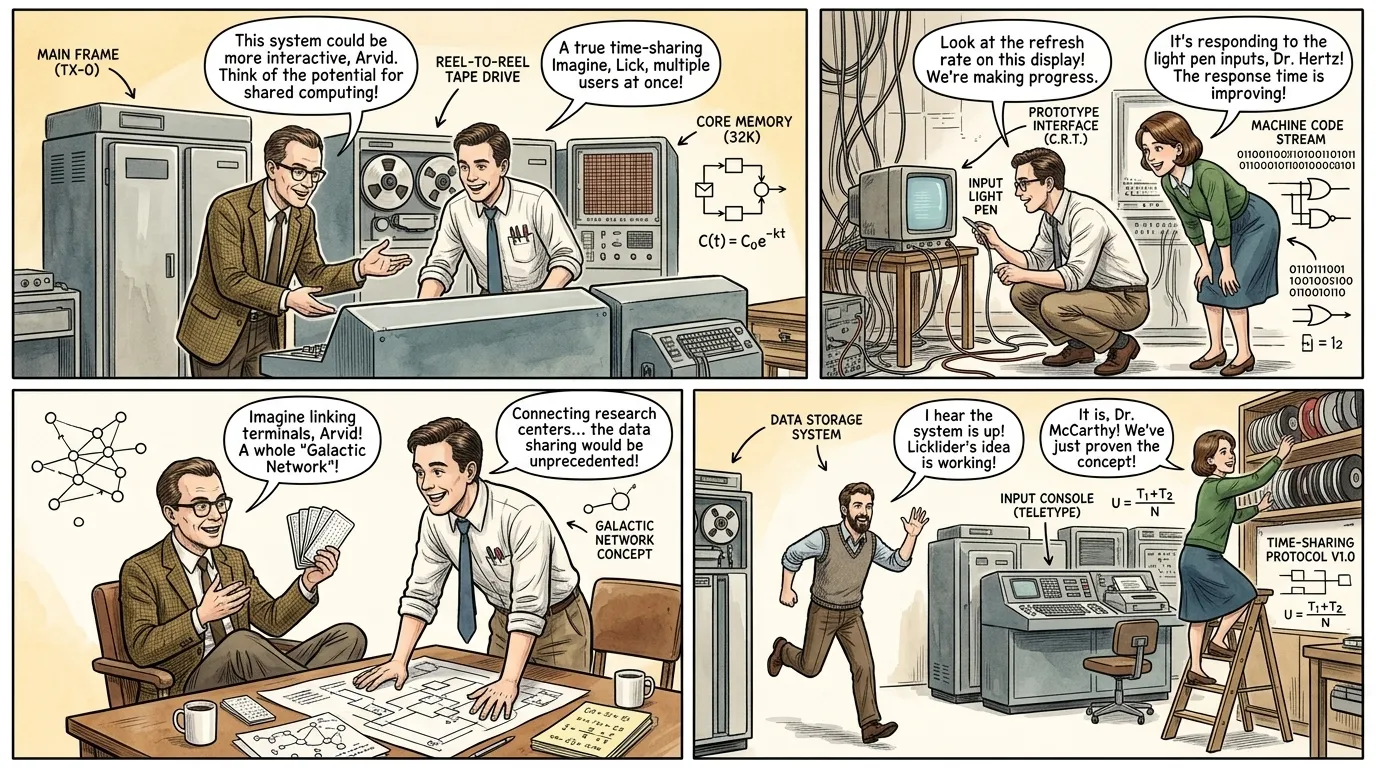
In the early 1960s, a fundamental challenge bottlenecked computing's potential: data remained tethered to specific machines, preventing true collaborative work and instant access across distances. Researchers and institutions struggled with fragmented information, requiring cumbersome physical transfers or direct machine access for every interaction.
""Dr. Licklider," began his colleague, Dr. Arvid Hertz, gesturing towards a reel-to-reel tape drive, "our local storage solutions are rapidly becoming a critical impediment. How can we truly share knowledge when every dataset is an island, bound to its physical hardware?" J.C.R. Licklider, a pioneering computer scientist at MIT, thoughtfully replied, "Indeed, Arvid. The problem isn't merely storage capacity; it's accessibility. We need a symbiotic relationship between humans and machines, where information is not a physical commodity, but a fluid resource, accessible from any location.""
Page 2
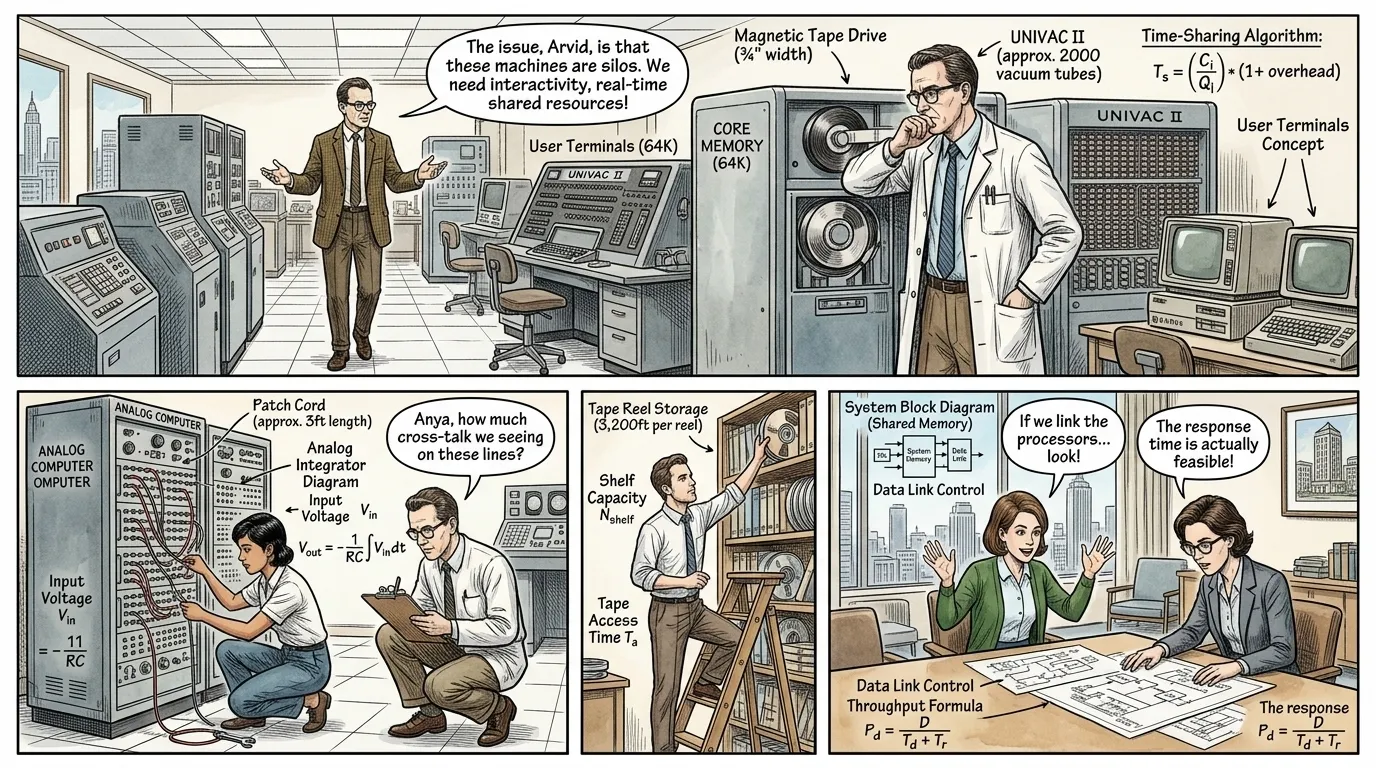
Before the advent of widespread networked computing, every institution, and indeed every individual, operated within discrete data silos. Information was stored on punch cards, magnetic tapes, or early hard drives, requiring direct physical interaction with the specific machine holding the data.
""Imagine, Arvid," Licklider continued, pacing the small, equipment-lined aisle, "the sheer inefficiency! A researcher in California needing to access data compiled here in Massachusetts would face days of delay, perhaps even weeks, for physical media transport. This isn't collaboration; it's serial inconvenience." Hertz nodded, "And the replication. Every critical dataset must be copied, stored, and managed locally, leading to version control nightmares and redundant infrastructure. It's like everyone needing their own personal library for every single book.""
Page 3
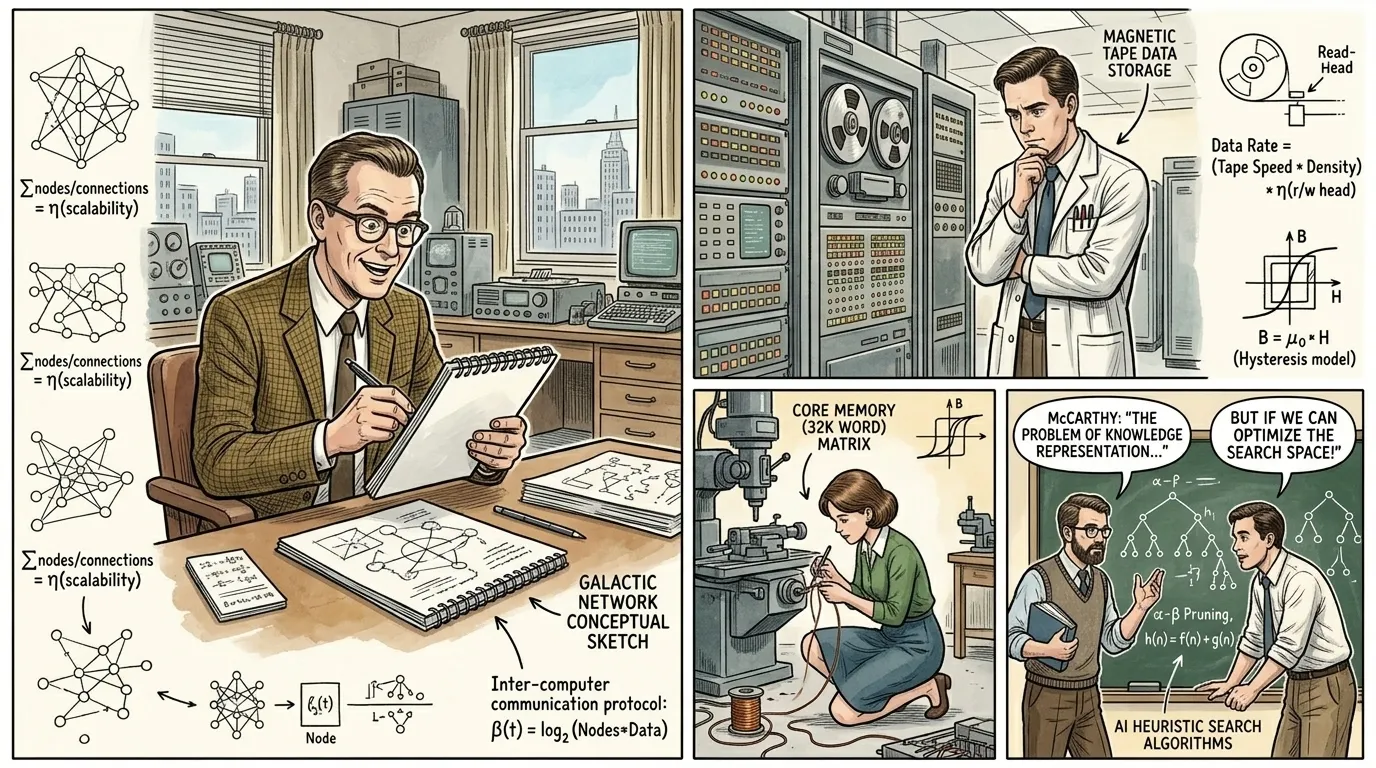
The limitations of physical data storage spurred radical new thinking. Visionaries began to imagine a world where computing resources, including storage, were not owned by individuals but provided as a utility, much like electricity or water, accessible to everyone on demand.
""Our challenge, then," Hertz mused, leaning against a humming server rack, "is to move beyond individual machines. We must conceptualize computing itself as a public utility. But how do we pool such diverse resources—processing power, memory, storage—and abstract them into a seamless, unified service?" Licklider's eyes lit up. "Precisely, Arvid! We must establish a system of resource pooling, where a vast collection of interconnected machines can share their capabilities. This abstraction, presenting a unified, seemingly infinite resource, is the key. As John McCarthy later articulated in his vision for 'utility computing,' 'If computers are ever to be as easy to use as telephones, they must be organized as a public utility.' This means a shared infrastructure, not individual machines, offering reliability and scale. This concept of abstracting underlying physical resources into a virtual, on-demand service is foundational to everything we envision.""
Page 4
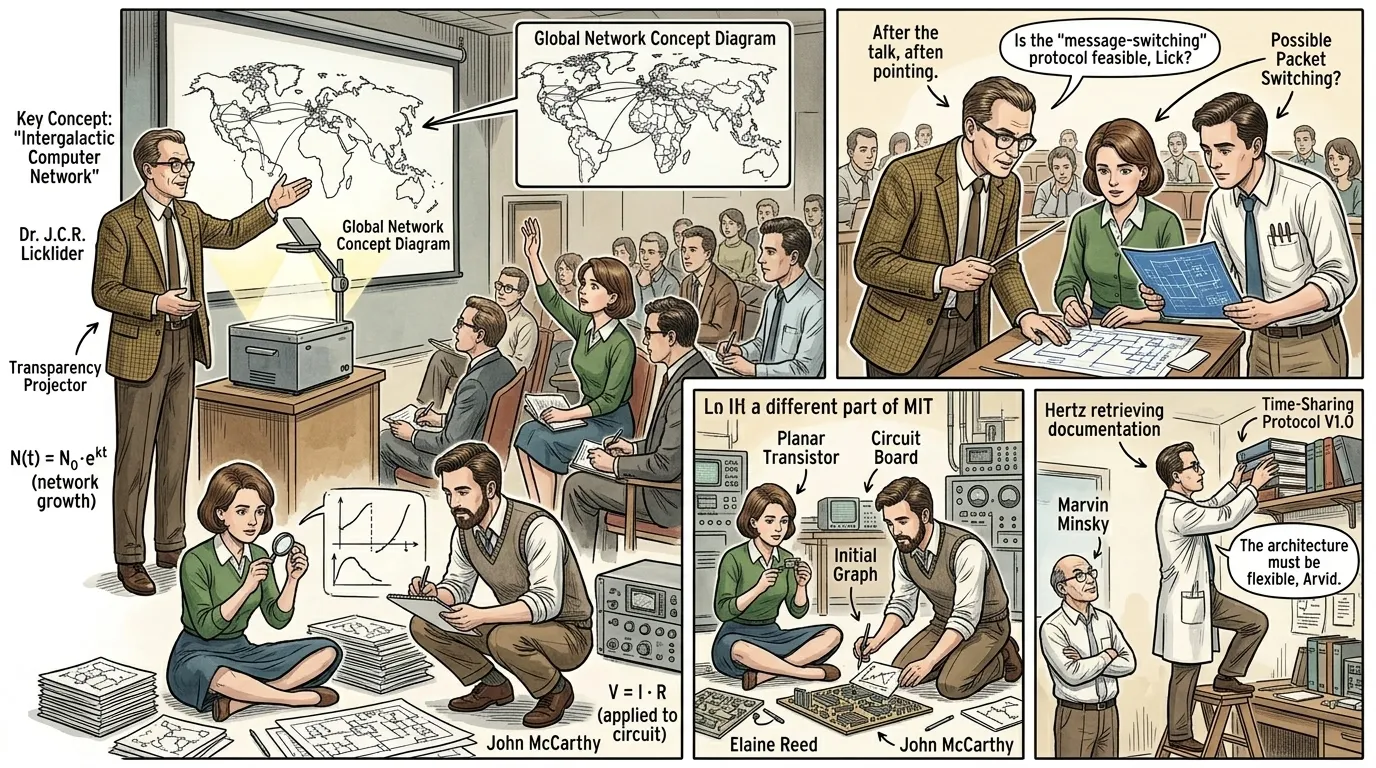
J.C.R. Licklider's profound vision extended beyond simple time-sharing. In 1962, he articulated the concept of an 'Intergalactic Computer Network,' a vast global network connecting computers and users, enabling universal access to data and programs from any point on Earth.
""The essence of this network," Licklider explained to a group of MIT researchers, gesturing towards a complex schematic on a transparency projector, "is not merely connecting two machines, but fostering a pervasive digital commons. Imagine a global library, a vast repository of information and computational power, instantly available to anyone, anywhere. It's about more than data transfer; it's about shared experience." A young researcher, Dr. Elaine Reed, asked, "But Dr. Licklider, how do we overcome the inherent latency and reliability issues across such vast distances? A truly 'intergalactic' network presents monumental engineering challenges.""
Page 5
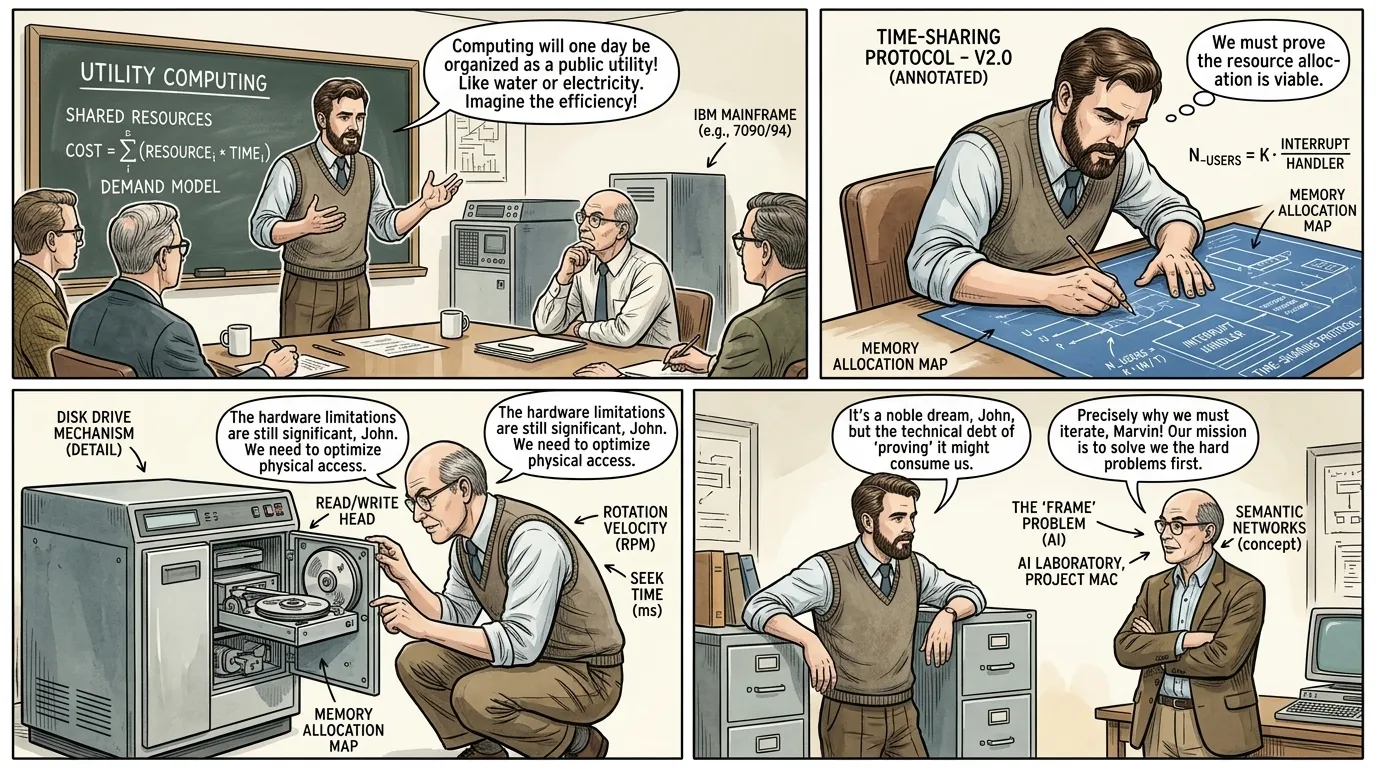
Concurrent with Licklider's network vision, John McCarthy, another foundational figure in AI and computer science, championed the idea of 'utility computing.' This concept fundamentally shifted the economic model of computing, moving away from expensive, dedicated hardware to shared, metered services.
""The argument for utility computing is compelling, John," noted fellow AI pioneer Marvin Minsky during a departmental meeting, "but convincing institutions to relinquish control over their dedicated machines, to trust their critical operations to a shared infrastructure, will be a formidable psychological and technical hurdle." John McCarthy, a man with a focused gaze and a neat beard, replied, "Indeed, Marvin. But the economies of scale are undeniable. Individual departments or companies purchase only the processing time and storage they consume, rather than investing in underutilized hardware. The shift is from owning infrastructure to subscribing to a service. It enables access to vastly more powerful systems than any single entity could afford.""
Page 6
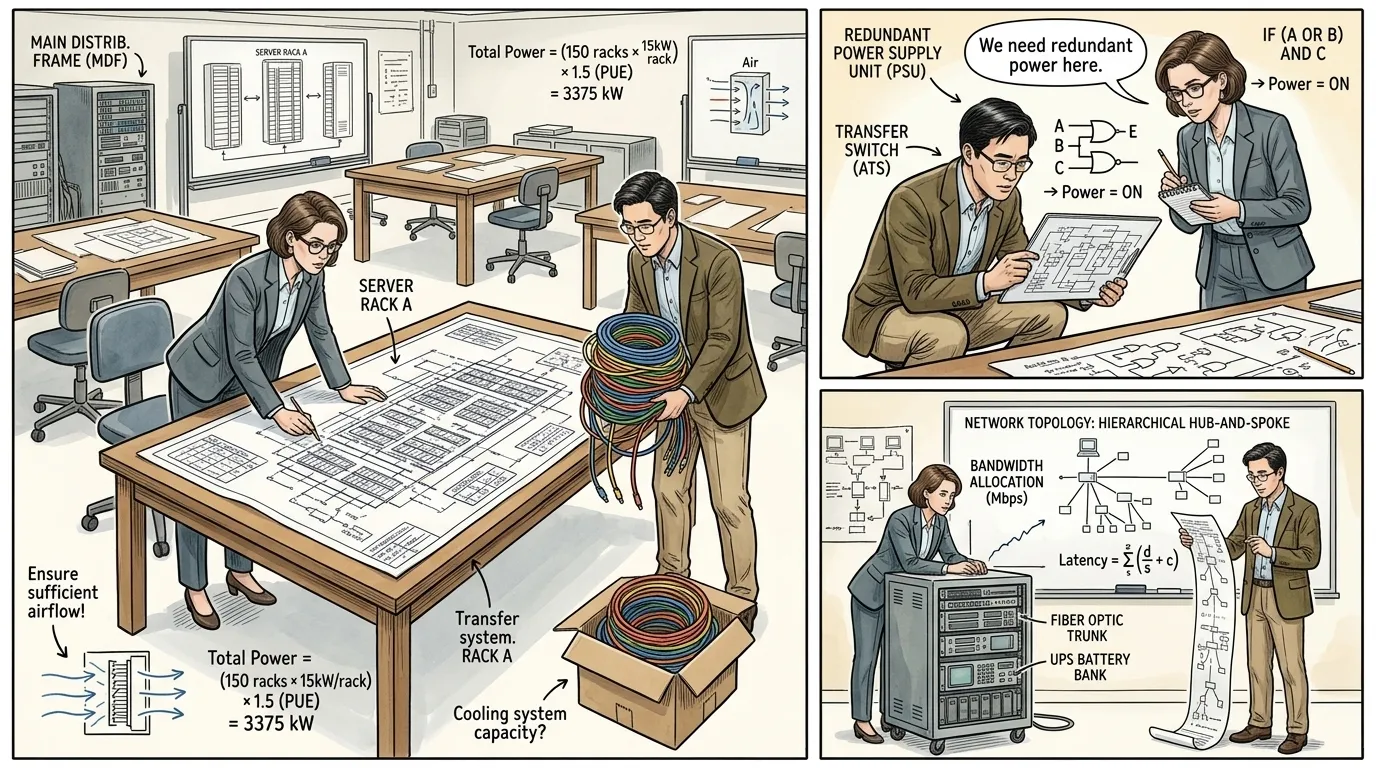
The visionary concepts of networked access and utility computing faced immense practical hurdles. Creating a truly robust, scalable, and secure system required breakthroughs in data center design, networking protocols, and sophisticated software that could virtualize and manage vast pools of resources.
""The sheer complexity of managing data across thousands of machines, ensuring its integrity and availability, is daunting," remarked Dr. Sarah Jenkins, a systems architect in the late 1990s, reviewing blueprints for a new data center. "How do we abstract away the physical location of the data from the user? How do we ensure redundancy without excessive cost, and scale without compromising performance? It's a delicate balance." Her colleague, David Chen, responded, "Indeed, Sarah. Early attempts often struggled with single points of failure. The breakthrough will come from truly distributed architectures, where data isn't just stored centrally, but replicated across multiple independent nodes. This requires sophisticated distributed file systems and object storage protocols that didn't exist in Licklider's or McCarthy's time.""
Page 7
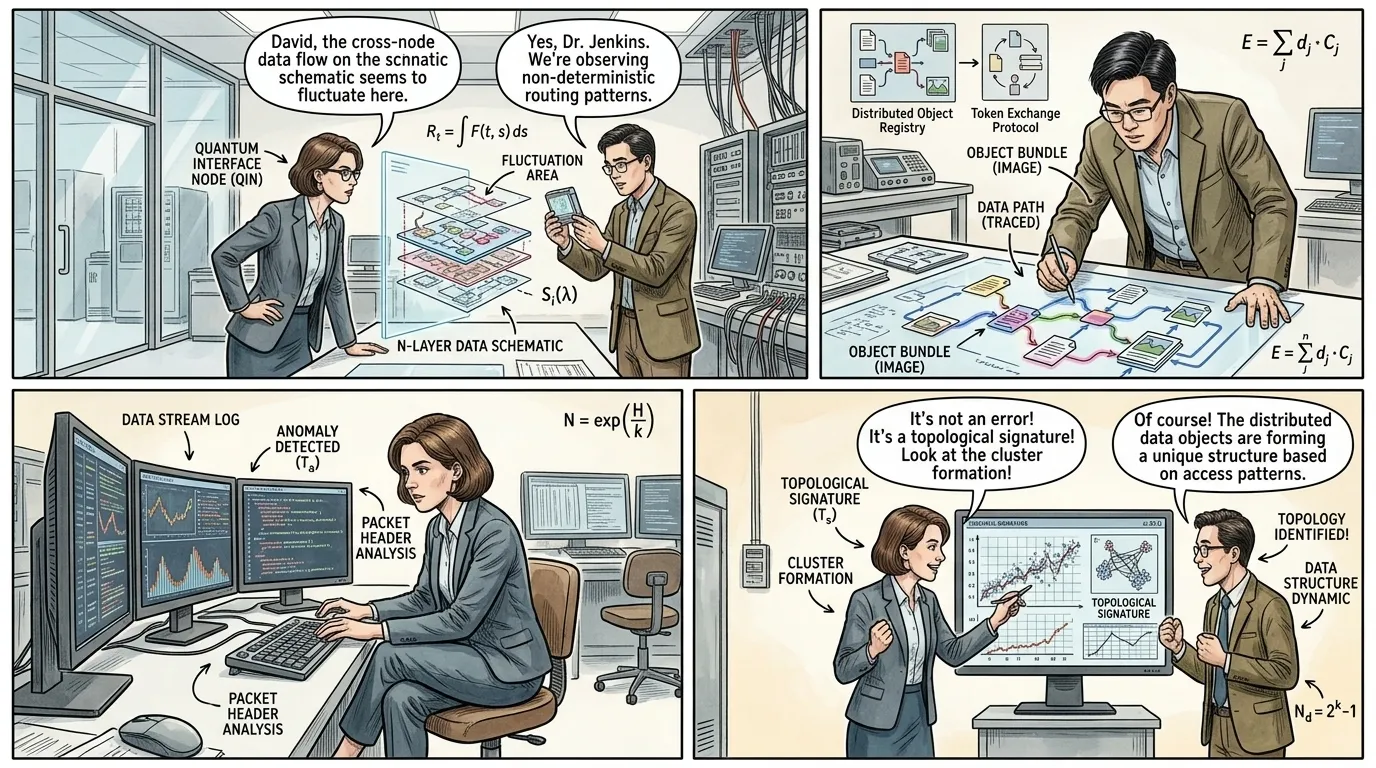
The critical technical breakthrough enabling modern cloud storage arrived with the development of scalable object storage systems. Instead of traditional file systems that organize data in hierarchical folders, object storage treats data as discrete units, each with a unique identifier and metadata, distributed across a massive network of servers.
""With object storage," Chen explained to Jenkins, tracing a path on the holographic schematic, "each piece of data—a document, an image, a video—becomes an 'object.' This object isn't tied to a specific server or even a specific disk. It's replicated and distributed across multiple data centers, meaning if one server fails, the data remains available. This is the core of our resilience." Jenkins nodded, "And the abstraction layer is crucial here. The user doesn't need to know where their data resides; they simply request it, and the system intelligently retrieves the closest, most available copy. It's the practical realization of Licklider's universal access, built upon a foundation of distributed redundancy and elasticity.""
Page 8
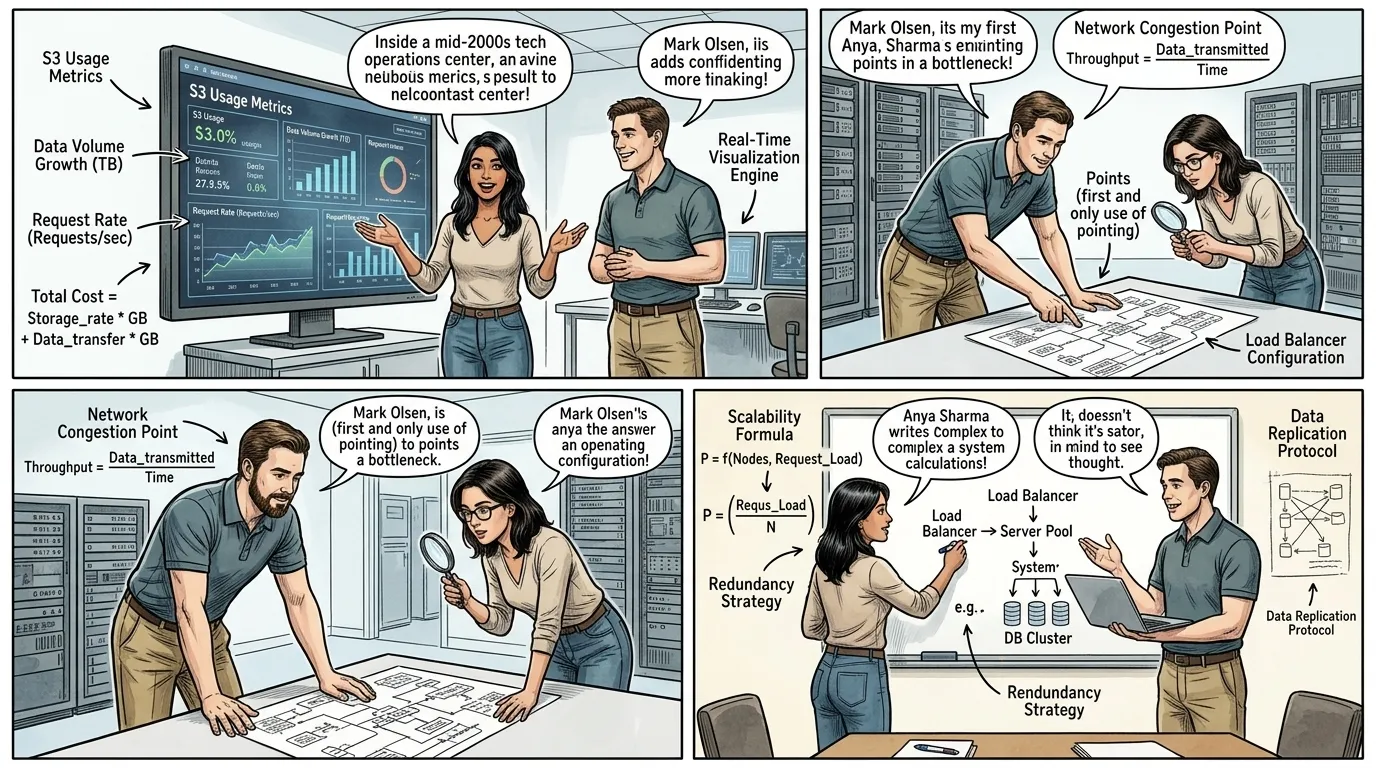
The conceptual visions and technical breakthroughs coalesced into tangible services in the early 21st century. Amazon Web Services (AWS) launched its Simple Storage Service (S3) in 2006, offering a highly scalable, reliable, and cost-effective object storage solution to the public, effectively democratizing access to massive computing infrastructure.
""This is monumental," exclaimed a lead engineer, Anya Sharma, during the S3 launch debrief, looking at usage statistics projected on a screen. "The adoption rates are exceeding all our projections. Businesses, from startups to enterprises, are embracing this model. They no longer need to provision their own storage hardware; they simply pay for what they use." Her colleague, Mark Olsen, added, "Indeed, Anya. We have fully realized the vision of 'resource pooling' and 'abstraction' that Licklider and McCarthy dreamed of. By making vast storage available as a utility, we've freed countless organizations from the burden of infrastructure management, allowing them to focus on innovation. S3 embodies McCarthy's idea that 'computers can be organized as a public utility,' offering an unprecedented level of elastic storage.""
Page 9
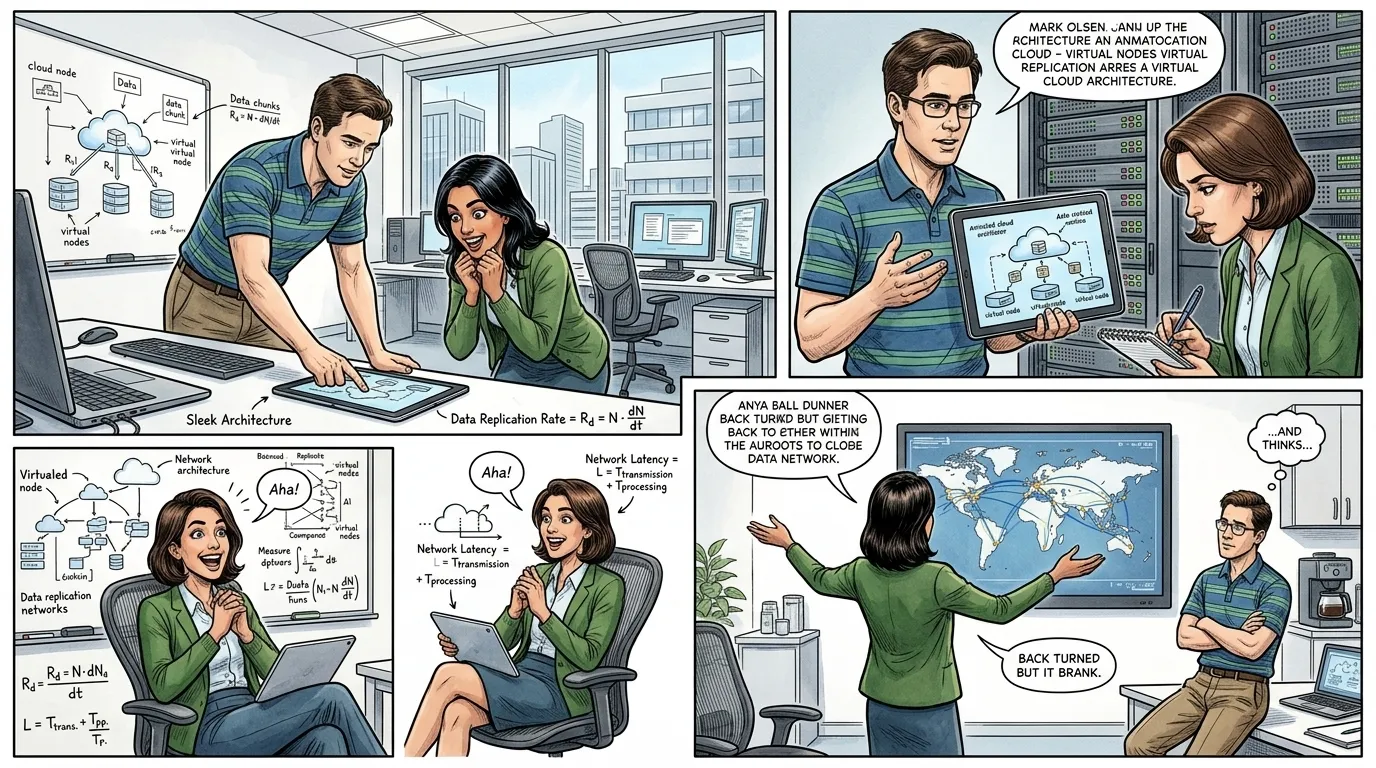
At its core, cloud storage operates on principles of distributed redundancy and elasticity. When a user uploads data, it is broken into smaller chunks, encrypted, and replicated across multiple geographically dispersed servers and data centers. This ensures high availability and resilience against hardware failures.
""Think of it like this," Olsen explained, demonstrating on a tablet showing a simplified cloud architecture, "when you upload a file, it's not saved to one physical disk. Instead, our system intelligently duplicates it—sometimes many times—and distributes those copies across different servers, even in different regions. This distributed redundancy is why, if one data center goes offline, your data remains accessible from another." Sharma elaborated, "And that's where the 'cloud' metaphor truly comes alive. It's a vast, interconnected network where resources flex and expand on demand. The user experiences a seamless, virtually limitless storage solution, entirely decoupled from the underlying physical infrastructure. This elasticity means you can scale your storage capacity up or down instantly, without needing to purchase or manage any hardware.""
Page 10
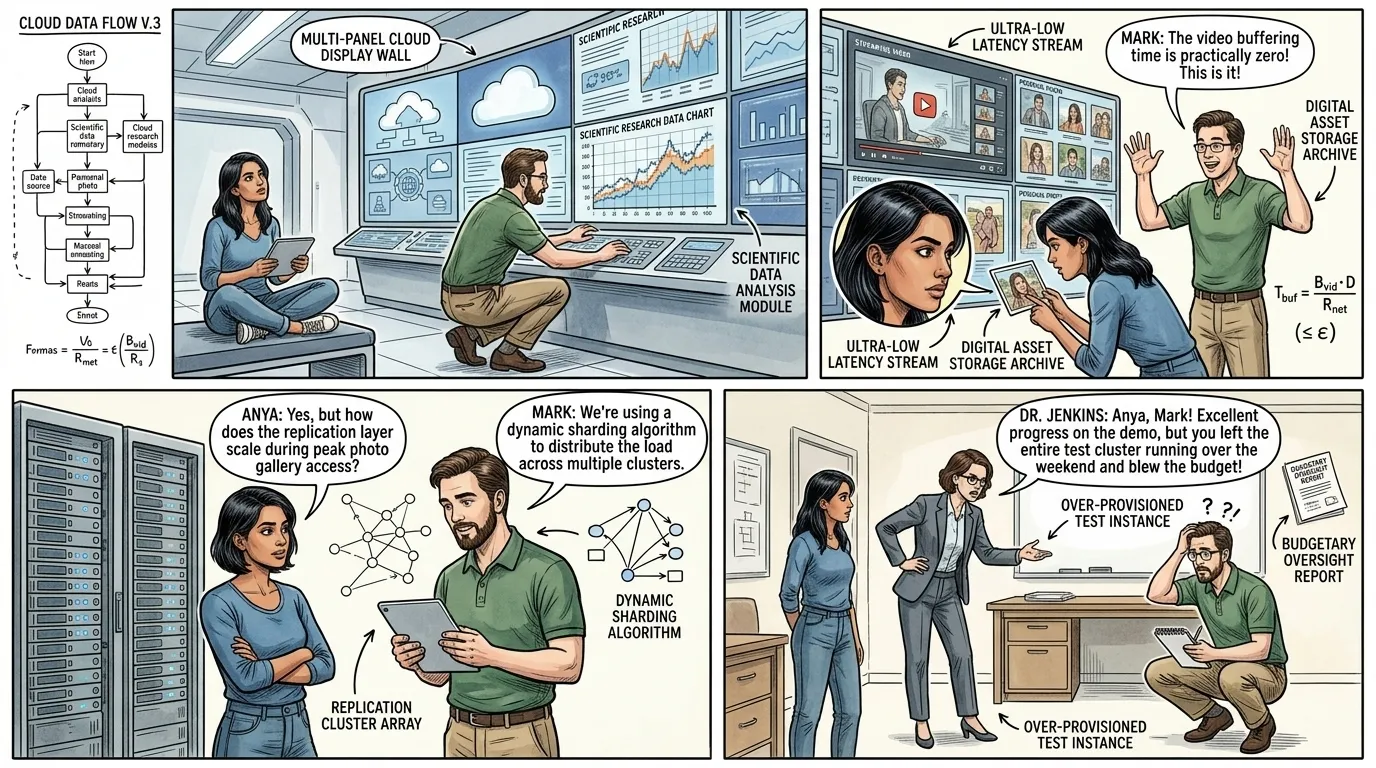
Cloud storage has fundamentally reshaped the digital landscape, enabling unprecedented collaboration, scalability, and data accessibility. From personal photo archives to global enterprise databases, the 'cloud' has become the ubiquitous backbone of the modern information age, transforming how we create, share, and consume digital content.
""The implications are vast," Sharma reflected, observing a multi-panel display showing various cloud applications. "From streaming services delivering media globally, to scientific researchers sharing massive datasets for collaborative breakthroughs, to everyday individuals backing up their memories—it all relies on this distributed architecture. It's no longer about owning data, but about accessing it, managing it, and leveraging its power." Olsen concluded, "Indeed. Cloud storage has fostered an era of unprecedented digital freedom and innovation. It's the invisible utility that powers our interconnected world, a testament to the enduring vision of universal access and shared computing resources.""
About this story
- Location: Global
- Audience: general readers
Questions and answers
Read Wonder Inventions on your phone
Wonder Inventions is available on Android. Get Wonder Inventions on Google Play.