Cloud Computing
Cloud Computing — an illustrated inventions story, set in Global. 10 illustrated pages, free to read on Wonder Inventions.
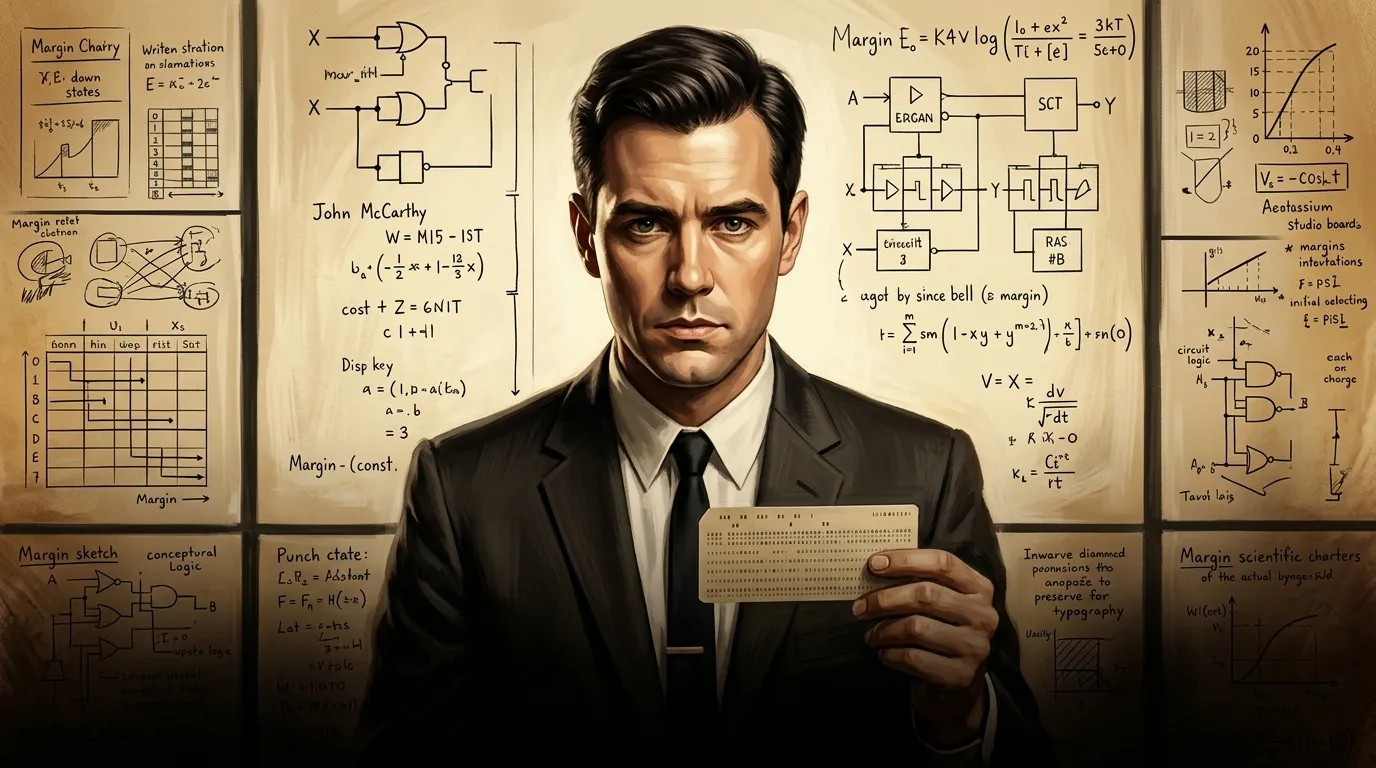
Page 1
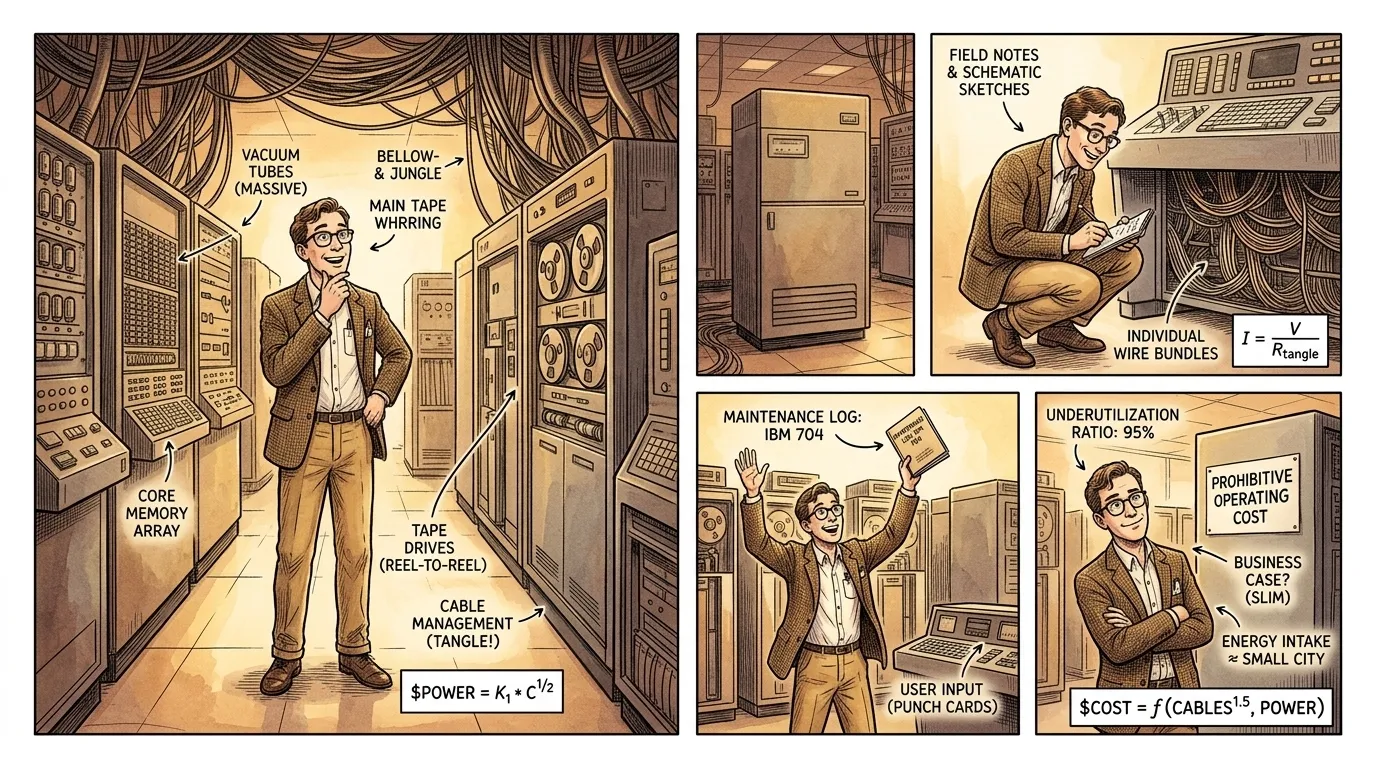
For decades, computing power remained tethered, an expensive and often underutilized resource. Businesses had to purchase, house, and maintain their own server racks, a significant capital expenditure demanding specialized IT teams. This localized model created bottlenecks and inefficiencies, limiting innovation for smaller enterprises.
"Dr. Aris Thorne, a contemporary computer science historian, remarks, 'In the mid-20th century, accessing significant computing power felt like owning your own power plant. The sheer infrastructure investment was prohibitive for many, stifling the rapid growth we now take for granted.'"
Page 2
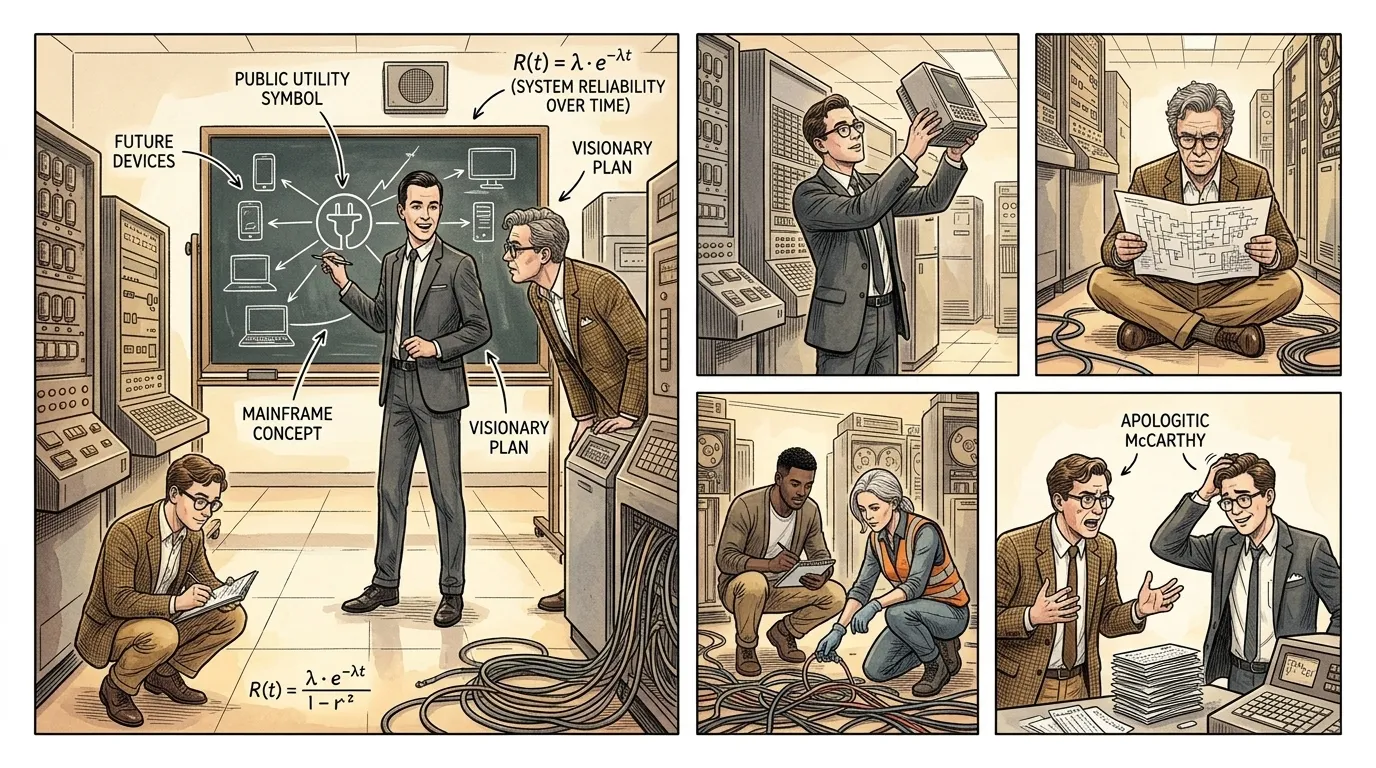
Before the commercialization of 'Cloud Computing,' early pioneers envisioned a world where computational resources were as readily available as electricity or water. This prescient idea challenged the conventional paradigm of owning every piece of hardware, suggesting instead a shared, on-demand infrastructure.
"Computer scientist and AI researcher John McCarthy famously articulated this concept in 1961, stating, 'If computers of the kind I have described become as popular as telephones, then computing may someday be organized as a public utility.' This foundational thought foresaw the democratization of computing power, a radical notion in an era dominated by mainframes."
Page 3
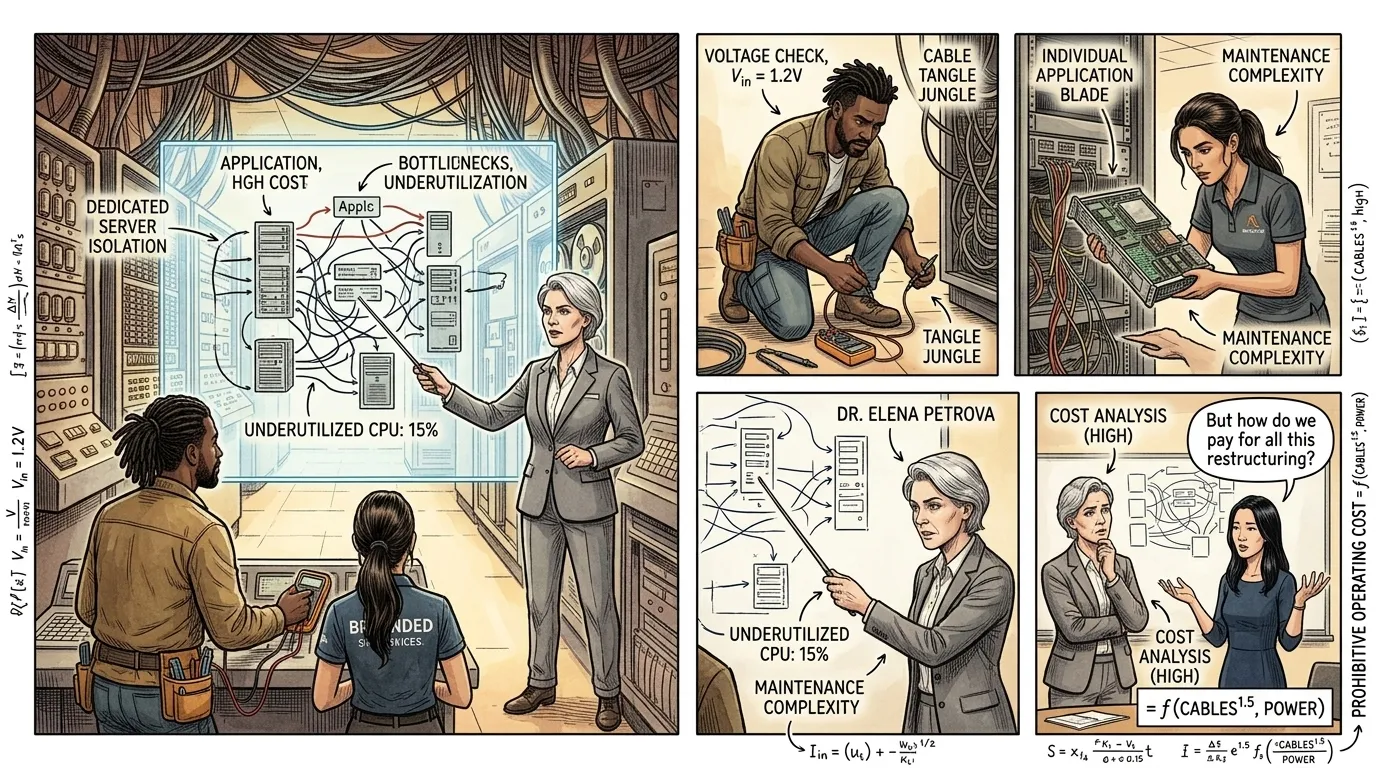
Traditional client-server architectures, while a significant advance from mainframes, still presented considerable limitations. Every application required dedicated physical servers, leading to substantial upfront costs, underutilized hardware, and complex scaling challenges.
"An experienced IT architect, Dr. Elena Petrova, 50s, sharp, analytical gaze, short silver hair, wearing a professional grey suit, points to a projected diagram. 'The issue wasn't merely hardware cost; it was agility. Each new demand meant procuring, installing, and configuring physical infrastructure. As Ralph Waldo Emerson once noted, 'The ancestor of every action is a thought,' but converting a thought into a scalable digital service was incredibly slow and expensive in the old client-server paradigm.'"
Page 4
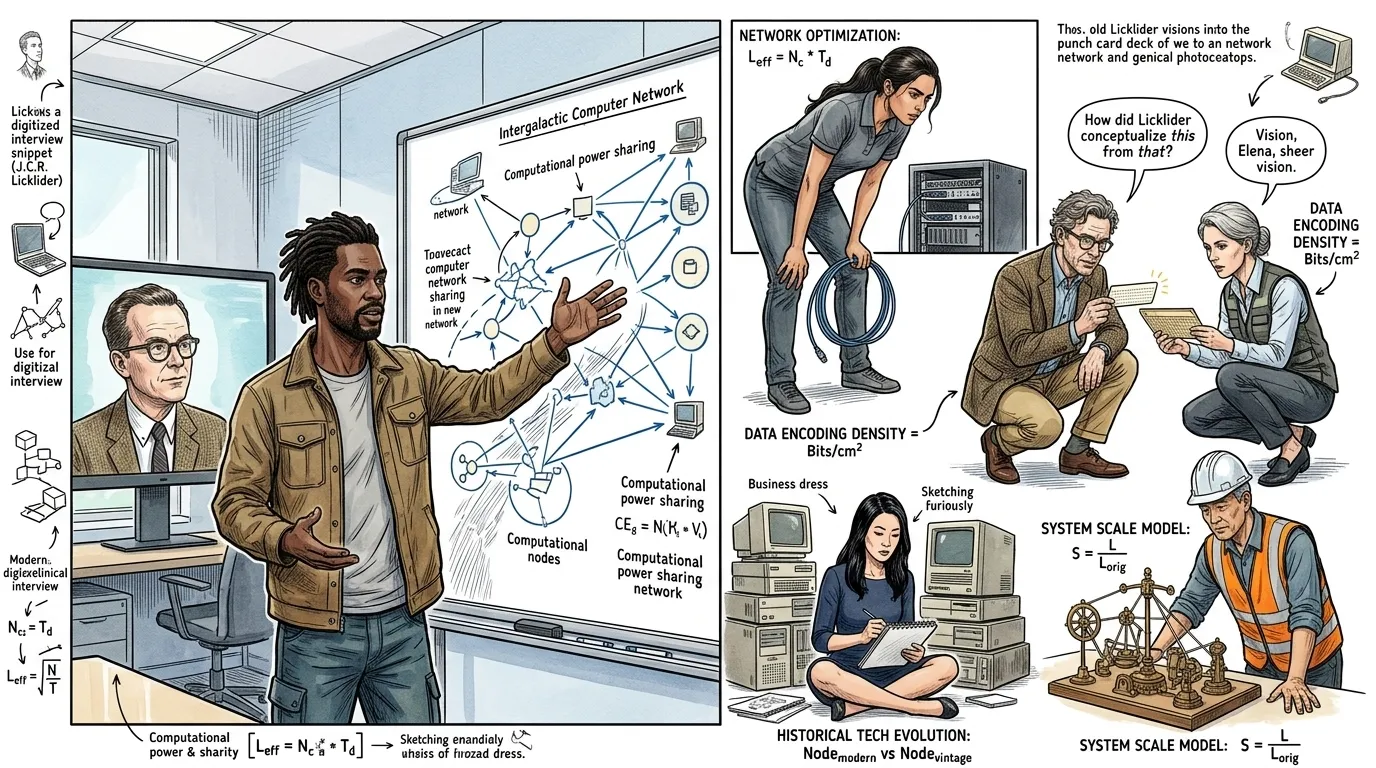
The conceptual groundwork for Cloud Computing traces back to visionaries like J.C.R. Licklider. In the early 1960s, he articulated the profound idea of an 'Intergalactic Computer Network,' where users could access data and programs from any location, a precursor to modern distributed computing principles.
"In a digitized historical interview snippet displayed on a screen, Licklider's voice states, 'We would have access to all programs and all data, from any location, at any time.' A contemporary network engineer, Marcus Bell, 40s, focused expression, short dreadlocks, wearing a practical work jacket over a t-shirt, gestures towards a complex network diagram on a whiteboard. 'This wasn't just about sharing files; it was about sharing computational power. This laid the intellectual foundation for everything that followed, decoupling computing from its physical location.'"
Page 5
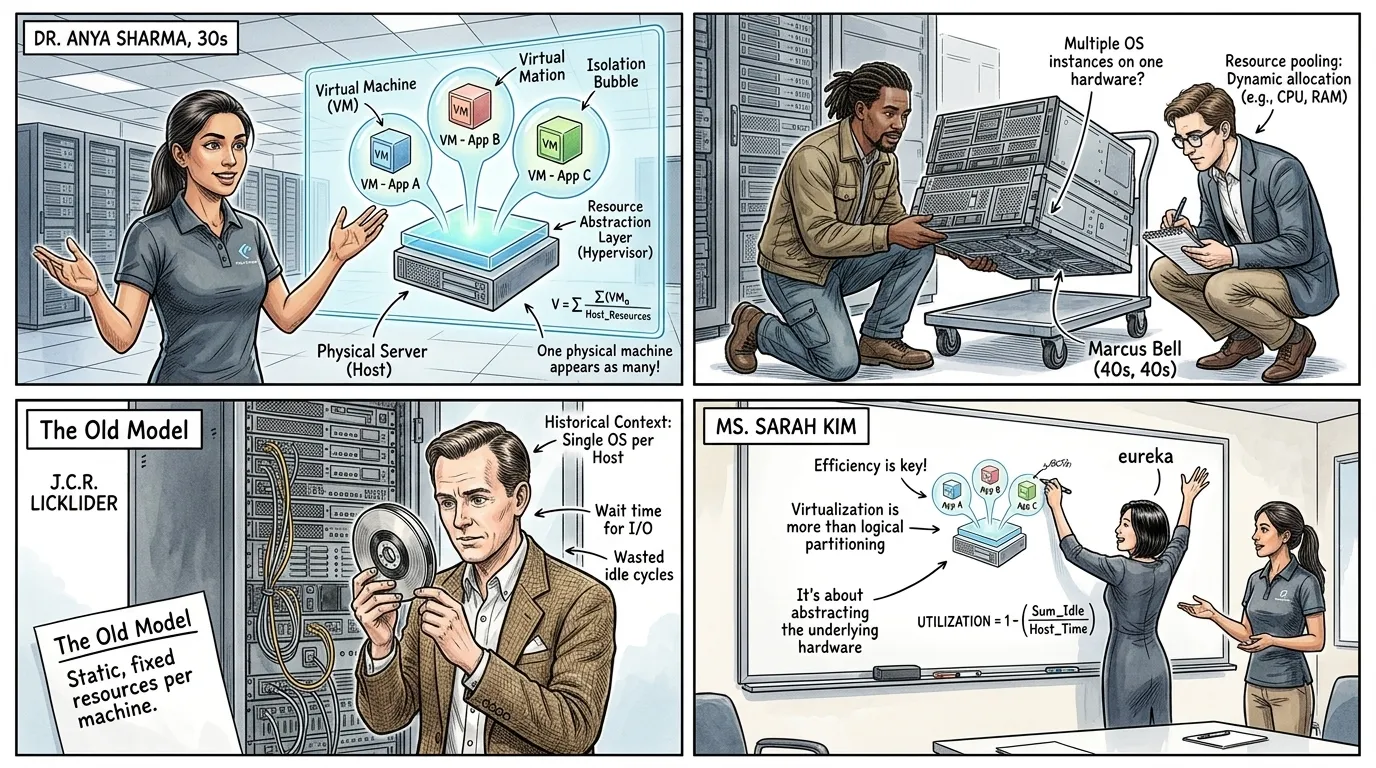
Translating these grand visions into practical reality presented immense technical hurdles. How could physical resources be effectively shared and managed without compromising performance or security? The answer lay in resource abstraction and, crucially, virtualization—a concept that allowed a single physical server to host multiple isolated virtual machines.
"A lead software architect, Dr. Anya Sharma, 30s, determined, intelligent eyes, long dark hair tied back, wearing a sleek tech-company branded polo shirt, explains, 'The real breakthrough was making a computer believe it was the only computer on a server, when in reality, it was just one of many. This virtualization, the ability to abstract away the underlying hardware, became the cornerstone. Before this, sharing a machine often meant compromises on performance or rigid allocation.'"
Page 6
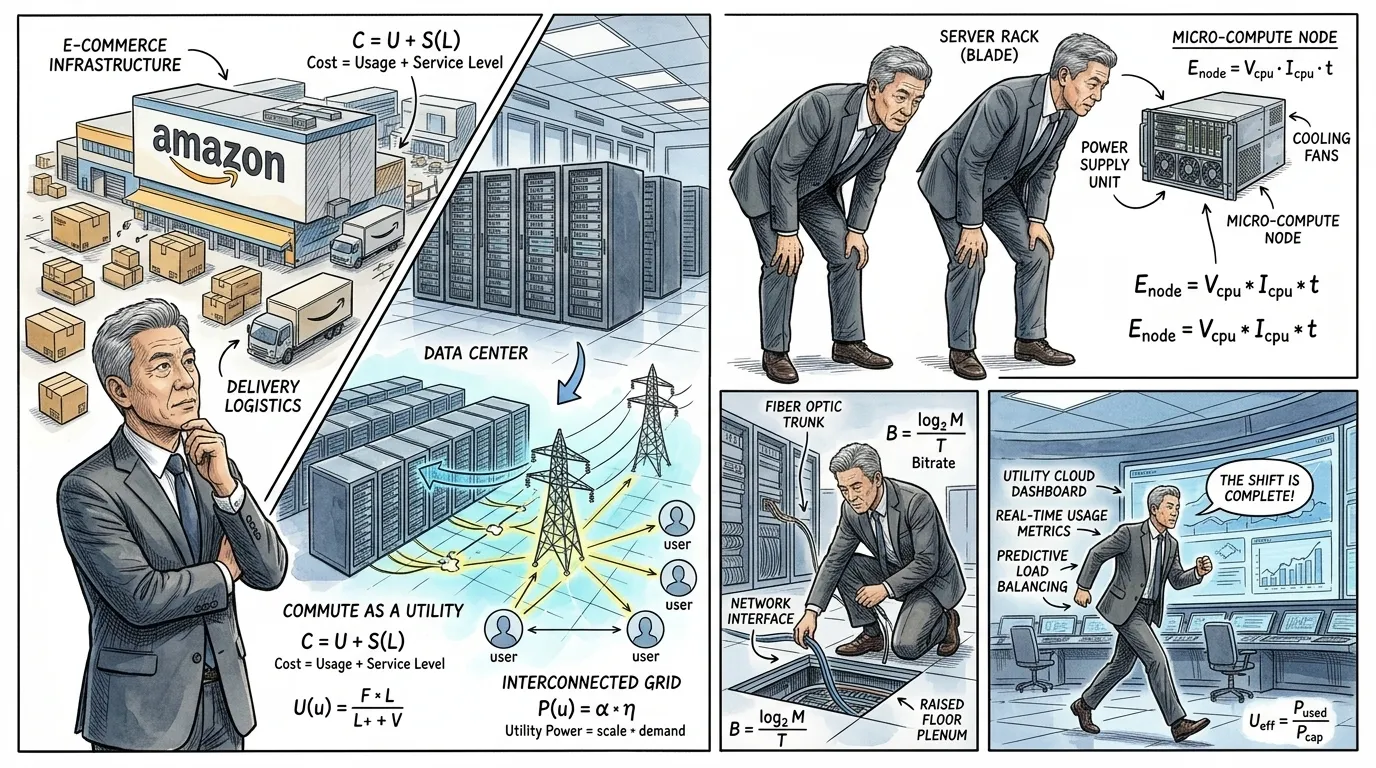
While virtualization laid the technical groundwork, the true commercialization of cloud computing began in earnest with Amazon Web Services (AWS) in 2006. Amazon, having built a robust, scalable infrastructure for its e-commerce operations, realized the potential to offer these computing resources as a service to others, transforming IT from a capital expense to an operational one.
"A business analyst, Mr. Hiroshi Tanaka, 50s, astute, calm demeanor, short grey hair, wearing a sharp business suit, observes, 'Amazon didn't invent virtualization, but they commercialized it at an unprecedented scale. They essentially asked, 'Why should every company build its own electric generator when they can plug into a reliable grid?' This shift, offering 'compute as a utility,' redefined an entire industry.'"
Page 7
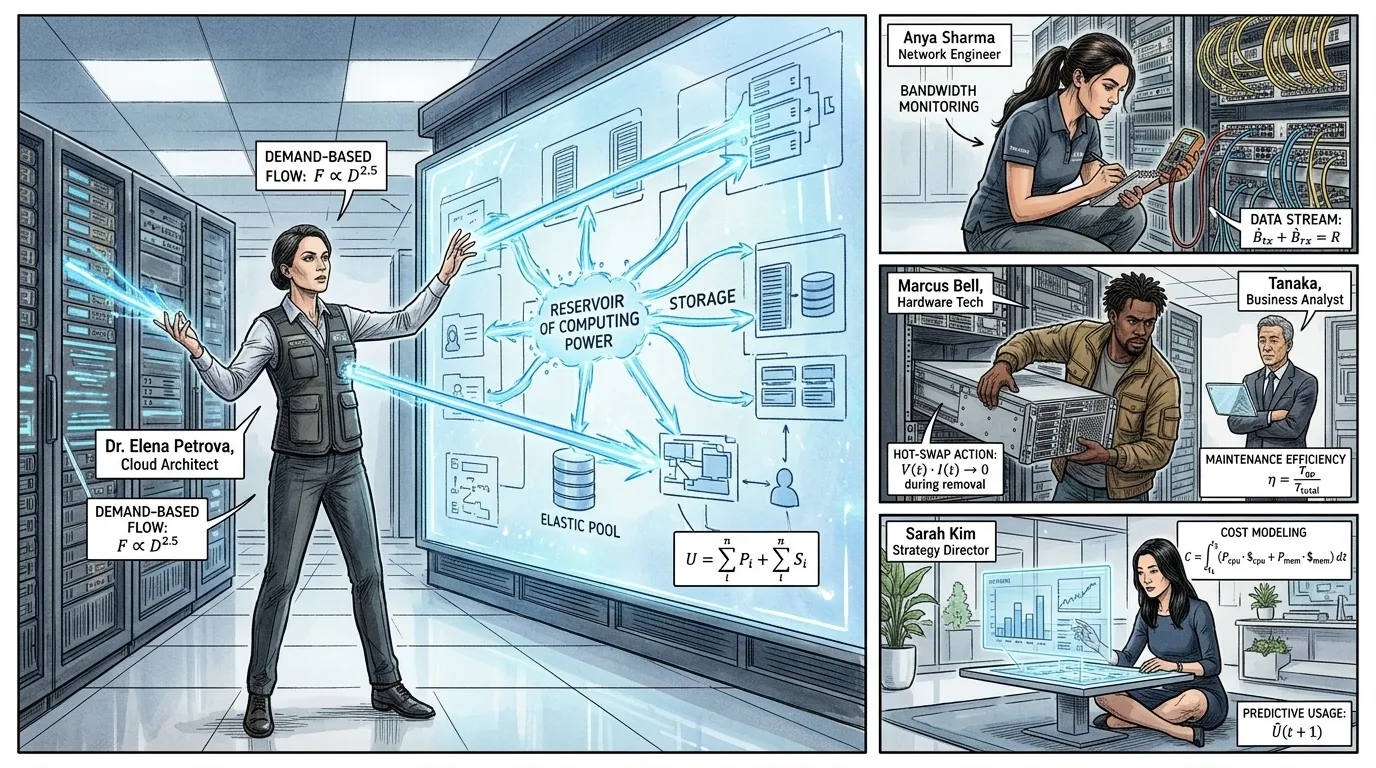
Cloud Computing fundamentally operates on principles of resource pooling and rapid elasticity. Large physical data centers house massive shared pools of computing power, storage, and networking capacity. Users can provision these resources on-demand, scaling up or down instantaneously based on their fluctuating needs, paying only for what they consume.
"A lead Cloud Architect, Dr. Lena Petrova, 40s, focused and energetic, dark hair pulled back, wearing a branded tech vest over a collared shirt, stands before an interactive diagram. 'Imagine a vast reservoir of computing power. You don't buy the lake; you simply draw what you need, when you need it. This 'rapid elasticity' is the magic: instantly provisioning hundreds of servers for a peak load, then releasing them when demand drops. It's a fundamental economic and technical shift.'"
Page 8
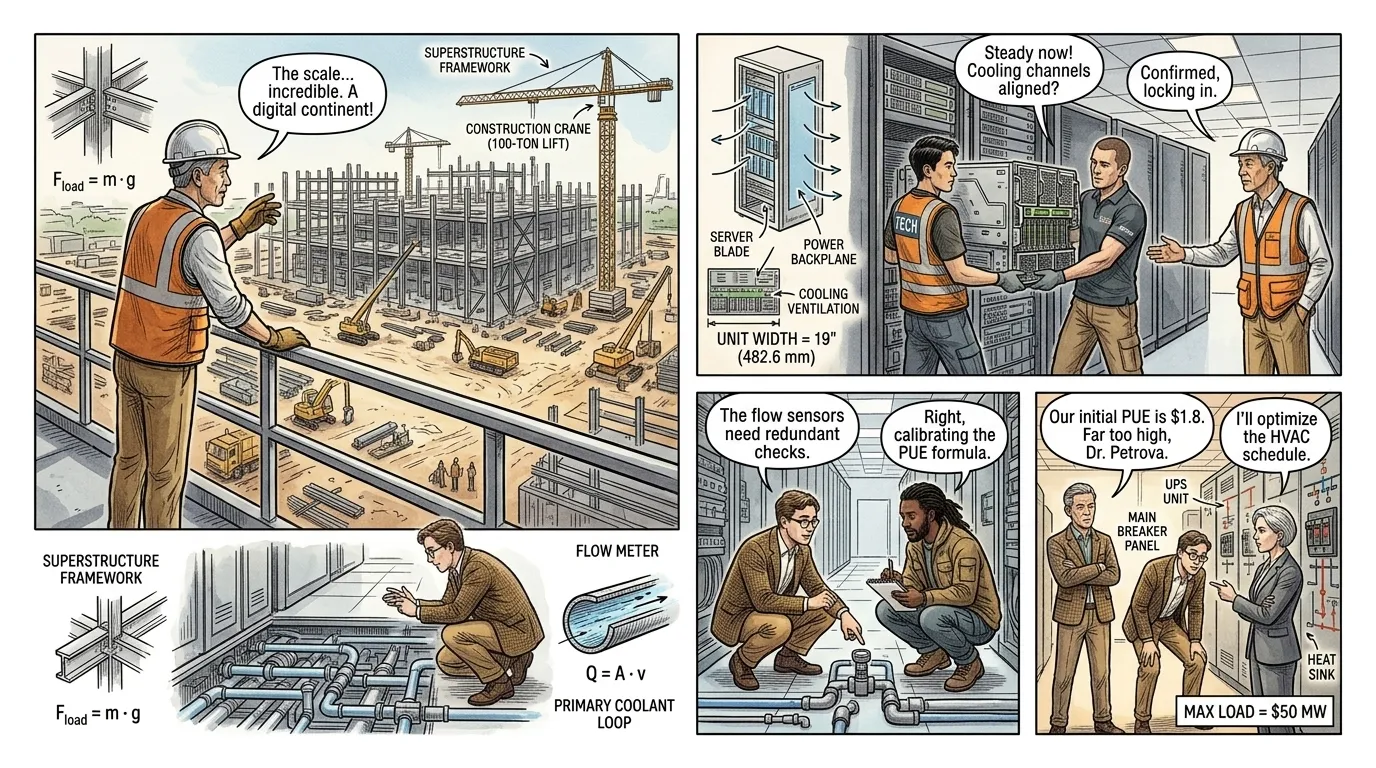
With the proven reliability and cost-effectiveness of cloud services, adoption surged globally. Enterprises migrated their legacy systems, startups built entirely on cloud infrastructure, and developers embraced the agility it offered. This led to the proliferation of hyperscale data centers—immense, purpose-built facilities forming the physical backbone of the digital world.
"A senior infrastructure engineer, David Chen, 50s, seasoned and authoritative, short grey hair, wearing a safety helmet and a high-visibility vest over a work shirt, oversees construction. 'Building these data centers is like building the new continents of the digital age. They are optimized for power efficiency and cooling, housing millions of servers. The scale is staggering, underpinning everything from streaming services to critical financial transactions.'"
Page 9
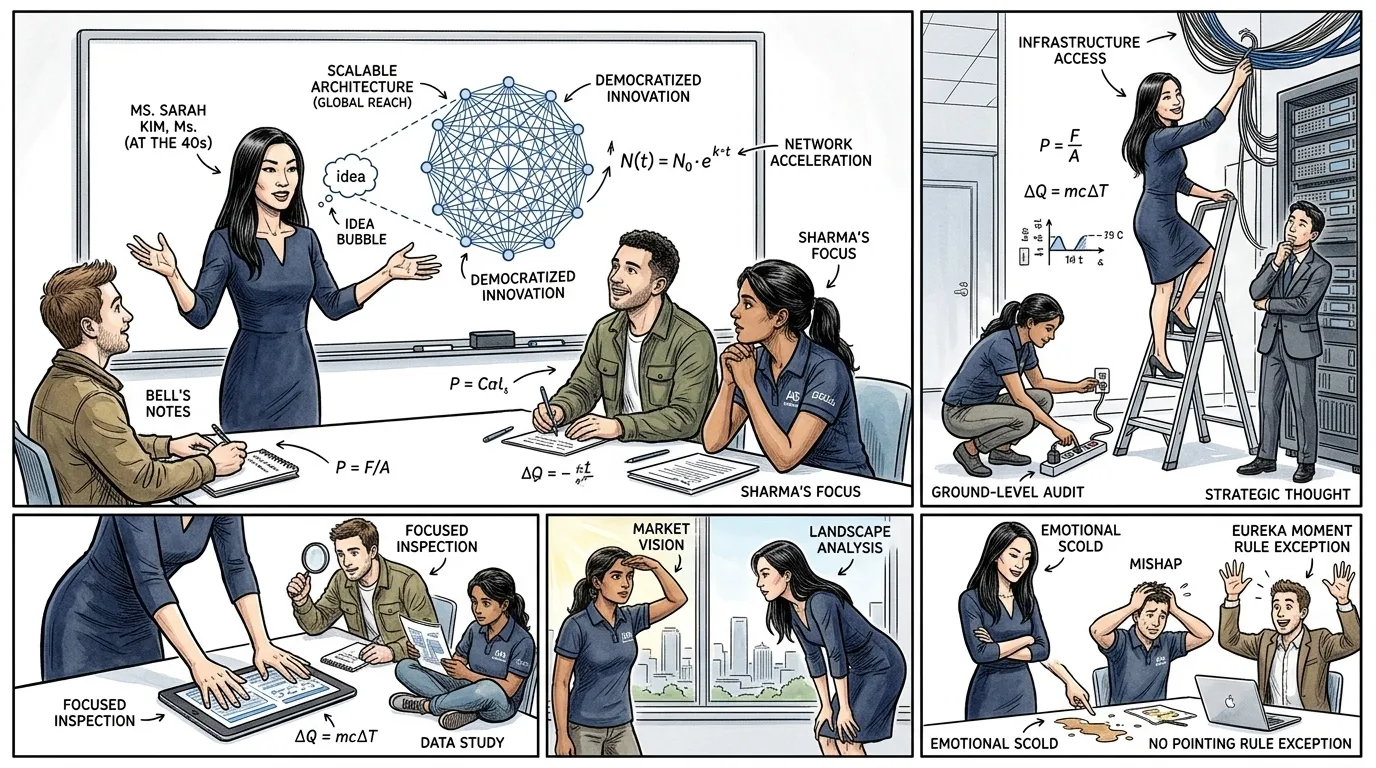
Cloud Computing democratized access to powerful computing resources, significantly lowering the barrier to entry for innovation. Startups could now compete with established giants, rapidly deploying new services without massive upfront infrastructure investments. This agility accelerated digital transformation across every industry, from finance to entertainment.
"A venture capitalist, Ms. Sarah Kim, 40s, sharp, visionary, long dark hair, dressed in a contemporary business dress, presents to a small group of enthusiastic startup founders. 'The cloud isn't just about cost savings; it's about speed and innovation. It allows a brilliant idea, from a garage or a small office, to scale to millions of users globally in days, not years. As Leonardo da Vinci observed, 'Simplicity is the ultimate sophistication.' Cloud computing simplified the complex infrastructure, unleashing unprecedented creative energy.'"
Page 10
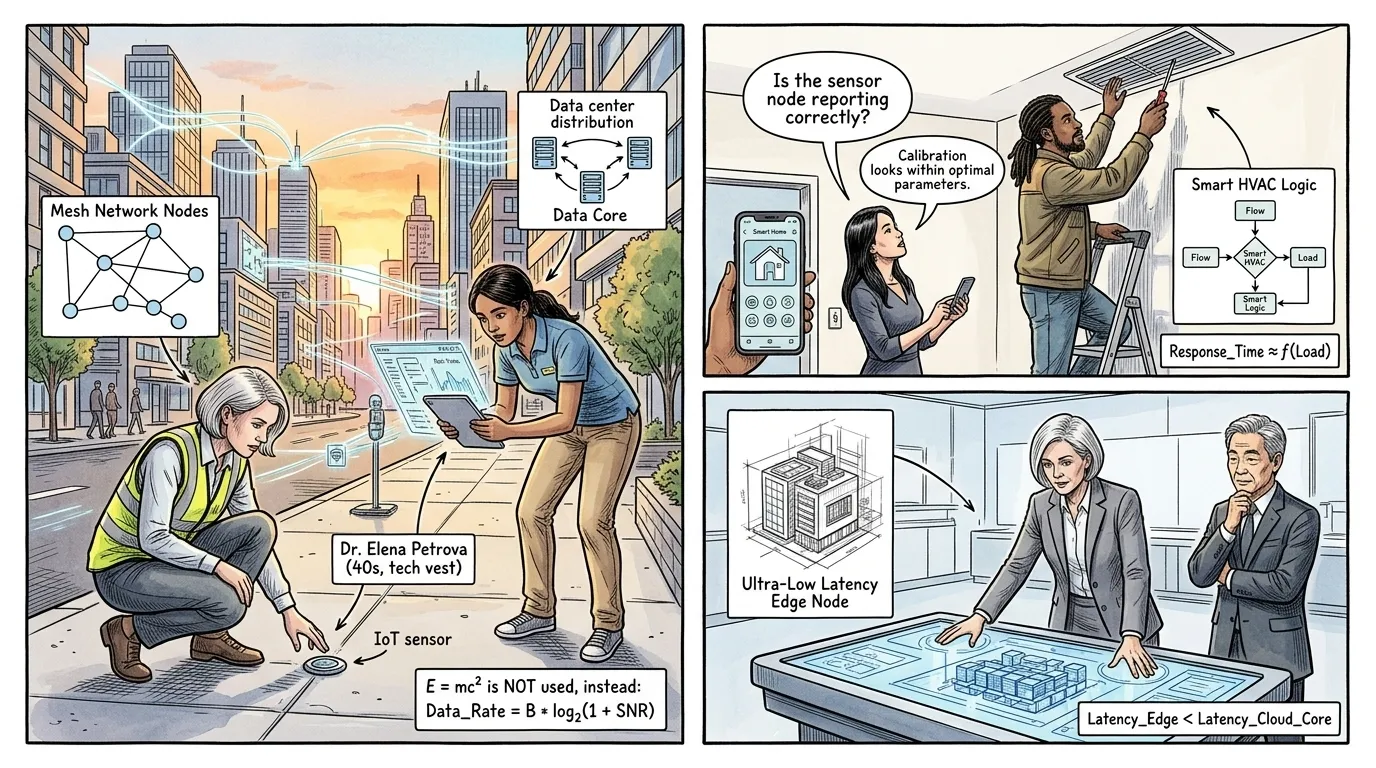
Cloud Computing has become the invisible foundation of the modern digital world, powering everything from streaming media and mobile apps to artificial intelligence and the Internet of Things. Its evolution continues, pushing the boundaries of edge computing, serverless architectures, and quantum cloud services, constantly reshaping our interaction with information and technology.
"As the documentary concludes, an omniscient voiceover reflects: 'From a visionary idea of computing as a utility, Cloud Computing has grown into an indispensable global infrastructure. Its legacy is not merely faster, cheaper computing, but the radical acceleration of human innovation itself, a testament to the enduring power of shared resources and collaborative vision.'"
About this story
- Location: Global
- Audience: general readers
Questions and answers
Read Wonder Inventions on your phone
Wonder Inventions is available on Android. Get Wonder Inventions on Google Play.