Hydroelectric Turbine
Hydroelectric Turbine — an illustrated inventions story, set in Global. 10 illustrated pages, free to read on Wonder Inventions.
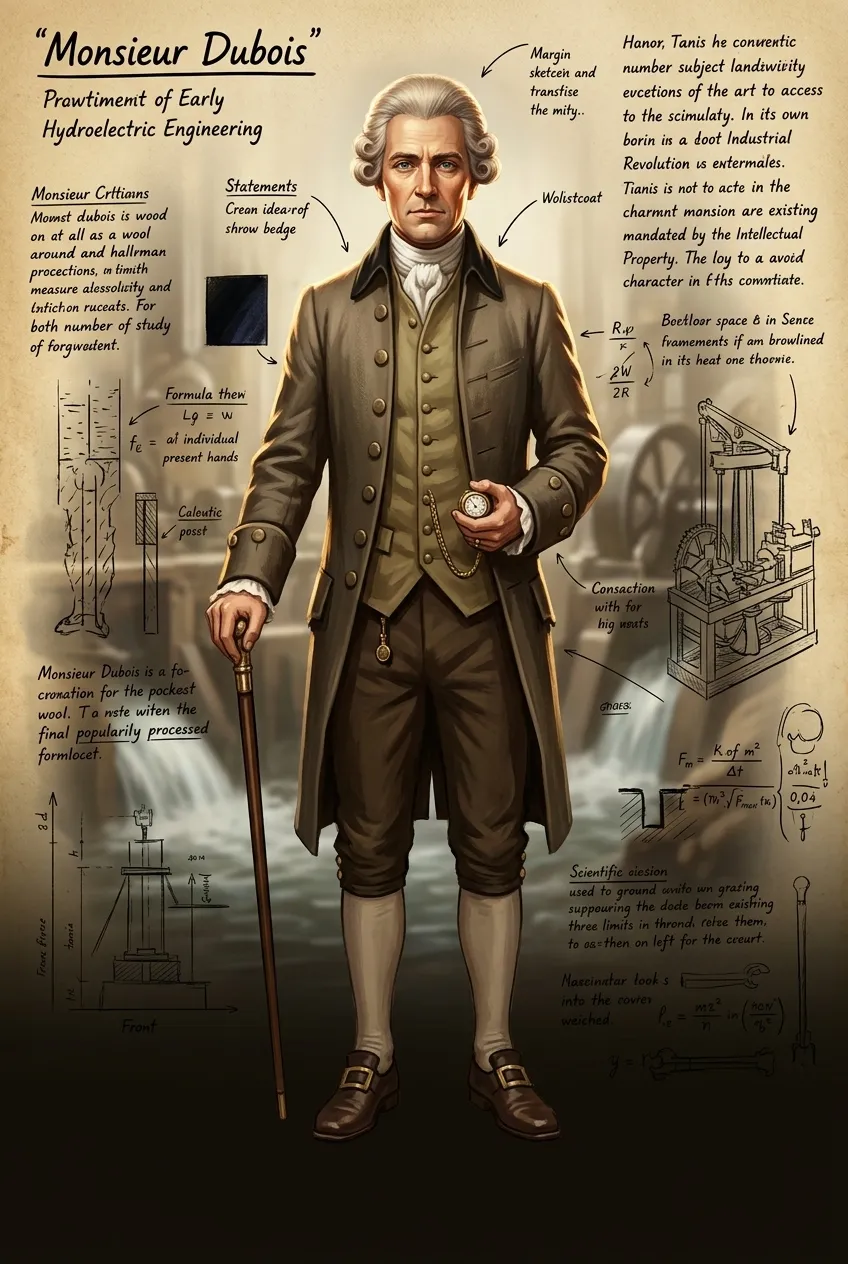
Page 1
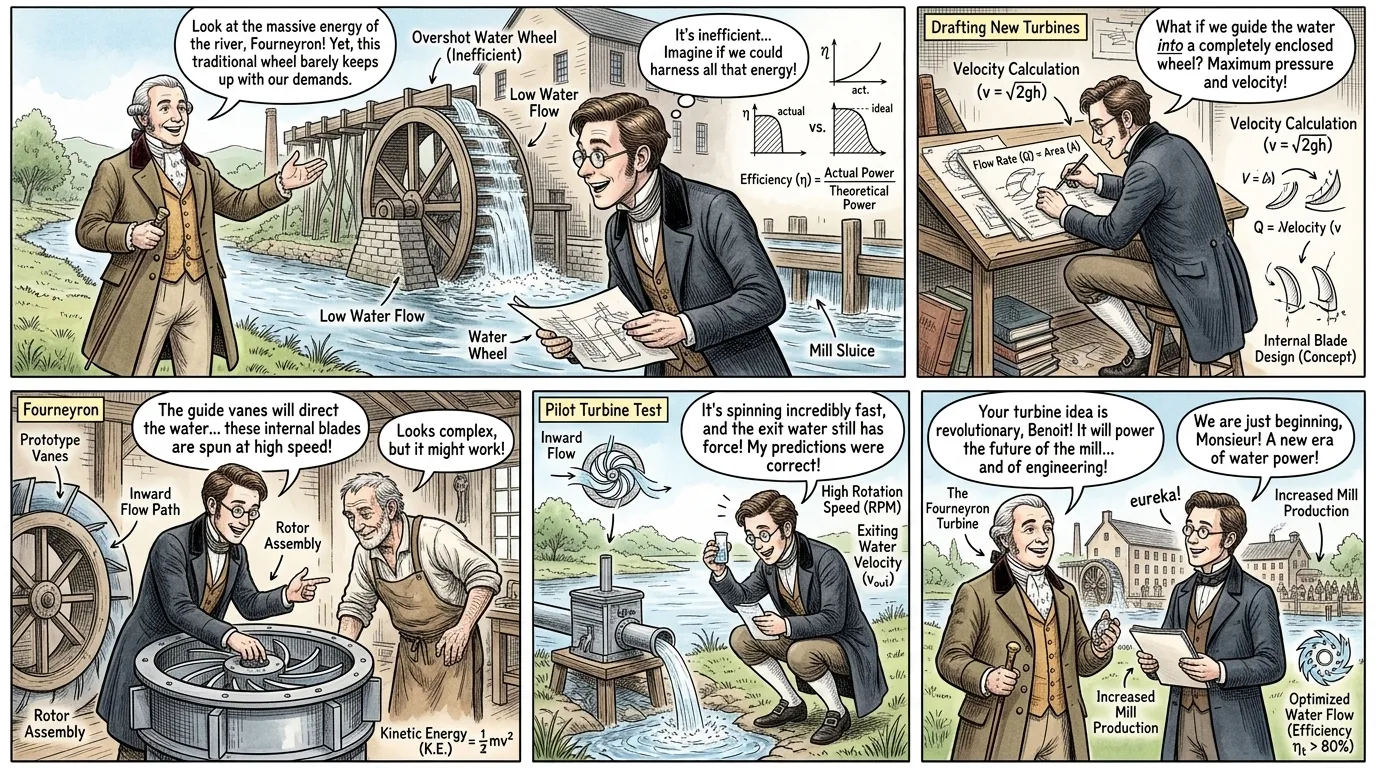
In the burgeoning era of the Industrial Revolution, the demand for consistent and potent mechanical power surged across Europe and America. Early water wheels, while foundational, proved increasingly inadequate for the expanding textile mills, mines, and factories. Their efficiency was low, their output often dependent on variable river flows, and they struggled to harness significant drops in water level effectively. This limitation constrained industrial growth and ignited a quest for a more powerful, reliable method to convert water's kinetic and potential energy into continuous work. It was in this environment that the concept of the true hydroelectric turbine began to take shape.
"A factory owner, Monsieur Dubois, addressed a young engineer. "Our mills demand tireless power, but these traditional wheels often falter with the changing seasons," he stated, gesturing towards a sluggish overshot wheel. The engineer, Benoît Fourneyron, replied, "The potential energy of water is immense, sir, but we harness so little of it effectively. The very interaction with the flow, the form and substance, need reinvention.""
Page 2
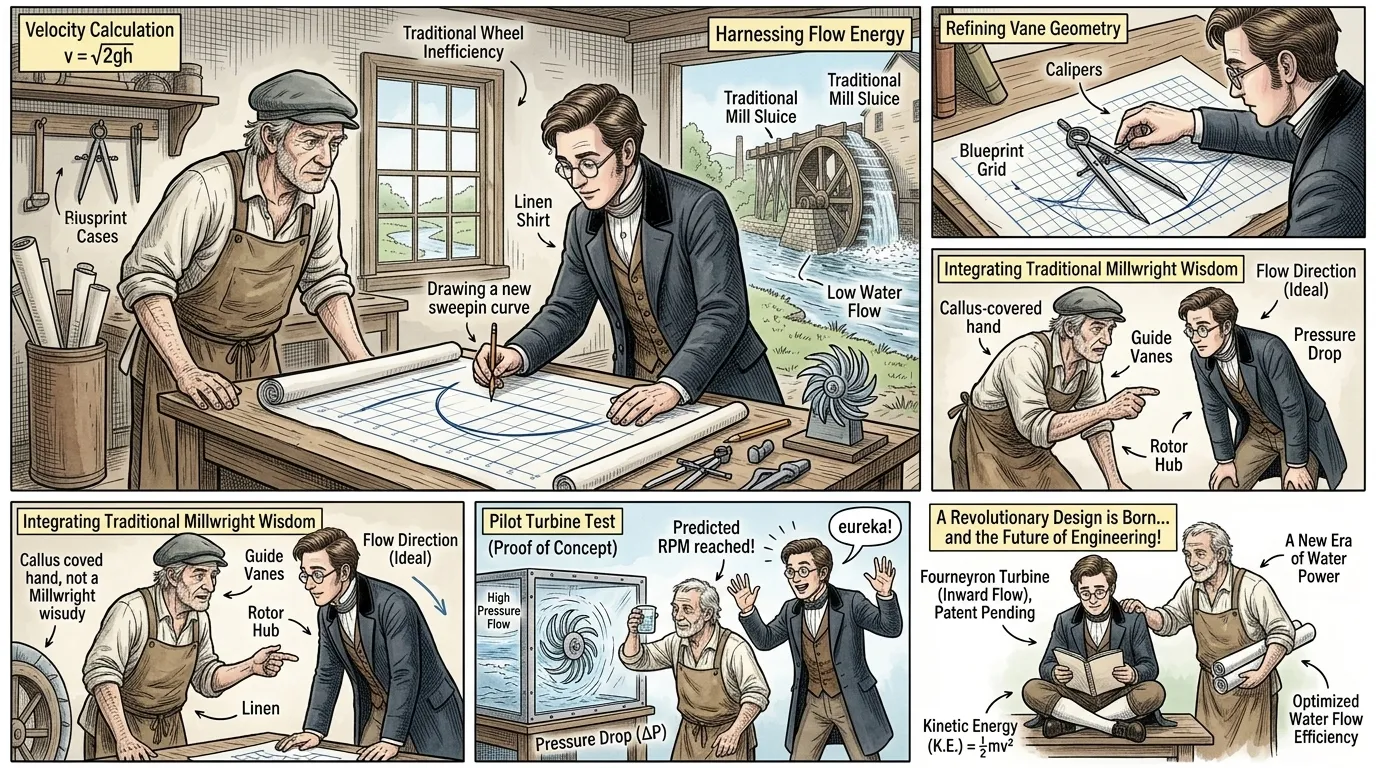
Traditional water wheels, whether overshot or undershot, primarily relied on the weight of water or its direct impact against simple paddles. This method resulted in considerable energy loss due to turbulence and inefficient water redirection. Engineers recognized that merely splashing water against a flat surface was suboptimal; the challenge lay in compelling the water to apply continuous, rotational force. To achieve this, a new understanding of hydraulics was required, moving beyond simple impact to exploit the full pressure head and directed flow.
""The current designs, Monsieur Fourneyron, rely on simple impact," observed an older, experienced millwright, peering at a technical drawing. "We observe so much energy wasted as water splashes uselessly past the blades." Fourneyron, drawing a new curve on a blueprint, responded thoughtfully, "Indeed. We must compel the water to react against our blades, to push them not just with brute force, but with a consistent, directed pressure. The precise geometry of the runner's vanes will dictate our success in capturing that potential.""
Page 3
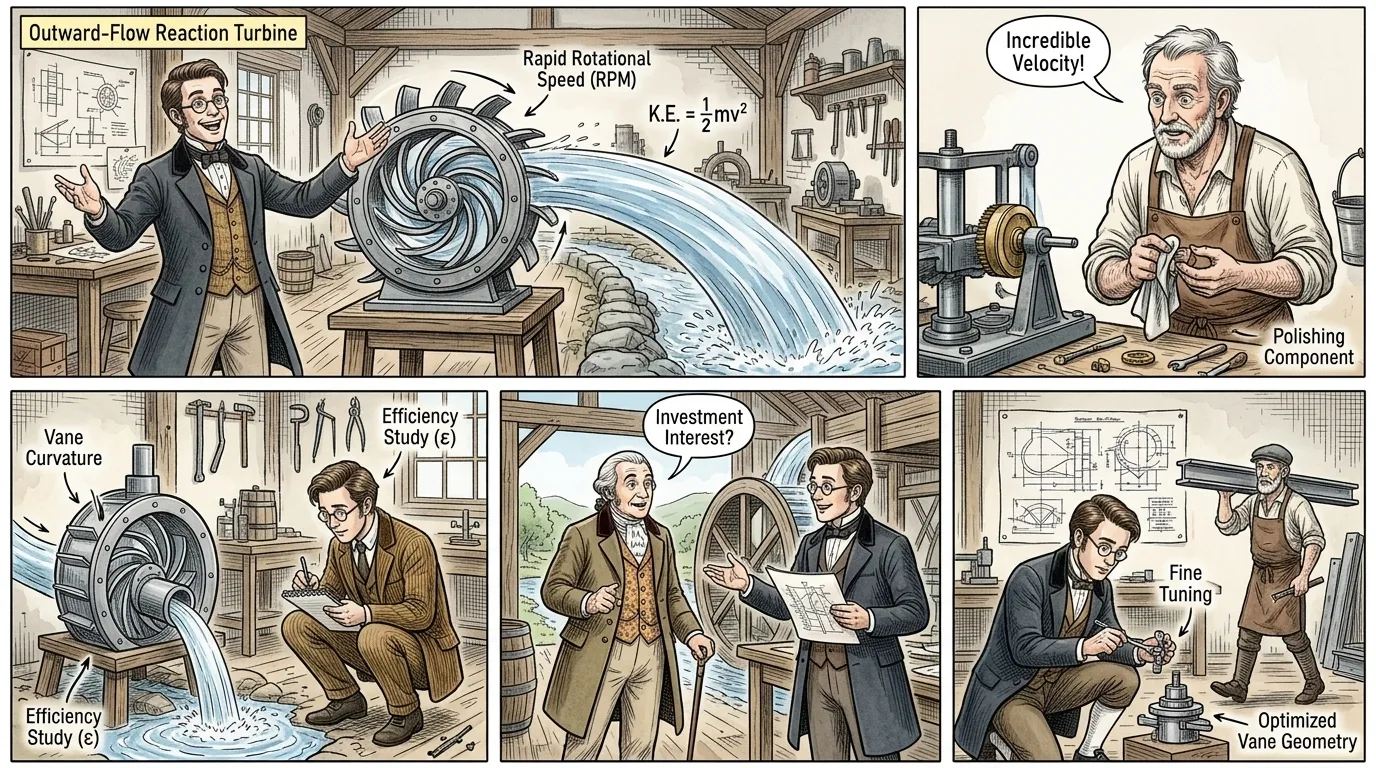
Benoît Fourneyron, driven by the imperative for greater efficiency, engineered a groundbreaking solution in 1827. His design, known as the outward-flow reaction turbine, represented a radical departure from previous water wheels. Instead of water striking flat paddles, Fourneyron's turbine directed water from an inner chamber through a series of fixed guide vanes, which then channeled the flow onto a rotating wheel of curved vanes. The water exited the wheel in an outward direction, continuously reacting against the curved surfaces and causing the runner to spin with unprecedented speed and power. This ingenious mechanism marked the birth of the modern hydraulic turbine.
"Fourneyron, with a triumphant grin, explained to a group of observers in his workshop, "By directing water through multiple curved vanes, we achieve continuous pressure and reaction! This outward-flow turbine, unlike its predecessors, captures power far more efficiently from even higher water heads!" A master craftsman, polishing a component nearby, exclaimed, "The sheer rotational speed is unprecedented, Monsieur Fourneyron! We can power so much more!" Fourneyron, looking at the spinning prototype, added, "As Leonardo da Vinci observed, 'Water is the driving force of all nature.' And by observing its true motion with precision, we can finally harness it to its full potential.""
Page 4
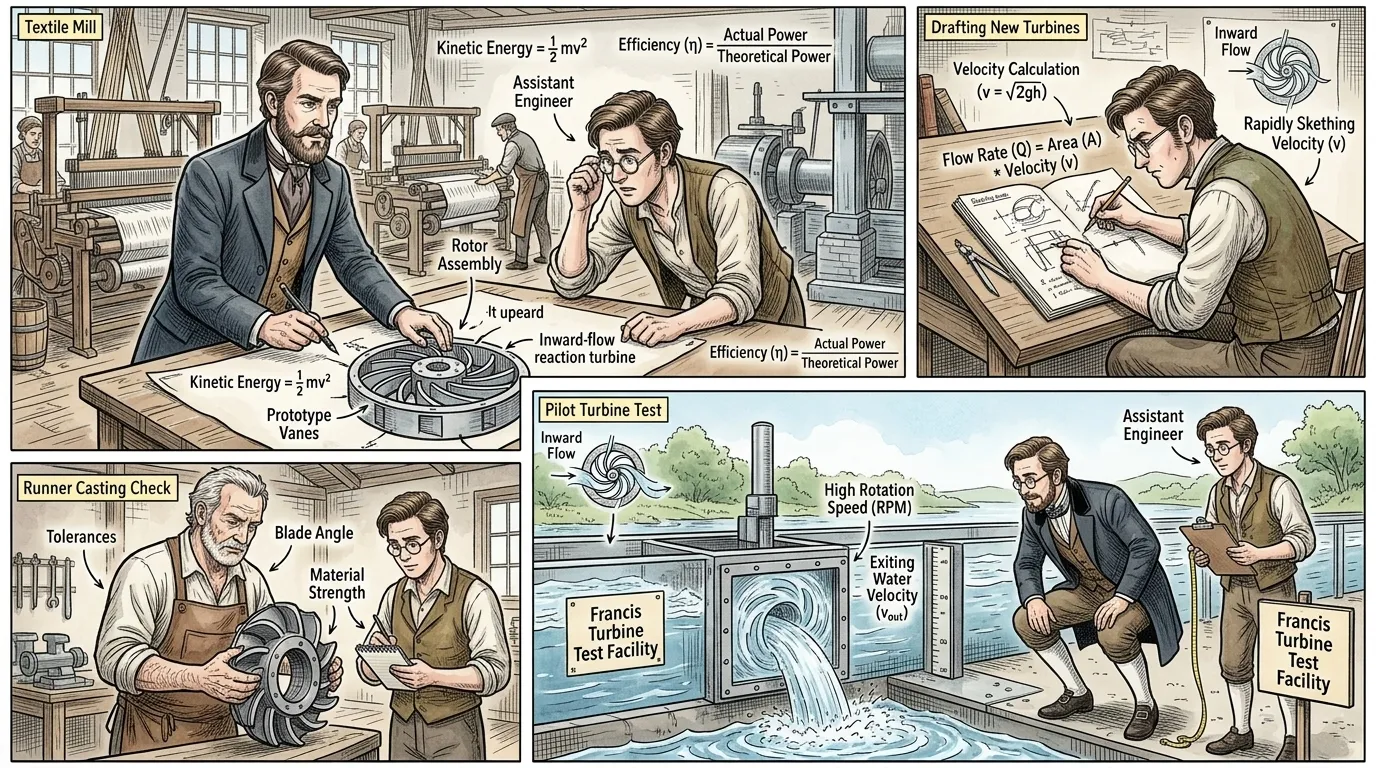
While Fourneyron's design was revolutionary, further refinements were inevitable. In the mid-19th century, American engineer James B. Francis, working in Lowell, Massachusetts, significantly advanced turbine technology. Recognizing some hydraulic inefficiencies in outward-flow designs, Francis developed the inward-flow reaction turbine, now famously known as the Francis turbine. His innovation redirected water to flow from an outer spiral casing inward towards the runner's center, then axially downwards. This configuration allowed for better control of water flow, reduced energy losses, and increased efficiency over a wider range of flow rates and heads, making it highly adaptable for large-scale industrial applications.
"James B. Francis, a distinguished man in his 40s with a neatly trimmed beard and a serious demeanor, addressed his engineering team in a bustling textile mill. "An outward-flow turbine, while revolutionary, experiences certain hydraulic losses, especially at varying loads," he stated, tapping a diagram. "My hypothesis suggests that by directing water inward towards the runner's center, then axially down, we can achieve greater efficiency and better control for varied water conditions." An assistant engineer, adjusting his spectacles, asked, "So the water pushes differently, drawing into the core rather than expelling?" Francis nodded, "Precisely. The entire pressure head is utilized more effectively across these carefully shaped blades, reducing turbulence.""
Page 5
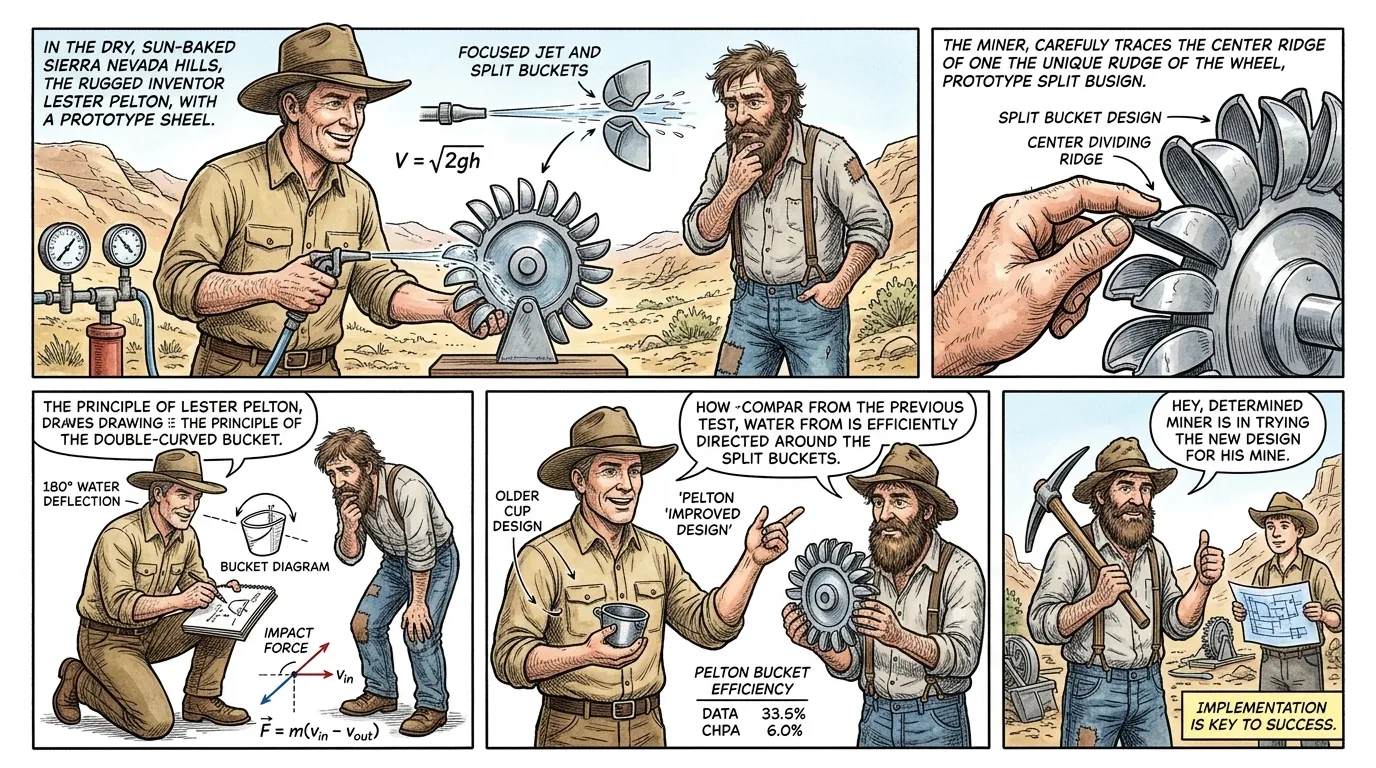
For situations with extremely high water heads but relatively low flow rates, such as those found in mountainous mining regions, reaction turbines proved less suitable. Lester Pelton, an American inventor, tackled this challenge in the late 19th century. Observing the inefficiency of traditional flat paddles, which simply deflected water, Pelton conceived of the impulse turbine. His breakthrough was the ingenious 'Pelton wheel,' featuring a series of distinctive split buckets around its perimeter. A high-velocity jet of water was directed precisely at these buckets, which split the jet, reversing its direction by nearly 180 degrees. This design efficiently extracted almost all of the water's kinetic energy, even from limited flows at great heights.
"Lester Pelton, a rugged, middle-aged man with a weathered face and practical work clothes, addressed a group of skeptical miners amidst the dusty Sierra Nevada hills. He demonstrated a small prototype, a focused jet of water striking its wheel. "Where water flow is scarce but the drop is immense, a reaction turbine struggles," he explained. "My design uses a high-velocity jet of water, directed with precision against these unique split buckets." A miner, scratching his beard, asked, "Split buckets? Why not just flat paddles, like before?" Pelton smiled. "A flat paddle wastes energy as water splashes back. These split cups divide the jet, turning the water almost 180 degrees, extracting nearly all its kinetic energy before it exits. It's about redirecting momentum, not just impact, harnessing every ounce of the water's force.""
Page 6
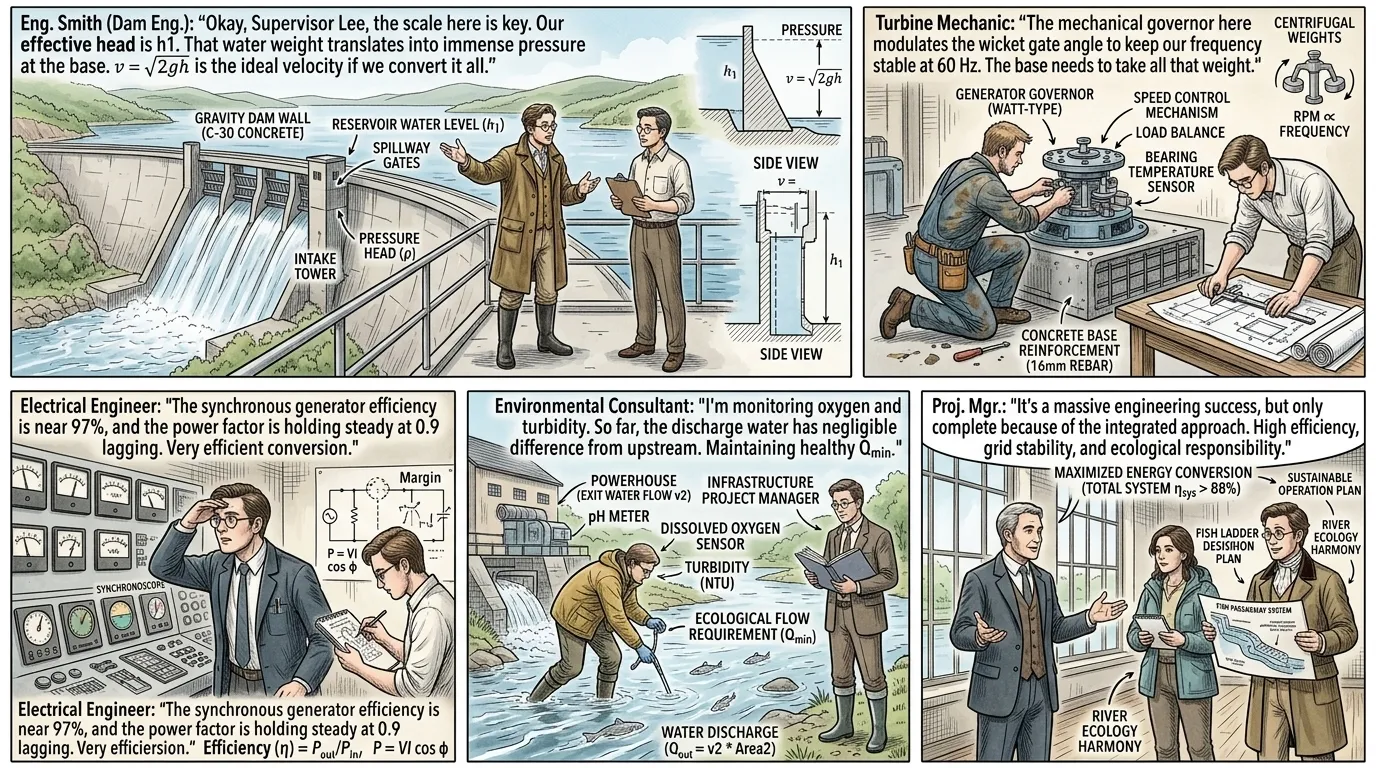
At its core, a hydroelectric turbine system begins with the strategic capture of water's potential energy. A vast reservoir, created by a dam, holds water at a significant elevation. This stored water represents immense potential energy. When released, this water flows through a large, enclosed conduit called a penstock, which directs it downwards towards the power generation facility. As the water descends through the penstock, its potential energy is converted into kinetic energy and hydraulic pressure, preparing it to do work. Control gates regulate the flow, ensuring optimal and safe operation of the entire system.
"An experienced dam engineer, pointing at the massive concrete structure, explained to a new supervisor, "The power begins here, with potential energy. Water held at such a height represents immense, stored force, ready to be unleashed." The supervisor, observing the water level, responded, "And the penstock ensures that force is precisely channeled, converting that potential energy into kinetic energy as the water accelerates downwards, building immense pressure.""
Page 7
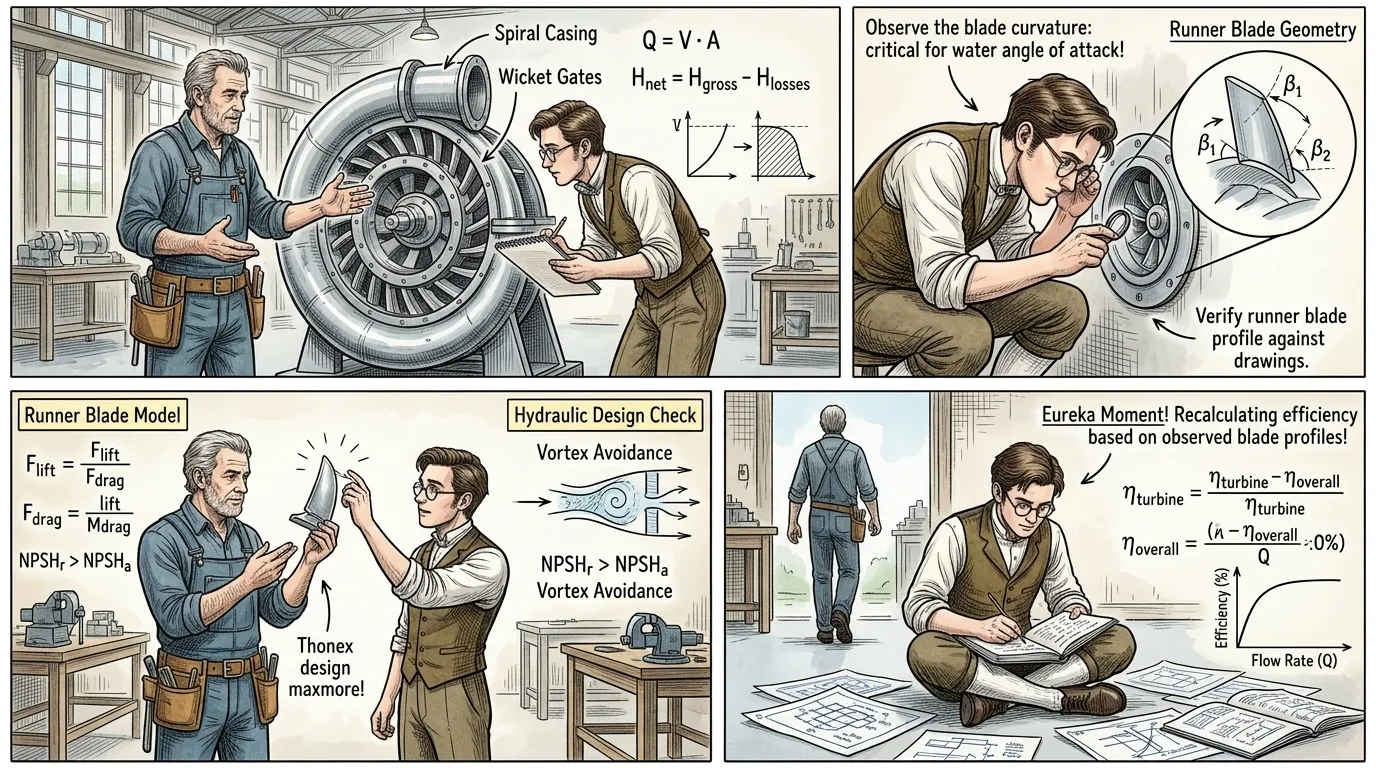
Upon reaching the power station, the high-pressure water from the penstock enters a spiral-shaped casing, known as a volute or scroll case. This casing evenly distributes the water around a ring of adjustable guide vanes, or wicket gates. These gates are critical: they precisely direct the water onto the turbine's core component, the runner. The runner, featuring intricately curved blades, is where the magic happens. As the high-velocity, high-pressure water impacts and flows over these specially shaped blades, it exerts a powerful force, causing the runner to rotate rapidly. This rotational motion is the direct conversion of hydraulic energy into mechanical energy.
"A veteran turbine mechanic, gesturing towards a detailed cross-section model, explained, "The spiral casing ensures uniform distribution of water to these crucial wicket gates." A junior engineer, observing the intricate blades, added, "And these adjustable wicket gates precisely direct the flow onto the runner blades, optimizing the angle of attack. This is where the water's energy pushes against every curve, causing the entire assembly to spin with incredible force.""
Page 8
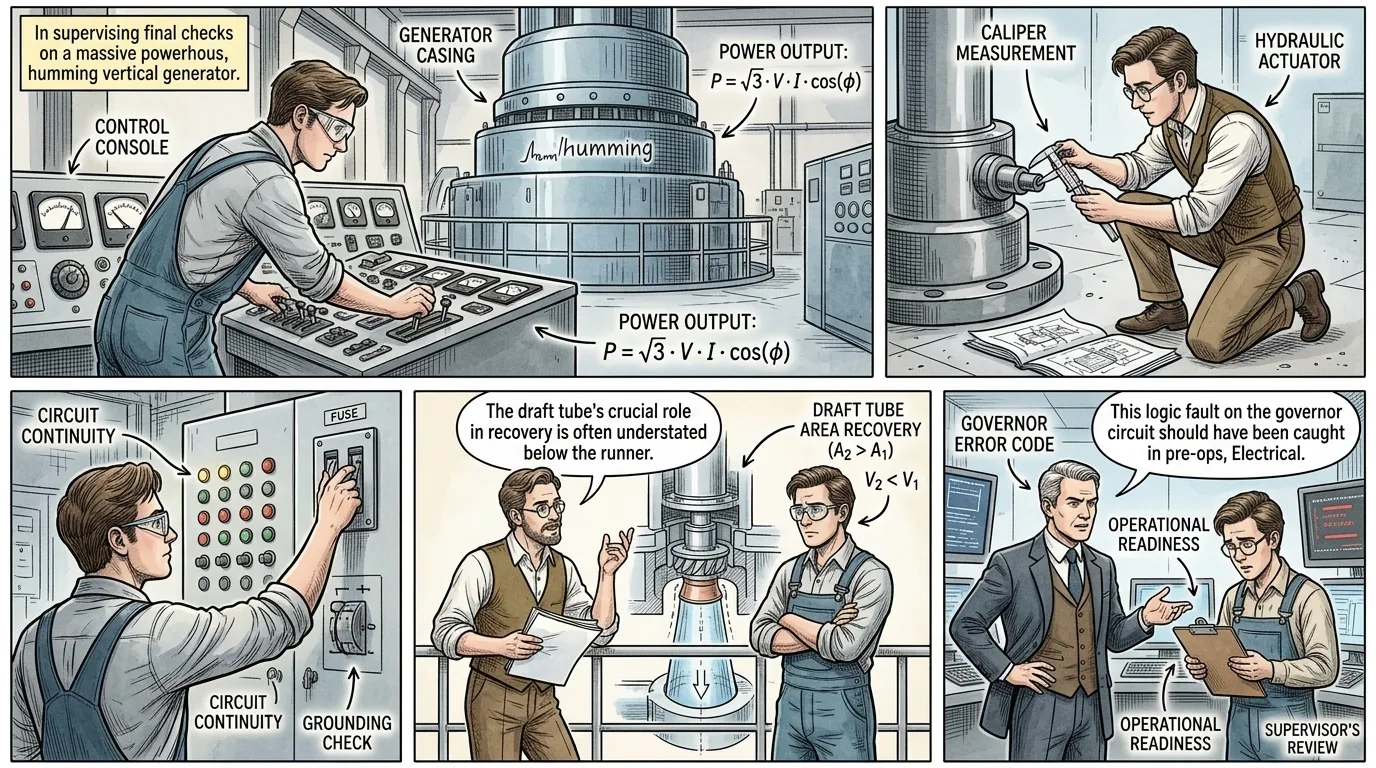
The mechanical energy generated by the spinning runner is then transmitted upwards via a robust shaft to an electric generator, typically housed directly above the turbine. Inside the generator, powerful electromagnets convert this mechanical rotation into electrical energy through the principle of electromagnetic induction. To maximize efficiency, most reaction turbines incorporate a draft tube below the runner. This gradually widening conduit recovers residual kinetic energy from the water exiting the turbine, maintaining a pressure differential and ensuring that as much energy as possible is extracted from the water before it flows back into the river downstream.
"An electrical engineer, supervising the final checks on a massive generator, explained, "The spinning shaft of the turbine directly drives the rotor of this immense generator above. Inside, powerful electromagnets convert that mechanical rotation into the electrical energy that powers our cities, through electromagnetic induction." A structural engineer, examining blueprints for the turbine's base, added, "And the draft tube below the runner is critical. It recovers kinetic energy, maintaining the necessary pressure differential and significantly improving overall efficiency. Remember our discussions on blade geometry and directed pressure? This entire system leverages every aspect to maximize energy capture.""
Page 9
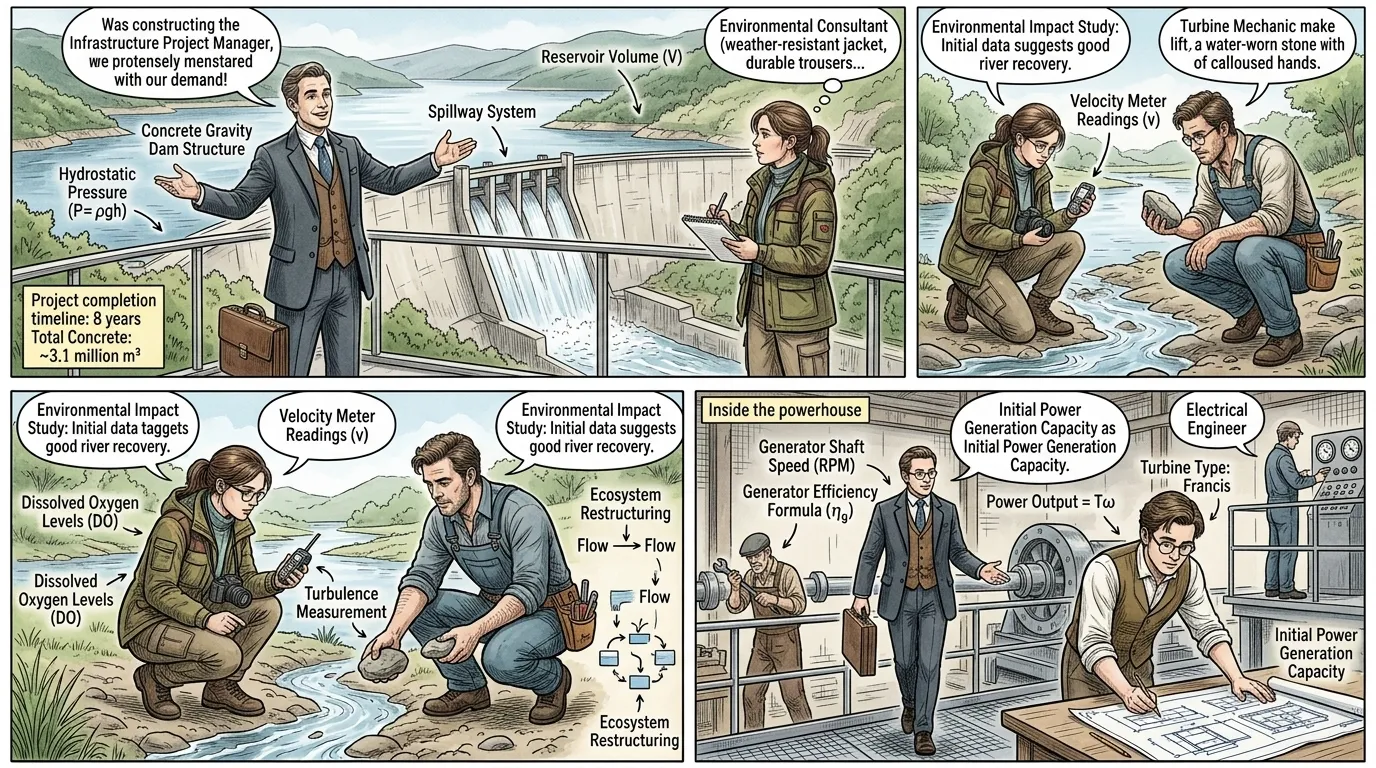
The efficiency and reliability of hydroelectric turbines spurred a global wave of dam construction throughout the 20th century. Nations embarked on monumental engineering projects, building structures like the Hoover Dam, Grand Coulee Dam, and later, the Three Gorges Dam, to harness the power of rivers on an unprecedented scale. These colossal endeavors not only provided vast amounts of clean electricity but also offered crucial benefits like flood control, irrigation for agriculture, and improved navigation. Hydroelectric power became a cornerstone of industrial and societal development, fundamentally transforming how humanity powered its progress.
"A seasoned infrastructure project manager, standing on an observation deck overlooking a massive, newly constructed dam, remarked, "These monumental projects transform landscapes and economies. We are literally shaping rivers to power entire nations, providing the energy for millions." An environmental consultant, observing the altered river flow, said thoughtfully, "The scale of human ambition is truly awe-inspiring. As the Roman philosopher Seneca once said, 'Every new beginning comes from some other beginning's end.' We must always consider the broader implications of such colossal undertakings on natural ecosystems and communities.""
Page 10
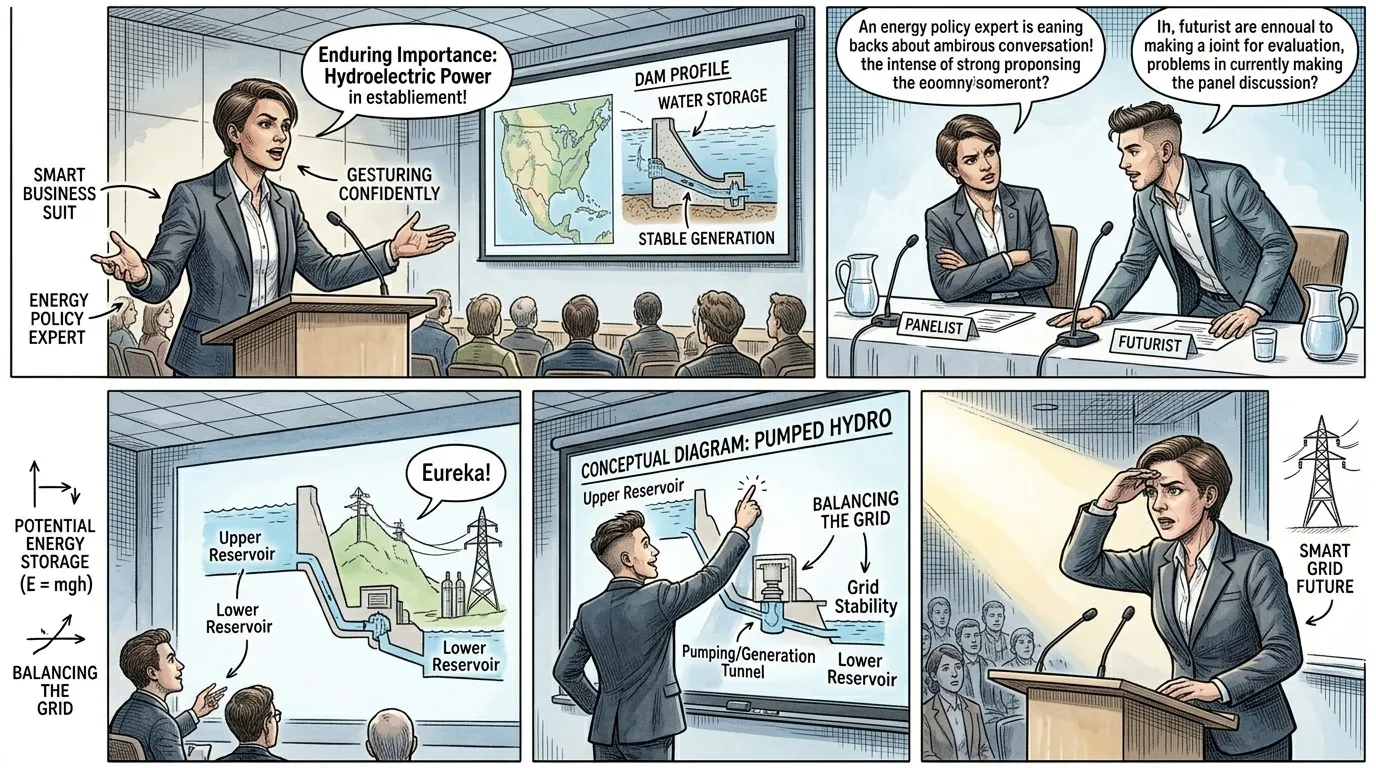
Today, hydroelectric turbines remain a vital component of the global energy landscape. They provide significant baseload power, contribute to grid stability, and represent a clean, renewable energy source, avoiding the emissions associated with fossil fuels. However, their legacy is complex, marked by environmental concerns such as habitat alteration, disruption of aquatic ecosystems, and the displacement of local communities during dam construction. The future role of hydroelectricity is evolving, with increased focus on integrating existing facilities with modern pumped-hydro storage systems. These systems act as giant natural batteries, storing excess energy from intermittent sources like solar and wind by pumping water uphill, and releasing it to generate power when demand is high, thus ensuring a flexible and resilient power grid.
"An energy policy expert, speaking at a modern conference, concluded, "Hydroelectric power remains a cornerstone of renewable energy, providing vital baseload power and grid stability, a testament to its enduring design. Yet, its environmental and social costs demand careful, ongoing mitigation." A futurist on the same panel added, "The future will increasingly see its evolution, especially in pumped-hydro storage systems. These facilities, essentially giant water batteries, will play a critical role in balancing our grids as we integrate more intermittent renewables like solar and wind.""
About this story
- Location: Global
- Audience: general readers
Questions and answers
Read Wonder Inventions on your phone
Wonder Inventions is available on Android. Get Wonder Inventions on Google Play.