Instant Messaging
Instant Messaging — an illustrated inventions story, set in Global. 10 illustrated pages, free to read on Wonder Inventions.
Page 1
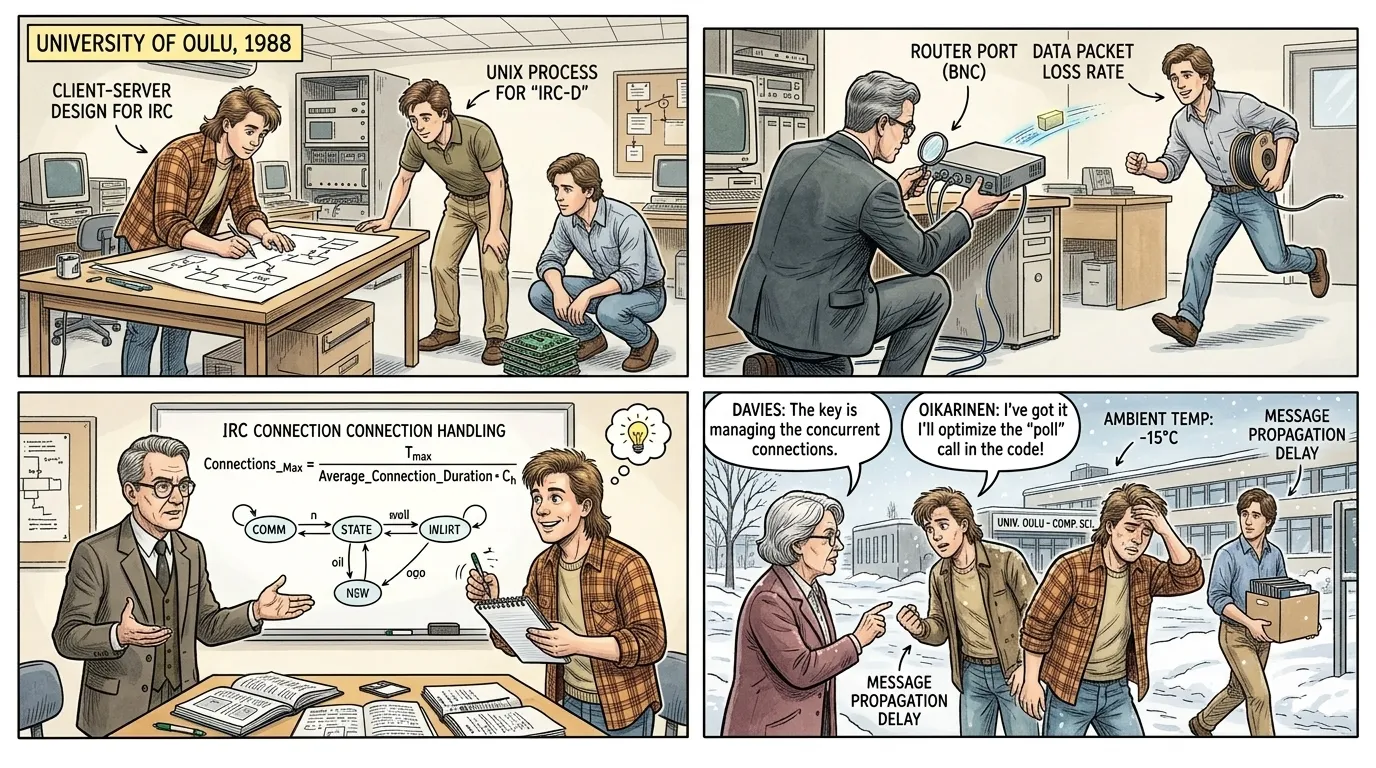
Before the ubiquitous ping of instant messages, communication often moved at the pace of paper and postal routes, or relied on synchronized telephone connections. The late 20th century presented a world eager for more immediate interaction, yet constrained by asynchronous digital tools like email, or the need for physical presence for voice calls. This era saw a profound shift, driven by innovators like Jarkko Oikarinen, who sought to bridge these gaps.
"Jarkko Oikarinen, a Finnish student and network administrator at the University of Oulu, recognized the limitations of existing chat systems in 1988, observing, 'There simply wasn't a good way for people to talk to each other in real-time across different university networks.' His vision was a system that could connect individuals and groups instantly, fostering a new kind of digital community."
Page 2
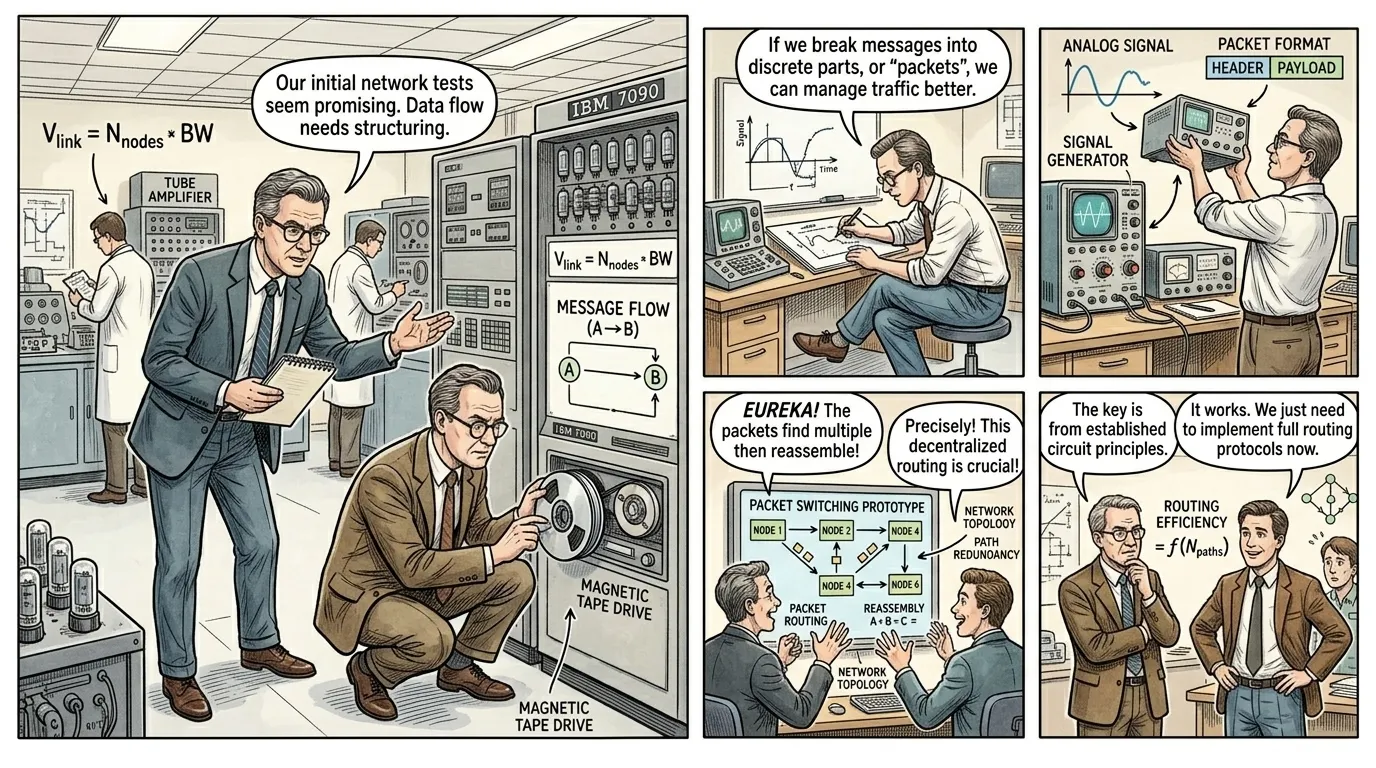
The concept of instant messaging, while seemingly simple, rested upon complex foundational technologies, primarily packet switching, developed decades earlier. This revolutionary approach, championed by figures like Paul Baran and Donald Davies in the 1960s, allowed data to be broken into small 'packets,' each traveling independently across a network before reassembling at the destination. It was an essential conceptual leap.
"As early network theorists understood, 'Reliable and efficient data transfer across dynamic networks is not about dedicated circuits, but resilient, distributed pathways.' This fundamental principle, that information could navigate around failures and congestion, allowed for the flexible, robust connections necessary for immediate communication, making real-time interaction a tangible possibility rather than a pipe dream confined to a single machine."
Page 3
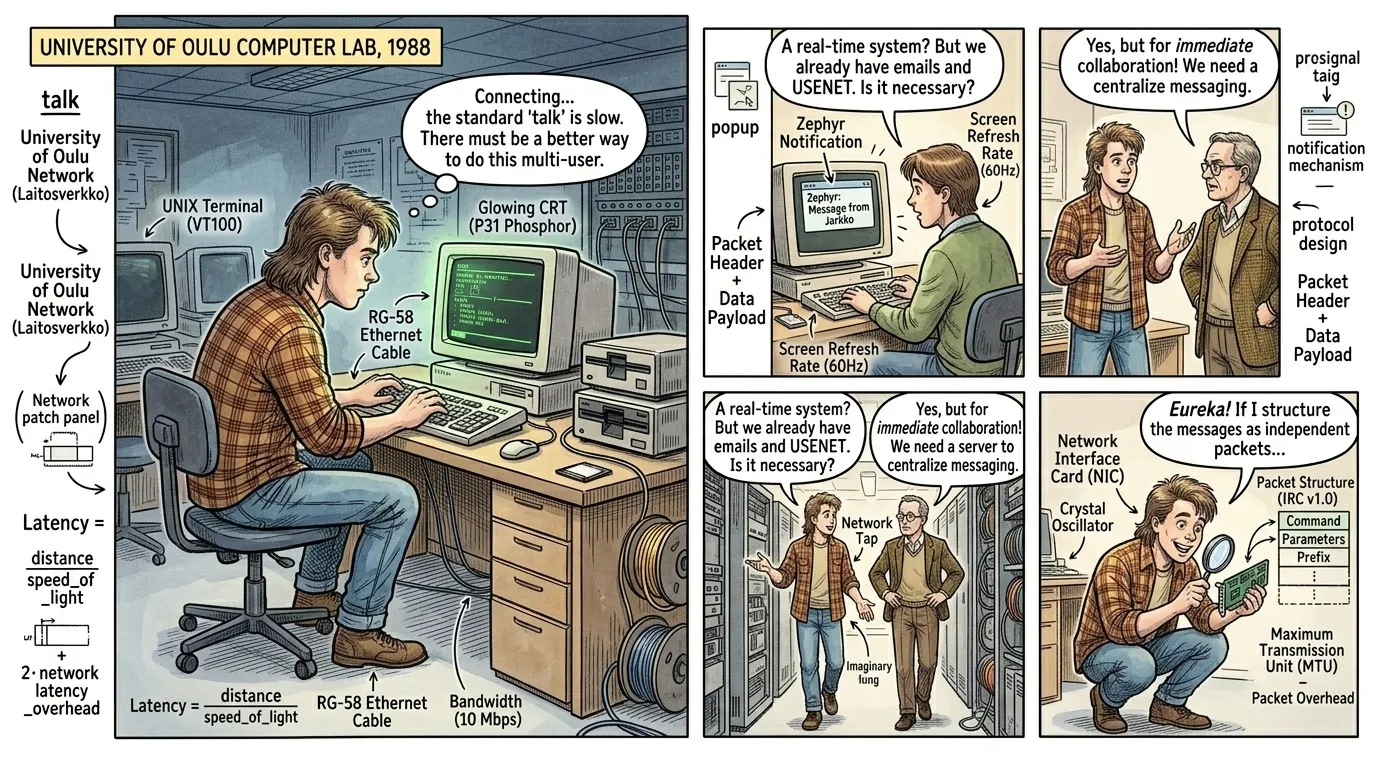
Before dedicated instant messaging clients, early forms of real-time text communication emerged within specific computing environments, primarily academic and research institutions. UNIX systems featured the 'talk' command, allowing two users logged onto the same machine, or networked machines, to type directly to each other's terminals. This offered immediacy but lacked scale or persistent presence.
"Users quickly embraced the directness, despite its limitations. 'The 'talk' command,' an early user might have said, 'was like shouting across a room, but only if the person was already there and listening.' Building on this, MIT's Project Athena developed 'Zephyr' in the mid-1980s, enabling users to send messages to anyone logged into the Athena network, even multiple recipients, and introducing the concept of 'notification' for incoming messages. This knowledge of network protocols and user-state management was crucial."
Page 4
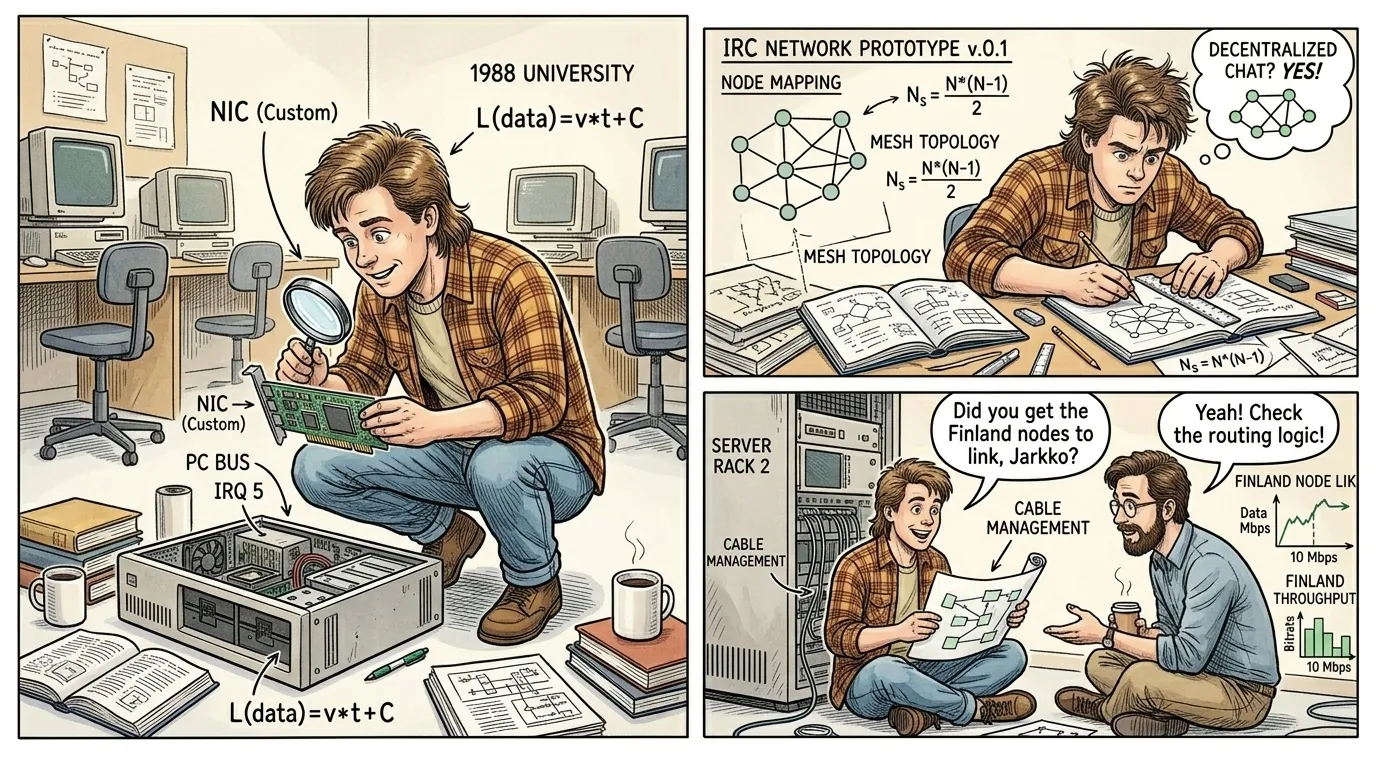
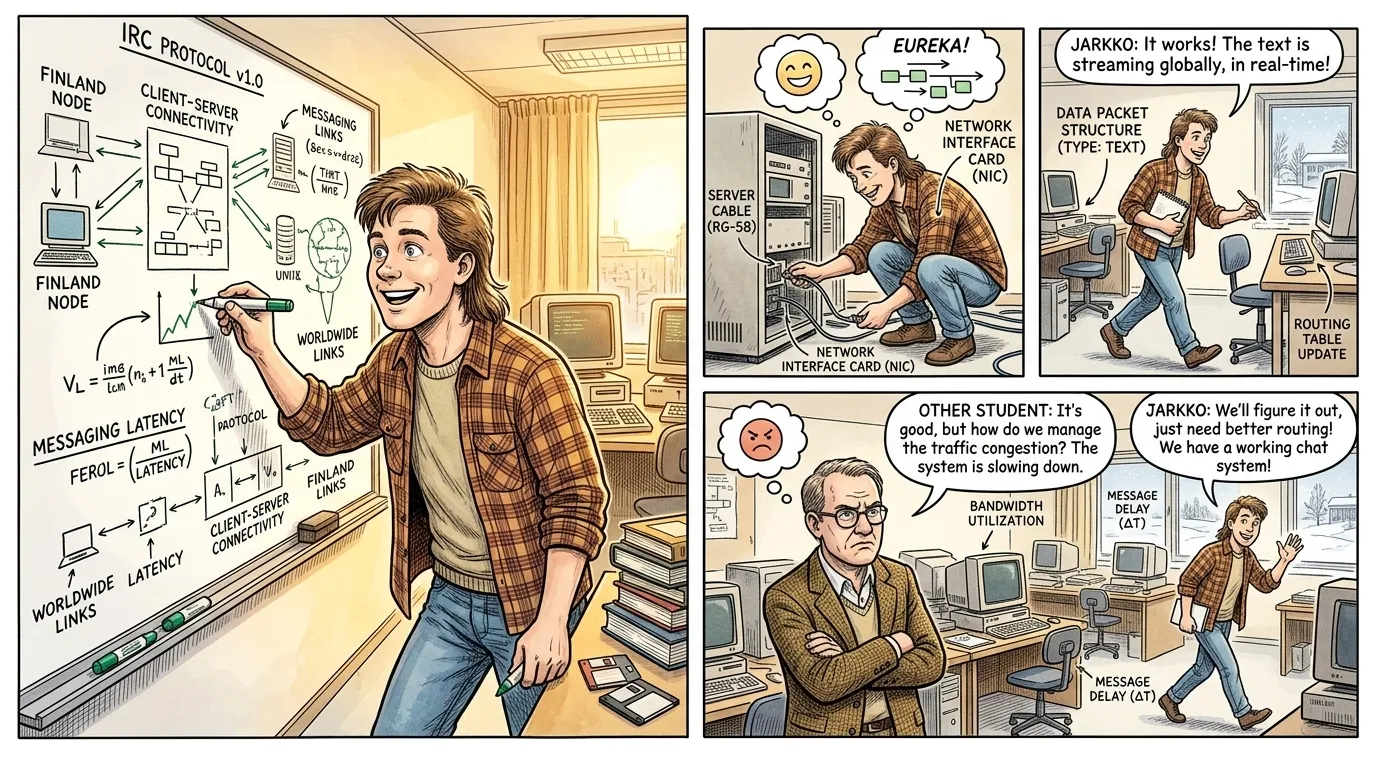
The challenge for Jarkko Oikarinen in 1988 was to move beyond the limitations of one-to-one 'talk' and closed-system notifications like Zephyr. He envisioned a truly open, multi-user, real-time conferencing system that could operate across the burgeoning global internet. His breakthrough was the creation of Internet Relay Chat, or IRC.
"Oikarinen recalled his motivation clearly: 'I wanted something more flexible, where many people could join a conversation, create channels on the fly, and do it all from different locations.' IRC achieved this by establishing a decentralized network of servers that relayed messages between clients. It was a revolutionary design, allowing users to connect to any IRC server, which would then communicate with other servers to form a global network of chat channels. His creation allowed for dynamic group discussions, far surpassing anything available at the time."
Page 5
IRC's operational mechanism was elegant and robust, built upon a client-server architecture that facilitated real-time communication. A user would run an IRC client application on their computer, which then connected to an IRC server. This server, in turn, was part of a larger network of interconnected IRC servers, forming a vast, distributed chat system.
"When a user sent a message within a 'channel,' their client transmitted it to the connected server. That server then efficiently relayed the message to all other users in that channel, whether they were connected to the same server or to different servers across the IRC network. This innovative relay system allowed for unprecedented scalability, as one early IRC developer might explain, 'It was like creating a global party line, but with organized rooms and the ability to join or leave silently.'"
Page 6
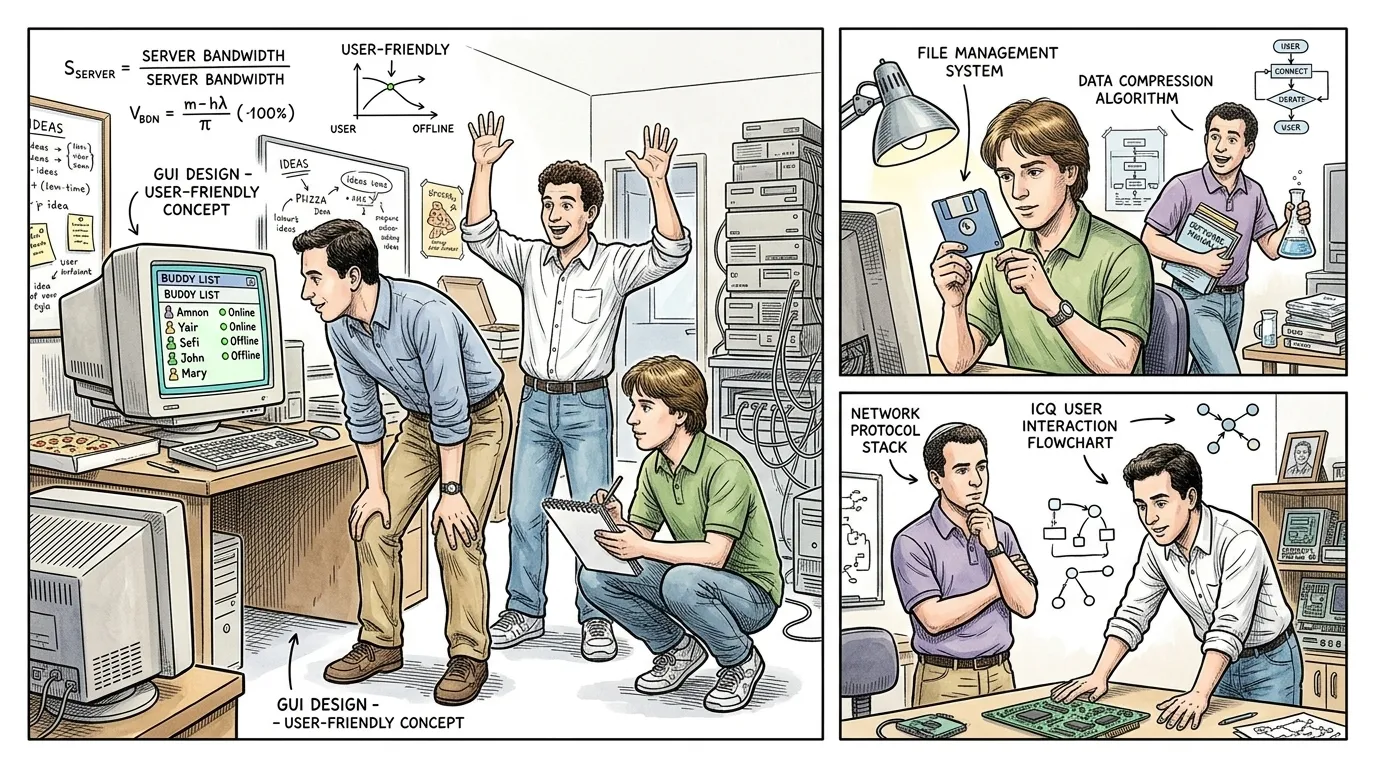
While IRC proved immensely popular among technical users, its text-based interface and command-line heritage limited mainstream adoption. The true commercialization of instant messaging arrived with ICQ, 'I Seek You,' launched in 1996 by the Israeli startup Mirabilis. This new platform dramatically simplified real-time communication for the average internet user.
"The founders, Sefi Vigiser, Arik Vardi, Yair Goldfinger, and Amnon Amir, recognized the need for a user-friendly, graphical interface. 'We wanted to make finding and talking to friends online as simple as making a phone call, but without the cost,' one of them might have articulated, emphasizing accessibility. ICQ pioneered the concept of a 'buddy list' and 'presence detection,' allowing users to see which of their contacts were currently online, transforming the landscape of digital interaction."
Page 7
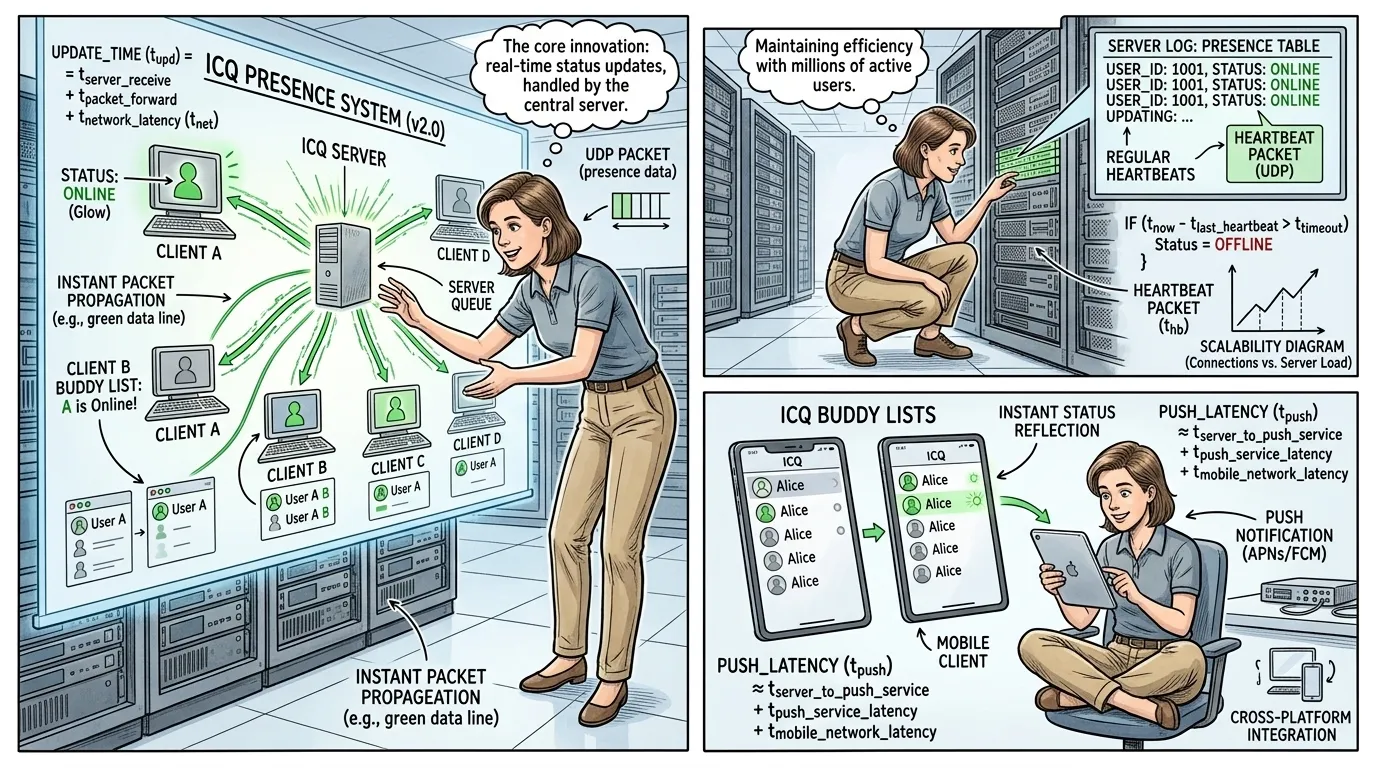
ICQ's groundbreaking success lay in its intuitive management of user presence and contact relationships. Unlike IRC, where users had to manually join channels and deduce who was active, ICQ provided a persistent, personalized 'buddy list' that continuously displayed the online status of friends and colleagues. This changed the very nature of digital social interaction.
"This 'presence' system operated through the ICQ client maintaining a connection to a central server, regularly updating its status. As a contemporary tech analyst might explain, 'The server acted as a digital switchboard, knowing who was available and connecting them almost instantly.' When a user logged in or out, or changed their status, the server would broadcast this information to all contacts on their buddy lists, creating a truly 'instant' awareness of connectivity."
Page 8
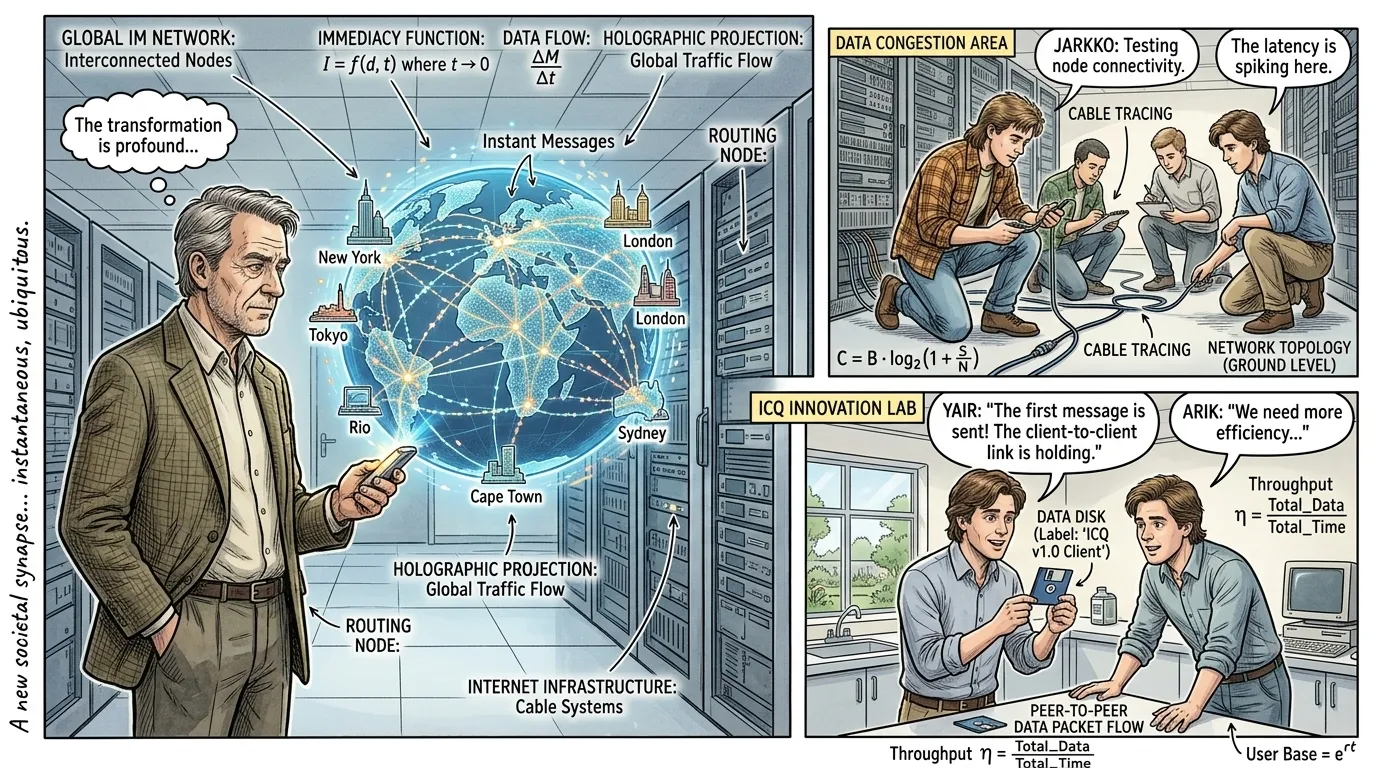
The cumulative technical innovations, from packet switching to persistent client-server connections and presence detection, culminated in a profound societal shift. Instant messaging transcended its technical origins to become a vital artery of global communication. The ability to instantly connect, to gauge availability, and to share fleeting thoughts in real-time reshaped personal relationships and professional workflows alike.
"Reflecting on the transformative power of such immediacy, a seasoned network engineer once mused, 'As the American philosopher Ralph Waldo Emerson wisely stated, 'Speech is power: speech is to persuade, to convert, to compel.' Instant messaging, in its digital form, amplified this power, enabling persuasion, conversion, and compulsion on an unprecedented, real-time global scale, connecting minds in ways previously unimaginable.' This constant, low-friction dialogue fulfilled a deeply human need for immediate connection, leveraging the knowledge of efficient network communication."
Page 9
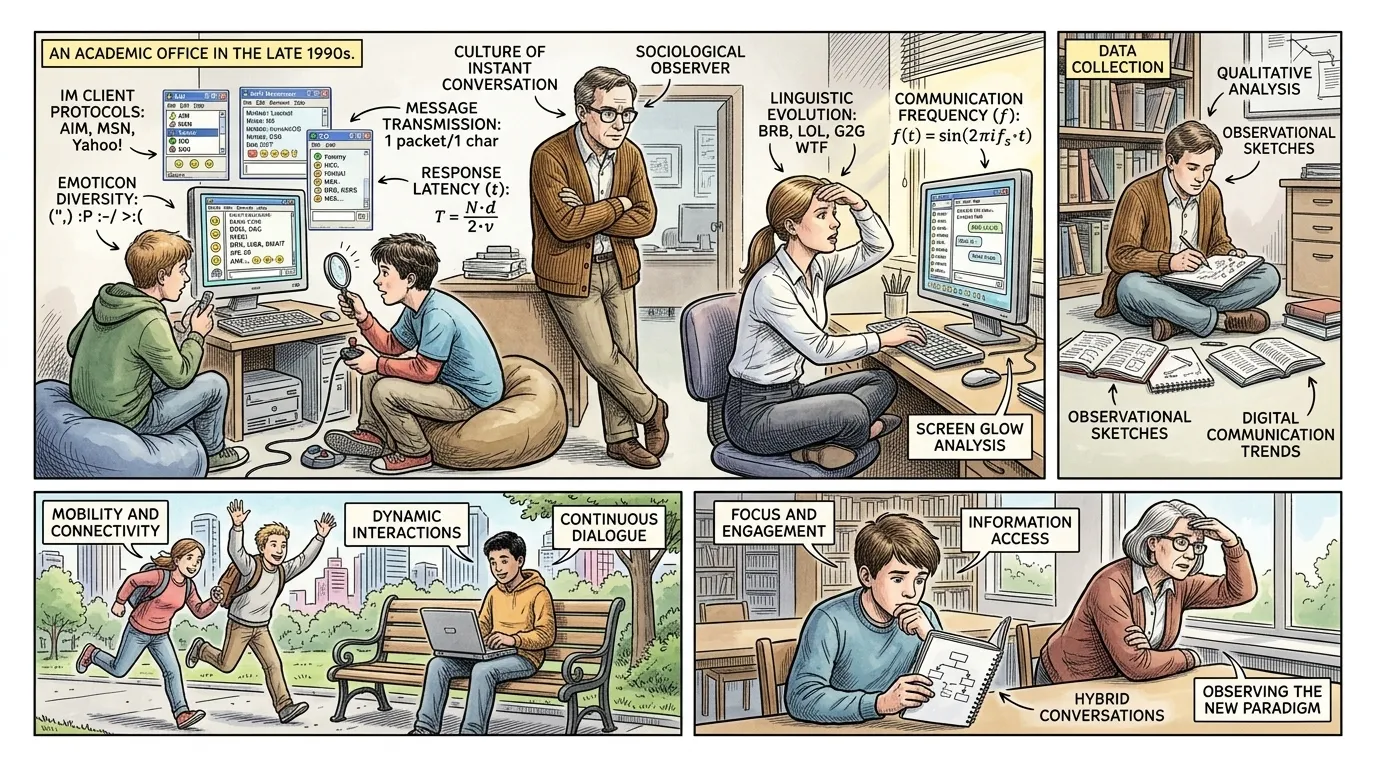
With the widespread adoption of platforms like ICQ, AOL Instant Messenger (AIM), MSN Messenger, and Yahoo! Messenger in the late 1990s and early 2000s, instant messaging didn't just provide a new tool; it fostered a new digital language and culture. Abbreviations, emoticons, and an informal, rapid-fire style of communication became commonplace, transforming how people expressed themselves online.
"This new mode of interaction facilitated a rapid exchange of ideas and emotions, creating distinct social spaces and communication norms. 'It flattened communication hierarchies,' observed a sociologist of the period, 'making interactions less formal than email and more spontaneous than phone calls.' Workplace collaboration became more fluid, personal relationships maintained across greater distances, and a generation learned to converse in continuous, bite-sized digital snippets, fundamentally altering expectations for response times and availability."
Page 10
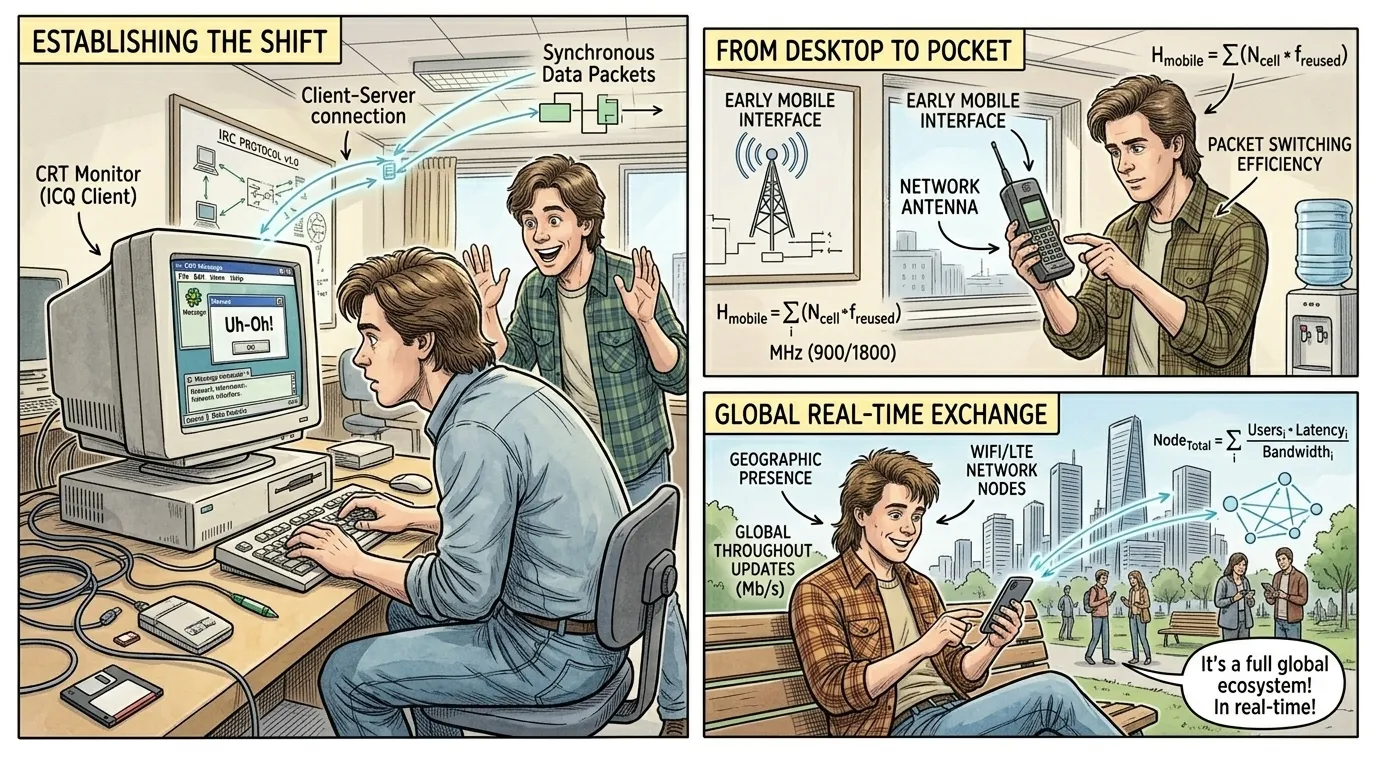
The innovations of early instant messaging platforms laid the indelible groundwork for nearly all modern digital communication. The core principles of real-time presence, contact management, and synchronous text exchange evolved into the sophisticated messaging applications that dominate today's global landscape. From desktop applications to mobile ecosystems, IM's DNA is everywhere.
"Instant messaging didn't merely survive; it proliferated and diversified, shaping entirely new industries and social structures. Its impact is visible in everything from personal chats to enterprise collaboration. The foundational challenges of reliable, instant, and scalable digital dialogue, first addressed by pioneers like Oikarinen and Mirabilis, continue to drive innovation in an ever-more connected world."
About this story
- Location: Global
- Audience: general readers
Questions and answers
Read Wonder Inventions on your phone
Wonder Inventions is available on Android. Get Wonder Inventions on Google Play.