Laparoscopy
Laparoscopy — an illustrated inventions story, set in Global. 10 illustrated pages, free to read on Wonder Inventions.
Page 1
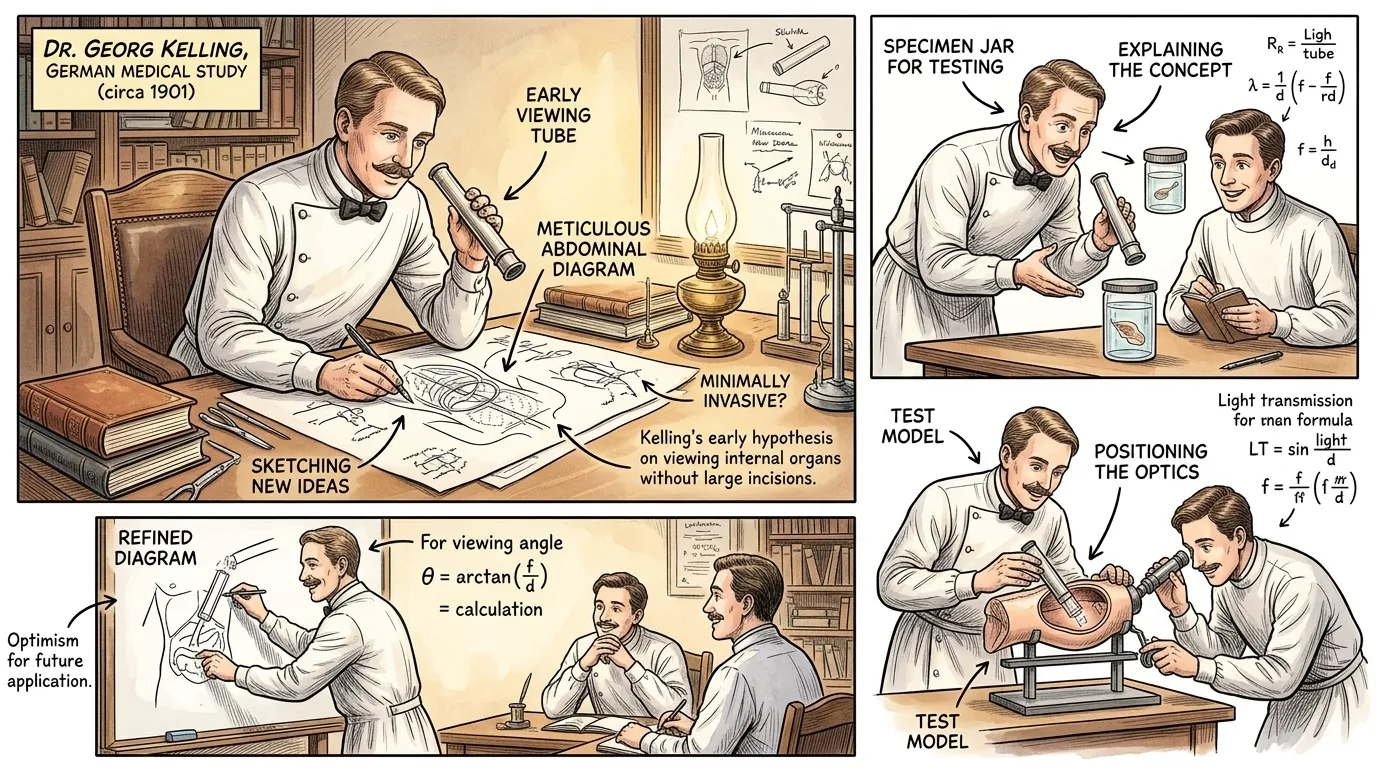
Before the dawn of the 20th century, internal examination of the human body without major incision was a perilous dream. Surgeons relied on extensive open procedures, which often led to severe pain, prolonged recovery times, and a high risk of infection. The diagnostic capabilities were limited, and exploration required significant trauma.
""The internal landscape of the abdomen remained largely a mystery without cutting deeply," mused Dr. Georg Kelling, a German surgeon, in his writings. "Our diagnostic tools were blunt, our treatments often as harmful as the disease itself." Kelling's ambition was clear: to see without inflicting such wounds. He recognized the profound necessity for a new surgical paradigm, one that minimized invasion while maximizing insight. "We must find a way," he would often declare to his colleagues, "to peer within with the precision of a watchmaker, not the brute force of a carpenter.""
Page 2
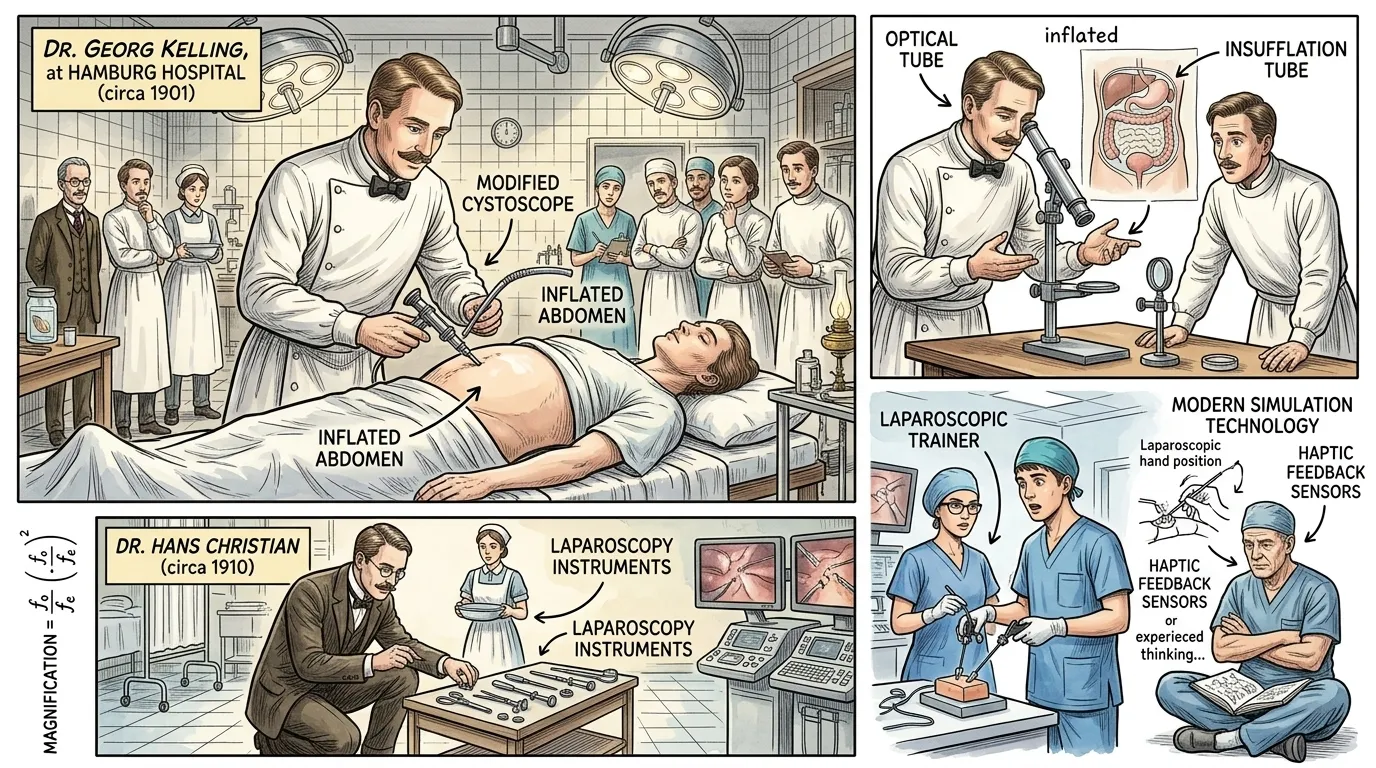
The fundamental challenge for any internal viewing method was twofold: how to safely gain access to the body's cavities and, crucially, how to create a working space without collapsing organs around the viewing instrument. Early endoscopes, while groundbreaking for surface viewing, offered no solution for deep abdominal exploration.
""Our optical tubes were a start, but useless in a crowded abdomen," explained a fictional colleague of Kelling. "Without space, it's like trying to navigate a dark, collapsed tunnel." Kelling responded, "Indeed. The vital step is not just illumination, but strategic separation. We need to expand the vista, to gently push aside the internal landscape." He then proposed, "What if we could introduce a harmless, sterile medium? A gas, perhaps, to inflate the cavity and provide us with a clear, stable field?" This radical idea, insufflation, was the seed of his revolutionary approach."
Page 3
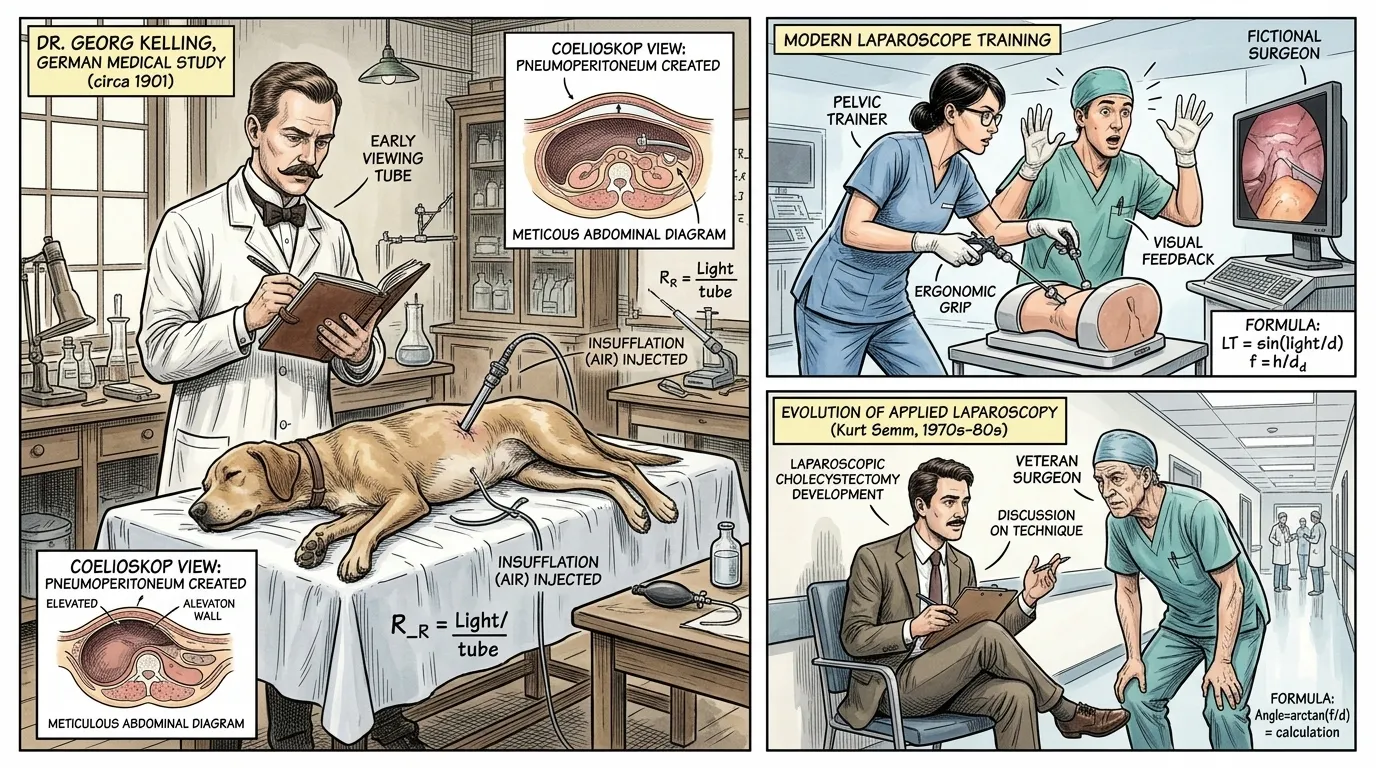
In 1901, Georg Kelling achieved his pivotal breakthrough. Experimenting on a dog, he introduced filtered air into the peritoneal cavity, creating a 'pneumoperitoneum' – an inflated space that allowed clear visualization. This seemingly simple act fundamentally changed the trajectory of internal medicine.
""The only thing we have to fear is fear itself," Kelling might have reflected, recalling what the American president Franklin Roosevelt later famously articulated, though the sentiment on confronting new frontiers was ever-present. "And the fear of the unknown, of the internal void, compels us to innovate." Addressing his notes, Kelling meticulously recorded, "By careful insufflation, the abdominal wall is lifted, and the organs fall away, presenting a magnificent, unobstructed view through the coelioskop." This experiment, conducted with his rudimentary instrument, confirmed the viability of minimally invasive abdominal exploration."
Page 4
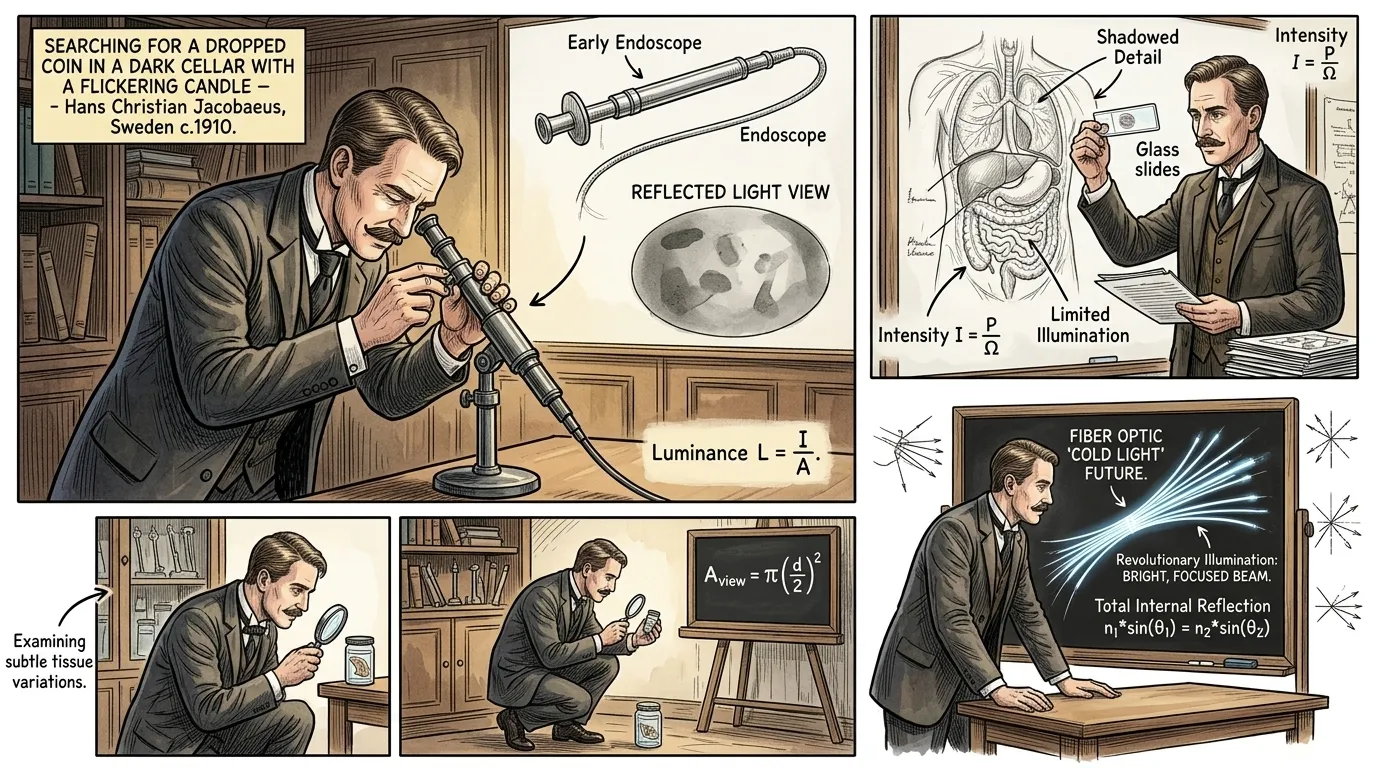
Once space was created, the next challenge was illumination. Early endoscopes relied on external light sources reflected by mirrors, offering dim and often shadowed views. The quest for clearer, brighter vision without excessive heat inside the body became paramount.
""Trying to see inside with reflected light was like searching for a dropped coin in a dark cellar with a flickering candle," observed Dr. Hans Christian Jacobaeus, a Swedish physician who later adopted and advanced Kelling's work, in his notes from 1910. A contemporary surgeon would likely add, "And the risk of heat damage from early internal incandescent bulbs was simply too great for patient safety." They understood that revolutionary illumination was needed, leading to the pursuit of 'cold light'—a technological leap that would define the modern laparoscope."
Page 5
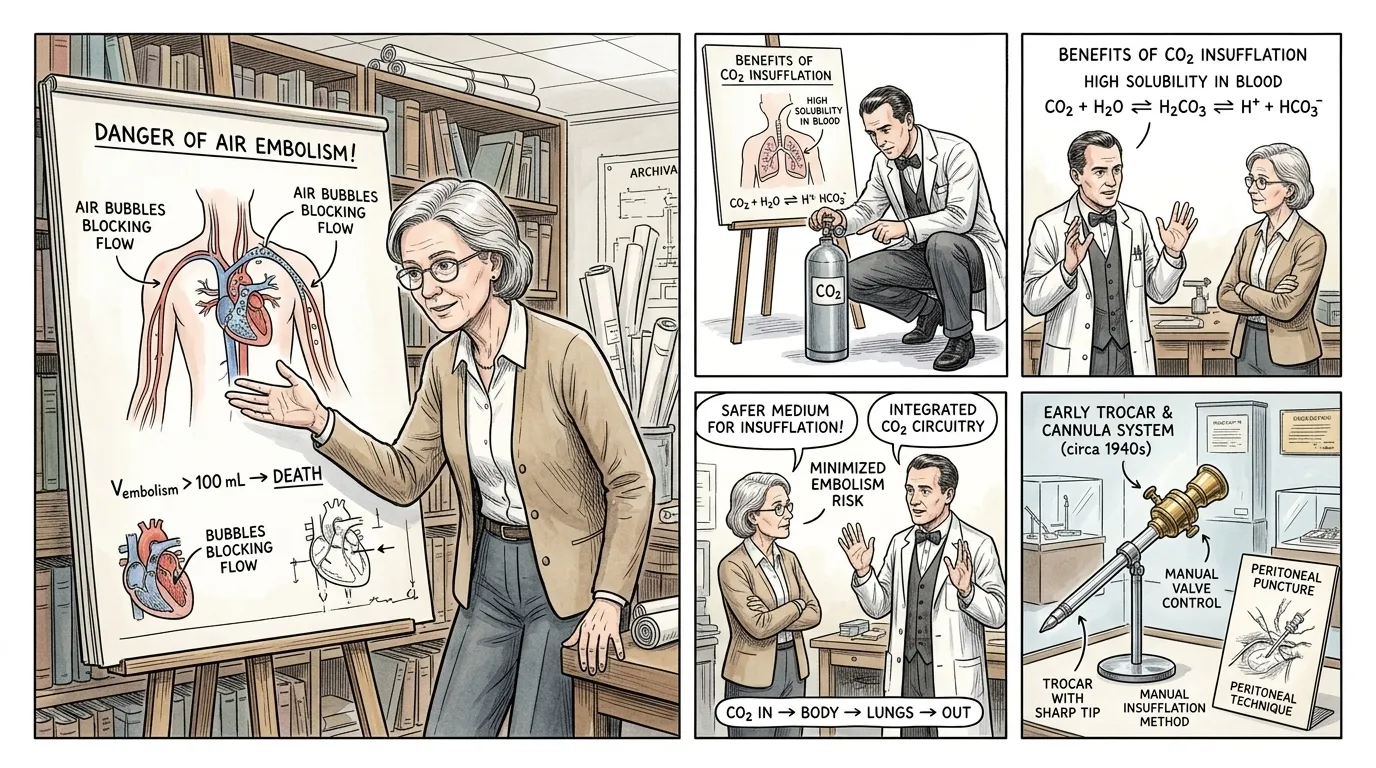
Safe and reproducible entry into the abdominal cavity was refined with the development of the trocar system. This ingenious device allowed for controlled, minimally traumatic penetration. Equally critical was the switch from ambient air to carbon dioxide for insufflation, mitigating risks.
""Introducing air could lead to air embolism, a dangerous complication," explained a fictional medical historian during an archival review. "The body doesn't easily absorb atmospheric nitrogen if it enters the bloodstream." Dr. Raoul Palmer, a French gynecologist who championed laparoscopy in the mid-20th century, noted, "Carbon dioxide, however, is naturally present in the body and readily absorbed, making it an infinitely safer medium for creating the pneumoperitoneum." This understanding was fundamental to transforming a risky diagnostic tool into a safer surgical platform."
Page 6
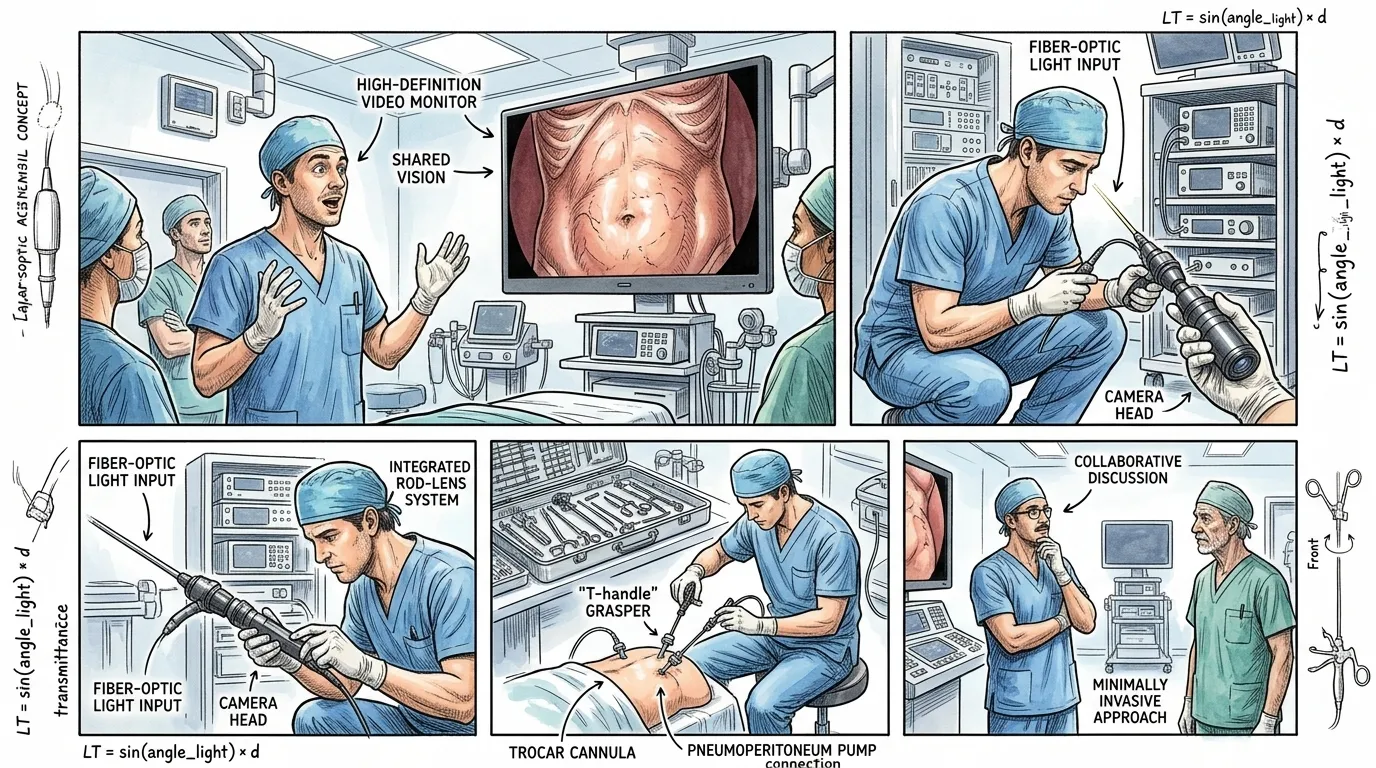
The leap to the modern laparoscope involved integrating sophisticated rod-lens optics with fiber optic light delivery and connecting it to a high-resolution video camera. This meant surgeons no longer had to peer directly through an eyepiece but could view the internal landscape on a monitor.
""Suddenly, the entire surgical team could observe the operation simultaneously," exclaimed a fictional surgeon, looking at a monitor. "It transformed individual perception into a shared experience." This collaborative viewing, a radical departure from the solitary view of earlier endoscopes, democratized surgical sight. The bright, magnified image on the screen, a far cry from Kelling's rudimentary view, provided unparalleled clarity and precision, making complex maneuvers possible."
Page 7
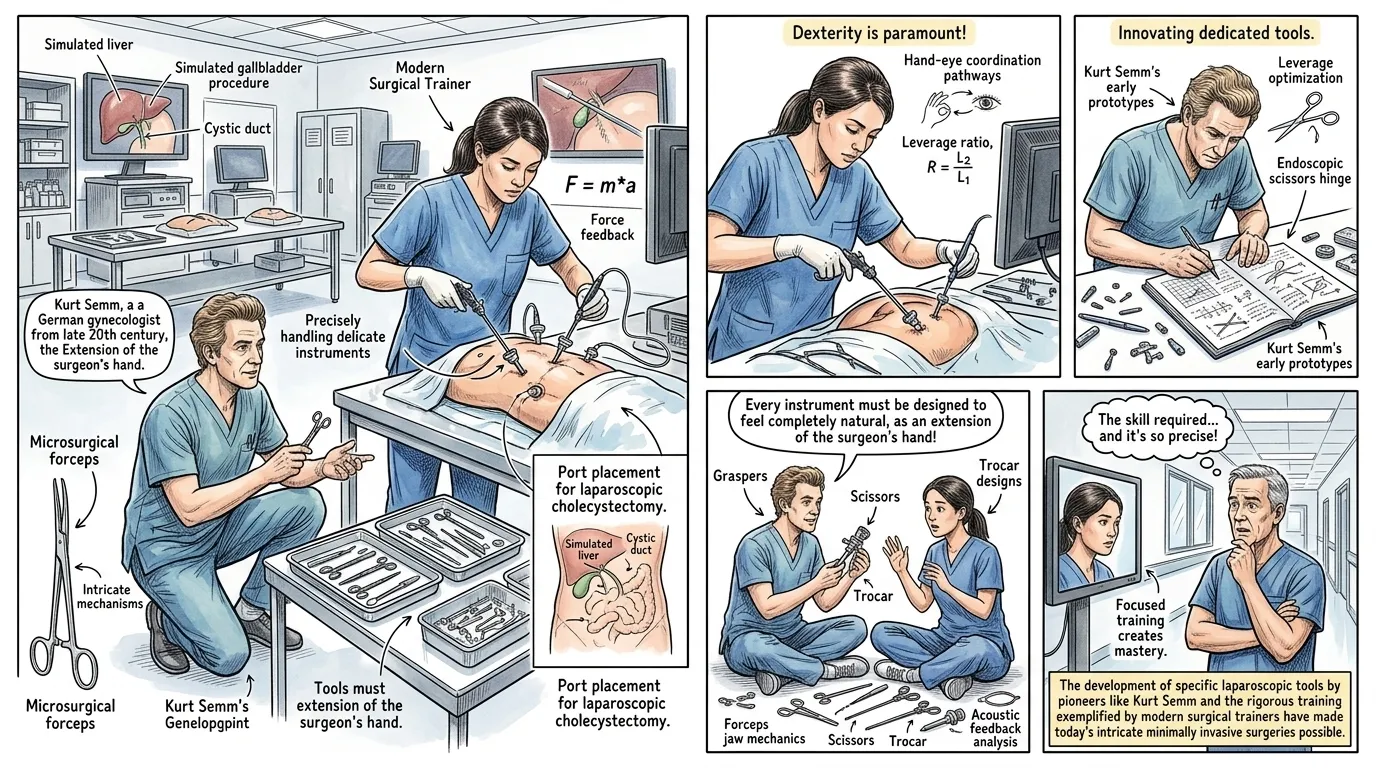
With clear visualization achieved, the next frontier was manipulation. Specialized, elongated instruments, designed for intricate tasks, were developed to pass through additional small trocars, allowing surgeons to cut, grasp, dissect, and suture remotely.
""The dexterity required is immense," remarked a modern surgical trainer. "It's like operating with chopsticks, but inside a bottle, guided by a TV screen." This unique challenge demanded a new skillset and a new generation of tools. Kurt Semm, a German gynecologist in the late 20th century, a pioneer in widespread laparoscopic surgery, emphasized, "Each instrument, from the grasper to the electrocautery, must be an extension of the surgeon's hand, scaled down to pass through a mere centimeter incision." This era truly defined minimally invasive surgery, not just diagnosis."
Page 8
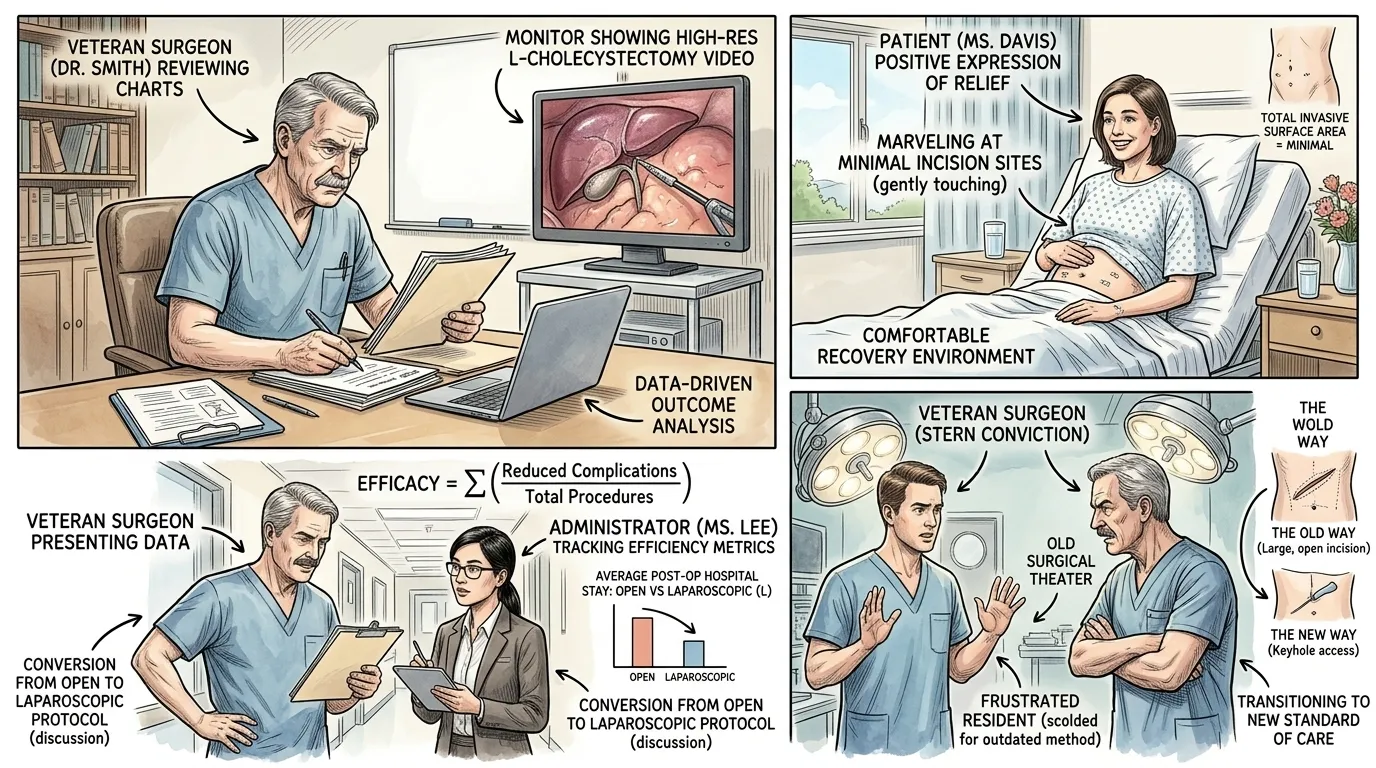
While Kelling laid the groundwork, widespread adoption of laparoscopic surgery truly took off in the late 1980s, driven by the success of laparoscopic cholecystectomy – gallbladder removal. This procedure demonstrated the clear advantages and rapidly became the gold standard.
""Initially, there was resistance," recalled a veteran surgeon in a fictional interview. "Many felt the 'feel' of open surgery was irreplaceable." However, the clinical outcomes quickly converted skeptics. A patient, post-cholecystectomy, marveled, "I was back on my feet so much faster. The pain was minimal, and the tiny scars were astonishing." This direct patient benefit, a payoff to Kelling's initial concept of reduced trauma, spurred its global acceptance, fundamentally altering surgical practice for a vast array of conditions."
Page 9
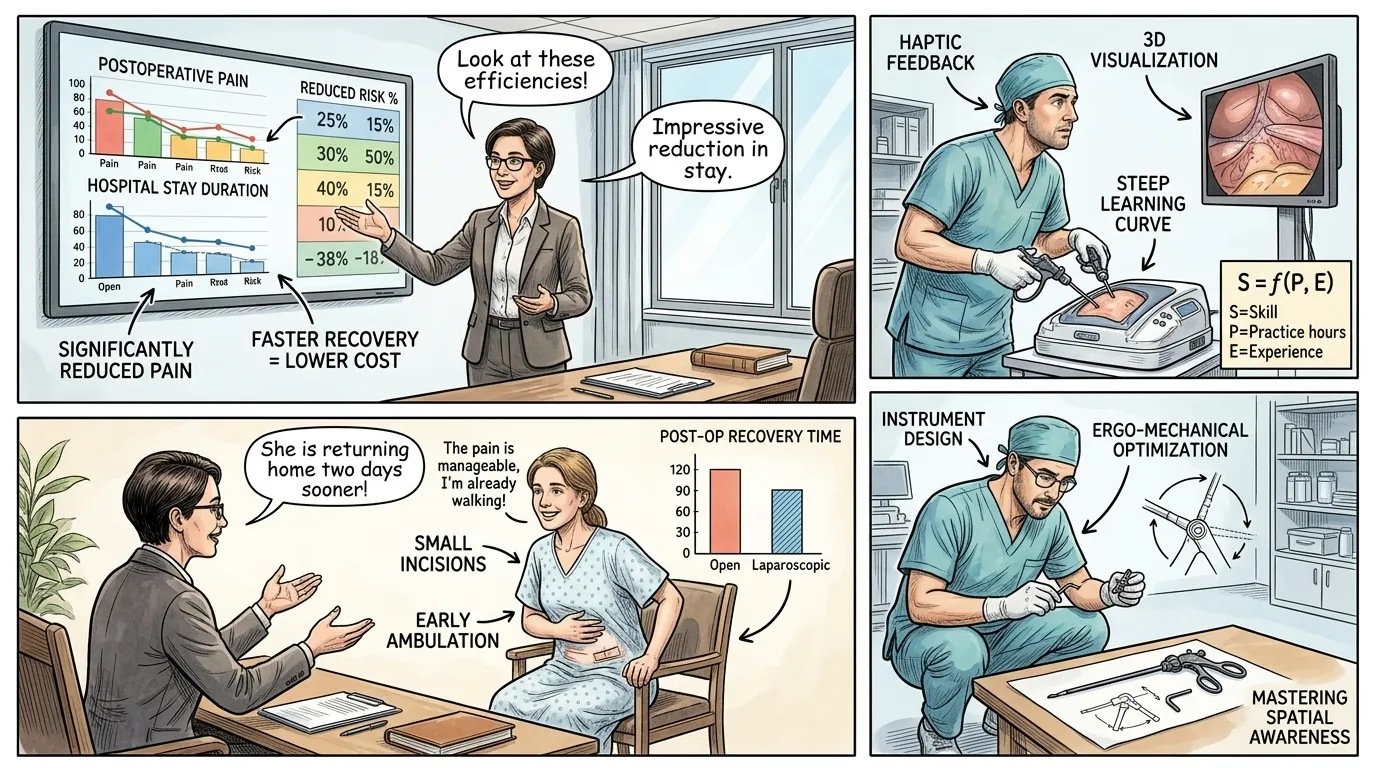
Laparoscopy's benefits are profound: significantly reduced postoperative pain, smaller scars, shorter hospital stays, and faster return to normal activities. This transformation has improved millions of lives, though the technique demands highly specialized training.
""Patients often report being able to go home the same day or the next, a stark contrast to weeks in the hospital," shared a hospital administrator, reflecting on the economic and human benefits. A surgeon added, "But the learning curve is steep. Operating indirectly, through a screen, requires a different spatial awareness and fine motor skill." The advancement, while revolutionary, underscored the continuous need for rigorous training and technological refinement, pushing surgical education into a new era of simulation and precision."
Page 10
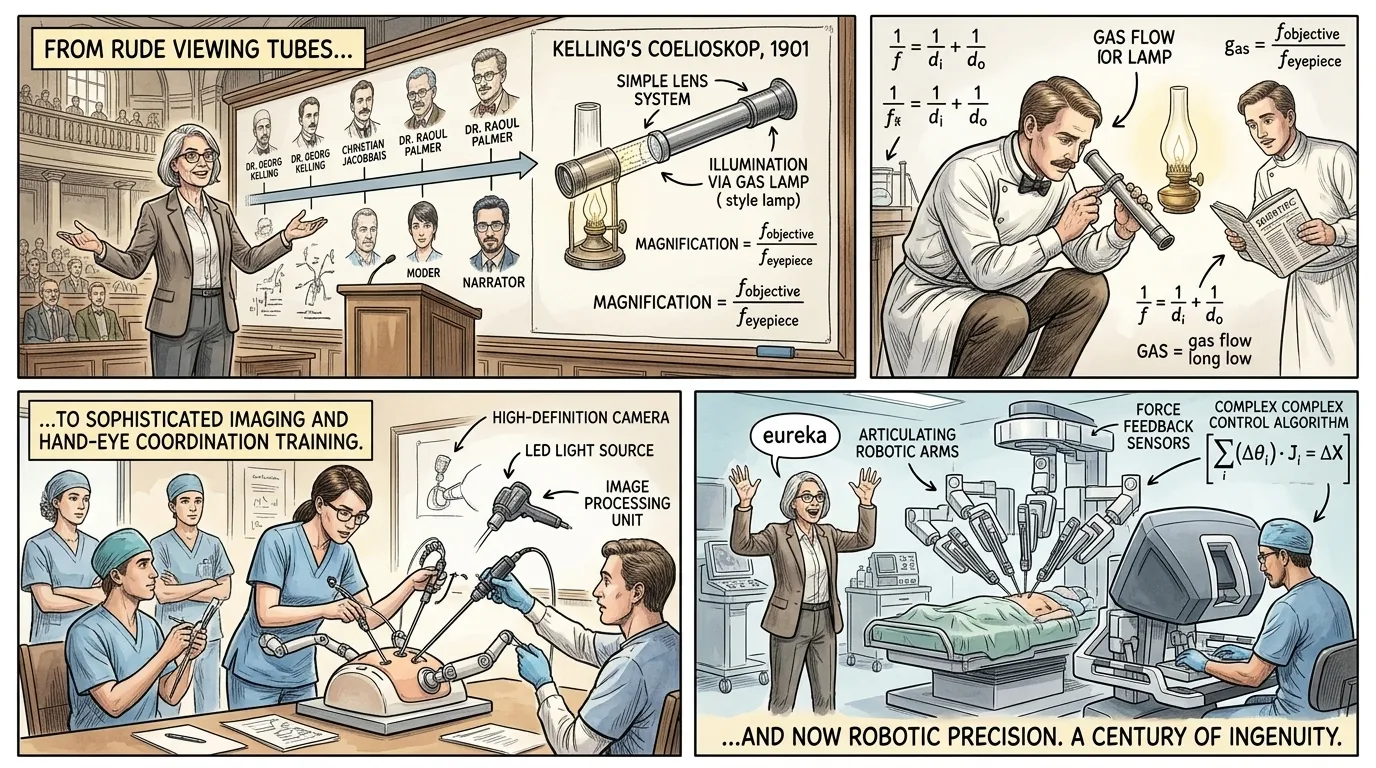
Georg Kelling's early experiments laid the foundation for an entire paradigm shift in surgery. Laparoscopy is now a standard across numerous medical specialties, and its principles have directly led to even more advanced techniques, including robotic-assisted surgery.
""From a dog experiment in 1901 to sophisticated robotic systems today, the journey of minimally invasive surgery is a testament to human ingenuity and persistence," concluded a narrator. The evolution from a simple viewing tube to a complex robotic console demonstrates how a single, daring idea can propagate through generations of innovation, continuously refining the very act of healing. Laparoscopy, an invention born of necessity and vision, continues to define the cutting edge of surgical practice."
About this story
- Location: Global
- Audience: kids (ages 6–12)
Questions and answers
Read Wonder Inventions on your phone
Wonder Inventions is available on Android. Get Wonder Inventions on Google Play.