Light Bulb
Light Bulb — an illustrated inventions story, set in Global. 10 illustrated pages, free to read on Wonder Inventions.
Page 1
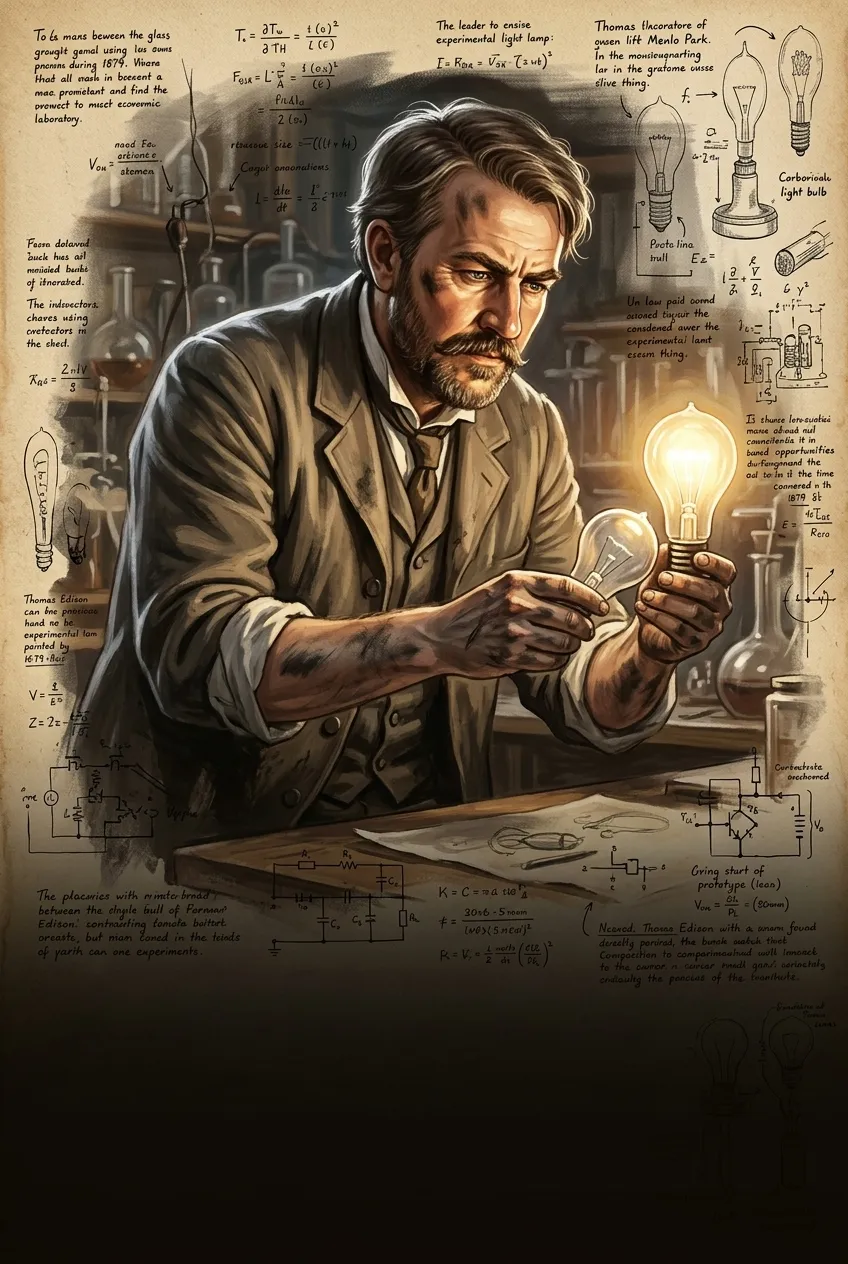
Before the ubiquitous glow of electric light, the world retreated into profound darkness with the setting sun. Cities and homes relied on flickering candles, dangerous gas lamps, or cumbersome oil lanterns, limiting productivity and confining activity. The need for safe, sustained artificial illumination was paramount for industrial progress and societal advancement. This fundamental challenge spurred a relentless pursuit by inventors across the globe.
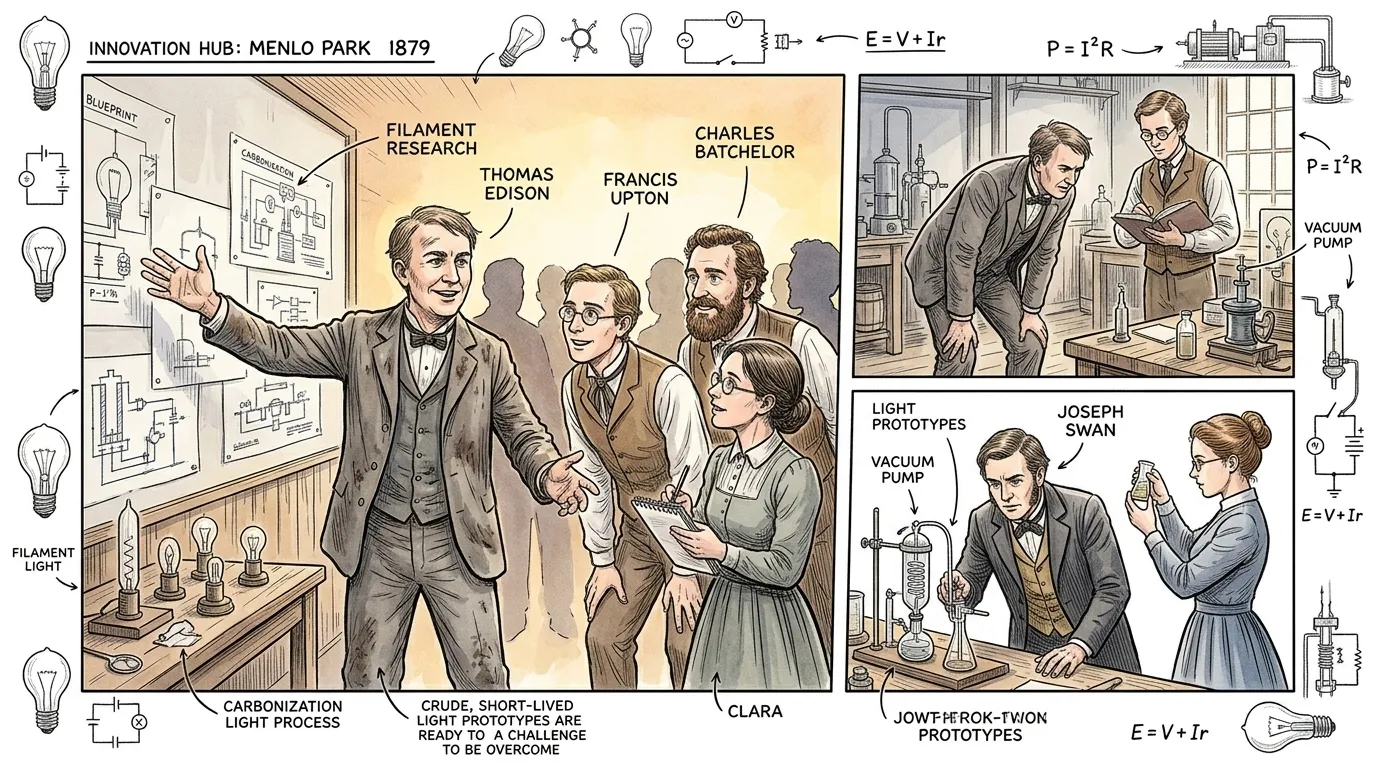
"Thomas Edison, working late into the night at his Menlo Park laboratory in 1879, pondered the elusive problem. "We need a sustained, reliable light source," he declared to his team, gesturing towards the crude, short-lived prototypes. "This isn't just about making light; it's about conquering the night itself, transforming how humanity lives and works.""
Page 2
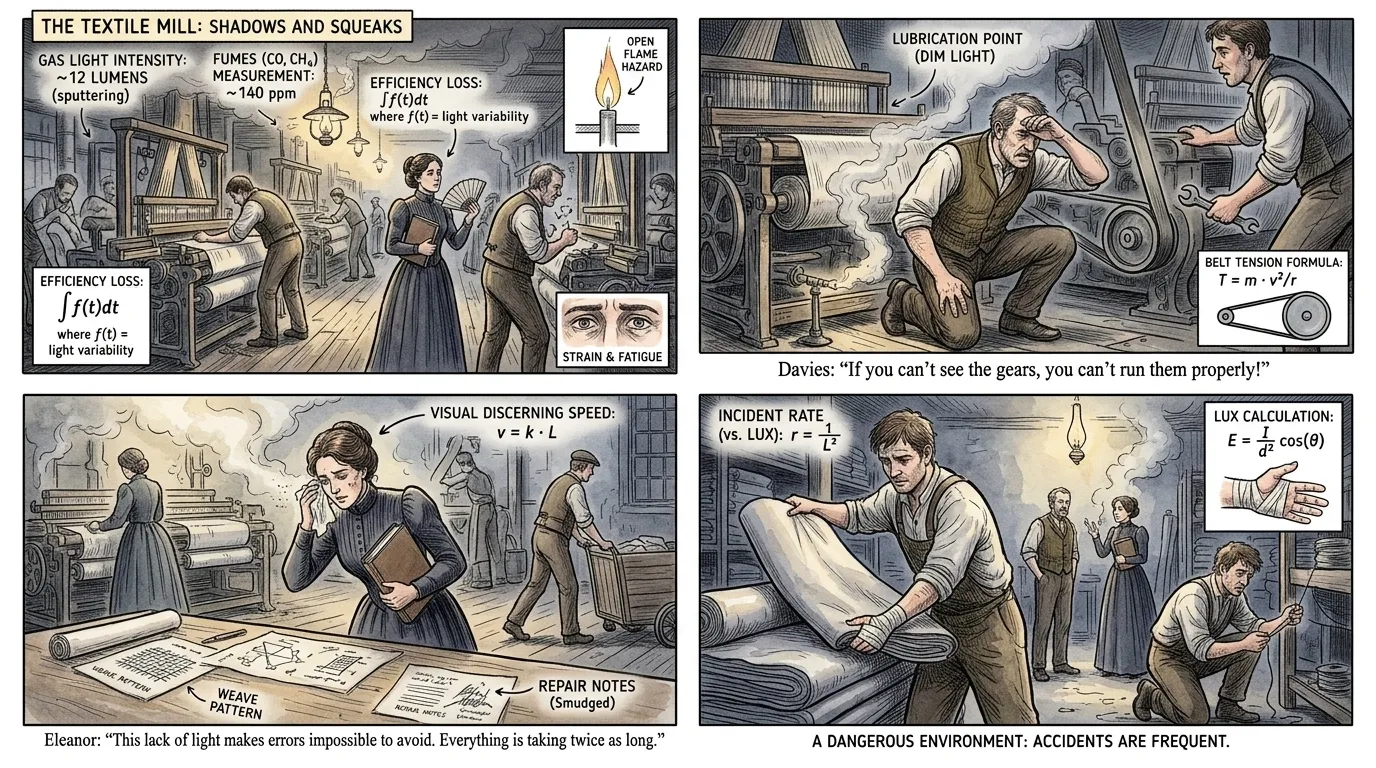
Life without consistent electric light was a constant negotiation with darkness. Workdays were rigidly tied to daylight hours, and evening activities were fraught with the risks of open flames, toxic fumes, and dim visibility. Fires were a constant threat, and the costs of fuel for gas and oil lamps were substantial, making bright, extended illumination a luxury few could afford. This pervasive limitation shaped daily routines, urban development, and industrial output.
"In a bustling textile factory, Foreman Davies, a stout man with graying temples and a worried frown, watched his workers strain their eyes under sputtering gaslight. "These gas lamps barely light the machines," he grumbled to his shift manager, a stern woman named Eleanor Vance, her dark hair pulled back tightly. "We lose so much production when the daylight fades. And the heat! It's stifling." Eleanor nodded, fanning herself with a ledger. "Indeed, Mr. Davies. As the ancient Roman philosopher Seneca the Younger once observed, 'Every new beginning comes from some other beginning's end.' This era of dimness, I believe, is nearing its end. But what will replace it?""
Page 3
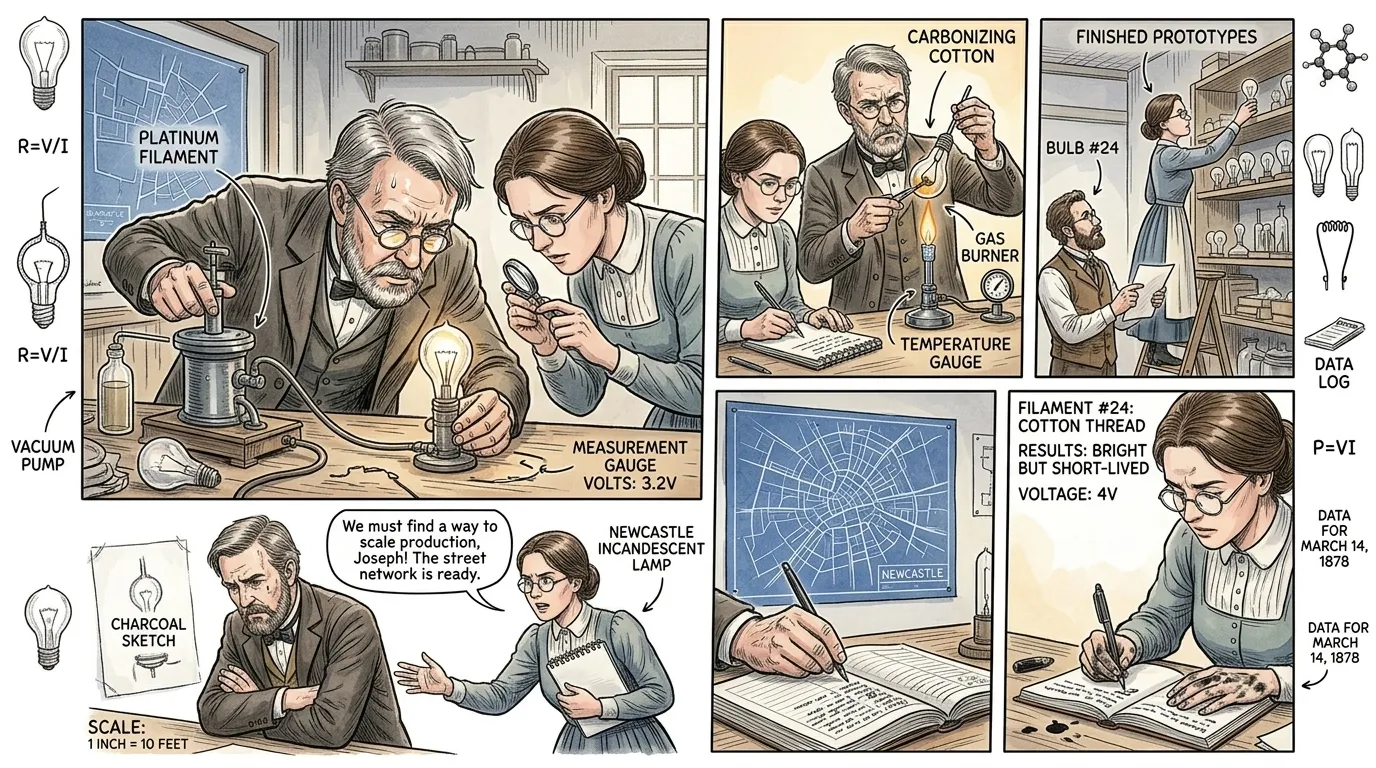
The concept of generating light by heating a material until it glows, known as incandescence, was not new. Sir Humphry Davy demonstrated an arc lamp in 1802, and numerous inventors, including Joseph Swan in Britain, experimented with platinum or carbon filaments sealed in evacuated glass bulbs throughout the mid-19th century. However, these early attempts faced a critical hurdle: the filaments either burned out almost instantly or were prohibitively expensive and impractical for widespread use, failing to deliver the promise of enduring light. The challenge of creating a sustained, safe glow remained unsolved.
"In his laboratory in Newcastle, England, Joseph Swan, a lean man with a distinguished beard and intense, focused eyes, held up a delicate, blackened platinum wire inside a bulb. "Another one failed, Dr. Swan," remarked his assistant, a young woman named Clara, her spectacles perched on her nose as she recorded notes. "The vacuum wasn't perfect, or the platinum just couldn't withstand the heat." Swan sighed, carefully setting the bulb down. "Precisely. We achieve light, yes, but its lifespan is mere moments. We need a material that is both highly resistive and incredibly durable, capable of enduring high temperatures without rapid oxidation. And we must improve our vacuum technology dramatically. This short lifespan of filaments is our primary obstacle to practical incandescent lighting.""
Page 4
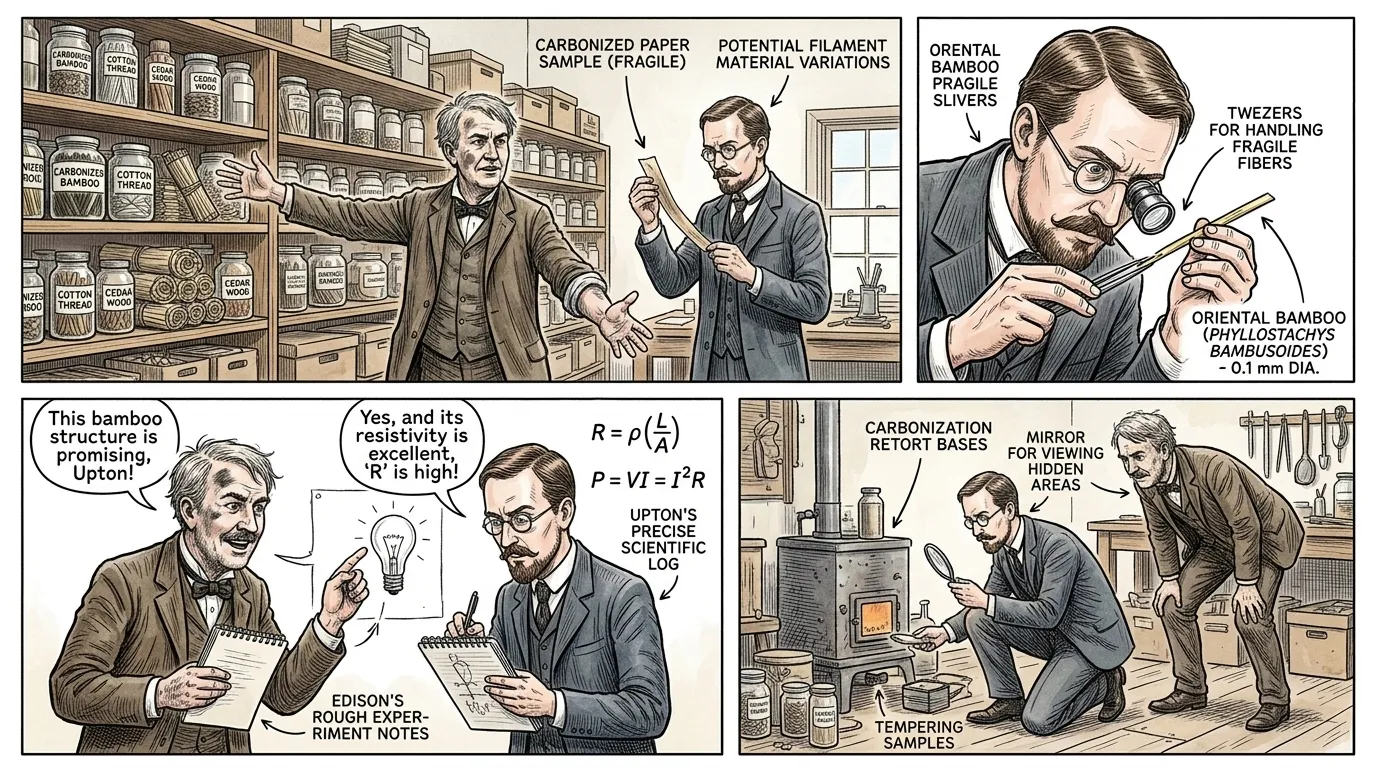
Thomas Edison's approach to invention was characterized by relentless, systematic experimentation. Unlike many who sought a single 'eureka' moment, Edison embraced iterative failure as a path to discovery. He assembled a diverse team of engineers, machinists, and chemists at his Menlo Park facility, transforming it into an 'invention factory' dedicated to solving the challenges of electrical illumination. His belief was that if a material could be found that resisted heat and conducted electricity efficiently within a near-perfect vacuum, a practical incandescent lamp could be realized.
""We must try everything," Edison declared to his lead experimenter, Francis Upton, a meticulous man with wire-rimmed glasses and a precise manner, as they sorted through shelves of potential filament materials. "Thousands of materials, if necessary. Carbon from paper, bamboo, cotton, wood — if it can conduct, we test it. As the Roman philosopher Cicero stated, 'Not for ourselves alone are we born.' Our goal here is a universal benefit, not a fleeting success. Every failure teaches us something vital about what won't work, narrowing our path to what will." Upton nodded, holding up a delicate carbonized paper strip. "Indeed, Mr. Edison. The challenge isn't just to make it glow, but to make it glow long.""
Page 5
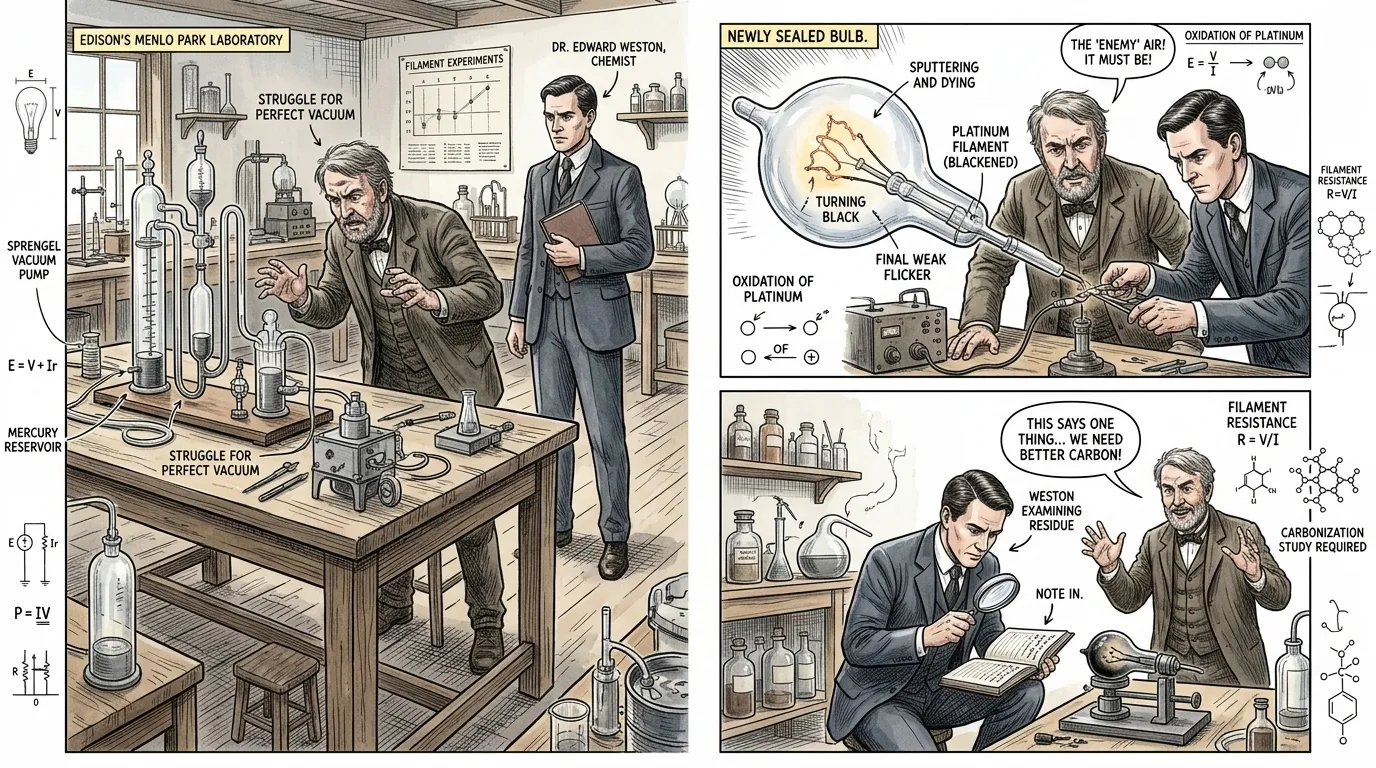
One of the most persistent obstacles in early incandescent lamp development was the rapid oxidation and disintegration of filaments. Even if a material could withstand high temperatures, it would quickly burn up in the presence of oxygen. This meant that creating a near-perfect vacuum inside the glass bulb was as crucial as finding the right filament material. The existing vacuum pump technology of the mid-19th century was inadequate, often leaving enough residual air to destroy the filament within minutes or hours. Innovators like Edison and Swan had to push the boundaries of vacuum technology itself.
""The air, even a trace, is our enemy," Edison exclaimed, staring intently at a delicate platinum filament that had just sputtered and died within a newly sealed bulb. Dr. Edward Weston, a brilliant chemist on his team, a focused man with neatly combed hair and a stern face, examined the blackened filament. "We thought our Sprengel pump was sufficient, Mr. Edison, but clearly, the vacuum isn't pure enough. The residual oxygen combines with the superheated filament, even platinum, causing its rapid decay. We need a vacuum so profound that virtually no air molecules remain to react." Edison clenched his jaw. "Then we must improve the vacuum. A perfect filament is useless without a perfect void around it. The longevity of the lamp depends on our mastery over the invisible air.""
Page 6
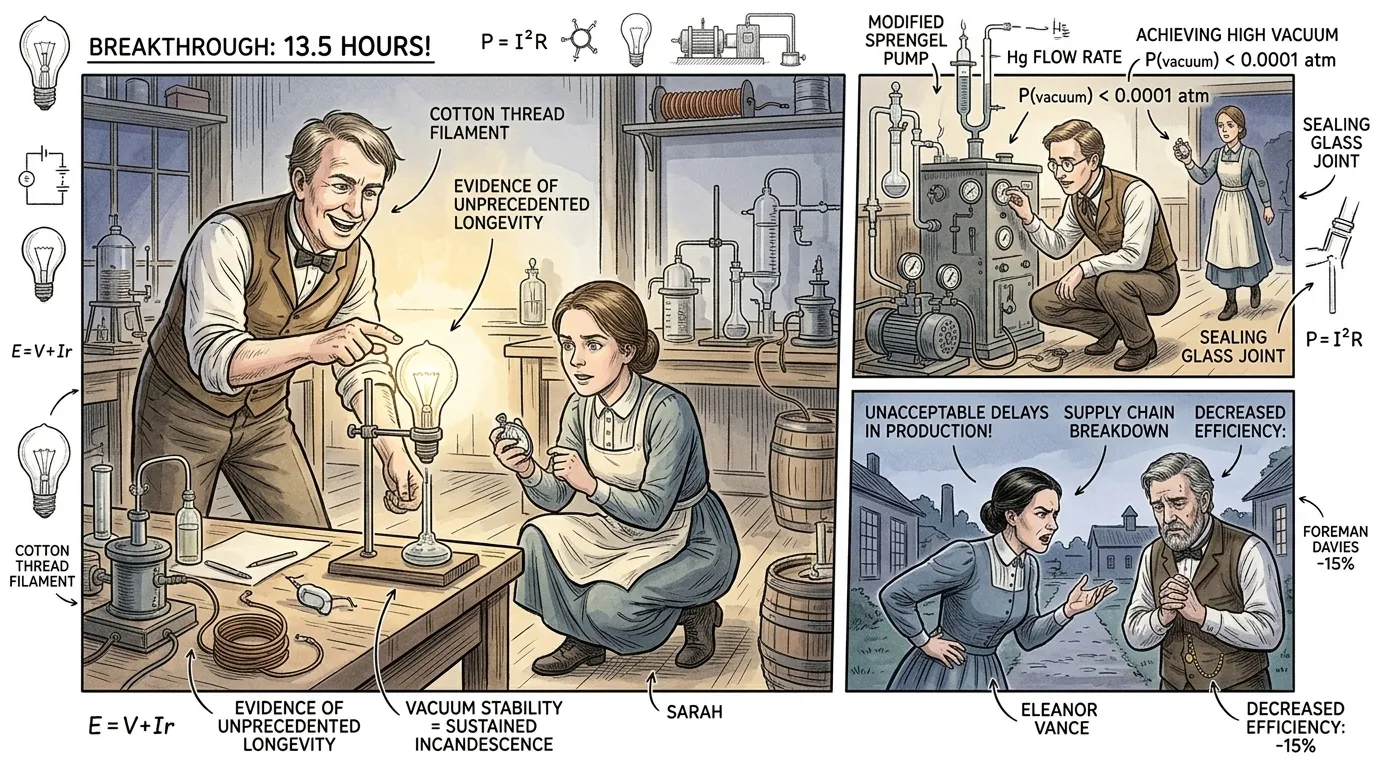
After months of tireless experimentation, testing thousands of materials from graphite to platinum, Edison and his team made their pivotal discovery in October 1879. They found that a simple carbonized cotton sewing thread, meticulously prepared and sealed within a highly evacuated glass bulb, could glow continuously for an unprecedented number of hours. This breakthrough was not just about the material, but the precise combination of a thin, high-resistance carbon filament and a near-perfect vacuum, which prevented oxidation and allowed the filament to incandesce safely and efficiently for extended periods.
""It's burning for hours now!" exclaims a jubilant Edison, his face flushed with excitement, as he watches a cotton-thread filament glow steadily. Sarah, a young, keen-eyed assistant, her hair tied back, wearing a practical dress, checks her stopwatch. "Seventy hours, Mr. Edison! And still bright!" Edison grinned, pointing to the glowing loop. "The high resistance of this carbonized cotton means we need less current for heat, and the vacuum prevents it from burning. It simply glows. This is it. This is the sustained, safe, and efficient light the world has been waiting for. We've found our balance: a durable filament, a robust vacuum, and precise electrical resistance. This bulb doesn't just light a room; it lights the future.""
Page 7
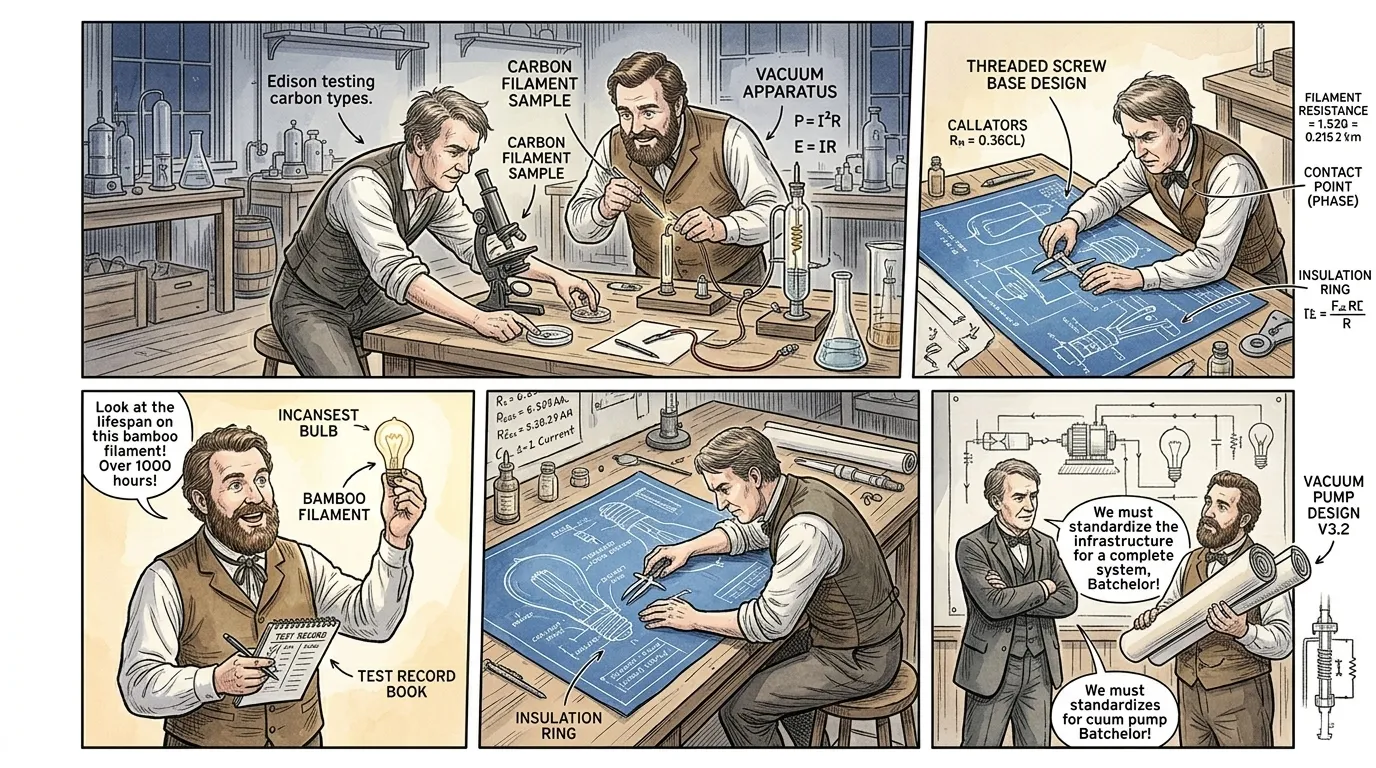
The initial success with carbonized cotton thread was merely the beginning. Edison's team continued to refine the filament, soon discovering that carbonized bamboo fibers offered even greater longevity. The challenge then shifted to mass production: designing machines to create uniform filaments, evacuating bulbs efficiently, and developing robust bases and sockets for widespread domestic and industrial use. Concurrently, Joseph Swan in England was also making significant progress with his own carbon filament lamps, leading to parallel developments and, eventually, a merging of patents for the British market.
""This bamboo filament lasts over a thousand hours!" exclaimed Charles Batchelor, Edison's chief assistant, a stout man with a full beard and a focused gaze, holding up a newly tested bulb. "It's stronger, more consistent." Edison nodded, examining a blueprint for a lamp base. "Excellent, Charles. Now, how do we manufacture tens of thousands of these reliably? The engineering for the bulb itself is one thing; creating an entire system of illumination, from generation to socket, is another entirely. We need to standardize everything." Batchelor pointed to a diagram. "Our new pump designs will evacuate bulbs faster. And we're developing a screw-in base that will simplify installation. We're building not just a bulb, but a complete lighting infrastructure.""
Page 8
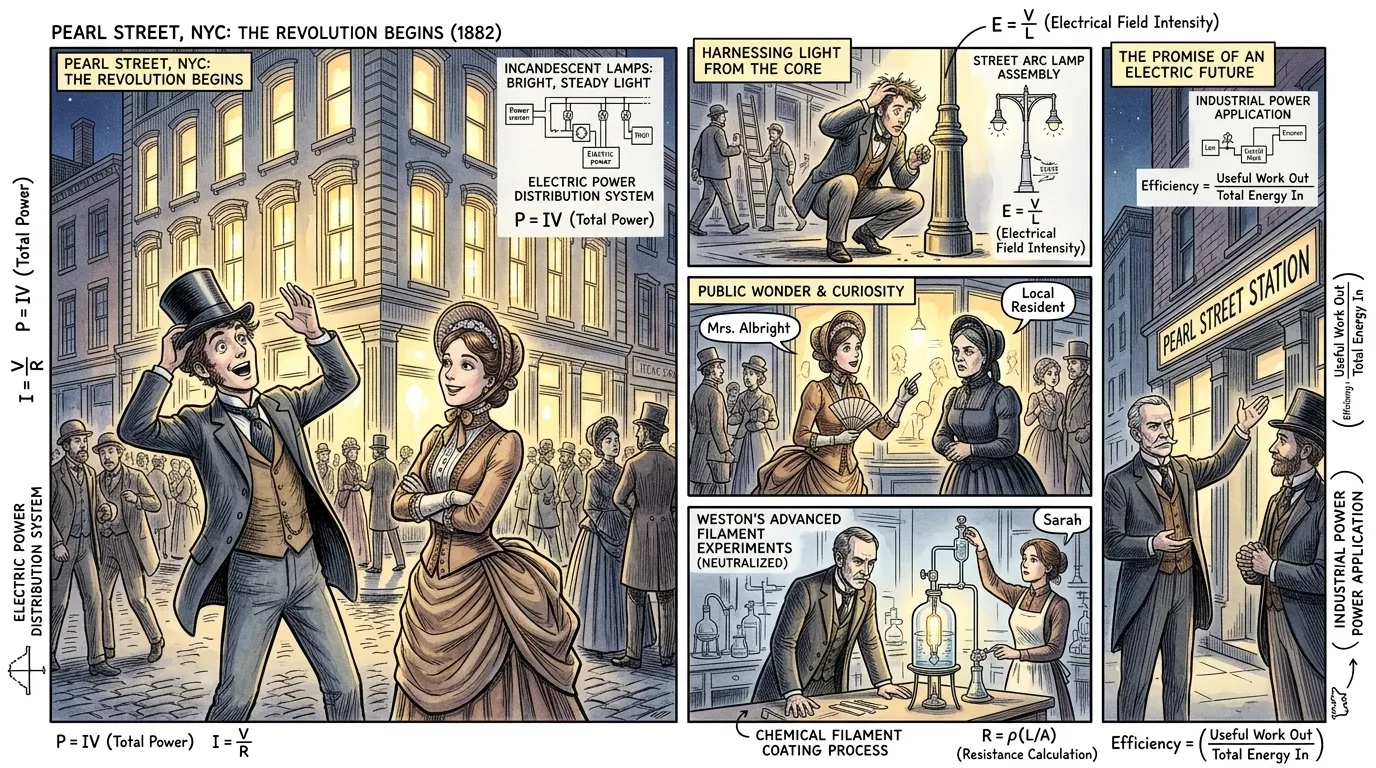
The true test of the incandescent light bulb's viability came not just in the laboratory, but in its widespread implementation. On September 4, 1882, Thomas Edison's Pearl Street Station in Lower Manhattan, New York City, began operating, providing power for approximately 400 lamps in 85 homes and businesses. This was a monumental leap, demonstrating the practicality of a centralized power generation and distribution system for electric lighting. The long-lasting, safe, and easily controlled light bulb directly addressed the problem of short-lived, inefficient illumination that had plagued the pre-electric era.
"Standing outside a brightly lit building near Pearl Street, a prominent businessman, Mr. Harrison, his eyes wide with amazement, declared to his colleague, Mrs. Albright, a sophisticated woman in a fashionable dress, "Look at this! No fumes, no flickering, just steady, brilliant light! I can work well past sunset now, read my ledgers without straining my eyes. This resolves the very problem of dim, unreliable light we discussed months ago." Mrs. Albright smiled, observing the street. "Indeed, Mr. Harrison. This isn't just a new lamp; it's a revolution for commerce, for safety, for urban living. The darkness that limited our days now truly belongs to the past.""
Page 9
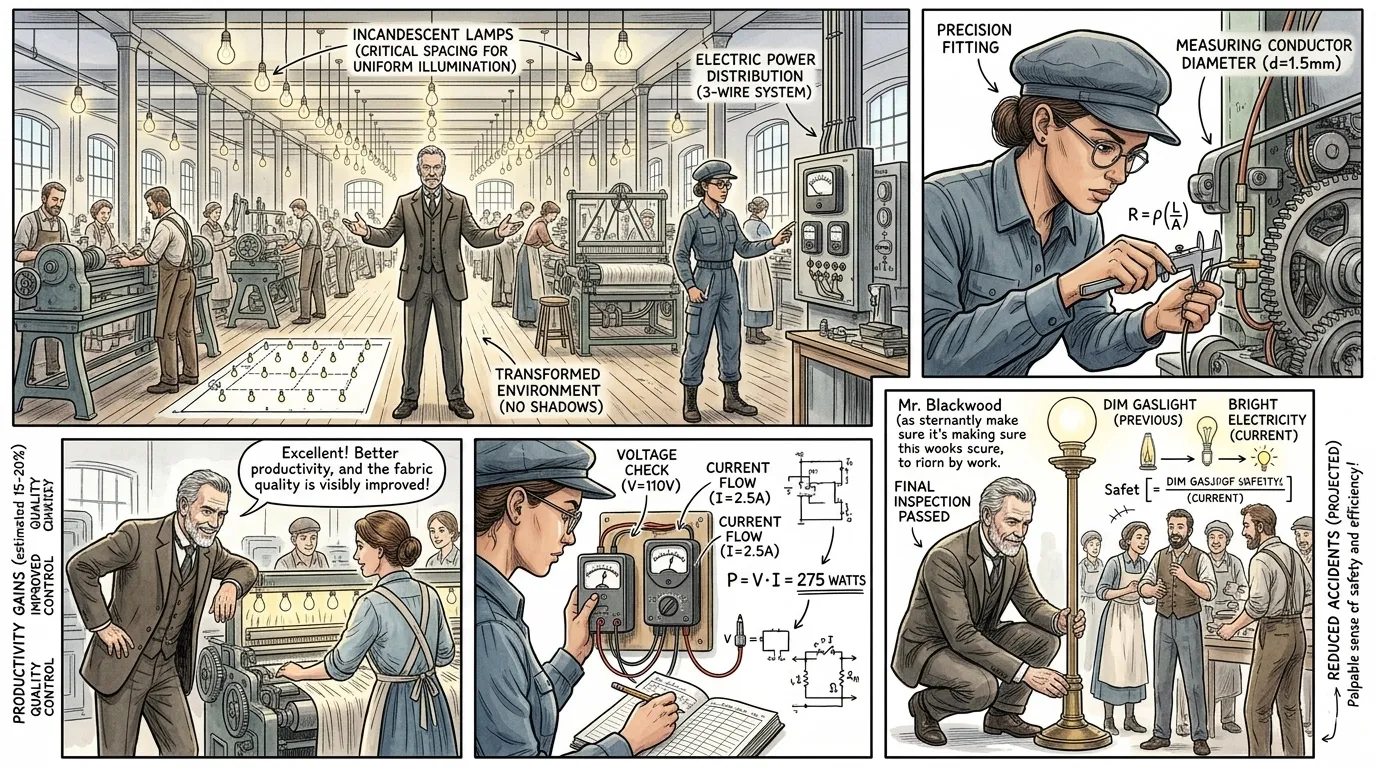
The widespread adoption of the incandescent light bulb triggered a profound societal transformation. Industries could operate around the clock, increasing productivity and creating new economic opportunities. Homes became safer and more comfortable, extending evening leisure and educational pursuits. Public spaces, from streets to theaters, were revitalized, fostering a new sense of safety and community. The light bulb was not merely an invention; it was the catalyst for the entire electrical infrastructure, paving the way for further advancements in powered technology and reshaping the very rhythm of human life.
"Inside a factory now brilliantly lit by hundreds of electric bulbs, a proud factory owner, Mr. Blackwood, a stern but satisfied man in a tailored suit, surveyed his busy workforce. "Our shifts can run 24 hours now, safely and efficiently," he told his chief engineer, Ms. Anya Sharma, a practical woman with analytical eyes, her hair pulled back under a cap. "No more fumbling in the gloom, no more constant fire risk from gas jets. This technology has doubled our output. Remember that issue of short-lived, dangerous light? It feels like a distant memory now." Ms. Sharma nodded, checking a meter. "Indeed, Mr. Blackwood. The impact is staggering. This reliable illumination has not only improved productivity but also the working conditions and safety for everyone. It truly is a new age.""
Page 10
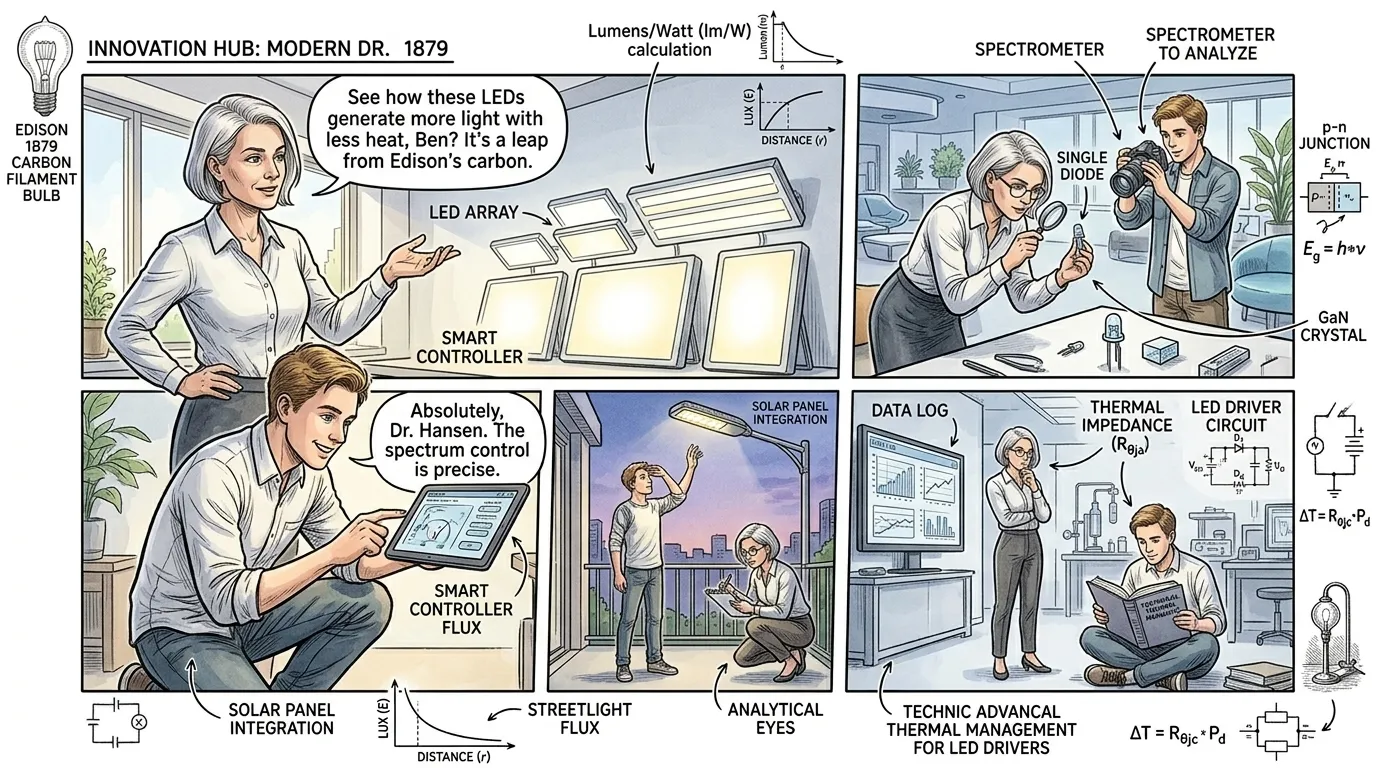
The incandescent light bulb, while revolutionary, was only the first chapter in the story of electric illumination. Its fundamental principles laid the groundwork for continuous innovation, from fluorescent lamps to modern light-emitting diodes (LEDs). Each successive development has built upon the legacy of those early pioneers, offering greater energy efficiency, longer lifespans, and more diverse applications. The bulb's impact reaches every corner of the globe, transforming human civilization and continuing to shape our relationship with light, work, and the very concept of night.
"A contemporary energy efficiency expert, Dr. Lena Hansen, a pragmatic woman with short, silver hair and thoughtful eyes, stands in a modern, energy-efficient building. "From Edison's carbon filament to today's LEDs, the fundamental drive for better, safer, and more efficient light has never ceased," she explains to her intern, a bright young man named Ben, who is adjusting a smart lighting system. "These LED panels, for instance, use a fraction of the energy and last decades, a stark contrast to the early incandescent bulbs. It's a testament to sustained human ingenuity, constantly iterating on foundational breakthroughs." Ben nodded. "It's incredible to think how much has evolved from a single glowing thread.""
About this story
- Location: Global
- Audience: general readers
Questions and answers
Read Wonder Inventions on your phone
Wonder Inventions is available on Android. Get Wonder Inventions on Google Play.