Laptop
Laptop — an illustrated inventions story, set in Global. 10 illustrated pages, free to read on Wonder Inventions.
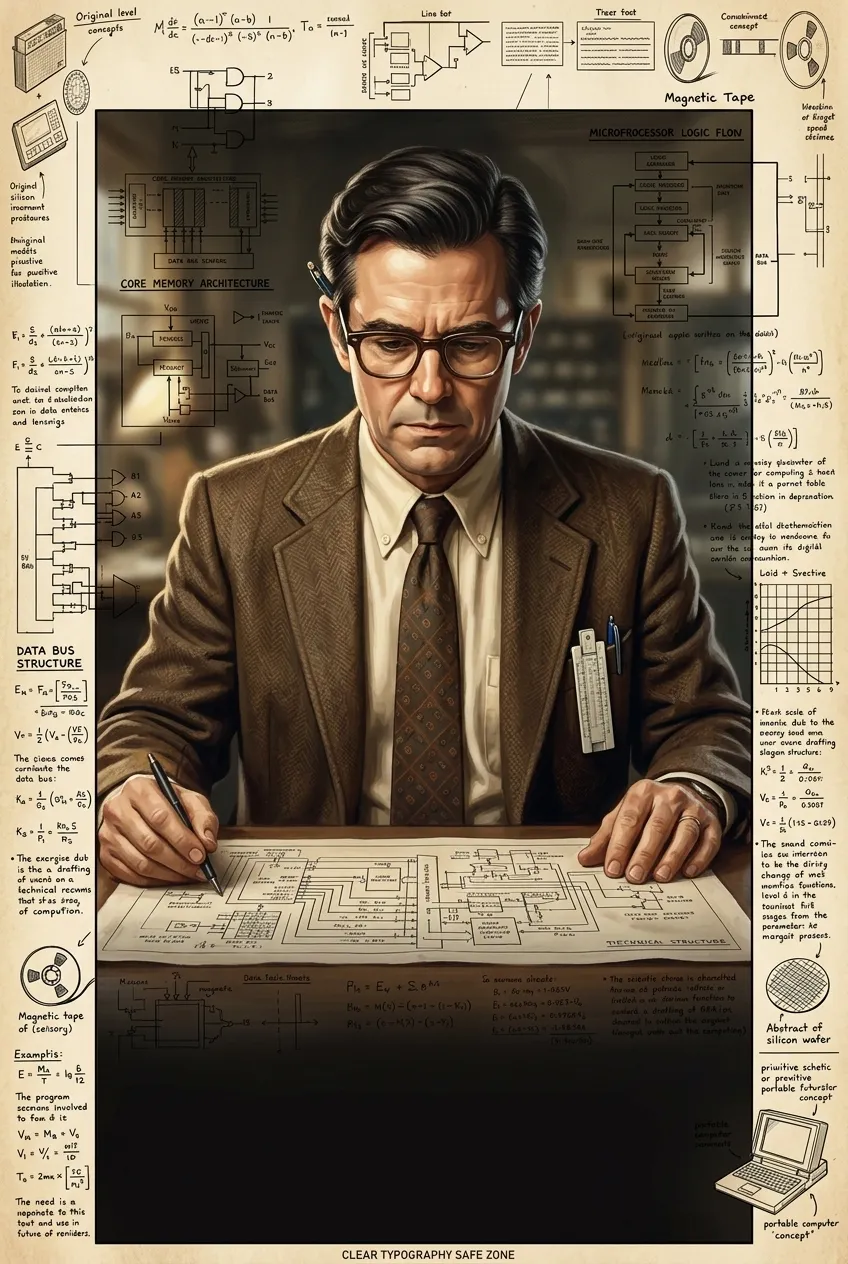
Page 1
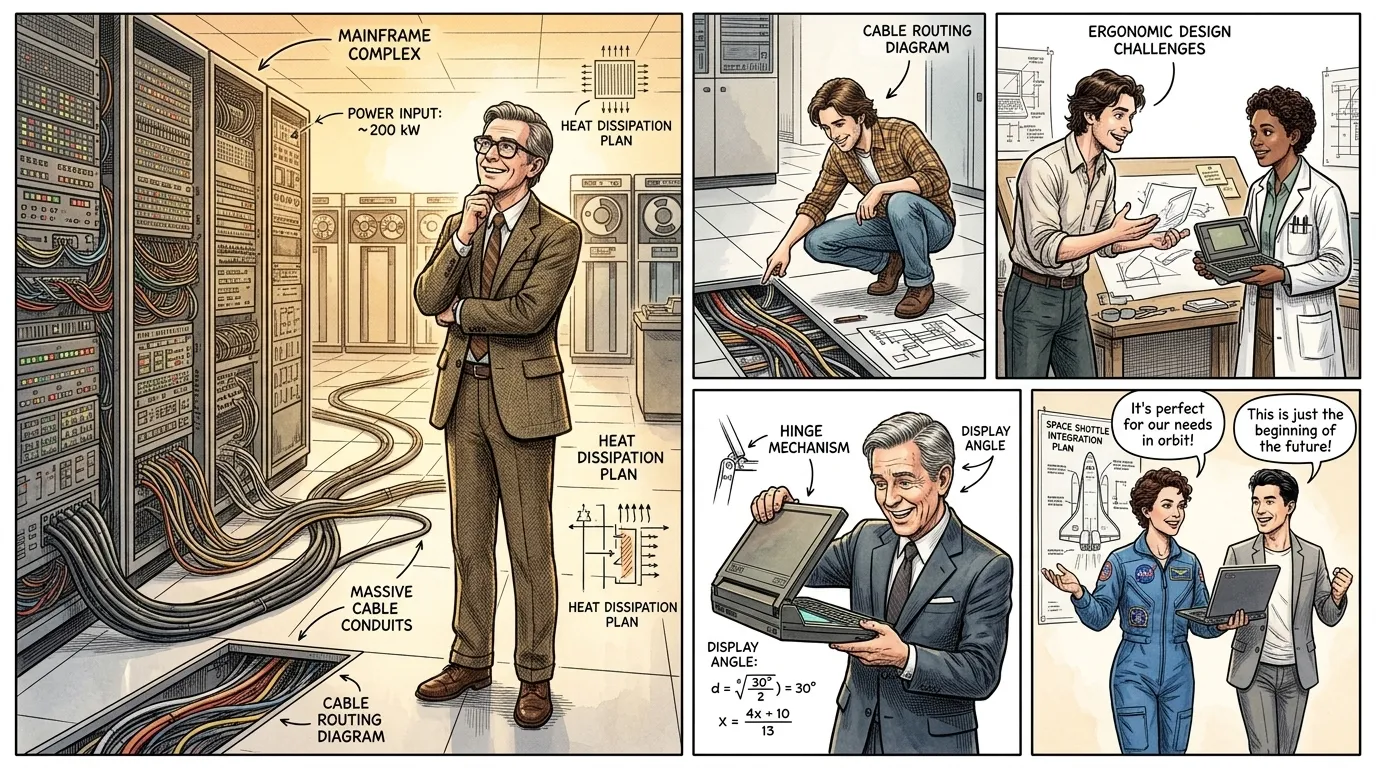
Before the advent of the portable computer, the world of digital processing was confined to static locations. Mainframes filled entire rooms, demanding vast power and specialized environments, accessible only to a select few. Even the earliest personal computers, while revolutionary, were desktop behemoths, tethered to power sockets and bulky peripheral devices, fundamentally limiting where and how work could be done.
""The very idea of carrying a powerful computer seemed almost fanciful," one early computing pioneer might have remarked, reflecting on the technological constraints. "Our machines were powerful, yes, but they were prisoners of their own immense physical demands and their need for constant power.""
Page 2
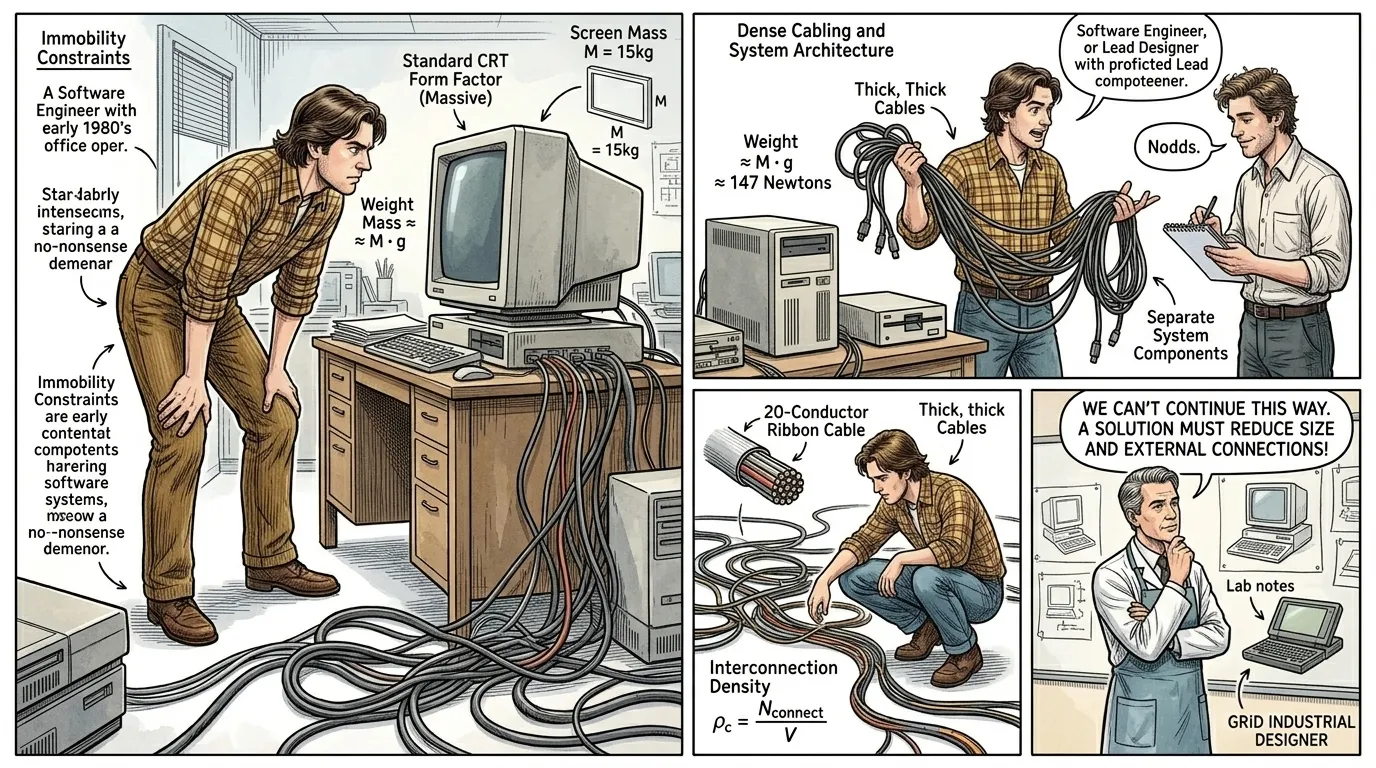
Early computing was synonymous with immobility. Desktop personal computers of the late 1970s and early 1980s offered unprecedented individual access to processing power, yet their form factor presented significant barriers. A typical setup involved a weighty CRT monitor, a separate, boxy system unit, and external floppy disk drives, all connected by an intricate web of cables. This rigid architecture dictated that computing happened in designated, often communal, spaces.
""Moving an entire computer setup was not merely inconvenient; it was a logistical challenge," explained a software engineer, gesturing towards a cumbersome monitor. "Even transporting these 'portable' machines, like the early suitcase-style computers, required significant effort. We realized the true limitation wasn't just size, but the ability to operate independently, free from a power outlet, truly freeing the user.""
Page 3
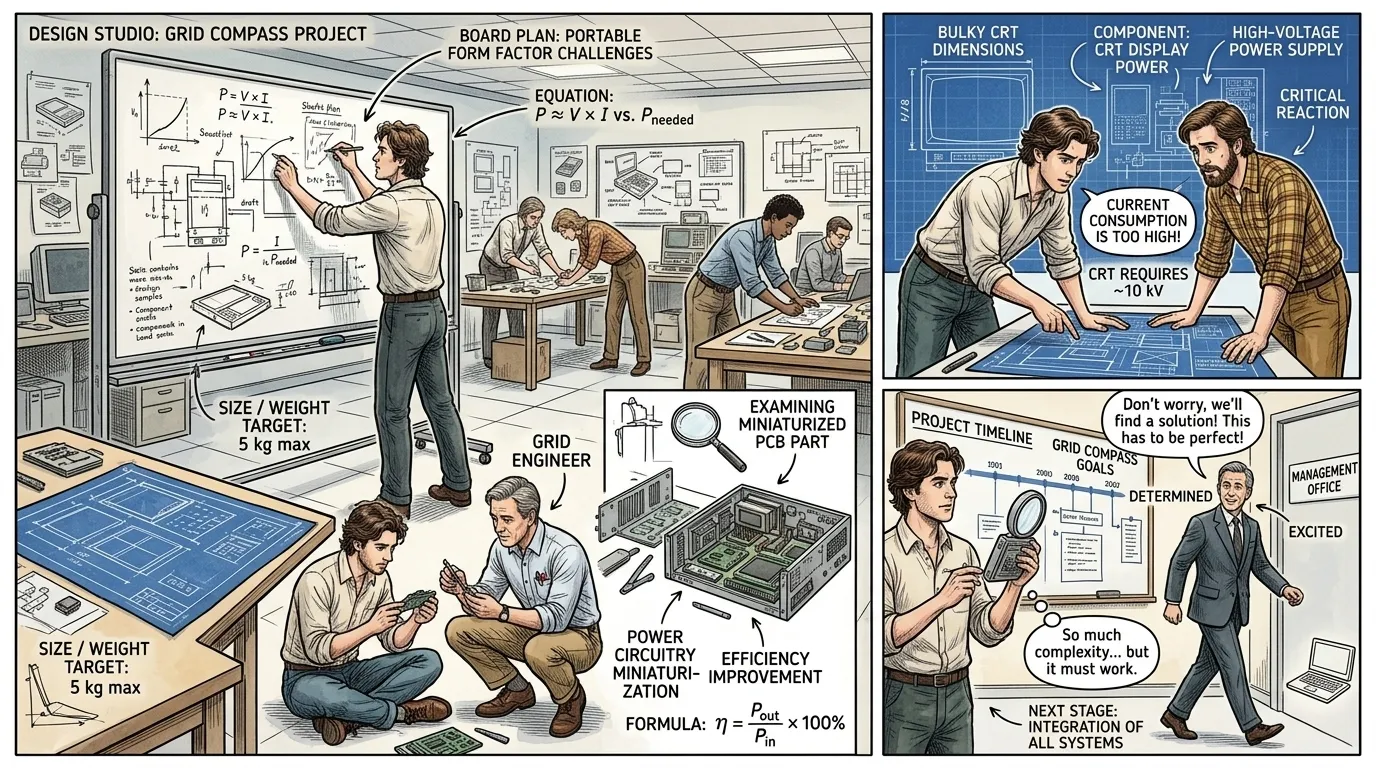
The fundamental challenge facing designers like William Moggridge was the 'unbreakable trinity' of computing: how to simultaneously miniaturize components, provide sufficient processing power, and dissipate the resulting heat, all within a compact, battery-powered enclosure. Cathode Ray Tube (CRT) displays, the standard for visual output, were particularly problematic—heavy, fragile, and power-hungry, directly hindering any real portability. Storage too, relied on bulky, mechanical drives.
""We faced an immense engineering hurdle," stated a lead designer, sketching on a whiteboard. "As Arthur C. Clarke famously wrote, 'Any sufficiently advanced technology is indistinguishable from magic.' For us, achieving true portability felt like magic because it required breaking the established norms of hardware. The sheer energy demands of a functional computer, paired with the limits of battery technology, presented a seemingly insurmountable barrier to untethered operation. How could we possibly fit everything inside a small, robust case?""
Page 4
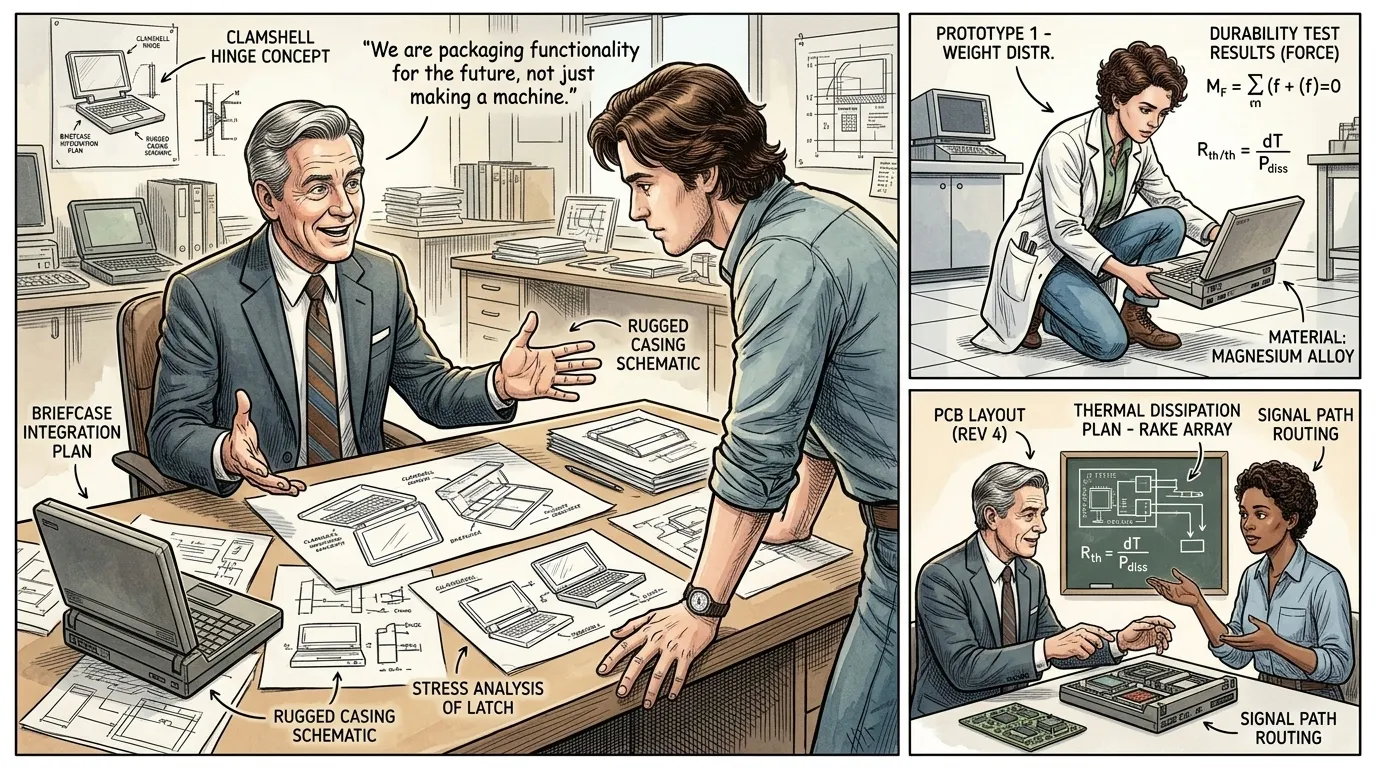
The seeds of the modern laptop were sown in the late 1970s, as designers began to envision a truly portable personal computer. One pivotal figure was British industrial designer William Moggridge, who, while working for GRiD Systems Corporation in the late 1970s, began to conceptualize a revolutionary 'clamshell' design. His vision was not merely a smaller desktop, but a fully integrated, robust machine for professionals who needed computing power on the move, particularly for demanding fields like NASA's space shuttle program or military intelligence.
""My goal was to create something that wasn't just transportable, but truly mobile," Moggridge explained in a historical interview, gesturing towards early design sketches on his desk. "A device that could fold itself into a protective shell, robust enough for extreme environments, yet sleek enough to fit into a briefcase. It was about packaging functionality and durability without compromise. We needed a new paradigm, not just a smaller box.""
Page 5
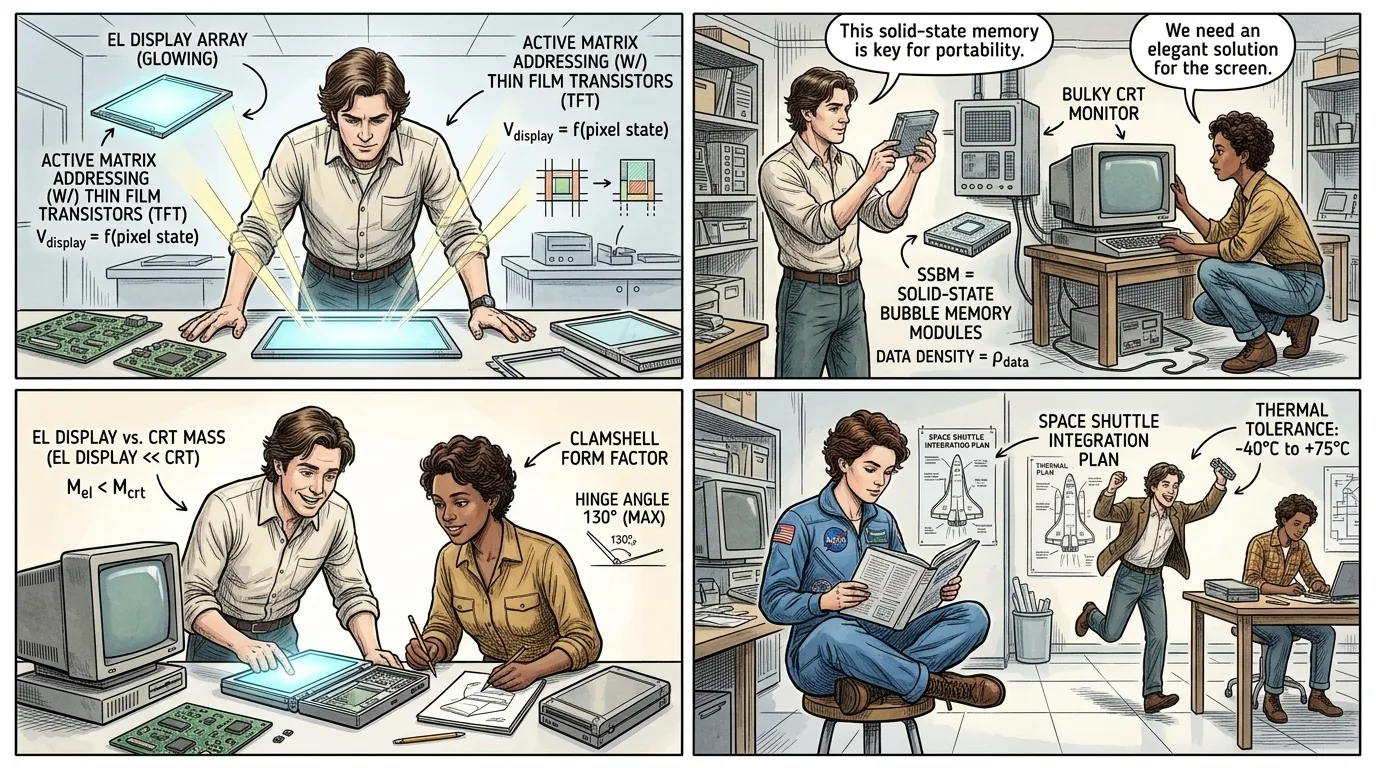
The road to a practical laptop was paved with significant technological hurdles. The cumbersome CRT display was the primary barrier. Moggridge's team championed the then-novel technology of the electroluminescent display, a flat-panel alternative that was far lighter, thinner, and less power-intensive. This choice was radical and expensive, moving away from established norms, but it was fundamental to achieving true portability and the clamshell form factor. Similarly, traditional spinning hard drives were replaced with solid-state bubble memory, increasing durability and reducing size.
""The decision to go with an electroluminescent display was a game-changer," stated a GRiD engineer, tapping a flat display panel. "It wasn't just about reducing bulk; it was about reimagining the user interface entirely. Without a flat screen, the clamshell form factor, so crucial for protection and compactness, would have been impossible. We had to embrace emerging, unproven technologies, accepting their high cost, to achieve the vision of mobility.""
Page 6
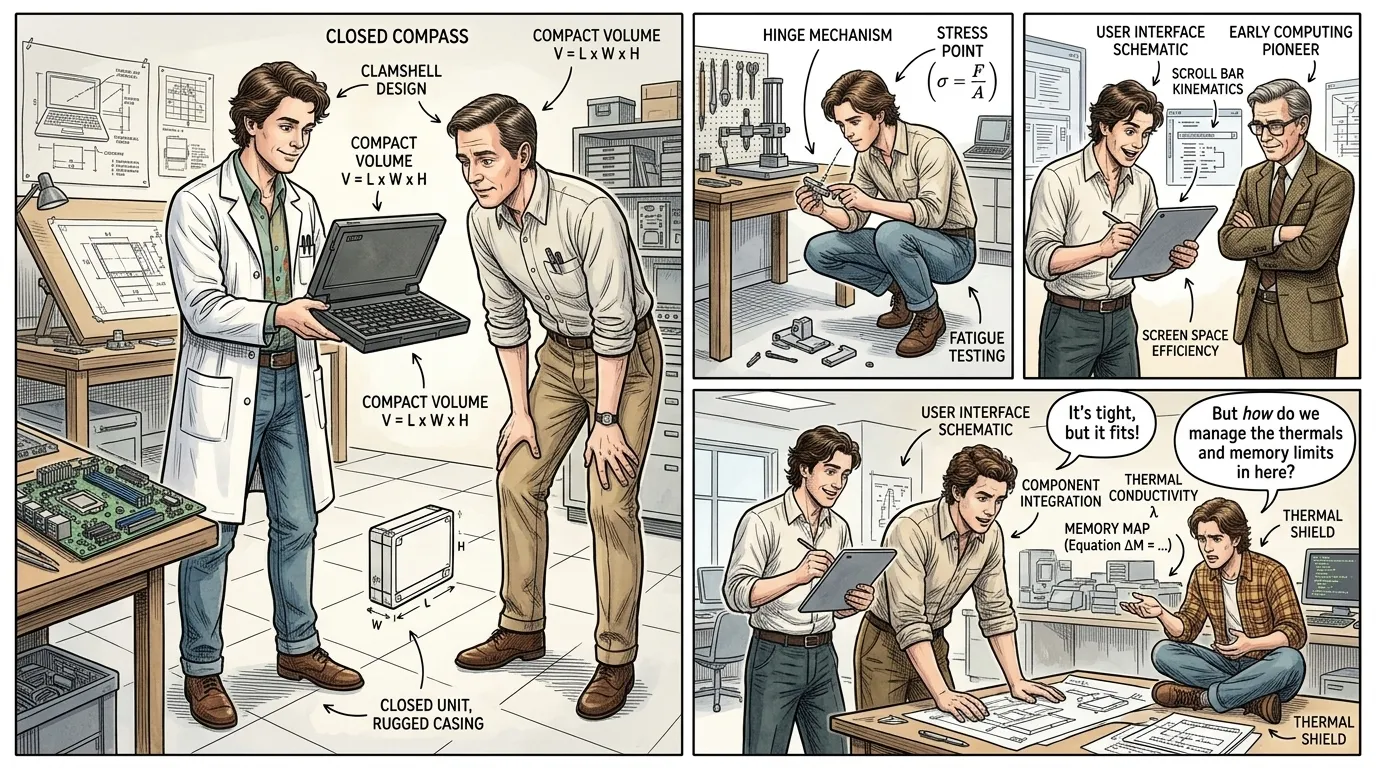
The true genius of the GRiD Compass, and subsequent laptop designs, lay in its integration. The clamshell design allowed the display to fold down and protect the keyboard, making the entire unit rugged and compact. Crucially, the internal components — the CPU, memory, display controller, and the then-advanced nickel-cadmium battery pack — were all meticulously engineered to fit within this minimal volume. This required custom-designed circuit boards and careful thermal management, a testament to the team's relentless pursuit of efficiency and compactness.
""Every millimeter inside that case was meticulously planned," explained a GRiD industrial designer, holding up an early GRiD Compass prototype. "The clamshell wasn't just aesthetic; it was structural. It provided unparalleled protection for the fragile internal components, allowing this machine to withstand environments that would shatter a traditional desktop. This integration, combining display, keyboard, and processing into a single robust unit, changed everything about where and how we could work.""
Page 7
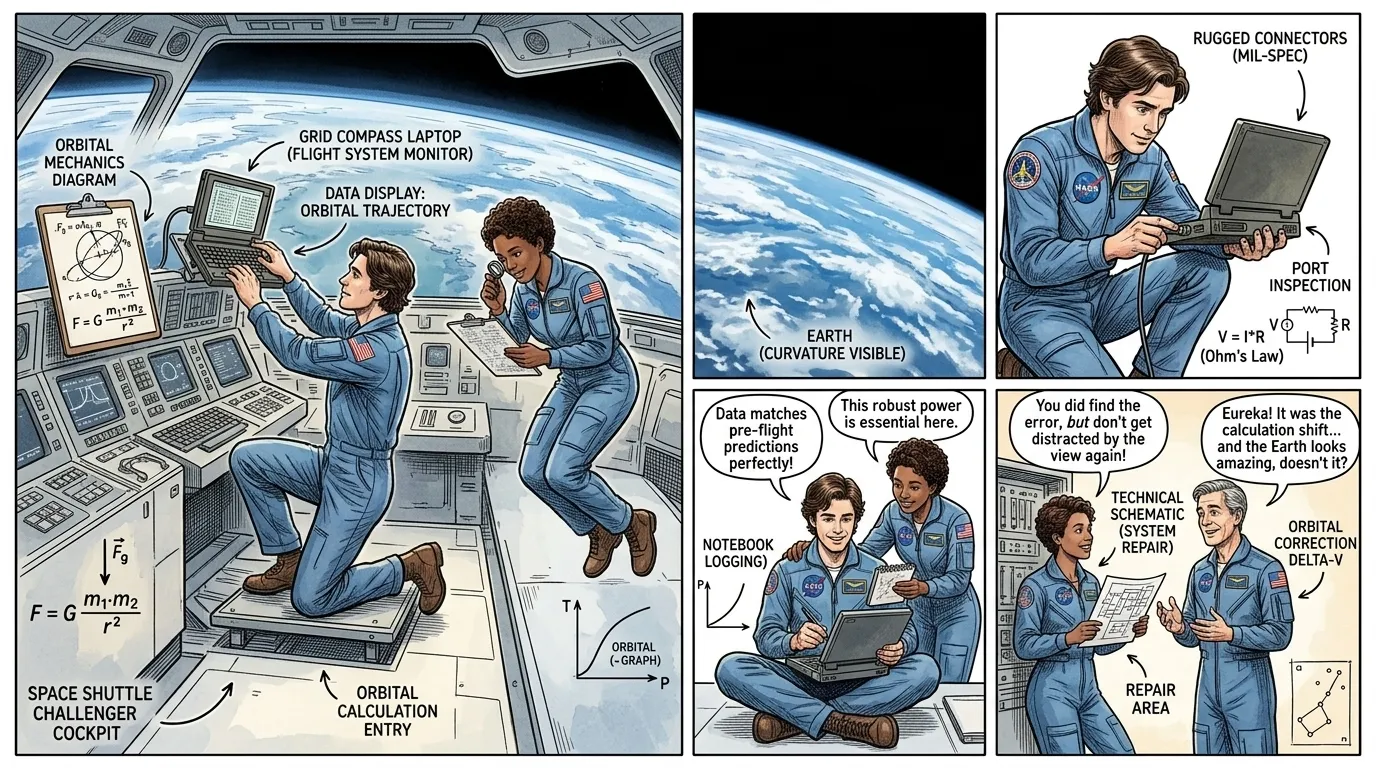
Debuting in 1982, the GRiD Compass 1101 was not an immediate commercial success for the general public due to its exorbitant price tag (8,150, equivalent to over 20,000 today). However, it proved the viability of the laptop concept. Its robust, magnesium alloy case and reliable performance quickly made it indispensable for specific, high-stakes users. NASA famously adopted it for the Space Shuttle program, deploying it to monitor flight systems and manage orbital calculations, proving the machine's durability and critical functionality in extreme conditions.
""The GRiD Compass might have been expensive, but it was truly pioneering," remarked a NASA engineer, demonstrating the device's functionality. "For the first time, we had access to robust computing power in an entirely new context—orbiting Earth. This machine proved that the core idea of a powerful, portable computer was not only feasible but absolutely essential for critical missions. Its solid-state memory, its ruggedness, it was built for purpose, freeing us from the confines of ground stations.""
Page 8
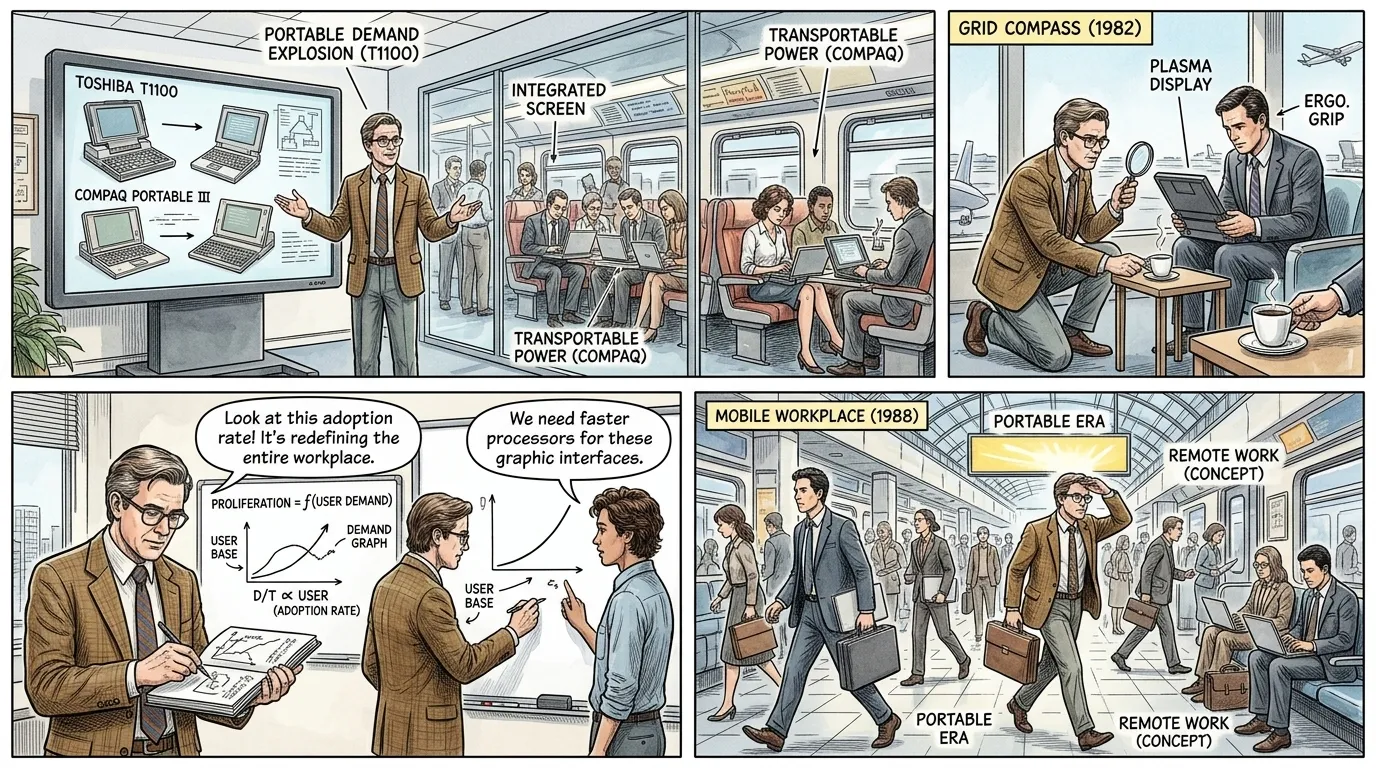
While the GRiD Compass demonstrated the potential, it was later models from companies like Toshiba (T1100, 1985) and Compaq (Portable III, 1987) that brought true laptop computing to a broader market, often at more accessible price points. Advancements in LCD technology, more efficient microprocessors, and lighter battery chemistries (like NiMH and later Li-Ion) rapidly reduced size, weight, and cost. The clamor for mobile computing grew, driven by business professionals needing to work from anywhere, transforming the laptop from a niche tool into a widely adopted instrument of productivity.
""The shift was undeniable," commented a technology analyst from the late 1980s. "Once the price dropped and the weight became manageable, the demand for portable computing exploded. Businesses realized their employees could be productive on sales trips, at client sites, or even at home. This wasn't just a convenience; it was a fundamental redefinition of the workplace. The ability to carry your entire digital workspace in a briefcase became a powerful competitive advantage.""
Page 9
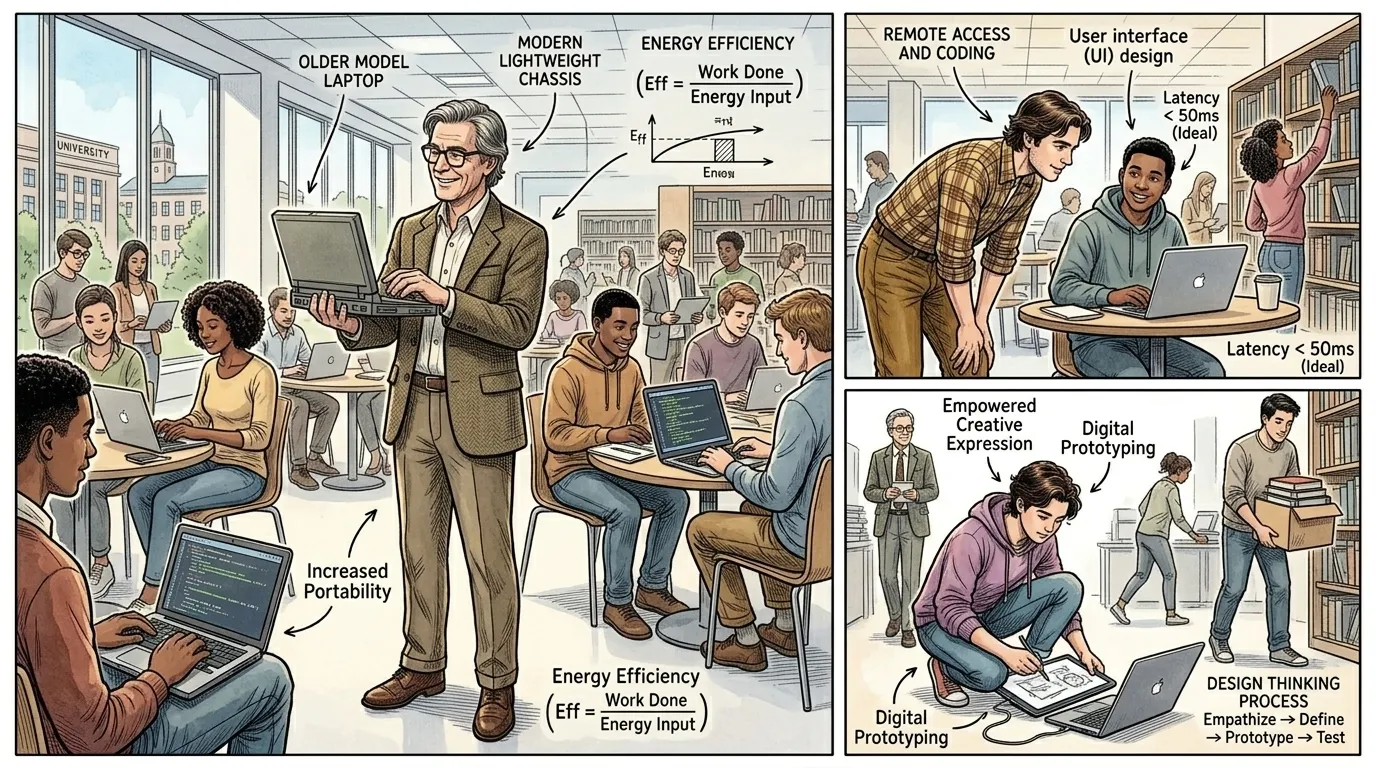
The laptop continued its evolution, becoming thinner, lighter, and vastly more powerful. The clamshell design proved incredibly resilient, remaining the dominant form factor for decades. Its integration of a powerful processor, a visual display, a keyboard, and a pointing device (like a trackpad or mouse) into a single, rechargeable unit transformed industries. From journalism to scientific research, education to entertainment, the laptop provided unprecedented flexibility, allowing individuals to create, connect, and compute far beyond the traditional desktop environment. It effectively decentralized computing.
""The laptop became the ultimate personal productivity tool," observed a computer science historian in the early 2000s. "It literally put powerful computers into the hands of millions, democratizing access to digital tools. As we see today, from coding in a café to designing presentations on a train, the original dream of accessible, mobile computing has not only been realized but has profoundly reshaped how we live, work, and learn. It's truly a testament to persistent innovation in miniaturization and power efficiency.""
Page 10
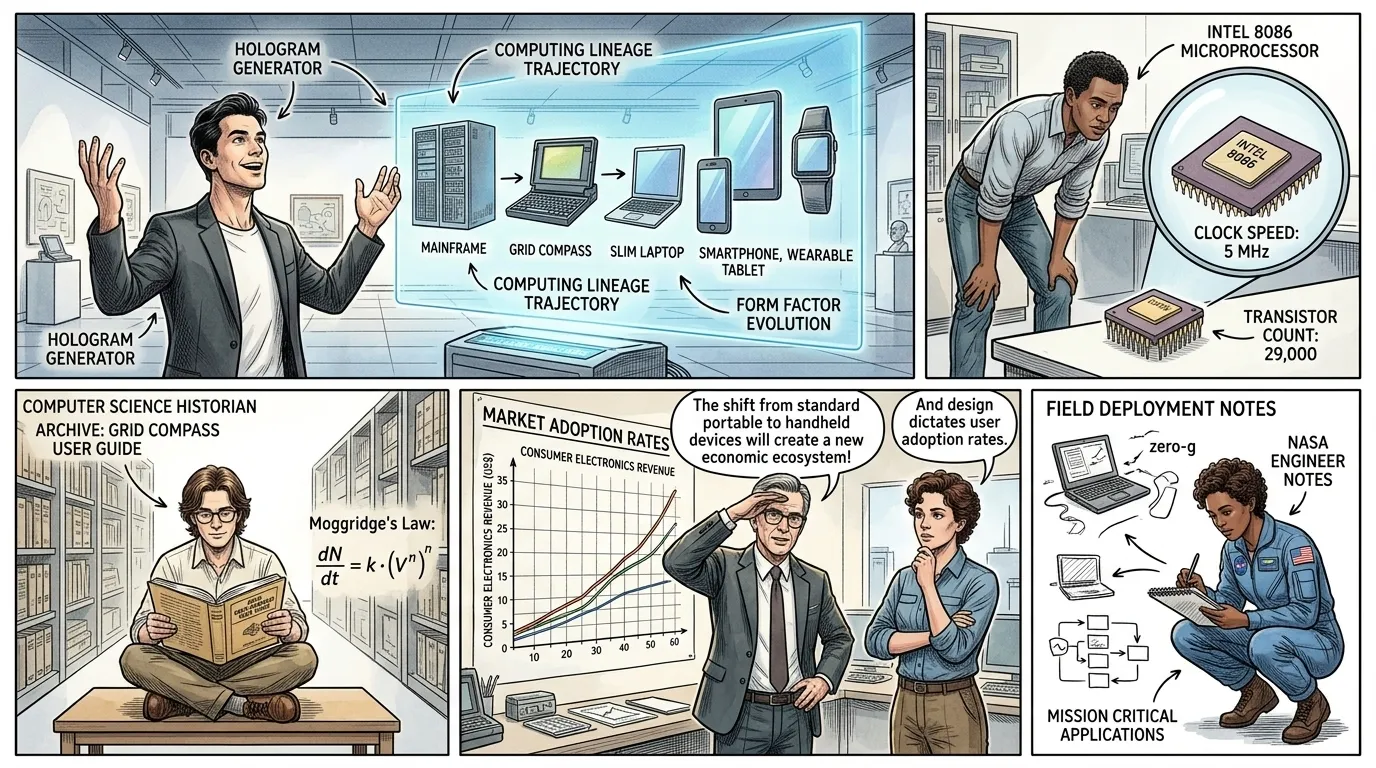
The laptop's enduring impact extends beyond its own form factor. Its development pushed the boundaries of miniaturization, battery technology, flat-panel displays, and efficient processing, laying essential groundwork for the subsequent explosion of mobile devices like smartphones and tablets. It normalized the idea of personal, portable access to information and complex tasks, fundamentally altering expectations about connectivity and productivity. The journey from room-sized mainframes to the slim, powerful machines we carry today is a testament to relentless innovation, making the once-fanciful idea of portable computing an indispensable reality.
""The laptop represents more than just a device; it's a philosophical shift," concluded a futurist, reflecting on its lineage. "It made computing personal, portable, and pervasive. Every tablet, every smartphone, every wearable device owes a debt to the engineering challenges overcome in creating the first viable laptops. It didn't just move the computer; it moved the very concept of computing into our lives, wherever we choose to be.""
About this story
- Location: Global
- Audience: general readers
Read Wonder Inventions on your phone
Wonder Inventions is available on Android. Get Wonder Inventions on Google Play.