Keyboard
Keyboard — an illustrated inventions story, set in Global. 10 illustrated pages, free to read on Wonder Inventions.
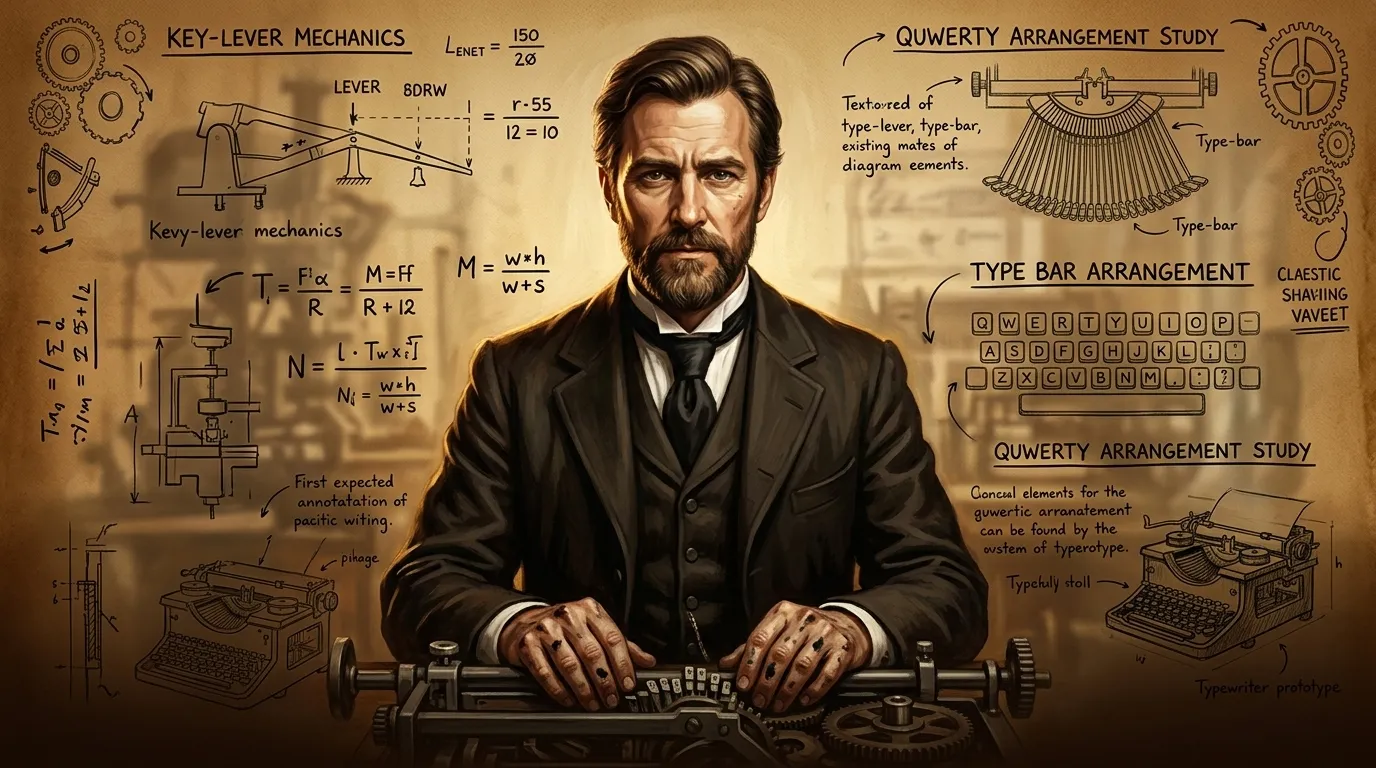
Page 1
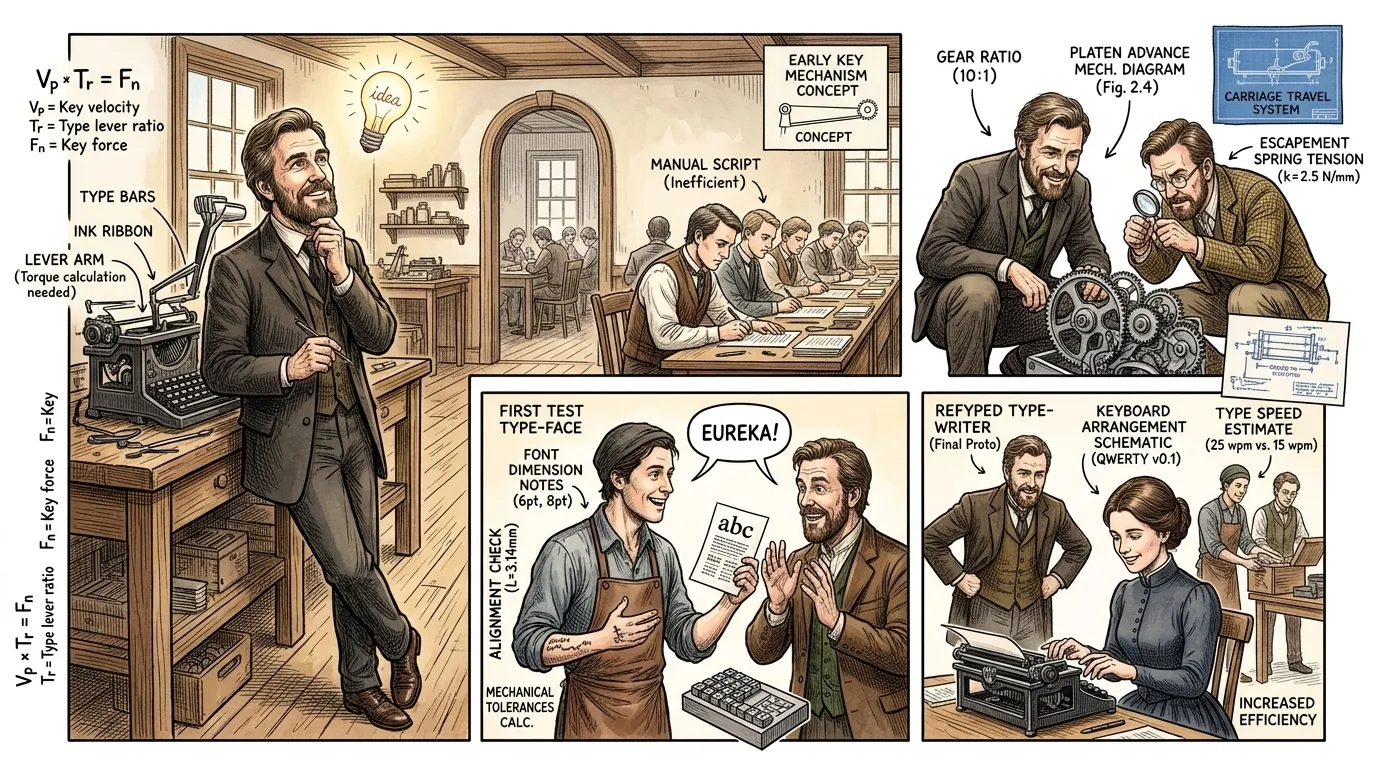
Before the ubiquitous keyboard, the act of putting thoughts onto paper was laborious and slow. Clerks meticulously penned documents by hand, a process fraught with error and inefficiency. The burgeoning industrial age demanded faster communication, more precise record-keeping, and scalable document production.
"This pressing need for mechanization fueled the ingenuity of inventors, none more pivotal than Christopher Latham Sholes. In Milwaukee, Wisconsin, during the mid-19th century, Sholes embarked on a quest to revolutionize written communication."
Page 2
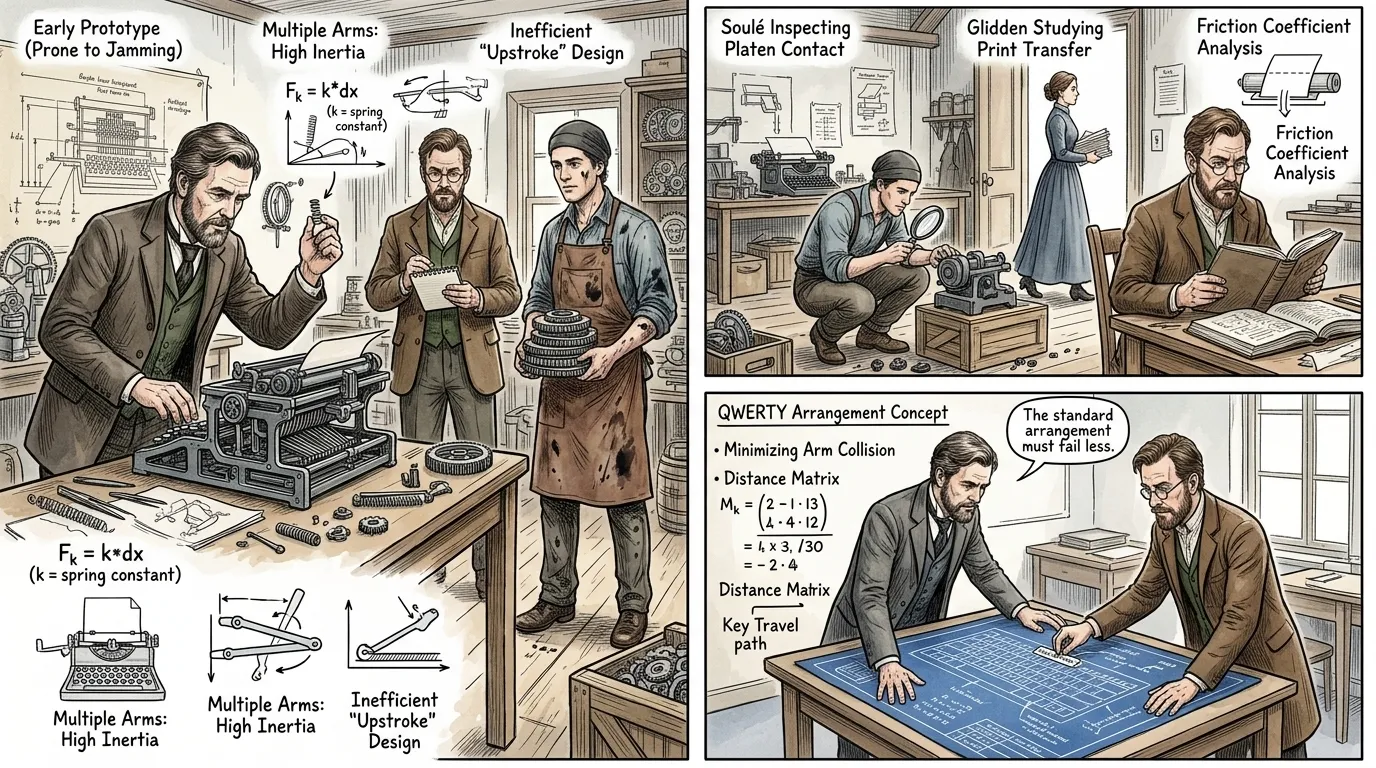
The demand for written documents far outpaced the capacity of manual methods. Businesses struggled with endless transcription, governments sought efficient ways to record proceedings, and individuals desired clearer, faster correspondence. Early attempts at mechanical writing were often cumbersome, resembling complex musical instruments or intricate clockwork rather than practical office tools.
"These devices, while innovative, often required specialist operators and were prone to mechanical failure, failing to achieve widespread adoption. The core challenge lay in translating human intent—a thought—into a physical, readable mark on paper, at speed, without the delicate artistry of calligraphy."
Page 3
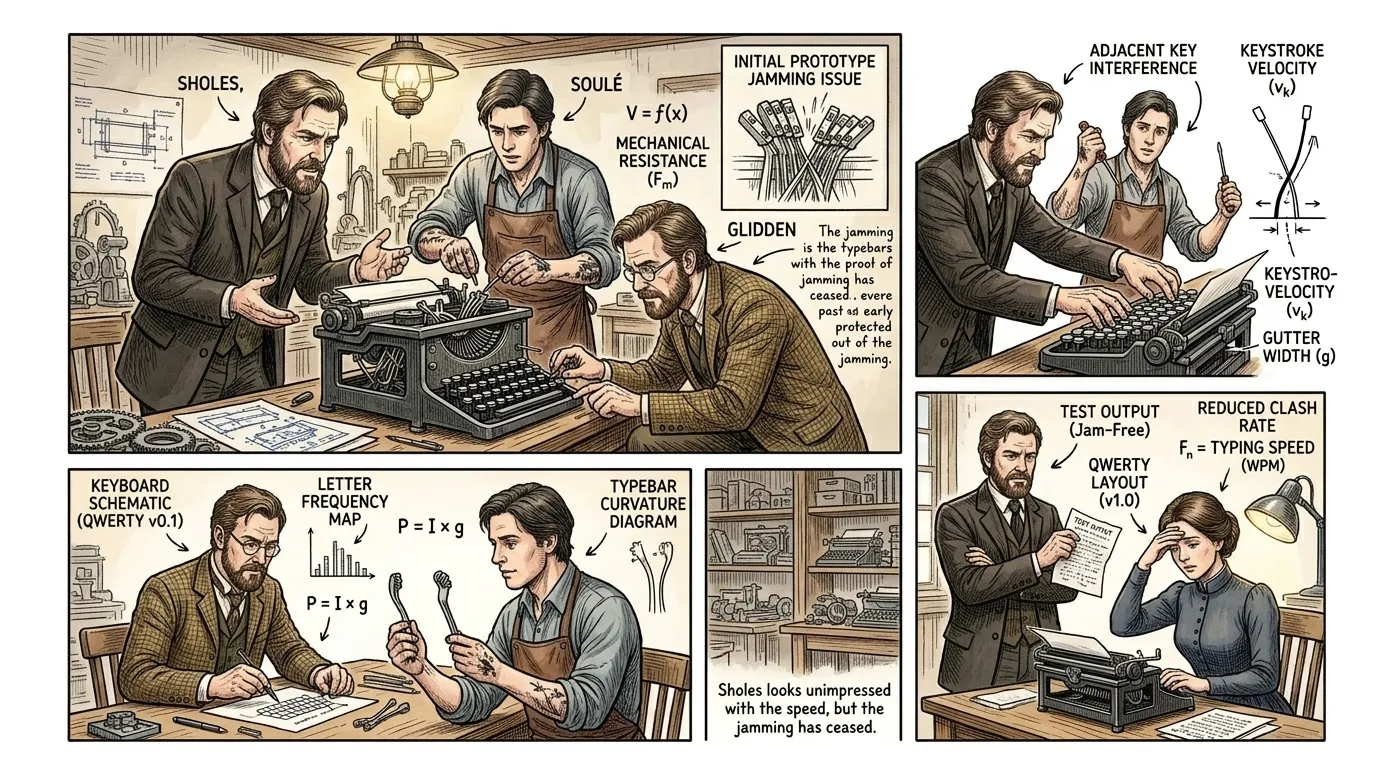
Sholes, a newspaper editor and printer, understood the mechanics of type. His first functional prototype, developed with printer Samuel Soulé and inventor Carlos Glidden, featured an alphabetical keyboard. However, a critical flaw emerged almost immediately during rapid operation. When adjacent keys corresponding to frequently used letter pairs—like 'ST' or 'TH'—were struck in quick succession, their mechanical typebars would clash and jam together.
"This constant mechanical interference brought typing to a frustrating halt, negating any speed advantage the machine offered. The solution would require more than mere mechanical refinement; it demanded a fundamental rethinking of the very layout of the letters."
Page 4
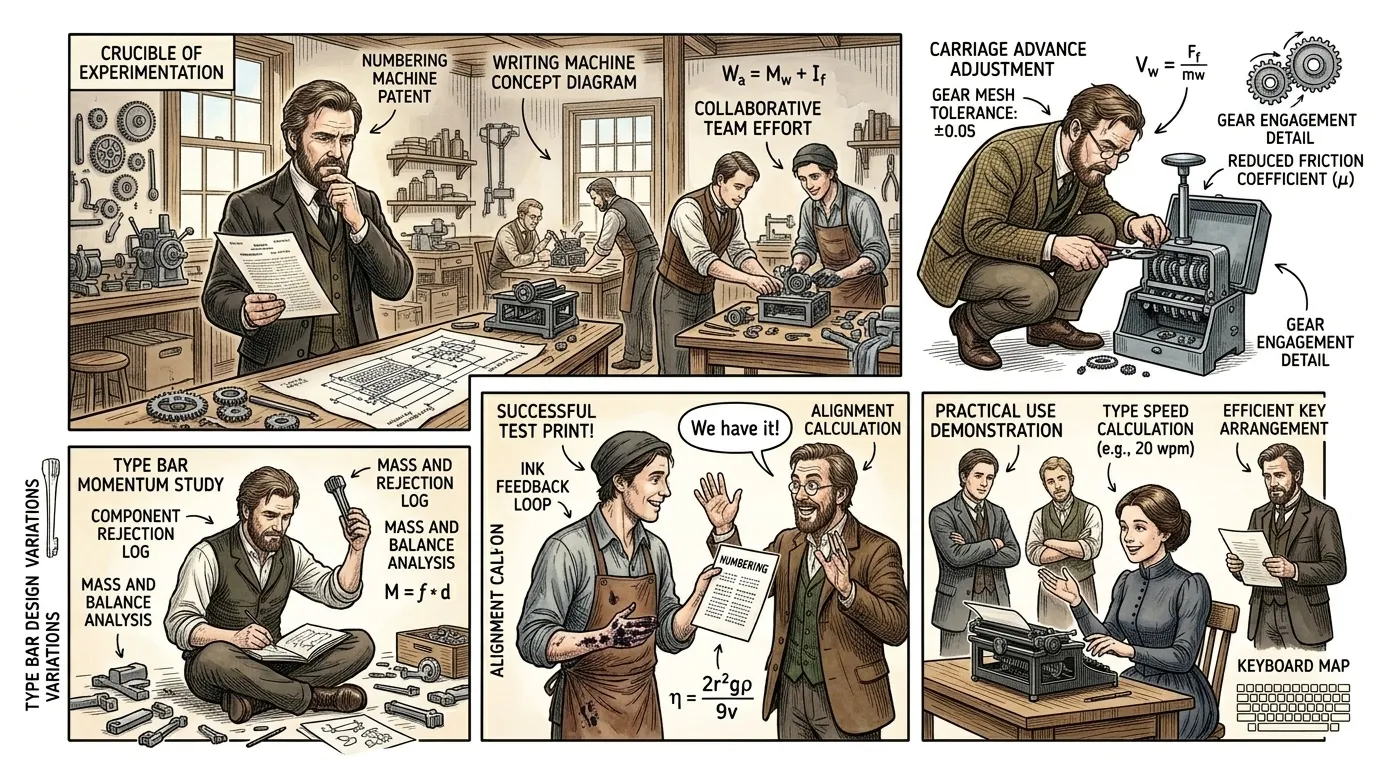
Christopher Latham Sholes was no stranger to invention. Having already secured patents for a numbering machine and a newspaper addressing machine, his mind was geared toward efficiency. The challenge of a 'writing machine' captivated him, promising a revolution akin to the printing press for individual documents.
"Sholes was not a lone genius in isolation; he collaborated intensely with skilled craftsmen and fellow thinkers. His Milwaukee workshop became a crucible of experimentation, where ideas were tested, refined, and often discarded in the relentless pursuit of a functional design."
Page 5
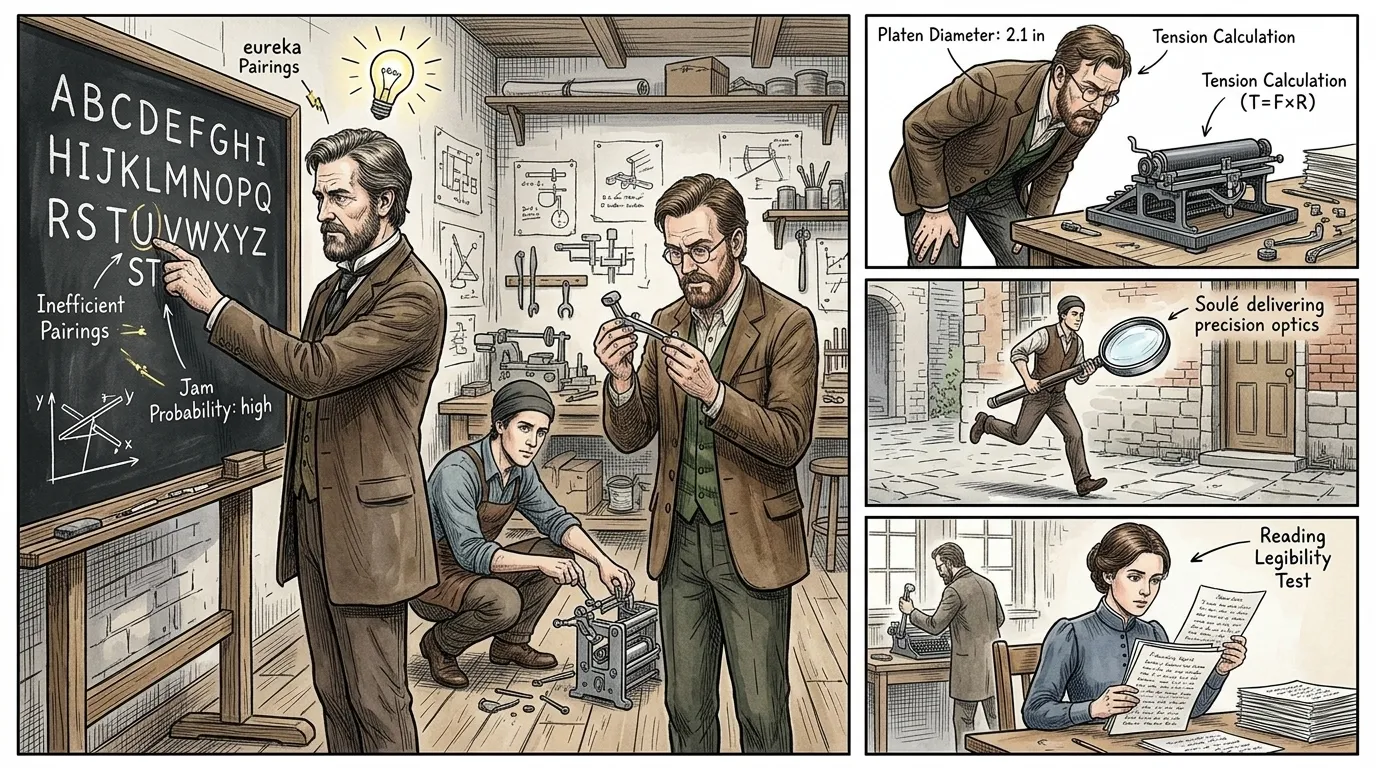
For months, Sholes and his team wrestled with the jamming problem. They tried adjusting spring tensions, altering key lever lengths, and even modifying the striking mechanism. The alphabetical layout, seemingly logical, was the root cause of the mechanical conflict. It grouped frequently used letters, making jams inevitable.
"The breakthrough came from a profound shift in perspective. Instead of arranging keys for alphabetical ease, Sholes began to consider key placement based on letter frequency and common pairings in English text. As the renowned physicist Albert Einstein once said, 'We cannot solve our problems with the same thinking we used when we created them.' Sholes realized the solution lay in deliberately slowing the typist down for common sequences, spatially separating those problematic letter pairs, thus preventing the typebars from clashing."
Page 6
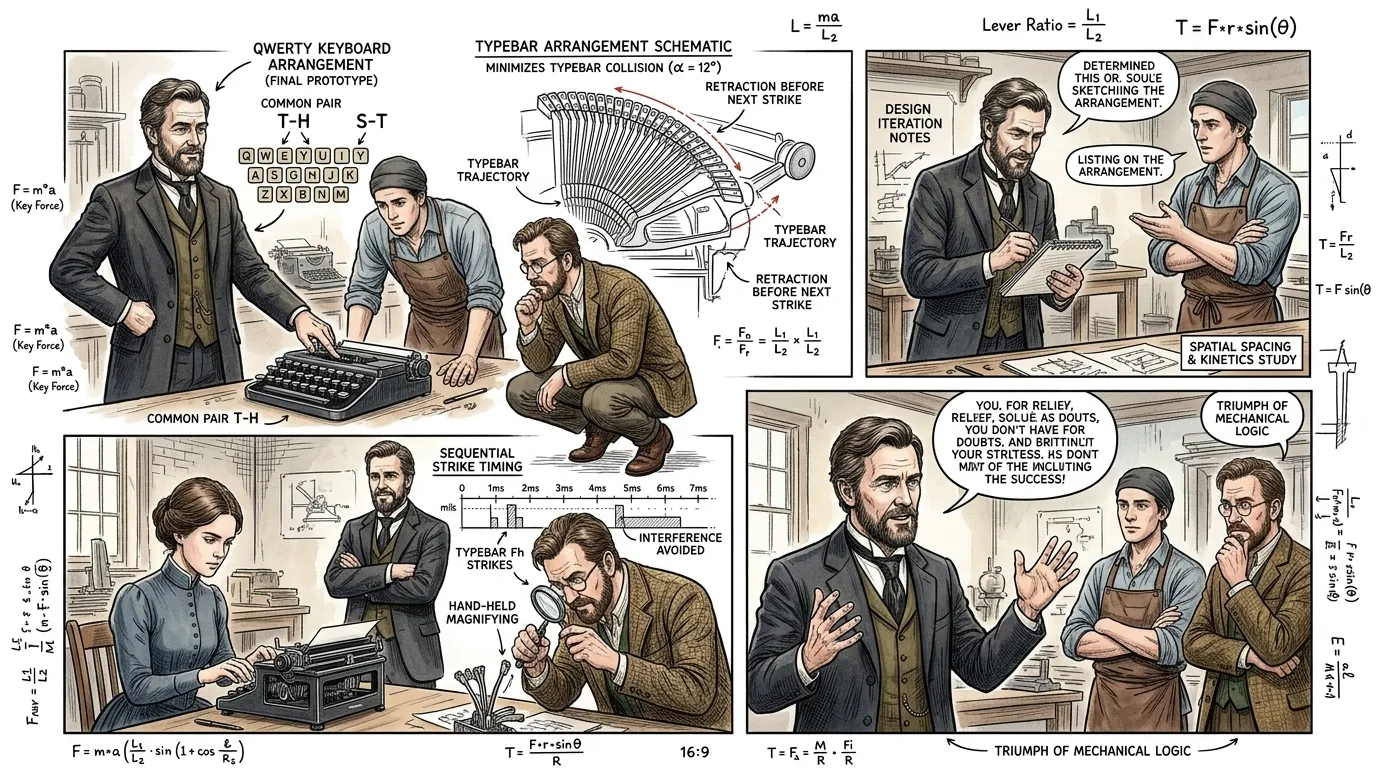
This radical insight led Sholes to develop the QWERTY keyboard layout, named for the first six keys on its top row. It was a counter-intuitive design: deliberately non-alphabetical and seemingly inefficient at first glance. However, its genius lay in its engineering purpose.
"By separating commonly used letter pairs like 'T' and 'H', 'S' and 'T', or 'O' and 'I', Sholes ensured that their corresponding typebars were physically spaced apart within the machine. This spatial distribution allowed one typebar to retract before the next, avoiding collisions and enabling continuous, faster typing. It was a triumph of mechanical design over intuitive alphabetical order."
Page 7
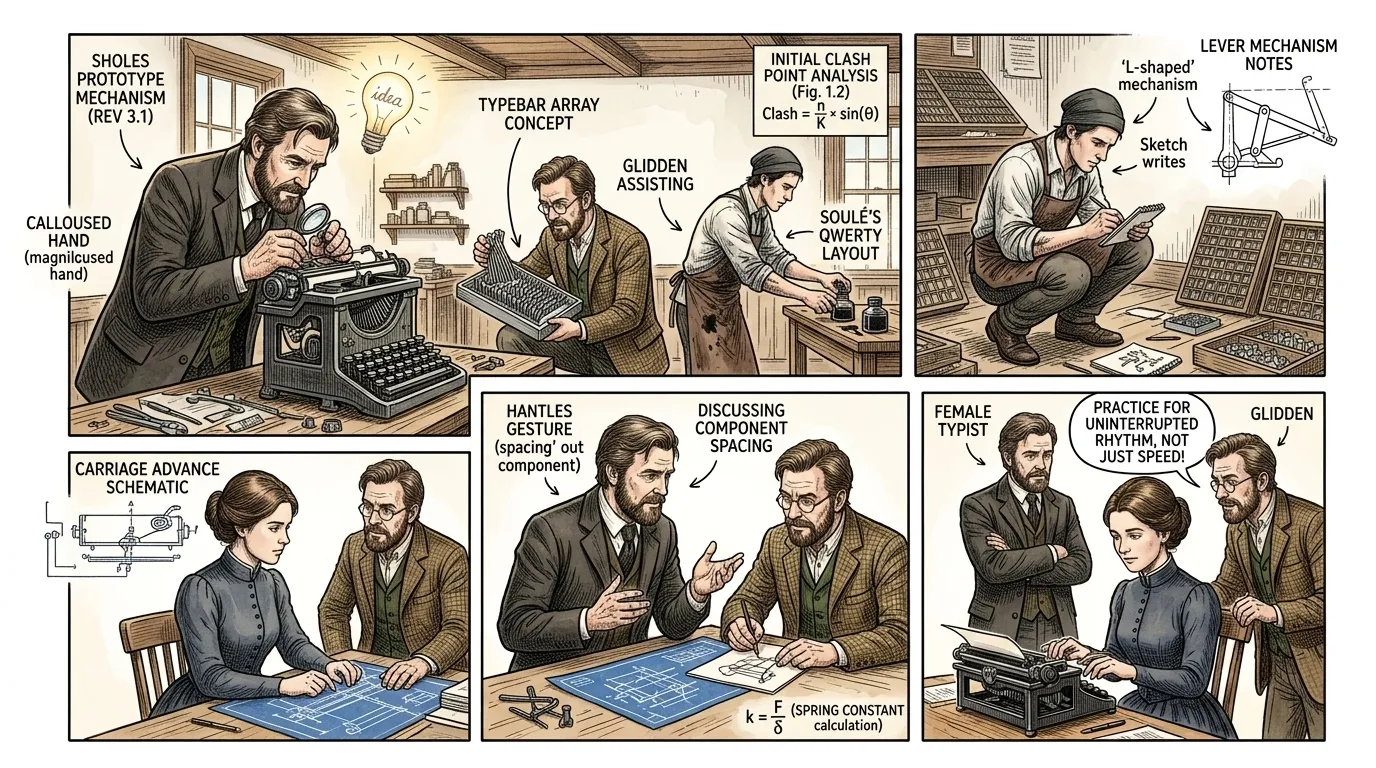
When a key on the QWERTY keyboard is pressed, a complex but precise mechanical chain reaction occurs. The depressed key activates a lever, which in turn triggers a series of linkages. These linkages propel a specific typebar from its resting position in the 'type basket' upwards and forwards.
"The letterform on the typebar then strikes an ink ribbon, imprinting its character onto the paper, which is held by a cylindrical platen. Crucially, the QWERTY layout's design ensures that even with rapid key presses, the typebars do not interfere with each other, allowing for smooth, uninterrupted text production. Simultaneously, a 'carriage return' mechanism advances the paper for the next character, much like a modern word processor moves the cursor."
Page 8
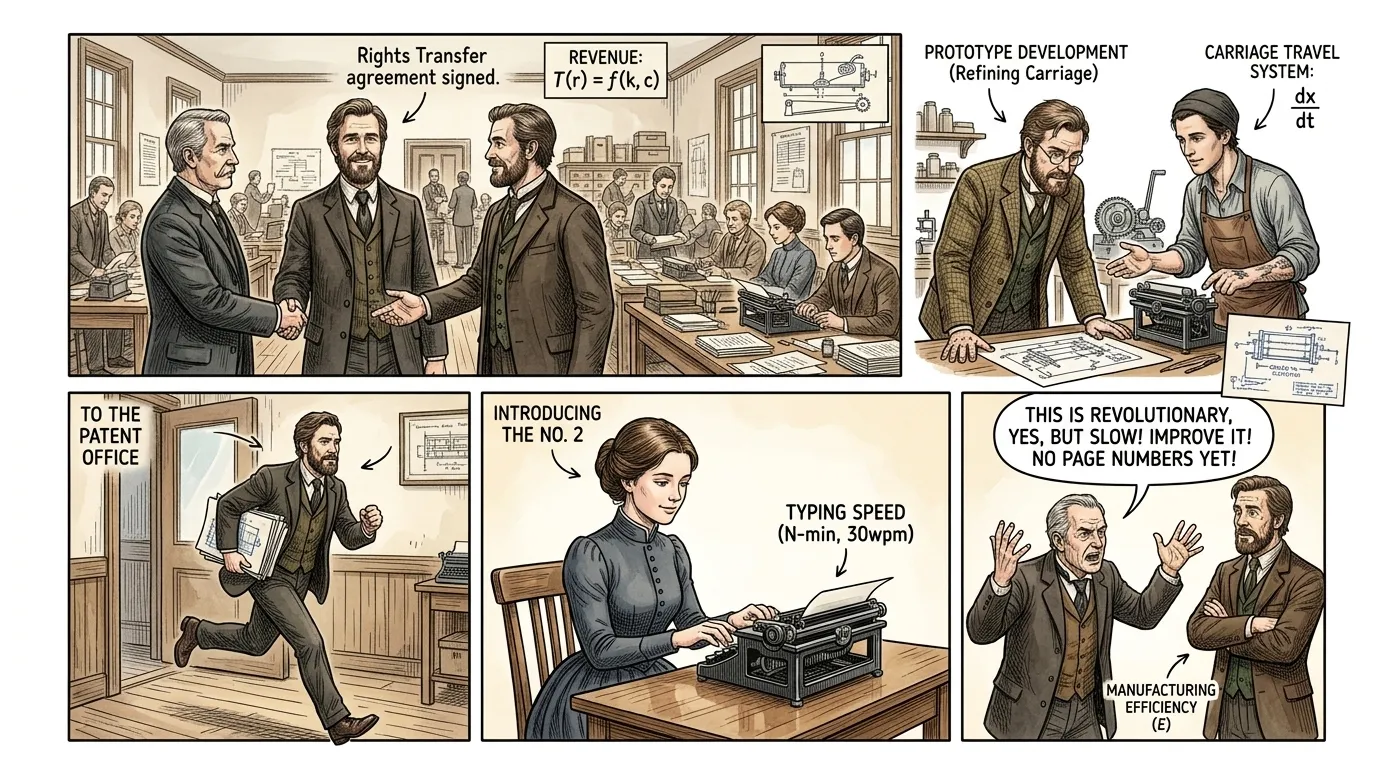
Despite Sholes's ingenious solution, mass production and commercialization proved challenging. In 1873, Sholes sold the manufacturing rights for his 'type-writer' to Densmore and Yost, who then licensed the design to E. Remington and Sons, a renowned firearms manufacturer seeking diversification. Remington refined the design, making it more robust and marketable.
"The Remington No. 1 and later the immensely popular Remington No. 2, featuring both upper and lower case letters, transformed office work. Initially seen as a novelty, the typewriter, and its QWERTY keyboard, quickly became indispensable, particularly as women entered the workforce in large numbers as typists and stenographers, redefining secretarial roles."
Page 9
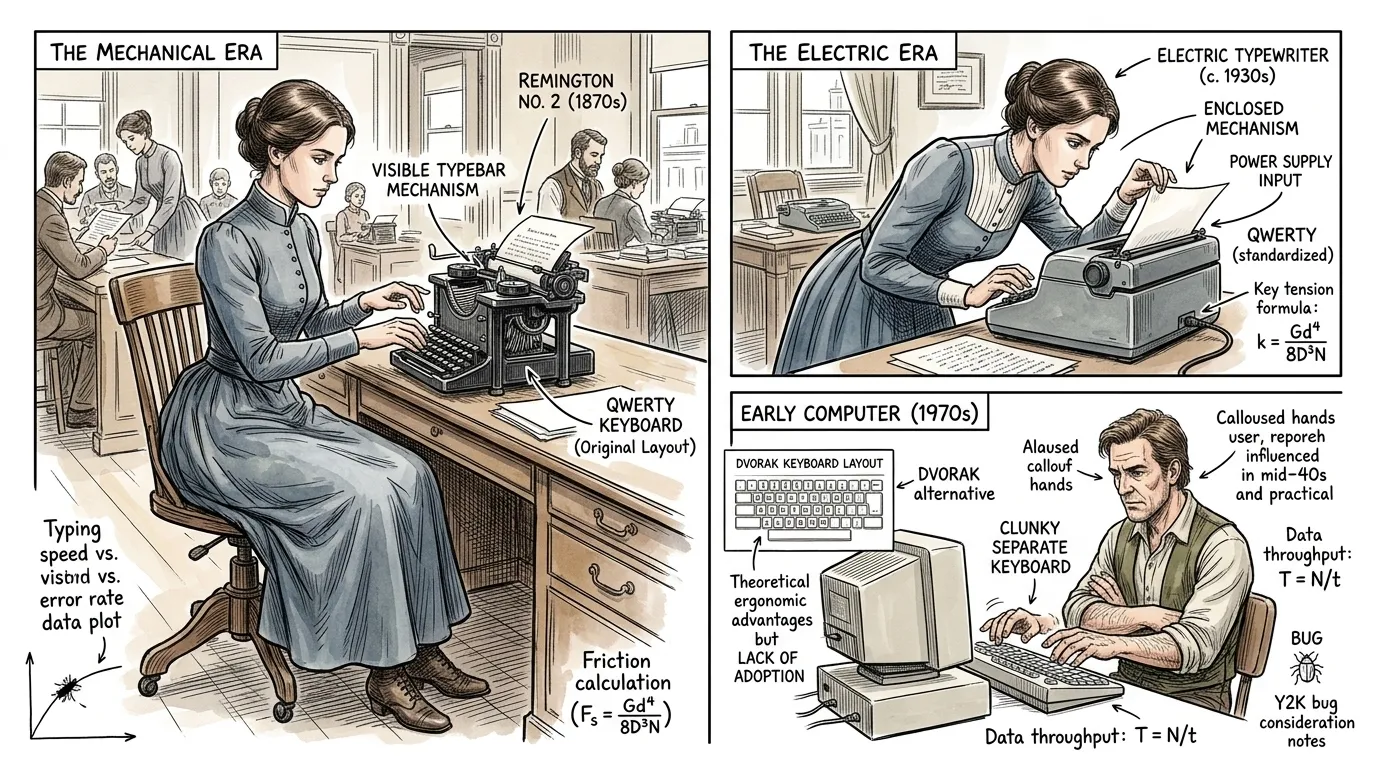
The QWERTY layout, born from a mechanical constraint, became the de facto standard. Even as electric typewriters replaced mechanical ones, and then computers superseded typewriters, the QWERTY arrangement persisted. Alternative layouts, like the Dvorak Simplified Keyboard, offered theoretical ergonomic advantages but could not overcome the inertia of widespread adoption and established muscle memory.
"The keyboard itself evolved, transitioning from a purely mechanical device to an electrical input, then a digital interface. Its fundamental purpose, however, remained constant: to translate human language into machine-readable commands. It cemented its place as the primary gateway to interactive computing, a testament to Sholes's initial, problem-solving innovation."
Page 10
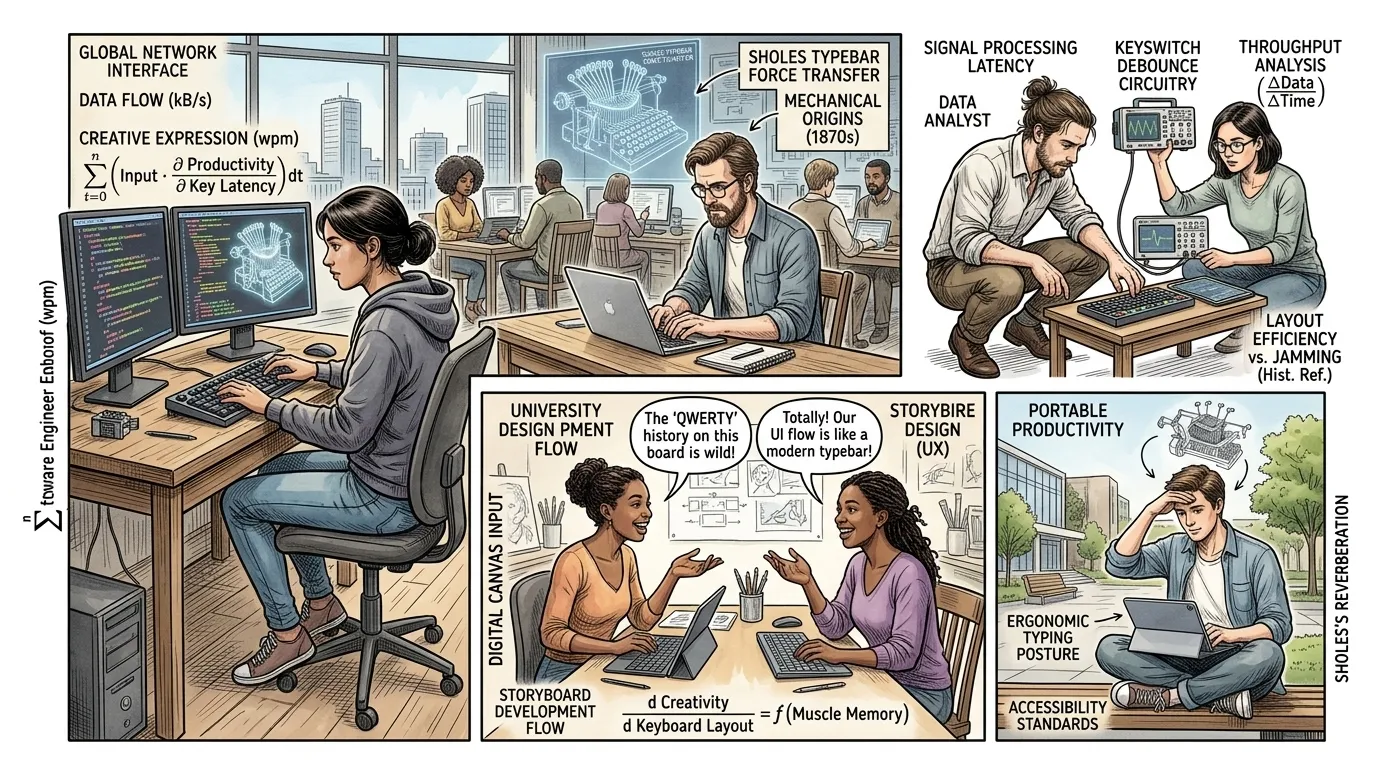
Today, the keyboard remains an indispensable interface, fundamentally unchanged in its core layout, yet adapted to countless applications. It is the silent workhorse behind global communication, intricate data processing, and creative expression. From the earliest telegraphers to modern software engineers, the ability to rapidly input text has transformed every facet of human endeavor.
"Christopher Latham Sholes's ingenious solution to a mechanical jamming problem reverberates through the digital age. The keyboard, an invention born of necessity and refined by persistence, continues to shape how we interact with technology, connecting minds and machines across the globe."
About this story
- Location: Global
- Audience: general readers
Questions and answers
Read Wonder Inventions on your phone
Wonder Inventions is available on Android. Get Wonder Inventions on Google Play.