Incubator
Incubator — an illustrated inventions story, set in Global. 10 illustrated pages, free to read on Wonder Inventions.
Page 1
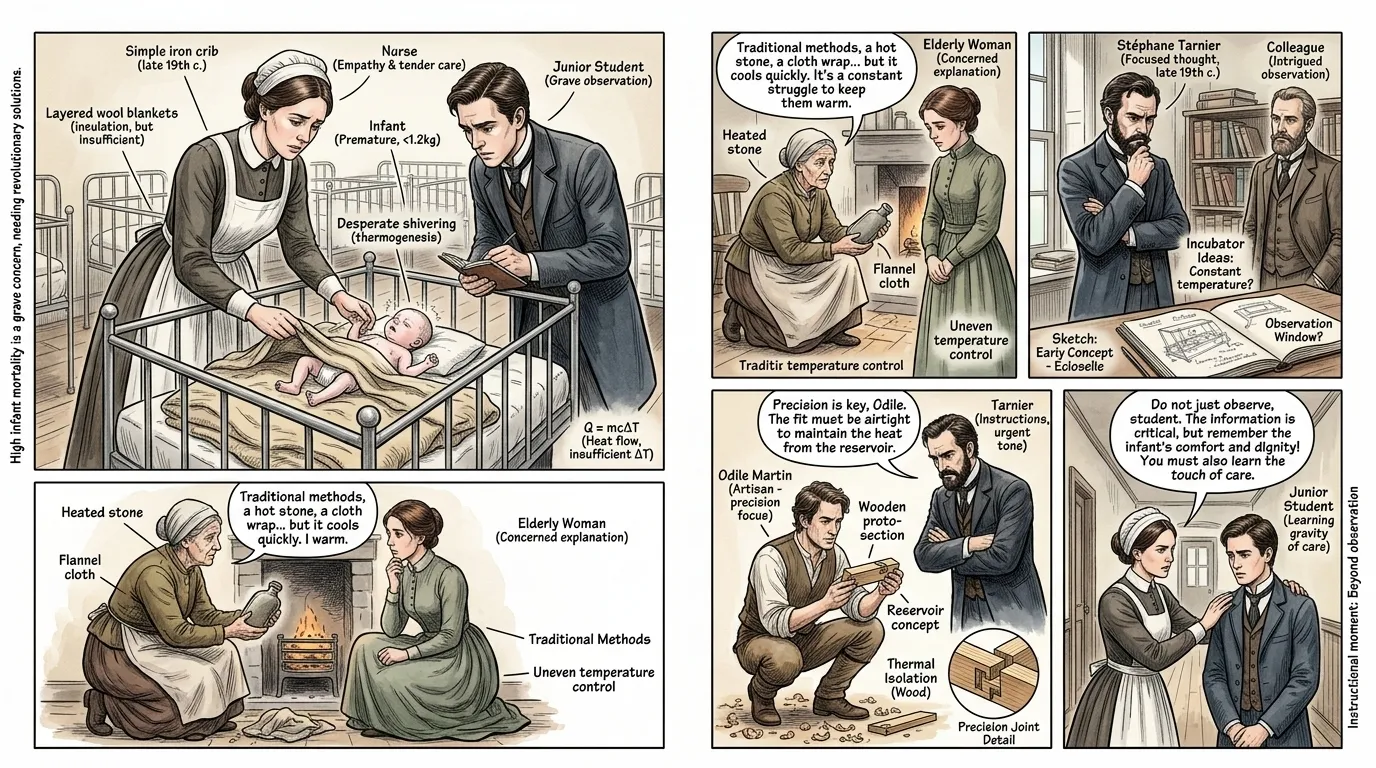
In the late 19th century, the reality of premature birth was stark and often tragic. Tiny infants, born too soon, faced insurmountable odds outside the womb. Dr. Stéphane Tarnier, observing the devastating mortality rates in Parisian hospitals, felt the profound weight of this challenge. "The mortality rate for these smallest ones... it's devastating," he murmurs, his brow furrowed with concern as he watches a fragile newborn struggle. "They simply cannot maintain their vital warmth, leaving them exposed to so many perils. We must find a way to protect them from this harsh world, to give them a chance." His words echoed the desperate need for a solution.
Page 2
The physiological challenge facing premature infants was immense: their underdeveloped bodies lacked the fat and neurological maturity to regulate their own temperature. This made hypothermia a primary killer. A dedicated nurse gently adjusts thin blankets around a barely breathing infant, her movements tender yet urgent. "Every moment is a battle for these little fighters," she whispers to a junior medical student, her voice heavy with experience. "Their tiny bodies cannot generate or retain heat like a full-term child. We wrap them, we heat bricks, but it's never enough. Their small breaths are so shallow, so fleeting." The student nods gravely, witnessing the faint, desperate shivering.
Page 3
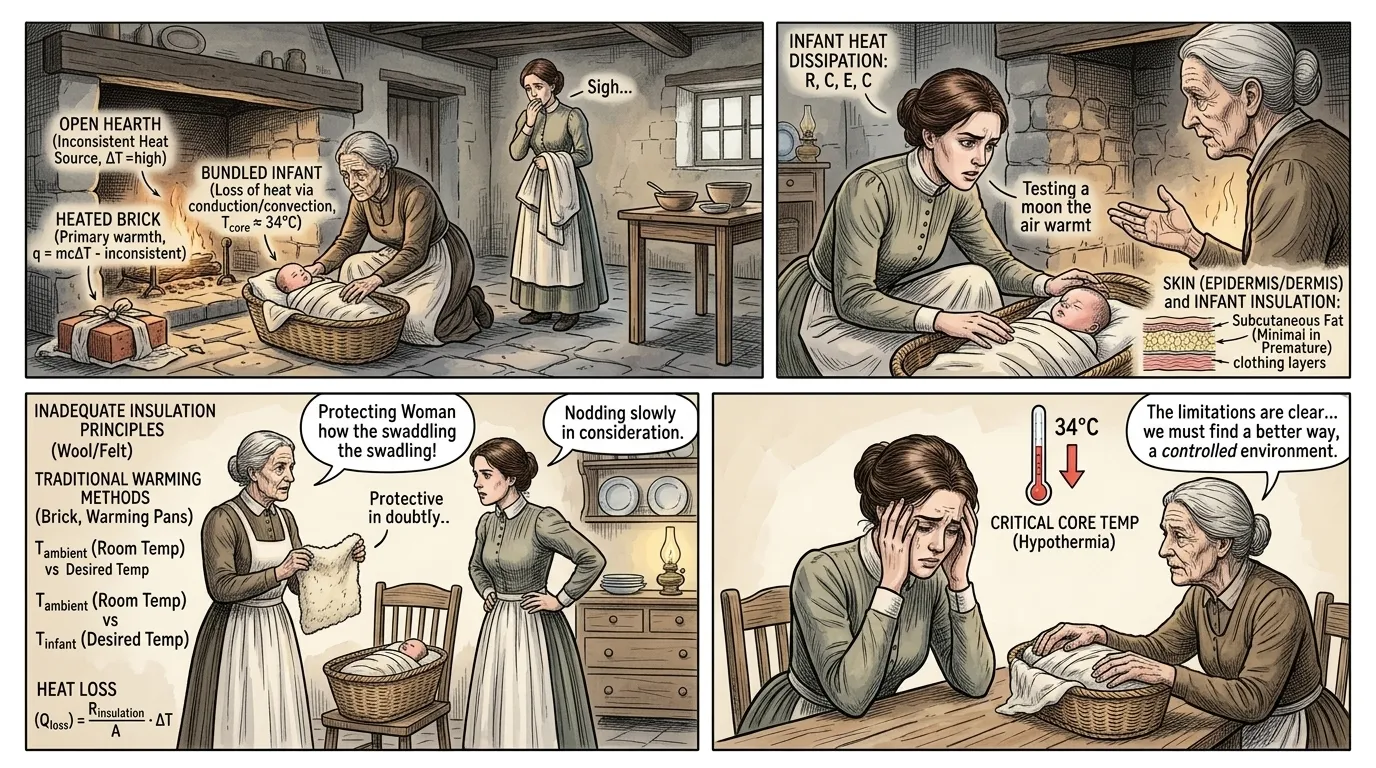
Before dedicated medical incubators, families and caregivers resorted to rudimentary and often dangerous methods to keep infants warm. Heated bricks wrapped in cloth, hot water bottles, or simply placing infants near open hearths were common, yet these offered inconsistent warmth, posed burn risks, and provided no protection from infection. An elderly woman carefully positions a bundled infant near a hearth, her face a mask of profound worry. "We used to place them by the fire, or with heated stones wrapped in linen," she explains to a younger woman, her voice raspy, "but the heat was always so uneven, so quickly lost, and sometimes... so dangerous." The younger woman sighs, observing the inadequate setup. "This lack of consistent, reliable care... it reminds me of what the ancient philosopher Aristotle once said: 'We are what we repeatedly do. Excellence, then, is not an act, but a habit.' Our current habits, while well-intentioned, are simply not enough for these precious, vulnerable lives. We need a better habit."
Page 4
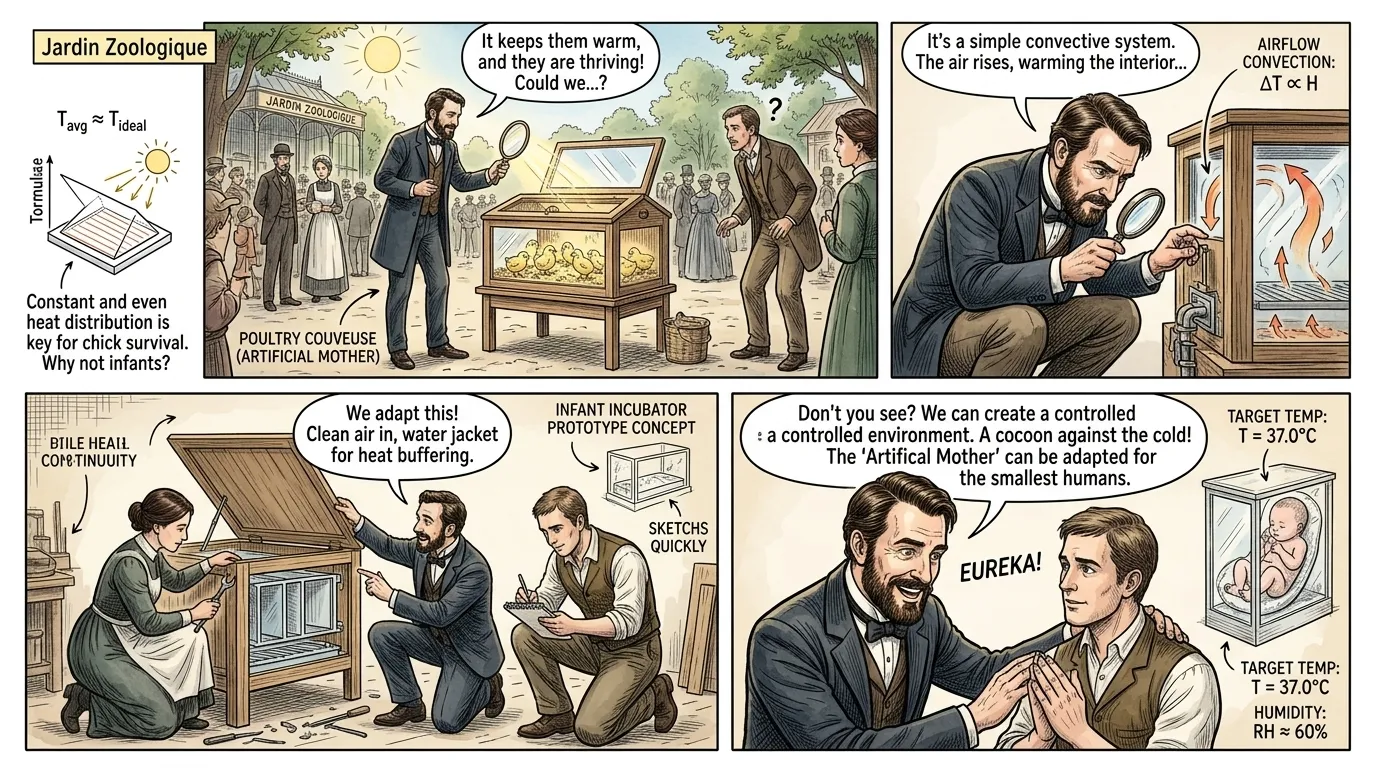
Dr. Stéphane Tarnier, an accomplished obstetrician at the Paris Maternité Hospital, found his crucial inspiration not within human medicine, but in the most unexpected of places: a zoological garden. He observed how poultry farmers utilized 'couveuses'—incubators—to maintain optimal warmth for hatching eggs and newly hatched chicks. This seemingly simple agricultural technology sparked a revolutionary idea. Tarnier's eyes light up with an idea as he gestures excitedly towards a small, warmed enclosure. "Look at them!" he exclaims to a bewildered colleague. "These simple 'couveuses' for poultry maintain a stable temperature, ensuring the chicks thrive. Why could we not adapt this precise, controlled principle for our human infants? It is a question of creating the ideal, consistent environment!" His colleague leans closer, slowly grasping the profound implication.
Page 5
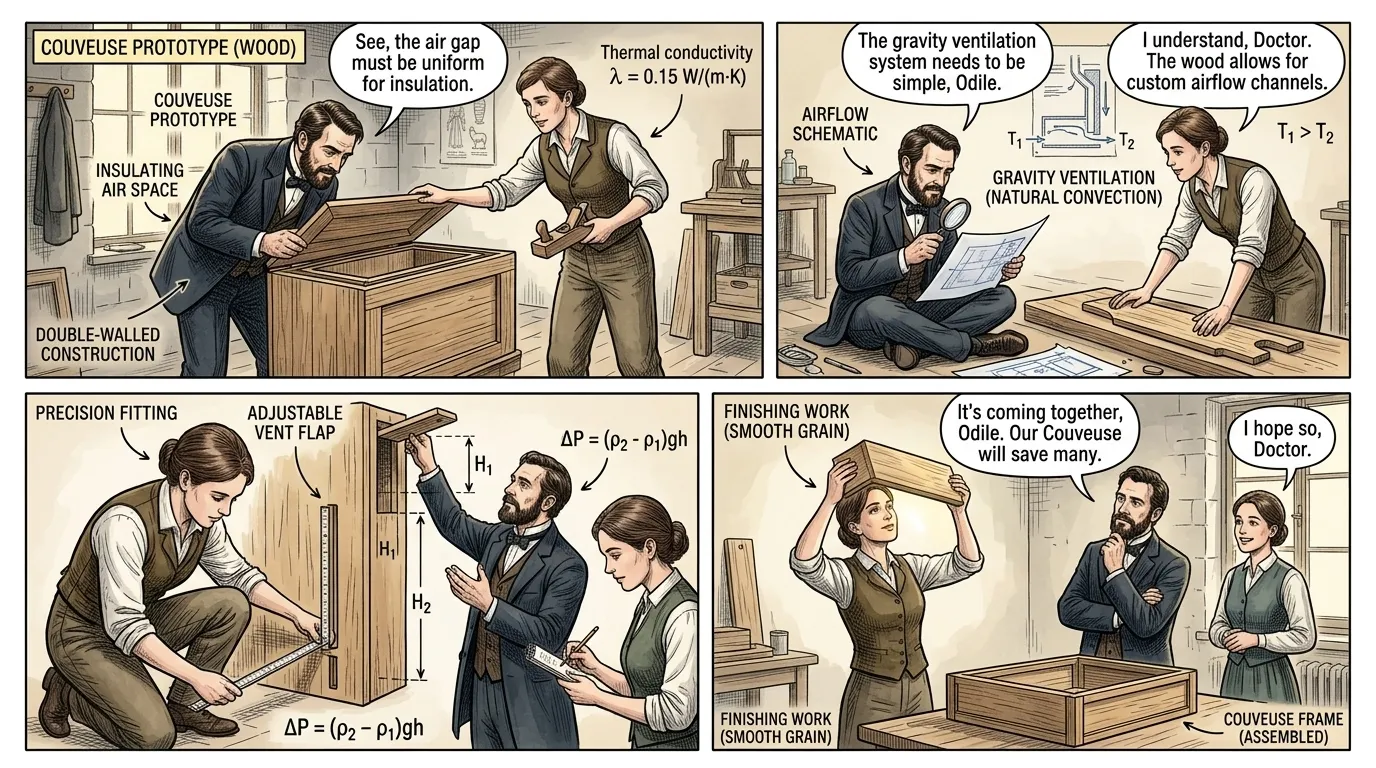
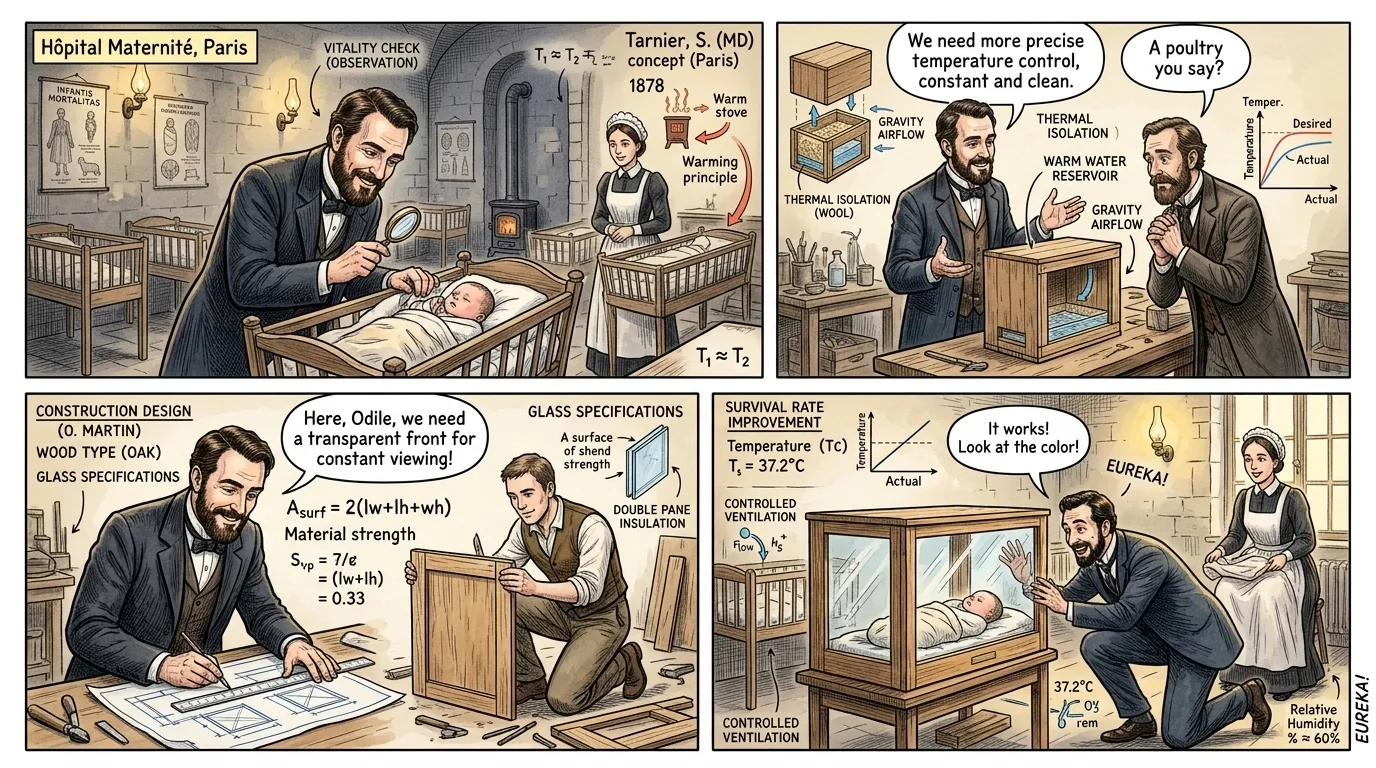
In 1880, Tarnier brought his vision to life. He collaborated with engineer Odile Martin to construct the first practical 'couveuse' for human infants. This initial design was a double-walled wooden box, where warm water circulated between the walls, acting as a passive heating system. Fresh air entered through a regulated intake, was heated by contact with the warm walls, and then circulated around the infant before exiting. Tarnier meticulously inspects his newly built wooden prototype. "The double-walled construction, you see," he explains to the artisan, tracing a finger along the smooth wood. "Warm water circulates through this cavity, providing gentle, even heat to the inner chamber. Fresh air enters, is warmed, and then envelops the infant in a constant, temperate flow. It is rudimentary, yes, but it is a critical start – a continuous, stable warmth!" The artisan, a man of practical skill, nods in understanding, holding a small woodworking tool.
Page 6
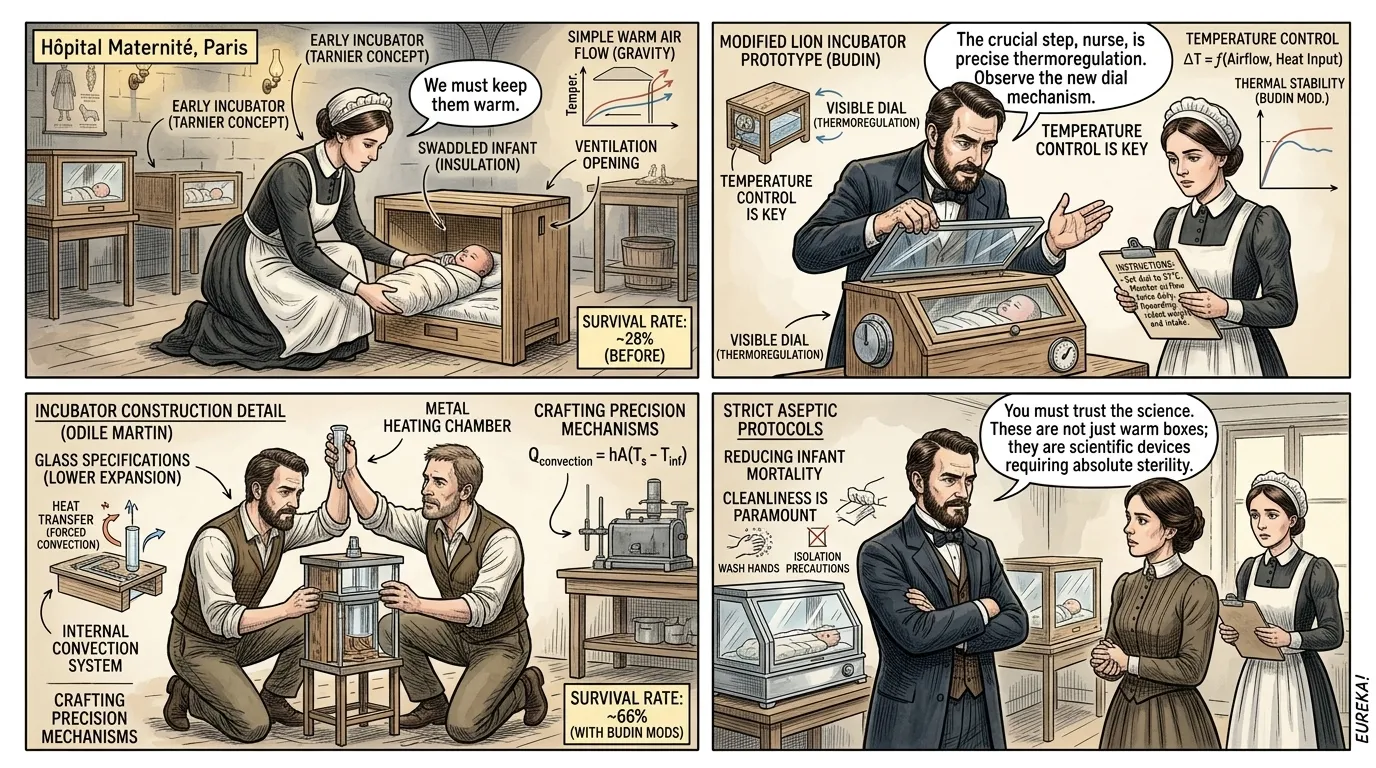
Tarnier's initial 'couveuse' was groundbreaking, but its temperature regulation was rudimentary. It relied on passive heating and lacked precise control. Dr. Pierre Budin, Tarnier's dedicated student and later his successor, recognized these limitations. Budin, a proponent of evidence-based medicine, was instrumental in refining the incubator, pushing for more accurate thermoregulation, improved ventilation, and a greater emphasis on sterile environments and specialized feeding for premature infants. Dr. Budin, intently studying a new, more advanced incubator model, addresses a nurse with focused intensity. "Tarnier's design was revolutionary, indeed," he states, pointing to a new, visible dial on the machine. "However, we need absolute precision. Exact thermoregulation is critical, and maintaining a sterile environment within the chamber is paramount for these vulnerable lungs. And, Nurse, never forget the importance of proper nourishment – human breast milk above all for their delicate systems!" The nurse attentively notes his detailed instructions on a clipboard.
Page 7
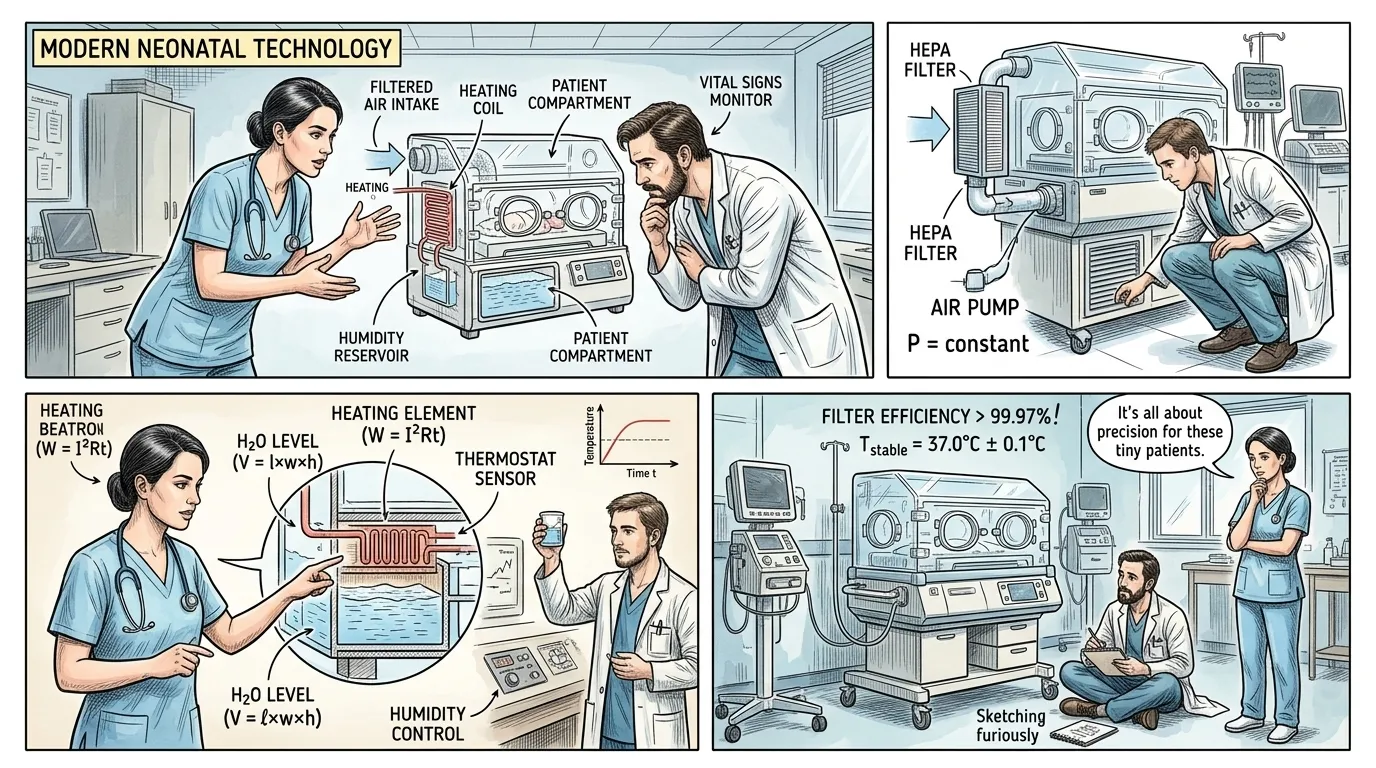
From its humble beginnings, the incubator evolved into a highly sophisticated life-support system. Modern incubators are meticulously engineered micro-environments. Air is drawn in through high-efficiency filters, passes over a precise heating element, and then moves through a water reservoir to achieve optimal humidity. This conditioned air then circulates around the infant, maintaining a perfectly stable temperature, oxygen level, and humidity, while carbon dioxide is efficiently expelled. This complex interplay of systems creates an artificial womb. A modern neonatologist points to a detailed cutaway diagram. "Here, observe the marvel of a contemporary incubator," she explains to a visiting medical student, her voice clear and precise. "Air is meticulously filtered, warmed, and humidified before it even reaches the infant. Every parameter – temperature, oxygen, humidity – is constantly monitored and adjusted by advanced sensors to precisely mimic the optimal conditions of the womb, ensuring every vital need is met." The student studies the diagram, clearly impressed by the intricate system.
Page 8
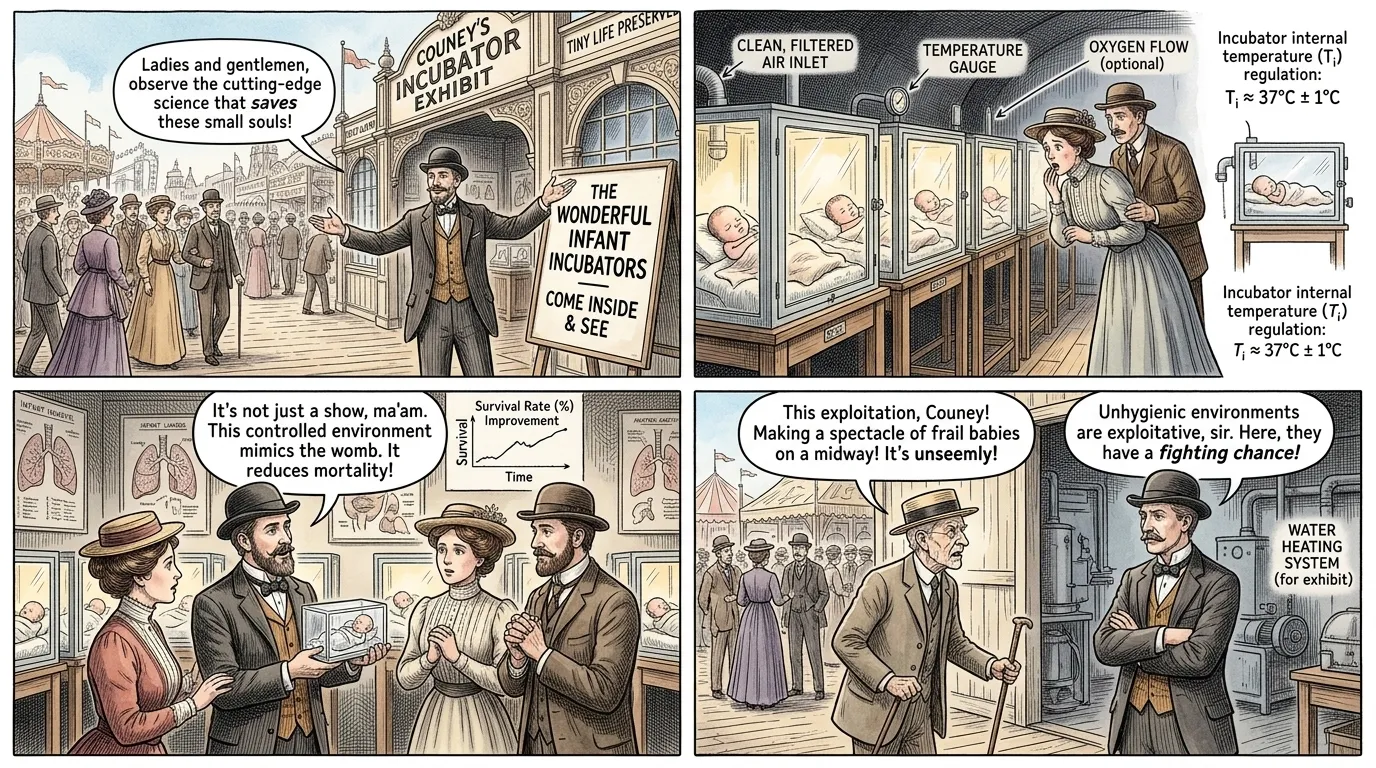
Despite its medical efficacy, the incubator's adoption was not universally swift. To raise awareness and fund neonatal care, Dr. Martin Couney, a controversial but ultimately lifesaving figure, famously exhibited premature infants in incubators at World's Fairs and Coney Island, starting in 1896. This spectacle, though unconventional, saved thousands of lives and brought the miracle of the incubator to the public consciousness. Dr. Martin Couney, with a dramatic flourish, addresses a captivated crowd at a bustling Coney Island boardwalk. "Step right up, ladies and gentlemen! Witness the miracle of science, a triumph of human ingenuity!" he booms, gesturing grandly towards a row of brightly lit, glass-fronted incubators. "These precious infants, given a fighting chance at life by this very apparatus! We provide the very best care, and your generous curiosity funds their precious lives!" A woman in the mesmerized crowd gasps, clutching her companion's arm. "It's truly extraordinary!" she exclaims, peering intently at a tiny, sleeping baby within an incubator.
Page 9
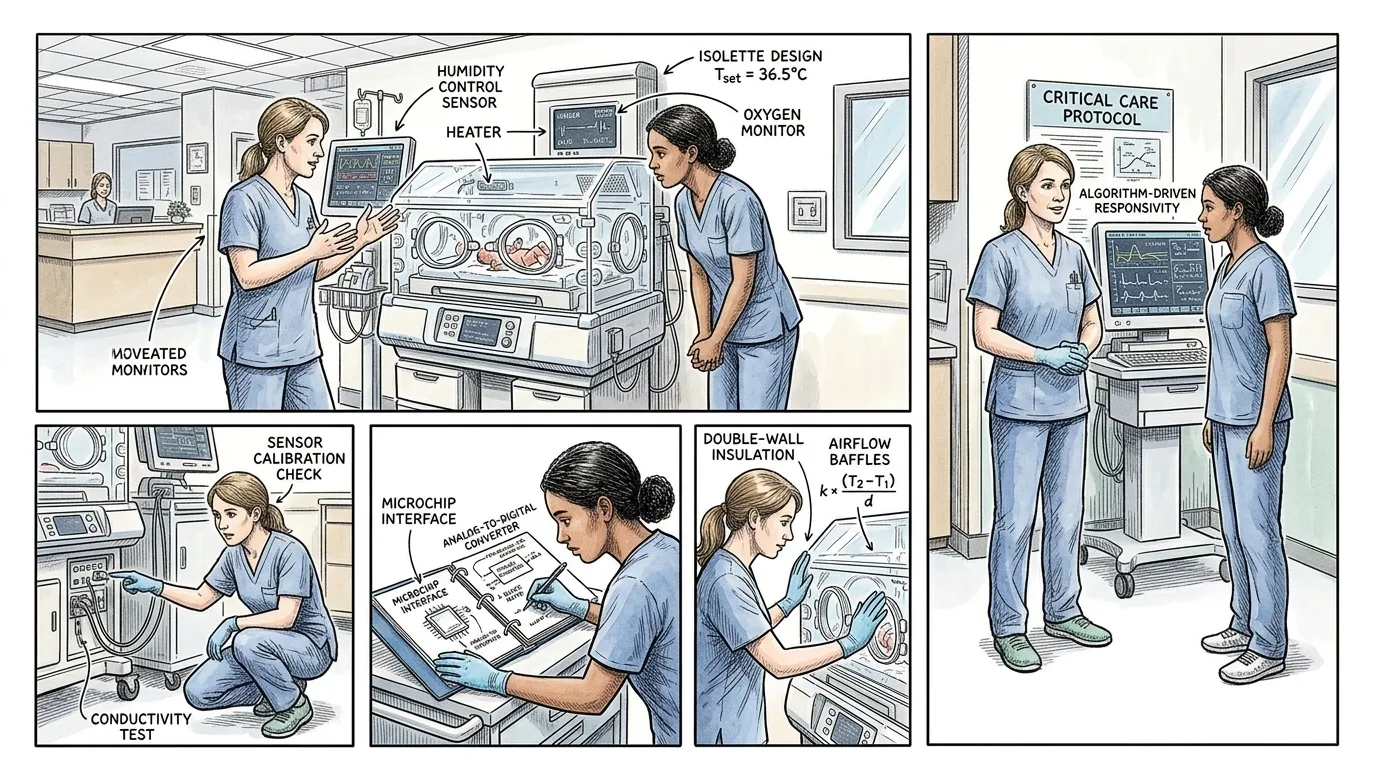
The incubator's success profoundly transformed pediatric medicine, laying the essential groundwork for the modern Neonatal Intensive Care Unit (NICU). It expanded beyond mere warmth to encompass a comprehensive approach to critical infant care. Within the NICU, sophisticated monitoring systems, mechanical ventilators, phototherapy for jaundice, and specialized nutritional support all operate within the controlled, sterile environment first pioneered by the incubator. This integrated approach dramatically improved outcomes for the most critically ill newborns. In a hushed, brightly lit modern NICU, a seasoned senior nurse instructs a new recruit beside an advanced incubator. "The incubator is merely the foundational piece," she explains softly, her voice filled with quiet authority. "This entire environment, the intricate monitoring, the precise ventilation systems, the specialized nutrition delivery—it all stems from that initial concept of controlled, protective care. We are giving these infants not just warmth, but every possible, integrated chance at a healthy, full life." The recruit watches, absorbing the profound gravity and responsibility of their work.
Page 10
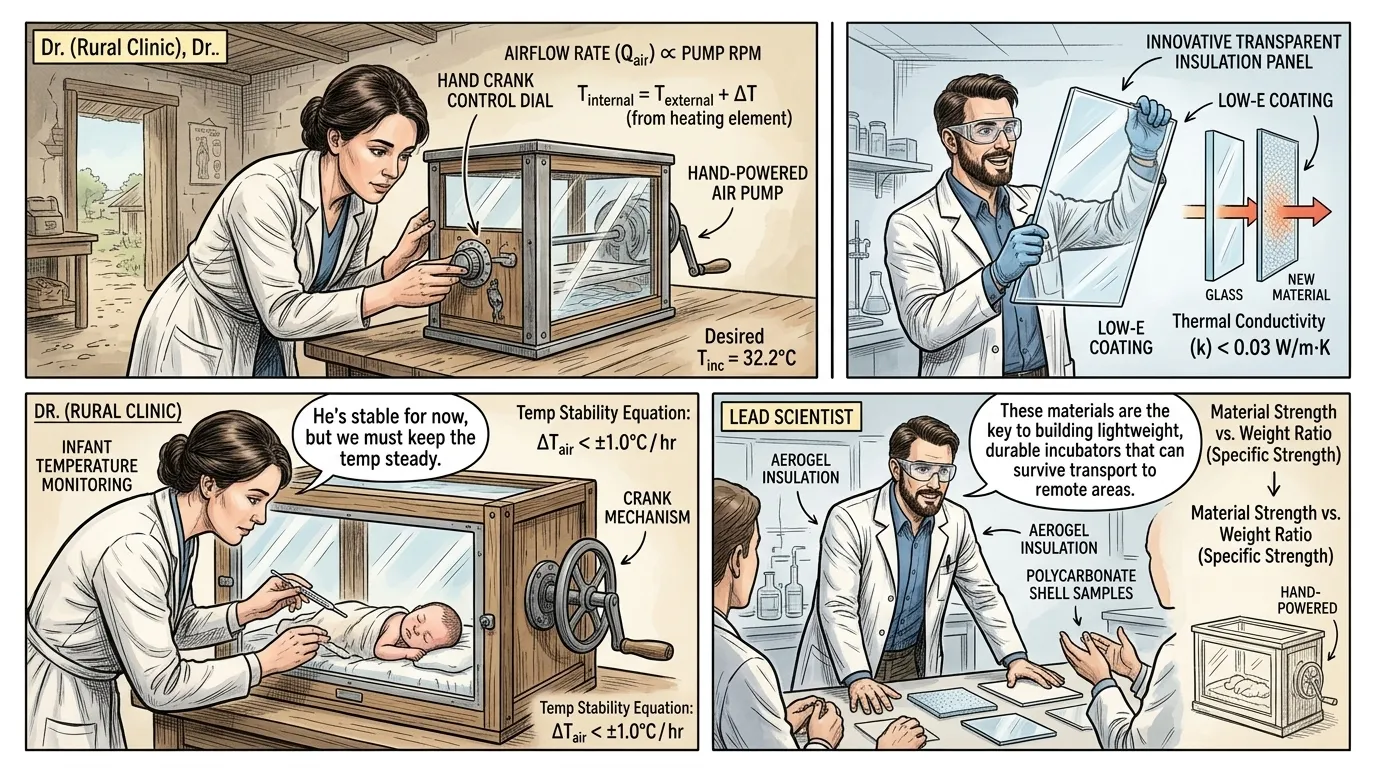
From Dr. Tarnier's rudimentary wooden box to today's high-tech life-support systems, the incubator has saved countless lives and profoundly reduced infant mortality worldwide. Its fundamental principles have been adapted for diverse contexts, from cutting-edge urban hospitals to robust, low-cost solutions for remote clinics in developing nations. The journey of the incubator is a testament to persistent innovation in the face of profound medical challenges. A doctor in a rural clinic carefully adjusts a robust, hand-powered incubator, her face reflecting a deep dedication. "From the grandest city hospitals to the most remote villages, across every continent," she states directly to the camera, "the core principle remains: protect and nurture the most fragile among us, giving every life a chance." In a bright research lab, a lead scientist studies new materials for incubator design. "Our work continues, refining every aspect, ensuring the incubator's enduring legacy of saving lives not only persists but also brilliantly evolves for future generations," he asserts, holding up a transparent, innovative panel.
About this story
- Location: Global
- Audience: general readers
Questions and answers
Read Wonder Inventions on your phone
Wonder Inventions is available on Android. Get Wonder Inventions on Google Play.