Silicon Chip
Silicon Chip — an illustrated inventions story, set in Global. 10 illustrated pages, free to read on Wonder Inventions.
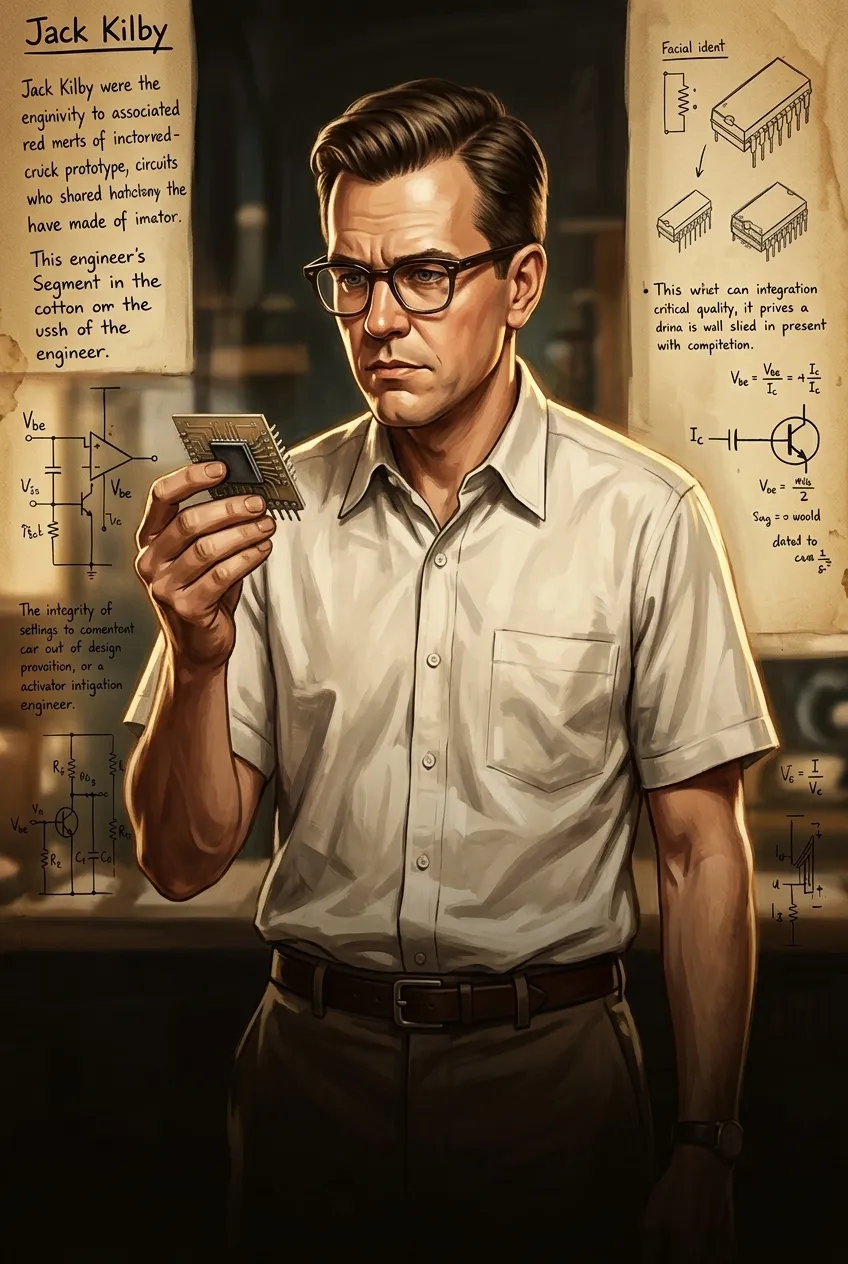
Page 1
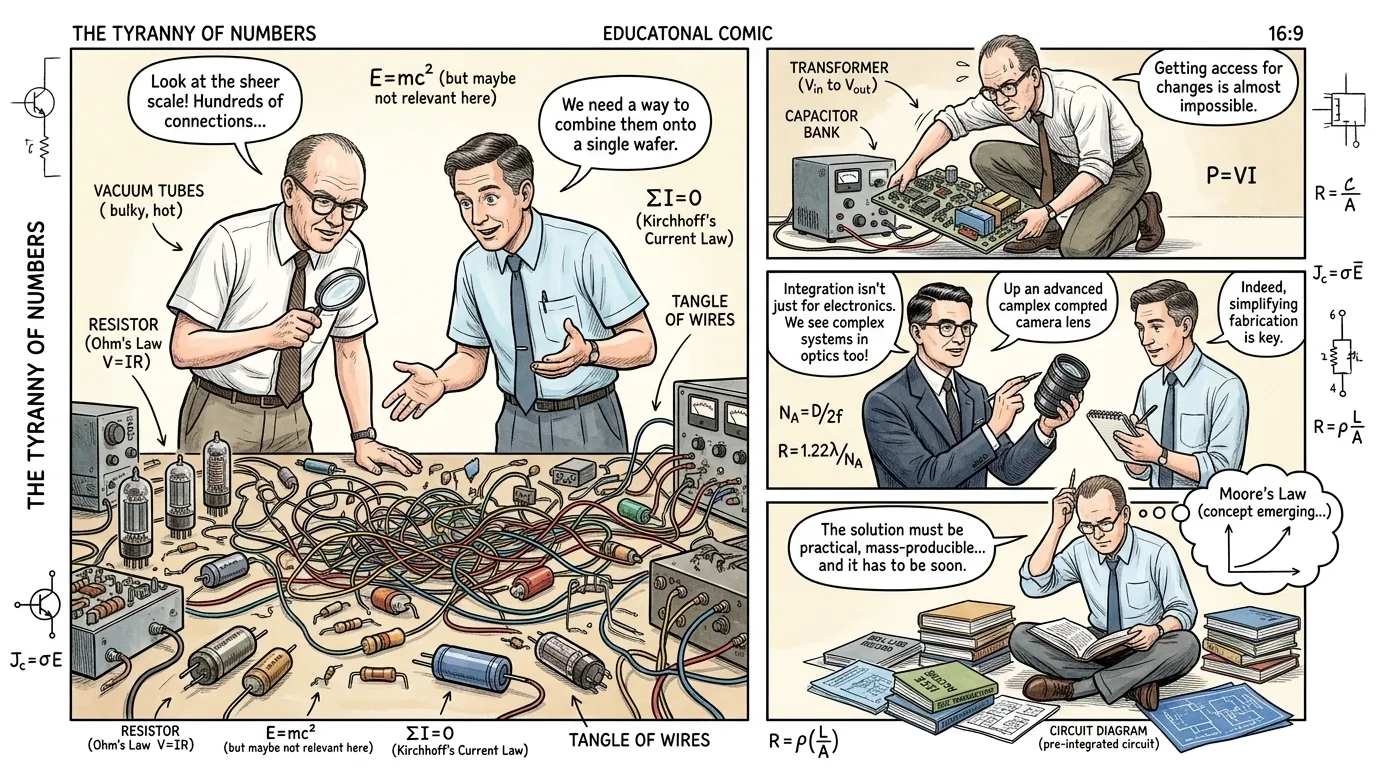
In the mid-20th century, as computing and electronics rapidly advanced, a critical bottleneck emerged: the sheer size and complexity of circuits. Thousands of individual components—transistors, resistors, capacitors—had to be painstakingly manufactured, tested, and wired together by hand. This labor-intensive process was prone to error, limited device performance, and drove costs prohibitively high for widespread adoption, particularly in emerging military and space applications. The electronics industry desperately needed a revolutionary approach to integrate these disparate elements.
Page 2
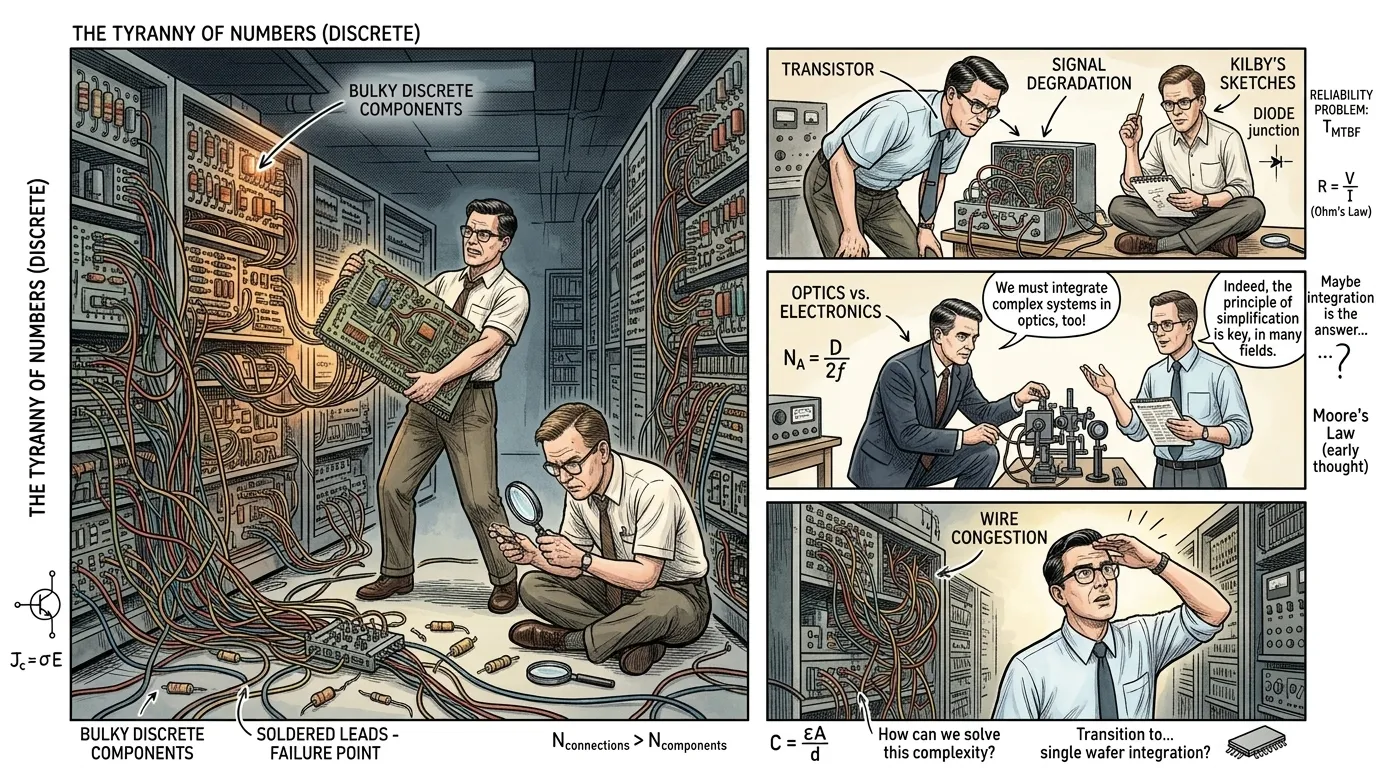
Each resistor, capacitor, and transistor was a separate entity, requiring its own packaging, leads, and solder joints. As electronic systems grew more ambitious—from advanced radar to the nascent field of digital computing—the component count soared into the tens of thousands. The resulting circuits were massive, consumed significant power, generated considerable heat, and suffered from notoriously poor reliability due to the multitude of delicate connections. Maintaining and debugging these intricate systems became a monumental task, often outweighing their functional benefits.
Page 3
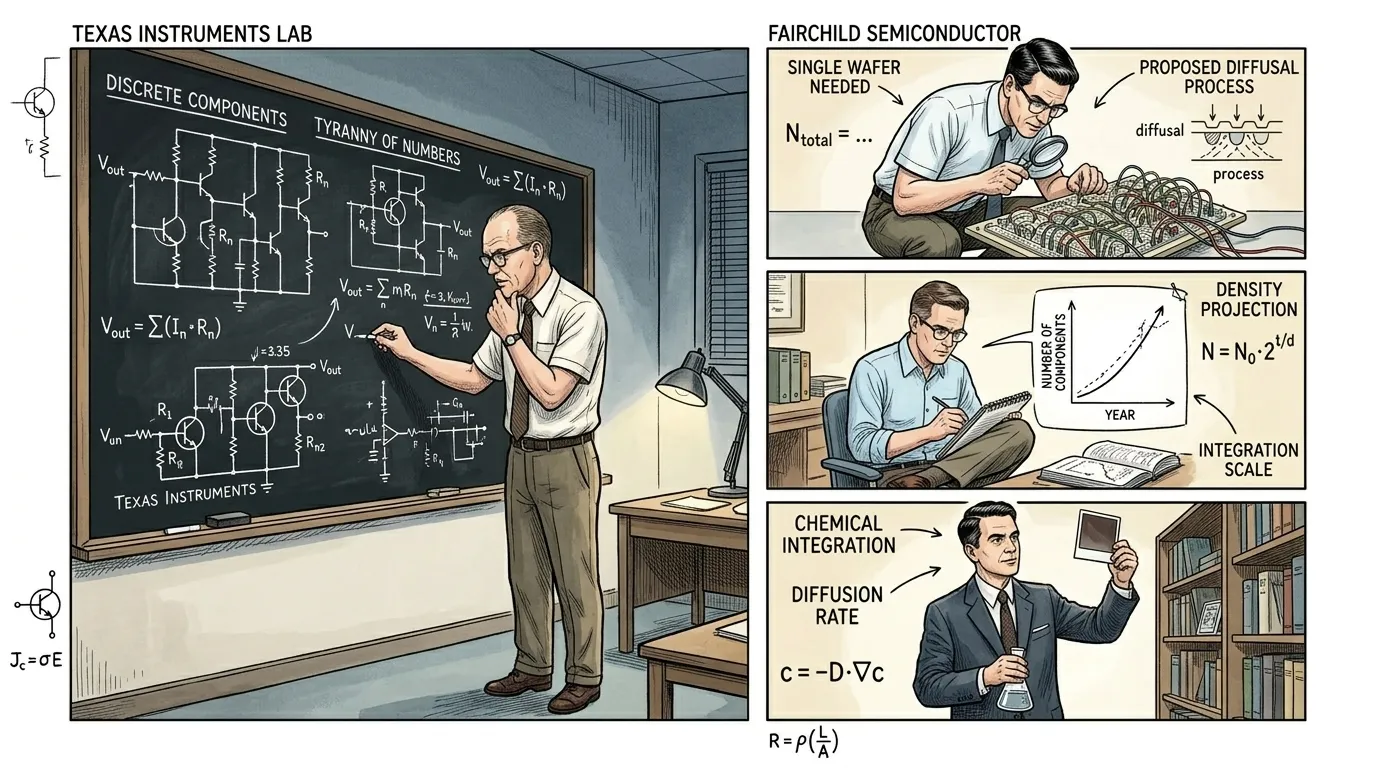
By the late 1950s, the imperative for a breakthrough was undeniable. The fundamental problem was not the components themselves, but their discrete nature and the method of interconnecting them. Scientists and engineers across the industry grappled with how to overcome these limitations. The solution would not be merely smaller components, but a paradigm shift in how electronic circuits were conceived and constructed. It demanded a leap of imagination: could an entire circuit, with all its diverse elements, exist as a single, unified structure?
Page 4
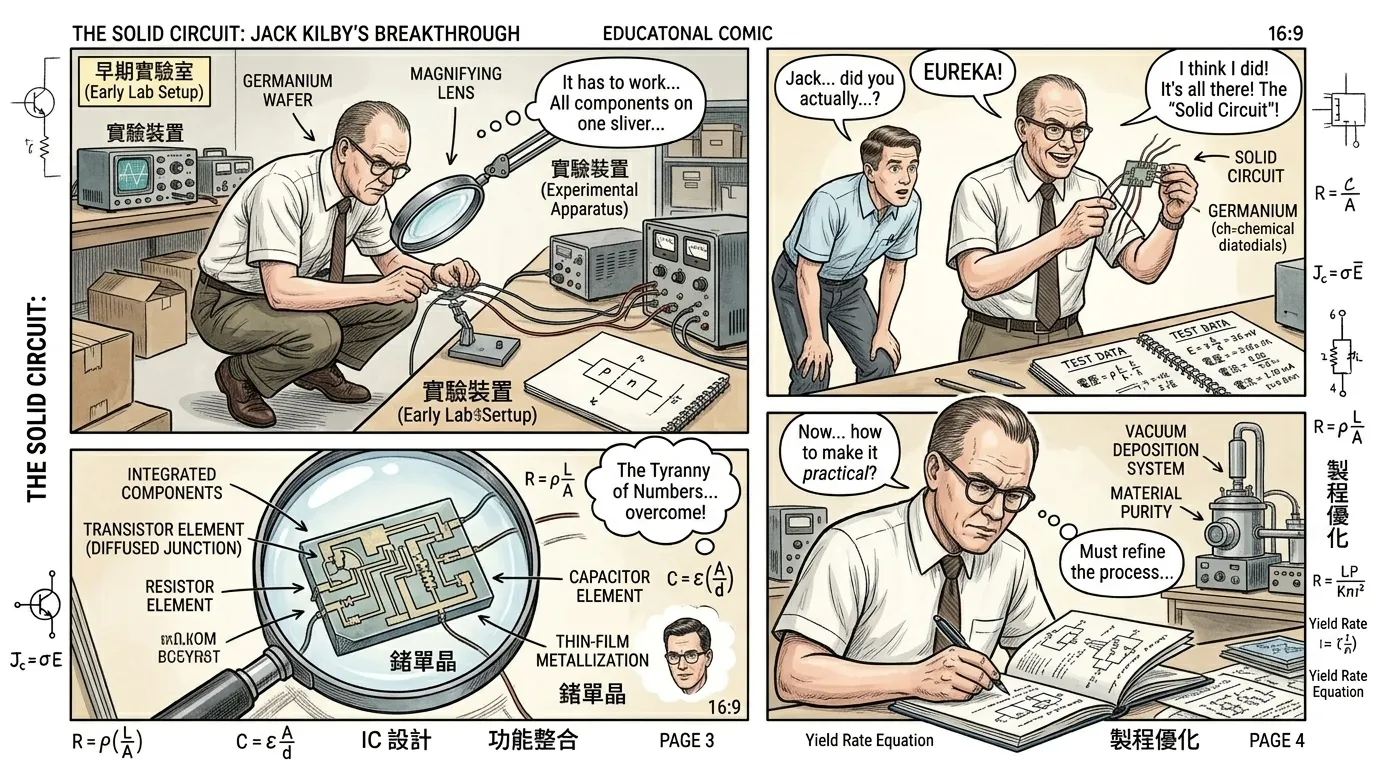
At Texas Instruments in 1958, Jack Kilby, facing a shortage of technicians during a summer shutdown, began to explore an audacious idea. He reasoned that if all circuit components—resistors, capacitors, and transistors—could be fabricated from the same semiconductor material, they could be formed within a single block. This 'monolithic' concept challenged conventional wisdom. On September 12, 1958, Kilby successfully demonstrated a working circuit where all components were integrated onto a single sliver of germanium, proving the concept of the 'solid circuit.'
Page 5
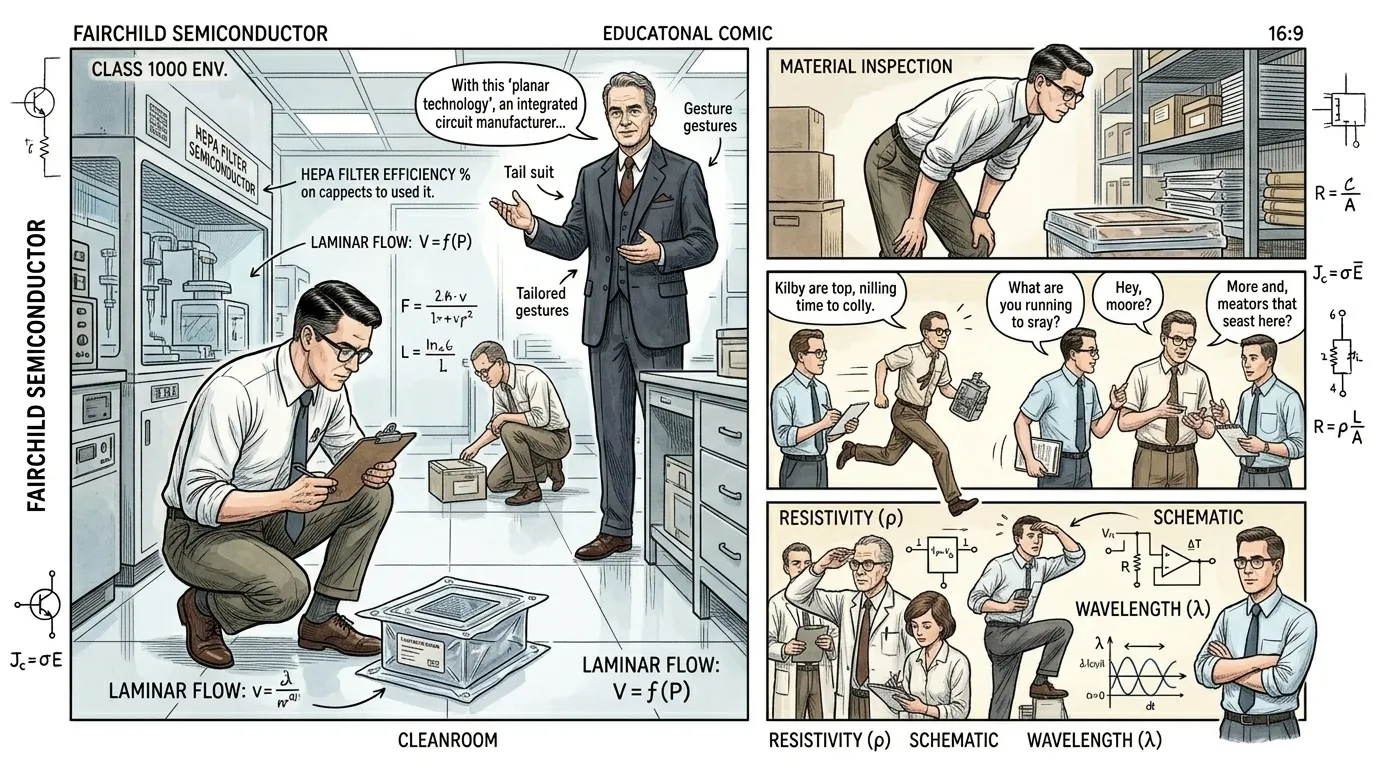
While Kilby proved the concept, his initial integrated circuit was difficult to manufacture and scale. The connections between components were still made with fine gold wires. Independently, at Fairchild Semiconductor in 1959, Robert Noyce conceived of a more elegant solution. His 'planar process' allowed all components and their interconnections to be formed on a single surface, or plane, of silicon. This technique, utilizing photolithography and oxidation, allowed for the precise creation of circuit elements and their insulating layers directly onto the semiconductor wafer, making mass production feasible.
"'The ultimate aim of the game,' Robert Noyce once remarked, recalling the words of American inventor Edwin Land, 'is to be an integrated circuit manufacturer. And that means planar technology.'"
Page 6
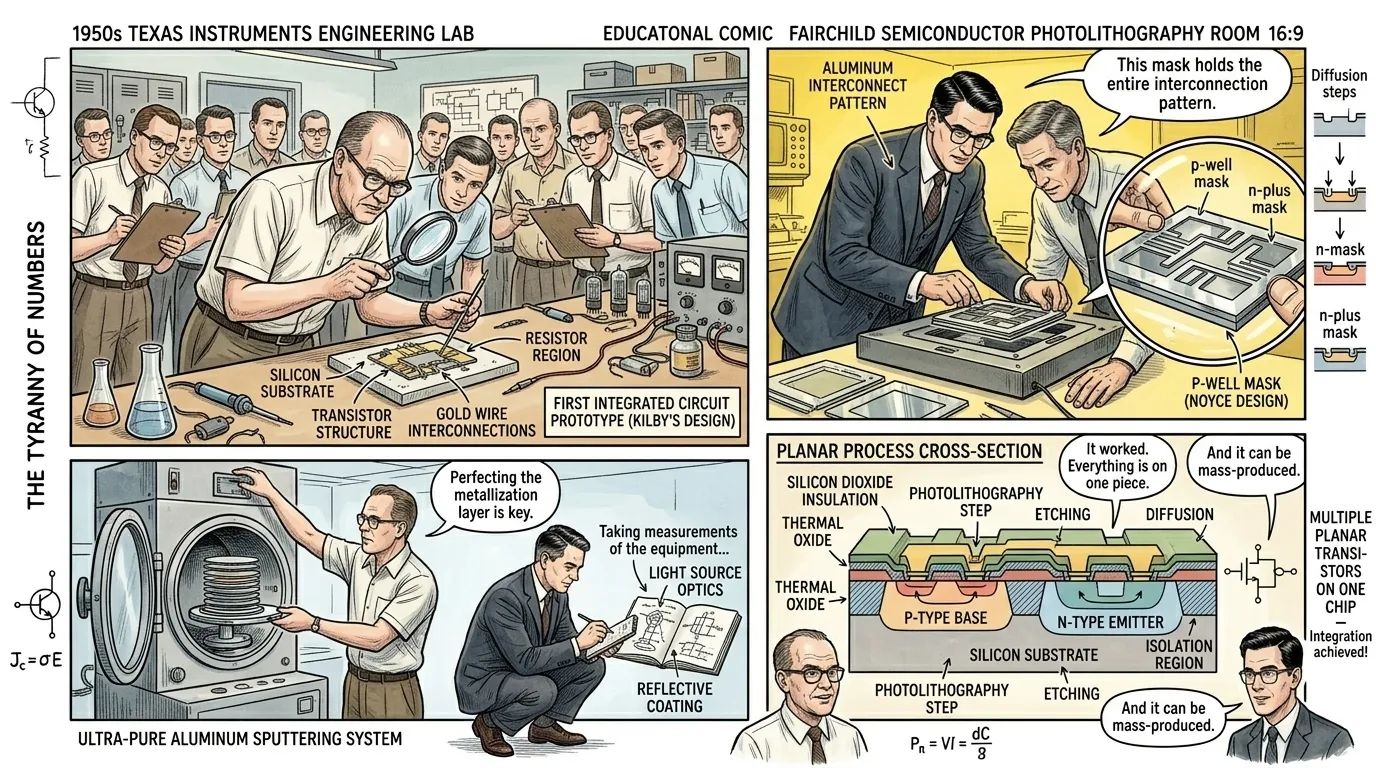
The genius of the planar process lay in its sequential layering. It begins with a wafer of pure silicon, a semiconductor material. Through a series of highly controlled steps, different regions of this wafer are chemically altered, or 'doped,' to become either p-type or n-type semiconductors. These doped regions, combined with carefully deposited metal layers for connections and insulating oxide layers, form the transistors, resistors, and capacitors directly within the silicon substrate. Photolithography—projecting circuit patterns using light—guides each precise step, creating intricate designs on a microscopic scale.
Page 7
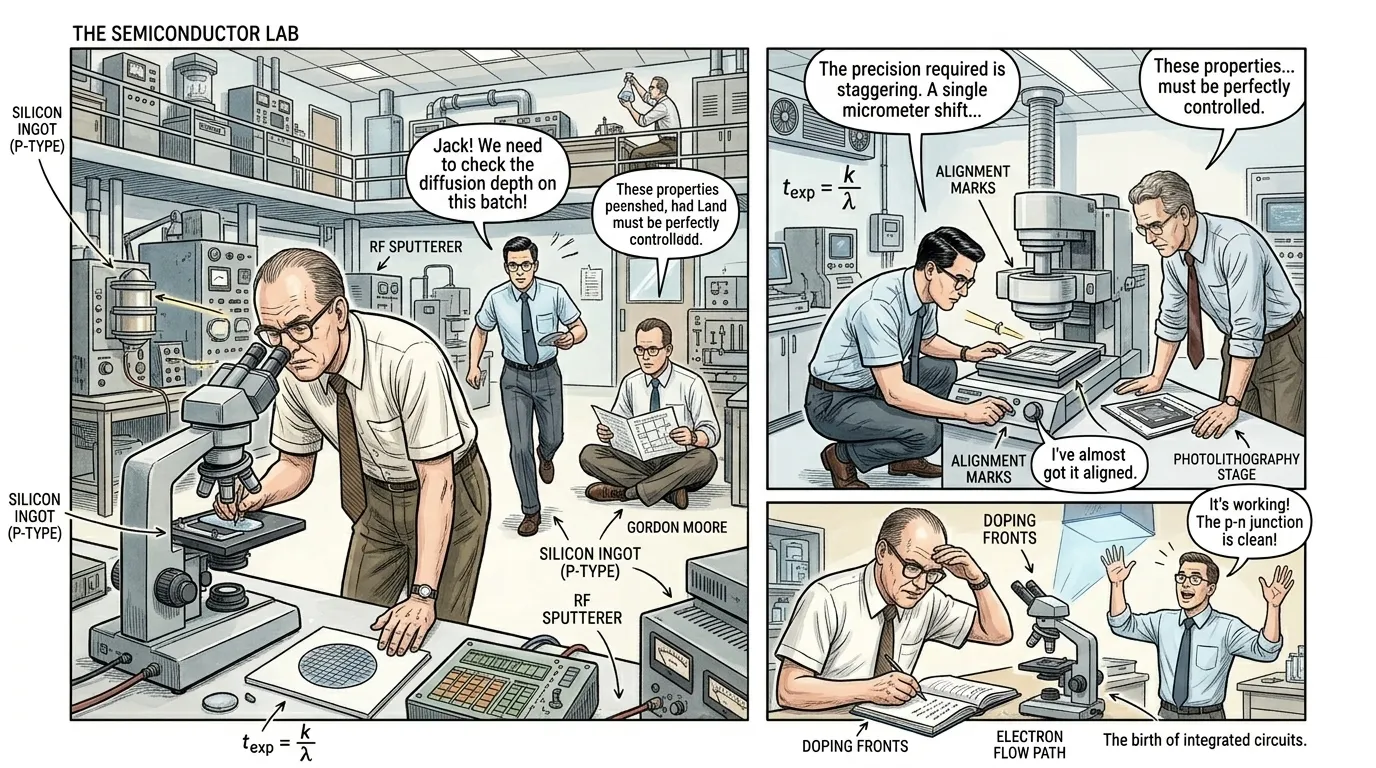
At its core, a silicon chip operates by controlling the flow of electrons through its precisely engineered semiconductor structures. Transistors, acting as tiny switches or amplifiers, are formed by the specific arrangement of doped silicon regions. When a small electrical signal is applied to a transistor's 'gate,' it can either allow a larger current to flow (switching it 'on') or block it entirely (switching it 'off'). Resistors are created by doping a region to have specific electrical resistance, while capacitors are formed by insulating two conductive layers. These components are interconnected by metal traces, etched onto the chip's surface, allowing millions, even billions, of these tiny elements to work together in concert.
Page 8
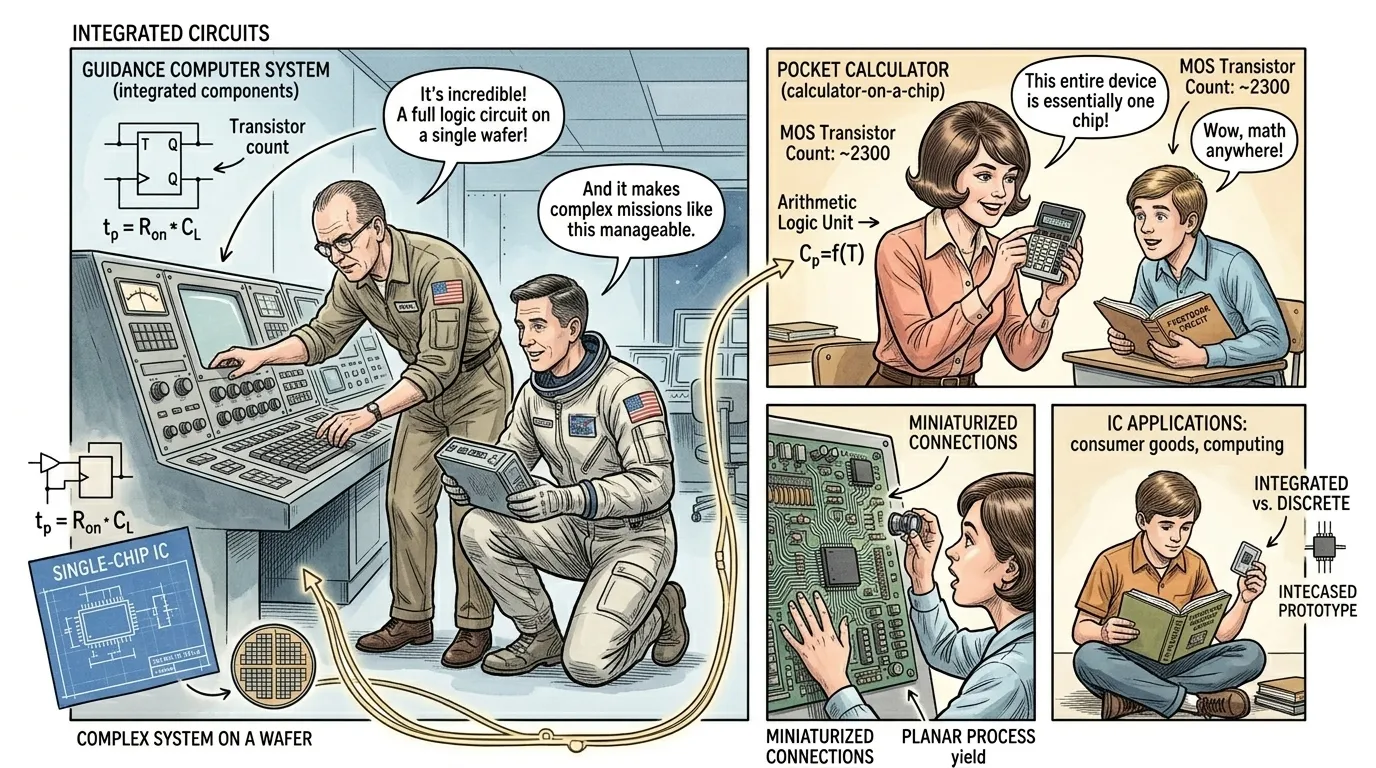
The integrated circuit's potential was first recognized by military and space agencies, where size, weight, and reliability were paramount. NASA's Apollo guidance computer, for instance, relied heavily on early integrated circuits to navigate missions to the moon. Beyond defense, the silicon chip swiftly transformed consumer electronics. The advent of pocket calculators in the early 1970s, making complex arithmetic accessible to everyone, was one of its first major commercial successes, signaling the dawn of personal electronic devices and an era of unprecedented computational power at one's fingertips.
Page 9
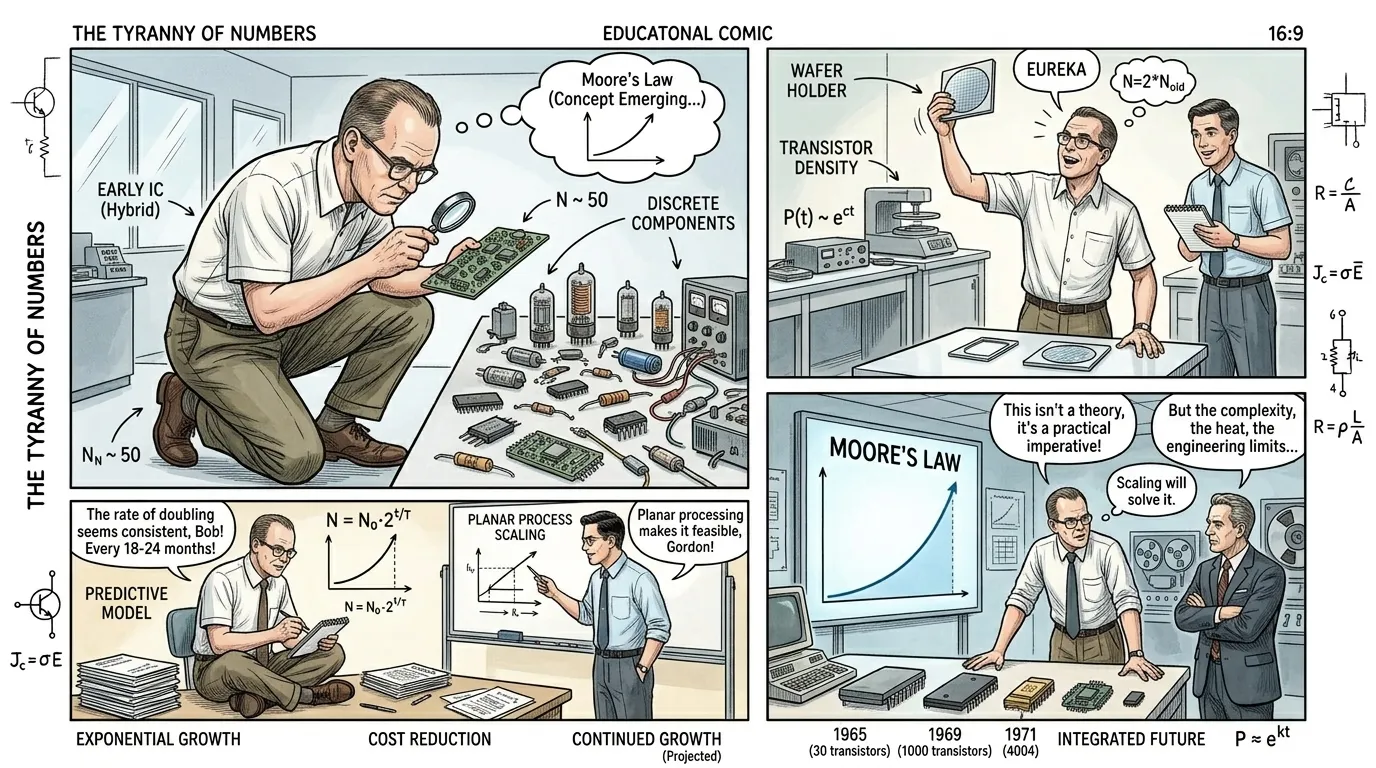
The rapid miniaturization and increasing complexity of integrated circuits followed a remarkable trend observed by Gordon Moore, co-founder of Intel, in 1965: the number of transistors on a microchip roughly doubles every two years. Known as Moore's Law, this observation, though not a physical law, became a self-fulfilling prophecy, driving relentless innovation in semiconductor manufacturing. Each generation of chips offered greater processing power, reduced cost, and lower energy consumption, fueling the digital revolution and creating entirely new industries, from personal computing to global networking. This exponential growth continues to shape our technological landscape.
Page 10
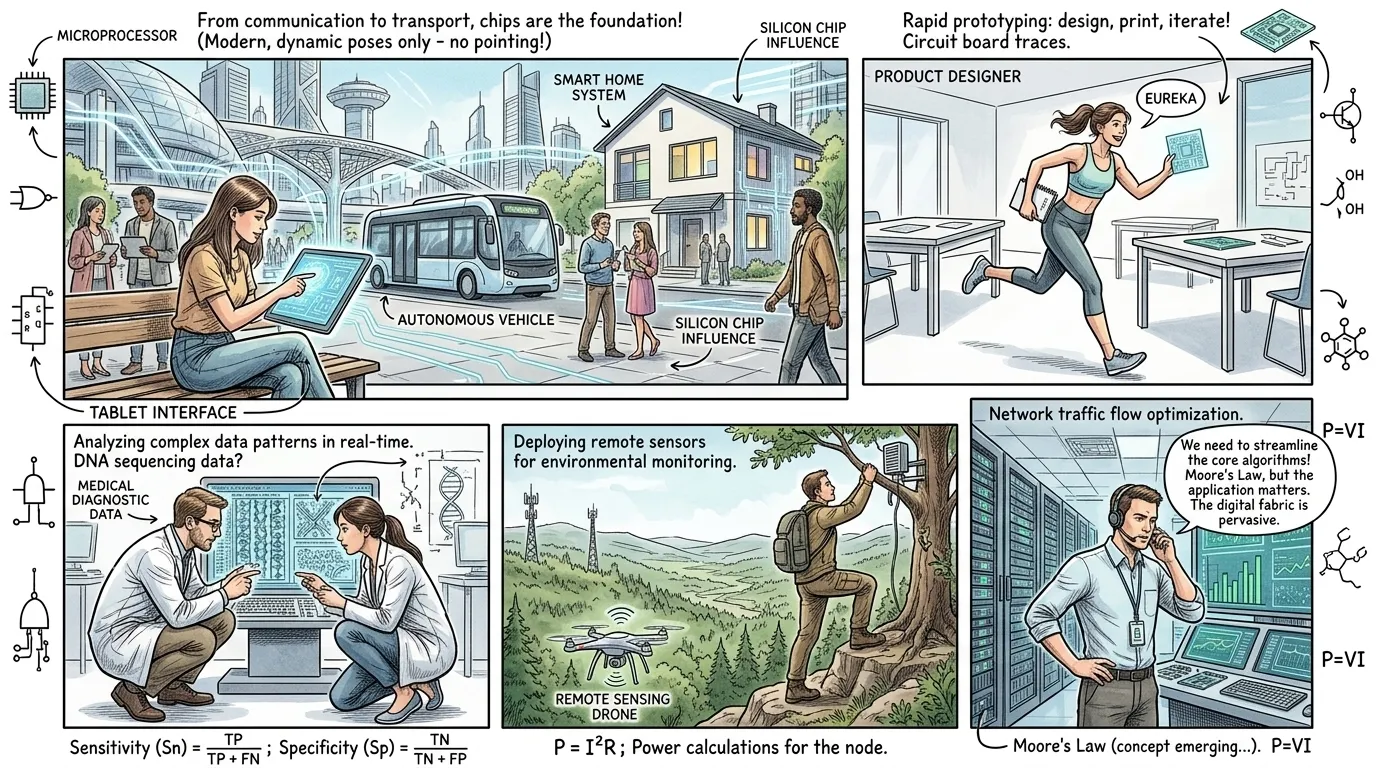
Today, the silicon chip is not merely a component; it is the unseen, fundamental engine of our interconnected world. From the supercomputers that model climate change to the embedded processors in our home appliances, virtually every facet of modern life relies on these tiny, intricate devices. They power our global communications, enable advanced medical diagnostics, drive autonomous vehicles, and facilitate instantaneous access to information. The ingenuity of Jack Kilby and Robert Noyce, integrating disparate components into a unified whole, launched an era of innovation that continues to redefine human capability and experience, perpetually pushing the boundaries of what is possible.
About this story
- Location: Global
- Audience: general readers
Read Wonder Inventions on your phone
Wonder Inventions is available on Android. Get Wonder Inventions on Google Play.