Smart Grid
Smart Grid — an illustrated inventions story, set in Global. 10 illustrated pages, free to read on Wonder Inventions.
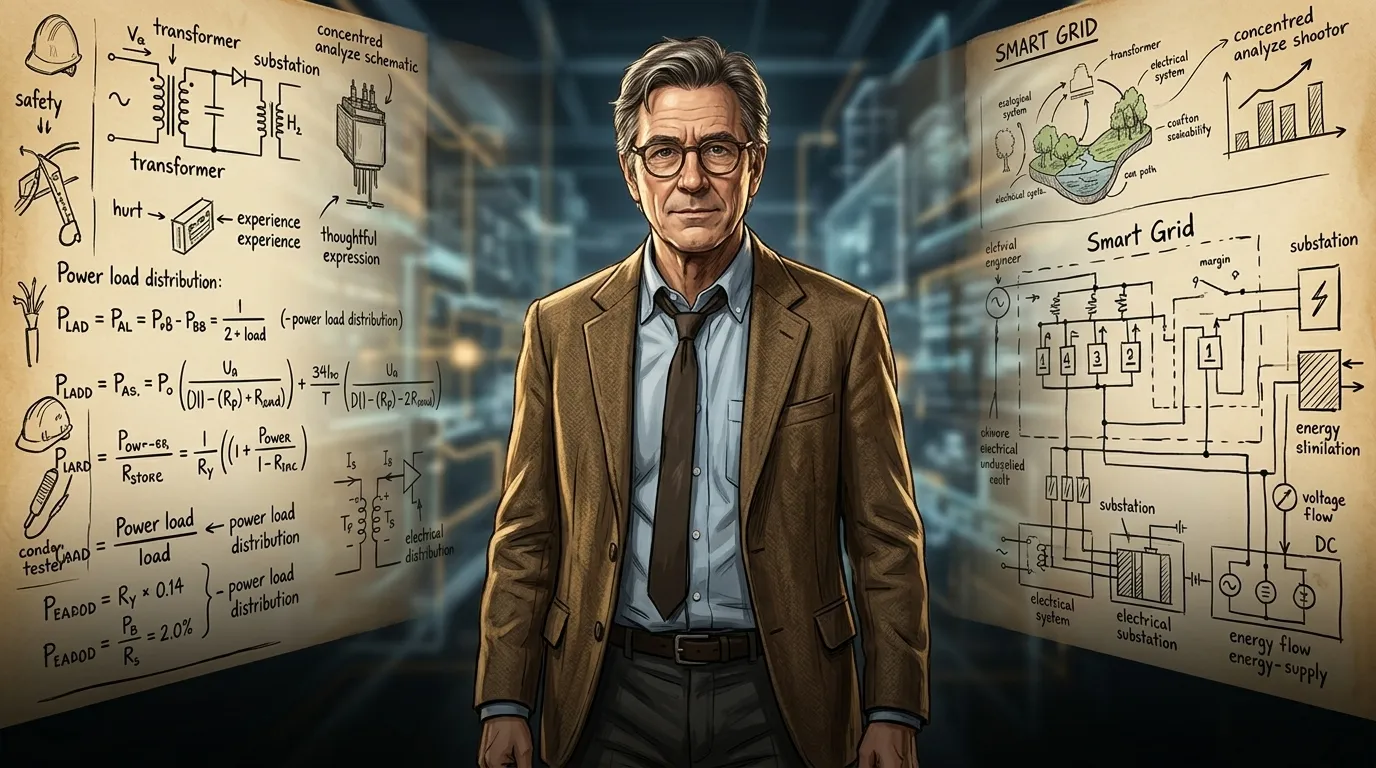
Page 1
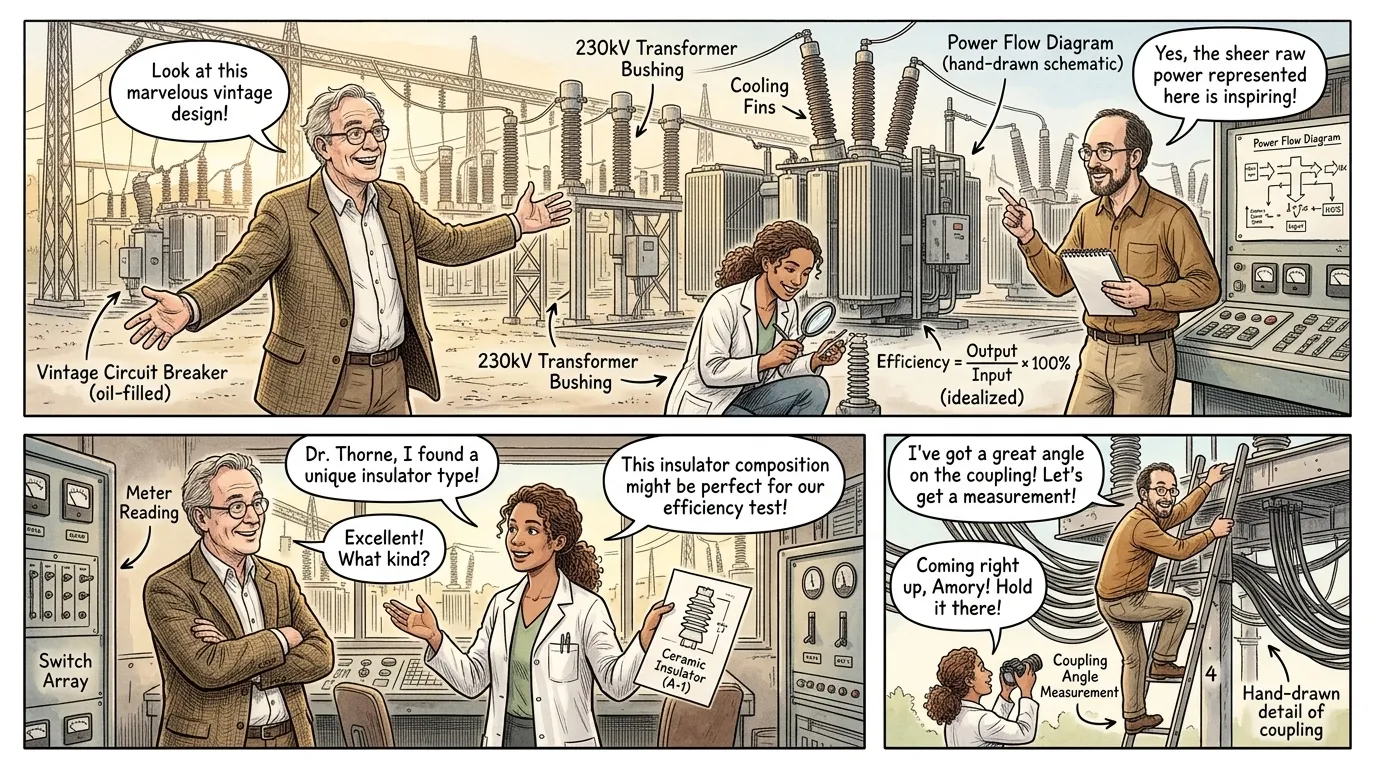
For over a century, the foundational structure of electrical supply remained largely unchanged: a centralized, one-way system engineered for simpler times. This traditional grid, a marvel of early 20th-century engineering, distributed power from large generation plants to consumers, a robust but inflexible design. Yet, as the 21st century dawned, its inherent inefficiencies and vulnerabilities became critically apparent, threatening the stability of modern societies and hindering the integration of renewable energy sources. The urgent need for transformation became undeniable.
""This grid, this grand legacy of the industrial age, is now a liability," Dr. Aris Thorne, a leading energy systems architect, observed grimly, gesturing towards an aged substation. "It's a one-way street in a multi-lane world, built for predictability, not for the dynamic chaos of modern demand and intermittent renewables.""
Page 2
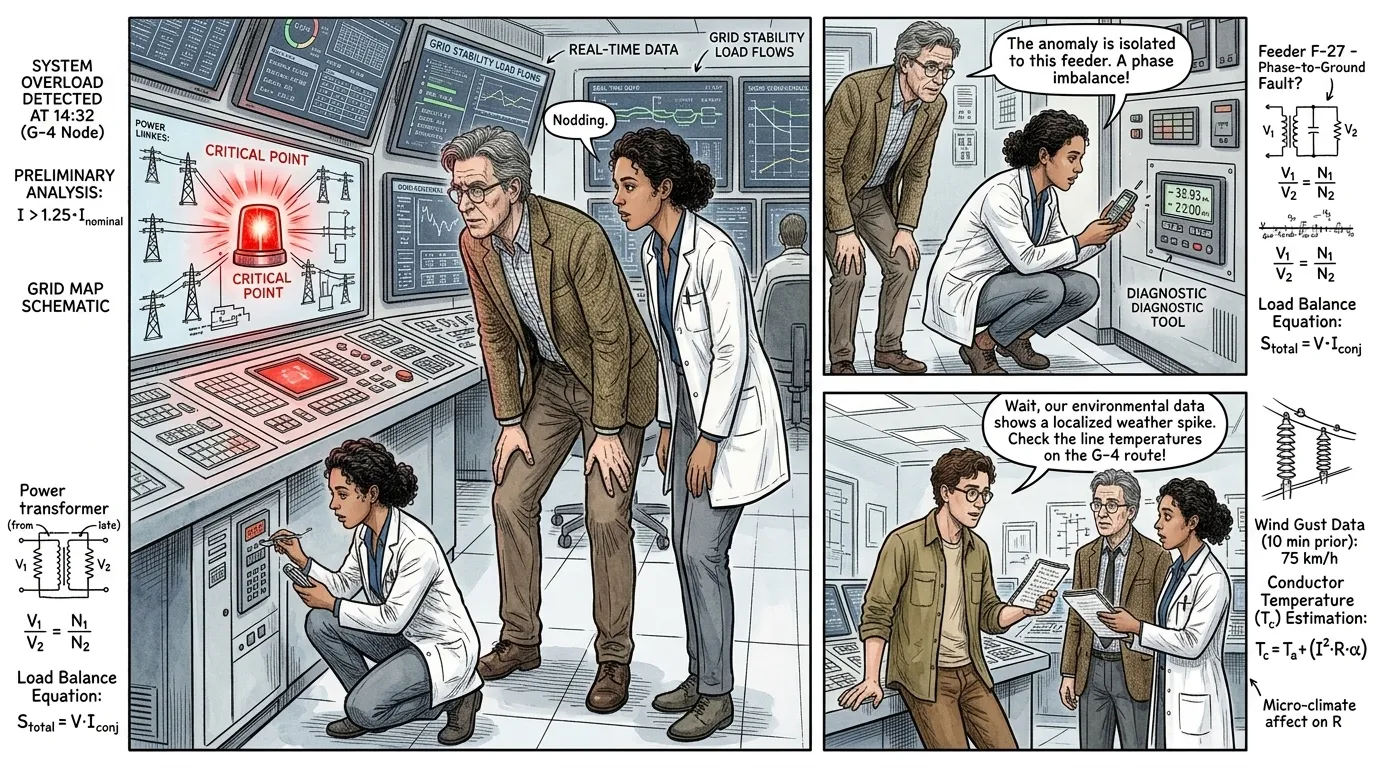
The limitations of the traditional grid manifested in increasingly frequent and devastating ways. Massive blackouts, like the Northeastern blackout of 2003, exposed the grid's fragility, demonstrating how a single point of failure could cascade across vast regions, leaving millions without power. Beyond spectacular failures, the everyday inefficiencies were equally costly: power losses during transmission, an inability to accurately match supply with real-time demand, and a complete lack of feedback from consumption points. The antiquated infrastructure struggled to adapt.
""Every major blackout is a stark reminder of our vulnerability," commented Dr. Thorne, looking at a flashing red light on a simulated grid control panel. "Without real-time data, without bidirectional flow, we're essentially flying blind. We push power out, but we don't truly know what's happening on the fringes until it's too late." A younger colleague, Engineer Lena Petrova, in her early 30s, with dark curly hair tied back, wearing a white lab coat over a professional blouse, nodded, adding, "The energy wasted through overproduction or inefficient routing is staggering. We need more than just brute force generation; we need intelligence.""
Page 3
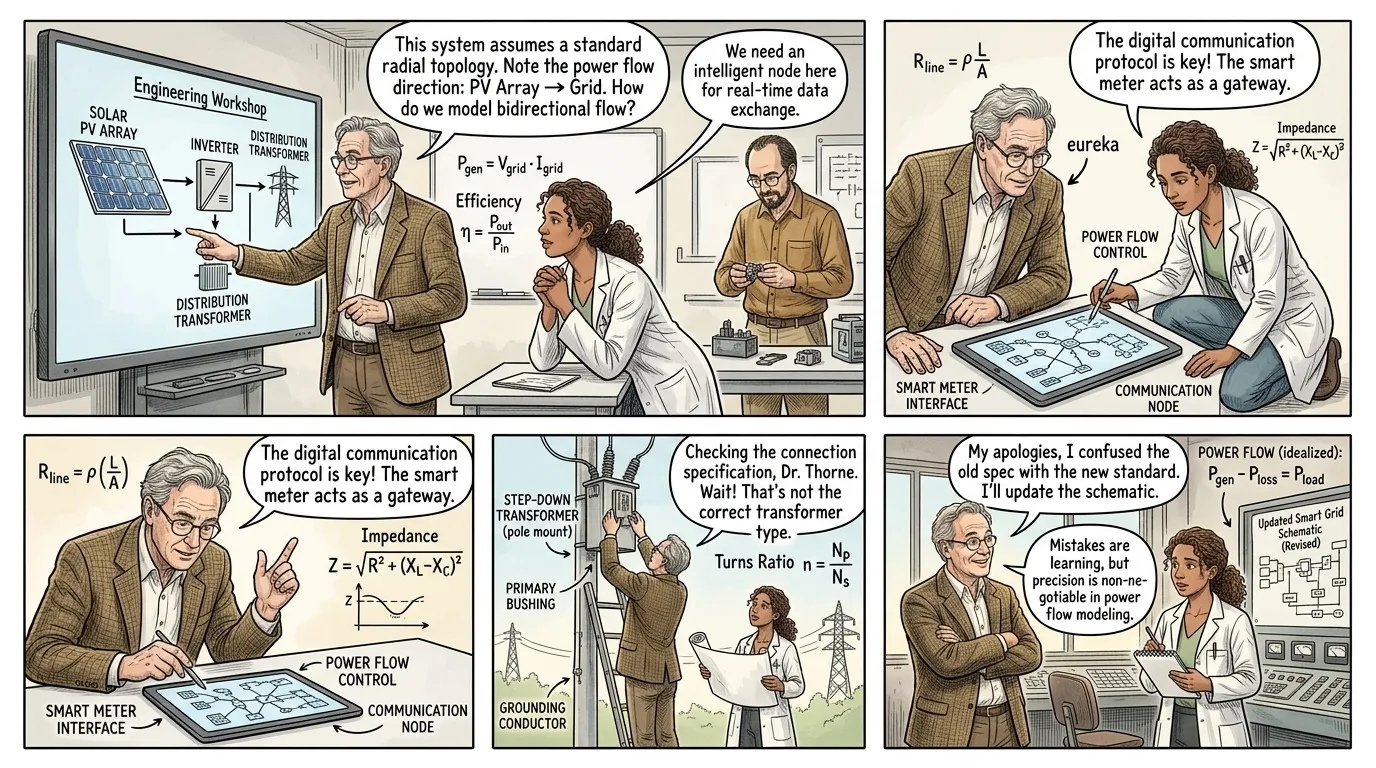
The burgeoning need for integrating renewable energy sources—solar, wind, geothermal—further highlighted the grid's deficiencies. These intermittent power generators didn't fit neatly into the 'predictable' model of coal or nuclear plants. Moreover, the demand for greater energy efficiency, spurred by environmental concerns and rising costs, necessitated a grid that could communicate, adapt, and even respond to distributed generation at the consumer level. This was the intellectual seed of the 'Smart Grid': a system capable of two-way communication, moving information as seamlessly as it moved electricity.
""Our reliance on fossil fuels demands a shift, but the grid fights it every step of the way," Dr. Thorne explained, tapping a diagram of solar panels feeding into a static grid. "What if the grid could talk to every solar panel, every wind turbine, every smart appliance? Imagine the efficiency." Lena chimed in, "That's it, isn't it? The core principle: two-way digital communication. It's the foundational missing piece, the knowledge we need to apply from the digital revolution to energy infrastructure. As the great philosopher Marshall McLuhan once said, 'The medium is the message.' Here, the medium of communication transforms the entire energy message.""
Page 4
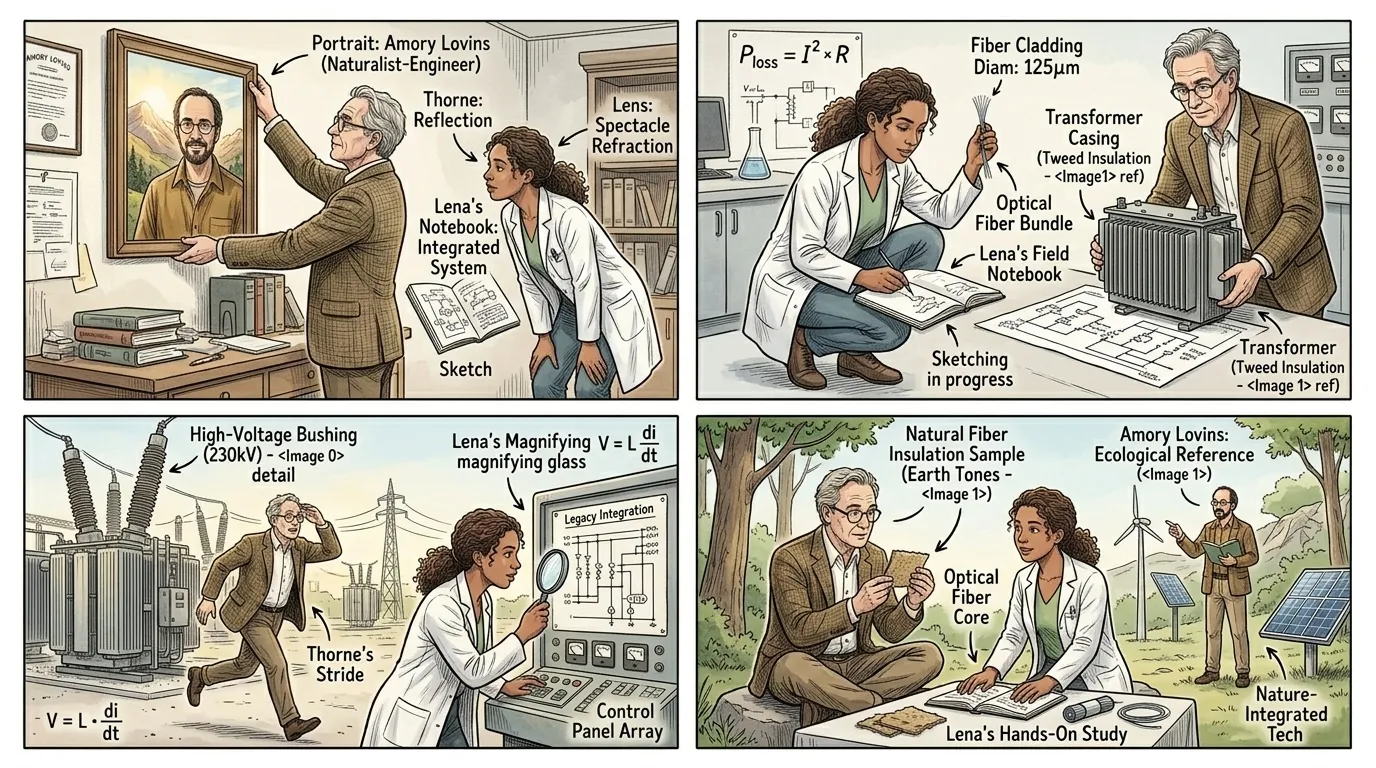
The concept of a 'Smart Grid' wasn't born in a single eureka moment, but evolved from decades of insights into energy efficiency and decentralized power. Visionaries like Amory Lovins, co-founder of the Rocky Mountain Institute, had long championed 'soft energy paths' emphasizing efficiency and distributed generation, indirectly laying the philosophical groundwork for what would become the Smart Grid. His work highlighted the need for energy systems that were not just powerful, but also resilient, efficient, and environmentally sound. The challenge was to translate these principles into tangible technological architecture, marrying robust electrical engineering with nascent information technology.
""Lovins and others articulated the need for a fundamentally different energy system, one that prioritized efficiency and distributed sources," Dr. Thorne stated, pointing to a portrait on a wall, depicting Amory Lovins (mid-career, spectacles, thoughtful expression) in a sun-drenched, natural setting. "They showed us the 'what,' long before we fully understood the 'how.' It was a compelling vision, but bridging the gap between an abstract philosophy and a workable, nationwide infrastructure solution required a massive leap." Lena added, "Integrating 'dumb' copper wires with 'smart' fiber optics and wireless communication—that's where the real intellectual battle began.""
Page 5
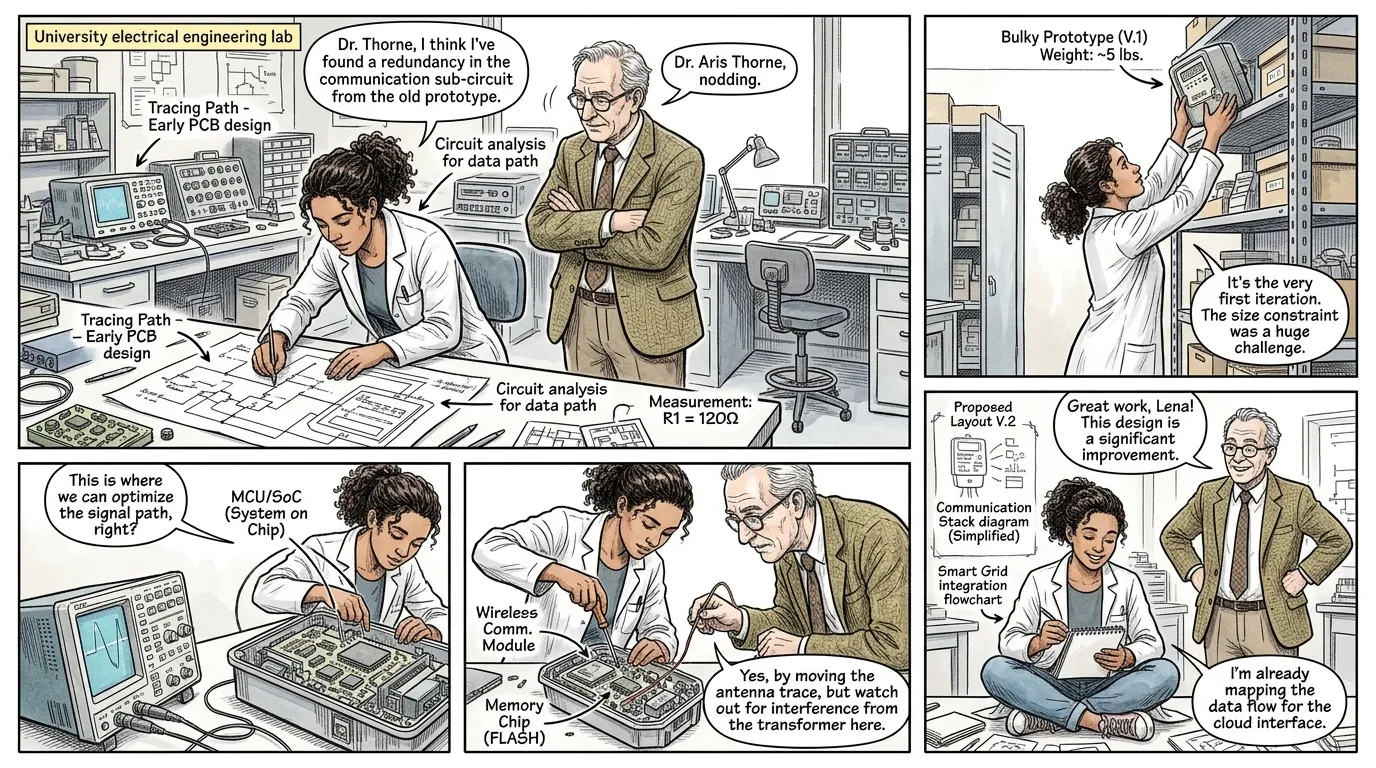
Developing the Smart Grid was an immense engineering gauntlet. Early attempts grappled with fundamental issues: how to secure a complex, interconnected system against cyber threats, how to standardize communication protocols across countless devices from different manufacturers, and the sheer cost of upgrading existing infrastructure. Prototypes in isolated microgrids showcased potential, demonstrating localized control and renewable integration, but scaling these solutions to national levels presented unprecedented technical and financial hurdles. The 'Smart Grid' remained more of a theoretical aspiration than a practical reality for many years, fraught with trial and error.
""The early prototypes were fascinating, but also humbling," Lena recalled, examining a diagram of an early, bulky 'smart meter' prototype. "We could make a single building smart, but imagine millions of homes, thousands of substations. Cybersecurity alone was a nightmare. Every new point of communication was a potential vulnerability." Dr. Thorne nodded. "And the communication standards! Getting every device, from a toaster to a wind farm, to speak the same digital language was like trying to unite the Tower of Babel. Many early trials failed due to incompatible systems or prohibitive costs.""
Page 6
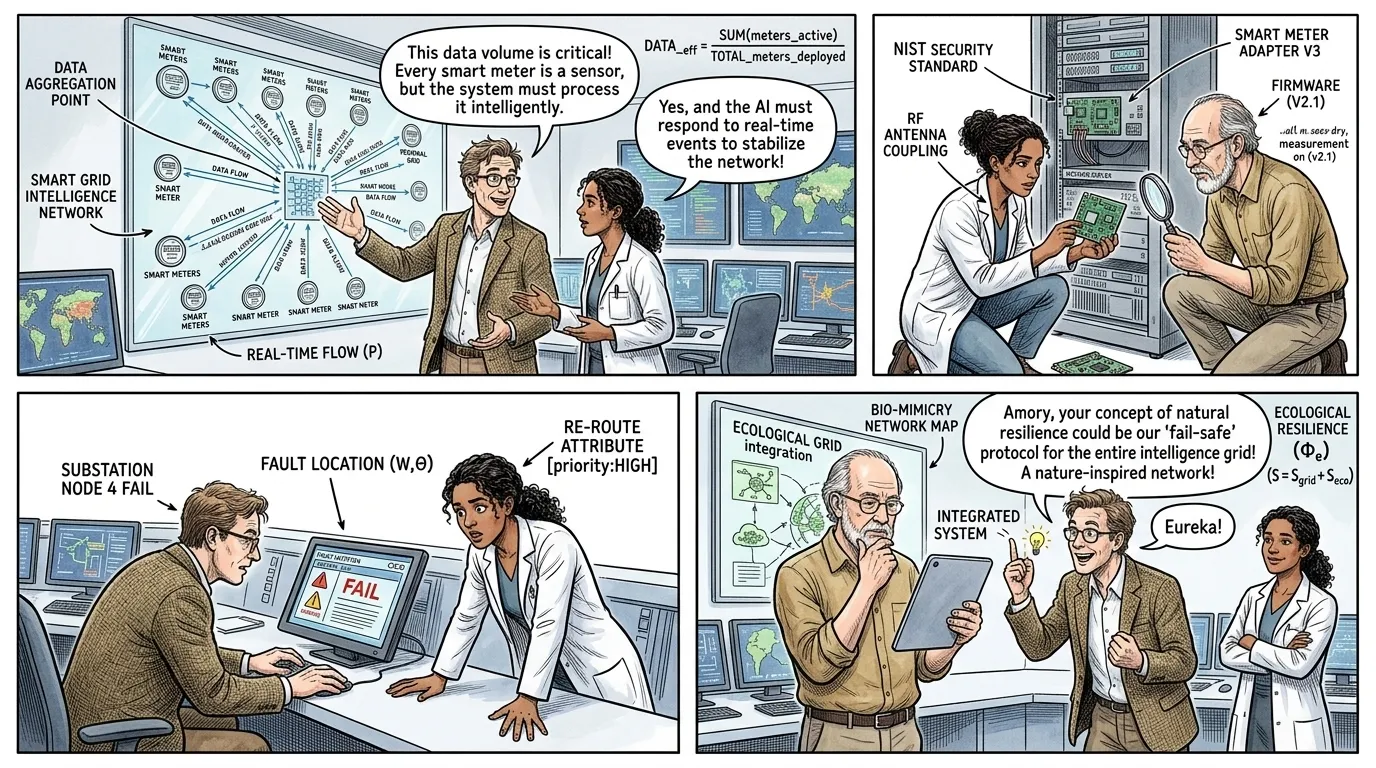
The breakthrough that transformed the Smart Grid from concept to reality centered on two pivotal advancements: pervasive real-time data collection and automated, intelligent response systems. Instead of a handful of large sensors at power plants, millions of 'smart meters' were deployed at homes and businesses, continuously measuring consumption and generation. Coupled with advanced sensors embedded throughout the transmission and distribution network, this created an unprecedented 'nervous system' for the grid. Data flowed back to central command centers, enabling precise, instantaneous analysis of grid health and energy demand. This deluge of information powered intelligent automation.
""The moment we embraced ubiquitous real-time data, everything changed," Dr. Thorne explained, pointing to a brightly lit diagram. "Imagine every kilowatt-hour being monitored, every fault instantly detected. It's like giving the grid sight and hearing." Lena added, "And then, the automation kicks in. No more waiting for human operators to respond to an outage. The system can reroute power, isolate faults, and restore service, often before anyone even notices a flicker. This immediate response is the true power of this 'nervous system'.""
Page 7
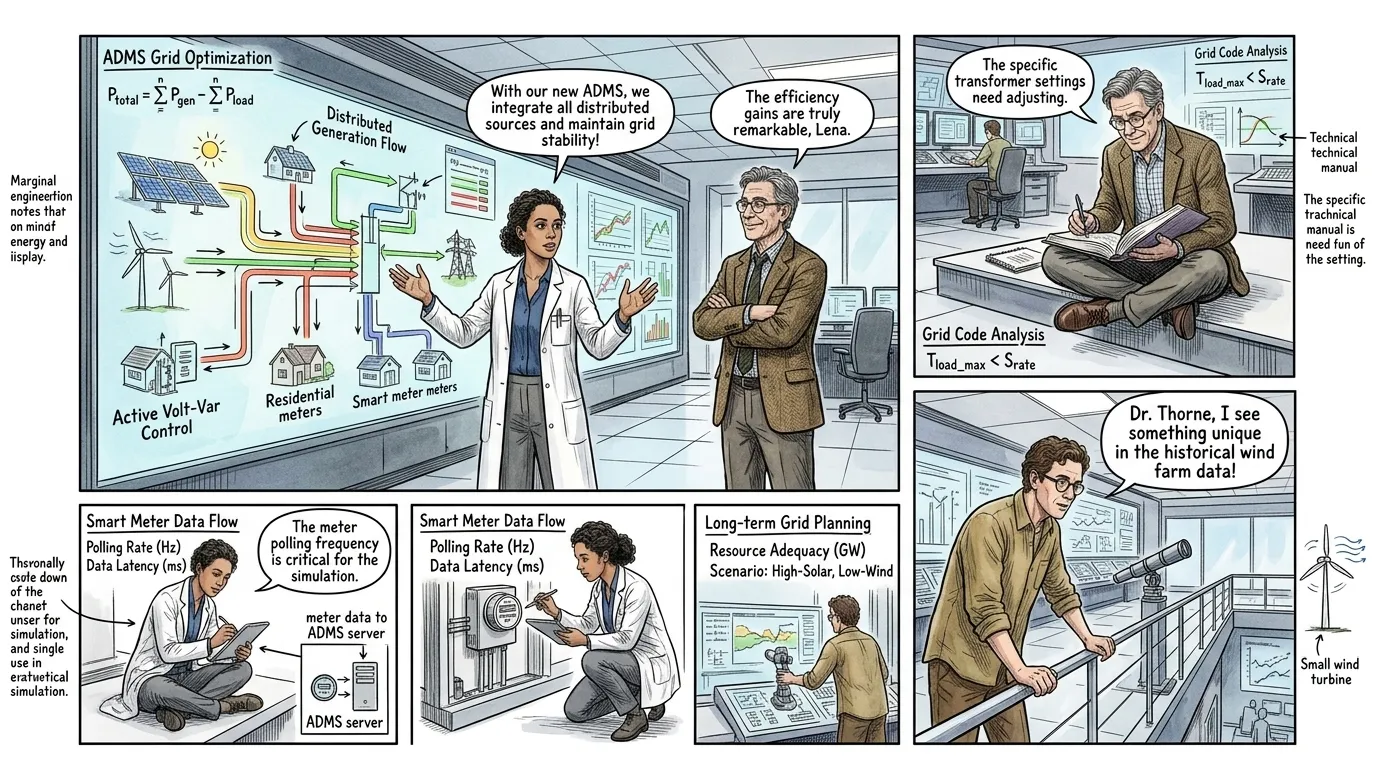
The operational mechanism of the Smart Grid is a sophisticated dance of data and control. Smart meters not only provide consumption data but can also manage demand response programs, automatically reducing load during peak times. Sensors along power lines detect issues like downed wires or overloaded circuits, instantaneously communicating these events. Advanced Distribution Management Systems (ADMS) then use this information to self-heal the grid, rerouting power around damaged sections or automatically balancing load. Crucially, the Smart Grid seamlessly integrates distributed energy resources (DERs) like home solar panels and battery storage, allowing them to feed power back into the grid, transforming consumers into 'prosumers' who both consume and produce energy. This complex interplay creates a resilient, efficient, and truly dynamic energy ecosystem.
""It's a symphony of interconnected intelligence," Lena affirmed, gesturing towards a dynamic simulation on a large display screen showing energy flows. "During a storm, for instance, a traditional grid would fail comprehensively. With the Smart Grid, sensors pinpoint damage, ADMS reroutes power around it, minimizing outages. Homes with solar can even island themselves, providing local power." Dr. Thorne added, "And it makes renewable energy viable at scale. When the wind drops, the grid knows to pull from storage or conventional sources, ensuring continuous supply. It's dynamic equilibrium, managed by data.""
Page 8
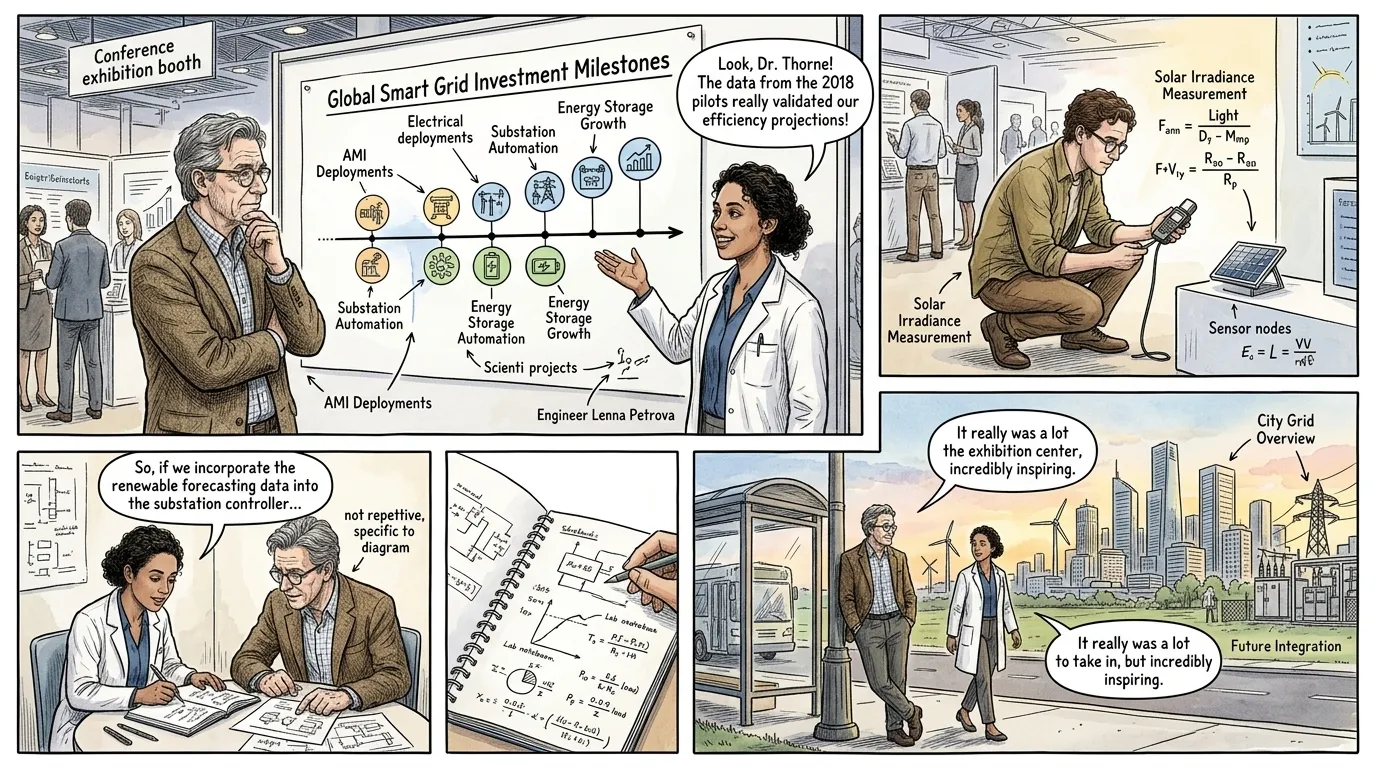
The transition to a Smart Grid was not without its challenges, demanding significant investment and policy shifts. However, the promise of enhanced reliability, efficiency, and sustainability spurred governments and utility companies worldwide to commit. Early pilot programs, often supported by government grants like the U.S. Smart Grid Investment Grant of 2009, demonstrated tangible benefits, from reducing peak energy demand to faster outage restoration. These successes, proving the viability of two-way communication and real-time data, began to tip the scales, ushering in widespread adoption of smart meters and advanced grid infrastructure. This widespread validation paid off dramatically during extreme weather events, showing how the theoretical 'two-way communication' discussed earlier could save lives and infrastructure.
""The early funding, the political will—that was crucial," Dr. Thorne reflected, standing before a large timeline chart displaying key Smart Grid investment milestones globally. "Demonstrating that our conceptual two-way communication could prevent mass blackouts during a storm changed everything. Suddenly, the return on investment became clear." Lena added, "We moved beyond theory to tangible results. Projects in Boulder, Colorado, or Chattanooga, Tennessee, became real-world proofs of concept. They showed that by knowing what's happening at every point, the grid can actively defend itself and recover faster.""
Page 9
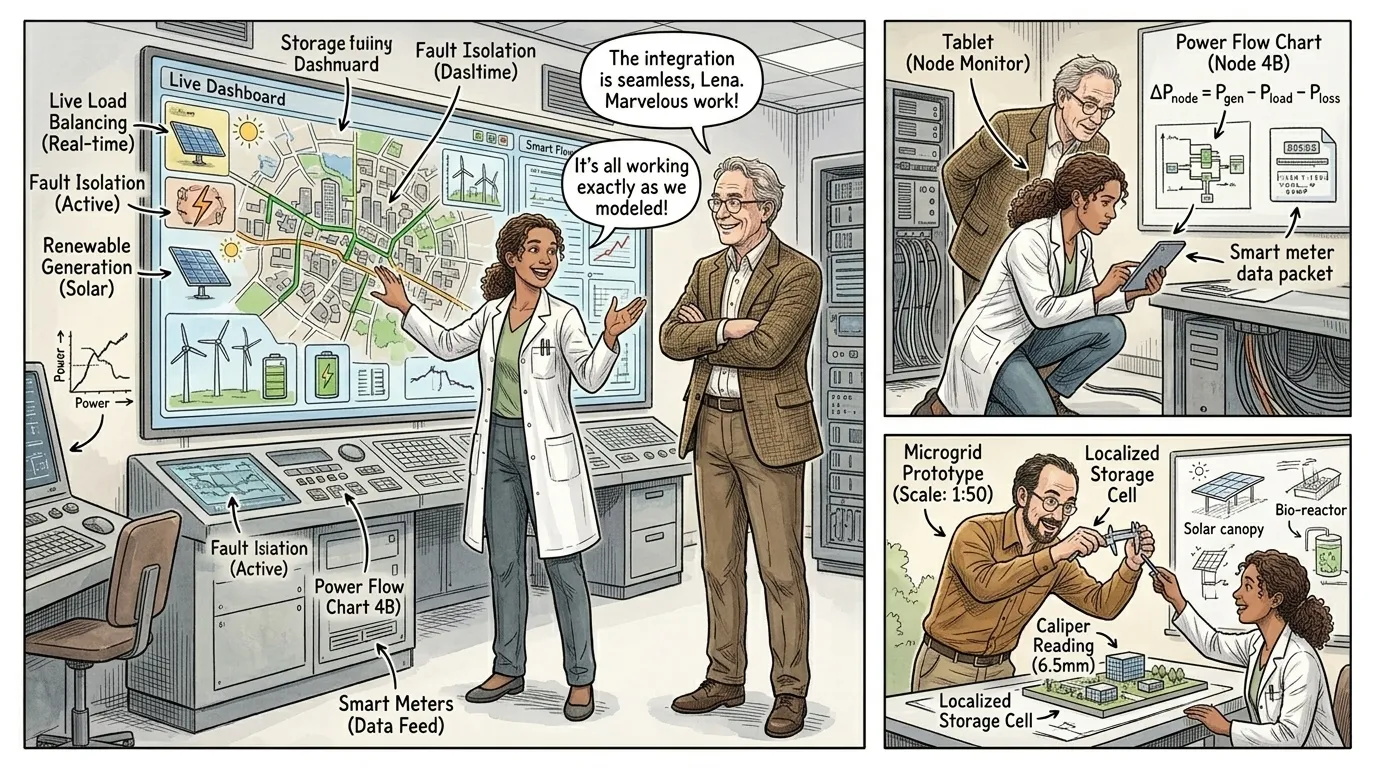
Today, the Smart Grid actively manages the intricate ballet of modern energy demands. During heatwaves, it automatically initiates demand response programs, shedding non-critical load to prevent system overloads without user intervention. When a tree limb falls on a power line, sensors quickly isolate the fault, rerouting power to minimize affected areas and dispatching repair crews with pinpoint accuracy. Electric vehicles seamlessly integrate, charging during off-peak hours or even feeding power back into the grid during emergencies. This dynamic, self-aware system not only prevents blackouts but also optimizes energy use, integrating a kaleidoscope of energy sources that were once impossible to manage, proving the initial conceptual breakthroughs were profoundly transformative.
""Imagine a future where the grid isn't just reacting, but anticipating," Lena enthused, watching a live dashboard showing real-time load balancing. "It's predicting demand, adjusting generation, and even storing excess renewable energy for later. The efficiency gains are enormous." Dr. Thorne nodded, a satisfied smile on his face. "Indeed. We're moving towards a grid that's not just robust, but truly intelligent—a decentralized, resilient network capable of withstanding the energy challenges of this century. It's the infrastructure of the future, evolving with every byte of data.""
Page 10
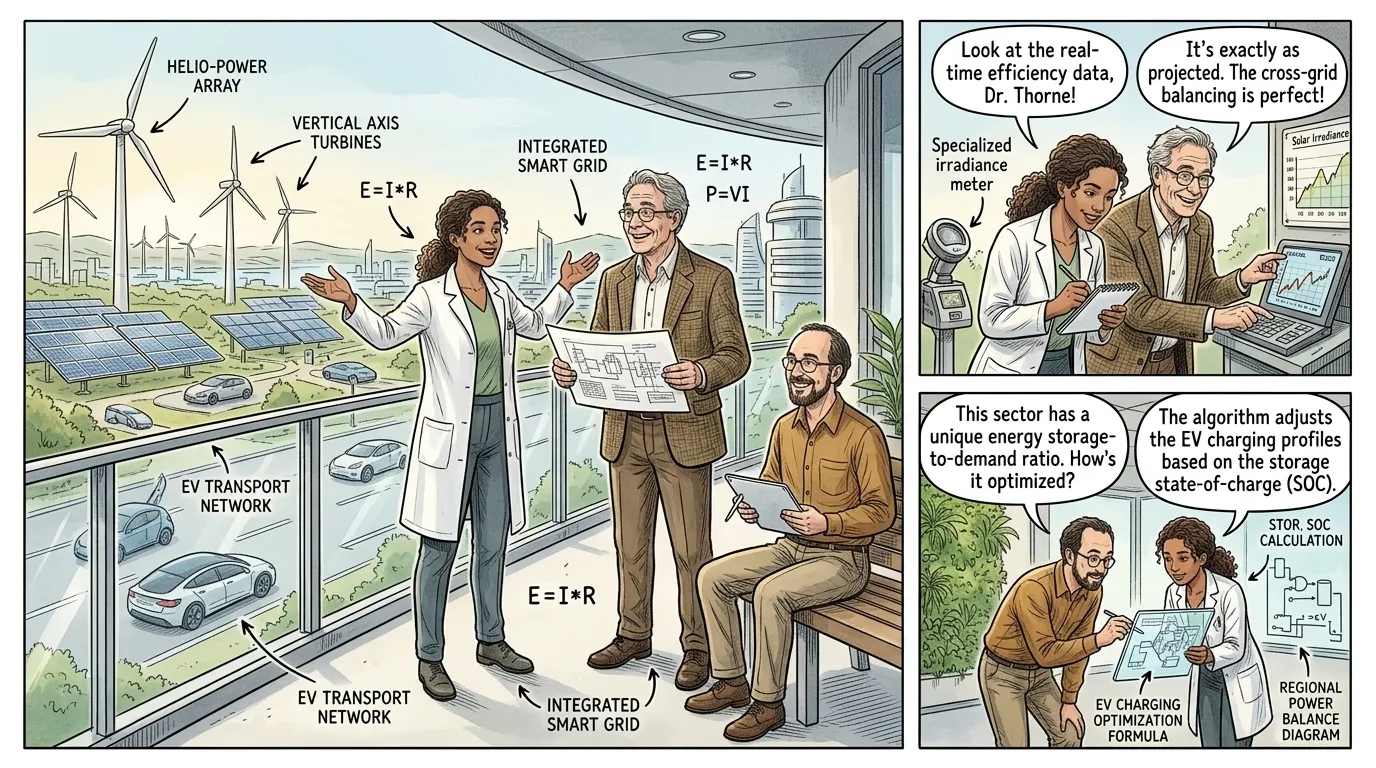
The Smart Grid's impact reverberates across every facet of modern life. For homeowners, it means lower energy bills through dynamic pricing and smart appliance integration. For industries, it guarantees more reliable power supply, reducing costly downtime. Environmentally, it's a cornerstone for decarbonization, enabling the mass adoption of renewable energy and reducing overall carbon emissions. Economically, it fosters innovation, creating new jobs and services in energy management and technology. From sprawling urban centers to remote communities, the Smart Grid is not merely an upgrade; it is the essential nervous system for a sustainable, electrified future, continually adapting and evolving.
""This technology, it's more than just electricity; it's about resilience, sustainability, and economic growth," Lena explained, looking out at a horizon filled with wind turbines. "It allows us to truly harness the power of nature without compromising reliability." Dr. Thorne added, "The Smart Grid fundamentally redefines our relationship with energy, making it cleaner, smarter, and more secure. It's an ongoing evolution, but its foundational principles ensure a dynamic future for generations to come.""
About this story
- Location: Global
- Audience: general readers
Read Wonder Inventions on your phone
Wonder Inventions is available on Android. Get Wonder Inventions on Google Play.