Smartphone
Smartphone — an illustrated inventions story, set in Global. 10 illustrated pages, free to read on Wonder Inventions.
Page 1
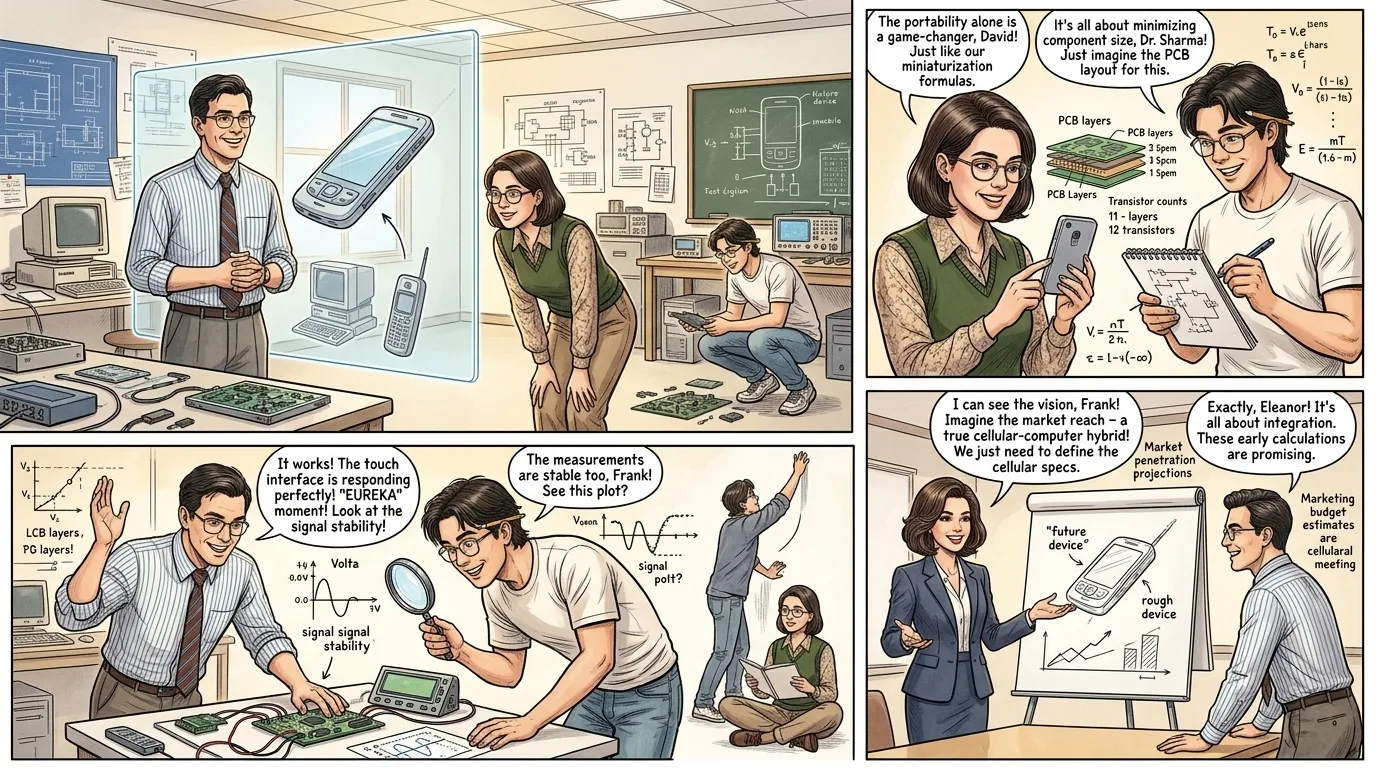
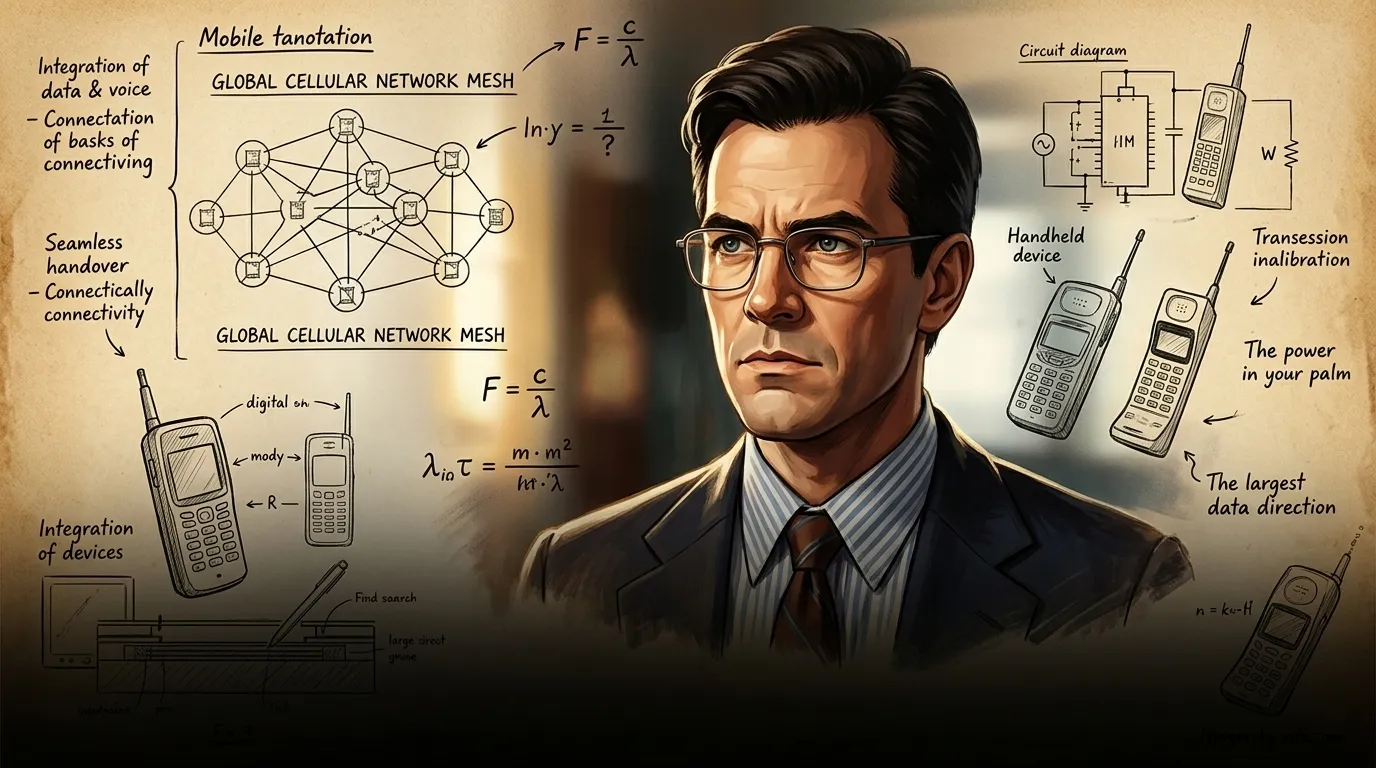
For decades, communication and computing remained separate entities, forcing professionals and everyday users to juggle multiple devices. The idea of a single, integrated tool for both voice and data was a persistent, yet elusive, dream. The challenge was immense: how to miniaturize complex systems, make them intuitive, and keep them truly mobile?
"'We've built powerful desktop computers and effective mobile phones,' observed Frank Canova, an IBM engineer. 'But the real innovation will come when these two worlds collide into one truly personal device. That's the problem we must solve.'"
Page 2
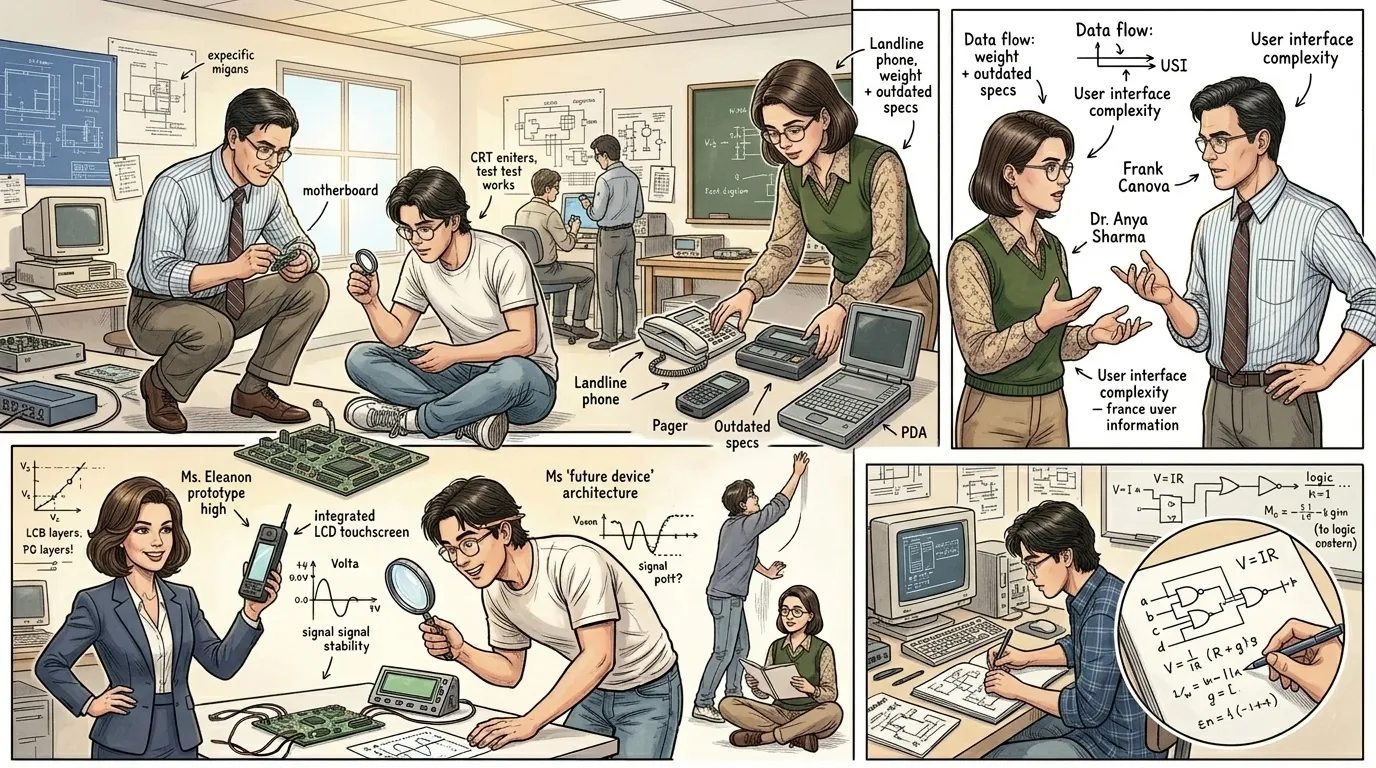
Before the smartphone, individuals navigated a landscape of dedicated devices, each serving a singular purpose. A landline for calls, a pager for messages, a bulky laptop for emails, and a personal digital assistant for schedules. This fragmentation created inefficiency and a constant demand for synchronization.
"'Imagine trying to check your calendar, read an email, and then make a phone call, all while away from your desk,' an IBM colleague, Dr. Anya Sharma, commented to Canova, adjusting her glasses. 'It requires carrying a bag full of gadgets and constantly transferring information. It's simply not sustainable for a truly mobile workforce.'"
Page 3
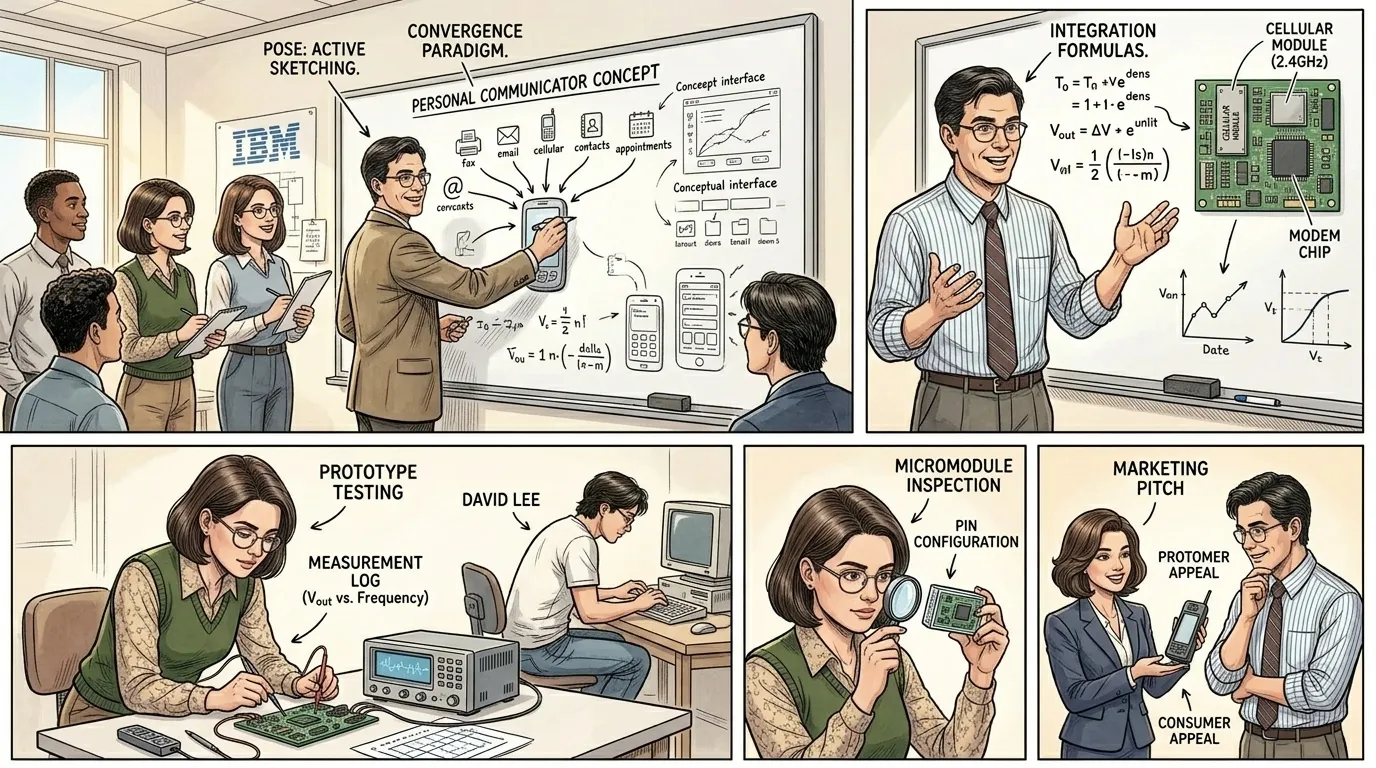
The core problem wasn't just connecting devices, but defining a new kind of device entirely. IBM's team envisioned a 'Personal Communicator' that could send and receive faxes, emails, and cellular calls, alongside managing contacts and appointments. This audacious goal demanded merging disparate technologies into a single, compact unit.
"'Our challenge isn't merely miniaturization,' Canova explained, sketching on a whiteboard. 'It's creating an intuitive interface for a device that will be much more than a phone or a PDA. We need a system that truly integrates these functions, making it feel natural, not cumbersome. It's a new paradigm.'"
Page 4
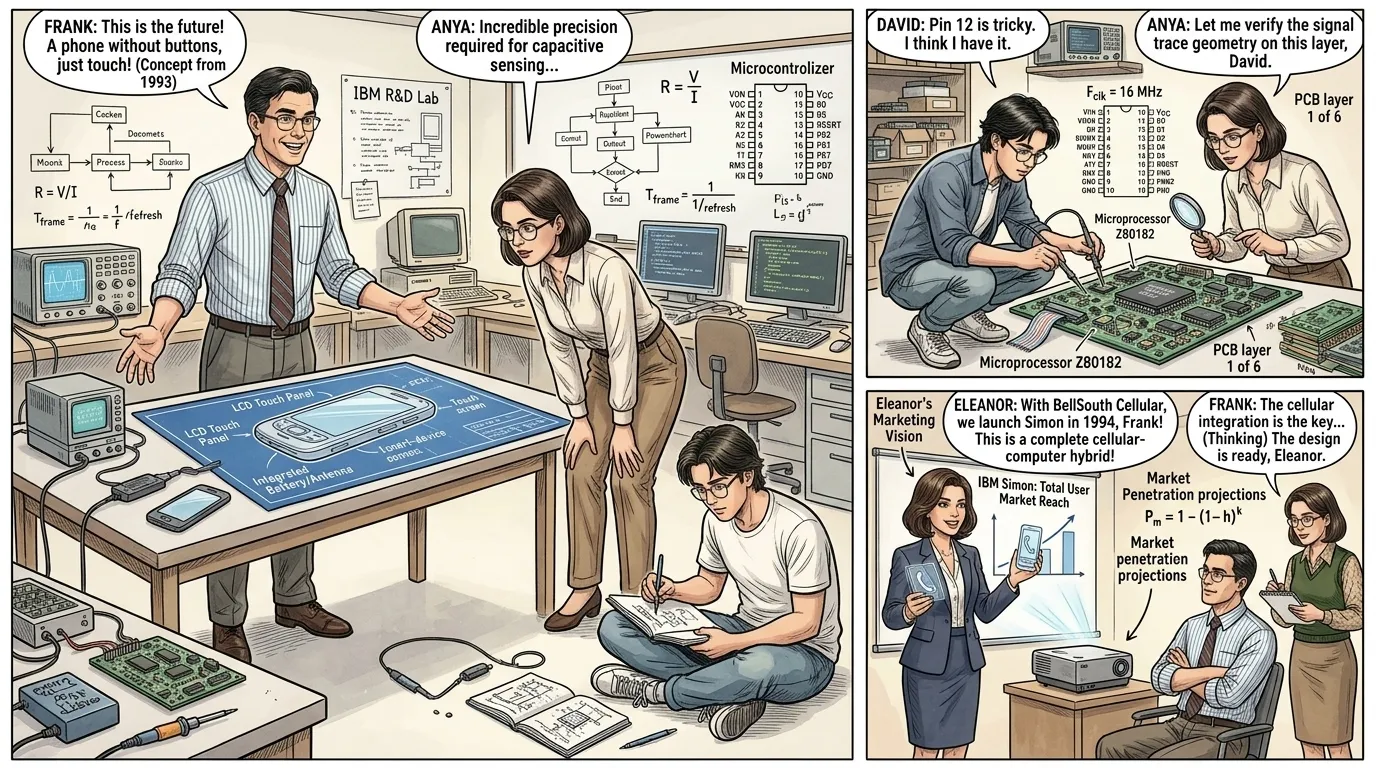
The journey began in earnest around 1992, with Frank Canova leading the charge at IBM. His team embarked on a mission to build a device that would fuse cellular communication with digital data processing. This wasn't merely adding features; it was a fundamental re-imagining of mobile interaction.
"'We knew the future lay in convergence,' Canova stated to his team gathered around a workbench. 'The key insight was that touch interaction, rather than physical buttons, would be essential for a device with so many functions. As Leonardo da Vinci once said, 'Simplicity is the ultimate sophistication.' Our goal is to make this complex convergence feel simple and immediate.'"
Page 5
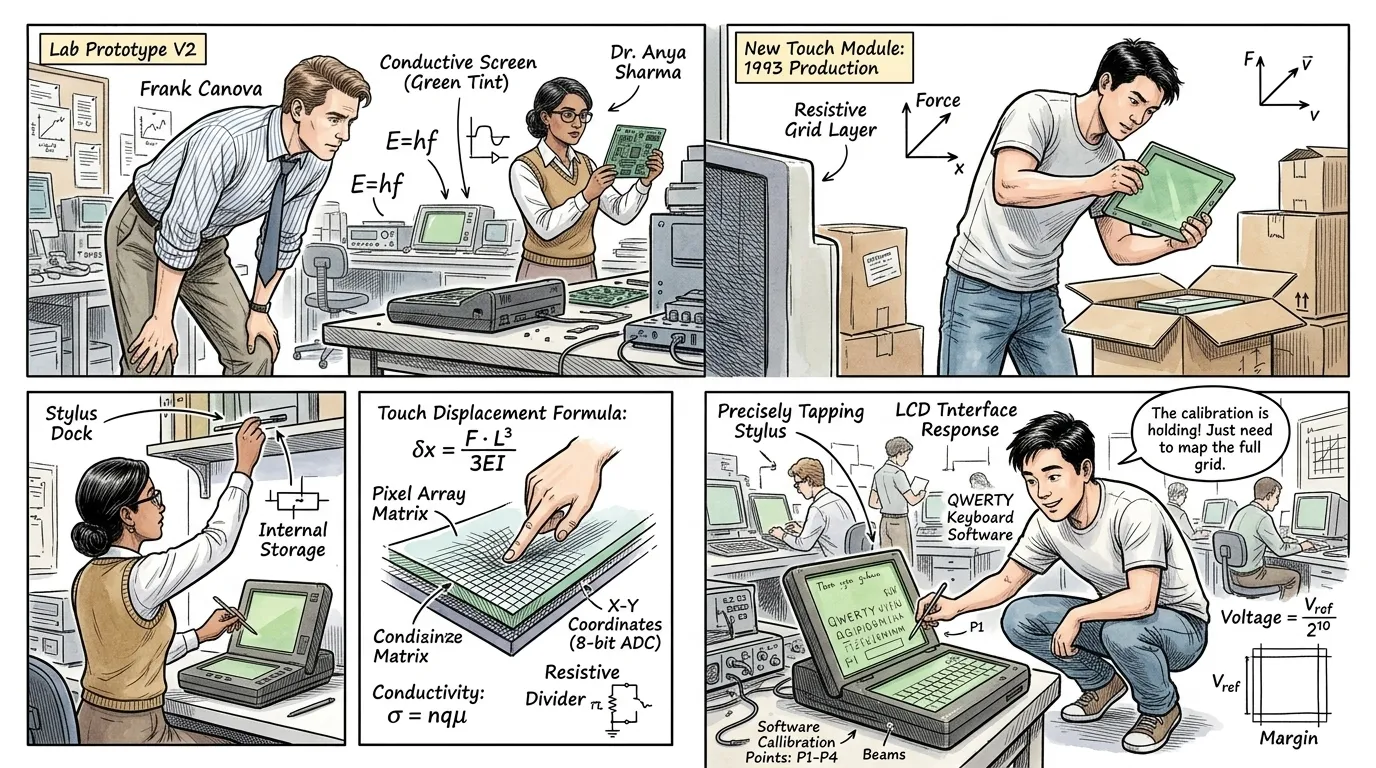
Early prototypes of the Simon Personal Communicator wrestled with input methods. The idea of a full-size keyboard was impractical, and simple buttons couldn't handle the breadth of applications envisioned. The breakthrough came with the decision to embrace a stylus-driven touchscreen, paired with an innovative software suite. This presented monumental software engineering challenges.
"A junior engineer, David Lee, meticulously tapped a stylus against a screen. 'Getting the handwriting recognition reliable, and integrating a full QWERTY keyboard that can be 'drawn' on the screen, that's where the real magic happens, but also the biggest headache. Every pixel needs to respond precisely.'"
Page 6
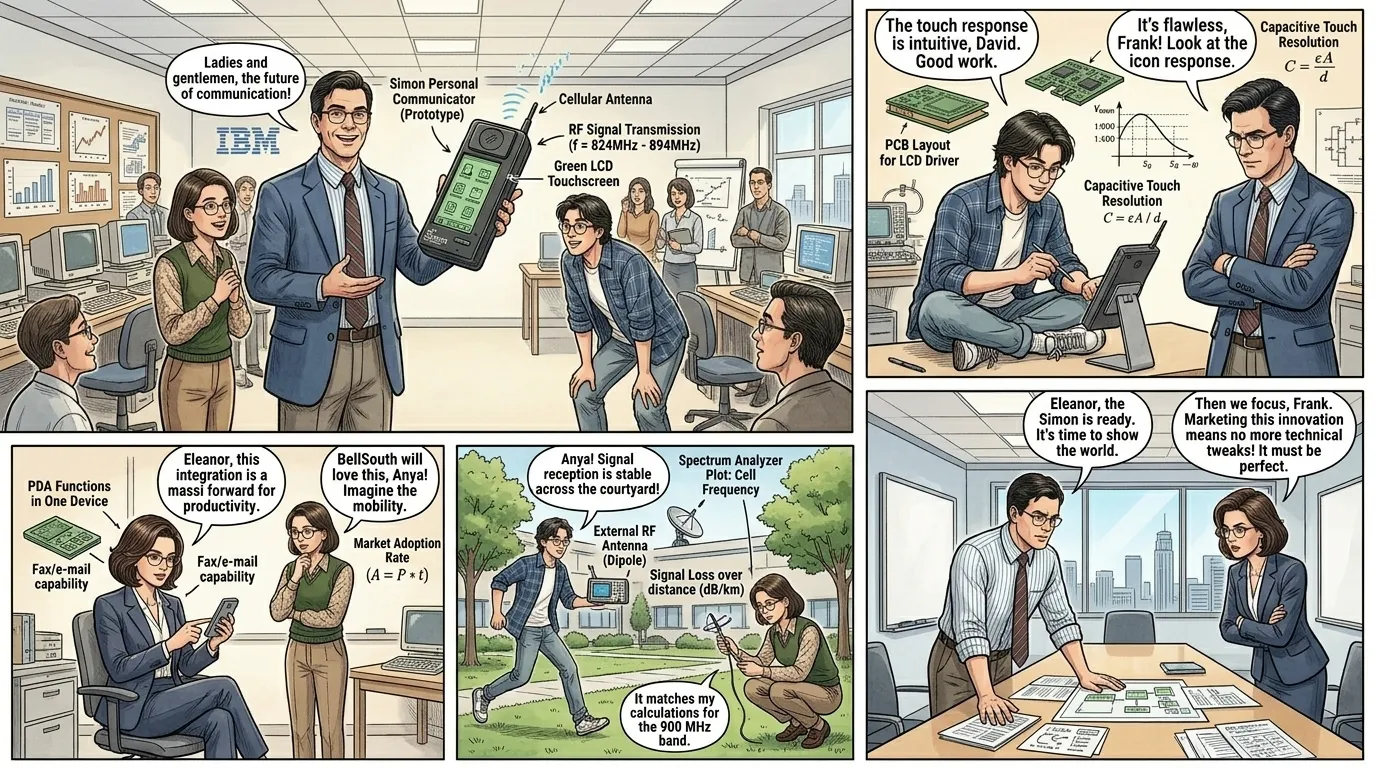
The IBM Simon, released to the public in August 1994, represented a monumental leap. It was not just a phone, but a fully functional computer in a handheld form. Its green LCD touchscreen allowed users to dial, access an address book, calendar, scheduler, world clock, and even send faxes and emails, all from one device.
"'This isn't just about placing calls anymore,' Canova announced, holding up a sleek, functional Simon for his team. 'It's about carrying your entire digital office in your hand. The integration of cellular radio, processor, and memory, all managed by a dedicated operating system, creates a new class of device.'"
Page 7
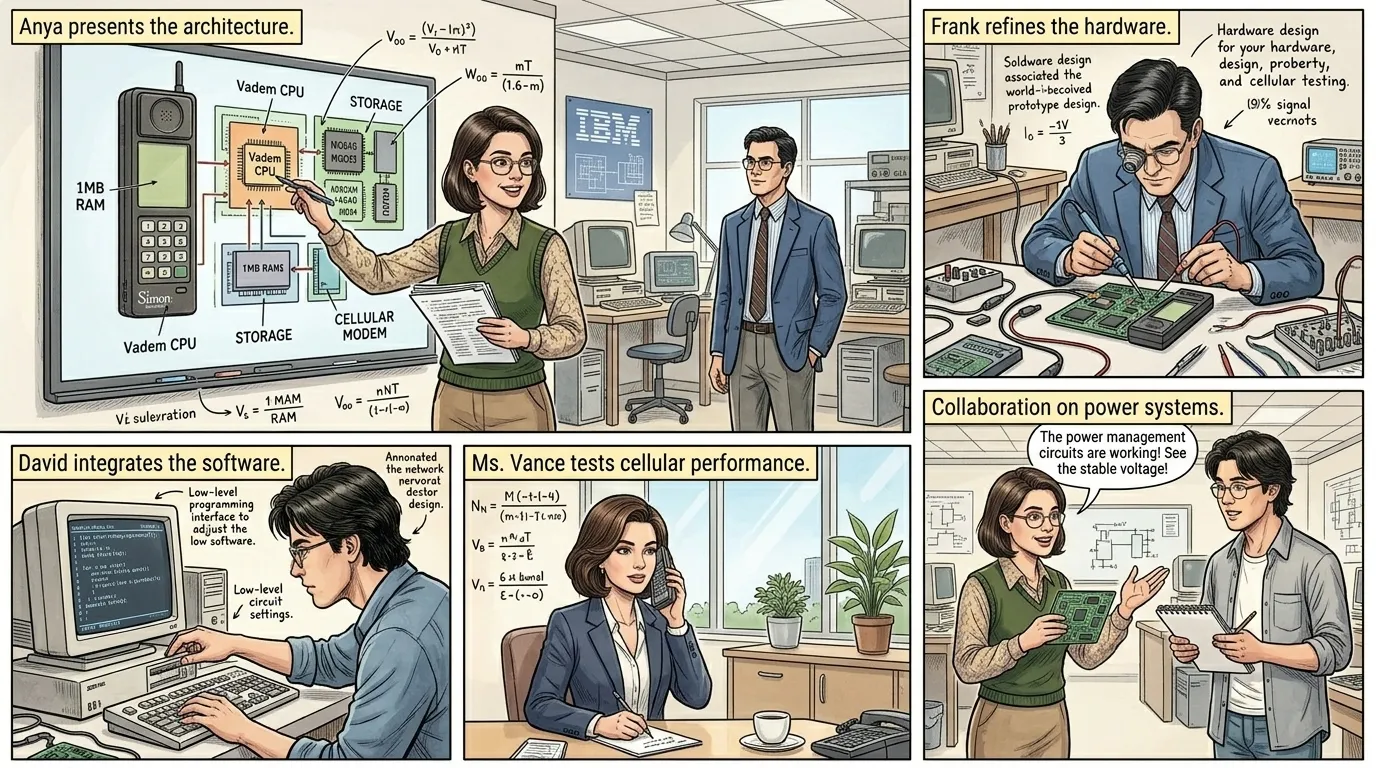
At its core, the IBM Simon operated with a Vadem CPU running at 16 MHz, 1MB of RAM, and 1MB of storage. It integrated a cellular modem for wireless communication, enabling data transmission far beyond basic voice calls. The custom 'Navigator' software provided the user interface, translating stylus taps into commands and data entries.
"Dr. Sharma pointed to a detailed diagram of the Simon's internal components. 'The key was the seamless hand-off between the cellular modem handling the call or data packet, and the processor managing the applications on the screen. It sounds simple, but orchestrating these distinct operations without lag was incredibly complex at the time.'"
Page 8
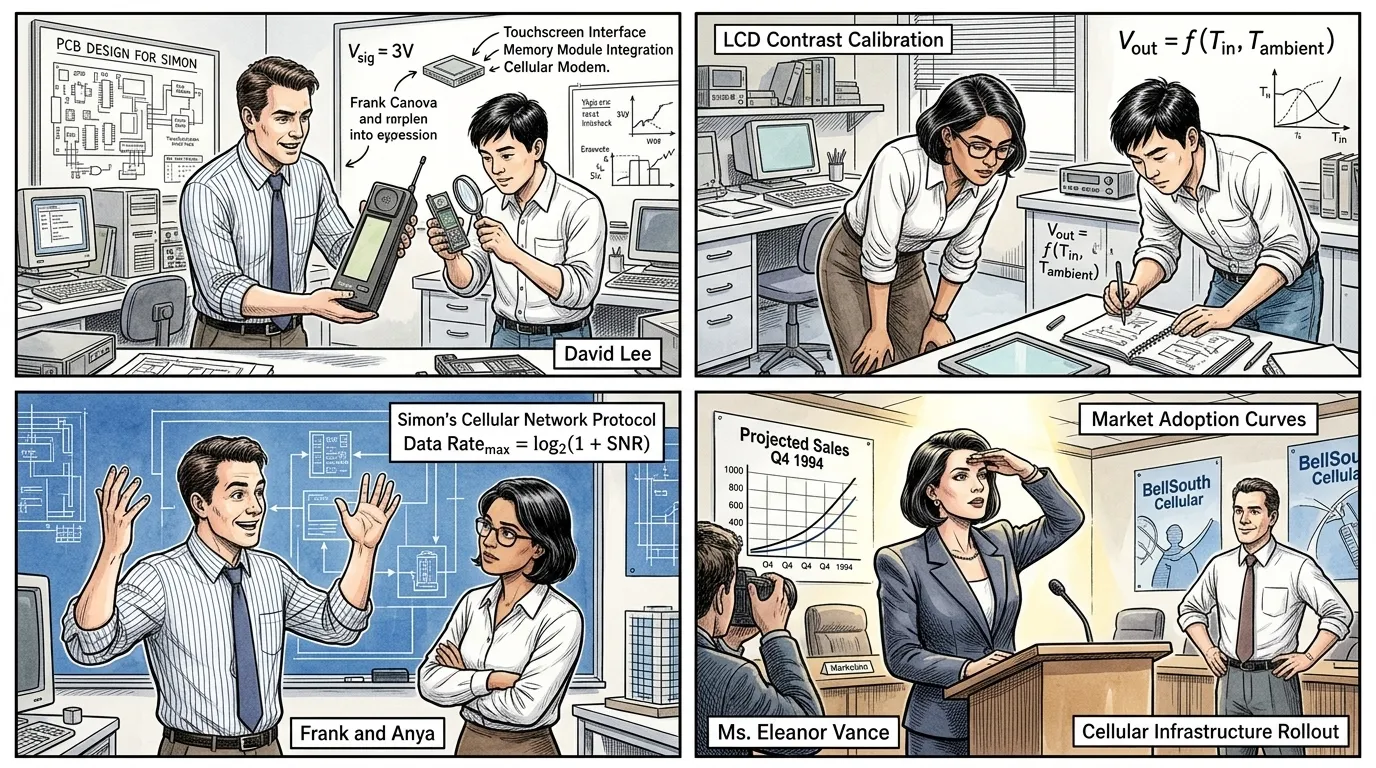
The IBM Simon launched with significant fanfare, initially available through BellSouth Cellular for a price of 899 with a two-year contract. While expensive, it quickly found favor among business professionals and early adopters who recognized its potential to streamline their workflow. It was truly a pocket office, demonstrating a future where communication and information were inseparable.
"'The initial reaction from executives was overwhelmingly positive,' a BellSouth Cellular marketing representative, Ms. Eleanor Vance, explained to a local news crew, holding a Simon. 'They understood immediately the value of having their email, faxes, and schedule integrated with their phone. It's revolutionizing productivity on the go.'"
Page 9
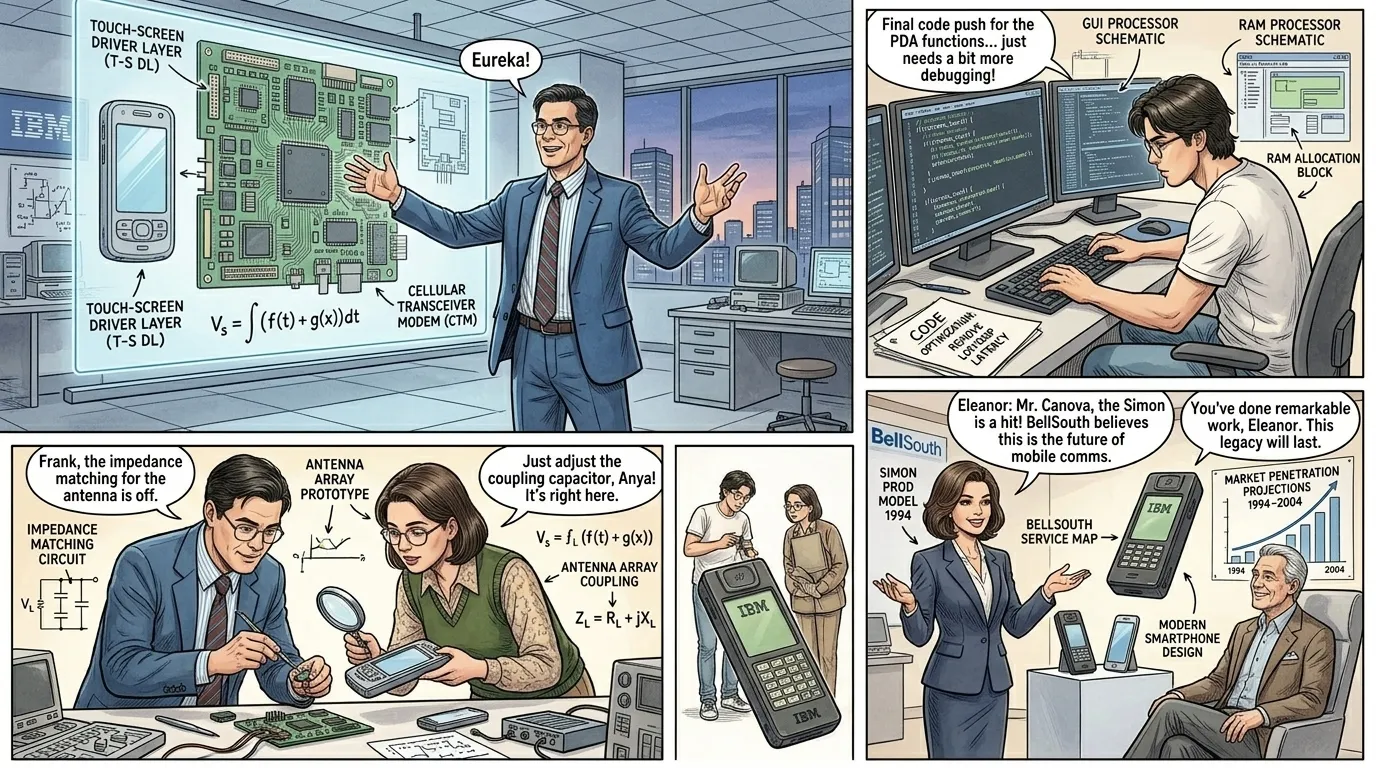
Though the IBM Simon only sold around 50,000 units before being discontinued in 1995, its impact was profound. It laid the foundational blueprint for every smartphone that followed. The concept of a single, touch-enabled device for integrated communication and computing, once a futuristic dream, became an attainable reality.
"Frank Canova, now older and distinguished, reflected in a retrospective interview. 'Simon demonstrated the art of the possible. It proved that the convergence was not only feasible but desirable. While technology has advanced light-years since, the core principle—integrating everything into a single, intuitive device—remains the fundamental design philosophy of every smartphone today.'"
Page 10
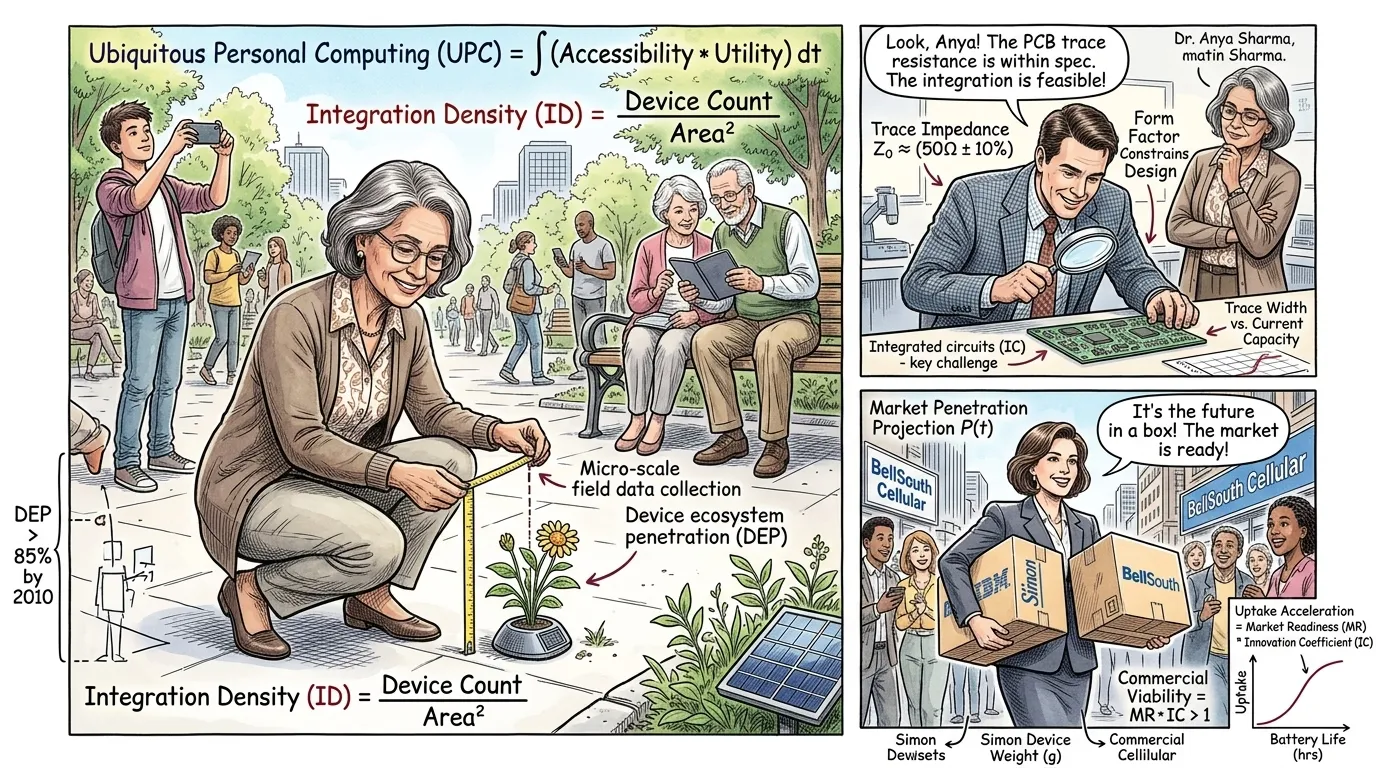
From the pioneering IBM Simon to the ubiquitous devices of today, the smartphone has utterly reshaped human interaction, commerce, education, and entertainment. It empowered individuals with unprecedented access to information and connectivity, transforming how we work, learn, and live. Its influence continues to expand, pushing the boundaries of what a handheld device can achieve.
"Dr. Anya Sharma, also older and looking at a group of diverse individuals using modern smartphones, smiled gently. 'From its humble beginnings, the smartphone has become an indispensable extension of ourselves. It's a testament to human ingenuity to overcome technological barriers and create tools that fundamentally enhance our world.'"
About this story
- Location: Global
- Audience: general readers
Read Wonder Inventions on your phone
Wonder Inventions is available on Android. Get Wonder Inventions on Google Play.