Skateboard
Skateboard — an illustrated inventions story, set in Global. 10 illustrated pages, free to read on Wonder Inventions.
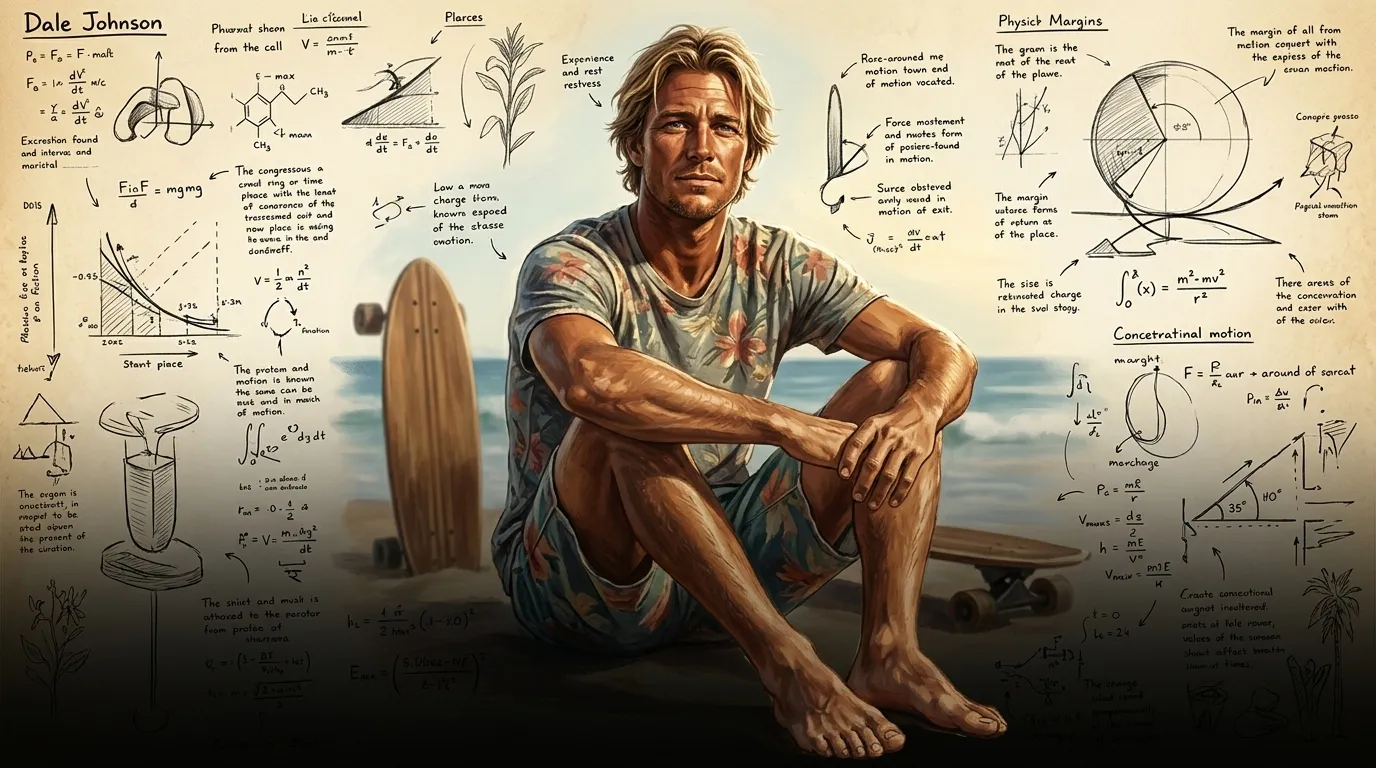
Page 1
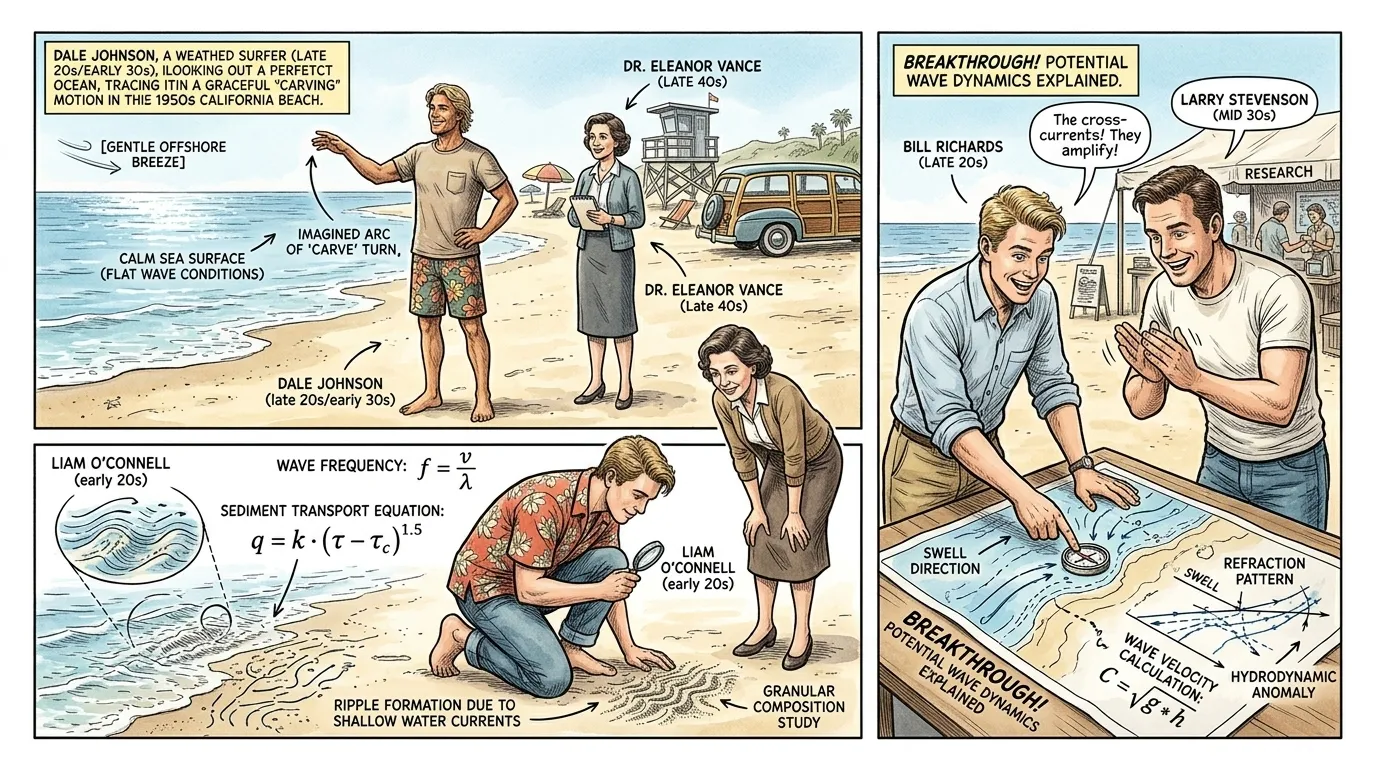
In the burgeoning post-war landscape of 1950s California, a unique cultural phenomenon was taking root. Surfers, ever reliant on the capricious rhythm of the ocean, faced a recurring challenge: the agonizing lull of flat waves.
"As one early enthusiast, a weathered surfer named Dale Johnson, reminisced, 'When the surf went flat, we felt a profound emptiness. We craved that sensation of gliding, of carving – a feeling that transcended the ocean itself.' This yearning for perpetual motion spurred an inventive spirit."
Page 2
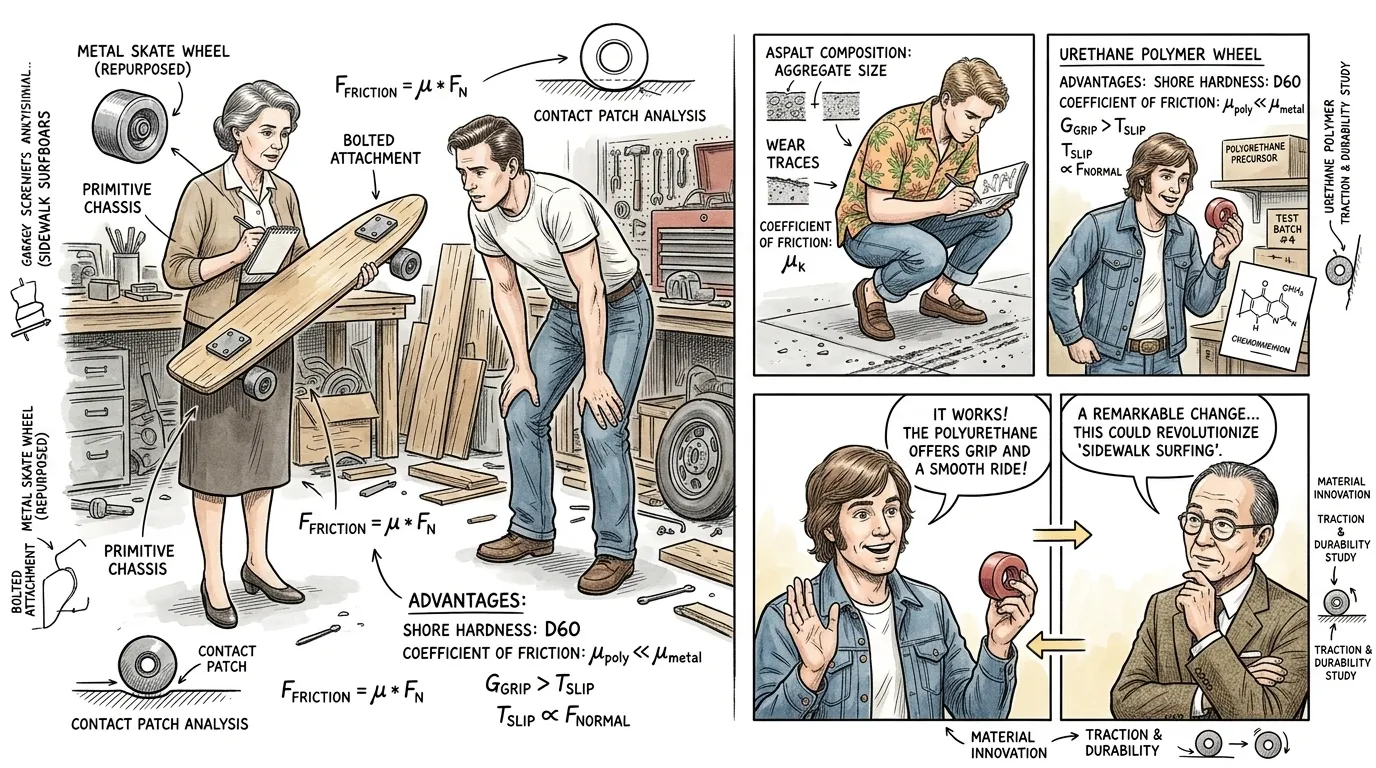
The initial solutions to this 'flat wave' dilemma were rudimentary, often cobbled together from readily available materials. Enthusiasts scavenged discarded roller skates, dismantling them to salvage the wheels and axles.
"Dr. Eleanor Vance, a historian of recreational engineering, explains, 'These pioneering 'sidewalk surfboards' were crude affairs, essentially a wooden plank—a 'deck'—with metal roller skate wheels bolted directly to its underside. The critical problem, however, lay in their lack of dynamic control.'"
Page 3
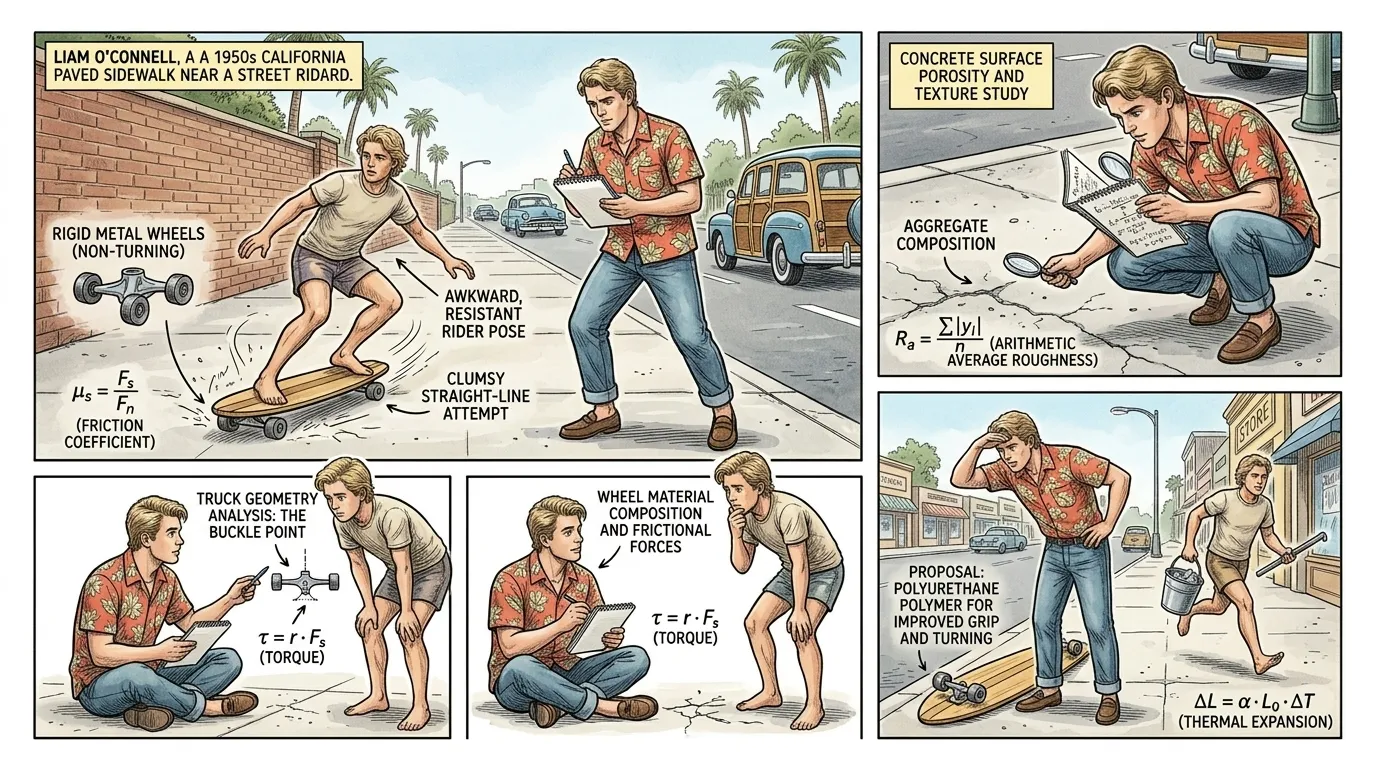
While these early devices offered a taste of 'sidewalk surfing,' they fundamentally failed to replicate the fluid motion of ocean surfing. The rigid attachment of roller skate axles meant the board could only roll straight or make wide, clumsy turns.
"As surf culture chronicler Liam O'Connell observed, 'The joy of surfing lies in the ability to 'carve'—to smoothly arc and change direction with subtle shifts in weight. These early boards, with their unyielding mechanics, denied riders that essential experience, limiting them to little more than clumsy直线.'"
Page 4
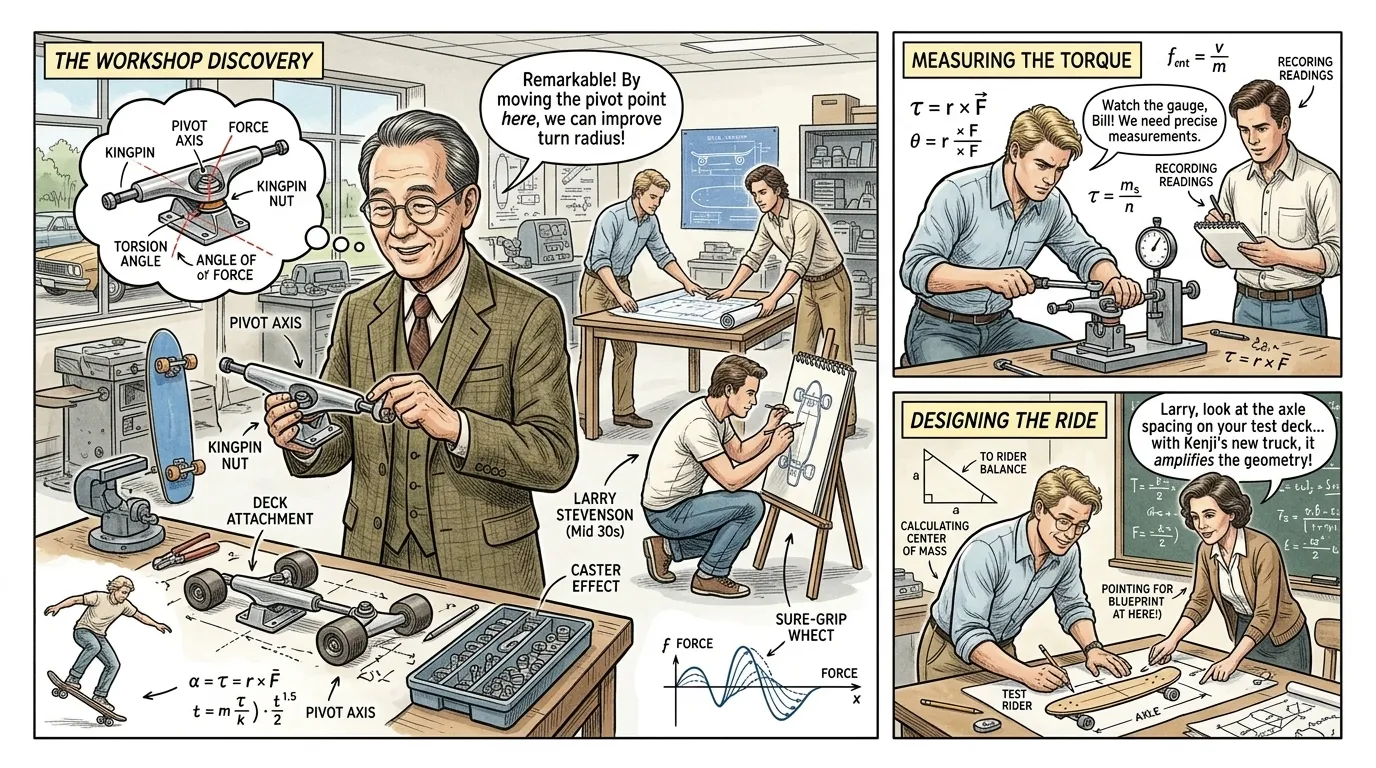
The critical breakthrough came with the adaptation and refinement of the 'truck' system, a component that enabled true articulation and responsive turning. This marked the departure from repurposed roller skate parts to purpose-built skateboard hardware.
"Historical records credit innovators like Bill and Mark Richards of the Roller Derby Skateboard Company and later Larry Stevenson of Makaha with significant early developments in truck design. As engineering historian Dr. Kenji Tanaka posits, 'This shift was monumental. Instead of just rolling, the board could now dynamically pivot in response to rider input, directly addressing the limitations of fixed axles.'"
Page 5
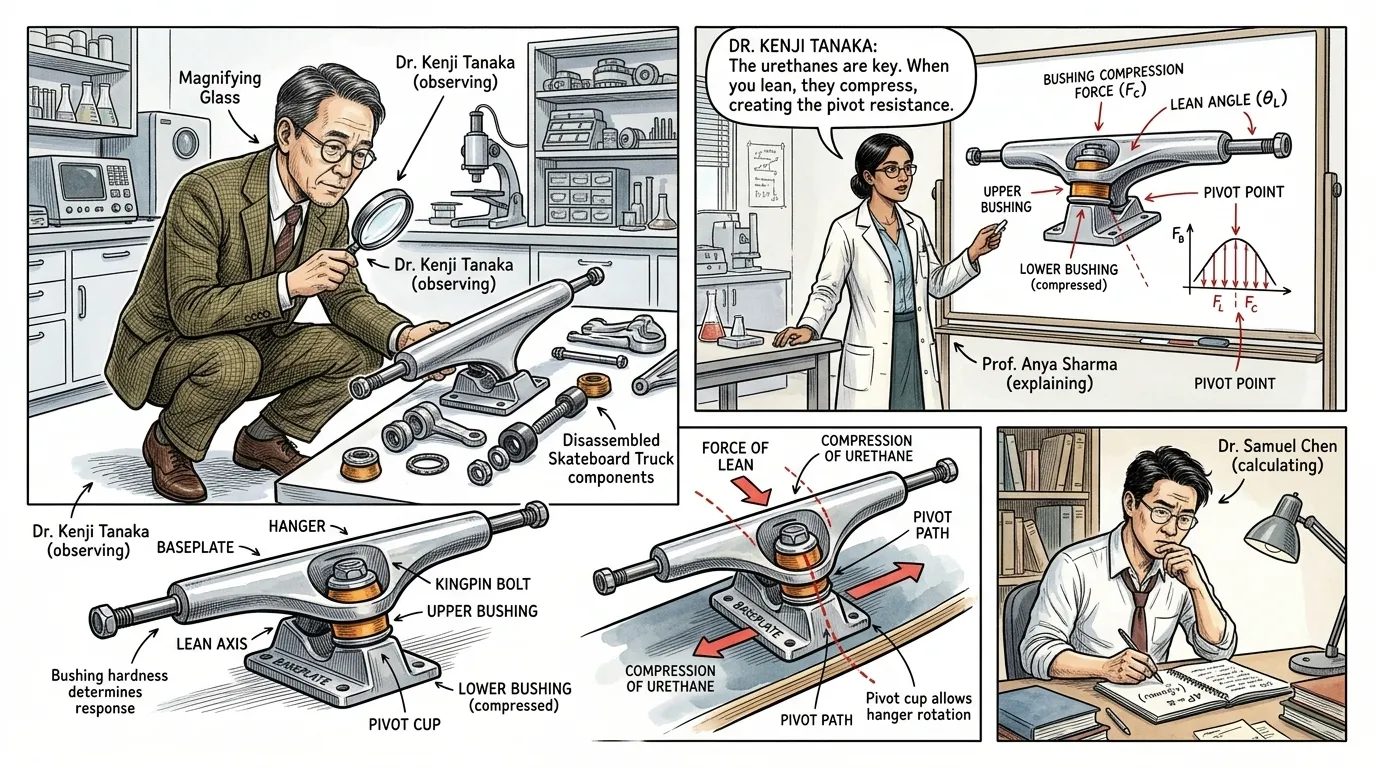
The skateboard truck, the ingenious pivot point of the entire system, comprises several key elements: a baseplate, a 'hanger' (the axle carrier), a 'kingpin' bolt, and crucial rubber or urethane 'bushings.' These bushings are the secret to its dynamic movement.
"When a rider leans, pressure is exerted on these compressible bushings, allowing the hanger to tilt. Dr. Tanaka further clarifies, 'This compression and expansion of the bushings creates a controlled pivot around the kingpin, effectively transforming a subtle lean into a precise turn. It's an elegant solution to the challenge of responsive steering.'"
Page 6
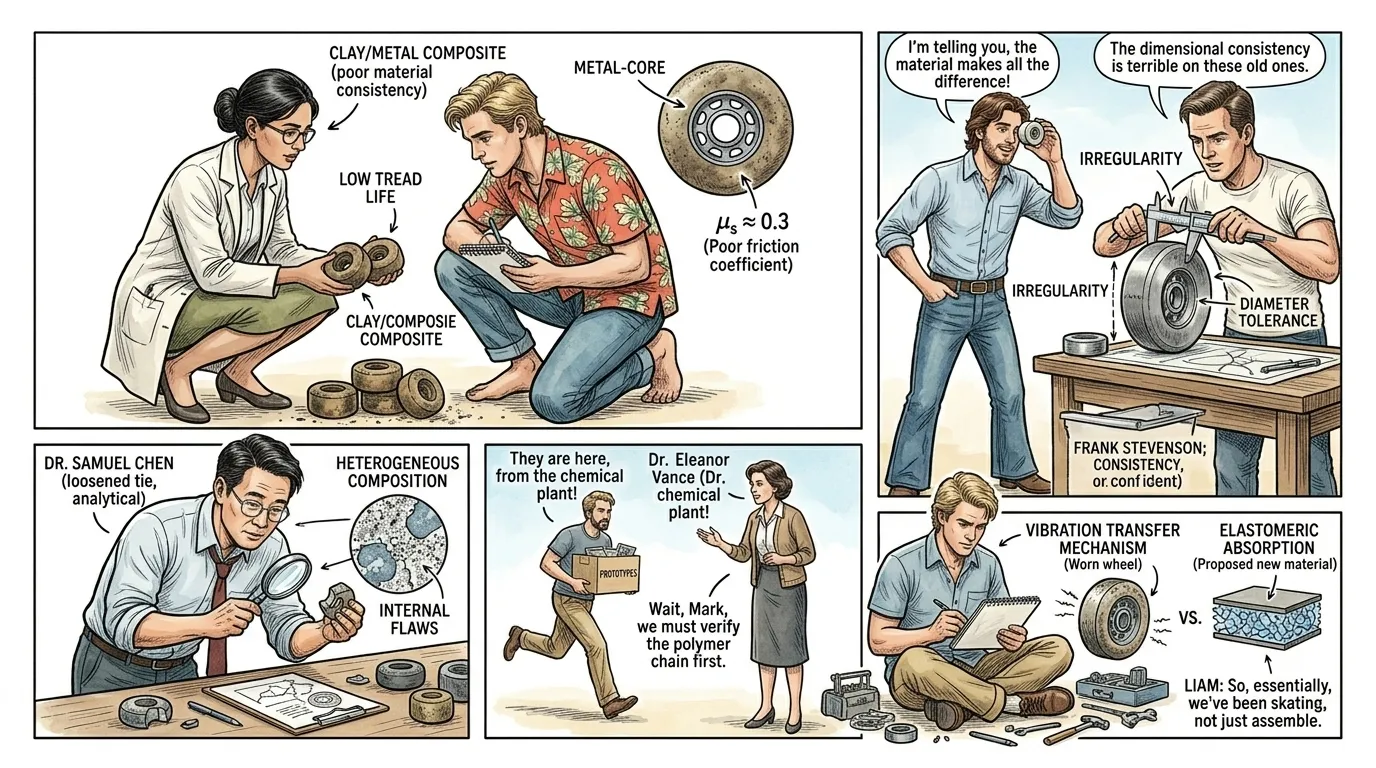
With articulated trucks solving the turning problem, attention shifted to the wheels, which were still a major performance bottleneck. Early clay composite or metal wheels offered little grip, a jarring ride, and wore down quickly on rough asphalt.
"A materials engineer, Professor Anya Sharma, explains, 'The limitations were clear: early wheels had poor friction coefficients, meaning they slid rather than gripped, especially on wet or uneven surfaces. They also transferred every vibration directly to the rider, making for an uncomfortable and often dangerous experience.'"
Page 7
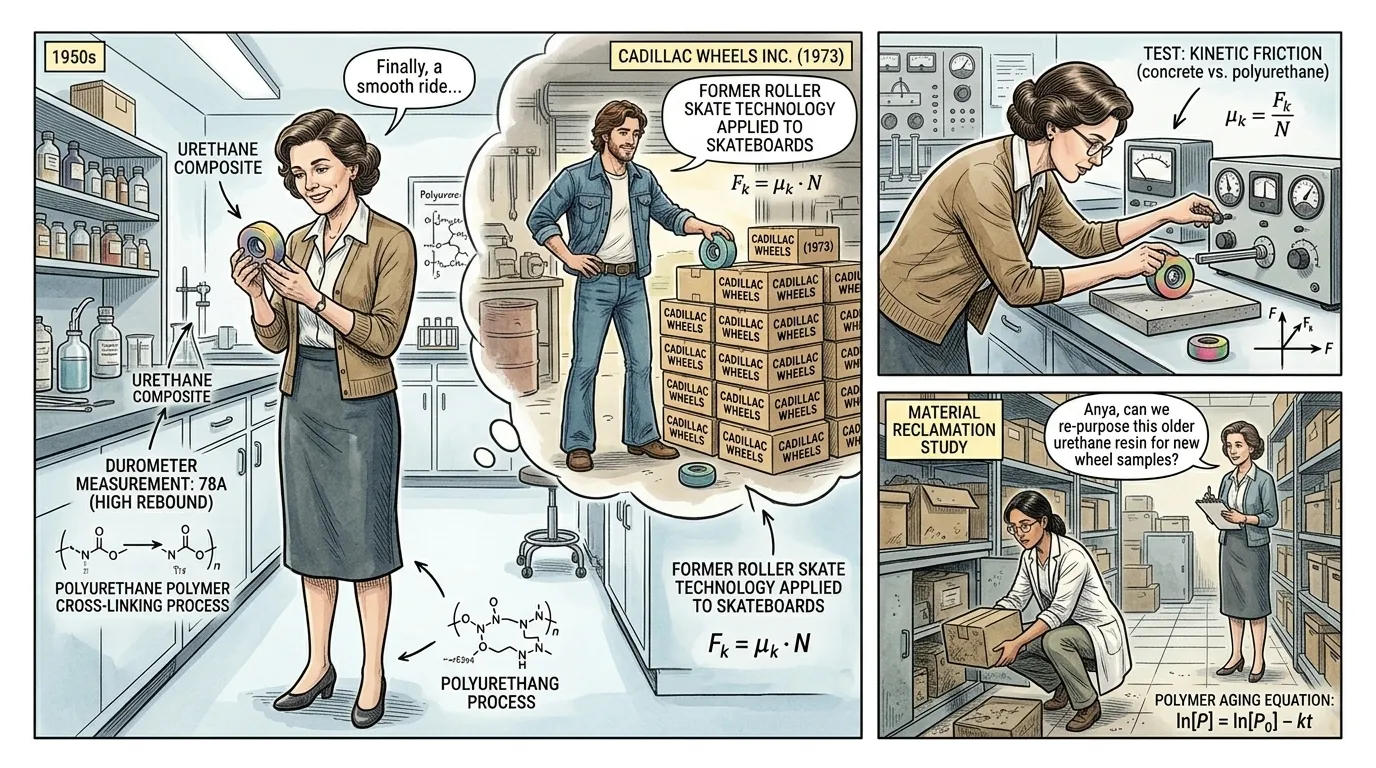
The true revolution in wheel technology arrived in the early 1970s, largely thanks to Frank Nasworthy. Witnessing the superior performance of urethane in roller skate wheels, he recognized its untapped potential for skateboards.
"Nasworthy, through his company Cadillac Wheels, began producing the first urethane skateboard wheels. 'As Frank Nasworthy, founder of Cadillac Wheels, might have observed,' offers Dr. Vance, 'Sometimes, the simplest material innovation can redefine an entire activity. Urethane was that catalyst, offering grip, speed, and durability previously unimaginable.'"
Page 8
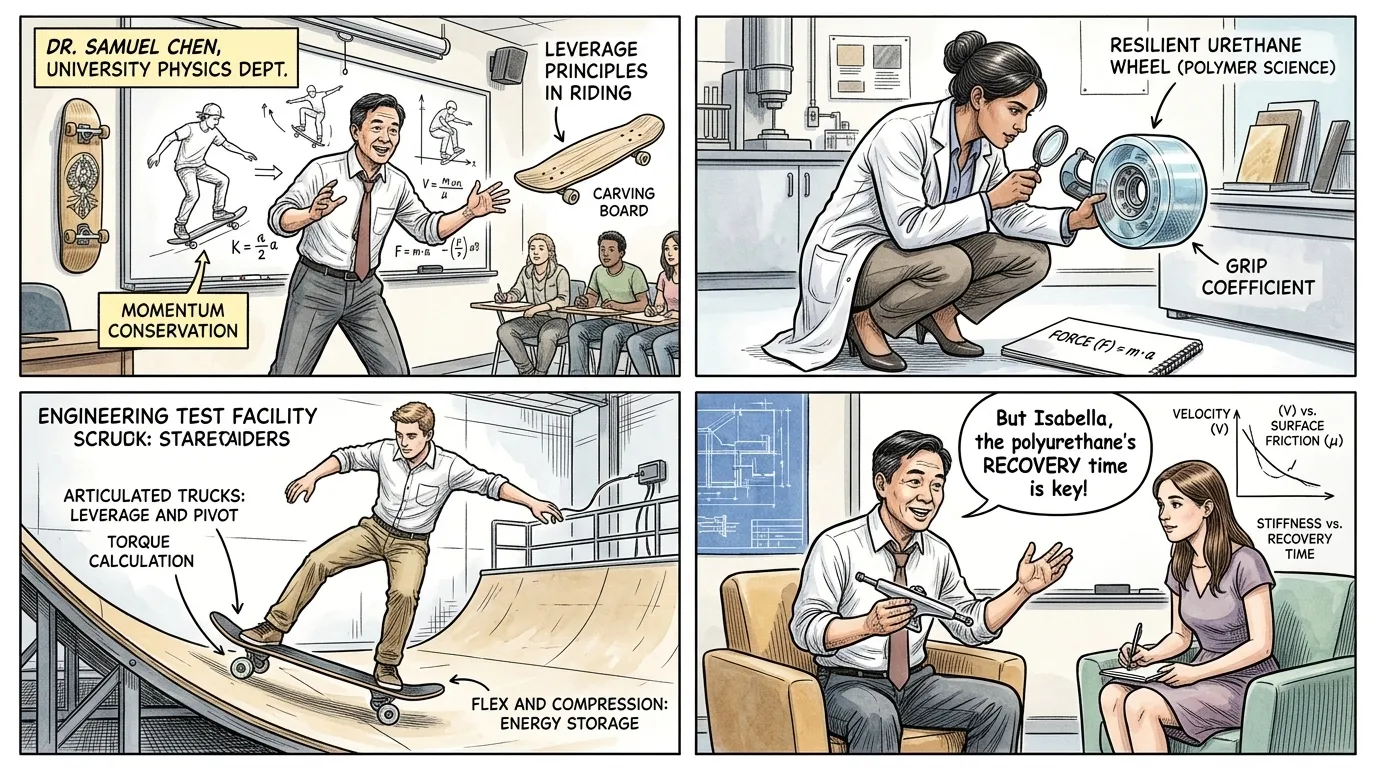
By combining the resilient deck, the articulated trucks, and the grippy, durable urethane wheels, the modern skateboard emerged as a complete, synergistic system. Each component played a vital role, enabling unparalleled speed, control, and smooth movement.
"As physics educator Dr. Samuel Chen explains, 'The true genius, as the philosopher Aristotle once noted, lies in 'the whole being greater than the sum of its parts.' This perfectly encapsulates the skateboard; the harmonious interplay between material science, leverage, and momentum allows riders to defy gravity and traverse urban landscapes with an almost liquid grace.'"
Page 9

From its humble beginnings on Californian sidewalks, the skateboard rapidly evolved into a global phenomenon, transcending its origins as a mere surfing substitute. It became a powerful symbol of youth culture, rebellion, and artistic expression.
"Cultural anthropologist Dr. Isabella Rossi reflects, 'The skateboard's evolution, as many cultural historians might suggest, is 'a testament to human ingenuity's ability to transform leisure into legitimate pursuit.' It democratized movement, offering a new form of personal expression and challenging conventional notions of urban space.'"
Page 10
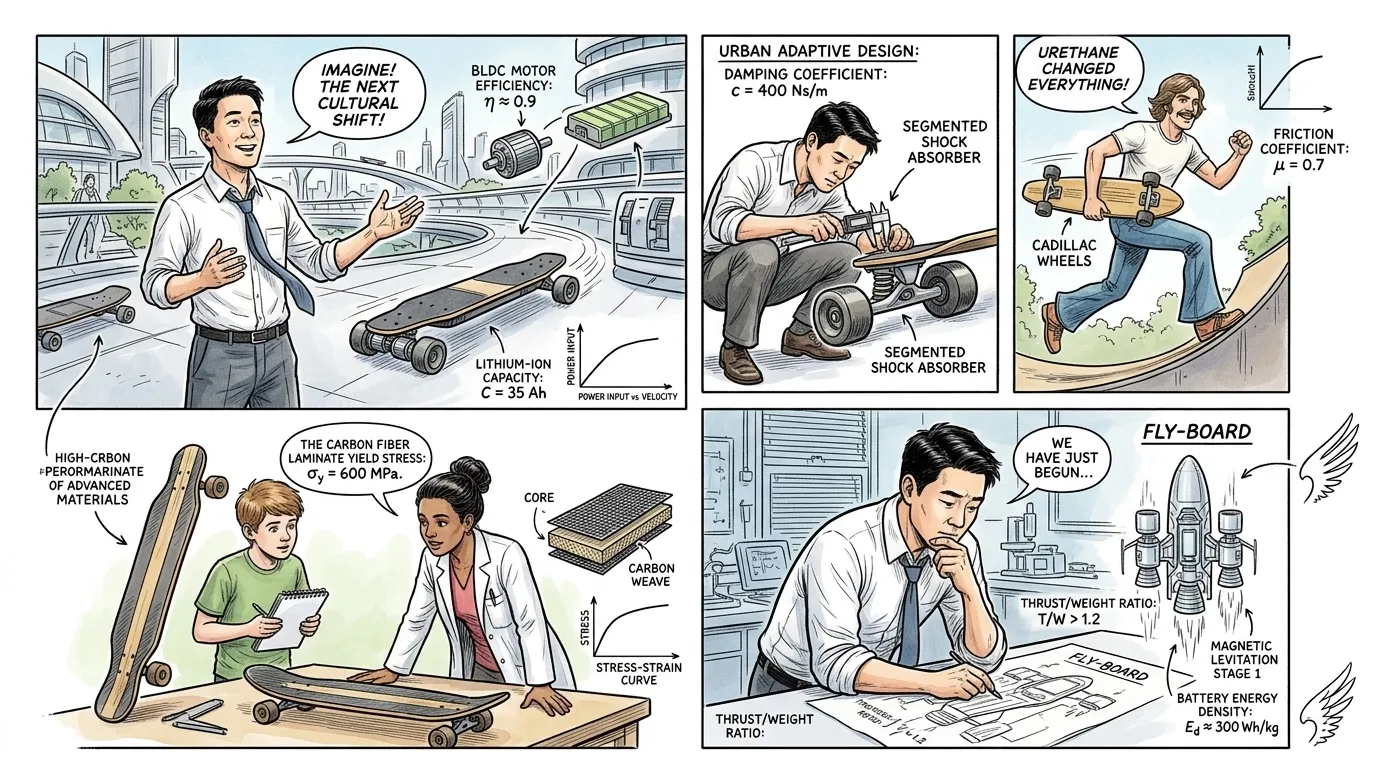
Today, the skateboard stands as more than just a recreational device; it is a versatile tool for transportation, a competitive sport, and a canvas for self-expression. Its core design, perfected through decades of innovation, remains fundamentally unchanged yet continuously refined.
"Reflecting on its enduring adaptability, transportation futurist Dr. David Kim remarks, 'Indeed, as Albert Einstein famously remarked, 'Imagination is more important than knowledge.' The skateboard, in its continuous evolution—from electric models to adaptive designs—embodies that spirit, proving that simple mechanisms can inspire profound cultural shifts and redefine personal mobility.'"
About this story
- Location: Global
- Audience: general readers
Read Wonder Inventions on your phone
Wonder Inventions is available on Android. Get Wonder Inventions on Google Play.