A Hero of Our Time
A restless young officer, the people he uses up along the way, and the Caucasus mountains that outlast all of them
Page 1
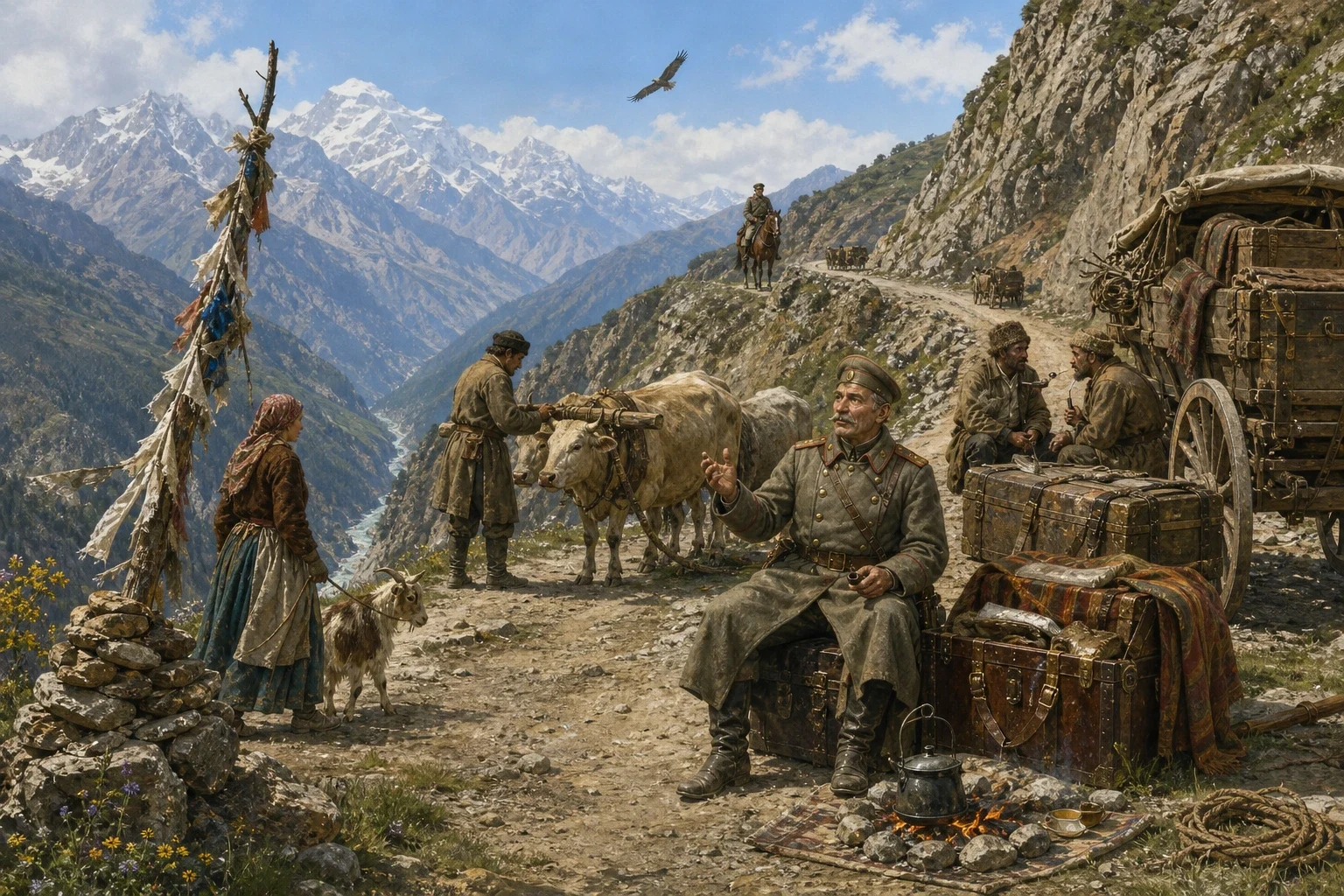
High in the Caucasus mountains, the Georgian Military Road climbs and falls through gorge after gorge on its way from Russia down into Georgia. I was traveling that road by post-cart, in no great hurry, when my carriage and another stopped together to rest the oxen at the foot of the Koishaur mountain. The other traveler was an old army captain, sunburned and grey-mustached, with the easy unhurried manner of a man who has spent his whole life in the Caucasus. We shared tobacco and the long wait, and got to talking, the way travelers do. He told me his name was Maxim Maximych, that he had served many years at a lonely fort beyond the river Terek, and that there, some years before, he had known an officer the like of whom, he said, I would not meet twice in a lifetime. I asked him to tell me about him, and he was glad to, for the road ahead was long and the oxen were slow.
Page 2
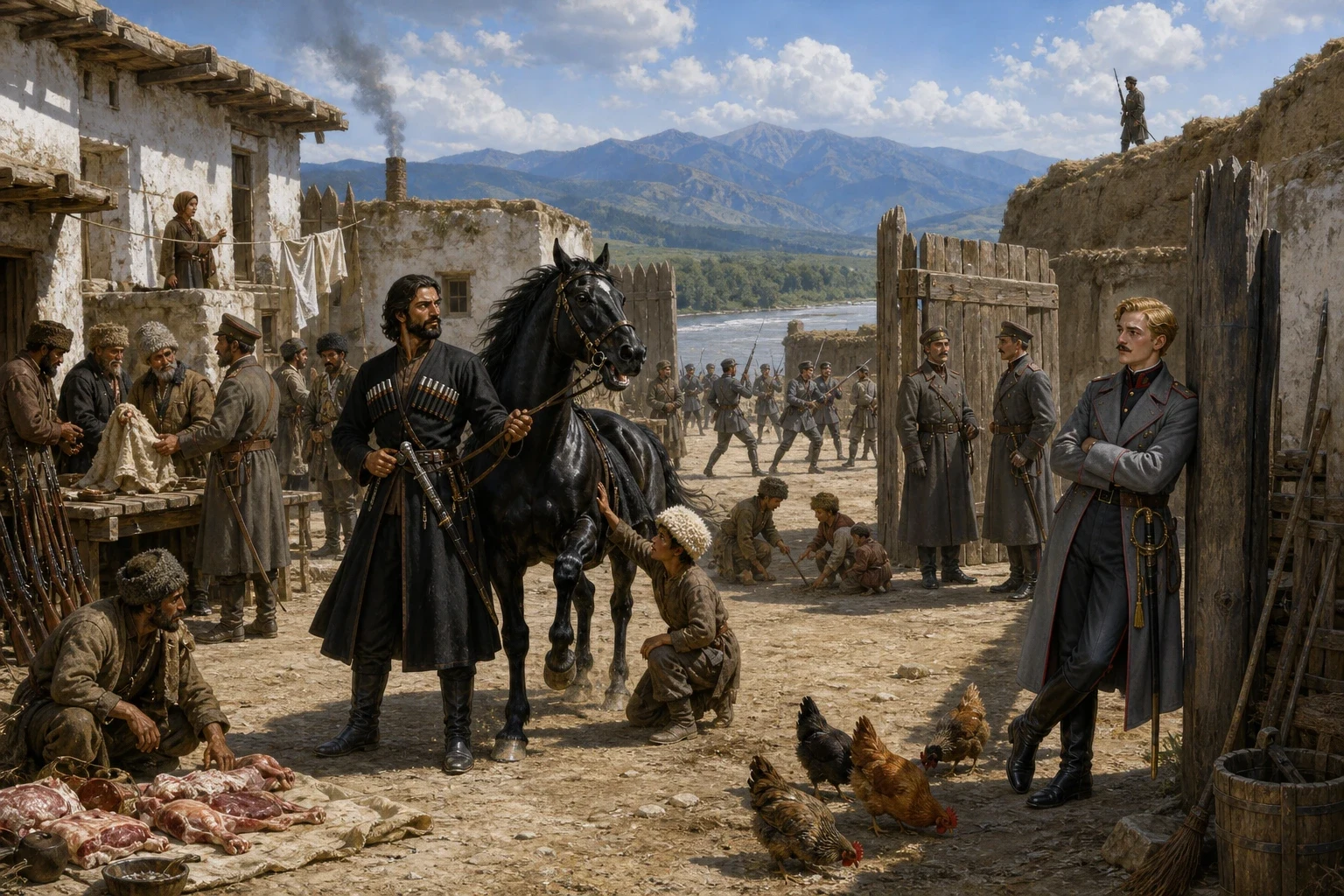
The fort stood on a bare rise above the river Terek, a scatter of low earth-walled buildings behind a stockade, with the blue Caucasus mountains rising beyond the Chechen lands across the water. Maxim Maximych had served there many years when a young officer named Grigory Pechorin arrived to take up his post — clever, restless, quick to take an interest in anything and just as quick to grow tired of it. Among the local tribesmen who came and went at the fort was a wild, dangerous horseman called Kazbich, who sometimes brought mutton to trade, and who owned the finest horse for a hundred miles, a swift black horse named Karagoz that he loved better than anything alive. The local prince's reckless young son, Azamat, could talk of nothing but that horse, and Pechorin, watching him, began quietly turning an idea over in his mind.
Page 3
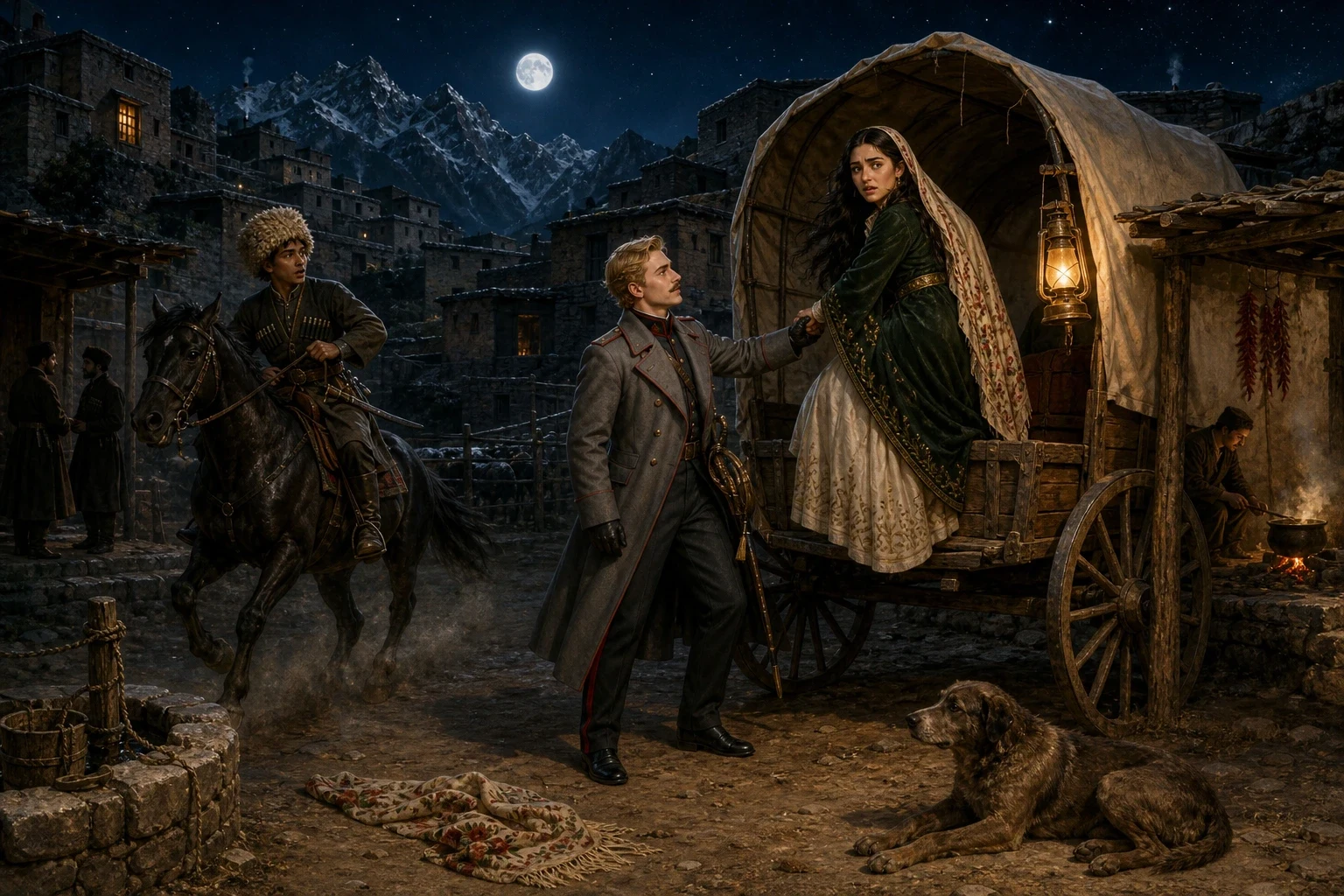
One night Pechorin rode out to the aul where the prince lived, and found Azamat waiting for him in the dark, as restless and unhappy as ever over that horse. Pechorin made his offer plainly: bring me your sister Bela, and I will see that you get Karagoz. Azamat argued and refused and gave in, all in the space of an hour, the way reckless young men do. Before the night was over he had gone to Kazbich's camp, cut the black horse loose while its owner slept, and galloped it straight to where Pechorin was waiting with his own cart, Bela wrapped in a cloak beside him, frightened and weeping and asking her brother why he had done it. There was no answer he could give her that made any sense, and by morning the horse was gone to the fort and so was she, and Kazbich, waking to find Karagoz missing, understood in one terrible moment exactly who had taken it, and why.
Page 4
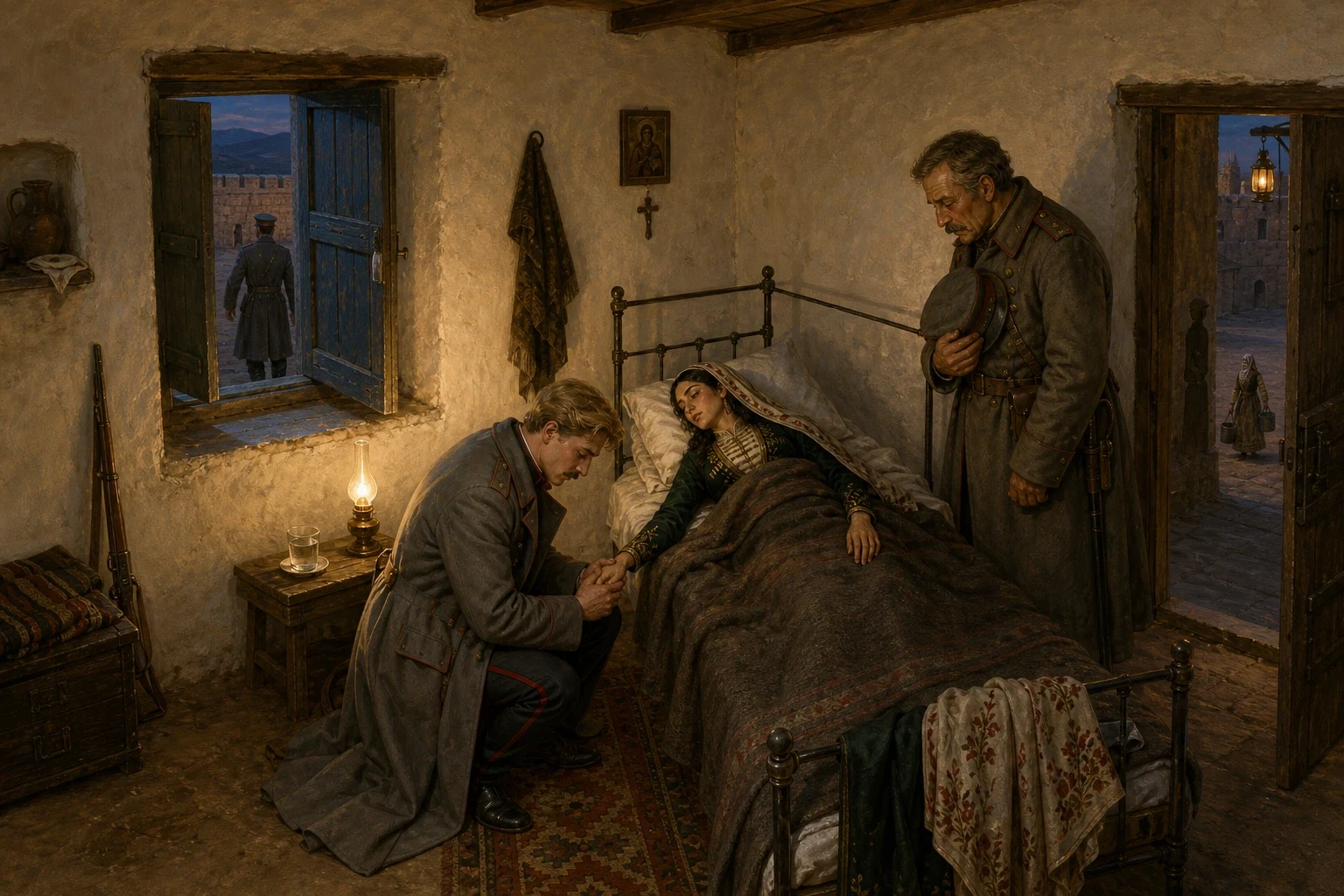
At the fort, Bela came in time to care for Pechorin the way captive women in those stories are made to, and for a while it seemed he might really love her. But his restlessness always returned, as Maxim Maximych had seen it return in everything else, and Bela understood long before anyone told her that she had already lost him. Kazbich never forgot whose doing it was that his horse and his sweetheart's honor had been stolen from him in one night, and one day, with the men away hunting, he came back for her. He caught her up and rode hard for the hills, and when the chase closed in and he saw he could not keep her, he turned and stabbed her before letting her fall, and rode on alone. They carried her back to the fort still breathing. She lived two more days, speaking mostly of Pechorin, forgiving him without being asked to, and died quietly with him kneeling at one side of the bed and Maxim Maximych at the other, neither of them able to say anything that helped.
Page 5
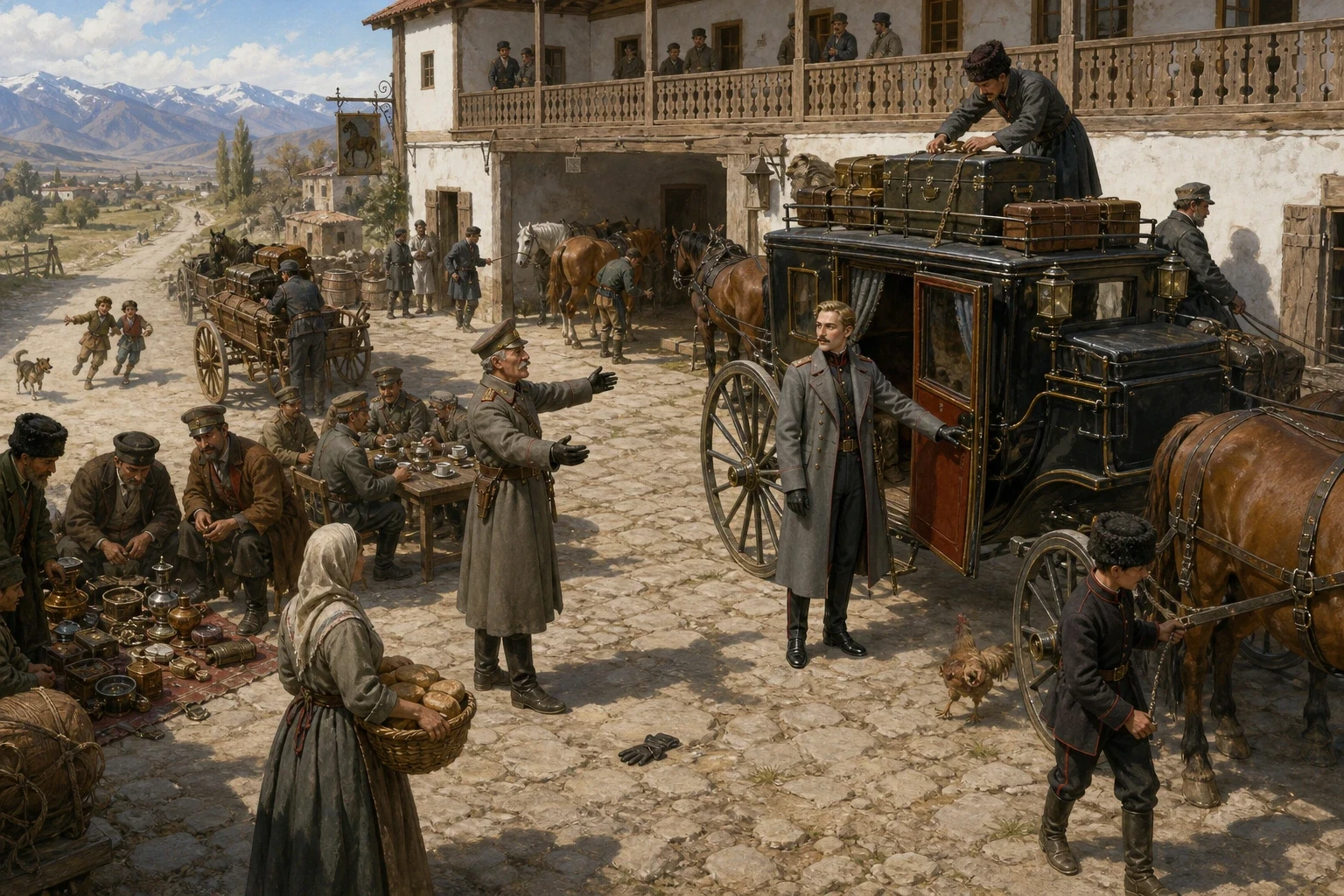
Years passed. Maxim Maximych finished his story there, on the mountain road, and not long after, as it happened, we came to an inn at Vladikavkaz and found ourselves waiting there a day for horses — and so, by one of those chances travel is made of, did Pechorin himself, now out of the army and on his way to Persia. Maxim Maximych was overjoyed. He hurried out into the courtyard calling his name, ready to embrace an old friend he had not seen in years and had never stopped being fond of. Pechorin shook his hand politely, said a few cool words, admitted he was in a hurry, and showed no particular wish to sit and talk over old times at the fort, or Bela, or anything else. He got into his carriage and was gone within the hour. Maxim Maximych stood in the yard a long while afterward, saying nothing, and it was only then, almost as an afterthought, that he remembered he still had Pechorin's old journal, and gave it to me instead.
Page 6
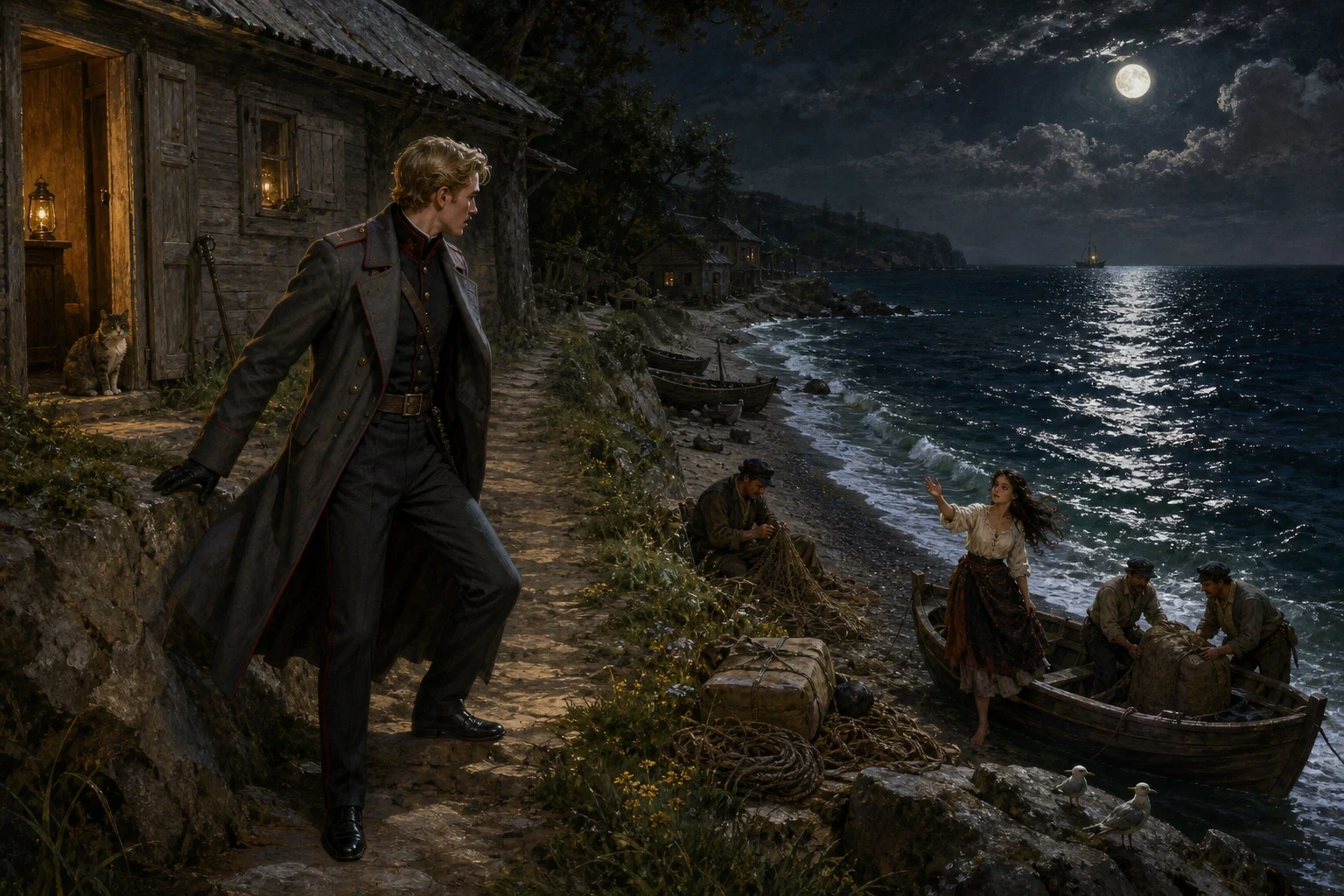
Pechorin's own journal picked up the story from there, beginning with a night in the small seaside town of Taman, where he had taken a room in a run-down cottage above the beach while waiting for a change of horses. The cottage, it turned out, belonged to smugglers — a blind boy who seemed to see everything anyway, an old woman, and a wild, barefoot girl who came and went at night and sang strange songs to herself on the roof. Pechorin, always curious about anything secret, followed her down to the shore one night and watched her row out in a little boat to meet a smuggler named Yanko, who came in from the sea with bundles of contraband goods. The girl noticed she was being watched. The next night she invited Pechorin out onto the water with her, and it was there, far from the shore in the dark, that she suddenly turned on him and tried to tip him overboard into the sea.
Page 7
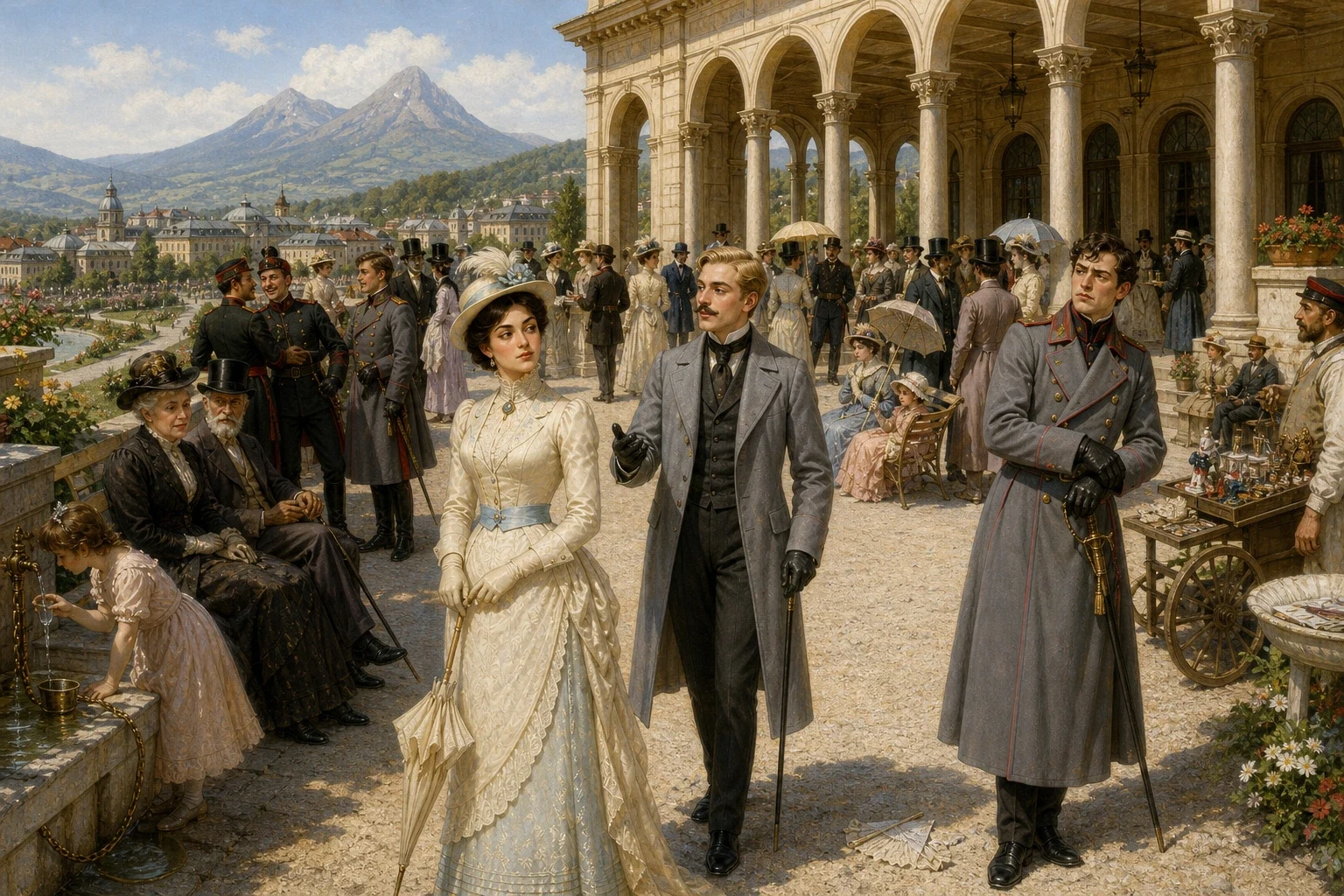
Some time later Pechorin arrived at Pyatigorsk, a fashionable spa town in the mountains where the wealthy came to drink the mineral waters and gossip about each other. He soon ran into an old acquaintance, a young cadet named Grushnitsky, who wore a soldier's plain grey coat on purpose because he thought it made him look interestingly wounded and romantic, and who was already hopelessly in love with a visiting young noblewoman, Princess Mary Ligovskaya. Pechorin found Grushnitsky faintly ridiculous and decided, mostly to amuse himself and partly to spite him, that he would make Princess Mary fall in love with himself instead. He set about it carefully and well, saying rude things about her within earshot one day and rescuing her from an awkward moment the next, until she scarcely knew what she thought of him, only that she thought of him constantly. Grushnitsky watched all this happen and grew first puzzled, then jealous, then bitter.
Page 8
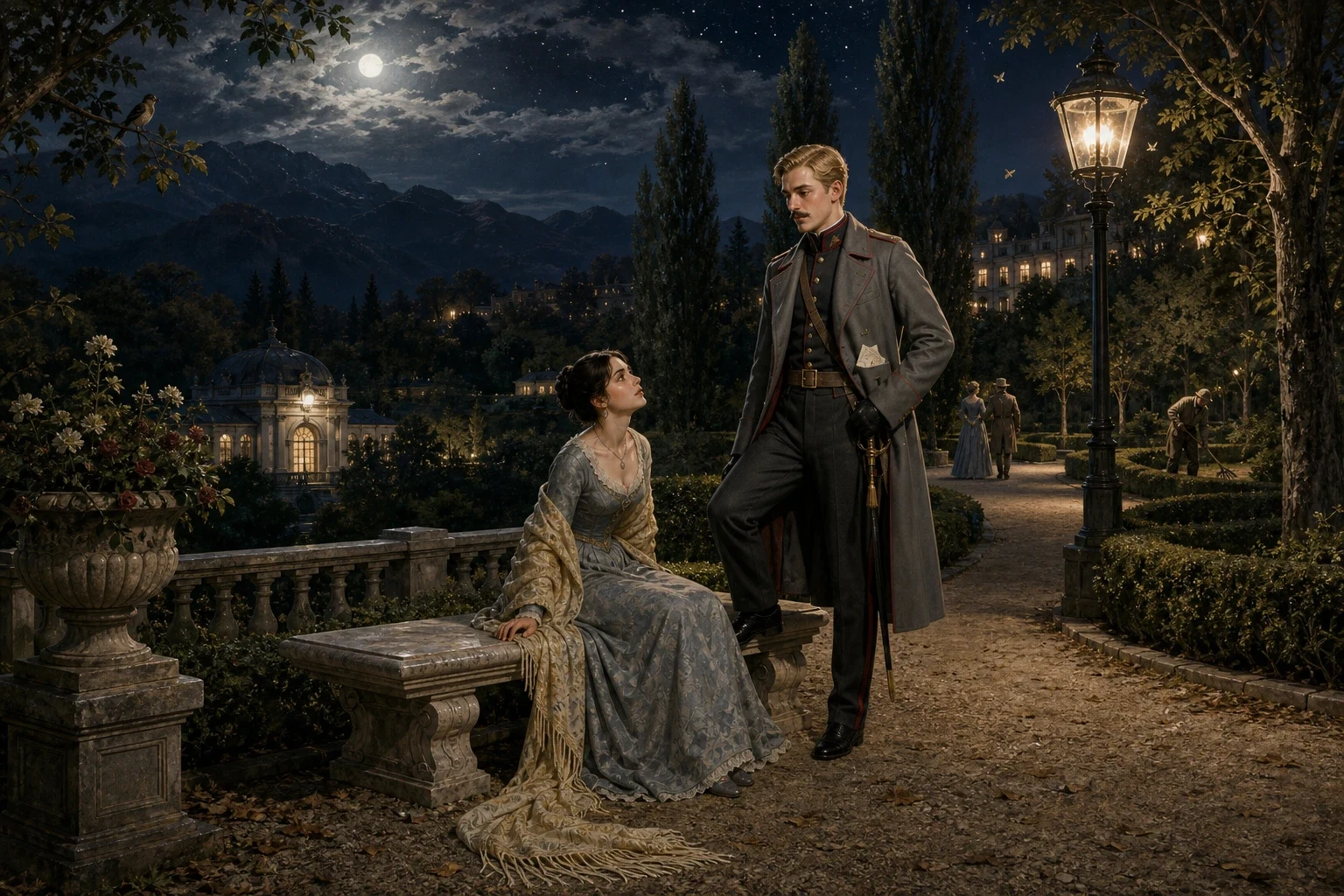
At Kislovodsk, in the garden below the Narzan spring, Pechorin met secretly at night with Vera, a married woman he had loved years before and had never really stopped loving, though he had told himself otherwise. She was the only person in the story he was ever honest with, and the only one who seemed to understand him completely and love him anyway, faults and cruelty and all. While they spoke quietly among the trees, their meeting was already becoming the business of the whole town: Grushnitsky and his friends had convinced themselves, wrongly, that Pechorin's attentions to Princess Mary had ruined her reputation, and a note arrived that same night challenging him to a duel over it, to be fought at dawn. Pechorin folded it away without much visible concern and went on talking to Vera as though nothing in the world could touch him, though he knew perfectly well, walking home afterward, exactly how serious the next morning might be.
Page 9
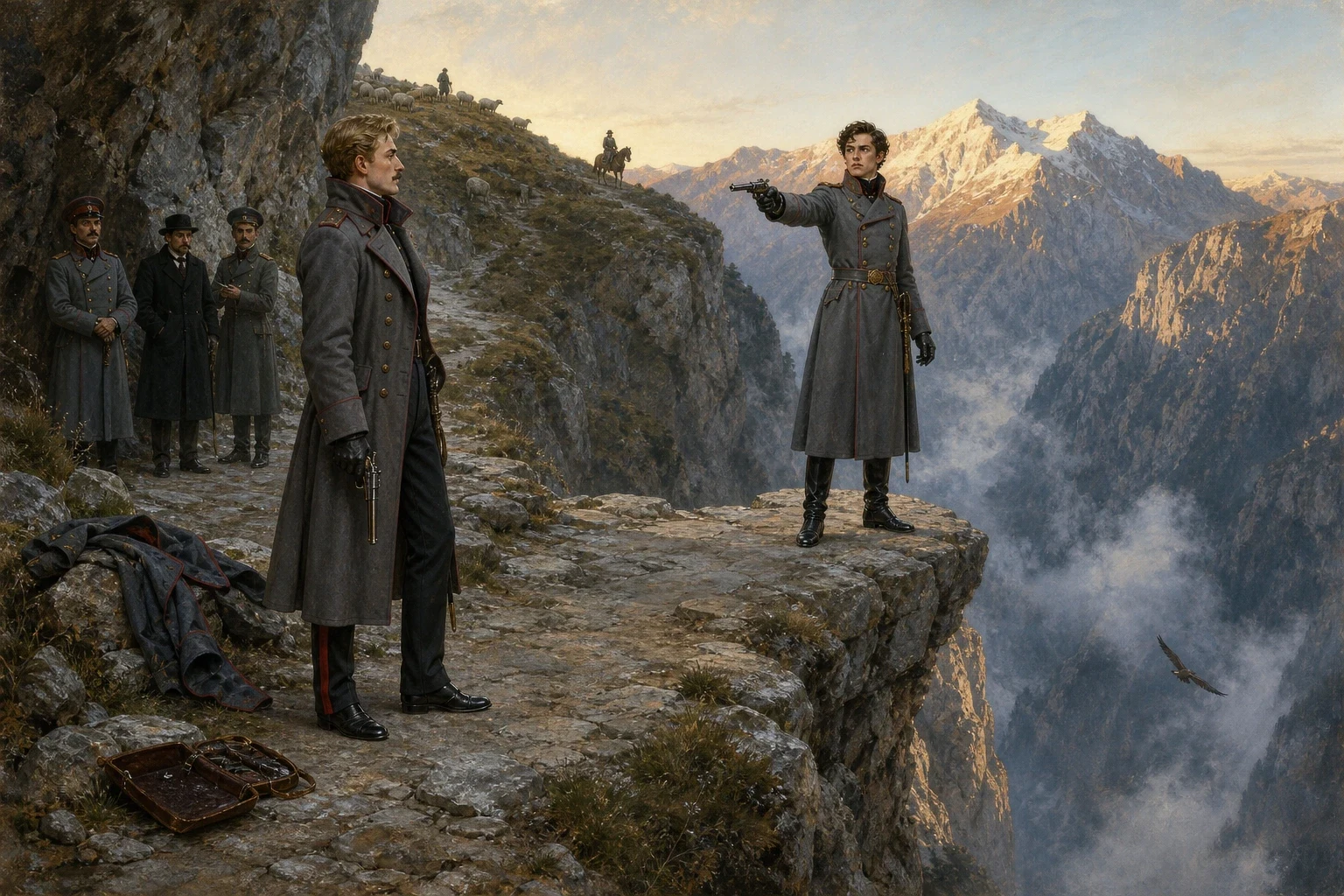
At dawn, Pechorin and Grushnitsky and their seconds climbed to a narrow ledge on a cliff above a deep gorge outside Kislovodsk, a place chosen, grimly, so that whichever man was wounded would fall and the matter would look like an accident. Pechorin offered Grushnitsky every chance to call the whole thing off and admit he had been wrong about Princess Mary's honor, since nothing dishonorable had actually happened between them. Grushnitsky, ashamed and cornered by his own friends' urging, refused. They stood at the edge, drew lots for who fired first, and Grushnitsky's bullet only grazed Pechorin's knee. Then it was Pechorin's turn. He asked once more, quietly, whether Grushnitsky wished to take back his accusation. Grushnitsky, white and furious and past turning back now, said no. Pechorin fired. Grushnitsky fell from the ledge into the gorge below, and it was over in a moment, exactly as the place had been chosen to make it look.
Page 10
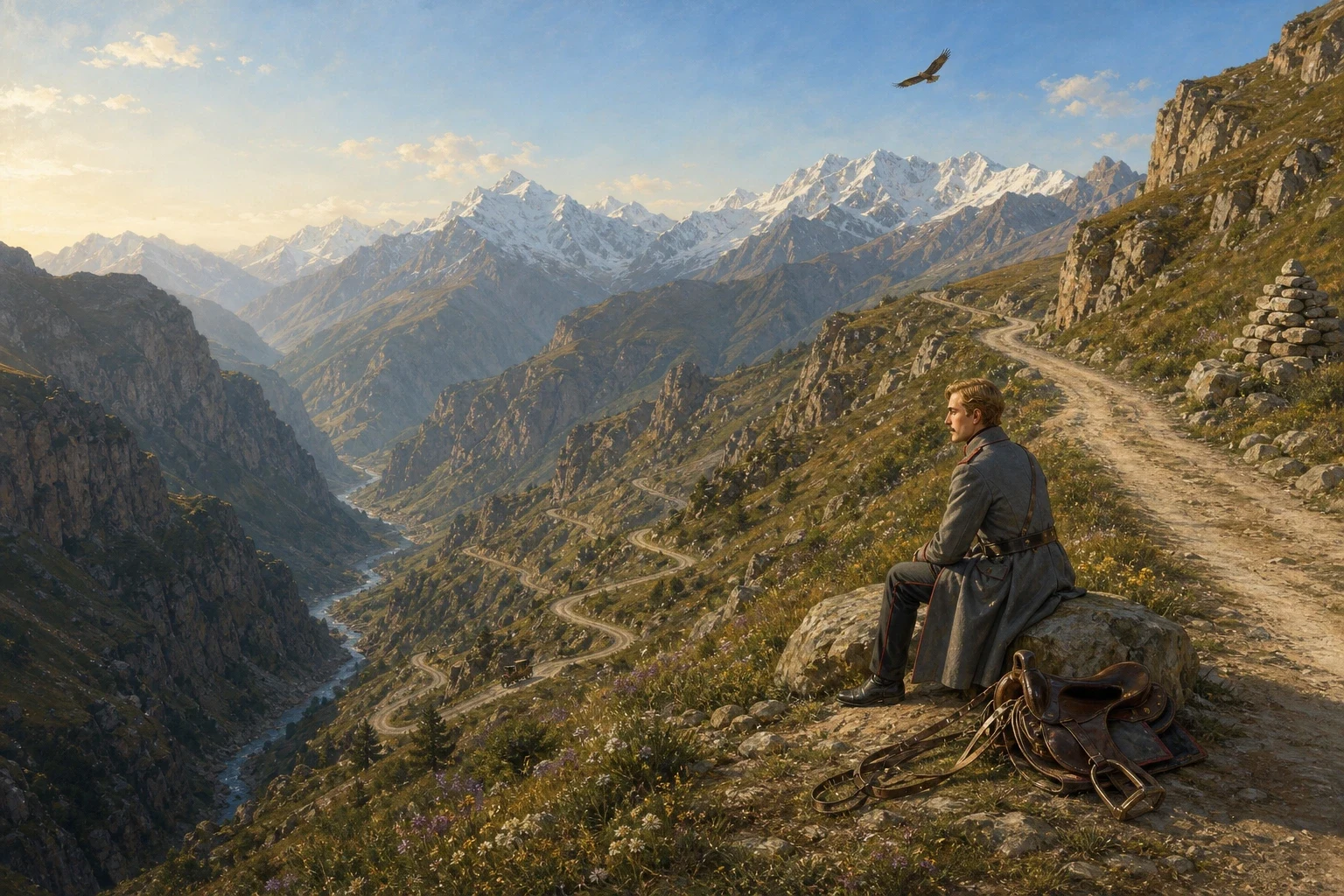
After the duel, Pechorin learned that Vera's husband had somehow discovered their secret meetings, and that she had already left, in a hurry, without waiting to say a proper goodbye. He rode after her carriage so hard that he ran his horse to death on the road and still did not catch her, and when the horse finally dropped under him he simply sat down in the grass and wept, the only time in the whole story he does, before getting up, dusting himself off, and going on exactly as before. He finished his posting, left the Caucasus, and the narrator who had first heard of him from Maxim Maximych on that mountain road eventually learned, from a traveler coming the other way, that Pechorin had died on his way home from Persia, alone, as restless at the end as he had been at the beginning, a clever and unhappy man who left no one, in the end, any better for having known him.
About this story
- Audience: general readers
Read Wonder Novels on your phone
Wonder Novels is available on Android. Get Wonder Novels on Google Play.