A Little Princess
Sara Crewe's Story: From Seminary Heiress to Attic Maid, and Back Again 10 illustrated pages, narrated, on the kids shelf, free to read on Wonder Novels.

Page 1

Many years ago, a polished carriage with gleaming horses pulled up to the grand front door of Miss Minchin’s Seminary for Young Ladies in a busy London street. Out stepped a small girl named Sara Crewe, holding her father’s strong, kind hand. Captain Crewe was an immensely rich man from India, a diamond mine owner, and he wanted his beloved daughter to have the very best education and every comfort while he was away. Sara was a quiet child, but she possessed a remarkable way of observing the world, finding interest and stories in everything around her. Miss Minchin, the headmistress, was a tall, severe woman with sharp eyes who cared deeply about money and outward appearances. She greeted Captain Crewe with a stiff, practiced smile, already calculating the impressive fees his wealth would bring to her establishment. Sara looked up at the tall, imposing red-brick building, a new and uncertain chapter of her young life about to begin within its strict walls.
Page 2
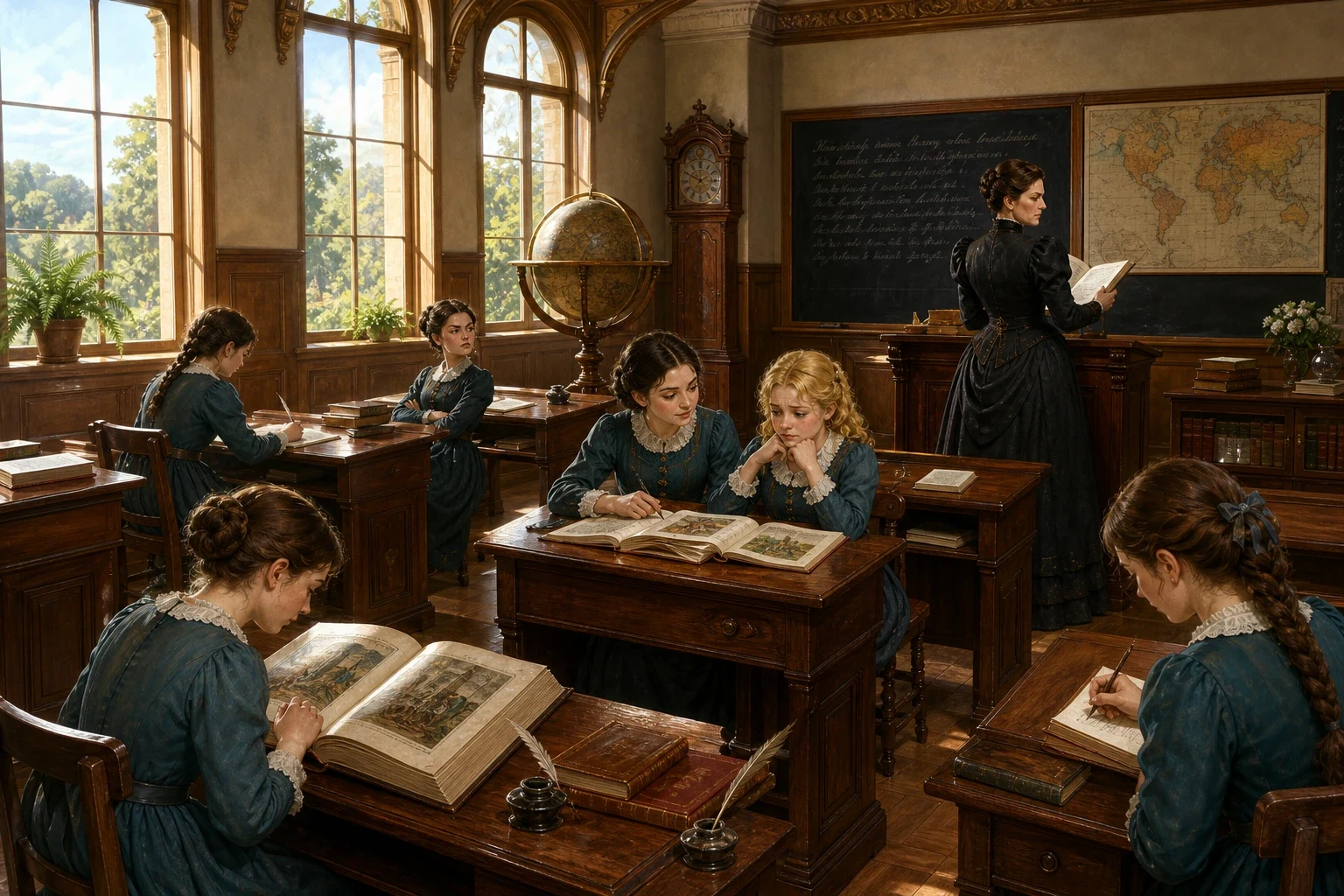
Sara quickly proved to be the brightest student at the seminary, shining in her lessons with an eager mind. She was not only clever but also remarkably kind, charming both the younger children with her imaginative stories and the older girls with her quick wit and thoughtful insights. Even Ermengarde, a shy, plump girl who struggled with her studies, found a true and supportive friend in Sara, often seeking her gentle guidance. Miss Minchin, however, grew increasingly watchful, her expression becoming colder and more calculating. She deeply disliked that Sara was so naturally popular and that Captain Crewe’s immense wealth meant Sara was treated with special privilege. Lavinia, a jealous and sharp-tongued girl, often whispered unkind things about Sara, spreading rumors and disdain, but Sara, with her innate dignity, paid them little mind. She found deep joy in her beloved books and in helping her friends, always imagining wonderful stories even during the quietest study time, making the dull school hours pass by more brightly.
Page 3
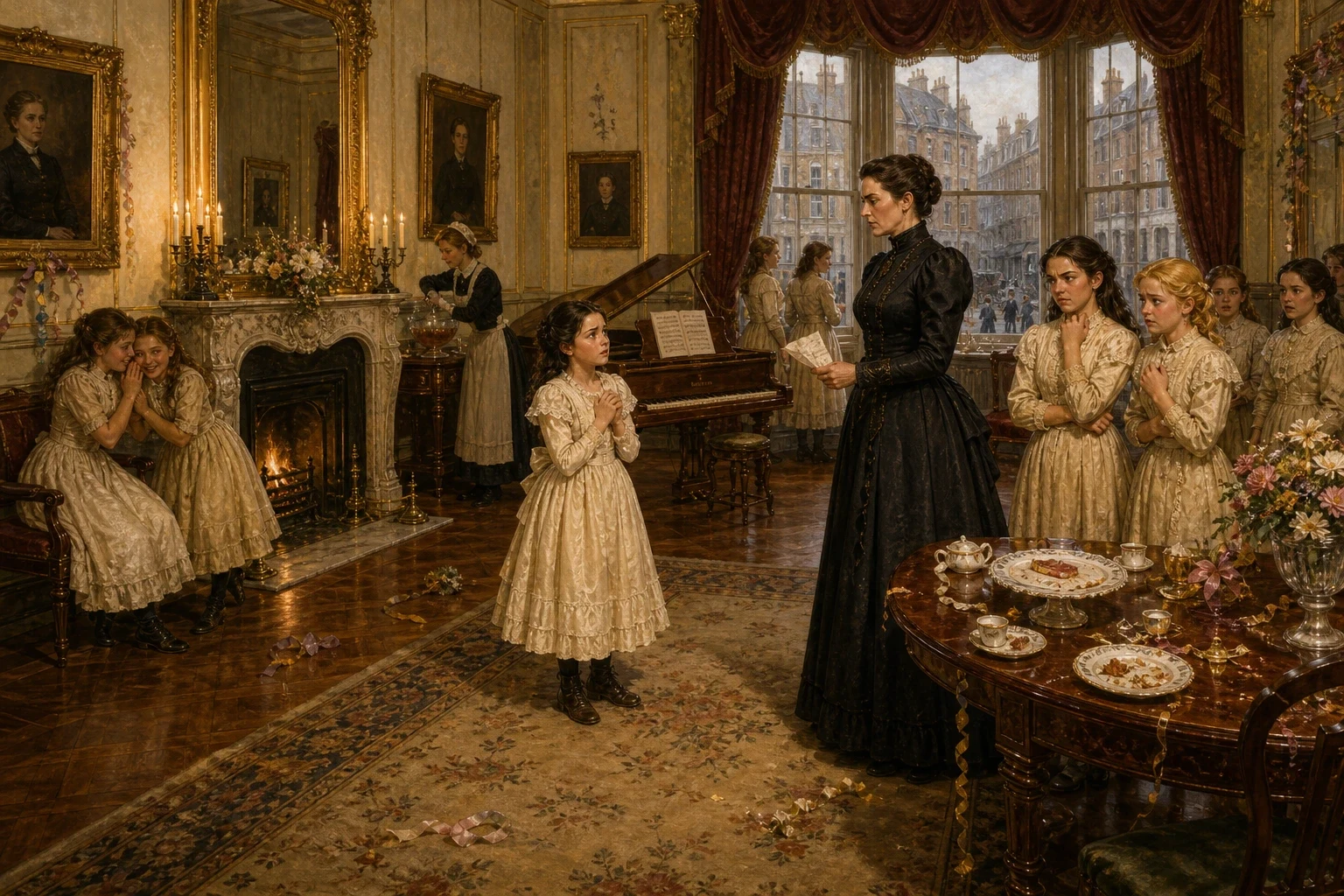
On Sara’s eleventh birthday, Miss Minchin, ever mindful of appearances and Captain Crewe's generous payments, planned a grand party for her, more for show and prestige than for any genuine affection. The school drawing-room was elaborately decorated with ribbons, flowers, and festive arrangements, creating a joyful, expectant atmosphere. Sara, dressed in a beautiful new party dress of cream lace and satin, felt a quiet thrill of happiness and anticipation, surrounded by her classmates. But the celebration was suddenly and brutally broken by Miss Minchin’s harsh, booming voice. Terrible, devastating news had arrived from India: Captain Crewe had lost all his money in a diamond mine venture that failed disastrously, and tragically, he had fallen gravely ill and passed away, far from his beloved daughter. Sara stood utterly stunned, her small world collapsing around her in an instant. In that horrifying moment, she was no longer the rich, adored 'little princess' but a penniless orphan, with nowhere to go and no one to protect her.
Page 4

Without her father's immense fortune, Sara was no longer of any use or value to Miss Minchin, who cared only for money. All her beautiful clothes, her cherished books, her personal maid, and every comfort she had known were cruelly stripped away from her. She was immediately moved from her comfortable, sunny room to a cold, bare attic, little more than a garret at the very top of the house, where the wind whistled through the cracks. Her new life was to be one of relentless hard labor and constant scarcity. Miss Minchin coldly informed her that she would earn her meager keep by working as a servant, teaching the younger girls, and running endless errands in all weather conditions, day and night. Alone in the bleak, desolate room, with only a thin, scratchy blanket and a hard, uncomfortable bed, Sara held onto her dignity with all her might. She would pretend, she decided, with a flicker of defiance in her heart, that she was still a princess, merely disguised as a pauper, enduring a temporary challenge.
Page 5
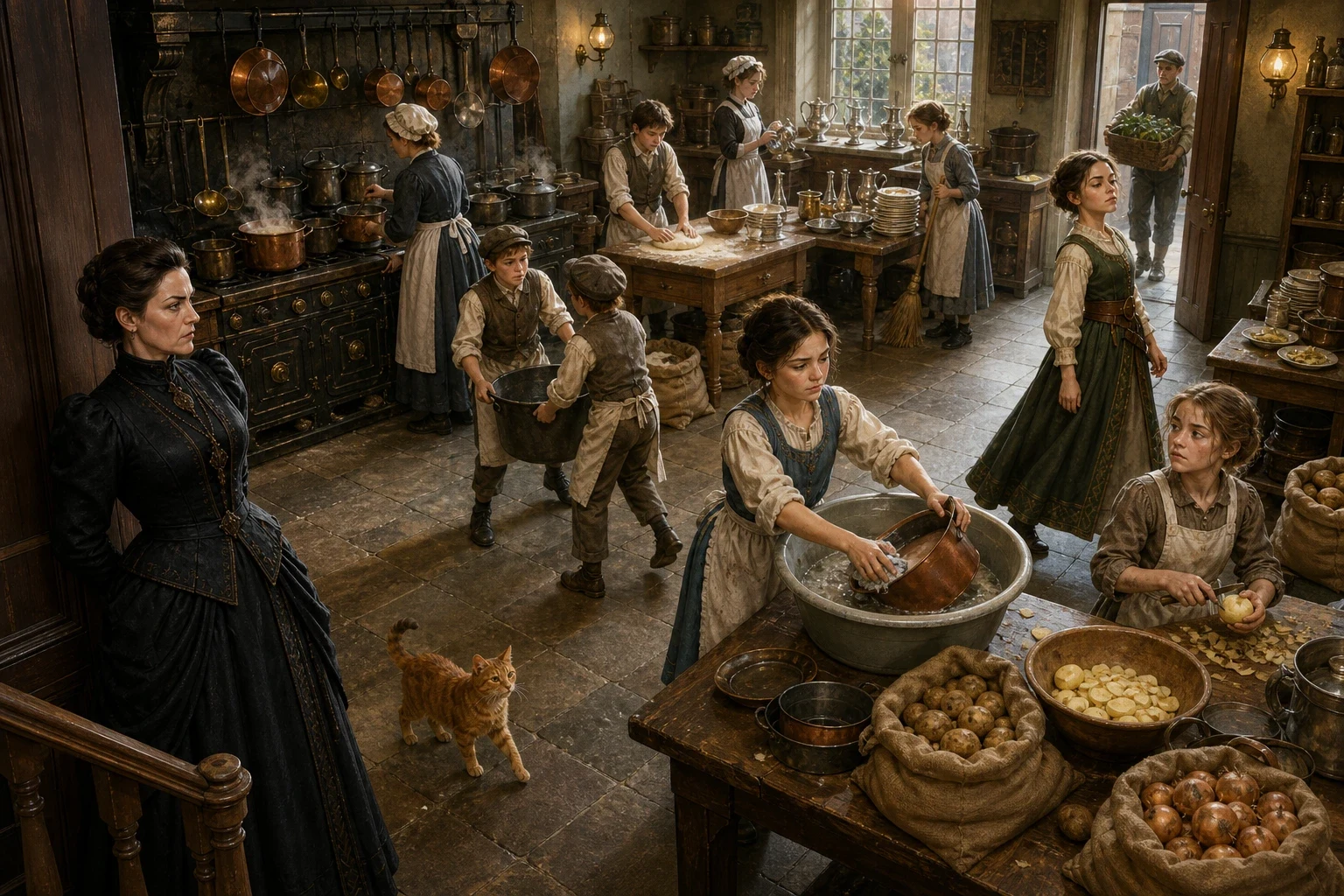
Sara's days were now filled with endless, back-breaking chores: scrubbing floors until her knees ached, cleaning sooty grates, and running countless errands in all kinds of unforgiving weather. She was constantly hungry, her stomach often rumbling with emptiness, and perpetually cold, yet she never allowed herself to complain aloud. In the vast, busy, and often chaotic kitchen, filled with the clatter of pots and the smell of cooking, she found an unexpected friend in Becky, the scullery maid, a thin girl with a perpetually smudged face and chapped hands, who was even more tired and overworked than Sara herself. Becky was immensely grateful for Sara's few kind words and the imaginative stories she sometimes shared. Miss Minchin and Lavinia often found new ways to make Sara's life harder, with harsh commands, unfair blame for trivial mistakes, and cold, dismissive glances. But their relentless unkindness only made Sara strive harder to be like her imaginary princess, reminding herself that true royalty endures with grace.
Page 6

One bitter winter day, with a sharp wind blowing down the London streets, Sara was sent on a crucial errand to buy groceries for the school. She was so terribly hungry that her head felt light and her vision blurred, a constant ache in her empty stomach. As she passed a baker's shop, the warm, comforting smell of fresh bread and sweet pastries wafting out was almost unbearable, a cruel reminder of her gnawing hunger. Though she had only a few precious pennies, meant for her own meager, often-forgotten supper, she noticed a smaller, even more destitute child huddled on the cold, damp steps outside the shop. The child looked utterly forlorn and shivering. Without a moment's hesitation, Sara used her pennies to buy six hot, fragrant buns, broke them carefully in half, and with a generous heart, gave five of them to the starving girl. Her own stomach still ached with hunger, but her heart felt wonderfully warm with the profound joy of selfless giving.
Page 7
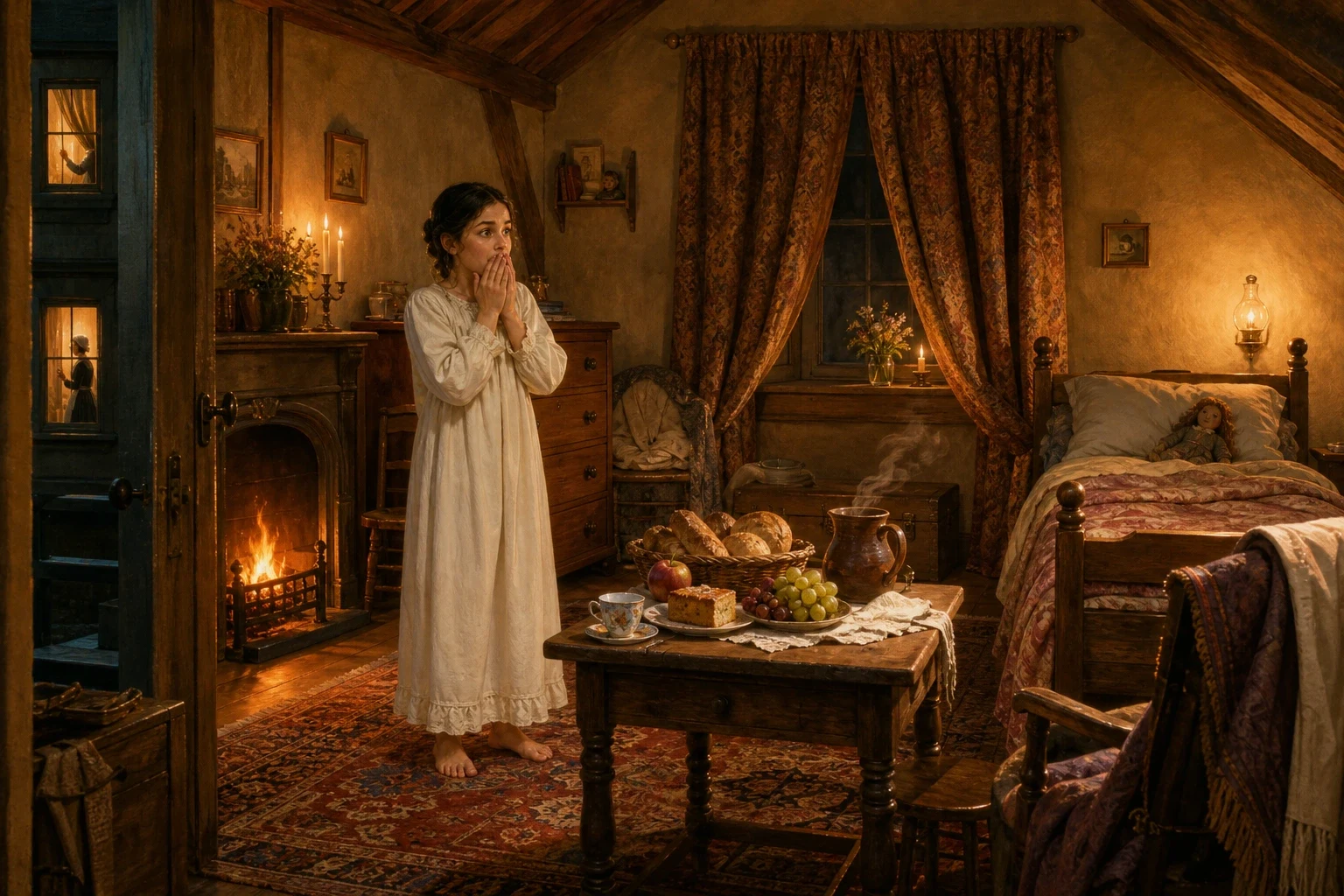
One incredibly cold evening, after a particularly long and exhausting day filled with endless chores, Sara returned to her bleak, desolate attic room. To her astonishment, she found it magically transformed before her very eyes. A warm, welcoming fire crackled brightly in a newly installed grate, casting dancing shadows and a comforting glow. A soft, patterned carpet now covered the cold, bare floor, making the space feel instantly cozier. And, most miraculously, a hot, delicious supper lay waiting on a small, sturdy table, its aromas filling the small room. Fresh bread, sweet, juicy fruit, and tempting cakes appeared as if by magic, easing her gnawing hunger. She could not fathom who was responsible for such astonishing kindness. Each night thereafter, as she slept, her room would be secretly filled with new comforts and treats, gently easing her cold and hunger. It felt as if a kindly genie or a benevolent fairy godmother had taken profound pity on the lonely little servant girl, bringing a spark of hope back into her life.
Page 8
Sara soon discovered that the mysterious gifts that transformed her room were coming from the large, grand house next door, occupied by a kind, but often gravely ill, Indian gentleman, Mr. Carrisford. He was a reclusive man, and his household was mostly unseen. One day, a small, mischievous monkey, belonging to Mr. Carrisford's devoted Indian servant, Ram Dass, managed to escape its confines. It scampered with surprising agility across the rooftops of London, a tiny, dark blur against the grey slates. It found its way to Sara’s attic window, climbing onto the narrow ledge and peering inside. Sara, surprised but greatly amused by the unexpected visitor, gently coaxed the chattering creature inside, offering it warmth and a piece of the bread from her mysterious supper. This curious and delightful visit further connected her to the house next door, unknowingly bringing her closer and closer to her true and wonderful fate, as if guided by an unseen hand.
Page 9

Mr. Carrisford, the kind and thoughtful gentleman next door, was not only gravely ill but also deeply tormented by a past failure in business. He had been Captain Crewe's trusted partner in the grand diamond mines, and he felt a profound sense of responsibility for Captain Crewe's ruined fortune and his subsequent, lonely death, which weighed heavily on his conscience. He had been desperately searching for Captain Crewe's lost daughter, Sara, for months, with the sole purpose of finding her and restoring her rightful inheritance. It took many painstaking weeks for him and his trusted, observant servant, Ram Dass, to piece together the fragmented clues and rumors. He learned of the 'little girl who lived in the attic' next door, a servant at the seminary, and slowly, with a growing sense of certainty, the astonishing truth dawned upon him: the impoverished servant girl enduring hardship in Miss Minchin's attic was the very princess he sought, the true heir to a vast fortune.
Page 10

The wonderful truth was finally revealed to the world. Sara Crewe was not a pauper, as Miss Minchin had cruelly insisted, but a rich heiress once more, her fortune not only restored but vastly increased. Mr. Carrisford joyfully took her into his beautiful home, showering her with warmth, kindness, and every comfort she had been denied. Miss Minchin, whose heart was cold and grasping, found her school's reputation utterly ruined by her dreadful treatment of Sara, and lost many of her paying students. Sara, however, never forgot her hardships and the days of cold and hunger. With her renewed wealth, she saw to it that Becky was given a better life, freed from servitude, and generously shared her good fortune with the poor children of London, remembering her own gnawing hunger on the streets. She truly was a princess, not just by birthright, but by the remarkable kindness, unwavering courage, and boundless generosity of her noble heart, a true queen among girls.
About this story
- Audience: kids (ages 6–12)
- Format: 10 illustrated pages, narrated, on the kids shelf, free to read on Wonder Novels
Read Wonder Novels on your phone
Wonder Novels is available on Android. Get Wonder Novels on Google Play.