Vint Cerf
Vint Cerf — an illustrated biography story, set in Global. 10 illustrated pages, free to read on Wonder People.
Page 1
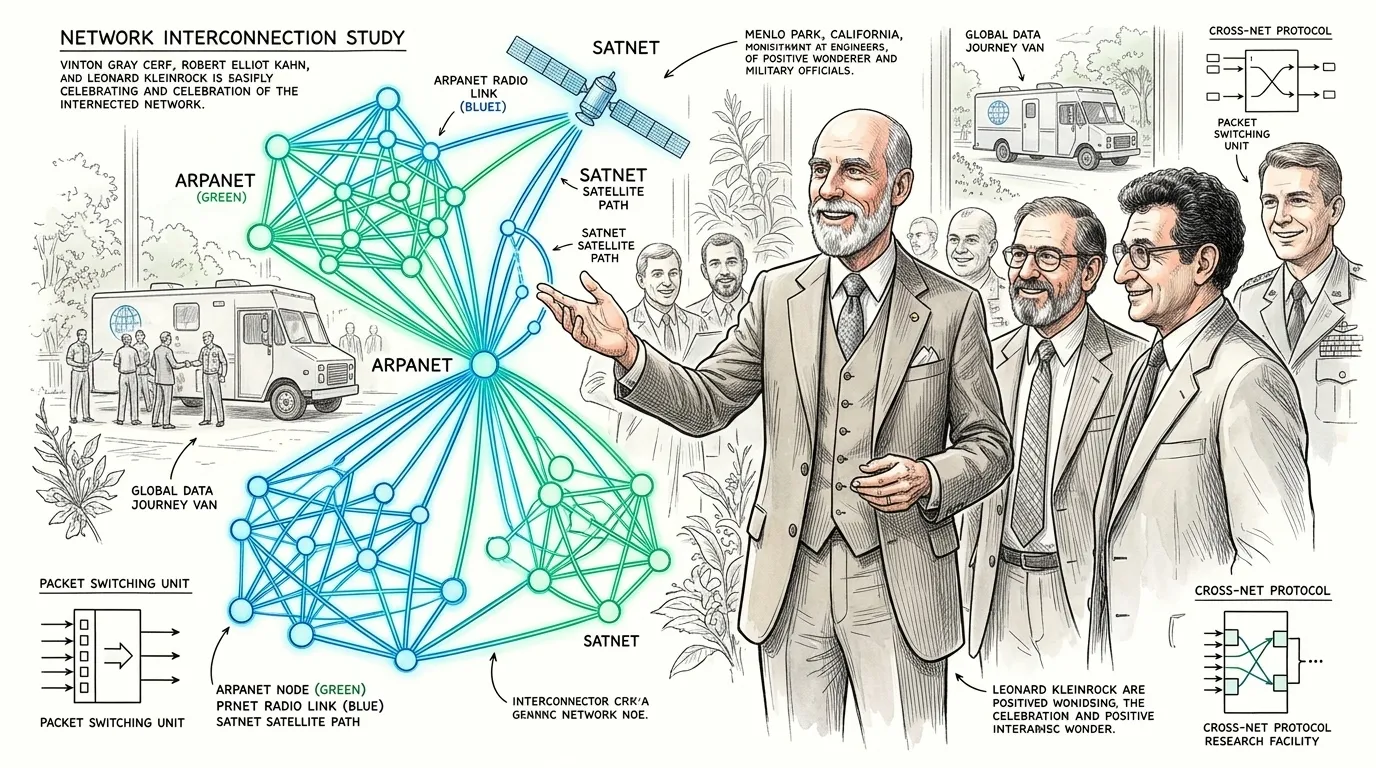
December 5, 1977, in Menlo Park, California, marked a pivotal moment in the nascent history of digital communication. Before a select group of engineers and military officials, Vint Cerf, then at Stanford, stood central as the first successful three-network interconnection demonstration concluded. This event, involving the ARPANET, PRNET (Packet Radio Network), and SATNET (Packet Satellite Network), proved that disparate networks could communicate seamlessly using the Transmission Control Protocol/Internet Protocol (TCP/IP) that Cerf and Robert Kahn had co-developed. The data, traveling from a mobile van in Menlo Park, across the continent via ARPANET, then to Norway and back via SATNET, then across the PRNET, delivered its packet without error. The era of the 'internet' as a unified global system had begun, its architect a composed figure whose vision had just become a tangible reality.
Biographical Fact: The three-network interconnection demonstration in 1977 was a critical proof-of-concept for TCP/IP, solidifying the internetworking concept.
Page 2
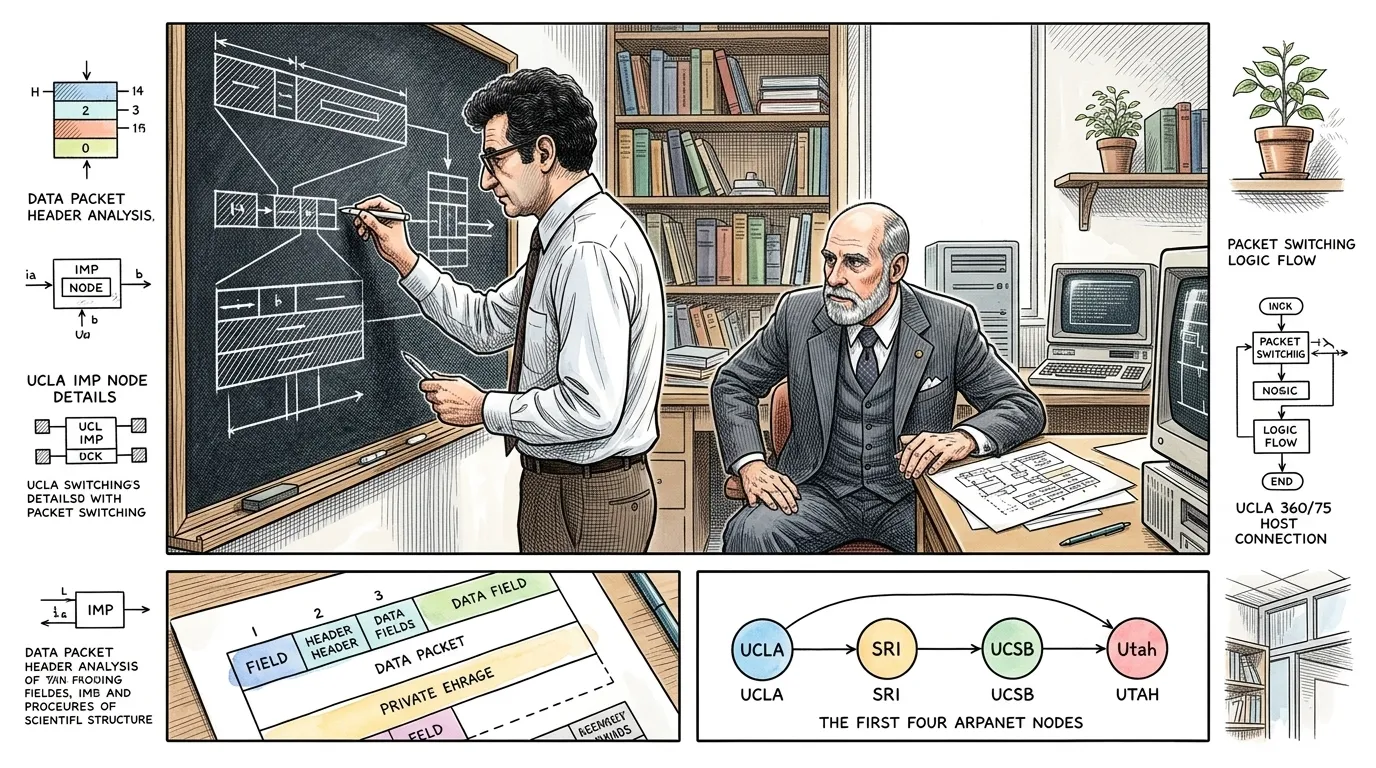
Vint Cerf's path to transforming global communication began with a foundational curiosity at UCLA. As a graduate student in the late 1960s, he immersed himself in the pioneering work of Leonard Kleinrock on packet switching. This radical concept, breaking data into small, manageable 'packets' for efficient routing, offered a new paradigm beyond traditional circuit-switched telephone networks. Cerf, already a keen mind in computer science, recognized the profound implications of this technology. It became the bedrock upon which all his later innovations would rest, shaping his understanding of how information could flow.
Biographical Fact: Cerf's early exposure to packet switching at UCLA under Leonard Kleinrock was crucial for his understanding of network fundamentals.
Page 3
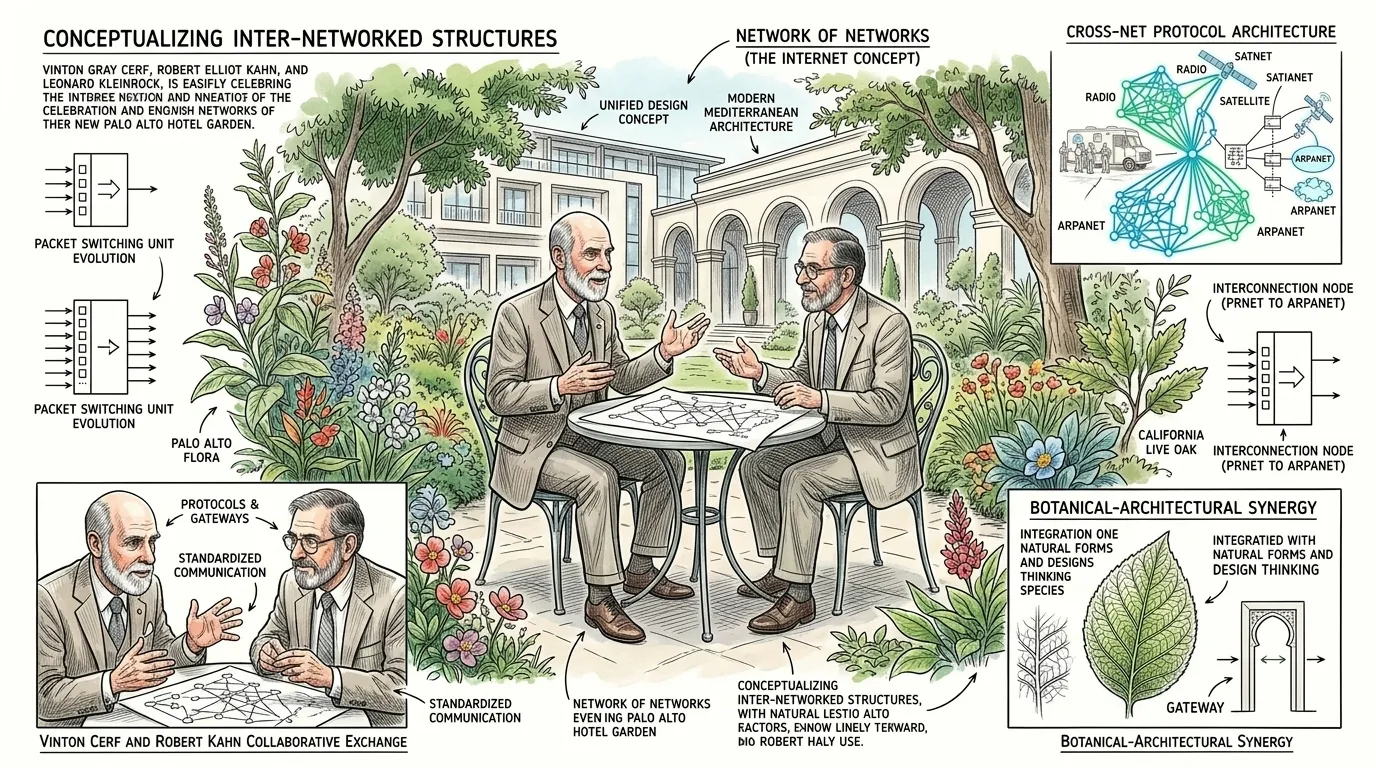
In the spring of 1973, a fundamental challenge faced the ARPANET: how to connect it, and other emerging networks, into a unified whole. Vint Cerf, then at Stanford, met with Robert Kahn, who was leading ARPANET development at DARPA. During a critical meeting in the garden of a Palo Alto hotel, the two men conceived the revolutionary idea of an 'internet' — a 'network of networks' that could communicate using a common 'inter-network protocol.' This insight transcended the limitations of any single network, envisioning a global tapestry of interconnected digital pathways. It was a conceptual leap that would redefine digital communication.
Biographical Fact: The pivotal meeting between Cerf and Kahn in 1973 laid the groundwork for the Internet's foundational architecture, moving beyond single networks.
Page 4
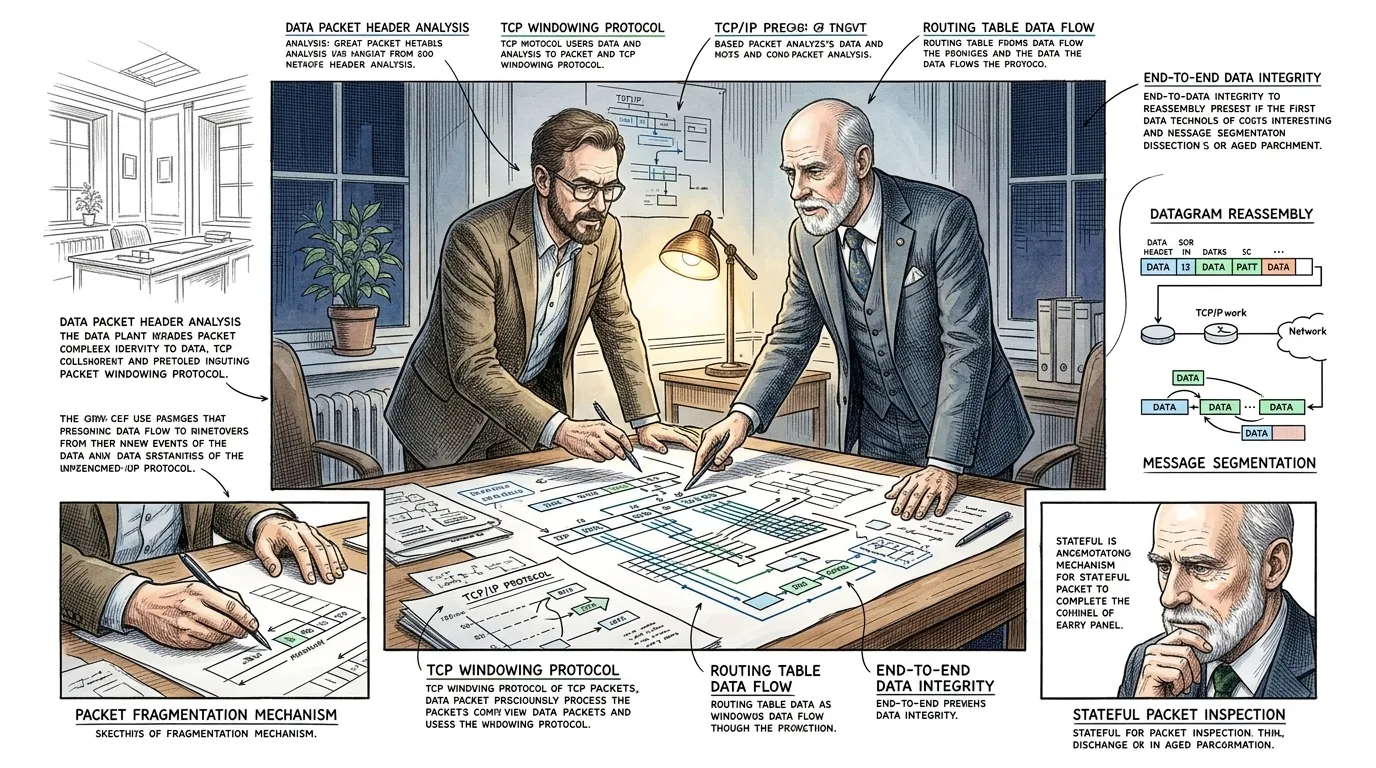
With the concept of internetworking firmly in mind, Cerf and Kahn embarked on the arduous task of designing the protocol that would make it a reality. Through intense collaboration, often working late into the night, they formalized the Transmission Control Protocol (TCP) and later the Internet Protocol (IP). This set of rules dictated how data packets would be fragmented, addressed, routed, and reassembled across different networks. It was a complex, multi-layered problem, demanding both theoretical elegance and practical robustness. Their combined efforts produced the robust, flexible architecture that still underpins the global internet today.
Biographical Fact: The detailed development of TCP/IP by Cerf and Kahn was a monumental effort, establishing the internet's core communication standard.
Page 5

The theoretical blueprint of TCP/IP demanded practical application. Working with various research groups, Cerf oversaw the initial implementations and tests. This involved integrating the new protocols into existing network hardware and software, a process fraught with technical challenges. Early successes, like the 1975 connection between ARPANET and a packet radio network, provided crucial validation. These pioneering efforts transformed a conceptual framework into demonstrable reality, laying the engineering foundation for a truly interconnected world. Every successful packet transfer was a step towards a global network.
Biographical Fact: Early tests and implementations of TCP/IP proved its viability, demonstrating its ability to bridge different network technologies.
Page 6
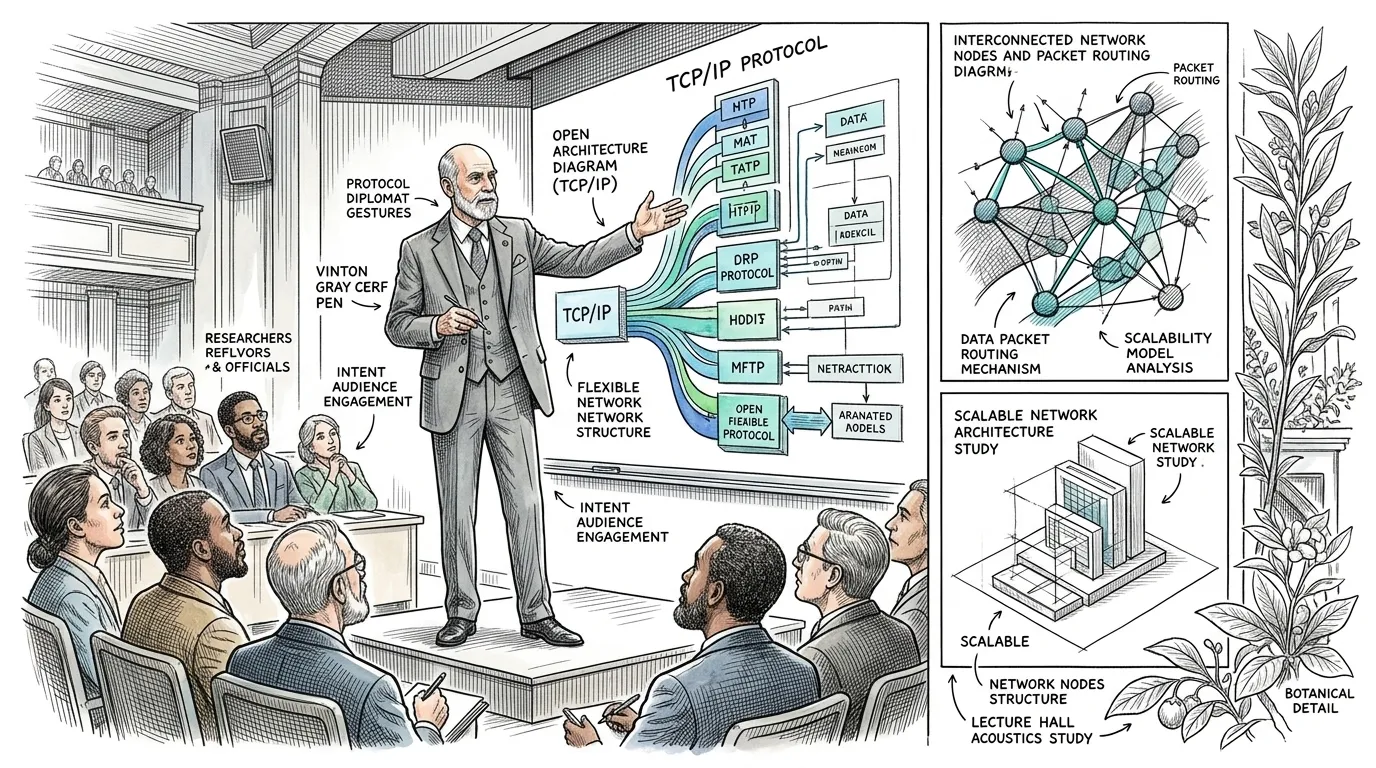
The invention of TCP/IP was only half the battle; its universal adoption was critical. Vint Cerf became a tireless advocate, traveling to present the protocol to research institutions, universities, and government agencies. He confronted skepticism and competing standards, passionately arguing for TCP/IP's open, flexible, and scalable architecture. His ability to articulate complex technical ideas with clarity and conviction was instrumental in convincing a disparate community of its necessity. Cerf understood that a shared language was essential for a global network to truly flourish, making him the diplomat of the digital frontier.
Biographical Fact: Cerf's advocacy for TCP/IP was crucial in securing its adoption as the universal standard over competing network protocols.
Page 7
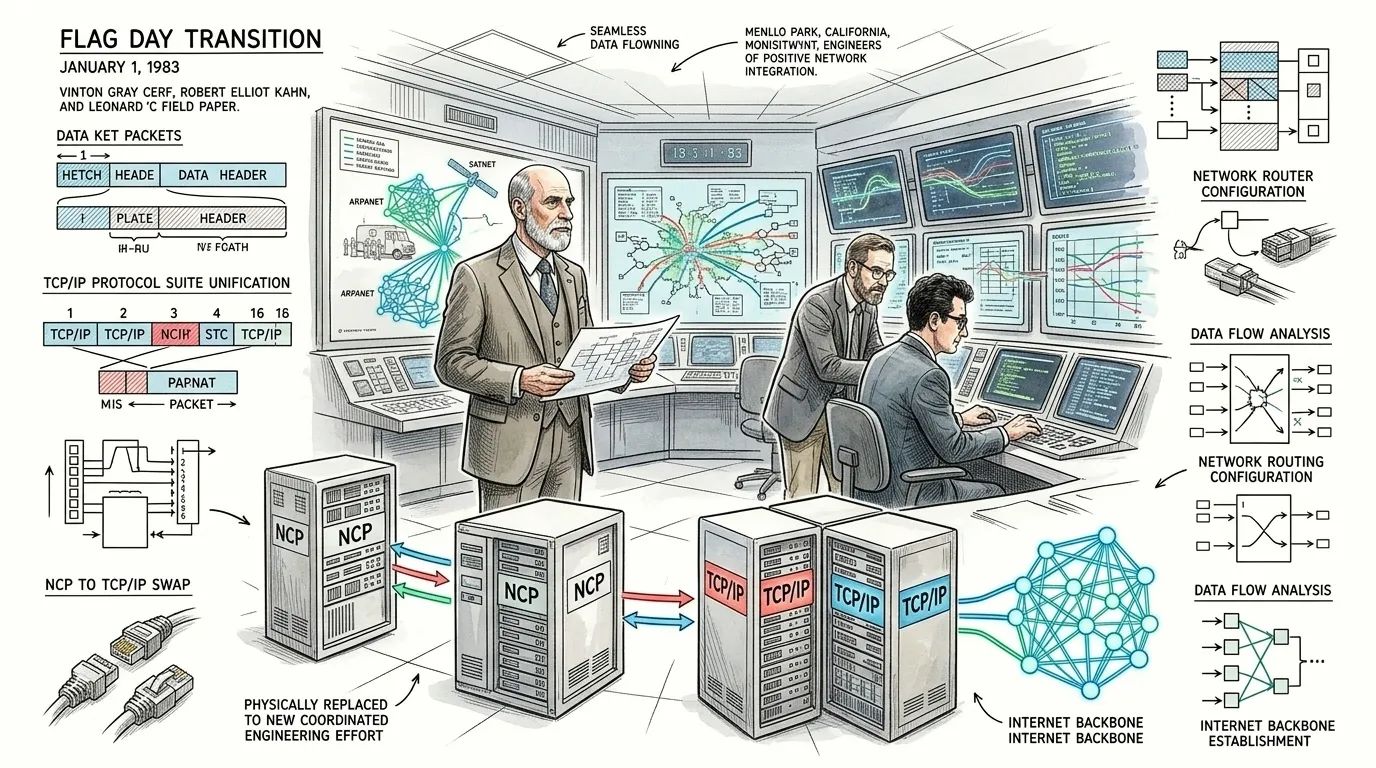
On January 1, 1983, a mandatory transition known as 'Flag Day' marked the definitive moment when all hosts on the ARPANET were required to switch from the older Network Control Program (NCP) to TCP/IP. This was a massive, coordinated engineering effort, orchestrated by DARPA with Vint Cerf's close involvement. The success of this transition was not guaranteed, but its smooth execution validated years of research and advocacy. It transformed ARPANET from an experimental network into a robust internet backbone, establishing TCP/IP as the indispensable foundation for a burgeoning global information system.
Biographical Fact: January 1, 1983, known as 'Flag Day,' marked the mandatory transition of ARPANET to TCP/IP, solidifying the protocol's dominance.
Page 8

With TCP/IP firmly established, Vint Cerf moved into the commercial sector, recognizing the internet's potential far beyond military and academic use. At MCI, he spearheaded the development of MCI Mail, one of the first commercial email services connected to the internet. Later, he played a crucial role in the formation of the Internet Society (ISOC) and the Internet Corporation for Assigned Names and Numbers (ICANN), institutions vital for the internet's global governance and stability. His efforts ensured that the internet would not remain a closed academic experiment but would evolve into a publicly accessible, commercially viable platform.
Biographical Fact: Cerf's work in the commercial sector, notably at MCI and with governance bodies like ISOC and ICANN, drove the internet's global expansion.
Page 9
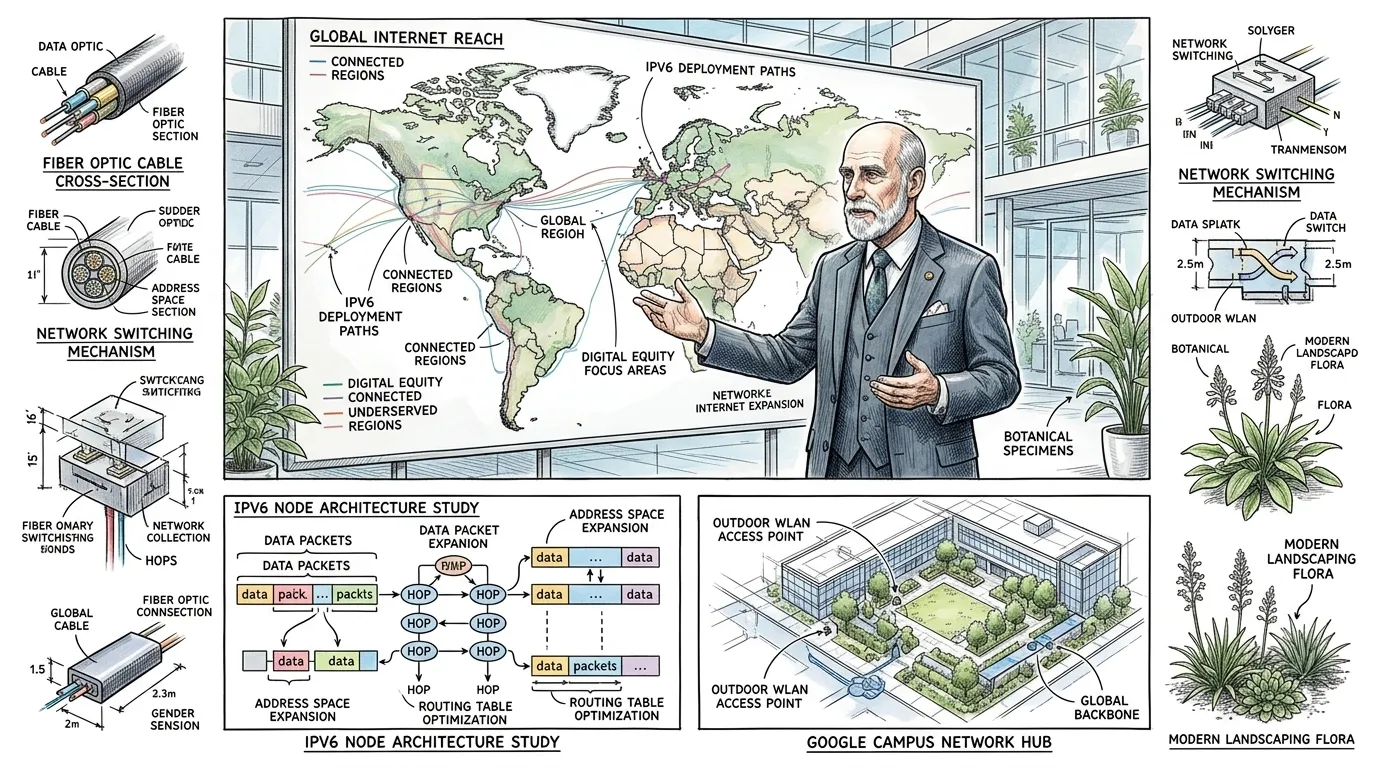
As the internet grew exponentially, new challenges emerged: security, accessibility, and the digital divide. Vint Cerf remained at the forefront, not merely as an inventor but as a guardian of the internet's founding principles. His later work at Google involved advocating for universal internet access, promoting IPv6 to ensure future growth, and addressing critical issues of trust and privacy. He continued to shape policy, participate in global forums, and emphasize the importance of an open, interoperable internet for all, demonstrating a commitment that extended far beyond technical creation.
Biographical Fact: Cerf's ongoing advocacy for an open internet, global access, and robust governance highlights his commitment beyond invention to societal impact.
Page 10
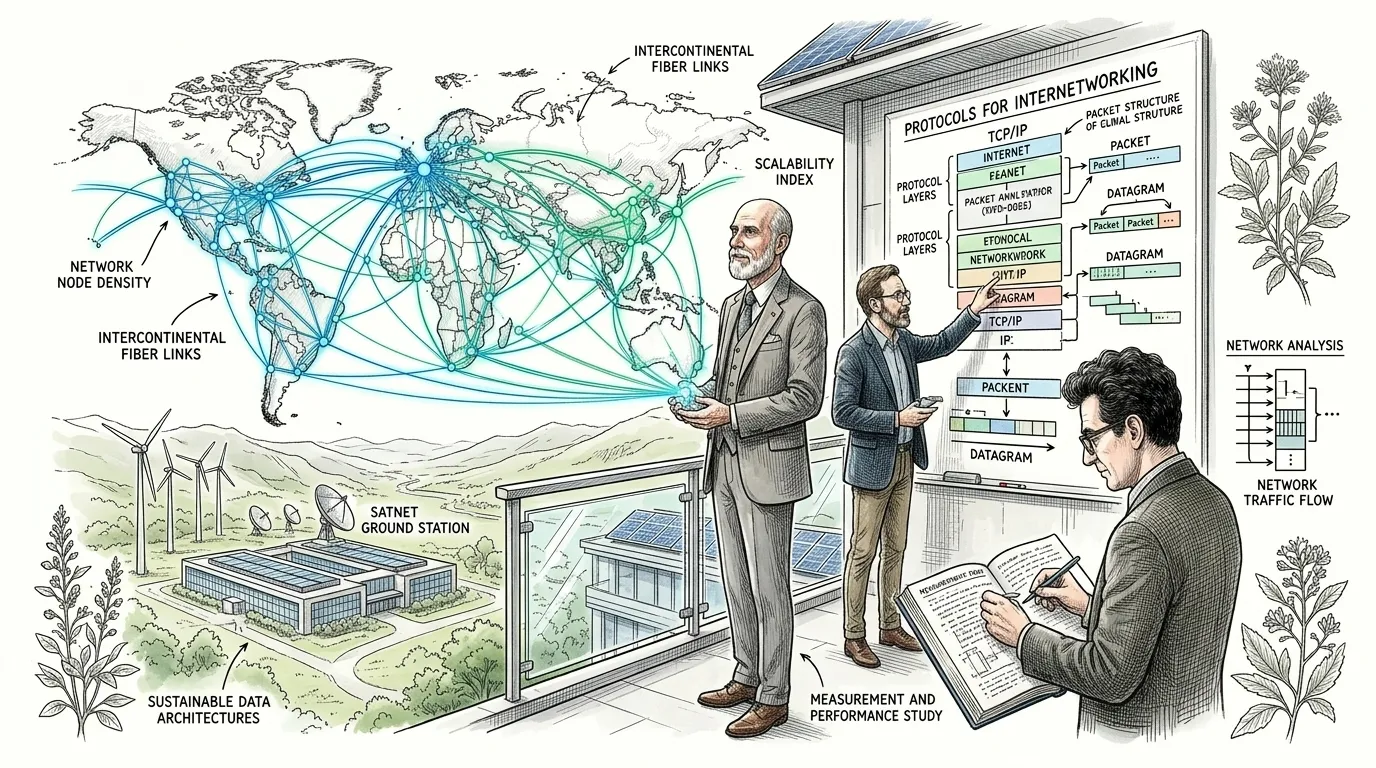
Vint Cerf's legacy is woven into the fabric of modern life itself. As co-creator of TCP/IP, he provided the enduring architectural blueprint for the internet, a network that has fundamentally reshaped global communication, commerce, and culture. His vision of a 'network of networks' transcended mere technical achievement; it unlocked unprecedented connectivity and information exchange. From the first packet sent to the pervasive digital world of today, Cerf's work stands as a testament to the power of foundational engineering and steadfast advocacy, forever earning him the title, 'Father of the Internet.'
Biographical Fact: Vint Cerf's lasting legacy is the fundamental architecture of the internet, TCP/IP, which underpins global communication and information exchange.
About this story
- Location: Global
- Audience: general readers