Bentham and the Greatest Happiness
The philosopher who tried to measure right and wrong by how much joy they create 10 illustrated pages, narrated, on the kids shelf, free to read on Wonder Philosophy.
Page 1
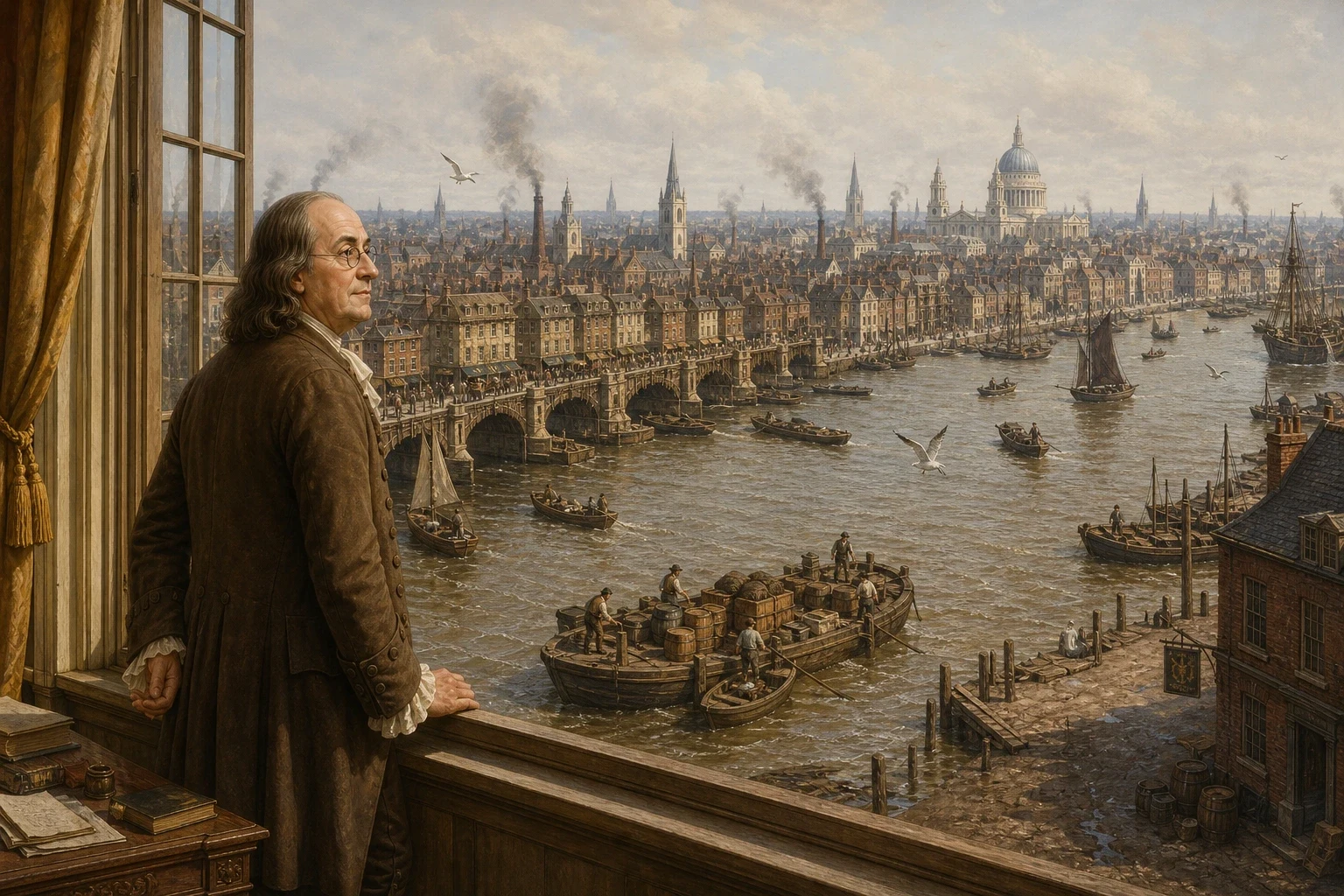
London, England. 1789. The biggest city in the world, a city full of palaces and prisons. From his window overlooking the river, a man named Jeremy Bentham watched it all. He saw boats fighting for space on the water and carts stuck in the mud on the shore. "What a mess," he murmured. "So much needless trouble." Every person in that city wanted to be happy, but their laws were a tangle of old ideas, some good, some cruel. "How can you build a better world if you don't even have a way to measure what 'better' is?" he asked the empty room. He was certain he had found an answer. A way to measure it all, as if happiness were something you could hold and weigh.
Page 2
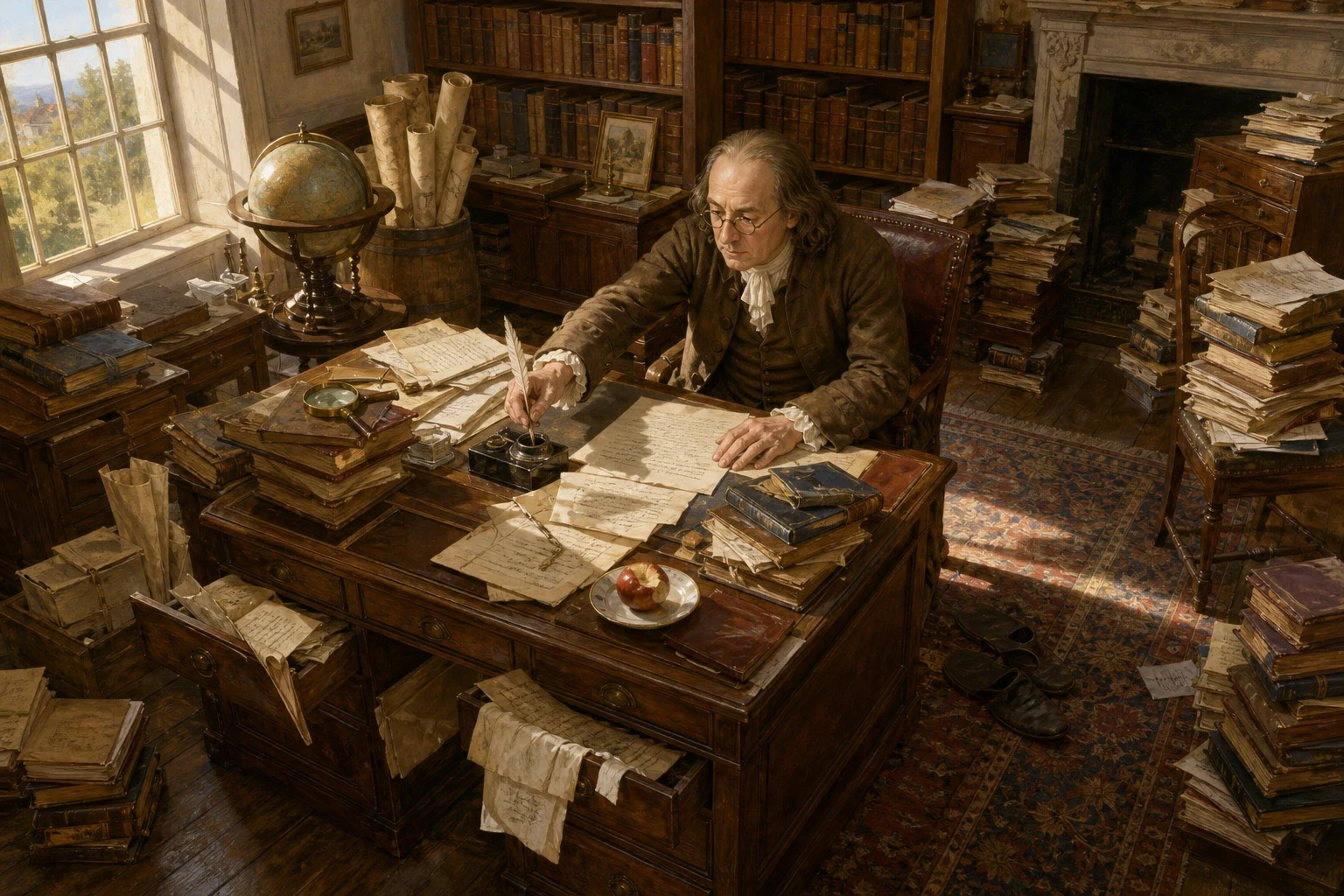
This was Jeremy Bentham in his workshop. He did not build things with wood or metal; he built ideas. His room was a fortress of books, with papers stacked high on every surface. He had been studying the laws of his country and saw rules that caused pain for no reason. "It is not good enough," he said, picking up his pen with sudden energy. "We must have a reason for our rules, a purpose." He plunged the quill into the inkpot. The only good purpose, he wrote, is to increase happiness and reduce suffering. "That is the only thing that truly matters," he declared, the scratch of his pen filling the quiet room. He was ready to write it all down, his great principle for a better world.
Page 3

Jeremy had always been full of questions. While other children played, Jeremy read. His father was a lawyer, and his home was filled with thick, serious books. One afternoon, his father found him on the floor of the library, reading a huge volume of English history. "Father," Jeremy asked, not looking up, "why is this law written so?" His father smiled. "Because it is very old, my boy. That is how it has always been." Jeremy frowned at the page. He ran his small finger over the words. "But is it a good law?" he asked, looking up and meeting his father's eyes. "Does it help anyone, or does it just cause trouble?" His father had no answer. Even as a small boy, Jeremy could see that just because something was old didn't mean it was right.
Page 4
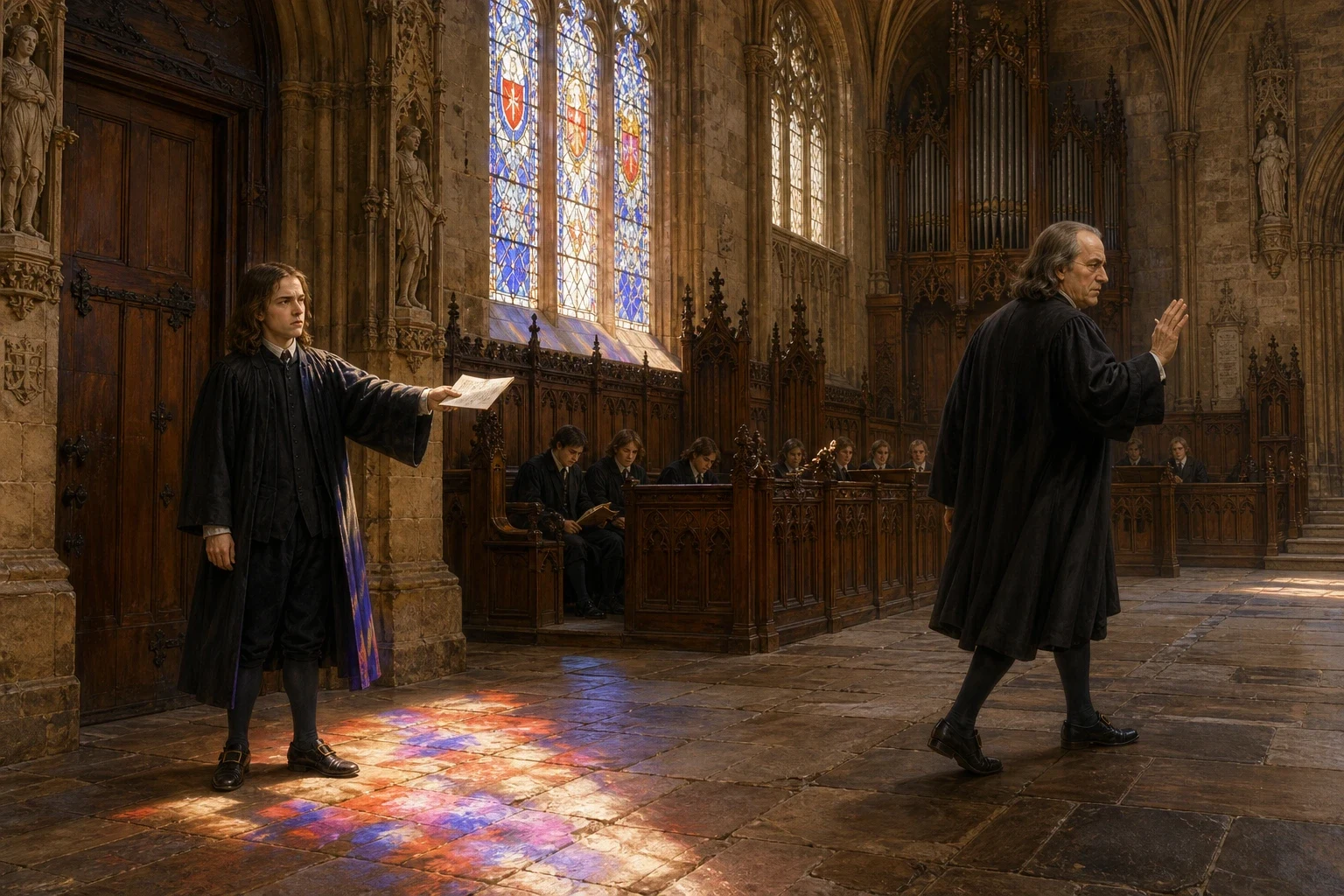
When he was only twelve, Jeremy was sent to the great University of Oxford. He was told to believe things without asking why. To graduate, he was required to sign a document swearing he believed in the Thirty-nine Articles of the Church of England. He went to his tutor's office. "Sir, I must sign this?" he asked, holding the paper. "It is the rule for all students, Mr. Bentham," the tutor said, not looking up. "But I do not believe all of it," Jeremy insisted, his voice shaking slightly. "It feels like telling a lie." The tutor sighed. "Sign it anyway." Jeremy did sign it, but he never forgot the feeling. It was a rule that forced people to be dishonest. The world, he decided, was full of such rules.
Page 5
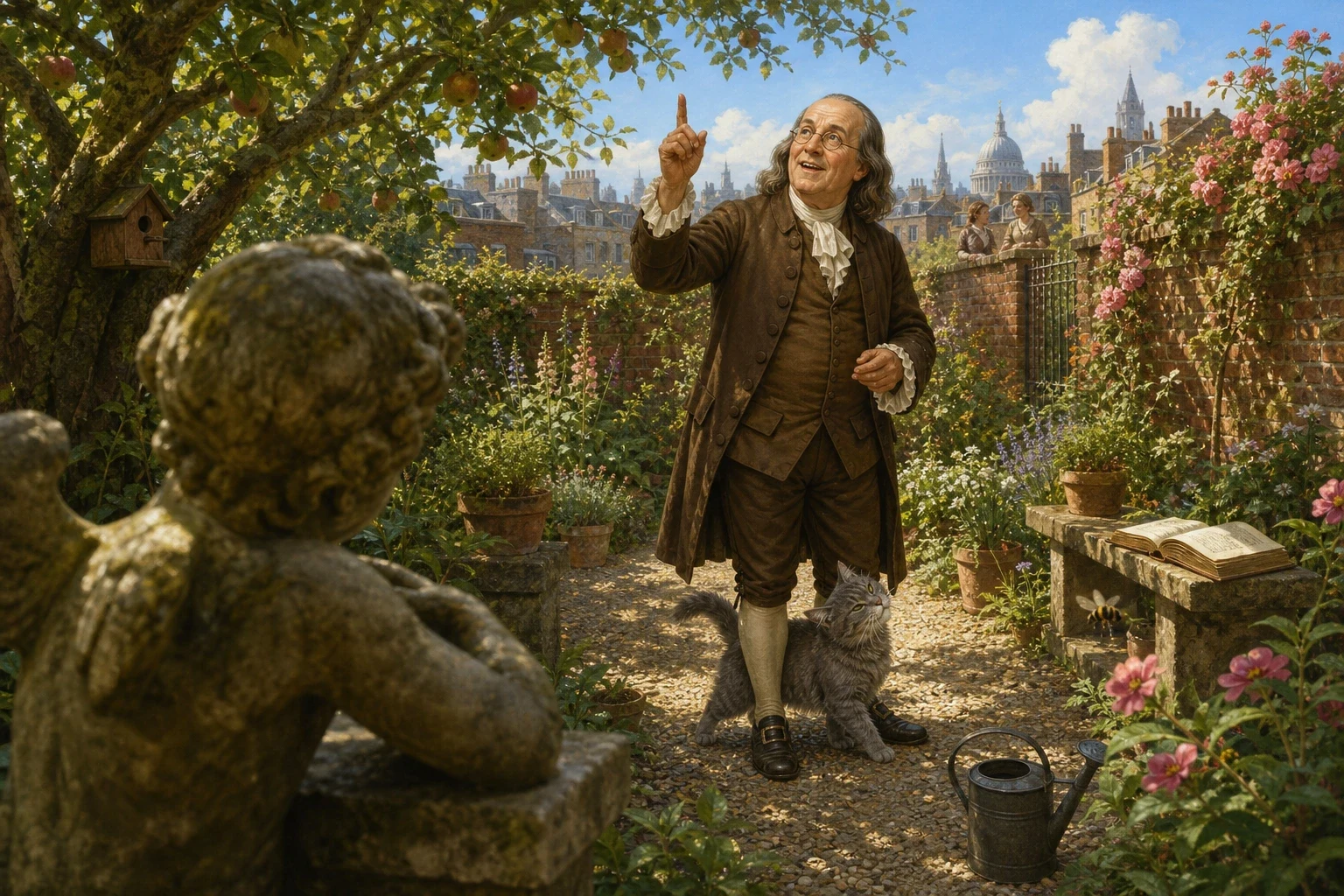
Back in London, Jeremy spent his life thinking. He paced his garden for hours, his fluffy cat, The Reverend Sir John Langbourne, at his heels. One afternoon, the answer he sought became clear. He stopped and crouched to stroke his cat, who began to purr. "Ah, Sir John," Jeremy said with a laugh. "It's so simple, isn't it? Good is what creates pleasure, like you feel now. Bad is what creates pain." The cat just purred louder. Jeremy stood up, his face full of excitement, pointing a finger to the sky. "And the best action, the best law, must be the one that creates the most pleasure for the greatest number! Even for cats!" He called it the Principle of Utility.
Page 6
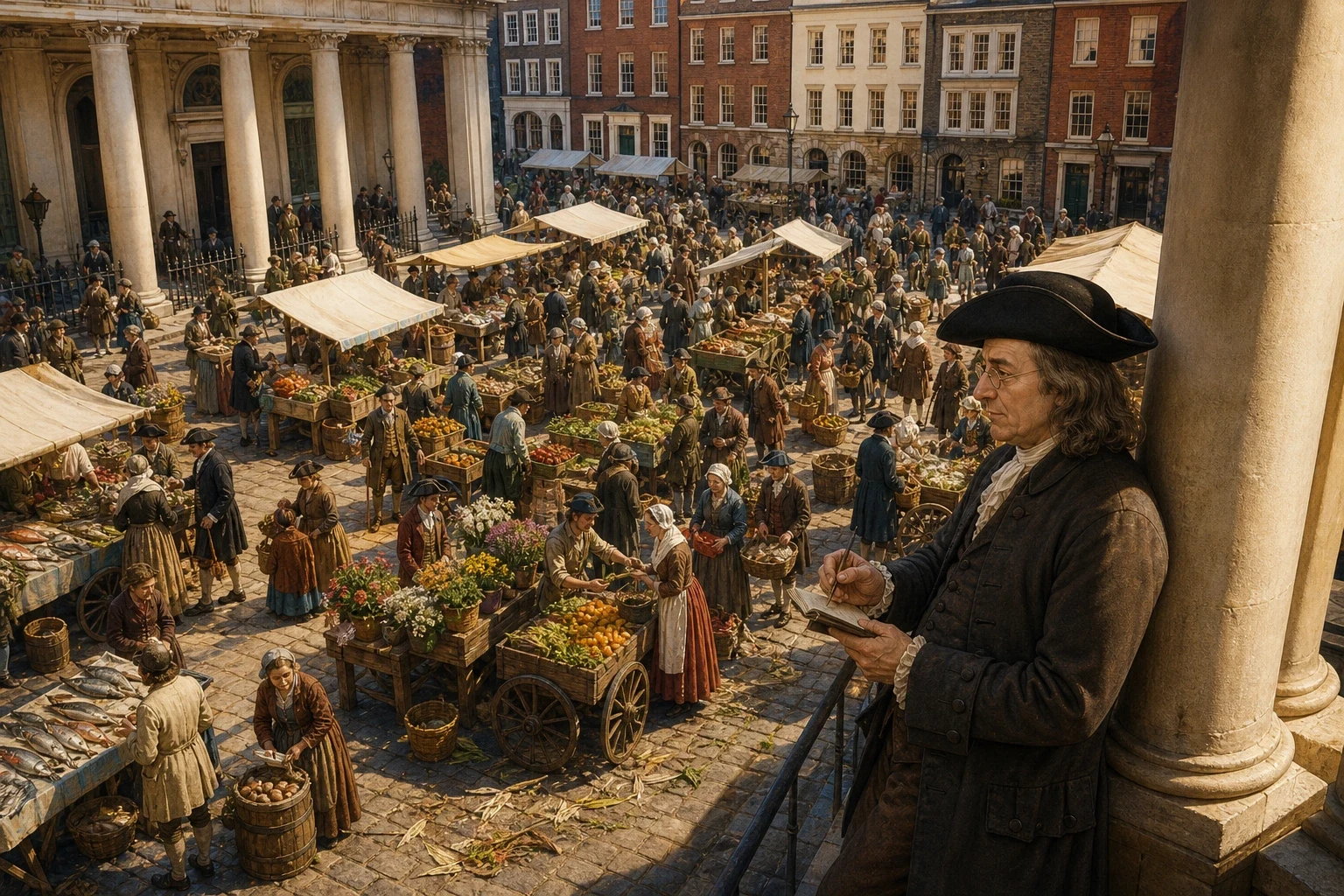
But how do you measure happiness? Jeremy believed you could. He went to the busiest places in London, like Covent Garden market, to watch. He imagined a 'Felicific Calculus'—a happiness calculator. He saw a man buy a pie. "That is a pleasure," he'd mutter, making a note. "How strong is it? Let's call it five points." Then he'd see a child fall and scrape her knee. "That is a pain. How intense? Ten points of pain." He believed that if you could ask these questions about everything, you could add up the pleasure and subtract the pain. "If the pleasure is greater, the action is good!" he declared to a passing chairman. "If the pain is greater, it is bad! We can calculate the right thing to do!"
Page 7
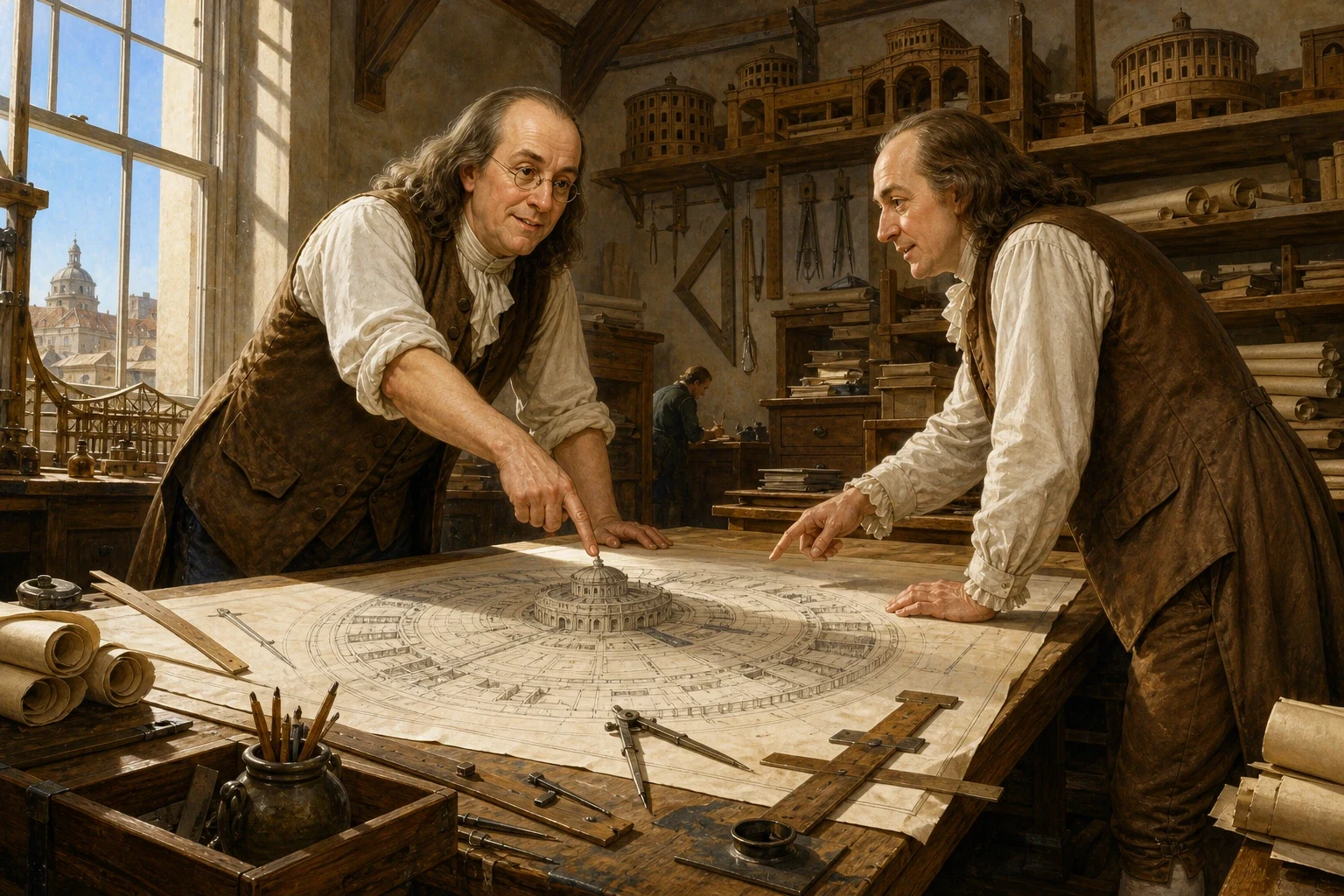
Jeremy used his idea to rethink everything, even prisons. In his day, prisons were miserable places. So Jeremy and his brother Samuel designed a new kind. They called it the Panopticon, or 'all-seeing place.' They stood over the plans in an architect's workshop. "It is a circle," Jeremy explained, tracing the drawing with his finger. "The guard is in a tower in the middle." His brother pointed to the tower. "The prisoners can never see the guard, so they never know if they are being watched." "Exactly!" said Jeremy, slapping the table with excitement. "It is a machine for grinding rogues honest. It is kinder than chains and whips. It reforms them with the mind!"
Page 8
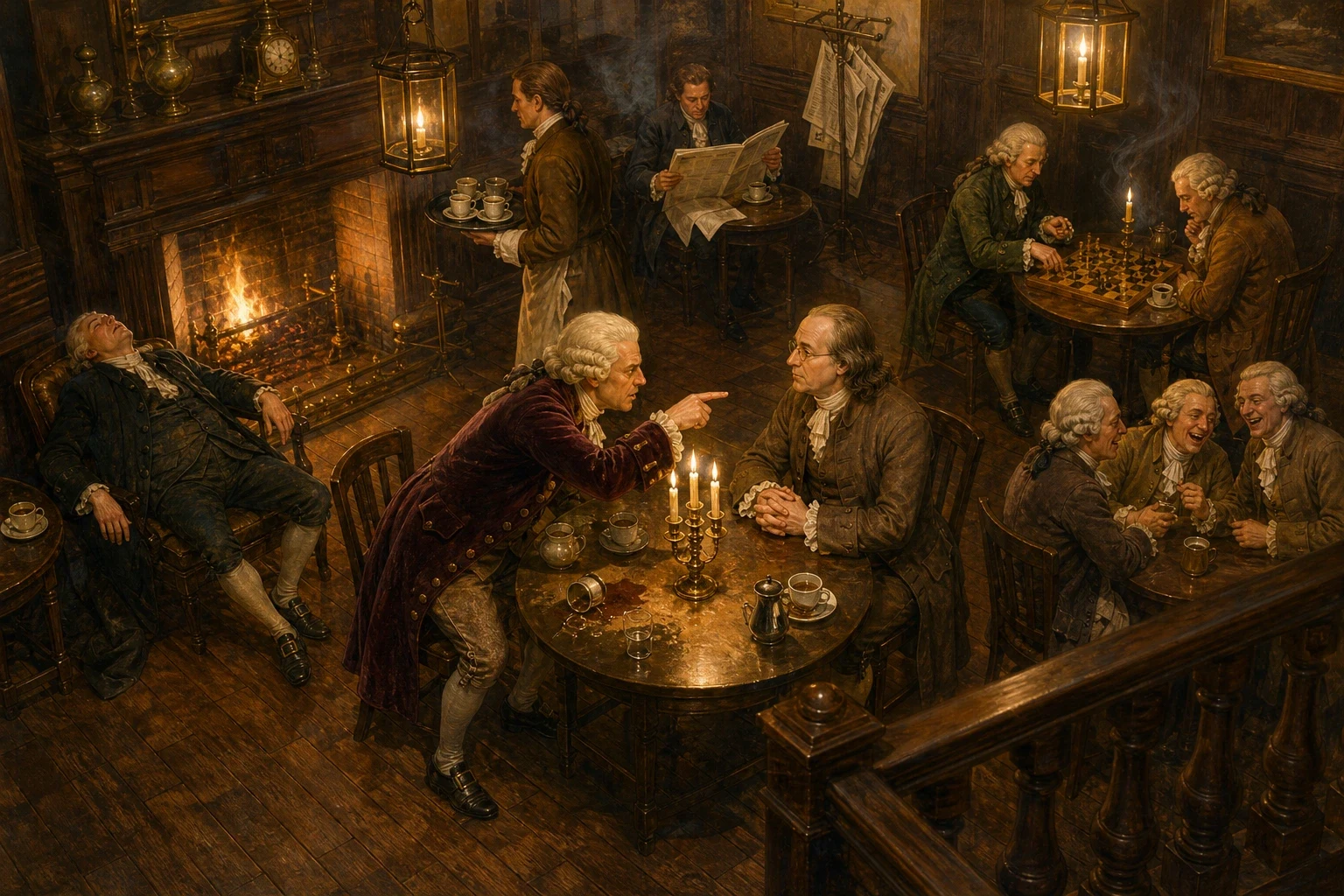
Not everyone agreed with Jeremy’s big idea. In the busy coffee houses of London, thinkers gathered to argue. One evening, a well-known debater cornered Jeremy by the fireplace. "Mr. Bentham, your calculus has a fatal flaw!" the man declared, tapping his pipe on the hearth. "Pray, tell me," Jeremy replied calmly. The debater leaned in, his voice low and intense. "What if the greatest happiness for ten people required the terrible suffering of just one? Your calculator would add up the numbers and say 'This is good!' But is it just?" Jeremy had no quick reply. "It is a difficult calculation." "It is monstrous!" the man insisted. "Surely one person has rights that cannot be voted away by the happiness of the crowd?" It was the hardest question of all.
Page 9
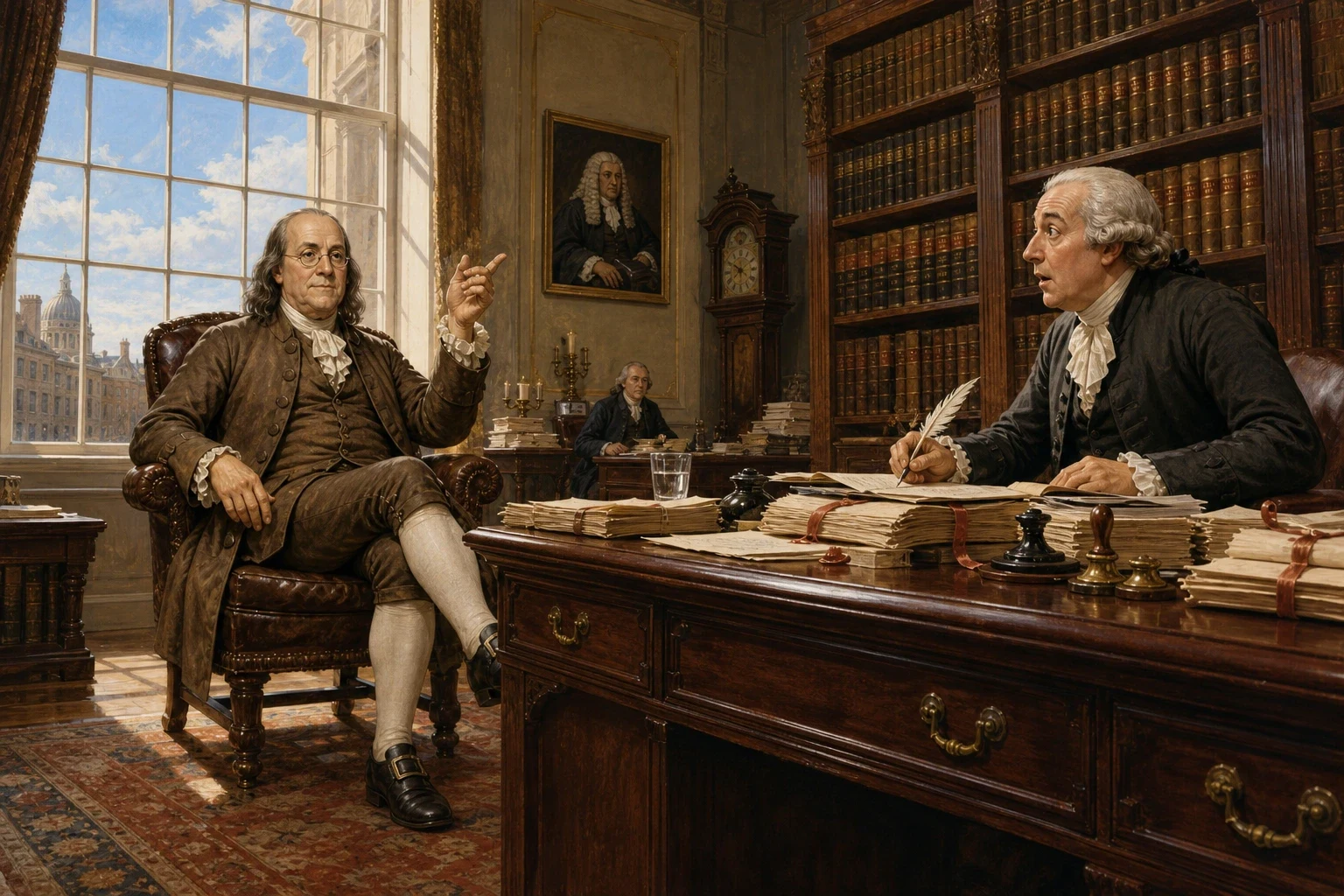
Jeremy Bentham never stopped trying to be useful. He lived to be an old man, and even planned how to be useful after he was dead. In a dusty solicitor's office, he dictated his will. The lawyer paused, his pen hovering. "It is... most unusual, sir," he said. Bentham smiled. "Is it? I wish for my body to be dissected publicly, for the good of medical science." The lawyer looked shocked. "And then?" Bentham continued, his voice steady. "My skeleton is to be dressed in my own clothes and seated in a chair. To show people that a dead body is not to be feared, but can still do good. What could be more useful than that?"
Page 10
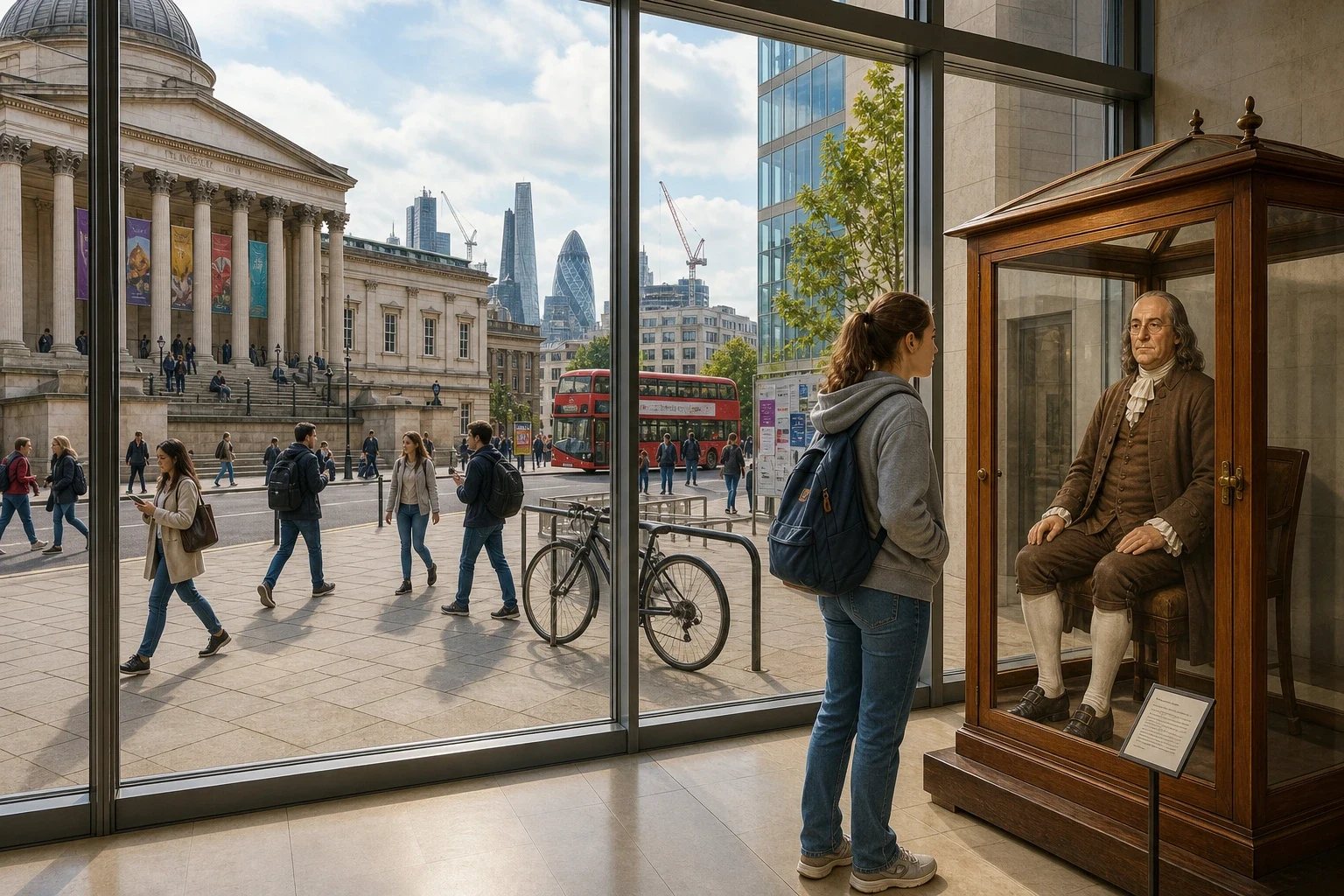
Jeremy Bentham died in 1832. But he never really left. His 'Auto-Icon' still sits in its glass case at a London university he helped create. A young student stops to look at the strange, seated figure. She has just come from a class where they argued about his ideas. "So he's still here," she says quietly to herself. "And we're all still trying to answer his question." She thinks about the hard problems: Can happiness really be measured? What is the greatest good? The happiness calculator was never built. But the search for the right way to live—the best way to be good to one another—is a task for all of us. The work is never finished.
About this story
- Audience: kids (ages 6–12)
- Format: 10 illustrated pages, narrated, on the kids shelf, free to read on Wonder Philosophy
Read Wonder Philosophy on your phone
Wonder Philosophy is available on Android and iPhone and iPad. Get Wonder Philosophy on Google Play · Get Wonder Philosophy on the App Store.