Buddha
Buddha — an illustrated philosophy story. 10 illustrated pages, free to read on Wonder Philosophy.

Page 1
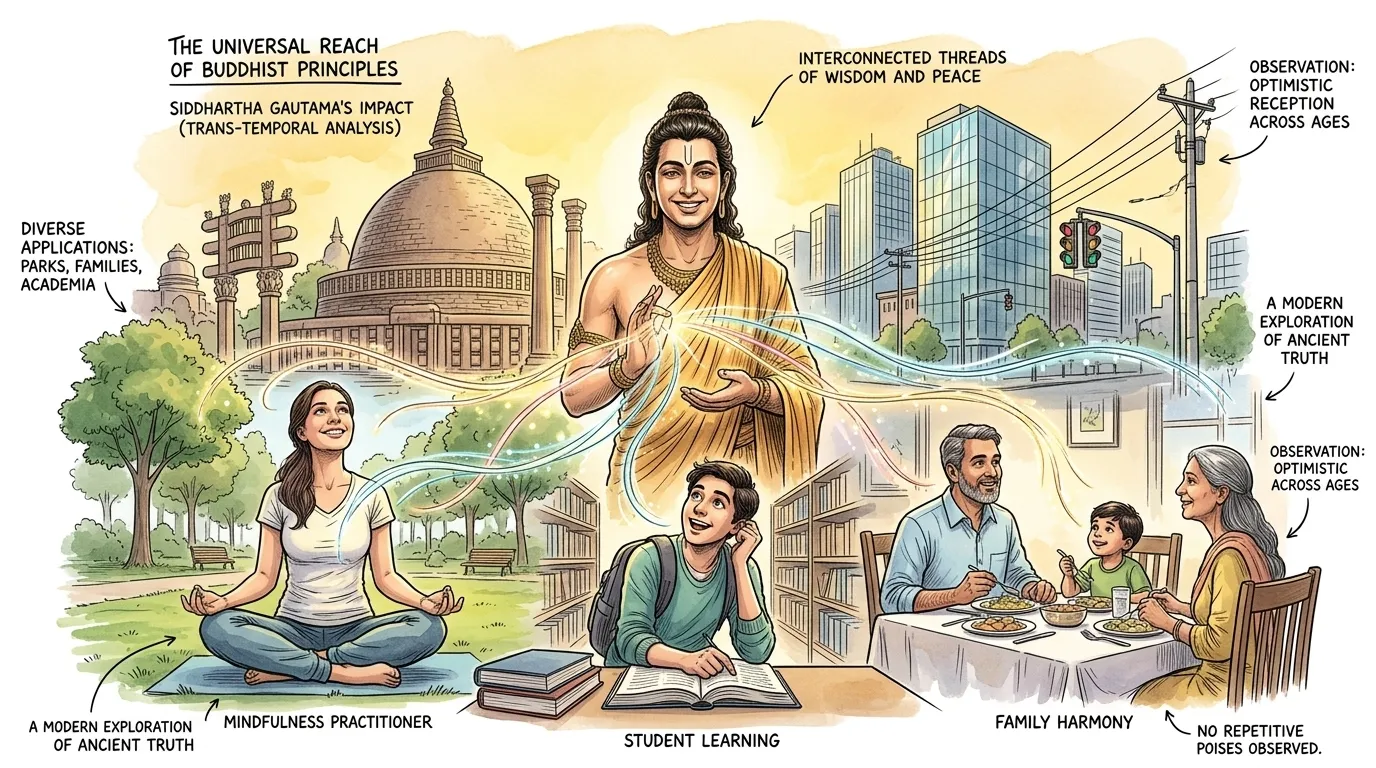
In a world saturated with fleeting pleasures and persistent suffering, the teachings of Buddha, born Siddhartha Gautama [c. 563 BCE – c. 483 BCE], offer a timeless path to inner peace. His insights into the nature of reality and the cessation of suffering continue to resonate across cultures and generations. From mindfulness practices to ethical conduct, Buddha's path provides a framework for navigating the complexities of modern life with wisdom and compassion.
Philosophy Note: The term 'Buddha' means 'awakened one' or 'enlightened one'.
Page 2
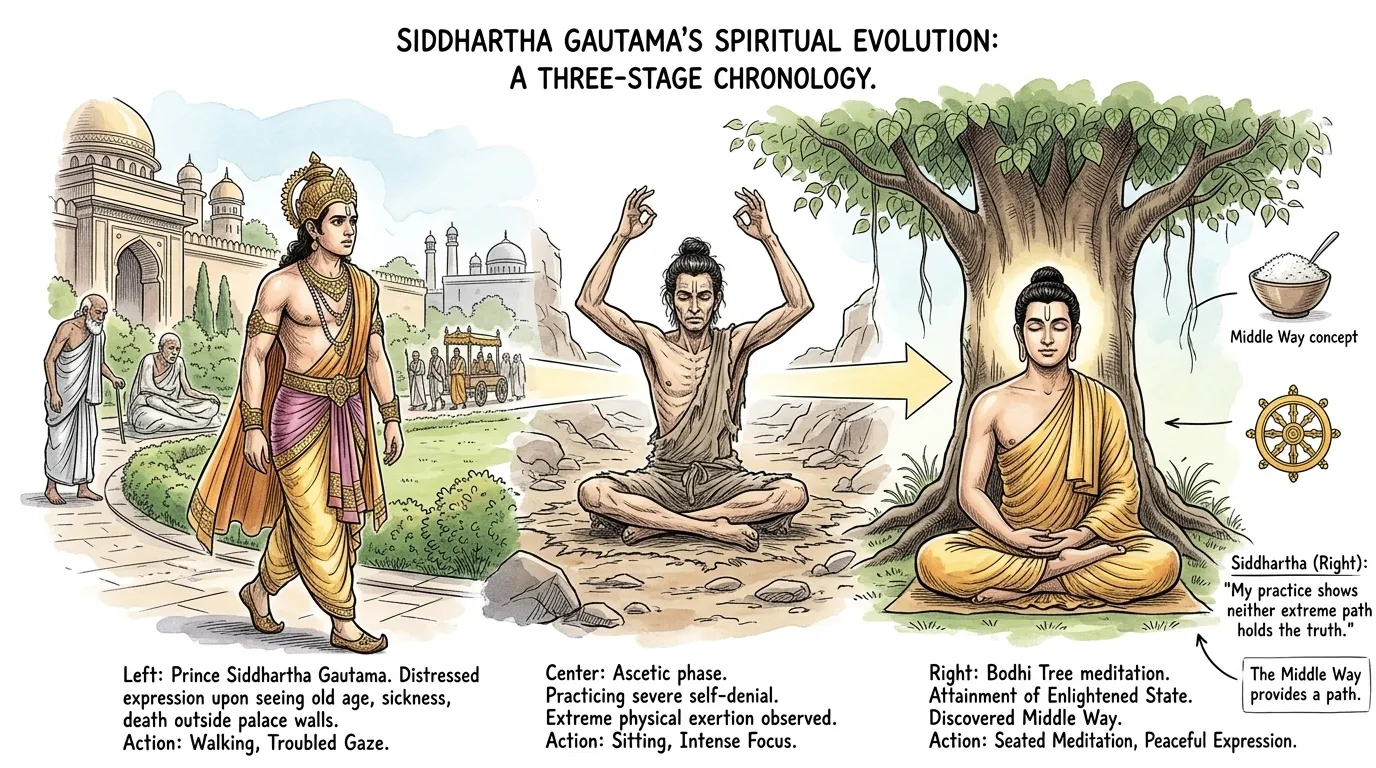
Siddhartha Gautama, a prince shielded from the harsh realities of the world, experienced a profound awakening upon encountering suffering, old age, sickness, and death. This realization compelled him to renounce his privileged life and embark on a spiritual quest. He sought answers from various religious teachers and practiced extreme asceticism [austerity], but found neither satisfying. This period of intense self-denial ultimately led him to discover the Middle Way, a path of moderation between indulgence and deprivation.
Philosophy Note: Asceticism: severe self-discipline and avoidance of all forms of indulgence, typically for religious reasons.
Page 3
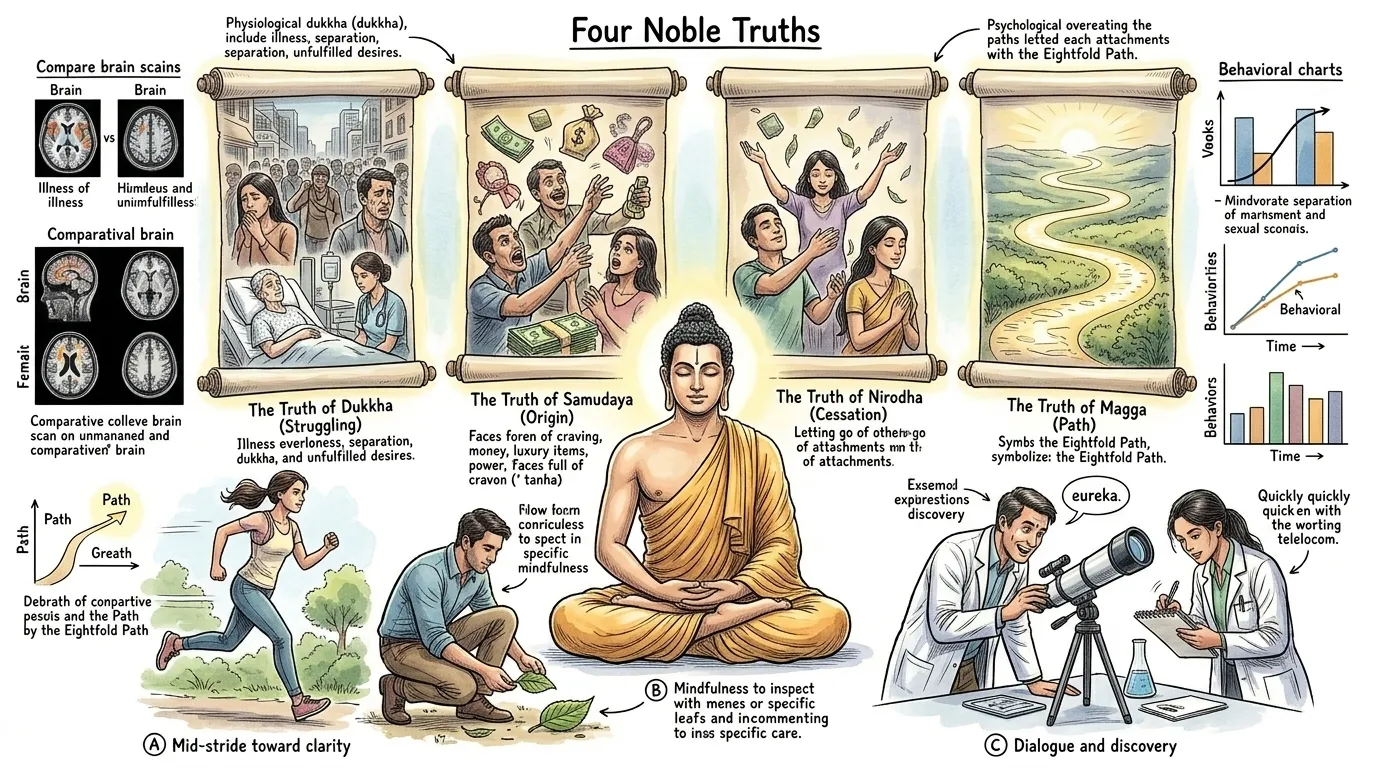
Central to Buddha's teachings are the Four Noble Truths, which provide a framework for understanding suffering and its cessation. First, life inevitably involves suffering (dukkha). Second, suffering arises from attachment and craving (tanha). Third, suffering can cease through the elimination of attachment and craving. Fourth, the path to the cessation of suffering is the Eightfold Path, a set of principles guiding ethical conduct, mental discipline, and wisdom.
Philosophy Note: Dukkha: a Pali word meaning 'suffering', 'unease', or 'dissatisfaction'.
Page 4
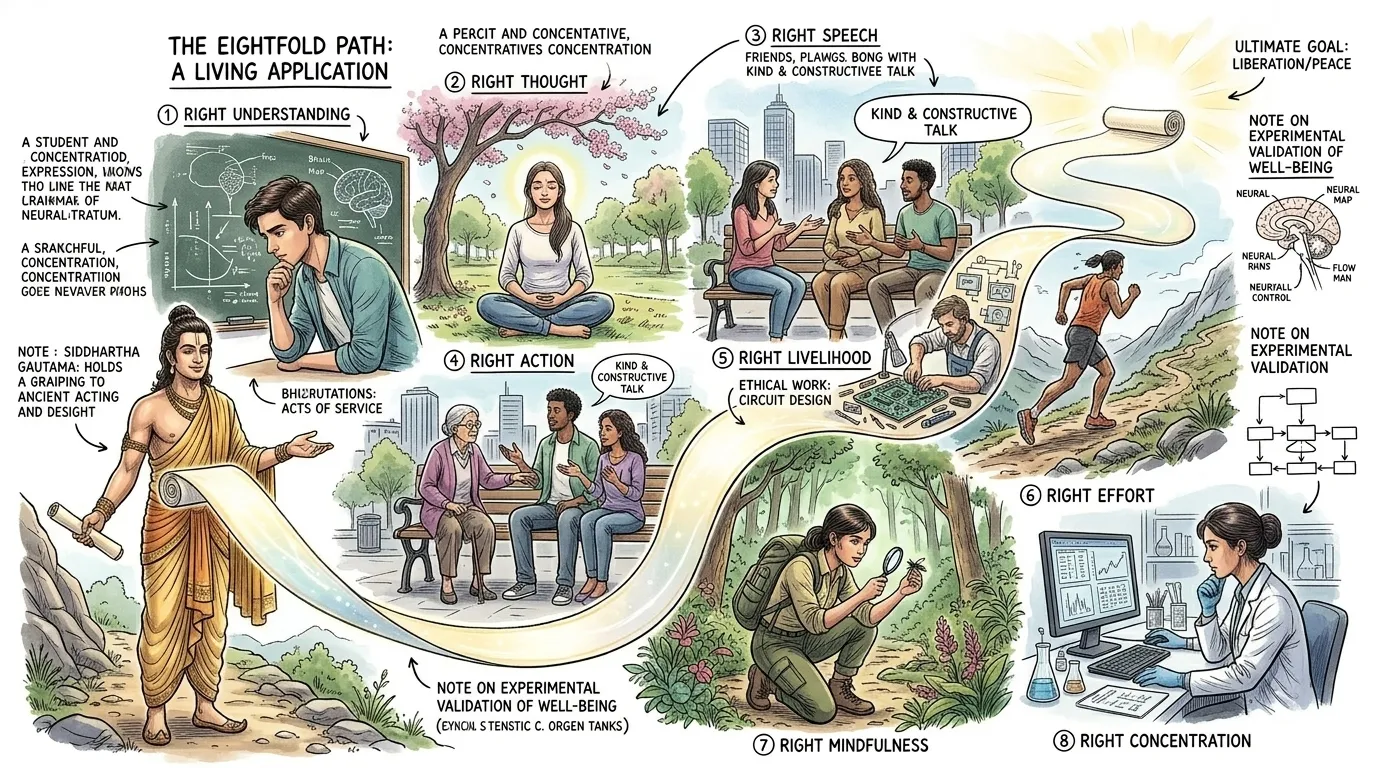
The Eightfold Path, the fourth Noble Truth, offers a practical guide for achieving liberation from suffering. It consists of: Right Understanding (correct comprehension of the Four Noble Truths), Right Thought (cultivating positive and wholesome thoughts), Right Speech (avoiding lying, slander, and harsh language), Right Action (abstaining from harmful actions), Right Livelihood (engaging in ethical occupations), Right Effort (striving to cultivate positive qualities and abandon negative ones), Right Mindfulness (paying attention to the present moment), and Right Concentration (developing focused awareness through meditation).
Philosophy Note: The Eightfold Path is often divided into three sections: wisdom, ethical conduct, and mental discipline.
Page 5
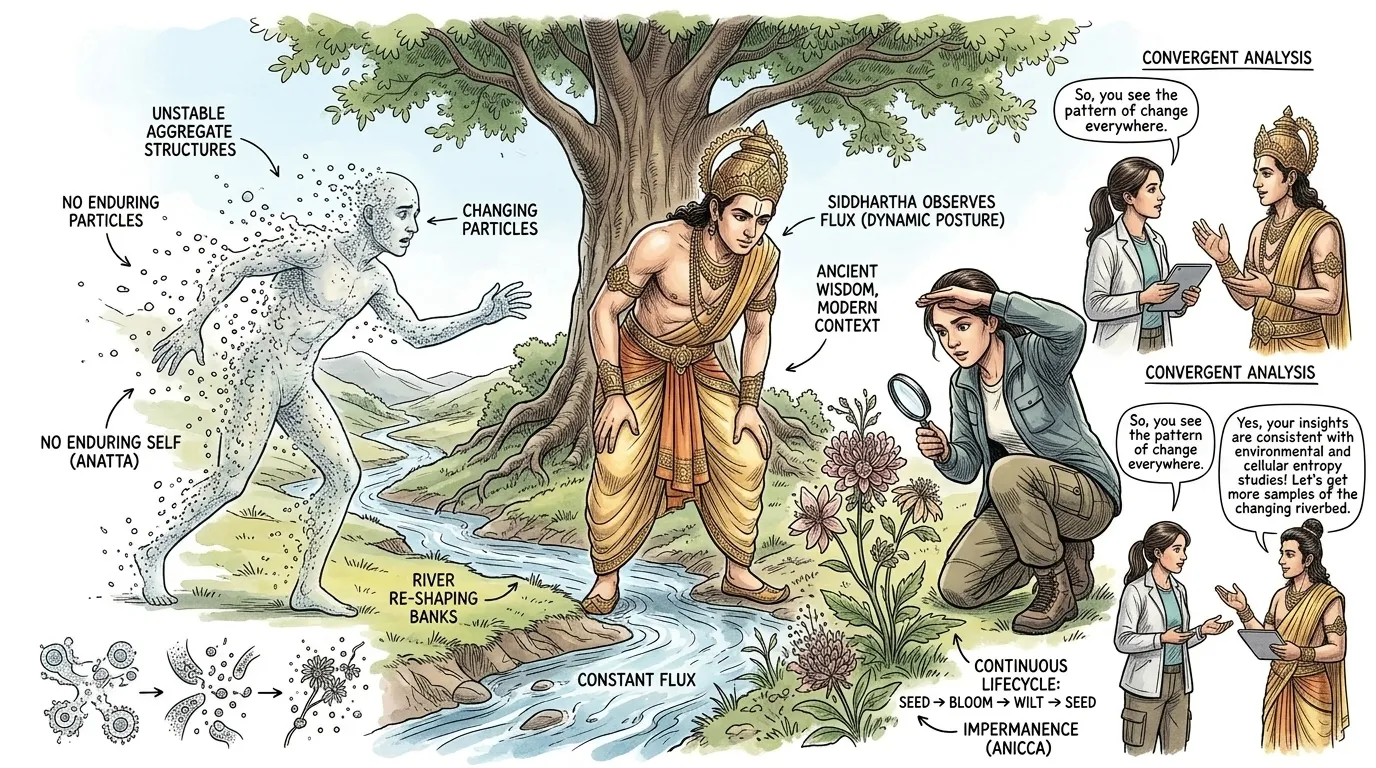
Two key concepts in Buddhist philosophy are anatta (non-self) and anicca (impermanence). Anatta challenges the notion of a fixed, permanent self, arguing that our sense of identity is a constantly changing composite of physical and mental processes. Anicca emphasizes that everything in the universe is in a state of flux, nothing remains the same. Understanding these principles helps to loosen our attachment to fixed identities and material possessions, reducing suffering.
Philosophy Note: Anatta: the doctrine of 'non-self', denying the existence of a permanent, unchanging soul.
Page 6
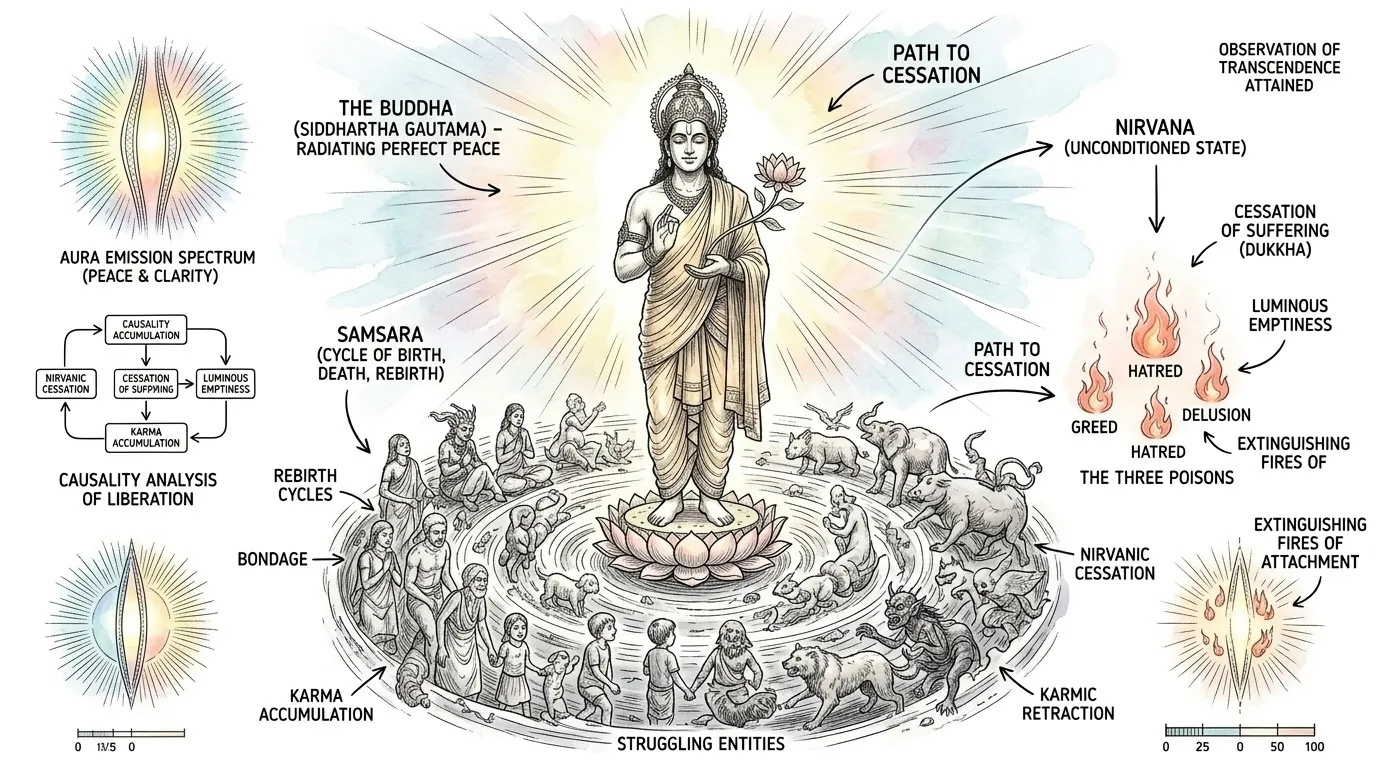
Nirvana, the ultimate goal of Buddhist practice, is the cessation of suffering and the attainment of enlightenment. It is a state beyond description, characterized by peace, freedom, and liberation from the cycle of rebirth (samsara). Nirvana is not annihilation, but rather the extinguishing of the fires of greed, hatred, and delusion that fuel suffering. It represents the realization of the true nature of reality and the attainment of ultimate happiness.
Philosophy Note: Samsara: the cycle of birth, death, and rebirth, driven by karma and attachment.
Page 7
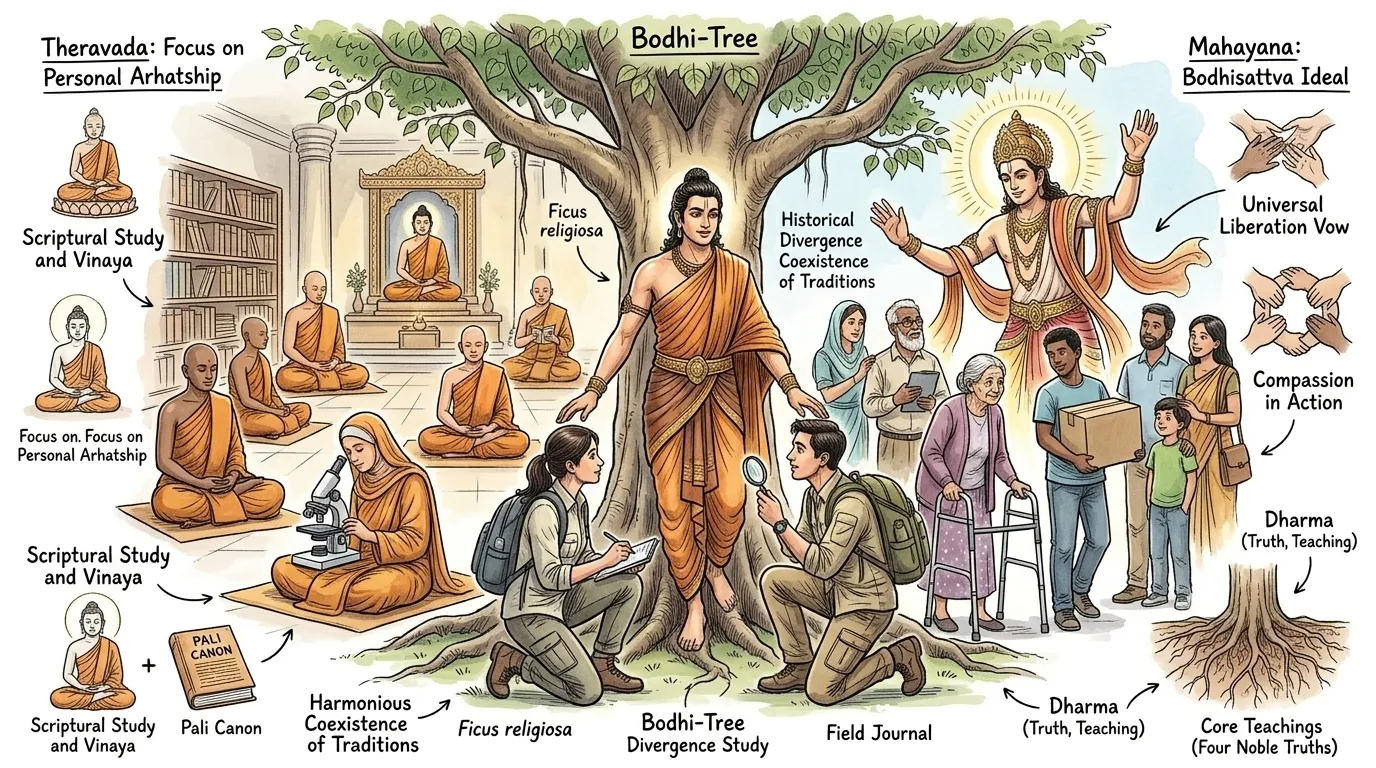
Over centuries, Buddhist teachings evolved and diverged into various schools of thought. Theravada Buddhism emphasizes personal liberation through monastic practice and adherence to the original teachings. Mahayana Buddhism emphasizes compassion and the bodhisattva ideal, where practitioners vow to postpone their own nirvana in order to help all beings achieve enlightenment. These different interpretations reflect the adaptability and enduring relevance of Buddha's core insights.
Philosophy Note: Bodhisattva: an individual who has attained enlightenment but chooses to remain in the cycle of rebirth to help others.
Page 8
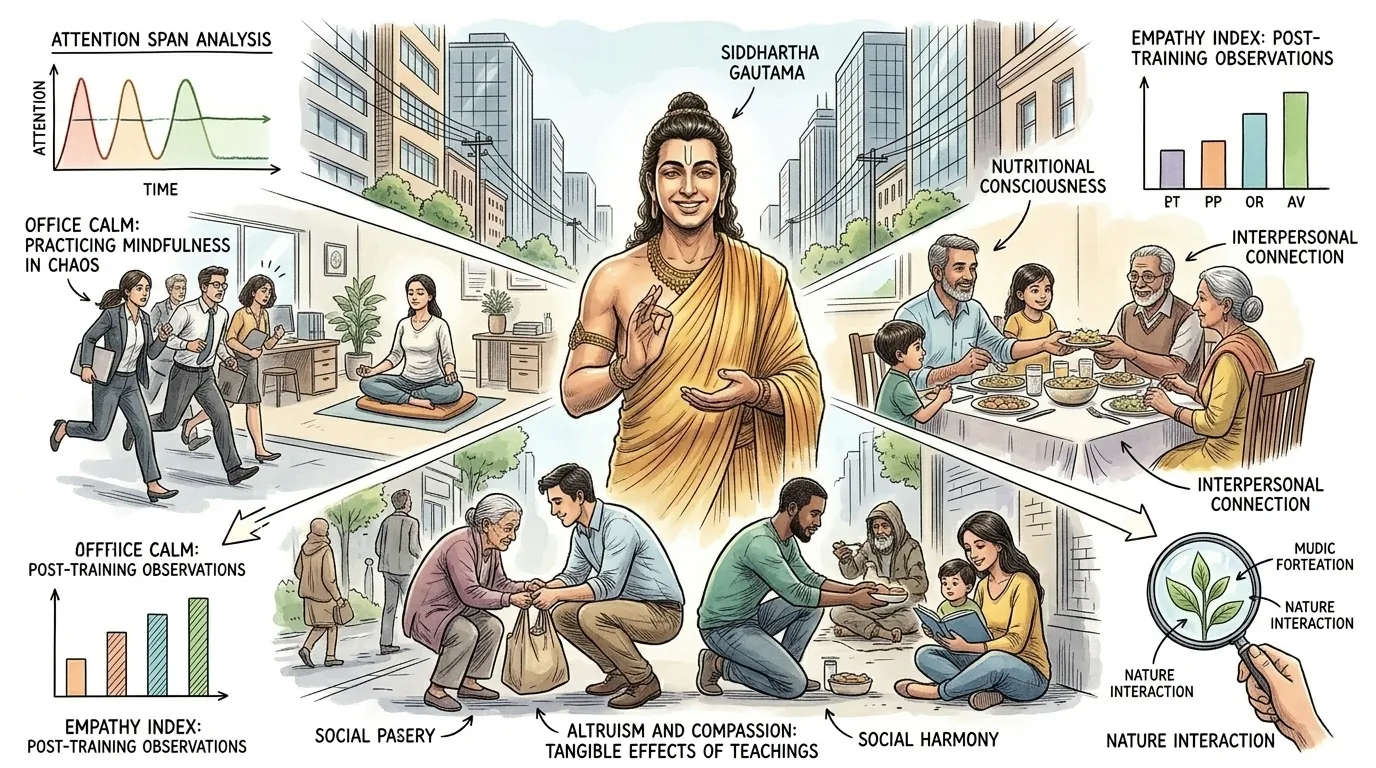
In today's fast-paced and often stressful world, the teachings of Buddha offer a valuable antidote to anxiety, discontent, and suffering. Mindfulness practices, derived from Buddhist meditation techniques, are increasingly used to promote mental well-being and reduce stress. Ethical principles such as compassion, non-violence, and honesty provide a foundation for building a more just and harmonious society. As Kofi pointed out, citing the philosopher Friedrich Nietzsche [1844-1900], "'He who has a why to live can bear almost any how'."
Philosophy Note: Mindfulness: paying attention to the present moment without judgment.
Page 9
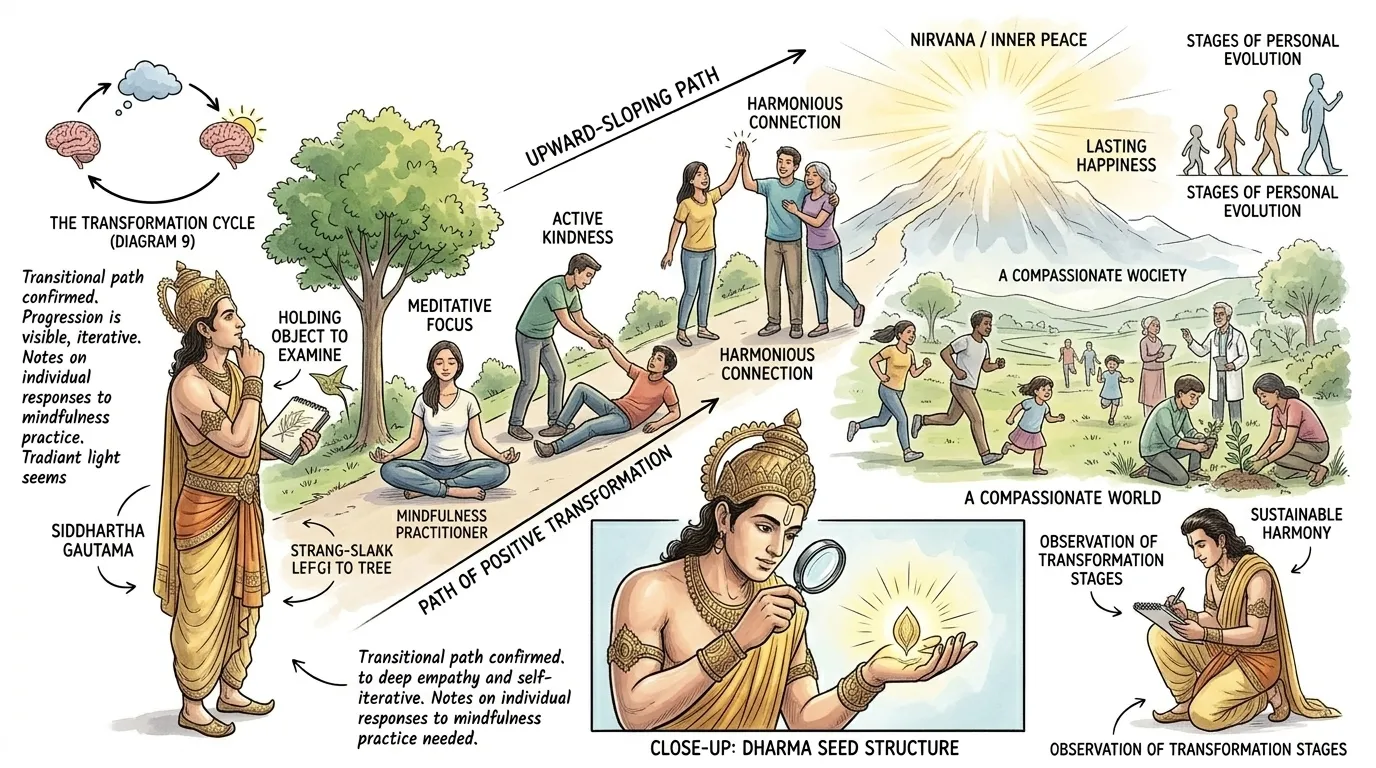
Buddha's teachings offer a path toward personal transformation and a more compassionate world. By cultivating mindfulness, ethical conduct, and wisdom, individuals can reduce suffering and find lasting happiness. While the path is not easy, the rewards of inner peace and genuine connection are well worth the effort. The relevance of Buddha's message continues to grow.
Philosophy Note: The Dalai Lama is a leading contemporary figure in promoting Buddha's teachings of peace and compassion.
Page 10
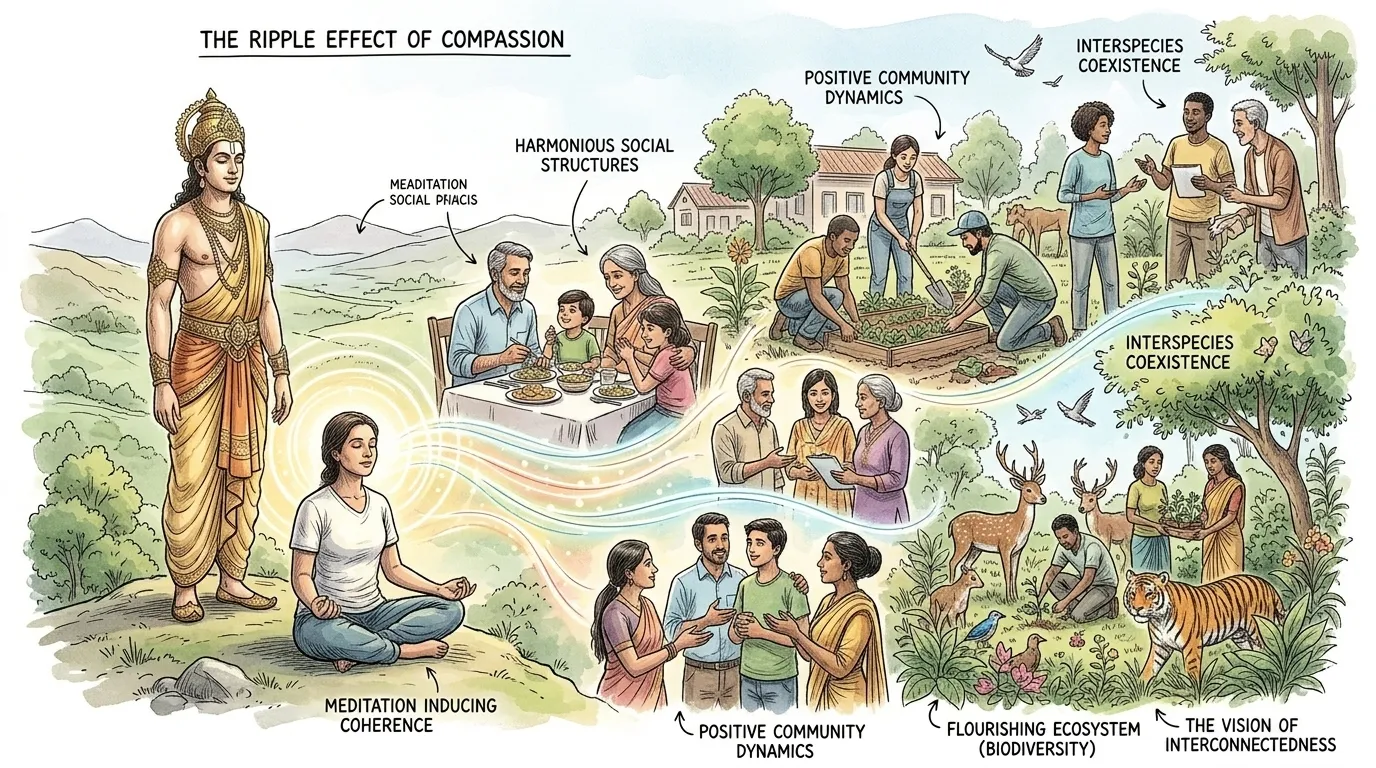
The journey toward enlightenment begins with a single step, a moment of mindfulness, a commitment to ethical action. As individuals cultivate inner peace, they create a ripple effect that extends outward, transforming their relationships, communities, and ultimately, the world. Buddha's vision of a world free from suffering remains a powerful inspiration for generations to come. By embracing compassion and wisdom, we can contribute to a brighter future for all beings.
Philosophy Note: Buddhist teachings are increasingly integrated into environmentalism, promoting sustainability and reverence for nature.
About this story
- Audience: general readers
Read Wonder Philosophy on your phone
Wonder Philosophy is available on Android and iPhone and iPad. Get Wonder Philosophy on Google Play · Get Wonder Philosophy on the App Store.