Carneades
Carneades — an illustrated philosophy story. 10 illustrated pages, free to read on Wonder Philosophy.

Page 1
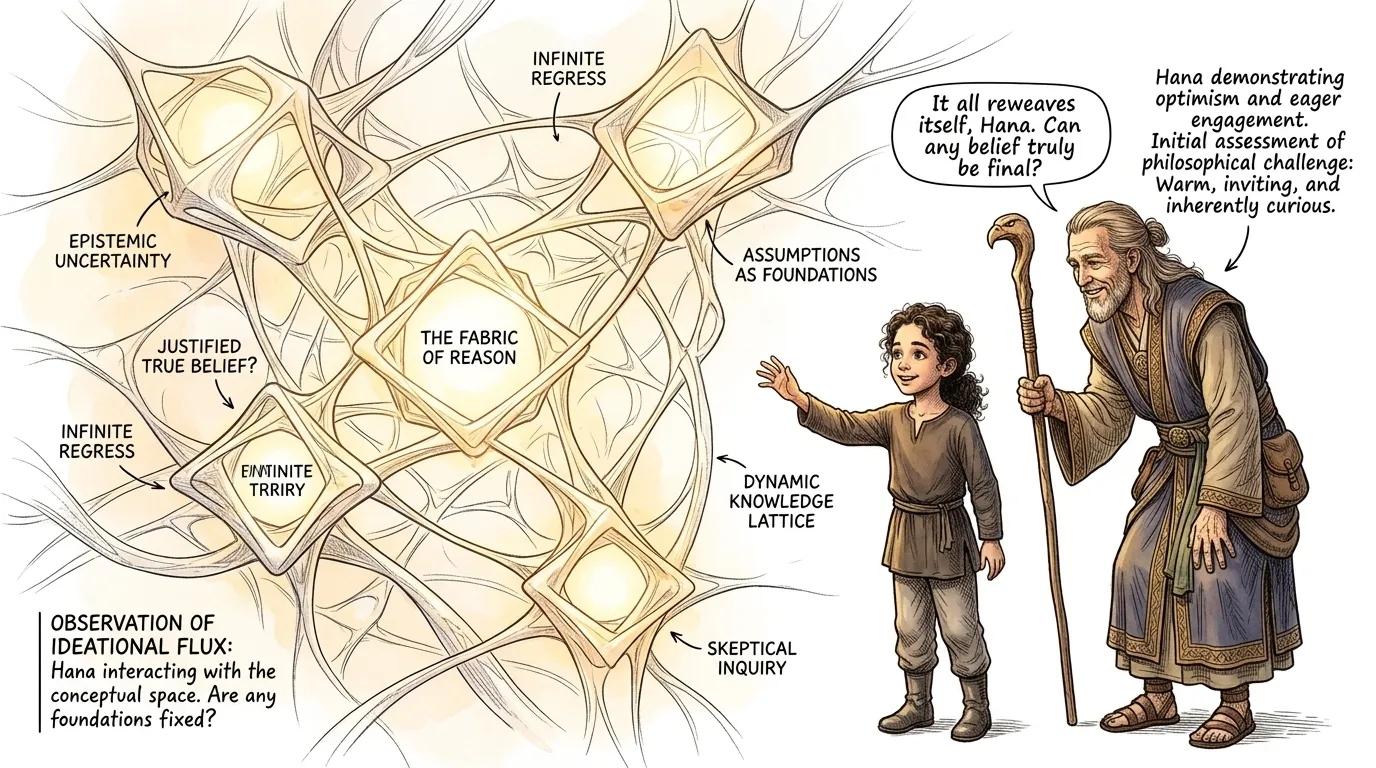
Imagine a world where nothing can be known for sure. Where every belief, every seemingly solid fact, is open to question. This was the world that Carneades, a Greek philosopher, inhabited and profoundly shaped. His radical skepticism challenged the very foundations of knowledge and morality, a challenge that still resonates today, forcing us to confront the limits of certainty in our own lives.
Philosophy Note: Carneades (c. 214 – 129 BC): Greek philosopher and founder of the New Academy, known for his skeptical arguments.
Page 2
![Born in Cyrene [214 BC], Carneades rose to prominence as the head of the New Academy in Athens, a philosophical school descended from Plato's Academy [founded…](https://thewonderbooks.com/images/stories/carneades/illustrations/carneades_page_02_v1775190925451.webp "Born in Cyrene [214 BC], Carneades rose to prominence as the head of the New Academy in Athens, a philosophical school descended from Plato's Academy [founded…")
Born in Cyrene [214 BC], Carneades rose to prominence as the head of the New Academy in Athens, a philosophical school descended from Plato's Academy [founded c. 387 BC]. But unlike his predecessors, Carneades embraced skepticism, questioning the possibility of attaining certain knowledge. He meticulously scrutinized the claims of rival philosophical schools, exposing their logical flaws and inconsistencies. His approach was not simply destructive; it was a rigorous pursuit of truth through relentless examination.
Philosophy Note: The New Academy: A skeptical philosophical school in ancient Athens, building upon earlier forms of academic skepticism.
Page 3
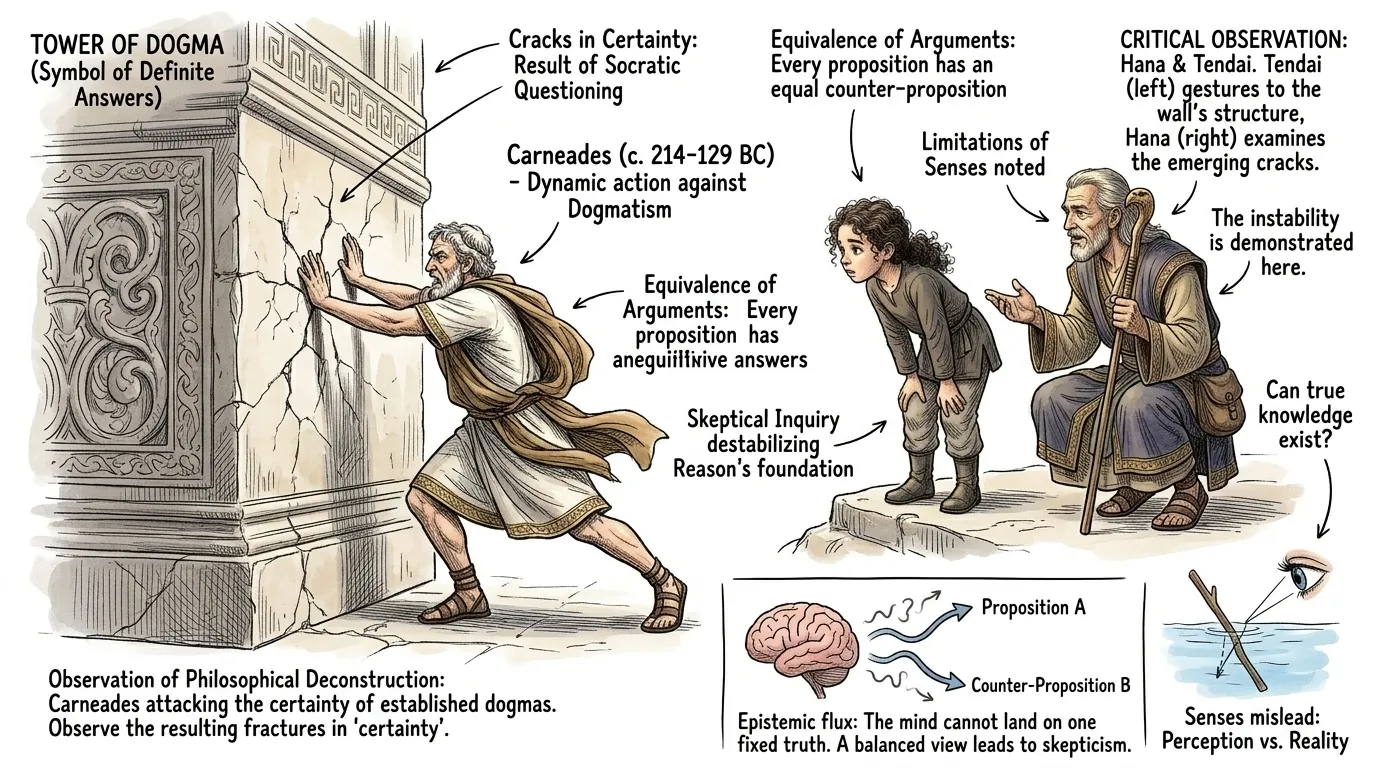
Carneades didn't just doubt; he actively challenged the 'dogmatists' – philosophers who claimed to possess definitive answers. He argued that for every proposition, an equally valid counter-proposition could be made. He questioned the reliability of the senses, the limitations of reason, and the very nature of truth. He aimed to demonstrate that clinging to rigid beliefs was not only unwarranted but also potentially harmful, blinding individuals to alternative perspectives.
Philosophy Note: Dogmatists: A term used by skeptics to describe philosophers who assert that certain knowledge is attainable.
Page 4
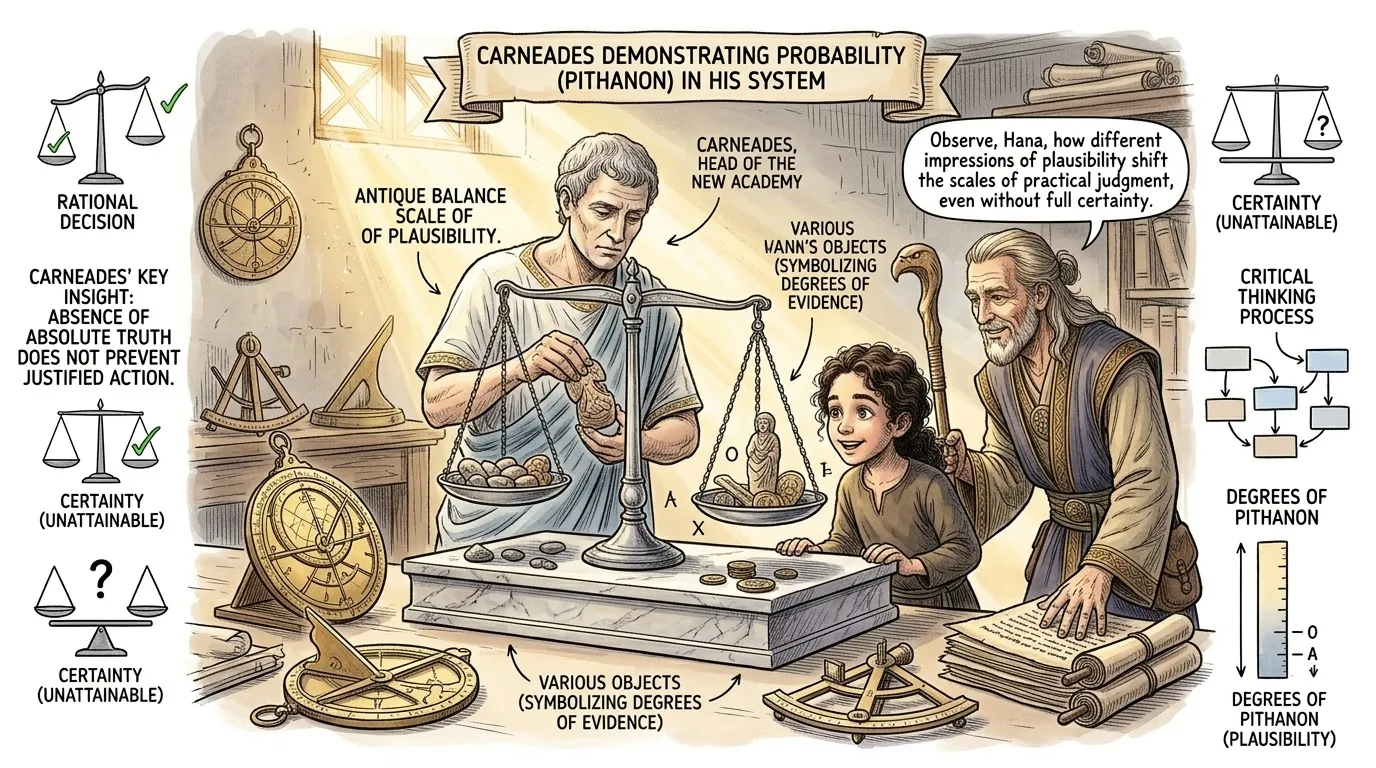
Carneades did not advocate for complete inaction or paralysis. Instead, he proposed that while absolute certainty might be unattainable, we could still make rational decisions based on probability. He developed a system for assessing the plausibility of different impressions, allowing individuals to navigate the world with a degree of confidence, even in the absence of absolute proof. This system emphasized careful observation, critical thinking, and a willingness to revise beliefs in light of new evidence.
Philosophy Note: Plausibility: Carneades argued for decision-making based on degrees of plausibility when certainty is not available.
Page 5
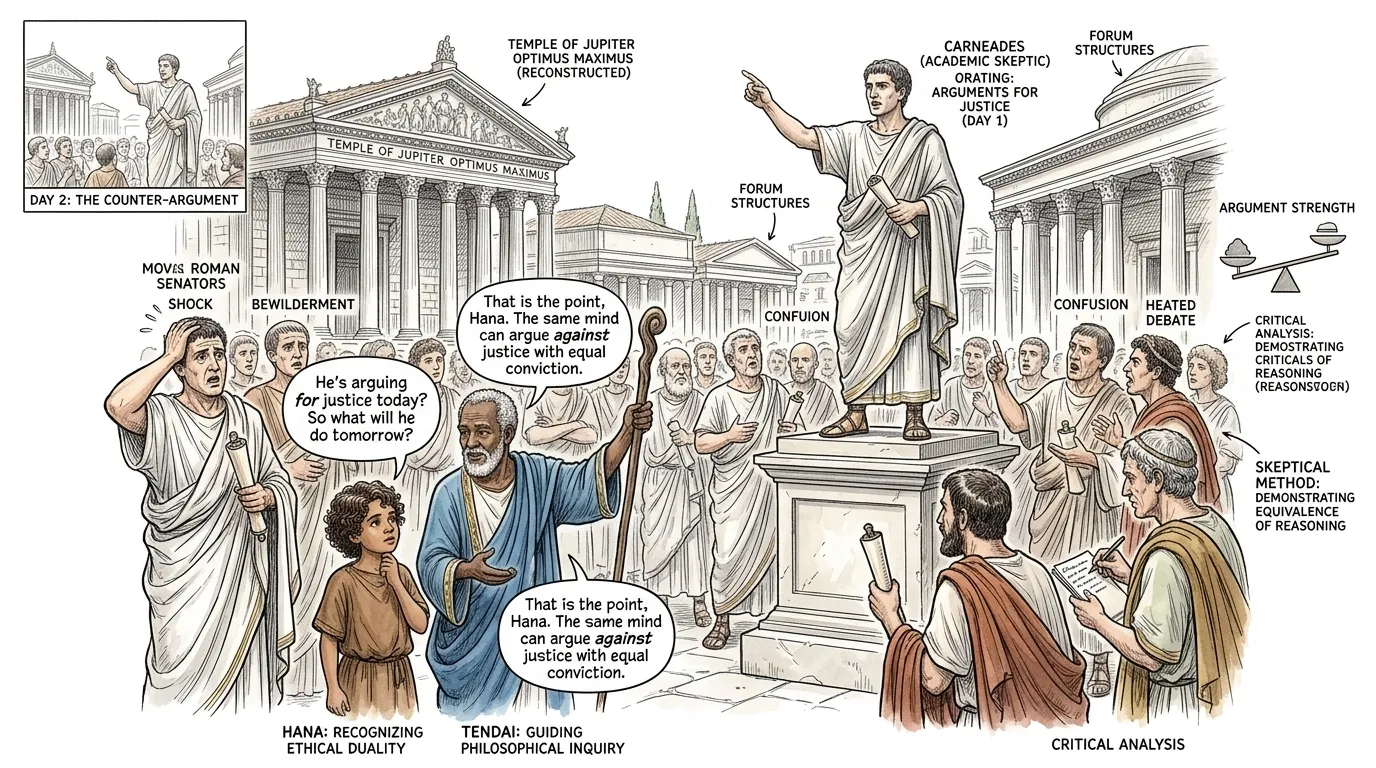
Perhaps Carneades' most controversial act was his visit to Rome in 155 BC as part of an Athenian embassy. There, he publicly argued for and against justice on successive days. He demonstrated the power of rhetoric and the relativity of moral concepts. This display shocked many Romans, who valued stability and tradition. Carneades' aim was not to undermine morality but to illustrate the complexities of ethical reasoning and the need for constant critical reflection.
Philosophy Note: Roman Embassy (155 BC): Carneades' visit to Rome sparked controversy due to his skeptical arguments on justice.
Page 6
![The Roman philosopher Cicero [106 – 43 BC], though influenced by Carneades, was also critical of his radical skepticism.](https://thewonderbooks.com/images/stories/carneades/illustrations/carneades_page_06_v1775191043422.webp "The Roman philosopher Cicero [106 – 43 BC], though influenced by Carneades, was also critical of his radical skepticism.")
The Roman philosopher Cicero [106 – 43 BC], though influenced by Carneades, was also critical of his radical skepticism. Cicero argued that while absolute certainty might be elusive, we must still strive for practical wisdom and moral virtue. He believed that society could not function if everyone doubted everything. Cicero's perspective highlights the ongoing tension between the skeptical impulse and the need for stable beliefs and values.
Philosophy Note: Cicero: Roman statesman and philosopher who engaged with Carneades' skepticism, seeking a balance between doubt and practical wisdom.
Page 7
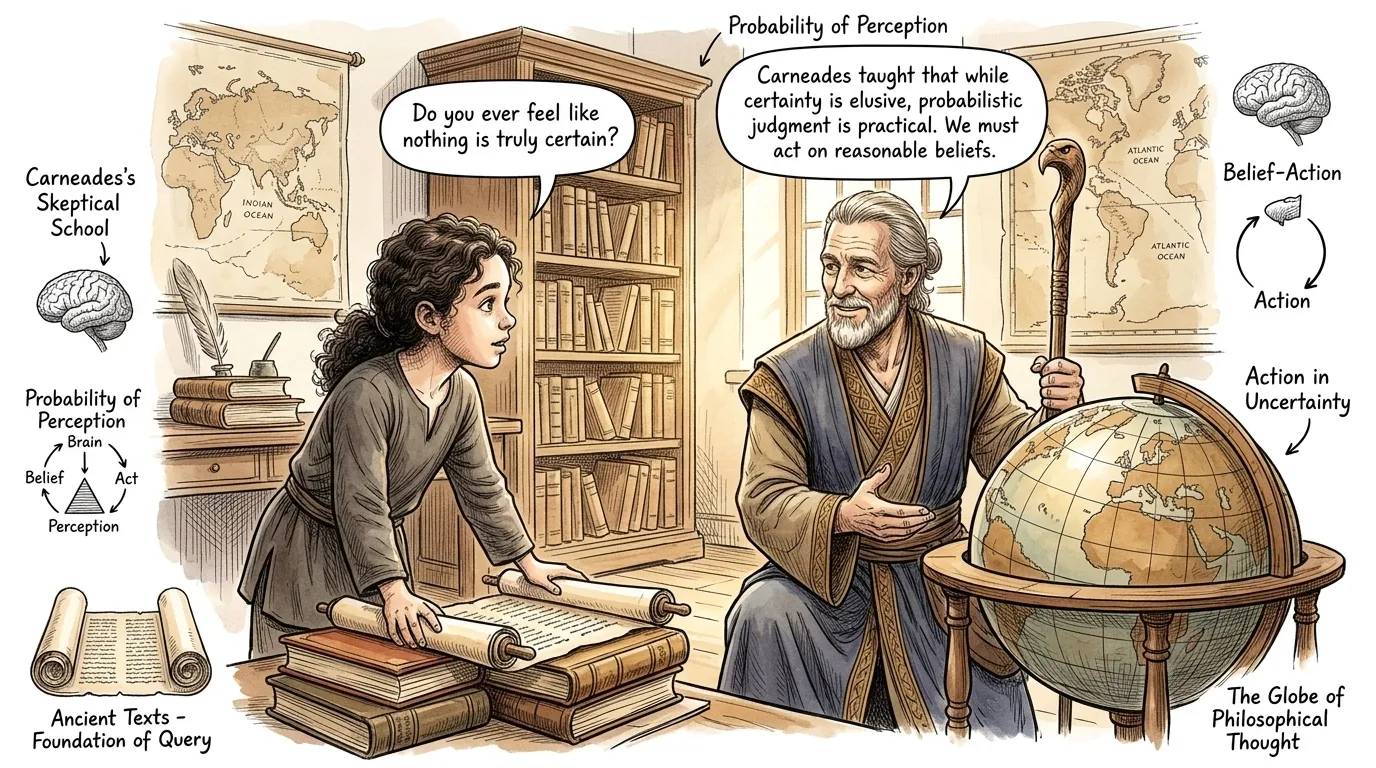
Adam turns to Tarek. "Do you ever feel like nothing is truly certain?" he asks. Tarek replies, "Well, that's what Carneades thought! But even he admitted we need to make decisions." Carneades' legacy lies not in providing easy answers but in prompting us to ask difficult questions. He challenges us to examine our assumptions, to question authority, and to remain open to the possibility that we might be wrong. His skepticism is a constant reminder of the limits of human knowledge.
""Do you ever feel like nothing is truly certain?", "Well, that's what Carneades thought! But even he admitted we need to make decisions.""
Philosophy Note: Skepticism: A philosophical approach that questions the possibility of attaining certain knowledge.
Page 8
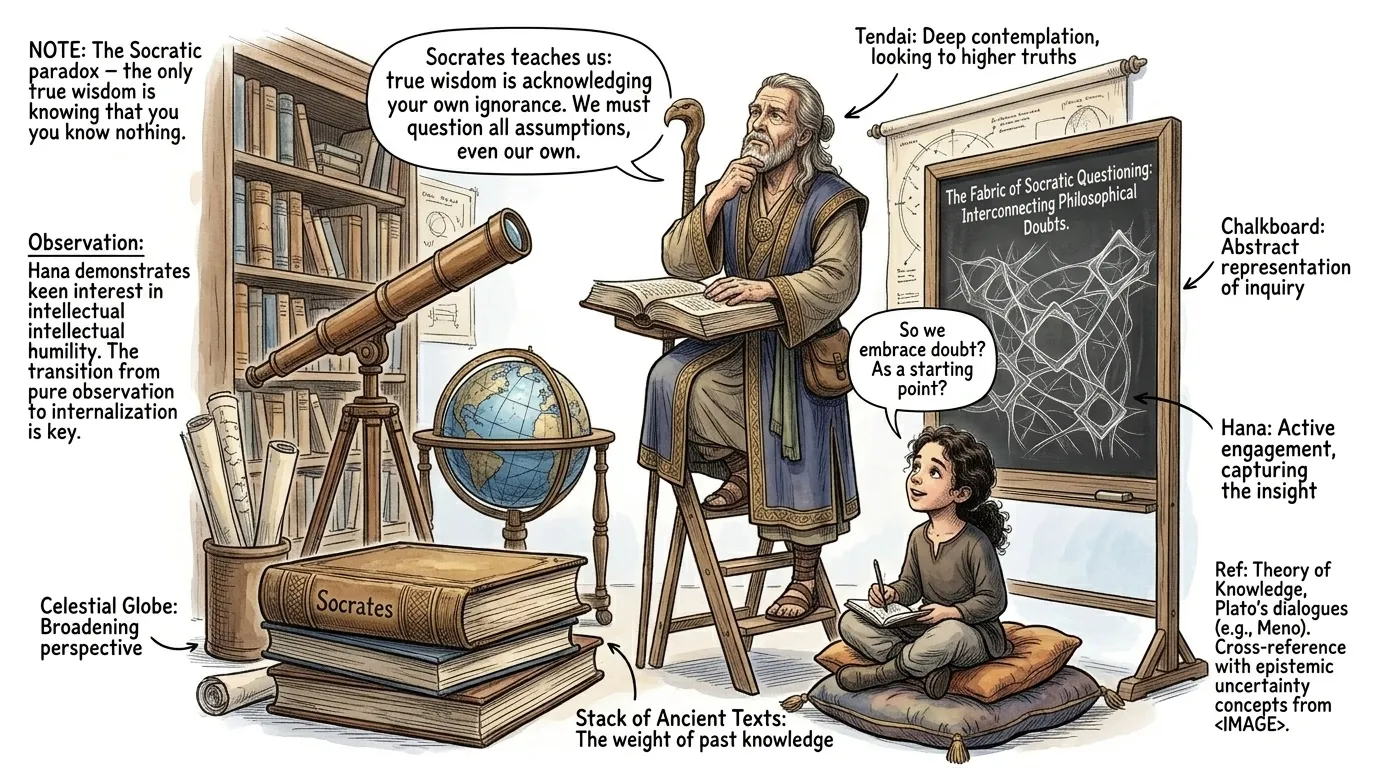
Tarek reflects, "'The only true wisdom is in knowing you know nothing,' as Socrates said. We need to question everything, just like Carneades did!" By embracing doubt, we can become more critical thinkers, more informed citizens, and more humble individuals. Carneades reminds us that intellectual humility is not a weakness but a strength – a prerequisite for genuine learning and progress.
""'The only true wisdom is in knowing you know nothing,' as Socrates said. We need to question everything, just like Carneades did!""
Philosophy Note: Socrates: Athenian philosopher known for his method of questioning and his emphasis on self-knowledge.
Page 9
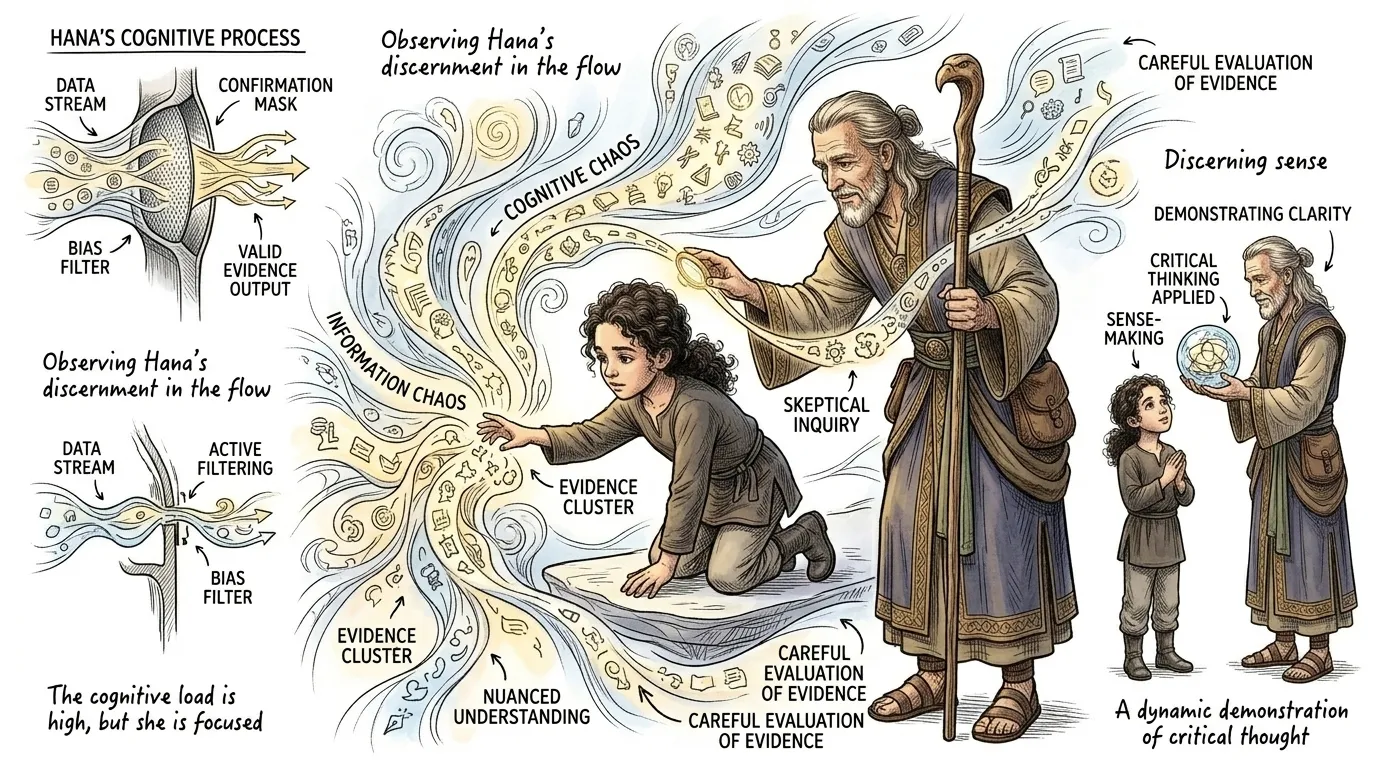
In a world awash in misinformation and propaganda, Carneades' skepticism is more relevant than ever. His emphasis on critical thinking and the careful evaluation of evidence provides a powerful antidote to dogmatism and intellectual complacency. By questioning our own beliefs and the claims of others, we can strive for a more accurate and nuanced understanding of the world.
Philosophy Note: Modern Relevance: Carneades' skepticism provides valuable tools for navigating a world filled with misinformation.
Page 10
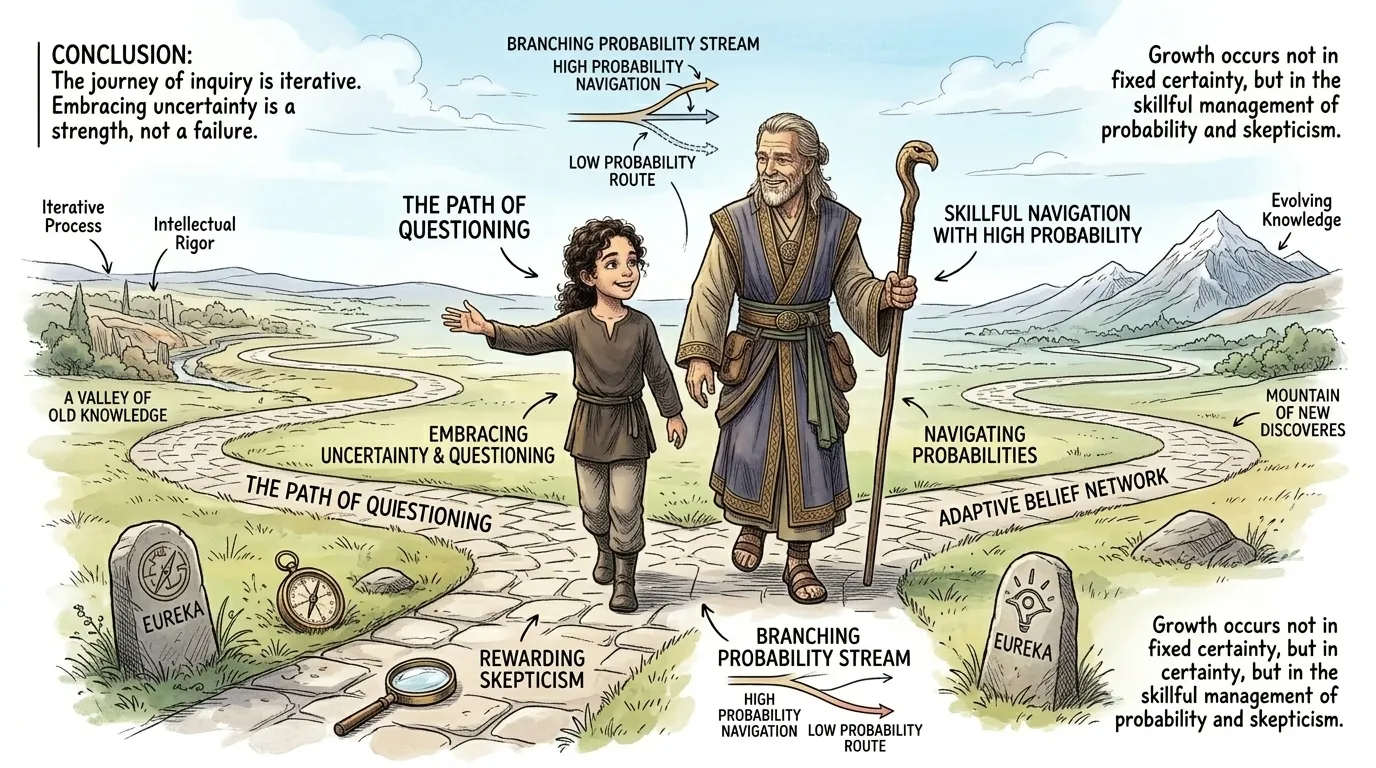
The spirit of Carneades lives on, prompting each generation to re-evaluate its assumptions and to embrace the challenging but ultimately rewarding path of intellectual honesty. To be a true seeker of knowledge is to embrace uncertainty, to question everything, and to remain forever open to the possibility of being wrong. And to navigate skillfully with high probability even when certainty is unavailable.
Philosophy Note: Intellectual Honesty: Carneades' legacy is an invitation to engage in rigorous self-reflection and a commitment to truth.
About this story
- Audience: kids (ages 6–12)
Questions and answers
Read Wonder Philosophy on your phone
Wonder Philosophy is available on Android and iPhone and iPad. Get Wonder Philosophy on Google Play · Get Wonder Philosophy on the App Store.