Diogenes
Diogenes — an illustrated philosophy story. 10 illustrated pages, free to read on Wonder Philosophy.

Page 1
![Diogenes [c. 412-323 BCE] was a philosopher unlike any other. He challenged the very foundations of society, choosing poverty and freedom over wealth and…](https://thewonderbooks.com/images/stories/diogenes/illustrations/diogenes_page_01_v1775186628311.webp "Diogenes [c. 412-323 BCE] was a philosopher unlike any other. He challenged the very foundations of society, choosing poverty and freedom over wealth and…")
Diogenes [c. 412-323 BCE] was a philosopher unlike any other. He challenged the very foundations of society, choosing poverty and freedom over wealth and status. His life was his philosophy, a living argument against convention. But why does a man who lived in a jar and openly mocked the powerful still resonate today?
Philosophy Note: Diogenes lived in the 4th century BCE, a time of great social and political change in ancient Greece.
Page 2
![Diogenes was a key figure in the Cynic school of philosophy [founded in the 4th century BCE]. The Cynics believed that virtue was the only good and that…](https://thewonderbooks.com/images/stories/diogenes/illustrations/diogenes_page_02_v1775186659910.webp "Diogenes was a key figure in the Cynic school of philosophy [founded in the 4th century BCE]. The Cynics believed that virtue was the only good and that…")
Diogenes was a key figure in the Cynic school of philosophy [founded in the 4th century BCE]. The Cynics believed that virtue was the only good and that happiness came from living in accordance with nature, rejecting social norms and material possessions. This wasn't just talk; they lived it, often embracing poverty and shocking behavior to demonstrate the absurdity of societal expectations.
Philosophy Note: Cynicism, derived from the Greek word for 'dog,' emphasized a life of simplicity and self-sufficiency.
Page 3
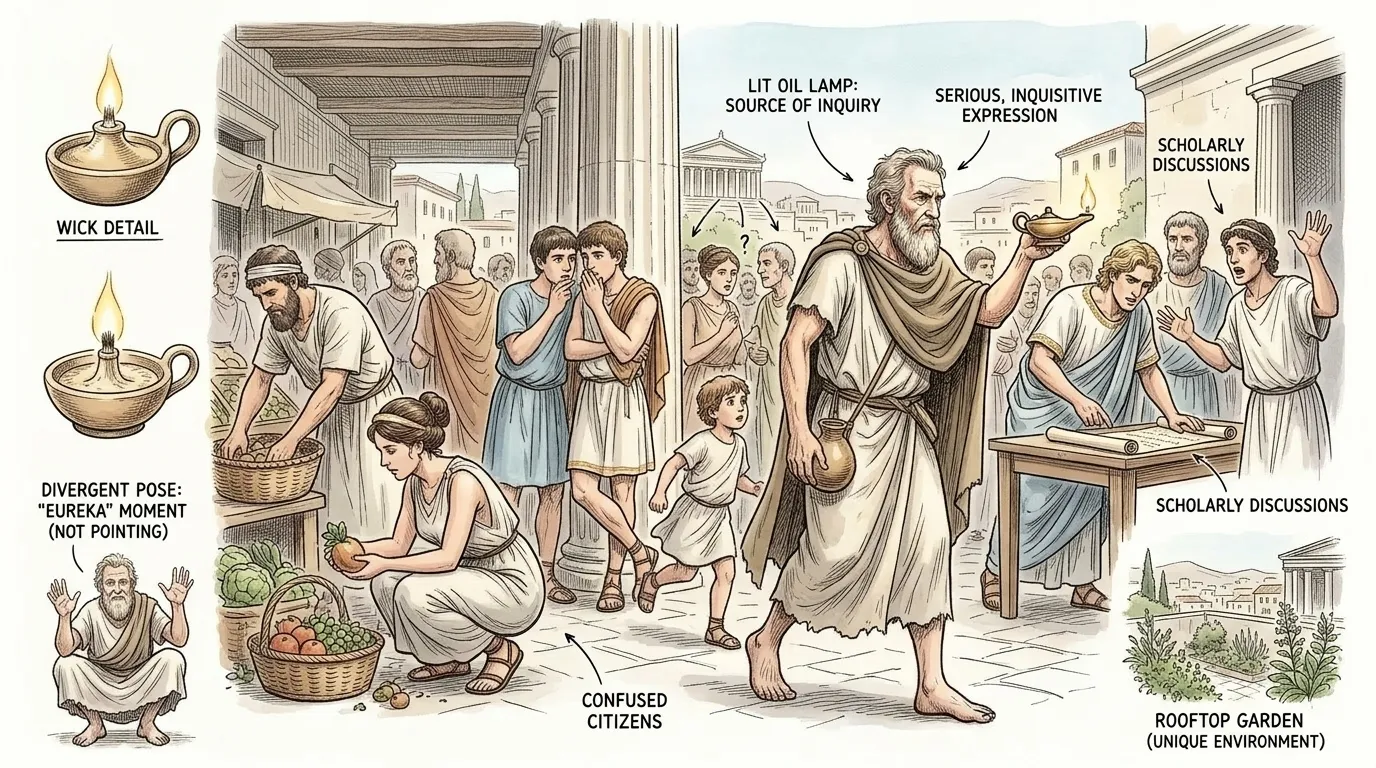
One famous anecdote perfectly illustrates Diogenes' philosophy. He was seen wandering through the streets of Athens in broad daylight, carrying a lit lamp. When asked why, he replied, 'I am looking for an honest man.' This wasn't just a quirky act; it was a powerful statement about the corruption and hypocrisy he saw in society.
Philosophy Note: Diogenes used shock tactics and satire to expose the flaws of Athenian society.
Page 4
![Perhaps the most famous story about Diogenes involves Alexander the Great [356-323 BCE]. Alexander, at the height of his power, sought out the philosopher.](https://thewonderbooks.com/images/stories/diogenes/illustrations/diogenes_page_04_v1775186744669.webp "Perhaps the most famous story about Diogenes involves Alexander the Great [356-323 BCE]. Alexander, at the height of his power, sought out the philosopher.")
Perhaps the most famous story about Diogenes involves Alexander the Great [356-323 BCE]. Alexander, at the height of his power, sought out the philosopher. He found Diogenes basking in the sun and offered him any favor he desired. Diogenes' response? 'Stand out of my sun.' This showed Diogenes' complete indifference to worldly power.
Philosophy Note: Alexander the Great admired Diogenes' spirit, reportedly saying, 'If I were not Alexander, I would be Diogenes.'
Page 5
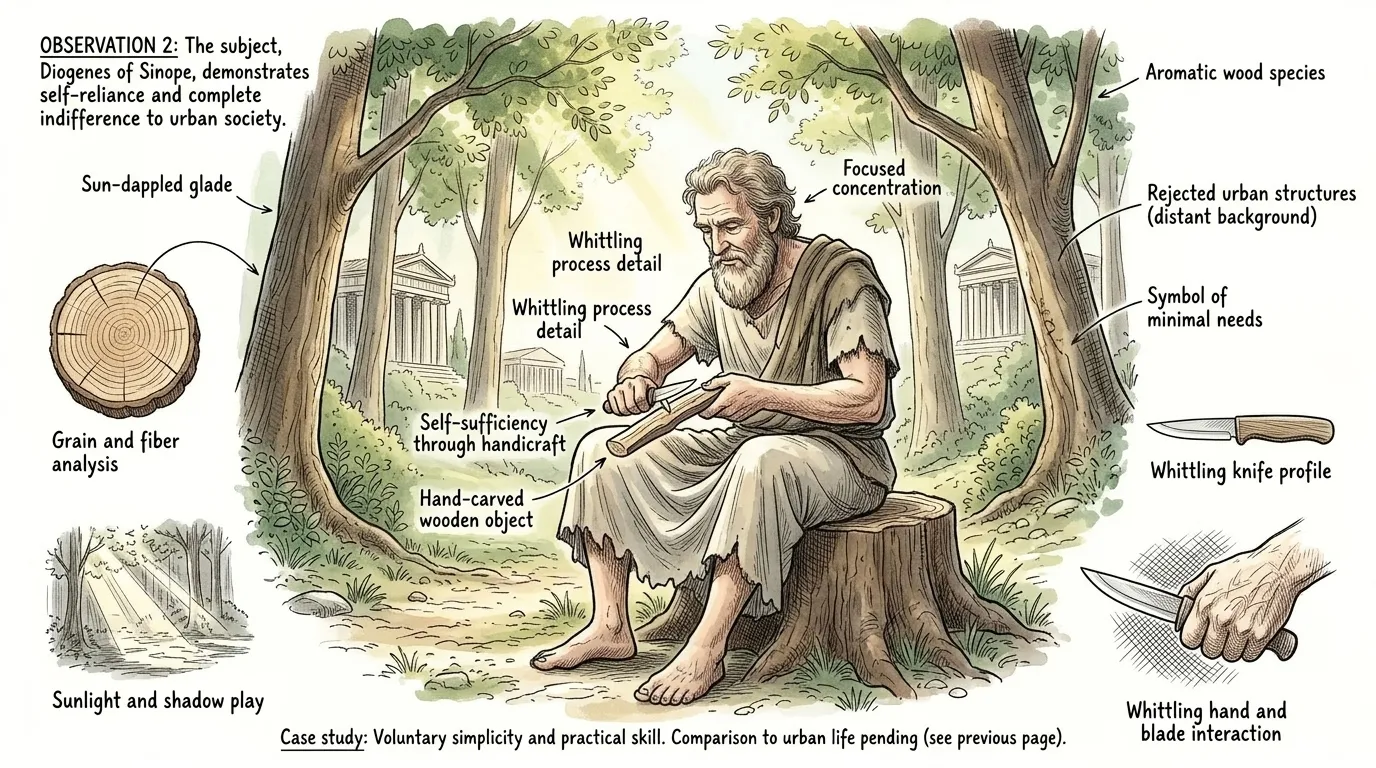
Diogenes wasn't just being rude; he was demonstrating the Cynic ideal of self-sufficiency. He believed that true freedom came not from wealth or status but from needing nothing from others. By rejecting material possessions and social expectations, he was free from the anxieties and dependencies that plagued most people.
Philosophy Note: Diogenes' simple lifestyle was a conscious rejection of the materialism and luxury that he saw as corrupting influences.
Page 6
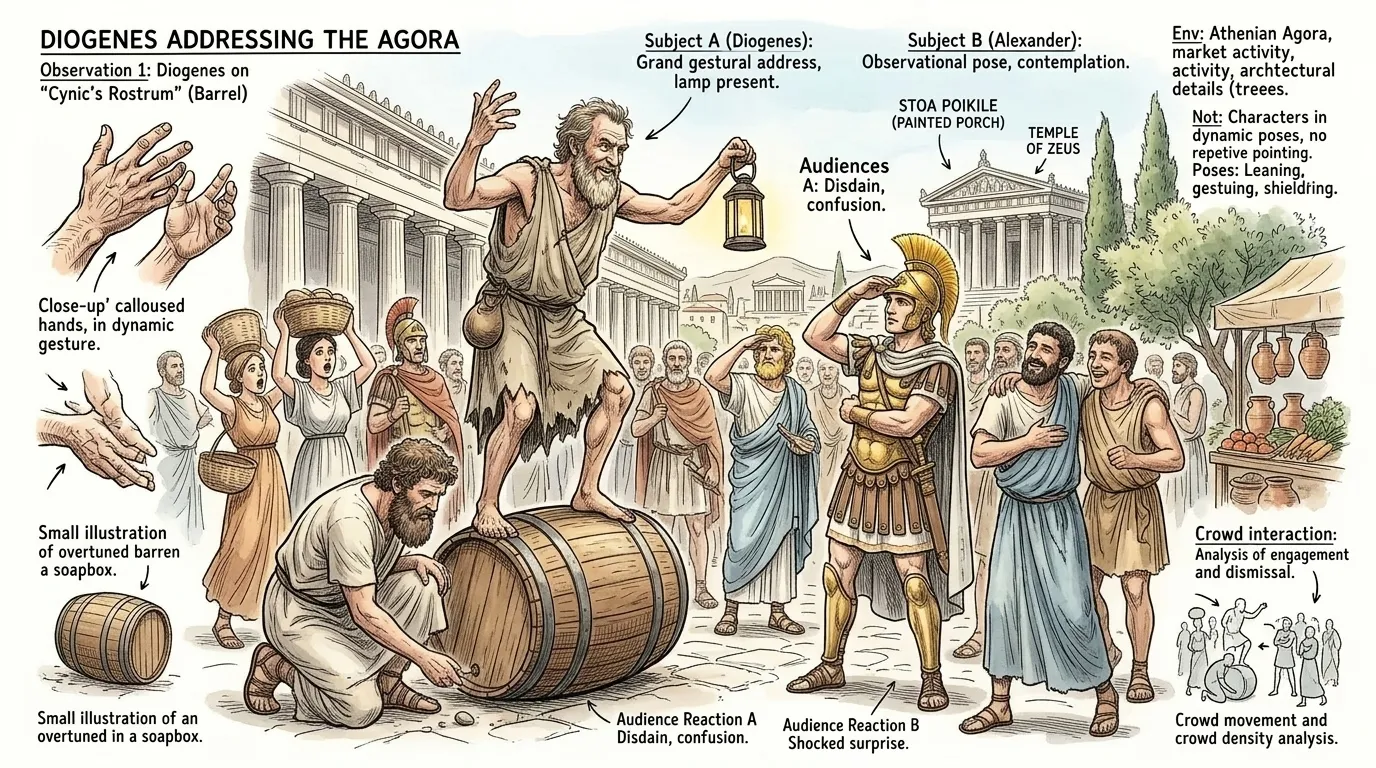
Diogenes delighted in shocking people out of their complacency. He would openly criticize societal norms, challenging accepted beliefs about wealth, power, and morality. His goal was to expose the absurdity of conventions that he believed hindered human happiness and virtue. He aimed to provoke people to think for themselves.
Philosophy Note: Diogenes used satire and public demonstrations to challenge the values of his society.
Page 7
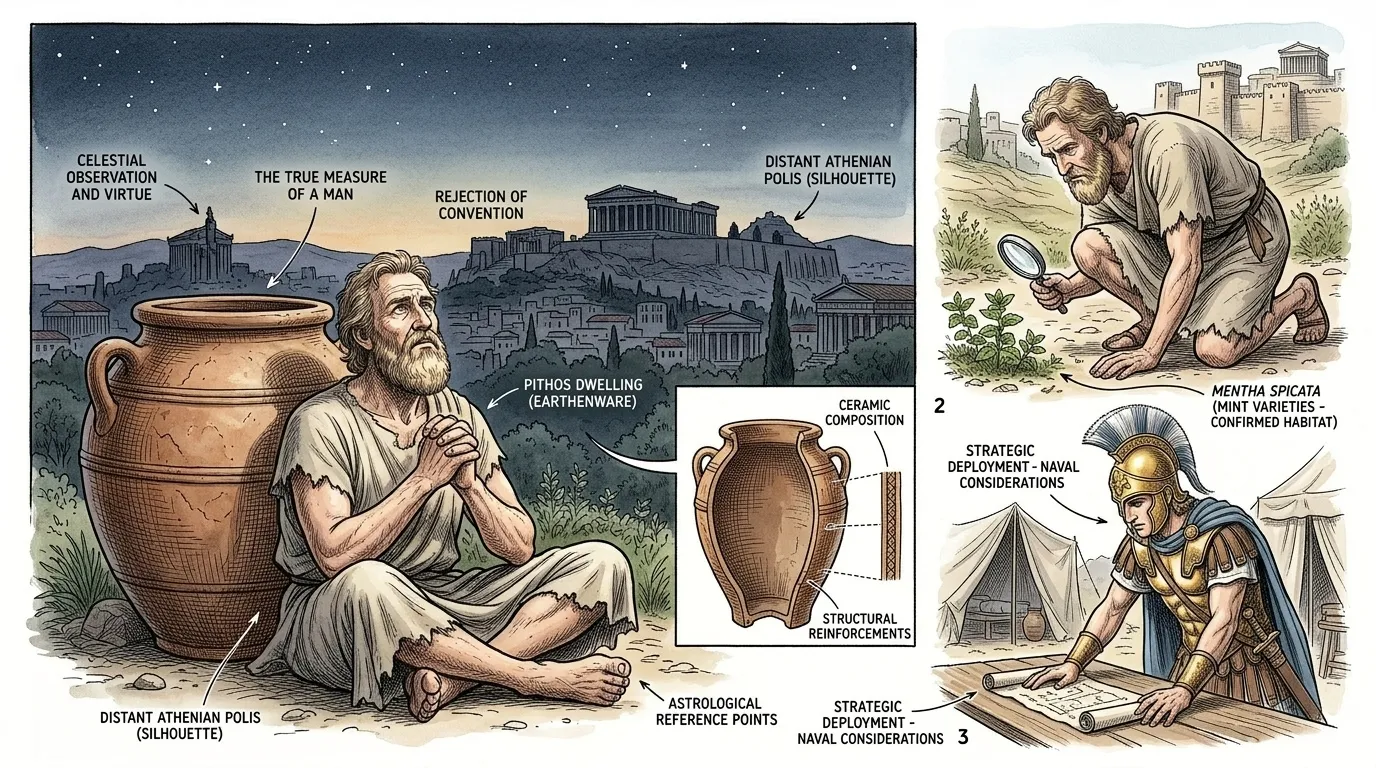
It's easy to dismiss Diogenes as just a crazy man. But beneath the eccentric behavior lay a profound philosophical message. He was asking fundamental questions about what truly matters in life. Is happiness found in material possessions and social status, or in inner freedom and virtue? This question is as relevant today as it was in ancient Greece.
Philosophy Note: Diogenes' philosophy challenges us to question our own values and priorities.
Page 8
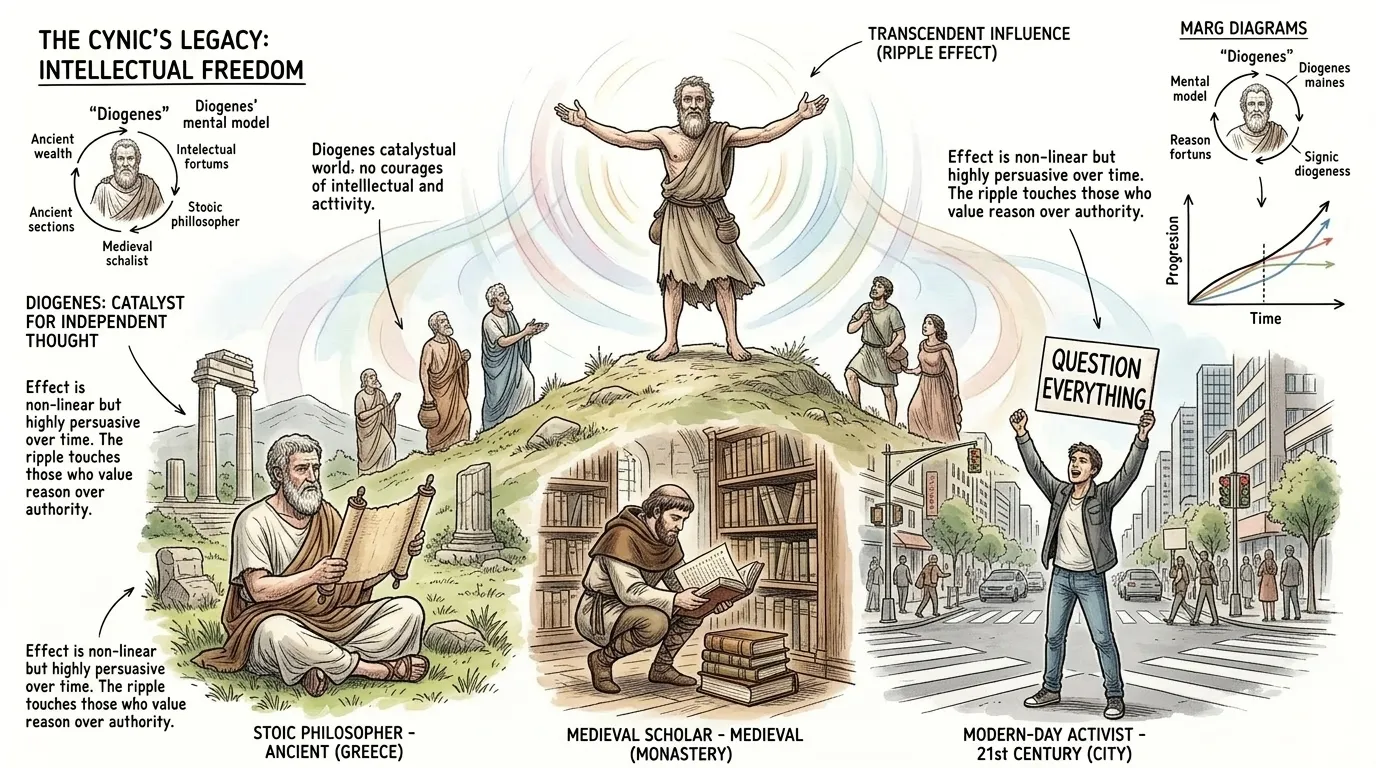
Diogenes' influence can be seen in later philosophical movements, such as Stoicism, which also emphasized virtue and self-control. His radical critique of society continues to inspire those who question authority and seek a simpler, more authentic way of life. He remains a symbol of intellectual freedom and the courage to challenge the status quo. As Gandhi said, 'Be the change that you wish to see in the world'. Diogenes lived that change.
Philosophy Note: Diogenes' ideas have resonated with social reformers and counter-cultural movements throughout history.
Page 9

In a world obsessed with consumerism and social media validation, Diogenes' message is more important than ever. He reminds us to question the values imposed upon us by society and to define our own path to happiness. His life is a challenge to live simply, authentically, and in accordance with our own principles, rather than chasing fleeting pleasures and external approval.
Philosophy Note: Diogenes' philosophy offers a powerful antidote to the pressures of modern life.
Page 10
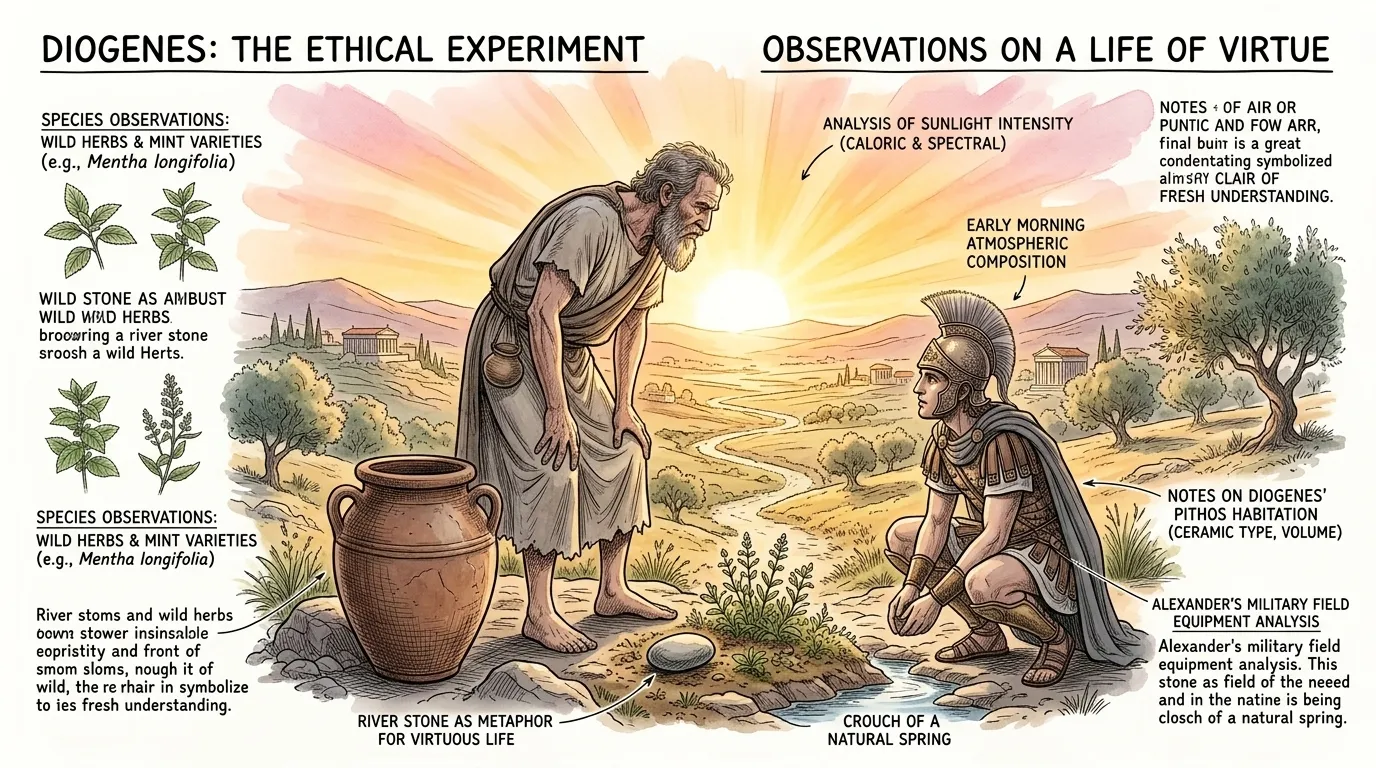
Diogenes' life was a radical experiment in living. He stripped away the non-essentials to reveal what truly mattered: virtue, freedom, and self-sufficiency. He may have lived in a jar, but his ideas continue to challenge and inspire us to live more meaningful lives. He showed us the importance of questioning everything, even ourselves.
Philosophy Note: Diogenes' legacy reminds us that a life examined is a life worth living.
About this story
- Audience: general readers
Read Wonder Philosophy on your phone
Wonder Philosophy is available on Android and iPhone and iPad. Get Wonder Philosophy on Google Play · Get Wonder Philosophy on the App Store.