Seneca
Seneca — an illustrated philosophy story. 10 illustrated pages, free to read on Wonder Philosophy.

Page 1
![Seneca, a Roman Stoic philosopher, lived a life of immense power and privilege, serving as an advisor to Emperor Nero [54-68 AD].](https://thewonderbooks.com/images/stories/seneca/illustrations/seneca_page_01_v1775188228066.webp "Seneca, a Roman Stoic philosopher, lived a life of immense power and privilege, serving as an advisor to Emperor Nero [54-68 AD].")
Seneca, a Roman Stoic philosopher, lived a life of immense power and privilege, serving as an advisor to Emperor Nero [54-68 AD]. Yet, he championed a philosophy of simplicity, virtue, and acceptance of what we cannot control. Why does his wisdom resonate today?
Philosophy Note: Stoicism: An ancient Greek philosophy emphasizing virtue, reason, and living in accordance with nature.
Page 2
![Born in Cordoba [4 BC – 65 AD], Seneca's intellectual prowess led him to Rome, where he became a prominent figure. He tutored the young Nero, hoping to guide…](https://thewonderbooks.com/images/stories/seneca/illustrations/seneca_page_02_v1775188261022.webp "Born in Cordoba [4 BC – 65 AD], Seneca's intellectual prowess led him to Rome, where he became a prominent figure. He tutored the young Nero, hoping to guide…")
Born in Cordoba [4 BC – 65 AD], Seneca's intellectual prowess led him to Rome, where he became a prominent figure. He tutored the young Nero, hoping to guide him towards just and virtuous rule. However, Nero's reign descended into tyranny, and Seneca found himself increasingly at odds with the emperor.
Philosophy Note: Nero: Roman Emperor known for his extravagance, cruelty, and alleged role in the Great Fire of Rome.
Page 3
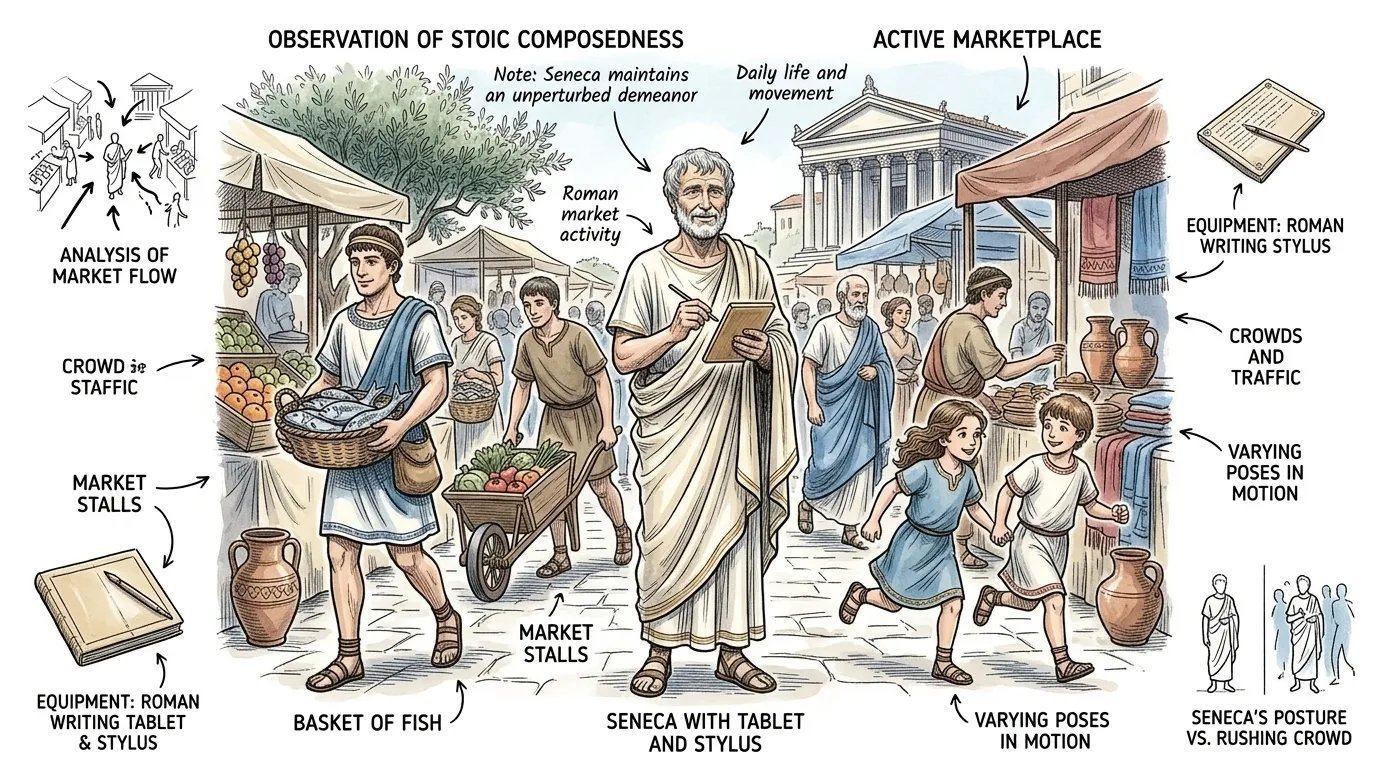
Seneca embraced Stoicism, a philosophy that teaches emotional resilience and acceptance of fate. Stoics believe that virtue is the only good, and external events like wealth, health, or reputation are indifferent – neither good nor bad in themselves. Seneca's writings offered guidance on how to navigate life's inevitable hardships with equanimity.
Philosophy Note: Virtue: Moral excellence; conformity to a standard of right.
Page 4
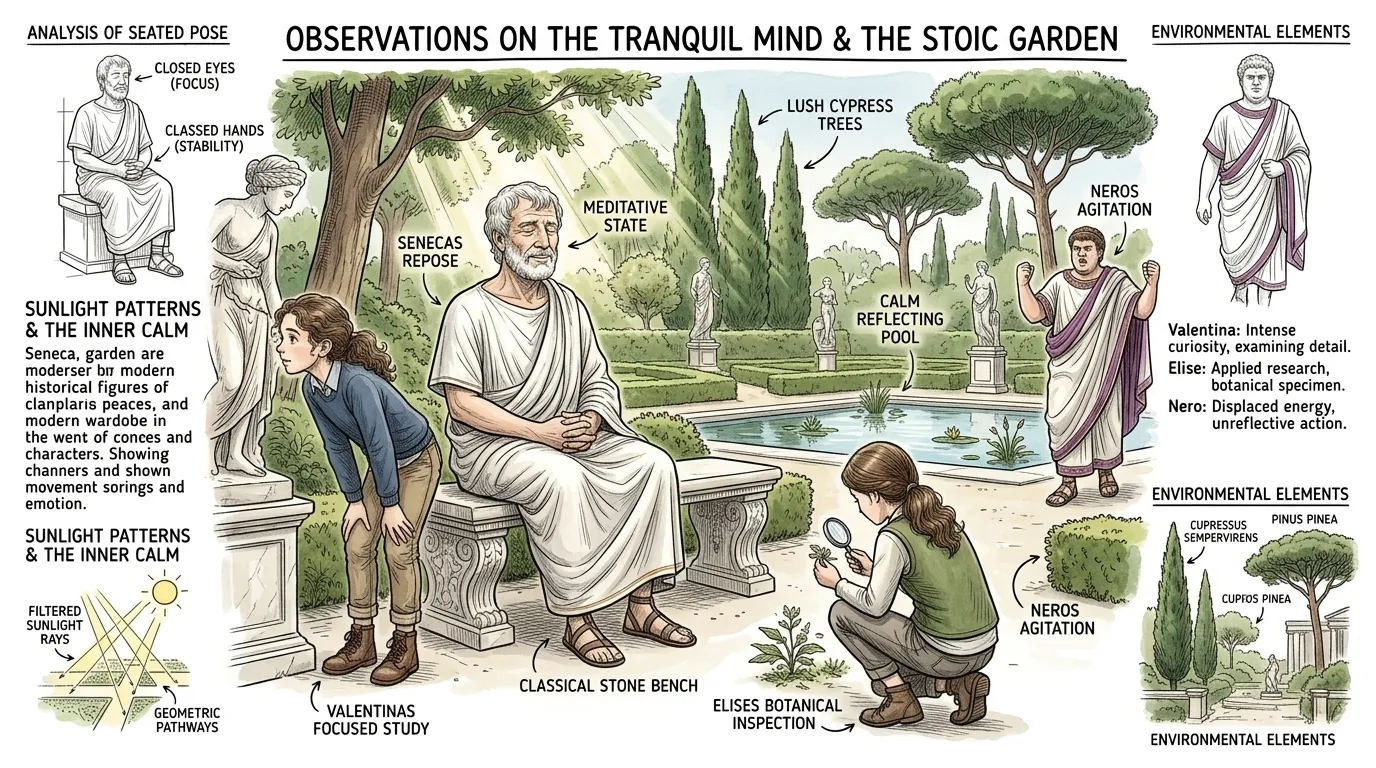
Seneca argued that we should focus our energy on what we can control: our thoughts, actions, and character. External events, the opinions of others, and even death are beyond our control and should not be feared. By accepting what we cannot change, we free ourselves from anxiety and find inner peace.
Philosophy Note: Equanimity: Mental calmness and composure, especially in a difficult situation.
Page 5
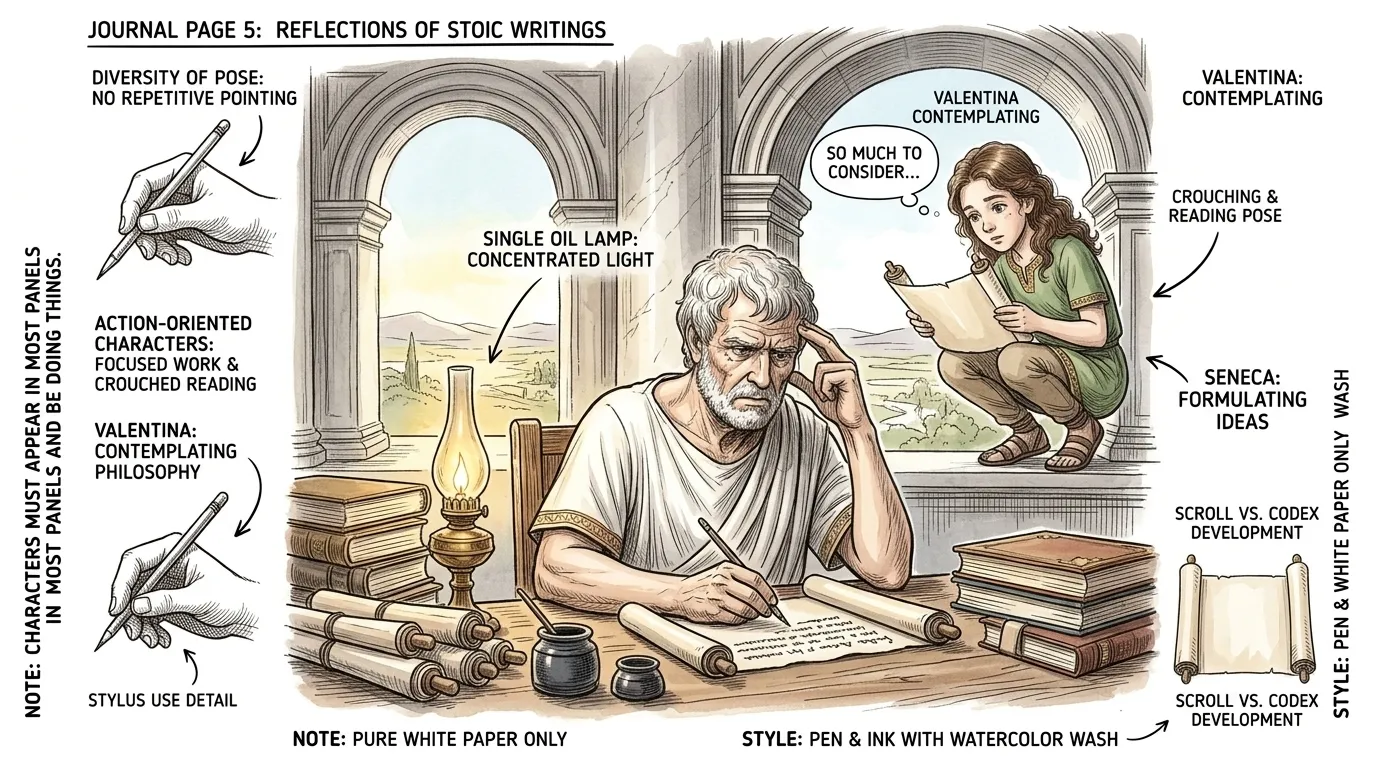
Seneca's 'Letters from a Stoic' offer practical advice on living a virtuous life. He encourages readers to practice gratitude, confront their fears, and live in accordance with reason and nature. His letters are filled with insights on how to overcome adversity, manage emotions, and find meaning in life.
Philosophy Note: 'Letters from a Stoic': A collection of 124 letters written by Seneca offering moral guidance and practical philosophy.
Page 6
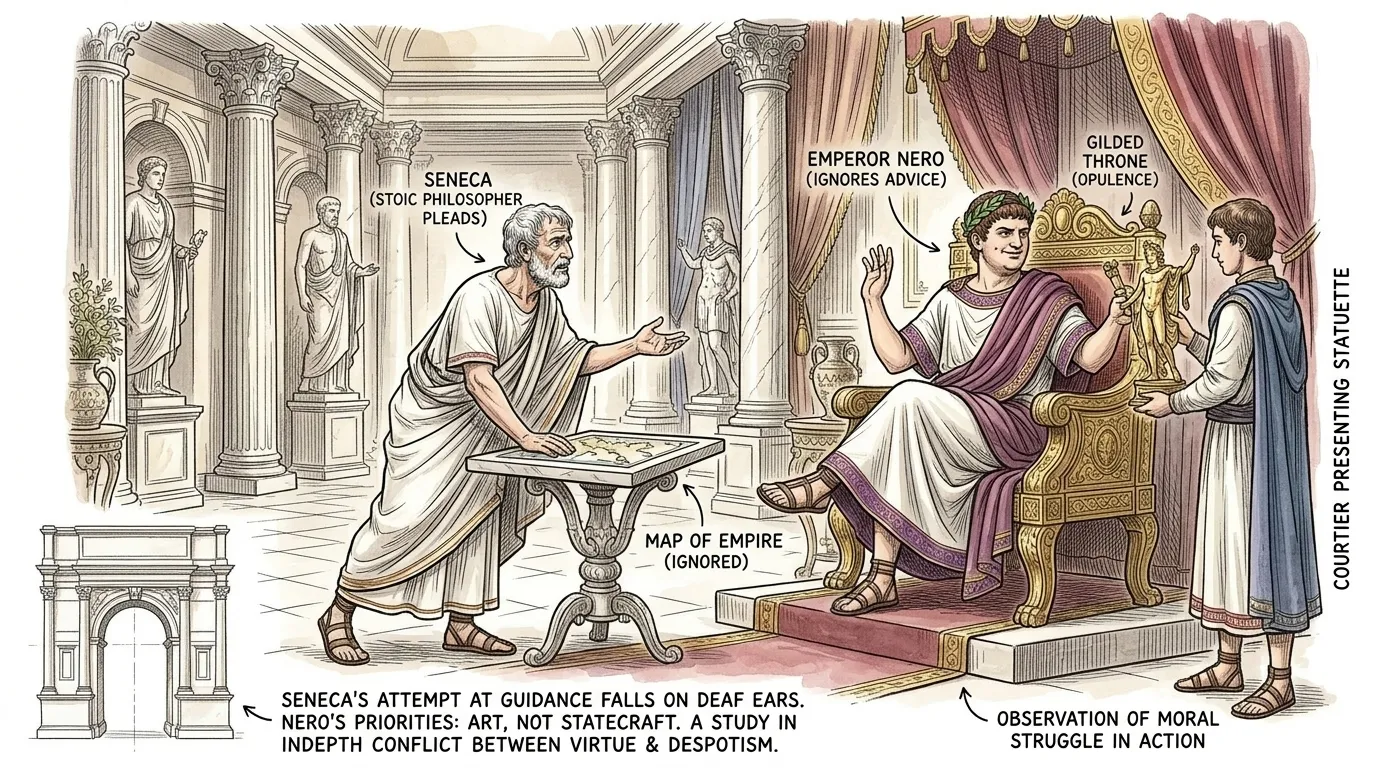
Seneca's position as Nero's advisor presented a moral dilemma. How could he serve a tyrant and still uphold his Stoic principles? He attempted to moderate Nero's excesses but ultimately failed. His experience highlights the challenges of applying philosophy to real-world politics.
Philosophy Note: Moral Dilemma: A situation in which a difficult choice has to be made between two courses of action, either of which entails violating a moral principle.
Page 7
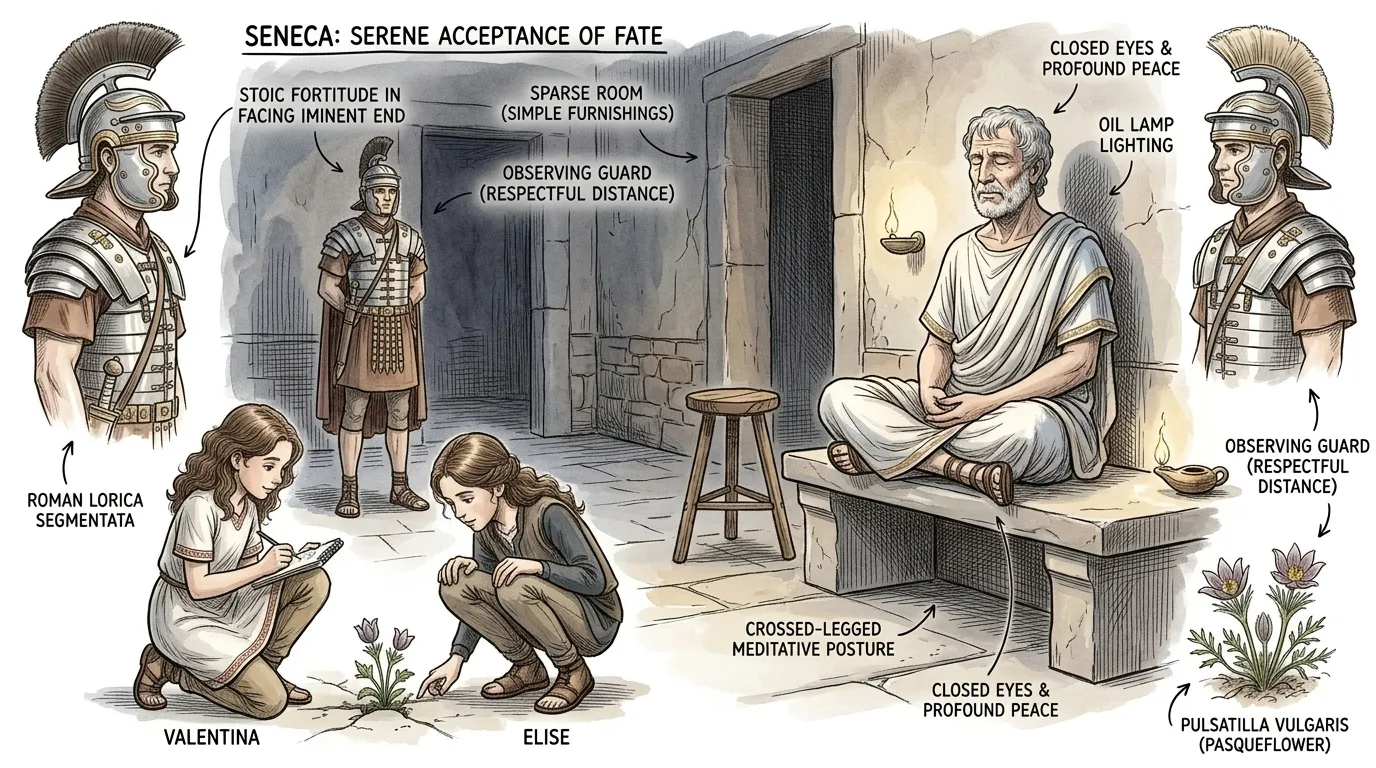
Eventually, Nero accused Seneca of conspiracy and ordered him to commit suicide. Seneca faced his death with Stoic calm, accepting it as an inevitable part of nature. His final act exemplified his philosophy of embracing fate and living in accordance with virtue, even in the face of death.
Philosophy Note: Suicide (in Stoicism): Considered an acceptable act when faced with extreme suffering or the loss of virtue.
Page 8

Seneca's wisdom remains relevant in our chaotic modern world. His teachings on emotional resilience, self-control, and acceptance offer a powerful antidote to the anxieties and stresses of contemporary life. As Yuki and Theo delve deeper into Seneca's work, they discover tools for navigating their own challenges.
Philosophy Note: Modern Stoicism: A contemporary movement applying Stoic principles to modern life.
Page 9

Yuki, facing anxieties about starting a new school, finds solace in Seneca's teachings. "As Seneca said, 'Every new beginning comes from some other beginning's end,'" she reflects. "It helps me see this not as a scary unknown, but as a new adventure built on what I already know and have experienced."
Philosophy Note: Seneca's influence: His writings continue to inspire people to live more virtuous and fulfilling lives.
Page 10
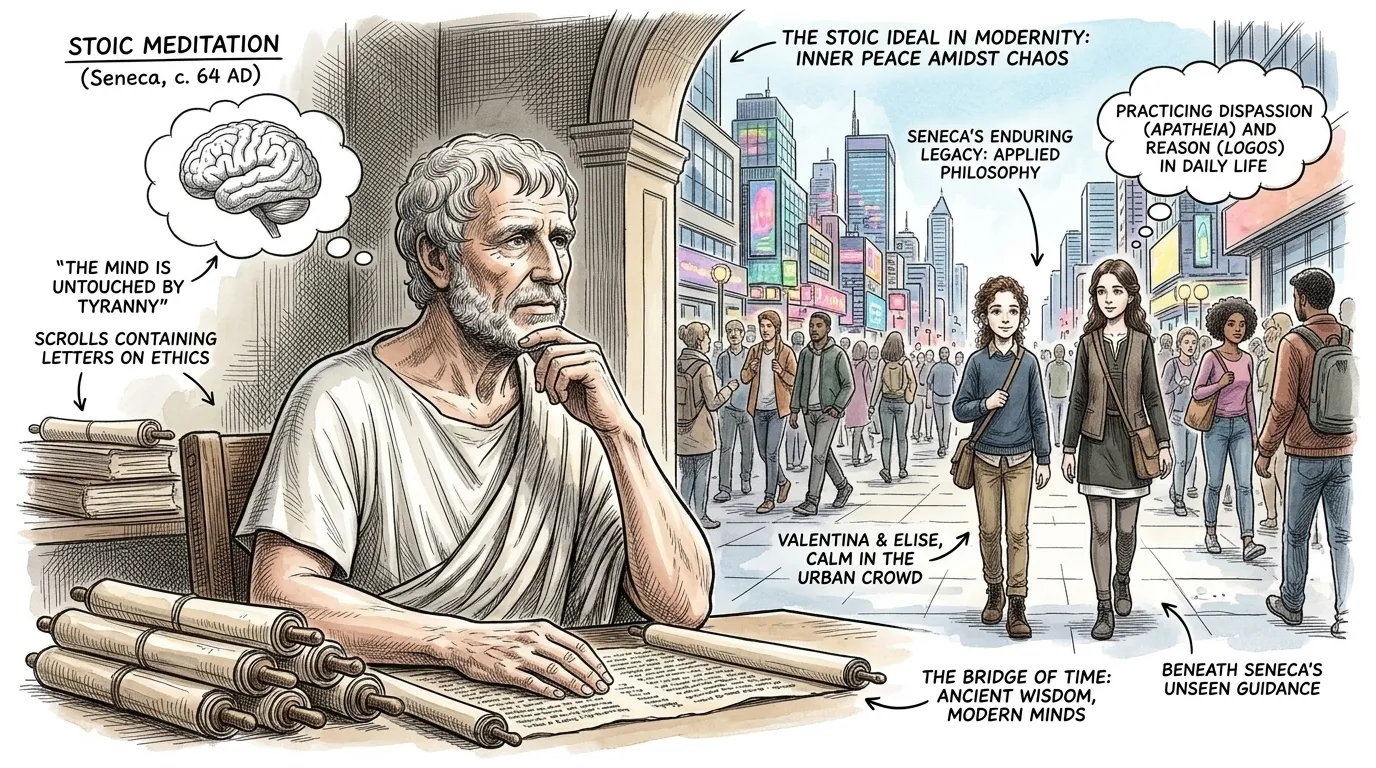
Seneca's philosophy provides a framework for living a meaningful life, regardless of external circumstances. His emphasis on virtue, reason, and acceptance offers a timeless guide for navigating the complexities of human existence and cultivating inner peace in a world often defined by chaos.
Philosophy Note: Seneca's legacy: He remains one of the most influential Stoic philosophers, whose wisdom continues to resonate across centuries.
About this story
- Audience: kids (ages 6–12)
Questions and answers
Read Wonder Philosophy on your phone
Wonder Philosophy is available on Android and iPhone and iPad. Get Wonder Philosophy on Google Play · Get Wonder Philosophy on the App Store.