Socrates
Socrates — an illustrated philosophy story. 10 illustrated pages, free to read on Wonder Philosophy.
Page 1
![Socrates, a name synonymous with wisdom, critical thinking, and relentless questioning. But why does a philosopher from ancient Athens [470-399 BCE] still…](https://thewonderbooks.com/images/stories/socrates/illustrations/socrates_page_01_v1775179516674.webp "Socrates, a name synonymous with wisdom, critical thinking, and relentless questioning. But why does a philosopher from ancient Athens [470-399 BCE] still…")
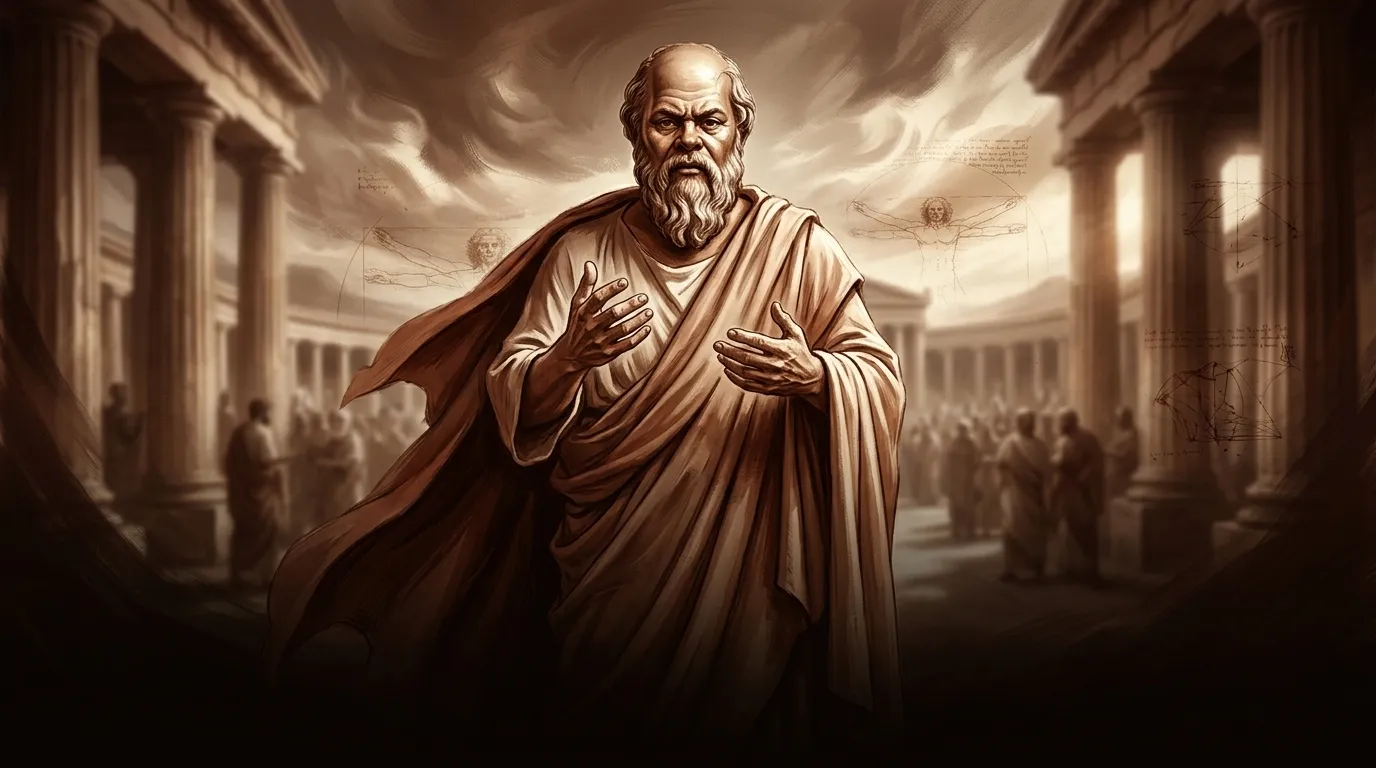
Socrates, a name synonymous with wisdom, critical thinking, and relentless questioning. But why does a philosopher from ancient Athens [470-399 BCE] still resonate today? His core idea – that the unexamined life is not worth living – challenges us to constantly scrutinize our beliefs, values, and assumptions. This pursuit of self-awareness and truth remains profoundly relevant in our complex modern world.
Philosophy Note: Socrates never wrote down his philosophy. Our understanding comes primarily from the writings of his student, Plato.
Page 2
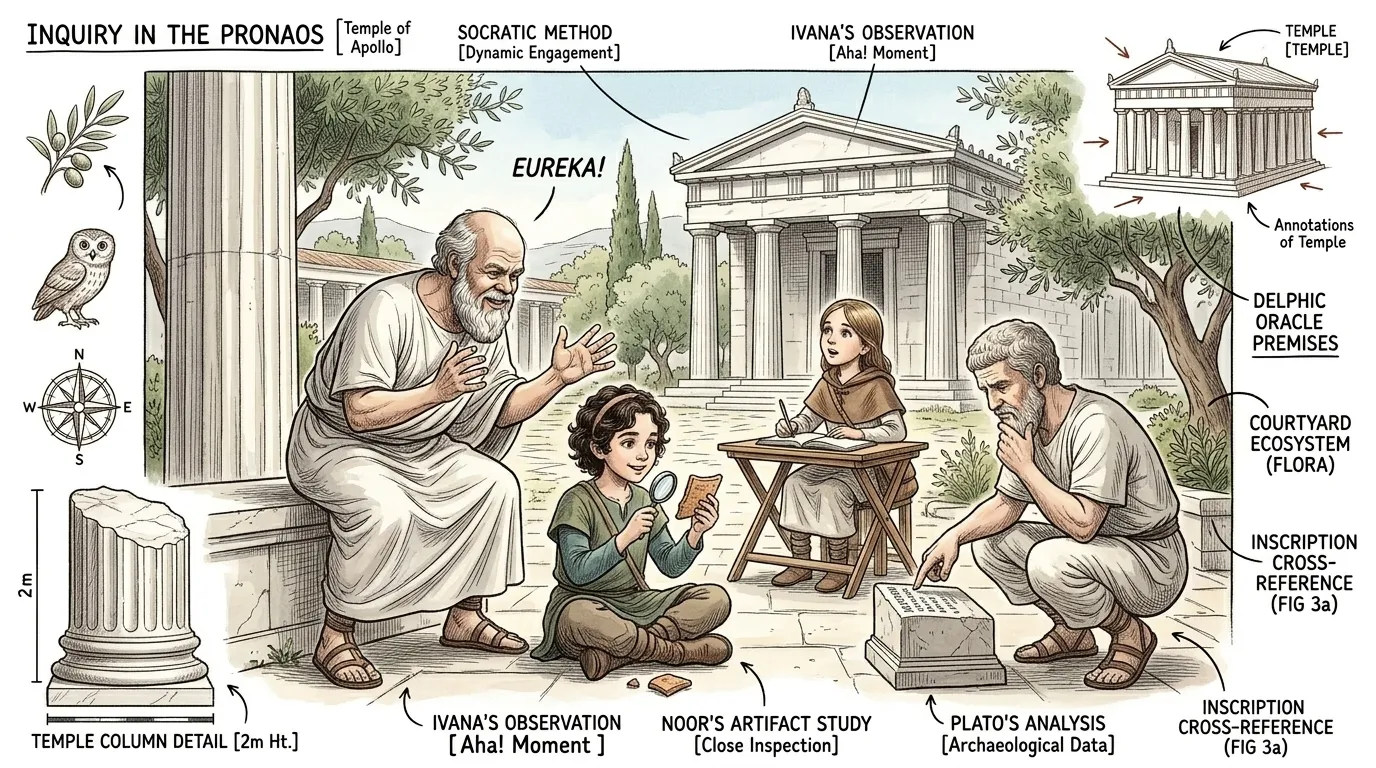
Socrates didn't lecture or write books. Instead, he engaged in conversations, relentlessly questioning those who claimed to have knowledge. This approach, known as the Socratic method, aimed to expose contradictions and ultimately arrive at a deeper understanding. His life took a turn when the Oracle at Delphi [a powerful priestess in ancient Greece] declared him the wisest man in Athens.
"Camila, an adventurous 8-year-old, tilts her head. "But if he didn't write anything, how do we know what he thought?""
Philosophy Note: The Socratic method involves asking probing questions to stimulate critical thinking and illuminate underlying presumptions.
Page 3
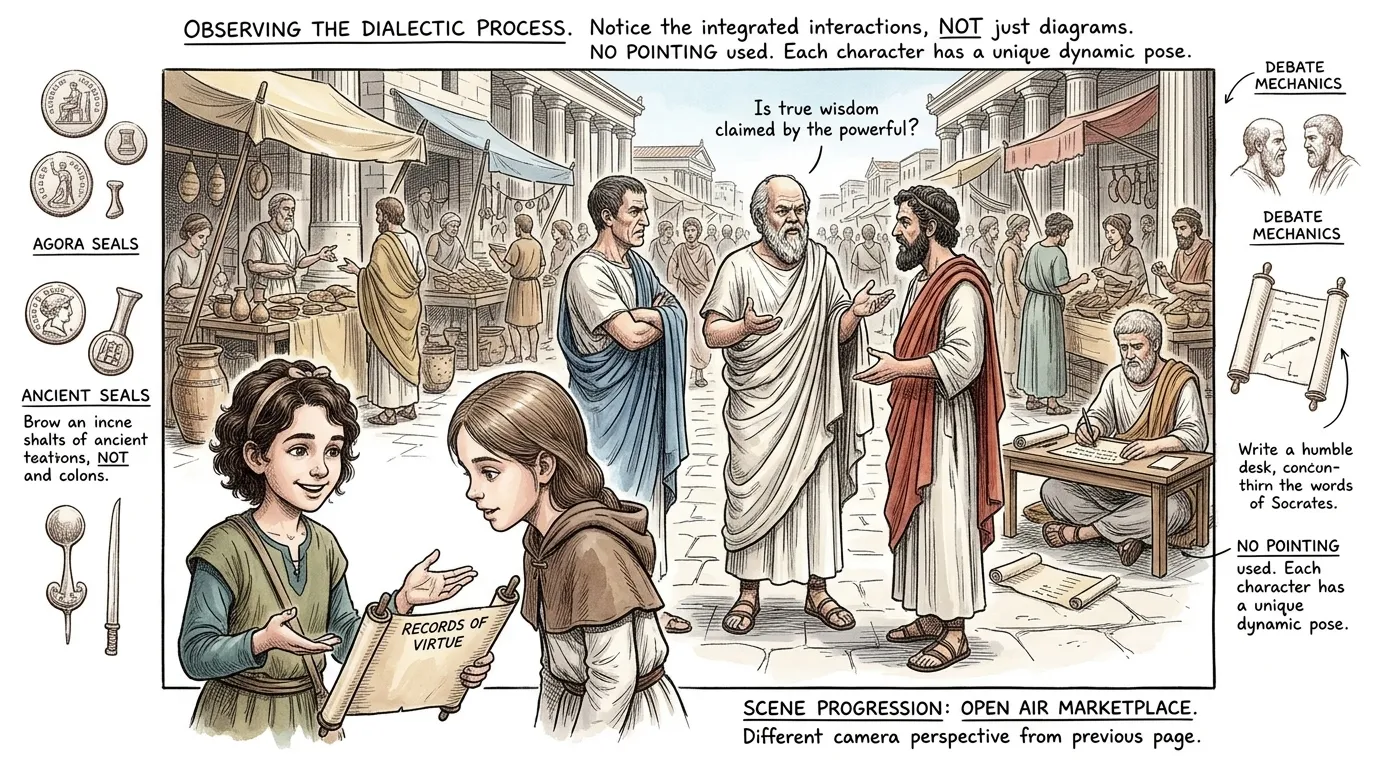
Confused by the Oracle's pronouncement, Socrates embarked on a mission to prove it wrong. He sought out those considered wise – politicians, poets, and artisans – and questioned them about their areas of expertise. He soon discovered that while they possessed knowledge in specific fields, they lacked true wisdom, particularly self-awareness. Socrates realized that his wisdom lay in acknowledging his own ignorance.
"Nia explains gently, "Plato, one of his students, wrote down many of their conversations. That's how we know so much about him.""
Philosophy Note: The Delphic Oracle was consulted for prophecies and guidance, believed to speak for the god Apollo.
Page 4
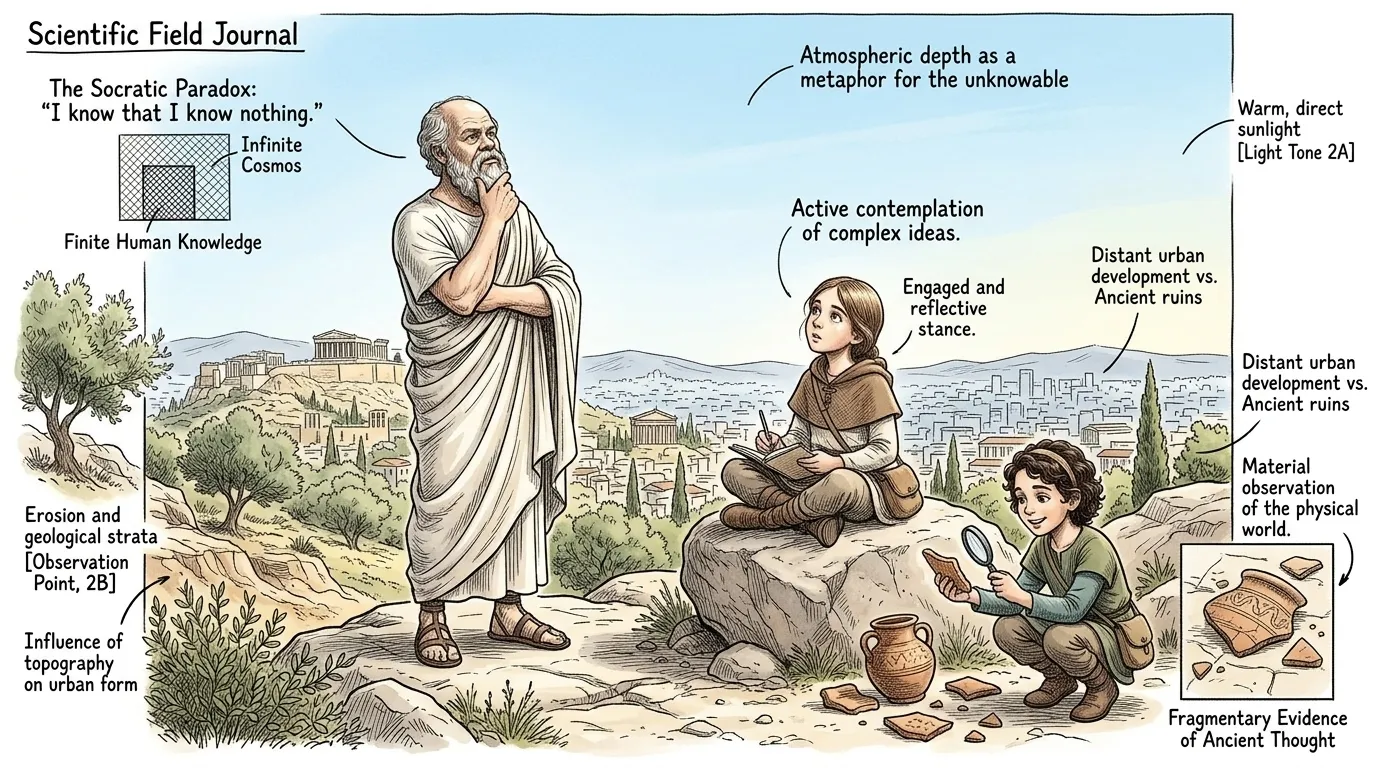
This realization led to the famous Socratic paradox: 'I know that I know nothing.' This wasn't a statement of nihilism, but rather an acknowledgment of the vastness of what remains unknown. By recognizing the limits of his own knowledge, Socrates remained open to learning and continued his pursuit of truth. He challenged the status quo and encouraged others to do the same.
"Camila asks, "So, he was wise because he knew he wasn't wise? That's kind of strange.""
Philosophy Note: Nihilism is the belief that life is without objective meaning, purpose, or intrinsic value.
Page 5
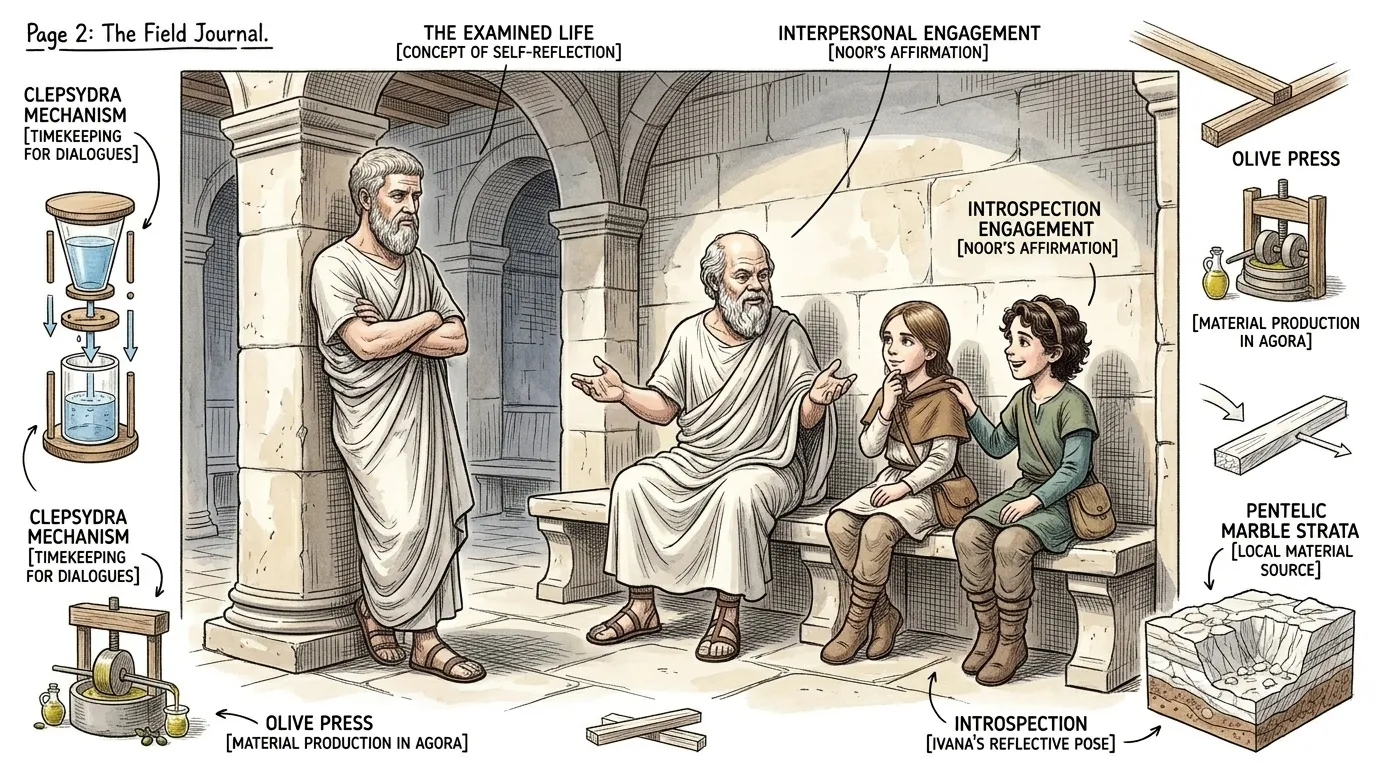
Socrates believed that self-examination was crucial for living a virtuous life. He famously stated that 'the unexamined life is not worth living.' This meant that we must constantly question our beliefs, values, and actions to ensure they align with reason and morality. Without this critical self-reflection, we risk living a life guided by blind acceptance and unthinking conformity.
"Nia nods. "Exactly! He thought it was important to always be questioning and thinking for yourself.""
Philosophy Note: Virtue ethics emphasizes moral character as the foundation of ethical action.
Page 6
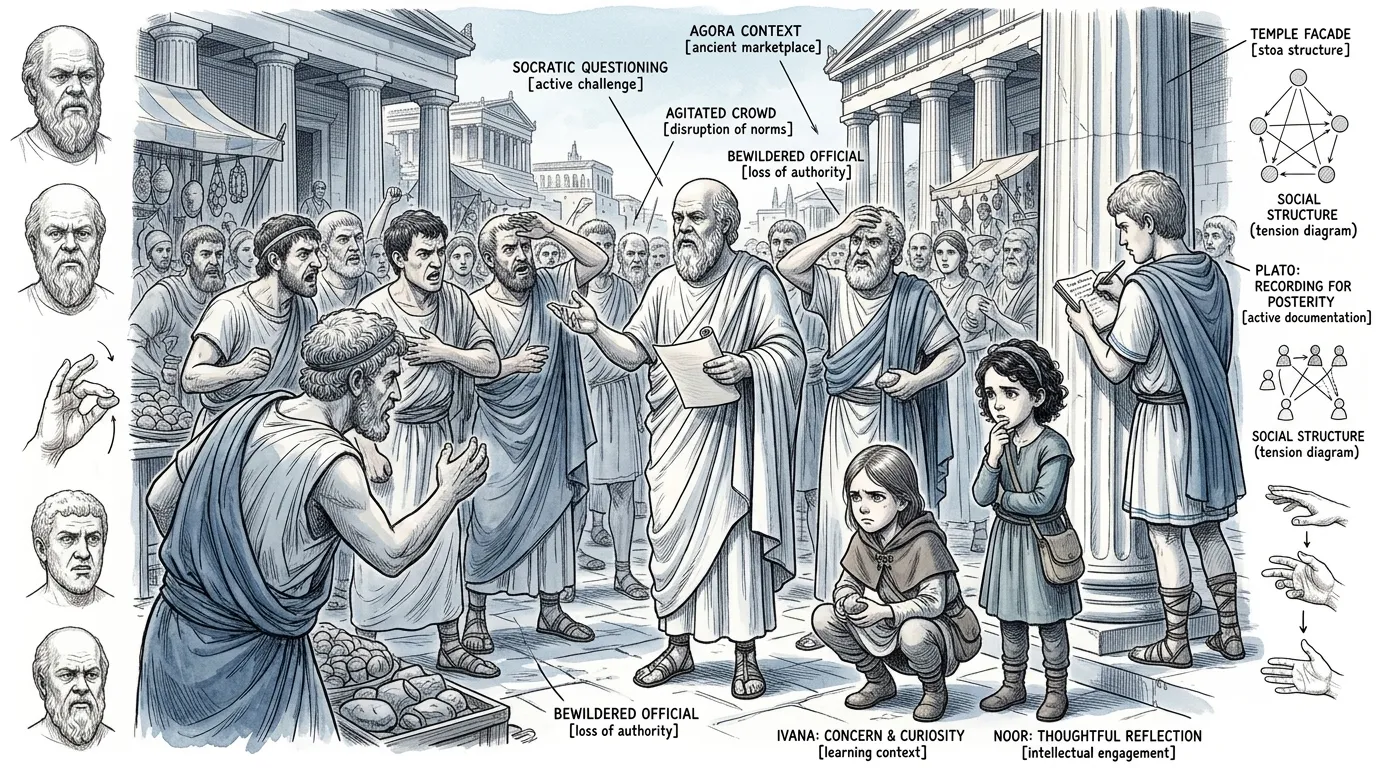
Socrates' relentless questioning challenged the deeply ingrained norms and beliefs of Athenian society. He questioned the authority of political leaders, the wisdom of religious figures, and the validity of popular opinion. His pursuit of truth, even when unpopular, made him a controversial figure and ultimately led to his trial and execution.
"Camila frowns. "But if he was trying to help people, why did they kill him?""
Philosophy Note: Socrates was accused of corrupting the youth of Athens and impiety (disrespect for the gods).
Page 7
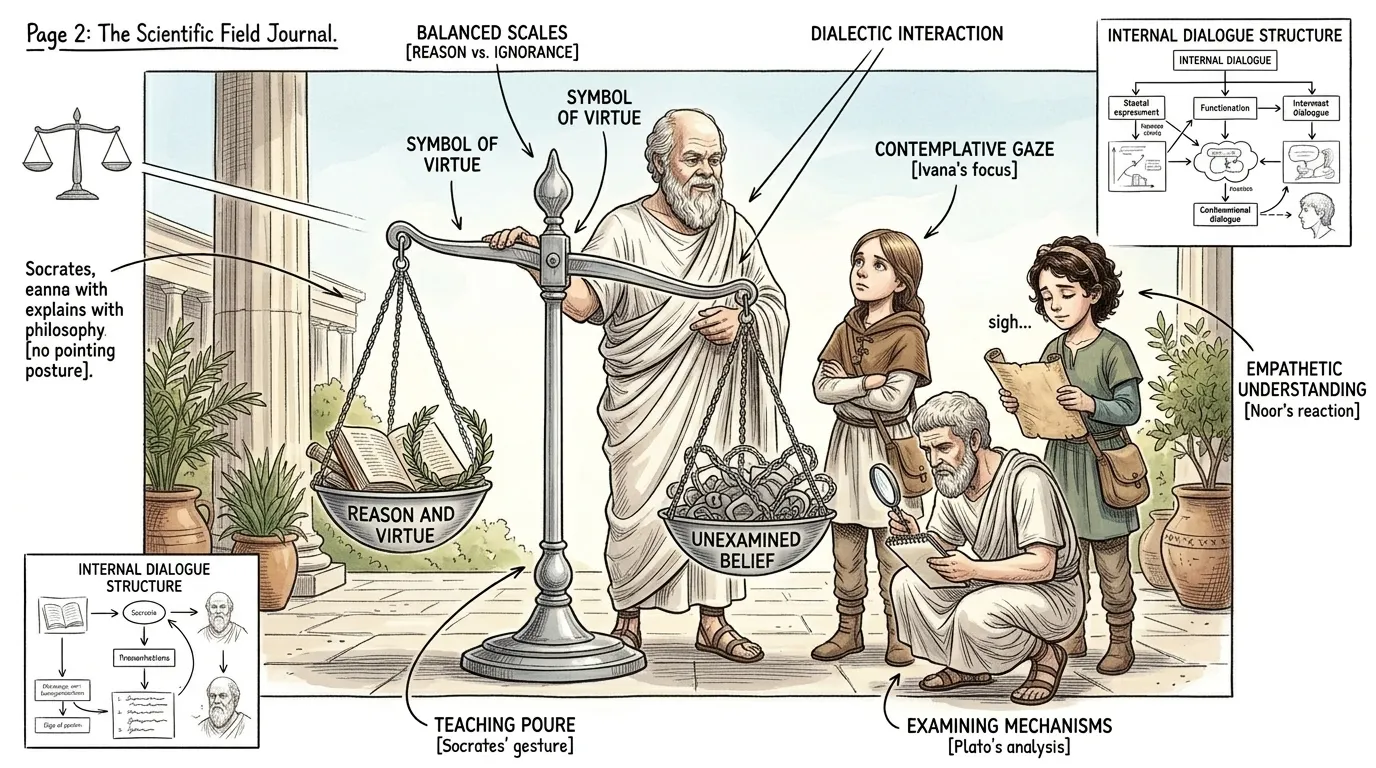
Socrates believed in the power of reason to guide our actions and decisions. He argued that virtue is a form of knowledge, and that if we truly understand what is right, we will naturally act accordingly. This emphasis on reason challenged the traditional reliance on emotions, instincts, and societal pressures. He sought to establish a foundation for morality based on logical thought and critical analysis.
"Nia sighs, "Sometimes, when you challenge what people believe, even if you're right, they don't like it.""
Philosophy Note: Socrates believed that ignorance was the root of wrongdoing; knowledge, therefore, leads to virtuous action.
Page 8
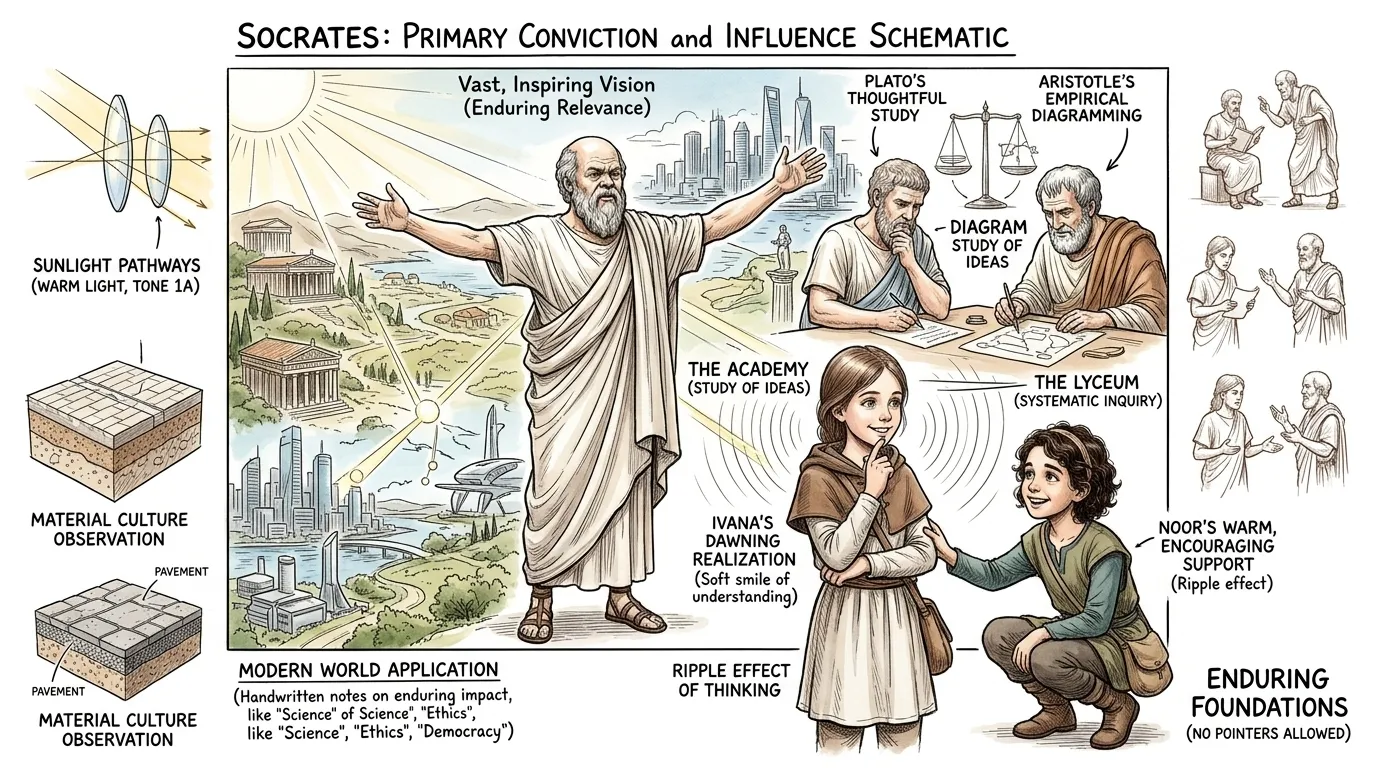
Despite his tragic end, Socrates' influence on Western thought is immeasurable. His commitment to critical thinking, self-examination, and the pursuit of truth laid the foundation for future philosophers like Plato and Aristotle. His ideas continue to inspire individuals to question, to learn, and to strive for a more virtuous and meaningful existence. Socrates demonstrated how important it is to stand up for what you believe in, even in the face of adversity.
"Camila thinks for a moment, then says, "So, even though it was hard for him, he showed everyone why it's important to think for yourself?""
Philosophy Note: Plato's dialogues are the primary source of information about Socrates's life and philosophical method.
Page 9

The Socratic method is still used today in education, law, and therapy, because it encourages critical thinking and problem-solving. In a world filled with misinformation, echo chambers, and social media, Socrates' call for self-examination is more important than ever. We must constantly question the information we receive, challenge our own biases, and strive for a deeper understanding of ourselves and the world around us.
"Nia smiles. "Exactly! As Socrates himself never wrote, someone else did write what he spoke of. You know, Ralph Waldo Emerson, a famous American writer, once said, 'To be yourself in a world that is constantly trying to make you something else is the greatest accomplishment.' Socrates lived that every day.""
Philosophy Note: Echo chambers reinforce existing beliefs by exposing people only to opinions similar to their own.
Page 10
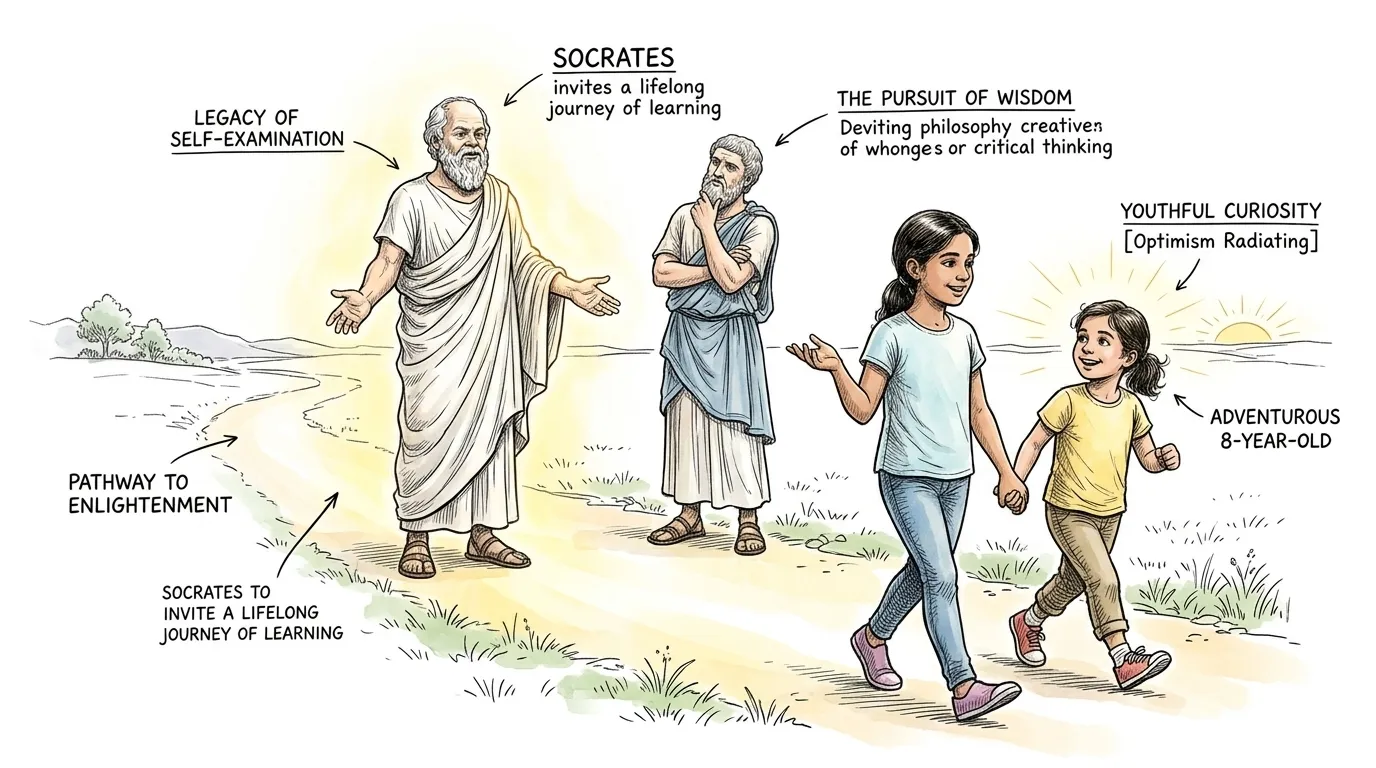
Socrates' legacy endures, reminding us that the pursuit of wisdom is a lifelong journey. By embracing critical thinking, questioning our assumptions, and striving for self-awareness, we can live more authentic, meaningful lives. As Nia once said, 'Life is not merely to be alive, but to be well.' Socrates wanted everyone to live well by examining their lives to live their truest version of them. Socrates' pursuit of wisdom remains a timeless guide.
Philosophy Note: Socrates' emphasis on ethics and self-improvement continues to resonate in contemporary moral philosophy.
About this story
- Audience: kids (ages 6–12)
Read Wonder Philosophy on your phone
Wonder Philosophy is available on Android and iPhone and iPad. Get Wonder Philosophy on Google Play · Get Wonder Philosophy on the App Store.