Slavoj Zizek
Slavoj Zizek — an illustrated philosophy story. 8 illustrated pages, free to read on Wonder Philosophy.
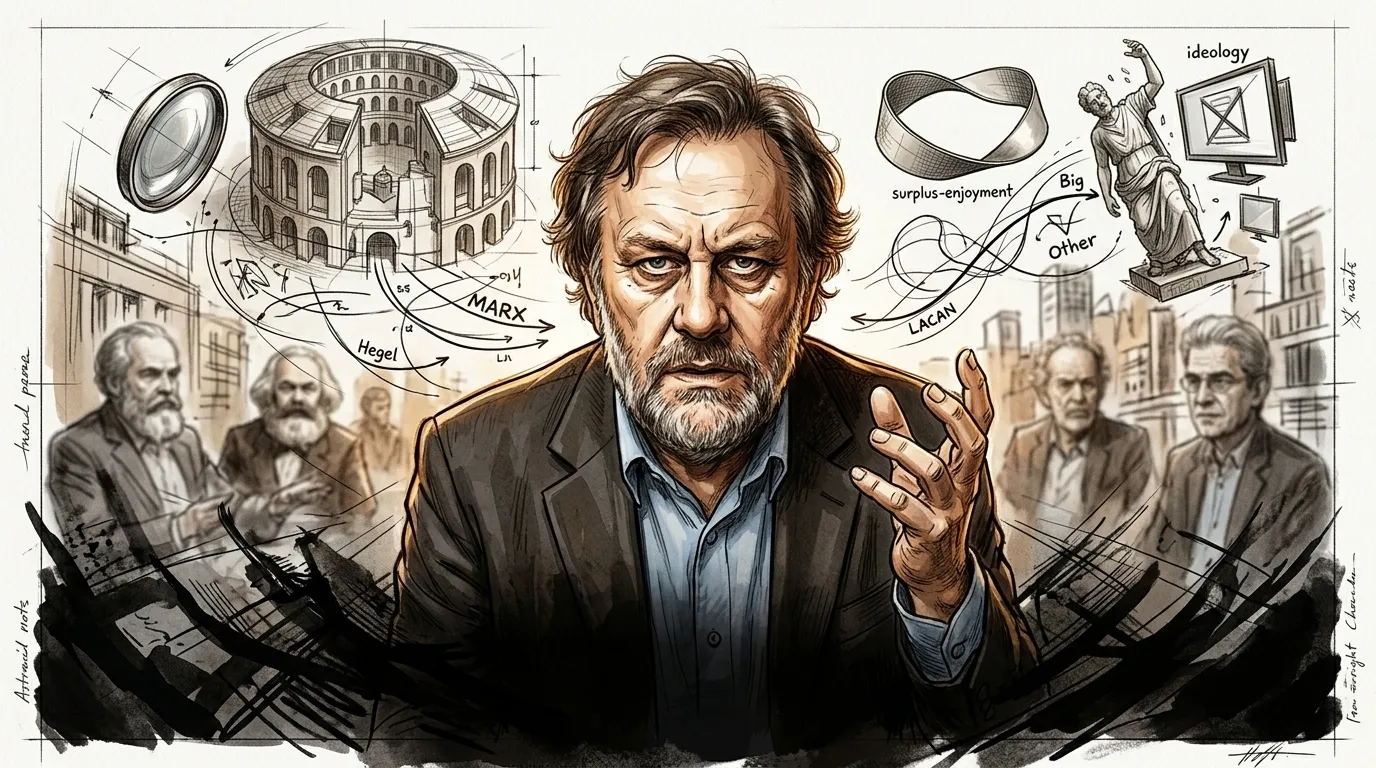
Page 1
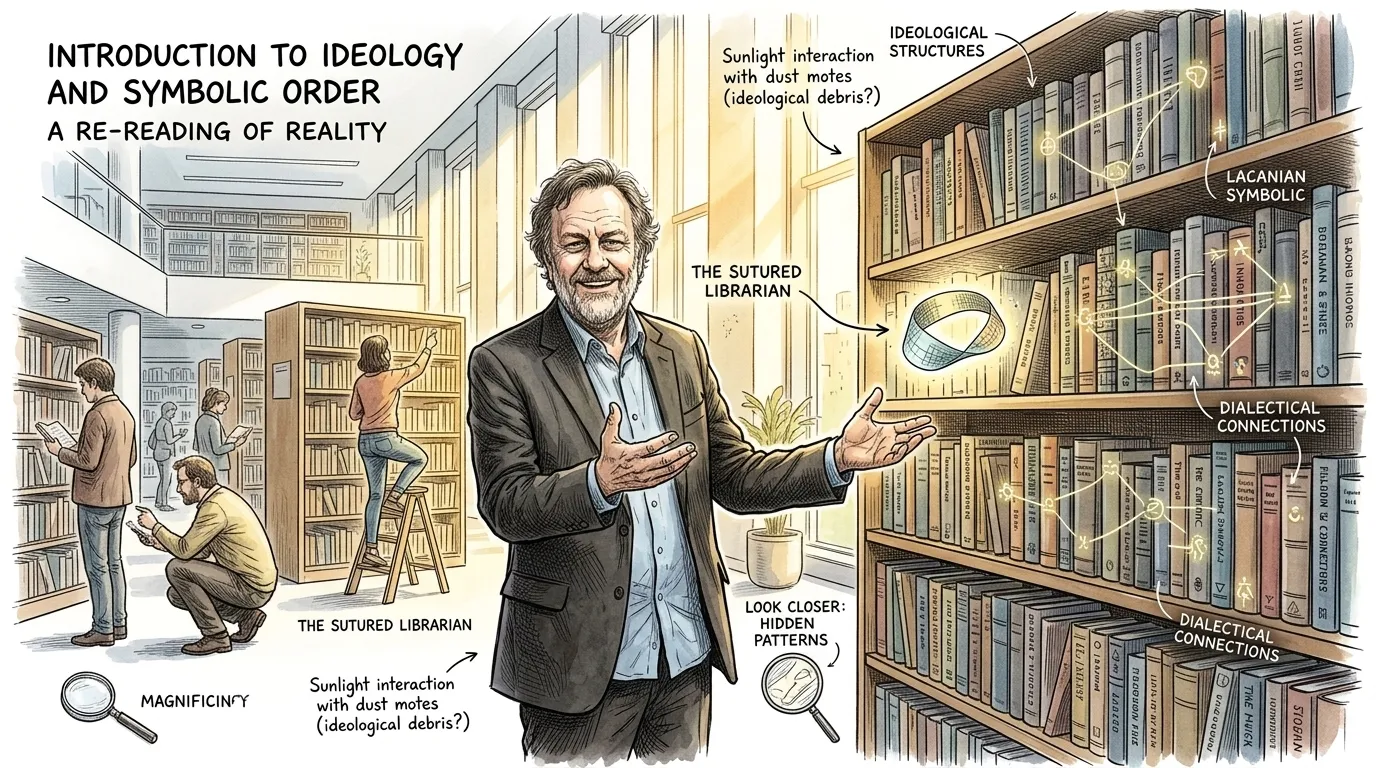
Slavoj Žižek challenges us to look beyond what we consciously believe and identify the hidden ideologies that structure our everyday lives. He argues that our deepest desires, freedoms, and even our acts of rebellion are often shaped by systems we take for granted. This forces a re-examination of what we truly want and who benefits from it.
"Žižek himself often provocatively states, 'The true act is not to conform to the existing order, but to recognize how that order already conditions our very perception of freedom and rebellion.'"
Philosophy Note: Slavoj Žižek (b. 1949): Slovenian philosopher and cultural critic. His work bridges psychoanalysis, Marxism, and Hegelianism to dissect contemporary culture and politics.
Page 2
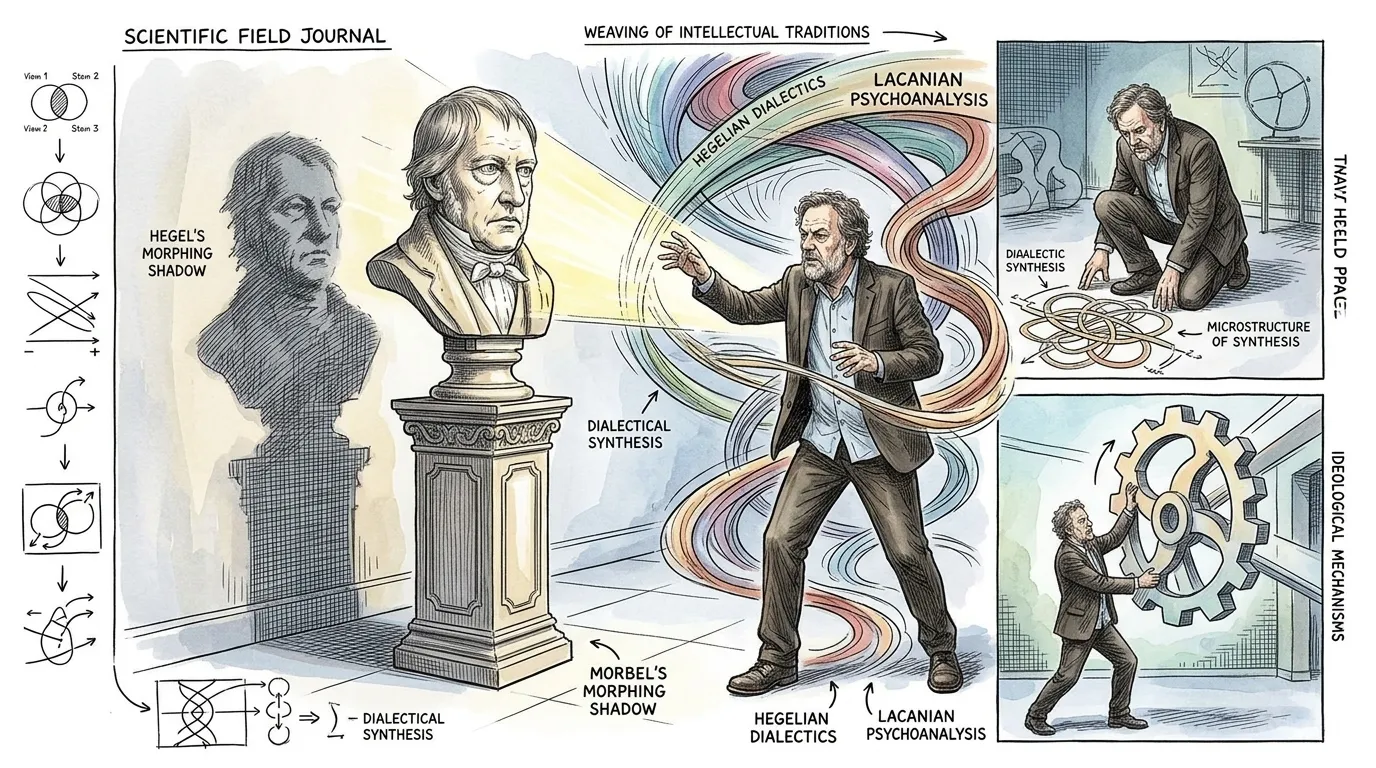
Žižek's distinct approach weaves together disparate intellectual traditions, offering a unique lens to scrutinize societal mechanisms. He begins with Georg Wilhelm Friedrich Hegel's dialectics to understand how reality and consciousness evolve through conflict and contradiction.
"He contends, 'Hegel taught us that true freedom emerges not from escaping constraint, but from confronting and transforming it through internal struggle.'"
Philosophy Note: Georg Wilhelm Friedrich Hegel (1770-1831): German philosopher, whose dialectical method deeply influences Žižek's understanding of historical and conceptual development.
Page 3
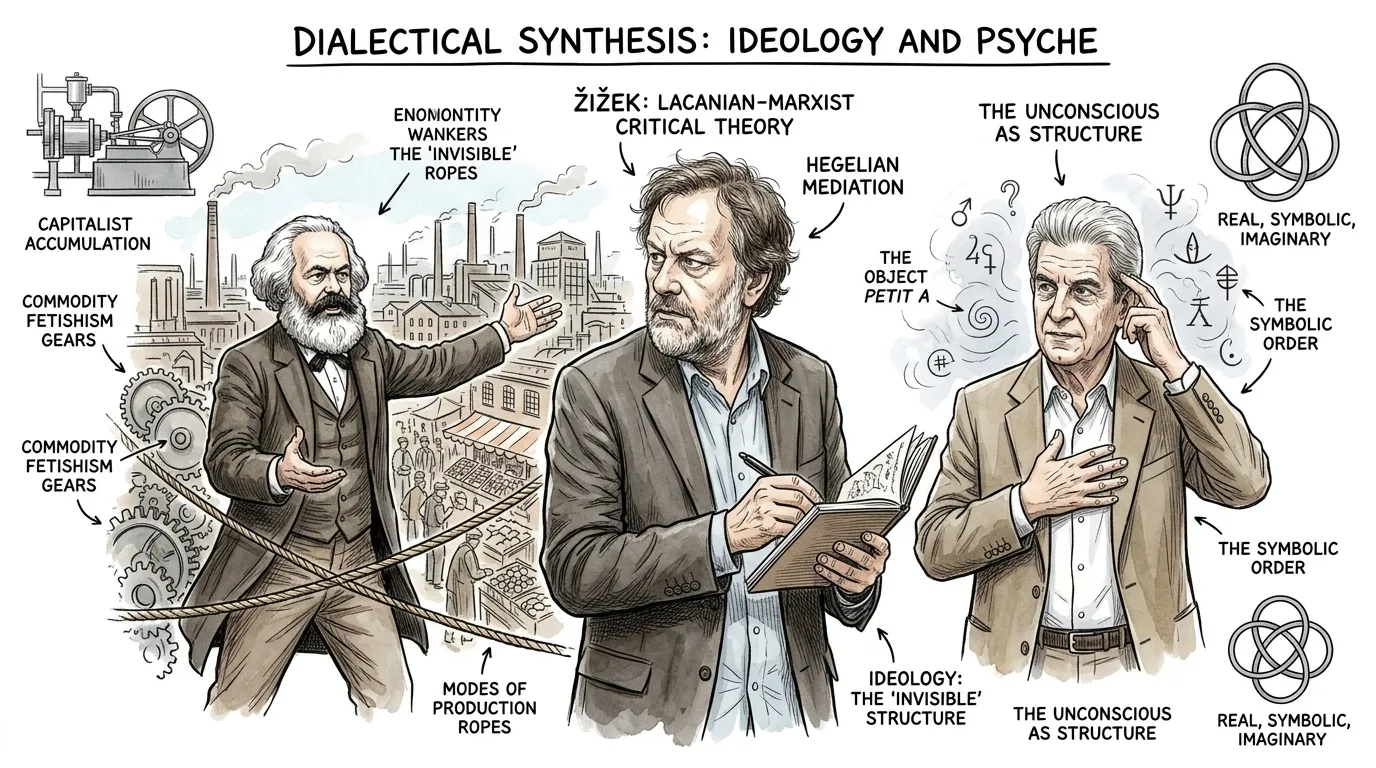
Building upon Hegel, Žižek integrates Karl Marx's critique of capitalism, seeing how economic structures dictate social relations and consciousness. However, Žižek argues that traditional Marxism often overlooks the deeper, unconscious ways ideology takes root in individuals.
"Žižek remarks, 'Marx showed us the material conditions of ideology, but it took Jacques Lacan to reveal the subjective dimension, how ideology functions within the very structure of our desiring psyche.'"
Philosophy Note: Karl Marx (1818-1883): German philosopher, economist, historian, sociologist, and revolutionary. Jacques Lacan (1901-1981): French psychoanalyst and psychiatrist. His work reinterprets Freud through structural linguistics.
Page 4
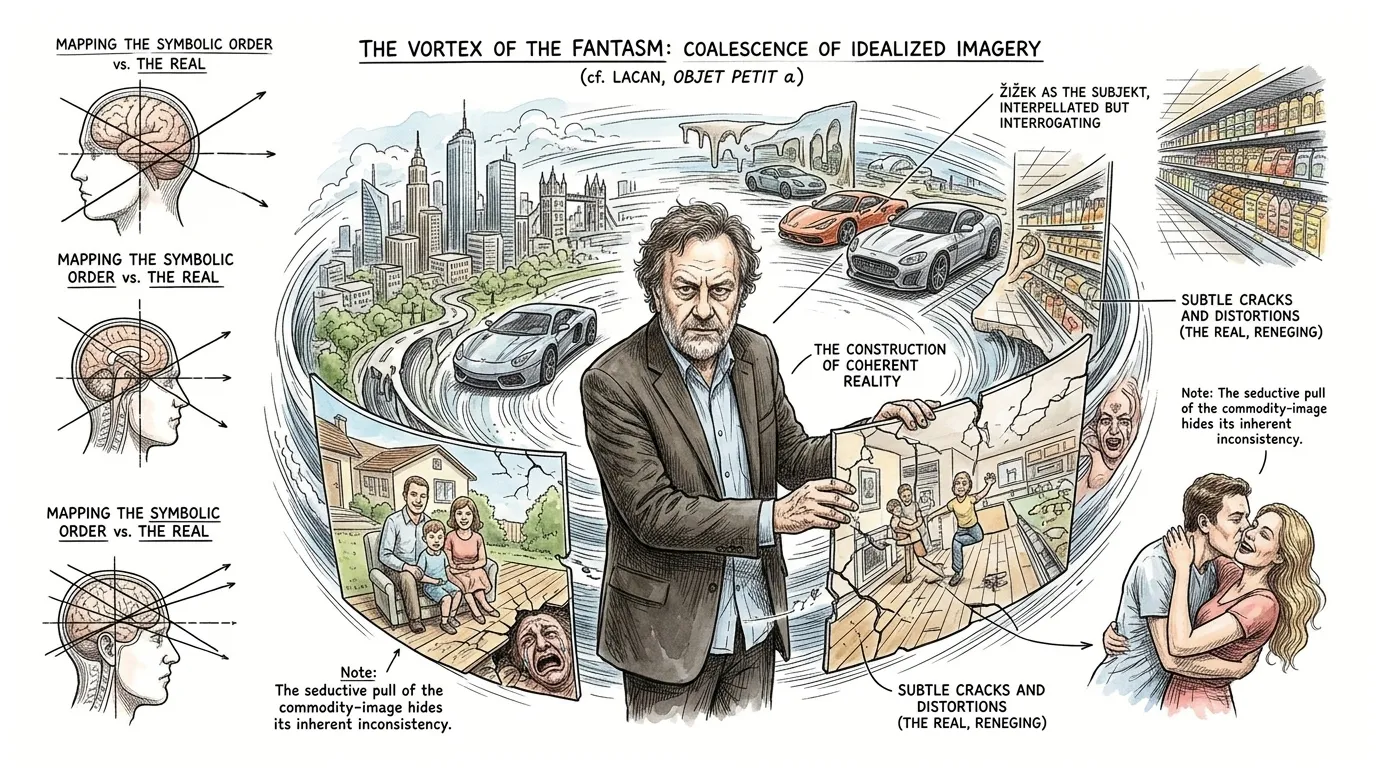
At the core of Žižek's analysis is the concept of the 'fantasm' (or fantasy), a Lacanian term. This isn't just wishful thinking, but a fundamental structure that shapes our perception of reality and makes social systems seem natural, even desirable.
"As Žižek frequently elaborates, 'The fantasm is precisely the way we construct our reality to sustain our desires, allowing us to 'enjoy our symptom' even when it causes us pain.'"
Philosophy Note: Fantasm (Lacanian): A fundamental fantasy that structures an individual's desire and relationship to reality, mediating their experience of the symbolic order.
Page 5
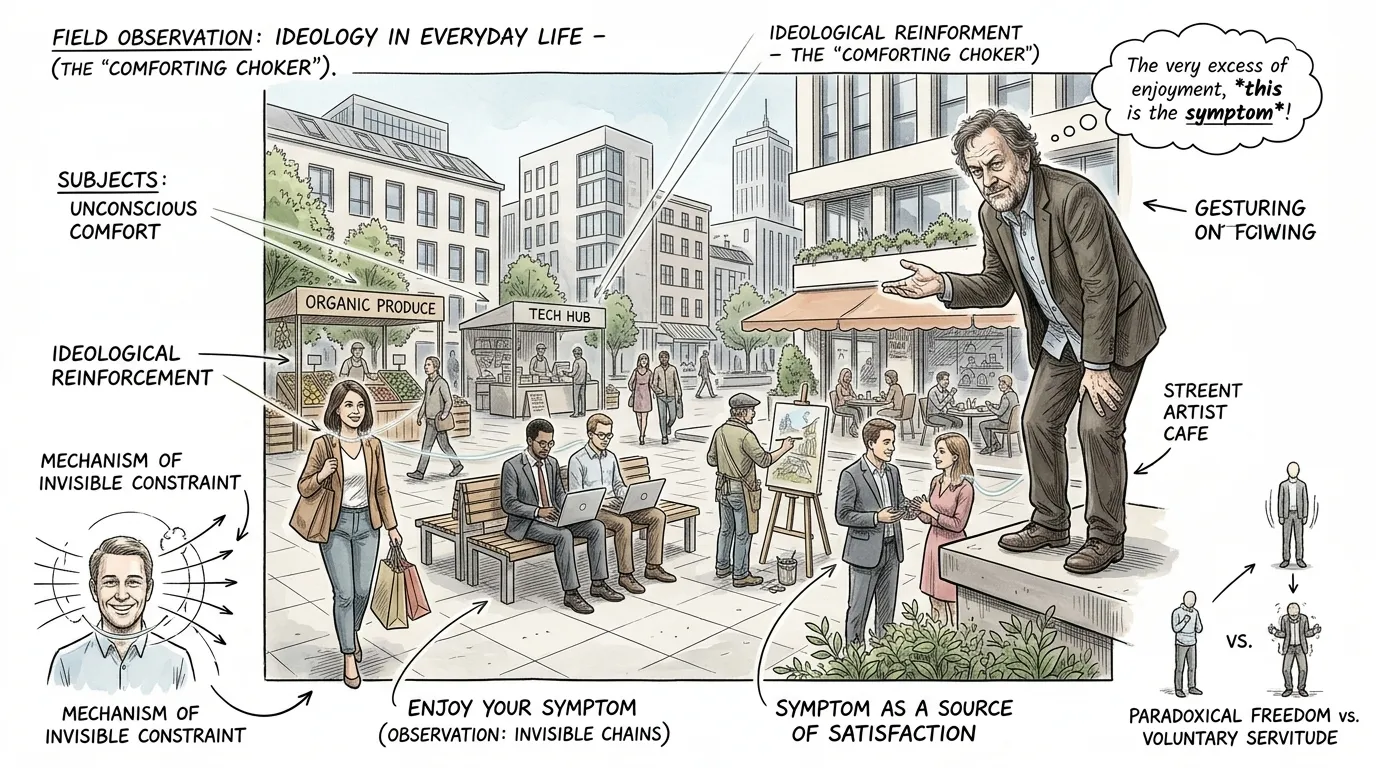
Žižek reveals how ideology doesn't just impose beliefs; it offers a perverse pleasure in conforming to its demands. We 'enjoy our symptom' by finding satisfaction in actions or beliefs that, paradoxically, perpetuate our own unfreedom or the problematic aspects of society.
"He provocatively states, 'The highest form of ideology is not when you believe in something, but when you act as if you don't, while secretly enjoying the comfort and security it provides.'"
Philosophy Note: Enjoy Your Symptom: A Žižekian phrase referring to the paradoxical pleasure derived from neurotic behaviors or ideological commitments, even those that cause suffering or restrict freedom.
Page 6
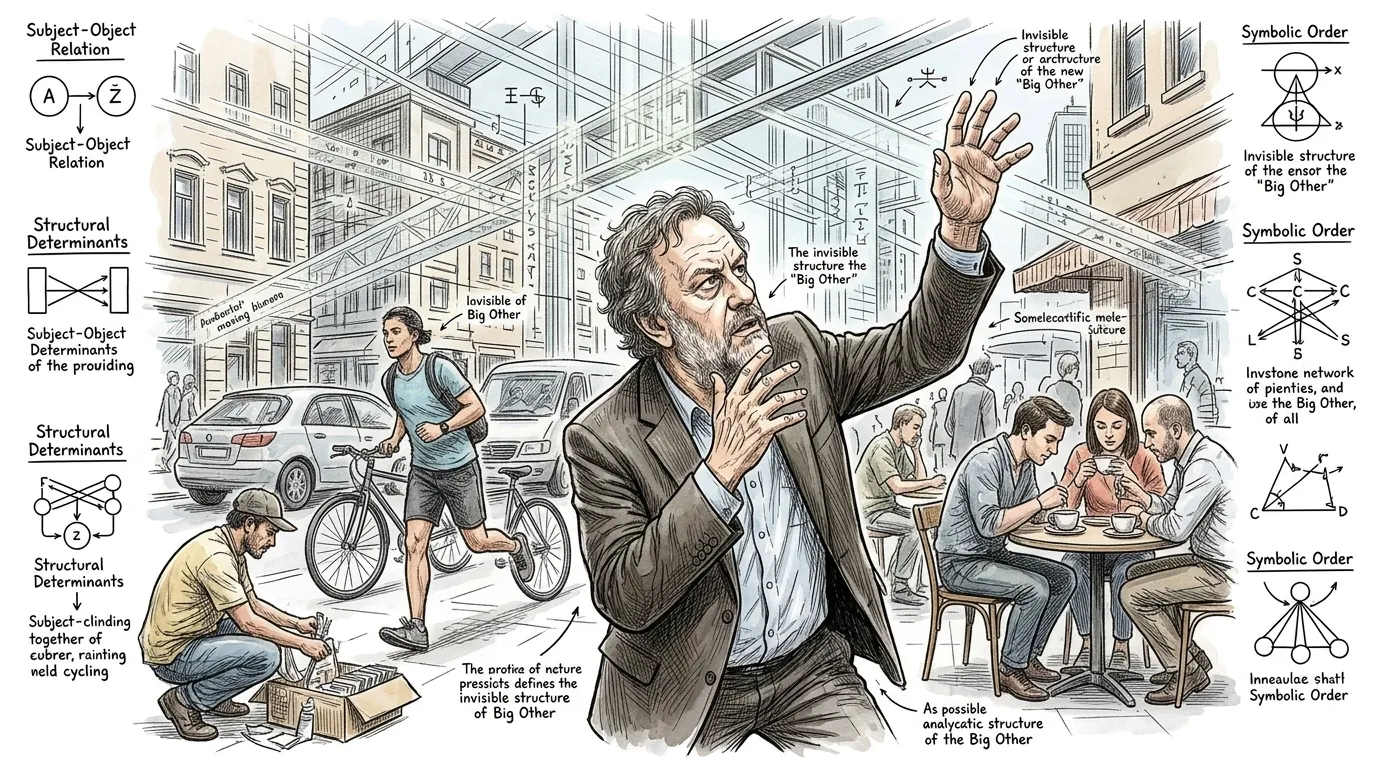
Beyond individual phantasms, Žižek employs Lacan's 'Big Other' to describe the symbolic order, the imaginary guarantor of social reality. It's the unseen, assumed framework of rules, norms, and expectations that we unconsciously believe is watching and judging us, even when no one is physically present.
"Žižek stresses, 'The Big Other isn't a person or a God, but the very consistency of our social reality, the symbolic network that tells us what is possible, desirable, and even funny.'"
Philosophy Note: The Big Other (Lacanian): The symbolic order, the overarching set of linguistic, social, and cultural conventions that structure reality for a subject. It functions as an imagined 'witness' or 'guarantor' of meaning and consistency.
Page 7
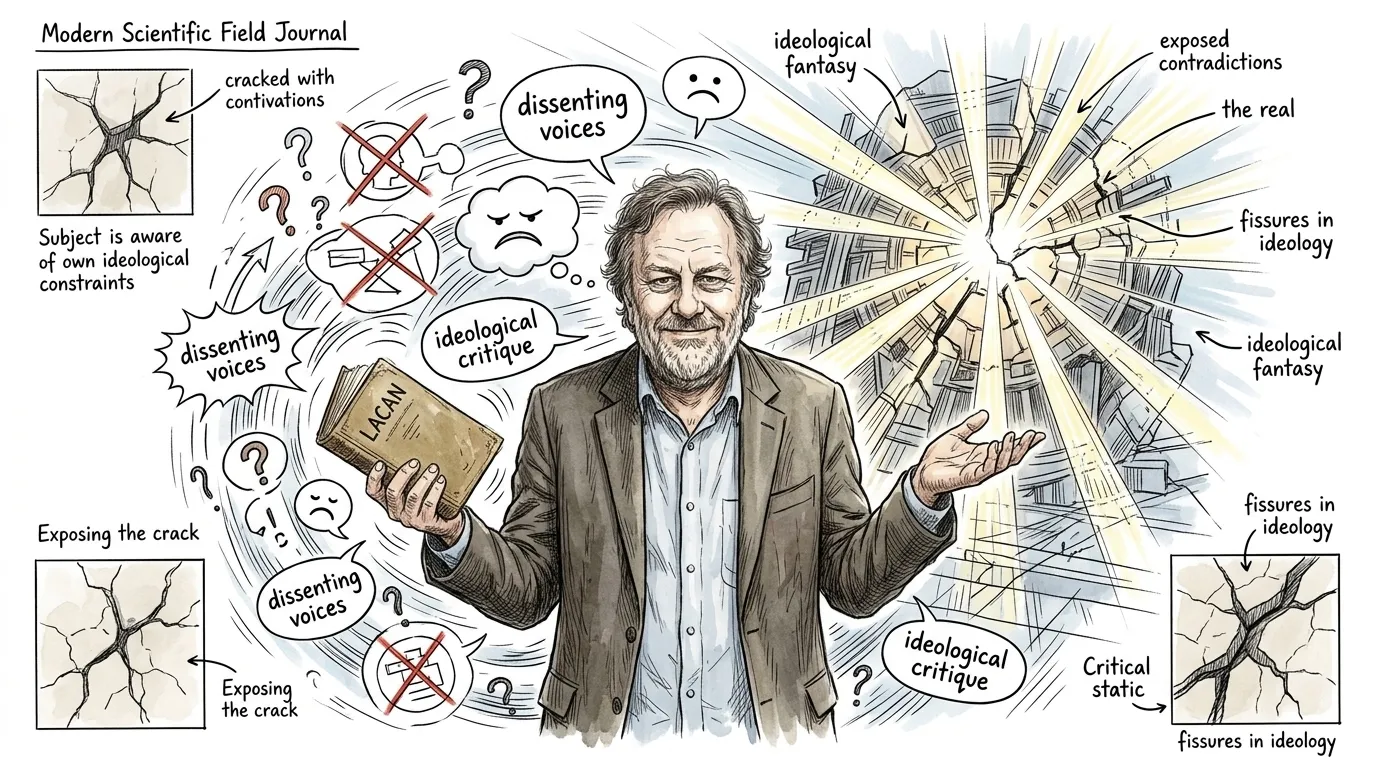
Žižek's methodology, characterized by rapid shifts between high theory, pop culture examples, and provocative statements, draws significant criticism. Detractors often accuse him of intellectual showmanship, a lack of consistent political solutions, or even ideological opportunism.
"Responding to critics, Žižek might shrug and say, 'If you want practical advice, go to a self-help guru. My task is to show you the cracks, the ideological fantasies that prevent you from even asking the right questions.'"
Philosophy Note: Žižek's critics: Often point to his eclectic style, lack of direct political programs, and sometimes ambiguous or contradictory positions, especially regarding practical applications of his theory.
Page 8
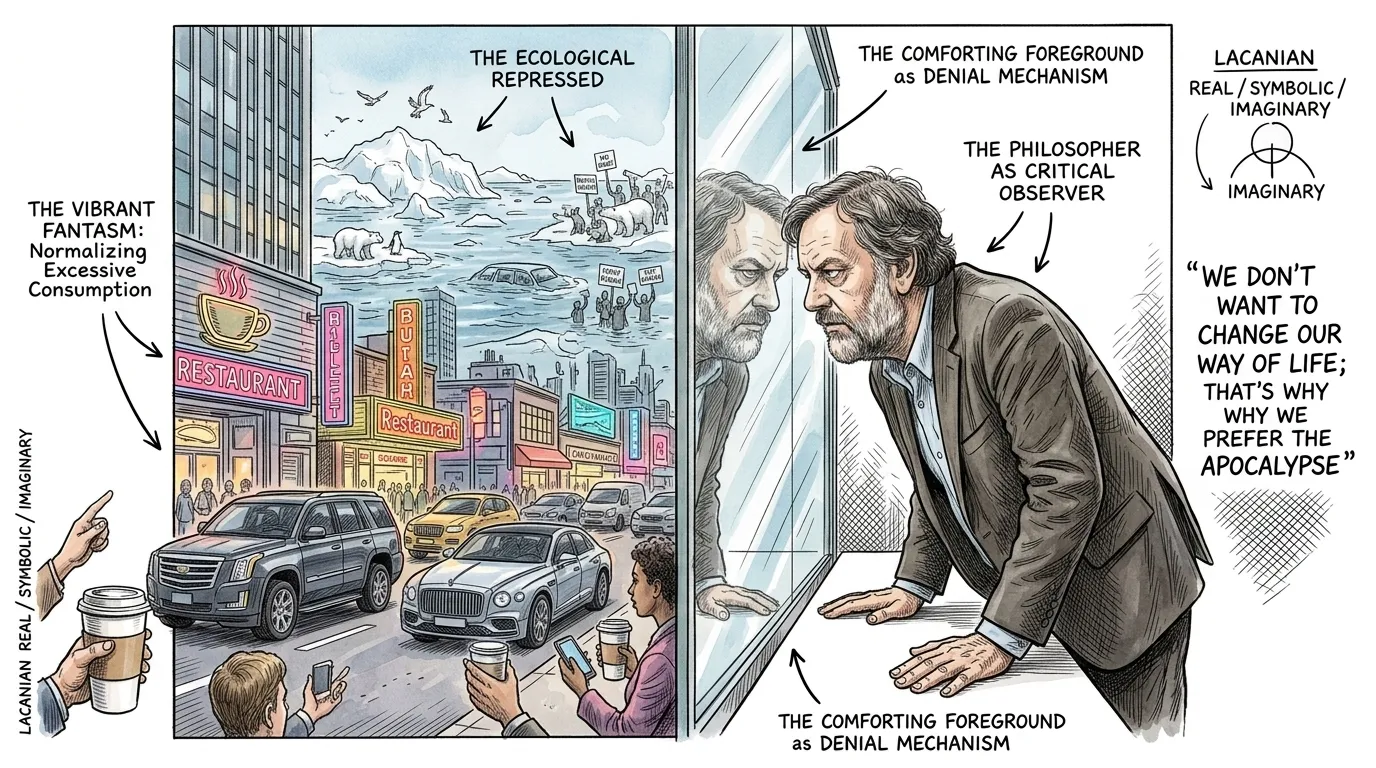
Despite the criticisms, Žižek's concepts offer powerful tools for analyzing complex contemporary issues. By exposing the underlying fantasms and ideological structures, he helps us understand why certain problems persist even when solutions seem obvious.
"As he might articulate, observing our modern predicament, 'The true horror of climate change isn't just the data; it's the fantasm we collectively hold that allows us to ignore it, to continue enjoying our unsustainable way of life.'"
Philosophy Note: Application of Žižekian thought: His framework is used to analyze phenomena like climate change denial, consumerism, social media echo chambers, and political populism, revealing their deeper ideological roots.
About this story
- Audience: general readers
Read Wonder Philosophy on your phone
Wonder Philosophy is available on Android and iPhone and iPad. Get Wonder Philosophy on Google Play · Get Wonder Philosophy on the App Store.