Eileen Collins
Eileen Collins — an illustrated science story, set in Global. 10 illustrated pages, free to read on Wonder Science.
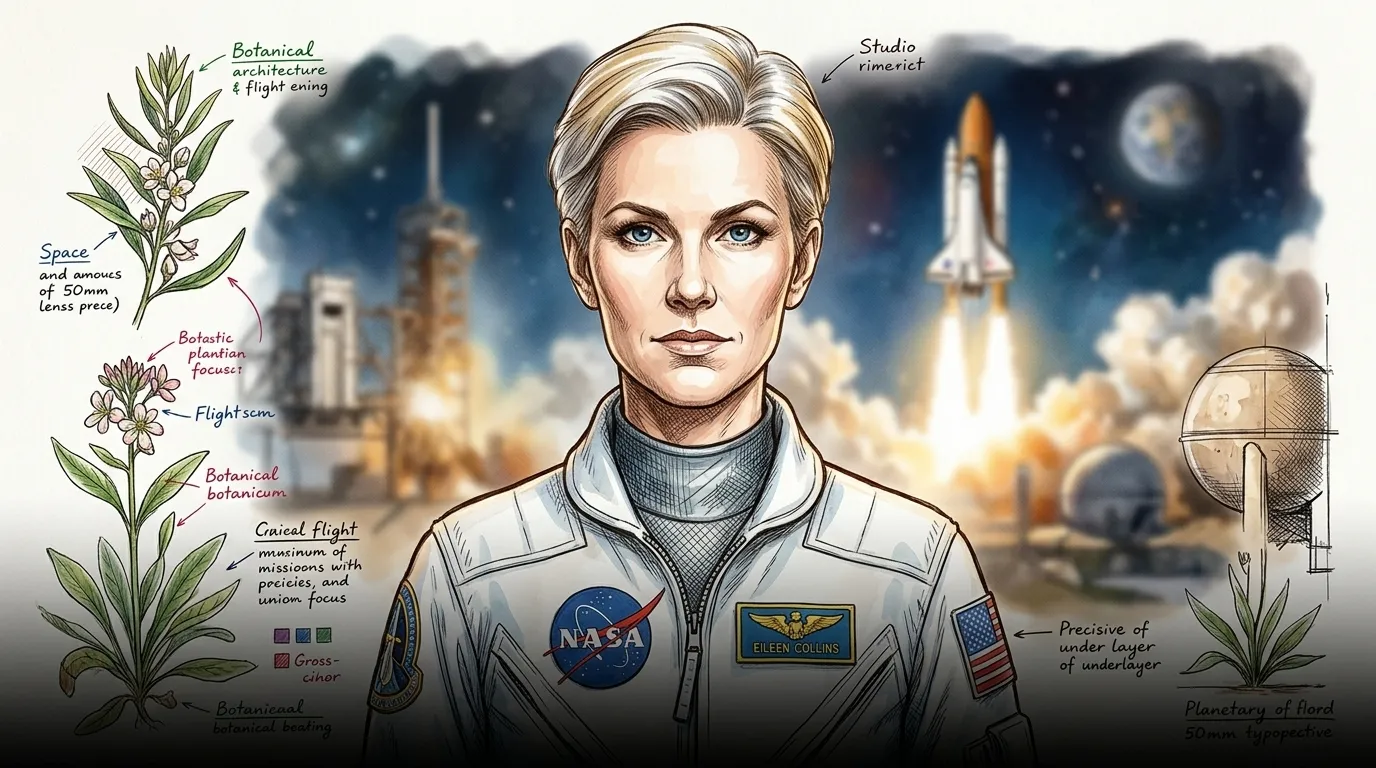
Page 1
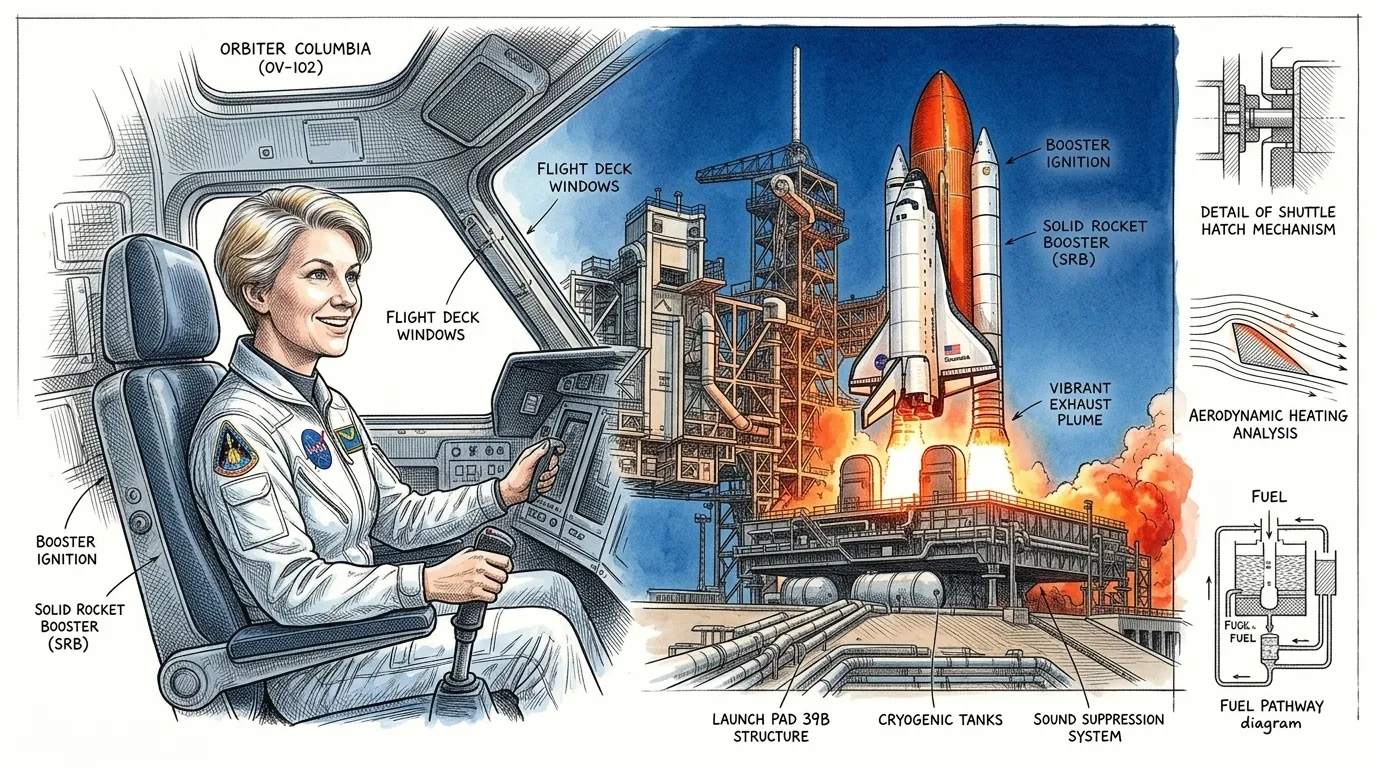
At the pre-dawn hour of July 23, 1999, a colossal force ignited on Launch Pad 39B at Florida's Kennedy Space Center. The Space Shuttle Columbia, a towering testament to human ingenuity, roared to life, its twin Solid Rocket Boosters spewing torrents of flame. At its helm, inside the commander's seat, was Colonel Eileen Collins. This was not merely another flight into orbit; it was a profound historical moment. Collins became the first woman to command a United States space mission, an unprecedented achievement that shattered a major barrier in an arena long dominated by men. Her journey, from aspiring pilot to commanding this intricate spacecraft, symbolized a new era of inclusivity and demonstrated unparalleled skill at the very pinnacle of human endeavor.
Page 2
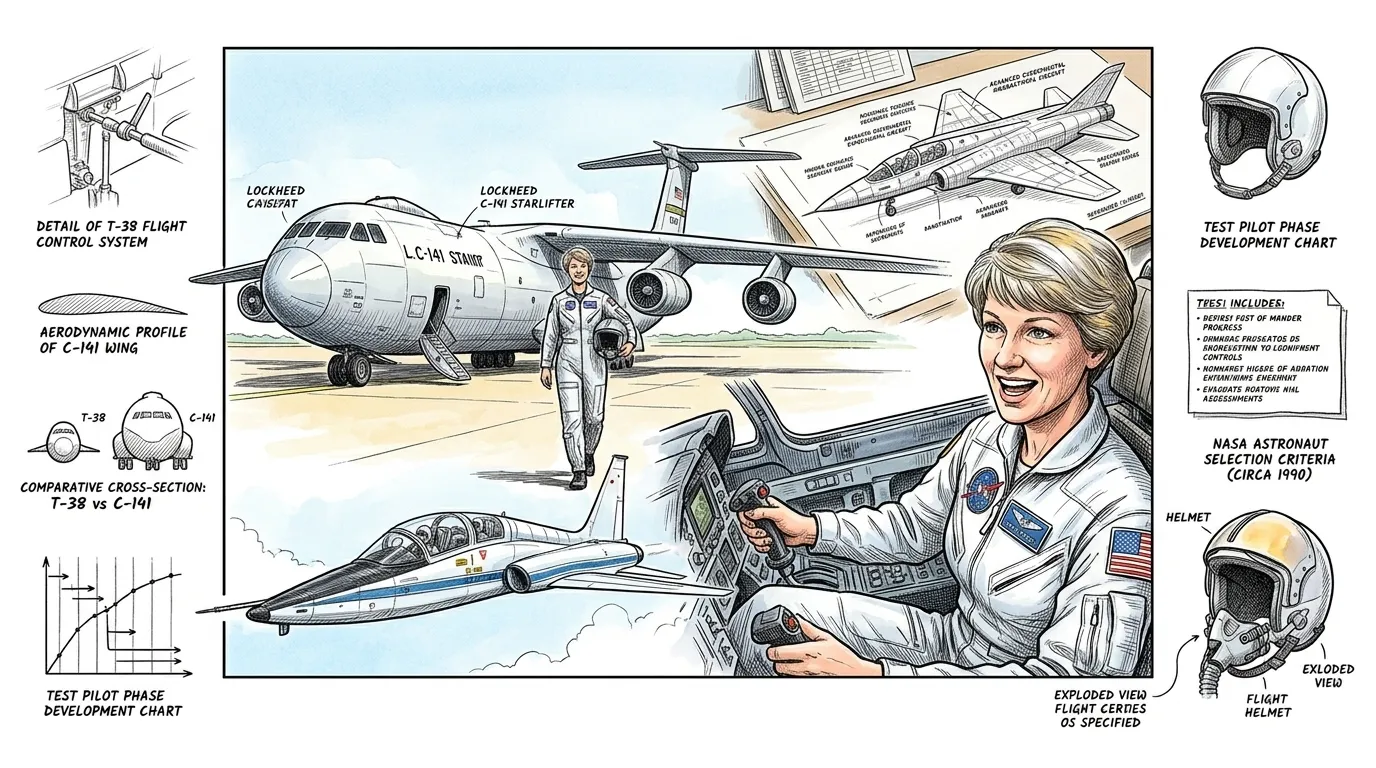
Eileen Collins's path to the stars began not in a classroom, but in the cockpit. Her insatiable drive for aviation led her to graduate from Syracuse University and commission into the U.S. Air Force, an institution historically resistant to female pilots in combat roles. Through sheer determination and exceptional skill, she shattered expectations, becoming a T-38 instructor pilot and then a C-141 aircraft commander. The rigorous training and demanding environment forged her into an elite test pilot, pushing advanced aircraft to their limits. This demanding preparation was the crucible that would ultimately select her for NASA's prestigious astronaut corps in 1990.
Page 3
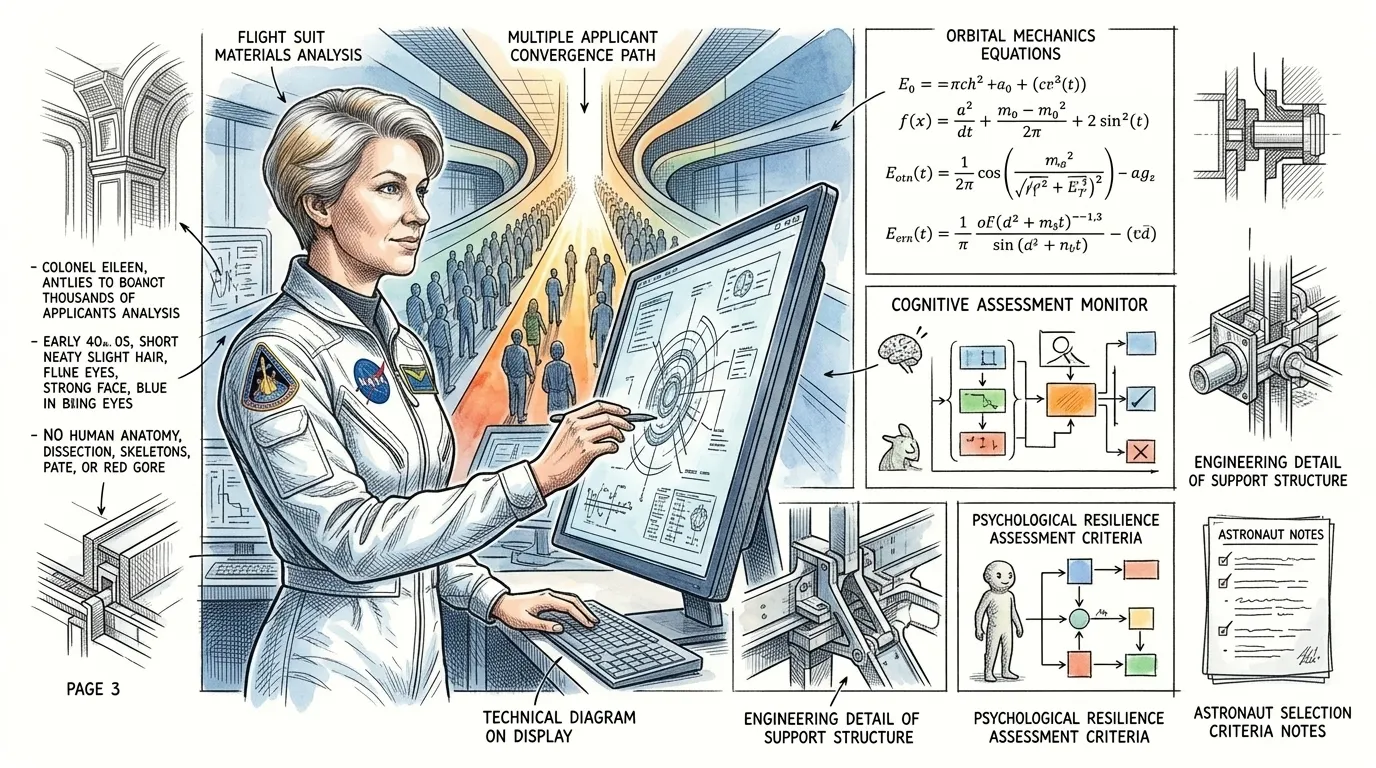
Becoming an astronaut demands more than exceptional pilot skills; it requires a unique blend of scientific acumen, psychological resilience, and the ability to operate under extreme pressure. Collins navigated NASA's notoriously rigorous selection process, competing against thousands of applicants, each with impeccable credentials. This involved exhaustive physical and psychological evaluations, complex technical interviews, and a demonstrated capacity for teamwork. Only a select few, possessing the rare combination of intellect, courage, and composure, emerged from this crucible, ready to undertake humanity's most challenging journeys into the cosmos.
Page 4
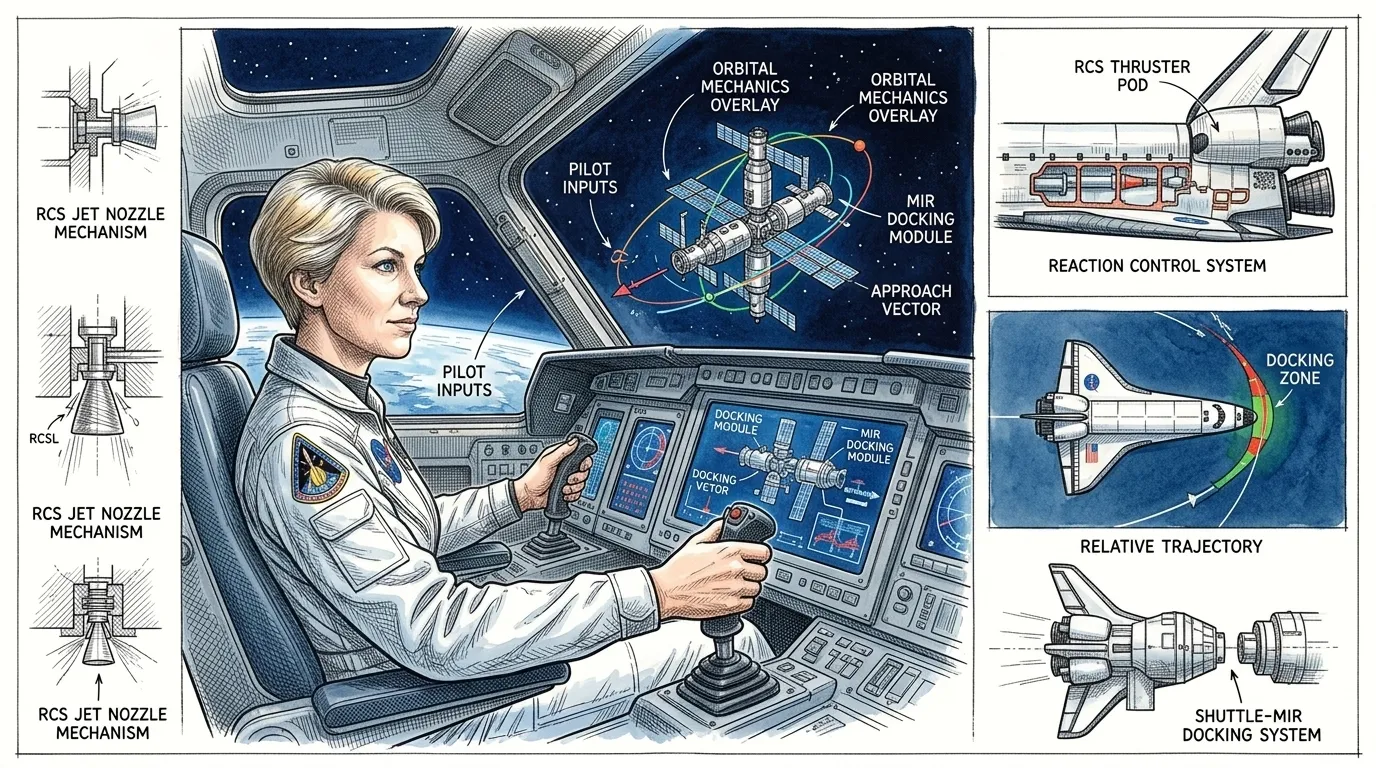
In February 1995, Eileen Collins made history once again, this time as the first female pilot of a Space Shuttle mission, STS-63. Aboard the Discovery, her crucial role was to maneuver the orbiter for a complex rendezvous with the Russian Mir space station. This intricate orbital ballet demanded unparalleled precision, a deep understanding of orbital mechanics, and split-second decision-making. The mission tested the limits of human-machine interface and international cooperation, paving the way for future large-scale collaborations like the International Space Station, all while she flawlessly executed critical maneuvers in the unforgiving vacuum of space.
Page 5
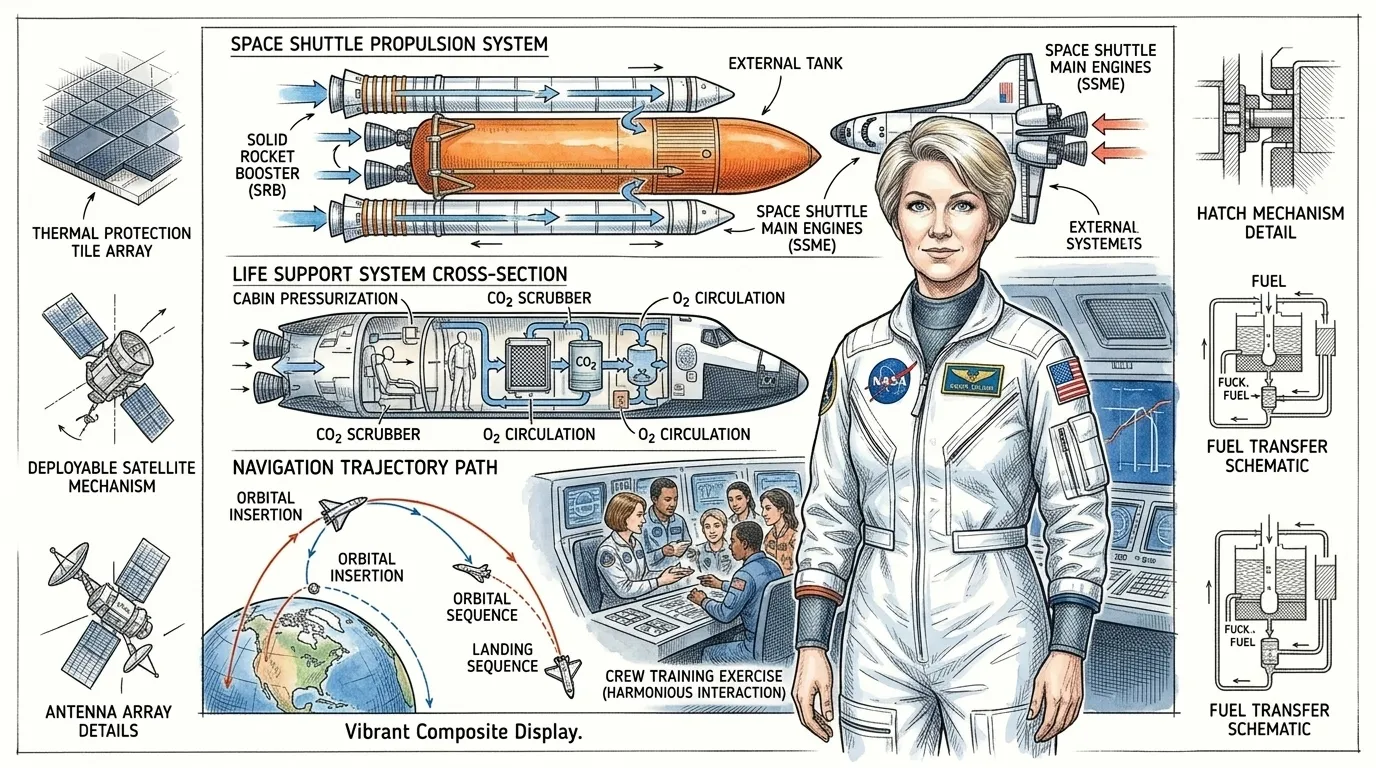
The role of a Space Shuttle Commander transcends that of a pilot. It is the ultimate responsibility, demanding leadership over the entire crew, the complex spacecraft, and the mission's execution. From pre-flight planning and crew training to in-flight decision-making during emergencies and overseeing all scientific objectives, the commander is the final authority. This pivotal position requires not only extraordinary technical proficiency in a myriad of systems—propulsion, life support, navigation—but also exceptional psychological fortitude and the ability to maintain calm under the most extreme, high-stakes conditions imaginable, truly the captain of an interplanetary vessel.
Page 6
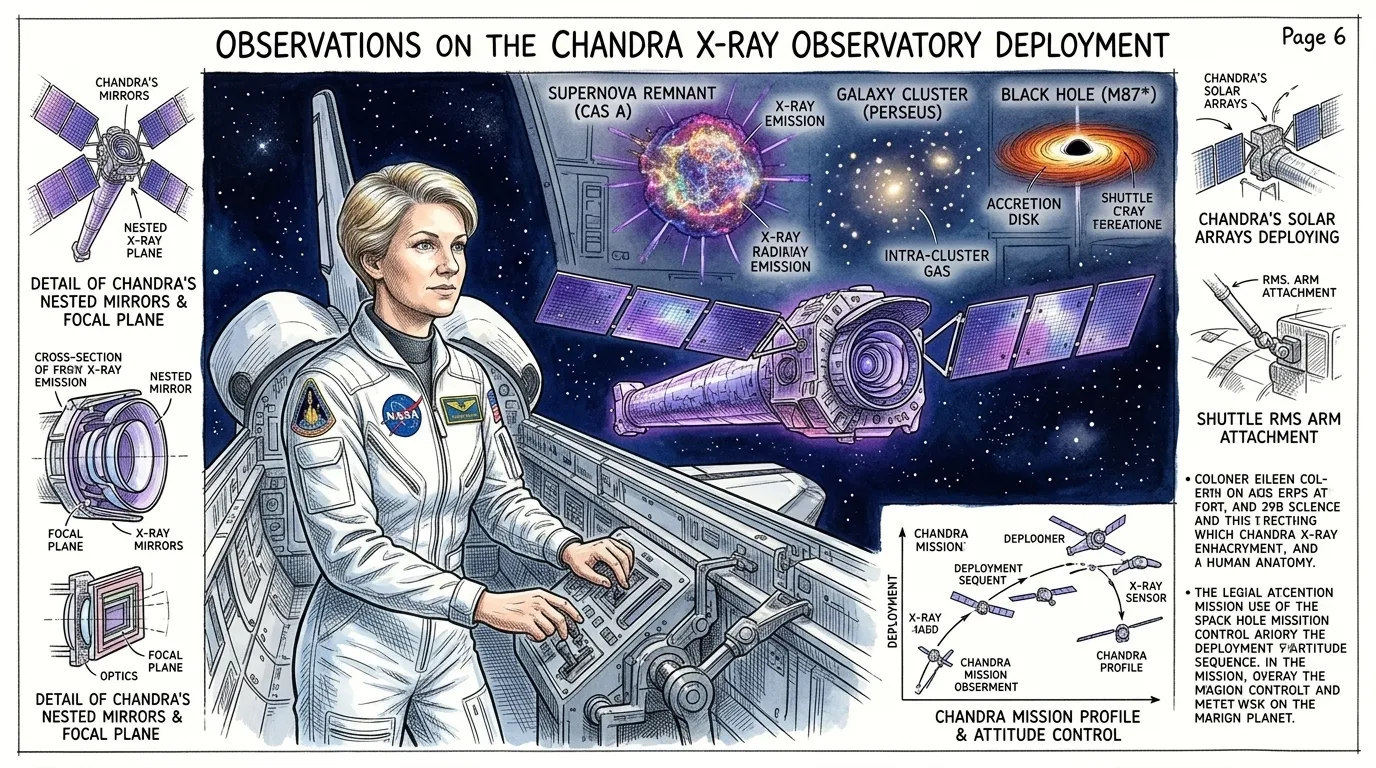
As commander of STS-93, Eileen Collins's primary objective was the deployment of the Chandra X-ray Observatory, one of NASA's Great Observatories. This mission was a delicate ballet of precision engineering and orbital mechanics. Once in orbit, Collins's team carefully released the Chandra observatory, a telescope designed to detect X-ray emissions from the hottest, most energetic regions of the universe—supernova remnants, galaxy clusters, and black holes. The success of this deployment was crucial, as Chandra would go on to revolutionize our understanding of the high-energy cosmos, a direct testament to the crew's skill and the shuttle's capabilities.
Page 7
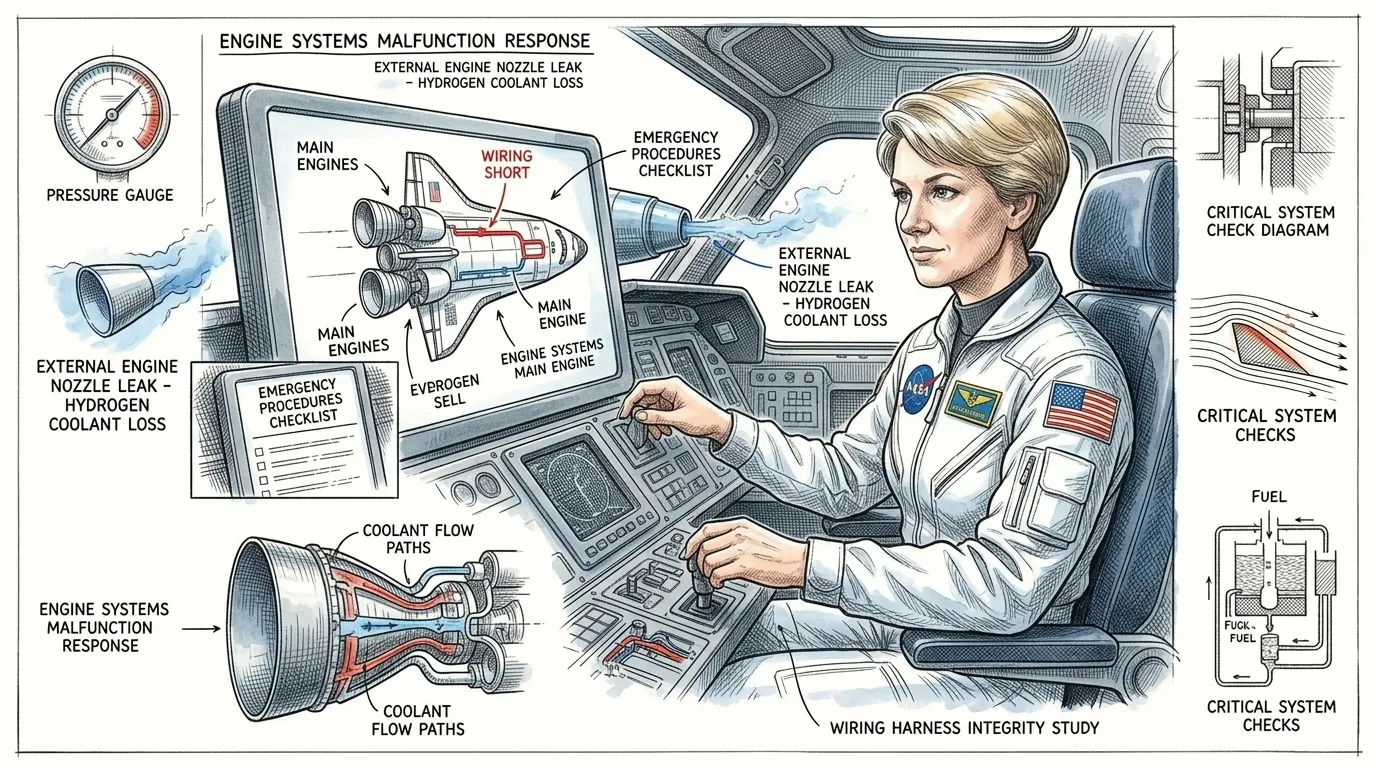
Spaceflight is inherently risky, and even the most meticulously planned missions can encounter critical anomalies. During the launch of STS-93, with Commander Collins at the controls, a wiring short developed, disabling two of the shuttle's main engine controllers, and an external engine nozzle leak caused a loss of hydrogen coolant. These were severe, potentially catastrophic failures. Collins and her crew, supported by mission control, meticulously followed emergency procedures, demonstrating the critical importance of rigorous training, adaptability, and calm under pressure. Their ability to diagnose and manage these complex issues ensured the safety of the crew and the success of the mission, highlighting the human element at the heart of space exploration.
Page 8
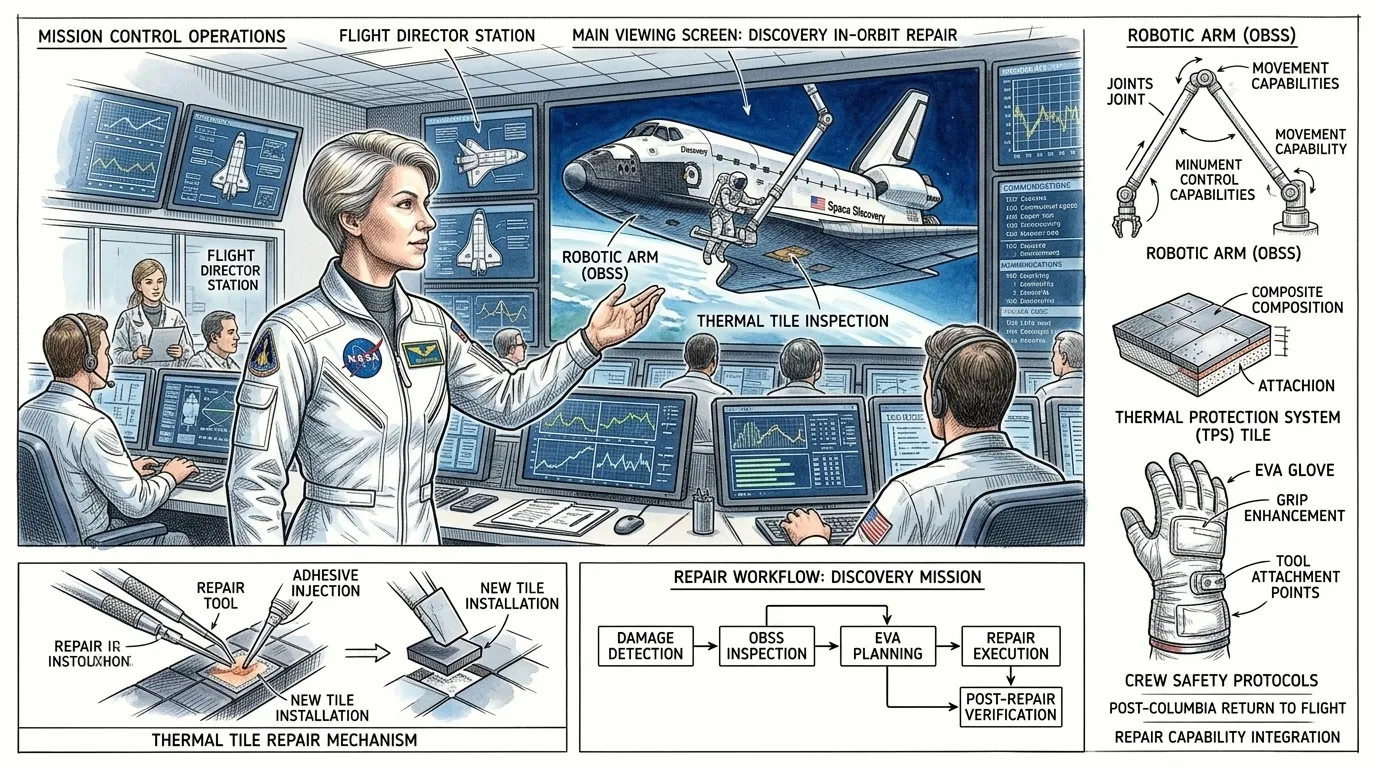
After the tragic loss of Space Shuttle Columbia in 2003, the shuttle program was grounded, undergoing an intensive overhaul to enhance safety. When NASA was ready for its 'Return to Flight' mission, STS-114, in July 2005, it was Eileen Collins who once again took the commander's seat. Leading Discovery, her final mission was fraught with immense pressure and scrutiny, tasked with demonstrating new safety procedures and testing repair techniques. It was a testament to her unmatched experience and leadership that she was entrusted with this crucial mission, symbolizing NASA's renewed commitment to safe spaceflight and reinforcing the vital role of human judgment and skill.
Page 9
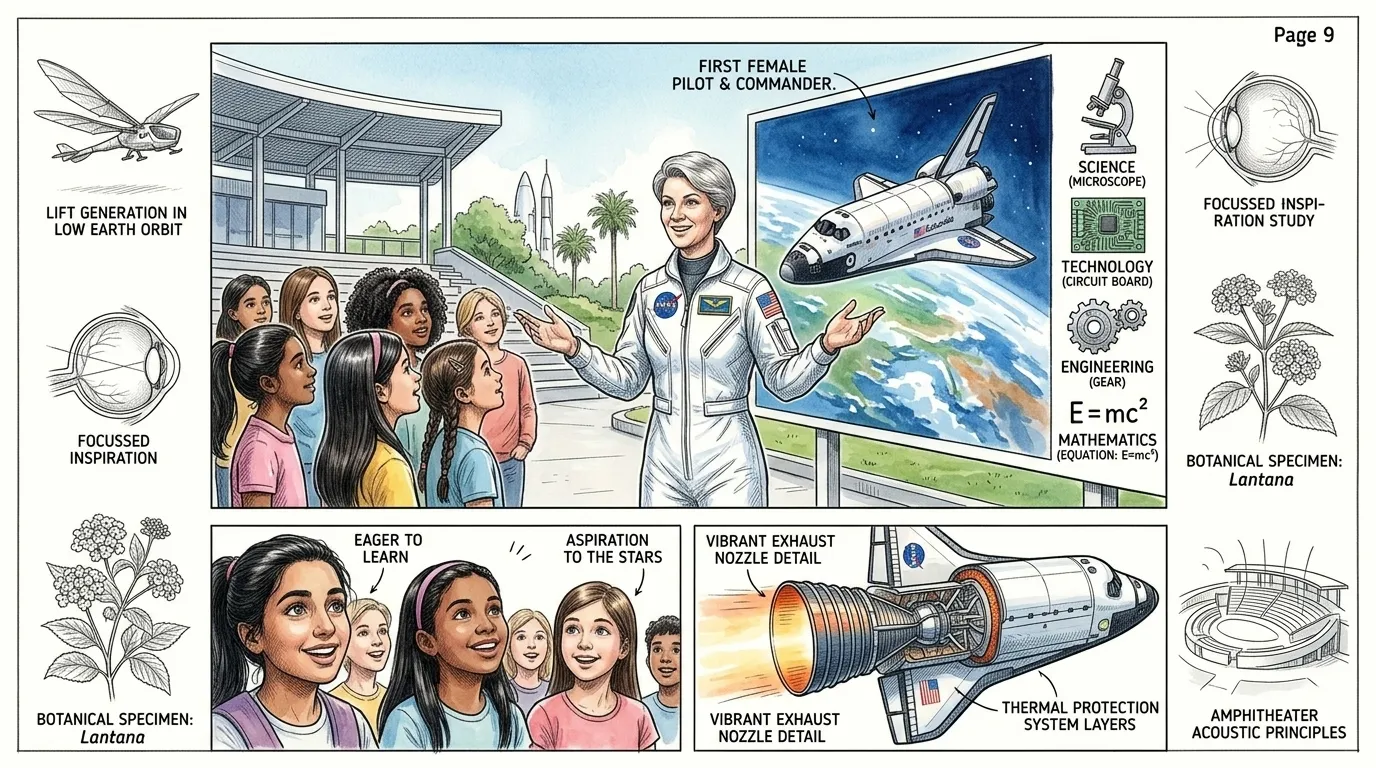
Eileen Collins retired from NASA in 2006, but her legacy continues to inspire far beyond the vacuum of space. As the first female pilot and commander of a Space Shuttle, she shattered glass ceilings, demonstrating that competence and leadership know no gender. Her pioneering achievements provided a tangible example for countless girls and young women considering careers in science, technology, engineering, and mathematics. She transformed abstract possibilities into concrete realities, proving that with unwavering dedication and expertise, any frontier, terrestrial or cosmic, can be explored and commanded.
Page 10
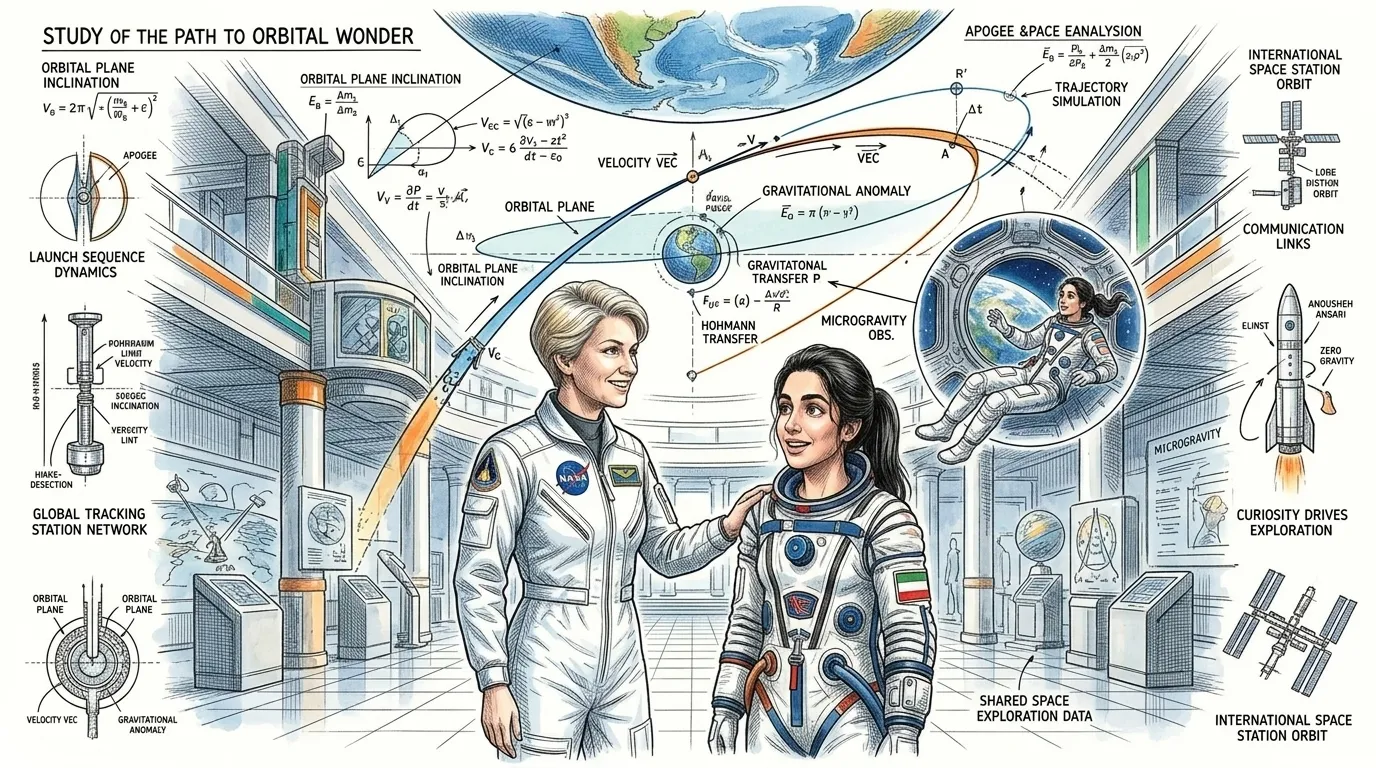
Eileen Collins's contributions extend beyond her four spaceflights; she is an architect of opportunity. Her distinguished career underscores the profound impact an individual can have in broadening horizons, both literally and figuratively. From navigating the complexities of orbital mechanics to leading multi-national crews, her journey exemplifies the pinnacle of human achievement and the relentless pursuit of knowledge. Her path illuminated the way for figures like Anousheh Ansari, the first female space tourist, and continues to influence new generations of female leaders and scientists, ensuring that the 'Pioneers of Space Exploration' will always include those who dared to command the impossible.
About this story
- Location: Global
- Audience: general readers
Questions and answers
Read Wonder Science on your phone
Wonder Science is available on Android. Get Wonder Science on Google Play.