How Batteries Store Power
How Batteries Store Power — an illustrated science story, set in United States. 10 illustrated pages, free to read on Wonder Science.
Page 1

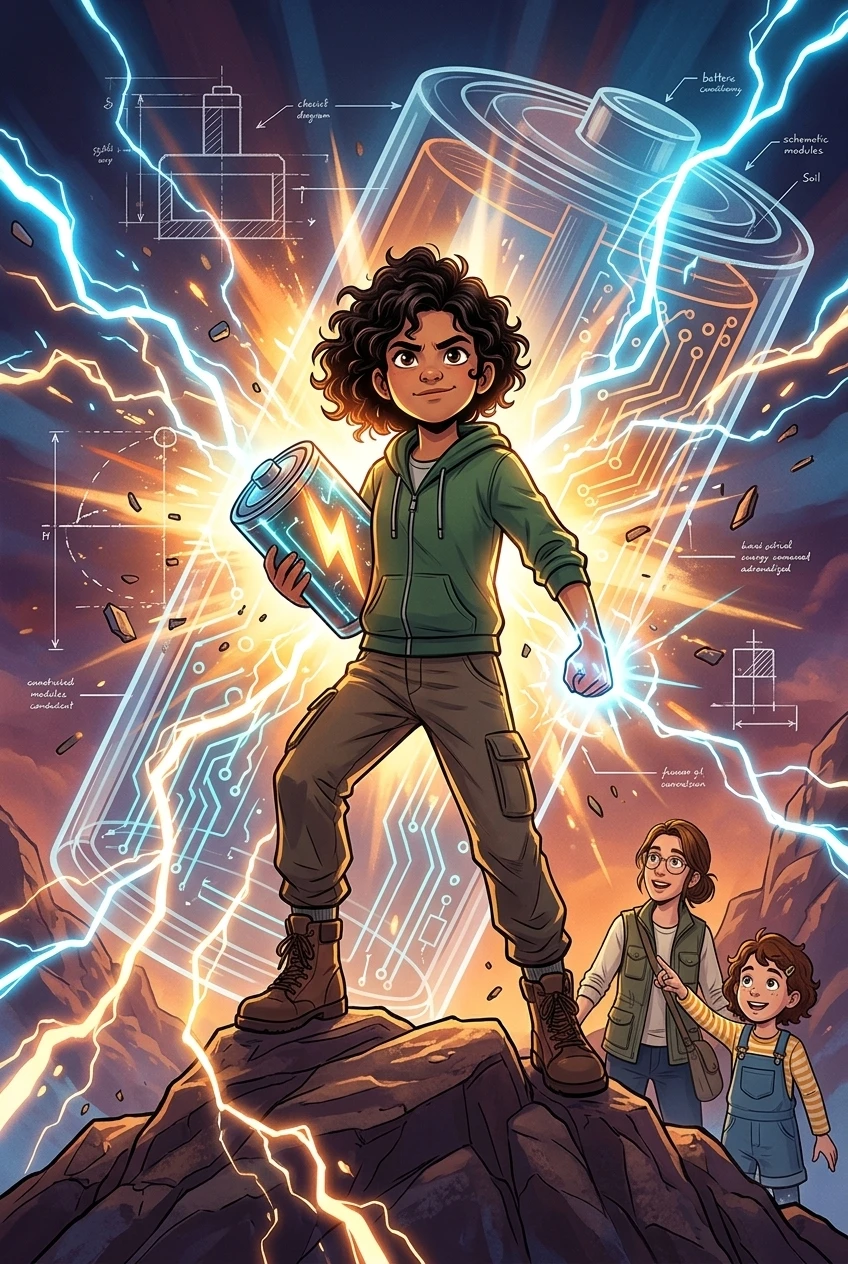
With a sudden clank, the great lamp at the top of the lighthouse went dark, plunging the room into twilight as a storm raged outside. Seven-year-old Isla gasped, grabbing onto Tara's arm. Devi, clutching a small battery-powered flashlight, clicked it on, casting a brave little beam across the dark room. "How can so much light be trapped inside this little plastic stick?" Devi wondered aloud, her voice echoing slightly in the sudden quiet.
Page 2
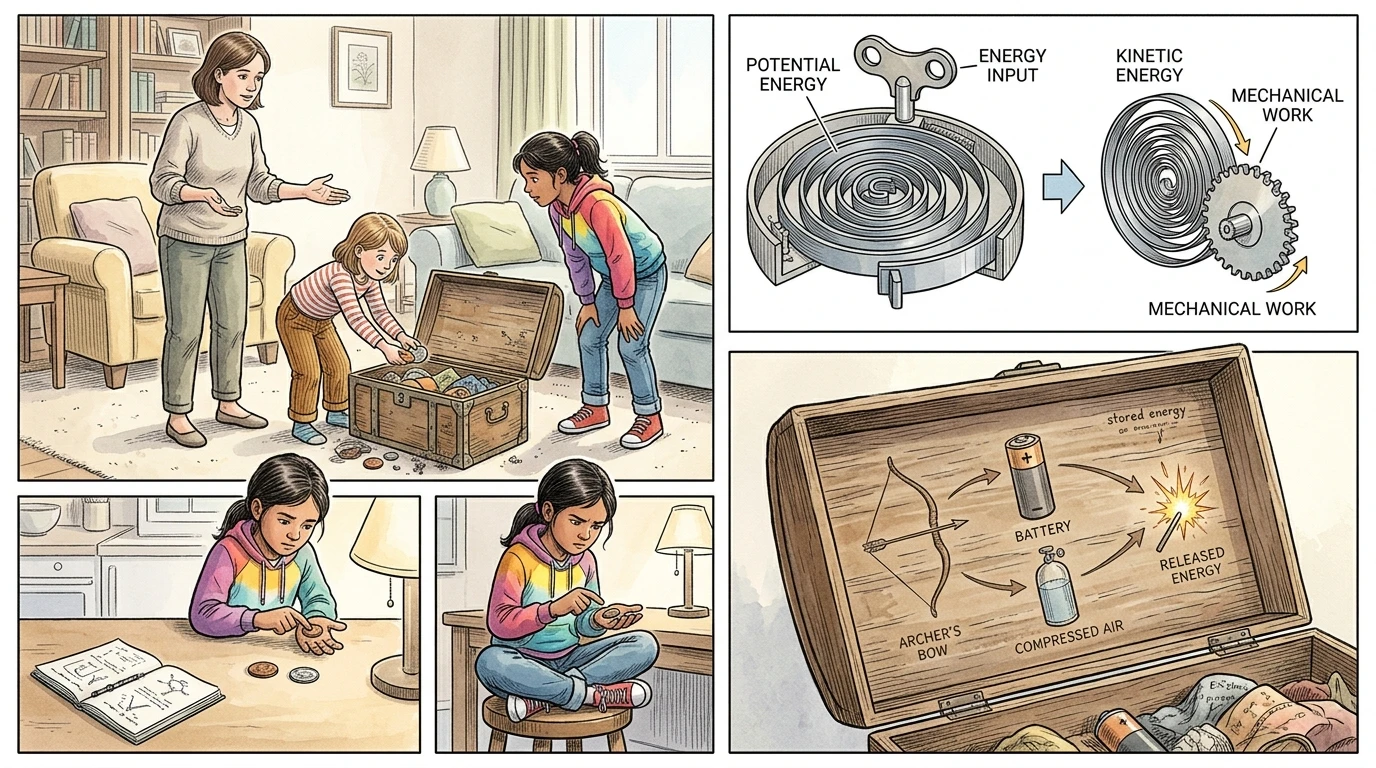
"It's not trapped light, it's stored energy," Tara explained softly, her voice a calm anchor in the storm. Isla, feeling braver, scurried over to an old wooden chest and pulled out two tarnished coins. "Look, treasure! One is coppery, but this one is silvery!" Devi took the coins, feeling their different weights and textures in her palm. "Energy from... metal? That doesn't make any sense."
Page 3

"It didn't make sense to anyone for thousands of years," Tara said, her eyes distant. "To understand it, you have to go back to a time of flickering candlelight and curious minds. Imagine Italy, around the year 1800, a place buzzing with new ideas about the strange, crackling force they called electricity." The sound of the storm seemed to fade, replaced by the crackle of an imaginary fire.
Page 4
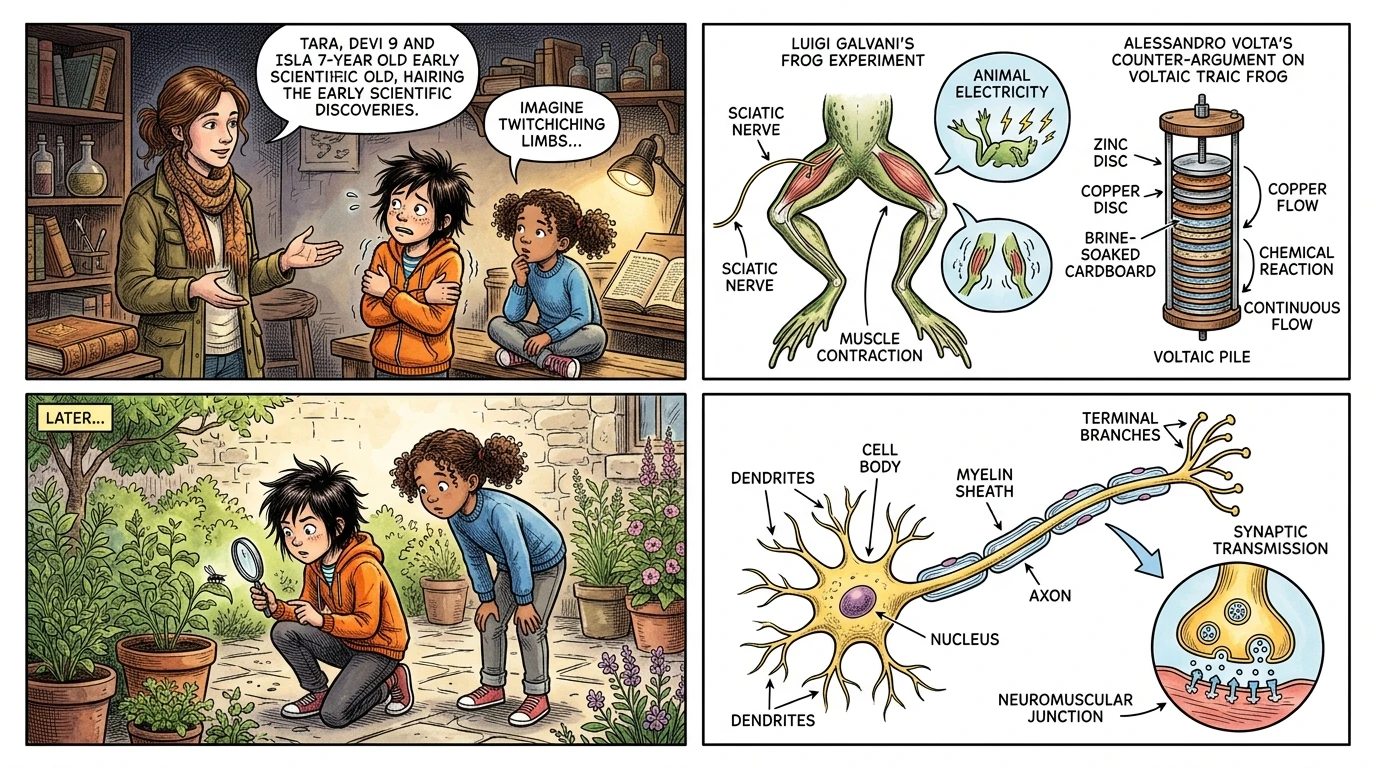
"There was a scientist named Alessandro Volta," Tara began. "He was fascinated by electricity, but he was puzzled by an experiment from another scientist, Luigi Galvani, who had made a dead frog's legs twitch by touching them with two different metals. Galvani thought the electricity came from the animal itself, but Volta suspected something else was happening." Devi imagined the strange, twitching legs and shivered.
Page 5
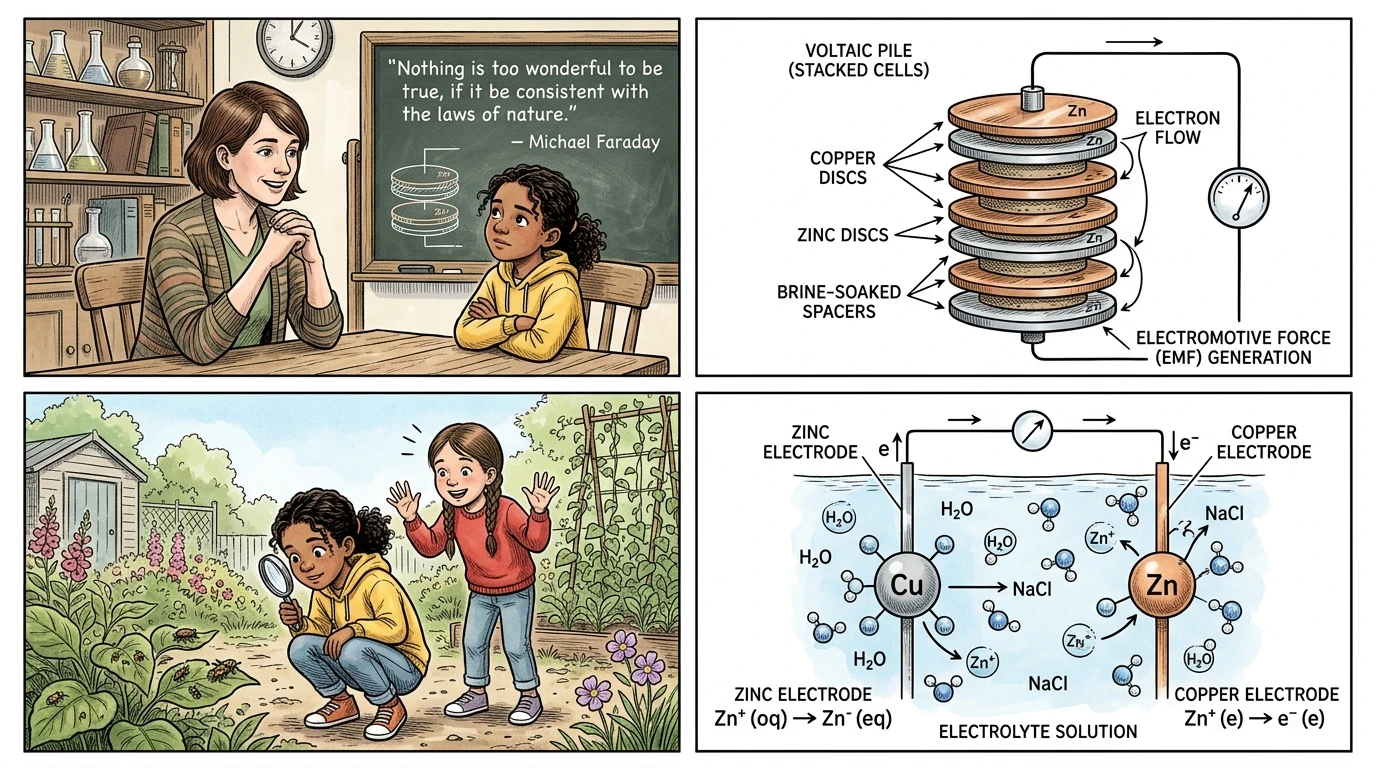
"Volta thought the secret wasn't in the frog, but in the metals themselves," Tara continued. "He was a careful and persistent experimenter. He remembered what the scientist Michael Faraday once said: 'Nothing is too wonderful to be true, if it be consistent with the laws of nature.' Volta believed there was a natural law at play, not some magical 'animal electricity.'"
Page 6

"So he started stacking!" Devi exclaimed, catching on. Tara nodded. "He stacked a disc of copper, then a piece of cardboard soaked in salt water, then a disc of zinc. He repeated it over and over, creating a tall pile. When he touched a wire to the top and bottom of his 'Voltaic Pile,' he didn't just get a spark—he got a continuous, steady flow of electricity!"
Page 7
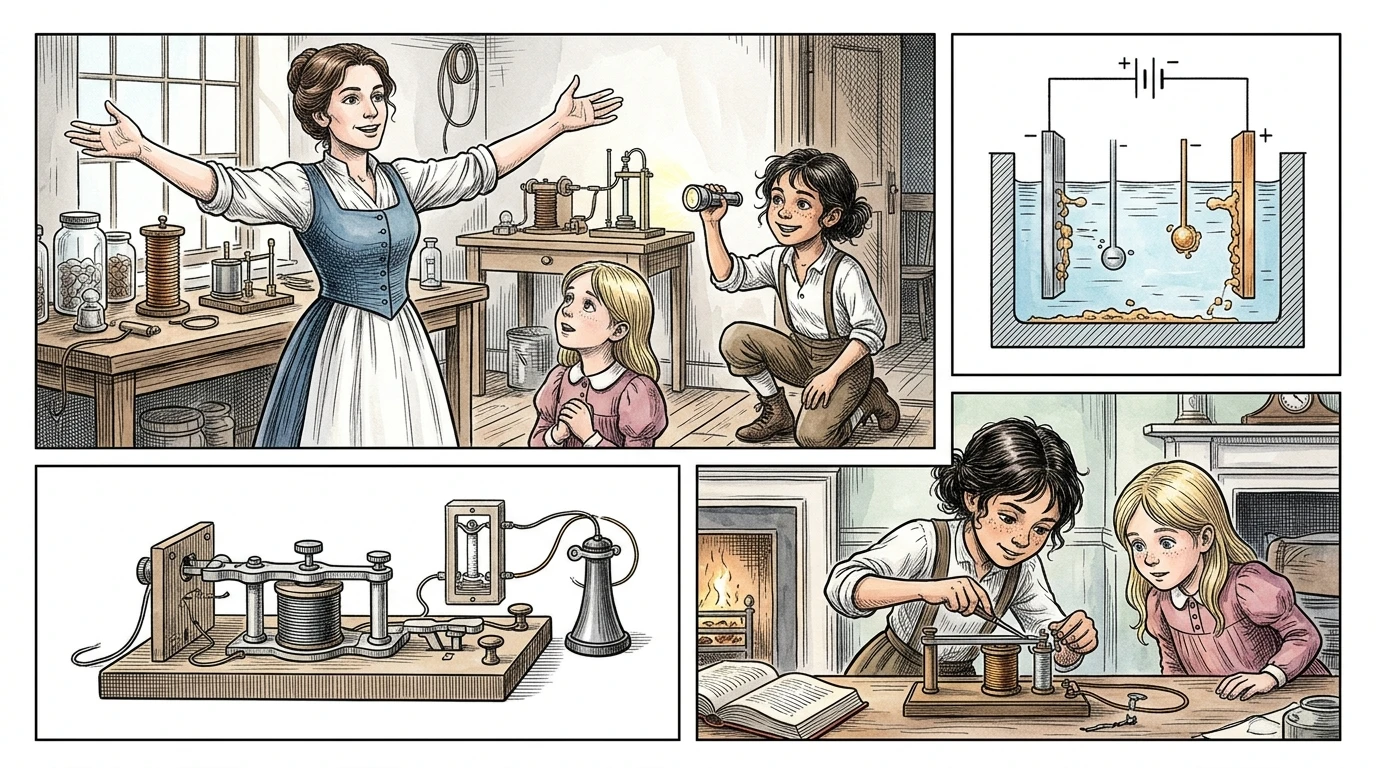
"He had invented the first battery!" Tara declared. "That steady flow of power changed the world, leading to everything from electroplating metals to sending the first telegraph messages. In fact, a modern lightning bolt is five times hotter than the surface of the sun, but Volta's invention gave us a way to tame that kind of power on a tiny scale." Every single battery, even the one in Devi's flashlight, was a great-great-grandchild of that first metal pile.
Page 8
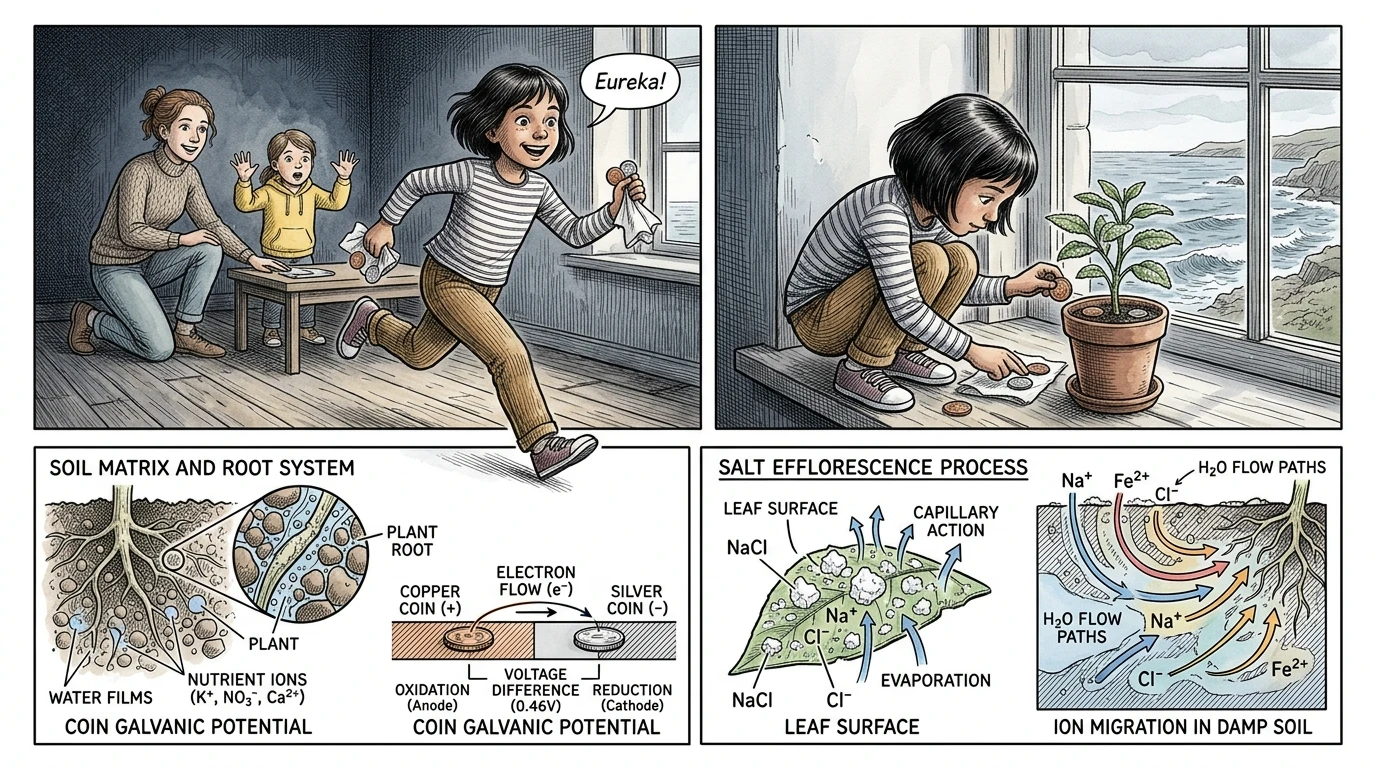
Back in the dim lighthouse, Devi's eyes lit up as she looked at the coins in her hand. "The copper and the silvery one... they're two different metals, just like Volta's!" She grabbed a napkin and ran to a small potted plant near the window. "Tara, can we use the salty water from this seaside plant?" Tara smiled. "Let's find out!"
Page 9
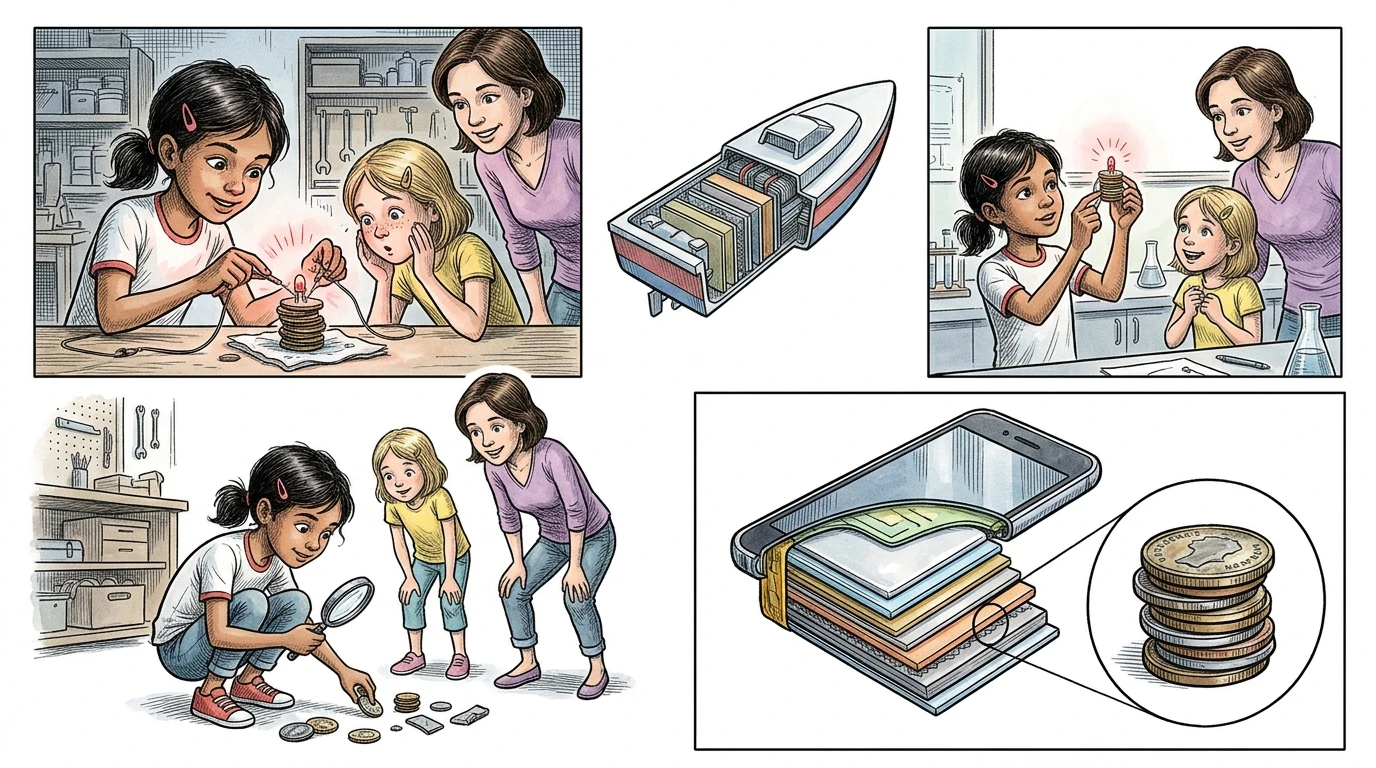
Devi carefully touched the wires from a tiny LED light to the top and bottom of their little coin stack. A tiny, faint red glow appeared! "It works! We made light!" Isla whispered in amazement. "It's the same idea in my remote control boat," Devi realized, "and in your phone, Tara! Just different metals and chemicals, layered up to push out power."
Page 10
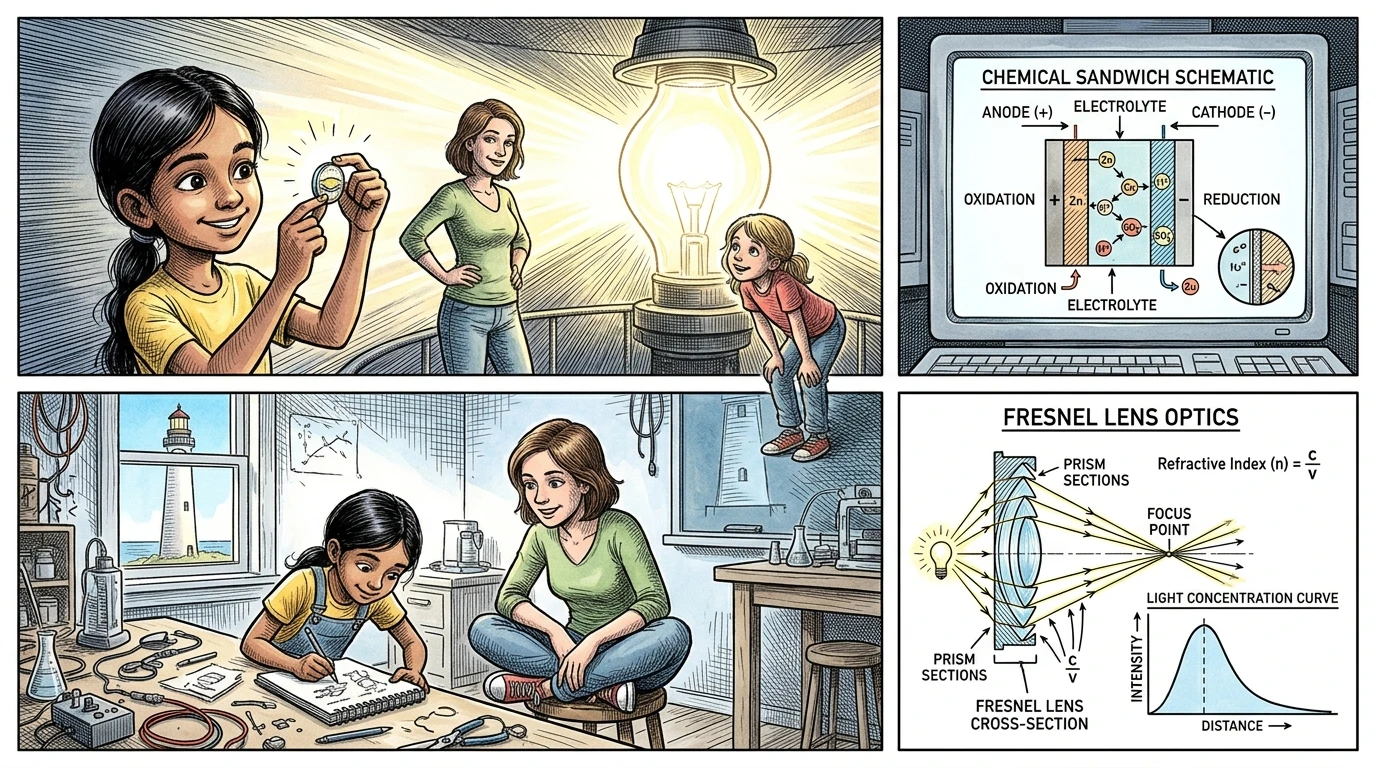
Just then, with a loud hum, the main lighthouse systems rebooted and the giant lamp flooded the room with brilliant, sweeping light. Their tiny experiment was dwarfed, but Devi held it tight. "So a battery is just a chemical sandwich that pushes electricity!" she said proudly. As the huge beam began to rotate, Isla looked up at the giant, glowing bulb and asked, "But how does the electricity actually turn into light?"
About this story
- Location: United States
- Audience: kids (ages 6–12)
Questions and answers
Read Wonder Science on your phone
Wonder Science is available on Android. Get Wonder Science on Google Play.