What are 10 reasons why space exploration is important?
Space exploration offers ten crucial benefits, from scientific discovery and technological advancement to inspiring future generations.
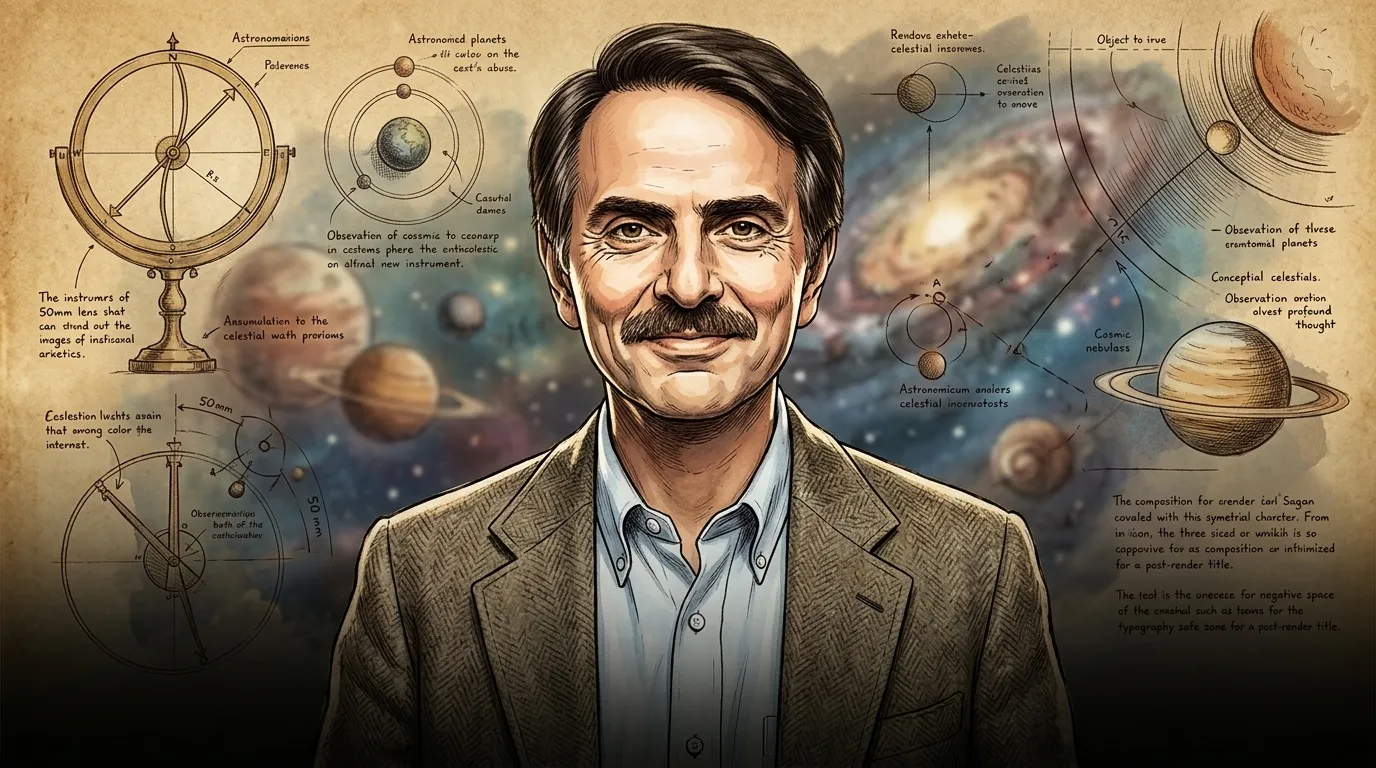
Space exploration is a vast field of human endeavor that has, for centuries, pushed the boundaries of our knowledge and capabilities. Without it, humanity would miss out on profound scientific discoveries, technological leaps, and a broader understanding of our place in the universe. From the earliest observations of the night sky by figures like Galileo Galilei to the ambitious missions of today, the quest to explore space has yielded ten crucial reasons why it remains profoundly important.
1. Expanding Scientific Knowledge
The primary driver of space exploration has always been to understand the universe around us. Each mission, whether orbital, planetary, or deep space, gathers data that refines our cosmological models, reveals new celestial bodies, and helps us comprehend the fundamental laws of physics. For instance, the Hubble Space Telescope, named after Edwin Hubble, revolutionized astronomy by providing unprecedented views of distant galaxies, expanding our understanding of the universe's scale and evolution. This continuous pursuit of knowledge directly contributes to our collective intellectual growth and answers ancient questions about where we come from.
2. Technological Innovation and Spin-offs
The challenges of space travel demand cutting-edge solutions, leading to innovations that often find practical applications on Earth. From advanced materials and miniaturized electronics to water purification systems and medical imaging, numerous technologies developed for space missions have improved daily life. The development of satellite technology, for example, underpins modern communication, weather forecasting, and GPS navigation. Even basic tools like cordless drills were first conceived for lunar missions. The drive to overcome the harsh realities of space consistently pushes the boundaries of engineering and design.
The exploration of space will go ahead, whether we join in it or not, and it is one of the great adventures of all time, and no nation which expects to be the leader of other nations can expect to stay behind in the race for space.
3. Inspiring Future Generations: Carl Sagan
Space exploration captures the imagination like few other endeavors. The stories of astronauts, engineers, and scientists working together to achieve seemingly impossible feats inspire young people to pursue careers in science, technology, engineering, and mathematics (STEM). Figures like Carl Sagan eloquently communicated the wonders of the cosmos, igniting curiosity in millions. This inspiration is vital for maintaining a scientifically literate society and ensuring a pipeline of talent for future challenges, both on Earth and beyond. The journeys of astronauts like Sunita Williams or Chris Hadfield demonstrate what human ingenuity can achieve.
4. Fostering International Cooperation
Many of the most ambitious space projects, such as the International Space Station, are collaborative efforts involving multiple countries. These projects build diplomatic bridges, encourage shared goals, and promote peaceful cooperation between nations that might otherwise have strained relationships. Working together on complex, high-stakes missions requires trust, communication, and mutual respect, demonstrating humanity's capacity for collective achievement. The legacy of pioneering figures like Sergei Korolev, who spearheaded early Soviet space efforts, eventually led to cooperative ventures with former rivals, underscoring the unifying potential of space. Discover more about the pioneers of space exploration through Wonder Science stories like Anousheh Ansari.
5. Understanding Earth's Climate and Environment
Satellites orbiting Earth provide invaluable data for monitoring our planet's climate, weather patterns, and environmental changes. This perspective from space allows scientists to track deforestation, ice cap melting, ocean currents, and atmospheric composition on a global scale. This information is crucial for understanding climate change, predicting natural disasters, and developing strategies for environmental protection. Without this orbital vantage point, our understanding of Earth's complex systems would be significantly limited. The work of scientists like Nancy Grace Roman, who helped lay the groundwork for orbiting observatories, directly contributed to this capability. Learning about the vastness of space can also be found in articles on WonderBooks articles.
Frequently Asked Questions
What is the future of space exploration?
The future of space exploration is focused on returning humans to the Moon, establishing permanent lunar bases, and eventually sending crewed missions to Mars. There is also a strong emphasis on robotic missions to explore distant planets, moons, and asteroids, as well as the continued search for exoplanets and extraterrestrial life. Private companies are playing an increasingly significant role in this future.
How does space exploration benefit everyday life?
Space exploration has led to numerous 'spin-off' technologies that benefit everyday life, including GPS, satellite communication, weather forecasting, memory foam, freeze-dried food, improved medical imaging, water purification systems, and advancements in materials science. These innovations often arise from the need to solve complex problems in the harsh environment of space.
What are the biggest challenges in space exploration?
The biggest challenges in space exploration include the immense cost of missions, the physiological and psychological effects of long-duration space travel on humans, protecting spacecraft and astronauts from radiation, developing advanced propulsion systems for faster travel, and managing the vast distances and communication delays involved in deep space missions. Overcoming these hurdles requires continuous innovation and international collaboration.