Cecilia Payne and the Discovery That Stars Are Mostly Hydrogen
In 1925 a 25-year-old graduate student proved stars are made almost entirely of hydrogen. The field's senior expert told her the result was impossible.
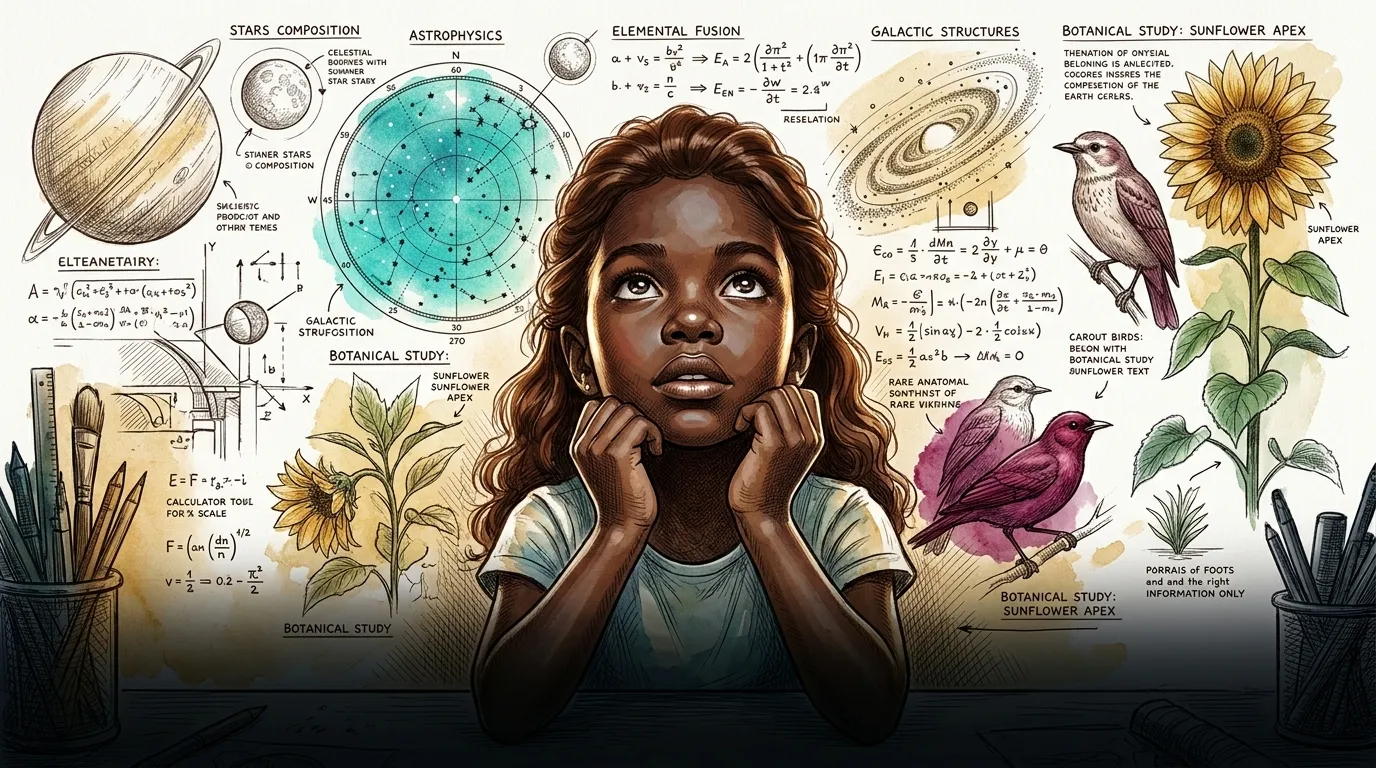
In 1925, a 25-year-old graduate student named Cecilia Payne submitted a doctoral thesis at Harvard College Observatory arguing something almost nobody in astronomy believed at the time: that the sun and stars are made almost entirely of hydrogen and helium, not the same mix of iron, silicon and rock that makes up the Earth. The prevailing assumption among astronomers was that stars were essentially superheated versions of our own planet — hot Earths, chemically speaking. Payne's analysis of starlight said otherwise, and she was right.
Her thesis has since been called, by fellow astronomer Otto Struve, the most brilliant PhD thesis ever written in astronomy. At the time she wrote it, one of the most senior astronomers in the country told her, in writing, that her central finding was clearly impossible.
What the numbers actually showed
Payne's thesis, titled Stellar Atmospheres: A Contribution to the Observational Study of High Temperature in the Reversing Layers of Stars, combined the study of stellar spectra with a recently developed theory describing how atoms lose electrons at extreme temperatures. Applying that theory rigorously to starlight for the first time, she calculated the relative abundance of different elements in stellar atmospheres and found hydrogen was roughly a million times more abundant than heavier elements like iron and silicon, with helium about a thousand times more abundant. In other words, stars were overwhelmingly hydrogen and helium, with everything else present only in trace amounts.
Why she nearly buried her own result
Henry Norris Russell, a senior Princeton astronomer who sat on Payne's thesis committee, reviewed her draft and wrote back that such a high abundance of hydrogen compared to heavier elements was "clearly impossible," reflecting the era's confidence that stars shared Earth's composition. Under that pressure, in the published version of her thesis, Payne described her own hydrogen and helium abundances as "almost certainly not real" — while still printing the actual numbers. Historians who have studied the episode read that phrasing as a deliberate compromise: distancing herself from the conclusion in words, while making sure the data itself was on the record as hers first.
Vindicated four years later, credited less
In 1929, Russell — the same astronomer who had pushed her to soften her language — published his own paper reaching the identical conclusion about hydrogen's abundance in stars, using a different method, and cited her earlier work approvingly. For years afterward, Russell was often the one given popular credit for the discovery, even though Payne had reached and published the finding first. Modern measurements have fully confirmed her original numbers: the accepted composition of stars in the Milky Way is roughly seventy-four percent hydrogen and twenty-four percent helium, with every other element combined making up about two percent. She went on to become the first woman to chair a department at Harvard.
Told as an illustrated story
Frequently Asked Questions
What did Cecilia Payne discover?
In her 1925 doctoral thesis, Payne showed that stars, including the sun, are made almost entirely of hydrogen and helium — hydrogen roughly a million times more abundant, and helium about a thousand times more abundant, than heavier elements. This overturned the prevailing assumption that stars had roughly the same chemical composition as the Earth.
Did Cecilia Payne get credit for discovering that stars are made of hydrogen?
Only partially, and only over time. A senior astronomer on her thesis committee, Henry Norris Russell, initially called her finding "clearly impossible" and pressured her to soften her conclusions in print. When Russell published the same conclusion himself four years later using a different method, he was for a long period given more popular credit than Payne, despite citing her earlier work.
What is Cecilia Payne-Gaposchkin's thesis considered today?
It is widely regarded as one of the most important works in the history of astronomy — astronomer Otto Struve called it "the most brilliant PhD thesis ever written in astronomy" — and modern measurements have fully confirmed her original hydrogen and helium abundance figures.