Why Ocean Chemistry Is Changing, Explained Simply
The ocean has absorbed about a third of humanity's carbon dioxide since the Industrial Revolution. Here is the actual chemistry behind what that is doing to it.
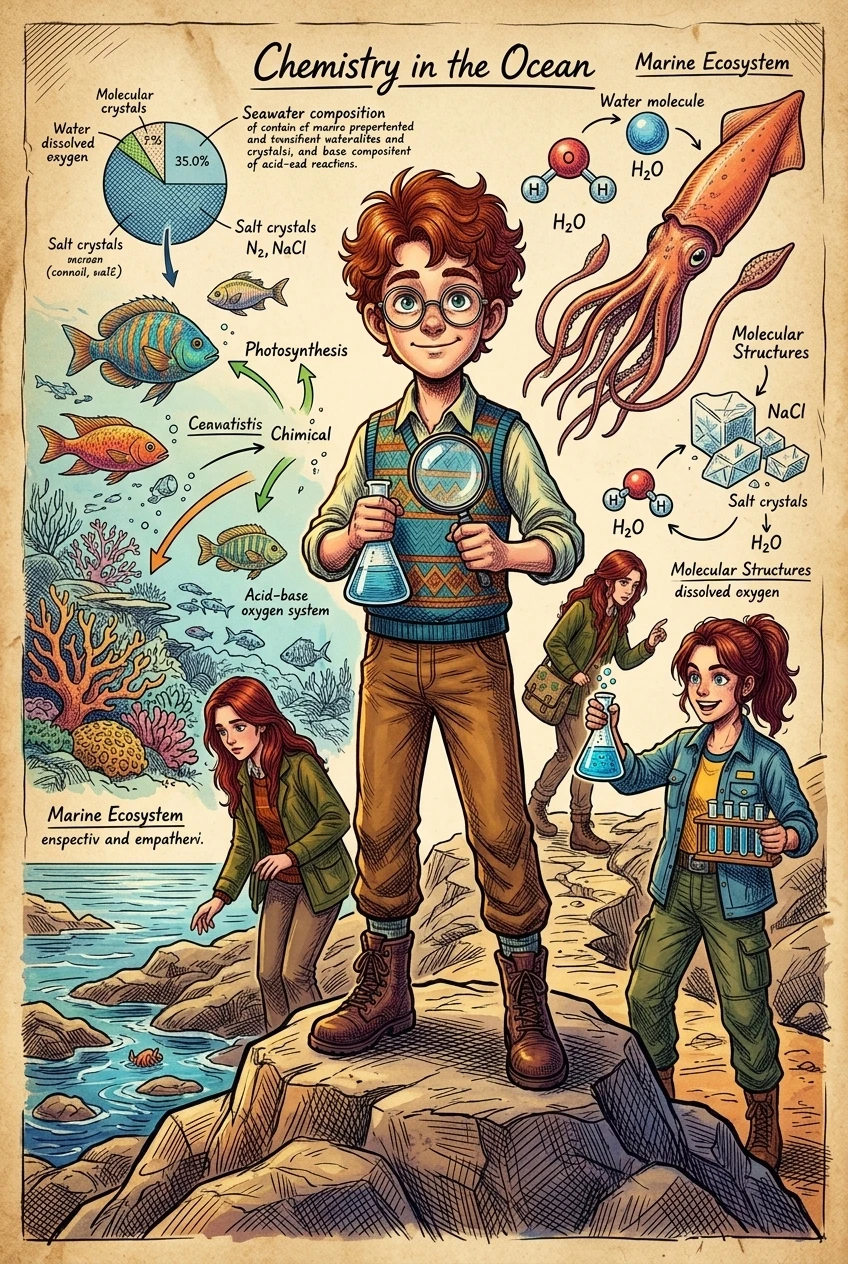
Since the start of the Industrial Revolution, humans have released enormous quantities of carbon dioxide into the atmosphere by burning fossil fuels and clearing land. The ocean has quietly absorbed roughly thirty percent of that CO2, acting as a giant buffer that has slowed the pace of atmospheric warming. That absorption is not free, chemically speaking — it has measurably changed the ocean's own chemistry, a process scientists call ocean acidification.
The idea sounds abstract until it's broken into the actual chemical steps, which are simple enough to follow without a chemistry degree, and specific enough to explain exactly why the change matters to the animals living in that water.
The chemistry, in four steps
Carbon dioxide dissolves into the surface layer of the ocean directly from the air above it. Once dissolved, that CO2 reacts with seawater to form carbonic acid. Carbonic acid is unstable and quickly breaks apart into bicarbonate ions and free hydrogen ions. Those hydrogen ions are what actually make the water more acidic — pH is, literally, a measure of hydrogen ion concentration — and they don't stop there: they also react with existing carbonate ions in the water, converting them into more bicarbonate and leaving fewer carbonate ions behind. That last step is the one with real consequences, because carbonate ions are the raw material many marine organisms use to build calcium carbonate shells and skeletons.
A small number that means a big change
Average ocean surface pH before the Industrial Revolution is estimated to have been about 8.2. It has since fallen by roughly 0.1 units. That sounds minor, but the pH scale is logarithmic, meaning a 0.1 unit drop corresponds to an increase in acidity of roughly thirty percent, not ten. If carbon emissions continue on an unconstrained path, models project ocean pH could fall by a further 0.3 units by 2100 — a change on a scale not seen in the geological record for tens of millions of years.
Why it matters beyond the chemistry itself
Fewer available carbonate ions makes it harder for corals, oysters, mussels, sea urchins and many types of plankton to build and maintain their shells and skeletons, since some of the energy they'd otherwise spend growing now goes into fighting the chemistry of the water around them. The effects aren't limited to shell-building species, either: researchers studying fish behavior have found that more acidic water measurably reduces the ability of some fish, including clownfish, to detect the chemical cues of nearby predators — a change in ocean chemistry translating directly into a change in how well an animal can sense danger.
Told as an illustrated story
Frequently Asked Questions
What is ocean acidification, in simple terms?
It's the drop in ocean pH caused by seawater absorbing carbon dioxide from the atmosphere. The dissolved CO2 forms carbonic acid, which releases hydrogen ions that make the water more acidic and reduce the amount of carbonate ions available — carbonate being the material many marine animals need to build shells and skeletons.
How much has ocean pH actually changed?
Average surface ocean pH has fallen by about 0.1 units since before the Industrial Revolution, from roughly 8.2 to about 8.1. Because pH is measured on a logarithmic scale, that 0.1 unit drop represents an increase in acidity of around thirty percent.
Does ocean acidification only affect shellfish and corals?
No. While calcifying organisms like corals, oysters and some plankton are the most directly affected because they need carbonate ions to build shells, research has also found behavioral effects in fish — for example, reduced ability in clownfish to detect the chemical scent of predators in more acidic water.