Tomb Curses: Real or Legend?
Tomb Curses: Real or Legend? — an illustrated history story. 10 illustrated pages, free to read on Wonder Egypt.
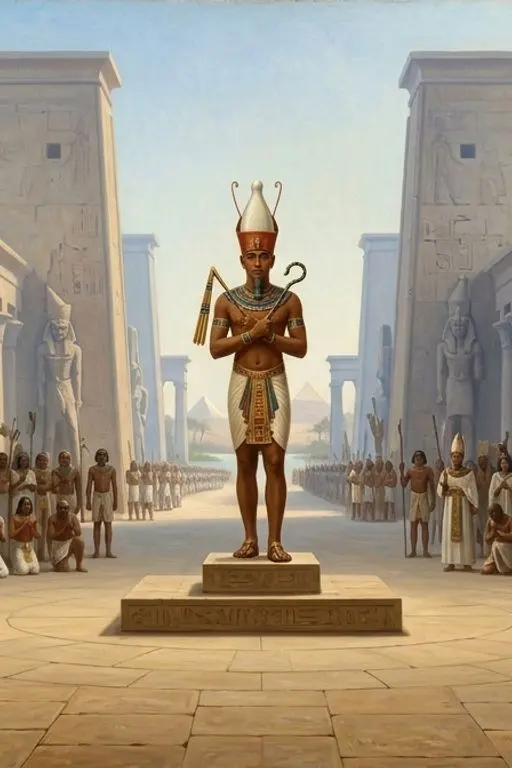
Page 1
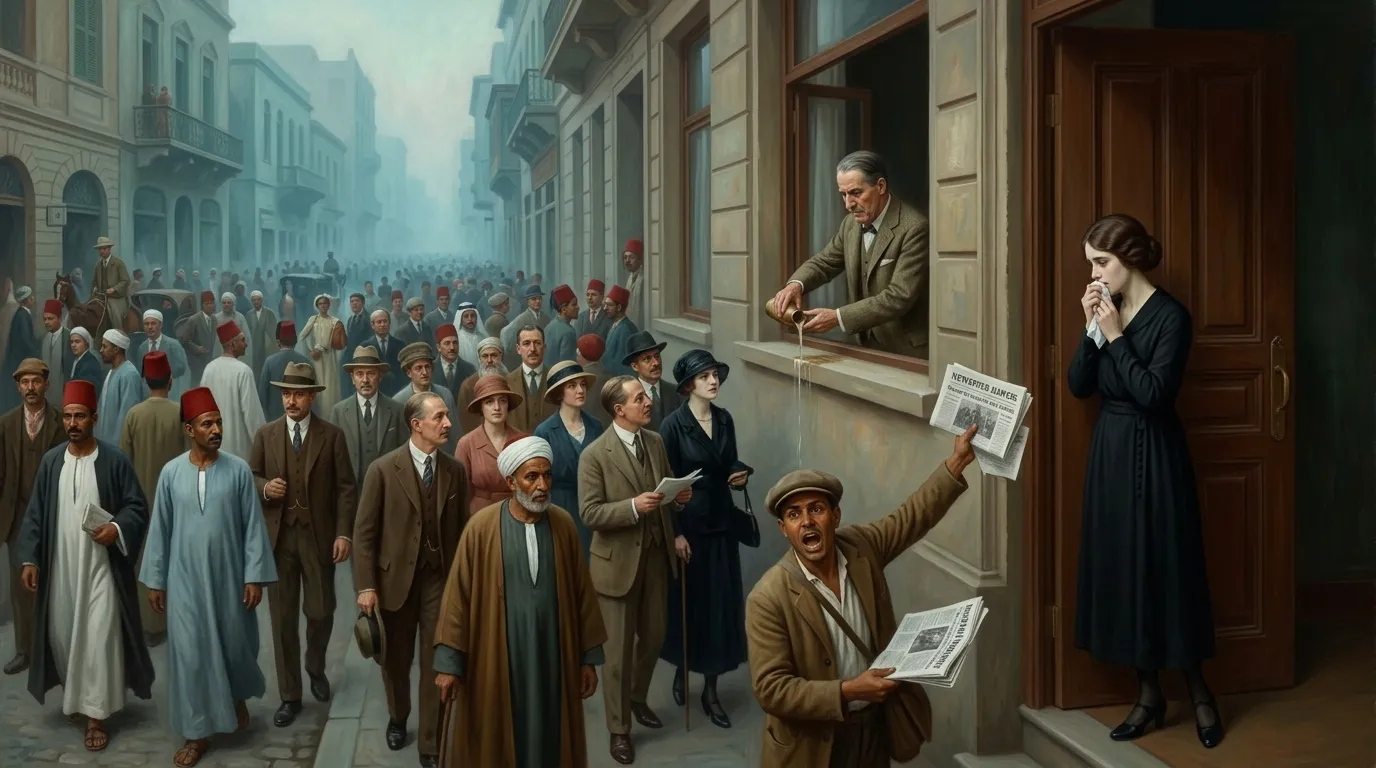
The oppressive heat of an April dawn in Cairo clings to the city, yet a different kind of suffocating pressure descends upon the Continental-Savoy Hotel. George Herbert, the Fifth Earl of Carnarvon, lies dead within its opulent suites, less than five months after his gaze first pierced the darkness of Tutankhamun’s burial chamber. Outside, the street throngs with a fevered multitude: Egyptian vendors, British officials, and a swelling tide of journalists from every corner of the world. They clutch ink-stained newspapers proclaiming 'Curse of the Pharaohs!' The air vibrates with whispered fears and sensational headlines, each more dire than the last. Howard Carter, a man weathered by the desert winds, stands grim-faced at a window, watching the clamour below. He is a man of science, but the rising tide of public hysteria threatens to engulf the monumental discovery he has just brought to light, weaving a shroud of fear around a boy-king's eternal slumber. Lady Evelyn Herbert, pale and distraught, stands by her father's closed door, her own grief intertwined with the growing whispers of ancient vengeance. A collective dread seems to settle upon Cairo, a city usually indifferent to such European anxieties, as if an unseen hand has drawn a veil of unease over the very heart of the Nile.
A newspaper hawker's cry slices through the murmur: "Carnarvon dead! The Mummy's Curse claims its first victim!" Lady Evelyn whispers, "Father... was it truly the mosquito's bite? Or something else, from that place?"
Page 2
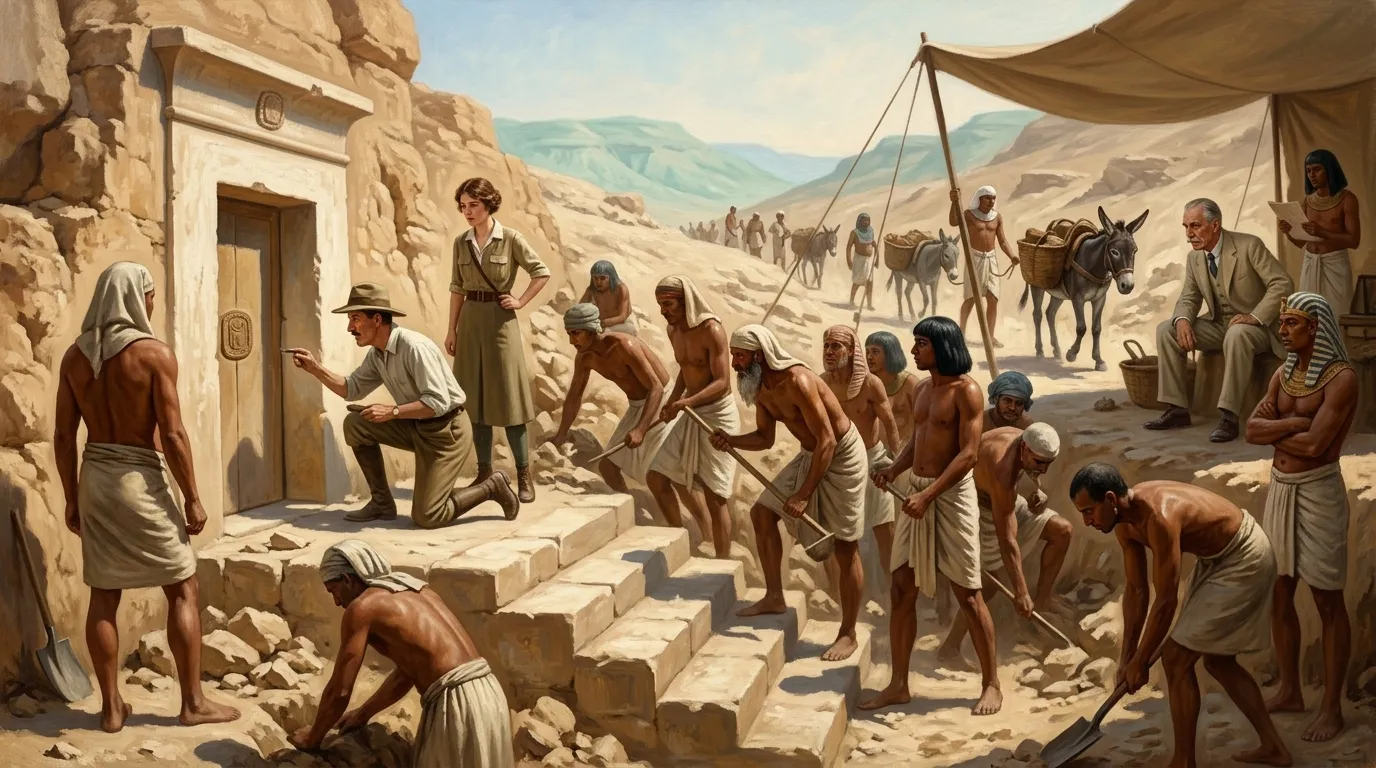
Months earlier, in November of 1922, the unforgiving sun beats down upon the Valley of the Kings. Howard Carter, then a man of fifty with sun-darkened skin and eyes perpetually squinting against the glare, oversees his Egyptian workmen, who toil ceaselessly, their movements rhythmic in the dust. Years of fruitless searching had passed, funding dwindling, hope wearing thin. But on this day, the impossible manifests. A worker’s pick uncovers the top of a stone step. Carter, with a surge of renewed purpose, directs the excavation with urgent precision. The steps descend, revealing a plastered doorway, bearing the distinct, pristine seal of the ancient necropolis, unbroken for millennia. The heat of the valley is intense, but a cool current of anticipation, sharper than any desert breeze, electrifies the air. George Herbert, the Fifth Earl of Carnarvon, now a man in his late fifties, frail and walking with a slight stoop, watches from the shade of a makeshift canopy. His significant investment, his unwavering belief in Carter, finally yields its first, profound answer. This moment marks not just a discovery, but the opening of a portal to a world long forgotten, undisturbed, and utterly vulnerable to the world they inhabit.
A foreman shouts, "A step! Beneath the foundations of the old huts!" Carter, kneeling, brushes dust from the ancient plaster. "Gentlemen," he declares, his voice low with awe, "This is it. The seal is unbroken."
Page 3
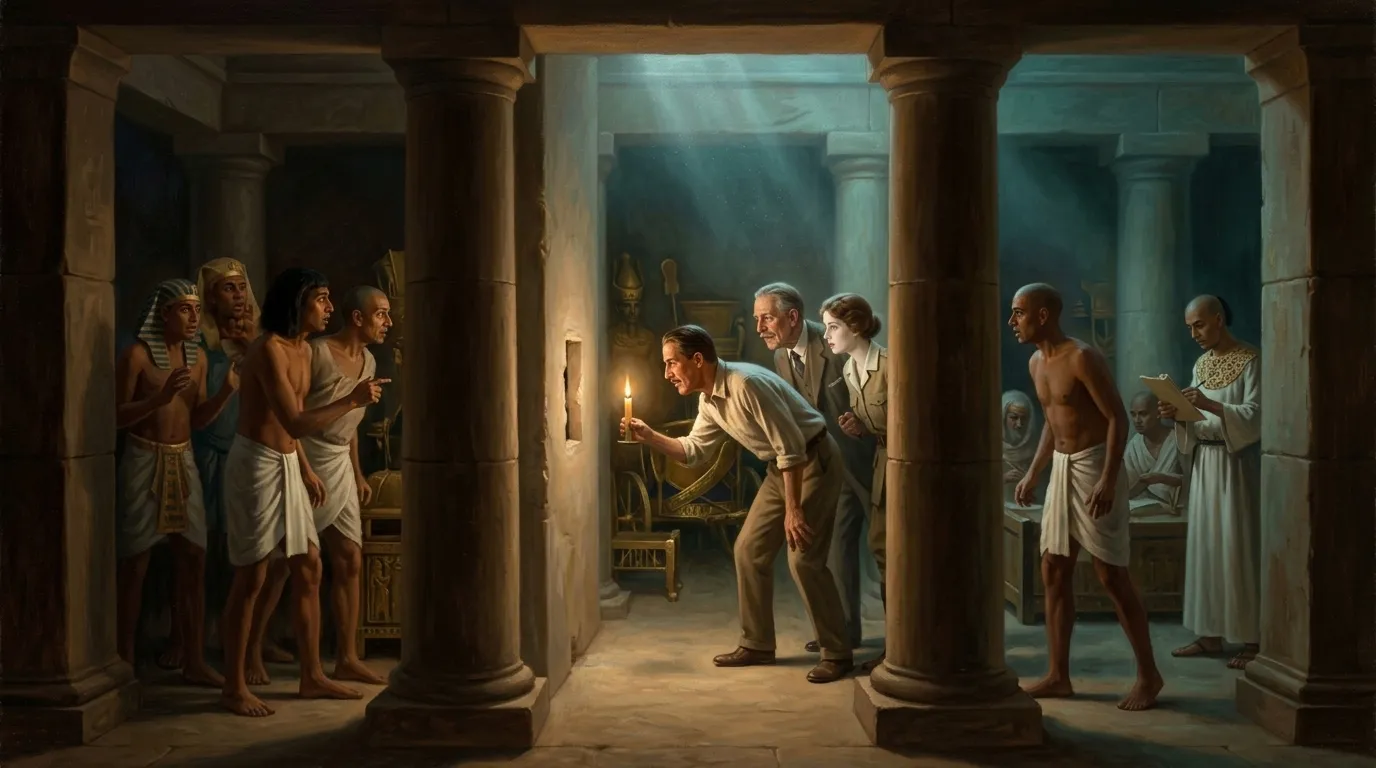
Days later, the tension within the tomb's outer chambers is palpable, a thick, still air that seems to press down upon all present. Howard Carter, now a man of forty-eight, stands before a second sealed door. George Herbert, the Fifth Earl of Carnarvon, and his daughter, Lady Evelyn Herbert, both expectant and apprehensive, stand close behind him. The tomb is cool, a respite from the desert's glare, yet the air is heavy with the scent of millennia-old dust and something else, a faint, sweet, and ancient perfume. Carter, with a delicate touch honed over decades, makes a small breach in the plaster. He inserts a candle, its flame flickering, into the darkness beyond. The silence is profound, broken only by the sharp intake of breath from those gathered. As his eyes adjust, Carter peers into the void, his hand trembling slightly. What he beholds is a riot of gold, shimmering faintly in the candle's glow – effigies, statues, chests, all gleaming in a silent testament to a boy-king's unimaginable wealth and the sudden, profound intrusion of the modern world into his eternal rest. This moment of first vision sets into motion the grandest archaeological sensation of the age.
Carnarvon, his voice hushed, asks, "Can you see anything?" Carter, after a long silence, replies, his voice barely a whisper, "Yes. Wonderful things!"
Page 4
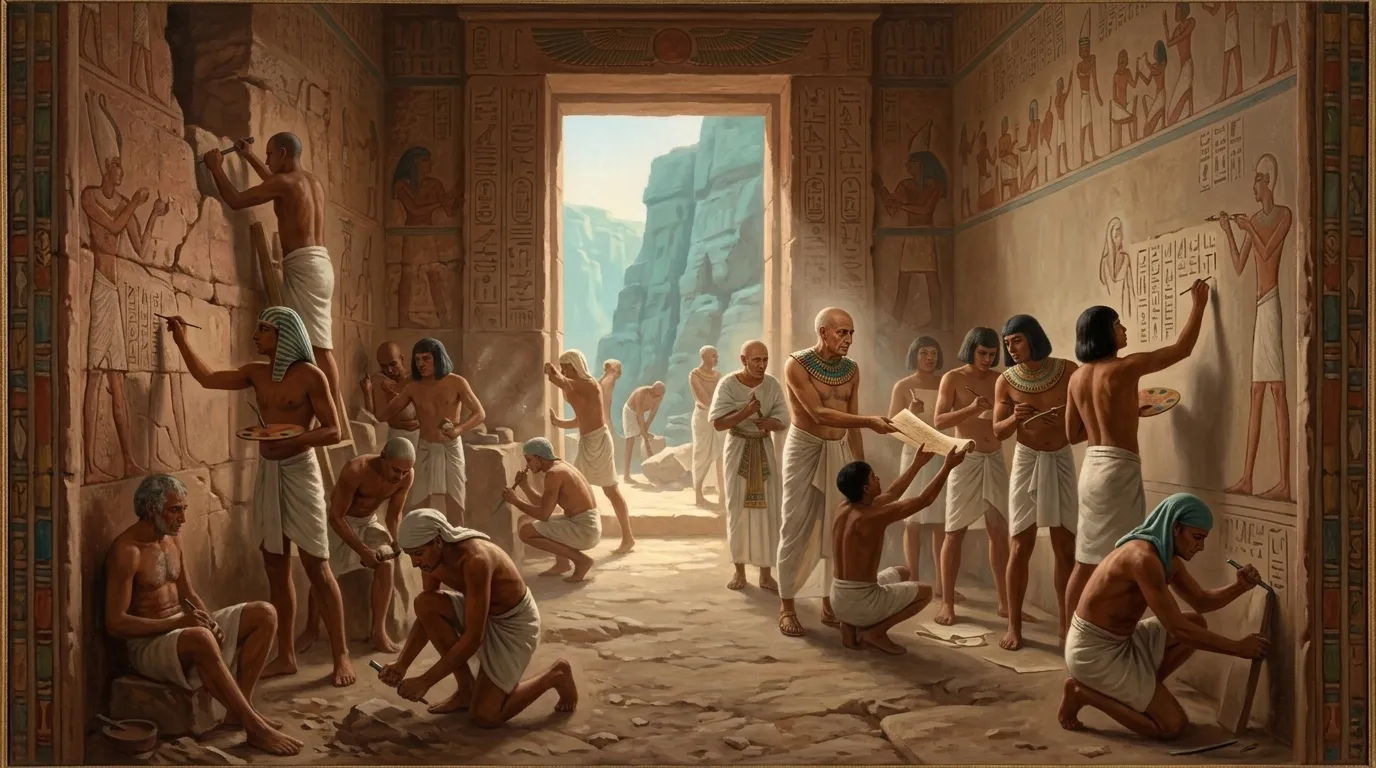
Three millennia before the glint of gold caught Carter's candle, in the Old Kingdom, the quarry at Aswan hums with the rhythmic chipping of tools against granite. Here, amidst the red stone, lies the tomb of Harkhuf, the Governor of the South, a revered caravan leader under Pepy II. Harkhuf, a man of venerable age and distinguished bearing, his face etched with the wisdom of desert journeys, oversees a team of scribes and artisans. They are not carving artistic flourishes, but potent warnings. His rock-cut tomb is being adorned with inscriptions, not curses of magical affliction, but solemn imprecations designed to safeguard his eternal provisions and spiritual comfort. Hieroglyphs are meticulously carved into the stone, invoking the wrath of the Ennead against any who would violate his sacred space. These are not vengeful enchantments, but clear declarations of divine and temporal justice, a cornerstone of ancient Egyptian funerary belief. Harkhuf ensures that his legacy, and his passage into the Duat, are protected against the greedy or the ignorant, a stark and ancient precursor to the 'curses' whispered in Cairo's streets.
Harkhuf, pointing to a newly carved line, instructs a scribe, "Ensure the text is clear: 'As for any person who shall enter this tomb as an unclean one... the Great God shall judge him.' Let no one mistake our intent."
Page 5
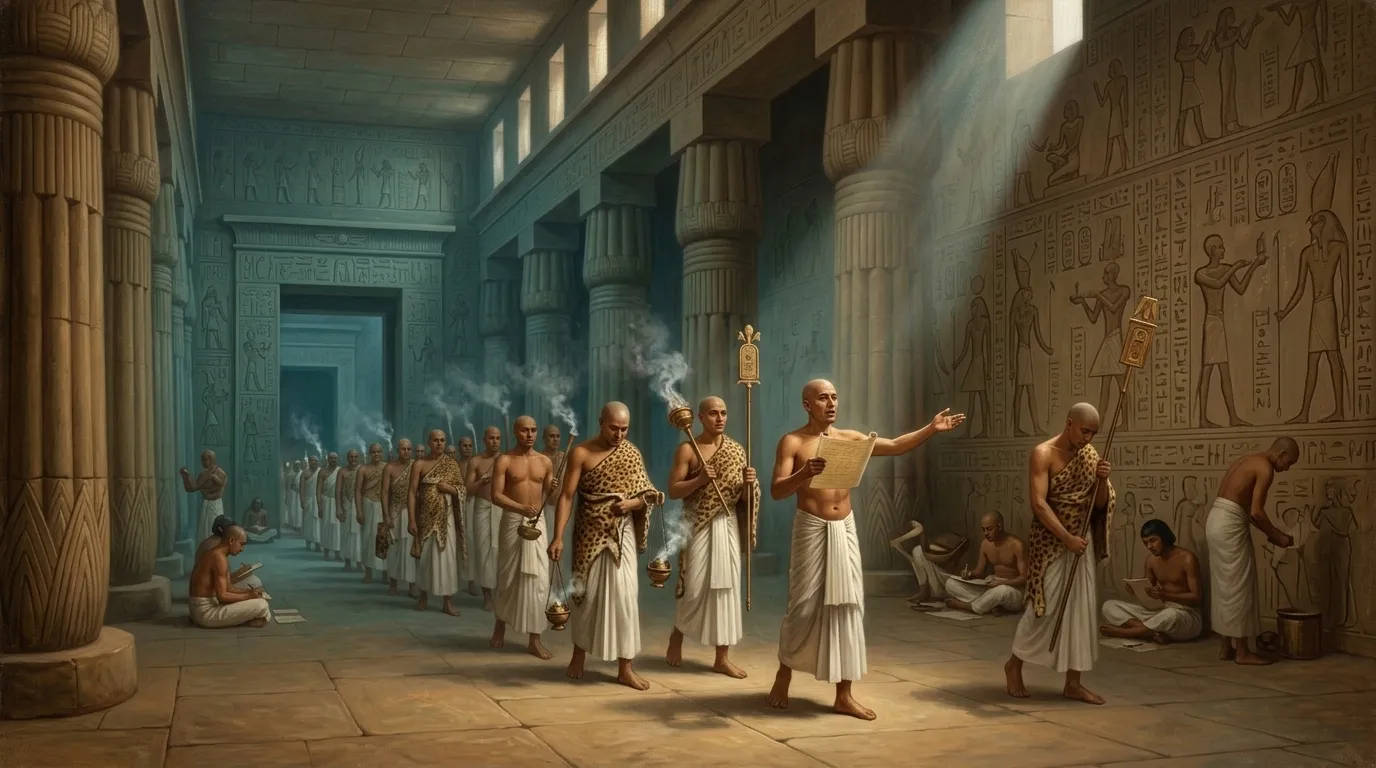
West of Memphis, within the vast, echoing chambers of King Unas's mortuary temple, the air is thick with the scent of incense and the low hum of sacred recitations. It is the Old Kingdom, centuries before Harkhuf's warnings, and the walls here bear the earliest known collection of religious texts, the Pyramid Texts. A procession of priests, their heads shaven, dressed in pristine white linen kilts and leopard-skin cloaks, moves through the grand hall. They chant the powerful utterances meant to ensure the deceased pharaoh's safe passage and resurrection in the afterlife. Their voices resonate through the stone, carrying invocations against malevolent forces and prayers for cosmic order. These are not curses against intruders, but formulae designed to grant Unas immortality, to unite him with Ra, to make him a star among the imperishable. Yet, embedded within these ancient verses are also warnings, not against the living, but against the chaos that might impede the king's journey, invoking divine power to repel any spiritual threat. The very act of carving these words into the stone, of speaking them aloud in this sacred space, imbues the temple with a potent, protective sanctity.
A lead priest, holding a papyrus scroll, intones with deep reverence, "...O Serpent, go away! Do not come near! Lest you harm Unas on his path among the stars!"
Page 6
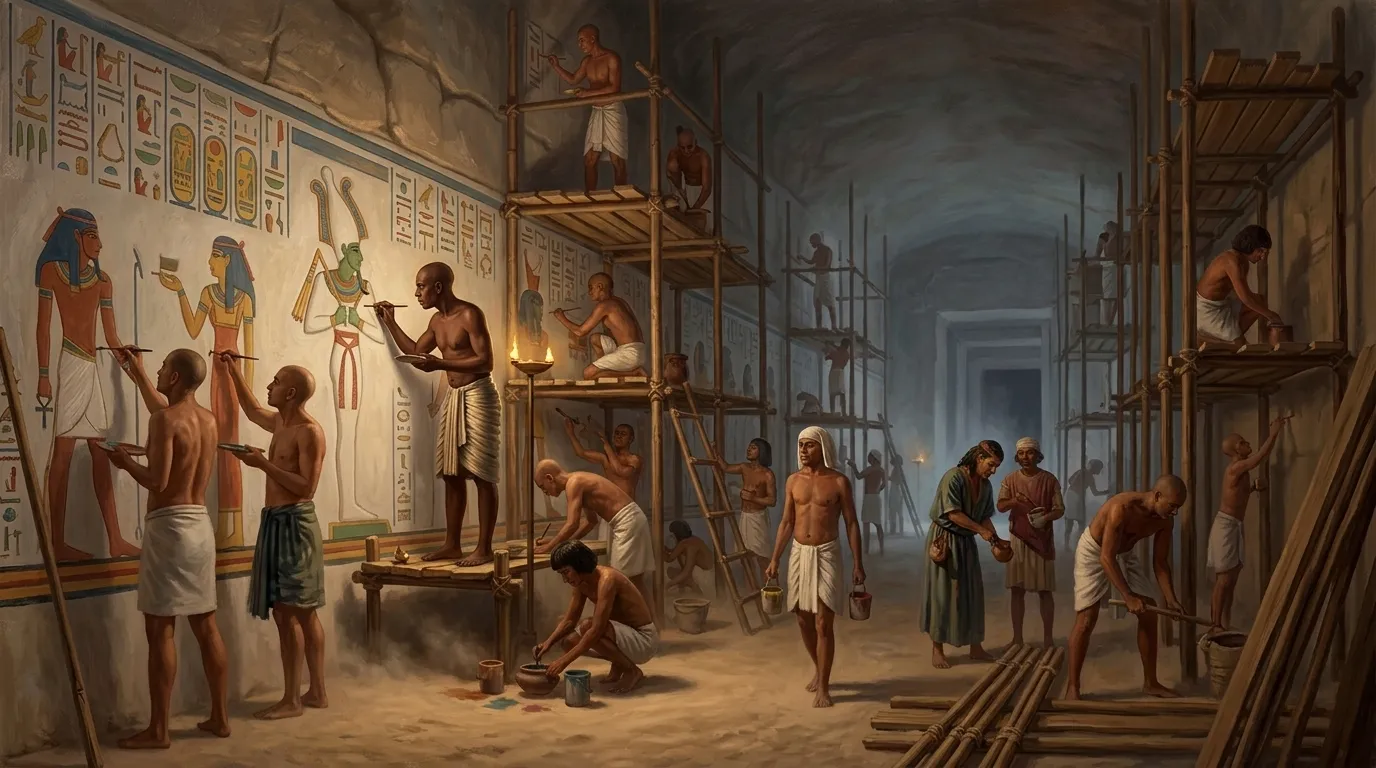
Twelve centuries after Unas, under the blazing sun of the New Kingdom, the Valley of the Kings teems with activity. Deep within a freshly cut tomb, the air is cool but heavy with the scent of freshly mixed pigments. Here, a team of skilled artisans, their bodies lean and strong, work by the light of oil lamps. They are painting intricate scenes and hieroglyphic inscriptions on the smooth, prepared plaster walls of a royal burial chamber. These are not merely decorations; they are vital components of the pharaoh’s journey to the afterlife. Among the vibrant depictions of gods and goddesses, the 'Negative Confessions' from the Book of the Dead are carefully inscribed, along with warnings to future intruders. These texts, far more direct than the subtle invocations of the Old Kingdom, declare punishments for those who would disturb the peace of the deceased, or steal from their funerary provisions. A lead scribe, his brush deft and steady, ensures that every stroke is precise, every word correctly rendered. The artisans meticulously depict demons and guardians at the tomb's thresholds, visual deterrents meant to reinforce the written word. Each image, each character, is a barrier against desecration, a silent, painted guardian standing sentinel across the long centuries.
A master scribe, his arm aching, instructs a young painter, "The guardian demons for the Eighth Hour must show their teeth, for their fury is great against the impure! Let no man dare cross this threshold."
Page 7
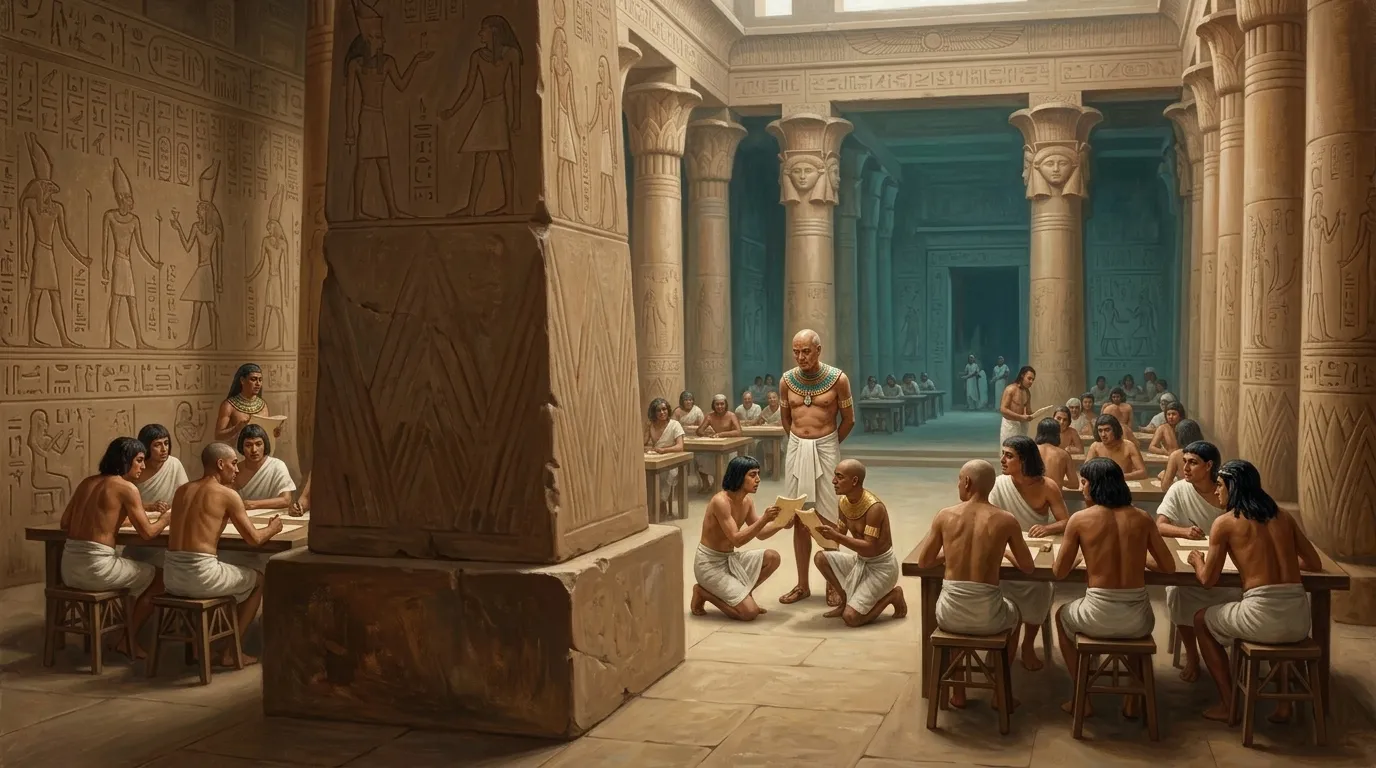
At the dawn of the Ptolemaic Period, in the vast, echoing halls of the Temple of Hathor at Dendera, the air is cool and redolent with the scent of aged papyrus and stone. The empire of the pharaohs wanes, yet the ancient traditions of protection persist with unwavering force. Scribes, draped in simple linen, meticulously copy and study ancient texts within a scriptorium, their hands moving with practiced grace over fresh papyrus. A venerable high priest, his face lined with years, his head shaven, gestures towards an inscription on a column, a warning against those who would defile sacred spaces or steal offerings. This text, translated from far older writings, reiterates the fundamental belief that such transgressions would invoke divine retribution, ensuring the displeasure of the gods upon the desecrator and his lineage. The message is clear, drawn from a heritage spanning thousands of years: the sanctity of the deceased and their resting places is paramount, protected not by physical locks, but by the enduring power of cosmic justice and the immutable will of the divine. This is not a personal curse, but a universal decree, upheld by the gods and enforced by the spiritual fabric of Egypt itself.
The high priest, his voice low and resonant, instructs a young scribe, "Record these words with utmost care. The anger of Hathor, invoked against the impious, stretches across generations."
Page 8
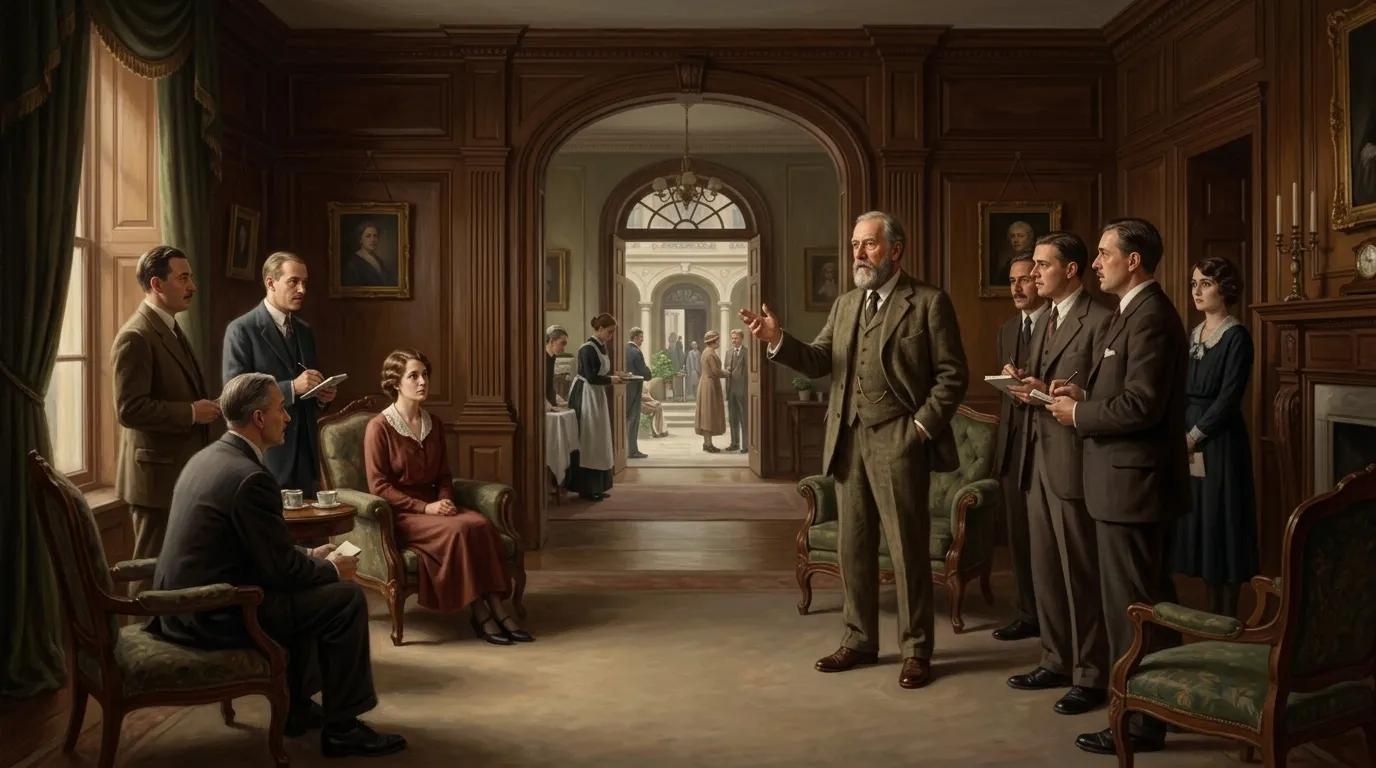
Across the sea, in the fog-laden drawing-rooms of London, far removed from the sands of Egypt, the 'Curse of Tutankhamun' takes on a new, sensational life. Arthur Conan Doyle, the celebrated author and fervent spiritualist, now a man in his mid-sixties, his face framed by a full beard, holds court before an eager audience. The news of Lord Carnarvon’s death has electrified the public imagination, and Conan Doyle, ever ready to champion the unseen, publicly declares his conviction that 'elemental spirits' guarding the tomb were responsible. He speaks of ancient magic, of energies roused from slumber, of a psychic revenge enacted by the pharaoh. His words, delivered with charismatic authority, are eagerly devoured by newspaper reporters and a public yearning for mystery beyond scientific explanation. In this elegant, wood-panelled room, surrounded by velvet and polished silver, the rational explanations offered by doctors and Egyptologists are cast aside in favour of a thrilling, terrifying narrative of supernatural retribution. His pronouncements weave a potent spell, transforming ancient protective warnings into a modern myth of vengeful curses, further cementing the legend in the public consciousness.
Conan Doyle, his eyes alight with conviction, declares, "I believe that a pharaoh's tomb, filled with such potent and ancient energies, could well be guarded by forces beyond our modern understanding. Carnarvon's demise is but the first sign!"
Page 9
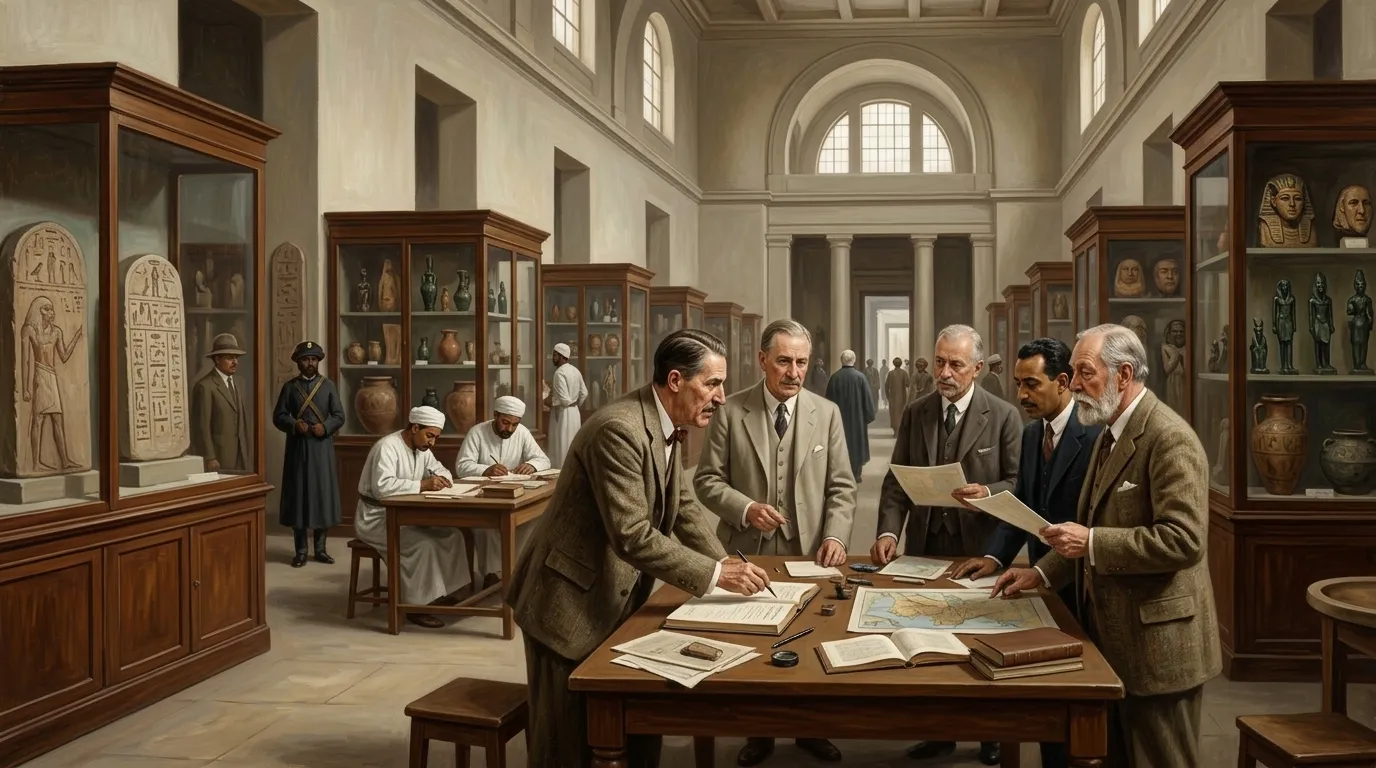
Three years after Carnarvon's death, the cacophony surrounding the 'curse' has begun to recede, replaced by the diligent work of scholarship. Within the cavernous, high-ceilinged galleries of the Cairo Museum, the air is dry and filled with the faint smell of old paper and preserved antiquities. Howard Carter, now a man nearing his mid-fifties, his face still etched with the years of desert toil, stands with a small circle of Egyptologists and medical experts. He points to an open journal, its pages covered in meticulous notes detailing Carnarvon's pre-existing health conditions and the documented facts of his final illness. The discussions are precise, rational, and grounded in evidence. They meticulously dissect the 'curse' claims, dismissing supernatural explanations with clinical certainty. The true dangers of ancient tombs, they assert, lay not in spectral forces, but in mould, bacteria, or the very real hazards of excavation. This quiet intellectual confrontation aims to dismantle the sensational myth piece by painstaking piece, replacing it with the sober truth of history and scientific inquiry. Here, amidst the very artifacts that inspired the legend, reason fights to reclaim its ground.
Carter, tapping a page in his journal, states firmly, "Lord Carnarvon suffered from a weakened constitution for years. His death, however tragic, was the result of a documented insect bite and subsequent infection, not some ancient malediction."
Page 10
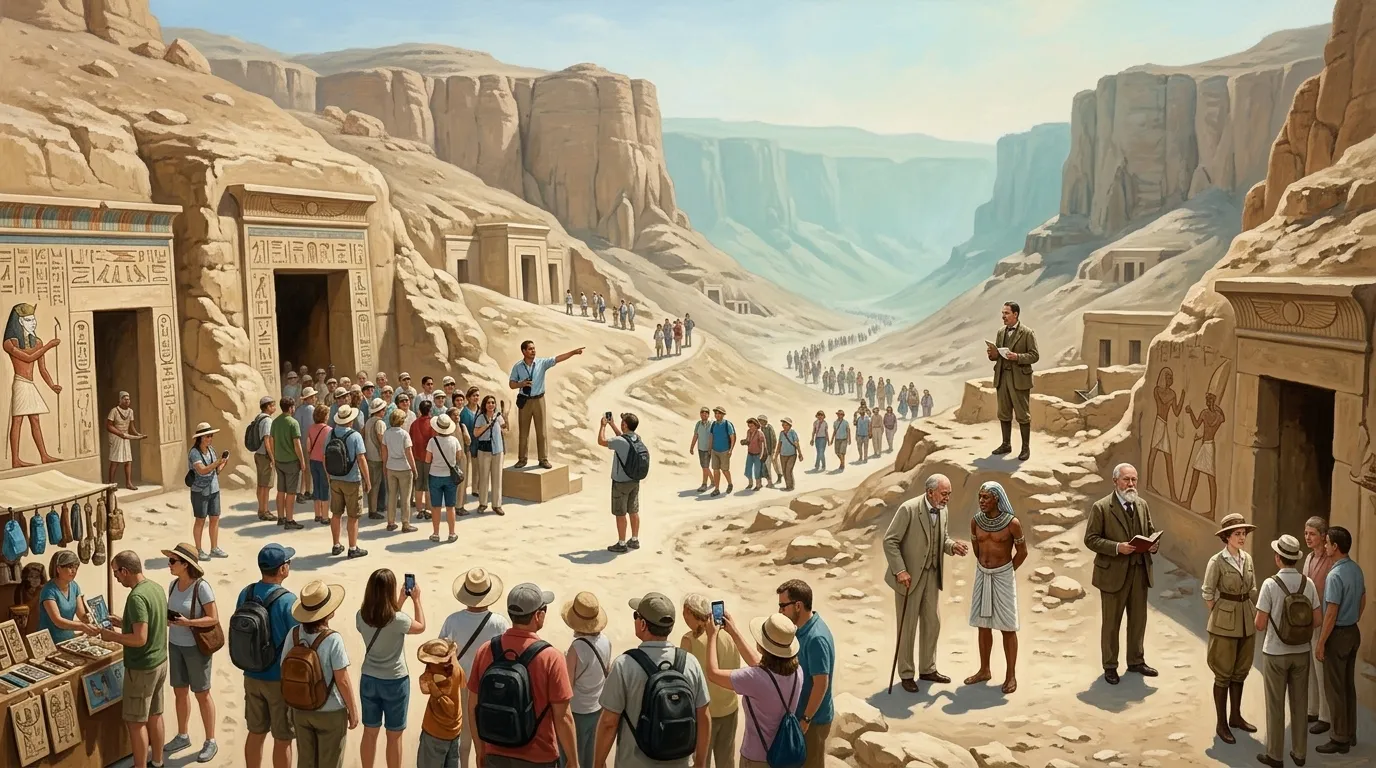
Decades have passed, a full century since the opening of Tutankhamun's tomb. The sun still beats relentlessly on the Valley of the Kings, but the site now swarms with different crowds: not journalists driven by morbid curiosity, but eager tourists. The original tomb is protected, its treasures long since moved to the secure, climate-controlled halls of museums. Yet, the myth of the curse endures, an indelible part of the tomb's popular narrative, woven into tour guides' tales and whispered by visitors. The true 'curses' of the ancient Egyptians—the solemn warnings inscribed by Harkhuf, the powerful utterances of the Pyramid Texts—were never meant to inflict immediate, magical death, but to invoke cosmic justice, to ensure the sacred peace of the dead, and to protect their spiritual journey. They were expressions of profound belief, not vengeful spells. The legacy of Tutankhamun's discovery, however, remains twofold: a monumental triumph of archaeology that revealed the unparalleled artistry and faith of ancient Egypt, and a persistent, sensational legend that continues to captivate the imagination, blurring the lines between historical fact and modern myth. The silent, empty tomb in the valley remains, an enduring echo of both discovery and enduring legend.
A modern tour guide, gesturing to the entrance of a tomb, speaks to a group of tourists, "And some say, even today, that a lingering presence guards these sacred halls..."
About this story
- Audience: general readers
Questions and answers
Read Wonder Egypt on your phone
Wonder Egypt is available on Android. Get Wonder Egypt on Google Play.