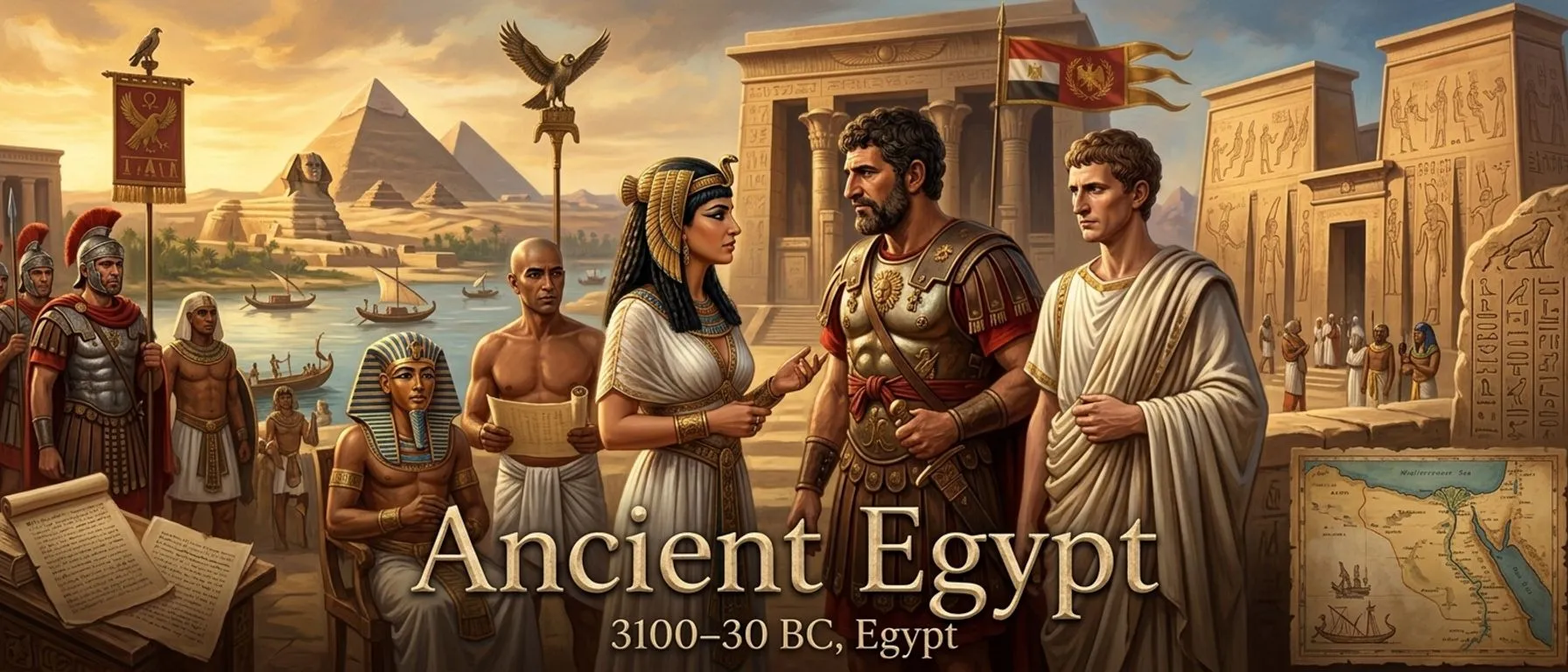
Ancient Egypt (3100–30 BC, Egypt)
Explore the dynastic periods of Ancient Egypt, from unification to the impact of its leaders. Discover the key moments that shaped this great civilization and its eventual decline.
Page 1
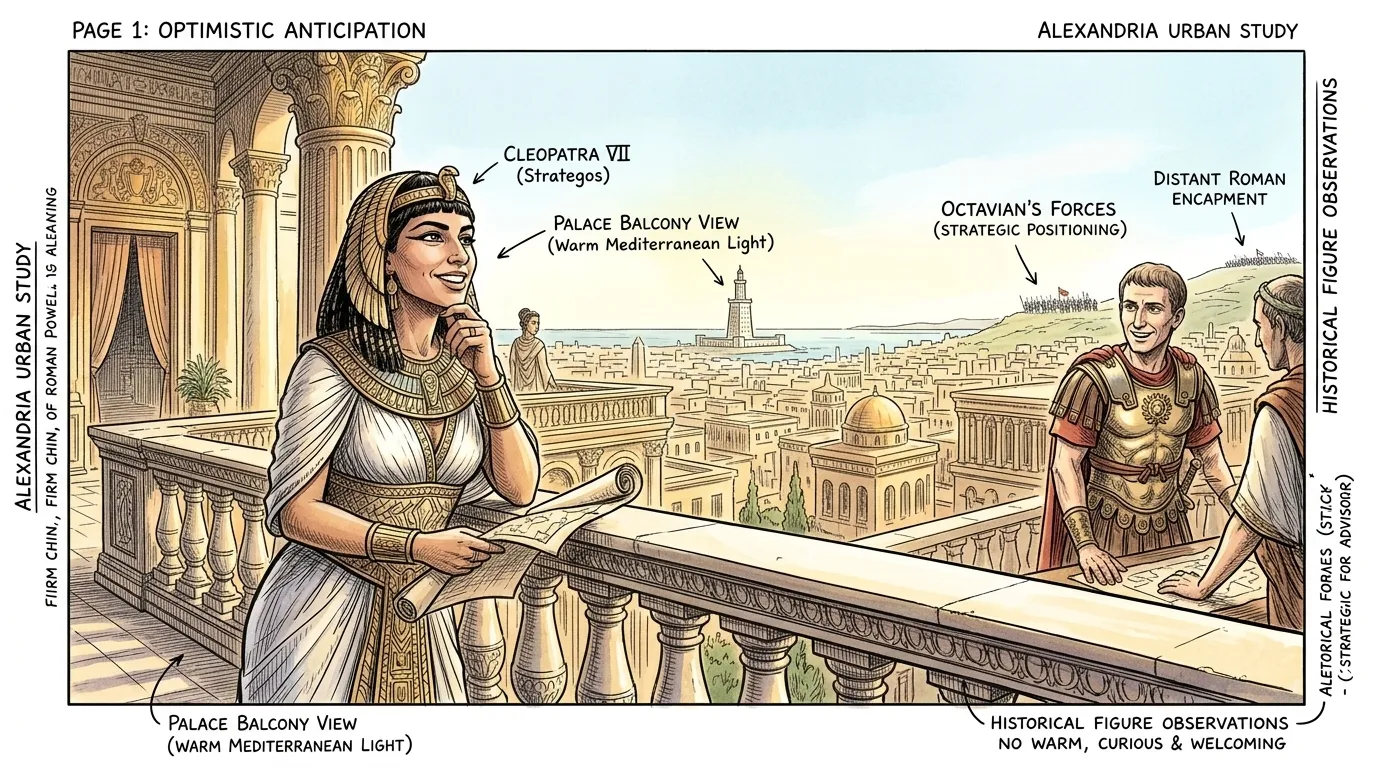
In 30 BCE, the ancient city of Alexandria, a beacon of learning and power in the Mediterranean, found itself under siege. Roman legions, commanded by the relentless Octavian, pressed against its defenses. Inside her lavish palace, the formidable Queen Cleopatra VII, the last pharaoh of Egypt, wrestled with impossible choices, her lover Mark Antony having recently fallen in a failed stand against the Roman advance. The once-unquestioned sovereignty of the Nile's enduring civilization was collapsing, its fate now tied to the ambitions of a distant empire. This moment marked the dramatic culmination of millennia of independent rule, poised on the precipice of Roman dominion. But how did the mighty land of the pharaohs arrive at such a precarious end?
Historical Fact: Alexandria, 30 BCE: The Ptolemaic Dynasty, established after Alexander the Great, was the last Greek-speaking dynasty to rule Egypt, maintaining many pharaonic traditions until its final collapse.
Page 2
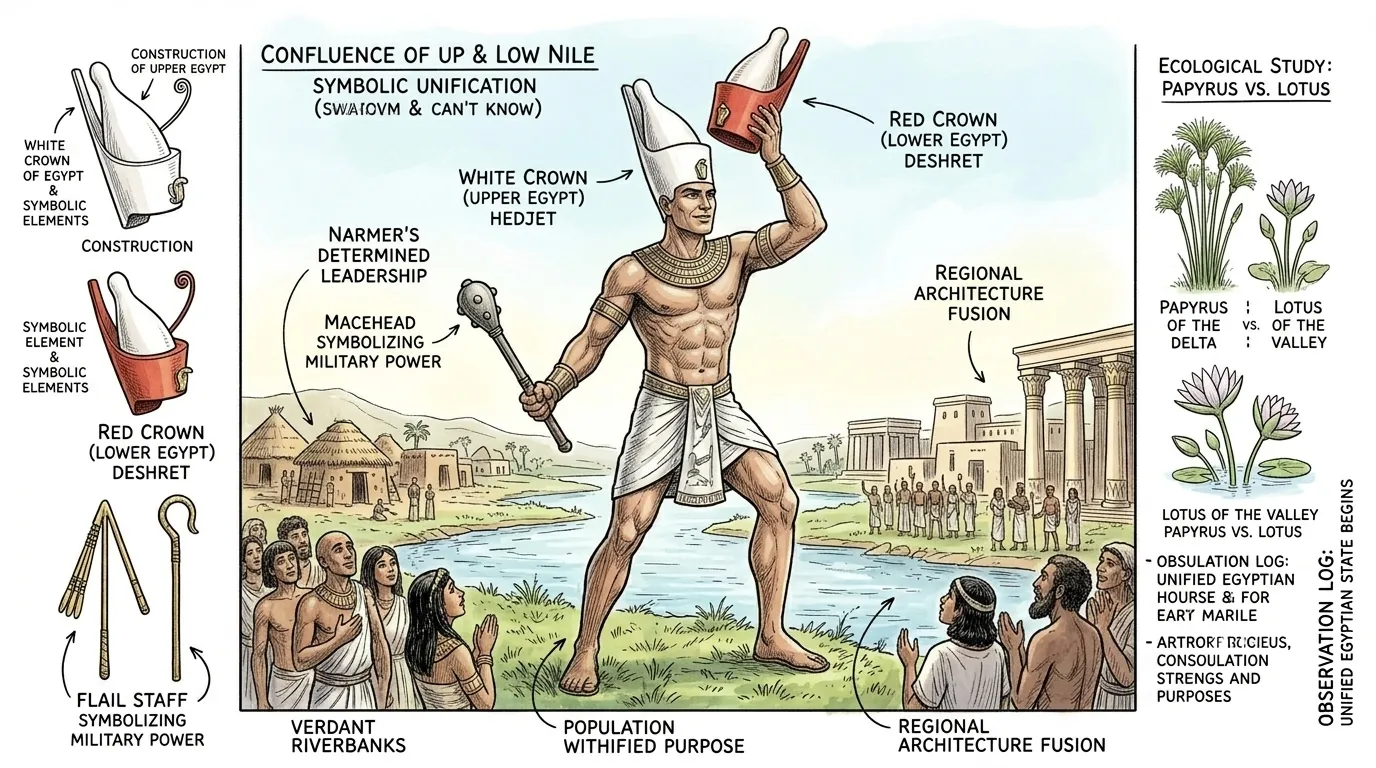
Three millennia before Alexandria's fall, the foundation of this great civilization was laid. Around 3100 BCE, Upper and Lower Egypt were distinct lands, their people living along the narrow ribbon of the Nile. It was Narmer, a king from Upper Egypt, who undertook the monumental task of uniting these two halves, symbolically merging the White Crown of the south with the Red Crown of the north. His victory was not merely military; it initiated the Early Dynastic Period, establishing the administrative and religious framework that would define Egypt for countless generations, centered on the divine authority of the pharaoh.
Historical Fact: The Narmer Palette, dating to c. 3100 BCE, is one of the earliest archaeological finds depicting the unification of Egypt under one ruler.
Page 3
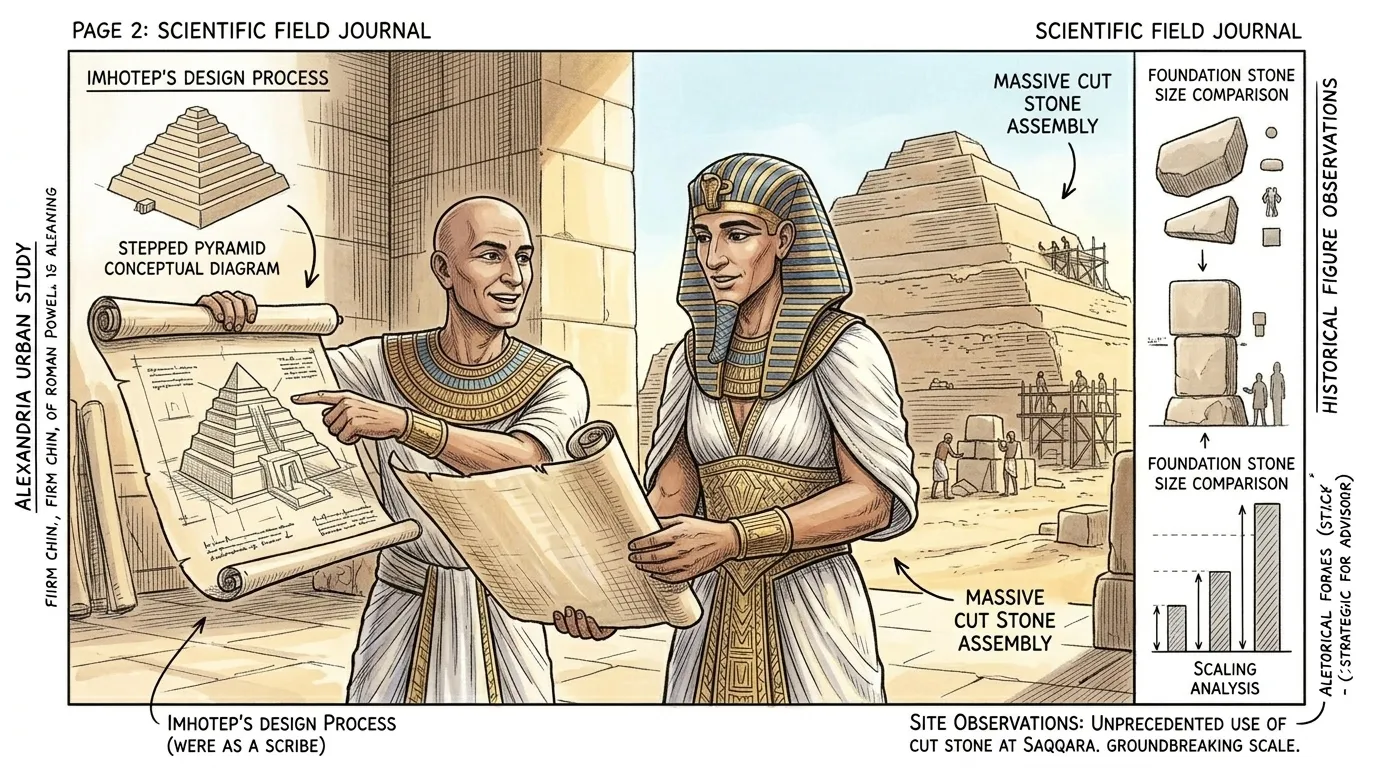
The Old Kingdom, beginning around 2686 BCE, witnessed an explosion of architectural ambition, epitomized by the pyramids. The pharaoh Djoser commissioned his vizier and architect, Imhotep, to create a monument unlike any before. Imhotep, a polymath revered for his medical and engineering brilliance, conceived of a stepped pyramid at Saqqara, a colossal structure of stacked mastabas. This innovative design, utilizing massive cut stones, marked a radical departure from earlier mud-brick tombs and established the precedent for the iconic smooth-sided pyramids that would follow, solidifying the pharaoh's eternal power.
Historical Fact: The Step Pyramid of Djoser, constructed in the 27th century BCE, is considered the world's first large-scale stone building and a testament to Imhotep's ingenuity.
Page 4
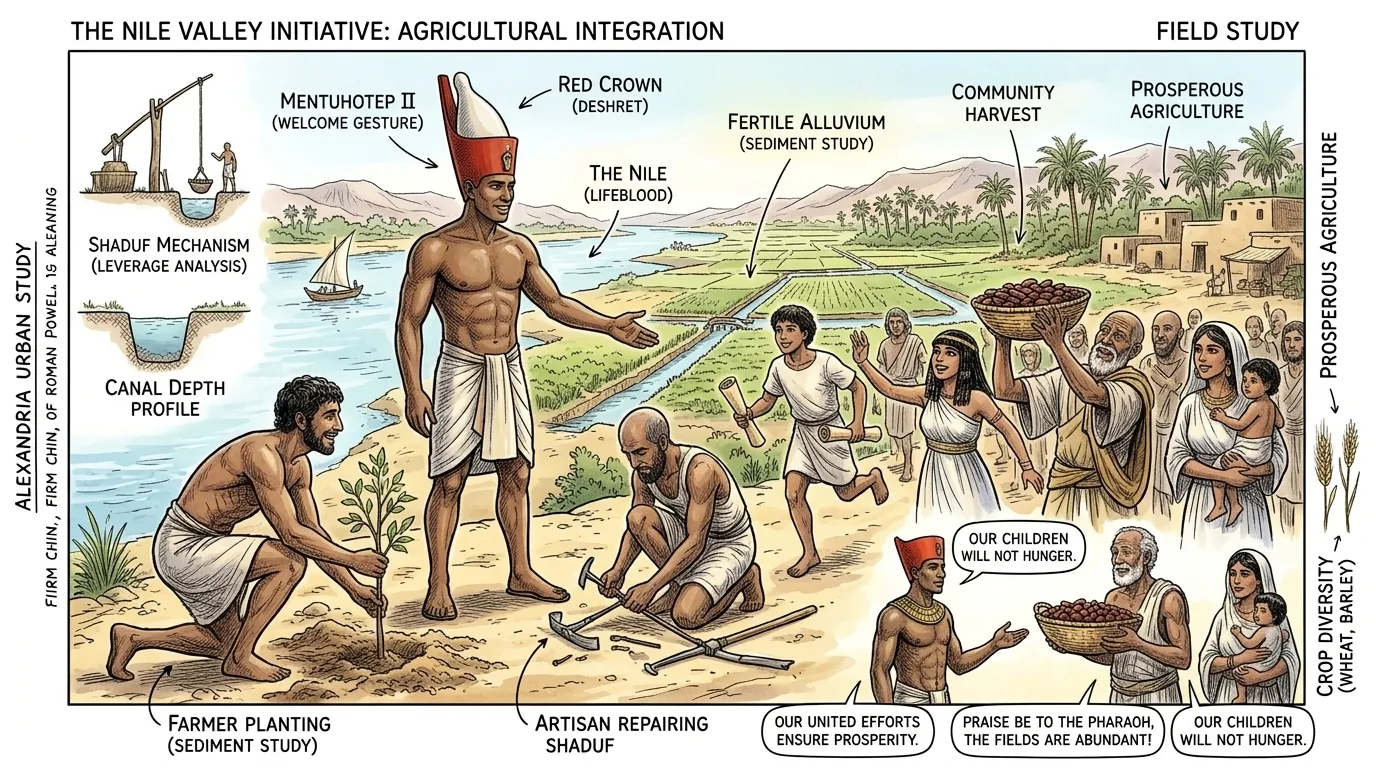
After the grandeur of the Old Kingdom, Egypt entered a period of decentralization known as the First Intermediate Period, around 2181 BCE. Regional nomarchs gained power, and central authority waned. However, from this fragmentation, new strength emerged. Mentuhotep II, a pharaoh from Thebes, reunited the land around 2040 BCE, ushering in the Middle Kingdom. This era emphasized a more personal relationship between the pharaoh and his people, reflected in more expressive portraiture and a focus on grand irrigation projects to secure agricultural prosperity, expanding Egypt's reach into Nubia.
Historical Fact: Mentuhotep II's reunification established Thebes as a prominent religious and political center, paving the way for the prosperity of the Middle Kingdom.
Page 5
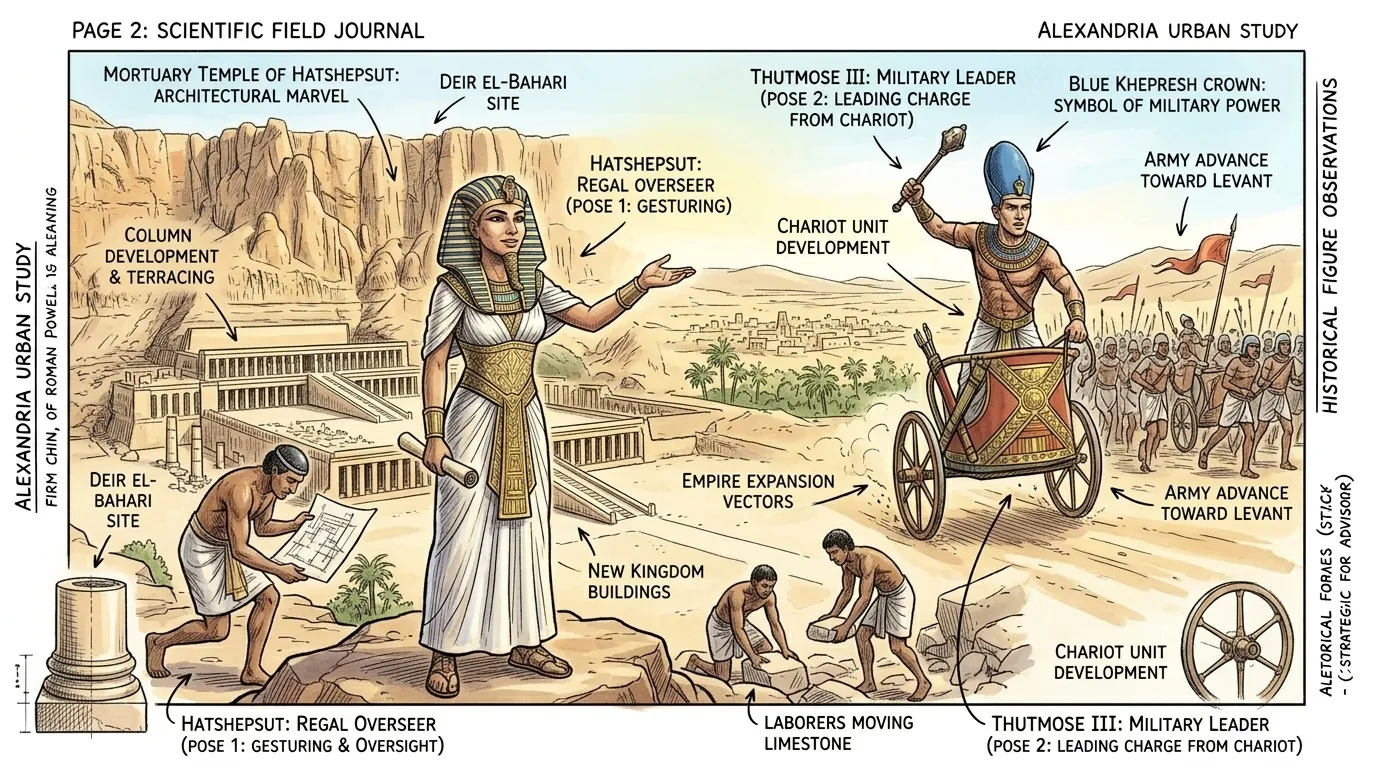
The New Kingdom, from approximately 1550 to 1070 BCE, represented the zenith of Egyptian imperial power and cultural influence. Pharaohs like Hatshepsut, a powerful female ruler, defied tradition to reign as a fully crowned king, overseeing massive building projects, including her magnificent mortuary temple at Deir el-Bahari. Her stepson, Thutmose III, later led extensive military campaigns, conquering vast territories in the Near East and Nubia, creating an empire that stretched from the Euphrates to the Fourth Cataract of the Nile. Gold and tribute poured into Egypt, funding monumental temples and vast armies, projecting unprecedented power.
Historical Fact: Hatshepsut's reign (c. 1479–1458 BCE) was marked by peace and prosperity, focusing on trade and monumental architecture rather than extensive warfare.
Page 6
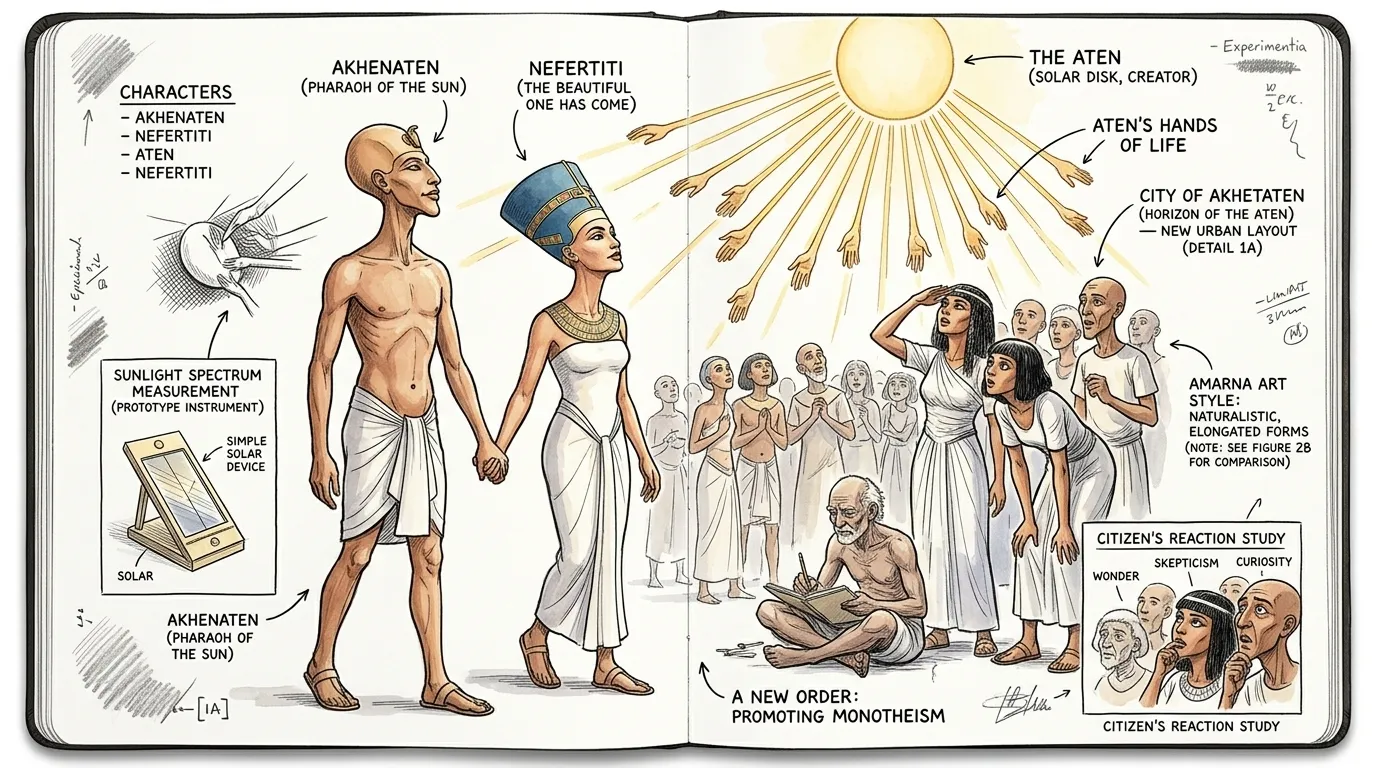
Amidst the New Kingdom's splendor, a radical shift occurred under Akhenaten, who reigned from around 1353 to 1336 BCE. Born Amenhotep IV, he rejected the traditional pantheon of gods, particularly the powerful cult of Amun, in favor of a singular deity: the Aten, the sun disk. He moved the capital from Thebes to a new city, Akhetaten (modern Amarna), and with his influential queen, Nefertiti, instigated a sweeping religious and artistic revolution. This bold, singular focus on Aten fundamentally challenged centuries of polytheistic belief, causing immense upheaval and resistance within the priestly establishment and populace alike.
Historical Fact: Akhenaten's Amarna Period was a brief but profound disruption, forcing a monotheistic worship of the sun disk Aten and radically altering artistic conventions.
Page 7
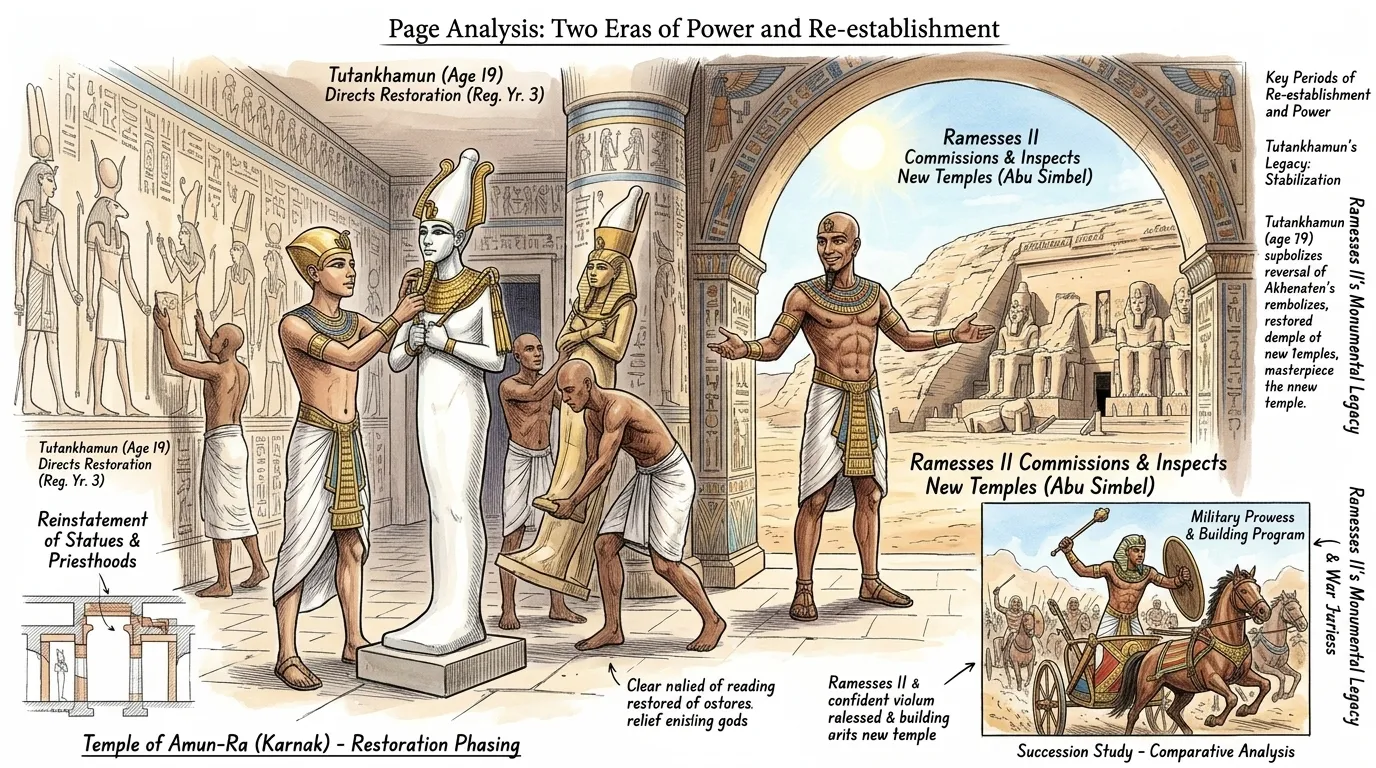
Akhenaten's religious revolution was short-lived. His successor, the young pharaoh Tutankhamun, who ascended the throne around 1332 BCE, quickly reversed the Atenist reforms, restoring the old gods and the powerful Amun priesthood. However, the New Kingdom's greatest military and construction achievements were yet to come, exemplified by Ramesses II, who reigned for an astonishing 66 years (c. 1279–1213 BCE). Ramesses II commanded massive armies, famously leading the Egyptians against the Hittites at the Battle of Kadesh, one of history's largest chariot battles, and initiated a building program that covered Egypt with colossal temples and statues.
Historical Fact: The Battle of Kadesh (c. 1274 BCE) was a pivotal clash between Egypt and the Hittite Empire, ending in a treaty, one of the earliest known peace treaties in history.
Page 8
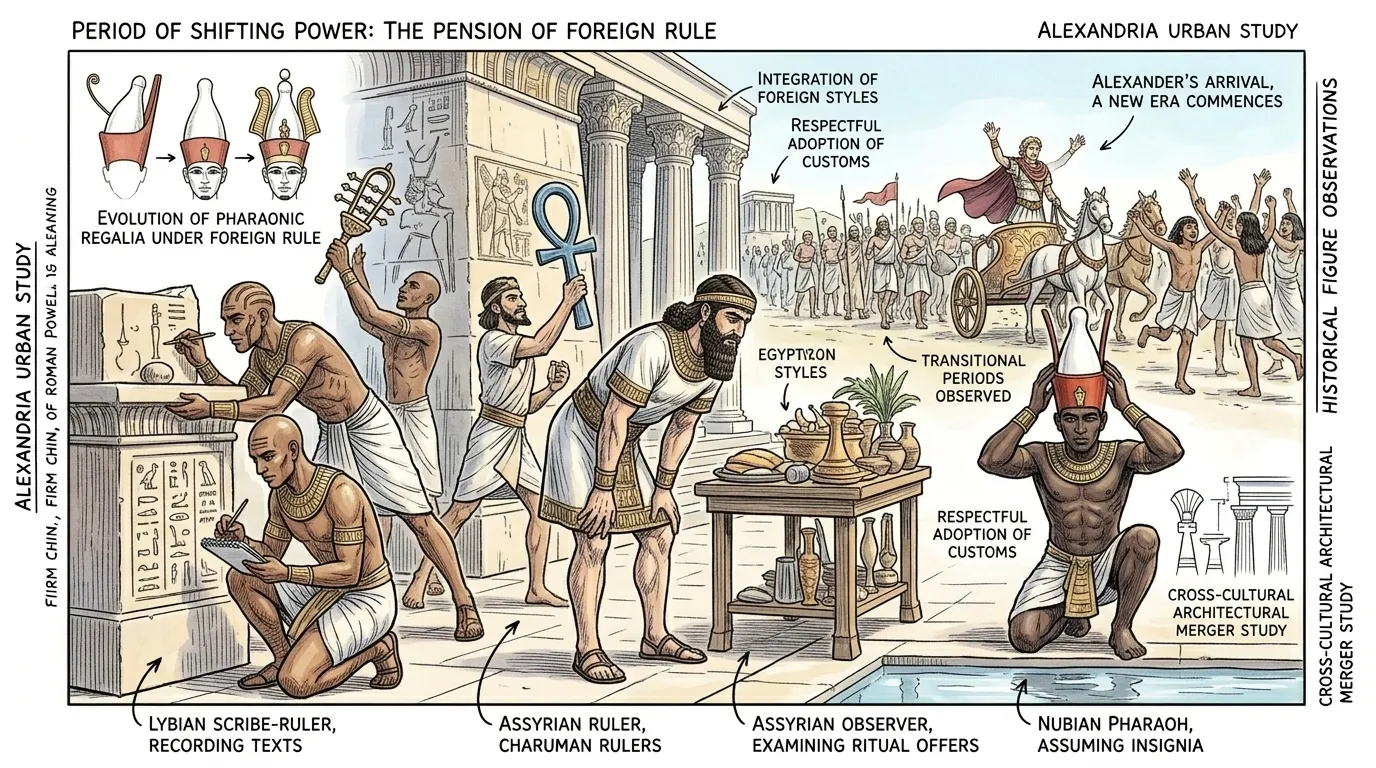
Following the impressive reigns of pharaohs like Ramesses II, Ancient Egypt entered a long period of gradual decline from around 1070 BCE. Internal divisions, economic strain, and the growing influence of powerful priesthoods and local magnates weakened the central government. Foreign powers, including the Libyans, Nubians, Assyrians, and Persians, successively invaded and ruled Egypt, often adopting pharaonic titles but fundamentally altering the political landscape. Despite periods of resurgence, like the Saite Dynasty, Egypt struggled to maintain its independence against increasingly powerful external forces, culminating in its final submission to the Macedonian Greeks under Alexander the Great in 332 BCE.
Historical Fact: The Third Intermediate Period and Late Period saw Egypt often ruled by foreign dynasties, including the Libyans (22nd-23rd Dynasties), Nubians (25th Dynasty), and Persians (27th and 31st Dynasties).
Page 9
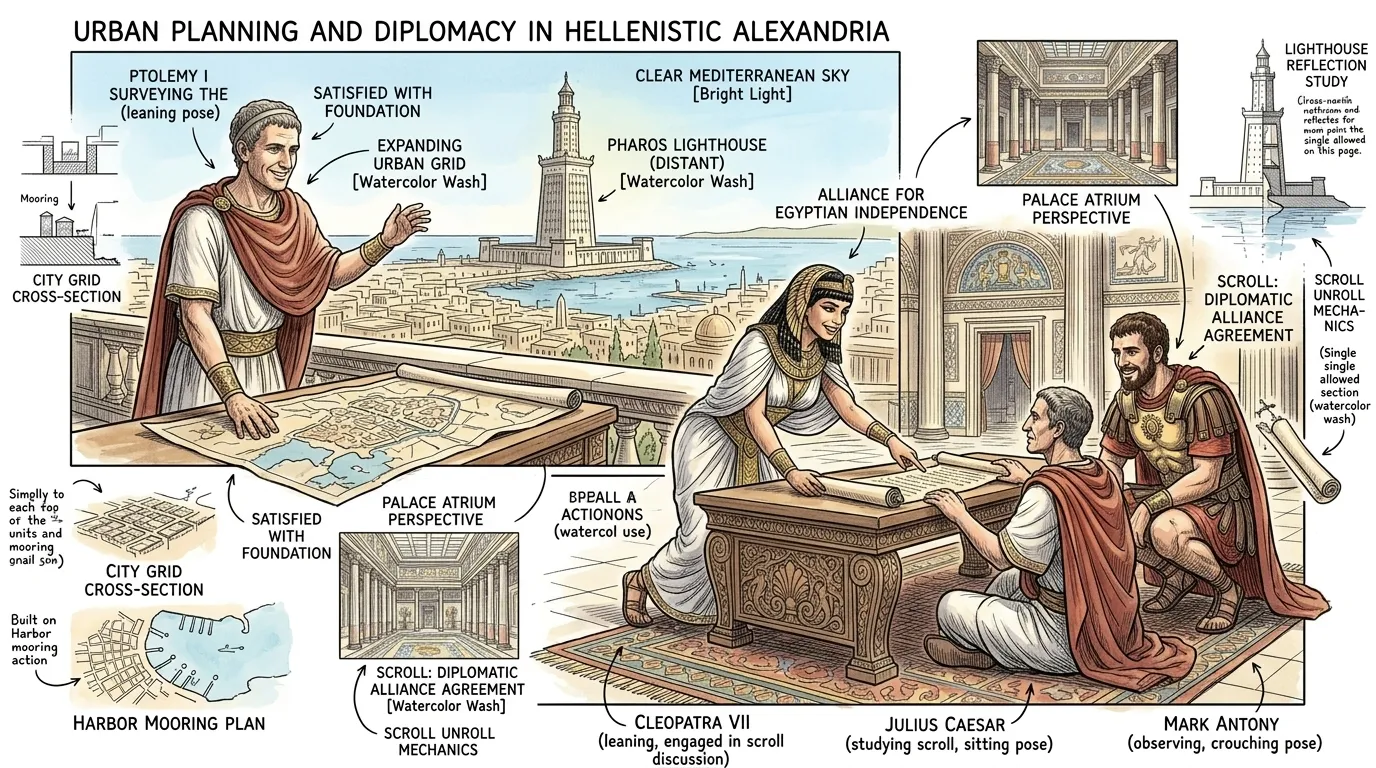
After Alexander's conquest in 332 BCE, control of Egypt fell to his general, Ptolemy I Soter, initiating the Ptolemaic Dynasty. For nearly three centuries, these Greek rulers governed Egypt, establishing Alexandria as a vibrant Hellenistic capital and a center of learning, housing the famed Library and Lighthouse. While they embraced aspects of Egyptian culture, often portraying themselves as pharaohs, their rule was distinctly Greek. The dynasty culminated with Cleopatra VII, a brilliant and charismatic ruler who fiercely defended Egypt's dwindling independence against the rising tide of Rome's expansion, famously forging alliances with Julius Caesar and Mark Antony to preserve her kingdom.
Historical Fact: The Ptolemaic rulers, despite being Greek, adopted many Egyptian traditions, including the role of pharaoh and participation in Egyptian religious cults, to legitimize their rule.
Page 10
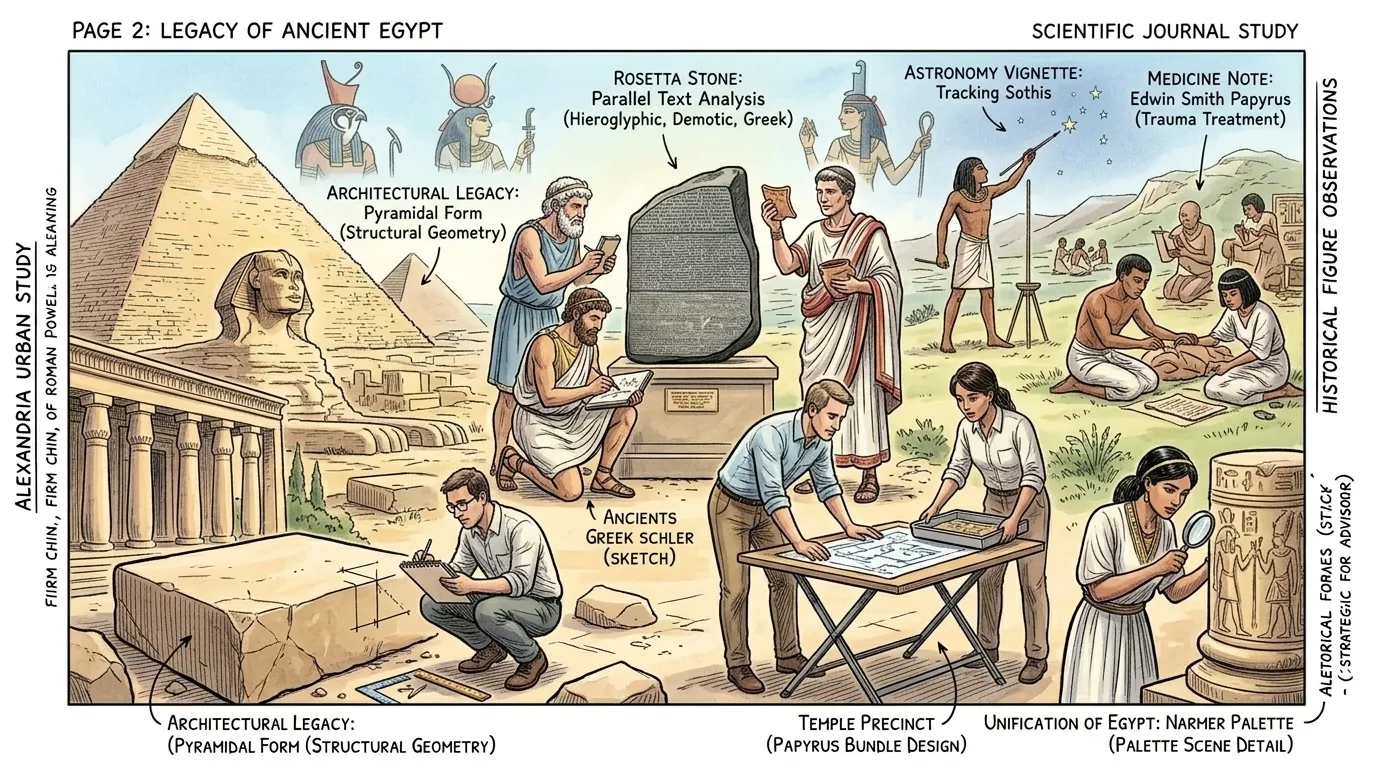
Though independent pharaonic rule ended with Cleopatra VII, the legacy of Ancient Egypt endured, profoundly shaping subsequent civilizations. Its monumental architecture, from the pyramids to colossal temples, continues to astound engineers and historians alike, inspiring countless imitators. Egyptian mythology, religious practices, and concepts of the afterlife influenced Greek and Roman beliefs, filtering into Western thought. Its advancements in medicine, mathematics, and astronomy laid foundational knowledge for future scientific inquiry. The very allure of Ancient Egypt, with its enigmatic hieroglyphs, powerful pharaohs, and grand artistic achievements, continues to captivate the modern world, making it a cornerstone of human history and cultural heritage.
Historical Fact: The Rosetta Stone, discovered in 1799, proved crucial in deciphering hieroglyphs, unlocking millennia of Egyptian history and culture for modern scholars.
About this story
- Historical figures: Narmer, Cleopatra, Octavian
- Location: Egypt
- Period: Ancient
- Audience: kids (ages 6–12)
Questions and answers
Questions and answers about Ancient Egypt (3100–30 BC, Egypt)
Read Wonder History on your phone
Wonder History is available on Android. Get Wonder History on Google Play.