Anesthesia
Anesthesia — an illustrated inventions story, set in Global. 10 illustrated pages, free to read on Wonder Inventions.
Page 1
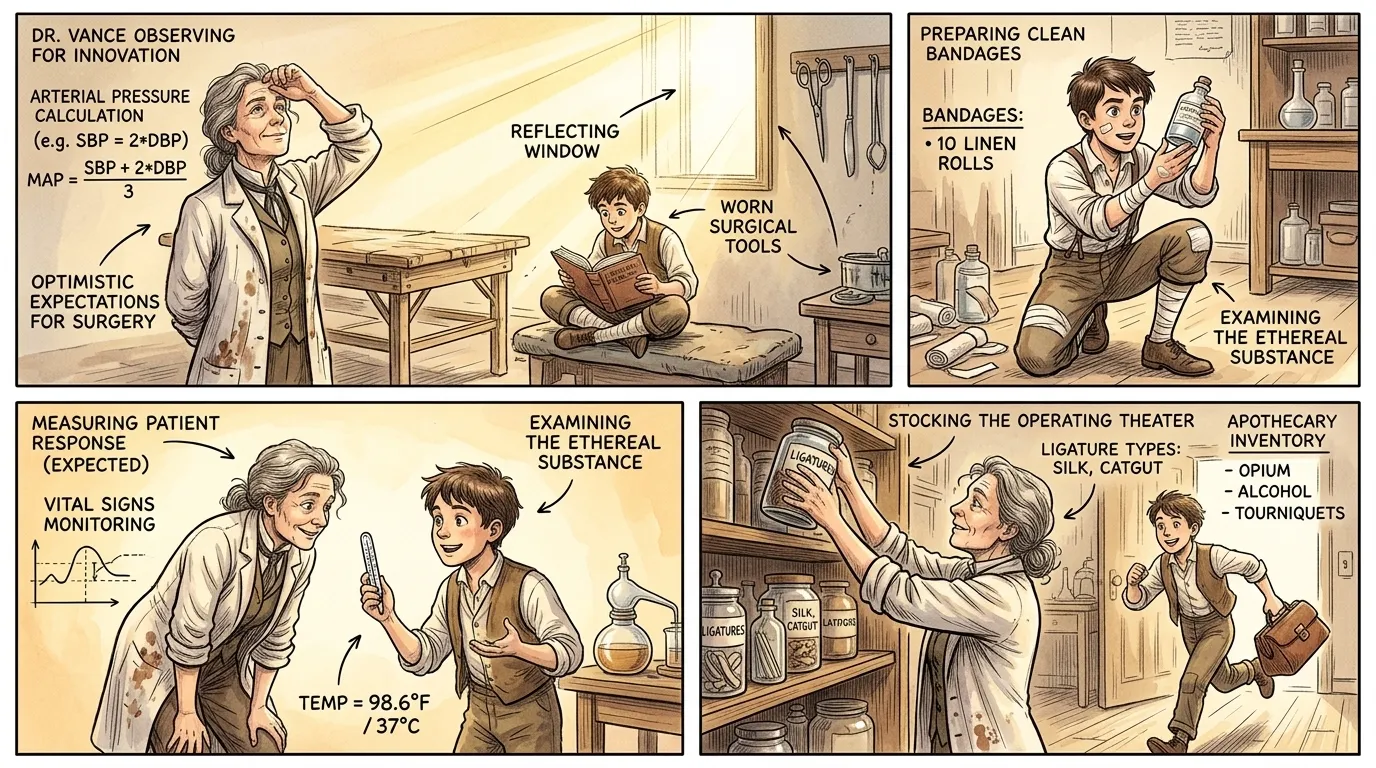
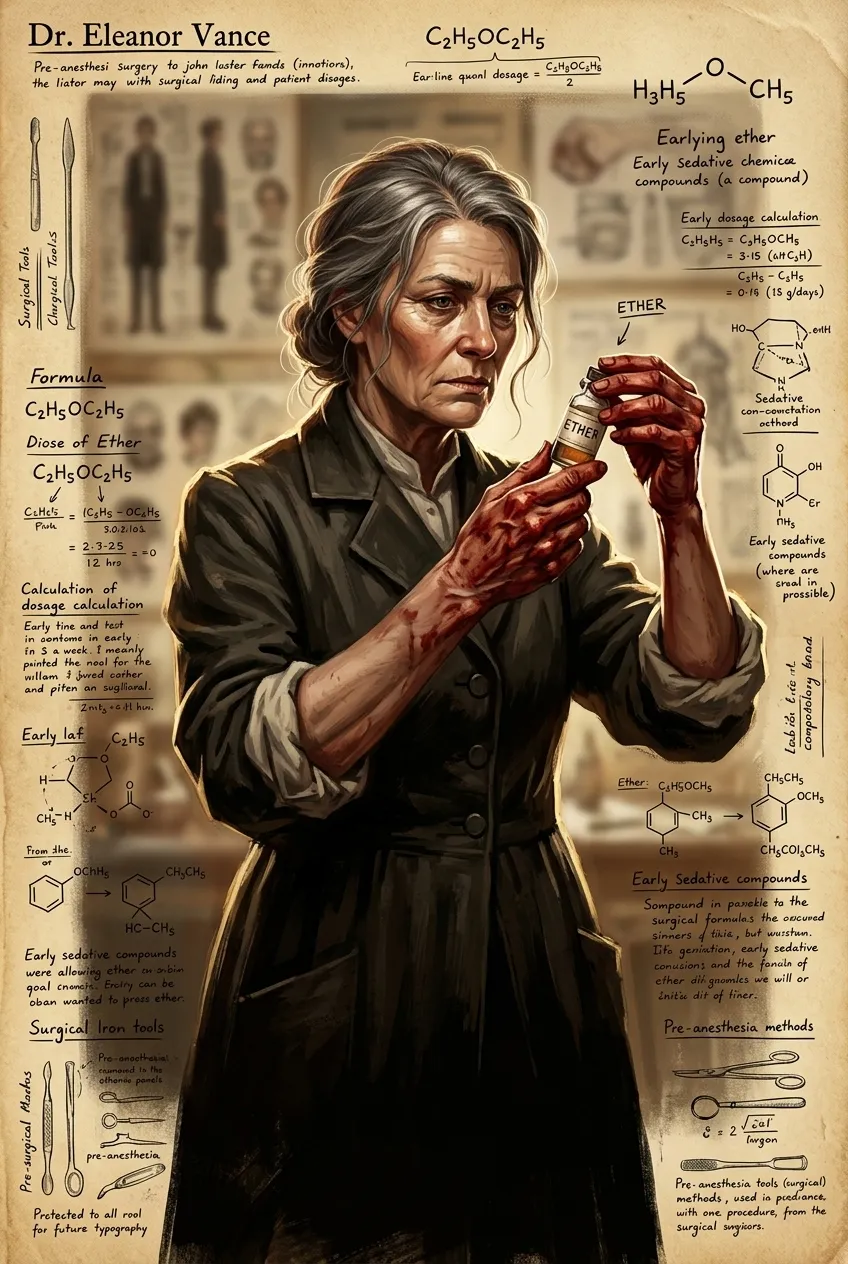
Before the advent of anesthesia, surgery was an act of raw brutality, a desperate race against unimaginable pain. Patients faced operations with terror, often restrained by multiple assistants, their screams echoing through makeshift operating theaters. The surgeon's skill was measured by speed, not precision, for every second prolonged the agony. This harrowing reality limited medical advancement, making complex, life-saving procedures impossible.
"A grizzled surgeon, Dr. Eleanor Vance (original character, not historical, representing surgical archetype), wiped her brow, turning to her assistant. 'The weight of this suffering is immense,' she murmured. 'As the Roman philosopher Lucius Annaeus Seneca once wisely stated, 'Every new beginning comes from some other beginning's end.' Our current methods must end for true healing to begin.' Her assistant, a young man named Thomas, nodded grimly, preparing a fresh bandage."
Page 2
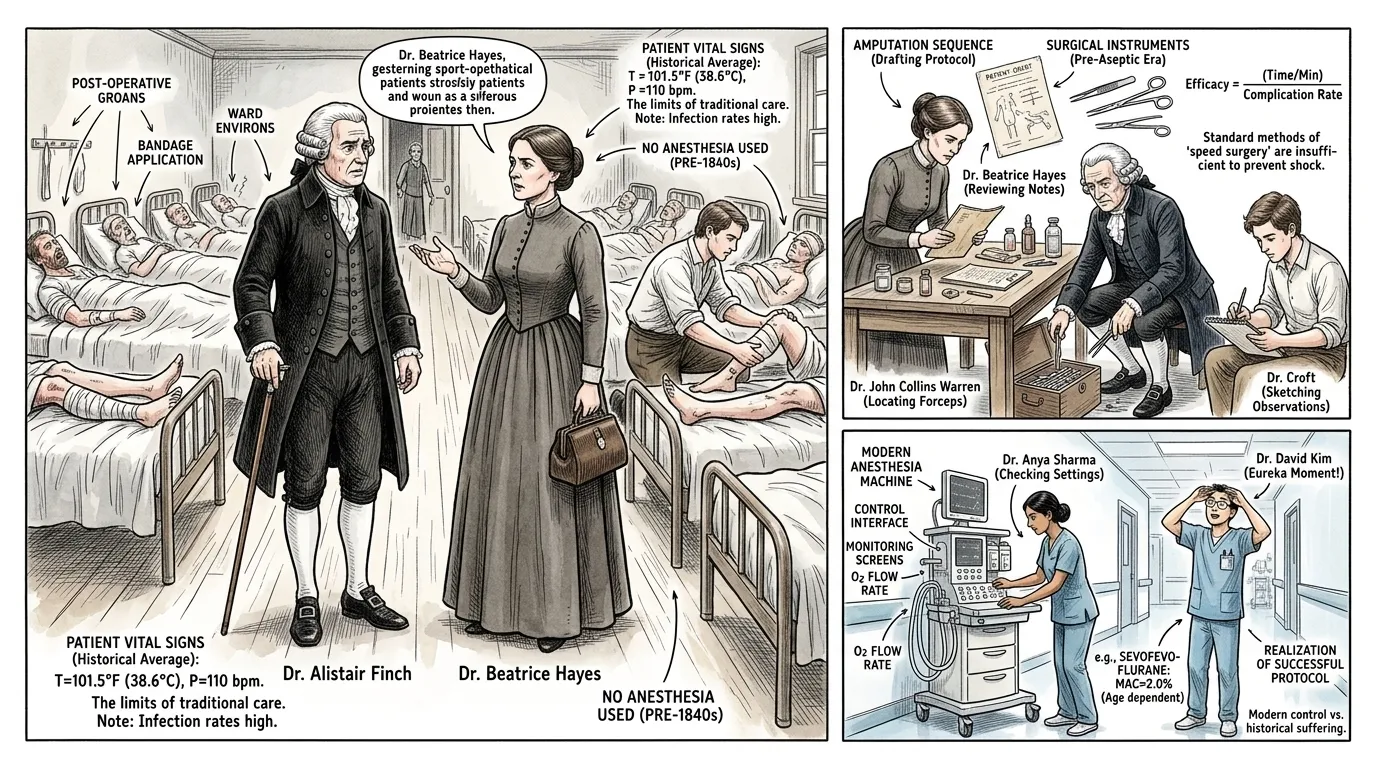
The terror of surgery extended beyond the operating table. The physiological shock from pain often proved fatal, even for successful operations. Patients frequently died from shock, infection, or hemorrhage, their bodies unable to withstand the trauma. Physicians understood the need to alleviate pain but lacked any truly effective means. Alcohol, opium, or even a swift blow to the head were crude, often dangerous, and ultimately insufficient palliatives.
"A senior physician, Dr. Alistair Finch (original character), surveyed the post-operative ward, filled with groaning patients. 'The very act of saving a life often seems to shorten it through the ordeal itself,' he lamented to a junior colleague. 'We seek to mend, yet our methods inflict such harm. We are truly at a precipice, needing a radical shift.' His colleague, a stern-faced woman named Dr. Beatrice Hayes, replied, 'Indeed, Dr. Finch. The psychological scars are as deep as the physical ones. The human spirit, resilient as it is, cannot endure this indefinitely.'"
Page 3
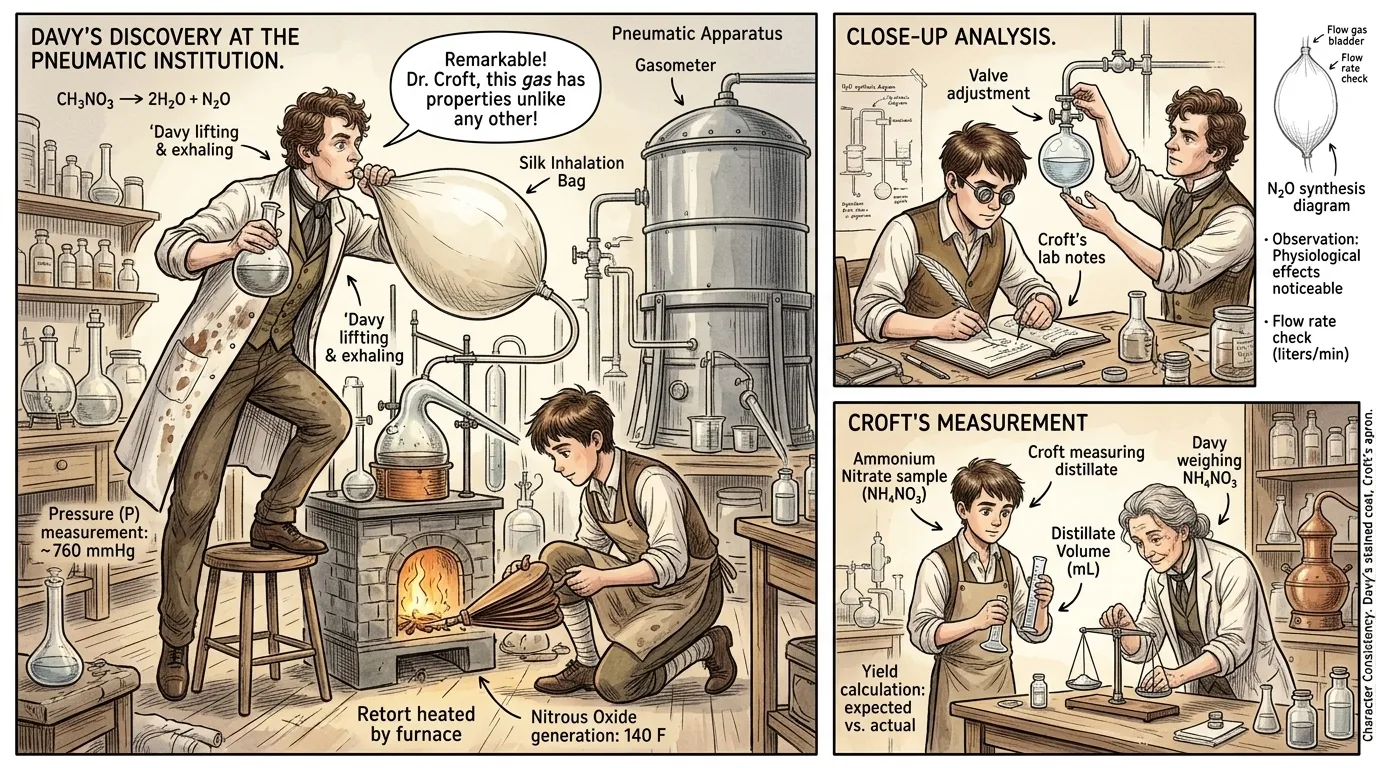
The first glimmers of hope emerged not from medicine, but from chemistry. In 1799, Sir Humphry Davy, a brilliant young chemist, experimented extensively with various gases, including nitrous oxide. He observed its intoxicating effects, leading to the popular 'laughing gas frolics.' Crucially, Davy noted that inhaling the gas significantly blunted pain, even suggesting its potential for surgical use. However, his observations remained largely unapplied in the medical field for decades, dismissed as novelty or impracticality.
"Sir Humphry Davy, a vibrant man in his late 20s with curly brown hair, stood by his intricate laboratory apparatus, exhaling from a bladder bag. 'Remarkable!' he exclaimed to his assistant, Dr. Edmund Croft (original character). 'As Leonardo da Vinci wisely stated, 'To develop a complete mind: Study the art of science; Study the science of art. Learn how to see. Realize that everything connects to everything else.' This gas, N2O, seems capable of destroying physical pain, a profound connection to the body's sensations!' Croft, carefully adjusting a retort, replied, 'A fascinating observation, Sir Humphry, but the leap to practical application remains a formidable challenge.'"
Page 4
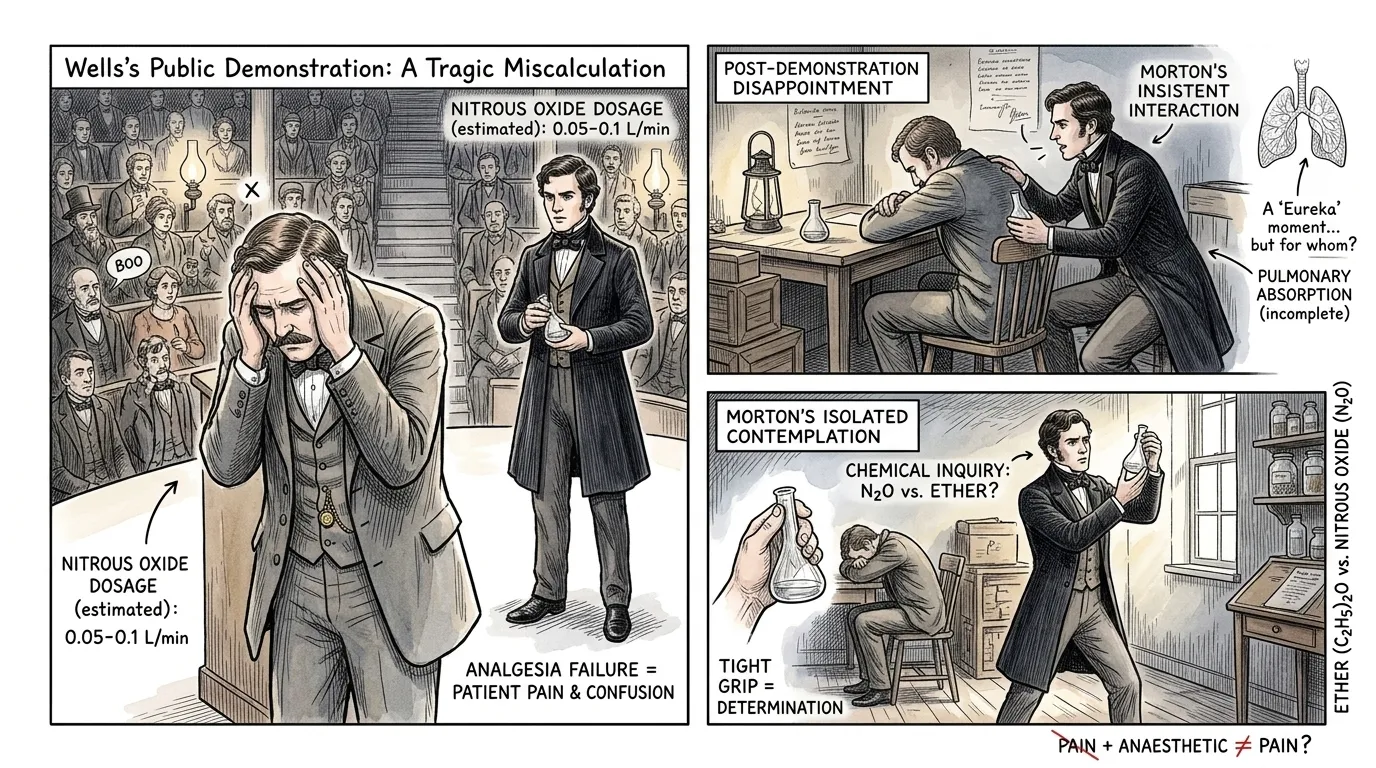
Decades later, in 1844, American dentist Horace Wells rediscovered the anesthetic properties of nitrous oxide. After witnessing a public demonstration of laughing gas where an individual injured his leg without feeling pain, Wells decided to use it for tooth extractions. While initially successful in his dental practice, a public demonstration at Massachusetts General Hospital resulted in the patient crying out, leading to widespread dismissal of nitrous oxide for surgery. This setback, however, opened the door for another dentist, William T.G. Morton, who sought a more reliable agent.
"Horace Wells, a man in his late 20s with a neat mustache and serious eyes, looked dejected after his failed demonstration. 'They called it a humbug,' he muttered to his former partner, William T.G. Morton, a younger man with ambitious eyes and dark hair. 'Yet, I know its power!' Morton, with a calculating gaze, replied, 'Perhaps, Horace, but 'patience is bitter, but its fruit is sweet,' as Jean-Jacques Rousseau once wrote. The right agent, administered precisely, is key. I believe sulfuric ether holds greater promise for a deeper, more consistent effect.'"
Page 5
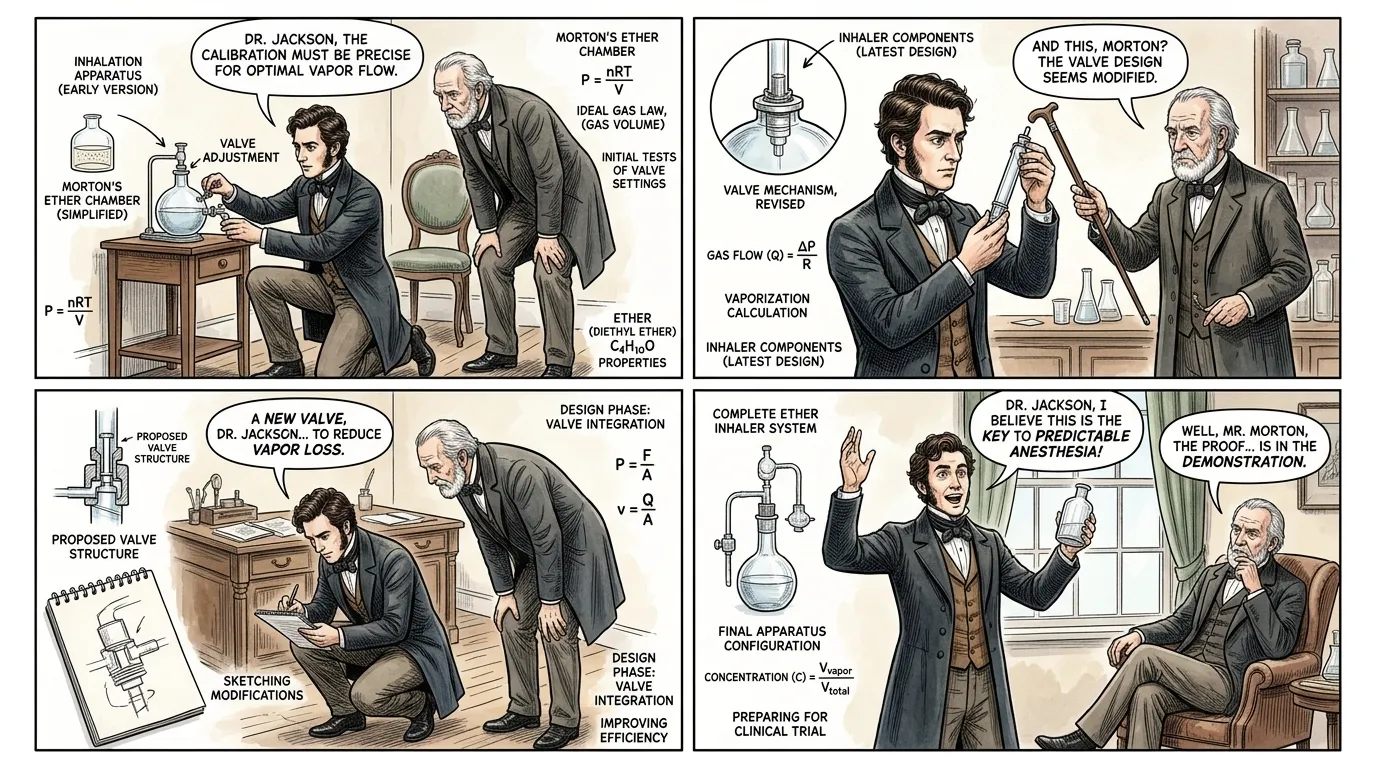
William T.G. Morton dedicated himself to finding a superior anesthetic. Through meticulous experimentation, first on his dog, then on himself, he settled on diethyl ether. He refined a specialized glass inhaler, ensuring controlled administration and consistent delivery of the ether vapor. His decisive moment came on September 30, 1846, when he successfully extracted a tooth from a patient, Eben Frost, who awoke believing the operation hadn't even begun. This private success paved the way for a public, surgical demonstration.
"Morton, carefully adjusting the valve on his ether inhaler, spoke with quiet intensity to his colleague, Dr. Charles Jackson (a historical figure, initially Morton's mentor, later disputed credit). 'This instrument, Charles, provides control. As Marie Curie famously said, 'Nothing in life is to be feared, it is only to be understood.' I seek to understand precisely how to render sensation dormant, not merely dull it.' Jackson, peering at the apparatus, mused, 'A deep, reliable stupor, Mr. Morton, that would indeed revolutionize more than just dentistry.'"
Page 6
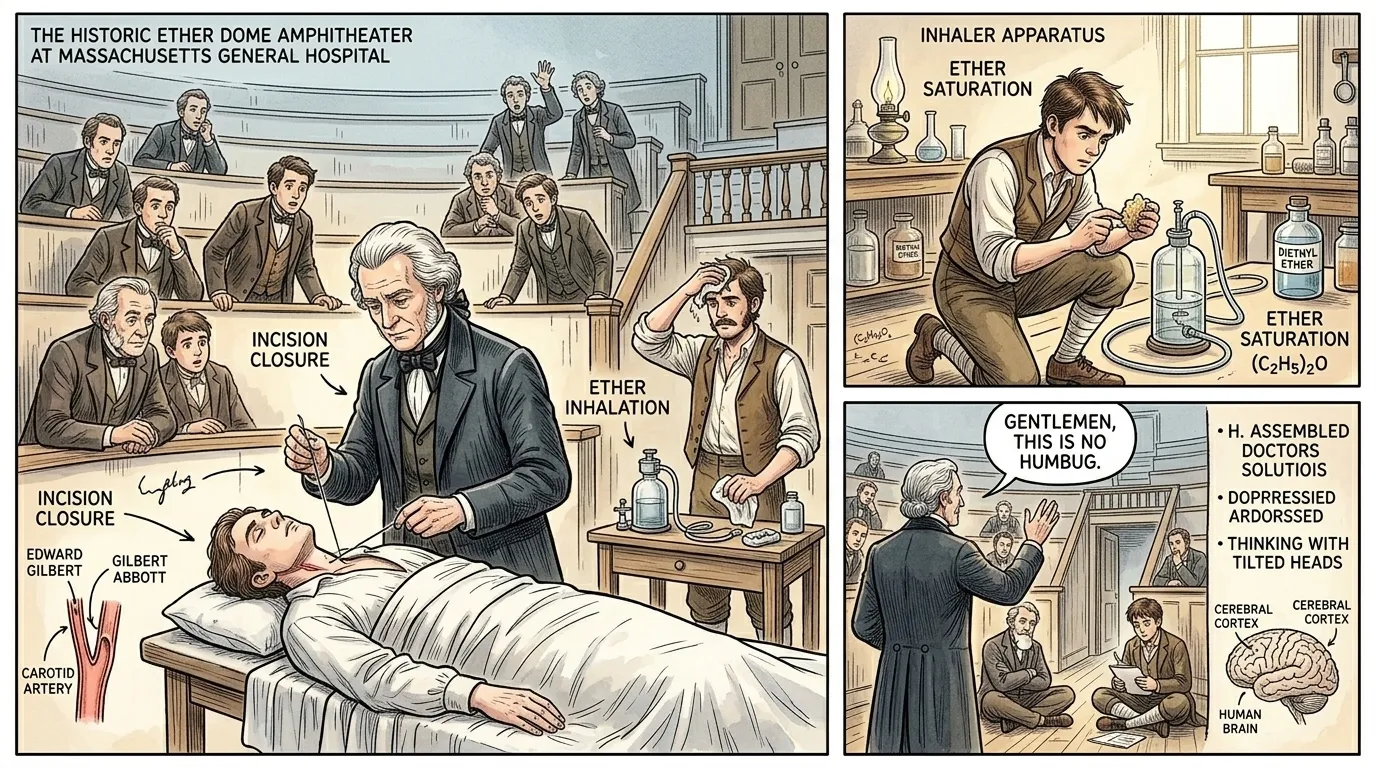
The true turning point arrived on October 16, 1846, at Massachusetts General Hospital. In what became known as the 'Ether Dome,' William T.G. Morton publicly administered ether to patient Edward Gilbert Abbott, while Chief Surgeon Dr. John Collins Warren performed the removal of a neck tumor. The assembled doctors and students watched in stunned silence as Abbott remained entirely unconscious and pain-free. Dr. Warren, upon completion, declared, 'Gentlemen, this is no humbug.' The era of surgical anesthesia had begun.
"Dr. John Collins Warren, an eminent surgeon in his 60s with a distinguished white wig and formal surgical coat, meticulously closed the incision. He turned to the awe-struck onlookers. 'Gentlemen,' he announced, his voice steady, 'this is no humbug. As Aristotle taught us, 'The roots of education are bitter, but the fruit is sweet.' Today, the bitter roots of suffering have been overcome by the sweet fruit of discovery!' Morton, wiping his brow, exhaled, 'A new age for humanity, Dr. Warren, built on science and compassion.'"
Page 7
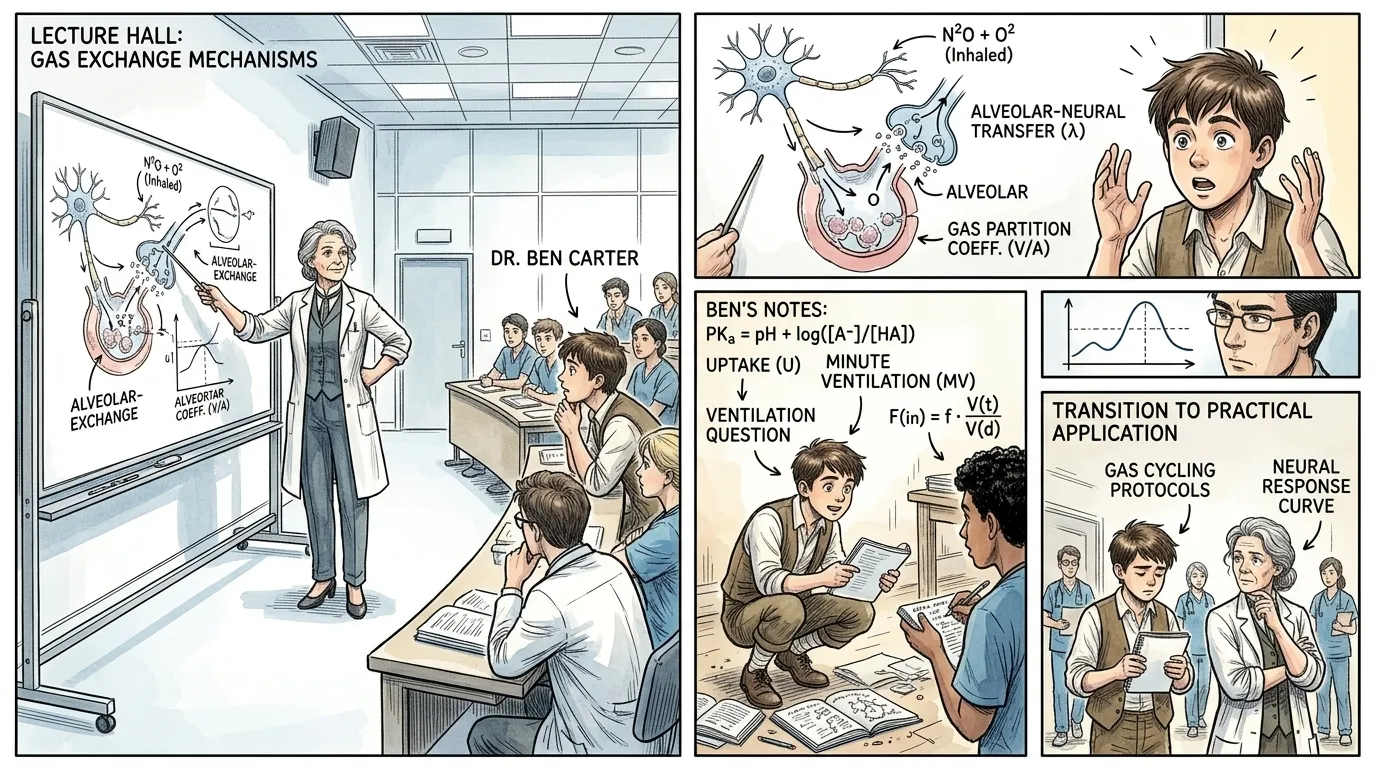
How do these remarkable substances work? Inhaled anesthetics, like ether, are volatile liquids that become gases at room temperature. When a patient breathes them in, the gas travels from the lungs into the bloodstream. From there, it's rapidly carried to the brain and spinal cord, the central nervous system. Once in the brain, these molecules interact with neural membranes and specific receptors, profoundly depressing neuronal activity. This generalized slowing down of brain signals leads to unconsciousness, amnesia, and the complete absence of pain perception.
"Dr. Evelyn Reed (original character, 20th-century anesthesiologist, a woman in her 50s with neat grey hair, wearing modern scrubs), pointed to a complex diagram. 'The genius of it lies in its systemic reach,' she explained to a group of medical students. 'As the great physicist Richard Feynman once said, 'The first principle is that you must not fool yourself—and you are the easiest person to fool.' We must always seek to understand the precise cellular mechanisms. These agents essentially quiet the symphony of neural impulses, allowing the body to rest even as it undergoes immense trauma.' A student, Dr. Ben Carter (original character, young man in scrubs), leaned in, 'So, it's a controlled, temporary neural shutdown?' Dr. Reed affirmed, 'Precisely.'"
Page 8
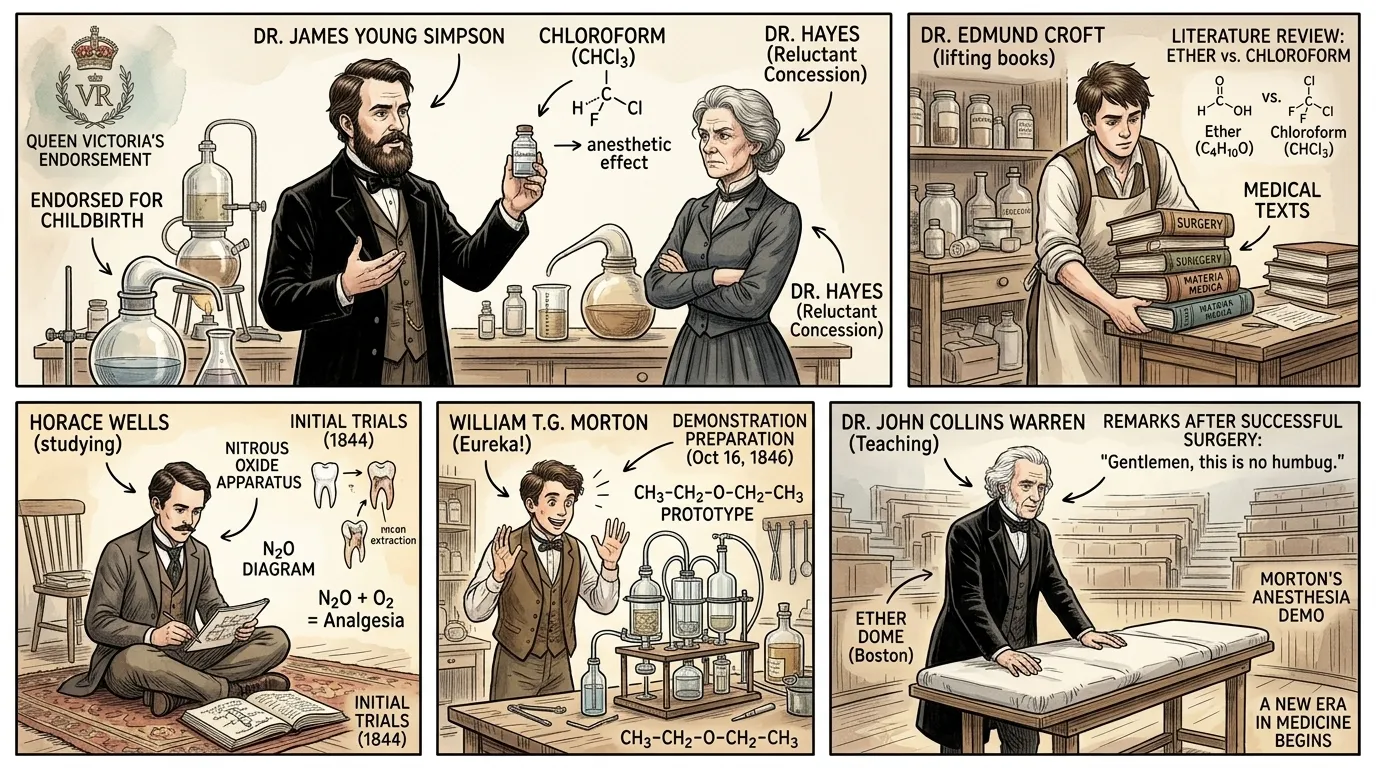
News of ether's success spread rapidly across the globe. Within months, European surgeons were replicating Morton's achievement. However, controversy quickly followed. Religious objections arose, claiming pain was a divine decree. Ethical debates questioned the morality of inducing unconsciousness. Yet, the overwhelming benefit for patients spurred adoption. In 1847, Scottish physician James Young Simpson introduced chloroform, a more potent and faster-acting agent, famously using it to ease the labor pains of Queen Victoria in 1853, which significantly boosted public acceptance.
"Dr. James Young Simpson, a distinguished Scottish physician in his 40s with a full beard, held a small vial of chloroform. 'This agent, while potent,' he explained to a skeptical colleague, 'offers a new pathway to alleviate suffering. As Hippocrates, the father of medicine, stated, 'To cure sometimes, to relieve often, to comfort always.' And who are we to deny comfort in the face of such agony, even childbirth?' His colleague, a dour man, reluctantly conceded, 'If even royalty embraces it, Dr. Simpson, perhaps our societal fears must yield to scientific progress.'"
Page 9
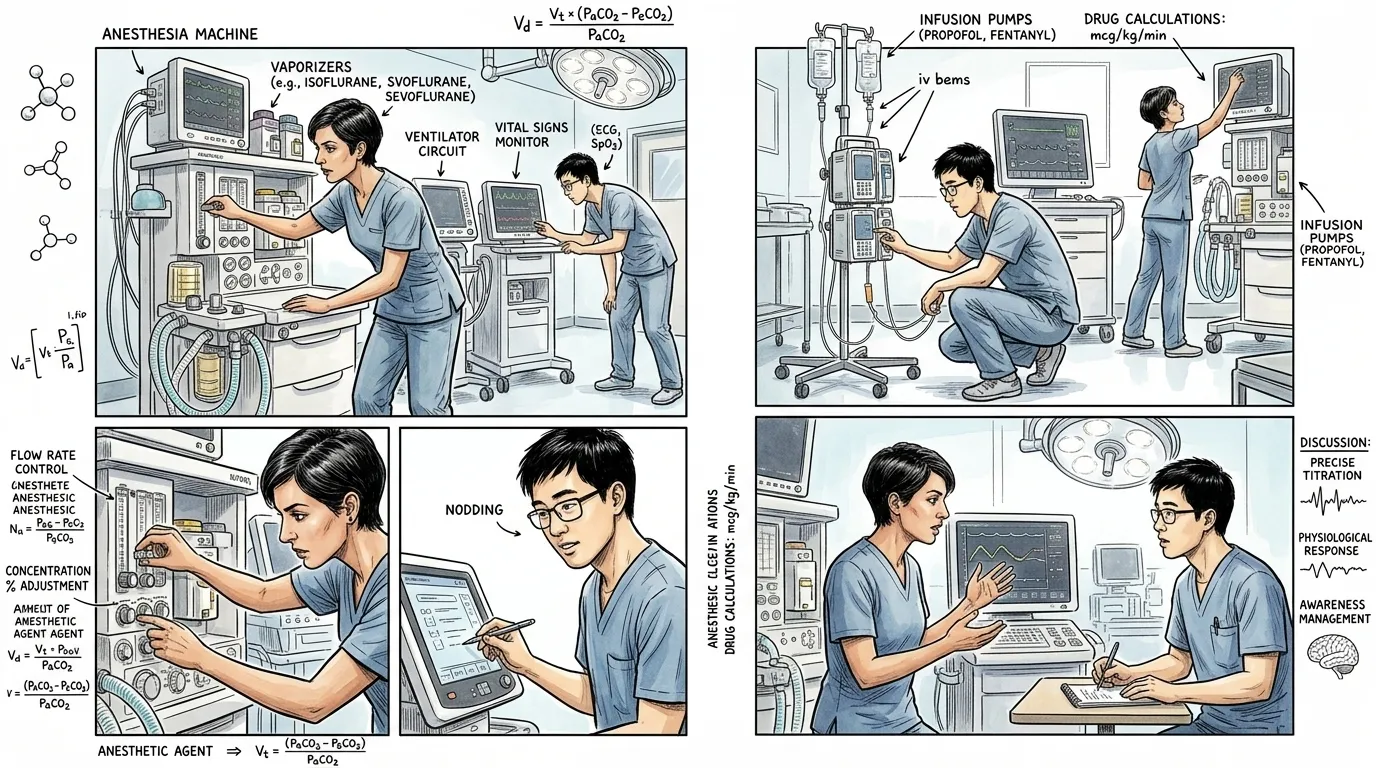
The initial crude methods of anesthesia quickly evolved. The search for safer, more precise agents led to the development of numerous drugs, including local anesthetics and intravenous agents. The delivery systems became highly sophisticated, moving from simple sponges to calibrated vaporizers and complex machines that precisely controlled gas mixtures. This era saw the emergence of anesthesiology as a distinct medical specialty, demanding profound knowledge of pharmacology, physiology, and critical care to ensure patient safety and optimal conditions for surgery.
"Dr. Anya Sharma (original character, contemporary anesthesiologist, a woman in her 40s, sharp features, short dark hair, wearing modern scrubs), meticulously checked the intricate anesthesia machine. 'Our predecessors laid the foundation,' she stated to a junior resident, 'but the science has become infinitely more refined. As the pioneering nurse Florence Nightingale wisely said, 'The very first requirement in a hospital is that it should do the sick no harm.' Our vigilance ensures that philosophy is upheld today, balancing profound sleep with absolute safety.' The resident, Dr. David Kim (original character, young man in his 30s, short black hair, glasses, in scrubs), nodded, adjusting a monitor, 'The precision required is truly astonishing.'"
Page 10
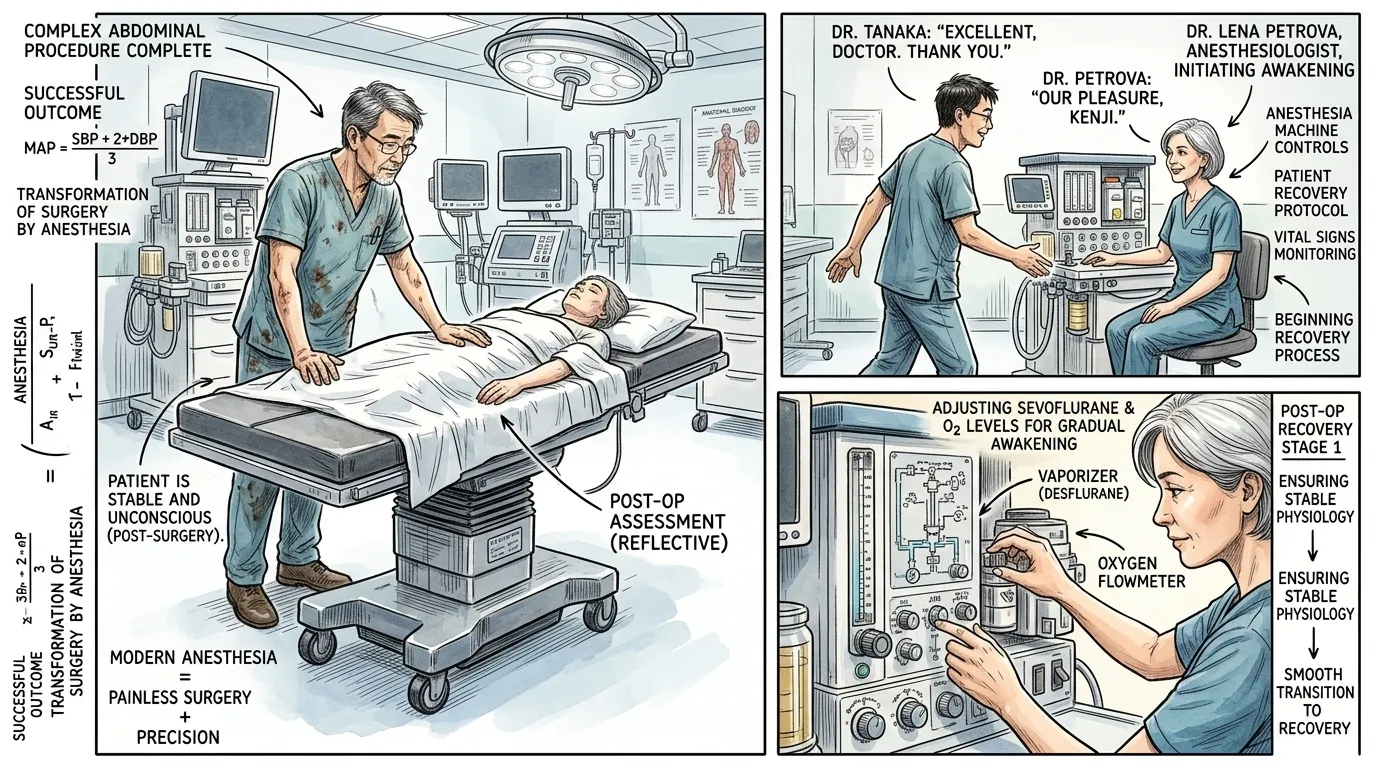
Anesthesia profoundly transformed medicine, enabling a revolution in surgical possibilities. Once a desperate last resort, surgery became a precise, controlled science. Procedures once deemed impossible, such as open-heart surgery, organ transplantation, and complex neurosurgery, became routine. Beyond the operating room, anesthesia is indispensable in emergency medicine, intensive care, pain management, and even diagnostic procedures. It ushered in an era where the fear of pain no longer dictates the limits of healing, fundamentally reshaping the human experience of illness and recovery.
"A modern lead surgeon, Dr. Kenji Tanaka (original character, man in his 50s, distinguished, in scrubs), concluded a complex surgery. He looked at the unconscious patient, then at the anesthesiologist. 'Without this profound gift of controlled unconsciousness,' he reflected, 'our hands would be tied, our ambitions for healing thwarted. Truly, as Victor Hugo proclaimed, 'Nothing is more powerful than an idea whose time has come.' Anesthesia was that idea, transforming suffering into opportunity.' The anesthesiologist, Dr. Lena Petrova (original character, woman in her 40s, calm, in scrubs), nodded, initiating the patient's careful awakening process. 'A privilege, Doctor, to stand at the threshold of such transformation, every single day.'"
About this story
- Location: Global
- Audience: general readers
Questions and answers
Read Wonder Inventions on your phone
Wonder Inventions is available on Android. Get Wonder Inventions on Google Play.