Bicycle
Bicycle — an illustrated inventions story, set in Global. 10 illustrated pages, free to read on Wonder Inventions.
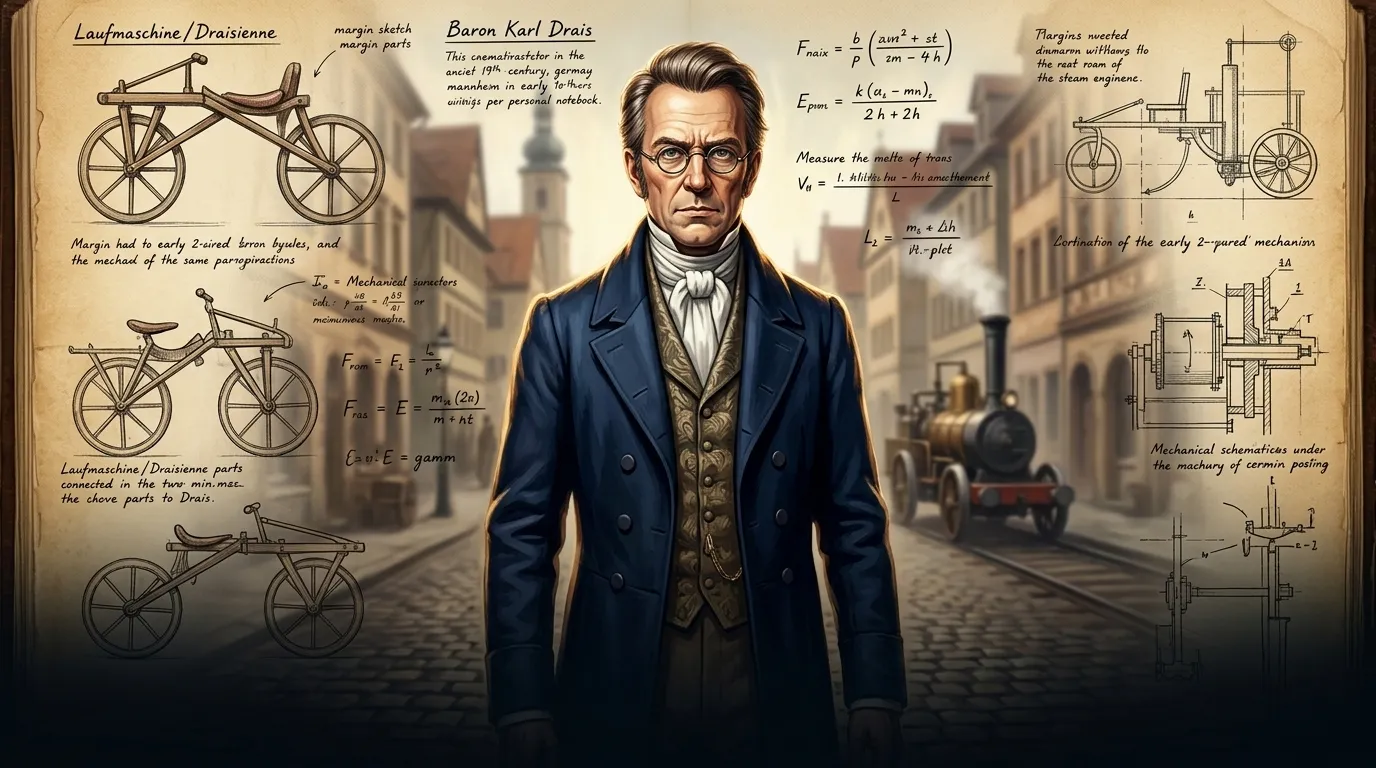
Page 1
In the early 19th century, personal transport was a luxury, fraught with limitations and reliant on cumbersome methods. Journeys were dictated by the pace of foot or hoof, restricting individual freedom and economic opportunity across Europe.
""The roads are abysmal, impassable mud after rain," complained Baron Karl Drais, adjusting his spectacles in Mannheim. "And horses, even if one could afford them, are expensive to maintain. There must be a simpler, more personal means of efficient travel.""
Fact: Karl Drais, Mannheim, Germany, 1817 — The 'Laufmaschine' addresses the urgent need for affordable, personal transport beyond foot or horse.
Page 2
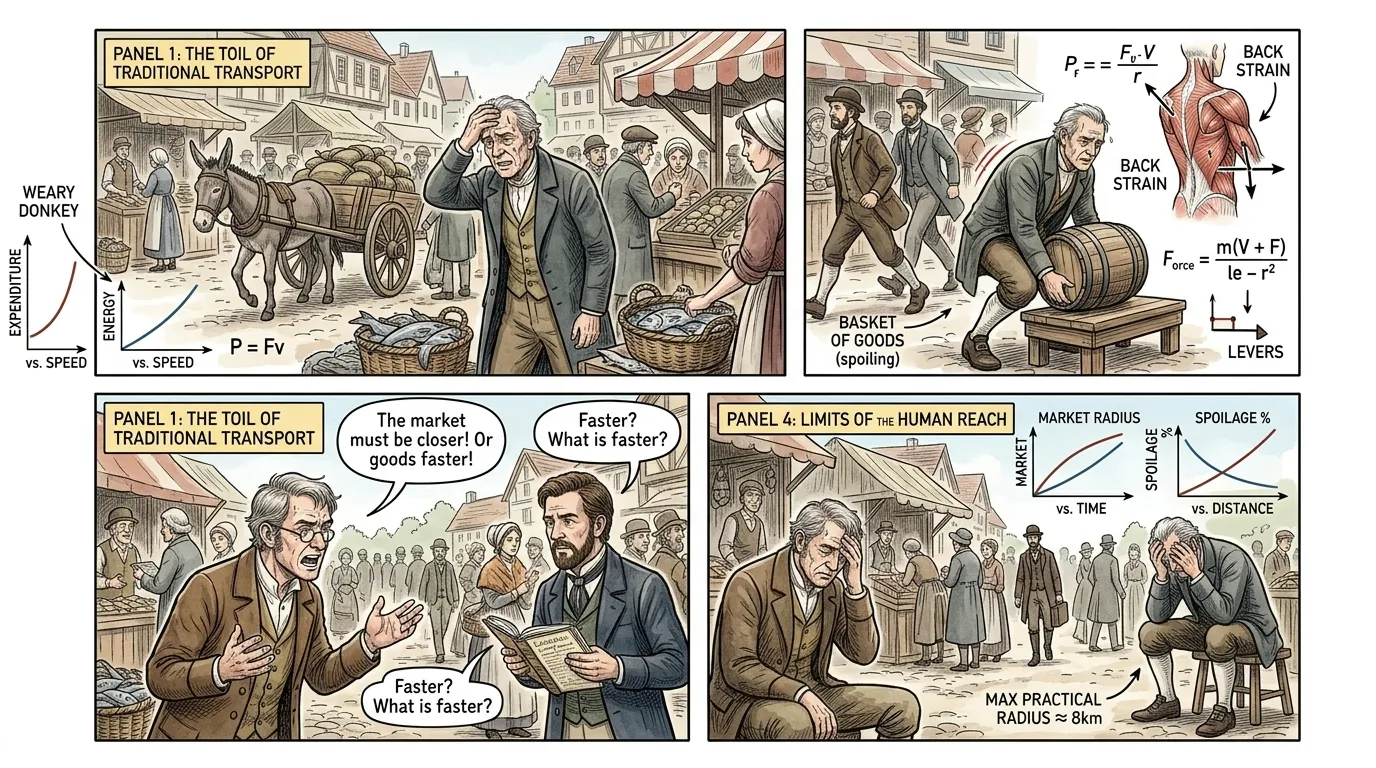
Before the bicycle, distances were formidable, segmenting communities and slowing commerce. A short journey often meant hours of walking or costly reliance on public conveyances, themselves tethered to routes and schedules.
""Imagine the wasted time," observed an elderly merchant, wiping sweat from his brow after a long walk to market. "Goods spoil faster than we can transport them. Our prosperity is shackled to slow movement, to the limited range a person can cover in a day.""
Fact: The world before: Travel was slow, expensive, and limited by human and animal endurance.
Page 3
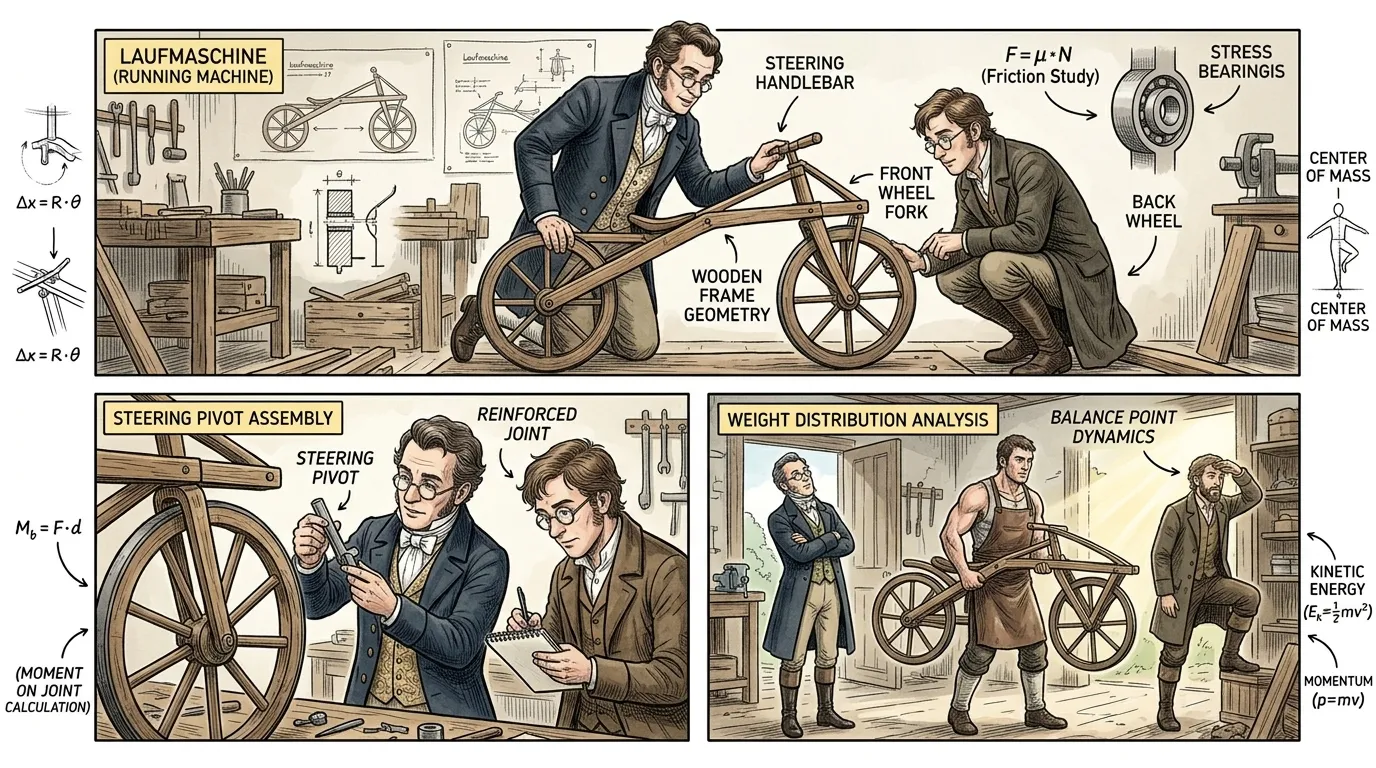
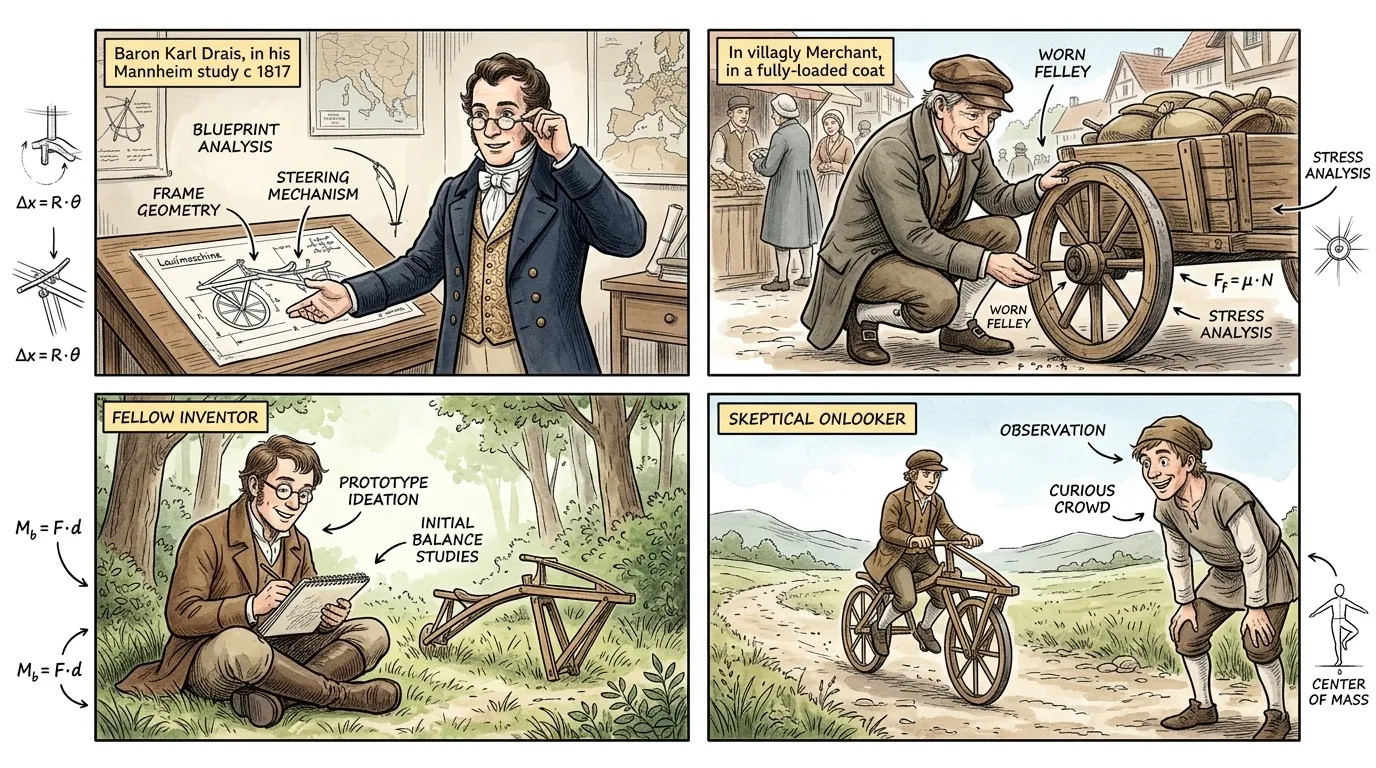
The limitations of the era became a catalyst for innovation. Baron Karl Drais, witnessing the impact of a global climate event on horse populations, conceived a new kind of self-propulsion.
""After the Tambora eruption, horse feed became scarce, making personal transport a crisis," Drais explained to a fellow inventor, gesturing toward his 'Laufmaschine'. "This machine offers motion, but the rider's legs must provide the tireless propulsion, and the art lies truly in mastering balance and direction with sheer human effort. It's the essential first step.""
Fact: Karl Drais's 'running machine' (1817) was a direct response to a transport crisis, emphasizing balance and steering—a crucial foundational insight.
Page 4
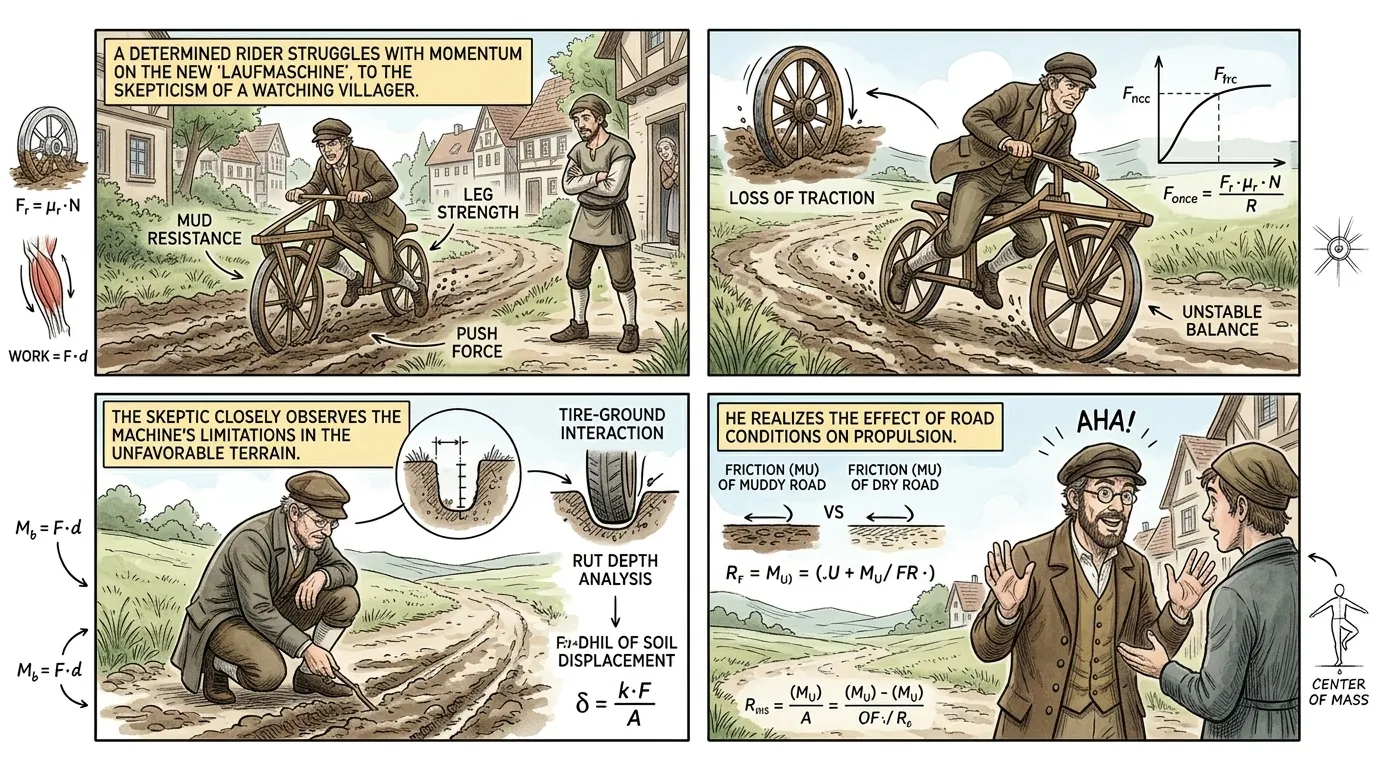
Drais's Laufmaschine, or 'draisine,' sparked imagination but quickly revealed its practical challenges. Without mechanical assistance for propulsion, riders still expended immense energy.
""It is an exercise machine more than a true conveyance," remarked a skeptical onlooker as a rider struggled on a rough path. "The rider still walks, albeit on wheels. My legs ache just watching the effort required to maintain momentum!""
Fact: Early 'draisines' were challenging; without pedals, constant foot-pushing made them physically demanding and inefficient on uneven terrain.
Page 5
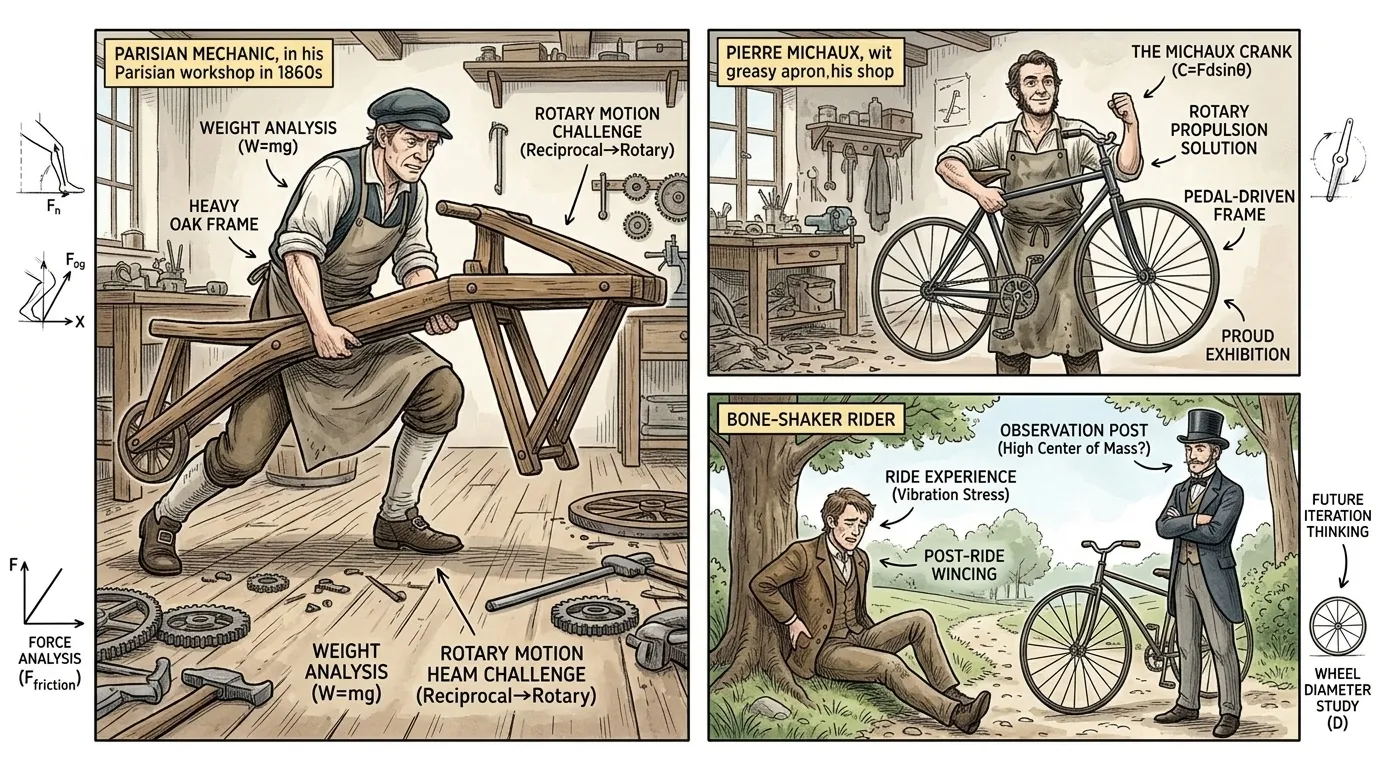
For decades, the concept of a two-wheeled vehicle struggled to evolve beyond the foot-propelled 'draisine.' Inventors grappled with the core problem: how to propel the machine without constant direct contact between the rider's feet and the ground.
""The direct push is simply too inefficient for sustained speed," mused a Parisian mechanic, examining a heavy wooden frame in his workshop. "We need a way to apply continuous power to the wheel, a rotary motion independent of the rider's stride. But how to convert that leg motion?""
Fact: The mechanical challenge: converting reciprocal leg motion into continuous rotary wheel propulsion, a puzzle that stalled innovation for decades.
Page 6
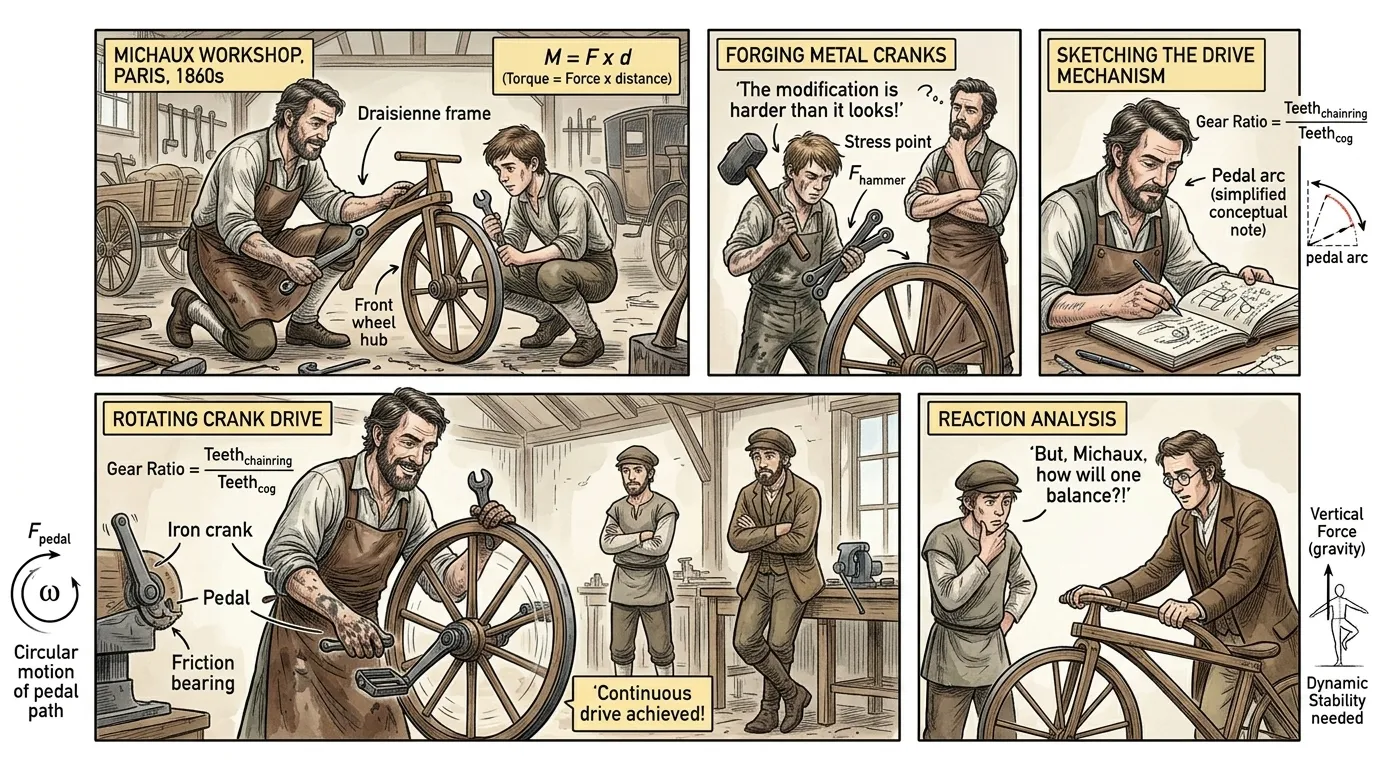
The critical breakthrough arrived in the 1860s in France. Pierre Michaux, a carriage maker, and his son Ernest, installed cranks and pedals directly onto the front wheel of a 'draisine,' fundamentally changing its operation.
""Observe," Pierre Michaux announced proudly, his hands covered in grease. "The feet now drive the wheel in a continuous rotation, no longer pushing the ground! This simple mechanism changes everything, allowing the rider to maintain propulsion while steering.""
Fact: The Michaux breakthrough (1863): Adding pedals and cranks directly to the front wheel provided continuous, hands-free propulsion.
Page 7
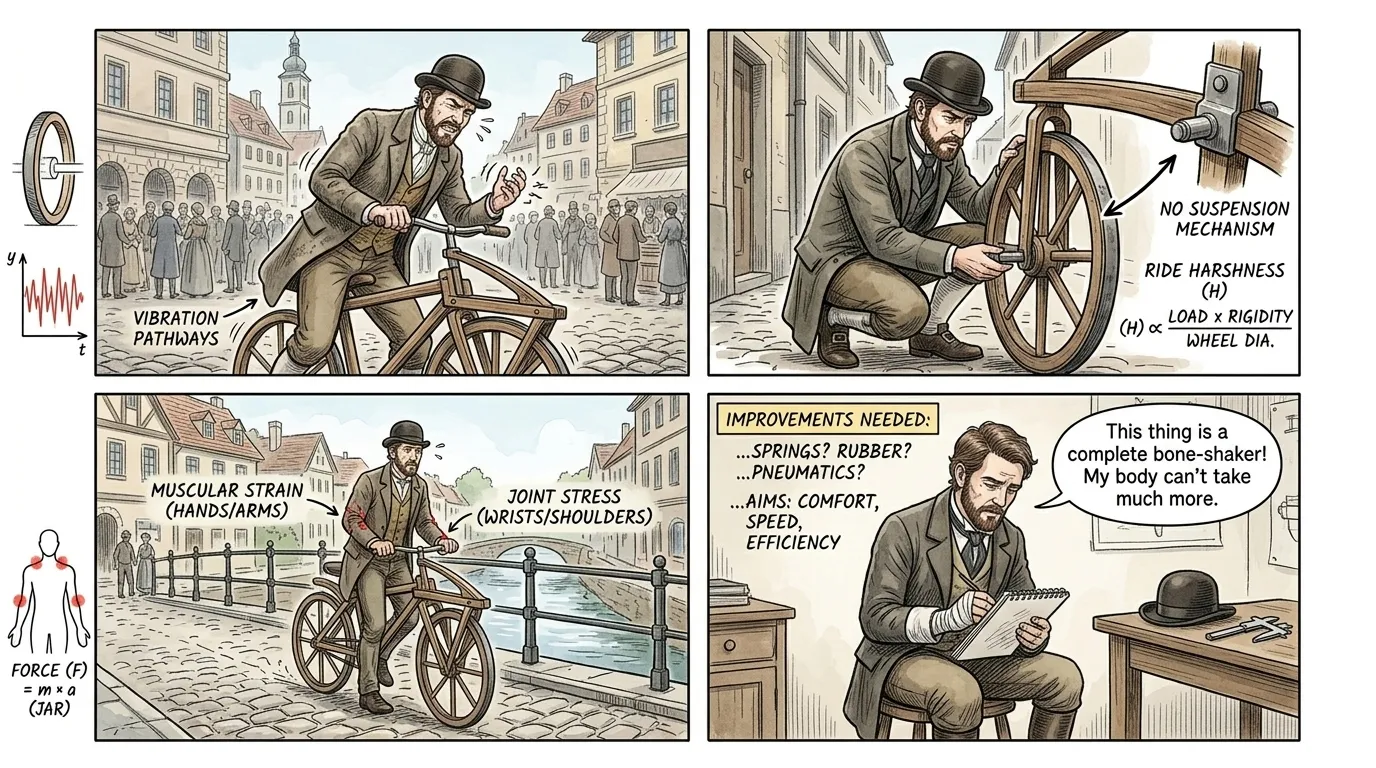
The Michaux velocipede, quickly dubbed the 'bone-shaker,' offered newfound mobility. However, its rigid iron frame and iron-tired wooden wheels delivered a jarring ride, and direct-drive meant speed was limited by leg cadence and wheel size.
""While exhilarating, a long journey on this feels like navigating a cobblestone street on a blacksmith's anvil!" exclaimed a rider, dismounting with a wince. "Each revolution of the pedal turns the wheel precisely once. For more speed, the wheel itself must grow larger, or my legs must spin like a dervish.""
Fact: The 'Bone-Shaker' (1860s) proved pedal power, but its rigid design and direct drive limited comfort and practical speed.
Page 8
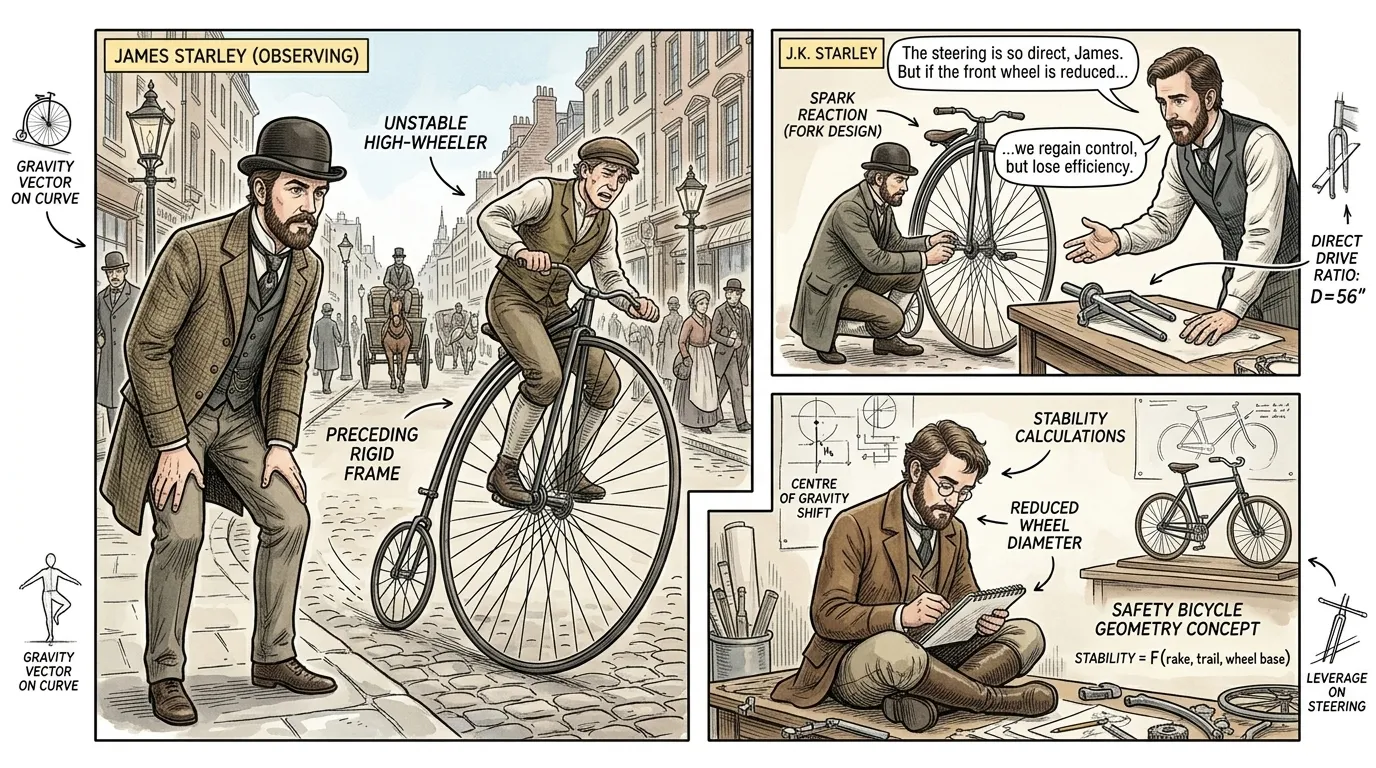
The quest for speed led to the 'penny-farthing' or 'ordinary' bicycle, with its dramatically oversized front wheel. This design provided high speeds per pedal revolution but was notoriously unstable and dangerous.
""This high-wheeler offers exhilarating speed, but at a perilous cost," observed James Starley, a pioneer in bicycle design, watching a rider precariously navigate a turn. "As Francis Bacon famously wrote, 'Knowledge is power,' and here, power demands a heavy price for a momentary thrill. We seek greater control, more accessible speed for all, not just the athletic few.""
Fact: The 'Penny-Farthing' (1870s) maximized speed but amplified the inherent dangers of direct-drive and a high center of gravity, demanding a new solution.
Page 9
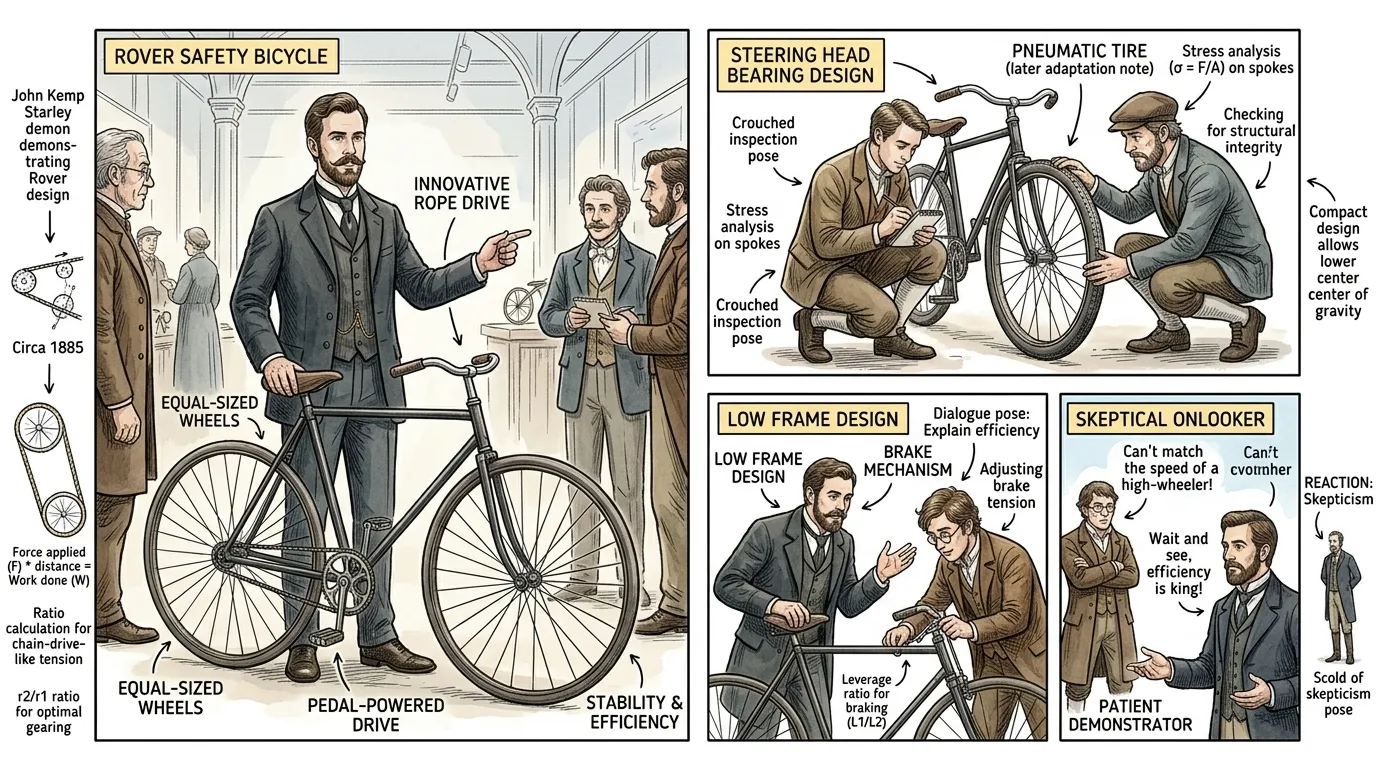
The definitive solution emerged in 1885 with John Kemp Starley's 'Rover Safety Bicycle.' It integrated a chain drive, connecting pedals to the rear wheel, and introduced equally sized wheels, fundamentally redesigning the bicycle for safety and efficiency.
""By separating the propulsion from the steering wheel and connecting them through a geared chain," John Kemp Starley explained to his colleagues, demonstrating his new 'Rover' model, "we finally achieved what Drais merely hinted at: a vehicle where balance and direction are managed safely, and propulsion is efficient and continuous, not a constant strain. This allows for lower gearing, greater stability, and universal accessibility.""
Fact: John Kemp Starley's 'Rover Safety Bicycle' (1885) revolutionized design with the chain drive and equal wheels, making cycling safe and universal.
Page 10
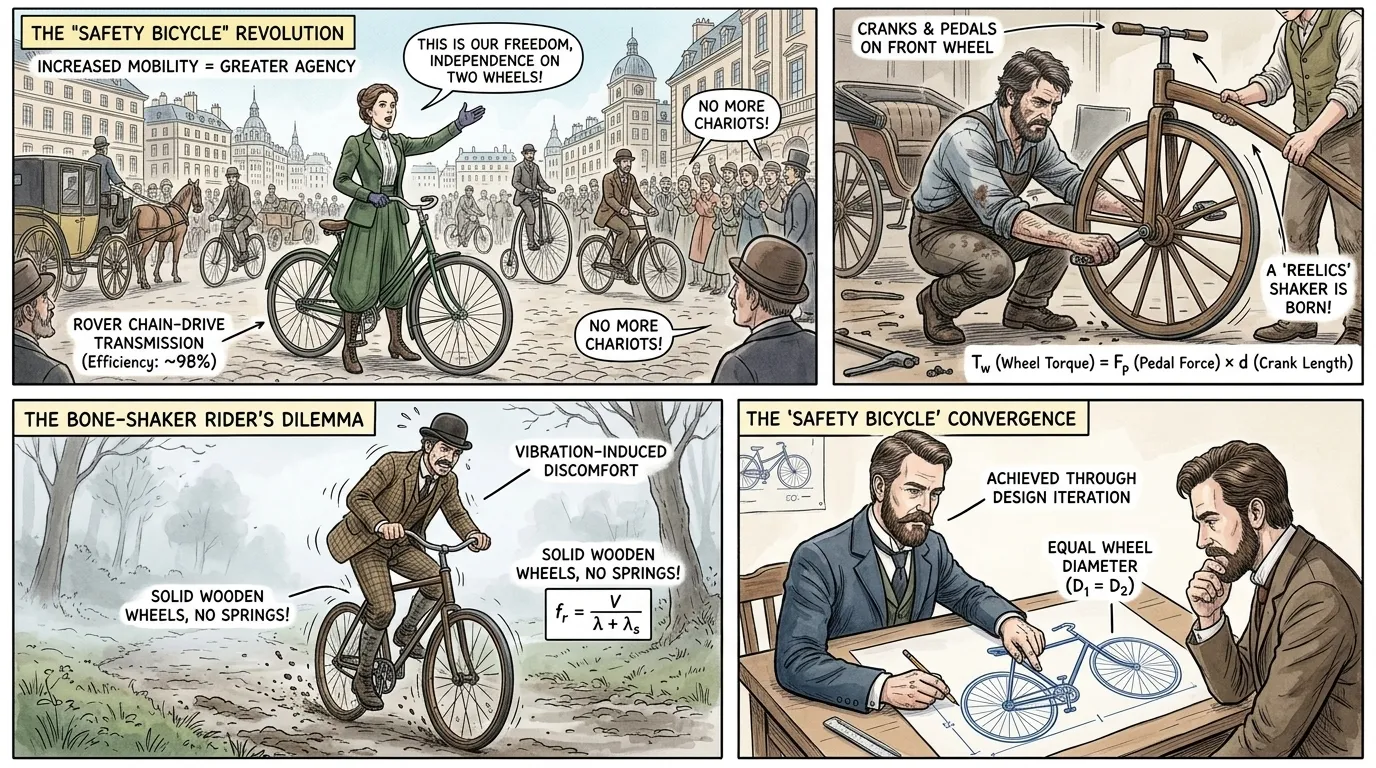
The 'Safety Bicycle' transformed society, offering unprecedented personal mobility, empowering women, changing urban landscapes, and fostering a global cycling craze. It became a symbol of freedom, health, and progress.
""The bicycle opened up the world for women, giving us a sense of freedom and independence previously unimaginable!" exclaimed an impassioned suffragette, her voice echoing in a bustling city square. "No longer are we confined to the home or the limited routes of public transport. This machine is a vehicle for social change itself.""
Fact: From urban commutes to leisure and empowerment, the Safety Bicycle's impact was monumental, reshaping society and individual freedom globally.
About this story
- Location: Global
- Audience: general readers
Questions and answers
Read Wonder Inventions on your phone
Wonder Inventions is available on Android. Get Wonder Inventions on Google Play.