Blockchain
Blockchain — an illustrated inventions story, set in Global. 10 illustrated pages, free to read on Wonder Inventions.
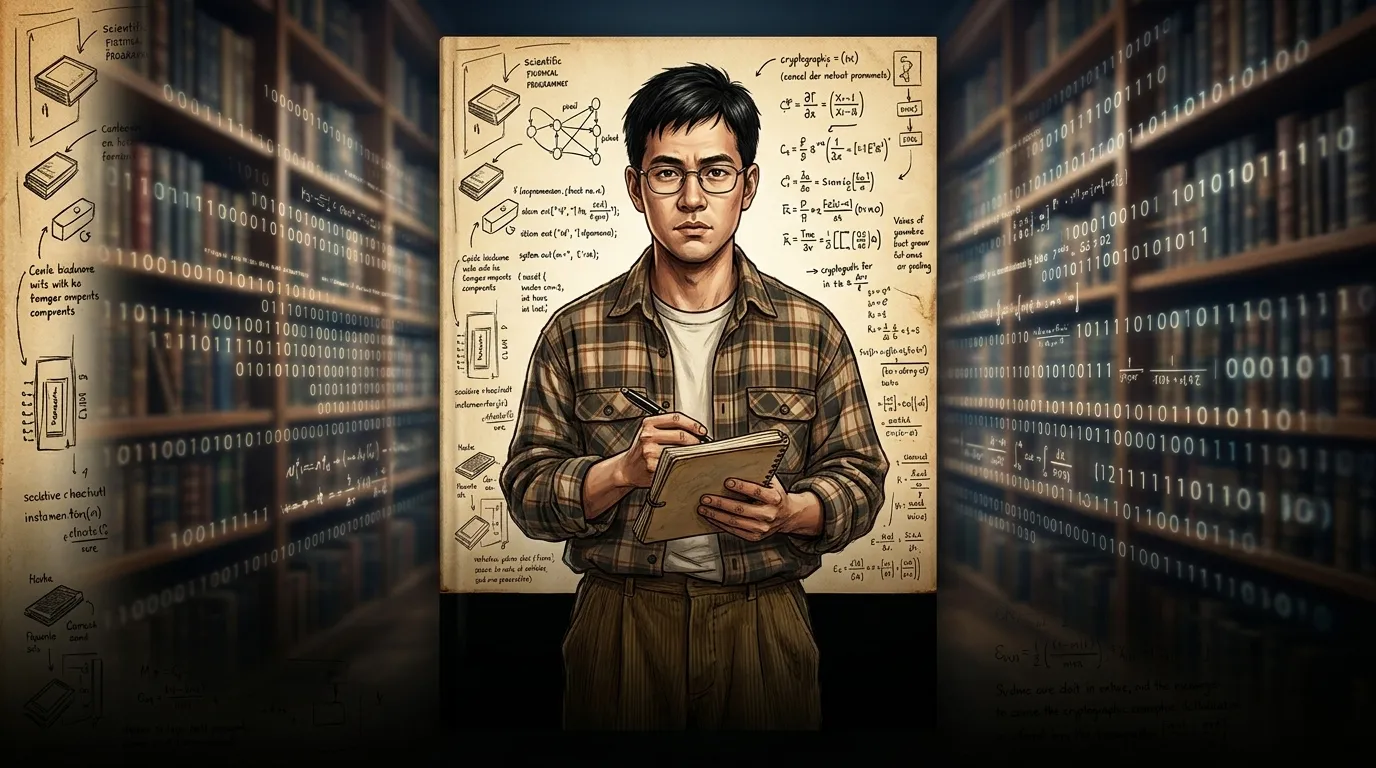
Page 1
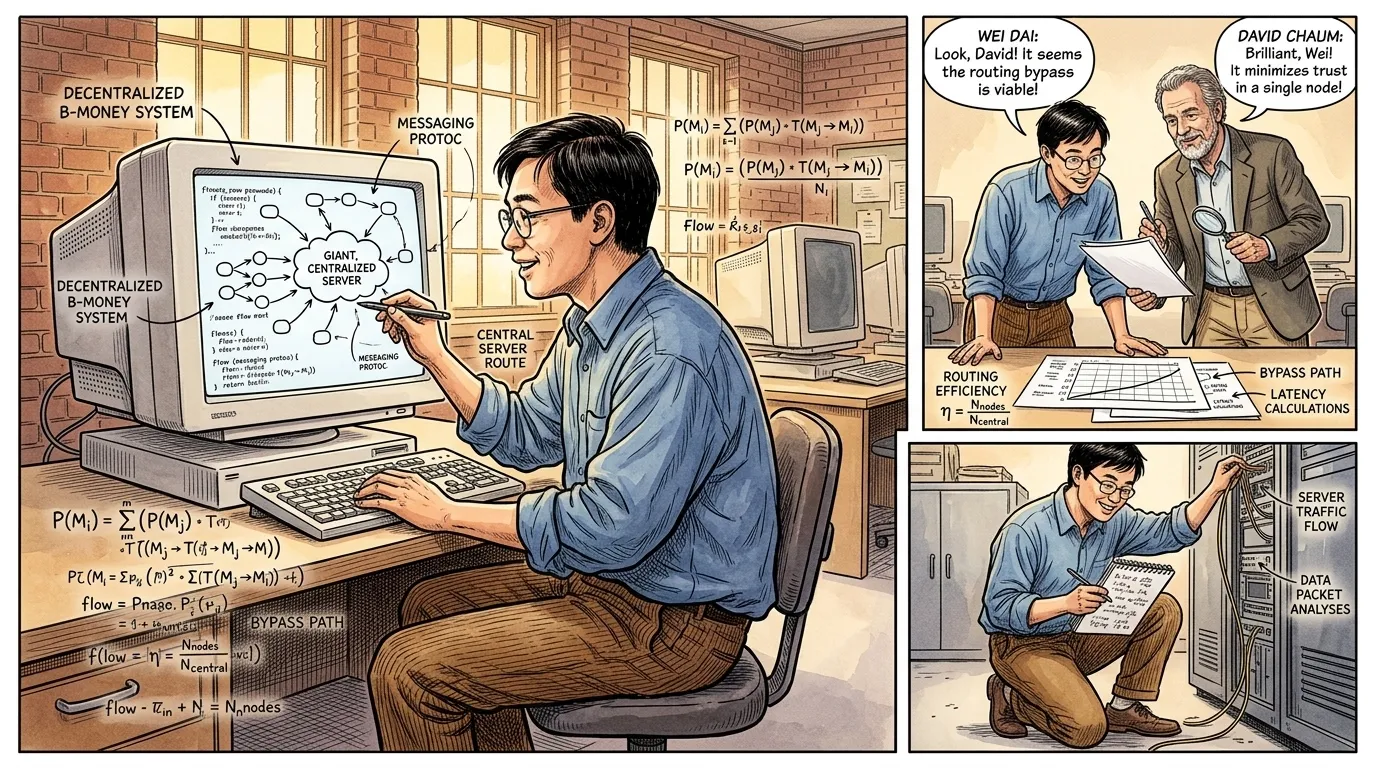
For decades, digital information struggled with a fundamental paradox: how to ensure authenticity and prevent alteration without relying on a centralized, vulnerable authority. Every online transaction, every digital record, depended on a single point of control, a system inherently susceptible to fraud, error, or malicious intervention.
"As one early digital currency advocate, Wei Dai, articulated in 1998, 'One could also use the concept of an untraceable digital cash, to make anonymous payments, and to create anonymous digital property.' The core challenge remained how to achieve this without a trusted middleman."
Page 2
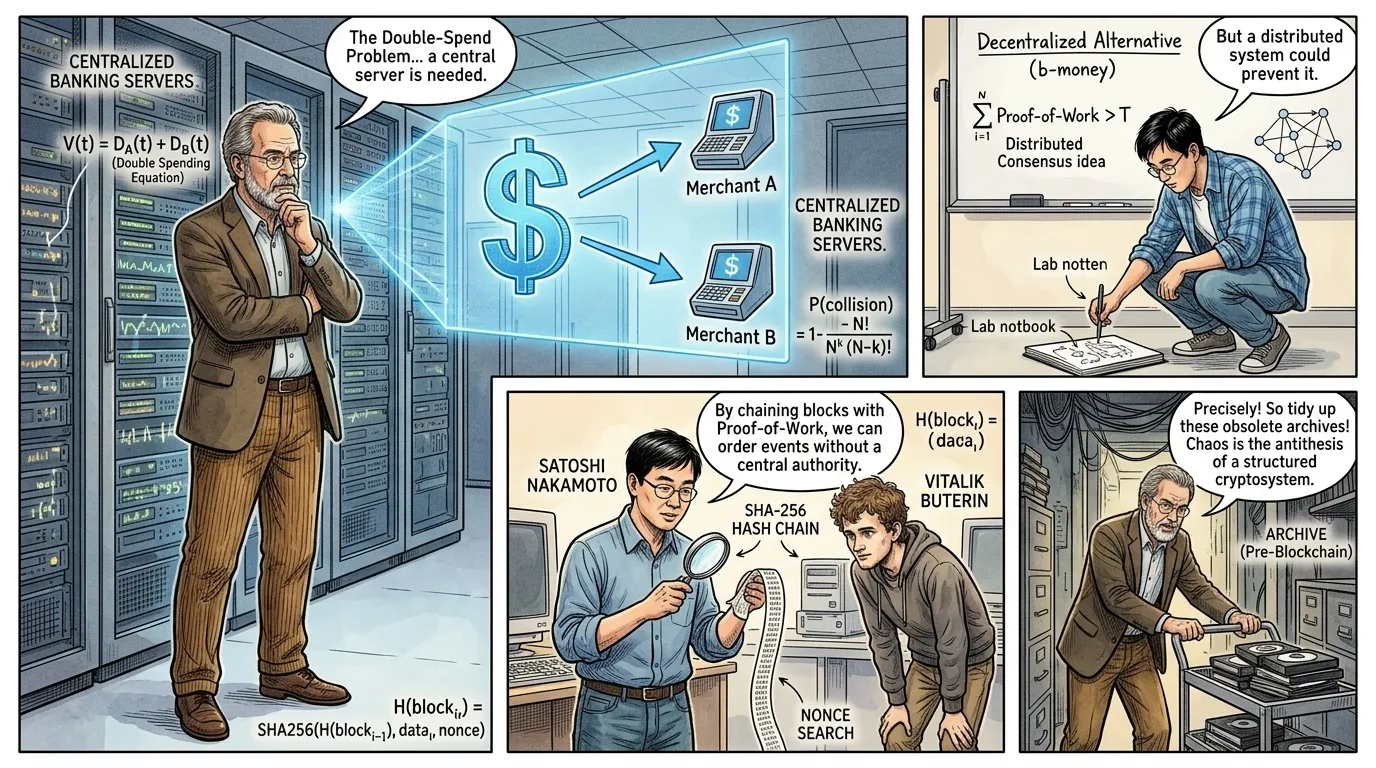
Before blockchain, digital transactions relied on central entities like banks or payment processors to verify and record every exchange. This centralized model established trust through intermediaries, but it introduced inherent bottlenecks, single points of failure, and significant costs.
"An early computer scientist, observing the emerging digital economy, once mused, 'The problem is not merely transferring digital value, but guaranteeing its uniqueness. How do you prevent someone from spending the same digital dollar twice?' This 'double-spend problem' was the fundamental hurdle."
Page 3
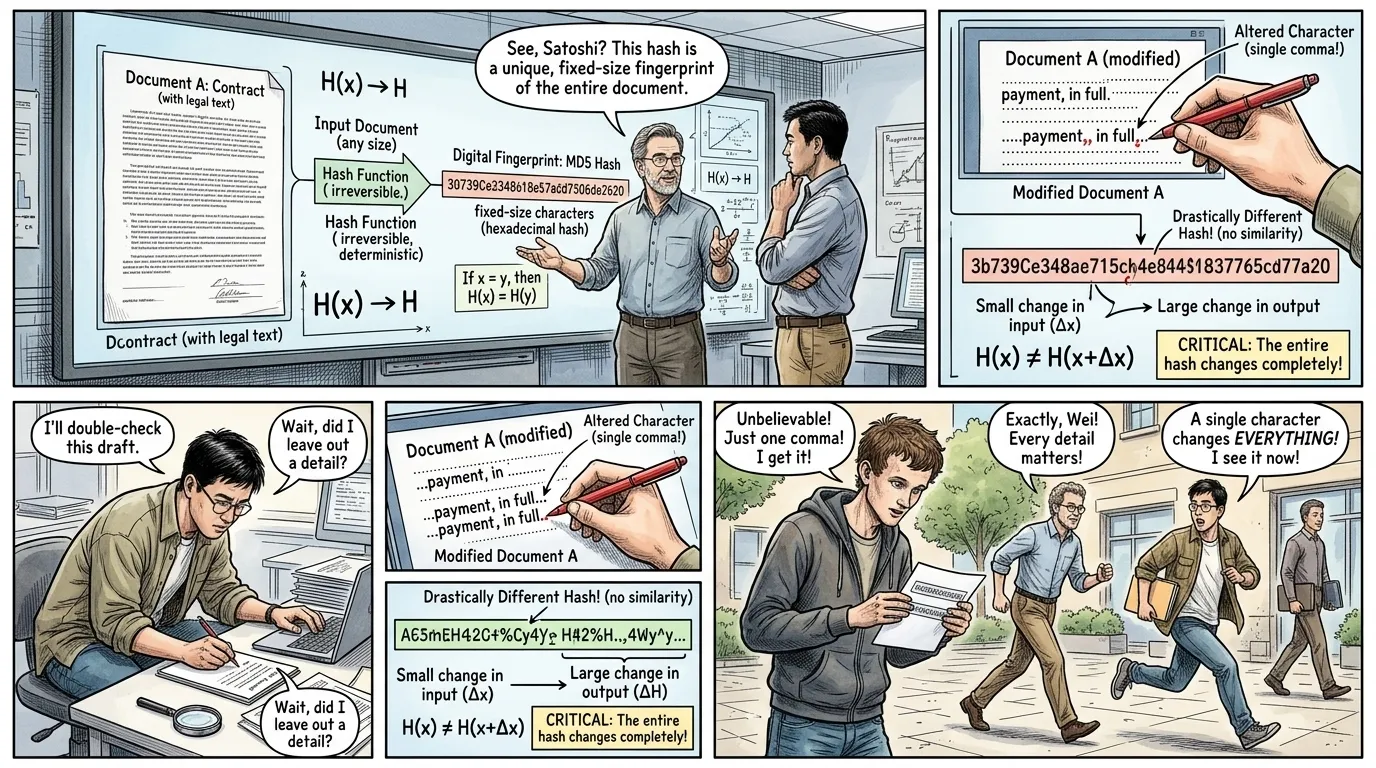
The solution to decentralized trust lay deep within the realm of cryptography, particularly in the concept of cryptographic hashing. A cryptographic hash function takes any input data and generates a fixed-size string of characters, a unique 'fingerprint' for that data.
"A digital security expert might explain, 'Imagine a mathematical process so sensitive that even changing a single comma in a massive document completely transforms its digital fingerprint. This one-way transformation is irreversible, providing unparalleled integrity.' This principle formed a cornerstone of blockchain's security."
Page 4
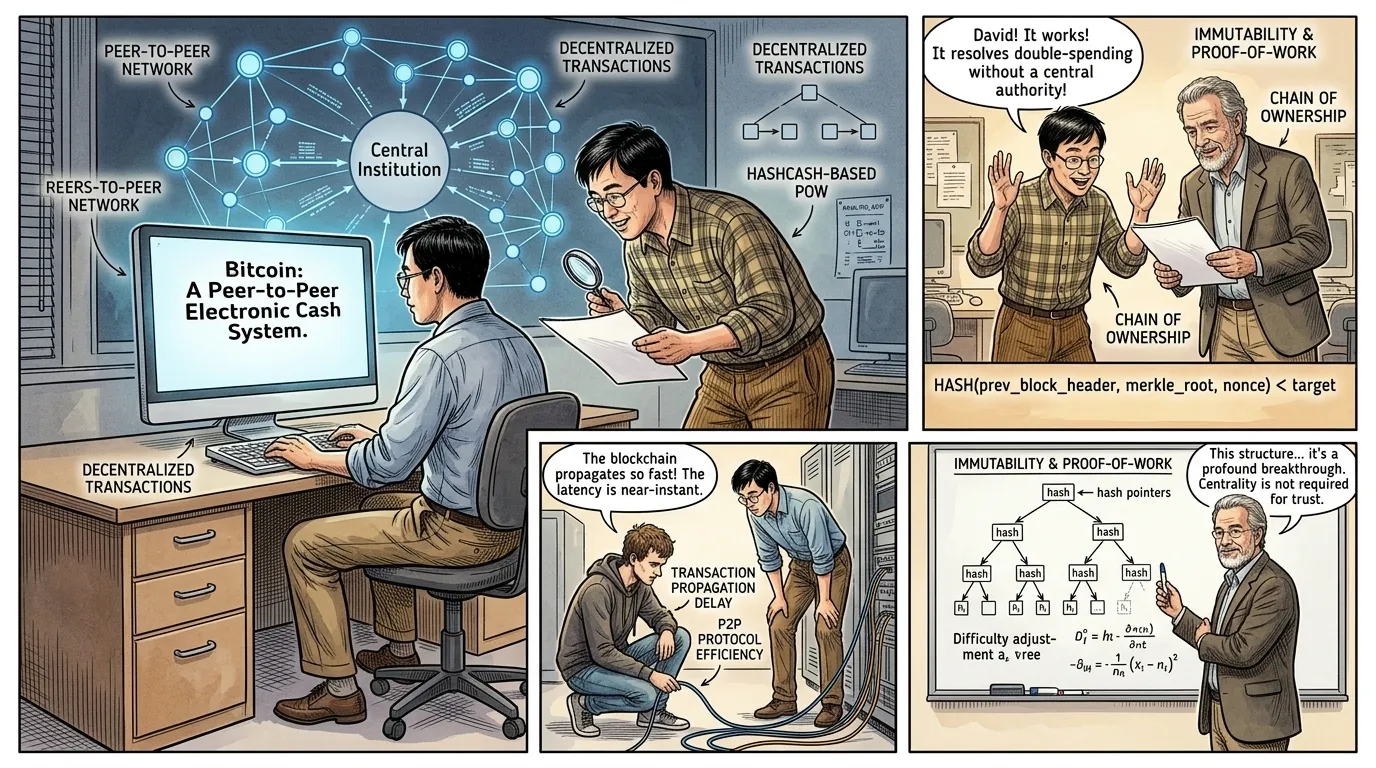
In October 2008, a mysterious entity known as Satoshi Nakamoto published a whitepaper titled 'Bitcoin: A Peer-to-Peer Electronic Cash System.' This seminal document introduced the concept of blockchain, proposing a revolutionary solution to the double-spend problem without requiring trusted third parties.
"The opening lines of the whitepaper declare, 'A purely peer-to-peer version of electronic cash would allow online payments to be sent directly from one party to another without going through a financial institution.' This was the radical premise: to build trust not on central authority, but on cryptographic proof."
Page 5
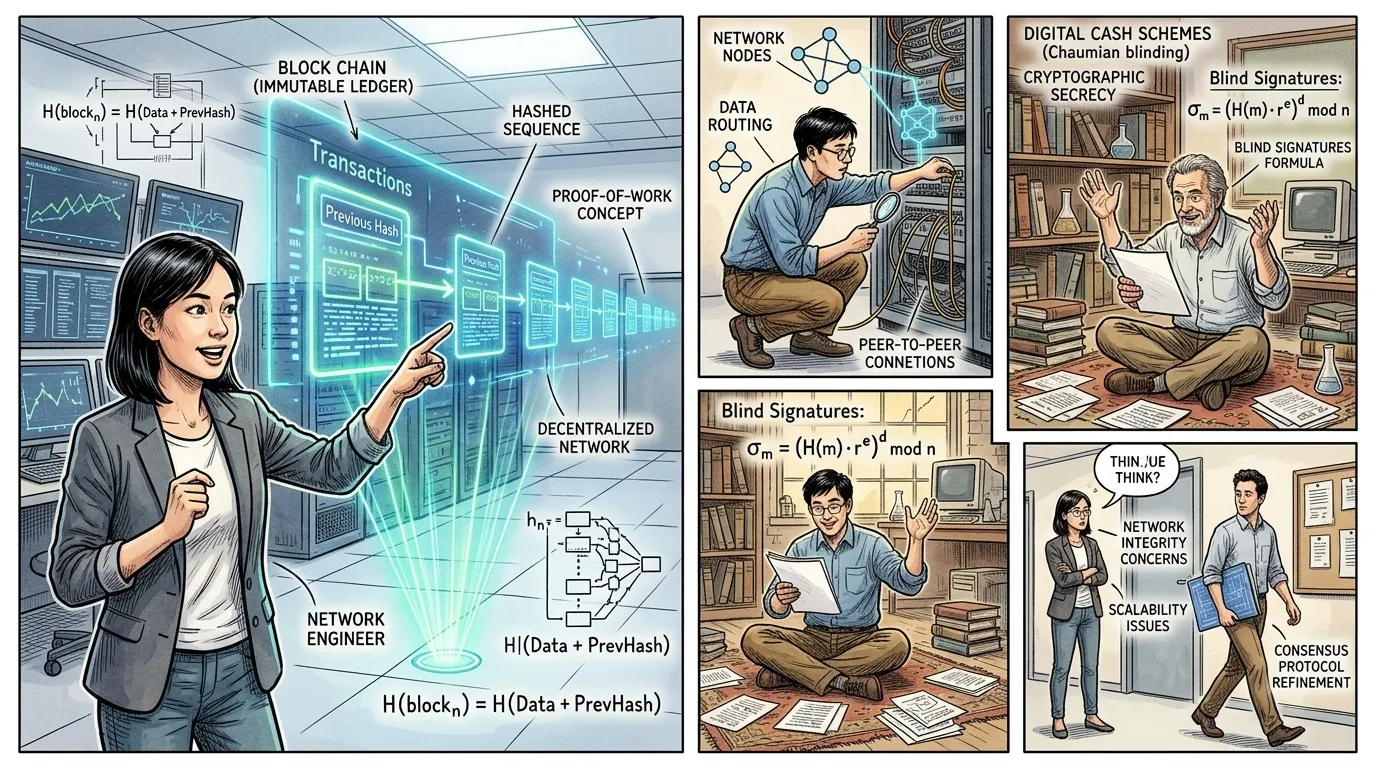
The genius of blockchain lies in its name: a chain of 'blocks,' each containing a list of verified transactions. Crucially, each new block is cryptographically linked to the previous one, forming an unbroken, immutable ledger.
"Consider the structure, as one network engineer might explain: 'Each block carries not just a batch of new transactions, but also the cryptographic hash of the previous block. This creates an unbreakable digital chain, making it impossible to alter any past record without invalidating every subsequent block.'"
Page 6
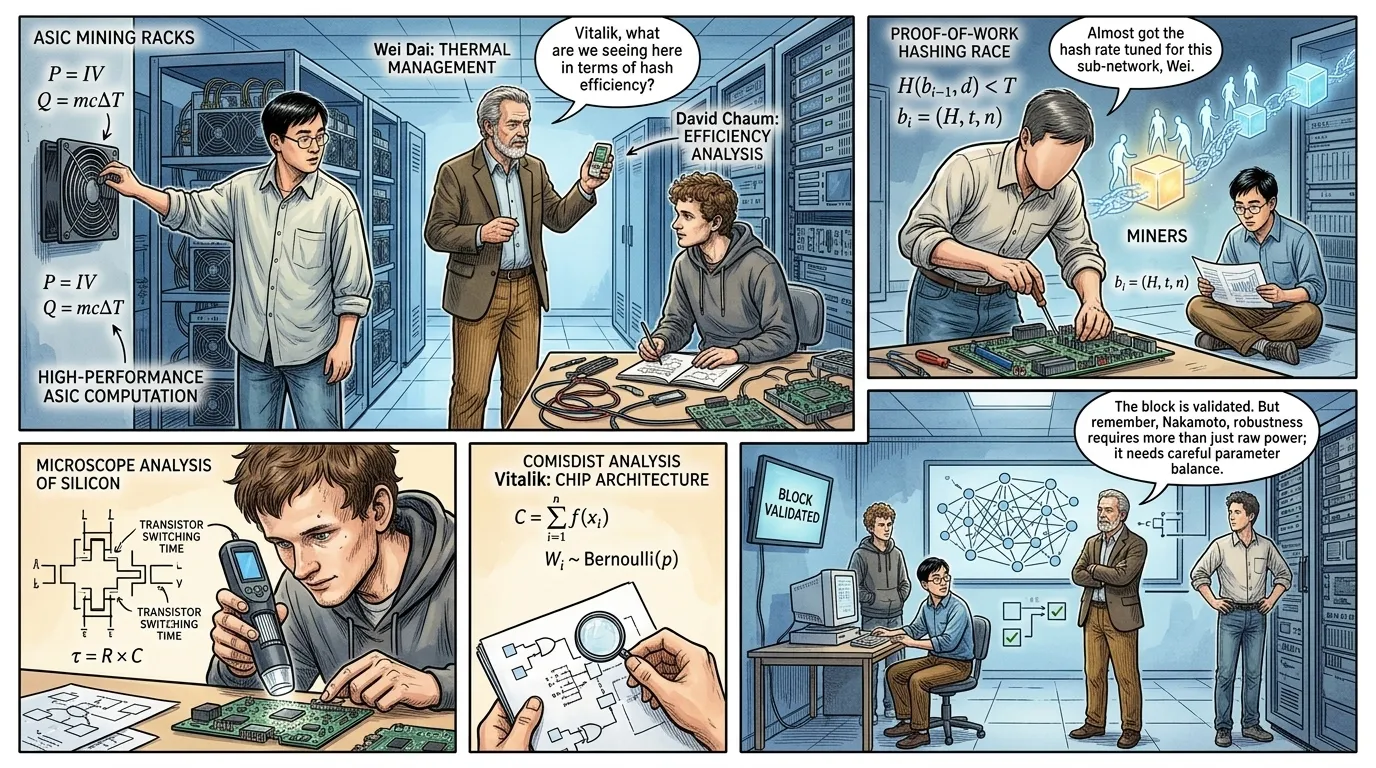
For new blocks to be added, the network must agree on their validity. This 'consensus mechanism' is vital. Bitcoin, the first blockchain, introduced 'Proof-of-Work' (PoW), a system where 'miners' compete to solve a complex computational puzzle.
"A contemporary cryptographer might articulate, 'This puzzle isn't about intelligence; it's about brute-force computational effort. The first miner to find the solution 'proves' they expended work, earning the right to add the next block and be rewarded.' This expenditure deters malicious activity."
Page 7
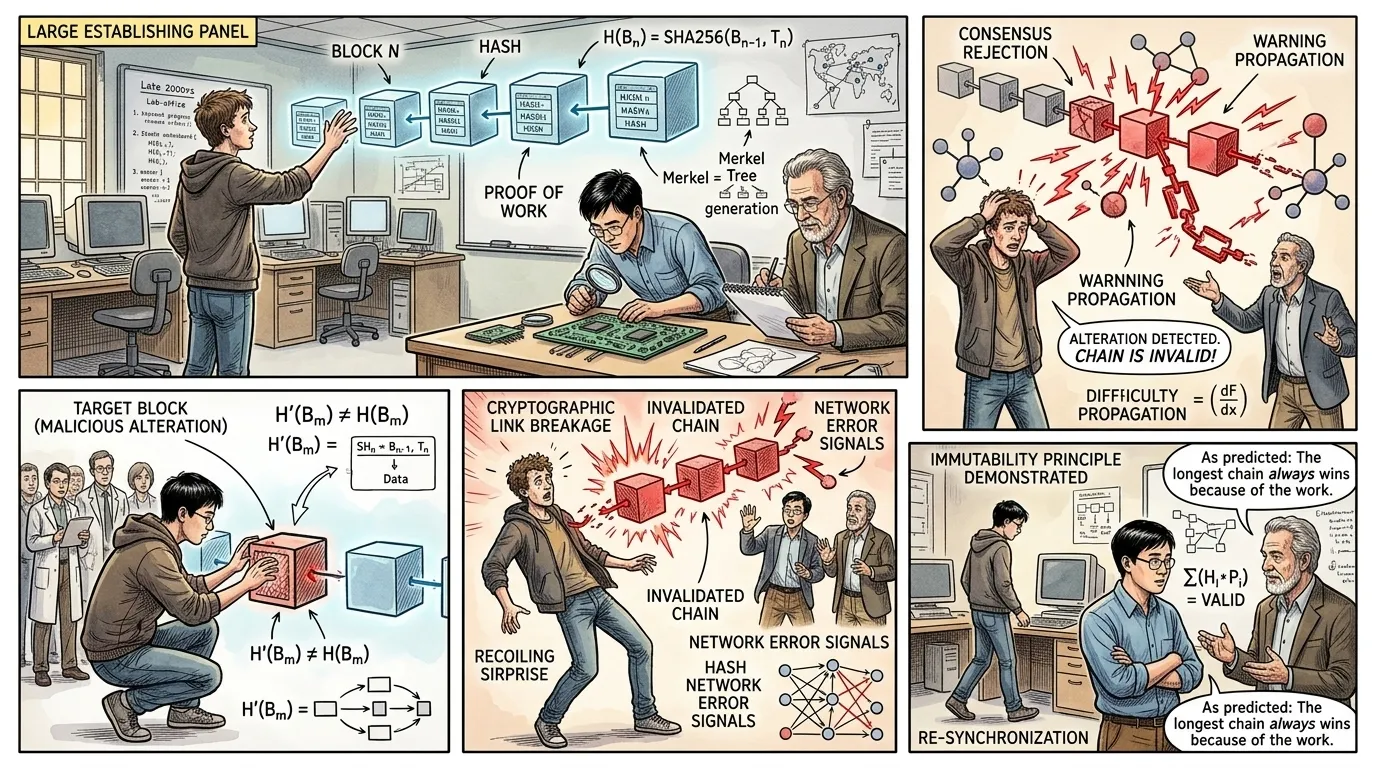
Once a block is added to the chain and validated by the network, it is virtually immutable. The cryptographic links ensure that any attempt to alter a past transaction would change its hash, invalidating the subsequent block's 'previous hash' value.
"An early adopter explained, 'It's like trying to rewrite a single page in a massive ledger, but every subsequent page has a reference to the page before it. Change one, and the entire chain breaks instantly, alerting everyone on the network.' This transparency creates an unprecedented level of trust."
Page 8
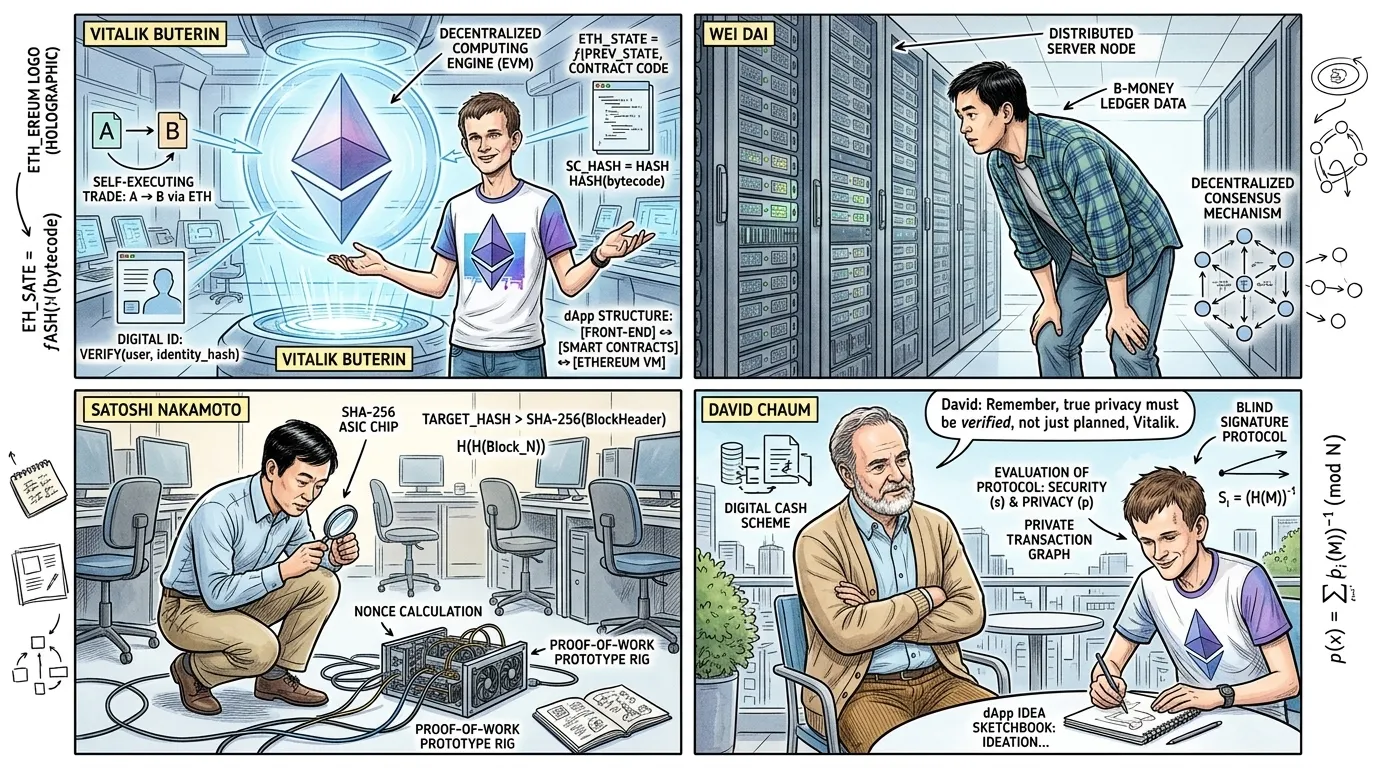
While Bitcoin introduced the foundational blockchain, its capabilities were expanded dramatically with Ethereum, launched in 2015. Ethereum introduced 'smart contracts,' self-executing agreements whose terms are directly written into code.
"Vitalik Buterin, a co-founder of Ethereum, reflected on its potential, saying, 'Whereas Bitcoin is about 'here is a currency, use it,' Ethereum is about 'here is a platform on which you can build arbitrary applications.'' This fundamental shift transformed blockchain from merely a currency to a programmable infrastructure."
Page 9
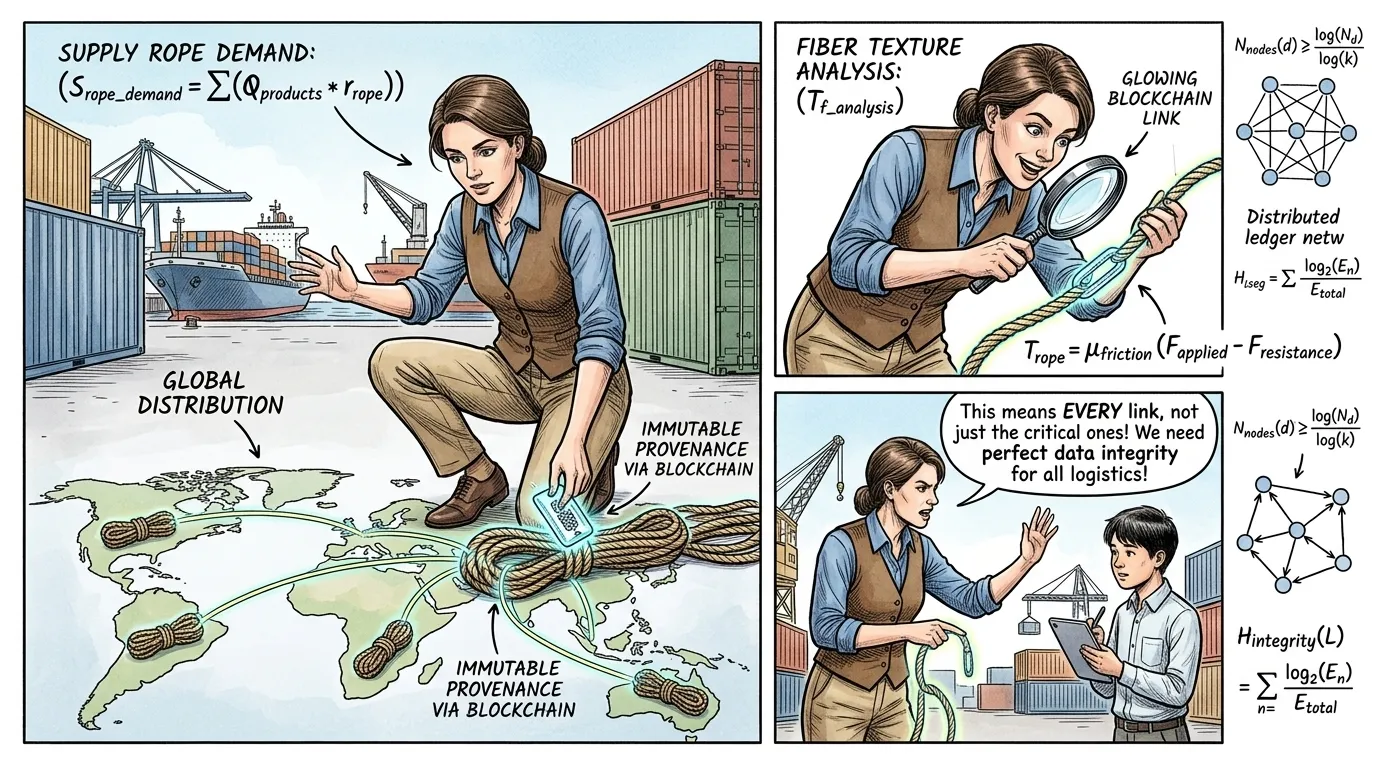
Blockchain technology swiftly expanded beyond cryptocurrencies, finding critical applications in various industries. Supply chain management leveraged its transparency, healthcare utilized its secure data handling, and digital identity solutions embraced its decentralized verification.
"A supply chain logistics expert might articulate, 'Before, tracking a product from raw material to consumer involved countless disparate systems and points of potential error. With blockchain, we achieve immutable provenance – every step recorded, every stakeholder accountable.' This enhances efficiency and trust."
Page 10
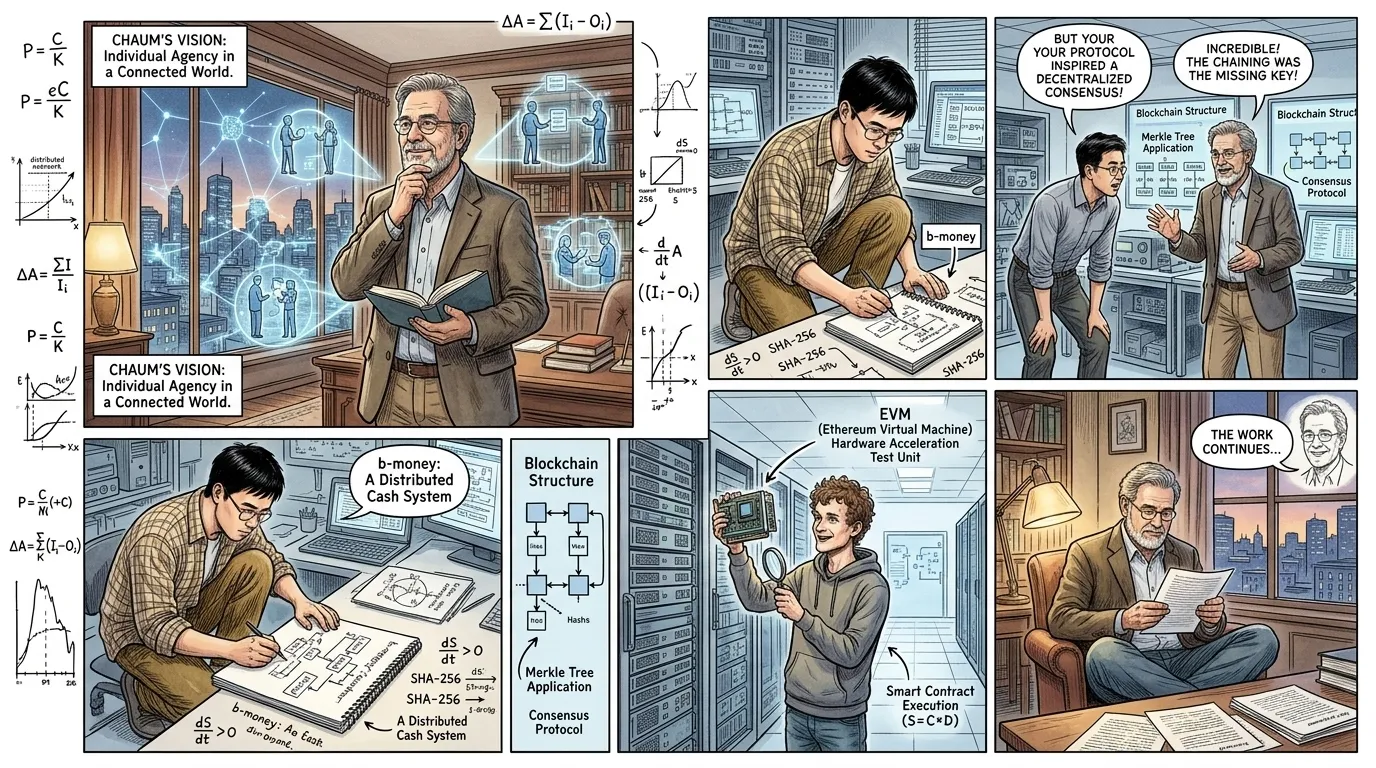
From its enigmatic origins, blockchain has profoundly reshaped our understanding of trust, transparency, and digital ownership. It continues to evolve, pushing the boundaries of what distributed networks can achieve, promising a future less reliant on central intermediaries.
"As the pioneering cryptographer David Chaum once stated, 'Technology should be used to protect people, not to control them.' Blockchain embodies this philosophy, offering individuals greater agency over their data and transactions in an increasingly interconnected world. Its journey is far from over."
About this story
- Location: Global
- Audience: general readers
Questions and answers
Read Wonder Inventions on your phone
Wonder Inventions is available on Android. Get Wonder Inventions on Google Play.