Blood Typing
Blood Typing — an illustrated inventions story, set in Global. 10 illustrated pages, free to read on Wonder Inventions.
Page 1
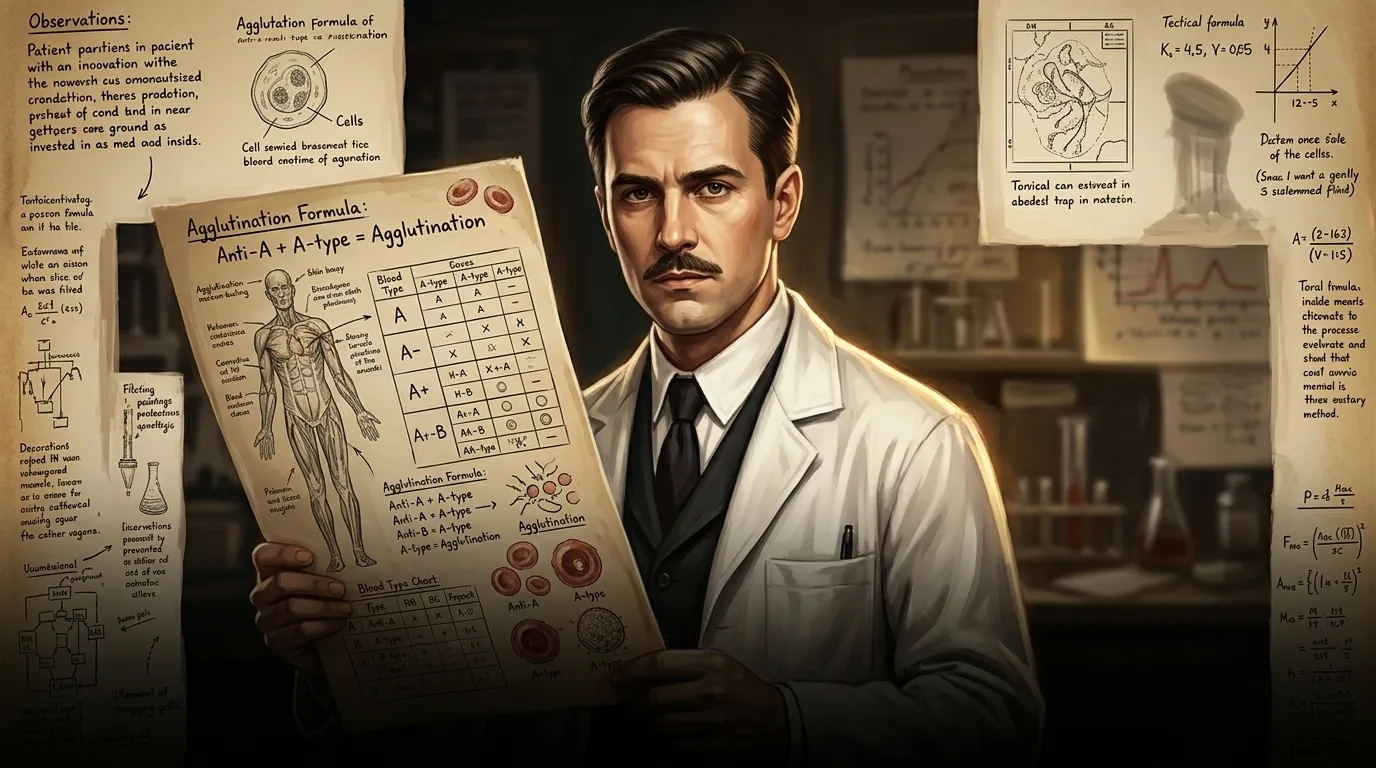
At the dawn of the 20th century, in the vibrant scientific hub of Vienna, Austria, a profound mystery haunted the halls of medicine. Blood transfusions, a desperate measure to save lives, were a dangerous gamble, frequently resulting in catastrophic, unexplained fatalities. It was here, in 1900, that the brilliant Austrian physician and immunologist Karl Landsteiner embarked on a methodical quest to understand the very essence of human blood and its enigmatic reactions.
""The inherent variability of blood among individuals holds a key to life or death, yet remains stubbornly opaque to us," Landsteiner noted in his laboratory journal, reflecting the profound challenge of his time."
Page 2
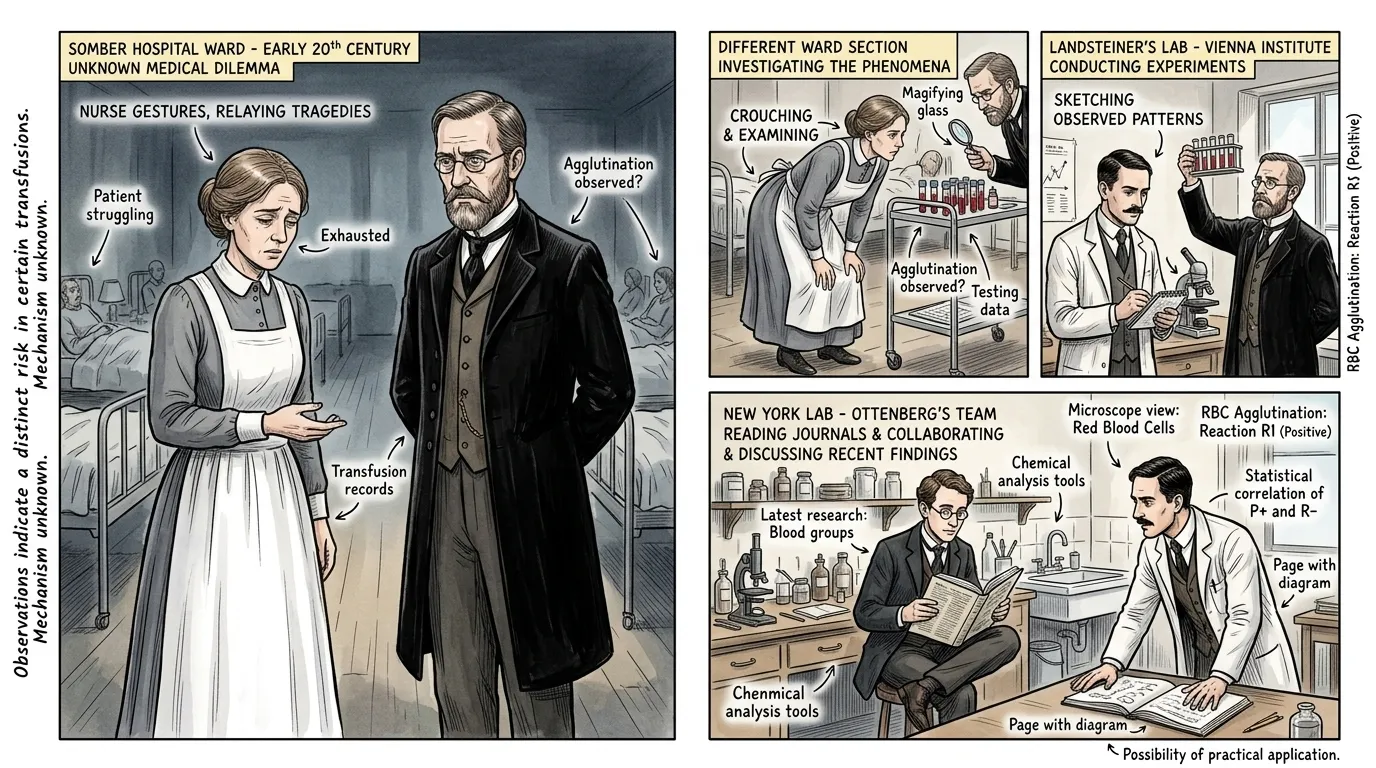
For centuries, the concept of transferring blood from one individual to another held both allure and terror. While early physicians understood that severe blood loss could lead to death, attempts at transfusion, from animal to human or human to human, were largely lethal. Recipients often experienced violent chills, fever, kidney failure, and ultimately, organ shutdown, baffling medical practitioners.
"A nurse, her face etched with exhaustion, once remarked to a physician, 'We watch them seize and turn cold, praying for life, yet often deliver only a swifter end. The body rejects the very gift of life we offer.' This poignant observation underscored the profound lack of understanding regarding blood's complex nature, making every transfusion a desperate, uninformed wager against an invisible foe."
Page 3
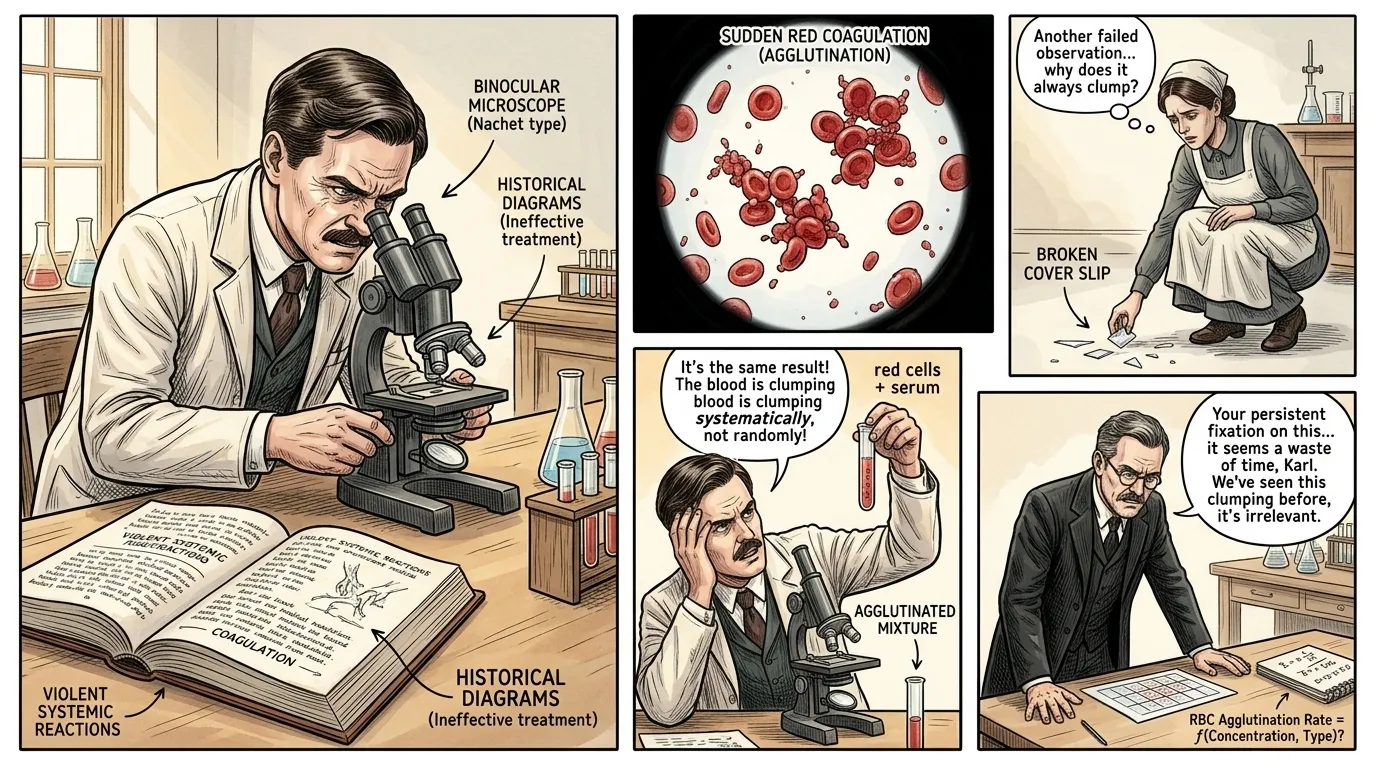
Before Landsteiner's work, the prevailing belief was that all human blood was essentially the same. Physicians assumed that any negative reaction during a transfusion was due to technical errors, impurities, or the patient's underlying weakness, not an inherent incompatibility between the donor and recipient's blood. The dramatic, fatal clumping, or 'agglutination,' of red blood cells was a phenomenon observed but utterly misunderstood.
"Early medical texts contained descriptions of 'sudden blood coagulation' and 'violent systemic reactions' during transfusions, leading one frustrated surgeon to write, 'The vital fluid, instead of giving succor, becomes a poison. We must unravel why blood, meant to mix seamlessly, sometimes turns against itself.' This was the core scientific puzzle Landsteiner confronted: why did some blood samples clump when mixed, while others did not?"
Page 4
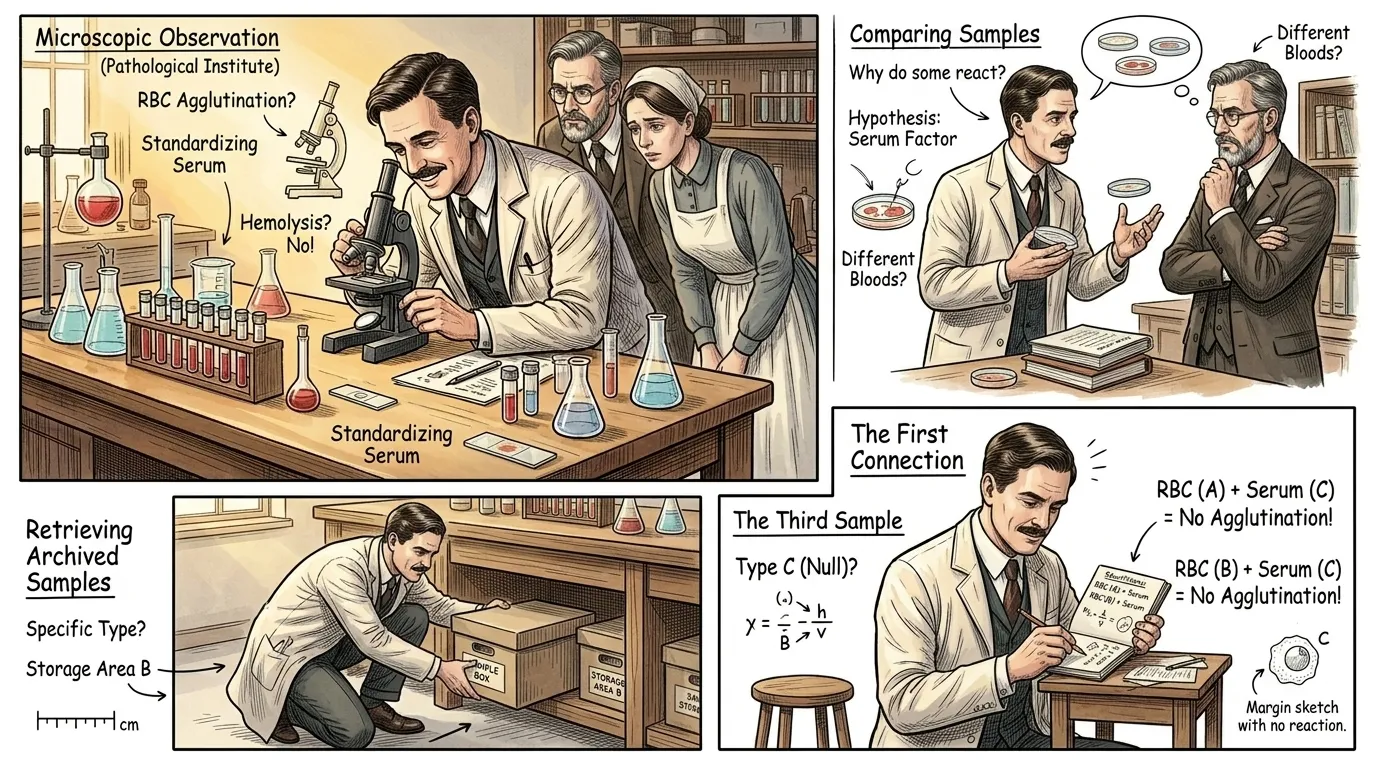
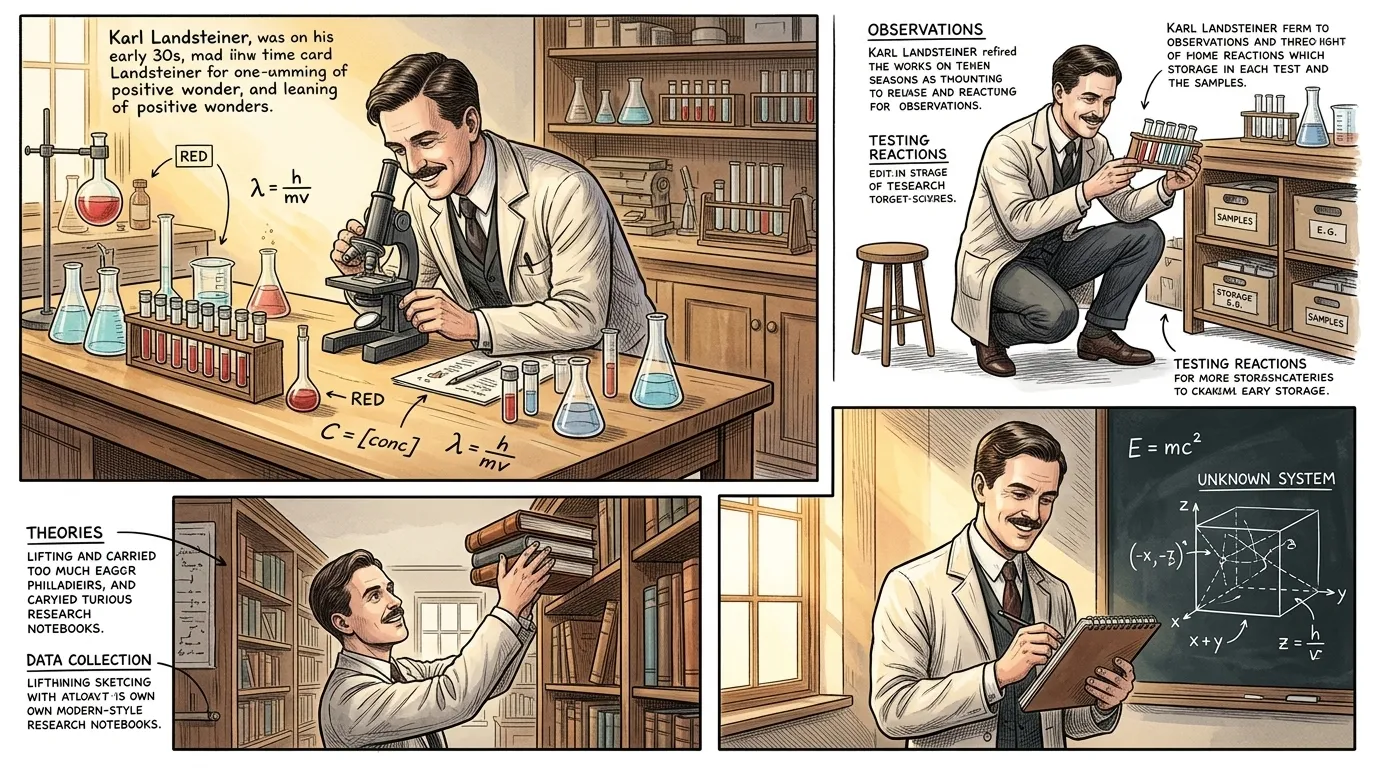
Karl Landsteiner, a meticulous observer with a background in chemistry and pathology, approached the problem with rigorous scientific discipline. He hypothesized that the key to understanding transfusion reactions lay not in external factors, but in intrinsic differences within the blood itself. His work at the Pathological-Anatomical Institute of the University of Vienna provided the ideal setting for this investigation.
"Landsteiner's colleagues recall his unwavering persistence. One noted, 'He would spend countless hours at the microscope, convinced that the answers lay in careful observation, not speculative theory.' This dedication was encapsulated by the sentiment, 'The truth often lies hidden in plain sight, awaiting the patient gaze.' It was Landsteiner's commitment to empirical data that would soon revolutionize medical understanding."
Page 5
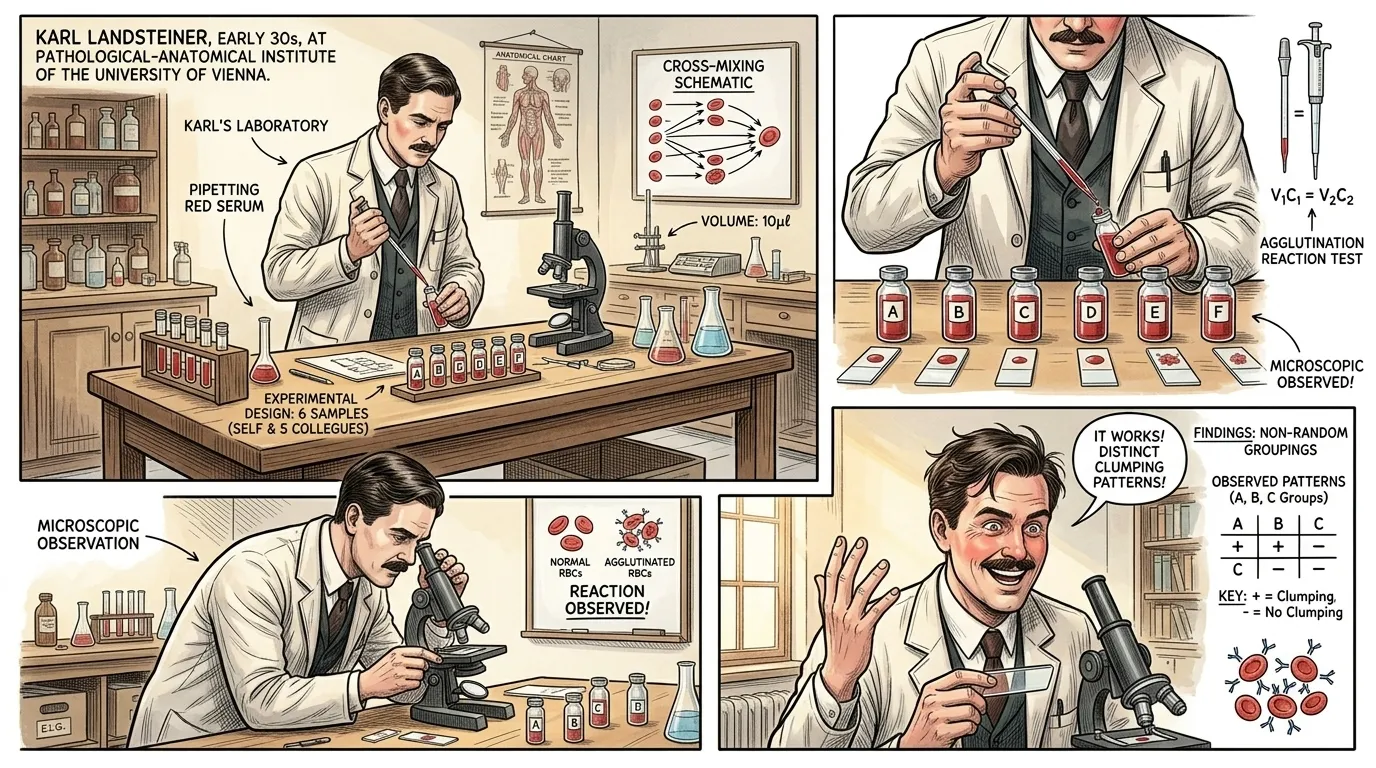
Landsteiner collected blood samples from himself and five of his colleagues. He carefully separated the serum (the fluid component of blood) from the red blood cells in each sample. Then, he systematically mixed the red blood cells from one person with the serum from another, observing the reactions under a microscope. This simple yet revolutionary experimental design allowed him to control variables and isolate the specific interactions occurring between different blood components.
"In his landmark 1901 paper, Landsteiner understatedly declared, 'The reactions show that the serum of certain healthy humans causes distinct agglutination with the red blood cells of other healthy humans.' This observation, seemingly straightforward, represented the profound discovery that led him to recognize the existence of distinct blood types, a realization that would save countless lives."
Page 6
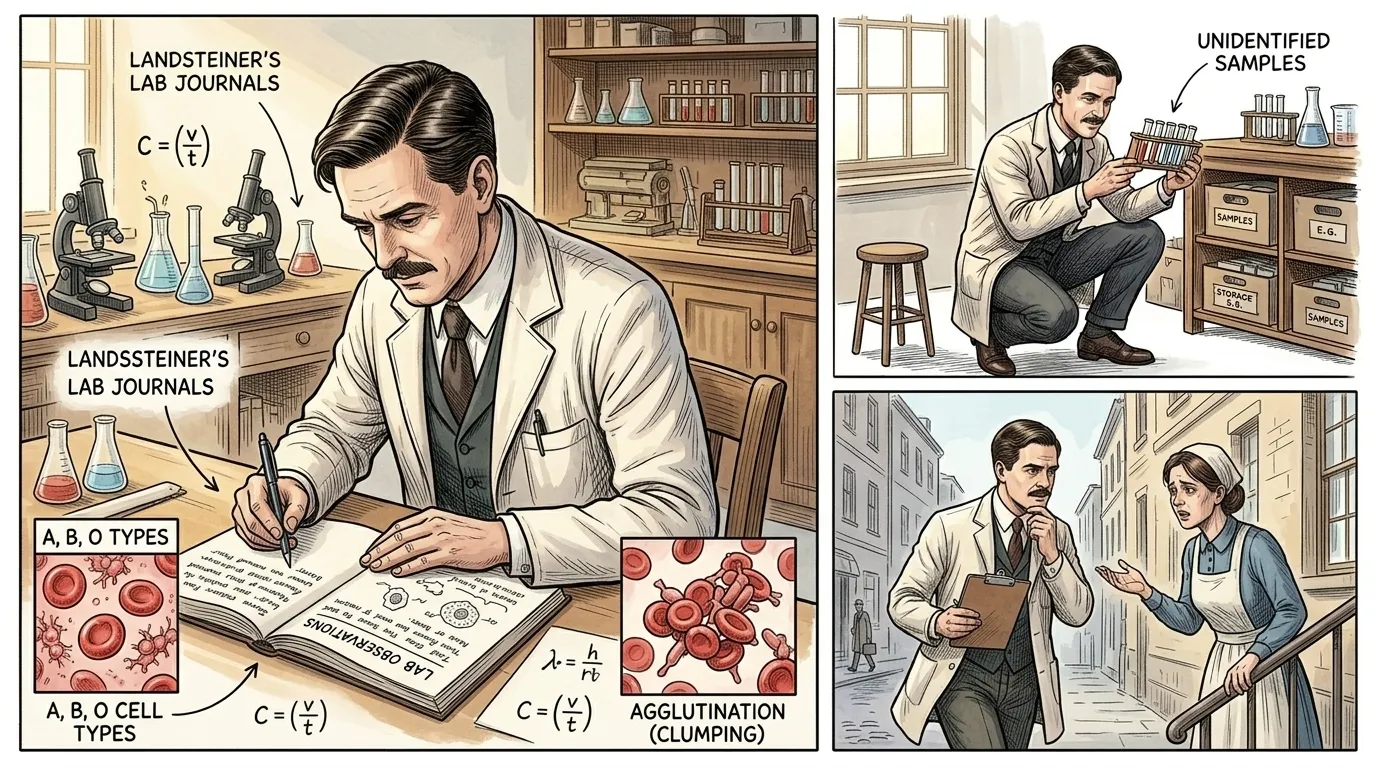
Through painstaking observation, Landsteiner discovered that when red blood cells from one person were mixed with serum from another, distinct patterns emerged. Some combinations led to severe clumping (agglutination), while others showed no reaction. He deduced that these reactions were not random but due to specific substances on the surface of red blood cells (which he called agglutinogens, now known as antigens) and corresponding substances in the serum (agglutinins, now antibodies).
"Landsteiner meticulously documented his findings. He first identified three distinct groups, which he provisionally labeled A, B, and C. He later renamed 'C' to 'O' and his students, Decastello and Sturli, would later discover the fourth, AB, in 1902. This classification provided the first clear scientific explanation for the compatibility failures that had plagued transfusions for centuries, effectively solving the riddle of blood's 'poisonous' nature in incompatible mixtures."
Page 7
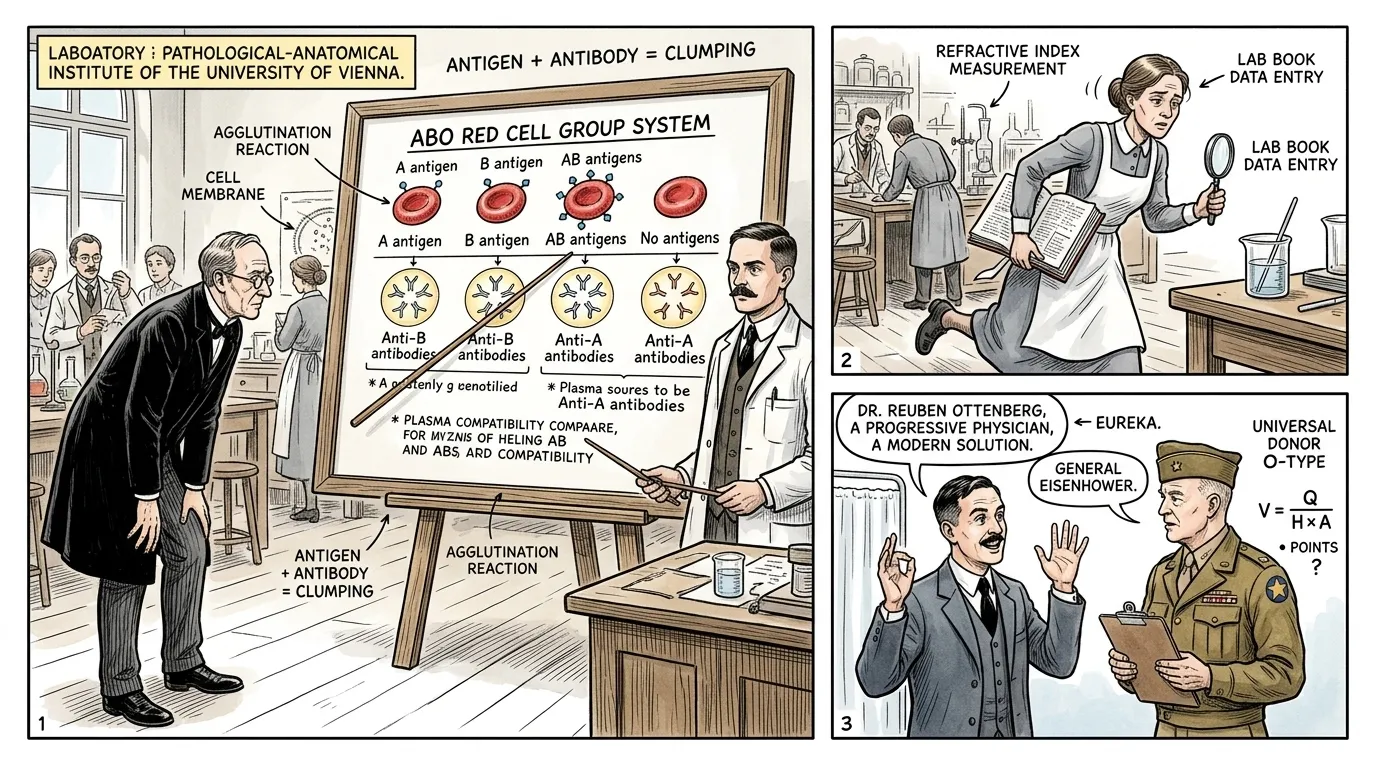
Landsteiner's groundbreaking work established the ABO blood group system. People with Type A blood have A antigens on their red cells and anti-B antibodies in their plasma. Type B individuals have B antigens and anti-A antibodies. Type AB individuals possess both A and B antigens but neither anti-A nor anti-B antibodies. Finally, Type O individuals have neither A nor B antigens, but both anti-A and anti-B antibodies. When incompatible blood types are mixed, the recipient's antibodies attack the donor's foreign antigens, causing the red blood cells to clump together, leading to severe, often fatal, reactions.
"Landsteiner's profound insight allowed physicians to finally understand the critical rule: 'An individual's blood can be safely transfused only if the recipient does not possess antibodies that will react against the donor's red blood cell antigens.' This simple principle, articulated through scientific discovery, became the cornerstone of modern transfusion medicine, a direct result of his meticulous experimental work."
Page 8
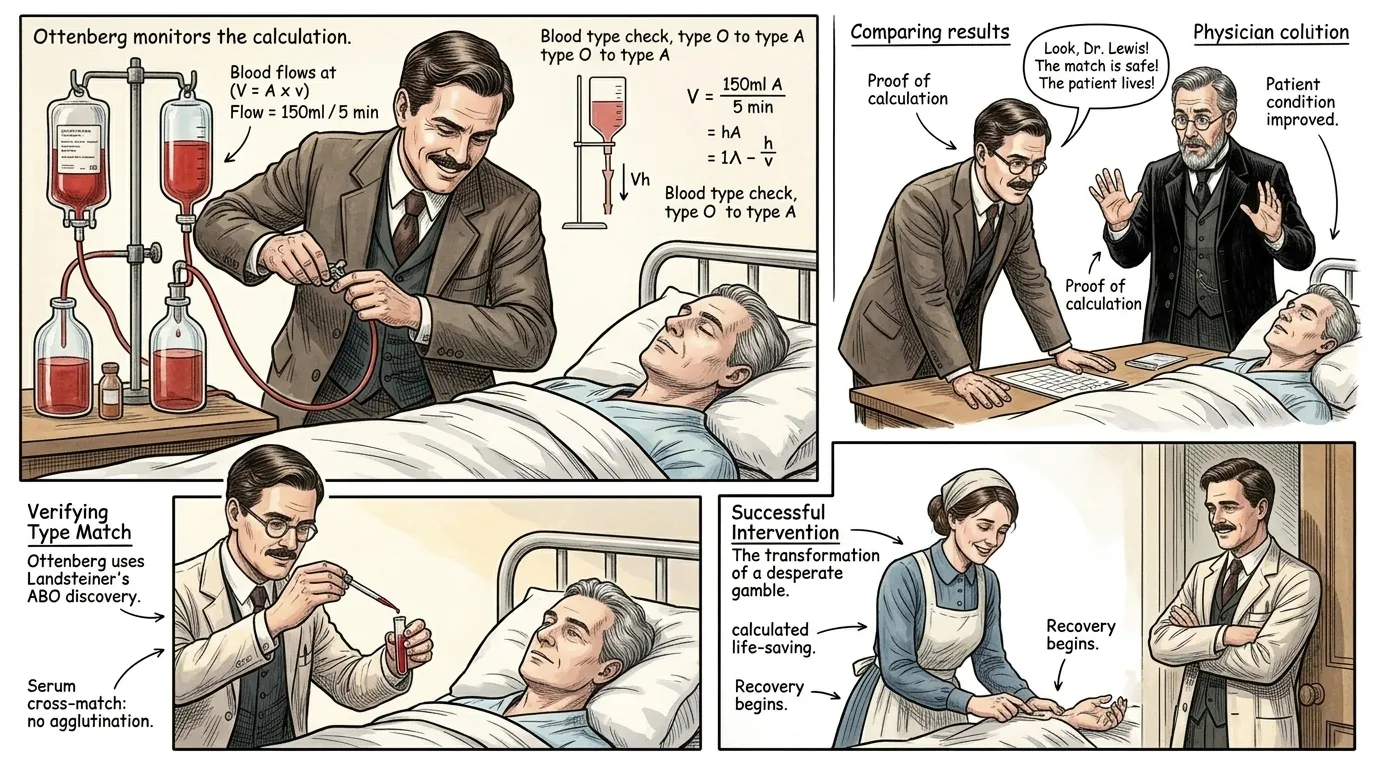
Despite the clarity of Landsteiner's discovery, widespread adoption was not immediate. It took time for the medical community to fully embrace and implement blood typing. However, pioneers like Dr. Reuben Ottenberg in New York began performing cross-matched transfusions, using Landsteiner's principles, as early as 1907. These early, successful transfusions dramatically reduced the mortality rates associated with the procedure, proving the immense practical value of blood typing.
"Ottenberg, after his successful transfusions, wrote, 'The application of Landsteiner's principles transforms a desperate gamble into a calculated, life-saving intervention. We can now offer hope where before there was only peril.' His words echoed the growing sentiment that scientific rigor could conquer previously insurmountable medical challenges, paving the way for systematic blood matching."
Page 9
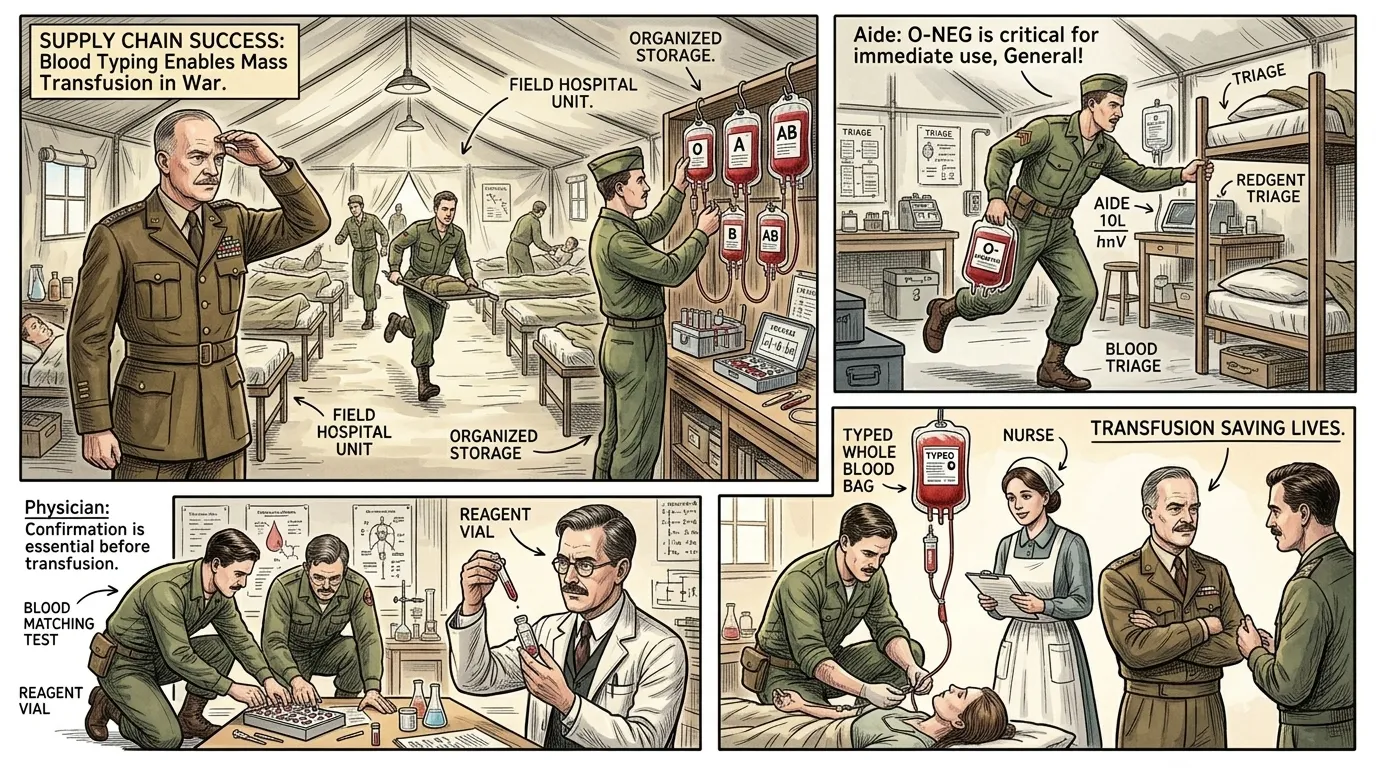
The full, transformative power of blood typing became undeniable during major conflicts. World War I and particularly World War II saw the development of organized blood storage and distribution systems, known as blood banks. Wounded soldiers, once condemned to bleed out, could now receive compatible transfusions on the battlefield or in field hospitals, dramatically increasing survival rates. This military necessity rapidly accelerated the acceptance and infrastructure for blood typing and transfusion globally.
"General Dwight D. Eisenhower, reflecting on the medical advances of World War II, famously stated, 'The value of blood plasma, properly typed and administered, saved tens of thousands of lives.' He emphasized that this vital medical supply was 'more precious than ammunition,' highlighting the critical role blood typing played in military and civilian medical preparedness."
Page 10
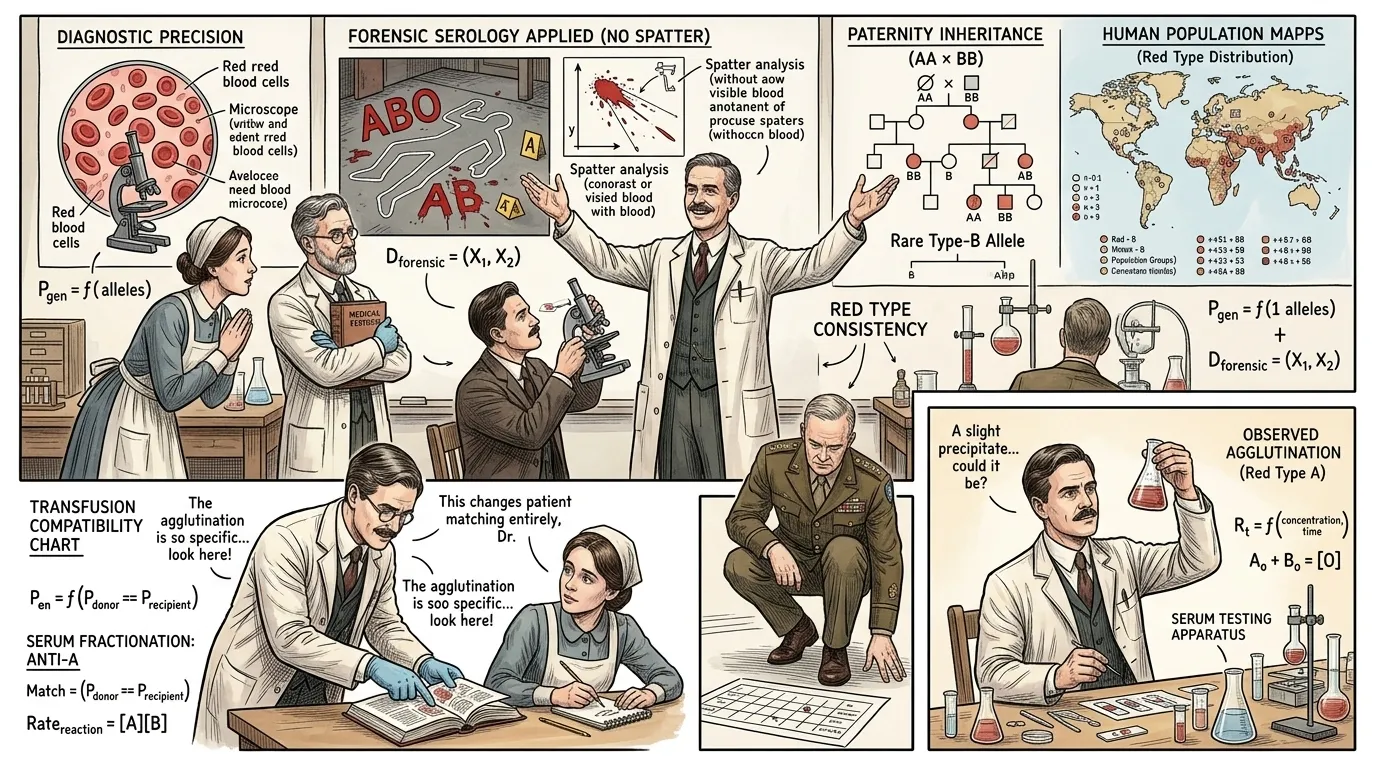
Karl Landsteiner's discovery of blood typing, for which he received the Nobel Prize in Physiology or Medicine in 1930, laid the foundation for modern transfusion medicine and immunology. His work continues to save millions of lives annually, enabling complex surgeries, emergency care, and treatment for chronic diseases. Beyond transfusions, blood typing has profound applications in forensics, paternity testing, and anthropological studies, revealing the intricate genetic tapestry of humanity.
"The enduring legacy of Landsteiner's discovery is truly global. As a modern medical ethicist once reflected, 'The understanding of blood types transformed a mysterious vital fluid into a universal language of health, allowing us to share the gift of life with precision and safety.' This profound scientific insight continues to be a cornerstone of global healthcare, a testament to the power of meticulous observation."
About this story
- Location: Global
- Audience: general readers
Questions and answers
Read Wonder Inventions on your phone
Wonder Inventions is available on Android. Get Wonder Inventions on Google Play.