Blood Transfusion System
Blood Transfusion System — an illustrated inventions story, set in Global. 10 illustrated pages, free to read on Wonder Inventions.
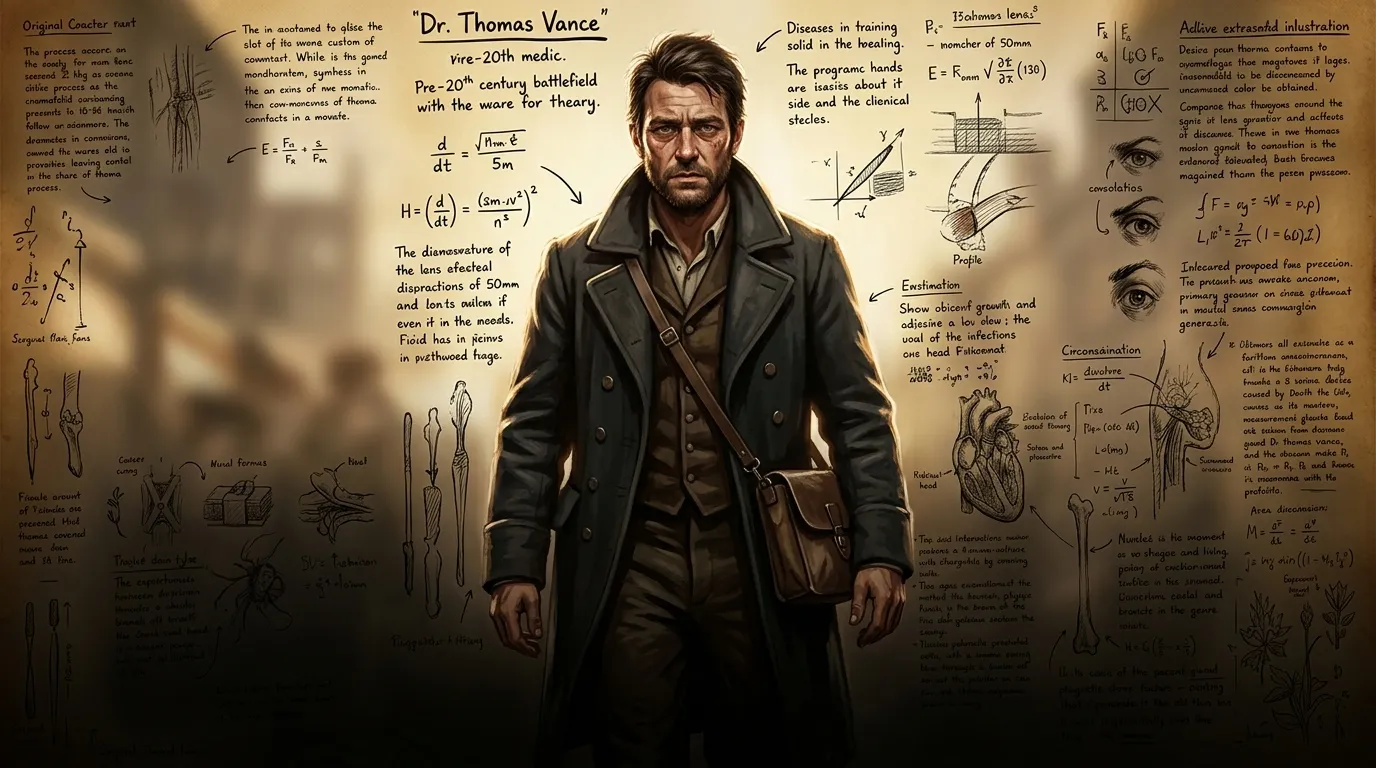
Page 1
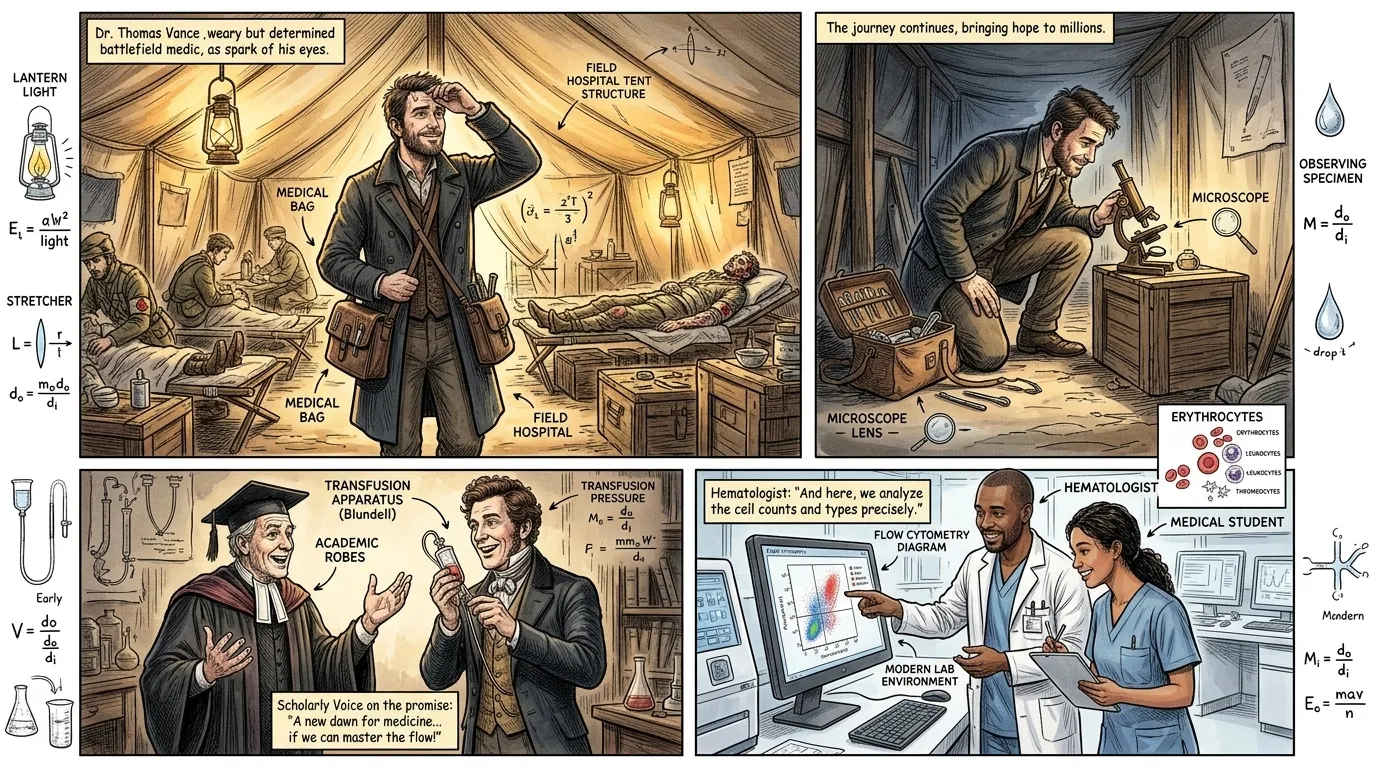
For millennia, the abrupt loss of blood was a death sentence. Whether from brutal injury, the perils of childbirth, or the surgeon's blade, uncontrolled hemorrhage meant certain demise. Ancient physicians, observing the vital essence of blood, yearned for a way to replenish it, to literally pour life back into the fading. Early attempts were fraught with peril, born of desperation and a profound lack of understanding.
"A battlefield medic, Dr. Thomas Vance, wipes his brow, observing a gravely wounded soldier. He sighs, 'The sheer volume of life lost... if only we could replace what flows away.'"
Page 2
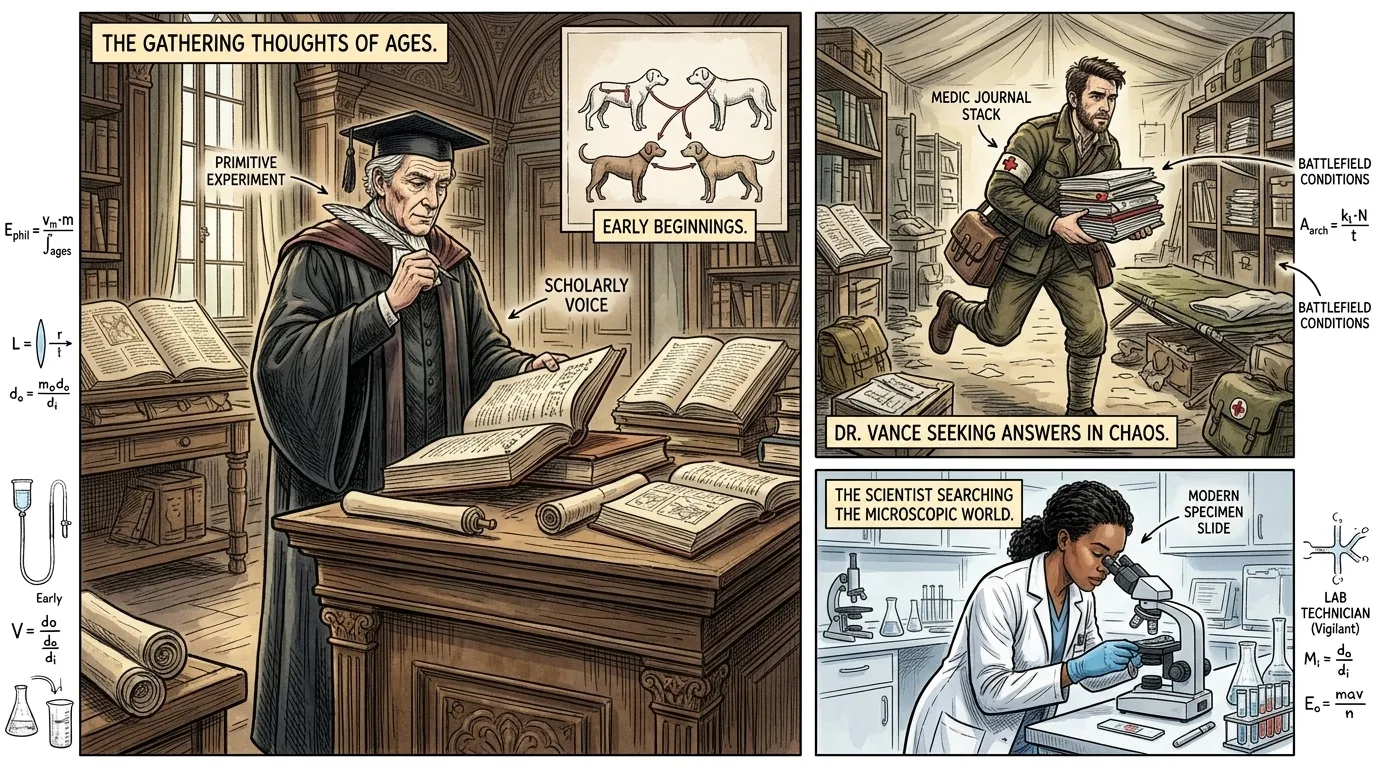
Before the 20th century, the concept of a 'Blood Transfusion System' was more aspiration than reality. The first documented transfusions, often from animal to human, were driven by a rudimentary belief in 'vital fluids.' In 1665, British physician Richard Lower successfully transferred blood between dogs, proving the physiological possibility. However, translating this to human patients proved disastrous, leading to unpredictable, often fatal, reactions. The very essence of life became a poison.
"A scholarly voice, perhaps from an academic setting, states: 'As the great Roman philosopher Seneca once observed, 'Every new beginning comes from some other beginning's end.' Our earliest medical predecessors, in their ambition to save, often marked the tragic end for patients, unknowingly paving the path for future breakthroughs.'"
Page 3
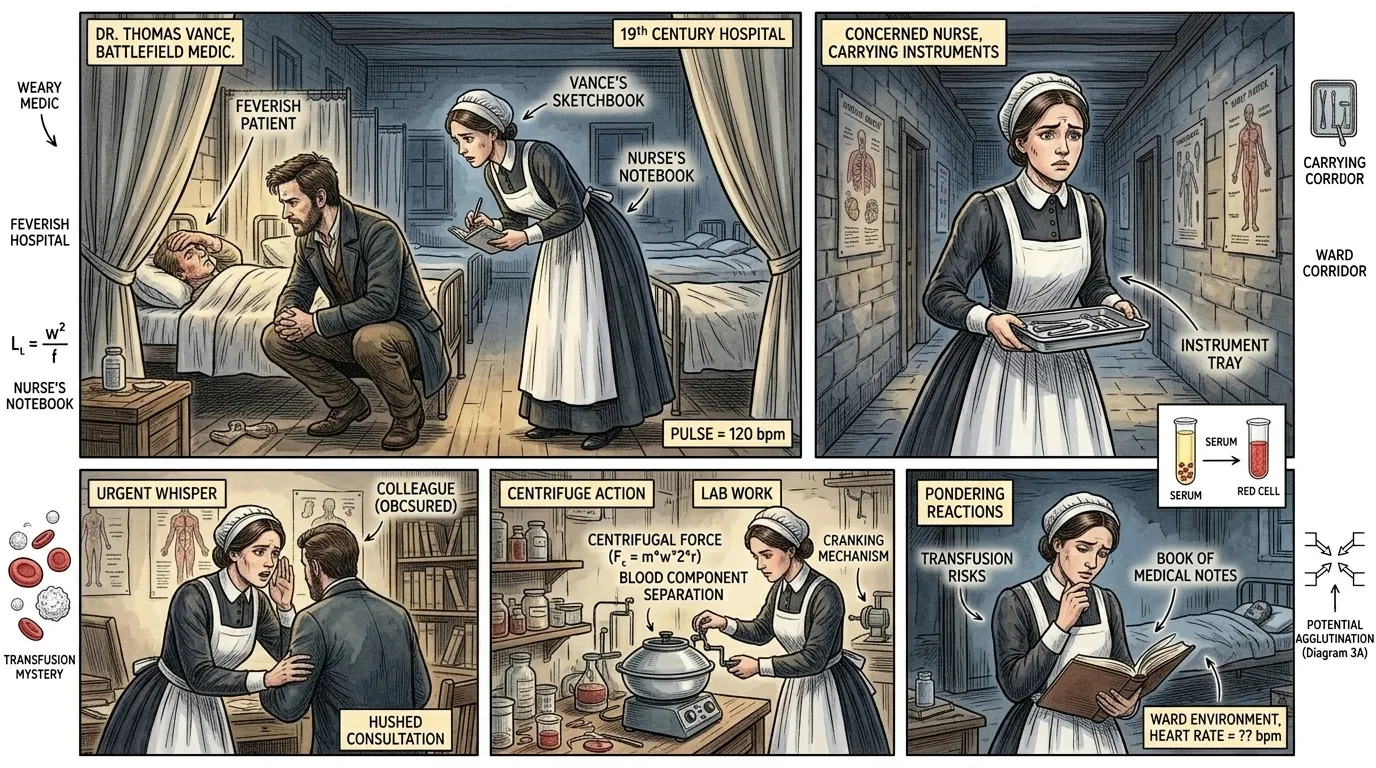
The catastrophic outcomes of early transfusions baffled scientists for centuries. While coagulation—blood clotting upon exposure to air or foreign surfaces—was a known challenge, the most bewildering reactions occurred within the patient: sudden fevers, chills, kidney failure, and death. These mysterious 'transfusion reactions' were not understood. It was as if the body itself rejected the life-giving fluid, turning it hostile. This fundamental enigma highlighted the profound gap in human understanding of blood itself.
"A concerned nurse, her face etched with worry, whispers to a colleague in a hushed 19th-century hospital room: 'The patient's fever spiked... it was so quick. What could have gone so terribly wrong?'"
Page 4
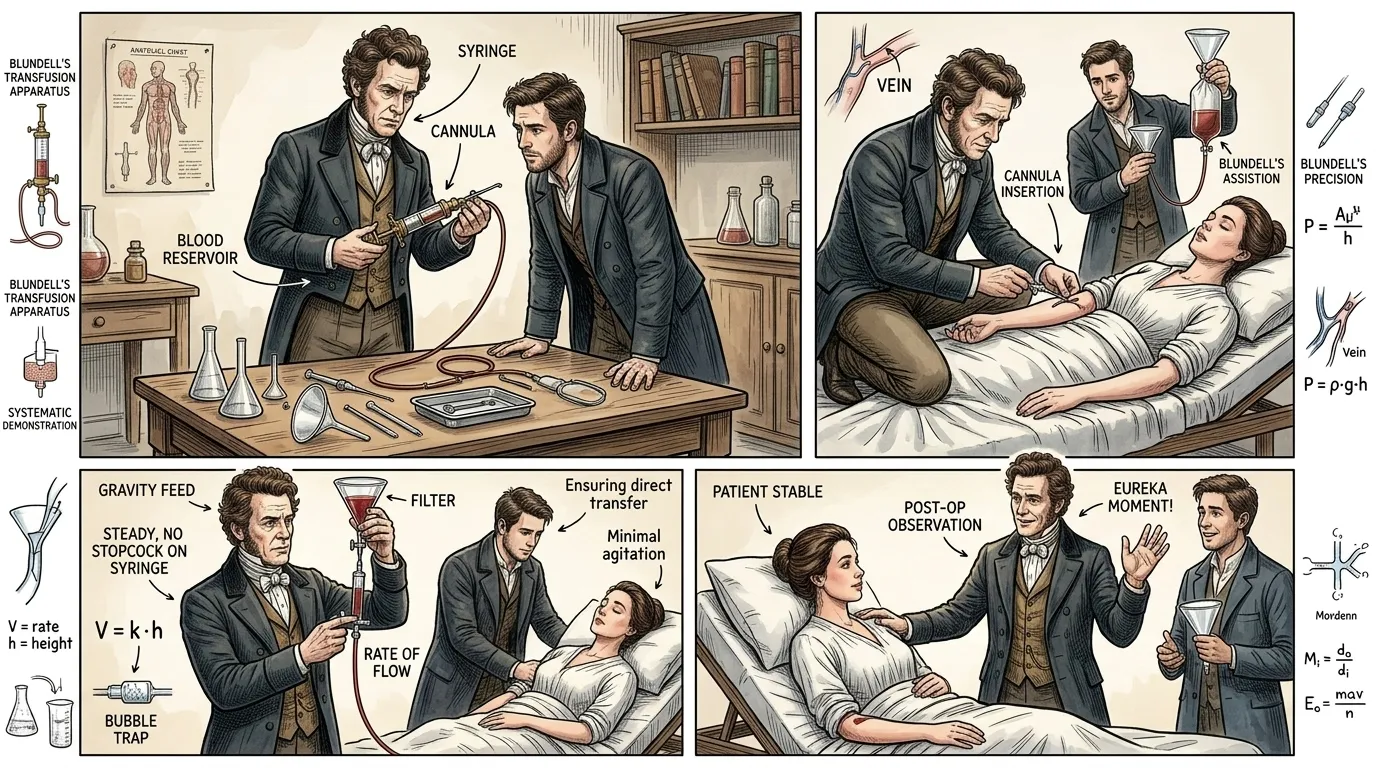
In the early 19th century, British obstetrician James Blundell took a more scientific approach, concluding that human blood was the only safe option for human transfusion. Driven by the tragic loss of his patients to postpartum hemorrhage, Blundell developed a series of ingenious devices in the 1820s, employing syringes and funnels to transfer blood directly from a donor's arm to the recipient. His methods, though pioneering, still operated without the critical knowledge of blood compatibility, leading to a success rate that was modest at best. Yet, Blundell's systematic attempts laid crucial groundwork, demonstrating that human-to-human transfusion, however risky, was sometimes achievable.
"Blundell, his brow furrowed in concentration, explains to a colleague, 'Our duty is to innovate, even when the path is uncertain. We must try, for the lives of our patients depend on our courage to challenge the impossible.'"
Page 5
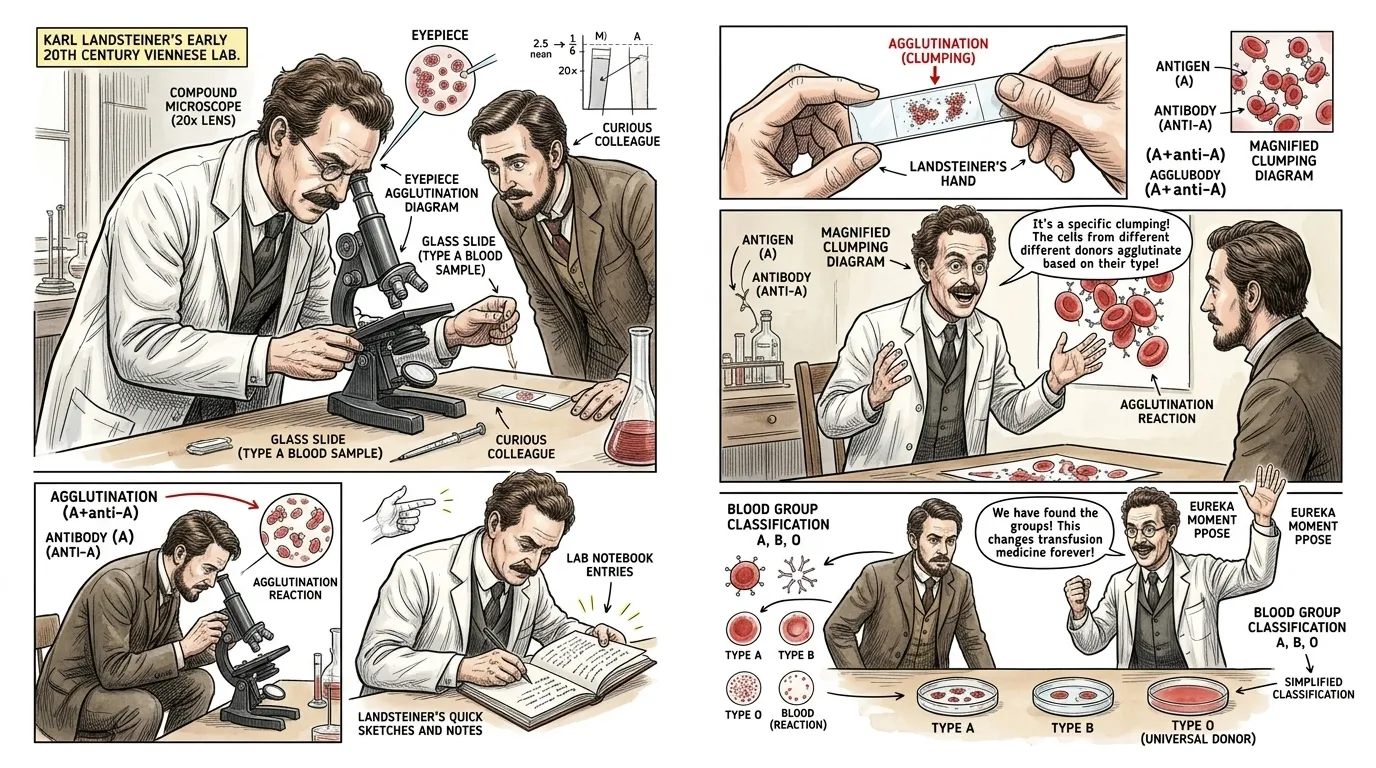
The breakthrough that transformed blood transfusion from a perilous gamble into a viable medical procedure arrived in 1900. Austrian physician Karl Landsteiner, working in Vienna, made the astonishing discovery that human blood was not all the same. He identified distinct blood groups—A, B, and C (later renamed O)—based on the presence or absence of specific antigens on the surface of red blood cells. Crucially, he observed that antibodies in the plasma of one blood group could agglutinate (clump) the red blood cells of another, explaining the fatal transfusion reactions that had plagued earlier attempts. This fundamental insight was the missing piece of the puzzle, revealing the biological basis of compatibility.
"Landsteiner, standing over his microscope, gestures excitedly to a colleague, exclaiming, 'Here! The agglutination! It is not a disease, but a reaction of incompatibility! Human blood is not monolithic; it varies, it rejects!'"
Page 6
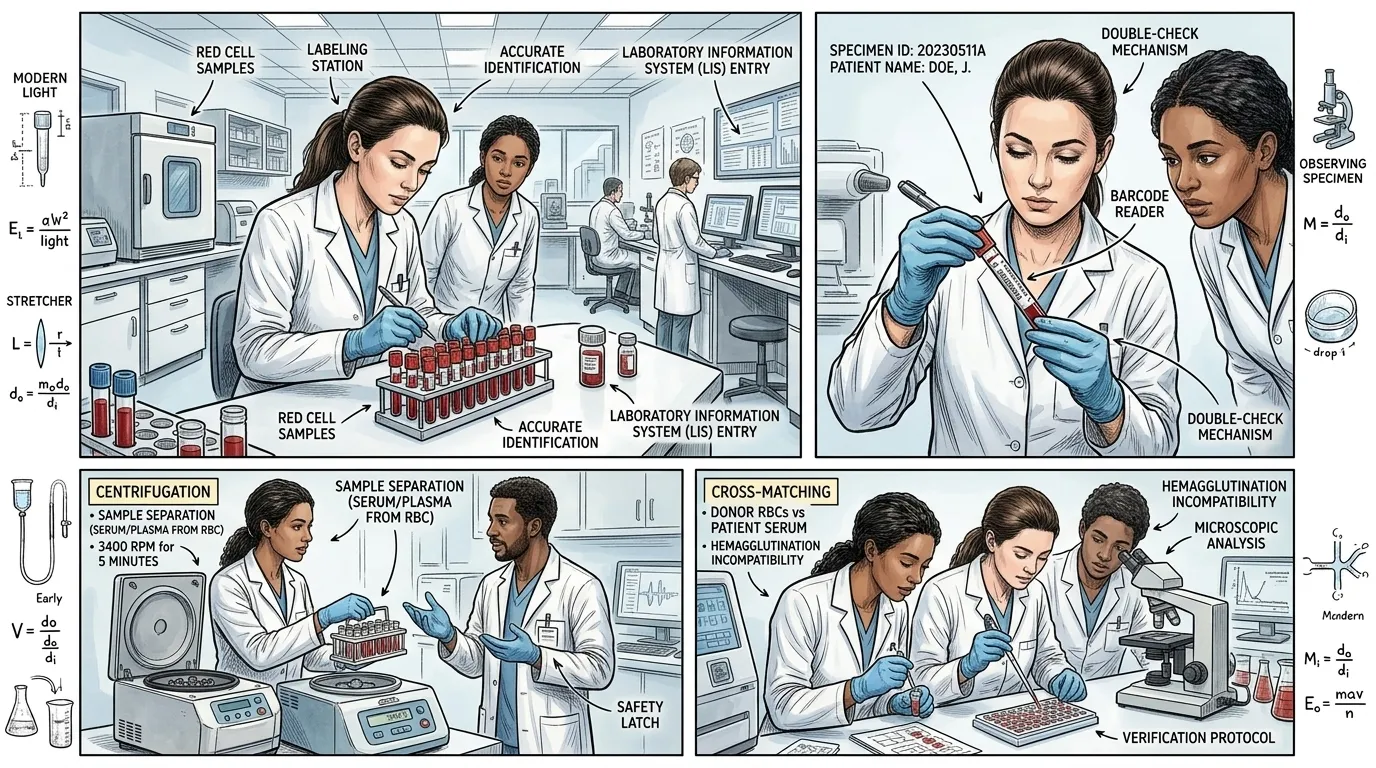
Landsteiner's discovery immediately gave rise to the principle of compatibility testing, or 'cross-matching.' Before any transfusion, a small sample of the recipient's blood is mixed with a sample of the donor's blood. If agglutination occurs, the blood is incompatible and cannot be transfused. This simple yet profound procedure ensures that the recipient's immune system will not attack the transfused red blood cells, preventing the life-threatening reactions that were once common. The mechanism of safety lies in this precise pre-screening, a direct application of Landsteiner's groundbreaking work.
"A modern lab technician, carefully labeling samples, states to her intern, 'Every cross-match is a verification. It's the silent guardian against a dangerous reaction, built on a century of scientific insight.'"
Page 7
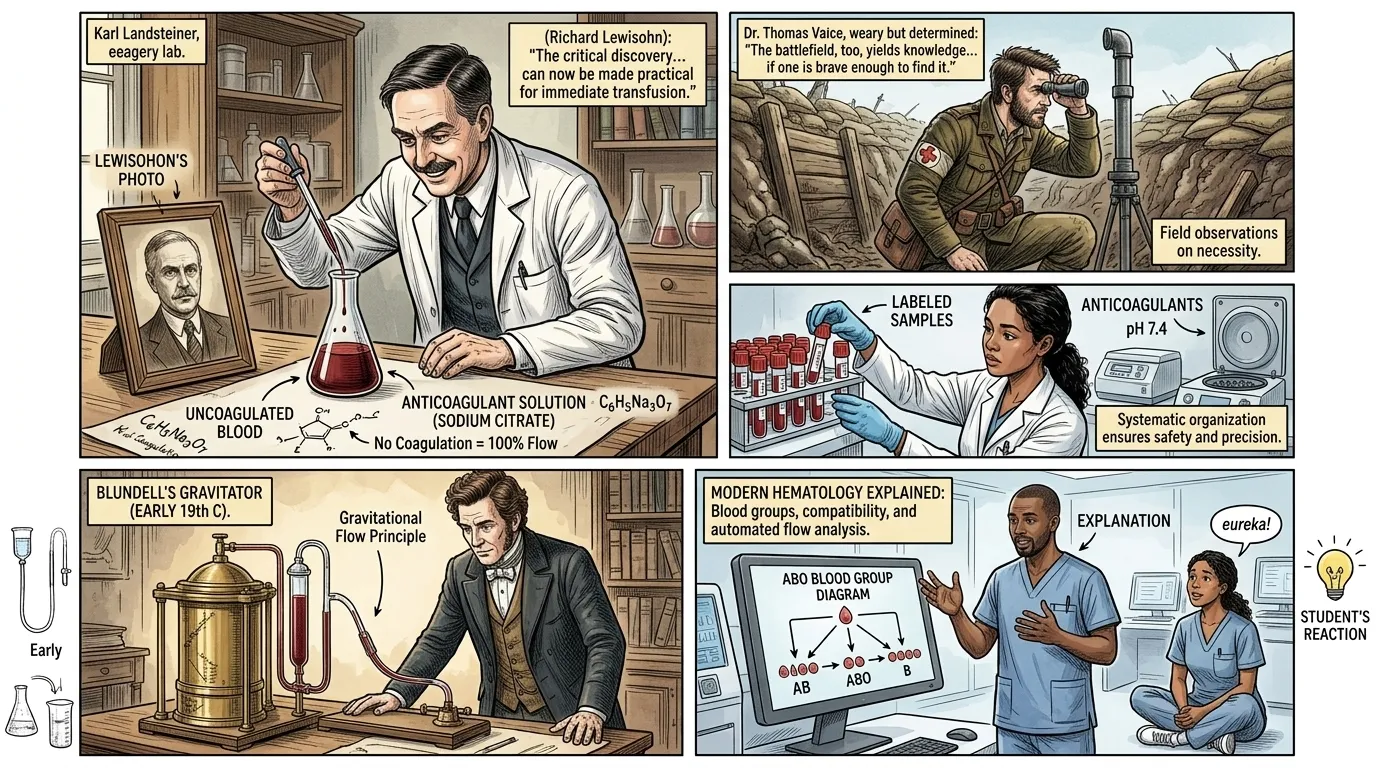
Even with blood typing, transfusions remained largely direct, from donor arm to recipient arm, due to the rapid clotting of blood outside the body. This bottleneck severely limited the availability of blood for emergencies. The next crucial breakthrough was the development of anticoagulants—substances that prevent blood from clotting. In 1914, Albert Hustin in Belgium and Richard Lewisohn in the United States independently discovered that sodium citrate could be added to blood to prevent coagulation, making indirect transfusions and, eventually, blood storage possible. This chemical solution revolutionized the logistical challenge of blood management, opening the door for organized blood banks.
"A historical note, displayed prominently, quotes Lewisohn: 'The true measure of a discovery's value lies in its practical application. Without a means to preserve blood, Landsteiner's work remained a theoretical triumph for emergencies.'"
Page 8
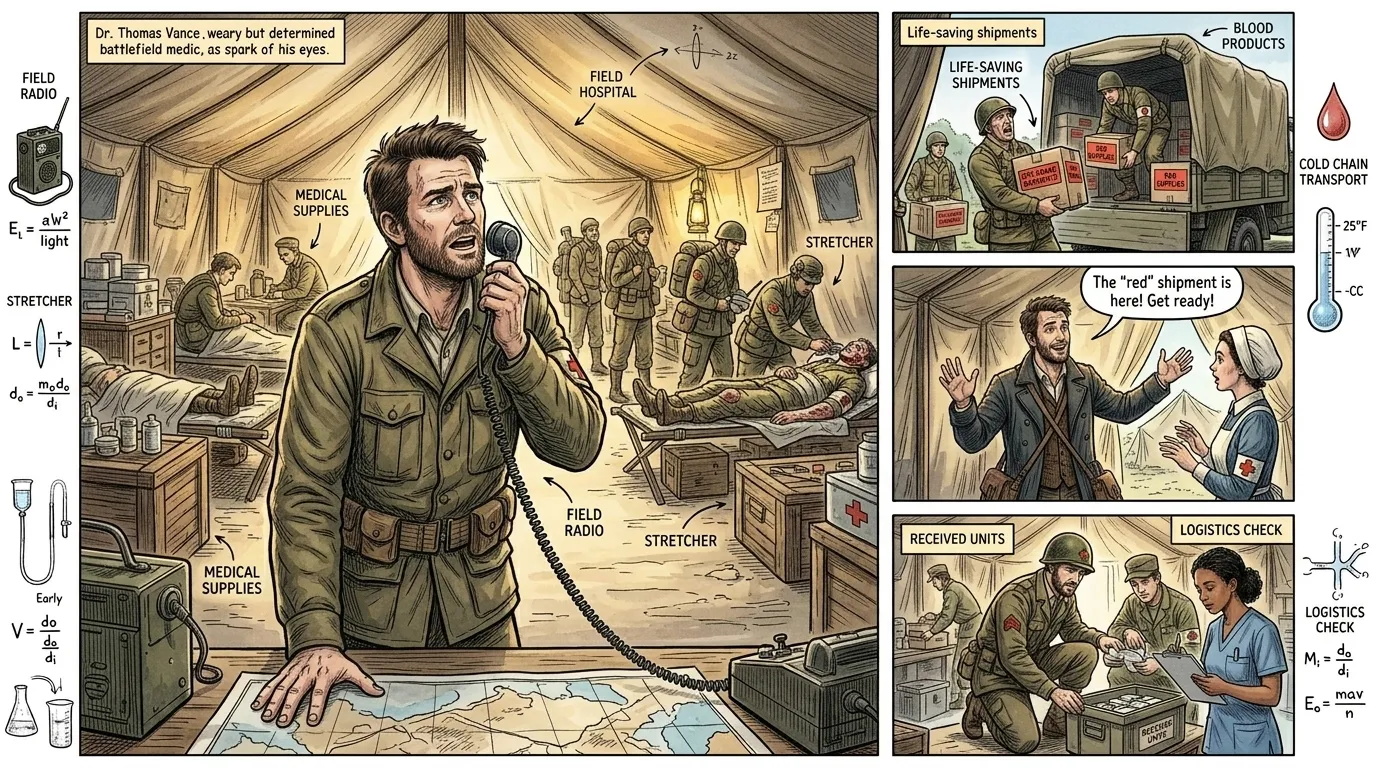
With the twin advancements of blood typing and effective anticoagulants, the concept of a 'blood bank' became a reality. The first true blood bank was established in Leningrad, Soviet Union, in 1932 by Sergei Yudin, and the idea quickly spread globally, especially with the outbreak of World War II. Stored, typed, and compatible blood could now be collected, preserved, and made available for urgent medical needs, transforming battlefield medicine and complex surgeries. This systematic approach moved blood transfusion from an improvised, last-resort procedure to a planned, life-saving intervention.
"A military doctor, weary but resolute, speaks into a field radio amidst wartime chaos: 'The blood shipments have arrived. This changes everything. We can save so many more now.'"
Page 9
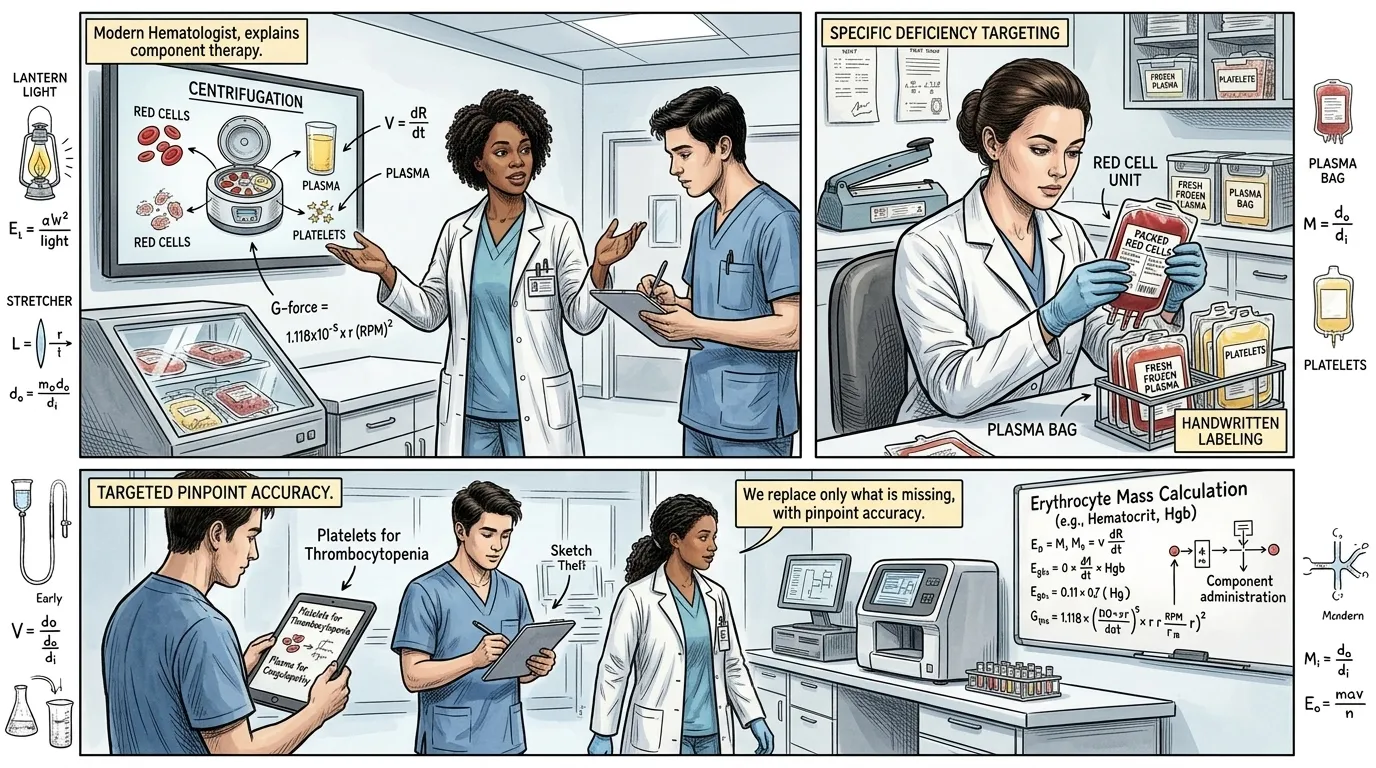
The evolution of the Blood Transfusion System continued beyond whole blood. Further research revealed that blood could be separated into its vital components: red blood cells for oxygen transport, plasma for clotting factors and proteins, and platelets for stopping bleeding. This 'component therapy' allowed for targeted treatment, giving patients only the specific blood component they needed, maximizing the utility of each donation and reducing risks. Modern centrifuges and advanced storage solutions further refined this process, making transfusions safer, more efficient, and tailored to individual patient needs, a true revolution in precision medicine.
"A modern hematologist, explaining a complex procedure to a medical student, emphasizes: 'We no longer give 'blood.' We give 'components.' It is a testament to how deep our understanding has become, treating specific deficiencies with pinpoint accuracy.'"
Page 10
Today, the Blood Transfusion System is a cornerstone of modern medicine, a global network of donors, labs, and medical professionals working in concert. From emergency trauma care to complex surgeries, cancer treatments, and chronic disease management, safe blood transfusions save millions of lives annually. It is a testament to centuries of scientific inquiry, perseverance, and ethical commitment, transforming a once-fatal mystery into a routine, life-affirming procedure. The journey from speculative, deadly attempts to a sophisticated, life-saving system is one of humanity's most profound medical triumphs.
"No dialogue on this page; the visuals and narrative convey the overarching impact."
About this story
- Location: Global
- Audience: general readers
Questions and answers
Read Wonder Inventions on your phone
Wonder Inventions is available on Android. Get Wonder Inventions on Google Play.