Nuclear Reactor
Nuclear Reactor — an illustrated inventions story, set in Global. 10 illustrated pages, free to read on Wonder Inventions.
Page 1
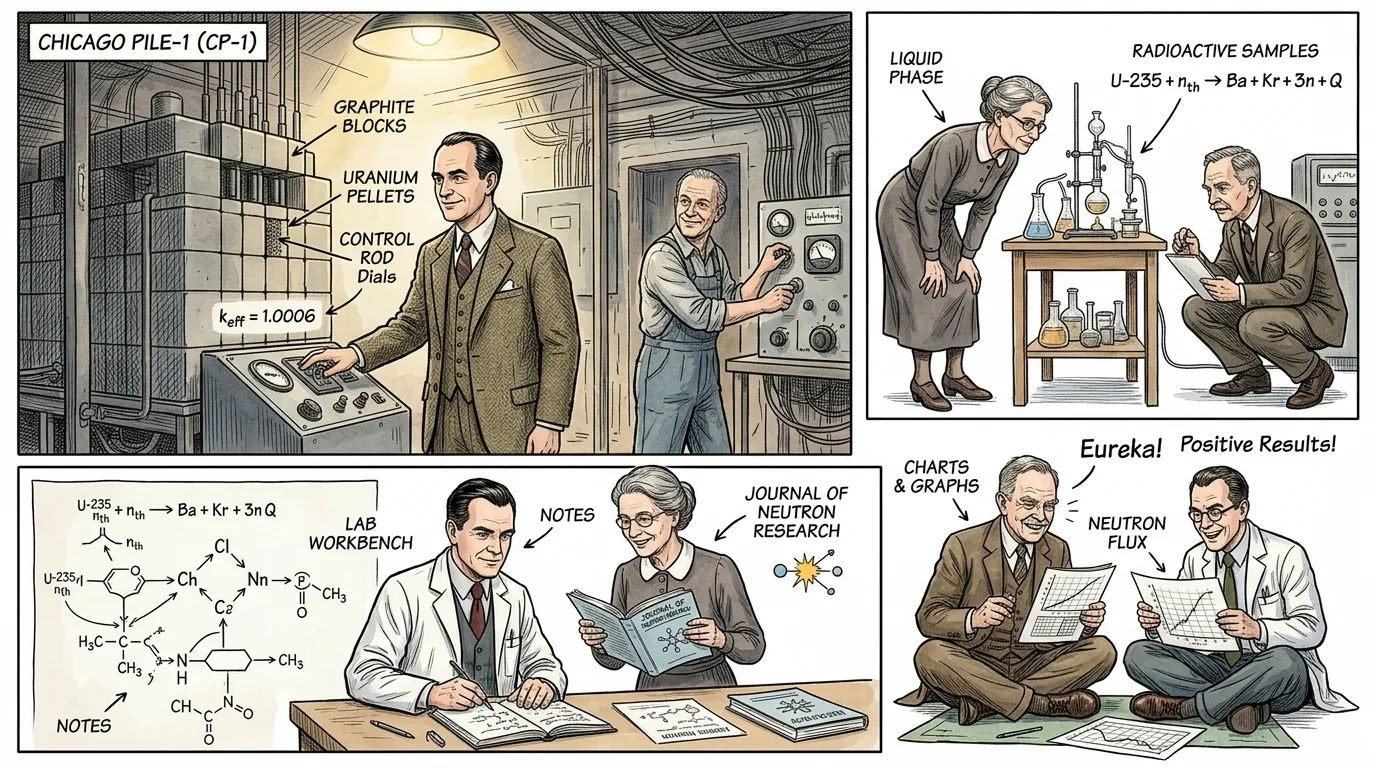
December 2, 1942, marked a pivotal moment in human history. Beneath the stands of Stagg Field at the University of Chicago, a team led by the brilliant Italian physicist Enrico Fermi achieved something previously deemed impossible. They initiated the world's first self-sustaining nuclear chain reaction in an experimental assembly known as Chicago Pile-1. This controlled release of atomic energy was a profound scientific and engineering breakthrough, ushering in the nuclear age and promising a new, potent source of power for humanity, while simultaneously presenting unprecedented challenges.
Page 2
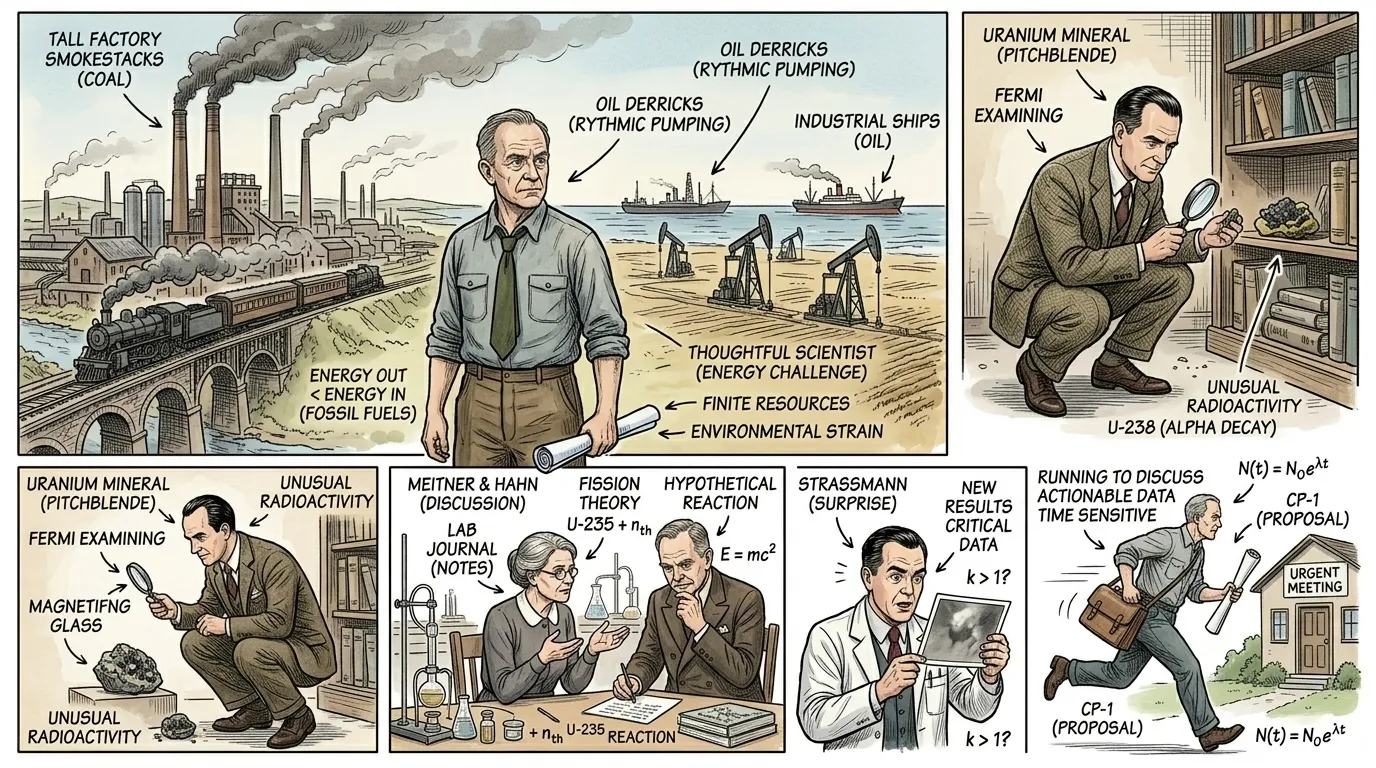
Before the advent of nuclear power, the global demand for energy was primarily met by fossil fuels: coal, oil, and natural gas. These sources powered industries, illuminated cities, and propelled transportation, fueling the industrial revolution and rapid technological advancement. However, their limitations were becoming increasingly apparent: finite reserves, the environmental impact of their combustion, and the logistical complexities of their extraction and transport. Scientists and engineers recognized the urgent need for more abundant, efficient, and cleaner energy solutions to sustain growing populations and economies.
Page 3
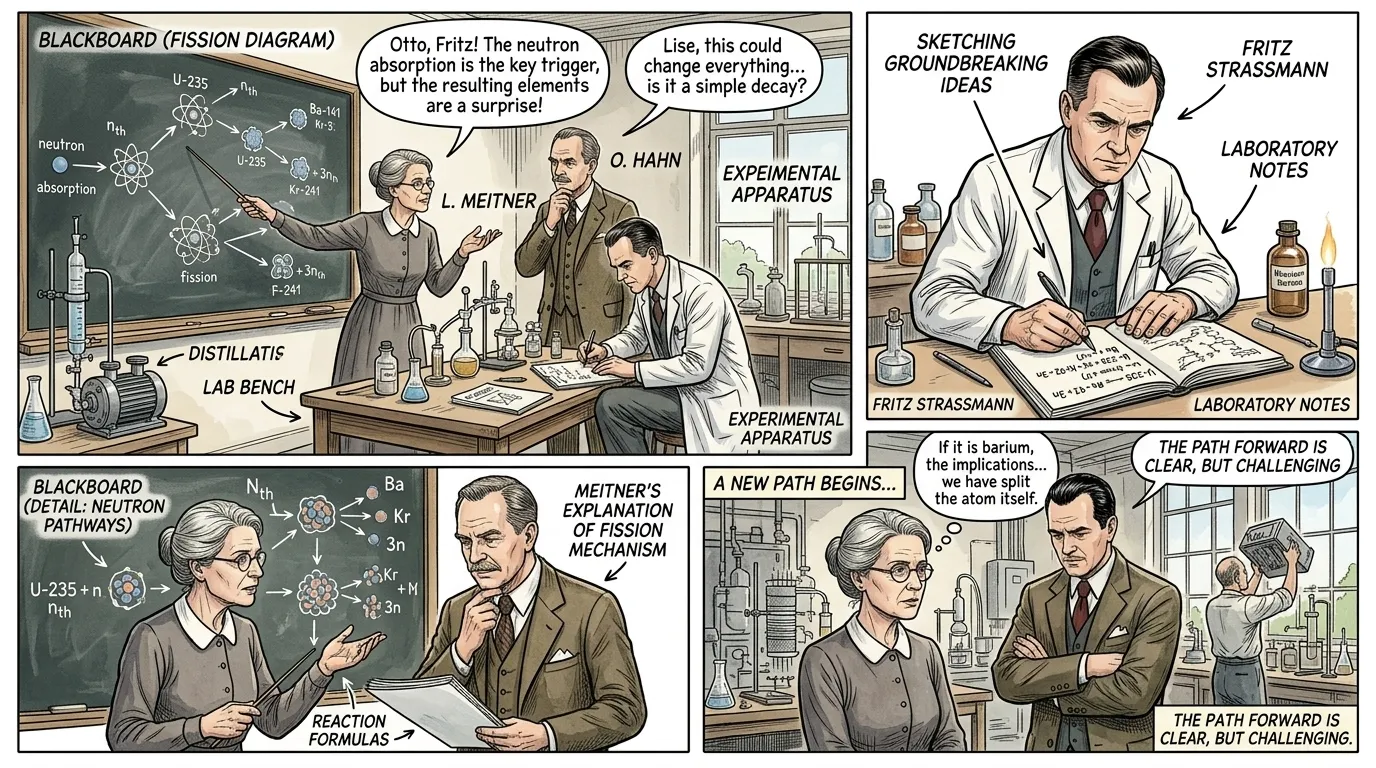
The early 20th century witnessed a revolution in physics, as researchers like Lise Meitner, Otto Hahn, and Fritz Strassmann unveiled the phenomenon of nuclear fission. They discovered that when certain heavy atomic nuclei, such as uranium, absorbed a neutron, they could split into smaller nuclei, releasing a tremendous amount of energy and, crucially, additional neutrons. This discovery immediately raised a profound question: could these newly released neutrons, in turn, trigger further fissions in other uranium atoms, leading to a self-sustaining chain reaction? The theoretical promise was immense, but controlling such a reaction proved to be a formidable scientific and engineering challenge.
Page 4
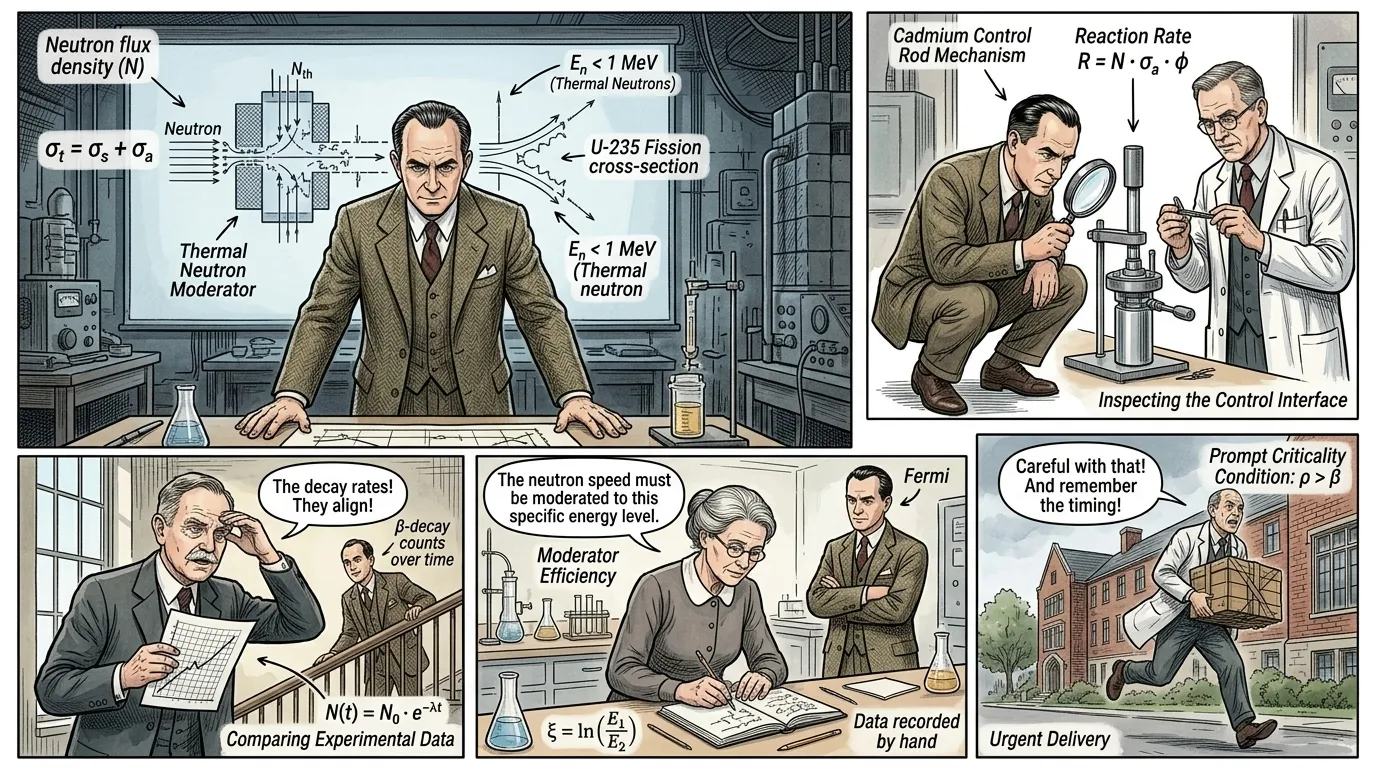
Enrico Fermi, a Nobel laureate from Italy, was a towering figure in nuclear physics. His earlier work on beta decay and neutron-induced radioactivity had established him as a global leader in understanding the atom's core. Escaping Fascist Italy, he arrived in the United States, bringing with him unparalleled expertise and an intuitive grasp of experimental physics. The challenge of controlling nuclear fission became his monumental task, driven by both scientific curiosity and the urgent geopolitical climate of World War II. Fermi understood that the key lay in manipulating the speed of the neutrons to ensure a stable, self-propagating reaction.
Page 5
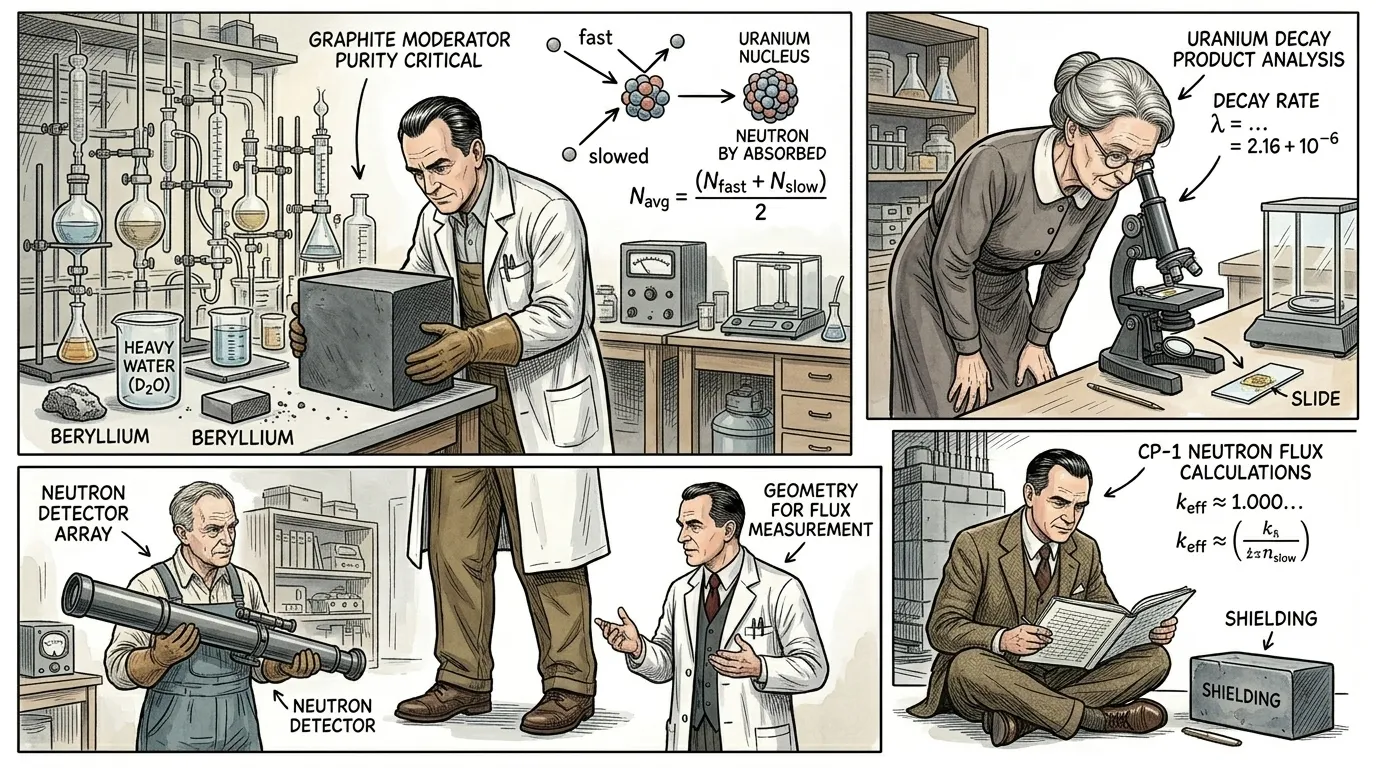
Early experiments revealed that the neutrons released during fission were too 'fast' to efficiently induce further fissions in other uranium nuclei. To sustain a chain reaction, these fast neutrons needed to be slowed down, or 'moderated', to increase their probability of being absorbed by other uranium atoms. Various materials were considered, including heavy water and beryllium, but graphite emerged as the most practical and available solution. The technical hurdle was immense: obtaining graphite of sufficient purity to avoid absorbing too many neutrons and halting the reaction. This quest for pure materials became a critical, complex undertaking.
Page 6
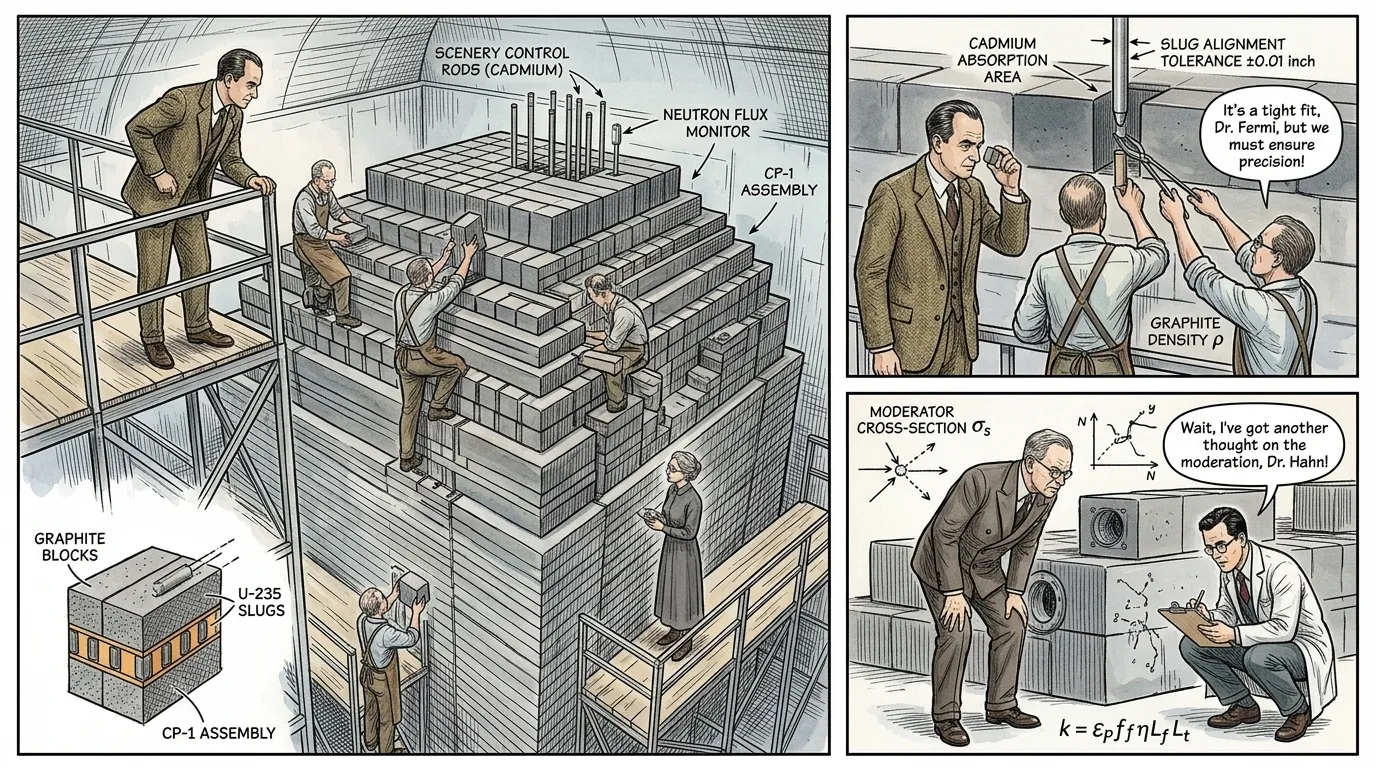
The Chicago Pile-1 was an unprecedented assembly. It consisted of alternating layers of graphite blocks, acting as the moderator, and 'slugs' of uranium metal or uranium oxide, which served as the nuclear fuel. The sheer volume of material was staggering: hundreds of tons of graphite and six tons of uranium. Crucially, cadmium control rods, designed to absorb neutrons, were inserted into channels within the pile. By carefully withdrawing these rods, the scientists could precisely regulate the number of free neutrons, allowing the chain reaction to either grow, stabilize, or shut down. This ingenious design was the key to controlled nuclear power.
Page 7
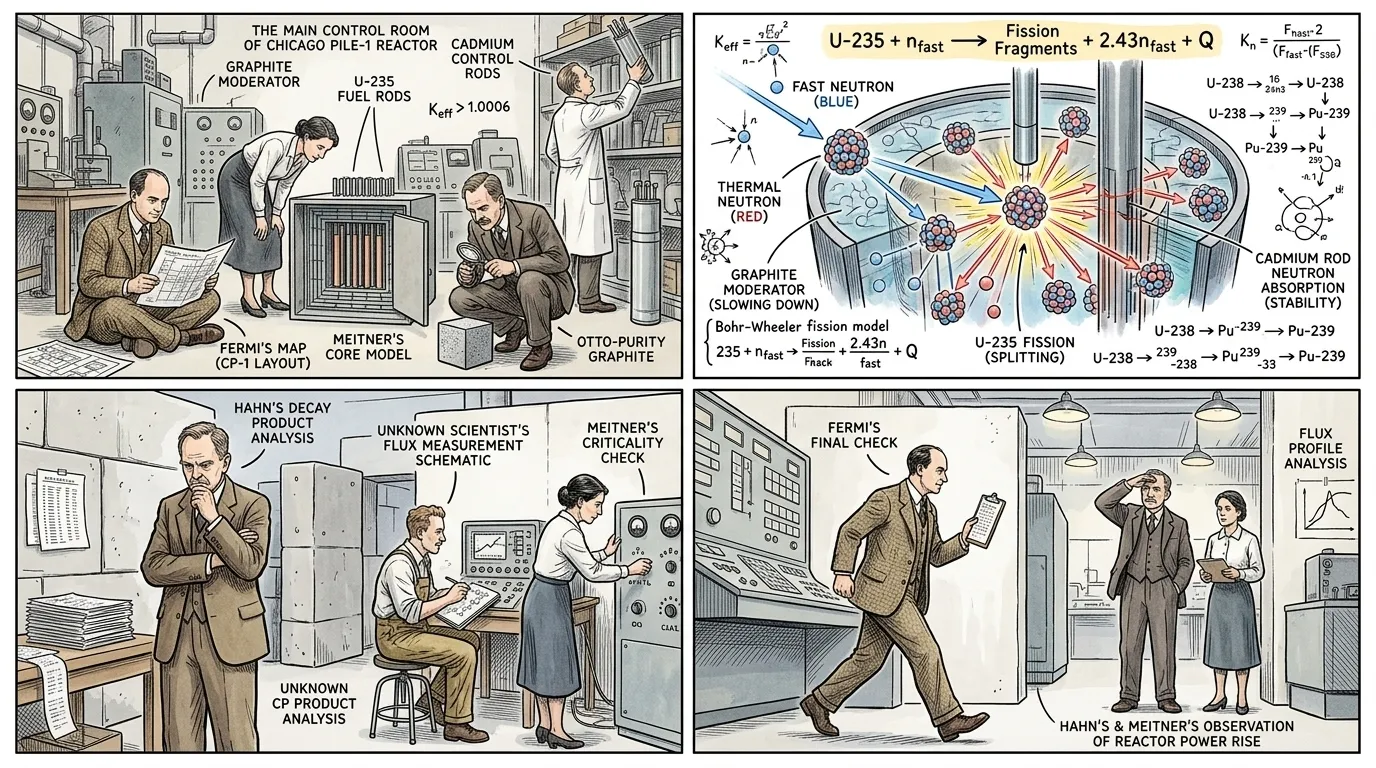
The operation of a nuclear reactor hinges on a carefully controlled chain reaction. When a neutron strikes a uranium-235 atom, it causes it to split, releasing energy and more neutrons. These 'fast' neutrons then collide with the graphite moderator atoms, losing energy and becoming 'thermal' neutrons. These slower neutrons are far more likely to be absorbed by other uranium-235 atoms, perpetuating the fission process. If too many neutrons are produced, the control rods are inserted further to absorb them, preventing the reaction from accelerating uncontrollably. This delicate balance allows for continuous, stable energy generation.
Page 8
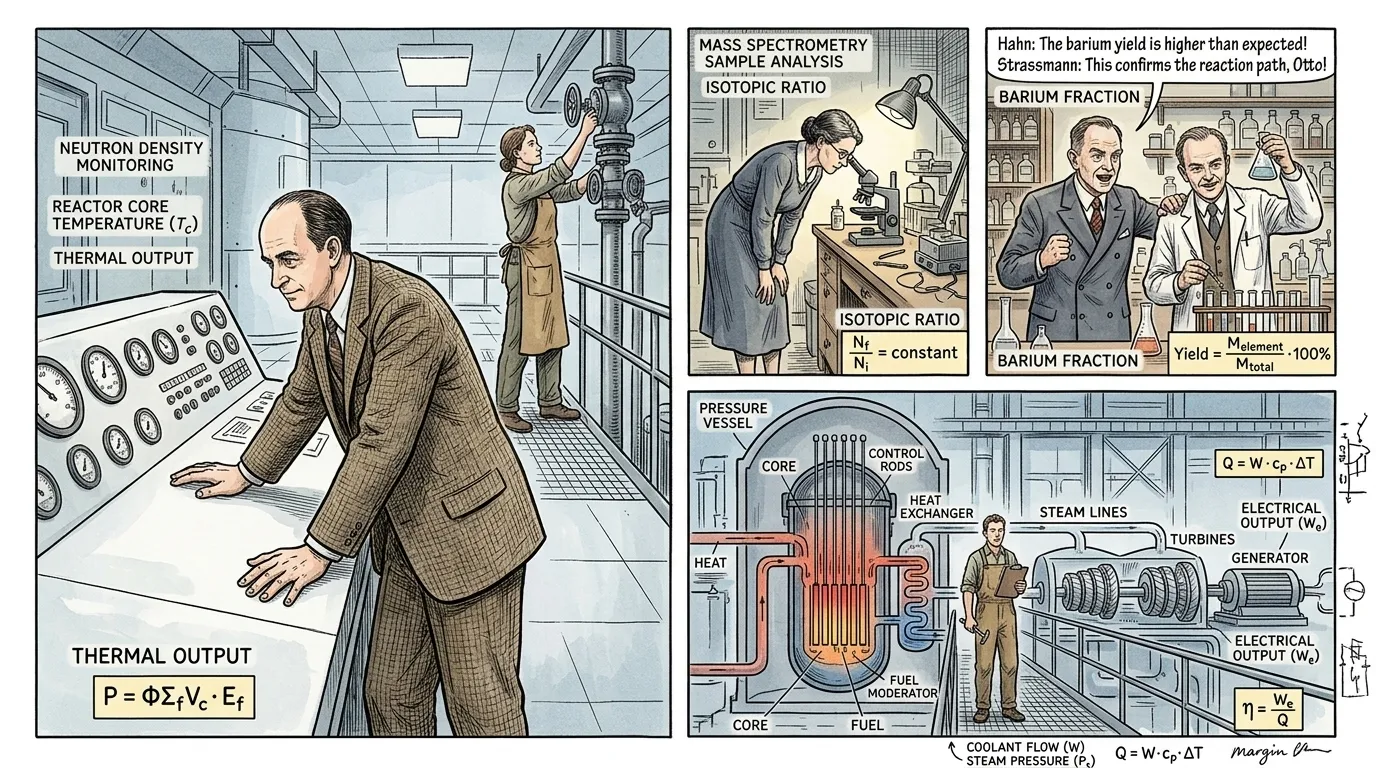
The success of Chicago Pile-1 quickly transitioned from a scientific experiment to a critical component of the Manhattan Project, producing plutonium for atomic weapons. Post-war, the focus shifted to harnessing this immense power for peaceful purposes, primarily electricity generation. Early power reactors, like Shippingport Atomic Power Station in the US, demonstrated the feasibility of generating electricity on a commercial scale. The fundamental principles remained the same: fuel, moderator, and control rods, but encased in robust pressure vessels and integrated with steam turbines to convert nuclear heat into electrical energy. This represented a colossal engineering feat, transforming theoretical physics into industrial reality.
Page 9
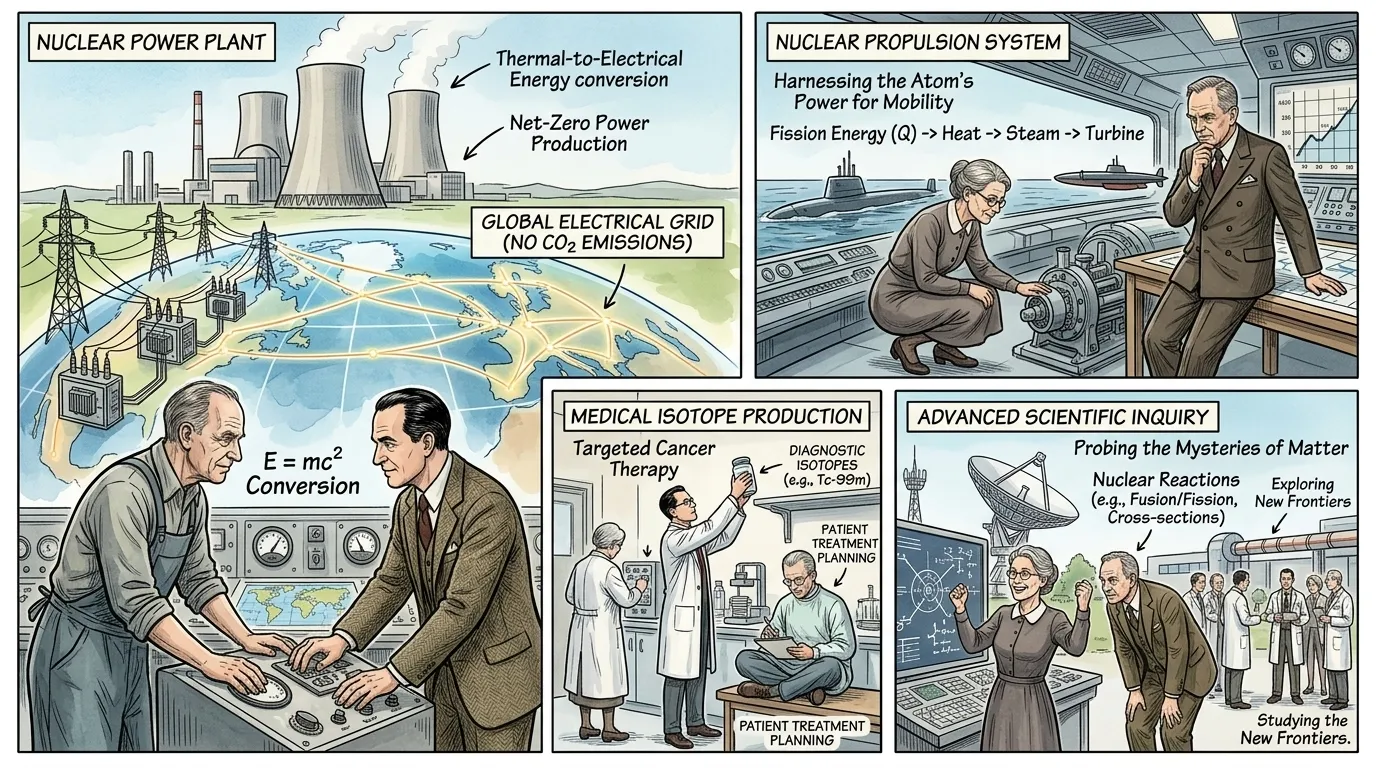
The nuclear reactor revolutionized energy production, offering a potent, compact, and carbon-free source of electricity. Nuclear power plants now contribute significantly to national grids worldwide, providing stable baseload power. Beyond electricity, reactors found diverse applications: propelling naval vessels like submarines and aircraft carriers, producing medical isotopes for diagnostics and cancer therapy, and facilitating advanced scientific research. The technology promised energy independence and a future less reliant on fossil fuels, fundamentally altering geopolitical landscapes and opening new frontiers in science and medicine.
Page 10
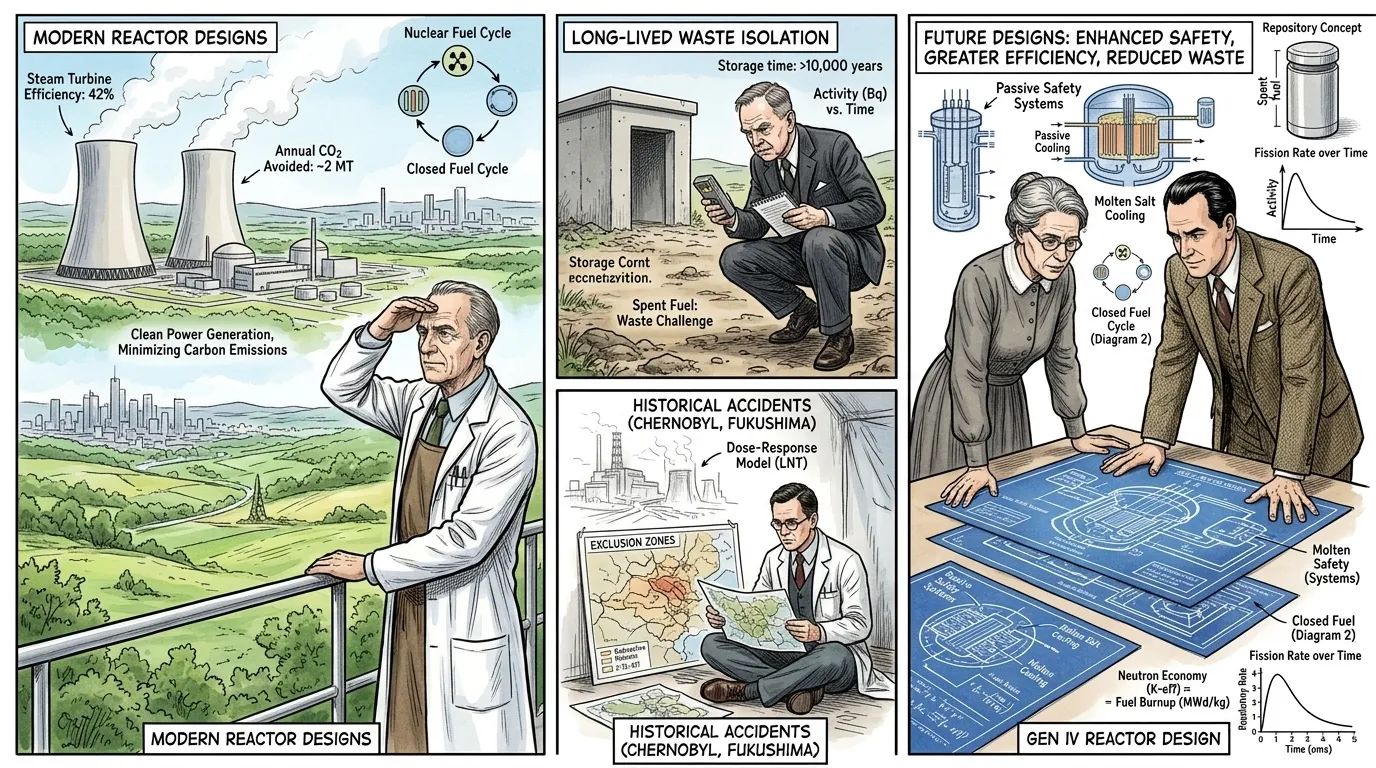
The legacy of the nuclear reactor is a complex tapestry of unparalleled technological advancement and profound ethical dilemmas. While offering immense power generation with minimal greenhouse gas emissions, it also introduced challenges: the safe disposal of long-lived radioactive waste, the catastrophic potential of accidents like Chernobyl and Fukushima, and the inherent link to nuclear weapons proliferation. Today, engineers and scientists continue to refine reactor designs, focusing on enhanced safety, greater efficiency, and reducing waste, striving to mitigate the risks while maximizing the benefits of this formidable invention. The nuclear reactor stands as a testament to humanity's capacity for both monumental creation and daunting responsibility.
About this story
- Location: Global
- Audience: general readers
Questions and answers
Read Wonder Inventions on your phone
Wonder Inventions is available on Android. Get Wonder Inventions on Google Play.