Organ Preservation System
Organ Preservation System — an illustrated inventions story, set in Global. 10 illustrated pages, free to read on Wonder Inventions.
Page 1
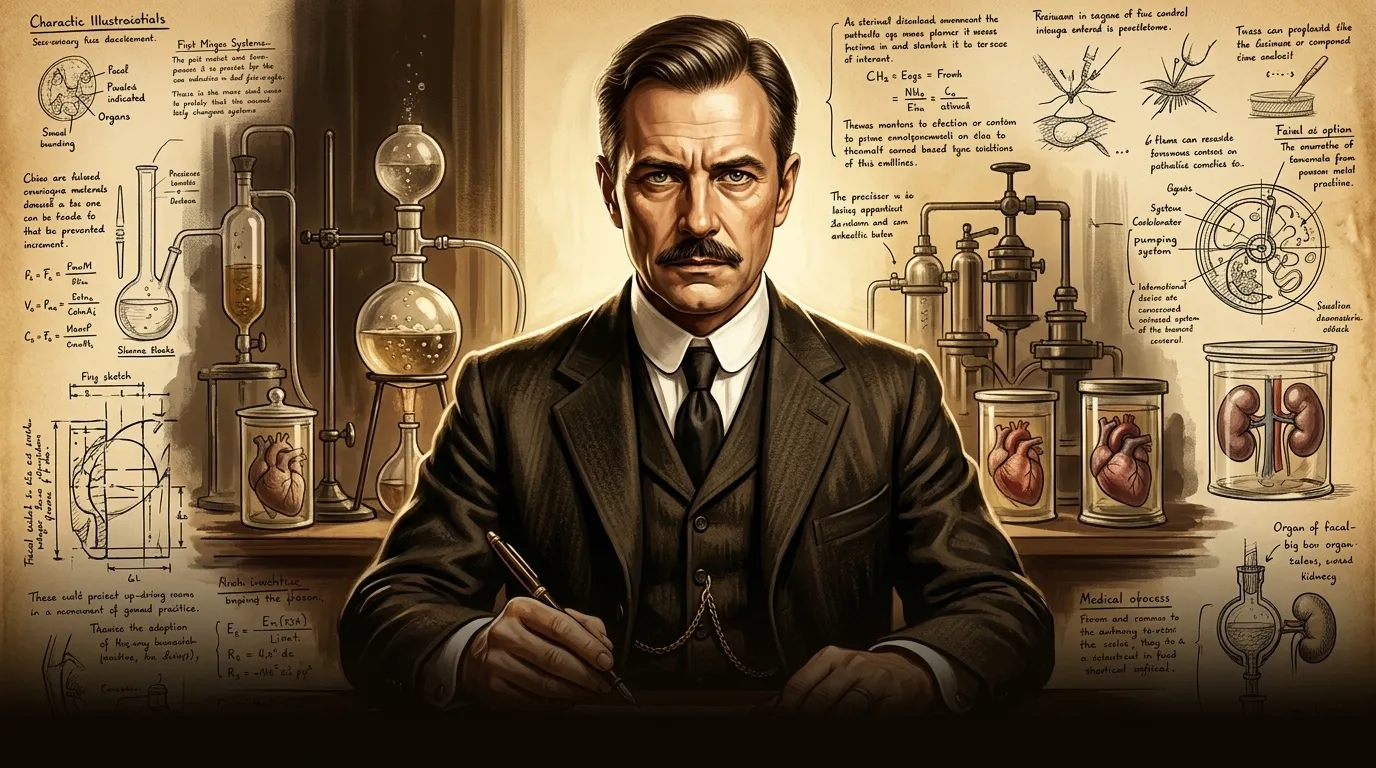
In the early 20th century, a profound medical barrier limited life-saving interventions: the rapid degradation of organs outside the body. French surgeon and Nobel Laureate Dr. Alexis Carrel recognized this critical challenge, envisioning a future where time might be overcome.
"Dr. Carrel, observing his laboratory setup, often articulated, 'The moment an organ leaves the body, a relentless clock begins to tick, and every second is a battle against inevitable decay.' He understood that sustaining life required more than simple removal."
Page 2
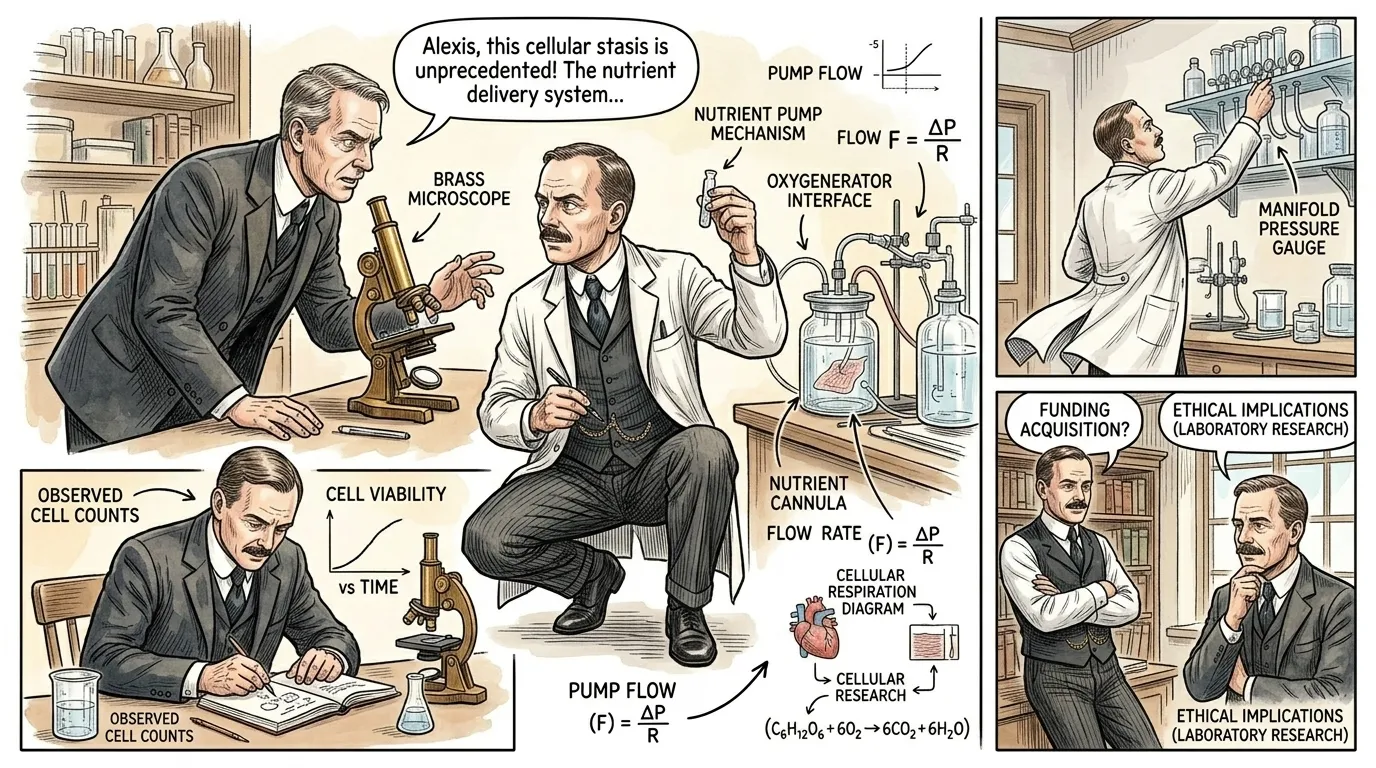
Prior to effective preservation, excised tissues and organs quickly succumbed to ischemic injury—damage from lack of blood flow, oxygen, and nutrients. Scientists grappled with understanding the most basic needs for cellular survival.
"A colleague leaned towards Dr. Carrel, stating, 'Our attempts at simple refrigeration only delay the inevitable; the tissues still starve and accumulate toxins.' Dr. Carrel, gesturing towards his microscope, responded, 'We must grasp the very essence of life support: absolute sterility and a continuous, oxygenated nutrient flow, mimicking the body's meticulous care, to extend its fleeting presence.'"
Page 3
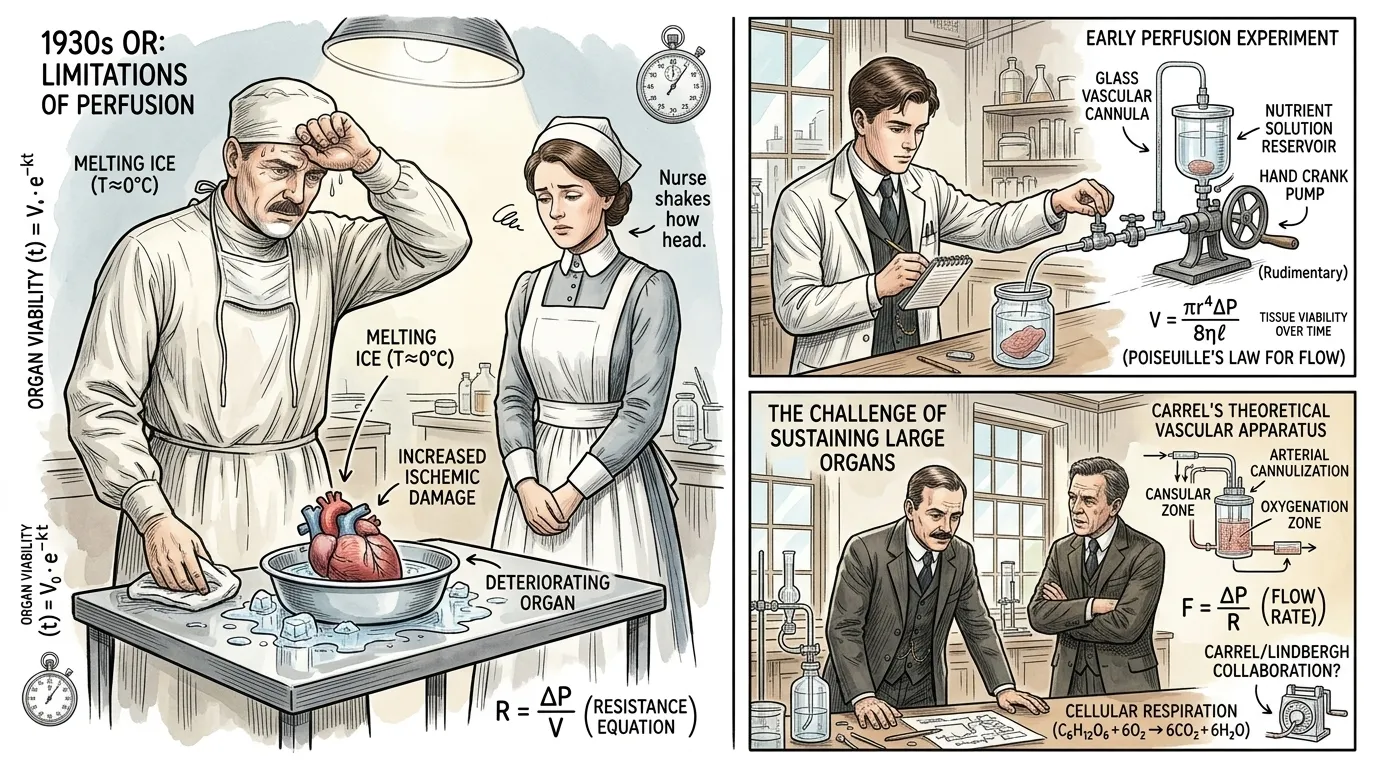
Before specialized systems, medical professionals resorted to rudimentary methods like simple cooling or saline baths to buy precious minutes. These efforts, though well-intentioned, proved largely insufficient for complex organs.
"A surgeon, wiping his brow, lamented, 'Despite packing it in ice and saline, the heart began to fail within mere hours. The window for any meaningful research, let alone transplantation, remains cruelly short.' A nurse nearby shook her head, acknowledging the profound limitations of the era."
Page 4
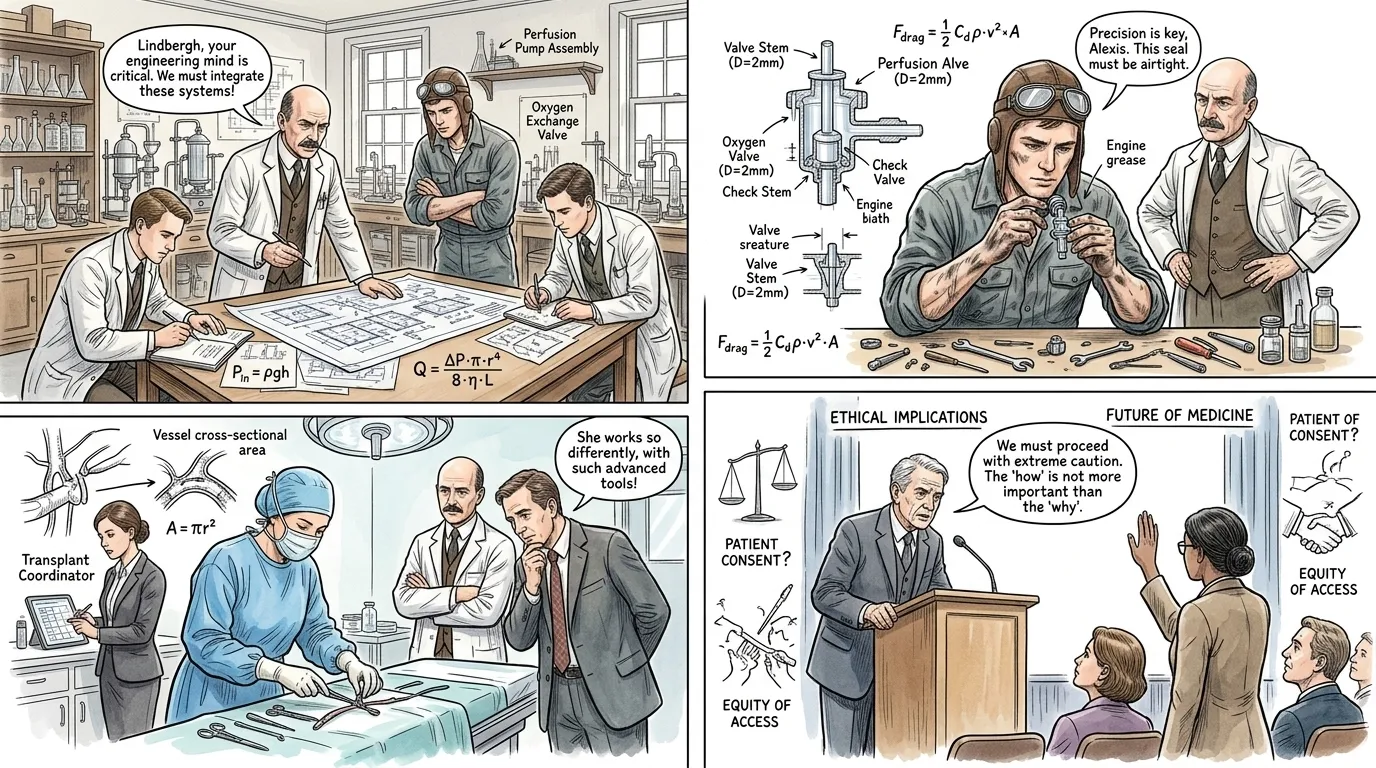
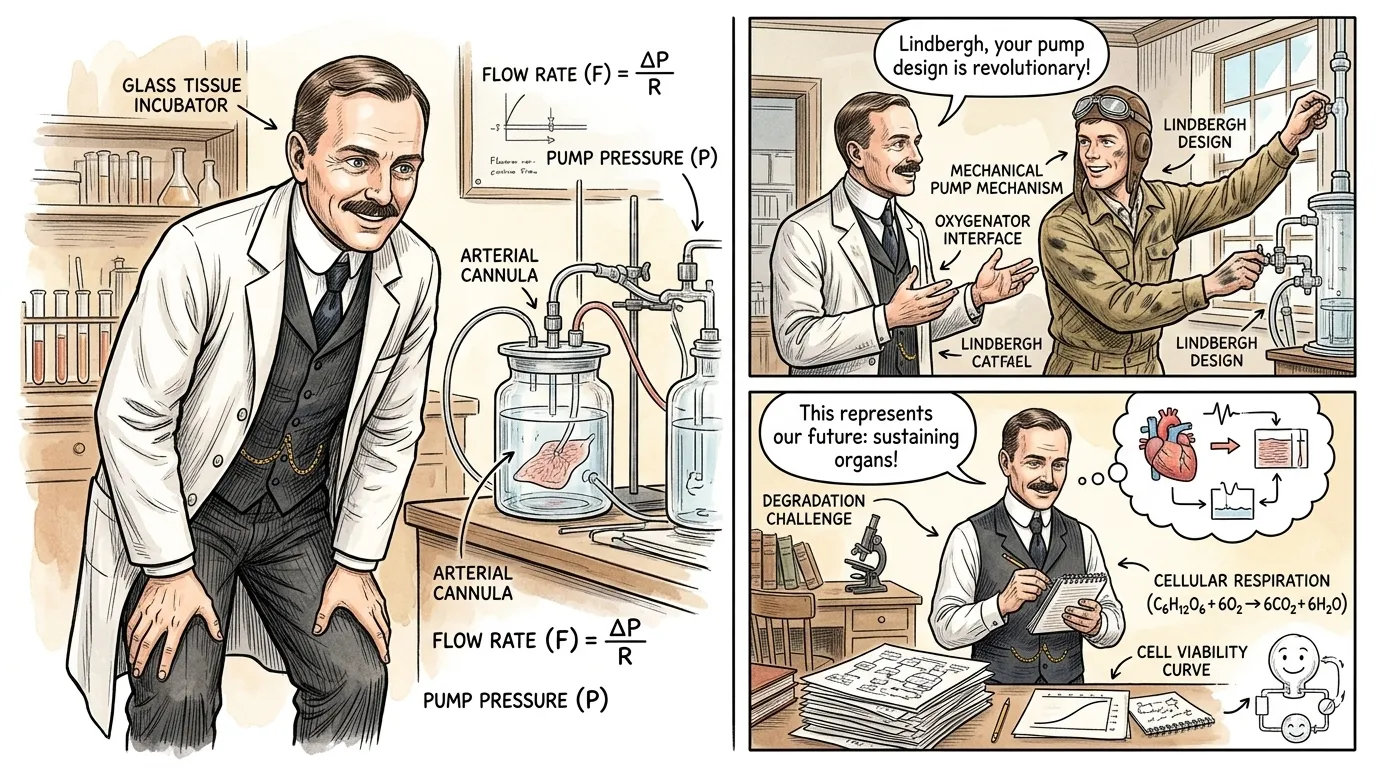
Dr. Alexis Carrel's relentless pursuit of extended tissue viability led him to an unlikely collaborator: Charles Lindbergh, the famous aviator and a gifted self-taught engineer. Their combined expertise would unlock new possibilities.
"Dr. Carrel, gesturing emphatically with a pen over architectural blueprints, explained to Lindbergh, 'To truly understand organ function outside the body, Mr. Lindbergh, we need a machine that can meticulously mimic the body's circulation—a sterile, artificial heart and lung system.' Lindbergh, examining the diagrams intently, mused, 'A fascinating engineering challenge, indeed, Doctor.'"
Page 5
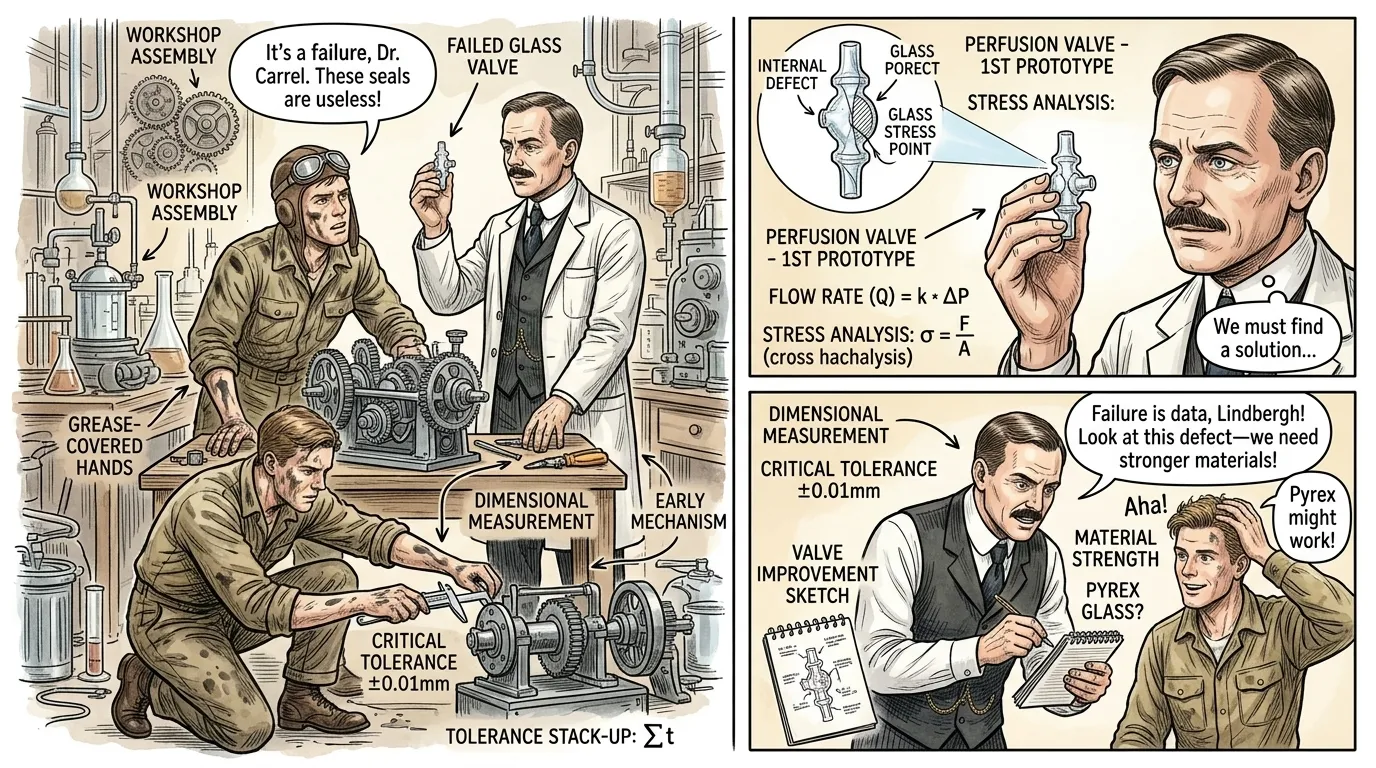
The creation of a functional organ perfusion pump was fraught with engineering difficulties. Lindbergh faced immense challenges in designing a device that was perfectly sterile, gentle enough for delicate tissues, and capable of precise, continuous fluid circulation.
"Lindbergh, covered in grease from a dismantled prototype, once noted, 'Our initial designs were often too aggressive, damaging the very tissues we sought to preserve; bubbles, uneven flow, contamination... precision is paramount to sustain life.' He spoke to Carrel, who inspected a failed glass valve, 'We learn from every imperfection, Charles, to refine this delicate dance of mechanics and biology.'"
Page 6
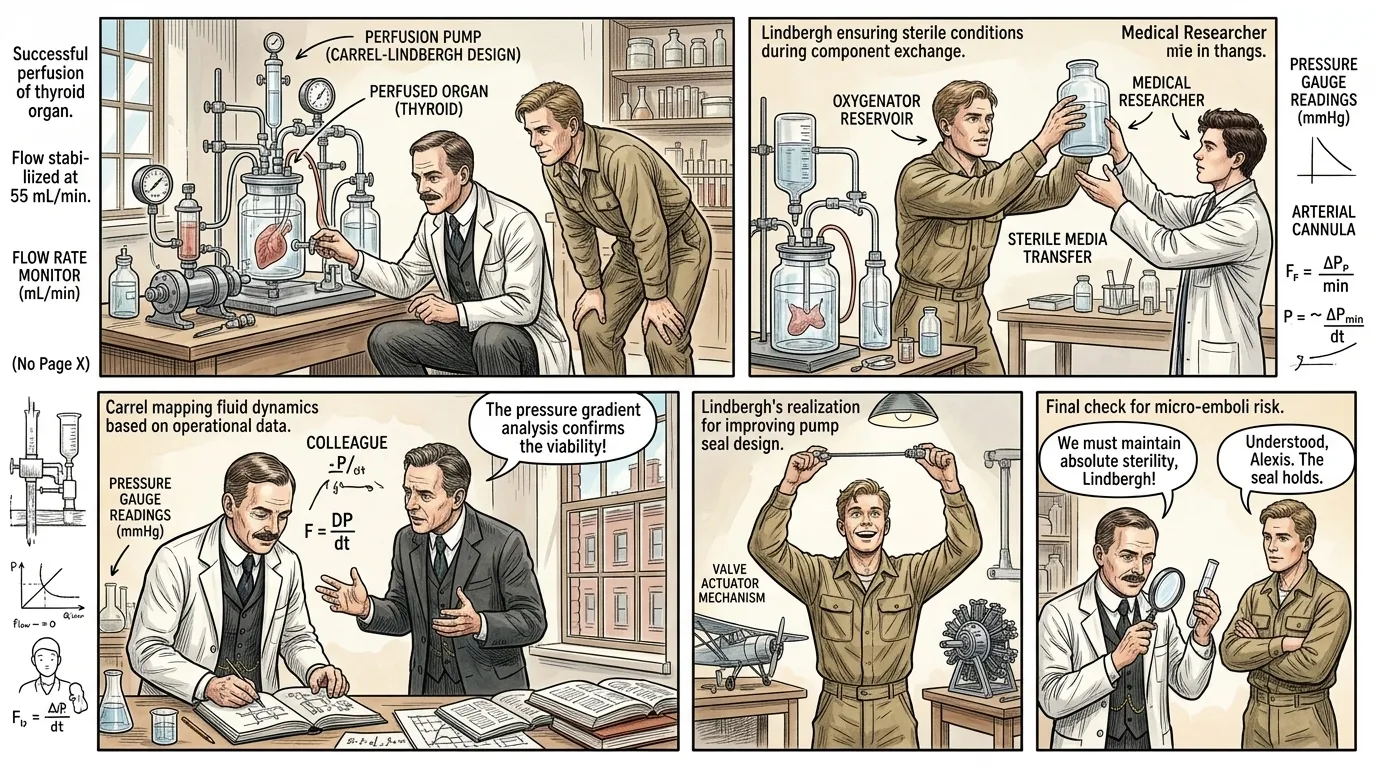
After years of iterative design and rigorous experimentation, Carrel and Lindbergh achieved a significant breakthrough: a sterile perfusion pump capable of maintaining organs for extended periods. This innovation became known as the Carrel-Lindbergh pump.
"Dr. Carrel, with a satisfied expression, carefully adjusted a valve on the operational pump. He observed, 'This apparatus, by maintaining a perfectly sterile, controlled environment and continuous, gentle nutrient flow, allows organs to persist outside the body for days, even weeks, for the first time.' Lindbergh nodded, 'It is the synthesis of biological necessity and mechanical ingenuity.'"
Page 7
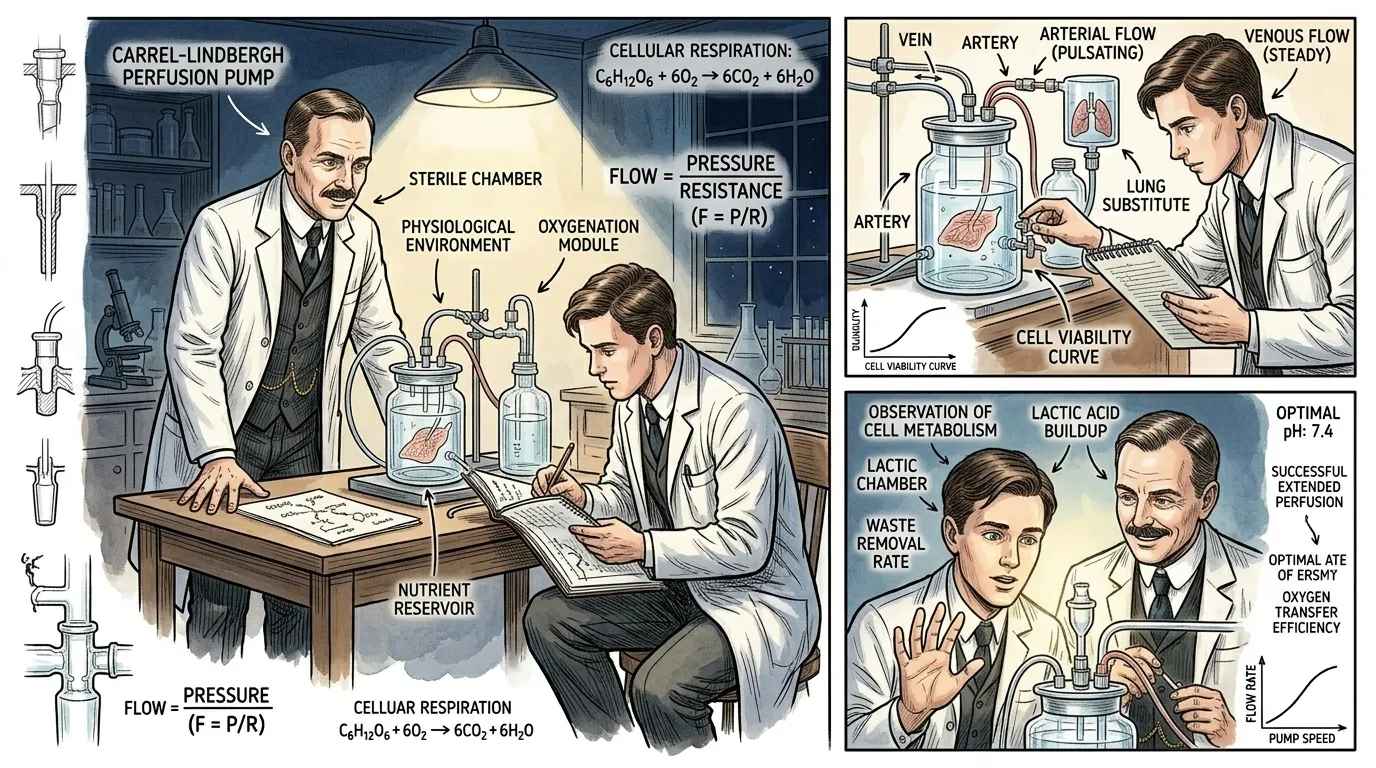
The genius of the Carrel-Lindbergh pump lay in its ability to replicate the body's vital physiological functions. It provided organs with essential oxygen, delivered nutrients, removed metabolic waste products, and maintained a stable temperature, preventing rapid cellular death.
"A young medical researcher, diligently taking notes, marveled, 'The system essentially creates a surrogate circulatory system, ensuring every cell receives what it needs and expels what it doesn't.' Dr. Carrel elaborated, 'It is a microcosm of life itself, controlled and sustained, allowing us to study processes never before possible ex vivo.'"
Page 8
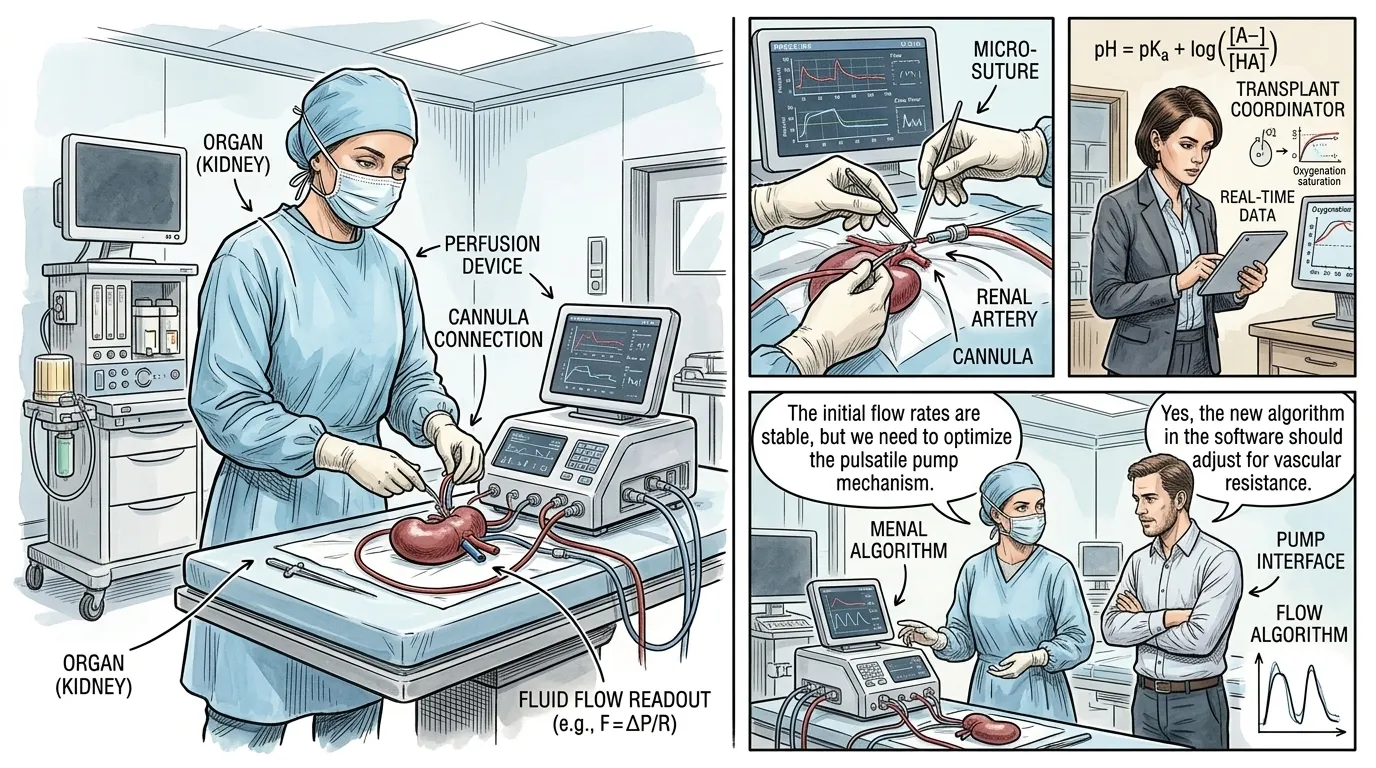
While Carrel's initial work focused on research, the principles he pioneered became foundational for the age of organ transplantation. Decades later, with the first successful human transplants, the critical need for advanced organ preservation became undeniable.
"Dr. Eleanor Vance, a leading transplant surgeon in a modern operating theatre, carefully connected an organ to an advanced perfusion device. She stated, 'As Dr. Carrel noted so presciently years ago, 'The scientific mind does not so much discover as it uncovers what is already there.' His insistence on sterile perfusion and continuous flow laid the groundwork for our ability to extend organ viability today, transforming what was once a fleeting opportunity into a viable lifeline.'"
Page 9
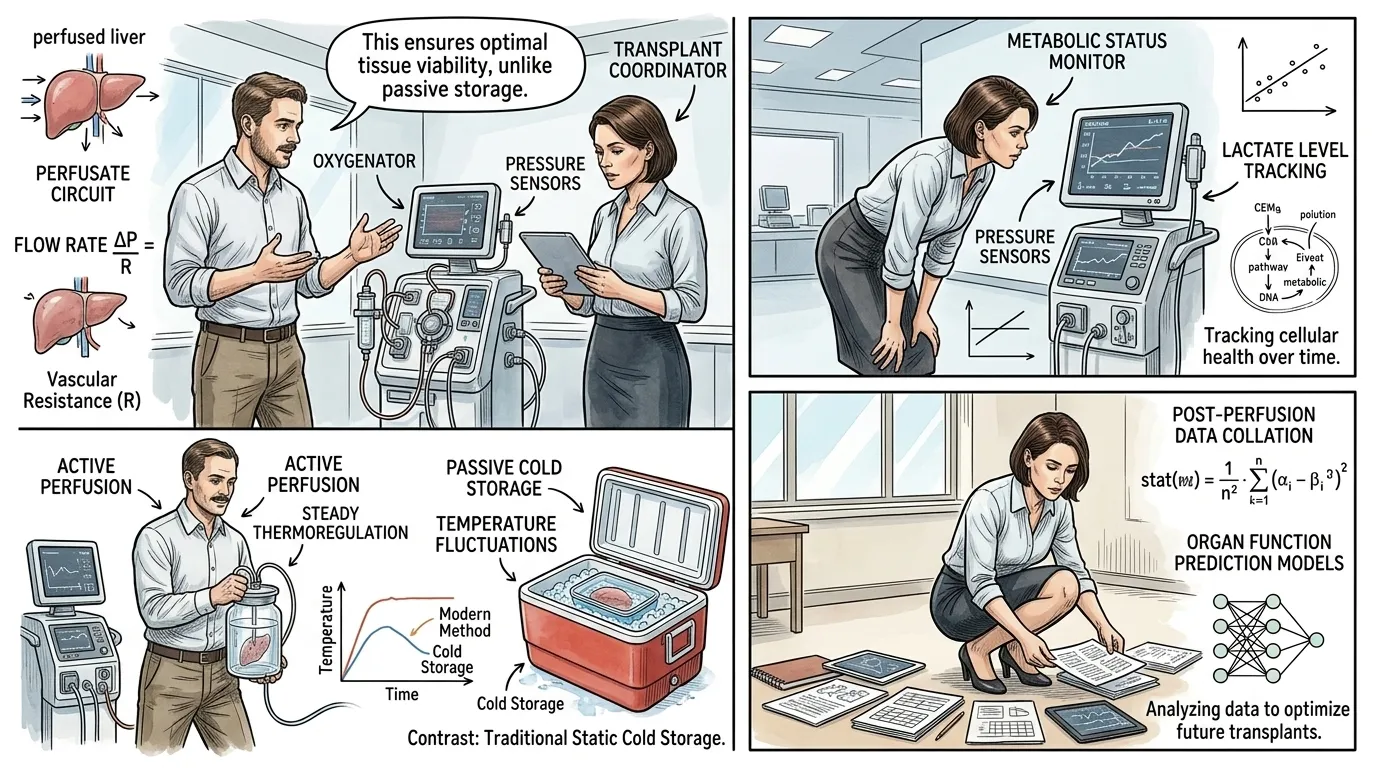
The journey of organ preservation progressed from simple static cold storage, where organs were packed in ice, to sophisticated machine perfusion. These modern systems actively pump custom preservation solutions, closely monitoring the organ's physiological state.
"An engineer from a leading medical device company, demonstrating a new system, elaborated, 'Static cold storage merely slows metabolism, but machine perfusion actively flushes, oxygenates, and cools the organ, extending viability far beyond. We can even assess organ health during transport now.' A transplant coordinator reviewed data, affirming, 'This precision dramatically expands the window for transplantation.'"
Page 10
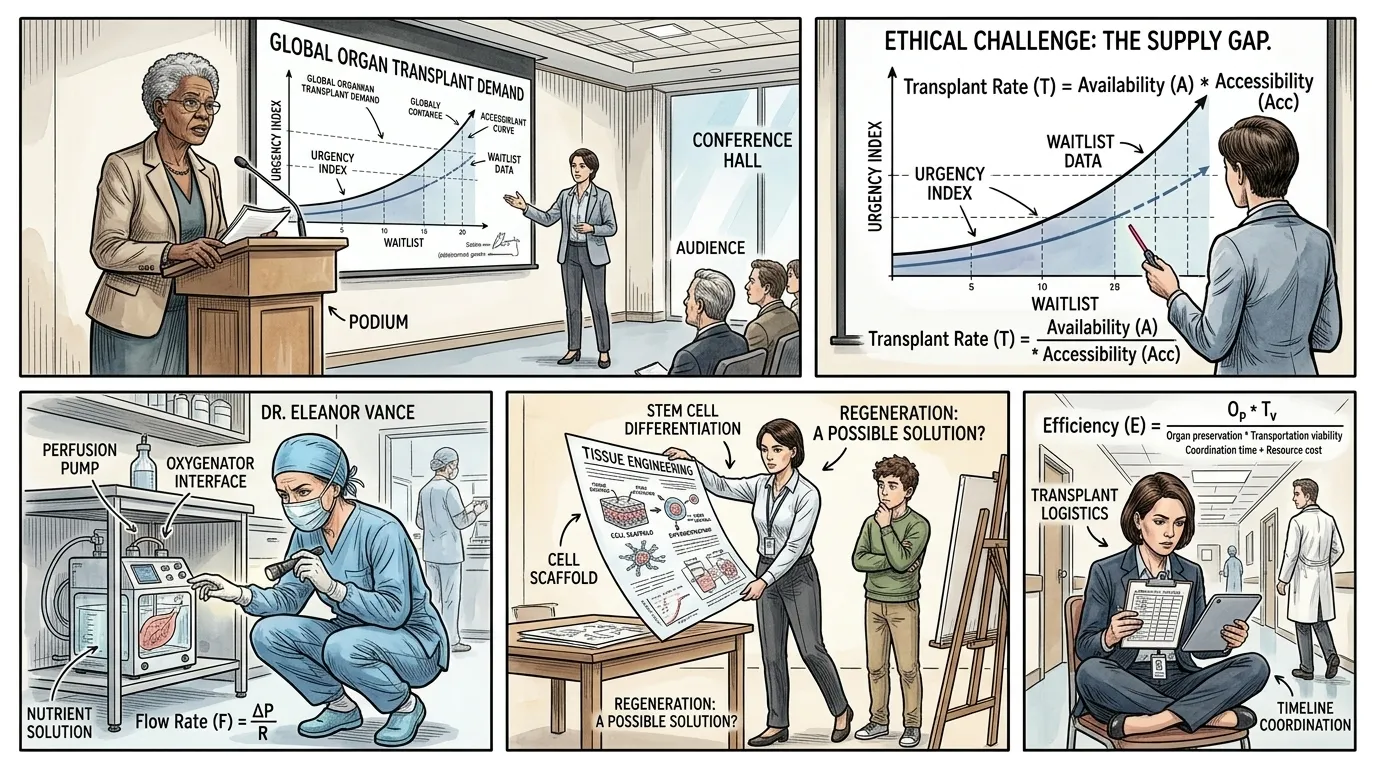
The evolution of organ preservation, building on foundational scientific principles, has profoundly transformed modern medicine. It has saved countless lives, expanded the possibilities of transplantation, and continues to drive innovation in medical science.
"A leading medical ethicist, speaking at a conference, emphasized, 'This technology not only extends life but prompts us to continually re-evaluate the ethics of life, death, and donor allocation.' A researcher added, 'The quest continues, exploring new preservation solutions and techniques to further prolong viability and improve outcomes for every patient awaiting a second chance.'"
About this story
- Location: Global
- Audience: general readers
Questions and answers
Read Wonder Inventions on your phone
Wonder Inventions is available on Android. Get Wonder Inventions on Google Play.