Parachute
Parachute — an illustrated inventions story, set in Global. 10 illustrated pages, free to read on Wonder Inventions.
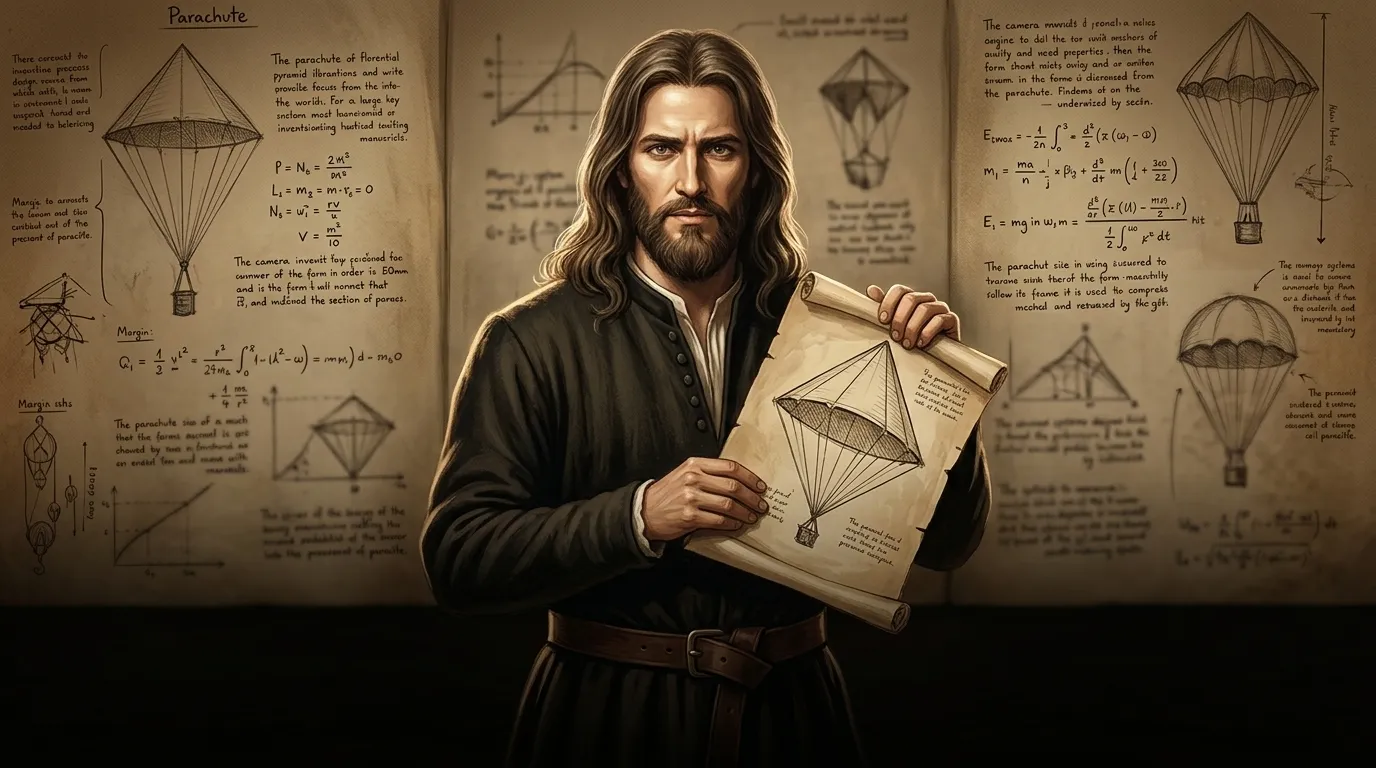
Page 1
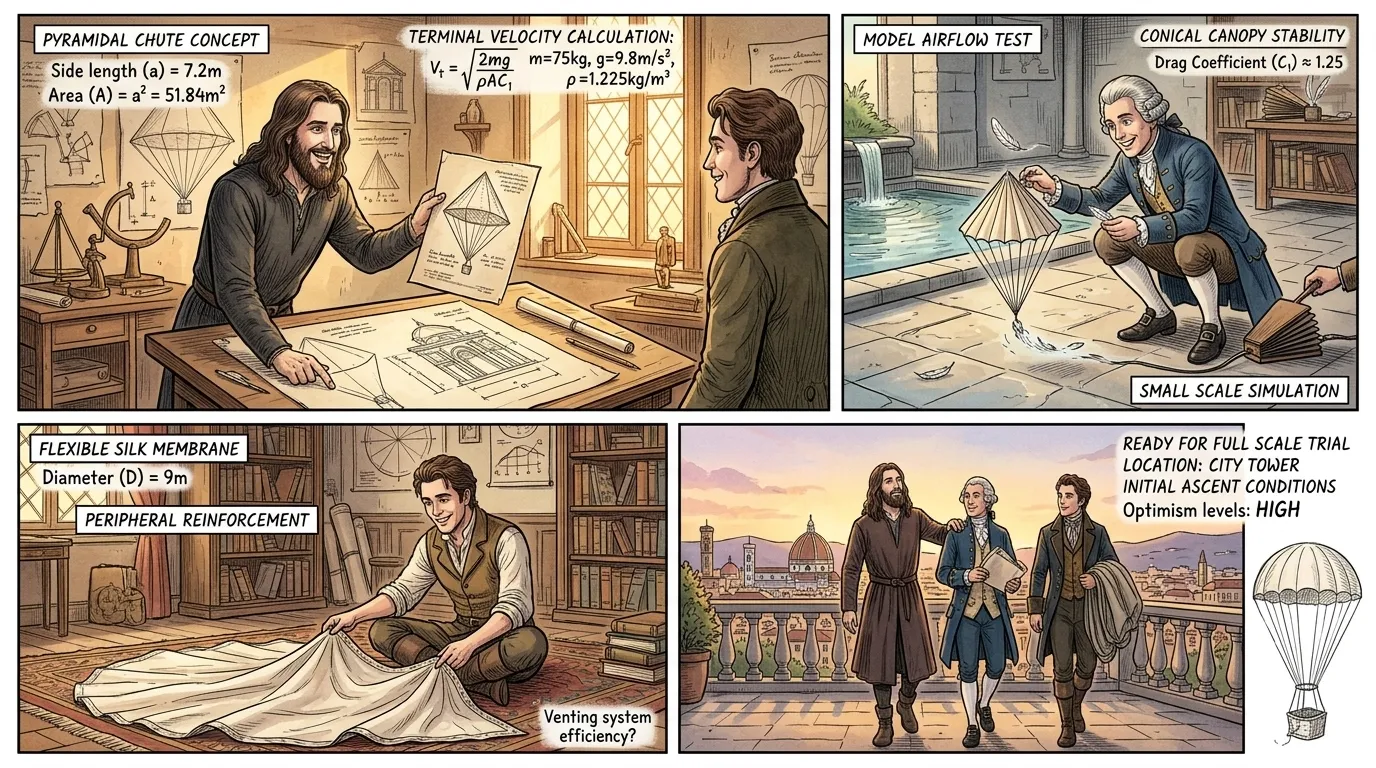
For millennia, the dream of safe descent from great heights remained elusive, a formidable challenge to human ingenuity. The perils of falling, whether from soaring structures or early airborne machines, underscored an urgent, unmet need for controlled vertical travel. It was the visionary mind of Leonardo da Vinci, in 1485, who first conceived a practical design for an apparatus to slow a human fall. His pyramid-shaped canopy marked the initial conceptual leap in conquering gravity's unforgiving embrace.
Page 2
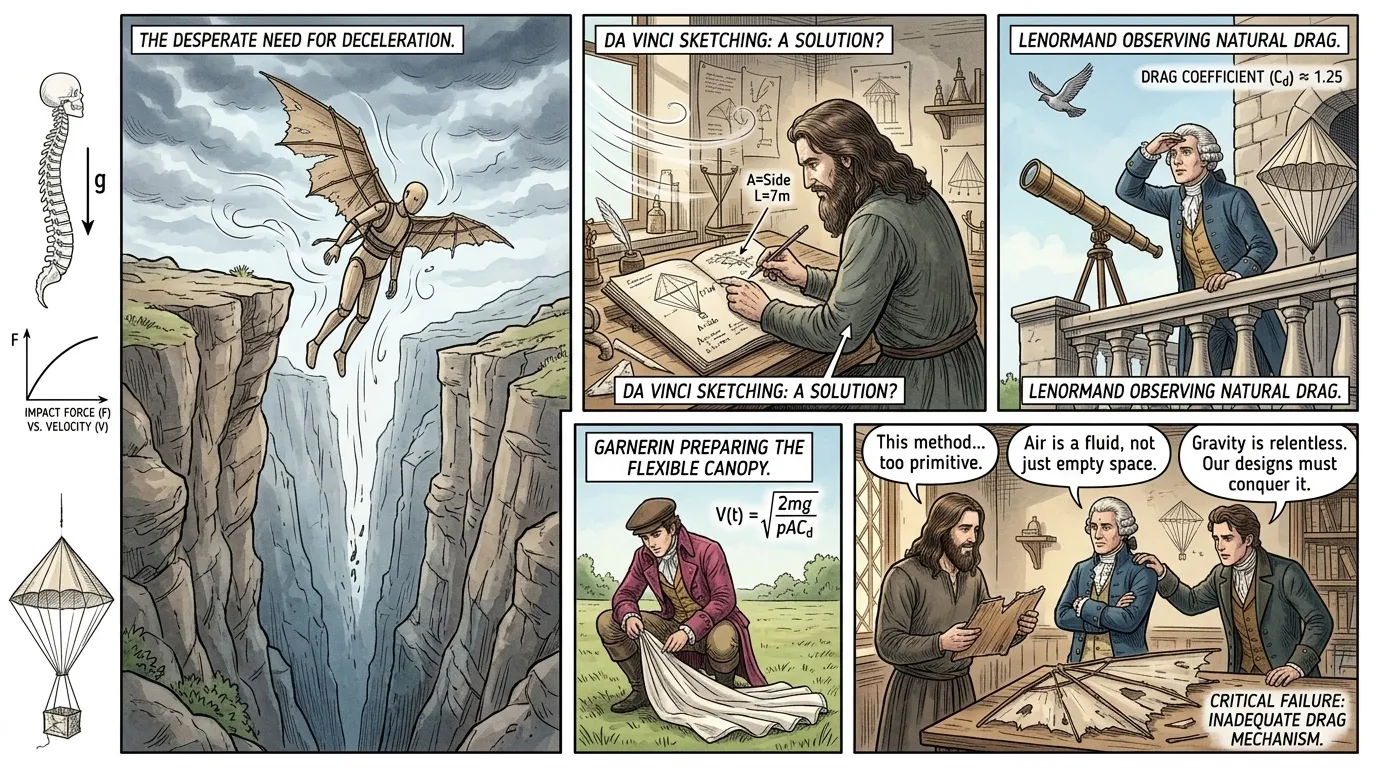
Before the advent of the parachute, any unplanned fall from height was met with almost certain catastrophe, leaving no viable escape for those trapped in elevated dangers. The void beneath presented an insurmountable challenge, fostering a profound fear of the abyss and a stark acceptance of fate. Early designs were often crude and impractical, ranging from rigid wing-like structures to oversized umbrellas, all lacking the fundamental principles required for reliable deceleration. This era highlighted humanity's desperate need for a mechanism that could transform a deadly plunge into a controlled, survivable descent.
Page 3
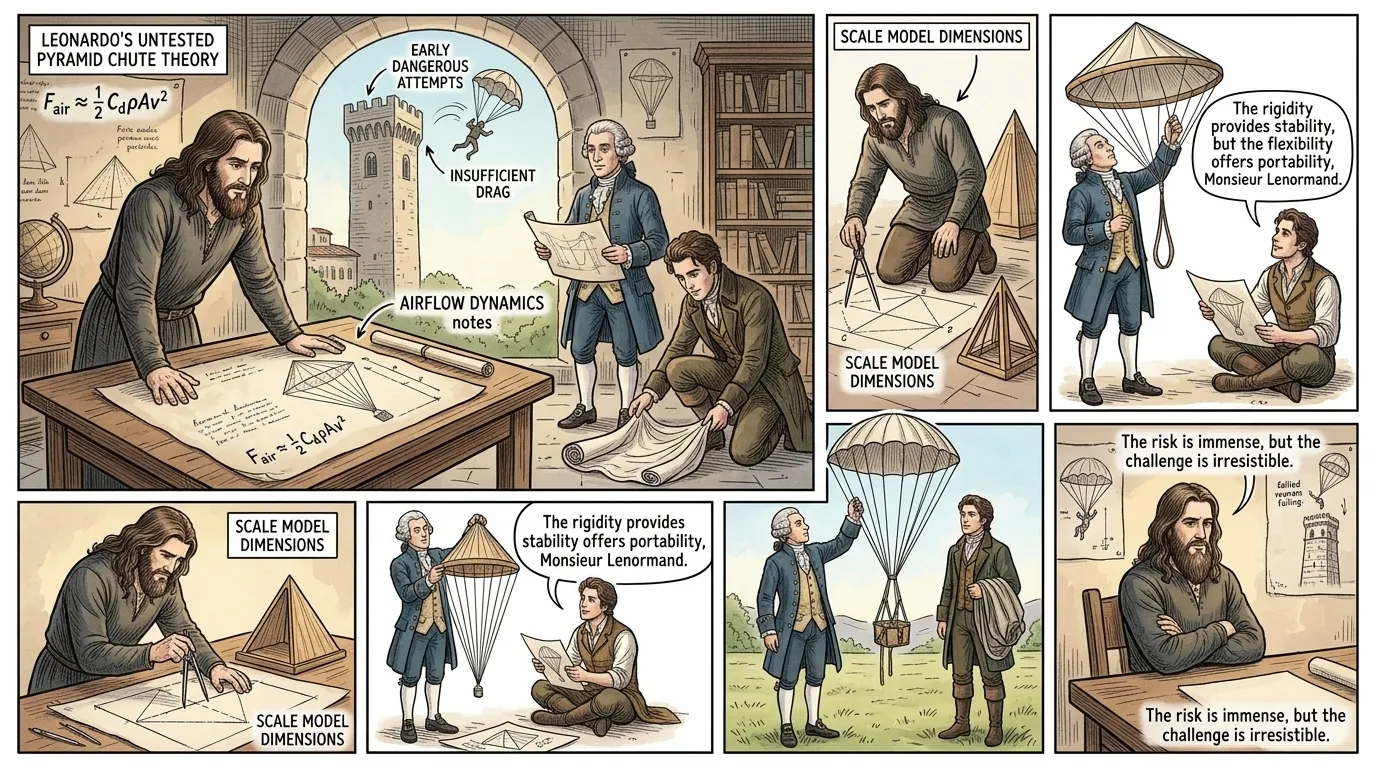
The theoretical blueprints of Leonardo remained dormant for centuries, as the immense technical challenges of materials, deployment, and controlled aerodynamics seemed insurmountable for the nascent science of the time. While philosophical discussions about mitigating falls persisted, practical application remained elusive, often leading to tragic, unsanctioned experiments with rudimentary devices. These early, perilous attempts frequently involved test dummies or even desperate individuals leaping from elevated structures, highlighting the immense courage required and the high stakes involved in each unproven descent. The concept itself was solid, but its reliable execution required true innovation and daring.
Page 4
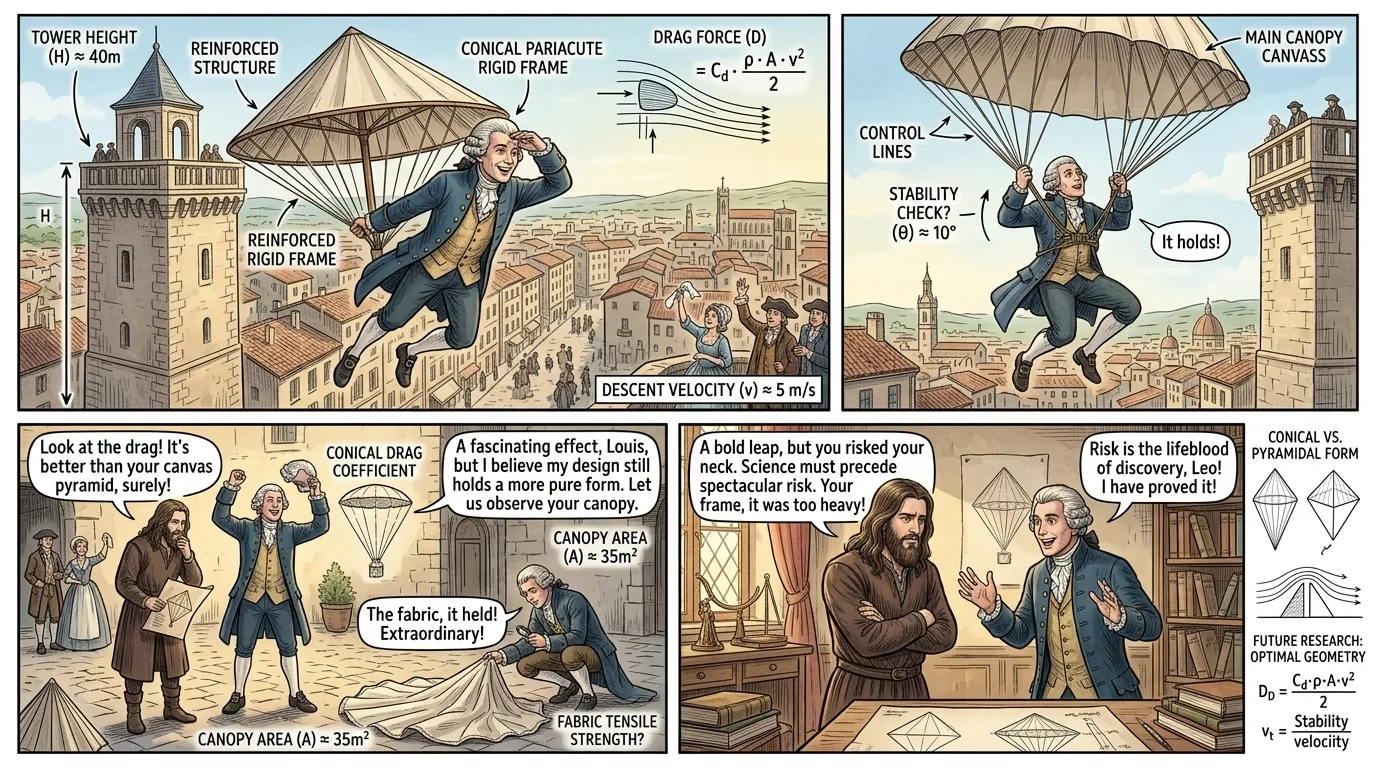
The paradigm shifted dramatically with Louis-Sébastien Lenormand, a French physicist and inventor, who took Da Vinci's concept from sketch to reality. In Montpellier, France, on December 26, 1783, Lenormand made history by publicly demonstrating a functional parachute. Donning his self-designed, rigid conical device, he leaped from the top of the Montgolfier tower, executing a controlled and safe descent. 'Courage is resistance to fear, mastery of fear – not absence of fear,' as Mark Twain once observed, perfectly encapsulating Lenormand's pioneering spirit in this audacious act of engineering.
Page 5
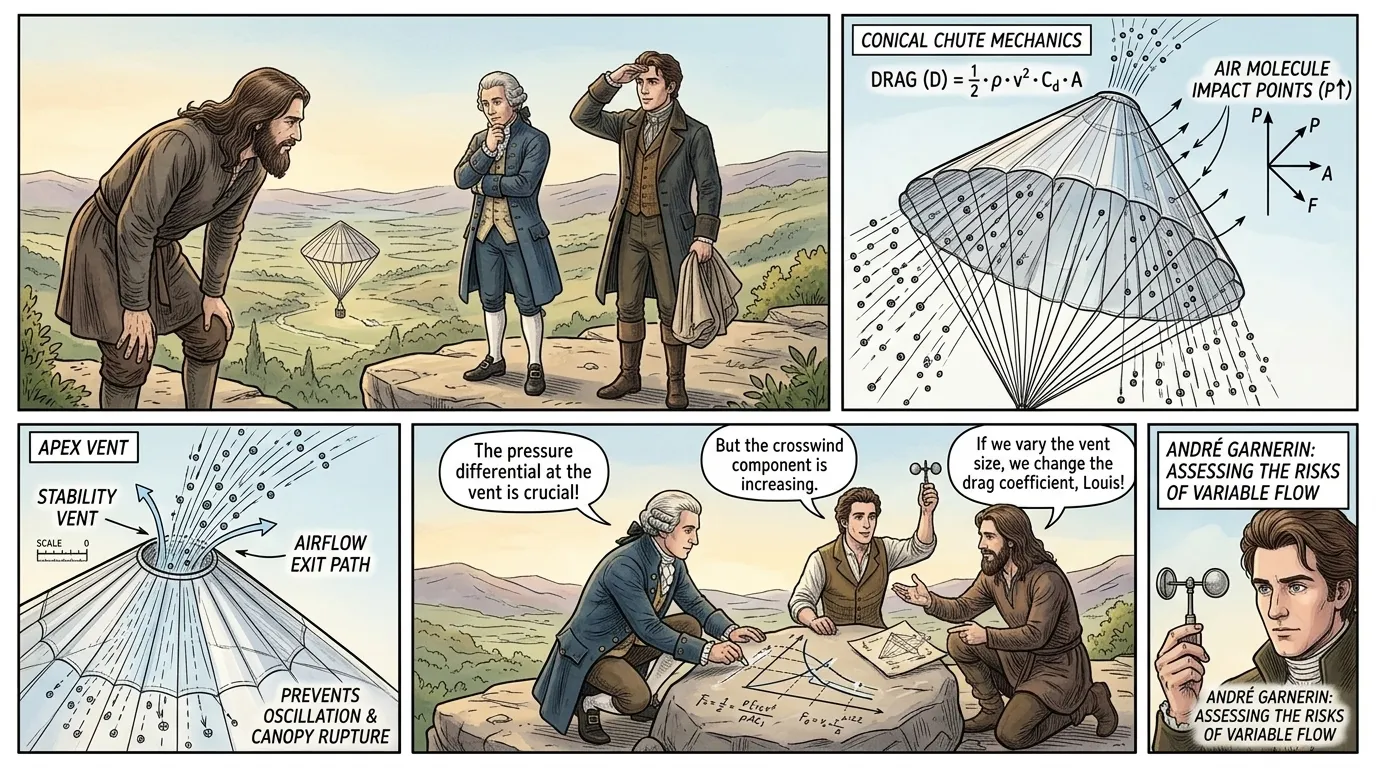
Lenormand's breakthrough relied on a fundamental aerodynamic principle: drag. His rigid, conical parachute was designed to maximize air resistance, creating a counter-force against gravity's pull. As the device descended, air molecules impacted its broad surface, generating upward pressure that significantly slowed the rate of fall. Crucially, a small vent at the apex of the cone allowed a controlled escape of air, preventing the accumulation of pressure that could lead to instability or structural failure, ensuring a relatively stable descent.
Page 6
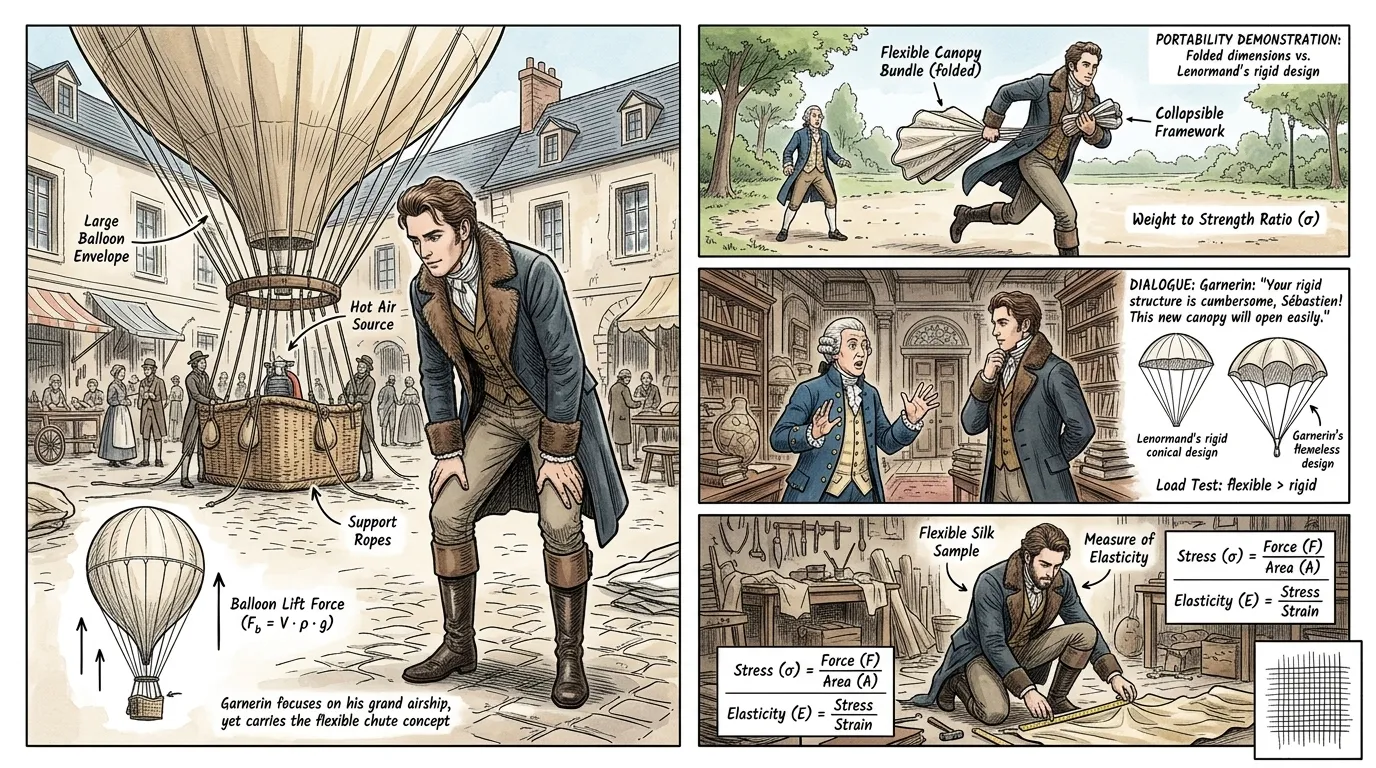
While Lenormand proved controlled descent was possible, his rigid parachute was cumbersome and impractical for storage or transport, limiting its widespread application. The next major leap came from André-Jacques Garnerin, a French balloonist, who, in 1797, pioneered the frameless, flexible parachute canopy. Garnerin's genius lay in recognizing that a collapsible fabric canopy, when properly folded and then deployed, could inflate into the necessary shape to generate drag, fundamentally transforming the parachute into a portable and versatile safety device. His design included a crucial central vent to mitigate severe oscillations, a significant improvement.
Page 7
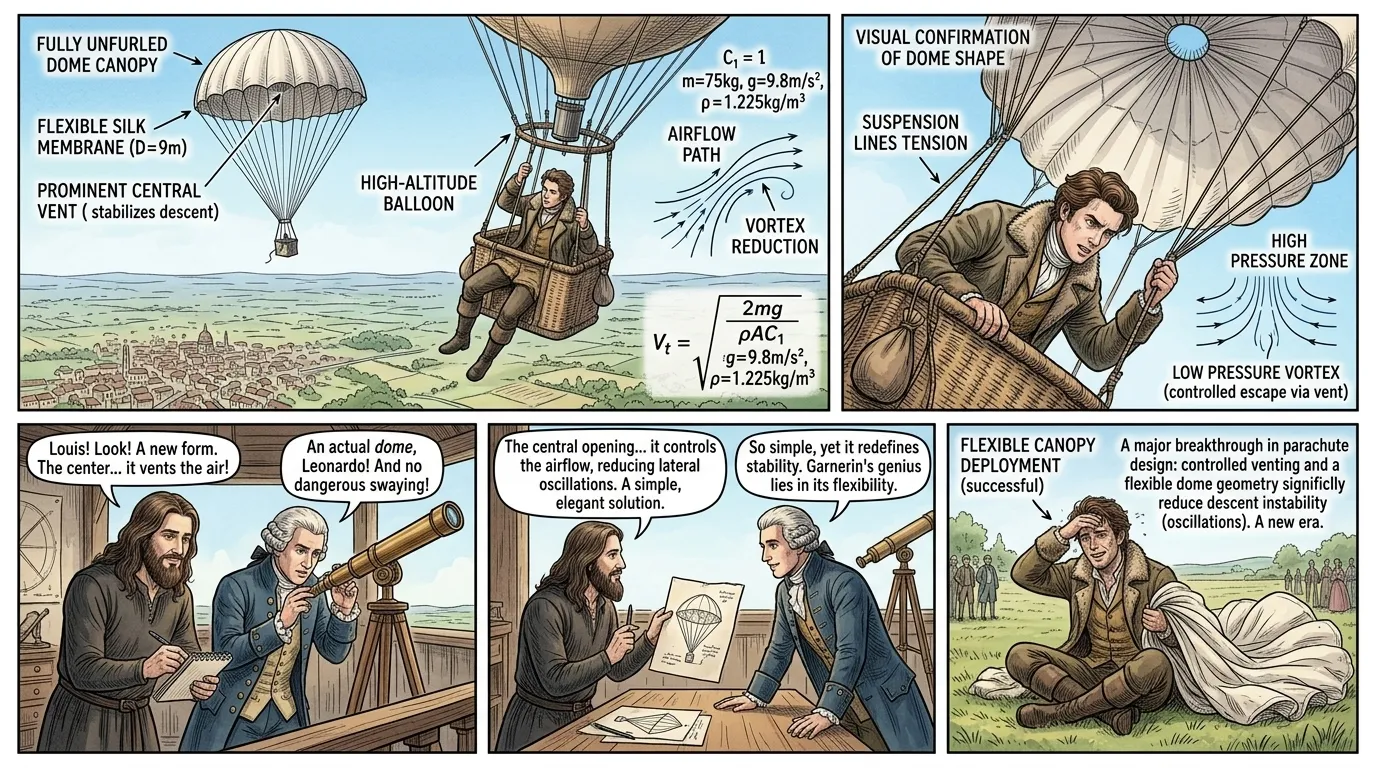
Garnerin's innovation brought new challenges in deployment, but also greater utility. His parachute, initially folded tightly, would unfurl and inflate rapidly upon release, harnessing the rushing air to expand into a dome-like shape. The critical addition of a central vent in the canopy addressed the dangerous oscillations and violent swings that plagued earlier flexible designs, allowing air to escape and stabilizing the descent. This controlled inflation and stabilization mechanism meant that the parachute could reliably convert potential energy into a safe, controlled fall, making it a viable emergency apparatus. This design fundamentally established the blueprint for all subsequent parachutes.
Page 8
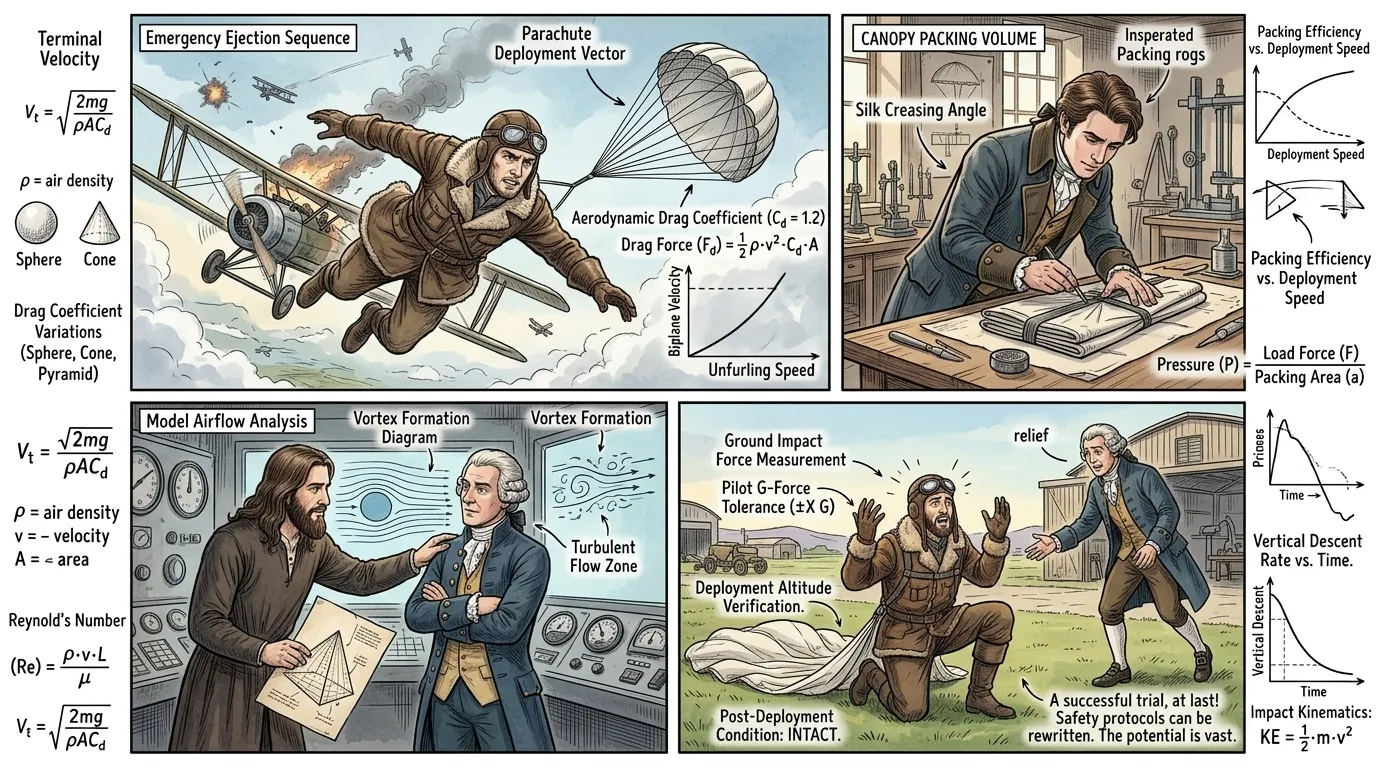
With the dawn of powered flight and, tragically, the escalation of aerial warfare in the early 20th century, the parachute transformed from a novelty into an essential piece of safety equipment. Pilots and aircrew, facing perilous conditions and aircraft vulnerability, now had a chance at survival if their planes were hit or malfunctioned. The urgent demand during World War I rapidly accelerated parachute development, leading to more compact, reliable, and quickly deployable designs. It became the lifeline for aviators, fundamentally altering the calculus of risk in aerial combat and flight operations.
Page 9
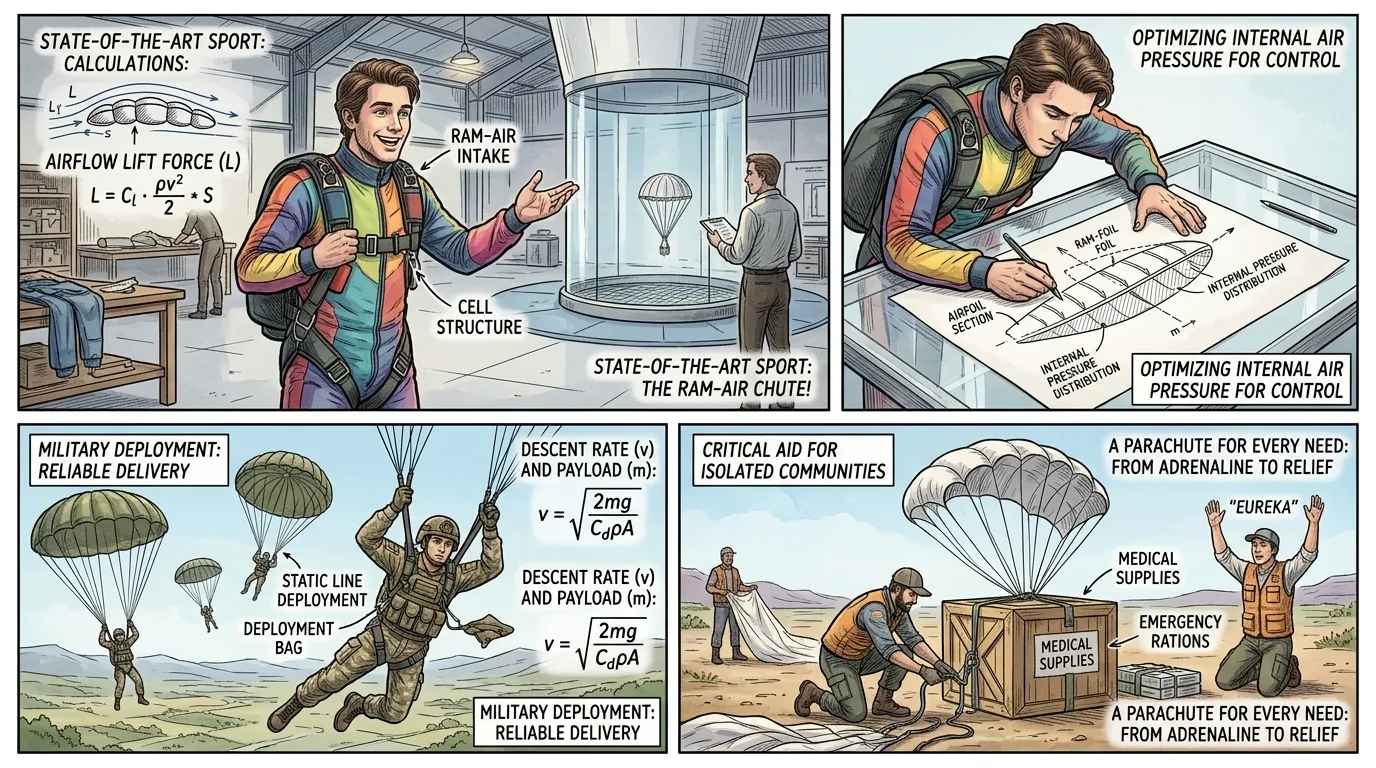
Beyond its critical role in aviation, the parachute continued its evolution, expanding into diverse applications that showcased its versatility and enduring utility. Material science breakthroughs, such as nylon, allowed for stronger, lighter canopies, while advancements in design led to steerable 'ram-air' parachutes, revolutionizing sport skydiving. Parachutes became integral to military strategy, enabling rapid deployment of paratroopers and vital supplies into combat zones. Simultaneously, they enhanced civilian safety, finding use in emergency egress systems for small aircraft and becoming a staple of recreational adventure sports globally.
Page 10
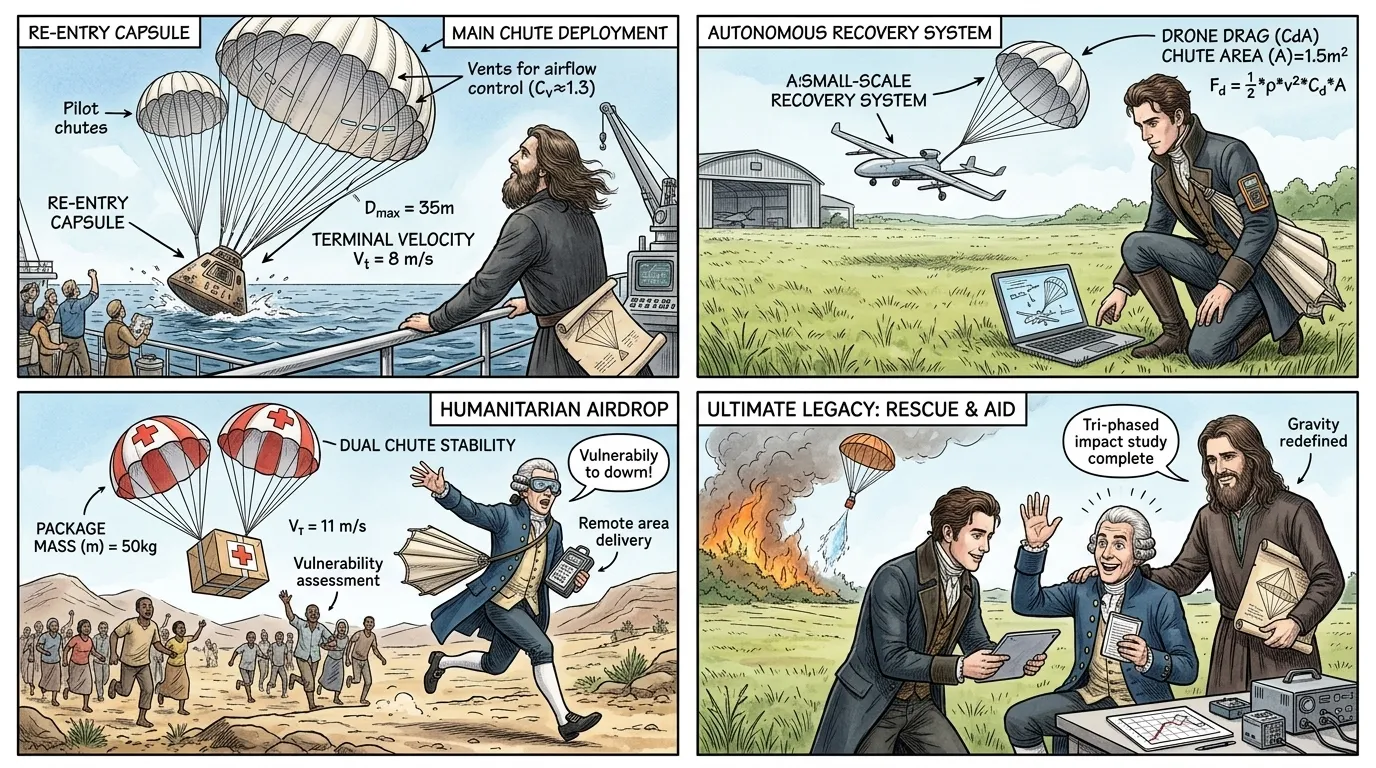
From Da Vinci's early sketches to today's advanced systems, the parachute remains a testament to human ingenuity's triumph over gravity. Its enduring impact spans far beyond mere personal safety, becoming an indispensable tool across numerous domains. Parachutes facilitate critical humanitarian aid delivery to inaccessible regions, ensure the safe return of space capsules from orbit, and are vital components in drone recovery systems and specialized firefighting operations. This remarkable invention, designed to defy the perils of falling, fundamentally redefined our relationship with height and risk, securing a lasting legacy as one of humanity's most life-saving innovations.
About this story
- Location: Global
- Audience: general readers
Read Wonder Inventions on your phone
Wonder Inventions is available on Android. Get Wonder Inventions on Google Play.