Photograph
Photograph — an illustrated inventions story, set in Global. 10 illustrated pages, free to read on Wonder Inventions.
Page 1
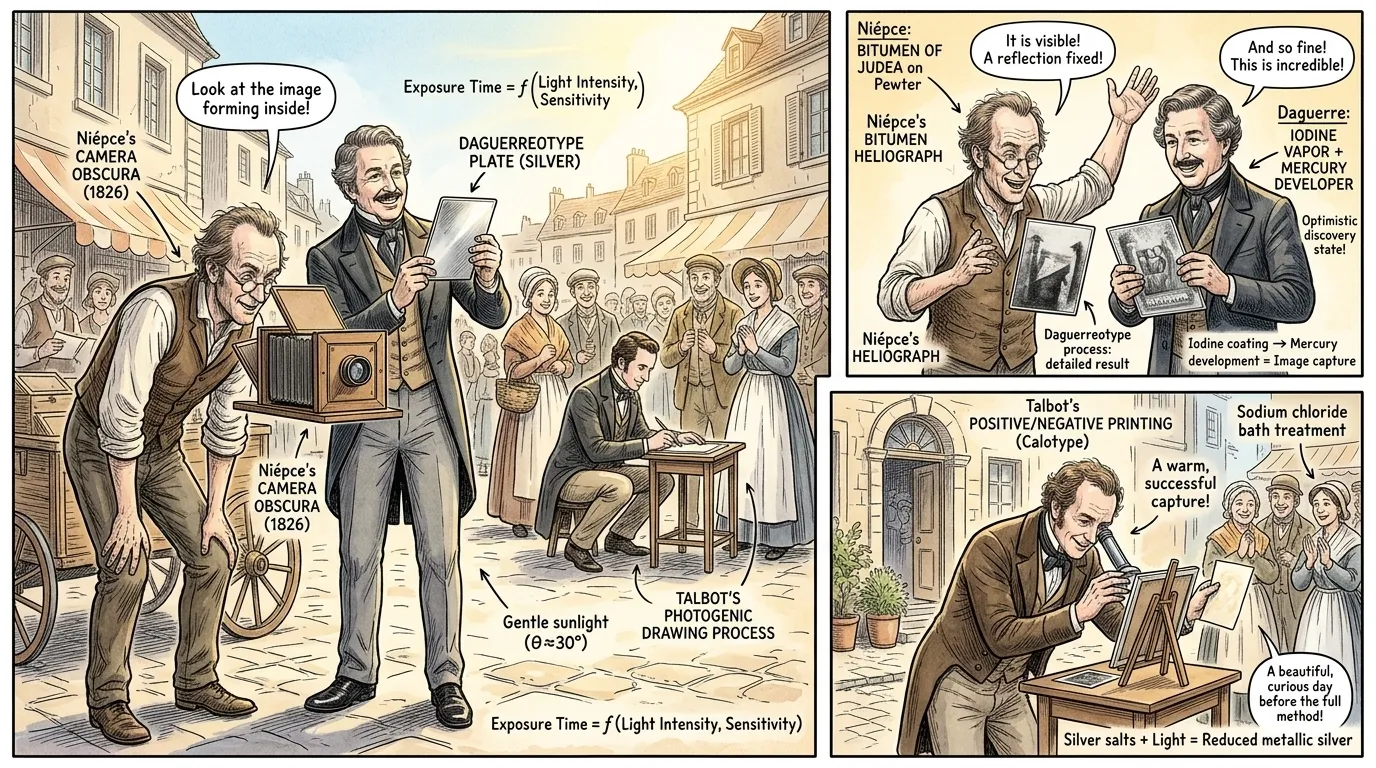
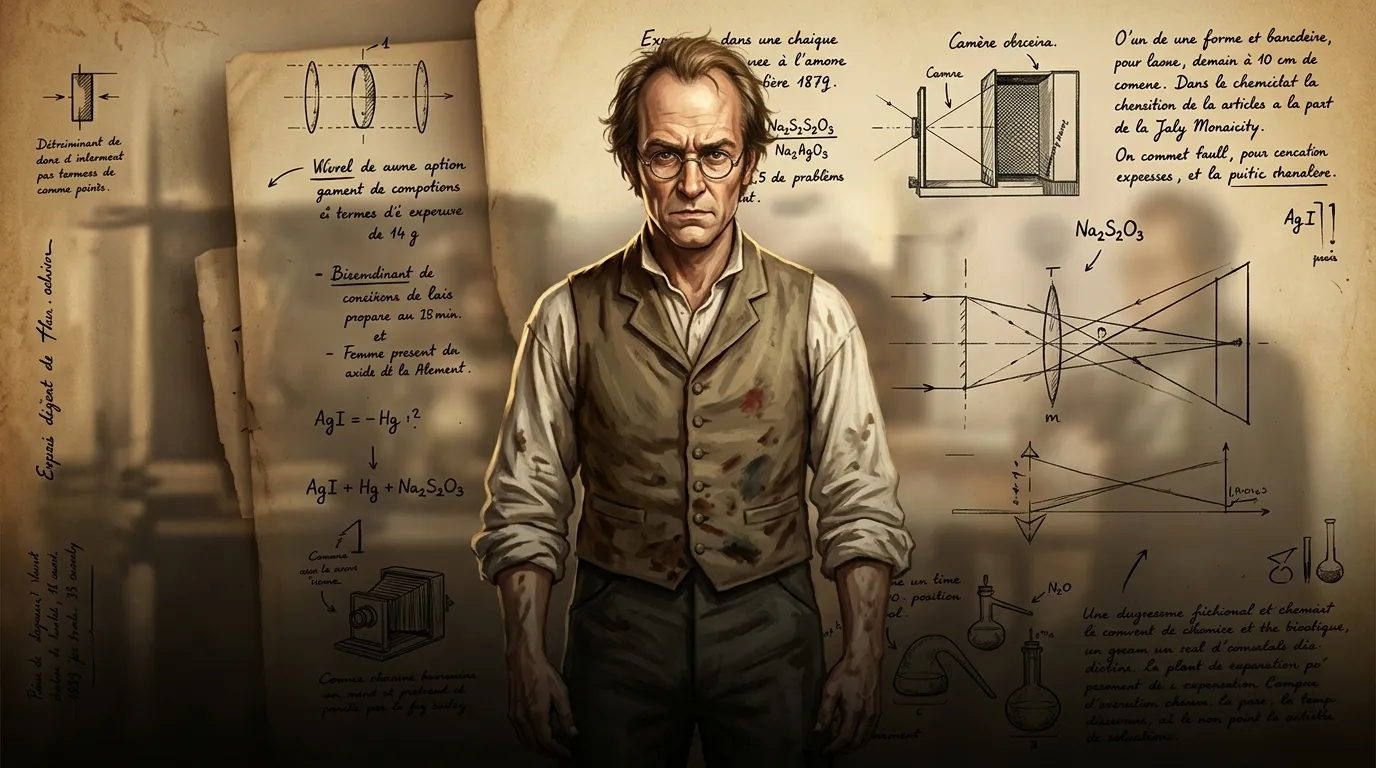
Before the advent of photography, the visual record of the world was ephemeral or painstakingly crafted by hand. To preserve a likeness, document a landscape, or illustrate an event, one relied entirely on the artist's brush or engraver's tool. These interpretations, however skilled, were subjective, time-consuming, and often beyond the financial reach of the common person. The challenge was profound: how to permanently fix the transient image projected by light, to capture reality itself without human intervention.
Page 2
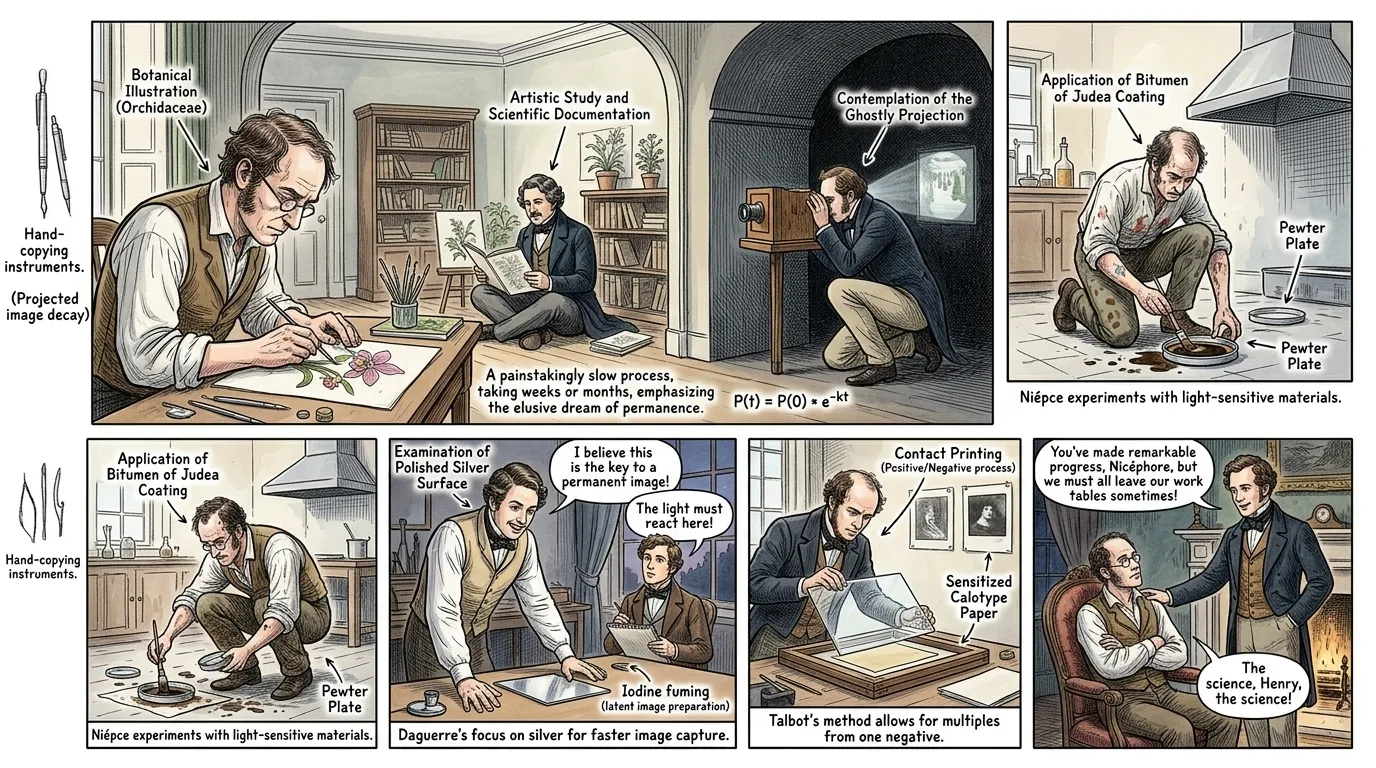
The demand for accurate visual representation existed across society. From scientific illustration to personal portraiture, the human hand was the sole intermediary. Artists spent weeks or months painstakingly rendering a single portrait, while chroniclers relied on sketches and engravings to convey distant lands or important events. While the camera obscura had long been known—a darkened room or box allowing light to pass through a small aperture, projecting an inverted image onto an opposite surface—the image remained fleeting, a ghostly projection that vanished the moment the light was extinguished. The dream of permanence remained elusive.
Page 3
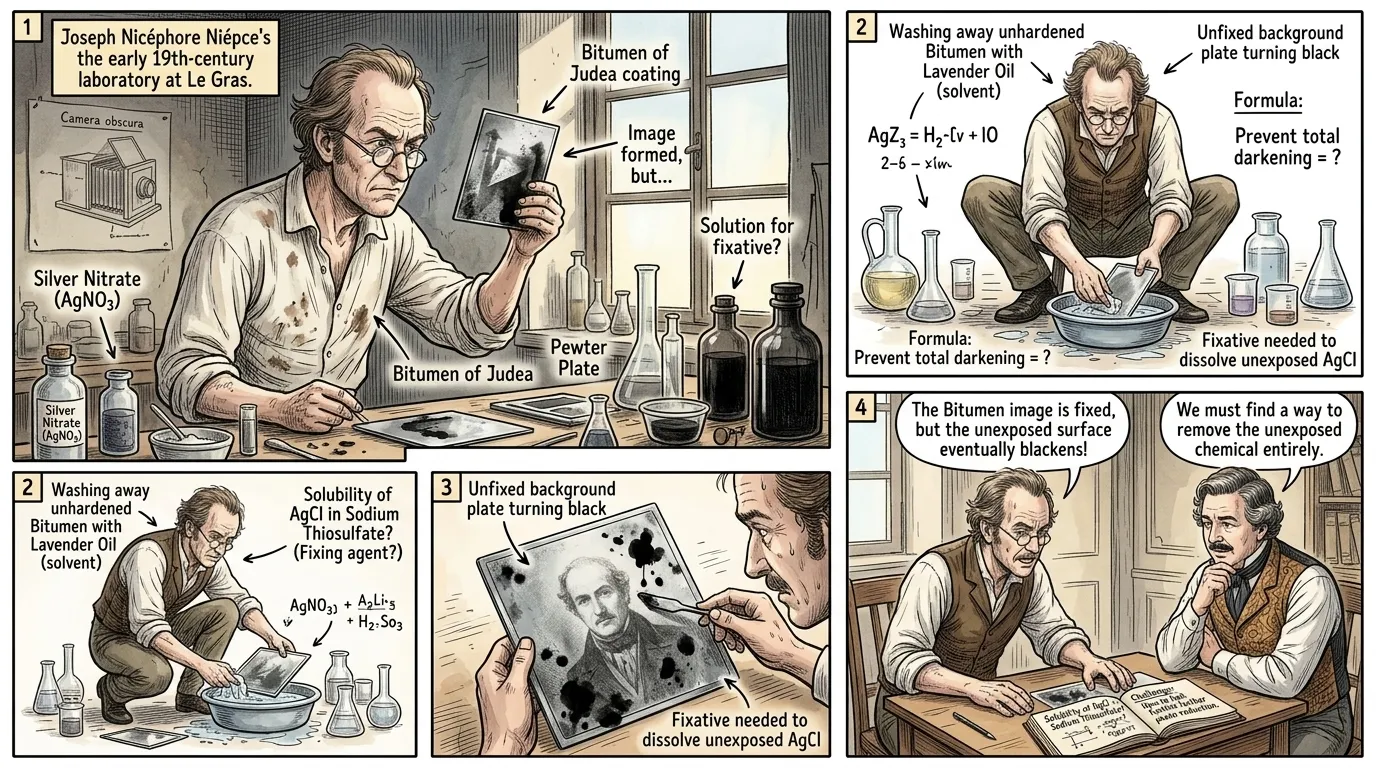
Joseph Nicéphore Niépce, a French inventor driven by a desire to create images directly, without the need for an artist, began his experiments in the early 19th century. His initial attempts involved silver chloride, a compound known to darken when exposed to light, but he struggled to prevent the entire surface from eventually blackening. The challenge lay not just in capturing the image, but in fixing it – halting the chemical reaction in the unexposed areas. This crucial step, preventing further light sensitivity, was the technical barrier that had stumped countless researchers. The scientific principles were understood, but the practical application was not.
Page 4
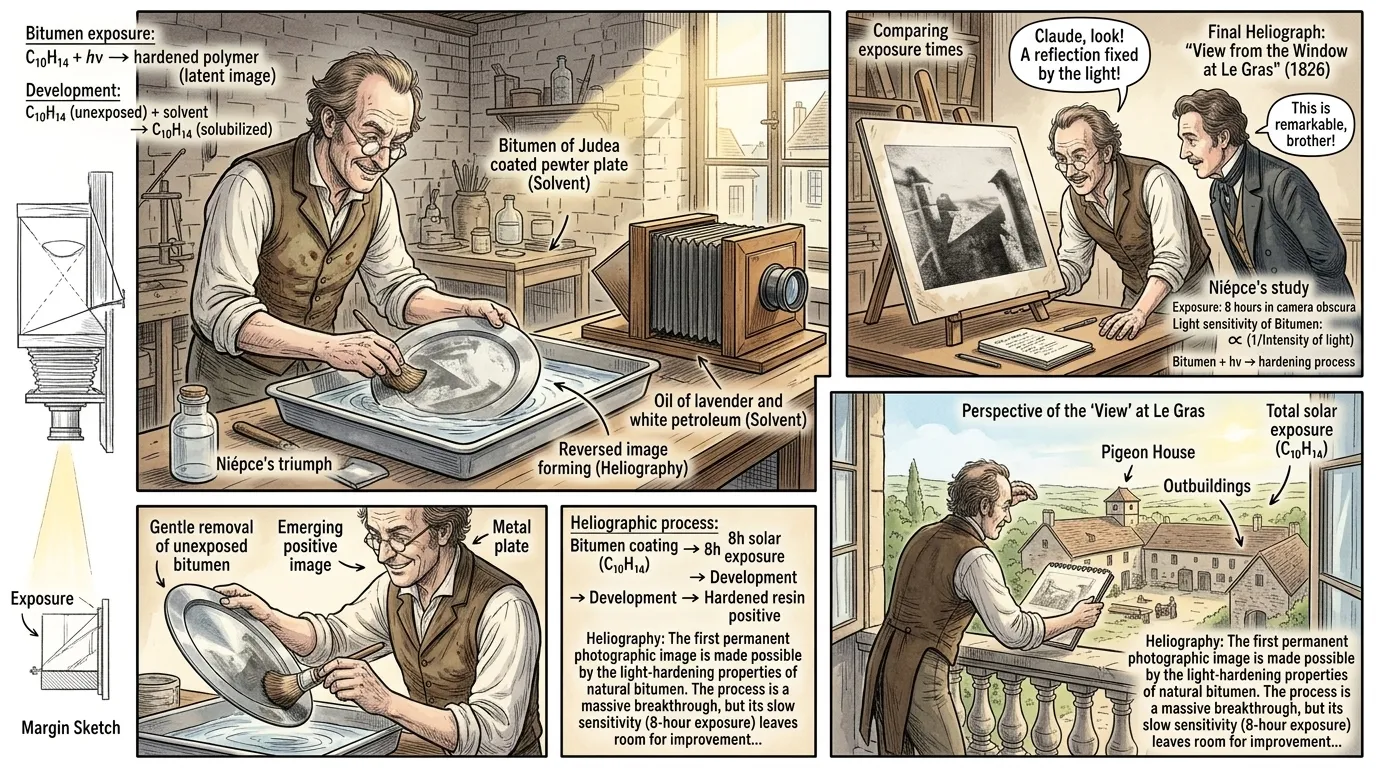
Niépce's breakthrough came with bitumen of Judea, a type of asphalt that hardens when exposed to light. He coated a pewter plate with this light-sensitive bitumen, placed it inside a camera obscura, and exposed it to light for many hours, sometimes even days. The areas of the bitumen exposed to light hardened, while the unexposed areas remained soluble. After exposure, he washed the plate with a solvent, a mixture of oil of lavender and white petroleum, which dissolved away the unhardened bitumen. This left a permanent, reversed image in hardened bitumen on the plate. This revolutionary process, which he called 'Heliography' (sun drawing), finally offered a path to permanently fixing an image, as seen in his 1826-27 photograph, 'View from the Window at Le Gras'.
Page 5
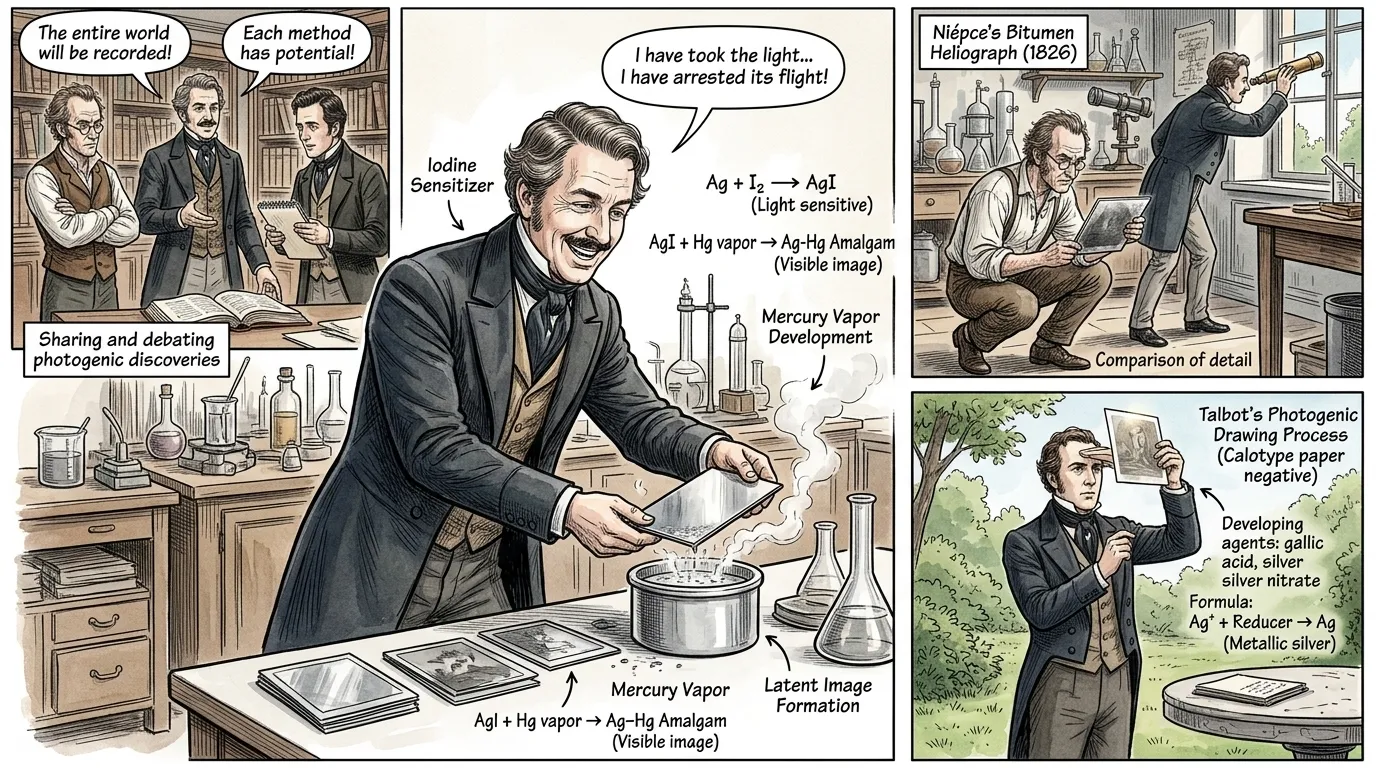
Niépce's heliography, while groundbreaking, required extremely long exposure times and produced images with limited detail. After Niépce's death in 1833, his partner, Louis Jacques Mandé Daguerre, continued the research. Daguerre's pivotal contribution was the discovery that a latent image, too faint to be seen, could be developed into a visible one by exposing the plate to mercury vapor. This significantly reduced exposure times from hours to mere minutes, making portraiture practical. He also improved the light sensitivity of the silver-coated copper plates by exposing them to iodine vapor before use, creating a layer of light-sensitive silver iodide.
"'I have seized the light... I have arrested its flight!' - Louis Daguerre, upon announcing his process."
Page 6
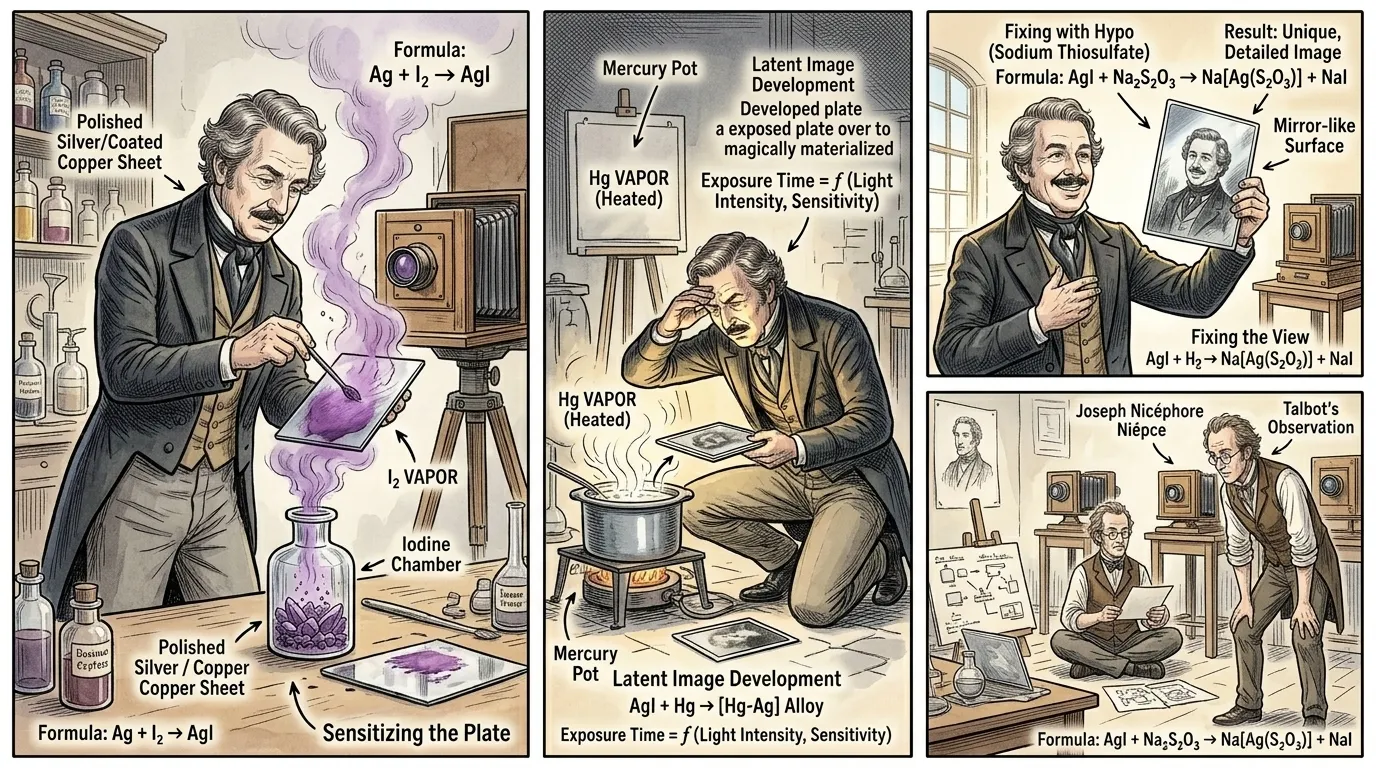
The Daguerreotype process involved a precise sequence of steps. First, a highly polished silver-plated copper sheet was fumed over iodine crystals, forming a light-sensitive silver iodide surface. This sensitized plate was then immediately placed into a camera obscura and exposed to light. After exposure, the latent image was developed by fuming the plate over heated mercury vapor, which amalgamated with the silver iodide to form a visible image. Finally, the image was fixed by washing the plate in a strong solution of sodium thiosulfate (hypo), which removed unexposed silver iodide and made the image permanent. The resulting daguerreotype was a unique, highly detailed, mirror-like image, directly on the silver surface.
Page 7
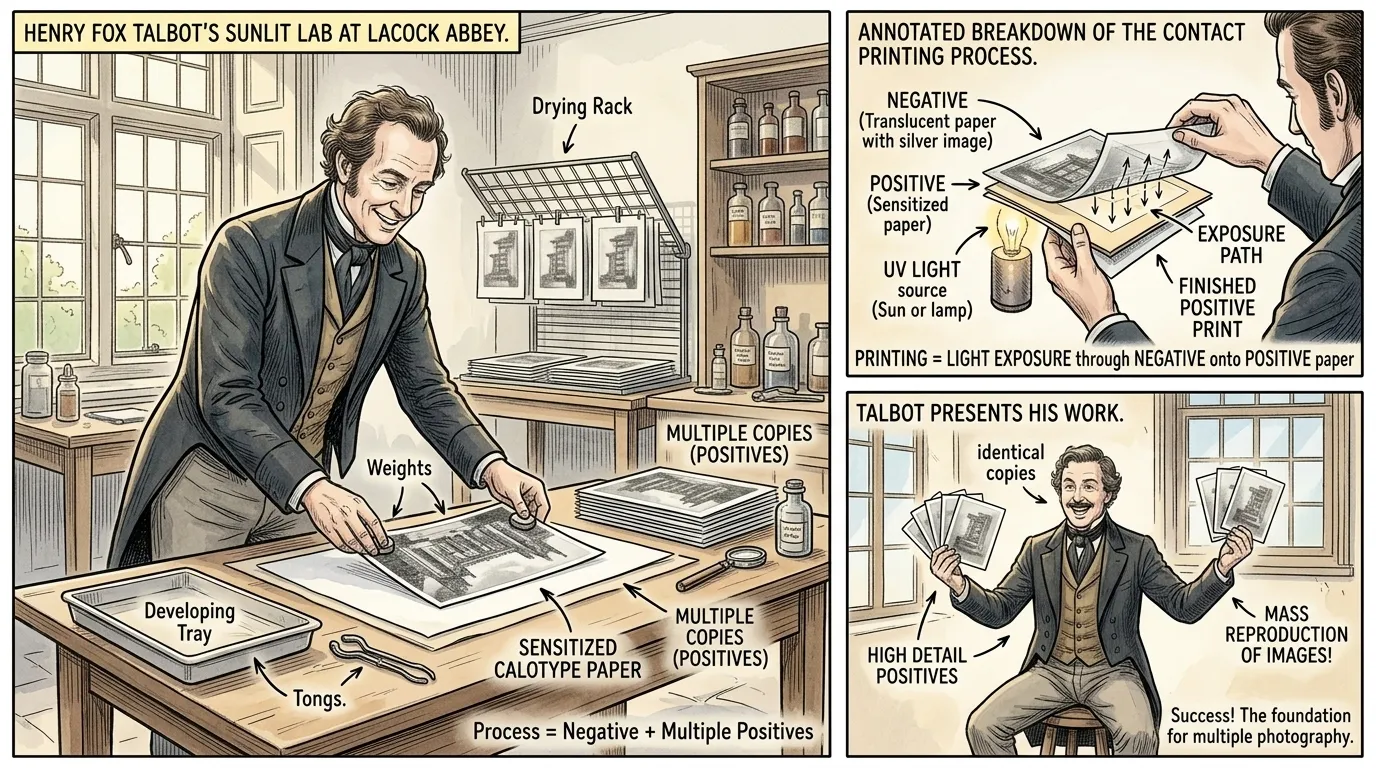
While Daguerre's process produced stunning, unique images, it did not allow for multiple copies. Independently, British inventor Henry Fox Talbot pursued a different chemical approach. His 'calotype' (later renamed 'Talbotype') process involved sensitizing paper with silver iodide, then exposing it to light to create a translucent paper negative. From this negative, multiple positive prints could be made by contact printing onto another sheet of sensitized paper. This negative-positive process, patented in 1841, fundamentally changed photography, laying the groundwork for all modern photographic processes by enabling mass reproduction of images. Talbot's early paper negatives, however, often lacked the sharpness of daguerreotypes due to the fibers of the paper.
Page 8
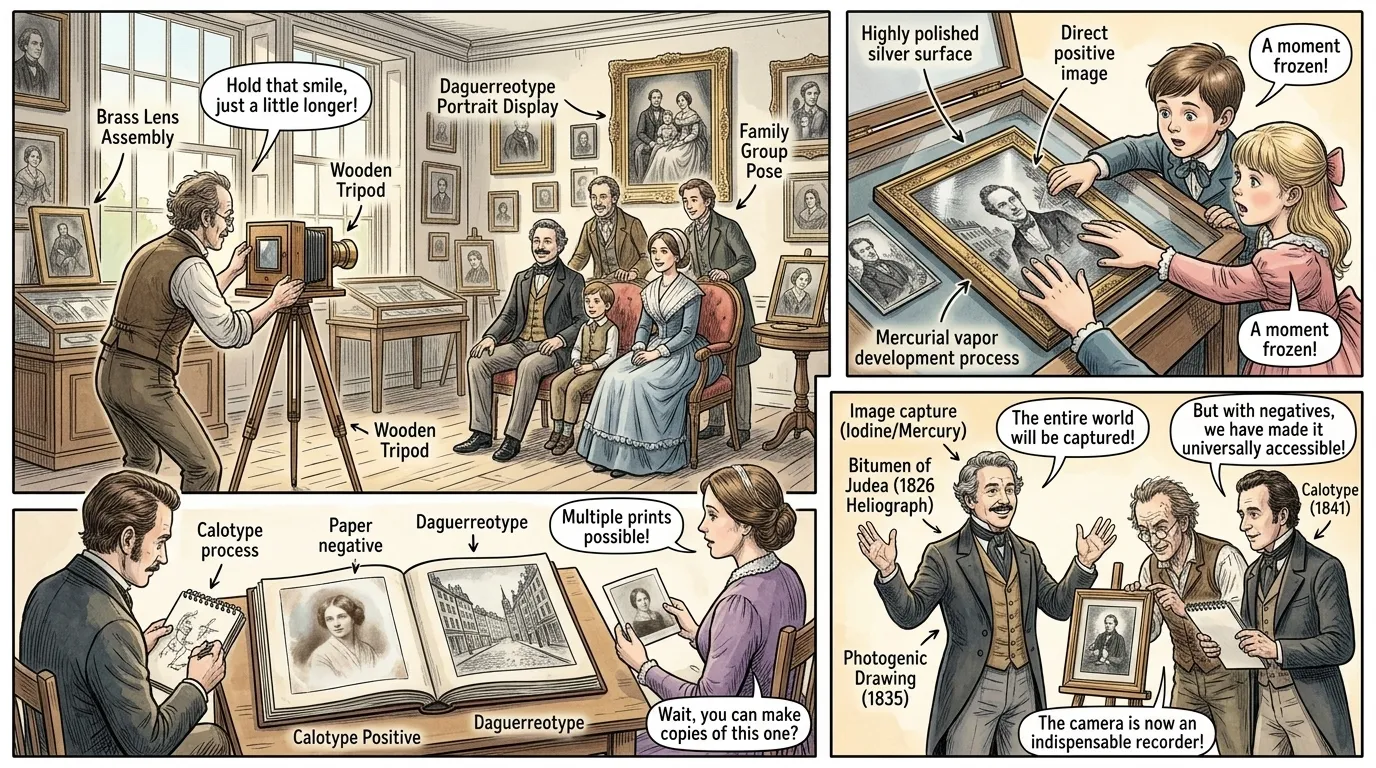
The announcement of the daguerreotype in 1839 captivated the world. Photography quickly spread, first across Europe, then to the Americas and beyond. Portrait studios flourished, offering the middle classes a chance to own their likeness, previously a luxury of the elite. From solemn family portraits to documentary records of architecture and foreign lands, the camera became an indispensable tool for capturing moments. While early daguerreotypes were delicate and unique, the subsequent rise of the calotype and later collodion wet plate processes made photography more accessible and versatile, solidifying its role as a powerful new medium.
Page 9
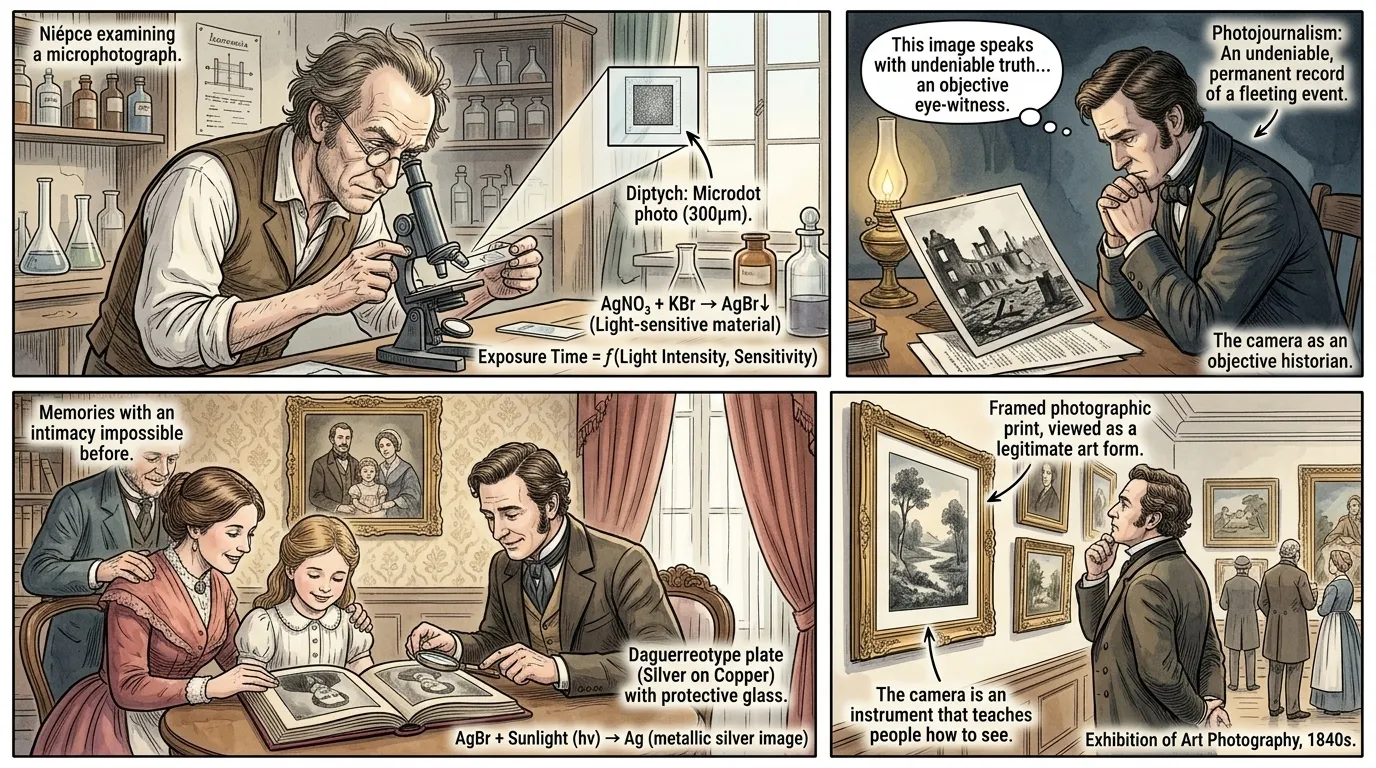
Photography rapidly transformed every facet of human experience. In science, it provided unprecedented accuracy for observation, from astronomical charts to microphotography. Journalism gained a powerful new eye-witness, dramatically shaping public perception of events like the American Civil War through stark, unvarnished images. For families, photographs became cherished heirlooms, preserving memories with an intimacy impossible before. The ability to freeze time and record reality shifted artistic sensibilities, challenged traditional painting, and established photography itself as a legitimate art form. 'The camera is an instrument that teaches people how to see without a camera,' as Dorothea Lange once observed, encapsulating its profound influence.
"'The camera is an instrument that teaches people how to see without a camera.' - Dorothea Lange"
Page 10
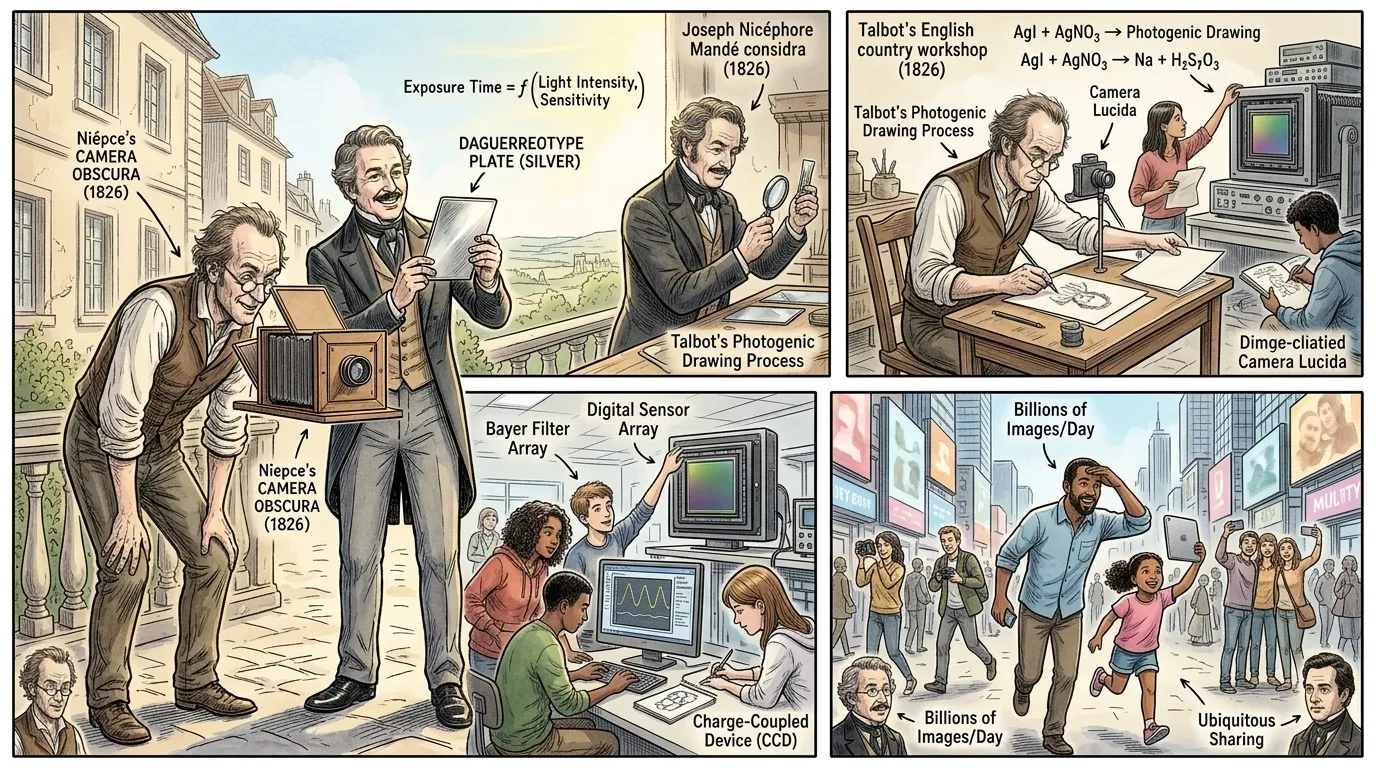
From Niépce's laborious heliographs to Daguerre's detailed unique plates, and Talbot's reproducible negatives, the foundational principles of photography were established. Over generations, this invention evolved through countless chemical and mechanical advancements: flexible film, color processes, instant cameras, and eventually, the digital revolution. Today, billions of images are captured daily, instantly shared across the globe, fundamentally altering communication, record-keeping, and personal expression. The photograph, once a marvel, is now ubiquitous, a testament to the enduring human desire to capture and preserve the fleeting image of reality.
About this story
- Location: Global
- Audience: general readers
Read Wonder Inventions on your phone
Wonder Inventions is available on Android. Get Wonder Inventions on Google Play.