Printing Press
Printing Press — an illustrated inventions story, set in Global. 10 illustrated pages, free to read on Wonder Inventions.
Page 1
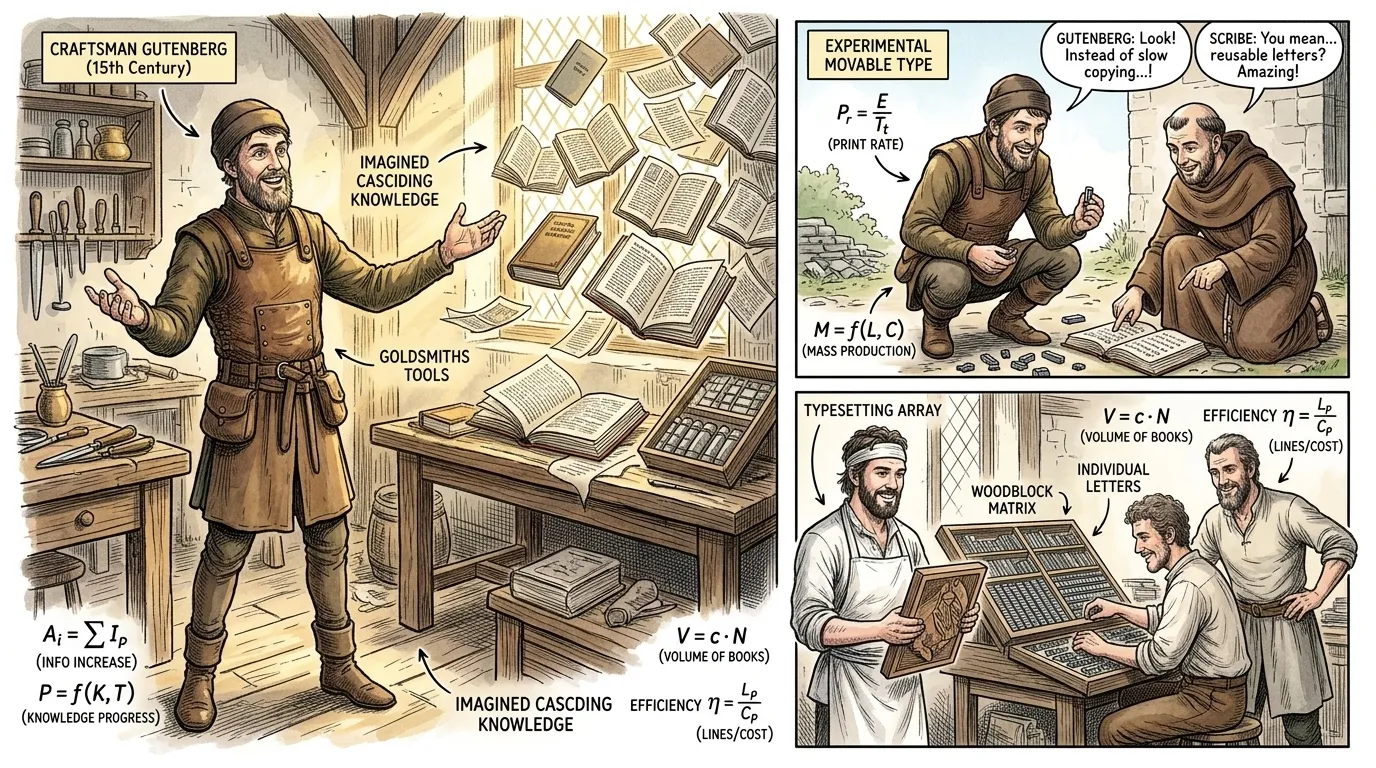
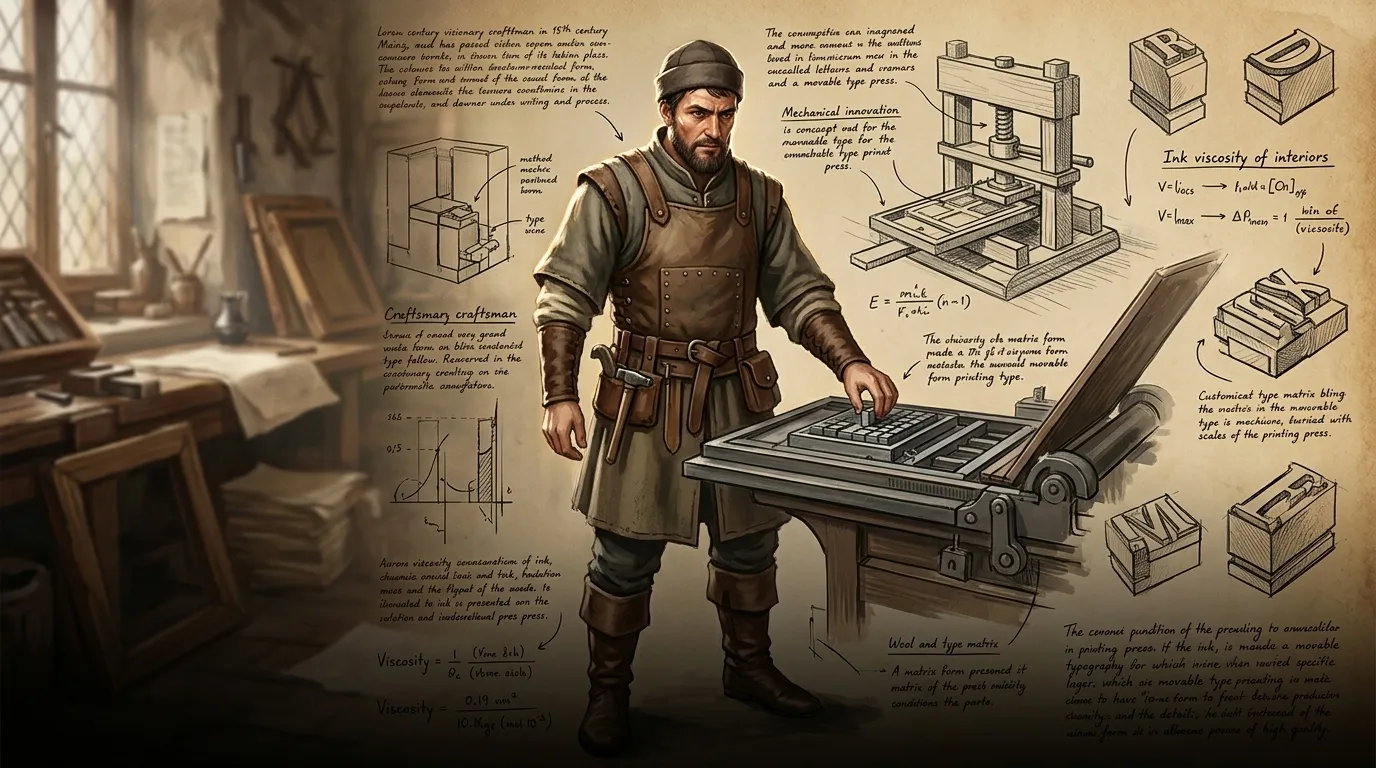
Before the mid-15th century, the written word was a luxury, painstakingly copied by hand, largely confined to monasteries and elite institutions. This era of scarcity meant knowledge spread slowly, restricted by the monumental effort required for each individual book. A visionary craftsman, Johannes Gutenberg, operating from Mainz, Germany, sought to break these bonds, pioneering a mechanical system that would forever alter the course of human communication. His invention, the Printing Press, emerging around 1450, promised to transform the laborious art of manuscript production into an efficient, industrial process, heralding an age of unprecedented access to information.
Page 2
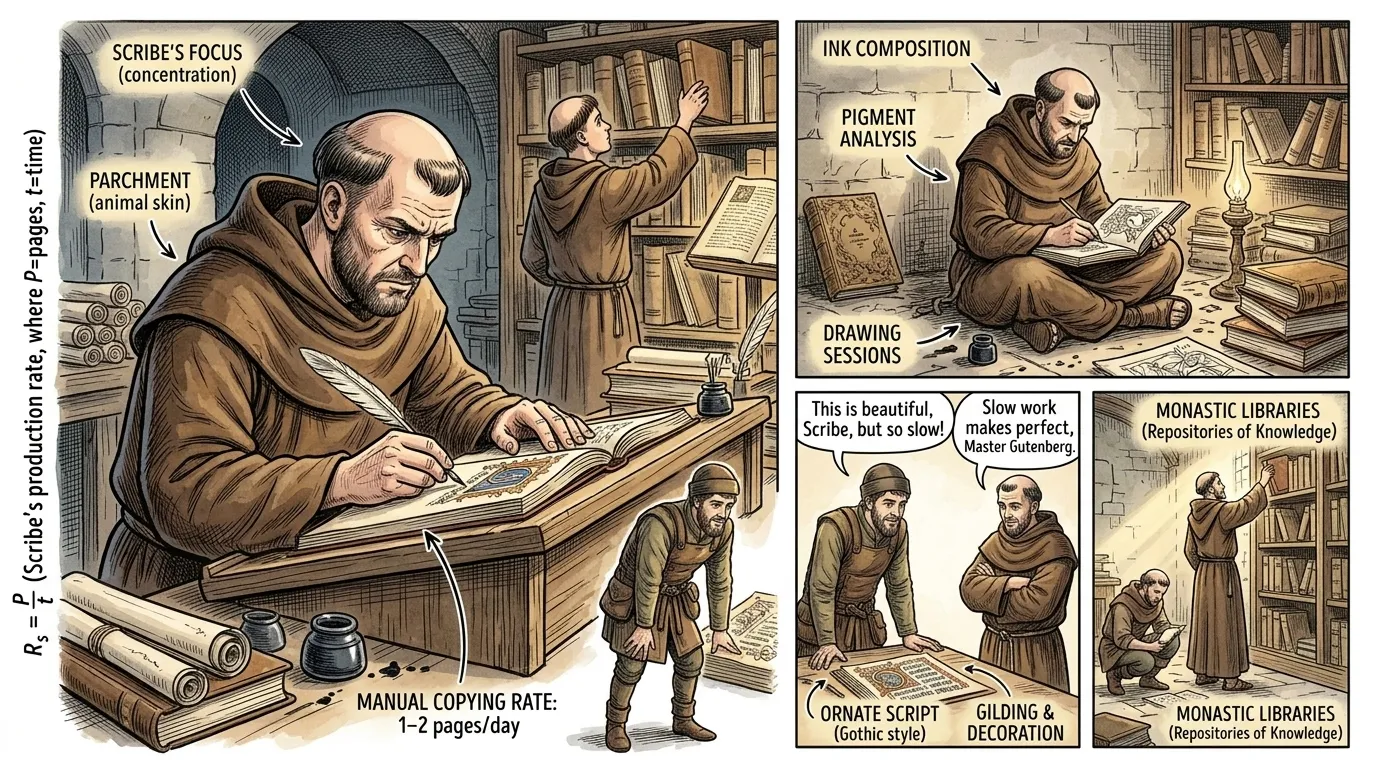
For centuries, books were precious artifacts, their creation demanding extraordinary skill and patience. Scribes, often monks, devoted years of their lives to transcribing texts, syllable by syllable, onto parchment or vellum. This meticulous manual labor, while preserving invaluable knowledge, rendered books exceedingly rare and prohibitively expensive, limiting ownership to the very wealthy or powerful religious orders. Each volume represented thousands of hours of human effort, from preparing materials to intricate illumination, creating a bottleneck that severely restricted the dissemination of ideas across society.
Page 3
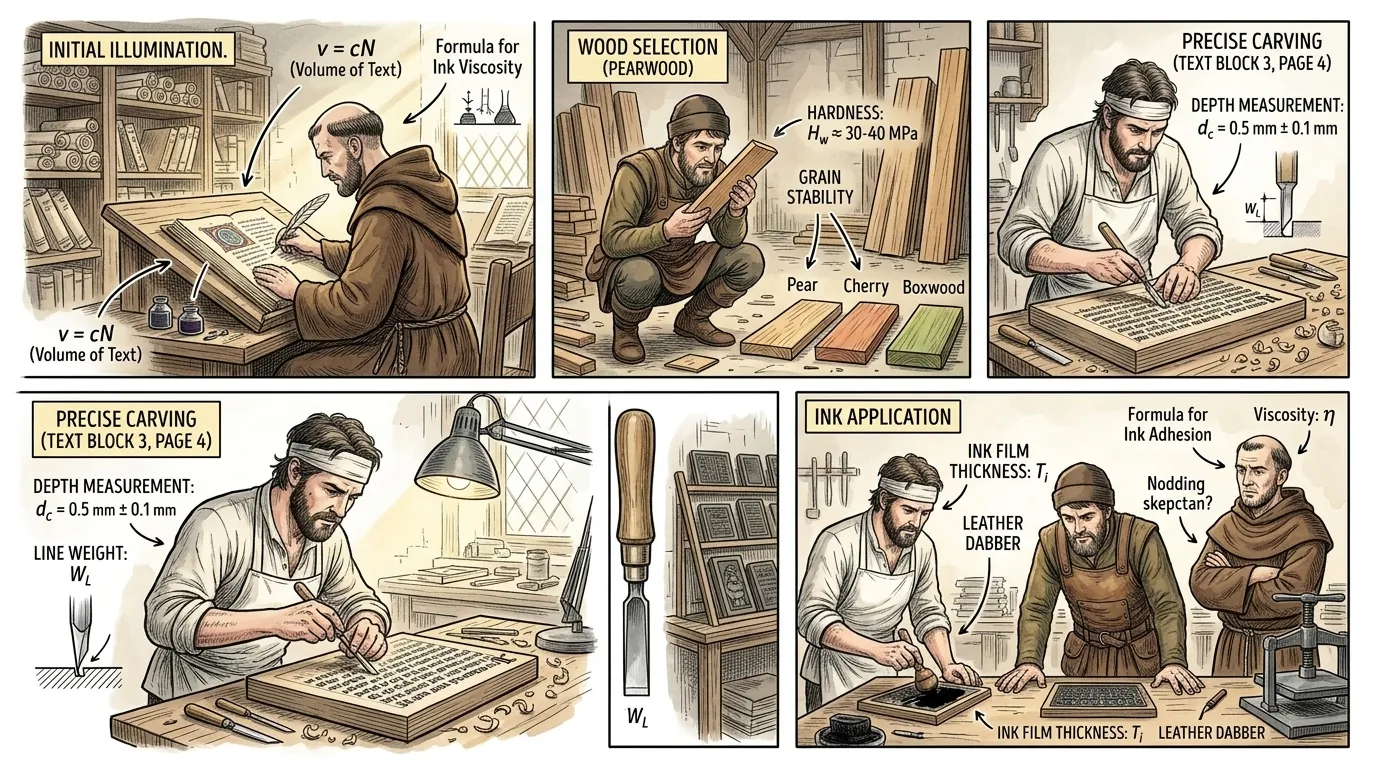
Before Gutenberg's breakthrough, some attempts at mechanical reproduction existed, most notably woodblock printing, which had arrived in Europe from East Asia. A skilled craftsman would painstakingly carve an entire page of text and illustrations into a single block of wood. This block was then inked and pressed onto paper, producing multiple copies. However, this method presented significant limitations: the blocks were fragile, degraded quickly with use, and, crucially, each page required a wholly new, laborious carving, making corrections impossible and text reuse impractical. This fundamental inefficiency highlighted the pressing need for a more adaptable and durable printing solution.
Page 4
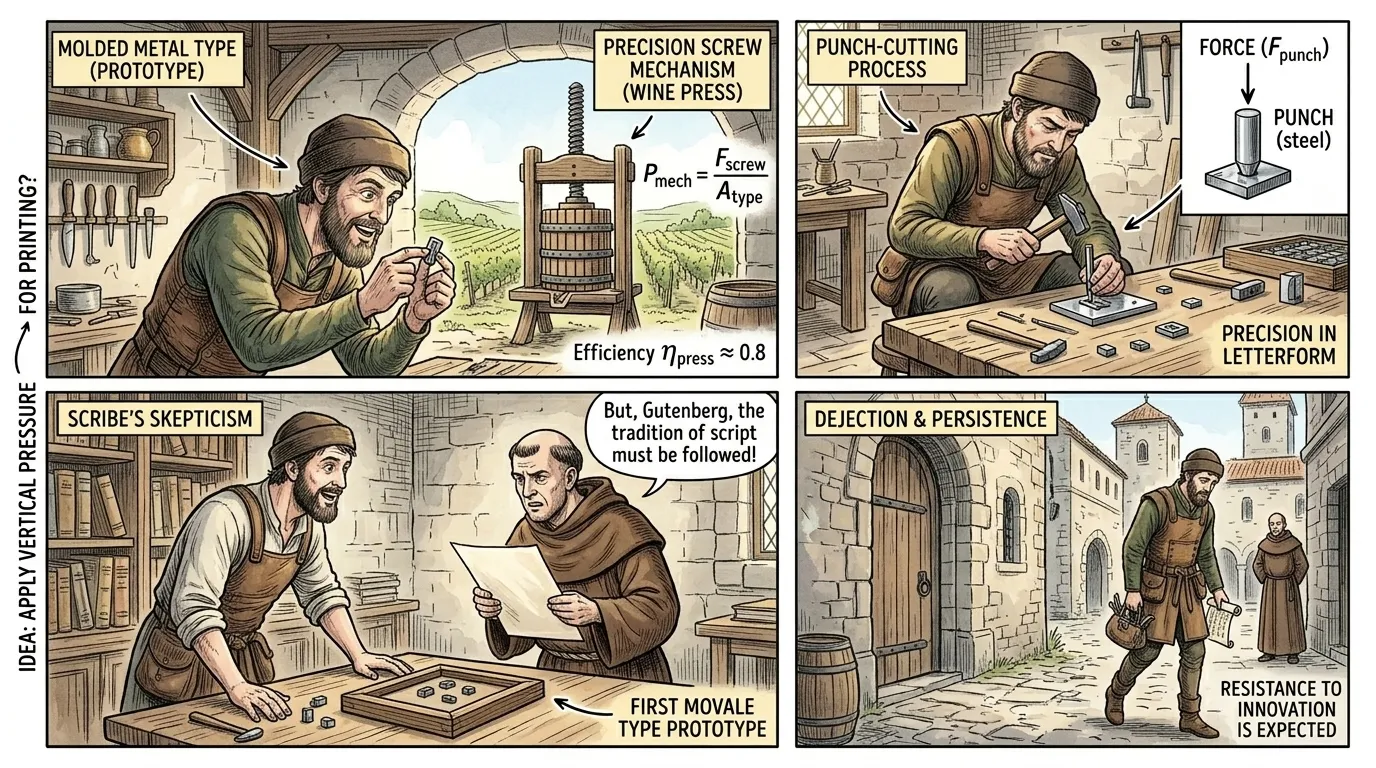
Johannes Gutenberg, a man of diverse talents with a background in goldsmithing and gem-cutting, possessed a unique perspective on the challenge of book production. His familiarity with metallurgy, precision casting, and fine tooling proved invaluable. Observing the wine presses common in the Rhineland, he envisioned a similar robust mechanism, but one that could apply even pressure to paper, far more delicate than grapes. The true stroke of genius, however, lay in his understanding that mass-produced, interchangeable components — individual letters of metal type — were essential. This insight, rooted in his metalworking expertise, diverged radically from the fixed-block methods of the past.
Page 5
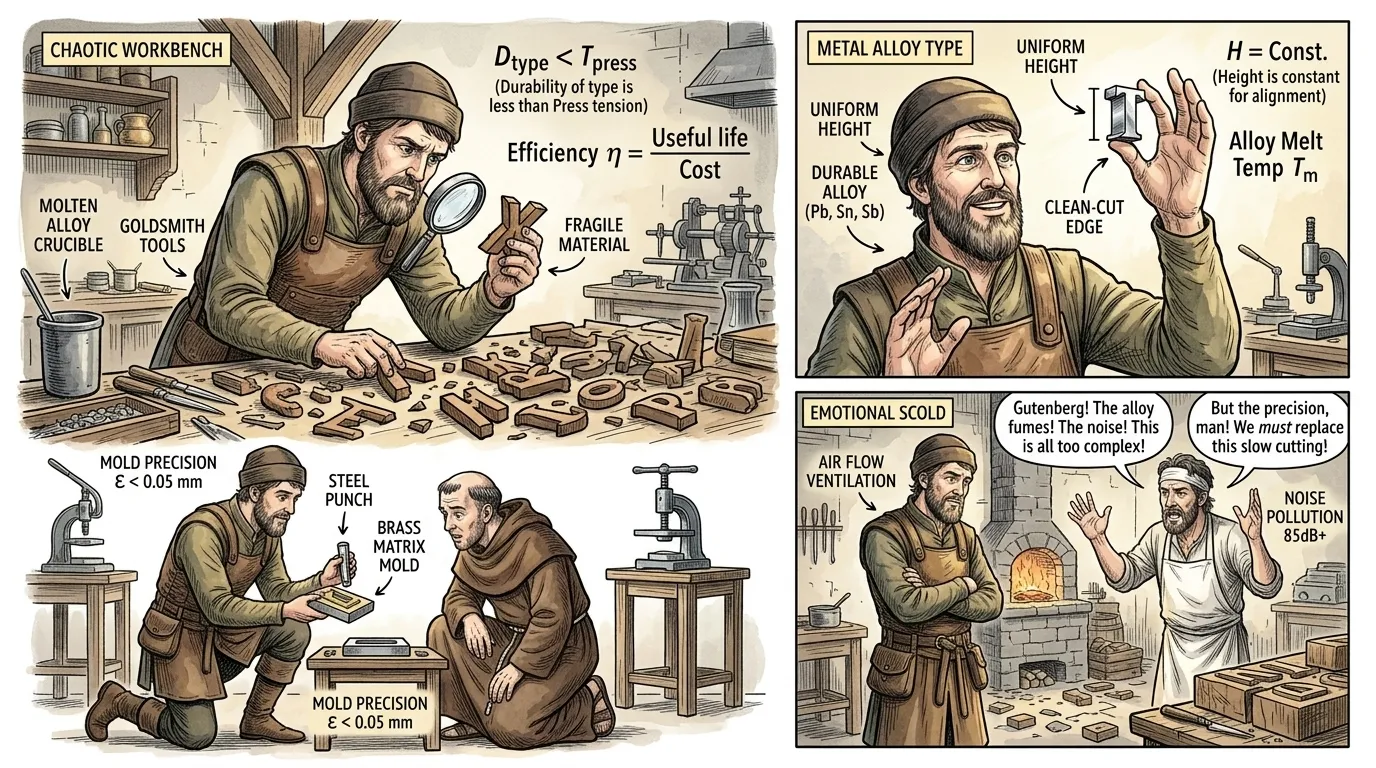
The path to viable movable type was fraught with technical hurdles. Early experiments with less durable materials like wood or clay quickly demonstrated their inadequacy; they couldn't withstand repeated pressure and produced inconsistent impressions. Gutenberg understood that metal offered the necessary durability, but forging perfectly uniform letters by hand was impossible. The critical challenge was not merely creating individual letters, but engineering a system to produce hundreds or thousands of identical, precisely sized, and perfectly aligned metal characters. This demanded an entirely new approach to metal fabrication, one that could ensure every 'a' or 'b' was interchangeable and consistent.
Page 6
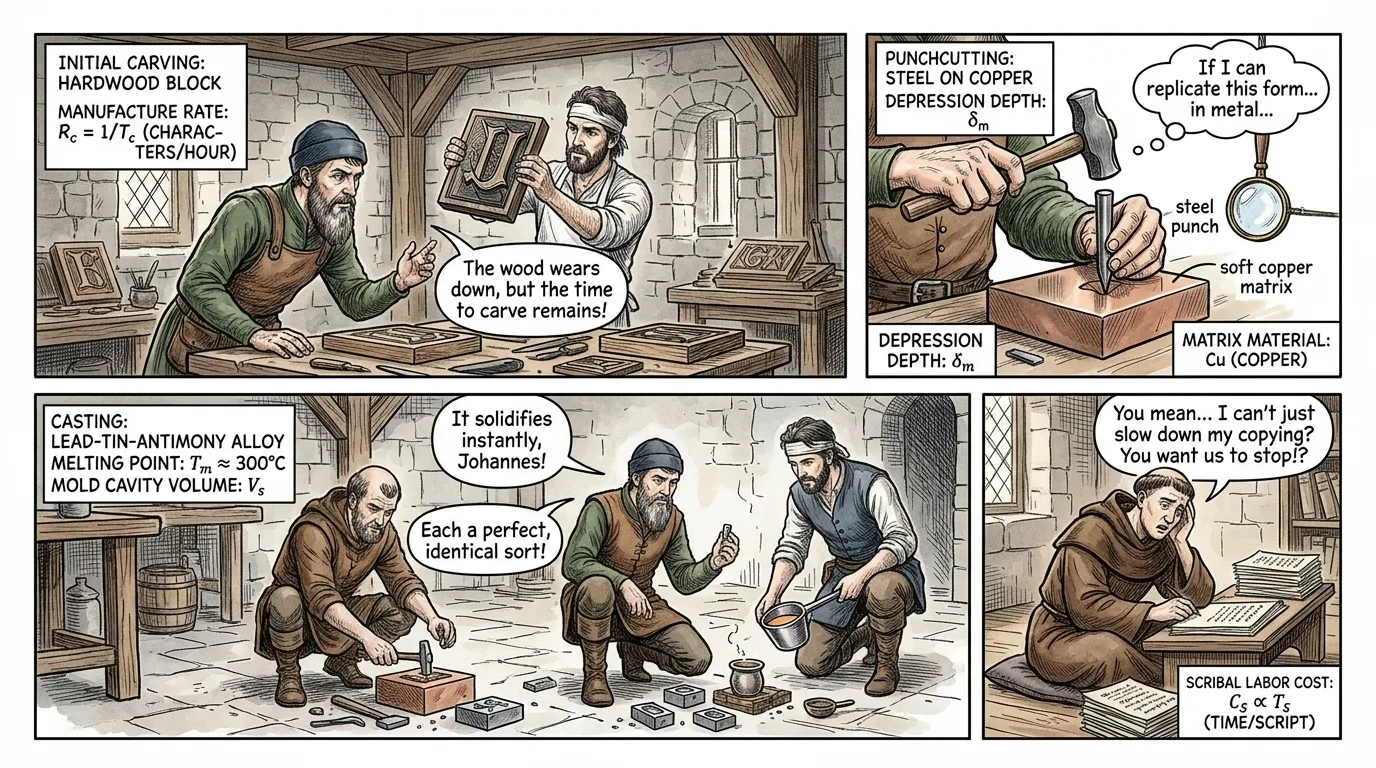
Gutenberg's genius culminated in the invention of the adjustable hand mould, a device that allowed for the rapid, precise casting of individual metal letters. This process began with a 'punch,' a hard metal rod with a reversed letter carved at its end. This punch was hammered into a softer copper bar, creating a recessed impression known as a 'matrix.' The matrix, now containing the accurate, reversed character, was then fitted into the hand mould. Molten lead alloy was poured into the mould, solidifying instantly into a perfectly formed, individual piece of type, known as a 'sort.' This ingenious system ensured every character of a given letter was identical in size and shape, a foundational prerequisite for efficient printing.
Page 7
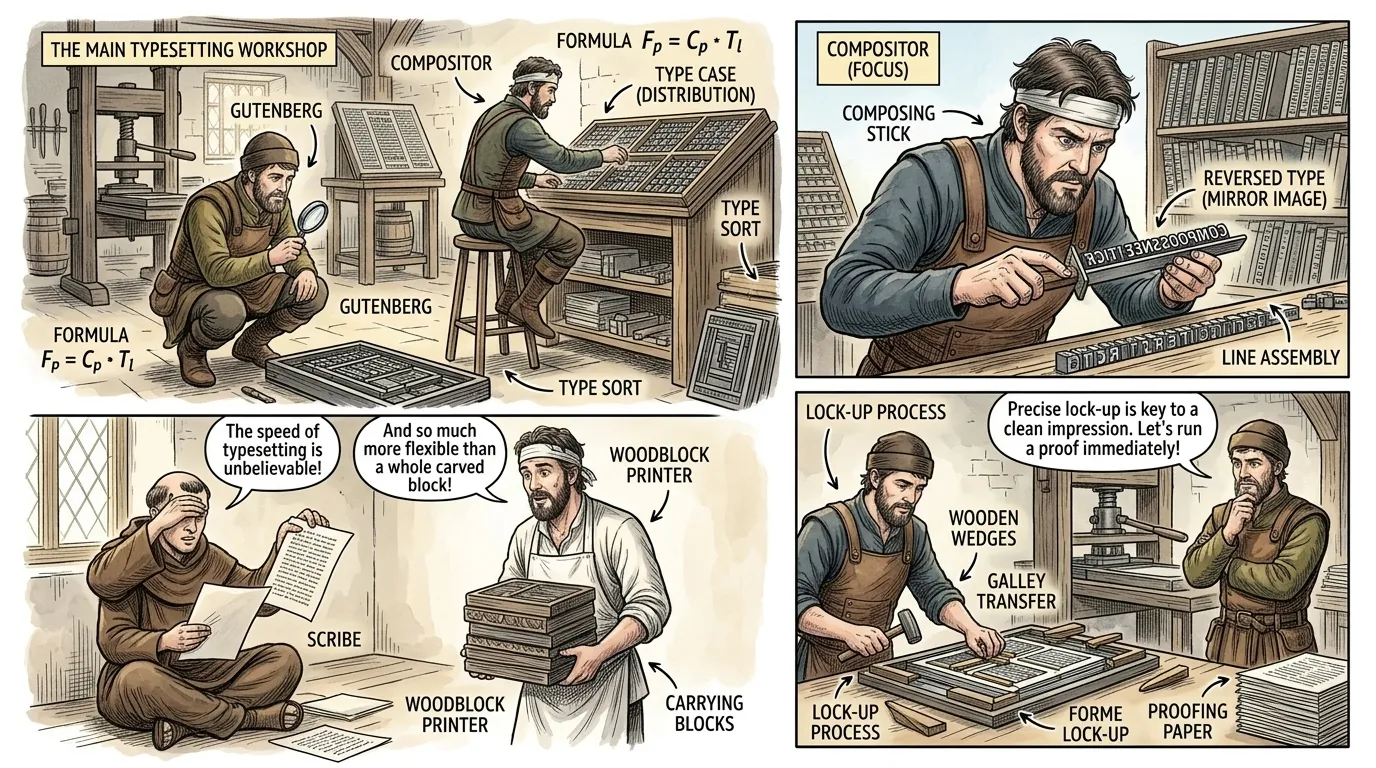
With thousands of identical 'sorts' now available, the next stage involved composing the actual text. A compositor, using a 'composing stick,' arranged individual metal letters, spaces, and punctuation into lines of type, reading from right to left, to create a reversed mirror image of the final printed page. Once a column or page was complete, it was carefully transferred to a 'galley,' then assembled with other columns into a 'forme,' a large frame made of iron or wood. This forme, containing the entire page or pages to be printed, was then meticulously 'locked up' using wedges to ensure no characters shifted during the printing process. As Francis Bacon famously stated, 'Knowledge is power.' The mechanical printing press was about to unleash that power upon the world, making such precise, repeatable composition possible.
Page 8
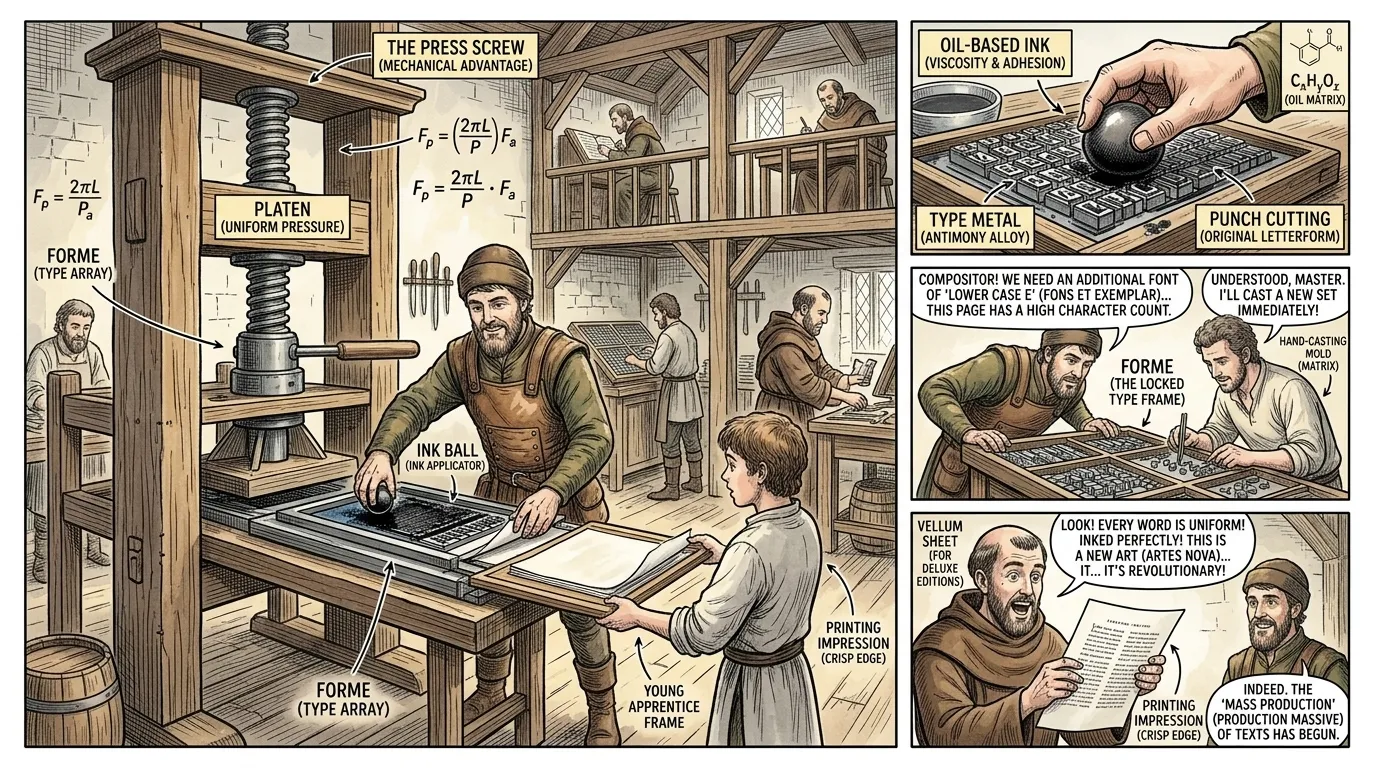
With the forme meticulously composed and locked, it was placed onto the 'press bed.' Ink, often a specially developed oil-based formula that adhered well to metal type, was applied evenly to the raised surfaces of the type using leather-covered 'ink balls.' A sheet of paper, dampened to better absorb the ink, was then carefully positioned on the 'tympan' and 'frisket' — frames designed to hold the paper precisely and prevent unwanted ink marks. The tympan and frisket were folded down, bringing the paper into contact with the inked type. A large screw mechanism was then turned, lowering the heavy 'platen' to apply immense, uniform pressure, pressing the paper firmly against the type. The result was a crisp, clear impression of the text, a dramatic improvement over previous methods. This mechanical precision was the ultimate payoff for the earlier, laborious development of uniform movable type.
Page 9
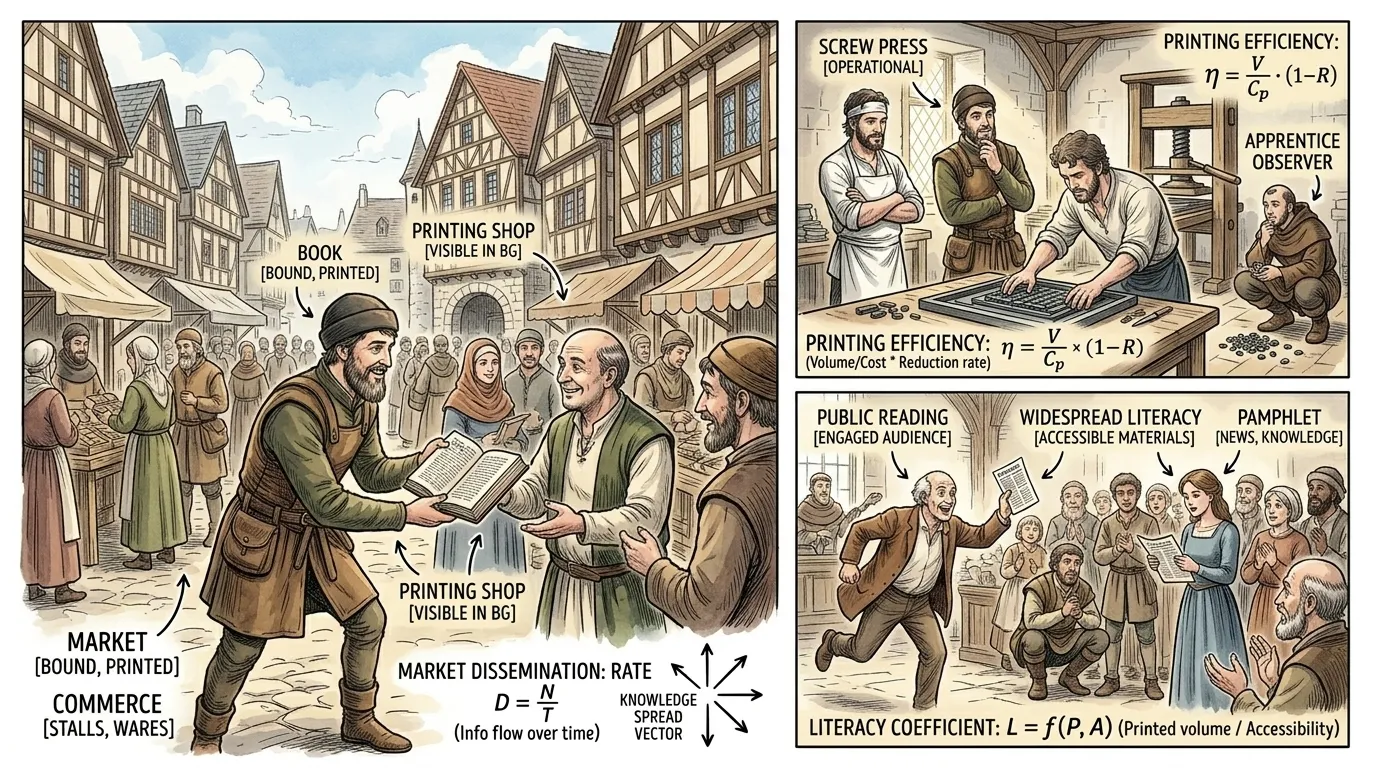
The impact of Gutenberg's press was immediate and profound, triggering an information revolution across Europe. Within decades, printing presses proliferated, establishing workshops in virtually every major city. The cost of books plummeted, making them accessible to a much broader populace than ever before. This explosion of printed material fueled a dramatic rise in literacy, standardized languages and texts, and drastically accelerated the sharing of scientific discoveries and philosophical ideas. The press played a pivotal role in the Protestant Reformation, enabling Martin Luther's treatises to reach thousands, demonstrating the power of mass communication to challenge established authorities and reshape societal norms. The intellectual landscape was irrevocably transformed.
Page 10
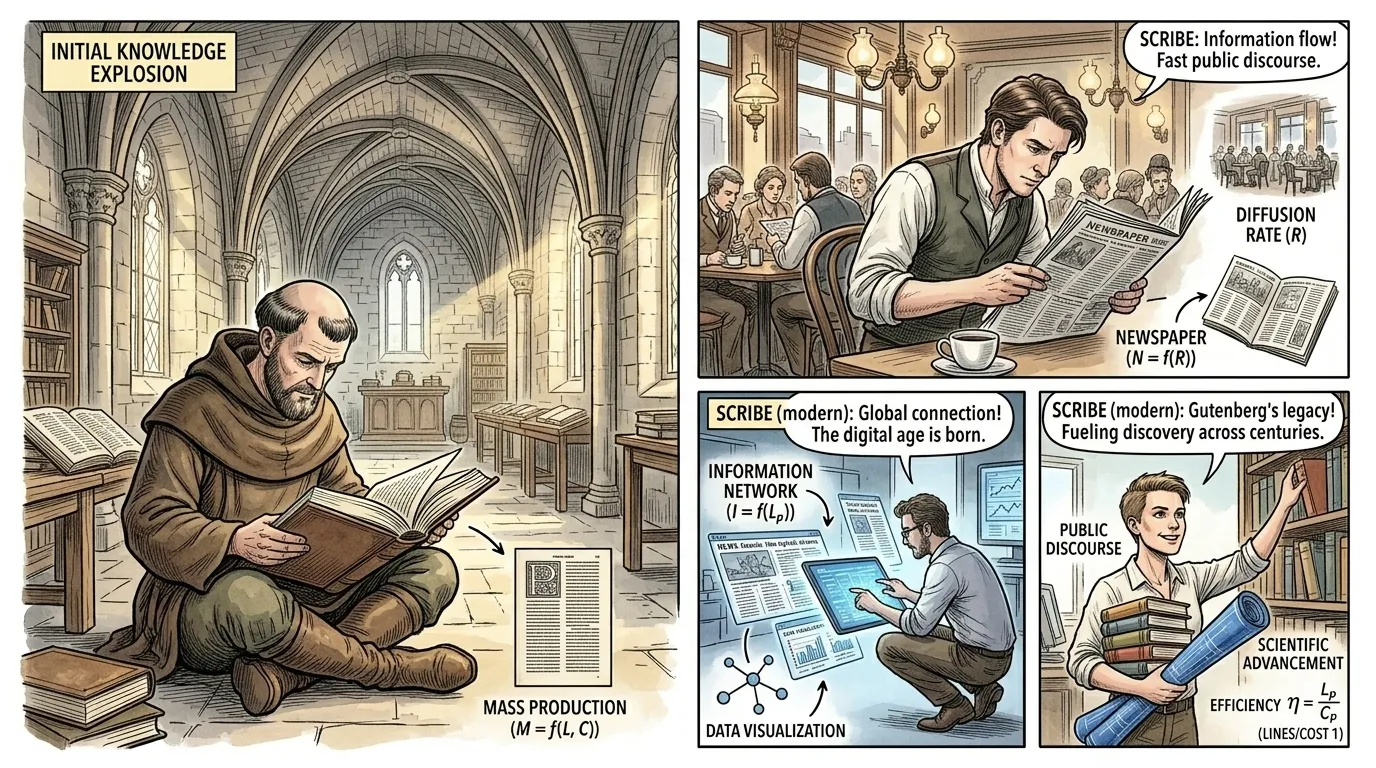
The printing press fundamentally reshaped human civilization, laying the groundwork for the modern age. It democratized knowledge, fostering education, scientific advancement, and public discourse on an unprecedented scale. From the Enlightenment's philosophical tracts to the spread of scientific journals, the press became the engine of intellectual progress. It gave rise to newspapers, fueling public awareness and shaping political thought. Today, while digital technologies have taken center stage, the core principle of mass information dissemination, pioneered by Gutenberg, remains vital. His invention continues to echo in every book, magazine, and digital screen, a testament to the enduring human quest for shared knowledge.
About this story
- Location: Global
- Audience: general readers
Read Wonder Inventions on your phone
Wonder Inventions is available on Android. Get Wonder Inventions on Google Play.