Pulse Oximeter
Pulse Oximeter — an illustrated inventions story, set in Global. 10 illustrated pages, free to read on Wonder Inventions.
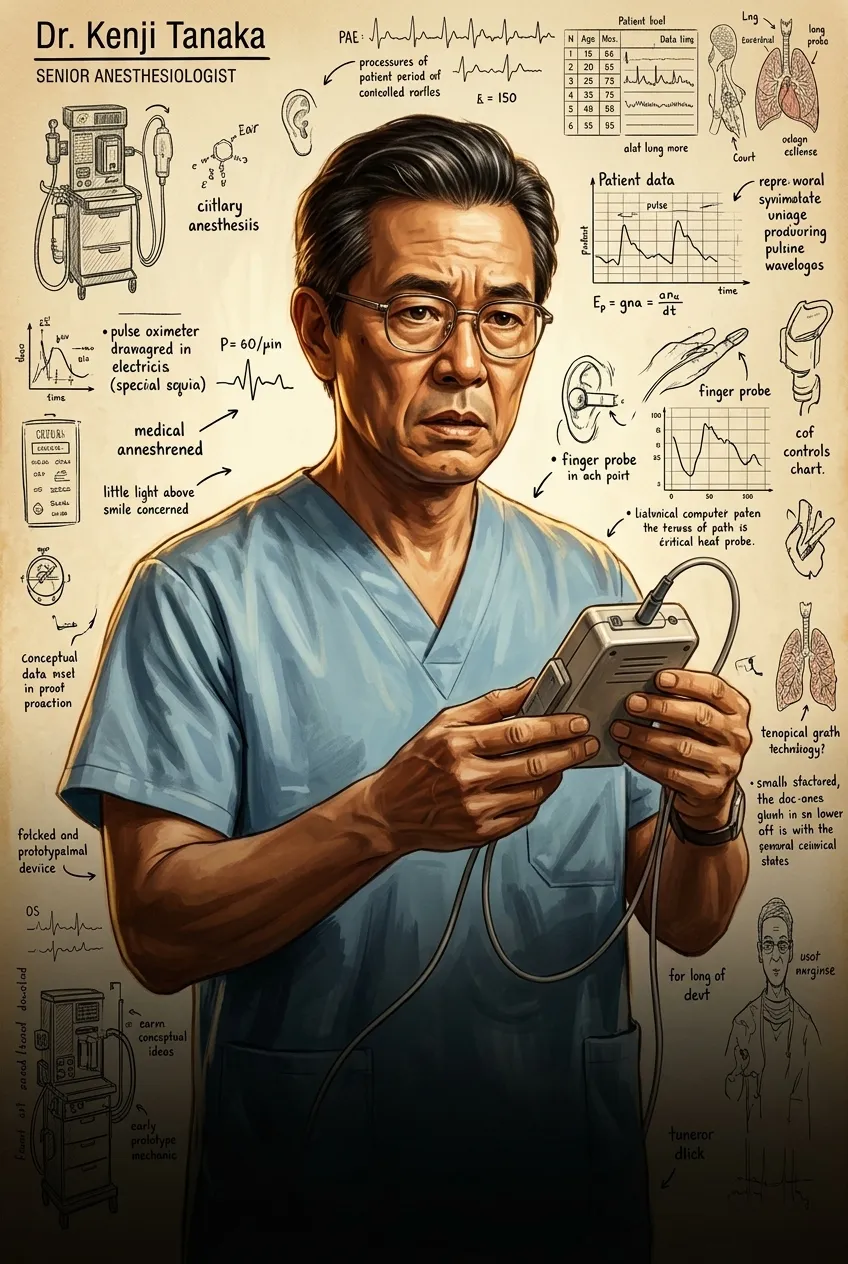
Page 1
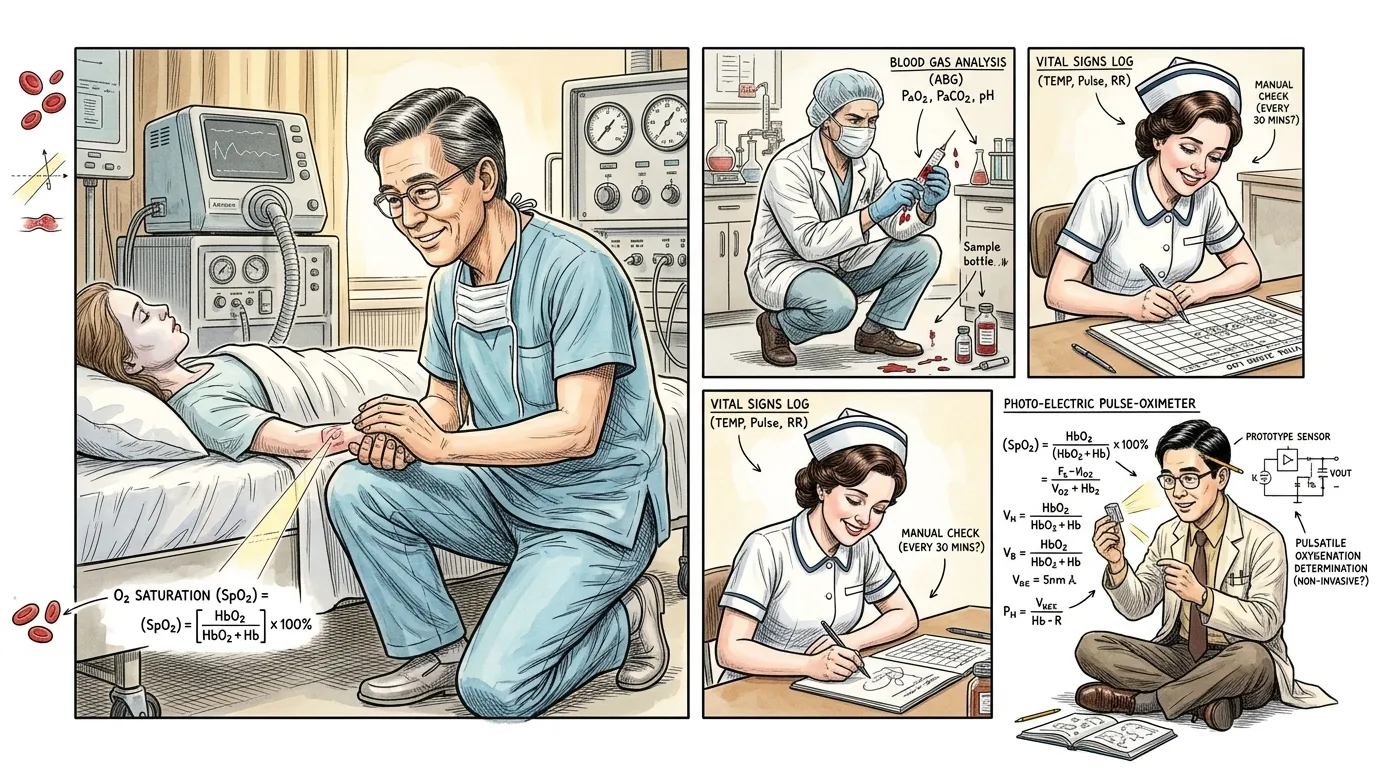
Before the advent of continuous oxygen monitoring, clinicians faced a profound challenge. They relied on indirect signs—a patient's skin turning bluish, or sudden, catastrophic events—to detect dangerously low oxygen levels.
""The visible signs often appear too late," observed Dr. Kenji Tanaka, a senior anesthesiologist, examining a patient's pale lips. "We need an early warning, a silent guardian against hypoxia.""
Page 2
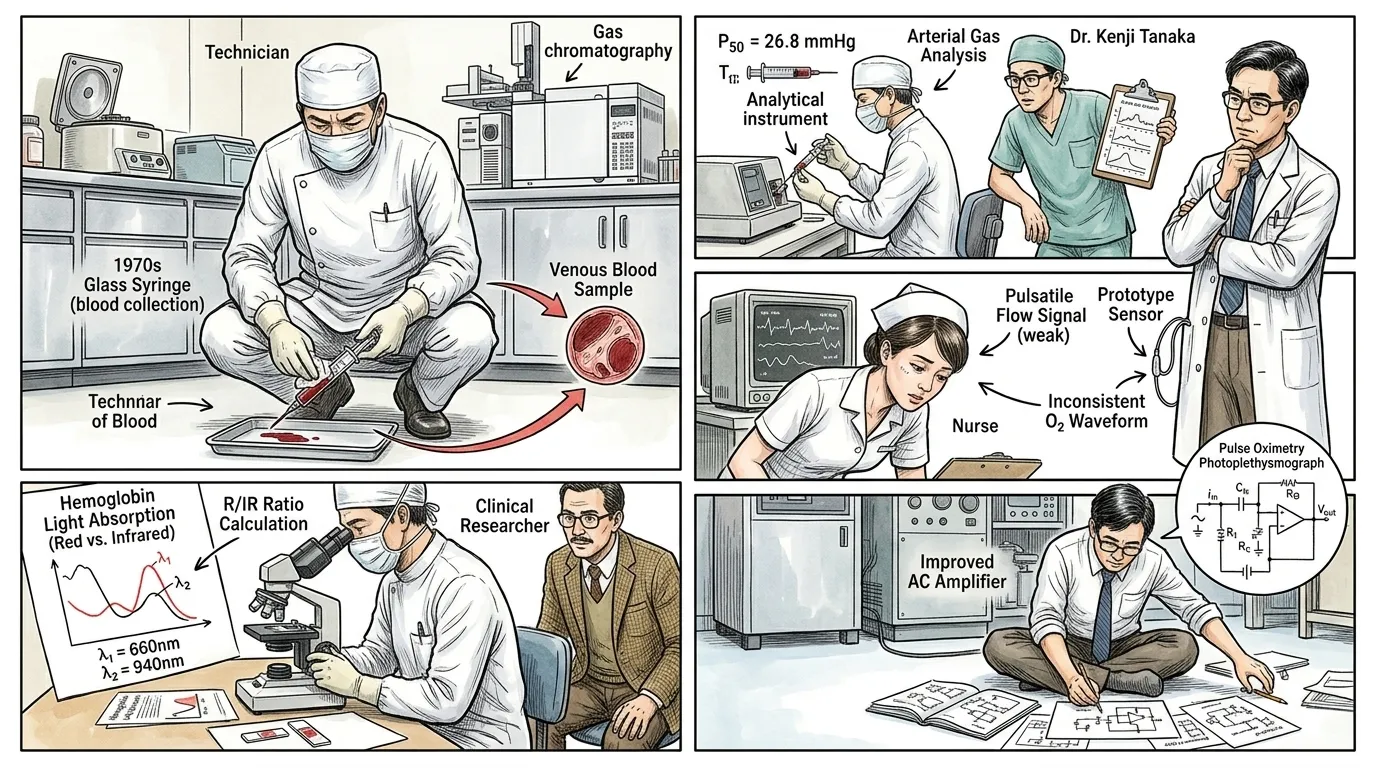
Measuring blood oxygen saturation was a laborious and often invasive process. Arterial blood gas analysis, requiring a painful needle stick, provided only intermittent snapshots of a patient's oxygen levels.
""Each sample is a vital data point, yet it's a moment frozen in time," explained a stern-faced technician, wiping blood from a syringe in a sterile lab. "The patient's condition could shift dramatically between tests, leaving us blind to critical changes.""
Page 3
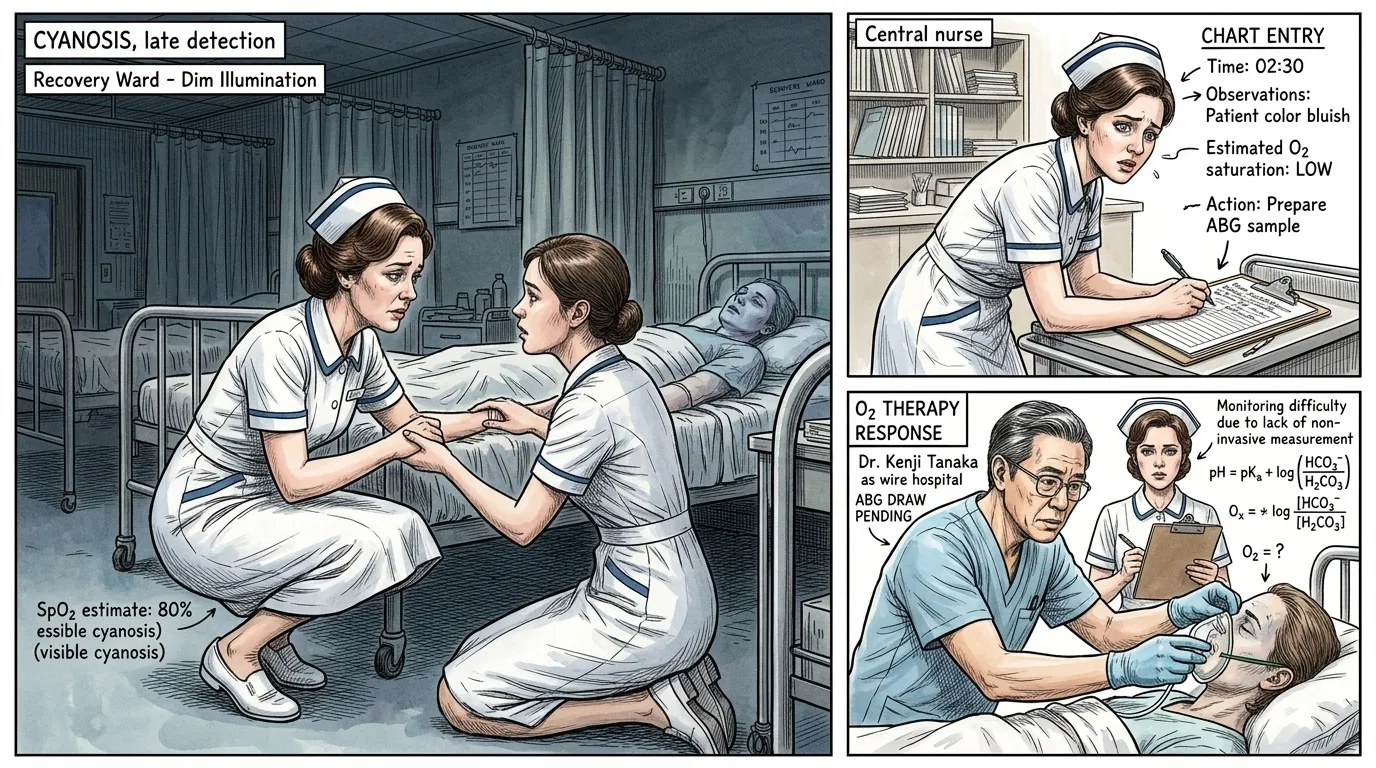
Without continuous monitoring, medical staff relied heavily on visual cues like cyanosis—a bluish discoloration of the skin—which indicated severe oxygen deprivation. This meant intervention often came perilously late.
""By the time we see the blue, the damage might already be done," a weary nurse confessed to a colleague, gesturing towards a patient in recovery. "We are constantly reacting, not preventing. It's a race we too often lose.""
Page 4
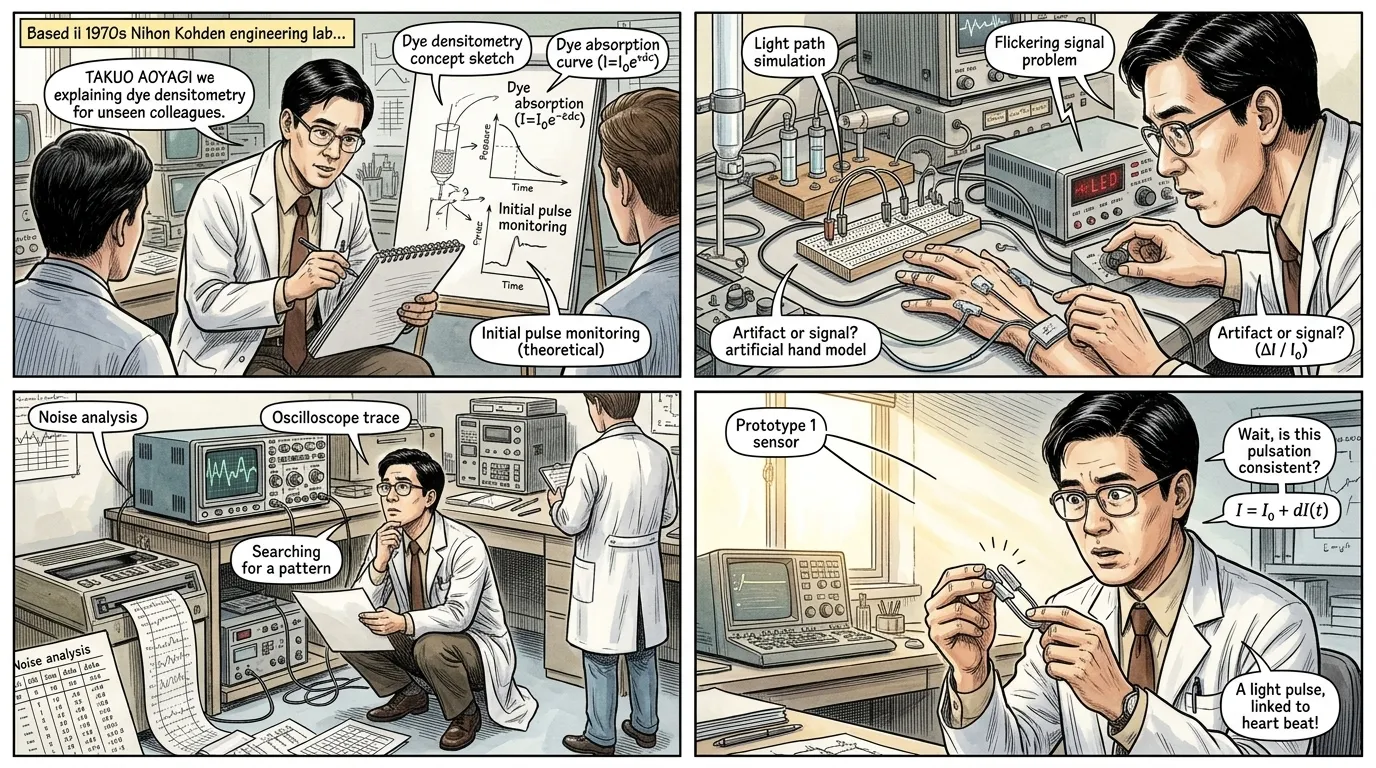
In the early 1970s, Takuo Aoyagi, a biomedical engineer at Nihon Kohden in Tokyo, was not initially focused on oxygen saturation. His work centered on cardiac output, using a technique called dye densitometry.
""We injected dye into the bloodstream and measured its dilution to understand heart function," Aoyagi explained to his team, sketching a heart diagram. "But I observed peculiar pulsations in light absorption, not entirely related to the dye itself.""
Page 5
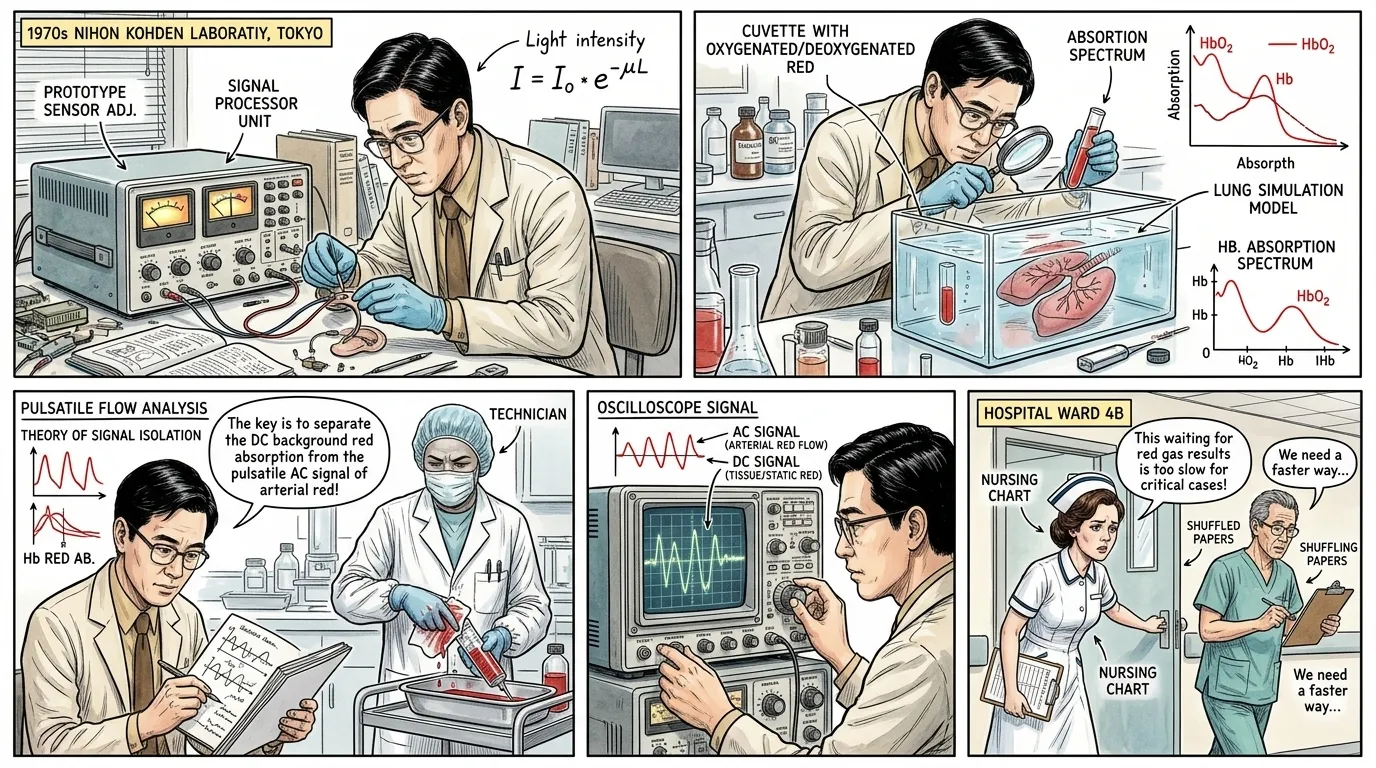
Aoyagi realized that a major obstacle in accurately measuring oxygen was isolating the arterial blood signal from the static absorption of venous blood and other tissues. His initial dye densitometry experiments provided a crucial clue.
""The key, I suspected, lay in the pulsatile nature of arterial blood flow," Aoyagi mused, adjusting a prototype sensor. "As Ralph Waldo Emerson once said, 'The eye sees only what the mind is prepared to comprehend.' I needed to prepare my mind to truly see these subtle rhythmic changes.""
Page 6
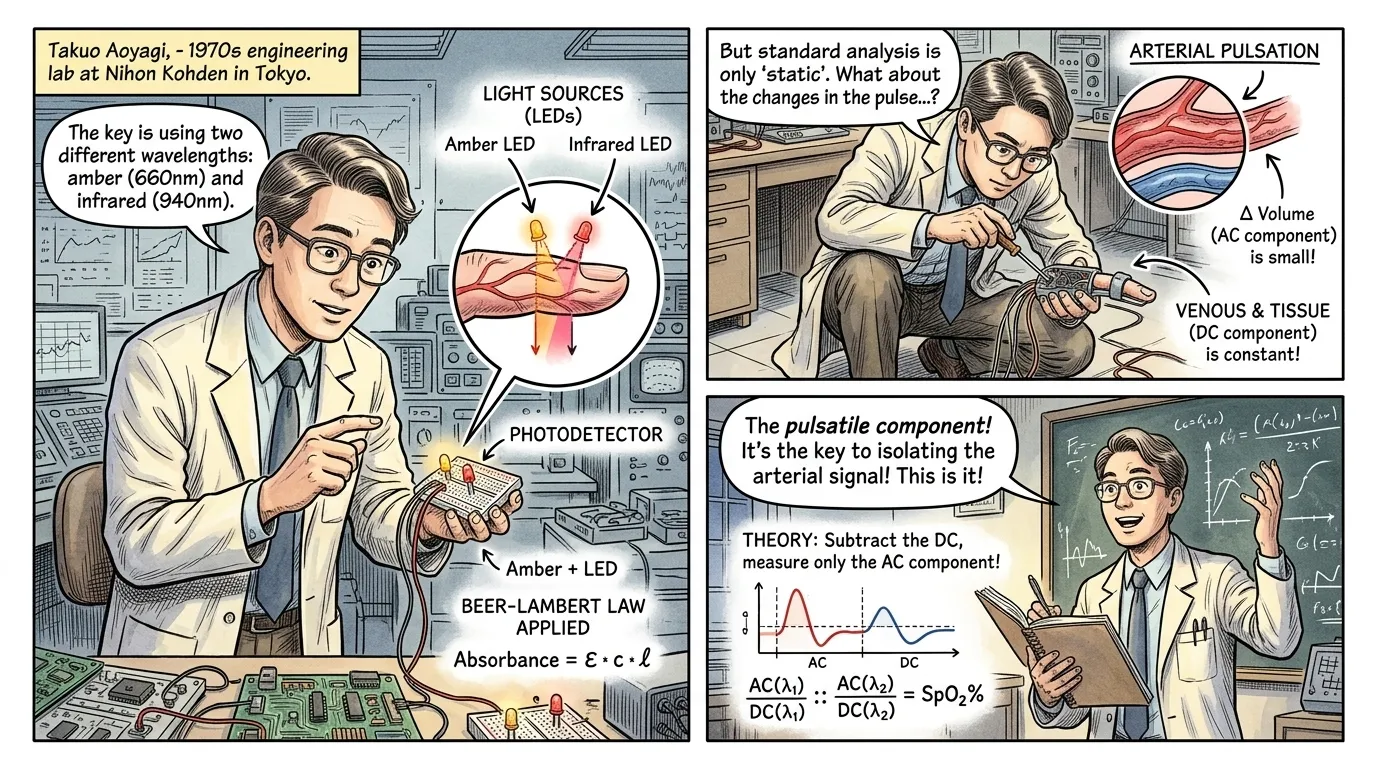
Aoyagi's ingenious solution combined two fundamental principles: the distinct light absorption properties of oxygenated and deoxygenated hemoglobin, and the rhythmic pulsation of arterial blood. He theorized that by analyzing the change in light absorption with each heartbeat, he could isolate the arterial signal.
""Oxygenated hemoglobin absorbs more infrared light, while deoxygenated hemoglobin absorbs more red light," Aoyagi explained, gesturing at a pair of small, glowing LEDs. "If we measure both, and focus on the pulsatile component, we can calculate saturation.""
Page 7
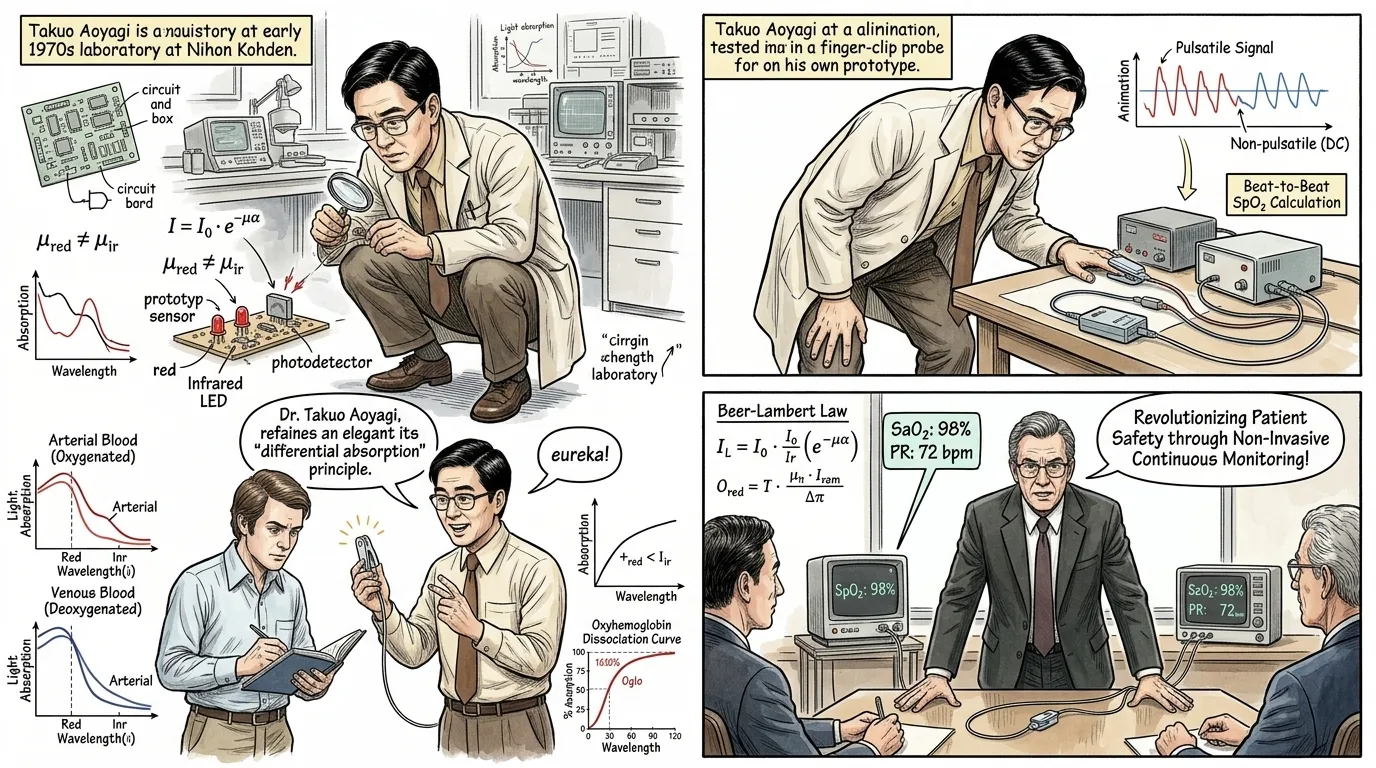
The core of the pulse oximeter's function relies on two light-emitting diodes (LEDs) and a photodetector. One LED emits red light (around 660 nm), and the other emits infrared light (around 940 nm).
""With each pulse, the arterial blood volume beneath the sensor changes," Aoyagi elaborated, holding a small finger probe. "This change in blood volume causes a corresponding change in the amount of red and infrared light absorbed. It is this differential absorption that allows us to determine the oxygen saturation (SpO2).""
Page 8
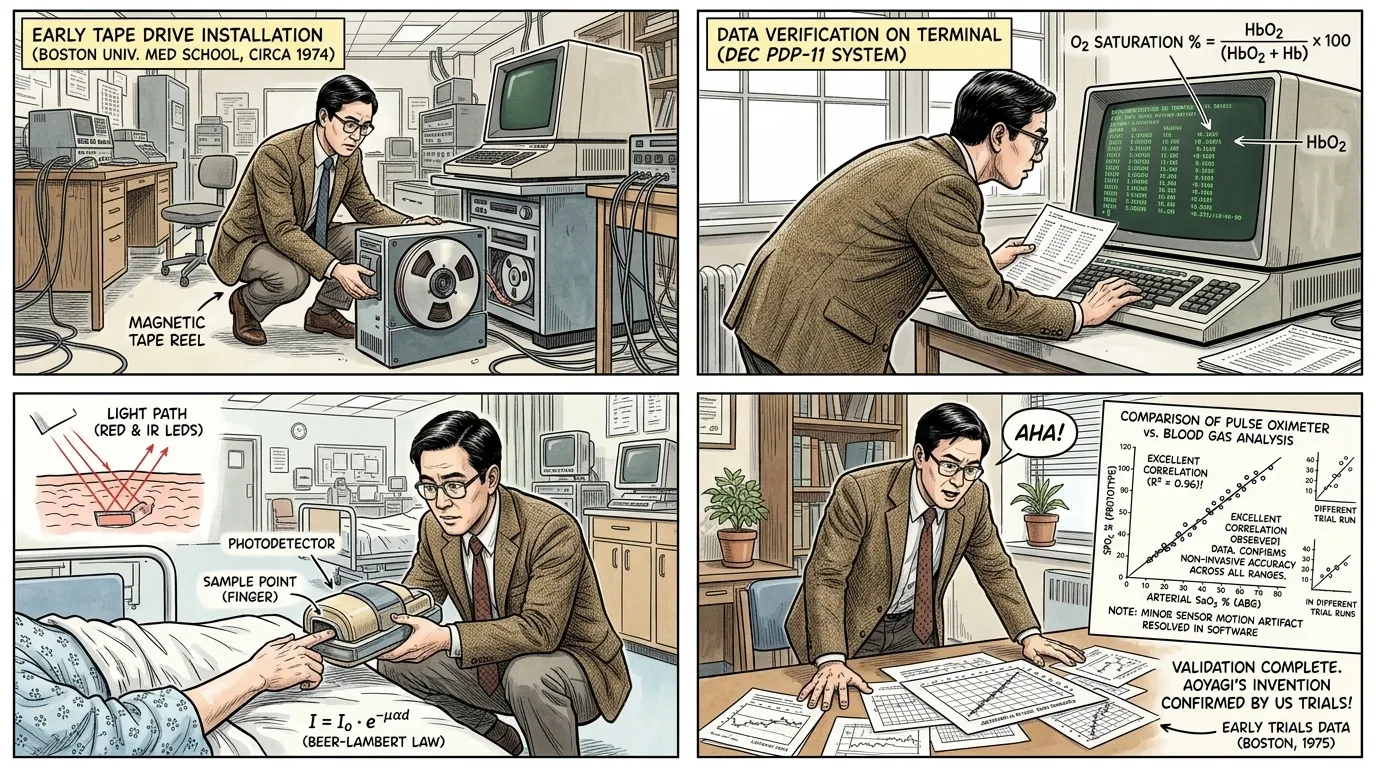
Initially met with skepticism, Aoyagi's prototype gradually gained traction. Independent research and validation by other companies, notably Nellcor and Hewlett-Packard in the United States, refined the device and paved the way for its widespread clinical acceptance.
""The early trials were critical," remarked a clinical researcher, reviewing data on a rudimentary computer terminal. "Demonstrating its accuracy and reliability in diverse patient populations was paramount to overcoming established medical practices.""
Page 9
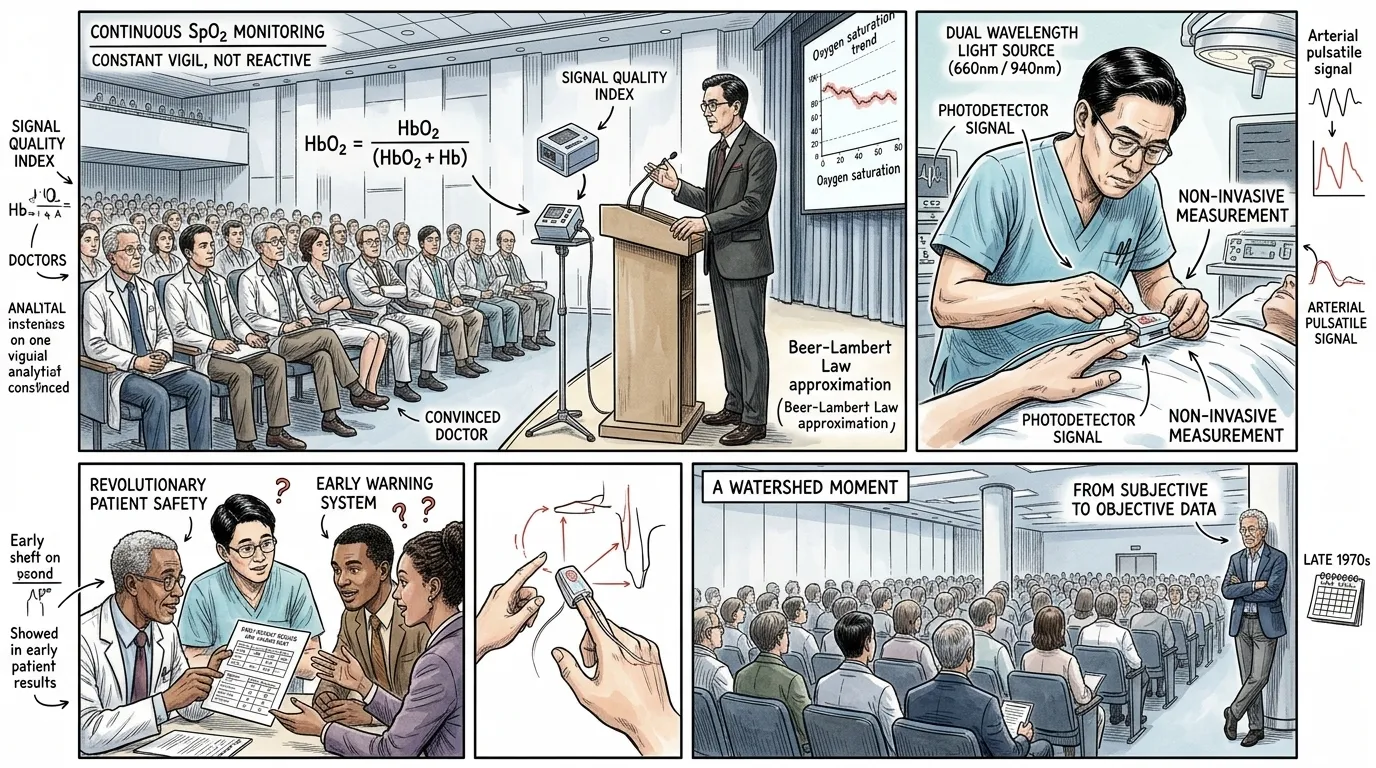
The pulse oximeter rapidly became indispensable, particularly in anesthesiology. Its ability to provide continuous, real-time oxygen saturation data during surgery drastically reduced the incidence of anesthesia-related hypoxic brain damage and death.
""It's not merely a monitor; it's a constant vigil, a guardian during the most vulnerable moments," stated a leading anesthesiologist at a medical conference, addressing a rapt audience. "The pulse oximeter transformed our practice from reactive to proactive, setting a new global standard for patient safety.""
Page 10
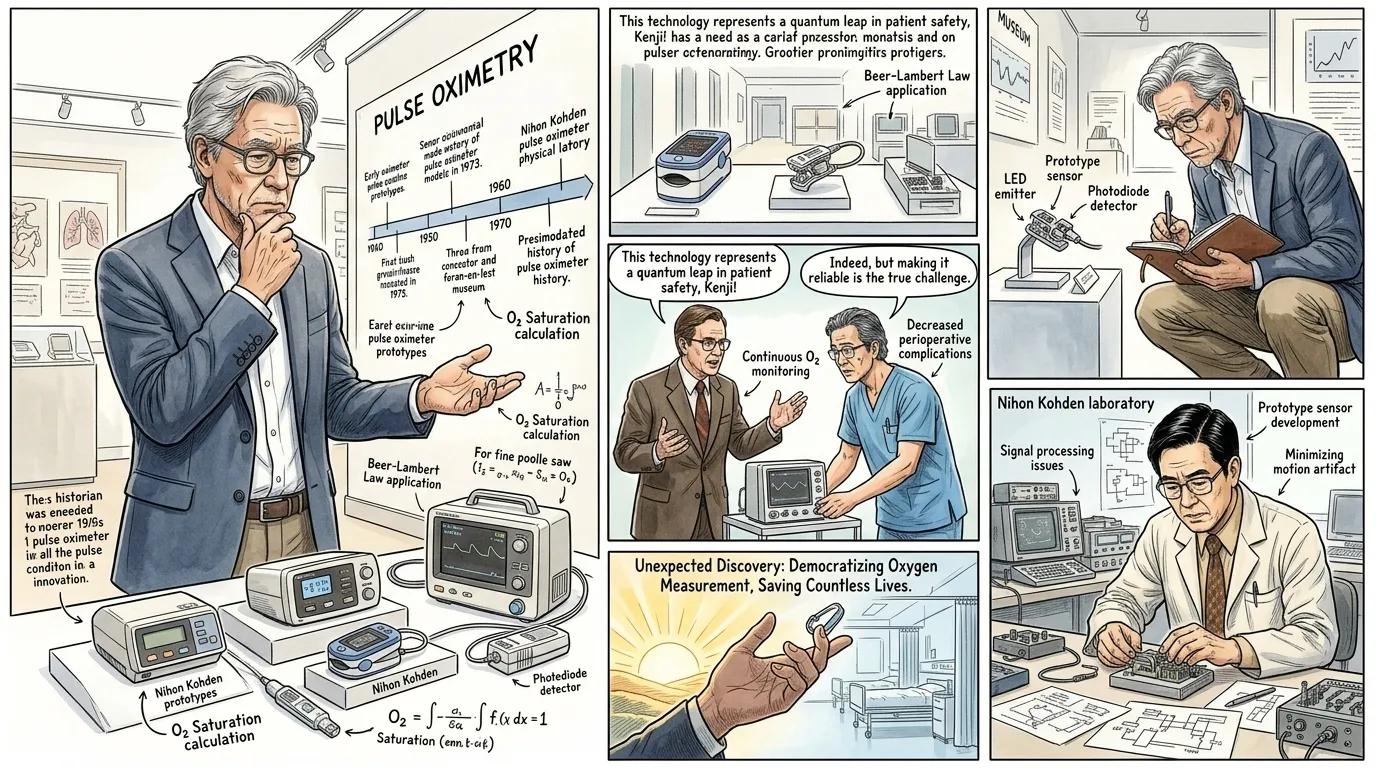
Takuo Aoyagi's invention, initially an offshoot of dye densitometry, evolved into one of the most vital diagnostic tools in modern medicine. Its simplicity, non-invasiveness, and continuous data delivery have saved countless lives across the globe.
""From the operating room to the home, from critical care to everyday wellness, its reach is extraordinary," reflected a medical historian. "The pulse oximeter stands as a testament to the power of unexpected discovery, truly democratizing a critical physiological measurement.""
About this story
- Location: Global
- Audience: general readers
Read Wonder Inventions on your phone
Wonder Inventions is available on Android. Get Wonder Inventions on Google Play.