Radar
Radar — an illustrated inventions story, set in Global. 10 illustrated pages, free to read on Wonder Inventions.
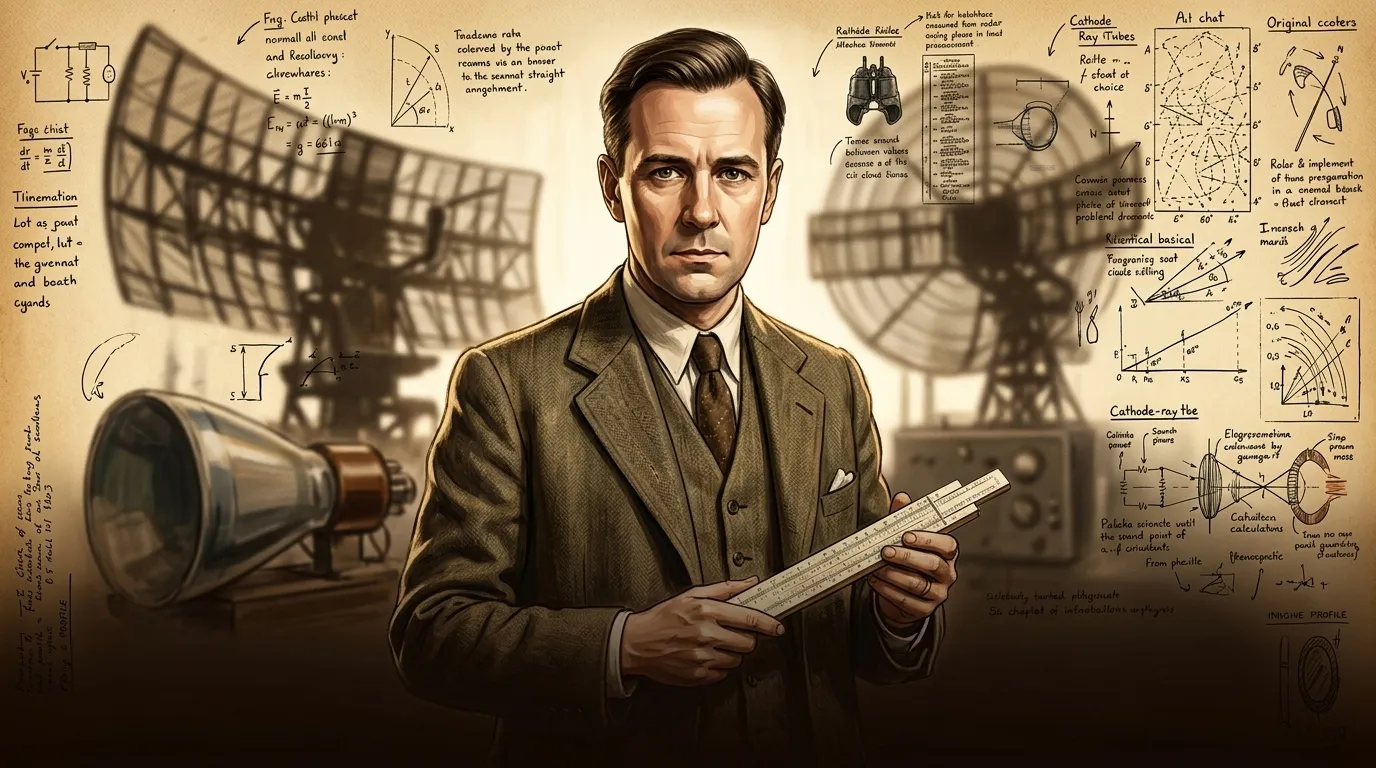
Page 1
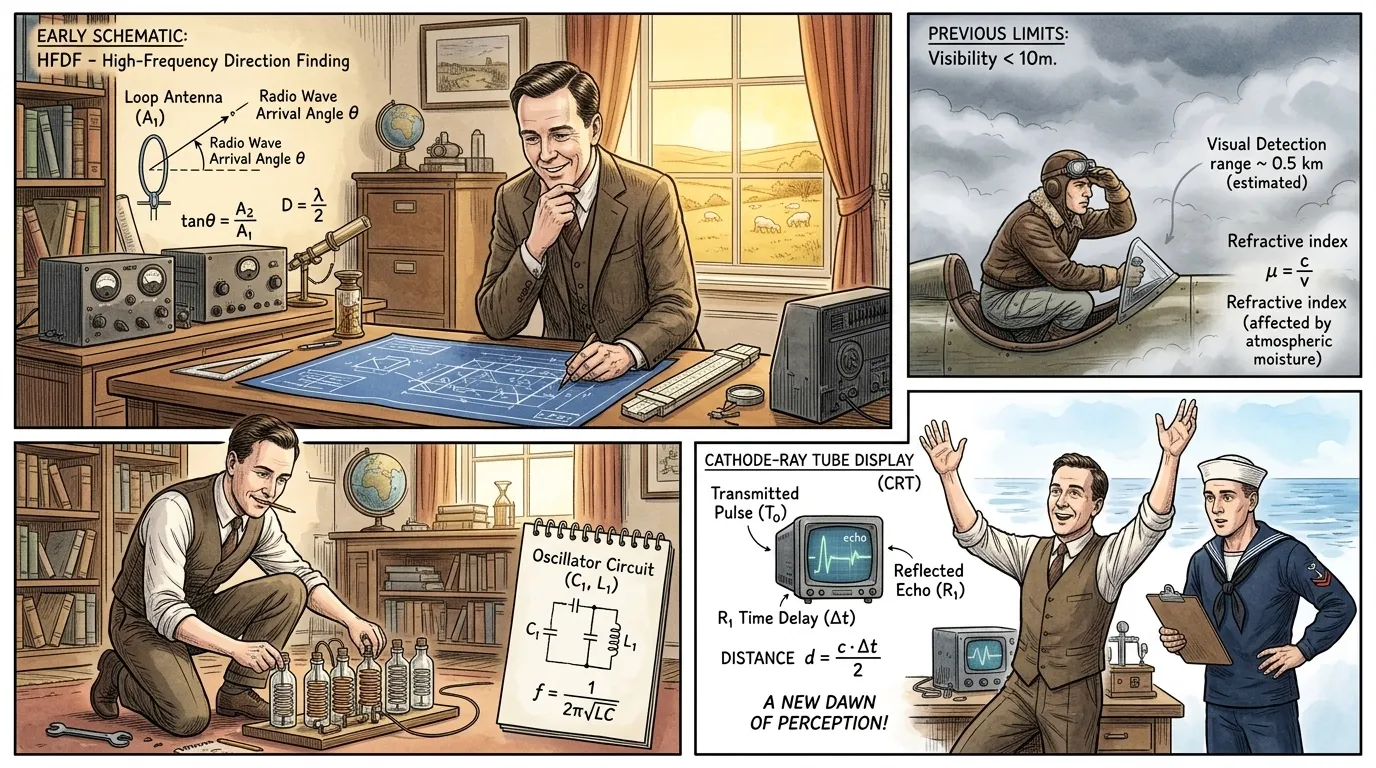
Before the advent of Radar, the world was a realm of profound uncertainty, especially for those who navigated vast oceans or patrolled the skies. Thick fog, the cloak of night, or the sheer immensity of distance rendered approaching threats or unseen obstacles virtually invisible. Naval commanders and pilots often operated blind, relying on imprecise estimates and limited line-of-sight observations.
"Robert Watson-Watt, a Scottish physicist, would lead the charge in the United Kingdom, alongside independent efforts in Germany and the United States. His pioneering work in the mid-1930s would fundamentally change the very concept of perception and defense."
Page 2
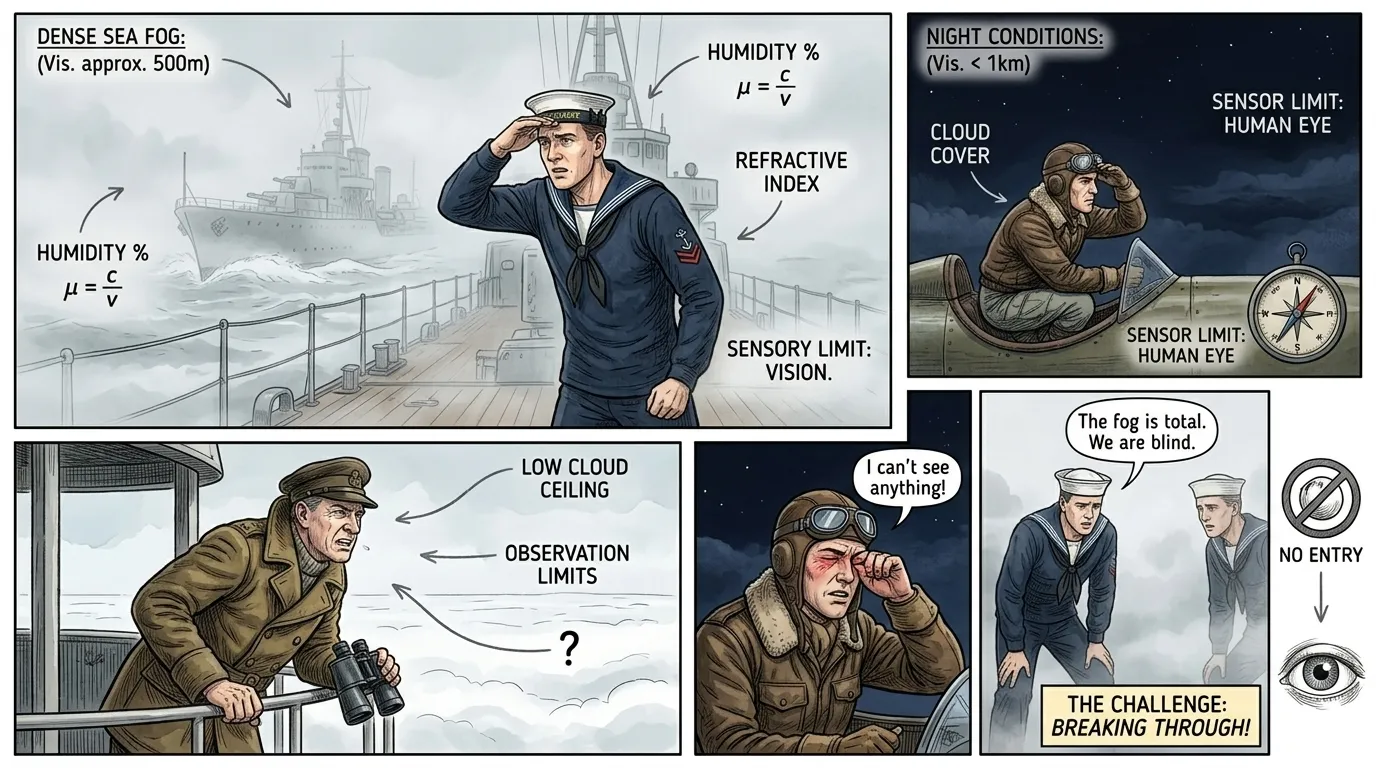
Human sensory capabilities, while remarkable, are inherently limited. On land, sight and sound offer some protection, but in the boundless expanses of sea and air, these senses become agonizingly insufficient. The speed of modern warfare, particularly with the rise of aircraft, magnified this vulnerability, demanding a radically new form of detection.
"Sailors could only detect icebergs or enemy ships at close range in good visibility, leaving little time for evasive action. Pilots faced similar challenges, unable to pinpoint distant aircraft or navigate precisely in adverse weather, making both offensive and defensive maneuvers incredibly risky."
Page 3
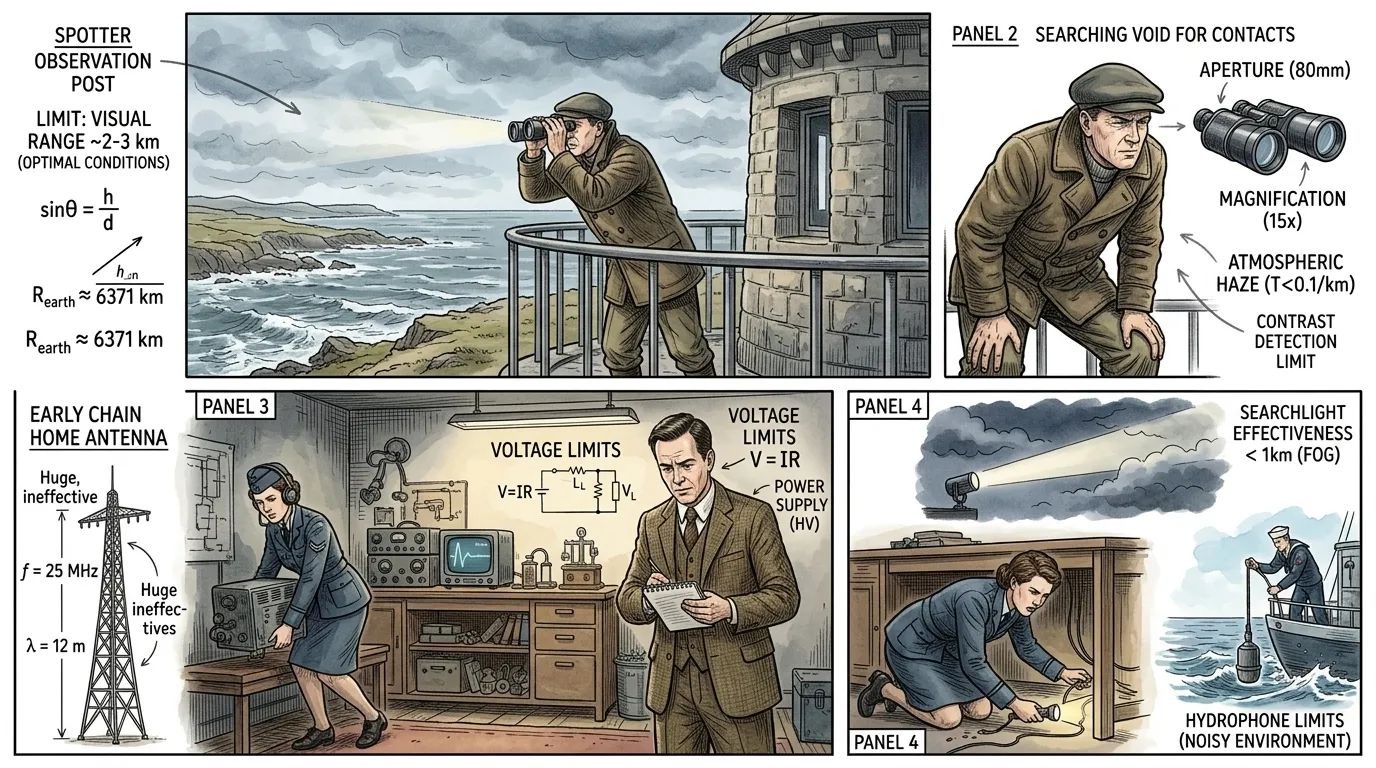
Before the breakthroughs of radar, ingenuity grappled with these limitations through more primitive means. Spotters in high towers scanned the horizon, hydrophones attempted to 'listen' for submarines underwater, and powerful searchlights pierced the night, yet each method presented severe deficiencies.
"These early detection methods were often slow, unreliable, and easily thwarted by distance, weather, or stealth. They offered mere glimpses in a world that increasingly demanded comprehensive, real-time awareness, pushing scientists to consider entirely new paradigms for remote sensing."
Page 4
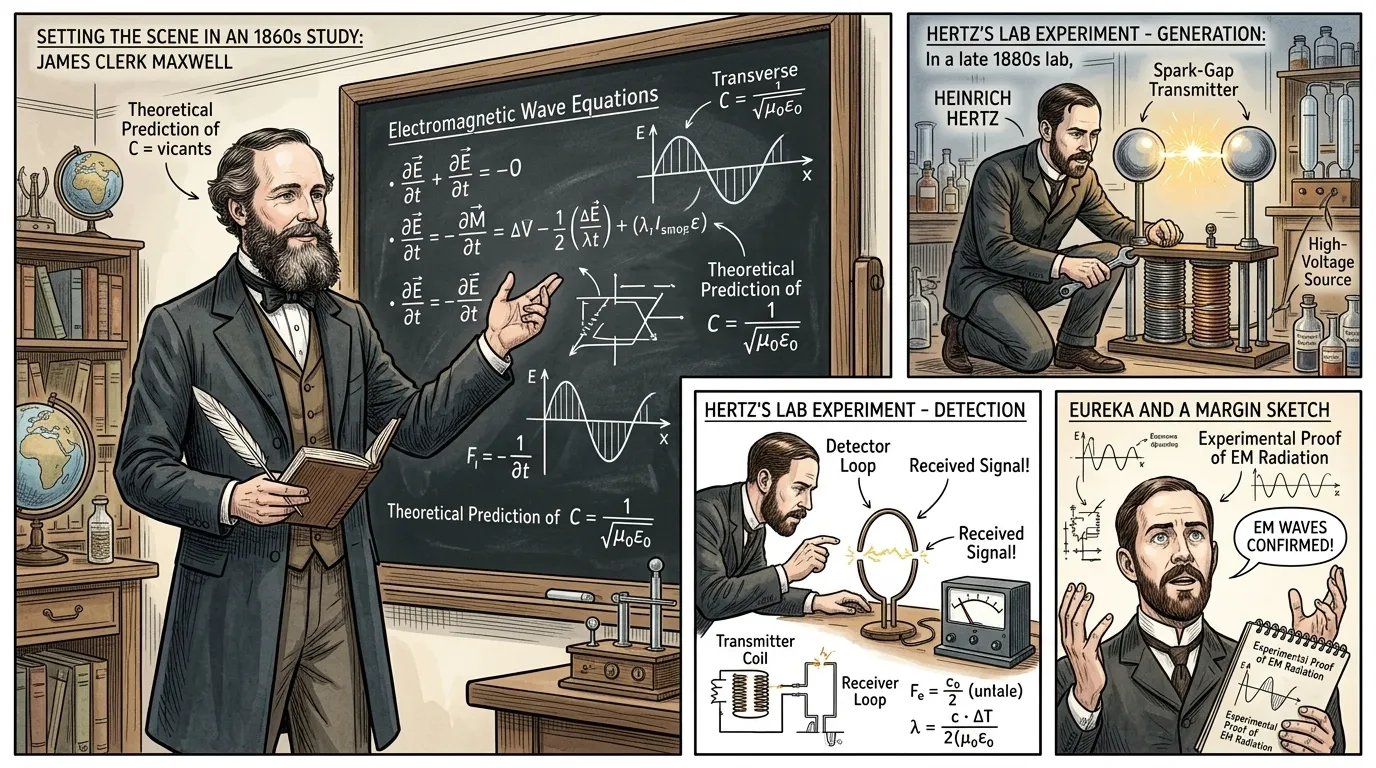
The true foundation for radar was laid decades earlier, not in military strategy, but in fundamental physics. James Clerk Maxwell's theoretical work in the 1860s predicted the existence of electromagnetic waves, invisible oscillations of electric and magnetic fields that travel at the speed of light.
"It was Heinrich Hertz in the late 1880s who experimentally confirmed Maxwell's predictions, demonstrating that these radio waves could be generated, transmitted, and, crucially, reflected. This phenomenon, initially a scientific curiosity, held the key to seeing the unseen."
Page 5
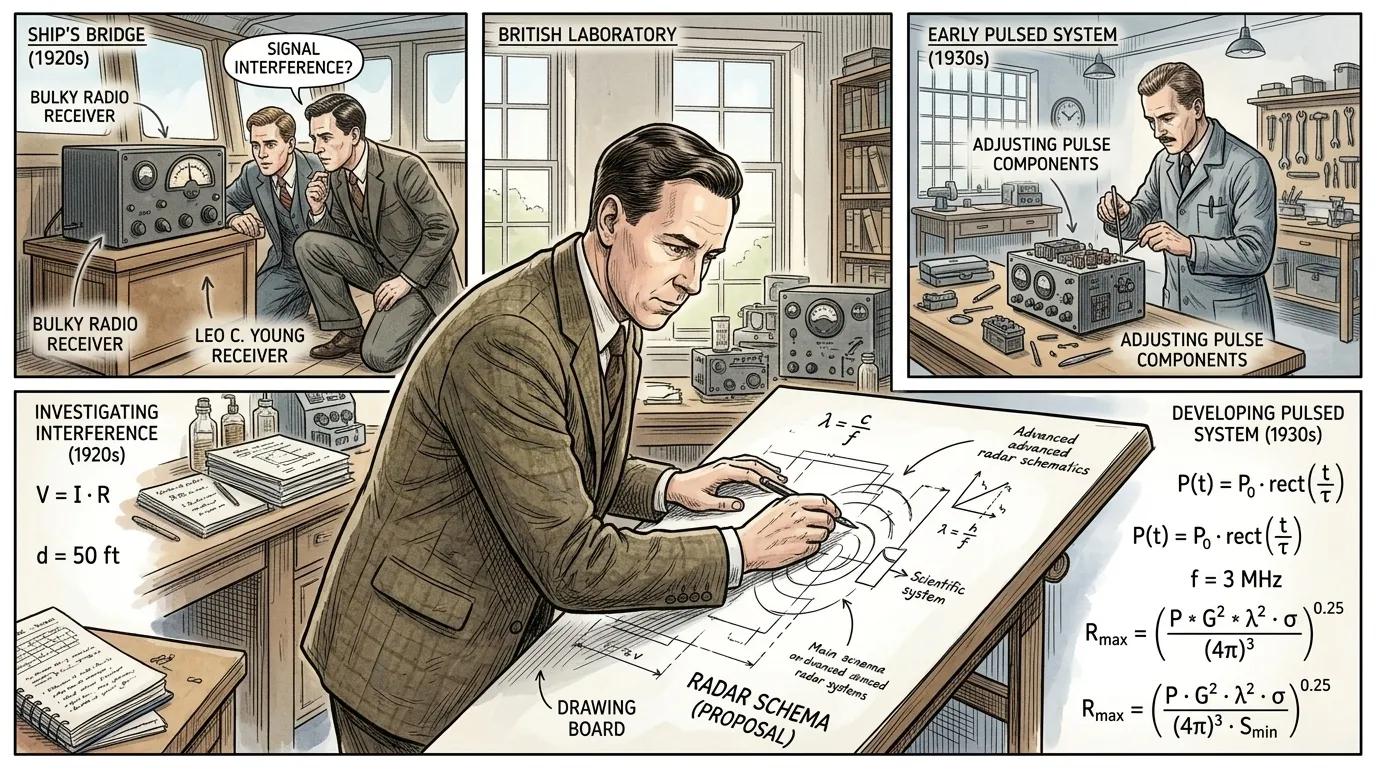
While Hertz proved radio waves could reflect, the challenge remained to harness this for practical object detection. Throughout the early 20th century, isolated experiments hinted at the potential, but none offered a reliable, long-range solution. These early attempts were often hampered by weak signals and primitive equipment.
"In the United States, A. Hoyt Taylor and Leo C. Young observed radio signal interference from ships in the 1920s. Simultaneously, Rudolf Kühnhold in Germany developed pulsed radio systems for naval detection. Yet, it was Robert Watson-Watt's focused effort in the UK, driven by urgent national defense needs, that would transform theory into a functional system."
Page 6
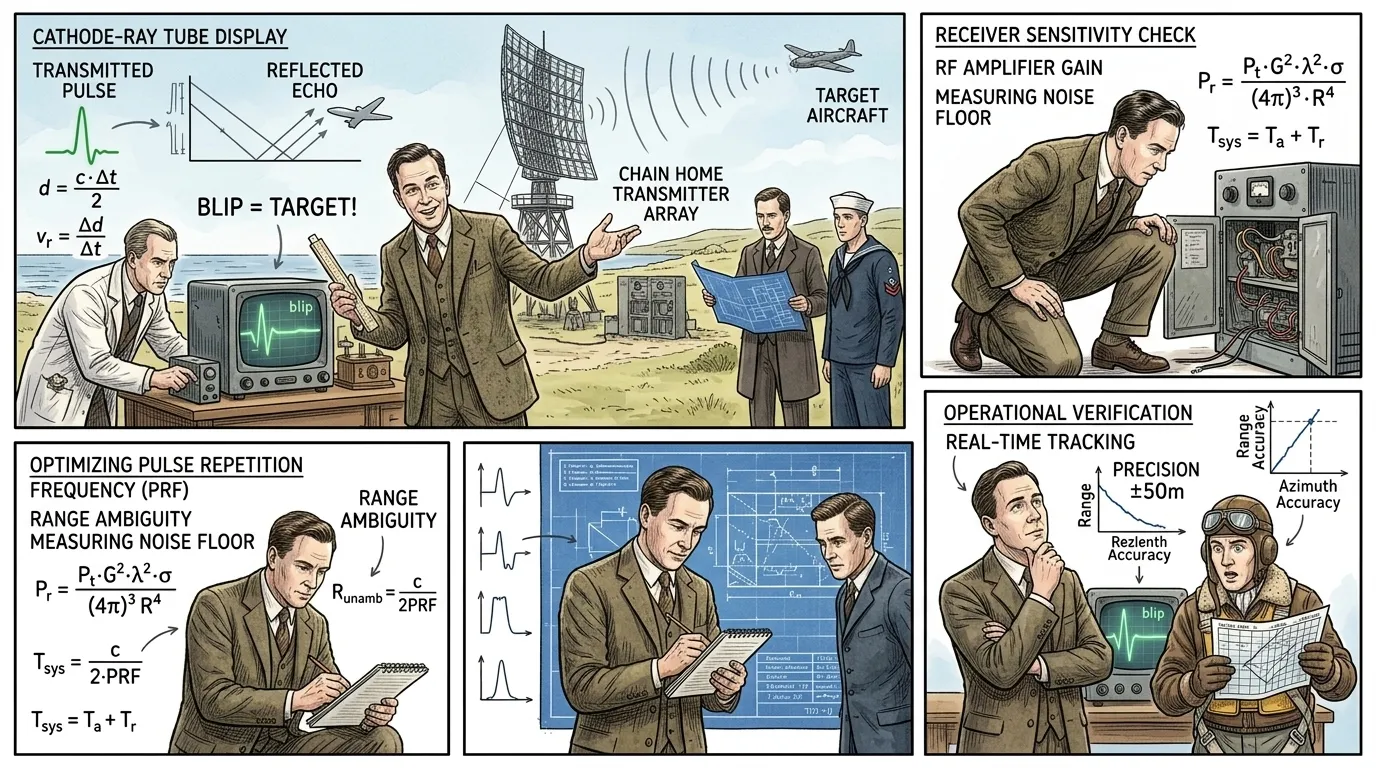
Watson-Watt's pivotal insight, demonstrated compellingly in 1935, was not merely that radio waves reflect, but how to effectively measure the time it takes for these reflections to return. This 'time-of-flight' principle became the bedrock of modern radar. He realized that by sending out short, powerful bursts – or pulses – of radio energy, and then 'listening' for the echo, both distance and direction could be precisely calculated.
"His method involved transmitting high-frequency radio pulses from an antenna, which would travel outward until striking an object like an aircraft. A small fraction of this energy would then reflect back to a separate receiving antenna, creating a measurable blip on a cathode-ray tube display."
Page 7
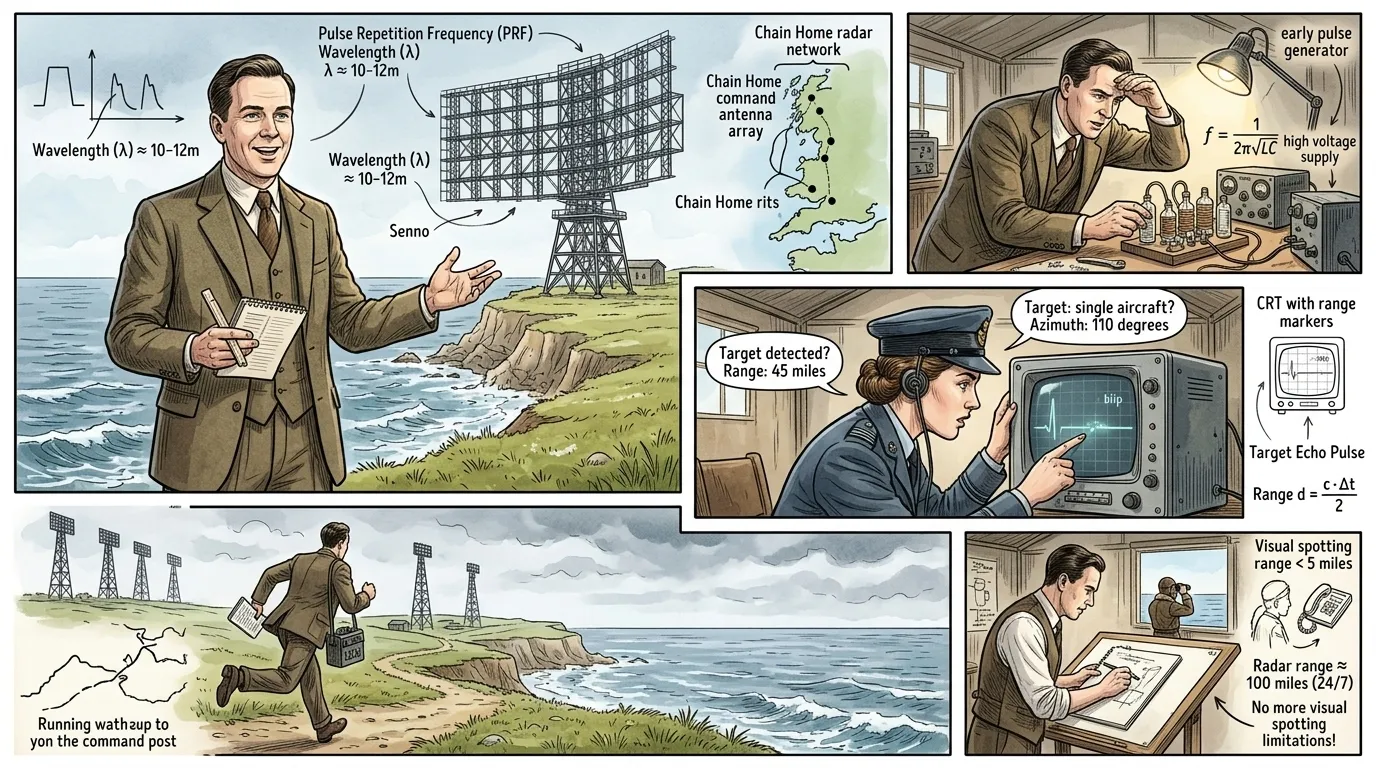
The success of Watson-Watt's 1935 demonstration quickly led to the development of a fully operational early warning system: 'Chain Home'. This network of radar stations, strategically placed along the British coast, could detect incoming aircraft long before they were visible to the naked eye. The innovation required significant engineering to create robust transmitters and sensitive receivers.
"The system employed colossal antenna arrays, transmitting powerful pulses and then switching to receive the faint echoes. Operators meticulously monitored the cathode-ray tube displays, interpreting the 'blips' to determine the range and bearing of approaching aircraft. This operationalization transformed a scientific principle into a critical defense asset."
Page 8
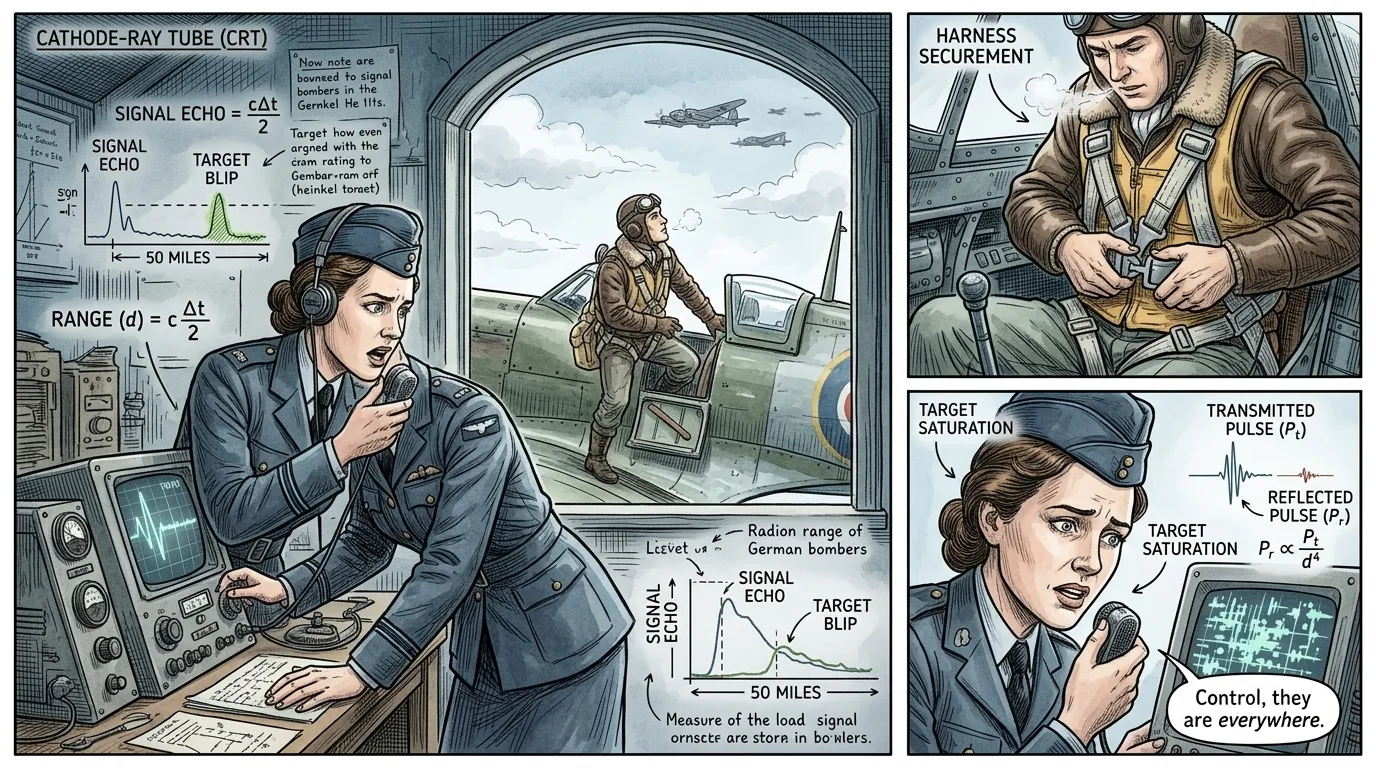
Radar's impact was immediate and profound, most notably during the Battle of Britain in 1940. Without Chain Home, the Royal Air Force would have been overwhelmed, unable to intercept German bombers effectively. Radar provided crucial early warning, allowing limited fighter squadrons to be vectored precisely to intercept incoming raids, saving precious resources and countless lives.
"The ability to 'see' beyond the horizon, through cloud and darkness, granted the defenders a tactical advantage that was utterly unprecedented. This technological edge fundamentally altered the course of aerial warfare, proving that electromagnetic waves could win battles."
Page 9
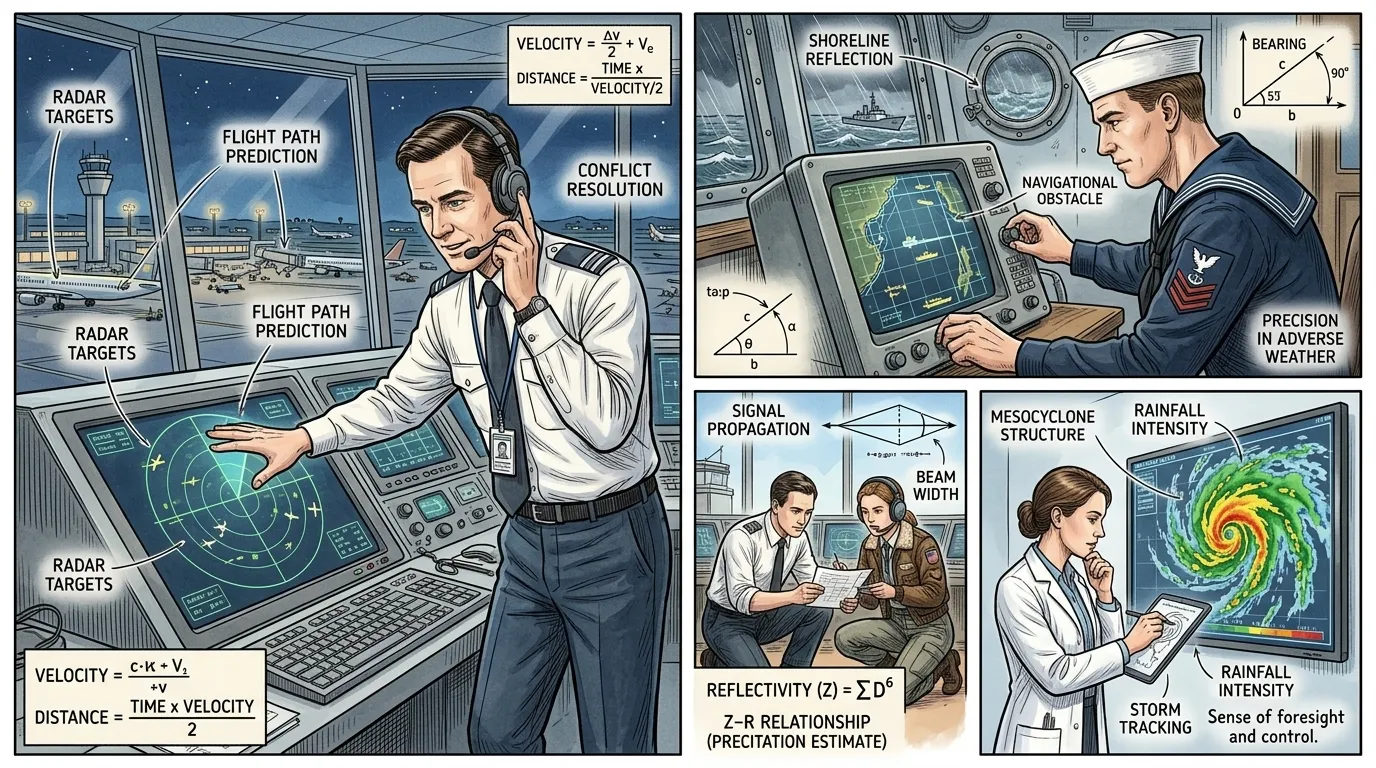
As World War II concluded, radar's transformative power was recognized far beyond military applications. The technology swiftly migrated into civilian life, revolutionizing air traffic control, maritime navigation, and meteorology. No longer just a tool of war, radar became an indispensable instrument for safety and efficiency.
"Airports adopted radar systems to guide aircraft safely through crowded skies and adverse weather, preventing collisions. Ships could now navigate treacherous waters with unprecedented confidence, detecting other vessels, shorelines, and storms from miles away. Weather radar began predicting the path and intensity of storms, protecting lives and property."
Page 10
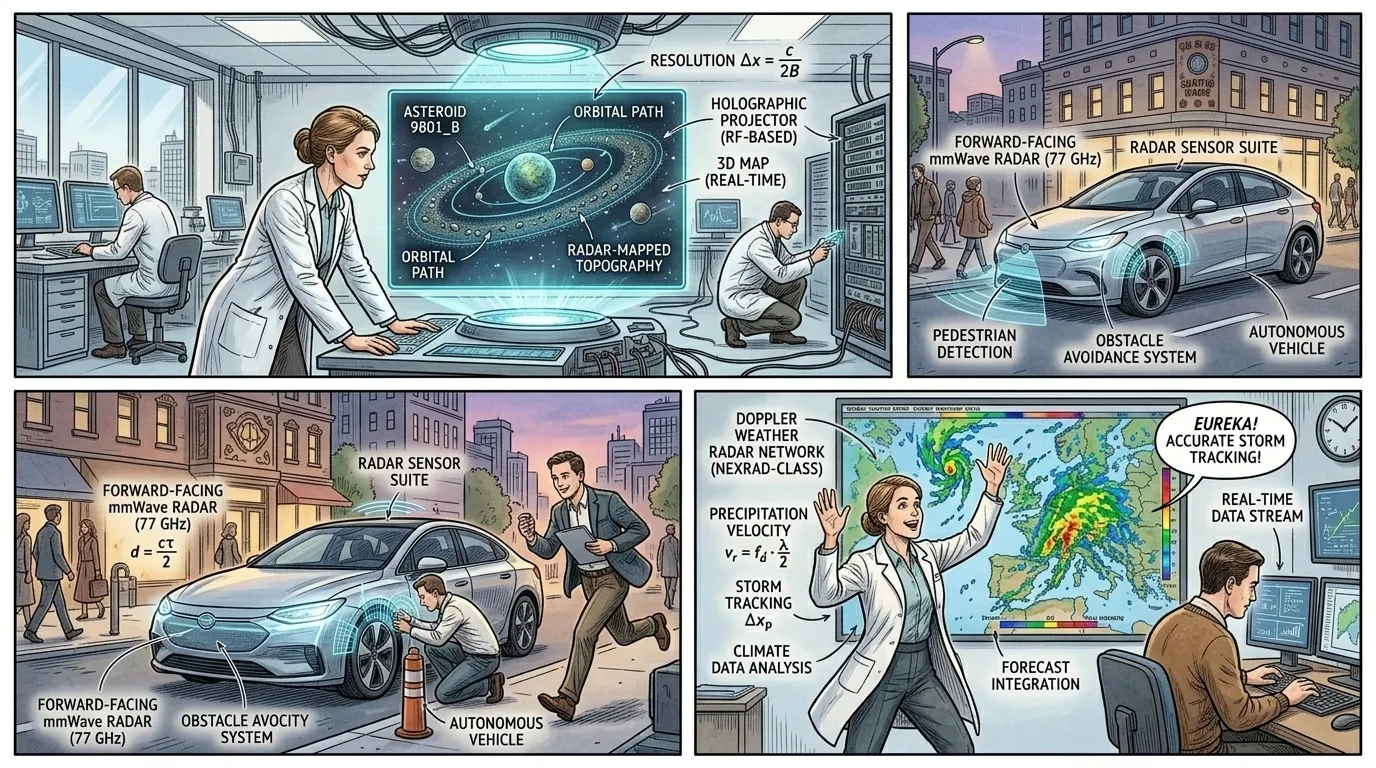
From its wartime origins to its diverse modern applications, Radar remains a cornerstone of safety, navigation, and environmental monitoring. Its fundamental principle – sending out waves and listening for echoes – has proven remarkably adaptable. Today, advanced radar systems are integrated into everything from self-driving cars to deep space exploration, perpetually expanding our ability to perceive and interact with the world.
"The invention of radar, conceived out of necessity, gave humanity a new set of 'eyes', forever altering our perception of distance, danger, and the invisible forces at play around us. It stands as a testament to scientific ingenuity, continually evolving to meet the complex challenges of the 21st century."
About this story
- Location: Global
- Audience: general readers
Read Wonder Inventions on your phone
Wonder Inventions is available on Android. Get Wonder Inventions on Google Play.