Ride-Sharing Platform
Ride-Sharing Platform — an illustrated inventions story, set in Global. 10 illustrated pages, free to read on Wonder Inventions.
Page 1
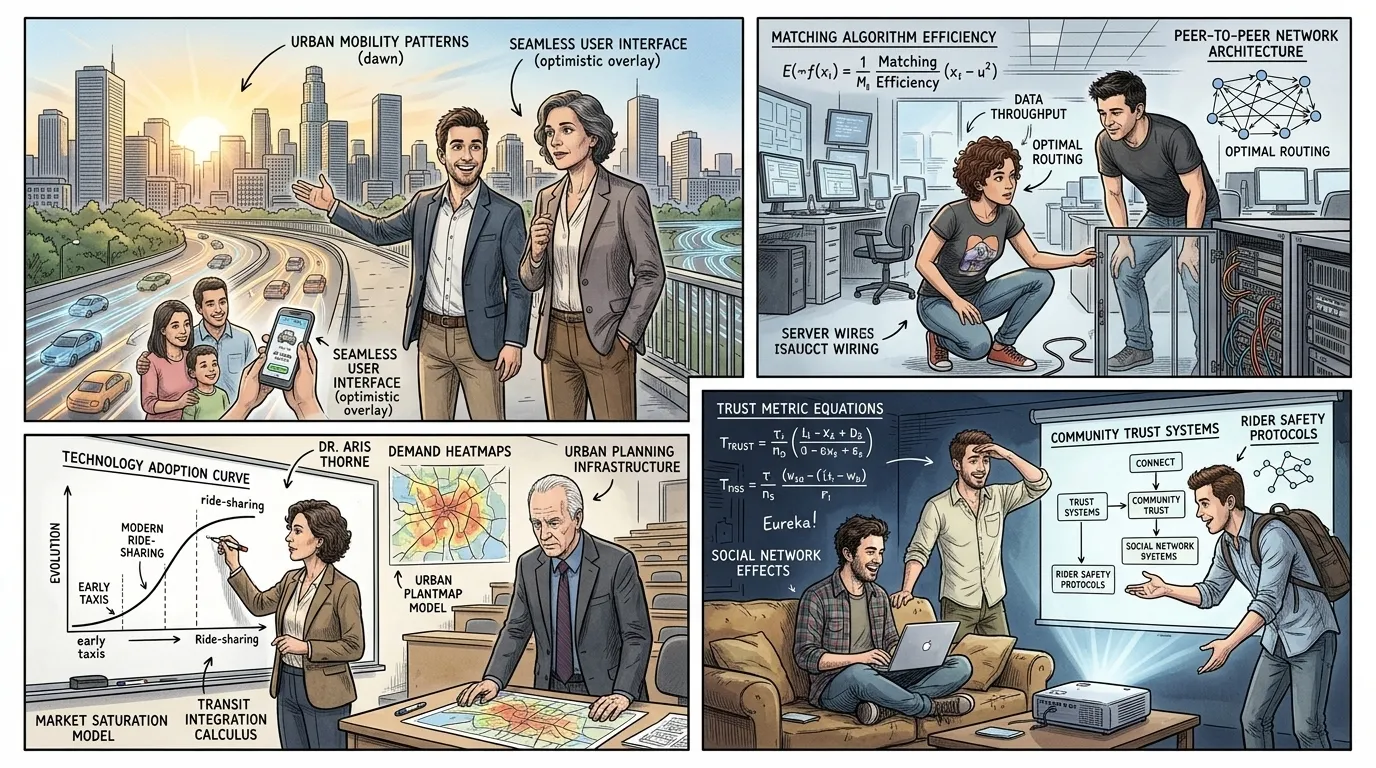
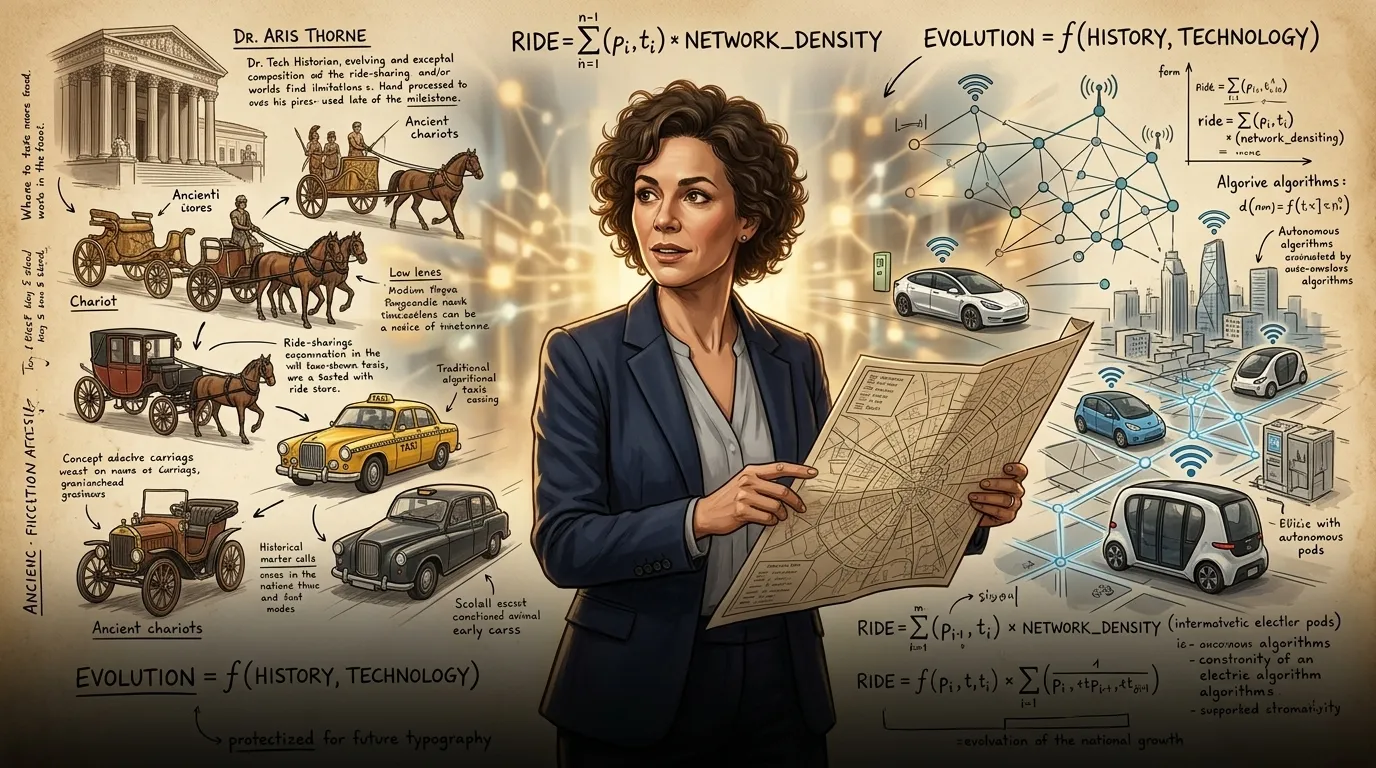
Across bustling metropolises, a familiar frustration echoed: the unpredictable wait for a taxi, the opaque pricing, the sheer inefficiency of traditional urban transport. Before the digital age fully reshaped our streets, securing a ride often meant standing curbside, hoping for luck. This fundamental problem of mobility, faced by millions daily, sparked a new wave of innovation.
""The urban landscape of the early 21st century was ripe for disruption," observes our host, gesturing towards a historical montage. "We had smartphones in our pockets, yet getting from point A to point B often felt like a relic from a bygone era."
"Indeed," replies Dr. Aris Thorne, a Tech Historian, her expression thoughtful. "The disconnect between emerging personal tech and public transport availability was stark.""
Page 2
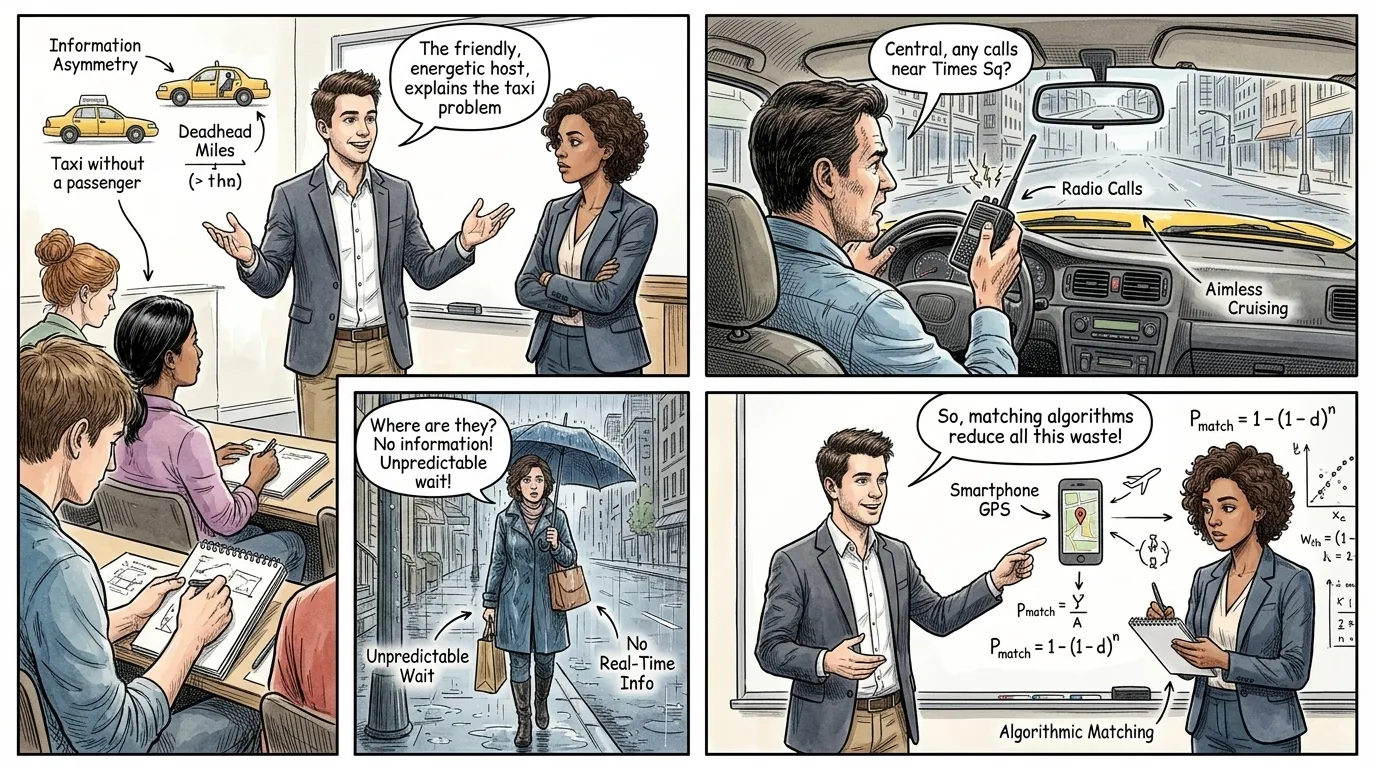
Traditional taxi services, while essential, operated on a system largely unchanged for decades. Dispatchers relied on radio calls, drivers often cruised aimlessly searching for fares, and passengers had little information beyond what they could see from the curb. This analog infrastructure struggled to meet the dynamic demands of rapidly growing cities, creating persistent gaps in service.
""Imagine the inefficiency," the host explains. "Drivers burning fuel searching for passengers, passengers wasting precious minutes, sometimes hours, in the rain or cold."
"Absolutely," Dr. Thorne confirms. "The taxi medallion system, while intended to regulate, inadvertently created artificial scarcity. There was a fundamental information asymmetry: drivers didn't know where demand was, and riders didn't know where supply was."
"A logistical nightmare," the host concludes, "exacerbated by payment friction and safety concerns.""
Page 3
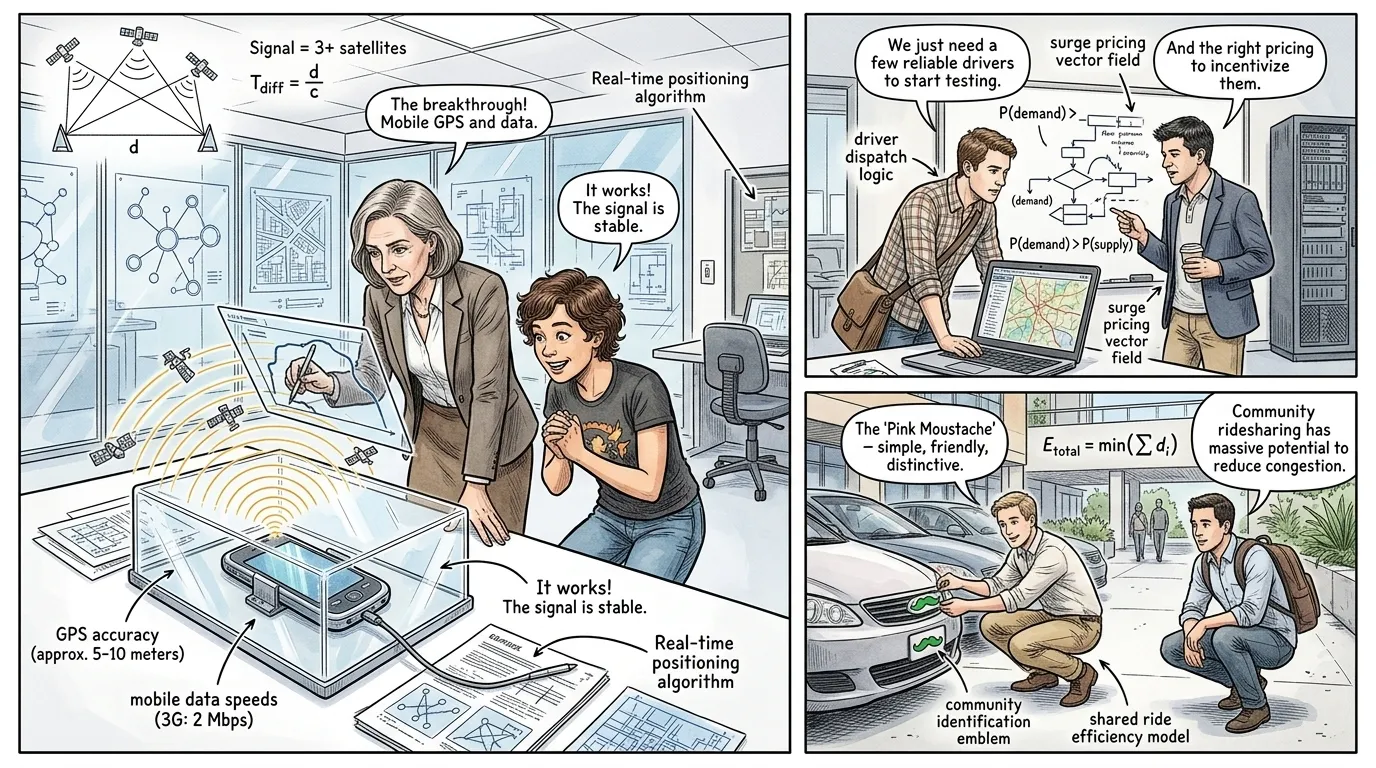
The late 2000s marked a pivotal shift: the widespread adoption of smartphones equipped with GPS and mobile internet. This wasn't merely about communication; it was about location-aware computing. The potential to connect individuals and services in real-time, on demand, began to crystalize, offering a glimpse into a future where the friction of urban movement could be significantly reduced. This was the nascent stage where the idea of efficient, real-time demand-supply matching for transport truly began to take shape.
""So, the technology arrived before the concept truly took hold?" the host inquires, pointing to a diagram of a smartphone with GPS signals radiating from it.
"Precisely," affirms Ms. Lena Chen, a Software Developer, an original character with short curly brown hair and bright, focused eyes, wearing a casual graphic tee. "Early smartphone capabilities—especially GPS accuracy and mobile data speeds—were the bedrock. The core challenge became: how do we leverage this to match a driver with a rider in seconds, not minutes?"
"This 'real-time matching' was the crucial hurdle," the host clarifies. "The conceptual 'item' they needed to master.""
Page 4
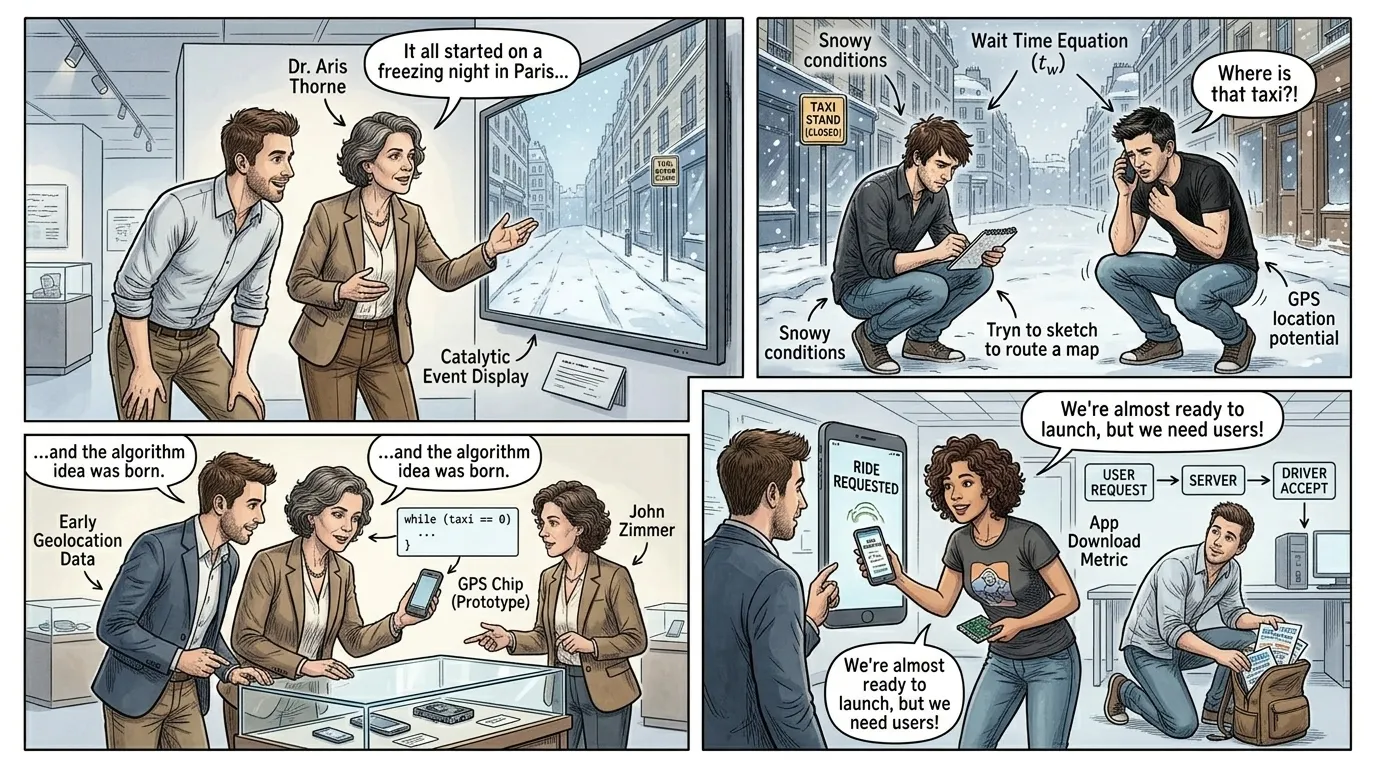
The impetus for what would become Uber arose from a common predicament. In December 2008, after attending a conference in Paris, Garrett Camp and Travis Kalanick struggled to find a taxi on a snowy evening. This frustration sparked an idea: what if you could summon a car with a tap on your phone? Camp initially envisioned a fractional ownership service, but Kalanick pushed for a simpler, on-demand luxury car service, leading to the birth of 'UberCab' in 2009. Meanwhile, a different vision, driven by community, was brewing for Logan Green and John Zimmer with Lyft.
""It's often a personal pain point that fuels innovation," the host observes. "For Camp and Kalanick, a cold, snowy night in Paris became the catalyst."
"That specific frustration ignited the concept of 'everyone's private driver'," Dr. Thorne explains. "Initially, it was a high-end service, UberCab, designed for convenience and luxury. A direct answer to unreliable taxi experiences."
"A clear problem, a clear market, and emerging technology," the host muses. "The perfect storm for a startup.""
Page 5
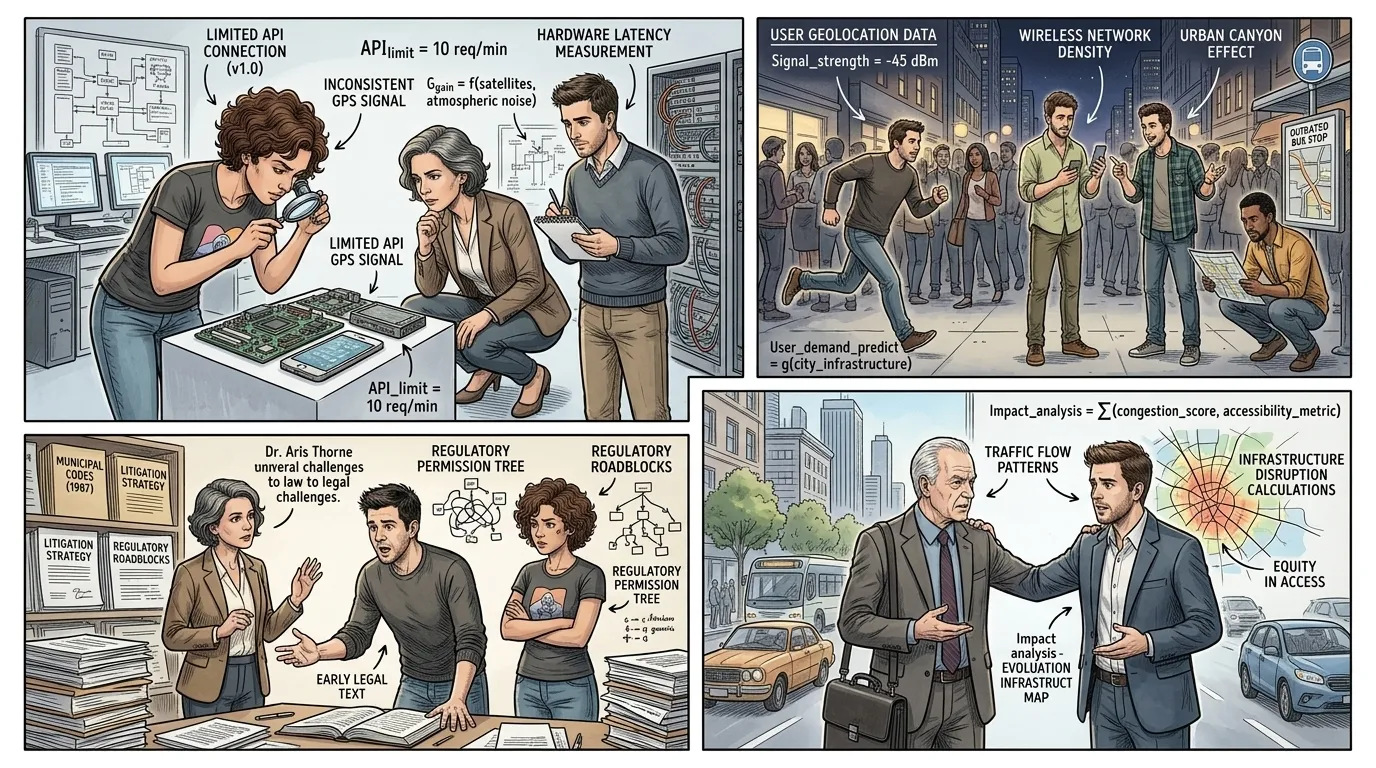
Building the first ride-sharing platform was not without its significant challenges. Beyond the conceptual leap, there were immense technical hurdles. Early smartphone APIs were limited, GPS accuracy could be inconsistent, and the sheer complexity of creating a seamless user experience for both driver and rider was daunting. Furthermore, convincing investors and regulatory bodies of this entirely new model required overcoming deep-seated skepticism and resistance from established industries. The idea of private citizens using their own cars for hire was revolutionary and, to many, concerning.
""The technical landscape of 2009 was vastly different," Ms. Chen elaborates, gesturing to an old smartphone model on display. "Building an intuitive app that reliably connected two strangers in real-time was cutting-edge. It pushed the limits of mobile development."
"And the regulatory pushback must have been immediate," the host suggests.
"Indeed," Dr. Thorne interjects. "'How can this be safe? What about insurance? Who is responsible?' These were legitimate questions, and they formed a significant barrier to entry, often leading to confrontations and legislative battles across different cities.""
Page 6
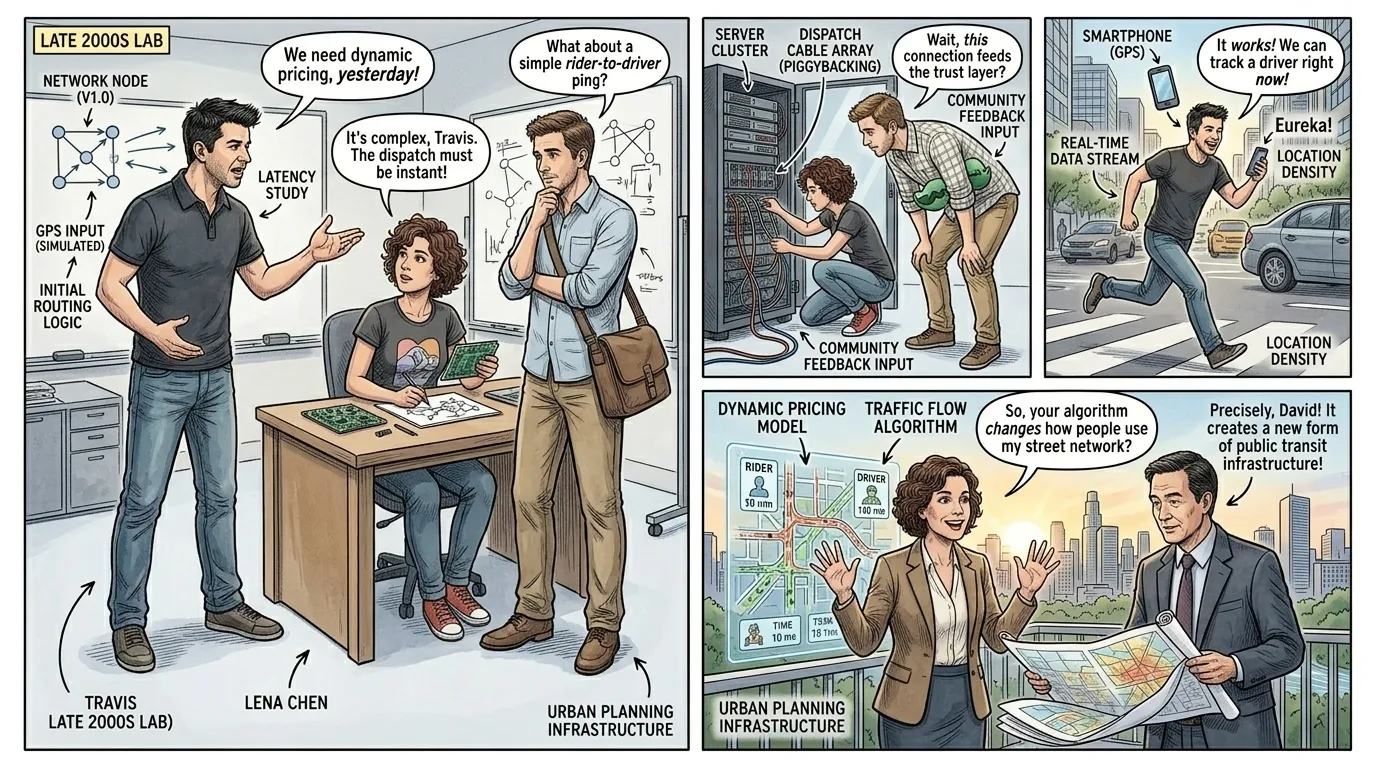
The fundamental breakthrough of the ride-sharing platform lay in its sophisticated algorithmic matching. Unlike traditional dispatch, which relied on human operators and approximate locations, these platforms harnessed GPS data from both drivers and riders. When a rider requested a trip, the system would instantly identify the closest available drivers, factor in traffic conditions, estimated arrival times, and driver ratings, then propose the optimal match. This digital triangulation drastically reduced wait times and introduced unprecedented efficiency and transparency into the process. The mechanism was the key to unlocking seamless, on-demand transport.
""At its heart, it's an elegant algorithm," Ms. Chen explains, tracing lines on a large, interactive display showing a city map. "The rider taps 'Request,' and instantly, the system doesn't just find the nearest driver, it considers multiple variables."
"Distance, estimated time, even the driver's current rating," the host elaborates. "This dynamic 'algorithmic matching' became the platform's central nervous system."
"It transformed a chaotic, analog process into a highly optimized, digital ballet," Ms. Chen concludes, "making the system exponentially more efficient than anything that came before.""
Page 7
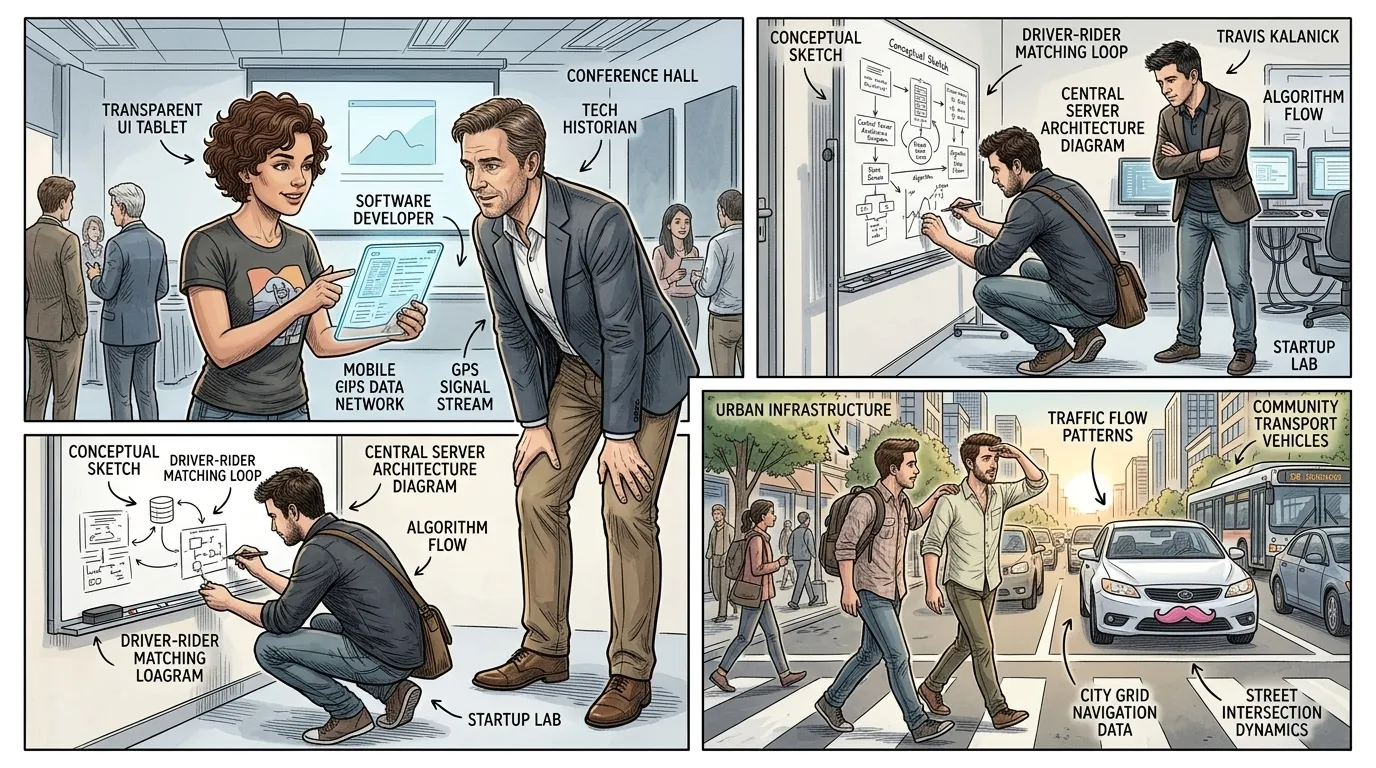
The ride-sharing platform operates through a constant, three-way digital connection: the Rider App, the Driver App, and the central server platform. The Rider App allows users to request rides, track their driver's approach, and process payments. Concurrently, the Driver App provides drivers with trip requests, navigation, fare details, and earnings tracking. Both apps continuously communicate with the central server, which acts as the intelligent broker, managing demand, supply, routing, and all transactional data in real time. This interconnected system forms a digital ecosystem of mobility.
""The elegance is in the simplicity for the user, but the complexity beneath," Ms. Chen states, pointing to a diagram of the interconnected apps. "For the rider, it's intuitive: tap, ride, pay. For the driver, it's an on-demand job. But the true genius is the invisible 'central platform' orchestrating everything."
"A seamless ballet of data," the host remarks. "It's truly a testament to software engineering."
"Indeed," Ms. Chen nods. "As the pioneering computer scientist Grace Hopper famously said, 'The most dangerous phrase in the language is, 'We've always done it this way.'' We had to fundamentally rethink how urban transport could function, building new digital bridges where only analog roads existed before.""
Page 8
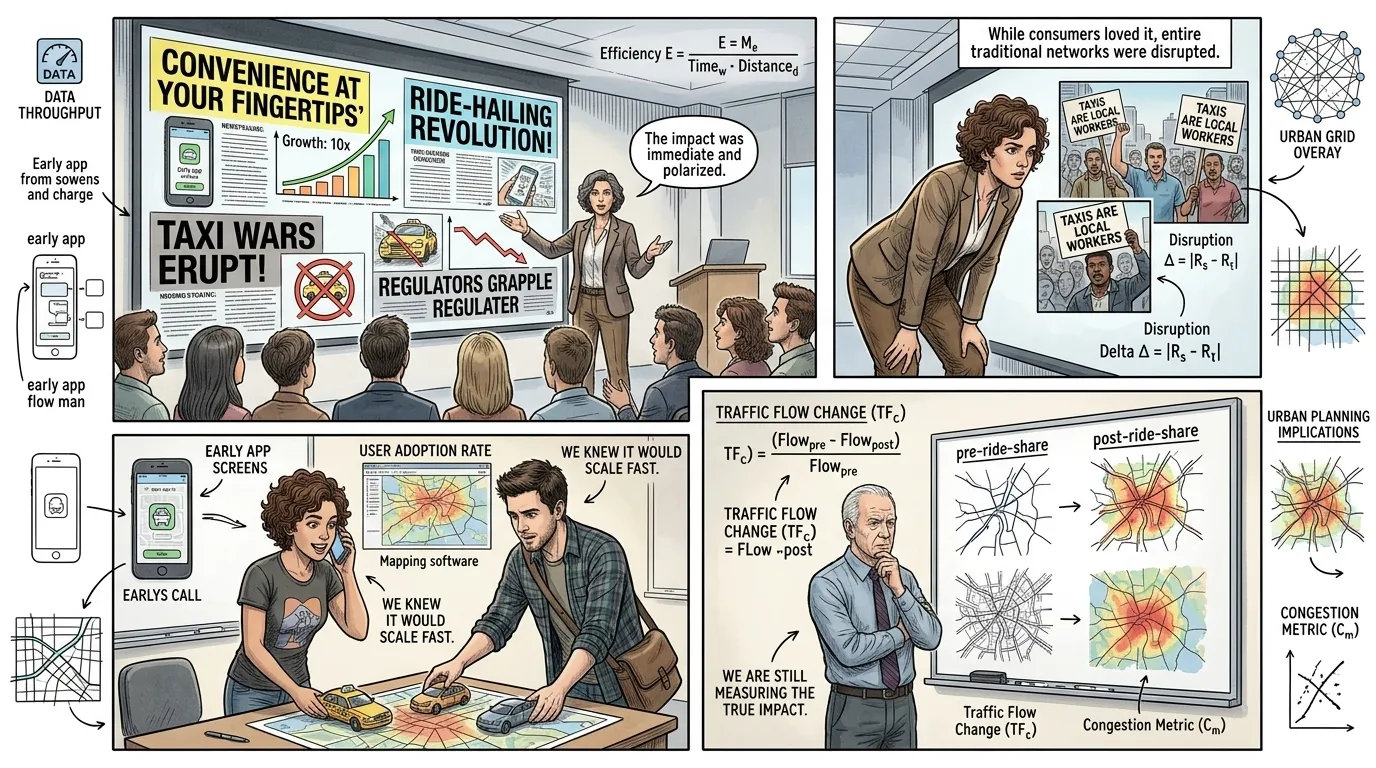
The introduction of ride-sharing platforms sparked a rapid transformation in urban mobility. Passengers embraced the convenience, transparency, and often lower costs compared to traditional taxis. Cities saw an influx of new transport options, and a new 'gig economy' emerged, offering flexible work opportunities for drivers. However, this swift adoption also brought significant disruption, igniting fierce debates with established taxi industries, prompting legal challenges, and forcing regulators to grapple with an entirely new business model that defied existing frameworks.
""The public's adoption was almost instantaneous in many cities," the host explains, gesturing to a projection of newspaper headlines from the early 2010s, some celebrating, some decrying ride-sharing.
"The value proposition was simply too compelling for many urban dwellers," Dr. Thorne states. "Convenience at your fingertips, transparent pricing, and real-time tracking. It felt like magic."
"But it wasn't without a fight," the host adds, pointing to images of taxi driver protests. "The disruption was seismic, challenging decades of established practices and regulations.""
Page 9
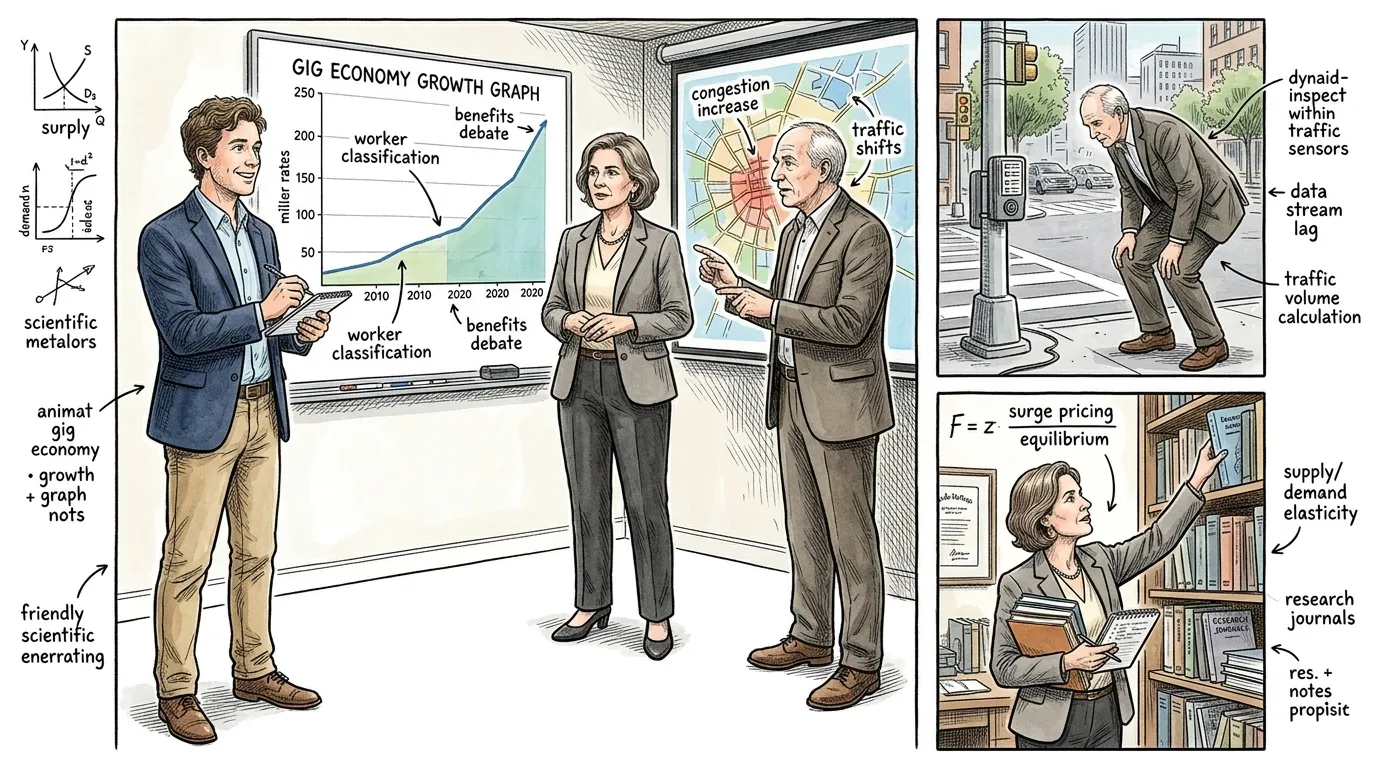
As ride-sharing platforms matured, their societal and economic consequences became more apparent and complex. The 'gig economy' model, offering flexible work, simultaneously raised critical questions about worker classification, benefits, and fair wages. Urban planners observed shifts in traffic patterns, potential increases in congestion, and debates over the true environmental impact. The initial concept of 'real-time matching' evolved into sophisticated dynamic pricing algorithms, known as 'surge pricing,' which optimized supply but also sparked public debate over fairness during peak demand. The simple act of ordering a ride had unforeseen ripples across labor markets and city planning.
""The initial promise of a simple, efficient ride evolved into a much larger conversation about labor and urban policy," the host reflects, standing before a graph showing gig economy worker growth.
"The flexibility was attractive," Dr. Thorne notes, "but the lack of traditional employee benefits ignited a fierce debate, particularly over classifying drivers as independent contractors."
"And the impact on cities themselves?" the host asks, gesturing towards a map highlighting traffic hotspots.
"Significant," replies Mr. David Lee, an Urban Planning Expert, an original character with receding white hair and a serious expression. "Those sophisticated 'real-time matching' algorithms, initially designed for efficiency, when coupled with dynamic pricing, had unexpected effects on traffic patterns and public transit usage. The city had to adapt.""
Page 10
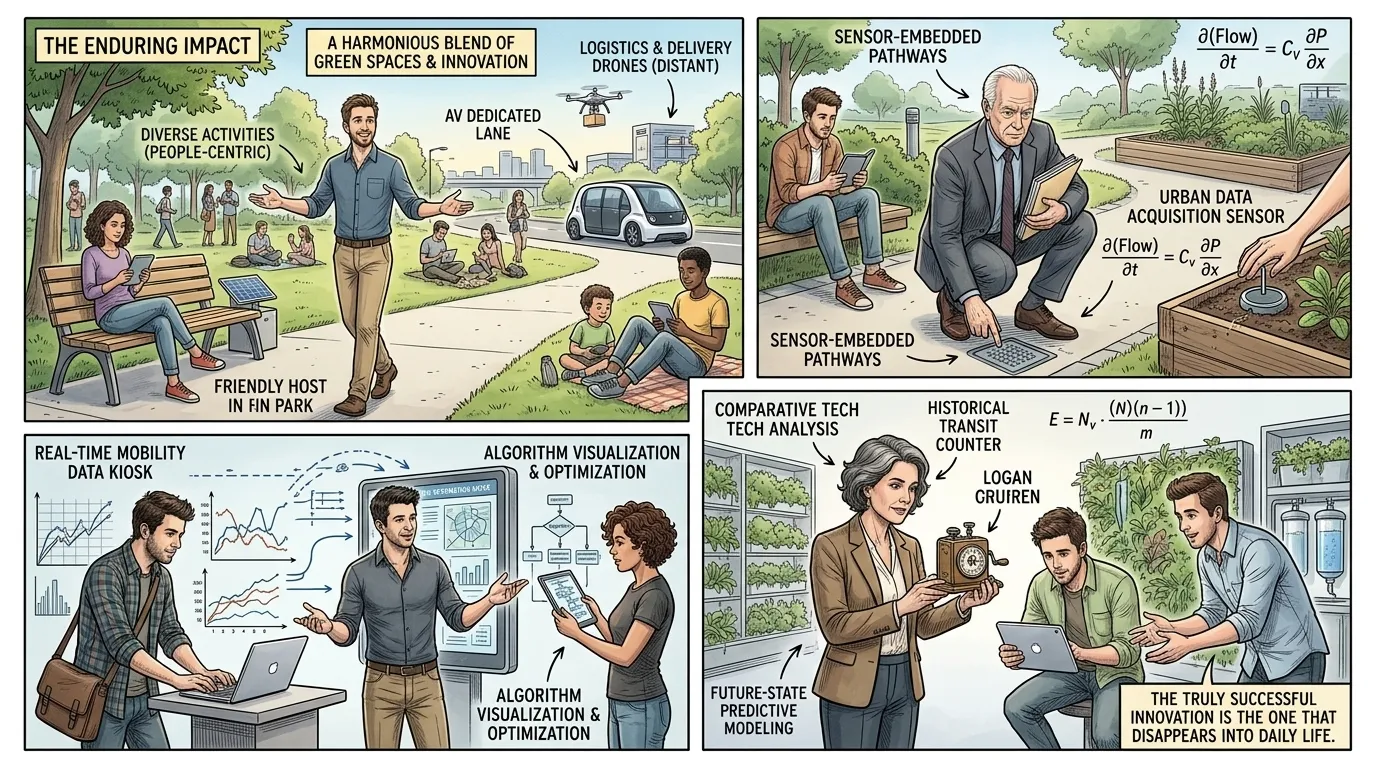
Today, ride-sharing platforms are deeply woven into the fabric of global transportation, extending far beyond simply summoning a car. They have paved the way for entirely new categories of on-demand services, from food and grocery delivery to package logistics. The underlying technology and business model continue to evolve, with companies investing heavily in autonomous vehicle research and new multimodal transport options. The ride-sharing platform stands as a testament to how digital connectivity can fundamentally reshape physical mobility, leaving an indelible mark on urban life, labor, and the very concept of personal transport.
""From a simple idea born of frustration, ride-sharing has fundamentally altered how we move and interact with our cities," the host concludes, walking through a modern, vibrant urban park setting.
"It's a powerful example of digital innovation's ripple effect," Dr. Thorne adds, looking out at the park. "The future of mobility will undoubtedly build on these foundations, moving towards even more integrated, and perhaps autonomous, systems."
"A testament to the continuous human drive for convenience and efficiency," the host summarizes, "forever changing the landscape of transportation.""
About this story
- Location: Global
- Audience: general readers
Read Wonder Inventions on your phone
Wonder Inventions is available on Android. Get Wonder Inventions on Google Play.