Sailboat
Sailboat — an illustrated inventions story, set in Global. 10 illustrated pages, free to read on Wonder Inventions.
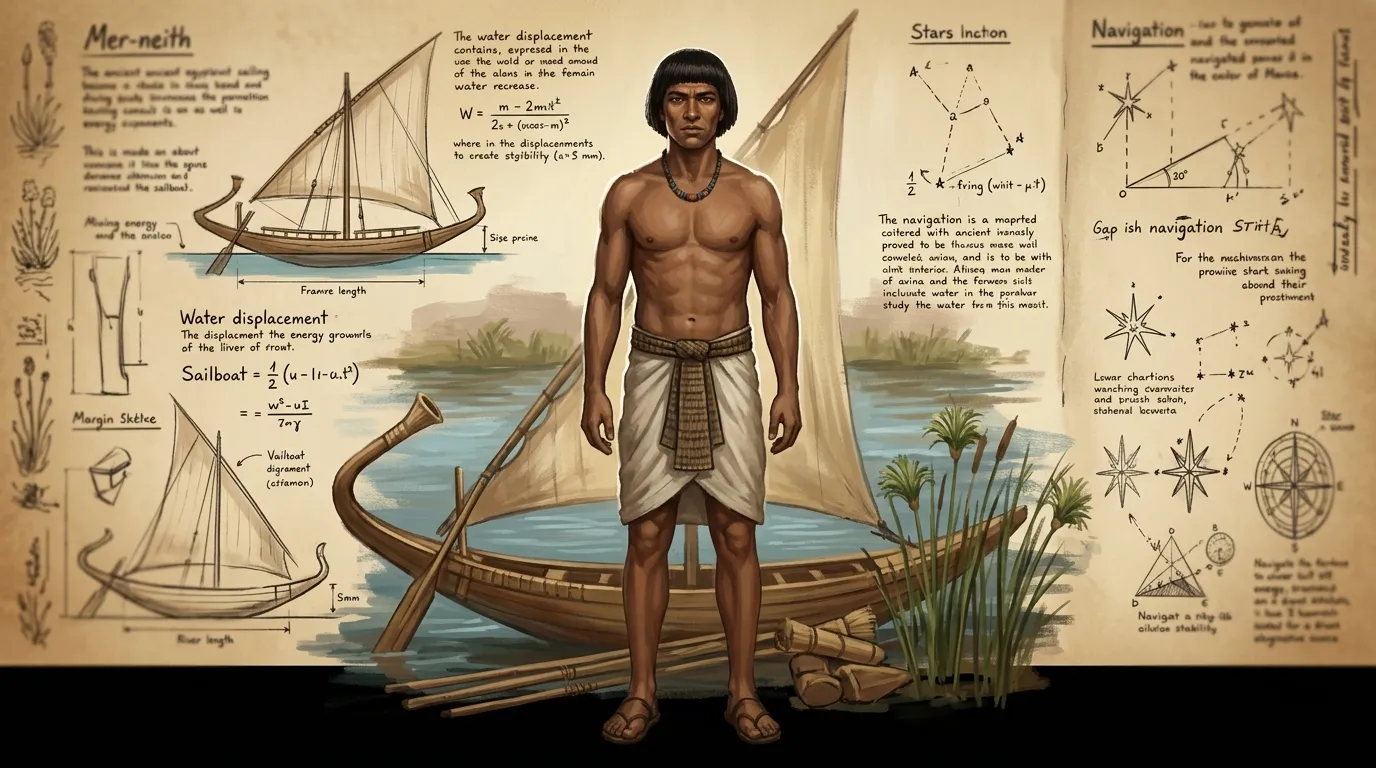
Page 1
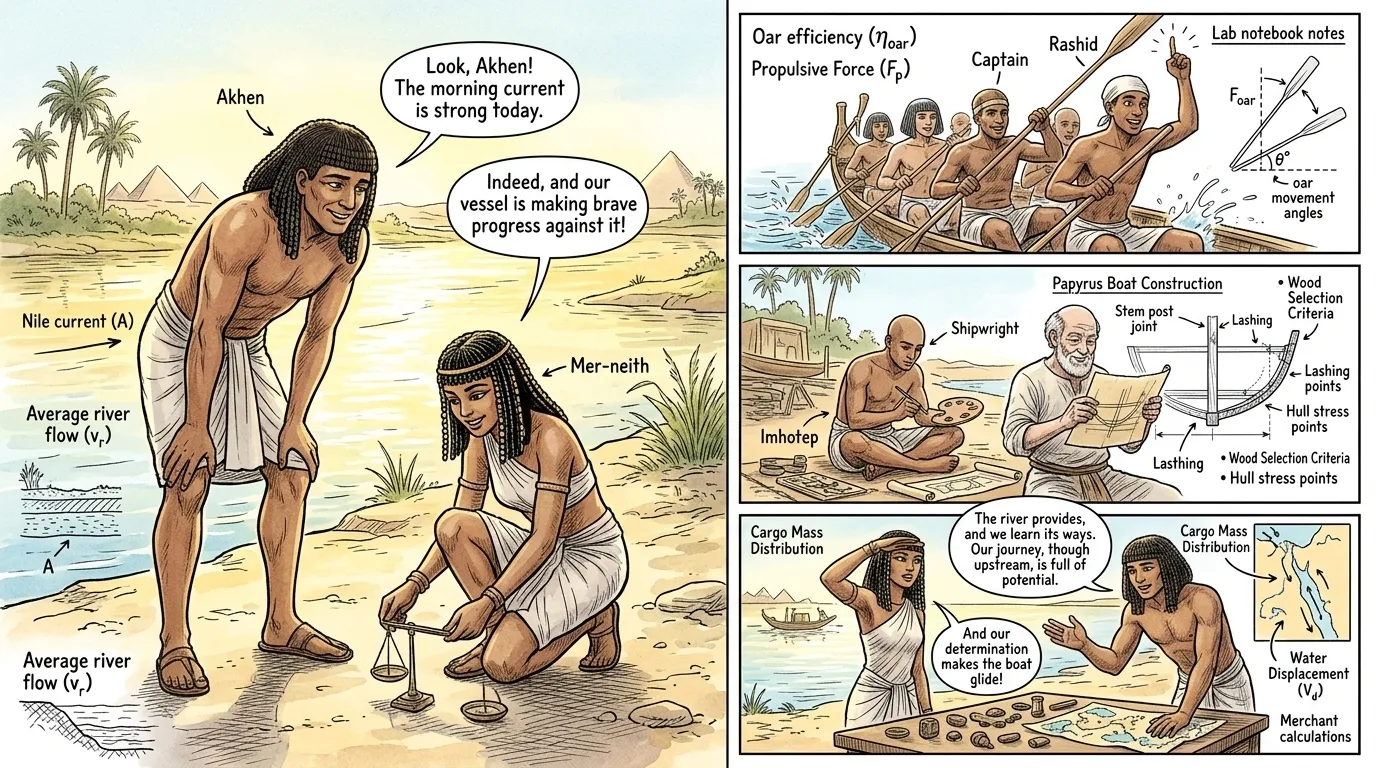
Before the sailboat, humanity's reach was limited. Early civilizations relied on muscle and current, their small vessels hugging coastlines, fearing the vast, open waters.
""The river grants us passage downriver," remarked Akhen, a sturdy river merchant, gesturing upstream. "But returning requires endless rowing, or a long, arduous portage. We are slaves to the current." His companion, Mer-neith, nodded gravely, observing the strained faces of oarsmen."
Page 2
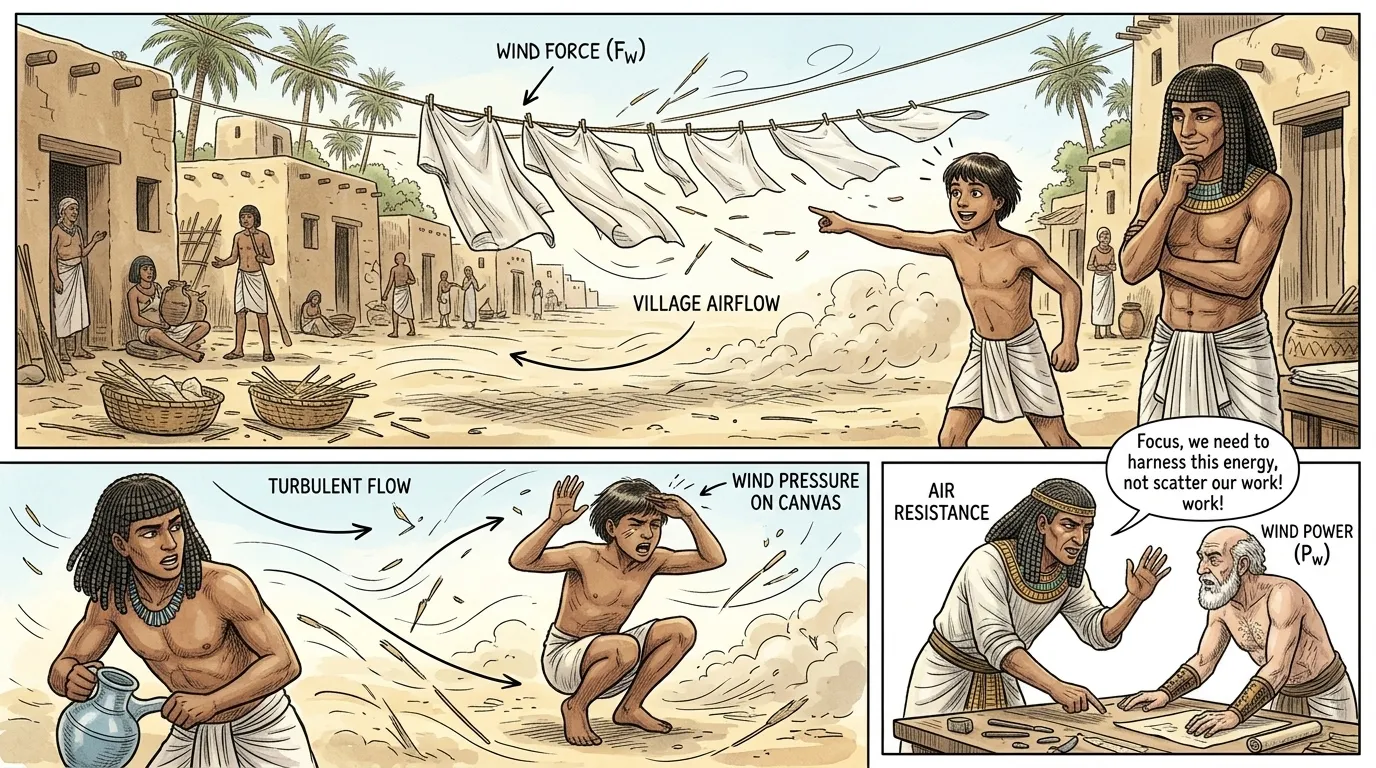
Observation was the first step. People noticed the wind's power, pushing reeds, rustling trees. Could this invisible force propel a boat?
""Look how the wind fills that drying linen!" exclaimed a young boat builder, pointing to laundry on a line. "What if we held such a sheet aloft, Master Imhotep, to push our vessel?" Master Imhotep, a thoughtful man, stroked his chin, considering the simple square cloth."
Page 3
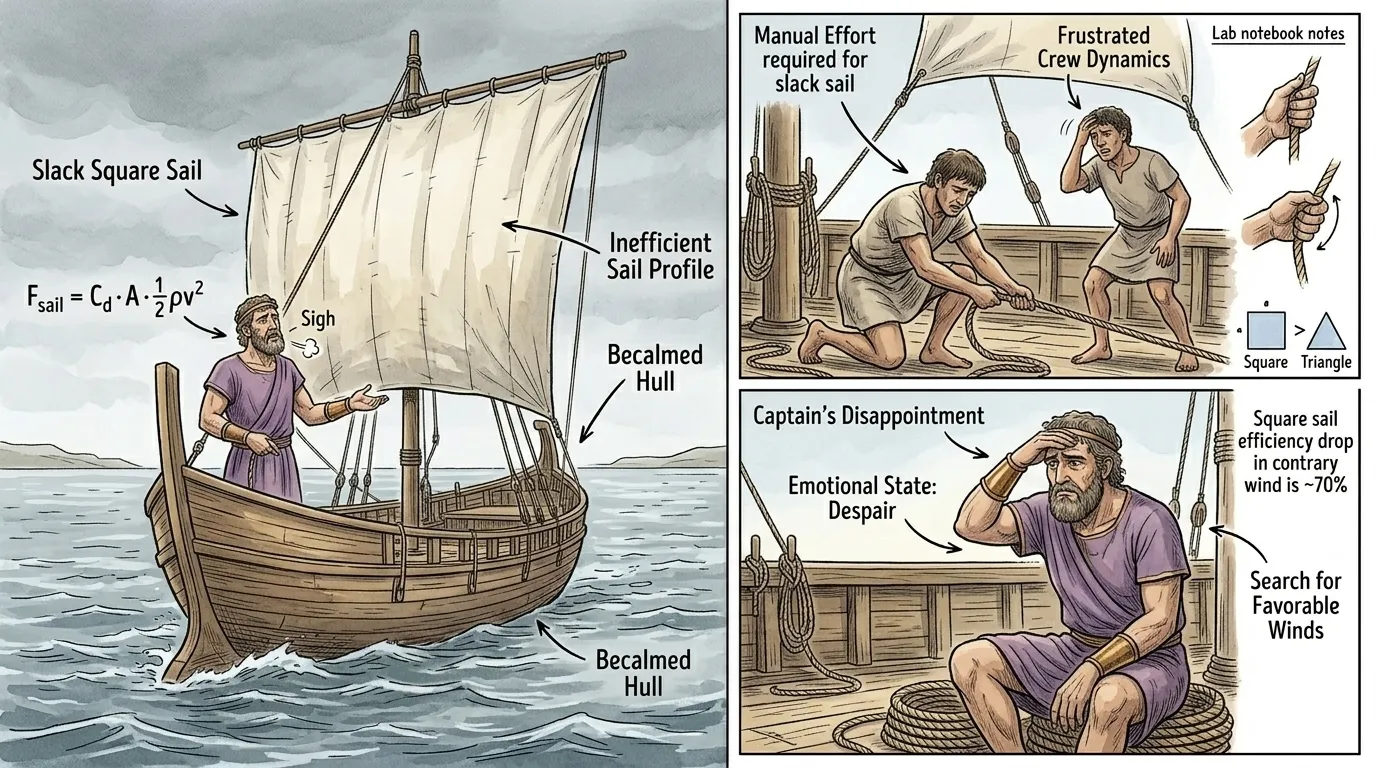
Early square sails indeed harnessed the wind, but their effectiveness was directional. Sailing with the wind was effortless; sailing against it remained impossible, stranding voyages.
""This square sail serves us well when the wind blows from behind," sighed a weary captain, gesturing at his large, rectangular sail. "But when the wind turns against us, as it does now, we are becalmed or driven back. How do we make the wind push us forward when it's blowing towards us?" A frustrated crewman shook his head, gazing at the flapping sail."
Page 4
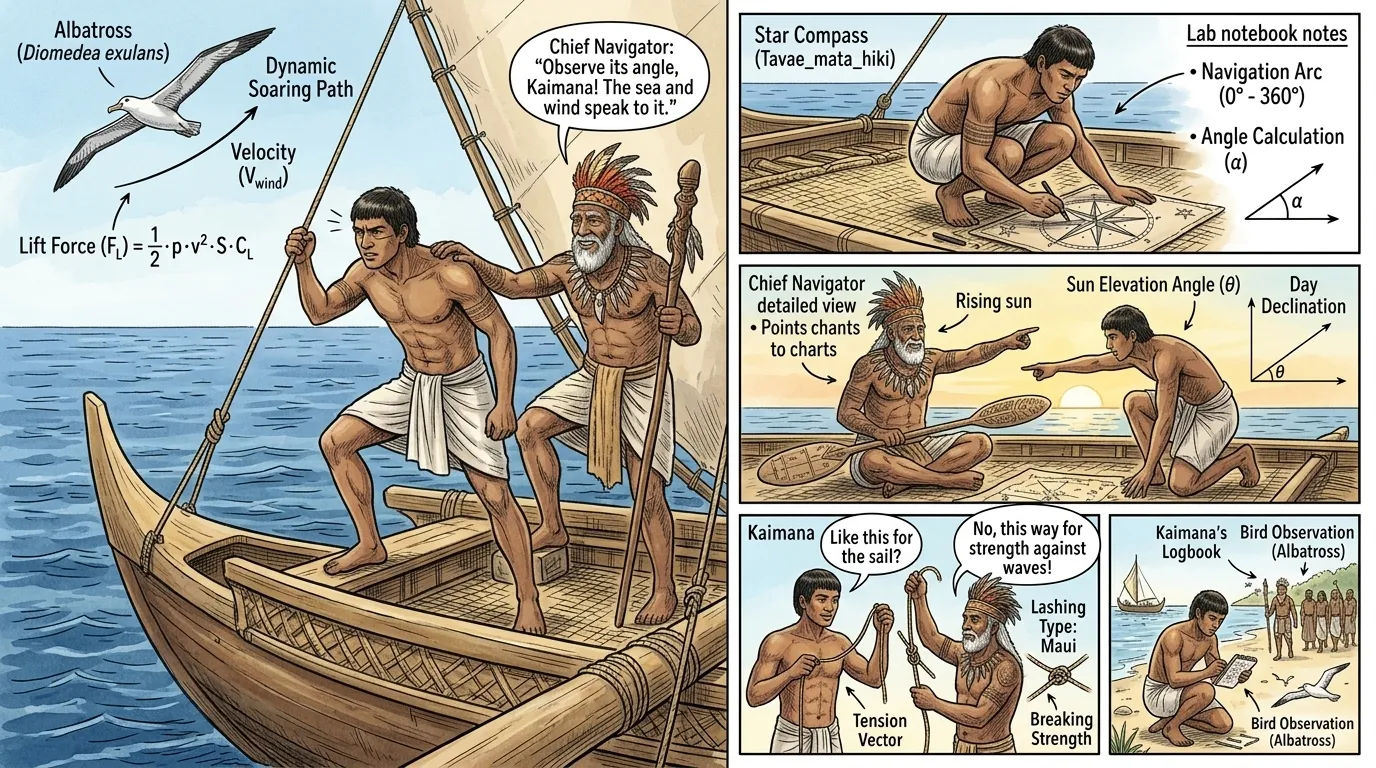
Thousands of years later, across the vast Pacific, Polynesian navigators independently developed sophisticated sailing craft, understanding wind and ocean currents with unparalleled skill.
""Observe the albatross, Kaimana," instructed the venerable Chief Navigator, pointing at the soaring bird. "It does not fly directly into the wind, but angles its wings. So too must our sails be angled, to capture the wind, not merely block it." Kaimana, a keen apprentice, intently watched the bird and then his elder."
Page 5
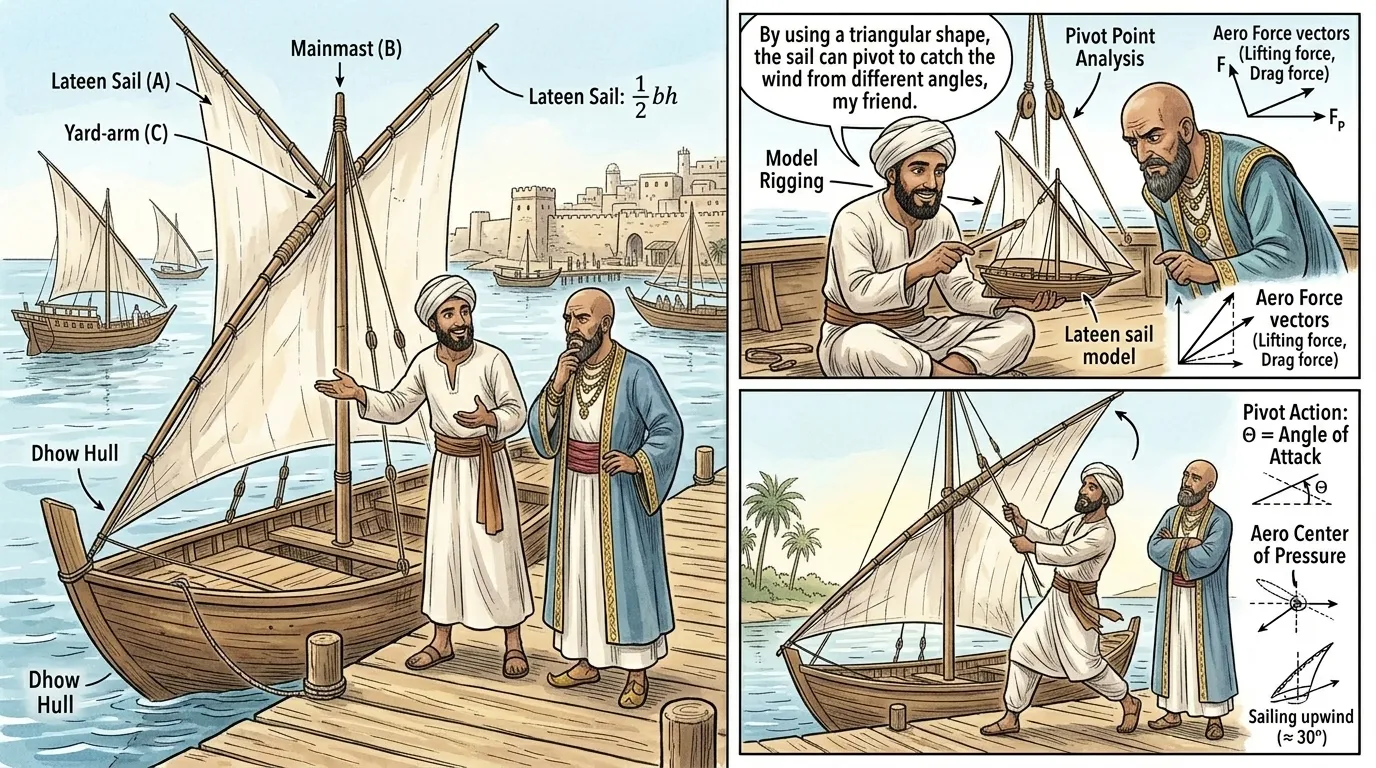
From the Indian Ocean, a revolutionary sail design emerged: the lateen. Its triangular shape and fore-and-aft rigging fundamentally changed how ships interacted with the wind.
""This lateen sail, originating from our Arab and Indian trading partners, is a marvel," explained Master Shipwright Rashid to a skeptical merchant. "Unlike the square sail, its long yardarm allows it to pivot, effectively 'cutting' into the wind rather than being pushed. This creates lift, like a bird's wing." The merchant cautiously studied the sail."
Page 6
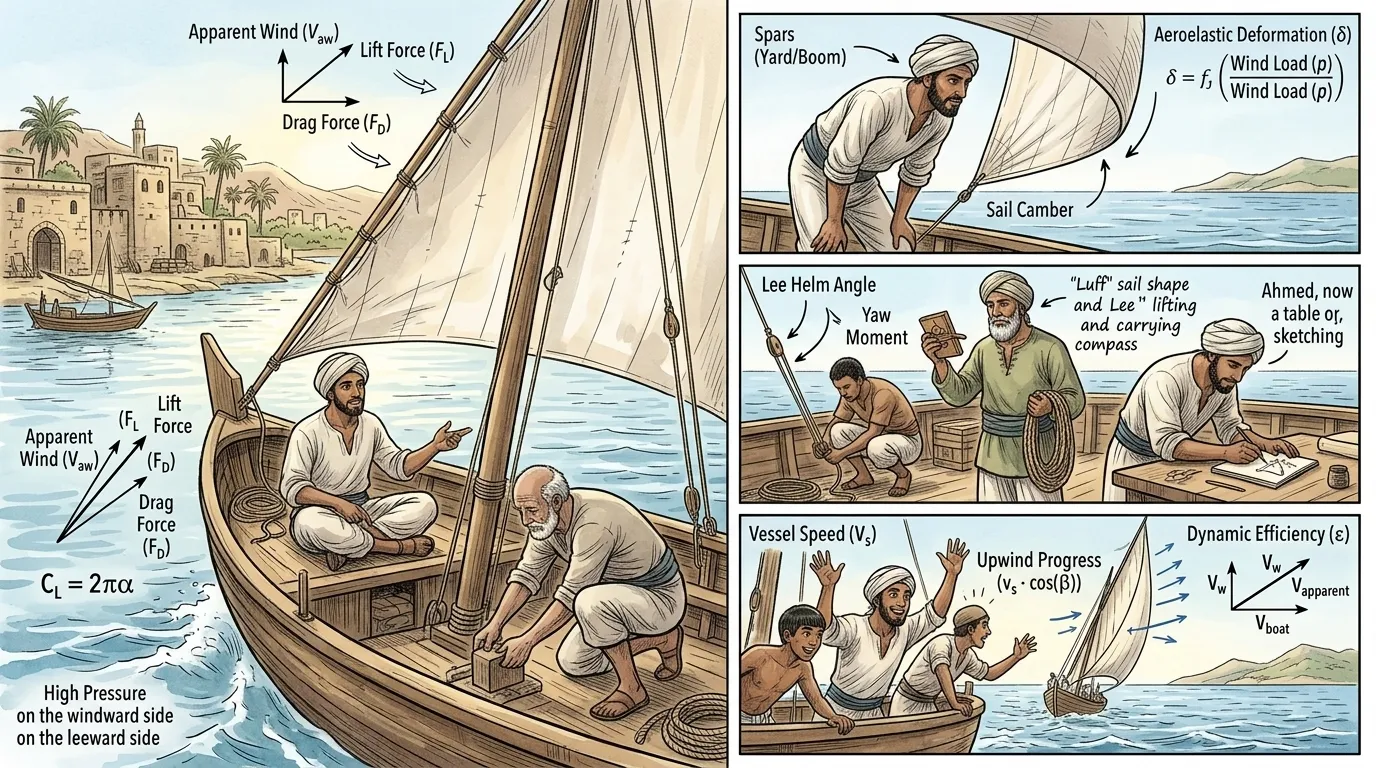
The lateen sail, combined with a deep hull, enabled 'tacking'—a zig-zagging maneuver allowing a ship to advance against the wind's direction. It was a pivotal breakthrough.
""See how we angle the sail into the wind, yet the boat moves forward?" Captain Ahmed demonstrated. "The wind flows over the curved surface, creating a pressure difference, a 'lift' that pulls us forward, not sideways. We 'tack'—changing course to catch the wind on alternate sides." His crew observed the masterful technique."
Page 7
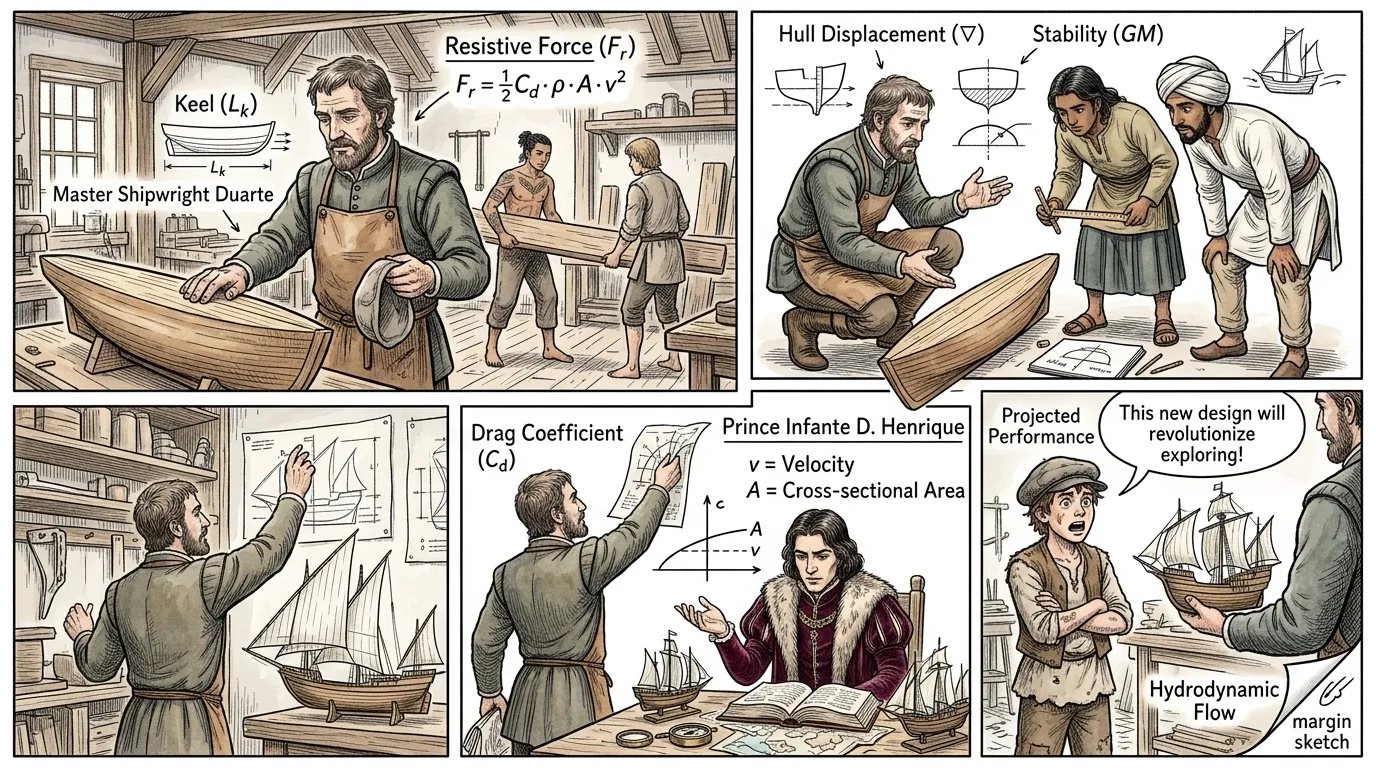
Sailing against the wind wasn't solely about the sail. A ship needed stability and resistance below the waterline to prevent being pushed sideways, a role fulfilled by the keel.
""The sail generates incredible forward force, yes," affirmed Master Shipwright Duarte. "But without a substantial keel, like this one, the water would merely push us laterally. The keel acts as a deep fin, providing hydrodynamic resistance against sideway drift, ensuring our forward momentum." He tapped the wooden model's keel thoughtfully."
Page 8
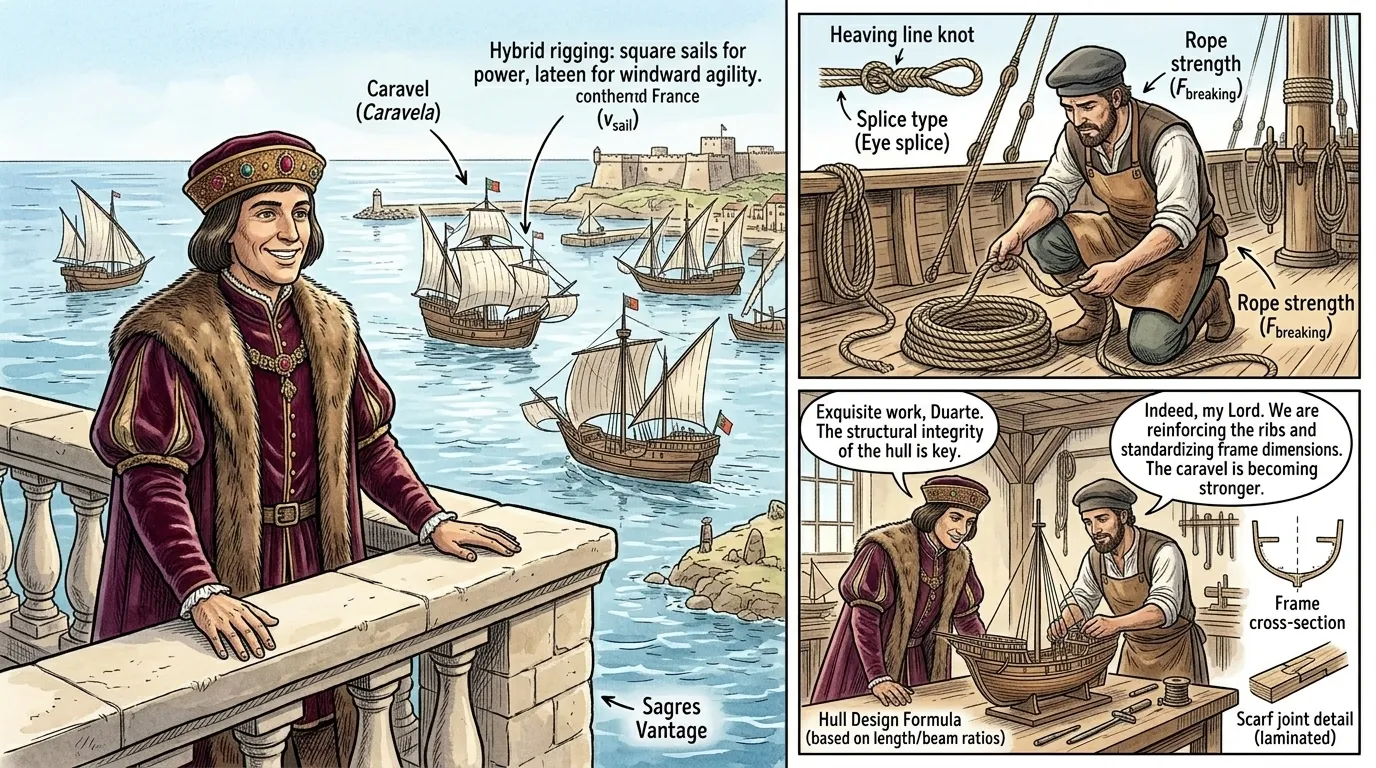
The pinnacle of early sailing innovation, the caravel combined the lateen sail's agility with a robust hull and deep keel. It was the vessel that truly opened the world.
""This caravel, with its blend of square and lateen sails, is the true culmination of our naval ambitions," declared Infante D. Henrique of Portugal, observing his new fleet. "Its maneuverability against the wind, which once seemed an impossible dream to ancient mariners, now allows us to reach distant shores, pushing the very boundaries of the known world." He watched the ships with pride."
Page 9
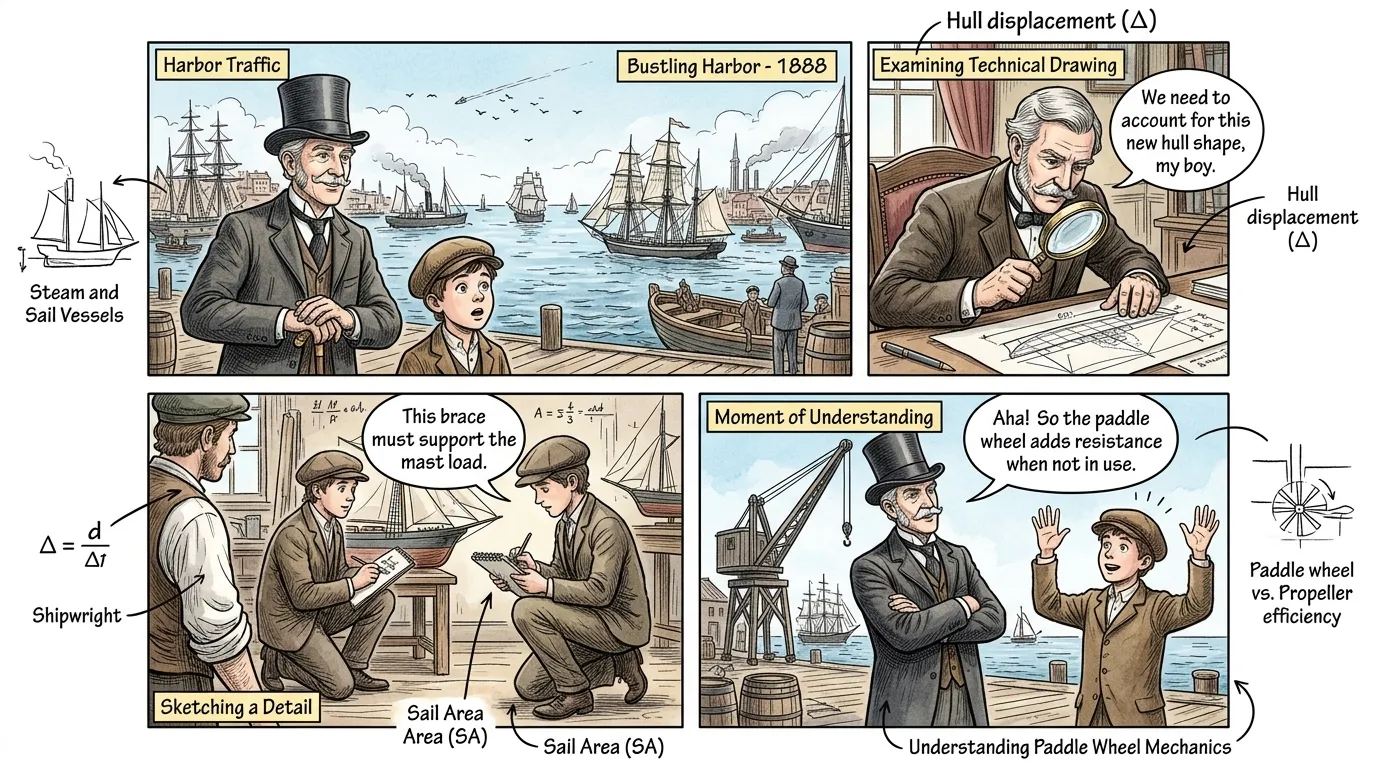
The sailboat transformed human society, enabling unprecedented global trade, exploration, and the exchange of ideas, goods, and cultures across continents.
""This harbor hums with the spirit of human endeavor, doesn't it?" observed an experienced merchant, watching diverse ships arrive. "As Oliver Wendell Holmes once said, 'We must sail sometimes with the wind and sometimes against it, but we must sail, and not drift, nor lie at anchor.' The sailboat truly taught us that lesson." His younger apprentice gazed in awe at the bustling activity."
Page 10
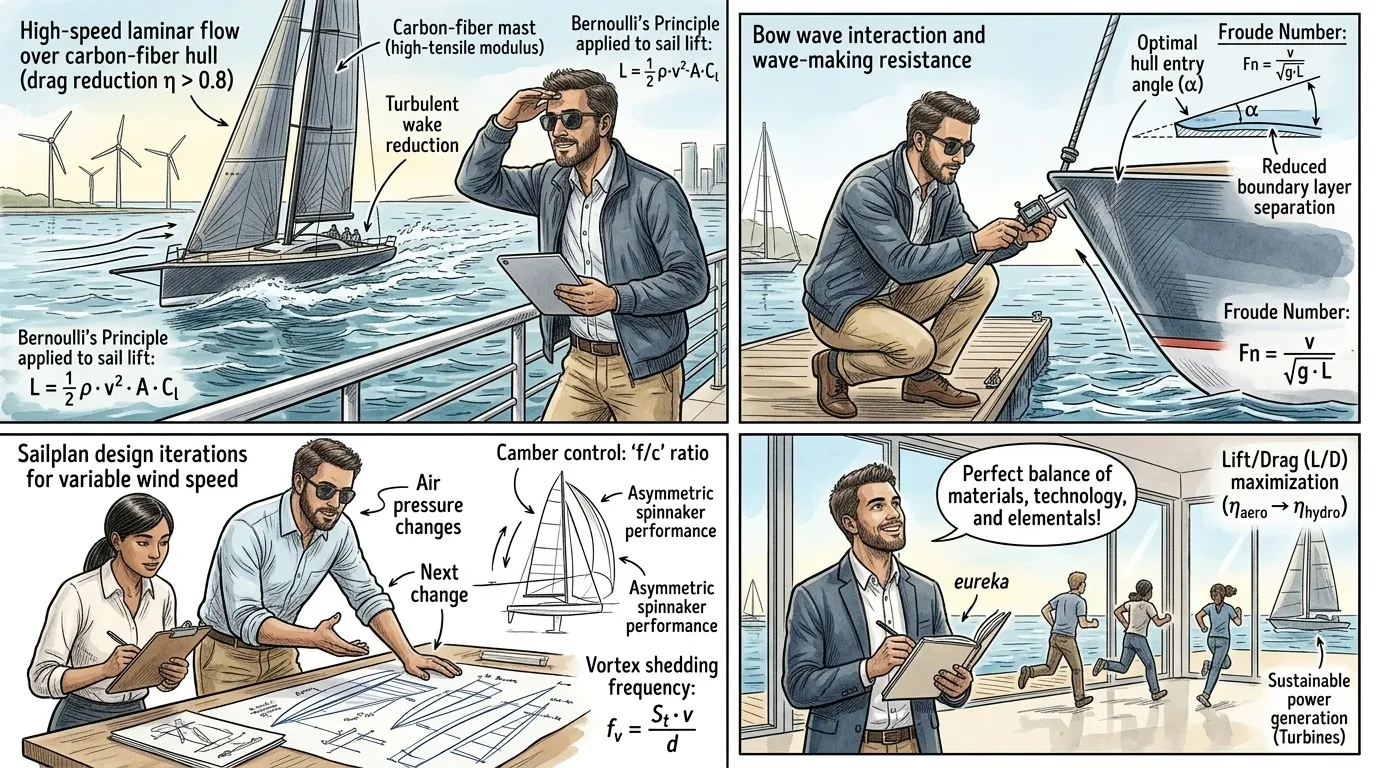
Though overshadowed by steam and engine power for cargo, the sailboat's principles endure. Its aerodynamic efficiency inspired flight and continues to drive modern sporting and clean energy technologies.
""The basic physics of the sailboat — how an airfoil generates lift — is still fundamental," noted a contemporary naval architect, observing a sleek racing yacht. "From ancient papyrus to these carbon-fiber marvels, the unseen hand of the wind remains our ally. Even wind turbines operate on principles first mastered by sailors." He smiled, looking at the distant horizon."
About this story
- Location: Global
- Audience: general readers
Read Wonder Inventions on your phone
Wonder Inventions is available on Android. Get Wonder Inventions on Google Play.