Semaphore Telegraph
Semaphore Telegraph — an illustrated inventions story, set in Global. 10 illustrated pages, free to read on Wonder Inventions.
Page 1
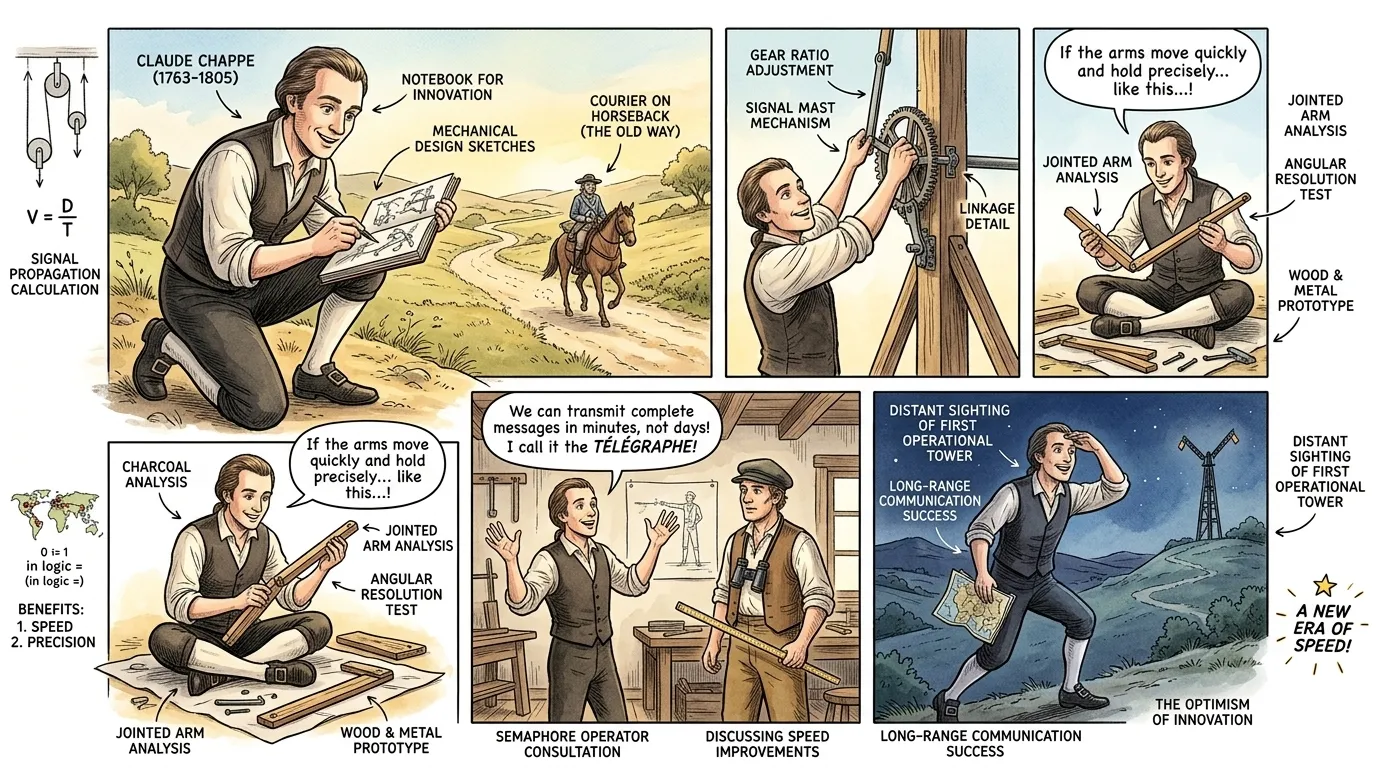
Before the late 18th century, communication across significant distances was painstakingly slow, relying on physical couriers or costly postal systems that often took days or weeks to deliver vital information. The urgency of military campaigns, governmental decrees, and commercial transactions frequently outpaced the speed of message delivery, leading to critical delays and strategic disadvantages. In response to this profound challenge, French engineer Claude Chappe conceived of a revolutionary system to transmit messages optically, dramatically reshaping the speed of information exchange across nations. His invention, the Semaphore Telegraph, debuted in the 1790s, offering an unprecedented solution to overcome the geographical barriers to rapid communication.
Page 2
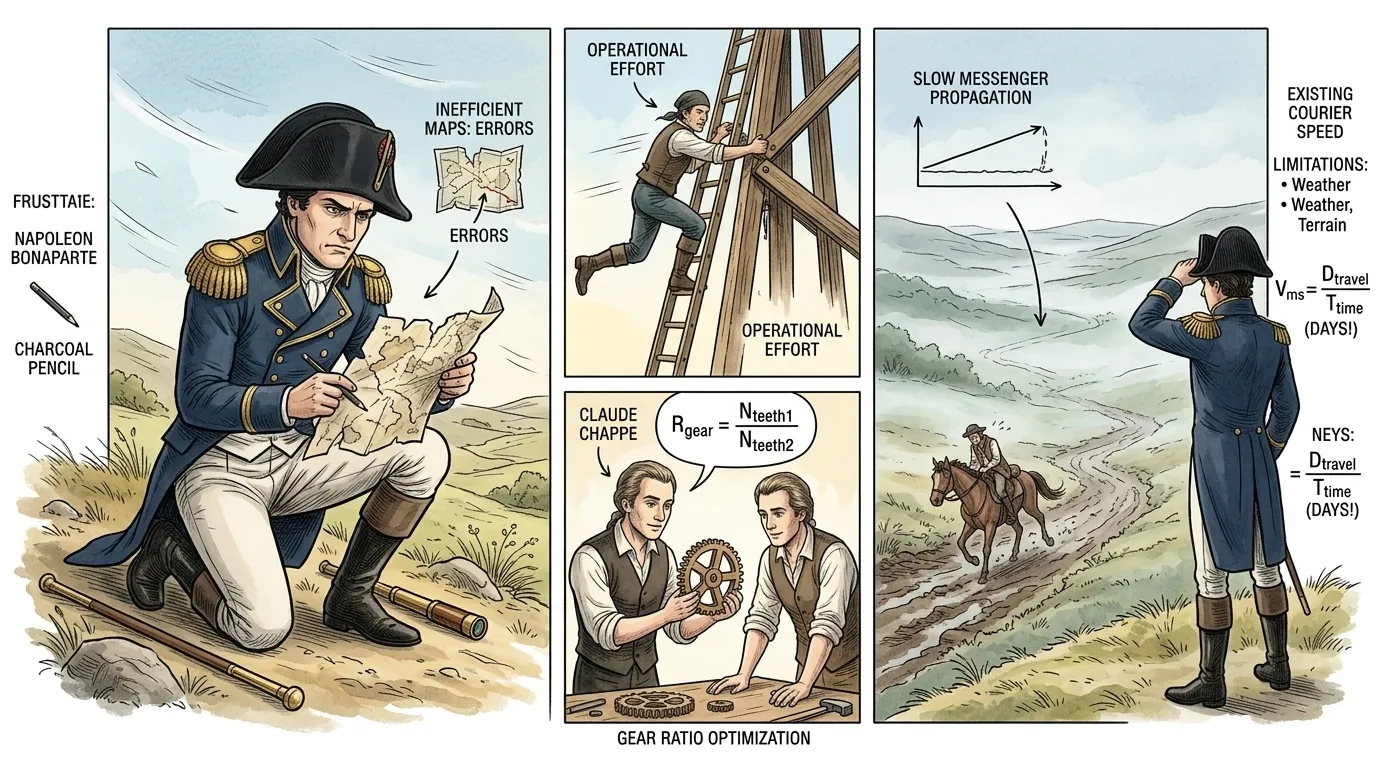
Across Europe, empires navigated complex political landscapes and engaged in frequent conflicts, making timely intelligence paramount. Generals often received battle orders days after they were issued, and governments learned of border skirmishes or treaties weeks after the fact. Merchants, too, suffered from delayed market information, unable to react swiftly to price fluctuations or supply shortages in distant ports. The vastness of land and sea became an impenetrable barrier to unified, responsive action, forcing decisions based on outdated or incomplete data. This era epitomized the struggle against the inherent limitations of physical travel for information.
Page 3
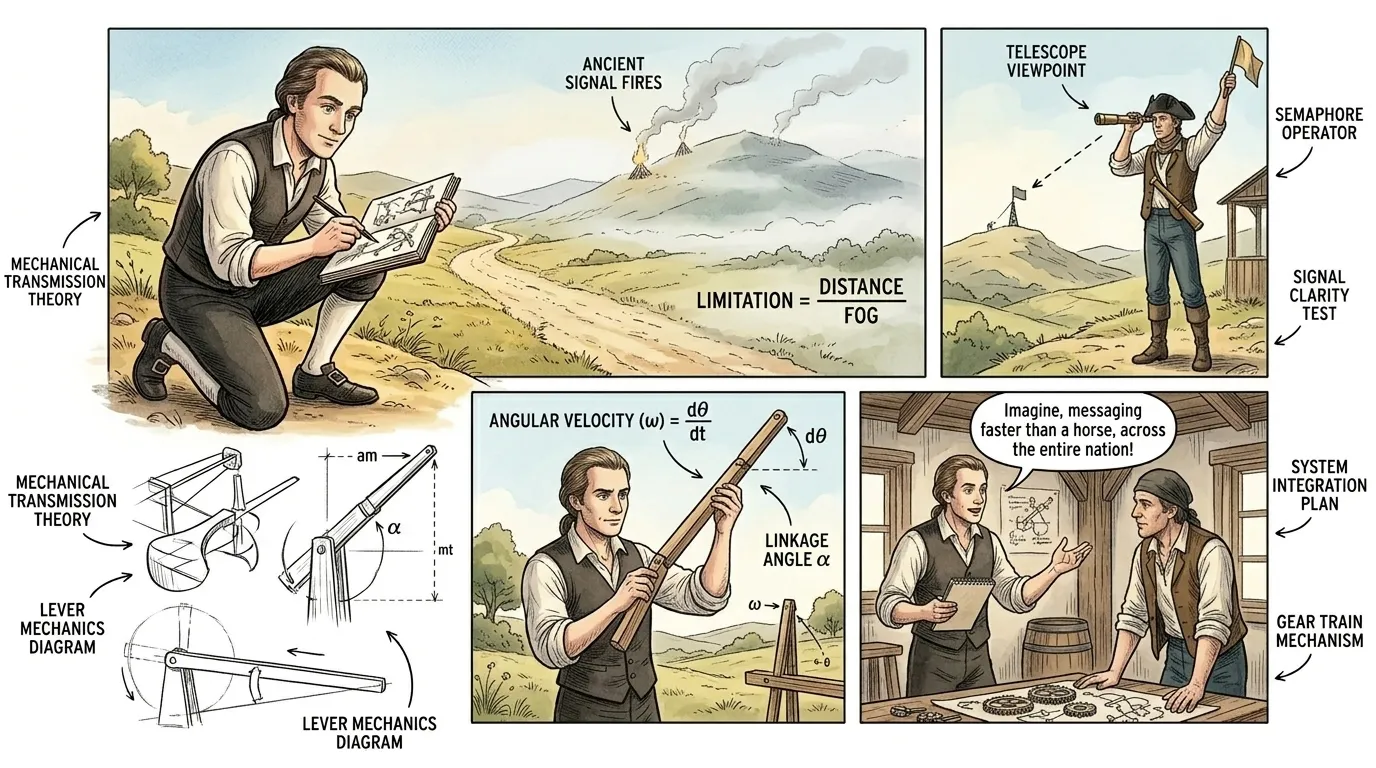
The concept of visual signaling was not new; ancient civilizations had used smoke signals, fire beacons, and flag systems for centuries. However, these methods were rudimentary, limited to simple pre-arranged messages, and highly susceptible to weather conditions or misinterpretation. Eighteenth-century inventors like Robert Hooke had theorized mechanical visual telegraphs, but practical implementation remained elusive. Claude Chappe, a young priest-turned-scientist, recognized the need for a system robust enough for comprehensive messages and reliable enough for national networks, pushing past the limitations of prior, less systematic attempts.
Page 4
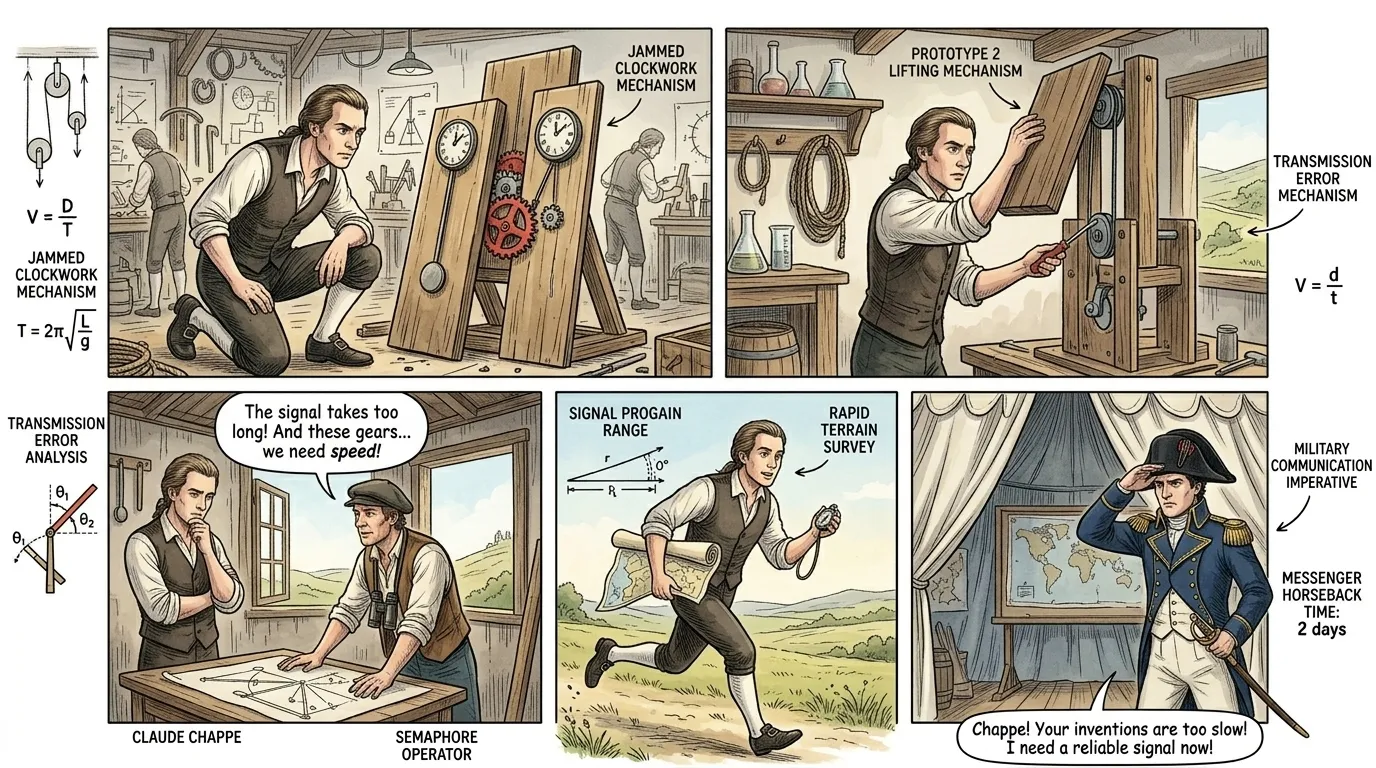
Frustrated by the inefficiency of traditional communication during the volatile years of the French Revolution, Claude Chappe, along with his four brothers, embarked on a dedicated quest to develop a more effective method. Their initial experiments involved synchronized pendulum clocks and panels that would flip to convey binary signals, but these proved too cumbersome and susceptible to error over long distances. Chappe soon realized that for a signal to be distinct and replicable across miles, it needed clear, unambiguous positions that could be easily observed and copied by human operators, leading him towards a more dynamic mechanical design.
Page 5
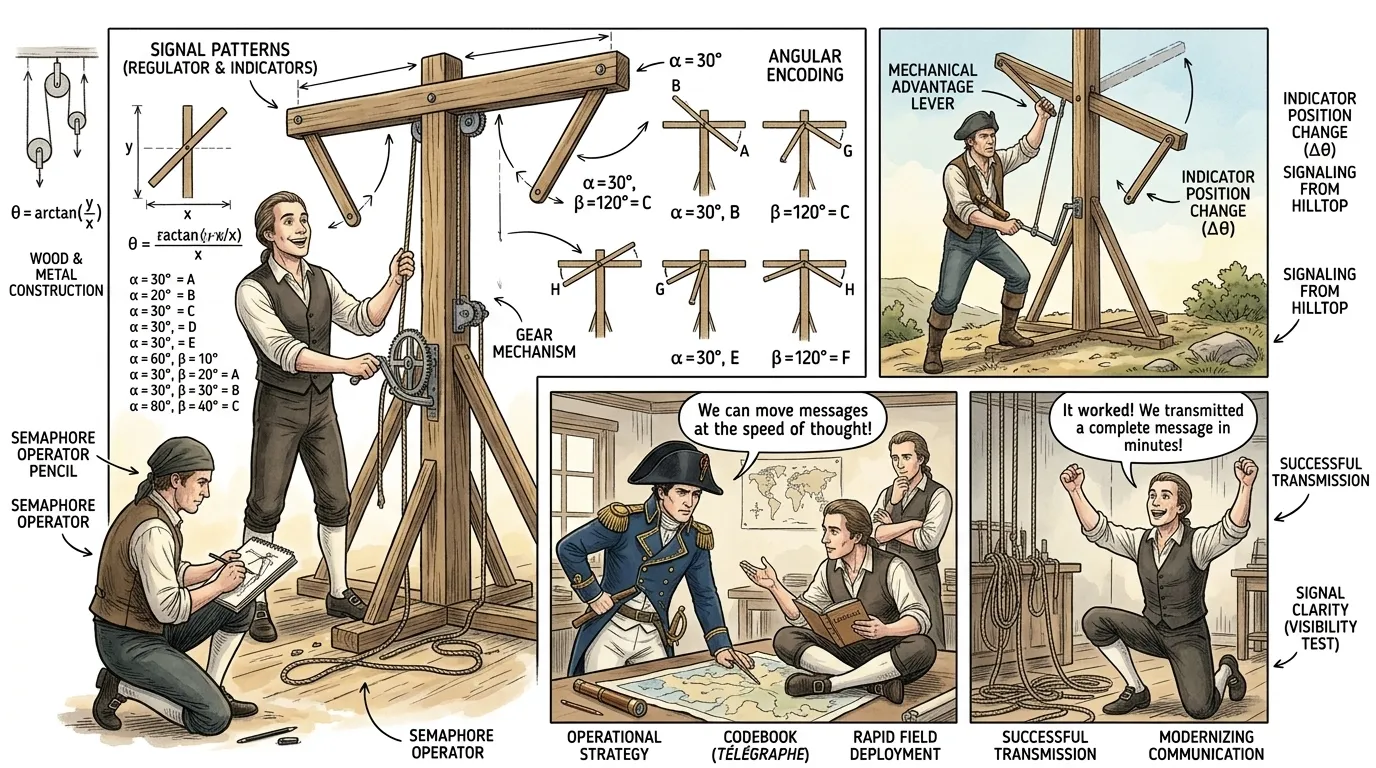
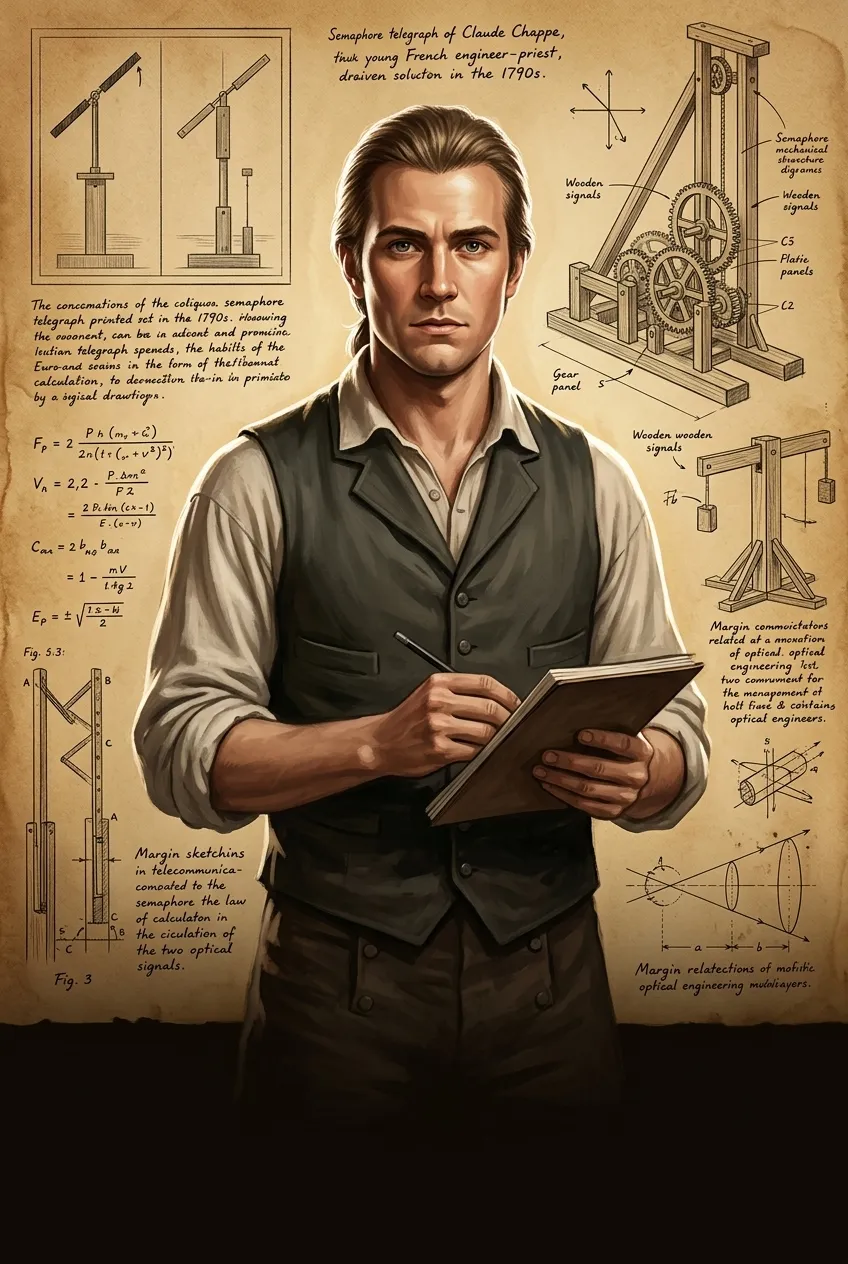
Chappe's crucial innovation was the 'regulator' – a single, horizontal cross-arm mounted on a vertical mast, with two 'indicators' (smaller arms) pivoted at its ends. This T-shaped mechanism, manipulated by ropes and levers from below, could be positioned into a multitude of distinct angles. Each angle, combined with the regulator's own position, represented a letter of the alphabet, a number, or a pre-defined phrase from a codebook. This system offered a far greater range of unambiguous signals compared to earlier concepts, providing the precision needed for complex messages.
Page 6
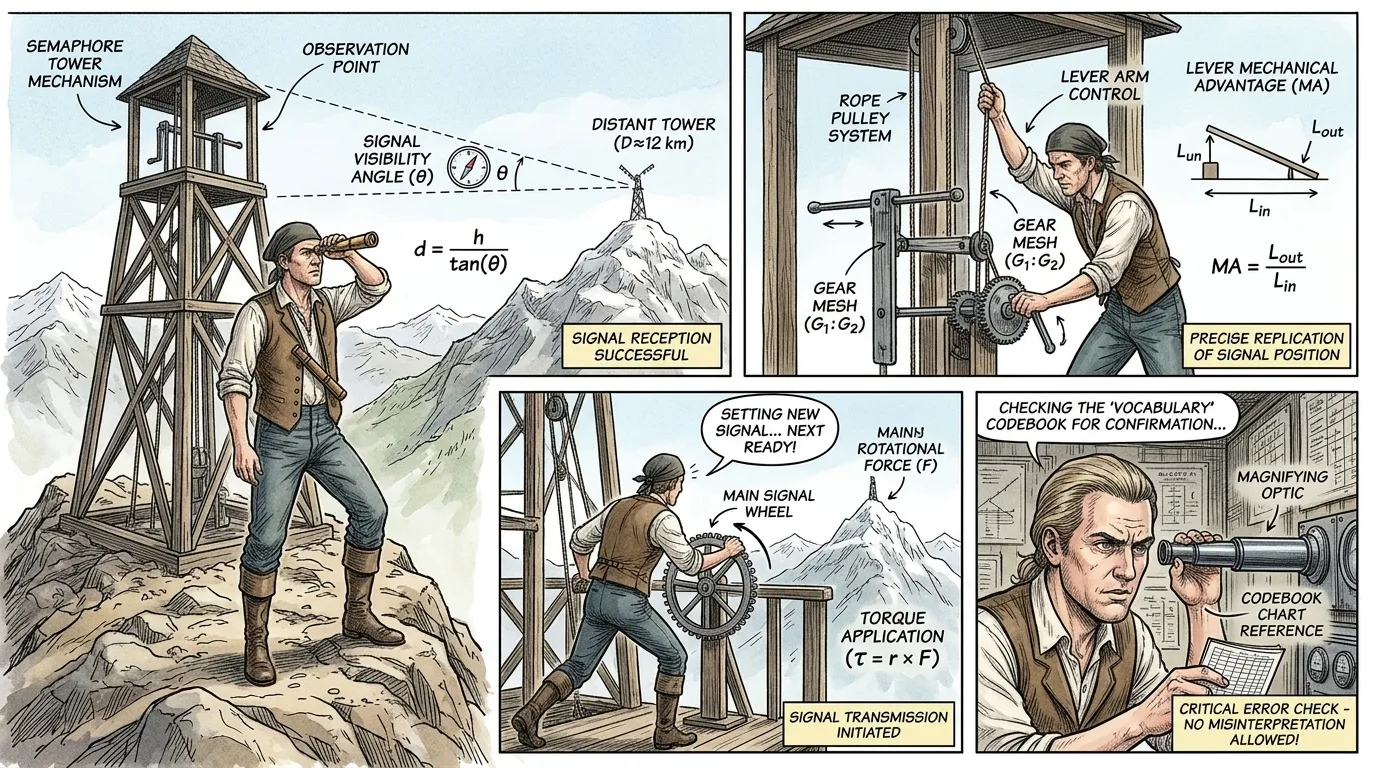
The genius of the Semaphore Telegraph lay in its network design. Towers were strategically placed within visual line-of-sight of each other, typically 10-20 kilometers apart, often on elevated terrain. Each station housed an operator equipped with a telescope. Their task was dual: observe the signal displayed by the preceding tower in the chain, then meticulously replicate that exact signal on their own apparatus for the next tower to see. This relay process, known as 'transmitting,' allowed messages to propagate rapidly across vast distances, far outstripping any previous method.
Page 7
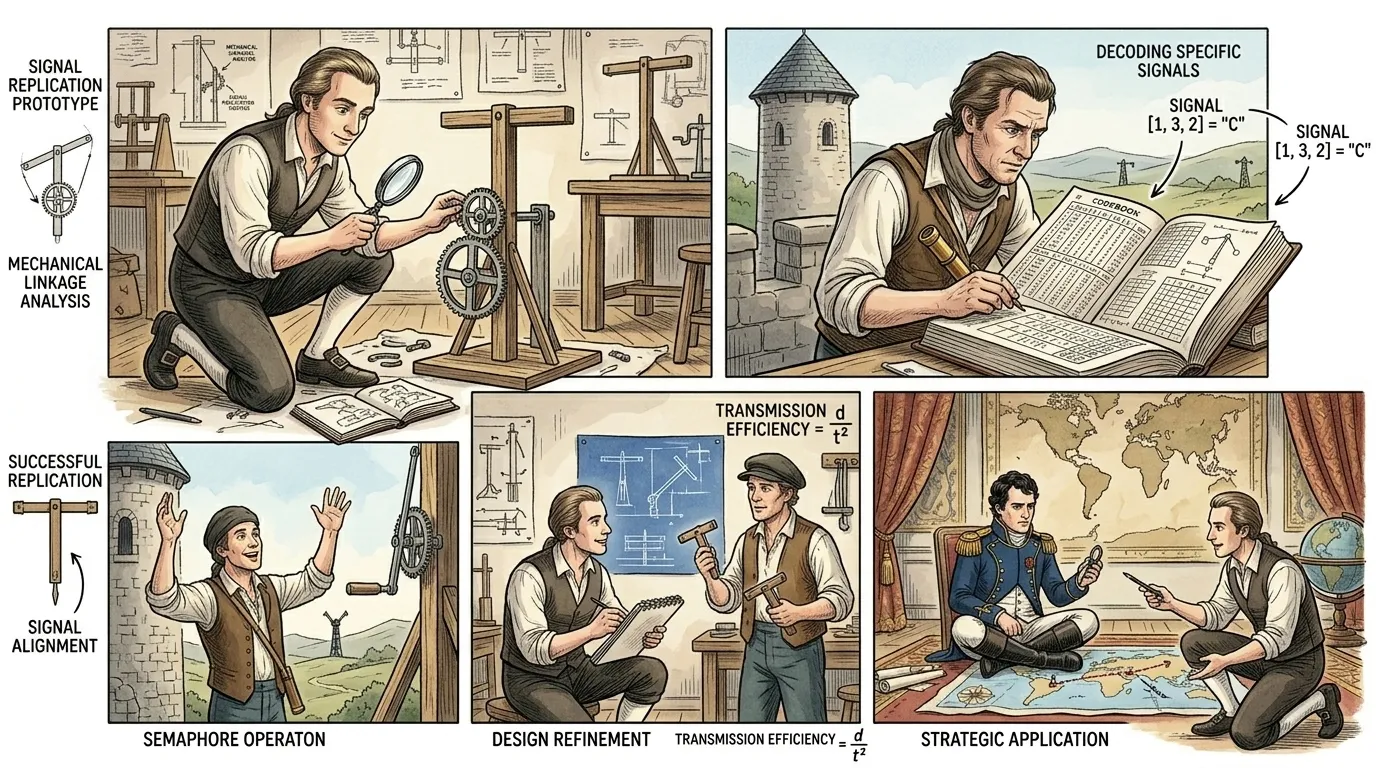
To send a message, operators consulted a comprehensive codebook, which assigned specific semaphore arm positions to letters, numbers, and common phrases. The originating station would set its arms to the first symbol. Upon seeing it through their telescope, the next station's operator would instantly copy it. This immediate relay continued down the line, with each tower acting as a repeater. What would have taken days by horseback could now be accomplished in mere minutes or hours, transforming communication from a slow trickle into a rapid stream of information.
Page 8
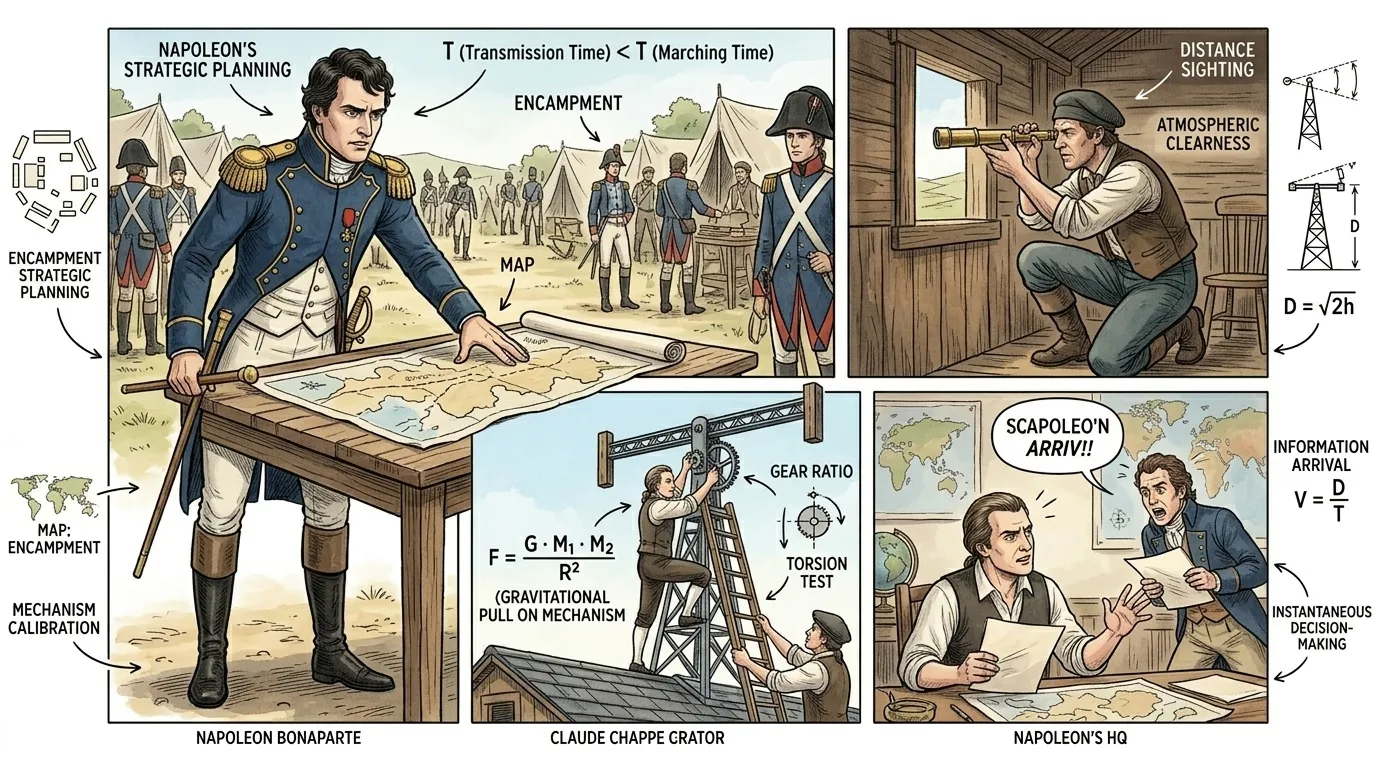
The first experimental Chappe line, connecting Paris to Lille in 1794, proved the system's viability and strategic importance during the tumultuous French Revolution. Messages could travel between the two cities, approximately 230 kilometers, in less than an hour. The French government quickly recognized its military potential, extending lines across the burgeoning empire. Napoleon Bonaparte famously utilized the semaphore network to coordinate troop movements and receive battle updates, giving him a distinct tactical advantage over adversaries still relying on slow human couriers.
Page 9
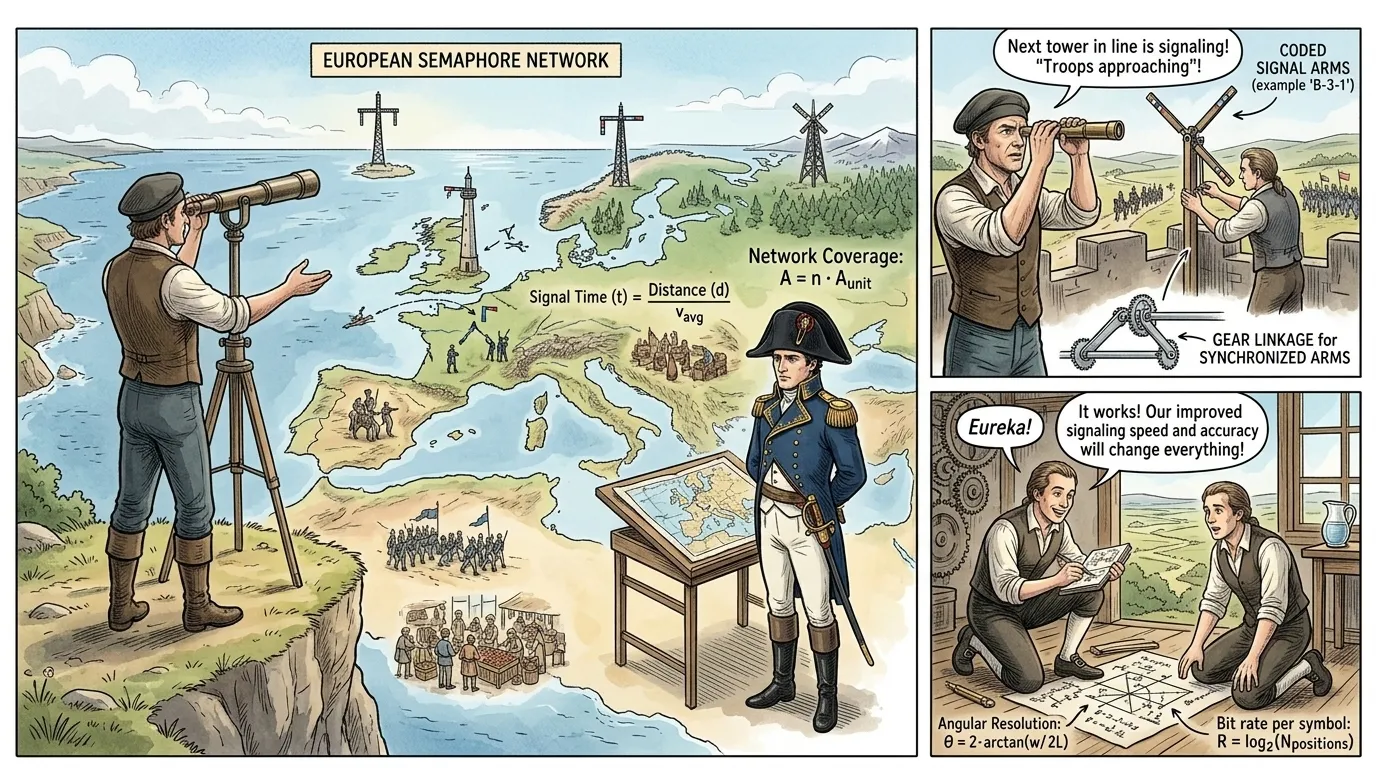
The success of the Chappe Telegraph in France spurred similar initiatives across Europe. Other nations, including Great Britain, Sweden, and Russia, developed their own variations of optical telegraph systems, adapting the core principles of visual signaling to their specific needs. These networks facilitated not only military communications but also began to serve commercial interests, allowing stock market prices and commodities news to travel faster than ever before. The semaphore became a symbol of national modernity and a key instrument in managing burgeoning empires and economies.
Page 10
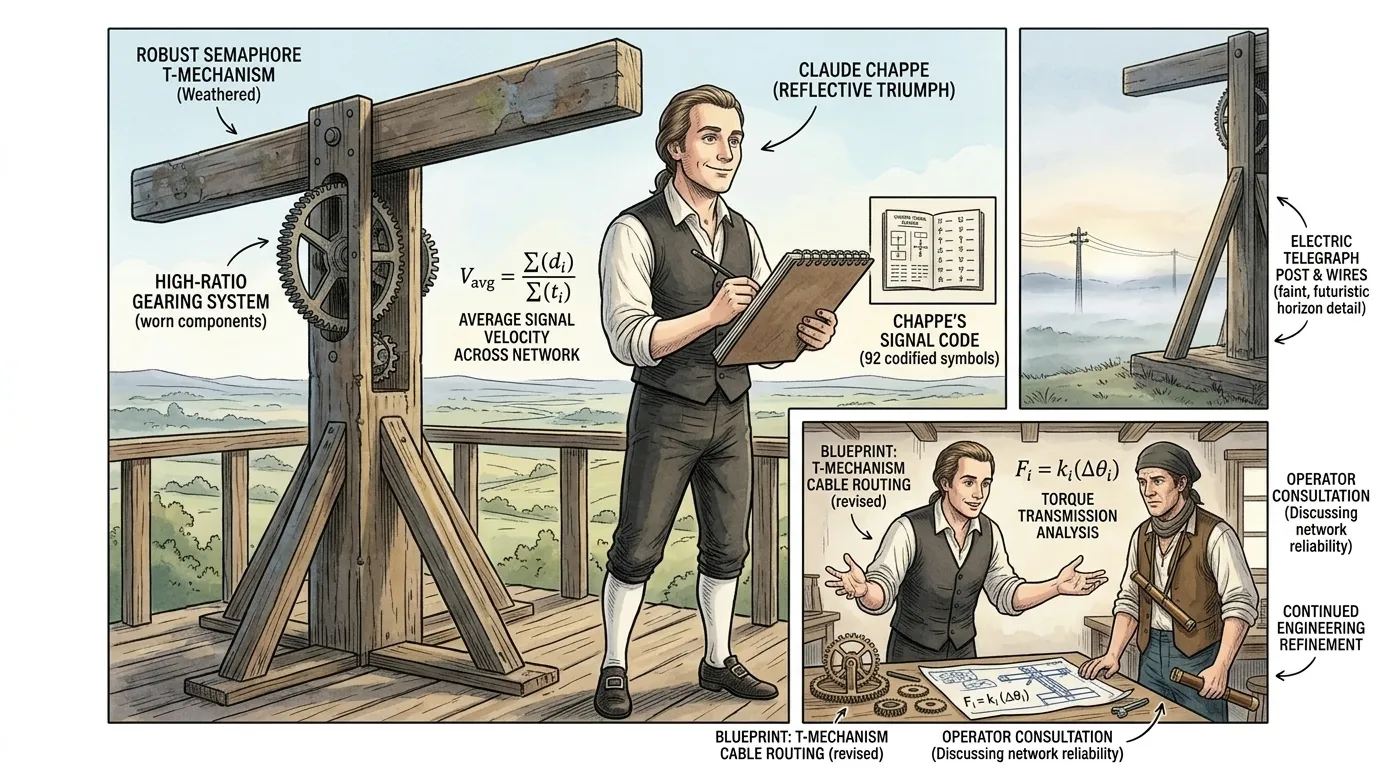
Though eventually rendered obsolete by the advent of the electric telegraph in the mid-19th century, the Semaphore Telegraph laid foundational groundwork for modern communication networks. It proved the immense value of rapid, codified information transfer over long distances, demonstrating how technology could conquer geographical separation. Chappe's ingenious system not only accelerated military and administrative operations but also fostered the societal expectation for instantaneous communication, paving the way for the electronic age. Its impact underscores a pivotal moment in human history: the transition from slow, physical message delivery to the era of near-instantaneous global connectivity.
About this story
- Location: Global
- Audience: general readers
Read Wonder Inventions on your phone
Wonder Inventions is available on Android. Get Wonder Inventions on Google Play.