Rocket
Rocket — an illustrated inventions story, set in Global. 10 illustrated pages, free to read on Wonder Inventions.

Page 1
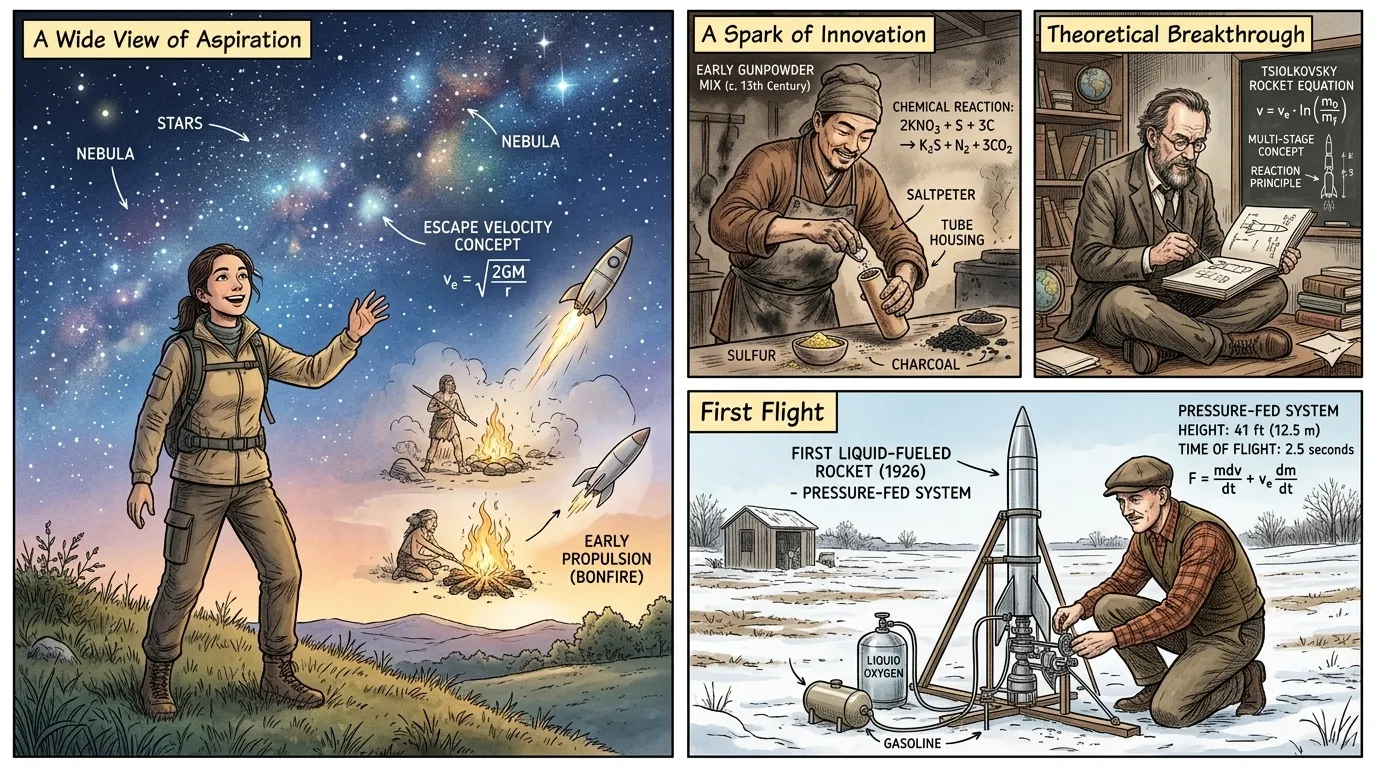
For millennia, humanity gazed at the stars, tethered to Earth by an invisible force: gravity. The ambition to transcend this fundamental constraint ignited a persistent quest, one that demanded radical new forms of propulsion. It was a journey from ancient fireworks to sophisticated engines, culminating in devices capable of launching us beyond our atmosphere. This is the story of the rocket, an invention that redefined the boundaries of human endeavor.
Page 2

The earliest known precursors to the modern rocket emerged in 13th-century China, not as vehicles for space travel, but as incendiary devices for warfare. Utilizing the newly discovered power of gunpowder, artisans devised 'fire arrows' – bamboo tubes packed with propellant attached to arrows. These primitive devices demonstrated a fundamental principle: expelling hot gas in one direction produces thrust in the opposite, a rudimentary form of propulsion that ignited centuries of innovation.
Page 3
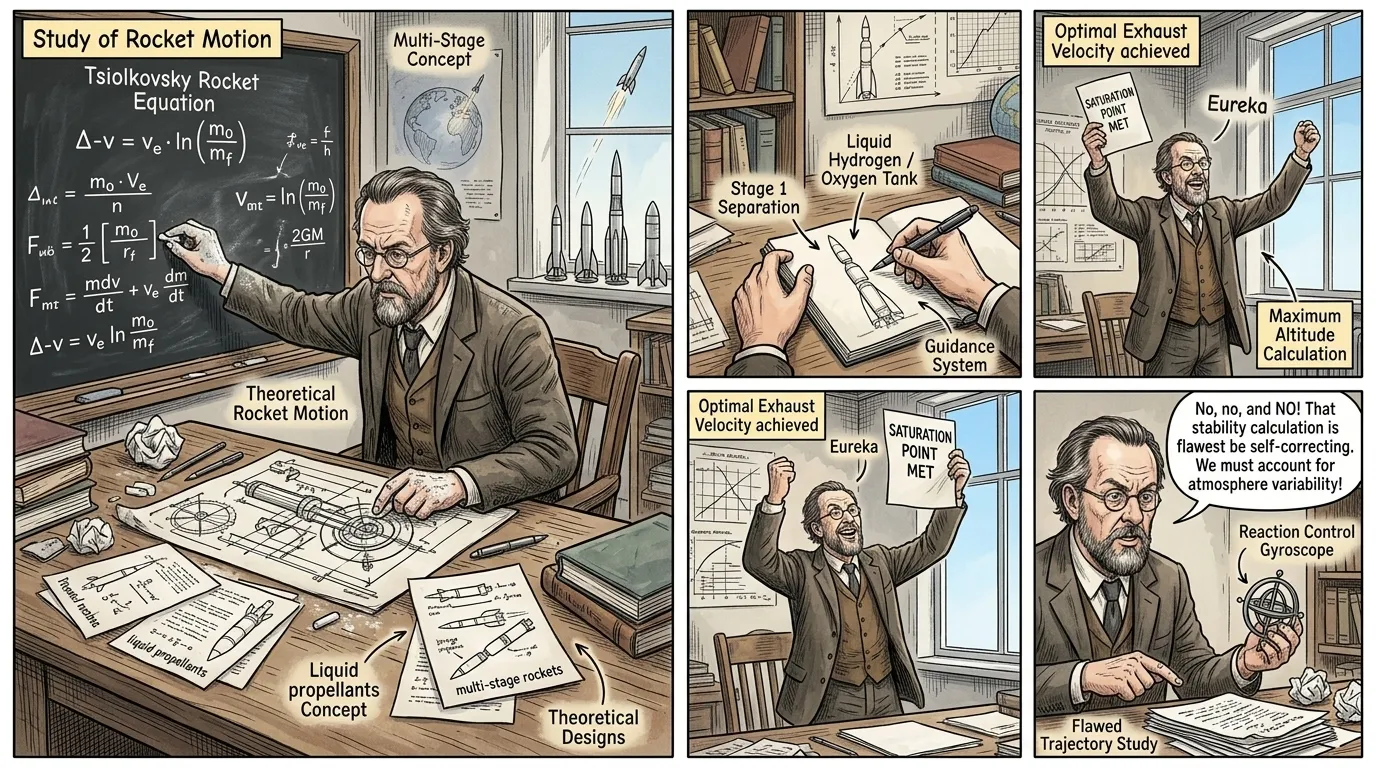
Centuries later, the theoretical underpinnings for true spaceflight began to coalesce. In Russia, Konstantin Tsiolkovsky, a largely self-taught physicist and schoolteacher, meticulously developed the mathematics of rocketry. Working in isolation, he published foundational papers in the early 20th century, introducing the 'Tsiolkovsky rocket equation' and concepts like liquid propellants, multi-stage rockets, and guidance systems. His work transformed the dream of space travel into a calculable engineering problem. As Tsiolkovsky himself famously stated, 'The Earth is the cradle of humanity, but mankind cannot stay in the cradle forever.'
Page 4
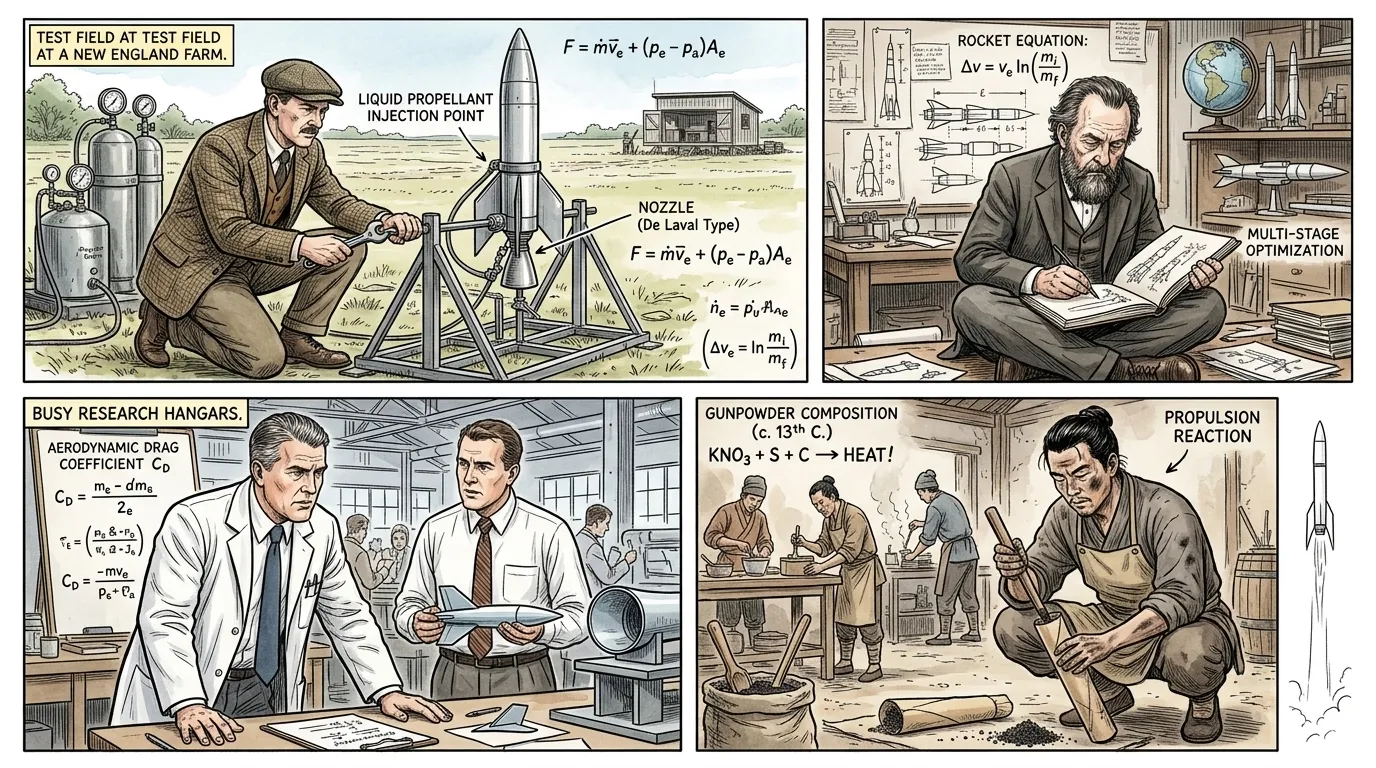
Across the Atlantic, American physicist Robert H. Goddard independently pursued the practical realization of rocketry. Undeterred by skepticism and numerous setbacks, Goddard dedicated his life to experimental rocketry. His early designs, though often ridiculed, were based on sound scientific principles. He grappled with the immense challenges of creating reliable combustion chambers, efficient nozzles, and stable flight control for rockets far more complex than their gunpowder predecessors. Each failed test yielded crucial data, pushing him closer to a breakthrough.
Page 5
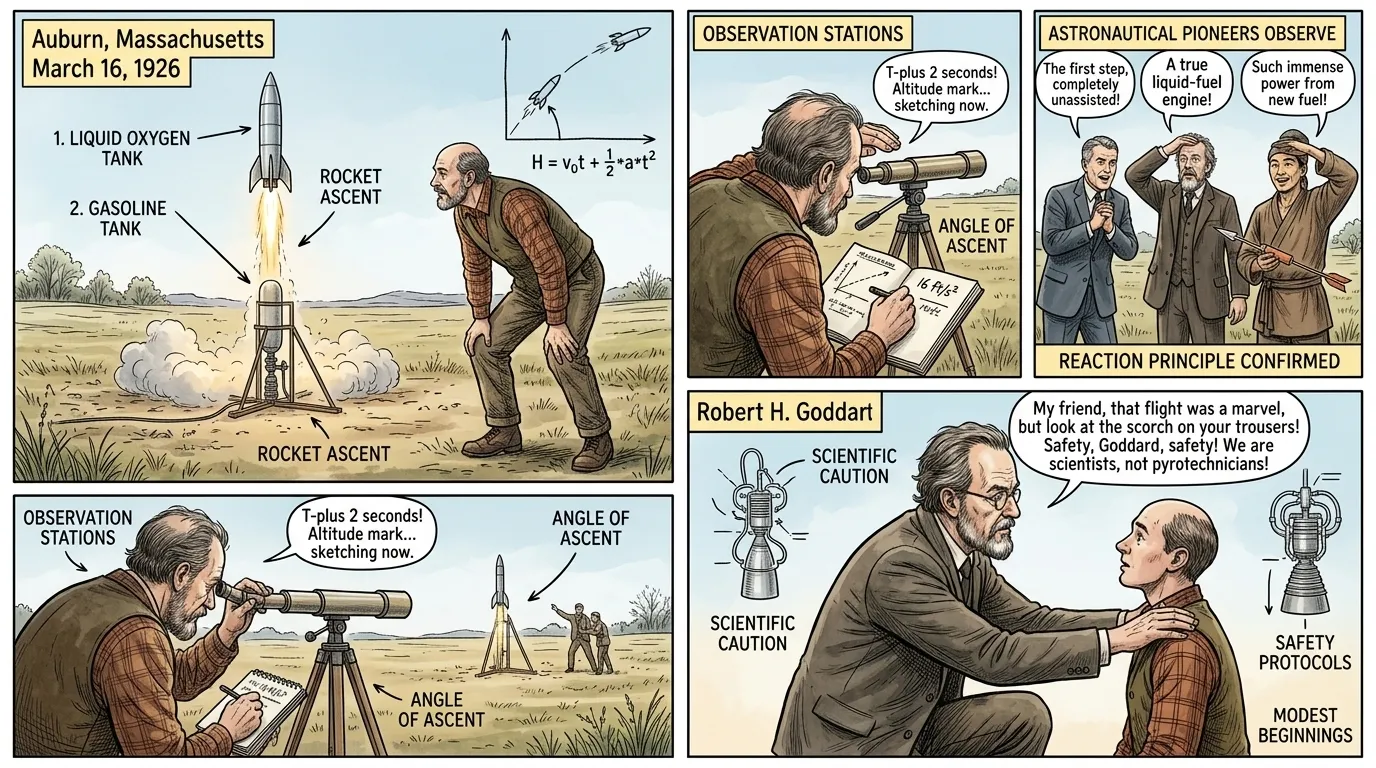
On March 16, 1926, a momentous event occurred on a farm in Auburn, Massachusetts. Robert Goddard launched the world's first liquid-fueled rocket. Propelled by liquid oxygen and gasoline, the rocket ascended just 41 feet, traveled 184 feet, and flew for a mere 2.5 seconds. While seemingly modest, this short flight was a monumental leap. It validated the theoretical principles of liquid propulsion, demonstrating that a controlled, sustained thrust from high-energy propellants was indeed possible, laying the cornerstone for all future space exploration.
Page 6
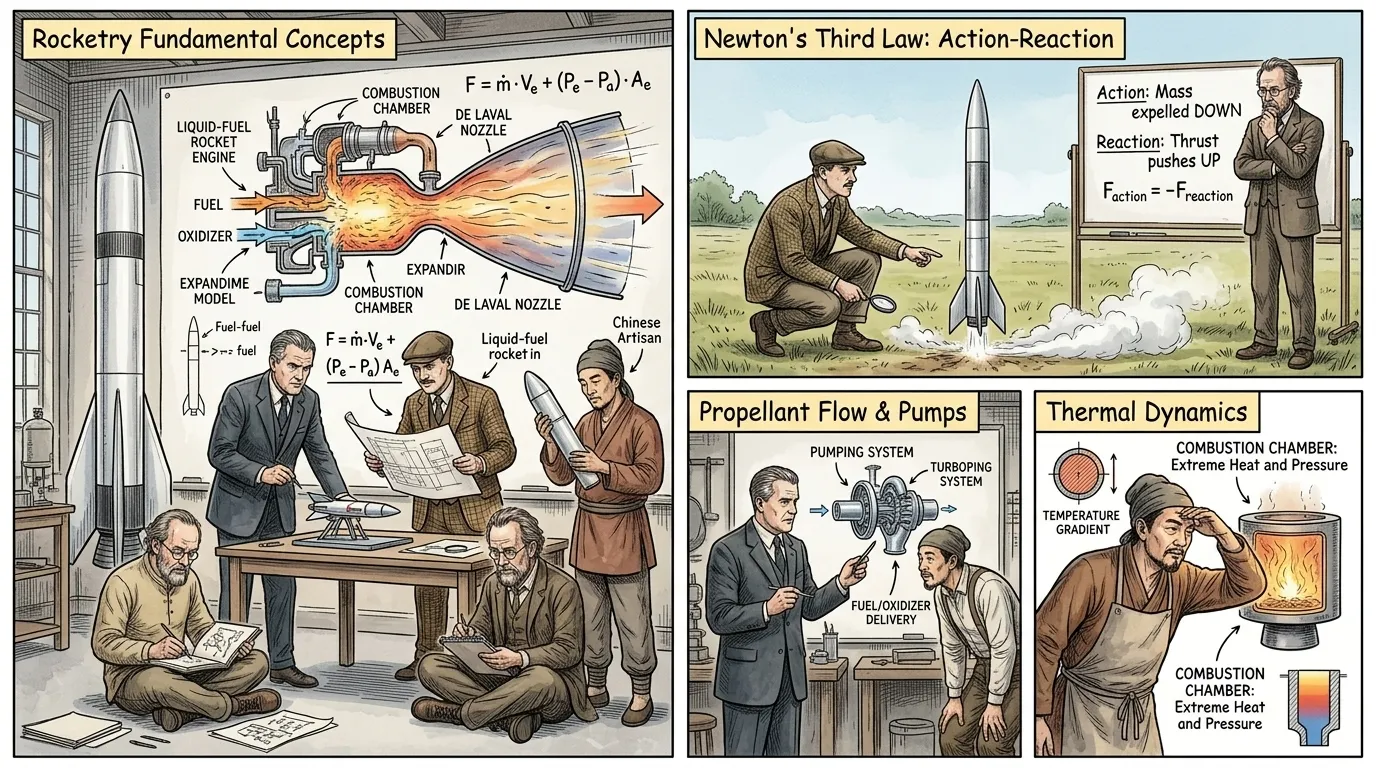
At its core, a rocket operates on Isaac Newton's Third Law of Motion: for every action, there is an equal and opposite reaction. Inside a modern rocket, liquid propellants – fuel (like kerosene or liquid hydrogen) and an oxidizer (like liquid oxygen) – are pumped into a combustion chamber. There, they ignite, creating incredibly hot, high-pressure gases. These gases are then forced through a specially shaped nozzle, accelerating dramatically as they exit the rocket. The action of expelling these gases downwards generates an equal and opposite reaction: thrust, pushing the rocket upwards.
Page 7
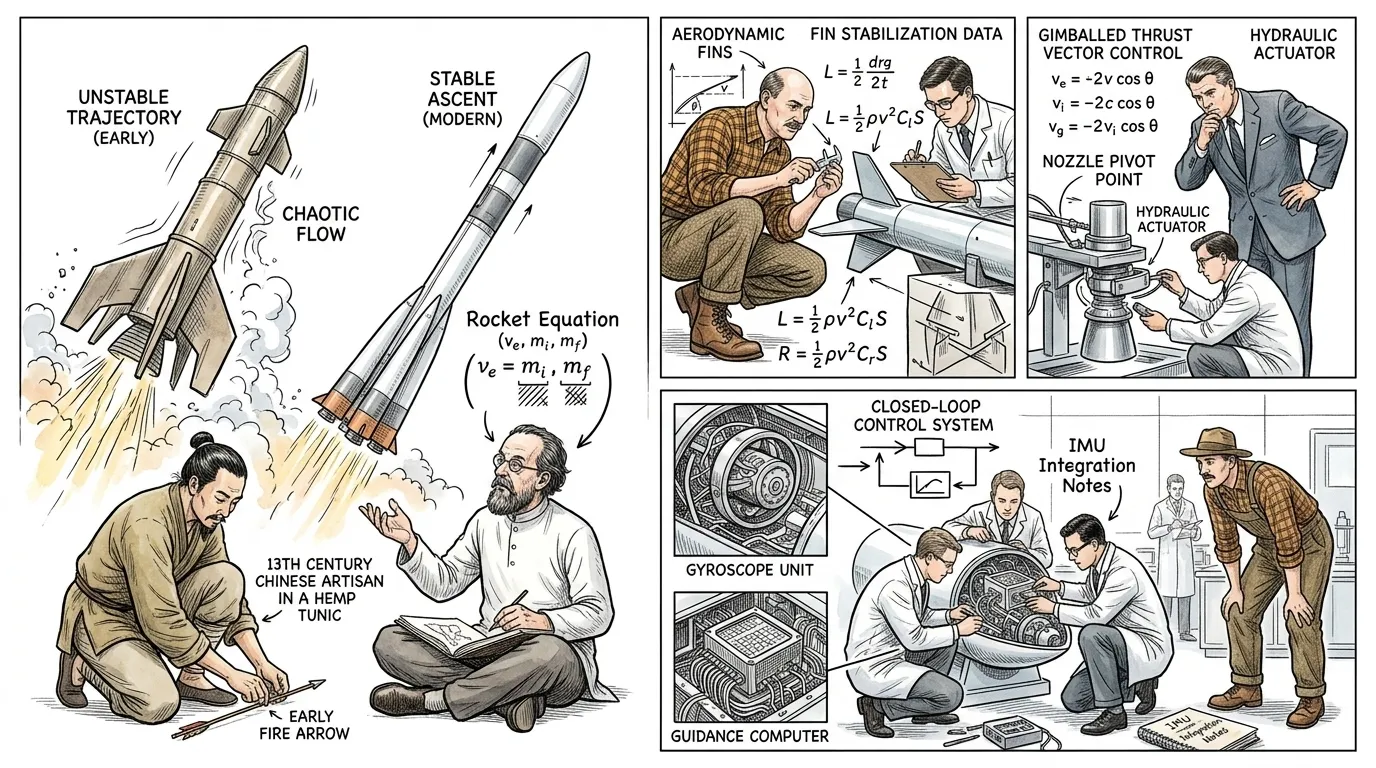
Achieving ascent is one challenge; maintaining a precise trajectory is another. Early rockets were prone to instability, tumbling or veering off course due to atmospheric forces and internal imbalances. Modern rockets employ sophisticated guidance and control systems. Fins provide aerodynamic stability in the lower atmosphere, while gimballing rocket nozzles (pivoting the engine itself) allow the direction of thrust to be precisely adjusted. Internal gyroscopes and computer systems continuously monitor and correct the rocket's attitude, ensuring it reaches its intended destination with remarkable accuracy.
Page 8
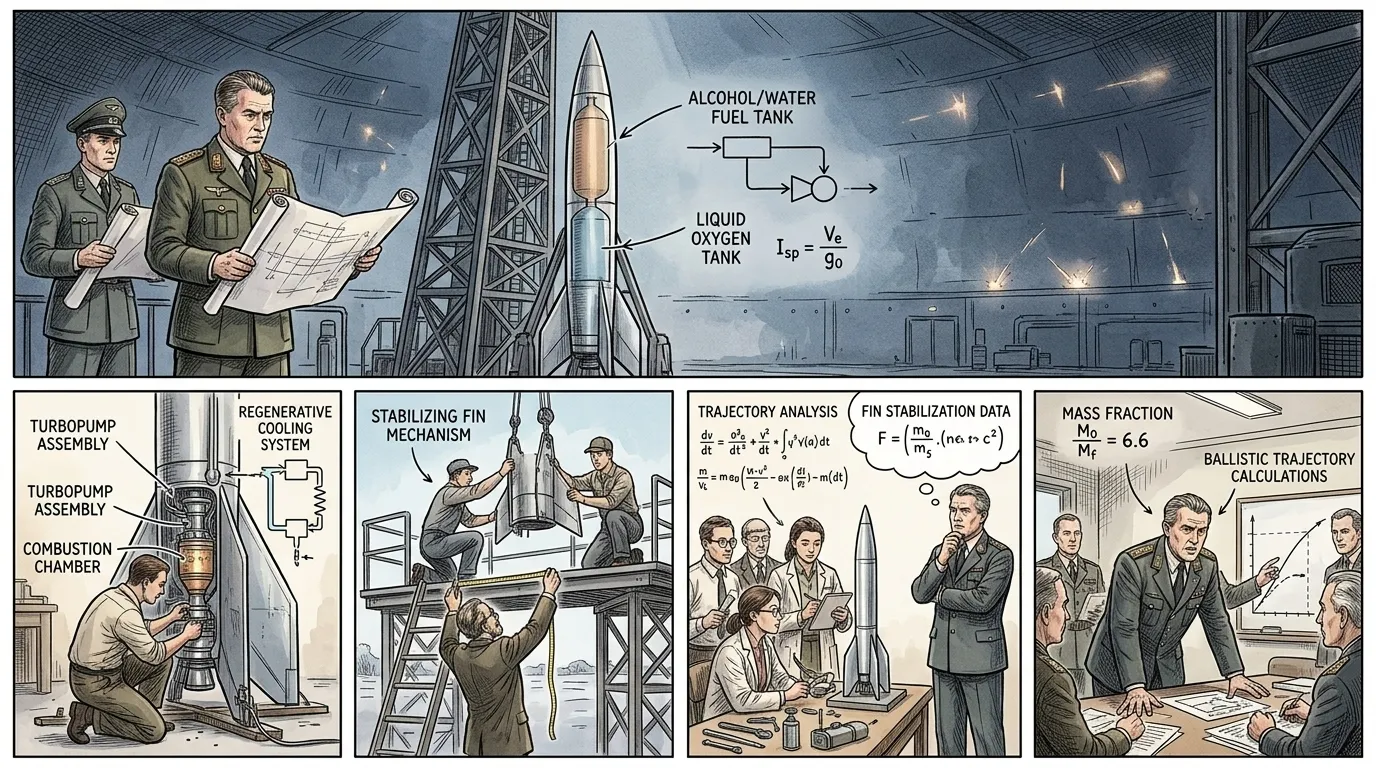
The outbreak of World War II dramatically accelerated rocket development, tragically shifting its primary application from scientific exploration to military weapon. Under the direction of Wernher von Braun, Nazi Germany developed the V-2 rocket, the world's first long-range guided ballistic missile. It was a terrifyingly effective weapon, capable of striking targets hundreds of miles away, causing immense destruction and loss of life. While its purpose was devastating, the V-2 represented an unprecedented engineering achievement, showcasing the destructive potential and technological sophistication of modern rocketry.
Page 9
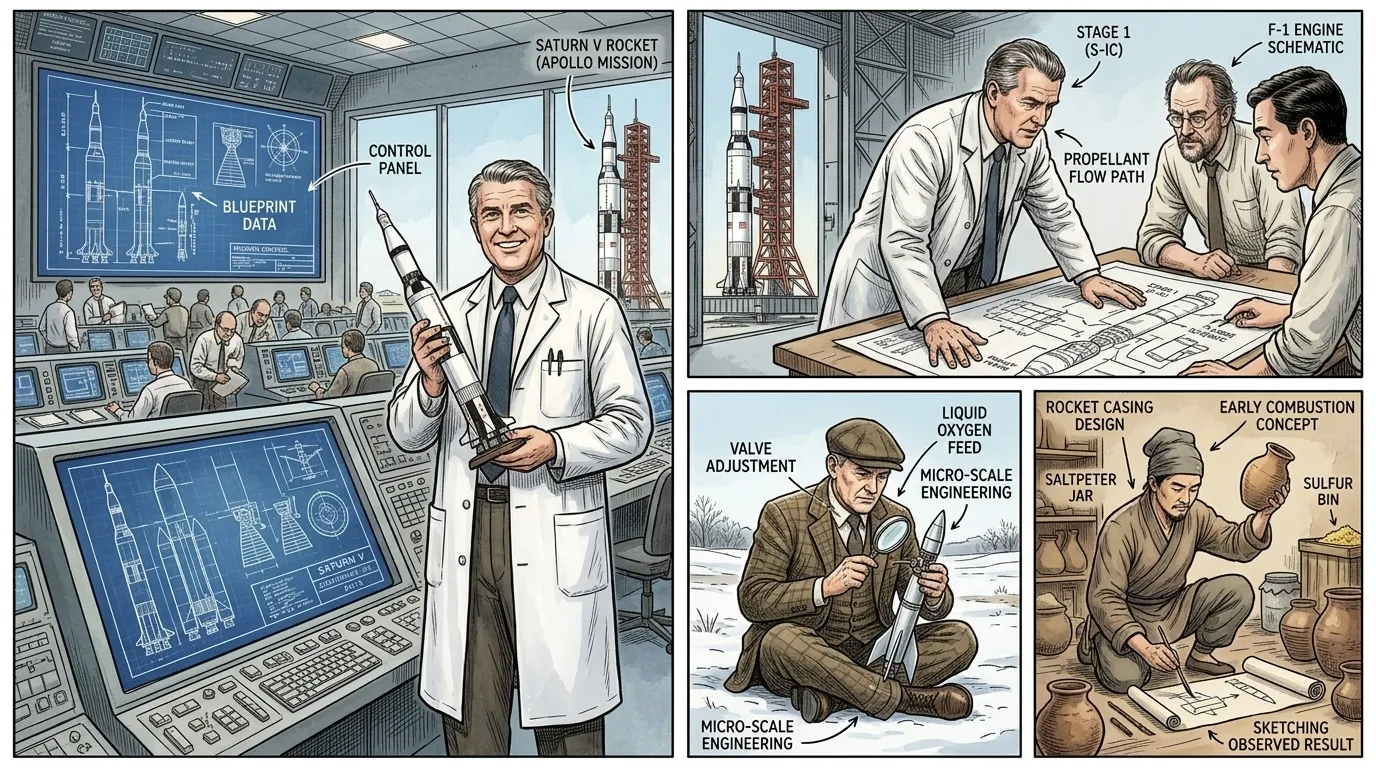
Following the war, the scientific talent and technology behind the V-2 were absorbed by victorious nations, particularly the United States and the Soviet Union. This ignited the 'Space Race,' a monumental contest to achieve spaceflight dominance. Wernher von Braun, now working for NASA, spearheaded the development of the Saturn V rocket, an engineering marvel designed to carry humanity to the Moon. Standing 363 feet tall, the Saturn V generated 7.5 million pounds of thrust, becoming the most powerful rocket ever successfully launched and a symbol of humanity's audacious reach for the stars.
Page 10
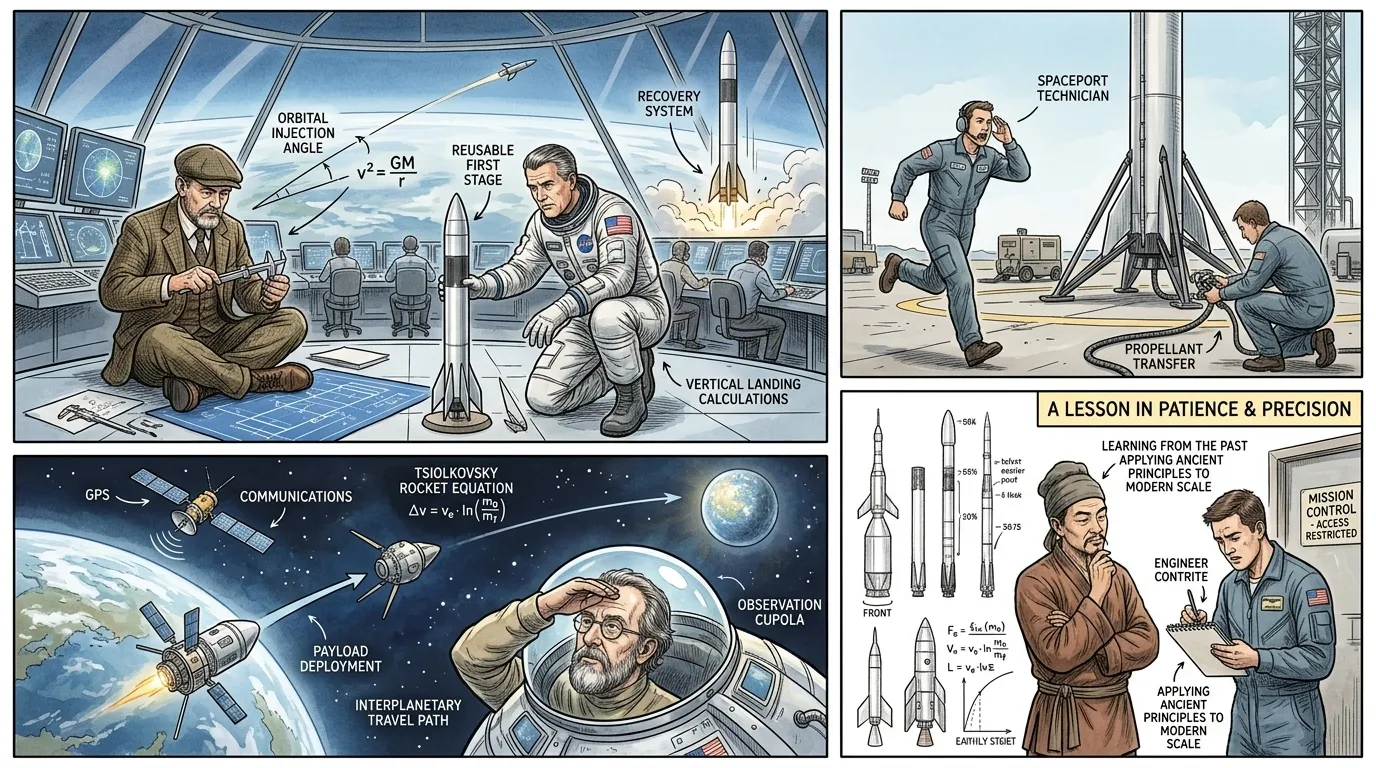
Today, rockets continue to evolve, transforming every aspect of modern life and extending our reach into the cosmos. They are not merely vehicles for exploration; they are the workhorses of global communication, weather forecasting, and scientific discovery. From delivering satellites that power our internet and GPS to launching robotic probes that explore distant planets, rockets have woven themselves into the fabric of our interconnected world. The journey from a fire arrow to reusable space vehicles is a testament to human ingenuity's boundless capacity to innovate and explore.
About this story
- Location: Global
- Audience: general readers
Read Wonder Inventions on your phone
Wonder Inventions is available on Android. Get Wonder Inventions on Google Play.