Punch Card
Punch Card — an illustrated inventions story, set in Global. 10 illustrated pages, free to read on Wonder Inventions.
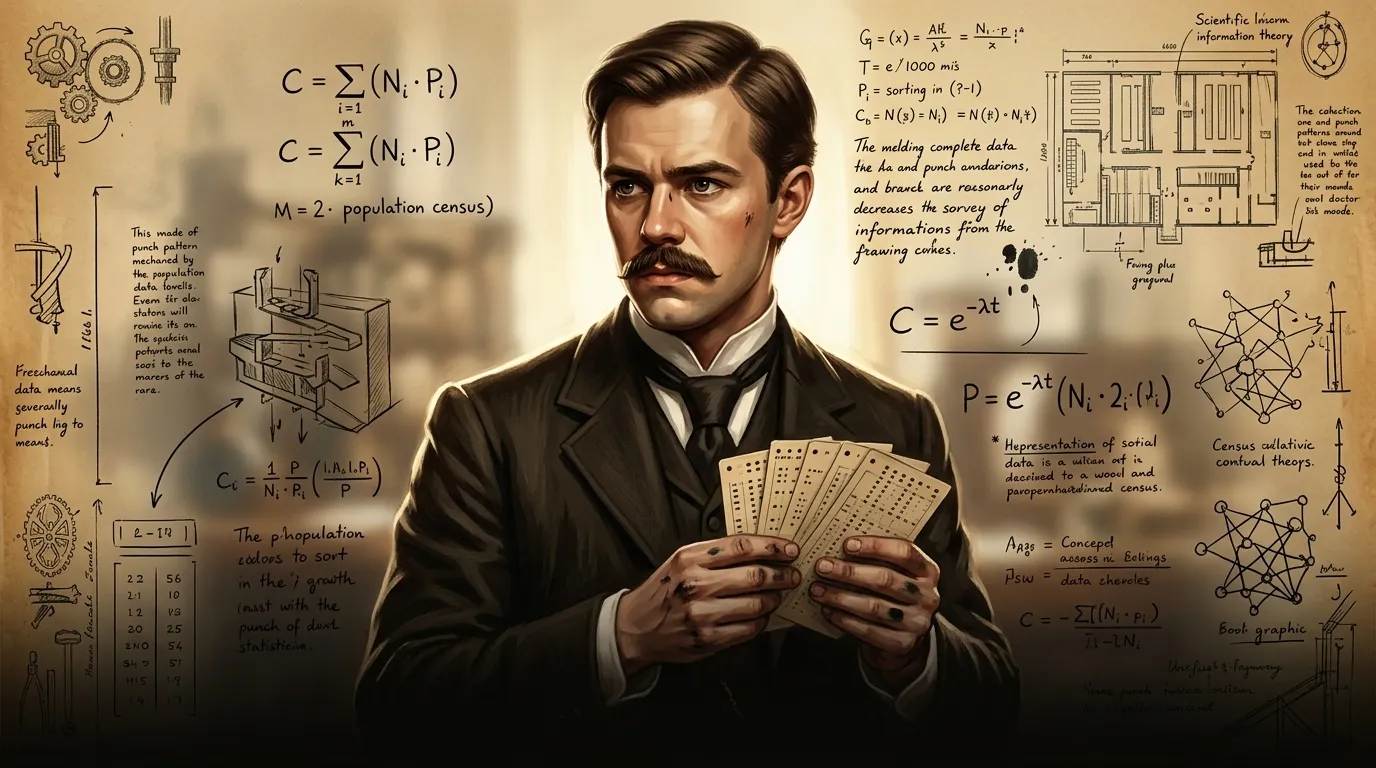
Page 1
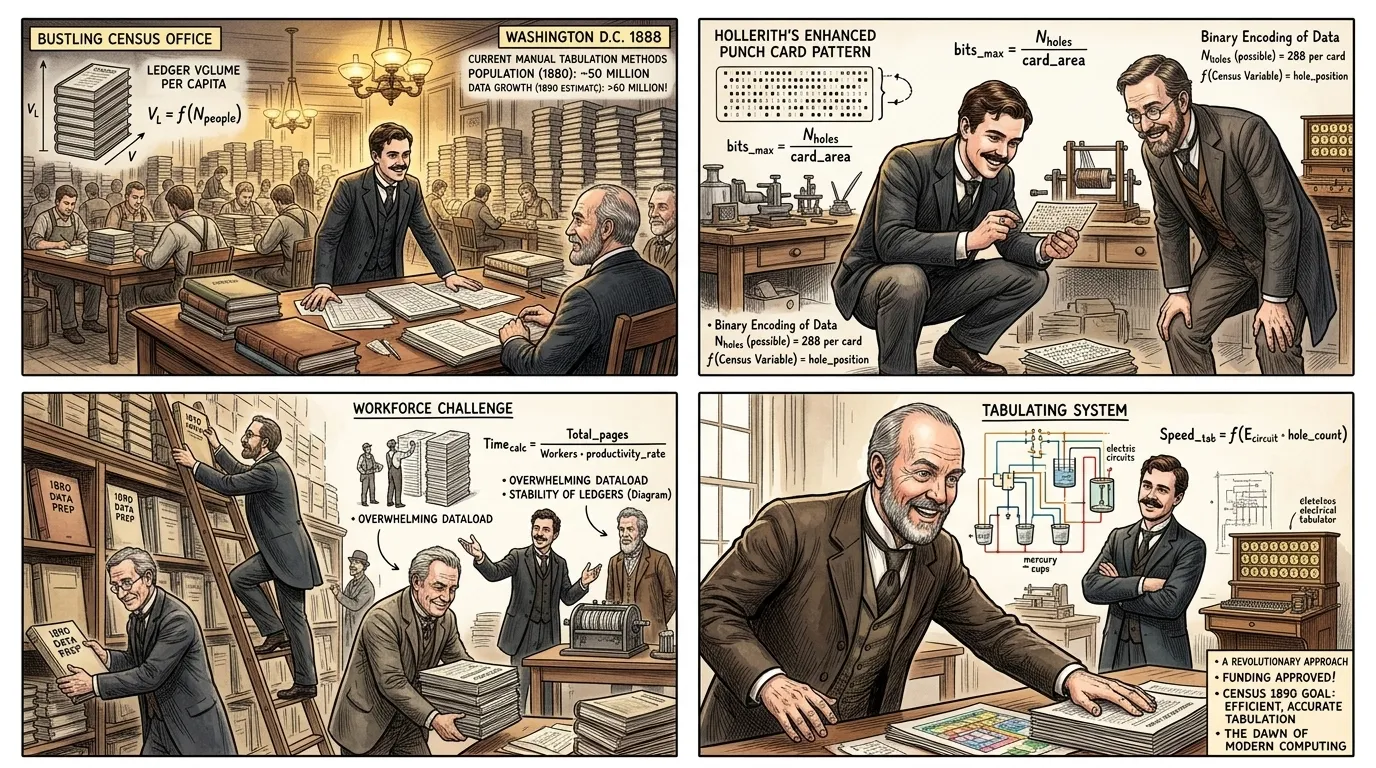
Washington D.C., 1888. The United States Census Bureau faced an unprecedented crisis. The nation's population had exploded, threatening to render the upcoming 1890 census tabulation process impossibly long and prone to error. Clerk after clerk painstakingly transcribed and tallied data by hand, a method that would take over a decade to complete the next census. "Gentlemen," declared statistician Herman Hollerith to a group of weary officials, gesturing towards a mountain of ledgers, "we are drowning in a sea of numbers. This manual process is antiquated and unsustainable. We need a fundamental shift in how we handle information, or our progress will simply halt." This pressing need for efficiency ignited Hollerith's determination to revolutionize data processing forever.
""Gentlemen," declared statistician Herman Hollerith to a group of weary officials, gesturing towards a mountain of ledgers, "we are drowning in a sea of numbers. This manual process is antiquated and unsustainable. We need a fundamental shift in how we handle information, or our progress will simply halt.""
Page 2
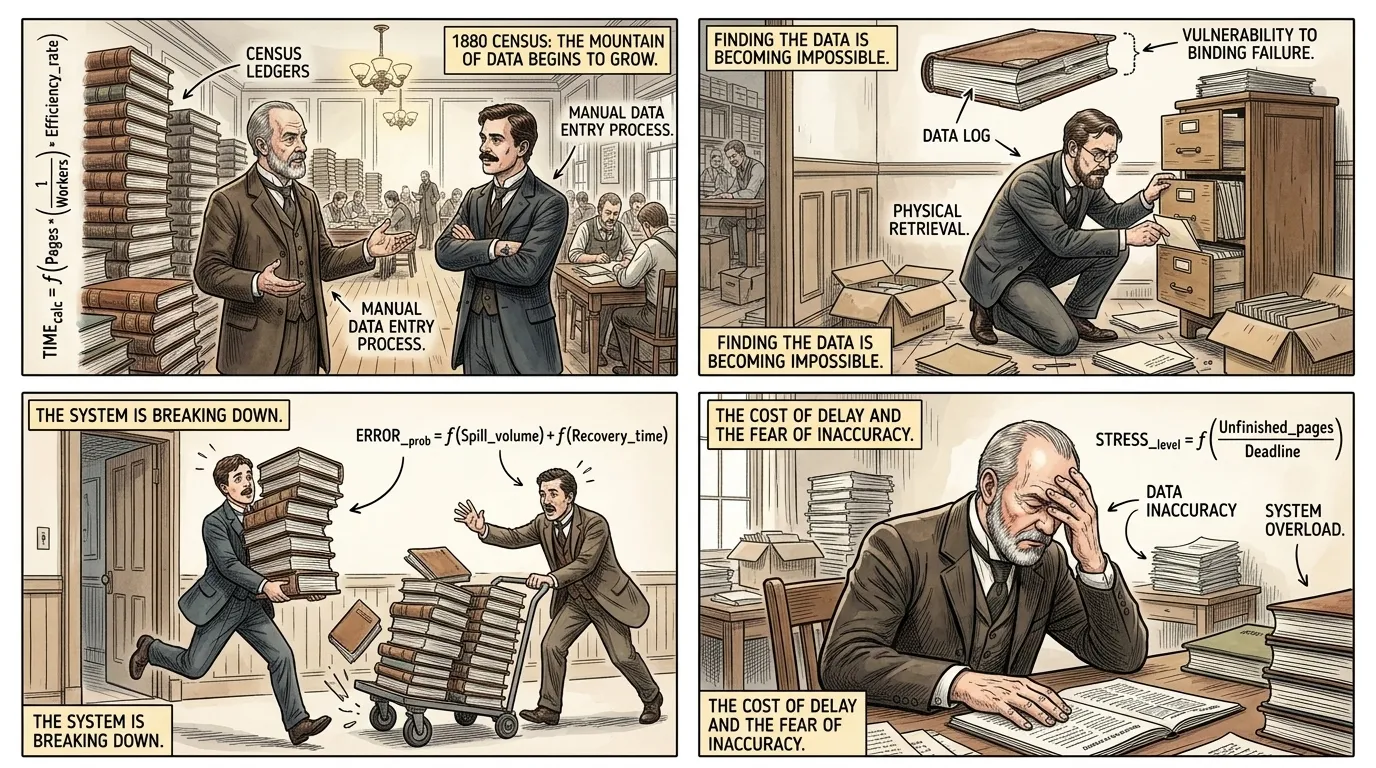
The laborious nature of manual data entry was not a new problem, but it had reached a critical threshold by the late 19th century. Census officials, overwhelmed by the sheer volume, recognized that something had to change. "Our population grows exponentially," one official sighed, reviewing a thick bound report. "The 1880 census alone took seven years to compile. The 1890 results, if processed by current methods, would be obsolete before they were even published!" This dire prediction underscored the urgency. The challenge wasn't merely speed; it was accuracy, consistency, and the sheer physical effort required to tally millions of individual data points.
""Our population grows exponentially," one official sighed, reviewing a thick bound report. "The 1880 census alone took seven years to compile. The 1890 results, if processed by current methods, would be obsolete before they were even published!""
Page 3
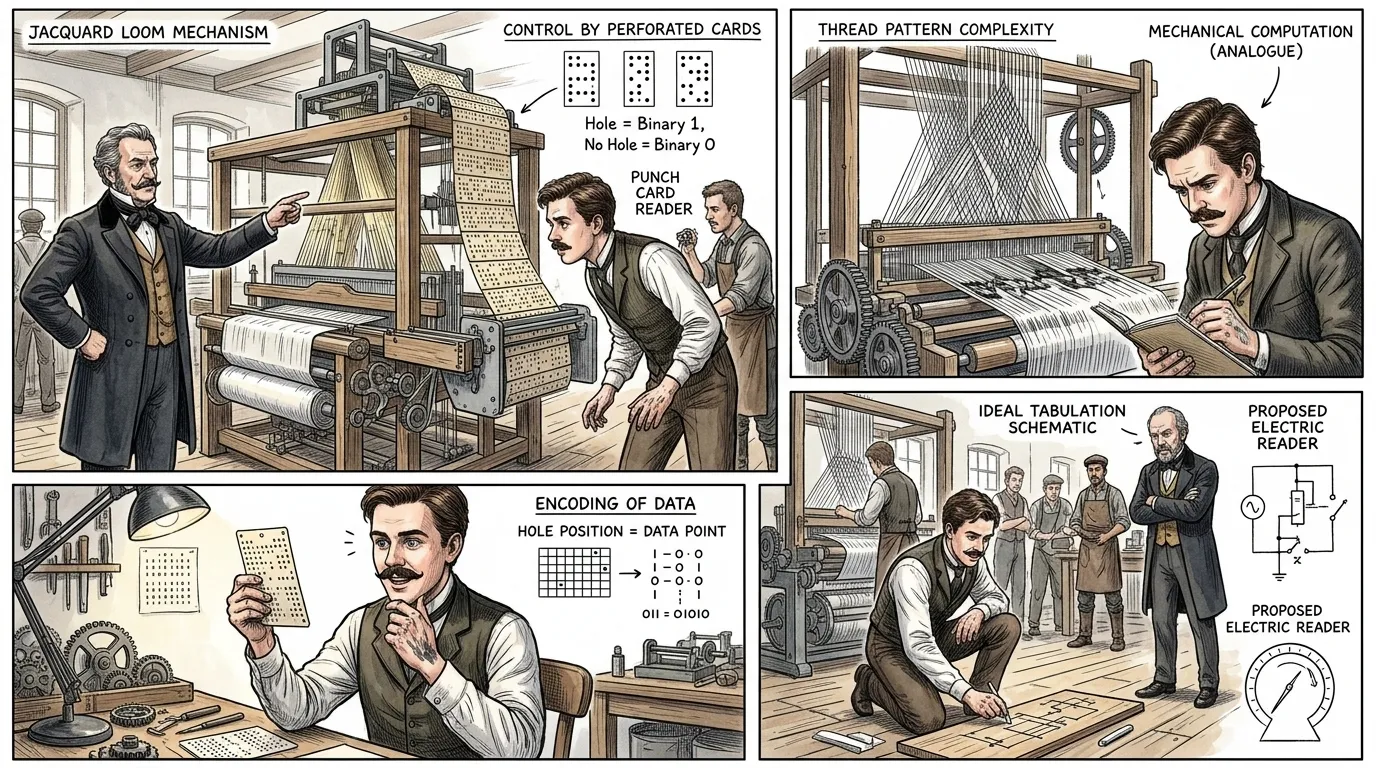
While the census bureau grappled with numbers, a revolutionary idea had quietly transformed the textile industry decades earlier. In early 19th-century France, Joseph Marie Jacquard introduced a loom that could weave intricate patterns automatically. "Behold, the Jacquard Loom!" a textile factory owner exclaimed, pointing to a complex machine as Hollerith, then a young engineer, observed intently. "It uses perforated cards to control the pattern of the weave. Each hole dictates whether a warp thread is raised or lowered." This innovative concept—using holes in cards to store and execute instructions—was a distant but crucial predecessor to Hollerith's data processing vision, demonstrating how seemingly disparate fields could offer unexpected solutions. This was the seed that would later blossom into a data revolution.
""Behold, the Jacquard Loom!" a textile factory owner exclaimed, pointing to a complex machine as Hollerith, then a young engineer, observed intently. "It uses perforated cards to control the pattern of the weave. Each hole dictates whether a warp thread is raised or lowered.""
Page 4
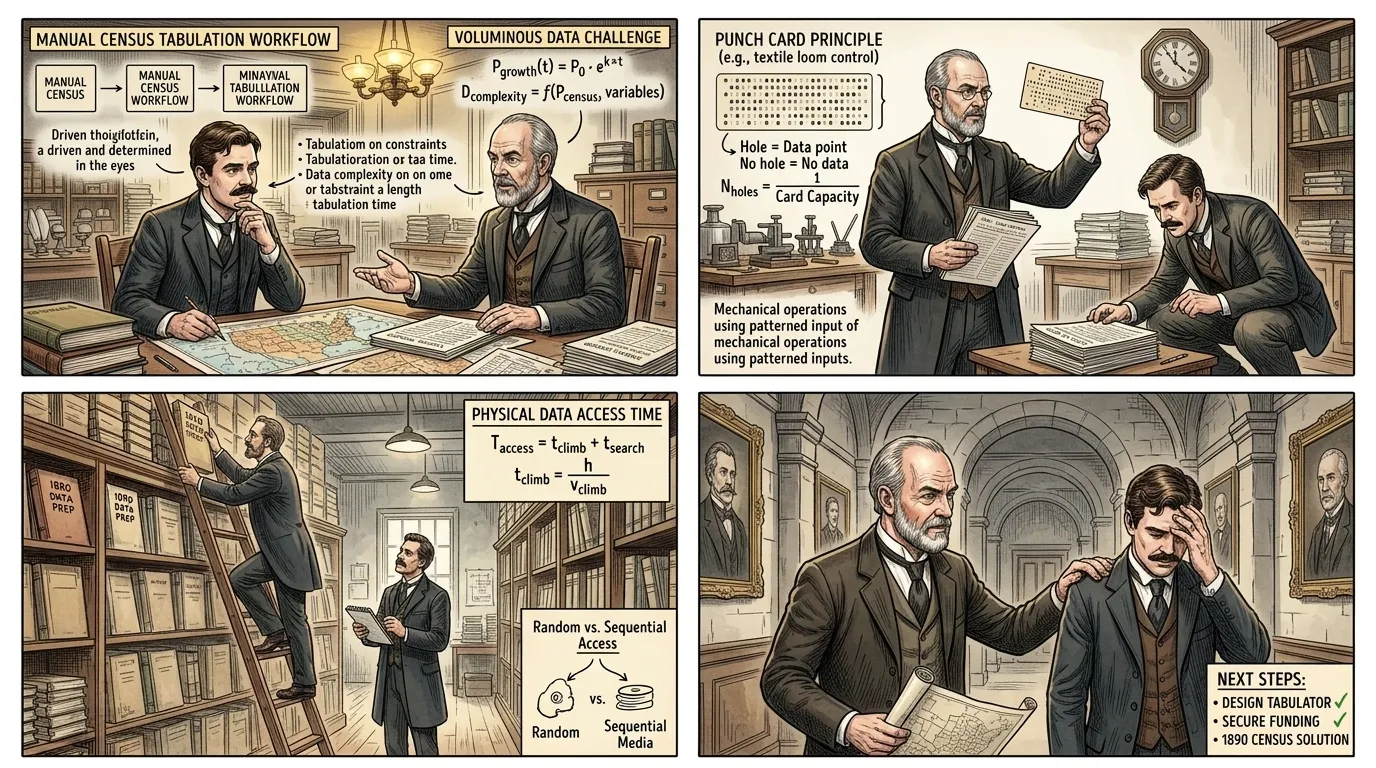
The inspiration for an electrical tabulation machine often traces back to Dr. John Shaw Billings, a surgeon and statistician with the U.S. Census Bureau. As Hollerith worked as a special agent, Billings, grappling with the 1880 census, reportedly remarked to him, "There ought to be some mechanical way of doing this work, something on the principle of the Jacquard loom, whereby the cards might be passed through a machine and the facts recorded." Hollerith, already familiar with the challenges, immediately grasped the potential. "His words were a clarion call," Hollerith later reflected. "They crystallized my scattered thoughts into a singular pursuit: to capture data not as ink on paper, but as an electrical impression."
""His words were a clarion call," Hollerith later reflected. "They crystallized my scattered thoughts into a singular pursuit: to capture data not as ink on paper, but as an electrical impression.""
Page 5
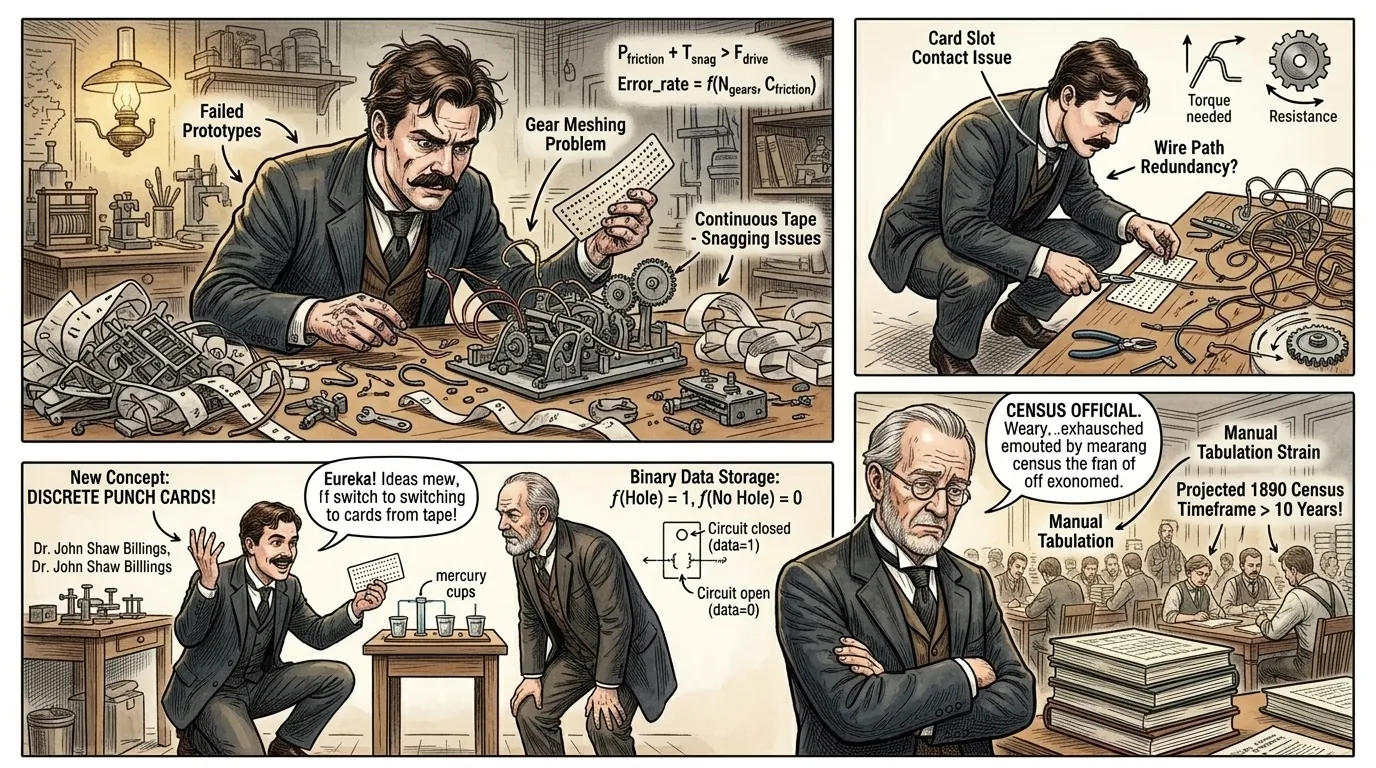
Hollerith's journey to a functional tabulating machine was fraught with technical hurdles. His initial ideas involved continuous paper tape or complex mechanical levers, none proving robust or accurate enough for large-scale data. "The devil, as they say, is in the details," Hollerith muttered to himself, his brow furrowed in frustration as he examined a tangle of wires and gears. "Translating a physical hole into an electrical signal consistently, without error, across thousands of cards—that is the true engineering challenge." Each failed prototype brought him closer to understanding the critical requirements for precision: a standardized card size, a reliable punching mechanism, and an electrical reader that could interpret a hole's presence with absolute certainty.
""The devil, as they say, is in the details," Hollerith muttered to himself, his brow furrowed in frustration as he examined a tangle of wires and gears. "Translating a physical hole into an electrical signal consistently, without error, across thousands of cards—that is the true engineering challenge.""
Page 6
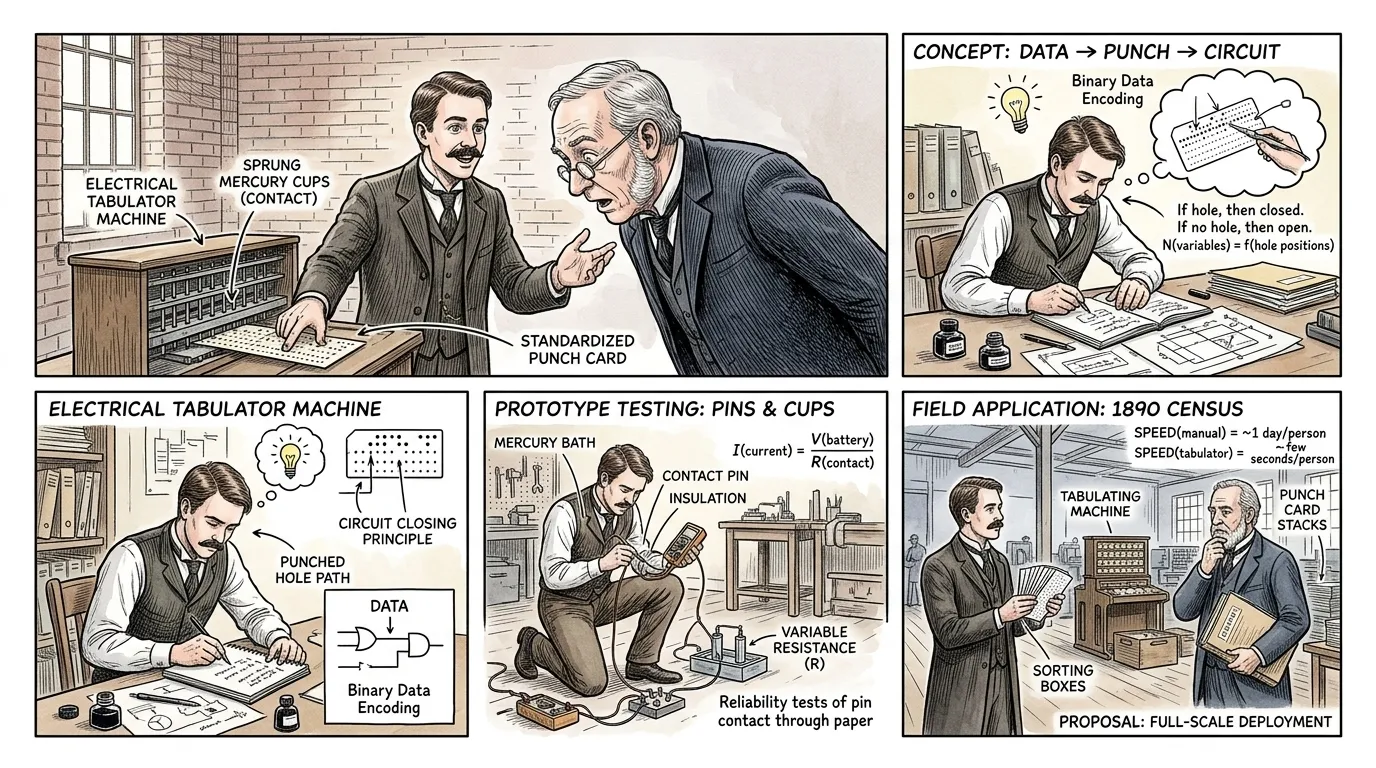
Hollerith's breakthrough came with the realization that individual holes in a standardized card could represent specific data points, and that electrical contacts could read these holes. The core of his invention was the electrical tabulator. "Observe," Hollerith explained to a captivated official, pointing to the machine, "when a card is placed, spring-loaded pins descend upon its surface. Where a hole exists, the pin passes through, making contact with a mercury cup beneath. This completes an electrical circuit." This ingenious simplicity transformed data processing from a manual chore into an automated, lightning-fast operation. Each completed circuit incremented a specific counter, instantly tallying a demographic characteristic or a business transaction.
""Observe," Hollerith explained to a captivated official, pointing to the machine, "when a card is placed, spring-loaded pins descend upon its surface. Where a hole exists, the pin passes through, making contact with a mercury cup beneath. This completes an electrical circuit.""
Page 7
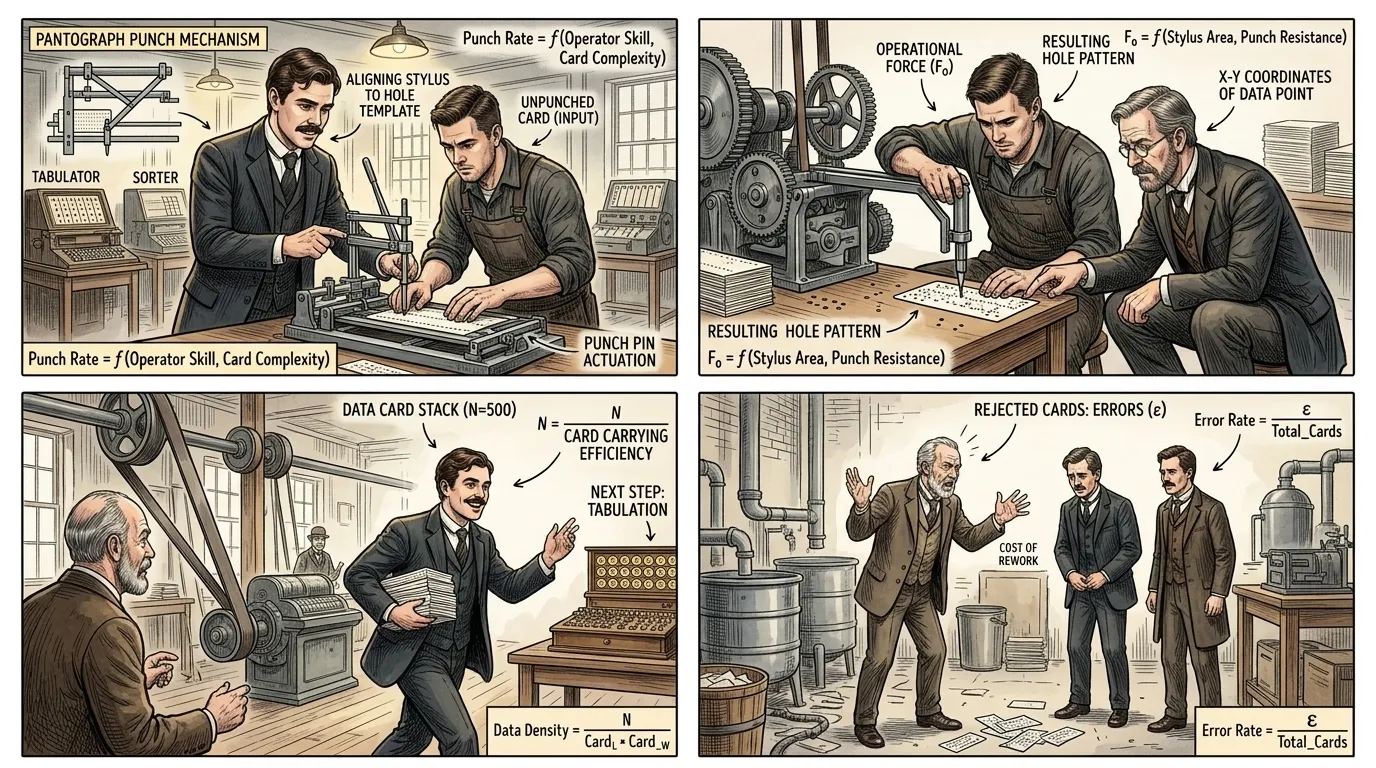
The operation of the punch card system was elegant in its design. First, a dedicated 'pantograph punch' was used to physically perforate the cards. Each position on the card represented a specific piece of information, and a hole at that position indicated 'yes' or a particular value. "Precision is paramount," Hollerith emphasized, showing a worker how to operate the punch. "A misaligned hole, and the data is lost." Once punched, the cards were fed into the tabulator. The machine's pins, upon finding a hole, closed an electrical circuit. This signal was then transmitted to an electromagnetic counter, which would register the count. For sorting, a separate 'sorter' machine would direct cards into different bins based on the holes detected, further streamlining the process. This electromechanical system effectively digitized information decades before electronic computers.
""Precision is paramount," Hollerith emphasized, showing a worker how to operate the punch. "A misaligned hole, and the data is lost.""
Page 8
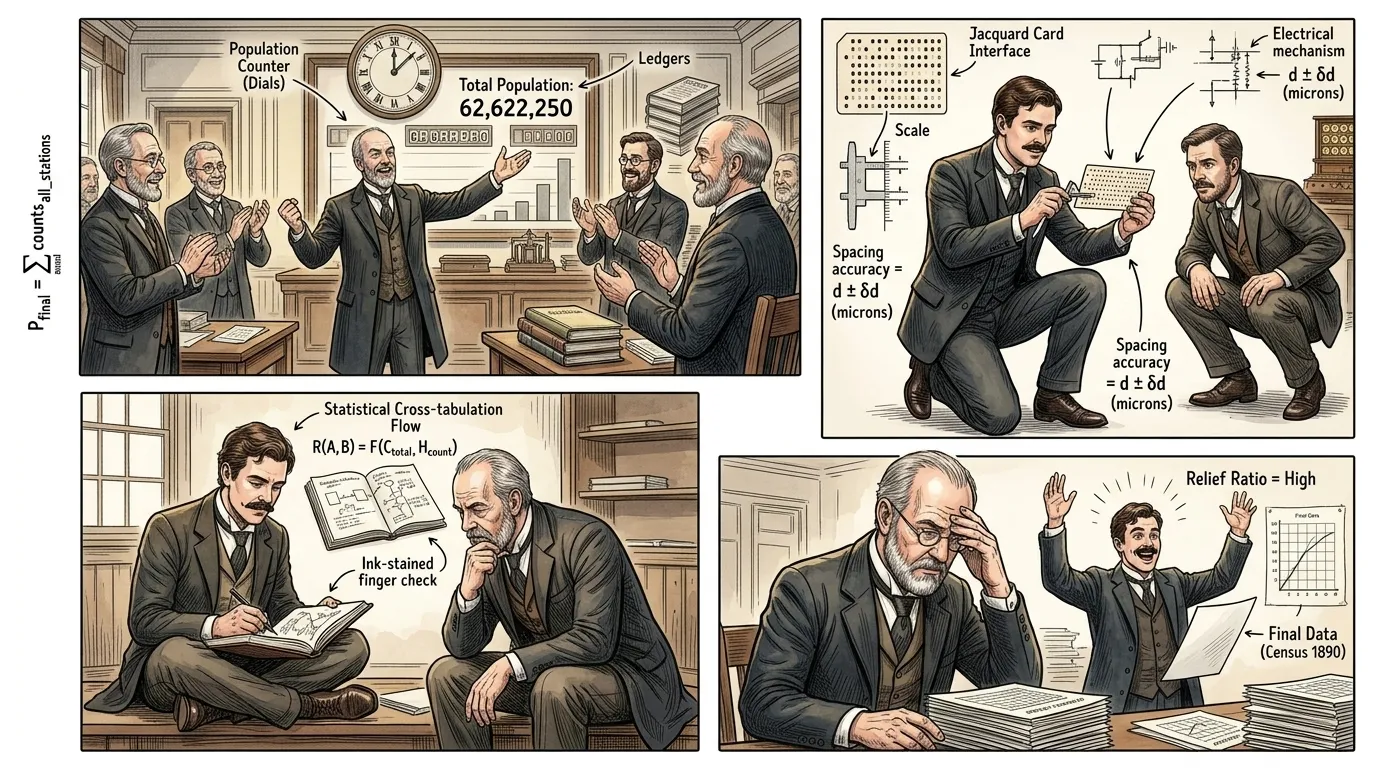
The true test of Hollerith's system came with the 1890 United States Census. The results were astounding. What had previously taken years of manual labor was now accomplished in a fraction of the time. "The total population of the United States as of June 1, 1890, is 62,622,250!" an excited census supervisor announced to a room of relieved officials, pointing to the final tally. "The Hollerith Electric Tabulating System has delivered these results in mere months!" This dramatic acceleration was not just a matter of speed; it provided crucial demographic data much sooner, allowing for more timely and effective governance. This success solidified the punch card's place as an indispensable tool for large-scale data management.
""The total population of the United States as of June 1, 1890, is 62,622,250!" an excited census supervisor announced to a room of relieved officials, pointing to the final tally. "The Hollerith Electric Tabulating System has delivered these results in mere months!""
Page 9
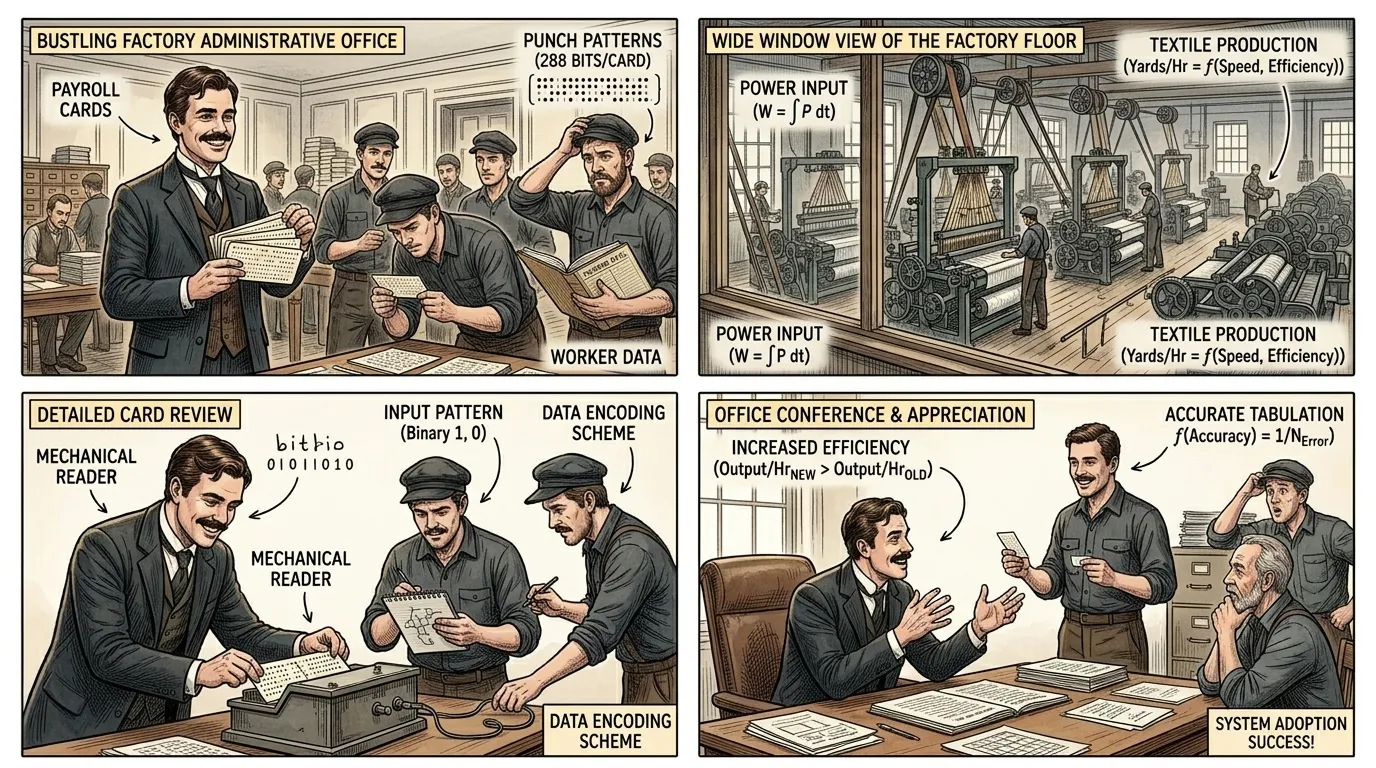
The triumph of the 1890 census was just the beginning. Hollerith's invention quickly spread beyond government statistics. Businesses, railroads, and insurance companies eagerly adopted the punch card system for inventory, payroll, and record-keeping. "We've seen efficiency gains we previously deemed impossible!" exclaimed a factory manager to his team, showing a stack of sorted payroll cards. "As Leonardo da Vinci famously said, 'Simplicity is the ultimate sophistication,' and Hollerith's system, despite its electromechanical complexity, offers profound simplicity in data management." The demand was so high that Hollerith founded the Tabulating Machine Company in 1896, which would later become a foundational component of International Business Machines (IBM). The punch card had not only solved a problem but had birthed an entirely new industry focused on information processing.
""We've seen efficiency gains we previously deemed impossible!" exclaimed a factory manager to his team, showing a stack of sorted payroll cards. "As Leonardo da Vinci famously said, 'Simplicity is the ultimate sophistication,' and Hollerith's system, despite its electromechanical complexity, offers profound simplicity in data management.""
Page 10
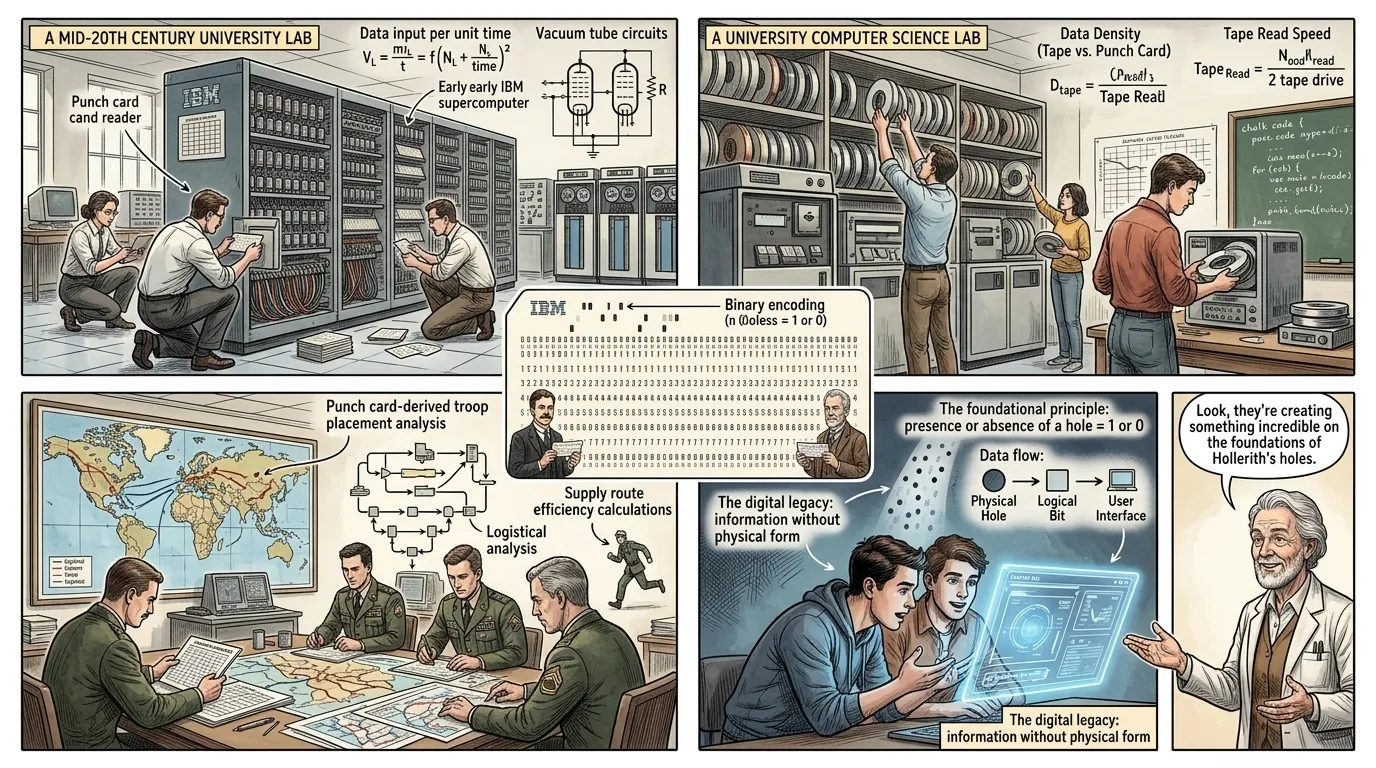
For over half a century, the punch card remained the dominant medium for data input and storage in computing. From controlling early supercomputers to managing logistical operations during world wars, its influence was pervasive. Though eventually superseded by magnetic tape, disk drives, and ultimately digital interfaces, the punch card's fundamental principles—encoding data as discrete bits of information, batch processing, and machine-readable instructions—laid the groundwork for the digital age. It was the crucial bridge from manual calculation to automated computation, transforming how we interact with information. The iconic 'IBM card' became a symbol of a technological revolution, a testament to how a simple perforated piece of paper could change the world.
About this story
- Location: Global
- Audience: general readers
Read Wonder Inventions on your phone
Wonder Inventions is available on Android. Get Wonder Inventions on Google Play.