QR Code
QR Code — an illustrated inventions story, set in Global. 10 illustrated pages, free to read on Wonder Inventions.
Page 1
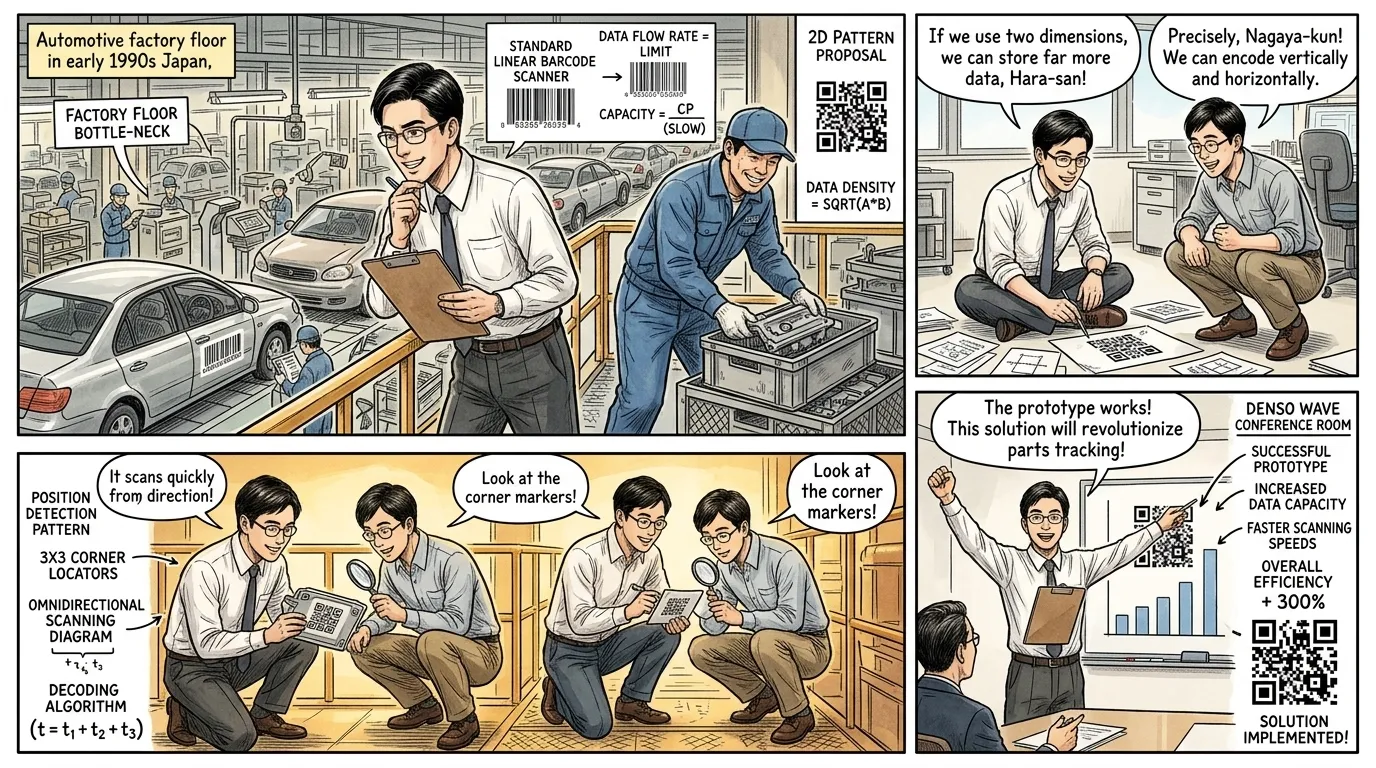
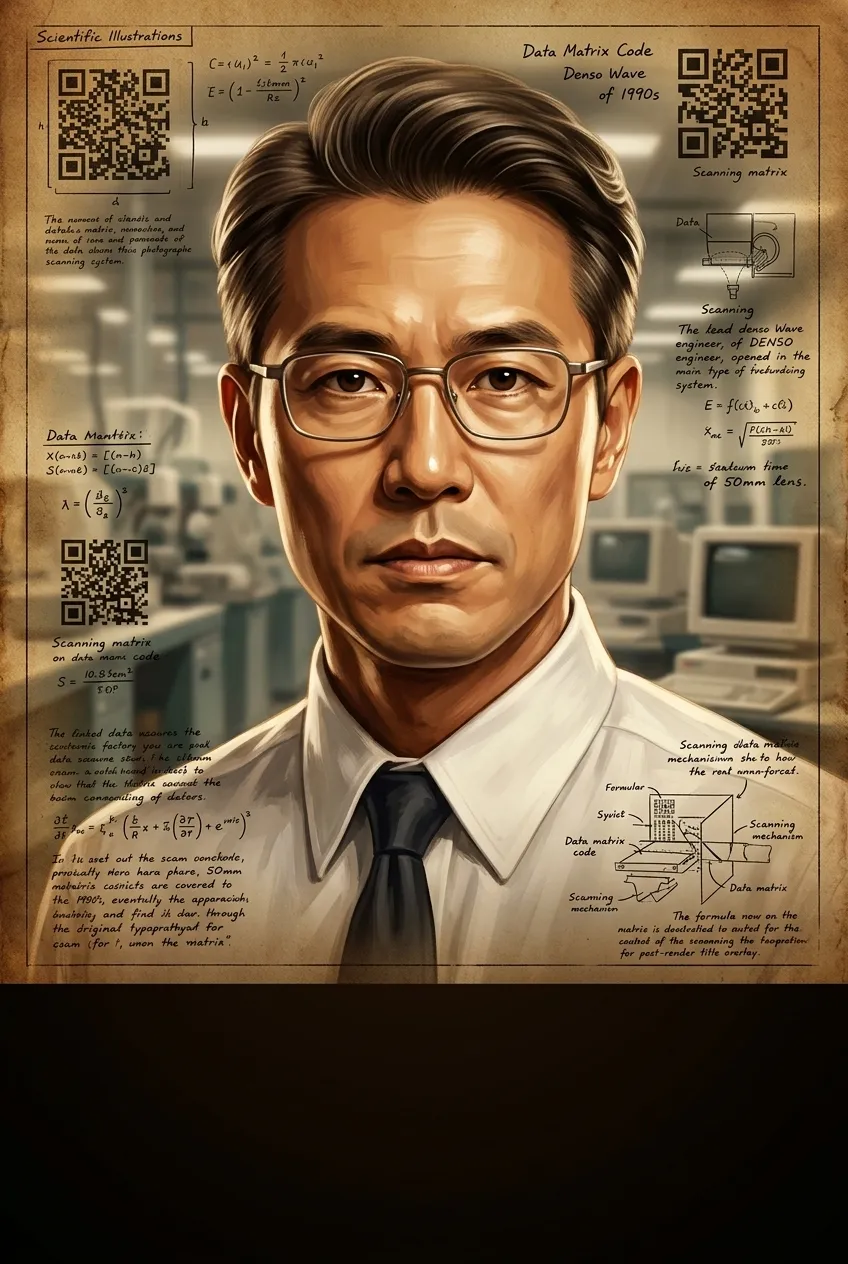
In the bustling industrial heart of Japan, the early 1990s presented a critical challenge to manufacturing efficiency. Masahiro Hara, an engineer at Denso Wave, a subsidiary of Toyota, observed the relentless bottlenecks caused by conventional barcodes. He understood that the limited data capacity and slow scanning speeds of these linear symbols were no longer sufficient for the complex logistics of modern automotive production, where countless components needed precise tracking. "This inefficiency is a persistent drag," he once remarked to his team, emphasizing the urgent need for a faster, more robust data encoding system that could manage the sheer volume of information required for each part.
Page 2
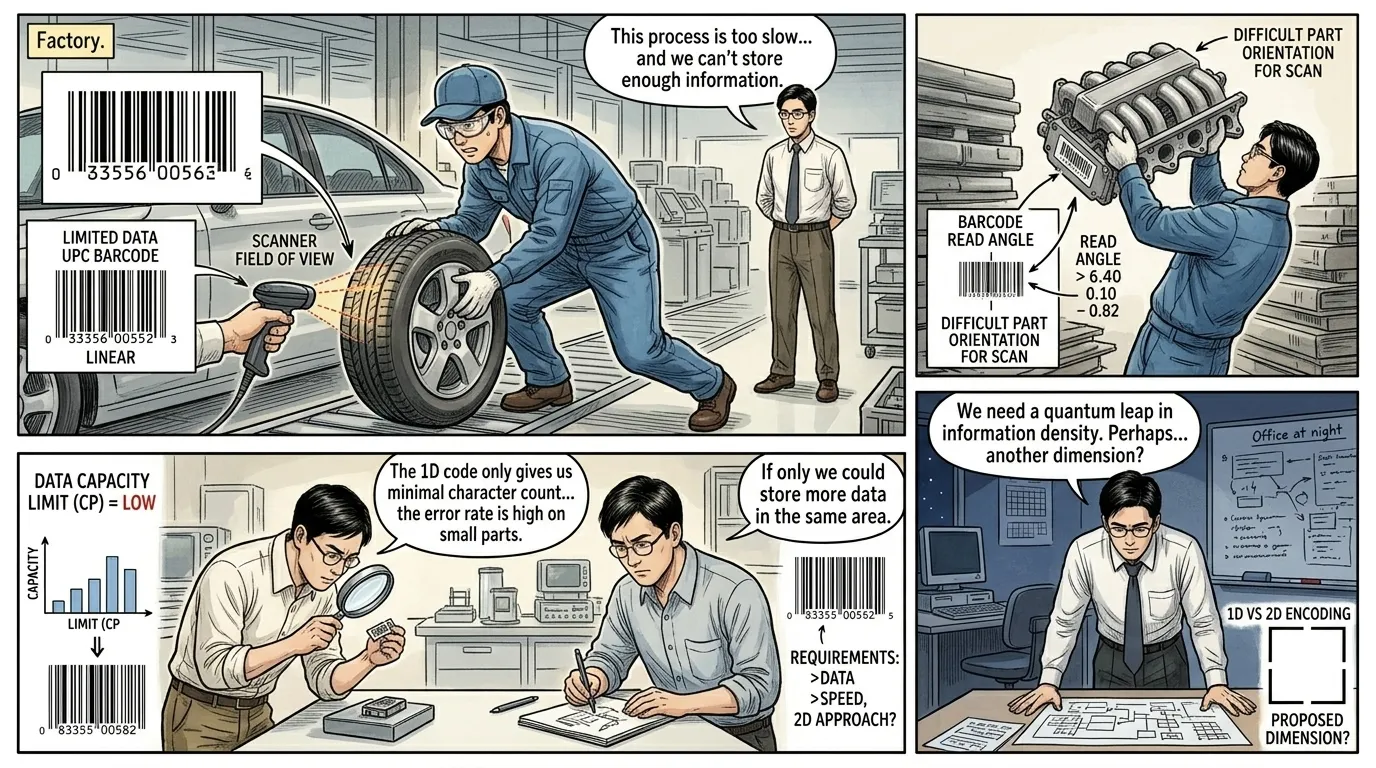
The standard UPC barcode, a series of parallel lines, had served commerce well for decades, efficiently identifying products at checkout. However, in the highly dynamic environment of a factory, its limitations became starkly apparent. Each barcode could only store a small amount of alphanumeric data, typically a dozen characters, necessitating multiple scans and labels for comprehensive part identification. Hara often reflected, "The challenge isn't just about speed; it's about the depth of information we can access instantly, from any angle." This restriction meant workers spent valuable time rotating items to align barcodes, an ergonomic strain that compounded efficiency issues.
Page 3
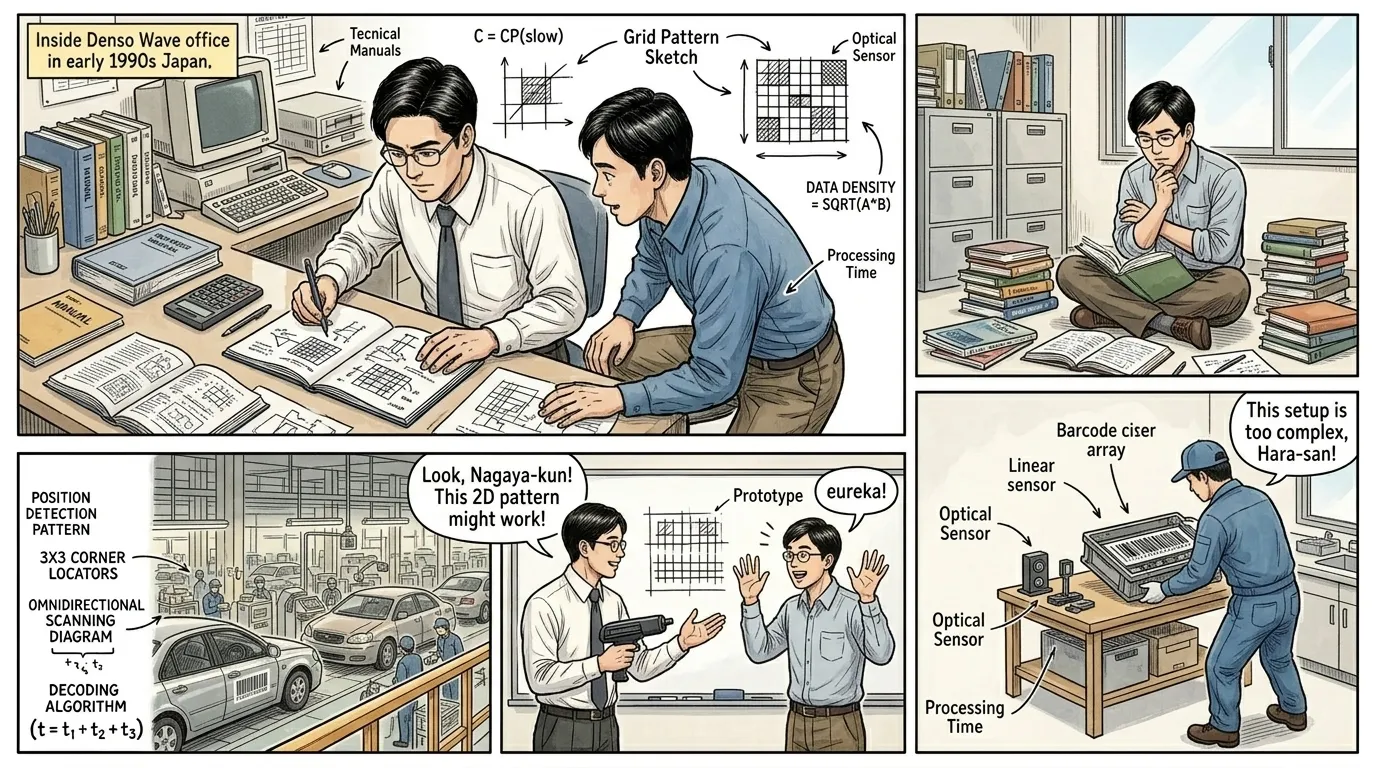
Masahiro Hara, driven by the urgency of the problem, dedicated himself to finding a two-dimensional encoding solution. He knew that to overcome the data bottleneck, the new code needed to hold significantly more information and be readable from any direction. He spent countless hours pondering the fundamental principles of data representation. "As the ancient Greek philosopher Plato once mused, 'Necessity, who is the mother of invention,'" Hara thought, sketching complex grids in his notebook. He understood that a completely new visual language was required—one that transcended the linear constraints of its predecessors, demanding a robust system for rapid, omnidirectional detection, a task that proved surprisingly difficult with early design iterations.
Page 4
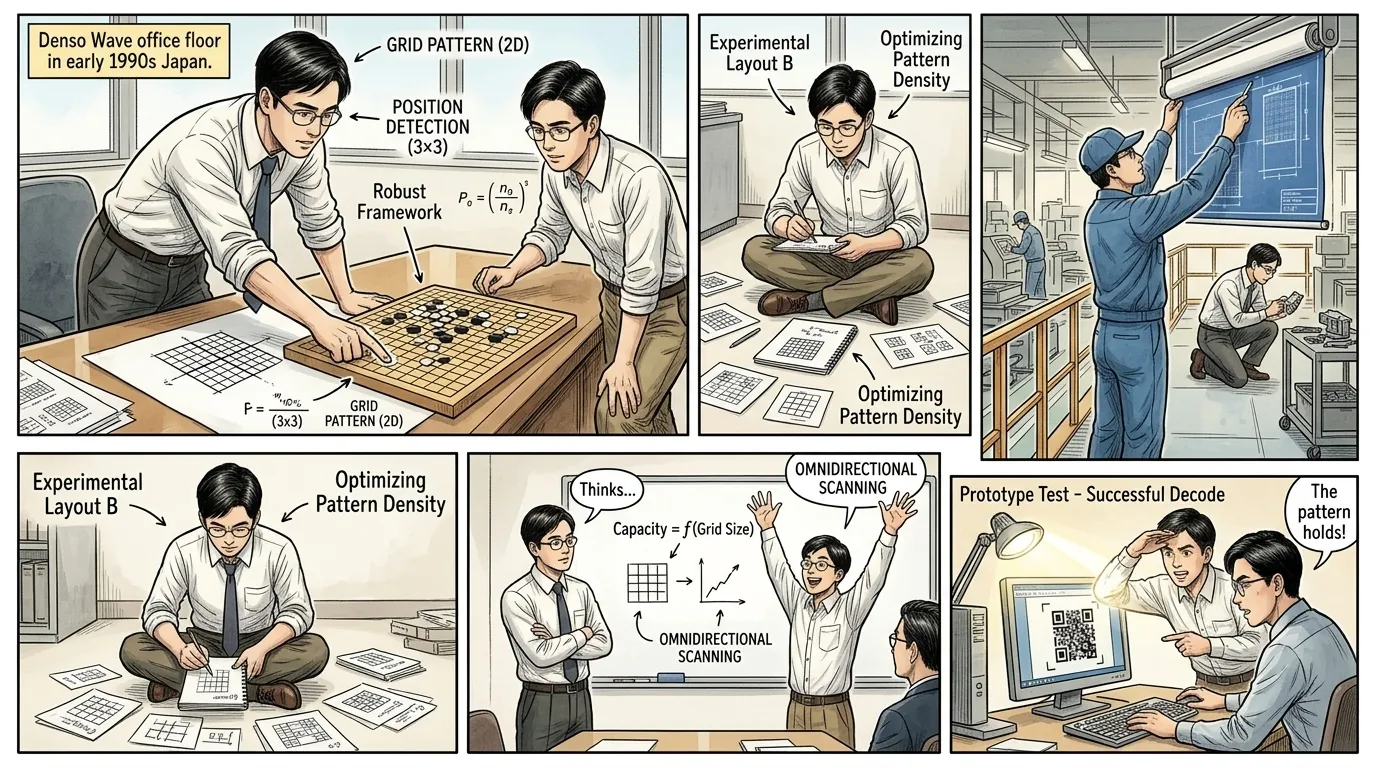
The breakthrough began with an unlikely source of inspiration: the patterns of black and white pieces on a Go board. Hara and his colleague, Takayuki Nagaya, observed how the human eye quickly recognized distinct configurations on the grid. They realized that by incorporating highly contrasting, easy-to-detect squares at the corners of a code, a scanner could instantly orient itself, regardless of the code's rotation. "The density of black and white elements on a Go board, particularly the distribution of these high-contrast areas, offers a robust framework for positional recognition," Hara explained to Nagaya, pointing to a diagram. This 'finder pattern' concept became the cornerstone of their design.
Page 5
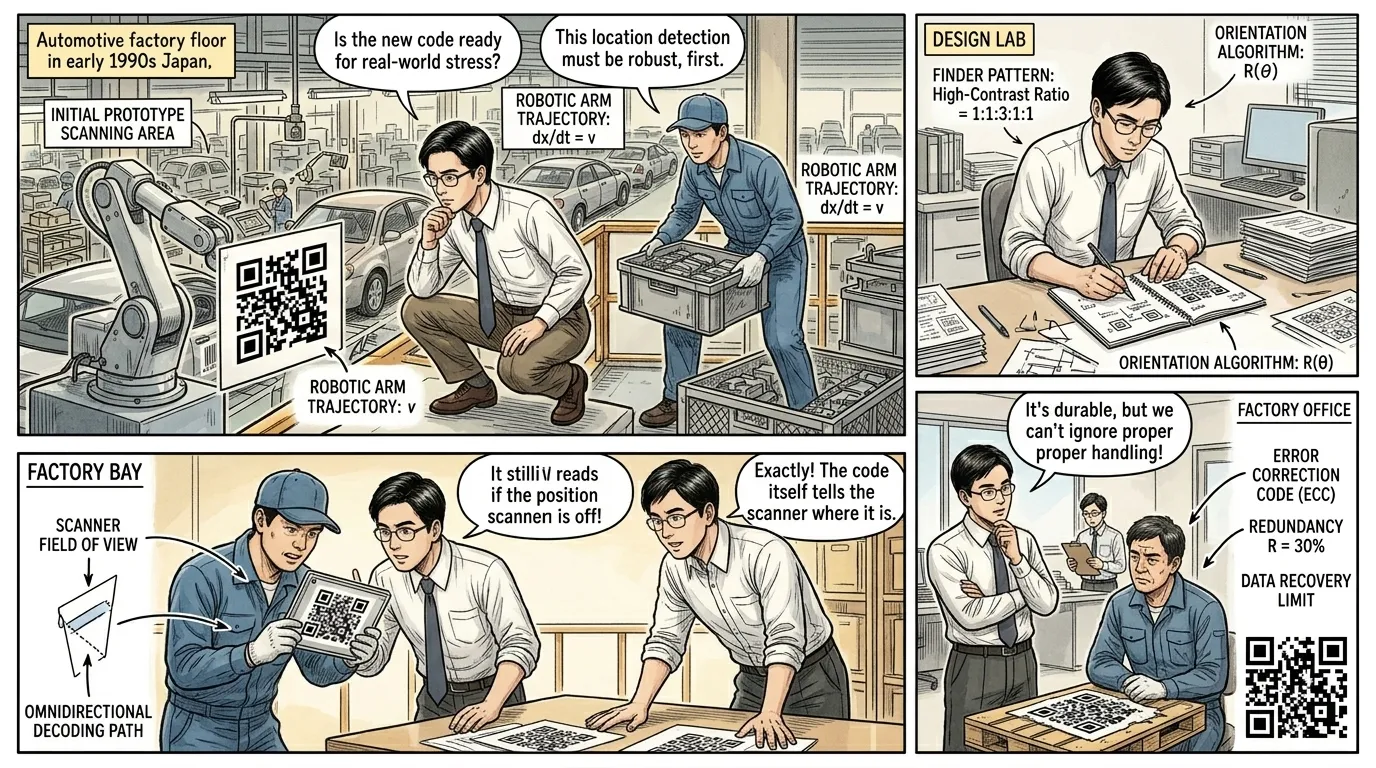
The 'finder patterns' were the key innovation that differentiated the QR Code from its predecessors. These three identical, high-contrast squares positioned at three corners of the code allowed scanning devices to instantly determine the code's orientation and scale, no matter how it was presented. Hara described their function: "By recognizing these three specific squares, the scanning software can precisely define the code's boundaries and correct for distortions caused by perspective or angle." This robust design was crucial for fast, reliable scanning, eliminating the need for manual alignment and drastically reducing processing time for the early, less powerful image sensors available at the time. A small fourth, unique square, the 'alignment pattern', was also introduced to correct for additional distortion, especially in larger codes.
Page 6
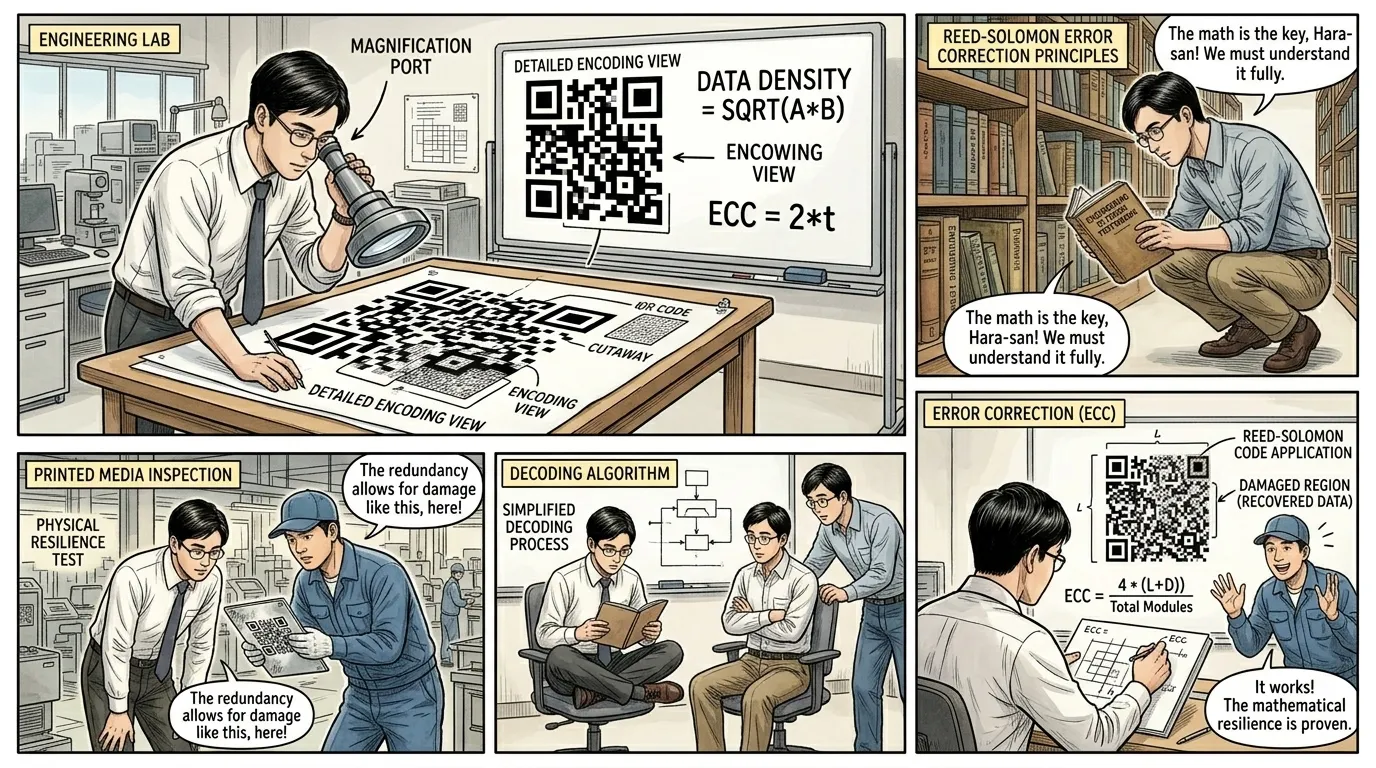
Once the scanner establishes orientation, it then reads the data encoded within the square modules, the black and white cells forming the core of the QR Code. These modules represent binary data, where black might be '1' and white '0', capable of storing various types of information: numeric, alphanumeric, byte/binary, or Kanji characters. A crucial innovation was the inclusion of 'error correction' capabilities, utilizing Reed-Solomon codes. As Hara explained, "This redundancy allows a damaged code, even one up to 30% obliterated, to still be perfectly readable." This feature made the QR Code incredibly resilient, ensuring data integrity even in harsh industrial environments or on worn labels, a significant advantage over fragile linear barcodes.
Page 7
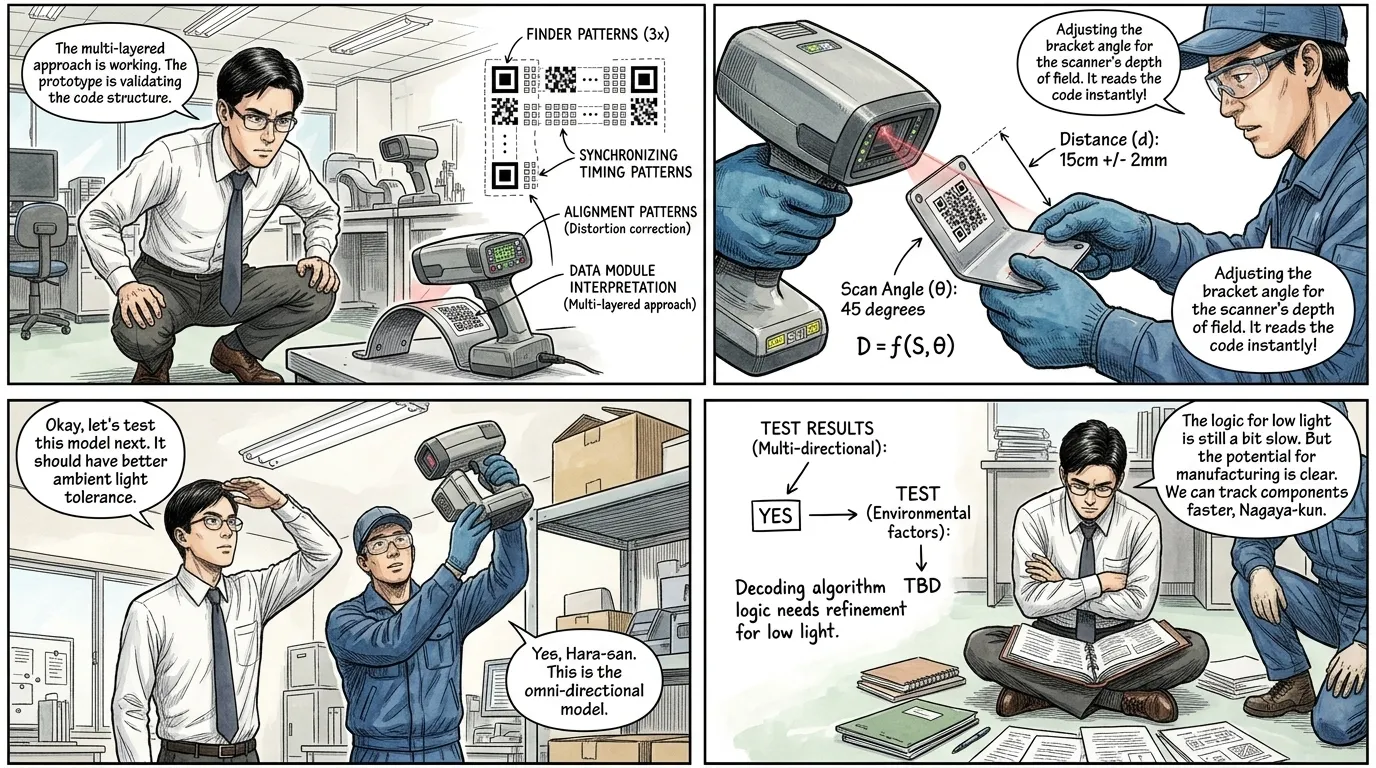
When a camera or scanner encounters a QR Code, a precise sequence of operations unfolds at lightning speed. First, it identifies the three finder patterns to establish the code's position, angle, and size. Then, the timing patterns—alternating black and white modules along the edges—synchronize the scanner's grid to the code's structure. Following this, the alignment patterns correct for any perspective distortion, crucial for scanning codes on curved or angled surfaces. Finally, the scanner interprets each individual module within the data area, reconstructing the original information using the built-in error correction algorithms. "This multi-layered approach ensures rapid, reliable decoding even in suboptimal conditions," Hara stated, observing a prototype scanner in action, validating years of focused development.
Page 8
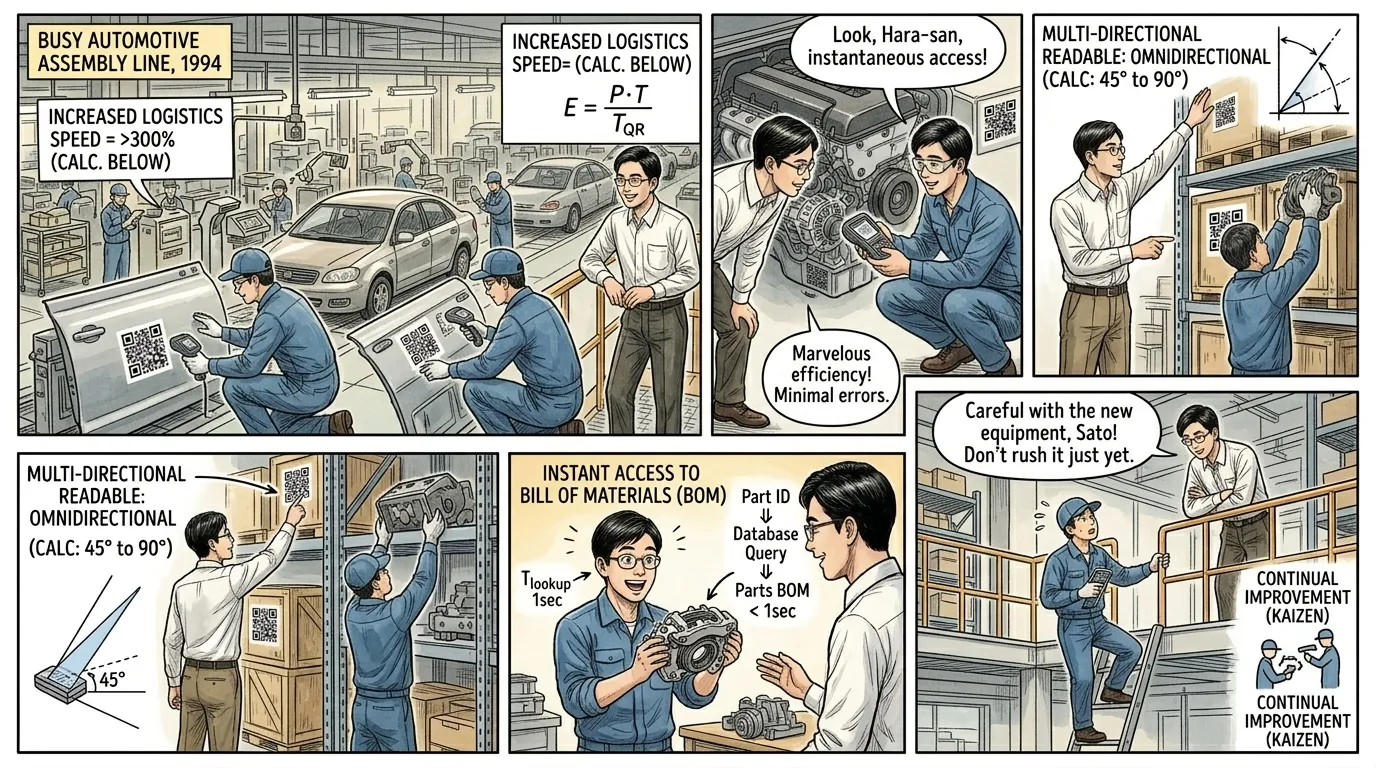
Upon its debut in 1994, the QR Code swiftly became indispensable within the Japanese automotive industry. The ability to embed large quantities of information directly onto components—such as production dates, model numbers, and serial numbers—revolutionized tracking and inventory management. No longer did workers need to consult external databases or scan multiple linear barcodes; the information was instantly accessible on the part itself. Hara recalled the early feedback: "The immediate reduction in assembly line errors and the unprecedented speed of logistics was beyond our initial projections." The improved efficiency led to cost savings and better quality control, fulfilling the urgent need that had first driven its creation. This internal success laid the groundwork for its eventual global adoption.
Page 9
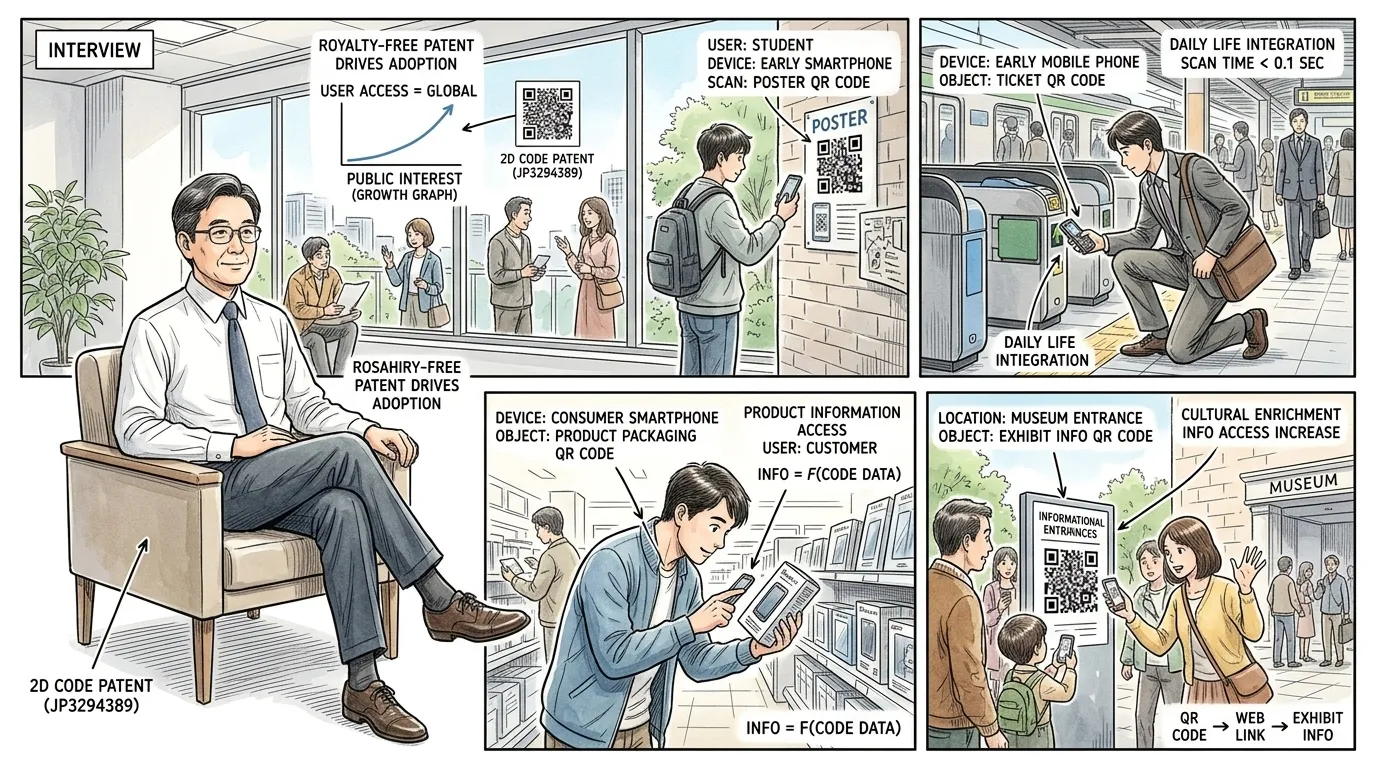
While initially designed for industrial applications, the QR Code's true global potential was unlocked by a pivotal decision in 1999: Denso Wave made the patent royalty-free. This act of open innovation allowed anyone to use and integrate the technology without licensing fees, fostering widespread experimentation and adoption. The subsequent proliferation of smartphones equipped with high-resolution cameras in the 2000s provided the perfect consumer interface. "We always believed in sharing this technology to benefit society broadly," Hara stated in a later interview, reflecting on the impact of their decision. This strategic move removed barriers, enabling developers worldwide to integrate QR Code scanning into diverse applications, far beyond the factory floor. Public interest surged as people discovered new ways to interact with information in the physical world.
Page 10
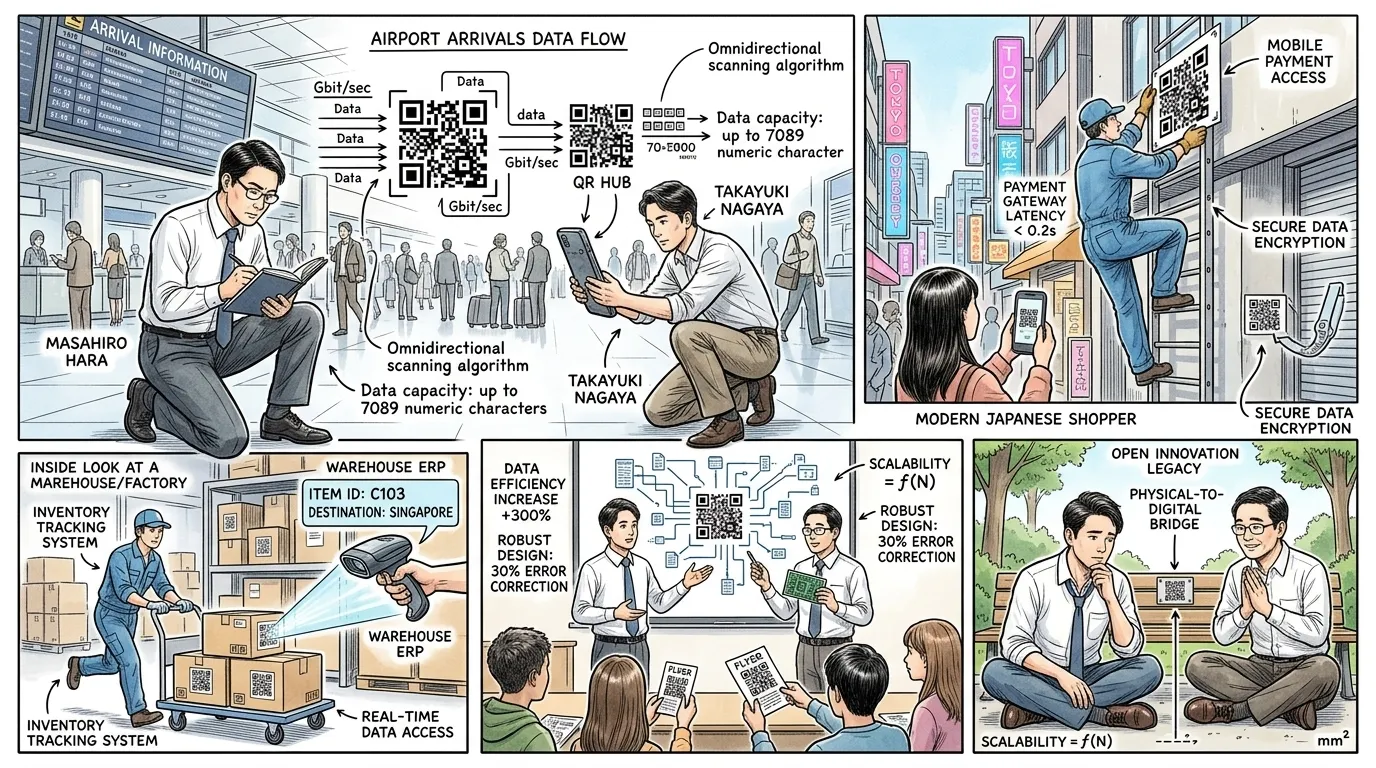
Today, the QR Code is an indispensable part of the global information landscape, a ubiquitous bridge between the physical and digital realms. From restaurant menus to payment systems, from event tickets to contact tracing, its versatility and reliability have made it a cornerstone of modern communication. Its capacity to store diverse data types and its robust error correction ensure that it continues to function effectively across myriad applications. The QR Code stands as a testament to Masahiro Hara's vision and the power of open innovation, fundamentally reshaping how we access and share information in our increasingly interconnected world, a silent, efficient workhorse connecting us to vast digital networks through a simple square pattern.
About this story
- Location: Global
- Audience: general readers
Read Wonder Inventions on your phone
Wonder Inventions is available on Android. Get Wonder Inventions on Google Play.