Podcasting
Podcasting — an illustrated inventions story, set in Global. 10 illustrated pages, free to read on Wonder Inventions.
Page 1
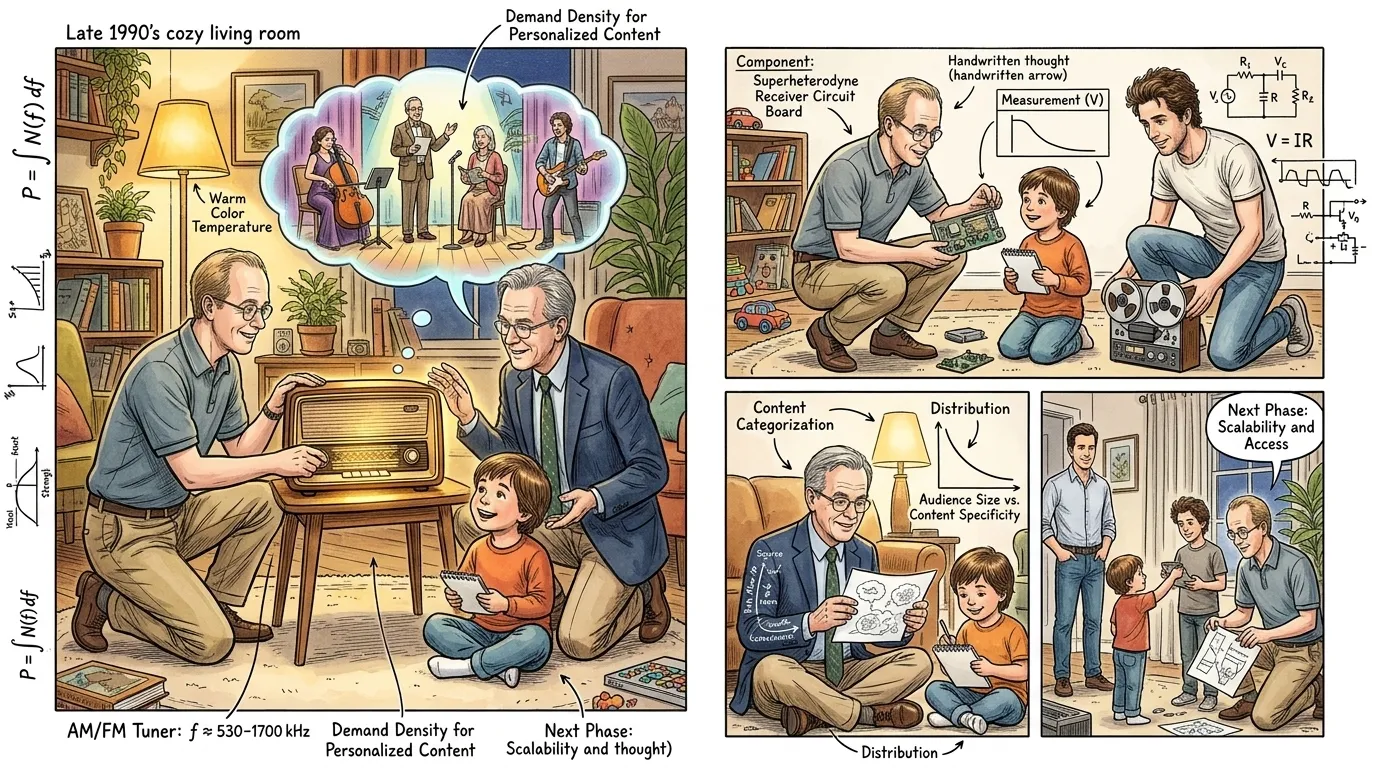
Before the turn of the 21st century, audio media consumption was largely dictated by centralized broadcasters. Radio, a powerful medium since its inception, operated on a scheduled, linear model, its content tightly controlled by stations and programming directors. For listeners, engagement was passive, limited to tuning into specific frequencies at precise times. This gatekeeping restricted independent voices and niche interests, creating a vast unmet demand for personalized, on-demand audio content that traditional media could not satisfy.
Page 2
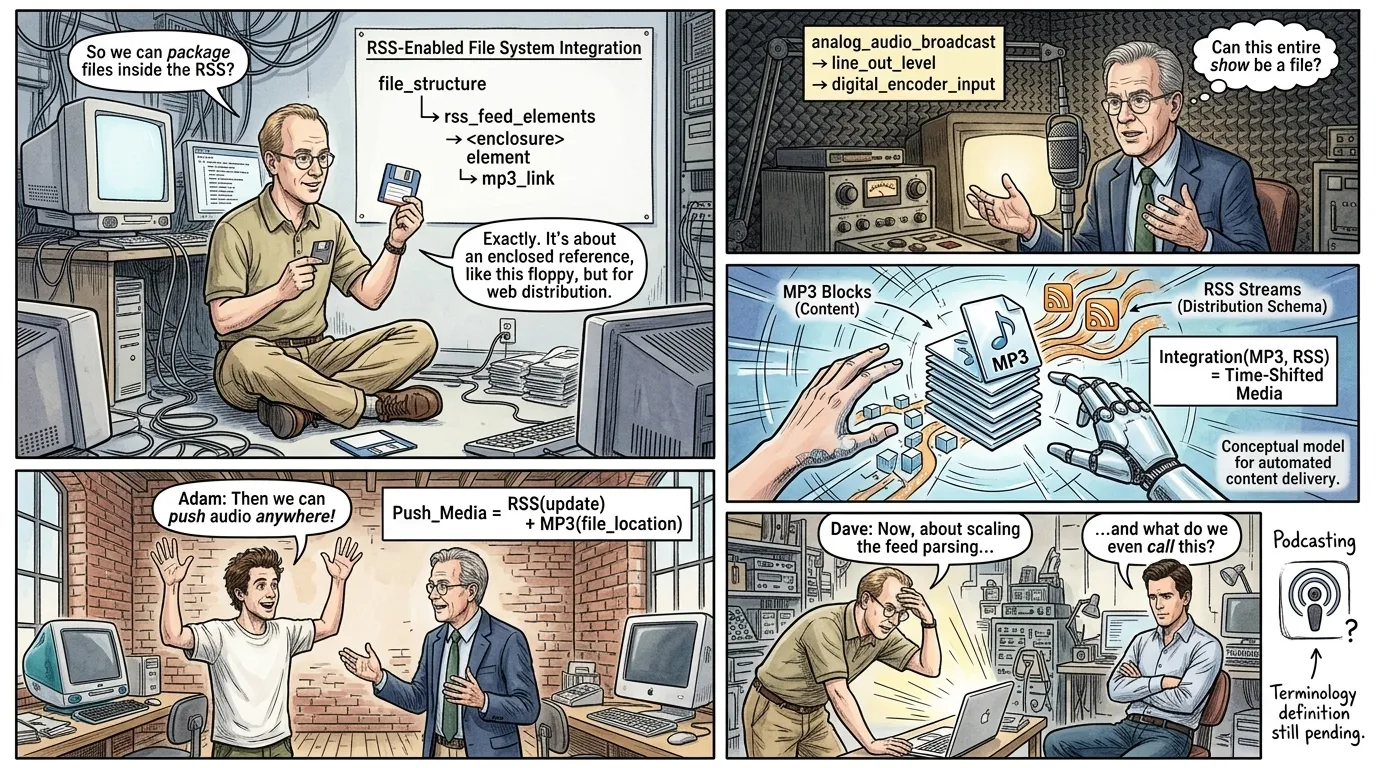
The late 1990s and early 2000s ushered in two pivotal technological advancements: the proliferation of digital audio formats, particularly MP3s, and the emergence of RSS (Really Simple Syndication). MP3s allowed audio to be compressed into smaller, more manageable files for digital distribution, while RSS provided a standardized XML format for automatically distributing frequently updated web content. Individually, these innovations hinted at new possibilities, but the crucial step was to integrate them – to automate the delivery of digital audio directly to a user's device, untethering content from the web browser and scheduled broadcasts.
Page 3
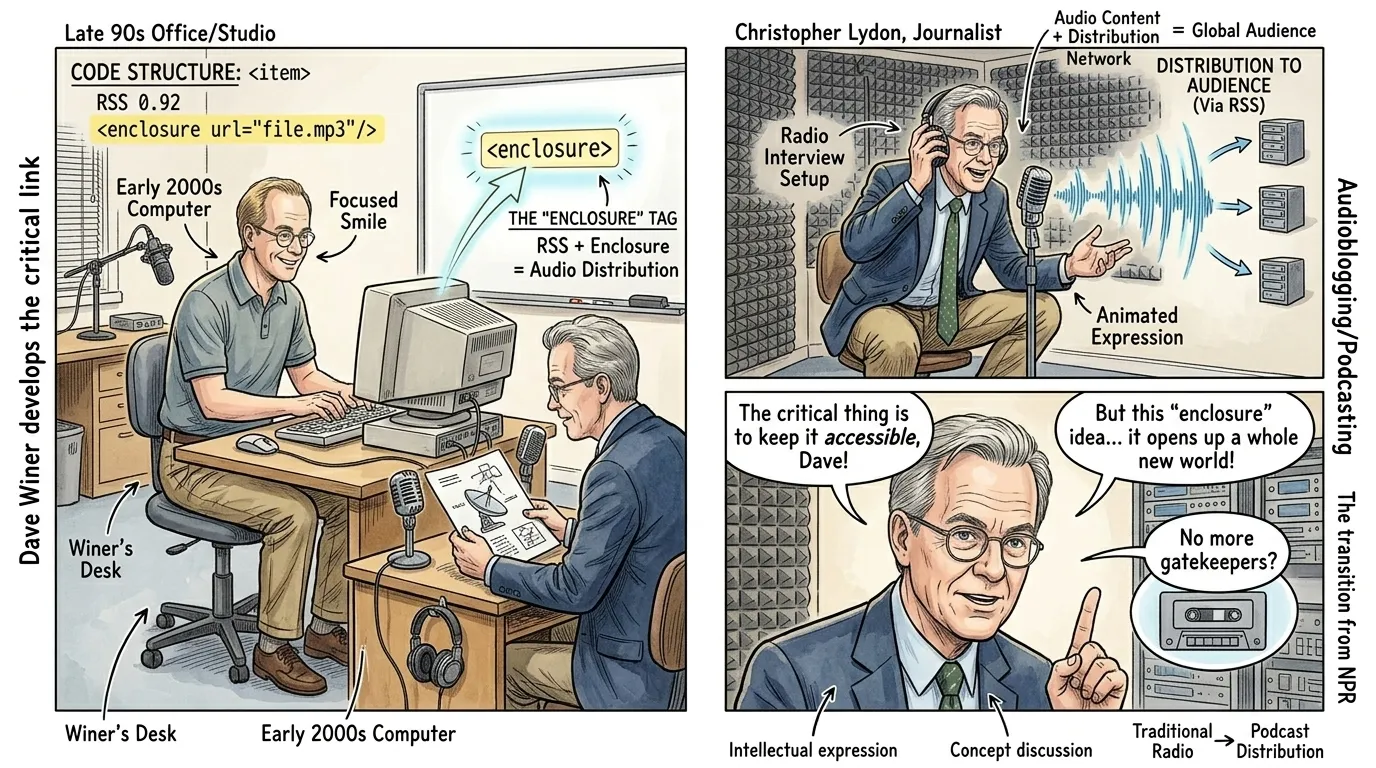
The conceptual bridge between RSS and digital audio began with software developer Dave Winer. In 2000, Winer added a new feature to his RSS reader, 'Radio UserLand,' enabling an 'enclosure' tag that could link to any file type. This seemingly minor addition created the necessary technical scaffold for syndicating media. Journalist Christopher Lydon, post-NPR, became one of the first to leverage this, distributing interviews as audio files via Winer's RSS feeds in 2003. This 'audioblogging' was revolutionary, allowing Lydon to publish his conversations directly to an audience, bypassing traditional media gatekeepers, though the process still involved manual steps for the listener.
Page 4
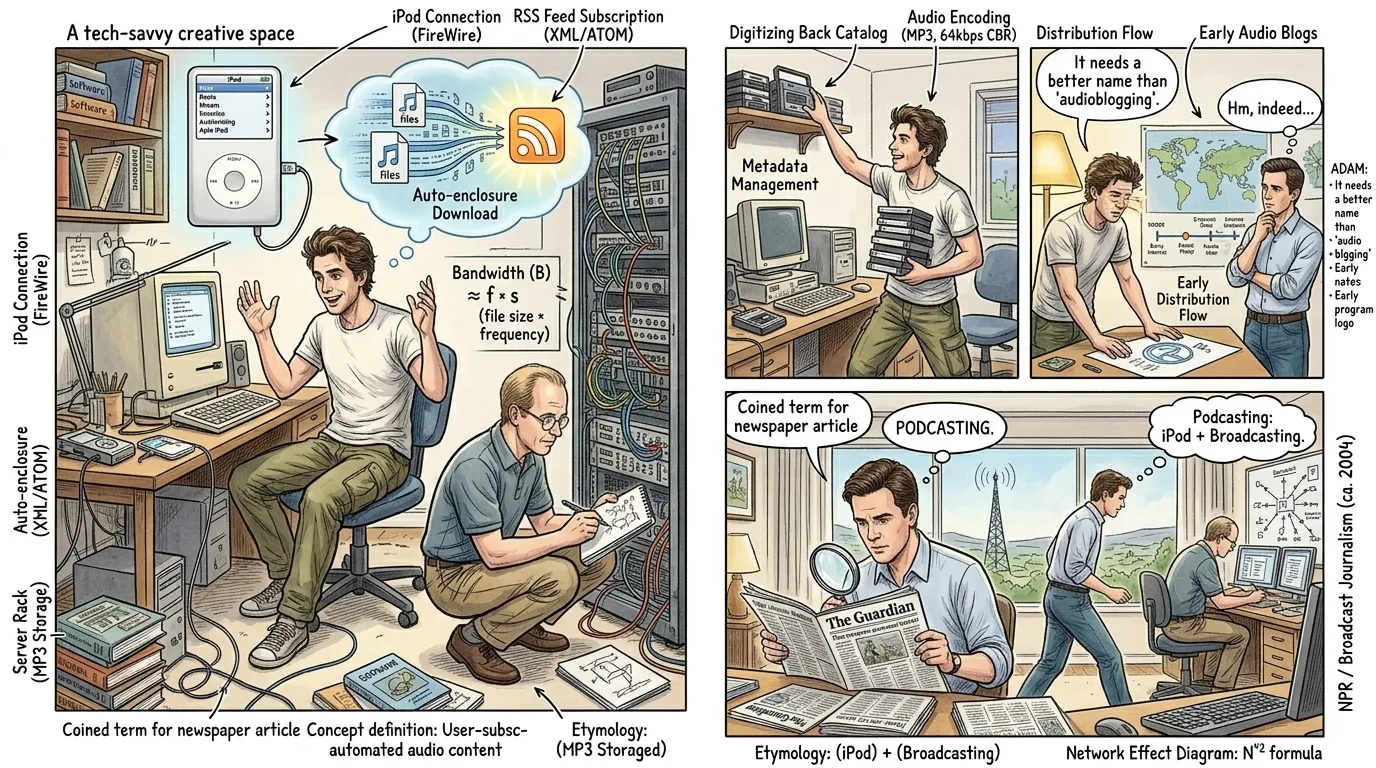
While Winer and Lydon laid the technical and content groundwork, the true convenience factor of podcasting emerged with former MTV VJ Adam Curry. Observing the cumbersome process of manually downloading audio files, Curry envisioned an automated solution. In early 2004, he began developing a program called 'iPodder' (initially 'iPod-Sync'), designed to automatically download audio files linked in RSS feeds and synchronize them to Apple's increasingly popular iPods. This automated 'podcatcher' software, combined with the term 'podcasting' coined by Ben Hammersley in a Guardian article, catalyzed the format's widespread adoption by making discovery and consumption effortless.
Page 5
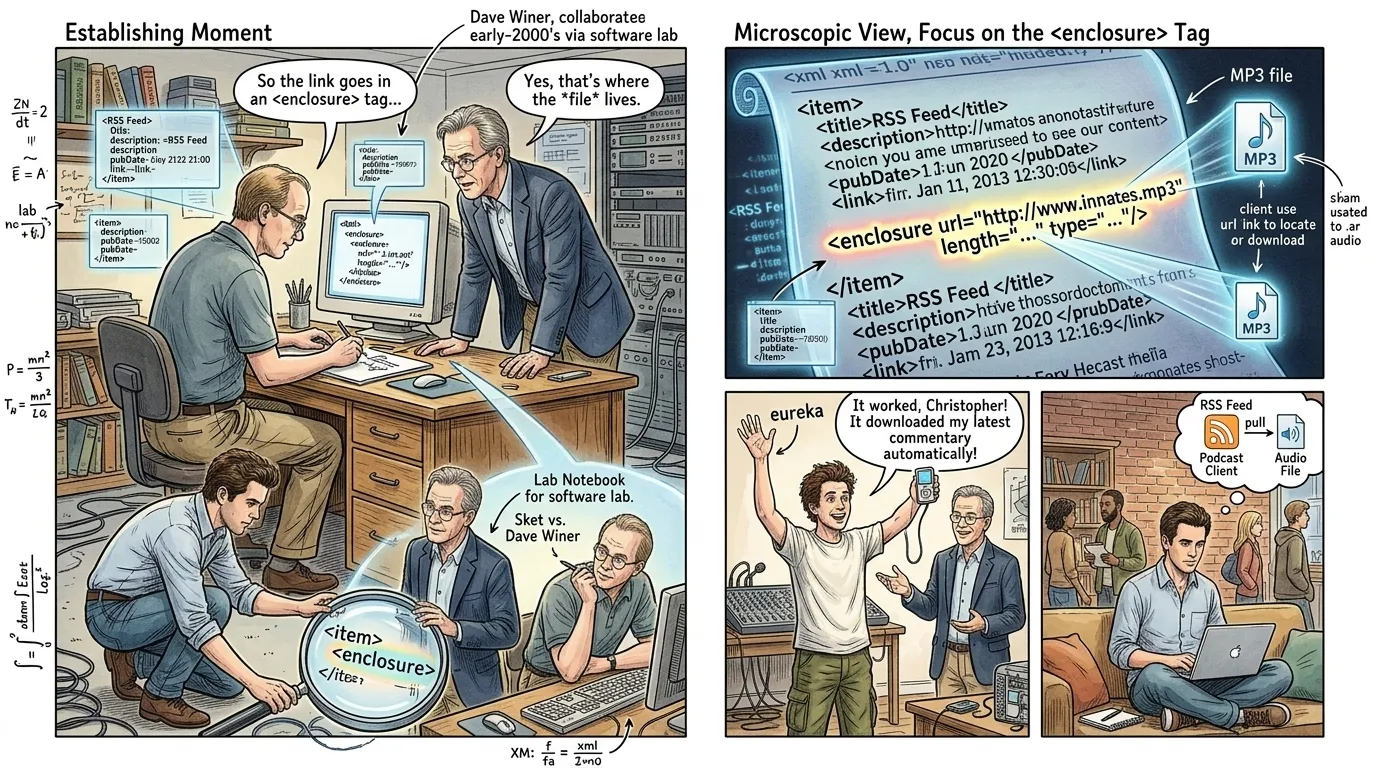
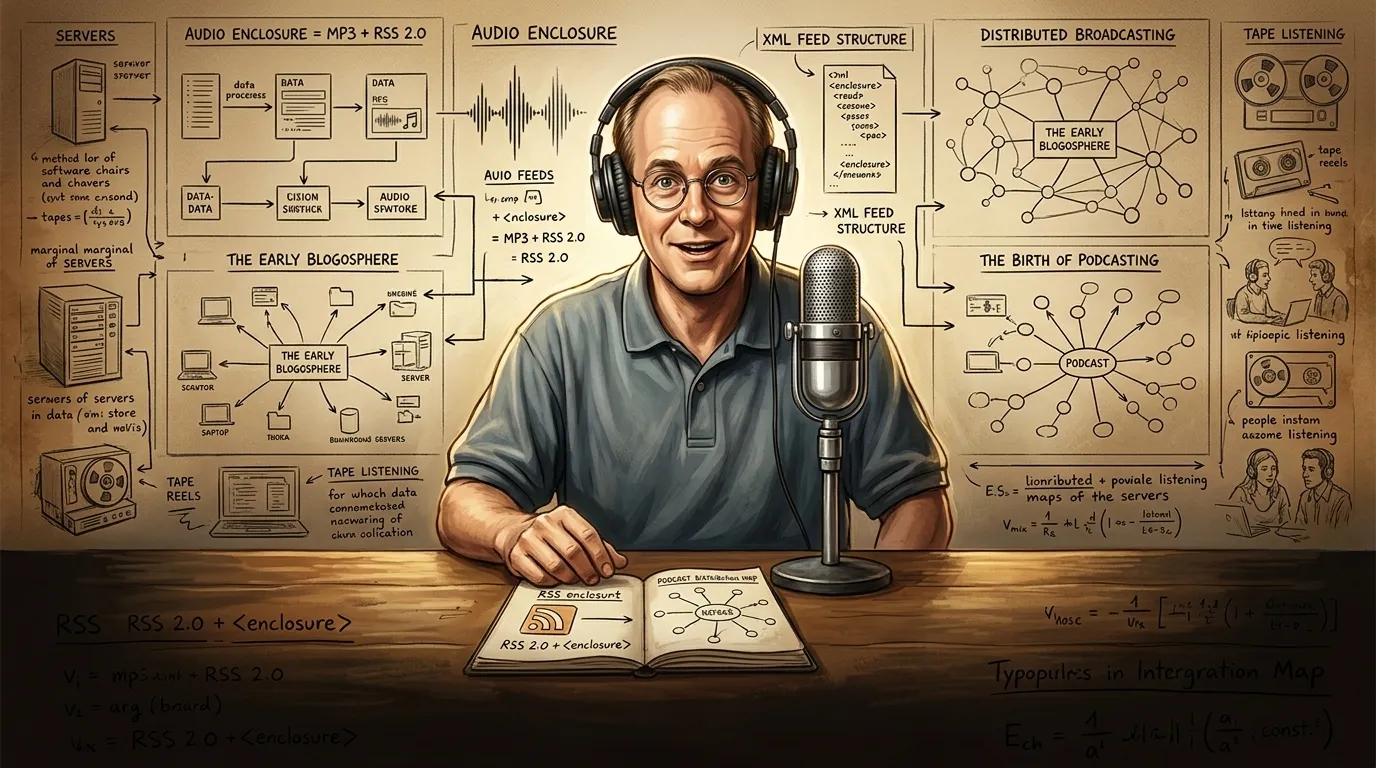
The fundamental mechanism of podcasting relies on the RSS feed, specifically the enclosure tag within its XML structure. An RSS feed, which is essentially a plain text file, acts as a manifest for a series. Each new episode is represented as an item tag, containing metadata such as title, description, and publication date. Crucially, inside this item, the enclosure url "..." length "..." type "..."/ tag provides a direct link to the actual audio file (e.g., an MP3). This precise URL is what a podcast client, or 'podcatcher,' uses to locate and download the audio, enabling automated subscription and content delivery.
Page 6
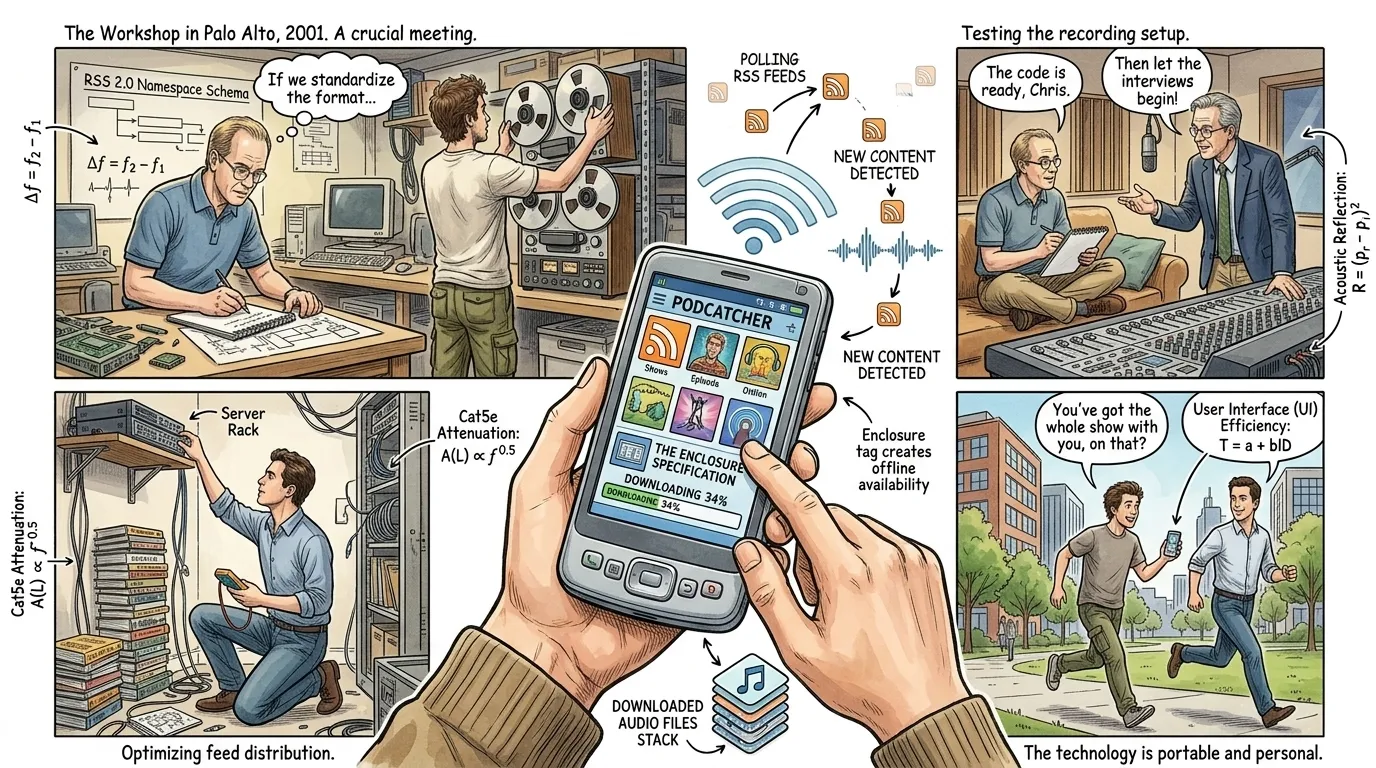
The true genius of podcasting lies in the 'podcatcher' software. These applications, whether on desktop computers or mobile devices, are programmed to perform several key functions. First, they periodically 'poll' or check subscribed RSS feeds for new content. Upon detecting a new enclosure link, the podcatcher automatically downloads the associated audio file to the user's device. This automation eliminates the need for manual searching and downloading, making the content available offline and at the listener's convenience. The podcatcher then organizes these files, manages playback, and allows users to discover new shows, transforming passive listening into an active, personalized experience.
Page 7
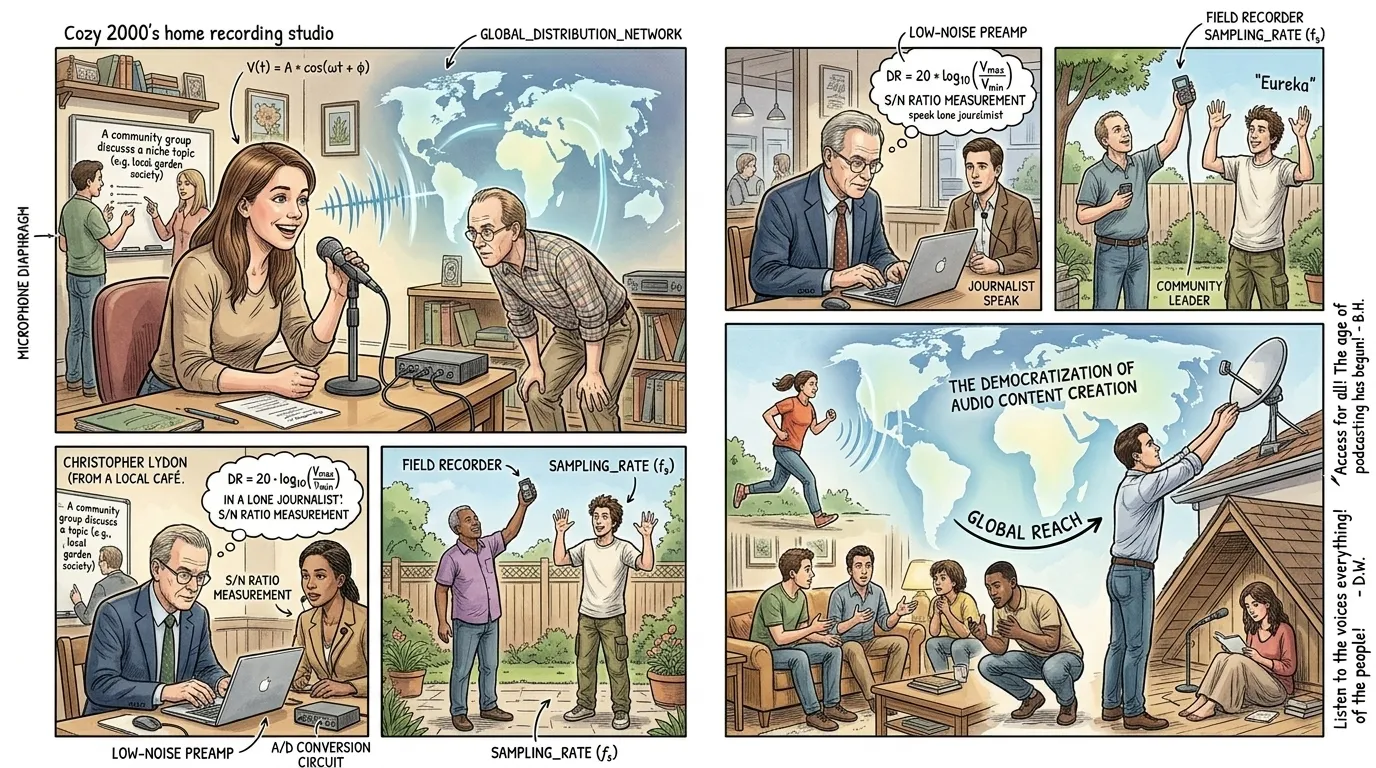
One of podcasting's most profound impacts was the radical democratization of audio content creation. Unlike traditional radio, which required expensive licenses, professional studios, and established networks, podcasting needed only a microphone, basic recording software, and an internet connection. This low barrier to entry empowered countless individuals and small organizations to produce and distribute their own audio programs. Suddenly, niche topics, independent journalism, personal narratives, and diverse perspectives that would never find airtime on mainstream channels could reach a global audience, fostering a vibrant ecosystem of unique and specialized content.
Page 8
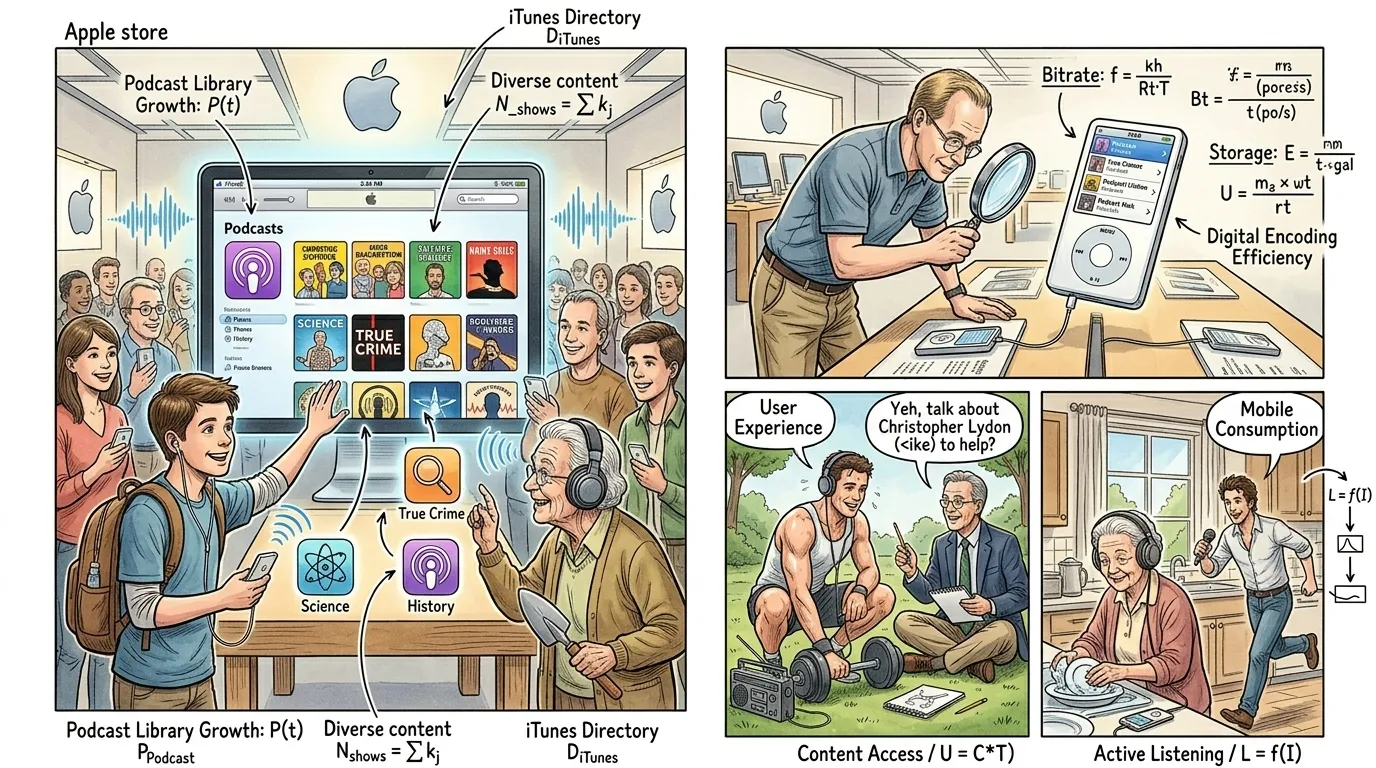
The year 2005 marked a critical inflection point for podcasting when Apple integrated podcasts directly into its ubiquitous iTunes software. This move provided a massive platform for discovery and subscription, exposing millions of iPod and iTunes users to the burgeoning world of podcasts. Following this integration, the number of available podcasts and their listenership exploded. Suddenly, every conceivable topic, from deep dives into quantum physics to detailed analyses of historical events or true crime sagas, found dedicated creators and eager audiences, proving the immense demand for specialized, on-demand audio beyond mainstream programming.
Page 9
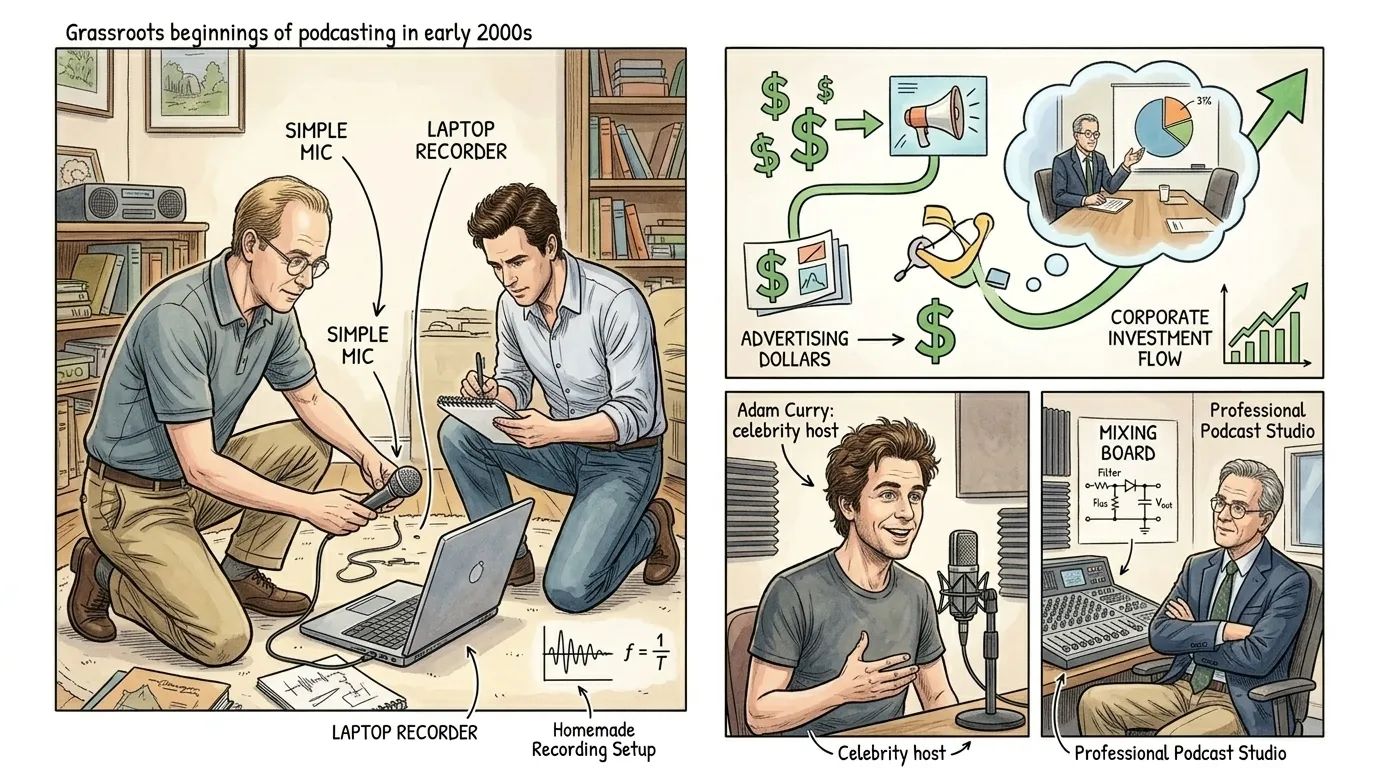
As podcasting matured and its audience demographics became clearer, the medium began to attract significant commercial interest. Advertisers, recognizing the intimate connection between host and listener, saw unique opportunities for targeted campaigns. This commercialization led to increased professionalization, with major media companies investing in podcast networks, dedicated studios, and high-production-value original content. What began as a grassroots endeavor evolved into a legitimate, multi-billion dollar industry, complete with celebrity hosts, sophisticated sound design, and robust analytics, solidifying its place alongside traditional media forms.
Page 10
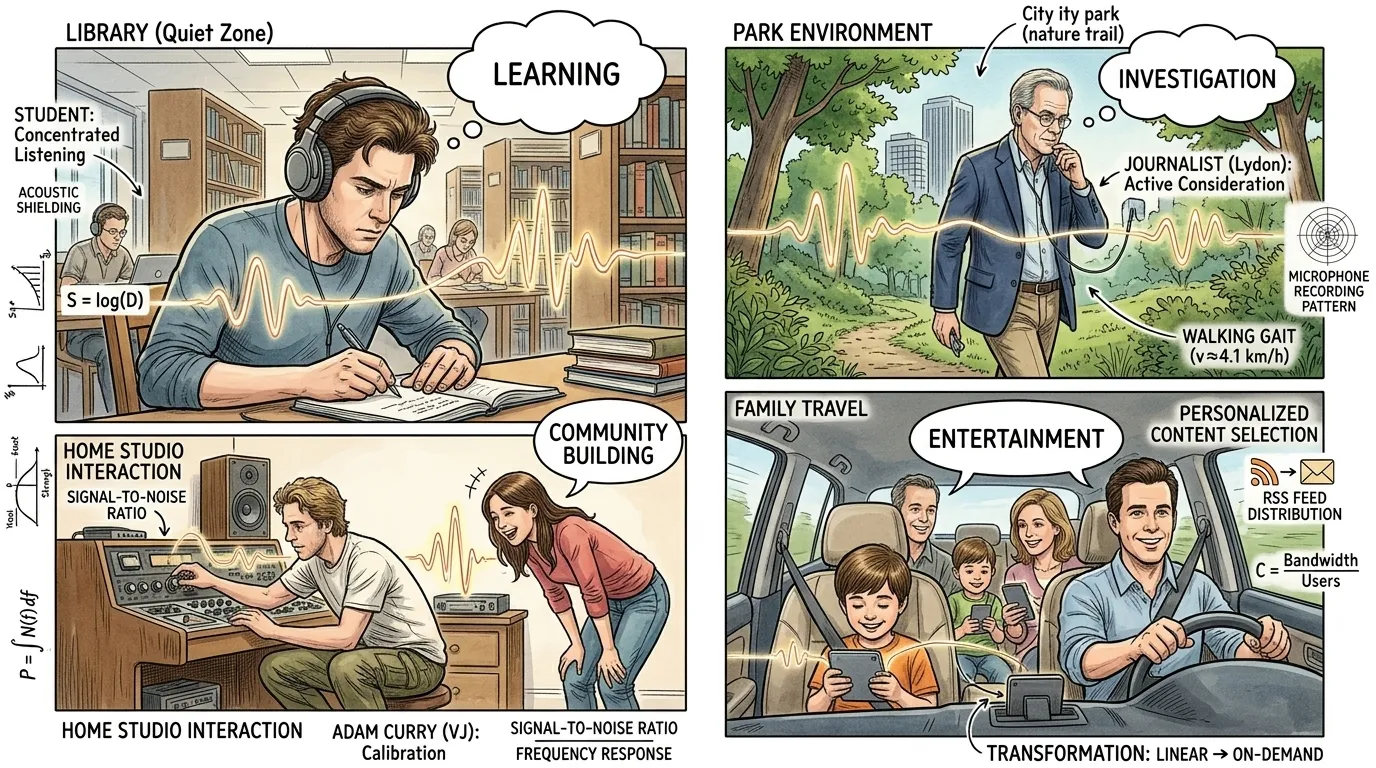
Podcasting has fundamentally reshaped how we consume audio, transitioning from a linear, broadcast-driven model to a truly on-demand, personalized experience. It cultivated an environment for long-form storytelling, in-depth interviews, and specialized educational content, fostering deep engagement often lacking in shorter-form media. Beyond entertainment, podcasting became a vital tool for education, investigative journalism, corporate communication, and community building, demonstrating its versatility and enduring power. It stands as a testament to how combining existing technologies—digital audio, syndication, and portable devices—can create an entirely new, transformative medium that continues to evolve.
About this story
- Location: Global
- Audience: general readers
Read Wonder Inventions on your phone
Wonder Inventions is available on Android. Get Wonder Inventions on Google Play.